

27 Jun is in June.
1497 Battle of Blackheath aka Deptford Bridge
1503 Margaret Tudor's Journey to Scotland
1630 Baptism of future Charles II
On 27th June 678 Pope Agatho was appointed Pope.
On 27th June 1194 Sancho "Wise" King Navarre [aged 62] died at Pamplona [Map]. His son Sancho [aged 40] succeeded VII King Navarre.
On 27th June 1241 Gilbert Marshal 4th Earl Pembroke [aged 44] was killed in a tournament at Ware, Hertfordshire [Map]. He was buried at Temple Church, London [Map] next to his father. His brother Walter [aged 42] succeeded 5th Earl Pembroke; he had also attended the tournament. The King King Henry III of England [aged 33] had expressly forbidden the tournament leading to anger at his disobeying the King's orders.
Chronica Majora by Matthew Paris. Whilst the mutability of time was thus sporting with and deluding the world with its variable occurrences, Earl Gilbert, marshal [aged 44], had, with some other nobles, arranged a sort of tilting-match, called by some 'adventure', but which might rather be called a 'misadventure'; they tried their strength about a crossbow-shot from Hertford [Map]; where he by his skill in knightly tactics, gained for himself the praise of military science, and was declared by all, considering his small size of body, to have justly distinguished himself for his valour. This was what the said earl chiefly aimed at; for he was, in the first place, destined to clerical orders, and was reported to be weak and unskilful in warlike exercises. He was, at this tournament, mounted on a noble horse, an Italian charger, to which he was not accustomed, accoutred in handsome armour, and surrounded by a dense body of soldiers, who soon afterwards, however, left him, and dispersed, intent on gain. Whilst the earl, then, was amusing himself by checking his horse at full speed, and anon goring his sides with his sharp spurs, to urge him to greater speed, and, as the case required, suddenly drew rein, both the reins suddenly broke off at the junction with the bit. By this accident the horse became unmanageable, and tossing up his head, struck his rider a violent blow on the breast. Some there were who unhesitatingly asserted that the bridle had been treacherously cut by some jealous person, in order that, being thus left at the mercy of his horse, he might be dashed to pieces and killed; or, at least, that he might be taken by his adversaries at will. Moreover, he had dined, and was nearly blinded by the heat, dust, and sweat, and his head was oppressed by the weight of his heavy helmet. His horse, too, could not be restrained by him, or any one else; but he, at the same time, fainted away, began to totter in his saddle, and soon after fell, half-dead, from his horse-with one foot, however, fixed in the stirrup; and in this manner he was dragged some distance over the field, by which he suffered some internal injuries, which caused his death. He expired in the evening of the 27th of June, amidst the deep and loudly-expressed sorrow of those who beheld him, at a house [Map] of the monks of Hertford. When he was about to breathe his last, having just received the viaticum, he made a bequest to the church of the blessed Virgin at Hertford, for the redemption of his soul. His body was afterwards opened, when his liver was discovered to be black and broken, from the force of the blows he had received. His entrails were buried in the said church, before the altar of St. Mary, to whom he had committed his spirit when dying. On the following day, his body-preceded by his brother [aged 42], and accompanied by the whole of his family - was carried to London, to be buried [Map] near his father. At this same tournament, also, was killed one of the earl's retinue, named Robert de Saye, and his bowels were buried with those of the earl. Many other knights and men-at-arms were also wounded and seriously injured with maces, at this same tournament, because the jealousy of many of the parties concerned had converted the sport into a battle. The affairs of the cross and the interests of the Holy Land suffered great loss by the death of the said earl, for he had intended to set out for Jerusalem in the next month, without fail, having collected money from all in the country who had assumed the cross; for permission to do which, he had paid two hundred marks to the pope; following the prudent example of Earl Richard [aged 32].
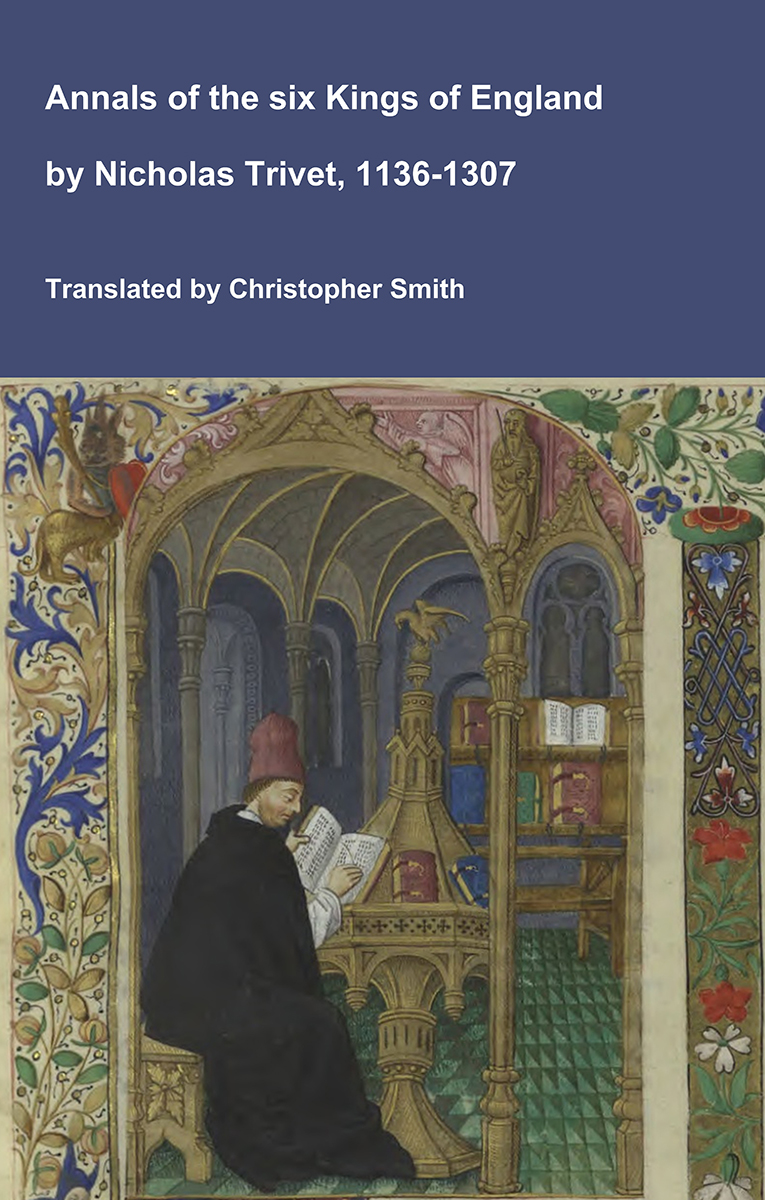 Annals of Six Kings of England by Nicholas Trivet. 1241. The King of England caused a shrine to be prepared in the church of Westminster for the placing of the relics of the most holy king and confessor Edward. A very serious dispute arose at Acre between the Hospitallers and the Templars, which Richard, the king's brother, was not able to settle, although he laboured greatly for this. Alfonso, brother of the King of France, was made Count of Poitou. Gilbert Marshal died1, shattered by blows in a certain tournament, and was succeeded in the earldom by his brother Walter; and when he in turn died without an heir, his inheritance was divided among the sons of his five sisters, of whom we have made mention above. Eleanor, sister of Arthur, died at Bristol; and when she had lived many years in celibacy, at her death she directed that her body should be buried among the nuns of Amesbury, to whom also, with the king's consent, she gave the manor of Melksham with its appurtenances.
Note 1. Gilbert Marshal was killed in a tournament at Ware, Hertfordshire, on 27th June 1241. Matthew Paris: '... where he [Gilbert] by his skill in knightly tactics, gained for himself the praise of military science, and was declared by all, considering his small size of body, to have justly distinguished himself for his valour. This was what the said earl chiefly aimed at; for he was, in the first place, destined to clerical orders, and was reported to be weak and unskilful in warlike exercises. He was, at this tournament, mounted on a noble horse, an Italian charger, to which he was not accustomed, accoutred in handsome armour, and surrounded by a dense body of soldiers, who soon afterwards, however, left him, and dispersed, intent on gain. Whilst the earl, then, was amusing himself by checking his horse at full speed, and anon goring his sides with his sharp spurs, to urge him to greater speed, and, as the case required, suddenly drew rein, both the reins suddenly broke off at the junction with the bit. By this accident the horse became unmanageable, and tossing up his head, struck his rider a violent blow on the breast. Some there were who unhesitatingly asserted that the bridle had been treacherously cut by some jealous person, in order that, being thus left at the mercy of his horse, he might be dashed to pieces and killed; or, at least, that he might be taken by his adversaries at will. Moreover, he had dined, and was nearly blinded by the heat, dust, and sweat, and his head was oppressed by the weight of his heavy helmet. His horse, too, could not be restrained by him, or any one else; but he, at the same time, fainted away, began to totter in his saddle, and soon after fell, half-dead, from his horse-with one foot, however, fixed in the stirrup; and in this manner he was dragged some distance over the field, by which he suffered some internal injuries, which caused his death. He expired in the evening of the 27th of June, amidst the deep and loudly-expressed sorrow of those who beheld him, at a house of the monks of Hertford.'
On 27th June 1296 Floris Gerulfing V Count Holland [aged 42] was killed. His son John [aged 12] succeeded I Count Holland.
Floris has transferred his allegiance to France inviting the enmity of King Edward I of England [aged 57] who relied on him to support the valuable English wool trade. Edward conspired with Guy of Flanders to kidnap Floris. Floris was captured during a hunting party and taken to Muiderslot castle. Concerned about their safety the kidnappers attempted to take Floris to a safer location during which jounrney they were attacked by an angry mob of local peasants. Floris was killed.
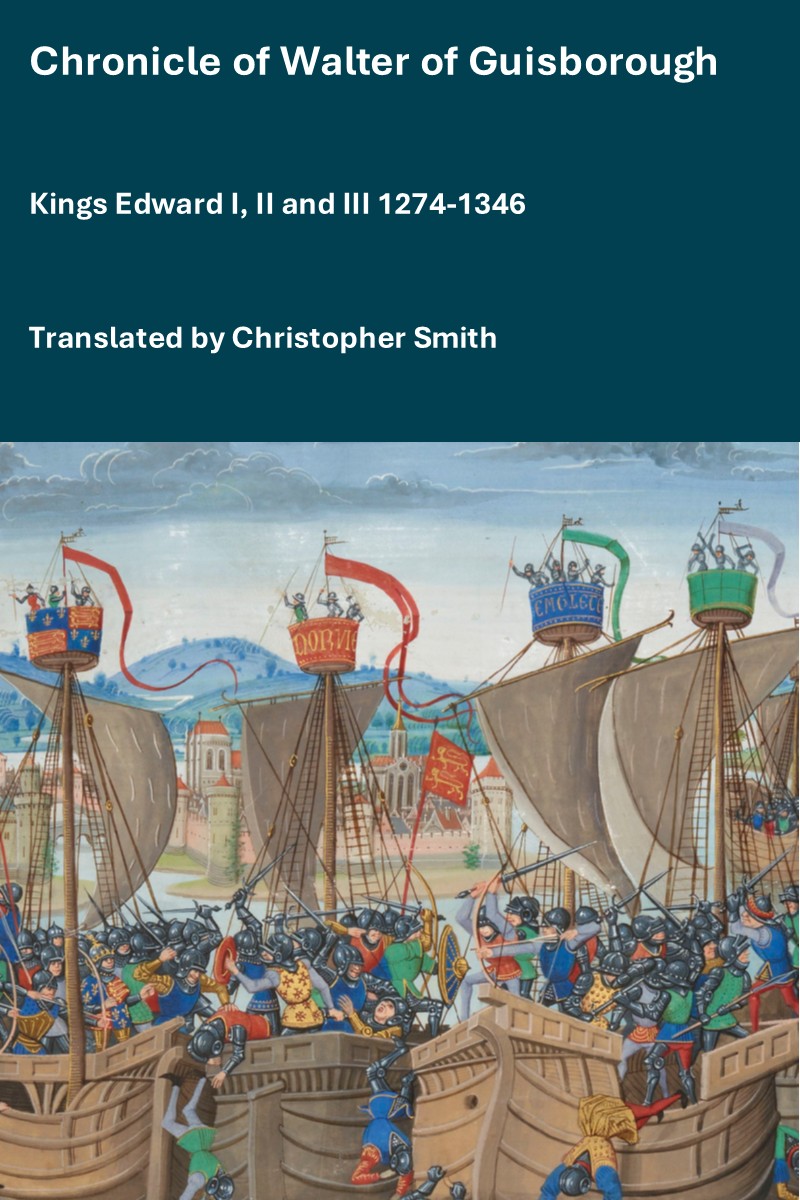 Chronicle of Walter of Guisborough. In the same year, Lord Pope Boniface sent his letters to the Lord King of England on behalf of the Scots concerning the kingdom of Scotland, conceived in these words1:
Boniface, bishop, servant of the servants of God, to his beloved son in Christ, Edward, illustrious King of England, greeting and apostolic blessing. We know, dear son, and the experience of many years has long taught us, how abundantly the affection of royal devotion flourishes in you toward the Holy Roman Church, your mother, who embraces you in the bosom of charity; how the zeal of reverence burns in you, and how ready you are to obey the wishes of this Apostolic See and comply with its good pleasure. Wherefore we place firm hope and full confidence that your royal highness will kindly receive our words, understand them carefully, and pursue them effectively. Indeed, it may have come to your royal ears, and we do not doubt it is recorded in the book of your memory, how, from ancient times, the kingdom of Scotland has belonged by full right to the aforesaid Holy Church, and still is recognized as belonging to it; and that, as we have learned, it has never been nor is a fief to your predecessors, the kings of England, nor to yourself. Moreover, when a war or conflict arose between your father, the renowned King Henry of England, of blessed memory, and Simon de Montfort and his supporters and allies, he sought help from Alexander, King of Scotland, of reverend memory, who was also his son-in-law. And to ensure that such assistance could not be interpreted as a duty of subjection or obligation, the said King Henry issued his own open letters, firmly acknowledging through them that the said aid was received, or was to be received, solely out of special grace, and not as a feudal obligation. Furthermore, at the time of your coronation, when you desired the presence of the then-living King of Scotland, your brother-in-law, you took care to issue your own letters, assuring him that his presence at that ceremony was not required by any obligation, but invited solely as a matter of grace.
And when that same king [of Scotland], concerning the lands of Tyndale and Penrith, which are located within the Kingdom of England, personally came into your presence to perform the usual oath of fealty, he publicly declared by word of mouth, in the hearing of many who were present, that he rendered such fealty only for those lands situated in England, and not as King of Scotland nor for the Kingdom of Scotland. Indeed, he openly protested that he was in no way bound to render fealty for the kingdom itself, and that you accepted that fealty in the manner thus offered. Nor, we believe, has it slipped from your memory that, after the death of that King of Scotland, when the late Margaret, the Maid of Norway, your niece, still underage at the time, was left as his heir, the custody of the said kingdom did not fall to you as lord of the realm. Instead, certain of the kingdom's own nobles were chosen to hold custody. And when, later on, a dispensation was obtained from the Apostolic See regarding a proposed marriage between your beloved son, the noble Edward, and the said Margaret, while she was still living, provided the nobles of that realm gave or could give their assent, you are known to have given written assurances to those same nobles, before they would agree to such a marriage, that, the kingdom of Scotland would remain entirely free, subject to no one, and in no way subordinate, and that, should no children result from such a marriage, the kingdom would be fully restored to its previous independent status, and that the name and honour of the kingdom would be preserved, just as before, including maintaining its own laws, appointing its own officials; holding its own parliaments; conducting its own legal matters within the realm and that none of its inhabitants would be summoned to judgment outside the kingdom. And all of these provisions, it is known, are fully and explicitly contained in your own open letters prepared on the matter.
Moreover, after the aforesaid Margaret [the Maid of Norway] was taken from this present life, and a dispute arose concerning the succession of the said Kingdom of Scotland, the nobles of the same kingdom, fearing that some prejudice might arise against themselves and the said kingdom on this account, refused to come beyond the borders of the kingdom into your presence, unless you had first provided them with a written assurance stating that they were not doing so out of obligation, but solely out of special grace, and that no harm or loss could arise to the liberties of the said kingdom from such an act. And although, it is said, that regarding the state of the same kingdom of Scotland, and its former liberty, while the kingdom lacked the protection of a defender, some things were introduced by the nobles, who at the time were without a leader, as if headless, and lacking the support of a commander or guide, or by the person to whom you are said to have entrusted the rule of that kingdom, though wrongfully and against custom, nonetheless, those things, being elicited through force and fear, which can affect even the steadfast, ought not in law to stand, nor can they prejudice the rights or liberties of the same kingdom. Furthermore, we have no doubt, indeed we are certain, that when the supreme authority of the Apostolic See entrusts some legation to be executed jointly in the kingdoms of England and Scotland, or imposes the payment of a tithe for any reason deemed reasonable, such apostolic letters do not in any way extend to the aforementioned Kingdom of Scotland, because of a special privilege granted to the Scots by the Apostolic See, which fully prevents such extension. This was clearly demonstrated in the time of our predecessor, Pope Adrian of happy memory, who was himself entrusted with a legation by the Apostolic See in both kingdoms. For although we were personally familiar with him, he did not enter the Kingdom of Scotland at all, until a special commission was granted to him by apostolic letters specifically empowering him to exercise the office of legate within Scotland.
Furthermore, let Your Highness be aware of how that kingdom [Scotland], through the venerable relics of the Apostle Andrew, was acquired by the great gift of divine power and converted to the unity of the Catholic faith. Also, how in ancient times, when a dispute arose concerning metropolitan jurisdiction between the Archbishop of York and the prelates of Scotland, and when the said archbishop is said to have quoted the old saying "Remember that we are yours", yet, let us pass over the rest in silence, he nevertheless could not obtain judgment in his favour. Though many other matters and varied arguments, quite reasonable to raise in this regard, present themselves to us, we will leave them unwritten lest they provoke weariness in your royal mind. Still, these points we have raised, dearest son, ought to be carefully weighed and attentively considered in the innermost chambers of your heart, from which no doubt should remain, that the said kingdom of Scotland belongs to the aforesaid Roman Church, and that it is neither lawful nor has it ever been lawful for you to subjugate it by force or to bring it under your rule, to the prejudice of that Church and of many others. Now, however, as we have been reliably informed and as repeated reports have brought to our ears, you, failing to give due attention to the foregoing, and not weighing these matters with appropriate care, but instead eagerly aspiring to occupy and subject that kingdom, at the time when it was deprived of a king's protection, have exerted the power of your strength to that end. It is said that you have caused to be captured and thrown into prison chains our venerable brothers Robert, Bishop of Glasgow, and Mark, Bishop of the Isles, as well as many clergy and other ecclesiastical persons of the said kingdom, some of whom, as it is reported, perished under the harshness of imprisonment. You are also said to have occupied castles, and, as is claimed, destroyed monasteries and many other religious places, as well as inflicted great harm on the inhabitants of that kingdom. Furthermore, in parts of that kingdom, you have installed royal officials, who are not afraid to trouble the prelates, other clergy, and ecclesiastical and secular persons of the said kingdom with numerous grievances, harassments, and diverse afflictions. All of this has been done to the offense of Divine Majesty, to the contempt of the Holy See, to the harm of your own royal salvation and reputation, a violation of justice, and to the grave scandal of many of the faithful.
Therefore, we earnestly request, exhort, and implore Your Royal Majesty, by Him who is the true salvation of all, that you diligently consider that, by reason of the pastoral office placed upon our shoulders, we are bound to carefully preserve and govern all the rights and possessions of the aforesaid Church. And because we cannot and must not give preference to man over God, we ask that, out of reverence for the Divine Majesty, for the Apostolic See, and for ourselves, you order, without delay or difficulty, the benevolent release and full restoration of liberty to those bishops, clergy, and ecclesiastical persons still held in your royal prisons. We also ask that you recall from the kingdom of Scotland those officials you have appointed there. Thus, by responding in these matters with the prompt and effective attention we hope and desire from you, you will become more pleasing and acceptable to the Heavenly King, who repays great things for small, and will receive not only human praise and renown, but also the abundant favour and grace of the Apostolic See. But if you claim to hold any right in the kingdom of Scotland, or in any part of it, we require that you send your representatives or envoys, specially appointed for this purpose, together with all charters and legal instruments supporting such claims, to appear before us within six months from the date of receiving this letter. We, for our part, are ready to provide full justice to you as our beloved son, and to ensure that any legitimate rights you may possess are fully and inviolably observed. Nevertheless, by this present document, we reserve to the judgment and decision of the Holy See all disputes, controversies, and questions whatsoever, whether already arisen or that might arise in the future, in any way related to you, the kingdom of Scotland, or its prelates, clergy, and secular persons. We declare that anything attempted to the contrary, knowingly or unknowingly, shall be null and void. Given at Anagni, five days before the Kalends of July [27th June 1300], in the fifth year of our pontificate.
Eodem anno dominus papa Bonifacius literas The Pope suas direxit domino regi Angliæ pro Scotis regno Scotorum, conceptas in hæc verba:
Bonifacius episcopus servus servorum Dei, carissimo in Christo filio Edwardo, regi Angliæ illustri, salutem et apostolicam benedictionem. Scimus, fili, et longi jam temporis spatio magistra nos rerum experientia docuit, qualiter erga Romanam matrem ecclesiam, quæ te gerit in visceribus caritatis, regiæ devotionis affectus exuberat, reverentiæ zelus viget, quodque promptus et sedis ejus votis obtemperas, beneplacitis acquiescis. Quamobrem firmam spem gerimus, plenamque fiduciam obtinemus, quod regalis sublimitas verba nostra benigne recipiat, diligenter intelligat, efficaciter prosequatur. Sane ad celsitudinem regiam potuit pervenisse, et in tuæ libro memoriæ nequaquam ambigimus contineri, qualiter ab antiquis temporibus regnum Scotia pleno jure pertinuit, et adhuc pertinere dinoscitur, ad ecclesiam supradictam; quodque illud, sicut accepimus progenitoribus tuis regni Angliæ regibus sive tibi feudale non extitit nec existit. Qualiter etiam claræ memoriæ Henricus, rex Angliæ, pater tuus, tempore discordiæ sive guerræ inter ipsum et quondam Symonem de Monte-forti, suosque fautores et complices suscitatæ, a recolendæ memoriæ Alexandro ejusdem Scotia rege ac ipsius Henrici genero, auxilium sibi petiit exhiberi; et ne hujusmodi auxilium, jure cujuslibet subjectionis aut debiti, petitum seu præstitum vocaretur, præfatus Henricus eidem regi Scotia suas patentes duxit litteras concedendas, per eas firmiter recognoscens prædictum auxilium se recepisse vel se recepturum duntaxat de gratia speciali. Præterea, cum successu temporis, præfati regis Scotiæ, tui sororii, tunc viventis, in tuæ coronationis solenniis habere præsentiam affectares, sibi per tuas patentes cavere literas curavisti, quod in ipsis solenniis ejus habere præsentiam non ex debito sed tantum de gratia intendebas.
Et cum etiam rex ipse, pro Tyndaliæ ac de Peynerre terris in regno Angliæ positis, se ad tuam præsentiam personaliter contulisset, tibi fidelitatem solitam impensurus, idem in præstatione fidelitatis hujusmodi, multis tunc præsentibus, vivæ vocis oraculo publice declaravit, quod pro terris eisdem sitis tantum in Anglia, non ut rex Scotia neque pro Scotiæ regno, fidelitatem exhibebat eandem; quinimmo palam extitit protestatus, quod pro regno ipso tibi fidelitatem præstare seu facere aliquatenus non debebat, utpote tibi penitus tuque sic oblatam fidelitatem hujusmodi admisisti. A tua quoque creditur non excidisse memoria, qualiter, eodem rege Scotia sublato de medio, quondam Margareta puella, nepte tua, layingdom tunc minoris ætatis, hærede sibi relicta, non ad te velut ad dominum regni pervenit custodia memorati, sed certi ejusdem regni proceres ad ejus electi custodiam extiterunt. Quodque postmodum, dispensatione ab apostolica sede obtenta, super matrimonio contrahendo inter dilectum filium nobilem virum Edwardum natum tuum et Margaretam prædictam dum viveret, si ad id procerum dicti regni accederet vel haberetur assensus, tu eisdem proceribus per tua scripta cavisse dinosceris, priusquam vellent hujusmodi matrimonio consentire, quod regnum ipsum penitus liberum, nullique subjectum, seu quovis modo submissum, in perpetuum remaneret; quodque in pristinum, seu talem ipsius, statum restitueretur omnino, si ex hujusmodi matrimonio contrahendo liberos non exstare contingeret; ac nomen et honorem, ut prius" pariter retineret, tam in suis sibi servandis legibus et præficiendis officialibus dicti regni, quam parliamentis tenendis, tractandis causis in ipso, et nullis ejus incolis extra illud ad judicium evocandis; et quod in tuis patentibus literis, inde confectis, hæc plenius et seriosius contineri noscuntur.
Præfata insuper Margareta de præsenti luce subtracta, et tandem super successione dicti regni Scotia suborta dissensionis materia inter partes, ipsius regni proceres, metuentes sibi dictoque regno posse occasione hujusmodi præjudicium generari, non aliter ad tuam præsentiam extra ipsius regni accedere limites voluerunt, nisi per te patenti scripto caveretur eisdem, quod id non fiebat ex debito sed ex gratia speciali, quodque nullum exinde ipsius regni libertatibus posset dispendium imminere. Et licet, ut dicitur, super statu ejusdem regni Scotiæ, ac ejus prius habita libertate, regno ipso tunc carente præsidio defensoris, per ipsius regni proceres tunc velut acephalos et ducis vel aurigæ suffragium non habentes, sive per illum, cui præfati regni regimen licet indebite diceris commisisse, contra morem solitum, aliqua fuerint hactenus innovata, ea tamen, utpote per vim et metum, qui cadere poterant in constantem, elicita, nequaquam debent de jure subsistere, aut in ejusdem regni præjudicium redundare. Cæterum nobis nullatenus venit in dubium, quin potius certi sumus, quod cum apostolicæ sedis præcellens auctoritas per suas litteras in Angliæ ac Scotiæ regnis simul alicui legationis committit officium exequendum, vel pro quavis causa quam rationabilem reputat decimæ solutionem indicit, hujusmodi apostolicæ literæ ad præfatum Scotiæ regnum se aliquatenus non extendunt, speciali prædictæ sedis privilegio Scotis indulto penitus obsistente, prout tempore felicis recordationis Adriani papæ prædecessoris nostri, tunc Sancti Adriani diaconi cardinalis, et per ipsius sedis literas simul in regnis ipsis legati, cum quo familiariter tunc eramus, contigit evidenter; nam legatus ipse ad præfatum regnum Scotia aliquatenus ad missus non extitit, donec per literas speciales apostolicas sibi legationis fuit commissum officium in eodem.
Præterea nosse potest celsitudo, qualiter regnum ipsum per Andrea Apostoli venerandas reliquias, sine superni Numinisgrandi dono acquisitum et conversum extitit ad fidei catholicæ unitatem. Qualiter etiam antiquis temporibus Eboracensis archiepiscopus, qui tunc erat, mota per eum super jure metropolitico adversus prælatos Scotiæ quæstione, in qua dictum antiquitus fuisse commemorat, Memento quod sumus tui, ut cætera quæ inde sequuntur silentio relinquamus, pro se sententiam obtinere nequivit. Quamvis alia plura et varia quæ in hac parte rationabiliter proponenda se offerunt, ex quibus etiam ad hæc tibi scribenda movemur, prætereat calamus ne inde forsitan sensibus regiis tædium generetur. Hæc profecto, fili carissime, infra claustra pectoris sollicite considerare te convenit et attendere diligenter, ex quibus nulli in dubium veniat regnum Scotiæ prælibatum ad præfatam Romanam ecclesiam pertinere, quod tibi nec licet nec licuit, in ipsius ecclesiæ ac multorum præjudicium, per violentiam subjugare tuæque subjicere ditioni. Cum autem, sicut habet fide digna, et nostris jam pluries auribus inculcata relatio, famæque præcurrentis affatibus divulgatur, tu præmissa, ut debueras, non attendens, neque debita consideratione discutiens, et ad occupandum et subjugandum ditioni regiæ regnum ipsum, tunc regis auxilio destitutum, vehementer aspirans, et tandem ad id exercens potentiæ tuæ vires, venerabilibus fratribus nostris, Roberto Glasguensi et Marco Sodorensi episcopis, et nonnullis clericis, et aliis personis ecclesiasticis dicti regni, ut dicitur, captis, et carceralibus vinculis traditis, quorum aliquos, sicut asseritur, squalor carceris violentus extinxit, ac etiam occupatis castris, et, prout fertur, monasteriis, aliisve religiosis locis quampluribus, dirutis seu destructis, ac damnis gravibus ejusdem regni habitatoribus irrogatis, in ejusdem regni partibus officiales regios posuisti, qui prælatos, cæteros clericos, acs ecclesiasticas, ac etiam seculares dicti regni personas multimodis perturbare molestiis, et afflictionibus variis et diversis impetere non verentur, in divinæ majestatis offensam, sedis memoratæ contemptum, regiæ salutis et famæ dispendium, juris injuriam, et grave scandalum fidelium plurimorum.
Regalem itaque magnificentiam rogamus, et hortamur attente, ac obsecramus in Eo qui est omnium vera salus, quatenus solerter attendens, quod, ex debito pastoralis officii nostris humeris incumbentis, ad conservanda et gubernanda sollicite bona juraque omnia ecclesiæ supradictæ tenemur, quodque homini plusquam Deo deferre non possumus nec debemus, prædictos episcopos, clericos et personas ecclesiasticas, quos adhuc carcer regius tenet inclusos, pro divina et apostolicæ sedis ac nostra reverentia, sublato difficultatis et dilationis objectu, benigne restitui facias pristinæ libertati, dictosque officiales de regno Scotiæ revoces memorato. Sic te in hiis, prout speramus et cupimus, promptis et efficacibus studiis habiturus, ut apud cœlestem Regem pro minimis grandia rependentem, non immerito reddaris acceptior gratior, habearis, et, præter laudis humanæ præconium tibi proinde proventurum, apostolicæ sedis favorem et gratiam possis uberius promereri. Si vero in eodem regno Scotia, vel aliqua ejus parte, jus aliquod habere te asseris, volumus quod tuos procuratores et nuncios ad hoc specialiter constitutos, cum omnibus juribus et munimentis tuis hujusmodi negotium contingentibus, infra sex menses a receptione præsentium numerandos, ad nostram præsentiam mittere non omittas; cum parati sumus tibi, tanquam dilecto filio, plene super præmissis exhibere justitia complementum, et jura si qua habes inviolabiliter observare. Nos enim nihilominus ex nunc lites, quæstiones et controversias quaslibet inter te dictumque regnum Scotiæ ac prælatos, clericos, ac personas seculares ejusdem subortas, et quæ possunt in posterum ex quibusvis causis præteritis exoriri, totumque negotium prædicta contingens, aut aliquod eorundem, ad cognitionem et determinationem sedis ejusdem præsentium tenore reducimus et etiam reservamus. Decernentes irritum et inane si secus scienter vel ignoranter a quoquam in hac parte contigerit attemptari. Datum Anagniæ V kalendas Julii, pontificatus nostri anno quinto.
Note 1. This document has been collated with the original in the Treasury of the Court of the Receipt of the Exchequer. The various readings of Guisborough's MSS. are given in foot-notes.
On 27th June 1301 King Edward I [aged 62] visited Horton Castle, Northumberland [Map].
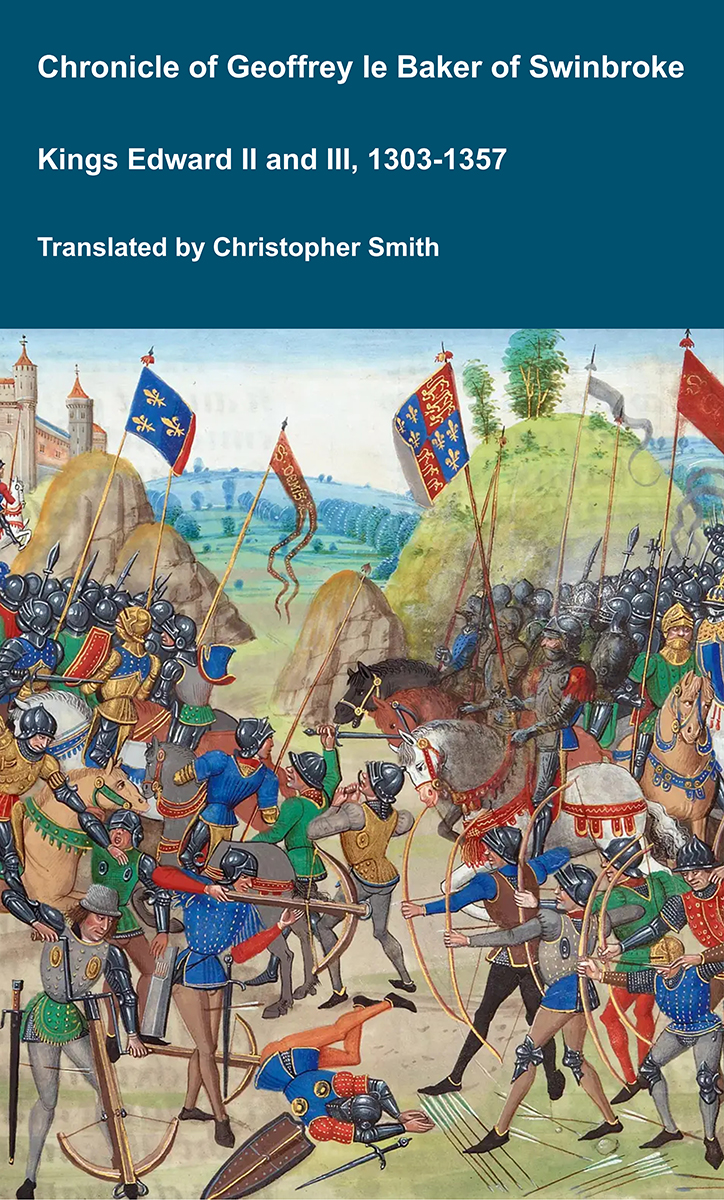
Chronicle of Geoffrey le Baker of Swinbroke
Baker was a secular clerk from Swinbroke, now Swinbrook, an Oxfordshire village two miles east of Burford. His Chronicle describes the events of the period 1303-1356: Gaveston, Bannockburn, Boroughbridge, the murder of King Edward II, the Scottish Wars, Sluys, Crécy, the Black Death, Winchelsea and Poitiers. To quote Herbert Bruce 'it possesses a vigorous and characteristic style, and its value for particular events between 1303 and 1356 has been recognised by its editor and by subsequent writers'. The book provides remarkable detail about the events it describes. Baker's text has been augmented with hundreds of notes, including extracts from other contemporary chronicles, such as the Annales Londonienses, Annales Paulini, Murimuth, Lanercost, Avesbury, Guisborough and Froissart to enrich the reader's understanding. The translation takes as its source the 'Chronicon Galfridi le Baker de Swynebroke' published in 1889, edited by Edward Maunde Thompson.
Available at Amazon in eBook and Paperback format.
On 27th June 1328 Stephen Wittelsbach II Duke Bavaria [aged 9] and Elisabeth Barcelona Duchess Bavaria [aged 18] were married. He the son of Louis Wittelsbach IV Holy Roman Emperor [aged 46] and Beatrix Świdnica Holy Roman Empress. They were fifth cousins. He a great x 4 grandson of King Henry "Curtmantle" II of England. She a great x 4 granddaughter of King Henry "Curtmantle" II of England.
From 27th June 1369 to 1371 Bishop Thomas de Brantingham was appointed Lord Treasurer to King Edward III of England [aged 56].
On 27th June 1374 Rupert King Germany [aged 22] and Elisabeth Hohenzollern [aged 16] were married at Amberg. She the daughter of Frederick Hohenzollern V Burgrave Nuremburg [aged 41].
On 27th June 1430 Henry Holland 3rd Duke Exeter was born to John Holland 2nd Duke Exeter [aged 35] and Anne Stafford Duchess Exeter. He a great x 2 grandson of King Edward III of England. Coefficient of inbreeding 2.71%. He married 1447 his half second cousin Anne York Duchess Exeter, daughter of Richard Plantagenet 3rd Duke of York and Cecily "Rose of Raby" Neville Duchess York, and had issue.
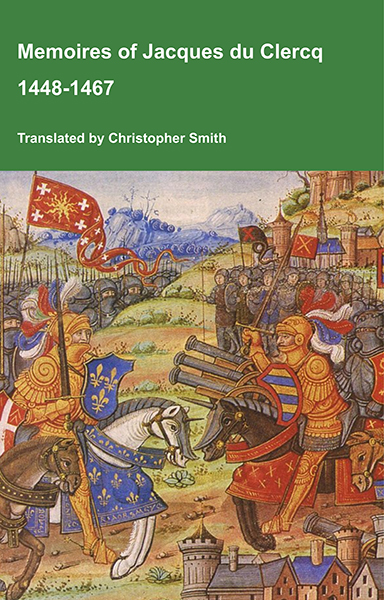 Memoires Jacques du Clercq. At that time a furrier named Jean Pinte died on the 27th day of the month of June in the said year fifty-seven; and the next morning, as Jean Pinte was buried, his wife, who was a young woman of about thirty-four years, became betrothed and married that very same day to one named Willemet de Neuville, also a furrier, about twenty years of age, and the following night she lay with her said second husband. I set this down in writing because, as I believe, few women have ever been seen to remarry so quickly, although in some ways she might be excused; for at that time, throughout all the lands of the Duke of Burgundy, as soon as it happened that any merchants, labourers, and sometimes even burghers of a good town or officials passed from this world, if they were rich and left their wives wealthy, then immediately the said duke, his son, or others of their lands wished to marry those widows to their archers or other servants. And it was necessary that those widows, if they wished to remarry, should marry those whom their lords assigned to them, or else pay out in money, both to those who wanted them and to those who governed the lords, and sometimes to the lords themselves, so that they might be allowed to marry whom they pleased; and even then they were among the most fortunate who, by means of friends and money, could be freed from it. For most often, whether they wished it or not, if they wanted to remarry, they had to take those whom the lords chose to give them. Likewise, when a man was rich and had a daughter to marry, if he did not marry her very young, he was harassed, as has been said above.
En icelluy temps ung pelletier, nommé Jean Pinte, mourut le vingt septiesme jour du mois de juing audit an cinquante sept, et le lendemain matin ainsy que Jean Pinte fust mis en terre, sa femme, laquelle estoit josne femme de trente quatre ans ou environ, fiancha et espousa ce propre jour, ung nommé Willemet de Noeuville, pelletier aussy, de l'age de vingt ans ou environ, et la nuict ensuivant coucha avecq sondit second mari; je mets ce par escript, pour tant que comme je crois on n'a veu peu de femme soy plutost remarrier, combien que en aulcunes manieres on la pourroit excuser, car en ce temps par tout le pays du duc de Bourgogne, sitost qu'il advenoit que aulcuns marchands, labouriers et aulcune fois bourgeois d'une bonne ville ou officier trespassoit de ce siecle, qui fust riche, et il delaissat sa femme riche, tantost ledit duc, son fils ou aultres de ses pays voulloient marrier lesdites vefves à leurs archiers ou aultres leurs serviteurs, et failloit que lesdites vefves, sy elles se voulloient marrier, qu'elles espousissent ceulx que leurs Srs leur voulloient bailler ou fissent tant par argent, au moins tant a ceulx qui les voulloient avoir, comme à ceulx qui gouvernoient les Srs, et aulcune fois aulx Srs mesmes, que ils souffrissent qu'elles se marriassent à leur gré, et encoires estoient elles les plus heureuses, qui par forche d'amis et d'argent en pouvoient estre deslivrées; car le plus souvent, volsissent ou non, sy elles se voulloient marrier, il falloit qu'elles prinsissent ceulx que les Srs leur voulloient baillier, et pareillement quant ung homme estoit riche et il avoit une fille a marrier, s'il ne la marrioit bien josne, il estoit travallié, comme est dit cy dessus.
On 27th June 1458 Alfonso V King Aragon [aged 62] died. His son Ferdinand [aged 35] succeeded I King Naples. Isabella Clermont Queen Consort Naples [aged 34] by marriage Queen Consort Naples. His brother John [aged 59] succeeded II King Aragon.
On 27th June 1461 Thomas Fitzalan 10th or 17th Earl of Arundel [aged 11] was appointed Knight of the Bath.
After 27th June 1461, the time of his coronation, King Edward IV of England [aged 19] created his brother George [aged 11] 1st Duke Clarence.
Warkworth's Chronicle [1461-1474]. [27th June 1461] As for alle thynges that folowe, referre them to my copey, in whyche is wretyn a remanente lyke to this forseyd werke: that is to wytt, that, at the coronacyone1 of the forseyde Edwarde, he create and made dukes his two brythir, the eldere George [aged 11] Duke of Clarence, and his yongere brothir Richard [aged 8] Duke of Gloucetre; and the Lord Montagu [aged 30]2, the Earl of Warwick [aged 32]'s brothere, the Earl of Northumberlonde; and one William Stafford squiere, Lord Stafforde of Southwyke; and Sere Herbard [aged 38], Lorde Herbard, and after Lorde Earl of Penbroke3; and so the seide Lorde Stafforde [aged 22] was made Earl of Devynschire4; the Lorde Gray Ryffyne [aged 44], Earl of Kent6; the Lorde Bourchyer [aged 57], Earl of Essex; the Lorde Jhon of Bokyngham [aged 33], the Earl of Wyltschyre5; Sere Thomas [Walter] Blount [aged 45]7, knyghte, Lord Mont[joy]; Sere Jhon Hawarde, Lorde Hawarde [aged 36]8; William Hastynges [aged 30] he made Lorde Hastynges and grete Chamberlayne; and the Lorde Ryvers; Denham squyere, Lorde Dynham; and worthy as is afore schewed; and othere of gentylmen and yomenne he made knyghtes and squyres, as they hade desserved.
Note. The Warkworth Chronicle, in Bernard's Catalogue of the Peterhouse manuscripts, taken from James's Eclogæ, is numbered - 230. It may be as well to observe that John Bagford mentions a contemporary Chronicle in English MS. of the events of the commencement of Edward's reign, in MS. Tann. Bodl. 453.
Note 1. At the coronacyone. King Edward was crowned in Westminster Abbey, on the 29th of June 1461. Warkworth's first passage is both imperfect and incorrect, and would form a very bad specimen of the value of the subsequent portions of his narrative; yet we find it transferred to the Chronicle of Stowe. It must, however, be regarded rather as a memorandum of the various creations to the peerage made during Edward's reign, than as a part of the chronicle. Not even the third peerage mentioned, the Earldom of Northumberland, was conferred at the Coronation, but by patent dated 27 May 1464: and the only two Earldoms bestowed in Edward's first year (and probably at the Coronation) were, the Earldom of Essex, conferred on Henry Viscount Bourchier, Earl of Eu in Normandy, who had married the King's aunt, the Princess Isabel of York; and the Earldom of Kent, conferred on William Neville, Lord Fauconberg, one of King Edward's generals at Towton. The former creation is mentioned by Warkworth lower down in his list; the latter is omitted altogether. - J.G.N.
Note 2. The Lord Montagu. And then Kyng Edward, concidering the greate feate doon by the said Lord Montagu, made hym Earl of Northumberlond; and in July next folowyng th'Earl of Warwyk, with th'ayde of the said Earl of Northumberland, gate agayn the castell of Bamborugh, wheryn was taken Sir Raaf Gray [aged 29], which said Ser Raaf was after behedid and quartred at York. Also, in this yere, the first day of May, the Kyng wedded Dame Elizabeth Gray [aged 24], late wif unto the lord Gray of Groby, and doughter to the Lord Ryvers." - The London Chronicle, MS. Cotton. Vitell. A. xvi. fol. 126, ro. The MS. of the London Chronicle, from which Sir Harris Nicolas printed his edition, does not contain this passage. It is almost unnecessary to remark the chronological incorrectness of the above, but it serves to show how carelessly these slight Chronicles were compiled. Cf. MS. Add. Mus. Brit. 6113, fol. 192, rº. and MS. Cotton. Otho, B. XIV. fol. 221, ro.
Note 3. Lord Earl of Pembroke. William Lord Herbert of Chepstow, the first of the long line of Herbert Earls of Pembroke, was so created the 27th May 1468. His decapitation by the Duke of Clarence at Northampton in 1469, is noticed by Warkworth in p. 7.-J.G.N.
Note 4. Earl of Devynschire. Humphery Stafford, created Baron Stafford of Southwick by patent 24th April 1464, was advanced to the Earldom of Devon 7th May 1469; but beheaded by the commons at Bridgwater before the close of the same year, as related by Warkworth, ubi supra. - J.G.N.
Note 5. Earl of Wyltschyre. John Stafford, created Earl of Wiltshire, 5th Jan. 1470; he died in 1473.—J.G.N.
Note 6."The Lorde Gray Ryffyne, Earl of Kent". The Earl of Kent, of the family of Neville, died without male issue, a few months after his elevation to that dignity; and it was conferred on the 30th May 1465, on Edmund Lord Grey de Ruthyn, on occasion of the Queen's coronation. He was cousin-german to Sir John Grey, of Groby, the Queen's first husband. On the same occasion the Queen's son Sir Thomas Grey [aged 6] was created Marquess of Dorset; her father Richard Wydevile [aged 56] lord Ryvers was advanced to the dignity of Earl Ryvers; and her brother Anthony [aged 21] married to the heiress of Scales, in whose right he was summoned to Parliament as a Baron. - J.G.N.
Note 7.Sere Thomas Blount. This should be Walter, created Lord Montjoy 20th June 1465; he died in 1474.-J.G.N.
Note 8. Sere Jhon Hawarde, Lord Hawarde. John Howard 1st Duke of Norfolk. This peerage dates its origin, by writ of summons to Parliament, during the short restoration of Henry VI. in 1470, a circumstance more remarkable as "evidence exists that he did not attach himself to the interest of that Prince, being constitued by Edward, in the same year, commander of his fleet." See Sir Harris Nicolas's memoir of this distinguished person (afterwards the first Duke of Norfolk) in Cartwright's History of the Rape of Bramber, p. 189.-J.G.N.
Chronicle of Robert Fabyan [-1512]. 27th June 1461. And upon the morne, beynge Sunday & seynt Peters daye, he was with great tryumphe, of the archebysshop of Cautorbury, crowned and enoyntyd before ye hygh aulter of seynt Peters churche of Westmynster. And after this solempnyzacion of the crownynge of the kynge, with also the sumptuous & honorable feest holden in Westmynster all1 was fynysshed, the kynge soone after creatyd George [aged 11] his brother duke of Clarence. And in the moneth of luly folowynge, at ye stadarde in Chepe, the hande of a seruaunt of the kynges, callyd lohn Dauy, was stryken of, for that he hadde stryken a man within the palays of Westmynster.
Note 1. Westminster hall. edit. 1542. 1559.
Collectanea by John Leland [1502-1552]. [Around 27th June 1461] Edward at his Coronation creatid his Brother George Duke of Clarance, and Richard the younger Duke of Glocester; the Lord Montacute, the Erle of Warwikes Brother, the Erle of Northumbreland, William Stafford Esquier Lord Staford of Southwike, Syr Herbart Lord Herbart, and after Erle of Penbroke, and the saide Lorde Staford Erle of Devonshire, the Lord Gray of Ruthine Erle of Kent, the Lorde Bourchier, Erle of Effex, the Lord John of Bokingham Erle of Wyleshire, Syr Thomas Blunt Knight the Lord Montjoye, Syr John Haward Lord Haward, Willyam Haftinges Lord Hastinges and greate Chambrelayn, and the Lorde Ryvers, Denham Esquyer Lorde Deneham, and Worthy as is afore shewid.
Hearne's Fragment. [27th June 1461] ... and so in this goodly order he was brought to Westminster, whereat on the morrow, being St. Peter's day, and Sunday, he was solemnly crowned by the hands of the Archbishop of Canterbury, with great triumph and honour; and thereupon he created his brother George, Duke of Clarence, then being of 14 years old, anno 1460.
Henrici Quinti, Angliæ Regis, Gesta, is a first-hand account of the Agincourt Campaign, and subsequent events to his death in 1422. The author of the first part was a Chaplain in King Henry's retinue who was present from King Henry's departure at Southampton in 1415, at the siege of Harfleur, the battle of Agincourt, and the celebrations on King Henry's return to London. The second part, by another writer, relates the events that took place including the negotiations at Troye, Henry's marriage and his death in 1422.
Available at Amazon in eBook and Paperback format.

On 27th June 1462 Louis XII King France was born to Charles Valois Duke Orléans [aged 67] and Mary de la Marck Duchess Orléans. Coefficient of inbreeding 2.20%. He married (1) 1476 his second cousin once removed Joan Valois Queen Consort France (2) 8th January 1499 his first cousin once removed Anne of Brittany Queen Consort France and had issue (3) 9th October 1514 his second cousin twice removed Mary Tudor Queen Consort France, daughter of King Henry VII of England and Ireland and Elizabeth York Queen Consort England.
On 27th June 1477 Adolf Egmont 2nd Duke Guelders [aged 39] died at Tournai [Map]. He was buried at Tournai Cathedral [Map]. His son Charles [aged 10] succeeded 3rd Duke Guelders.
Chronicles of London Vitellius A XVI. Ye haue hard before how that the Smyth, Capitayn of the forsaid Comons of Cornewaill, wer taken at the blak heth wt many moo, as the lord Awdley, flammok, and many other; which said Smyth and fflammok wer vpon the Monday, beyng the XXVJ day of Juyn, Arayned in the White Hall at Westmynster, and there adiuged; and vpon the morow, Tuesday [27th June 1497] folowyng, the said Smyth and fflammok wer drawen from the Tower through the Citie vnto Tiborn; and ther hanged till they wer dede, and after stryken downe, and heded and after quarterid.
Chronicles of London Vitellius A XVI. And the same day [27th June 1497] was the lord Awdley [aged 34] had from the Tower to Westm'. the Axe of the Tower borne byfore hym. And there in the White hall a-Reyned and adiuged; and that after none drawen from Westm' vnto Newgate, and there Remayned all nyght. And vpon Weddensday in the mornyng, aboute IX of the Clok, drawen from the said Gaole of Newgate [Map] vnto the Tower hill wt a cote armour vpon hym of papir, all to torne; and there his hede stryken off: vpon whos Soule, and all christen god haue mercy! amen! And after his hede set vpon the Brigge. The cause of Rysyng of those Comons was after the Comon ffame for the graunt of swich money as was graunted at the last parliament, for the which the said Comons put in blame the Archbisshop of Caunterbury, my lord Cardynall, also the Archebisshop of Durham, the Bisshop of Bathe, Sir Reynold Bray and Sir Thomas Lovell, knyghtes, wt other ; which persones their myendes was to have distroyed; this was their owteward Colour, what their Inward intent was God knoweth, but what hath ensued of like besynesse is euydent, as by Jak Straw, Jak Cade, and other.

On 27th June 1503 Margaret Tudor Queen Scotland [aged 13] left Richmond Palace [Map] for Scotland accompanied by Thomas Boleyn 1st Earl Wiltshire and Ormonde [aged 26], Edward Howard [aged 27], Richard Neville 2nd Baron Latimer of Snape [aged 35] and Ralph Ogle 3rd Baron Ogle [aged 34]. During her journey she stayed at Collyweston, Northamptonshire [Map] and York [Map].
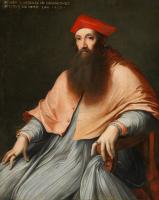
On 27th June 1515 Cardinal Reginald Pole [aged 15] graduated Magdalene College aka Buckingham.
On 14th August 1539 Ralph Sacheverell [aged 33] died at Ratcliffe on Soar, Nottinghamshire [Map]. He was buried at Holy Trinity Church Ratcliffe on Soar [Map].
On 27th June 1538 Cecilia Durance [aged 30] died. She was buried at Holy Trinity Church Ratcliffe on Soar [Map].
Decorated Gabled Headress. Lancastrian Esses Collar with Big Esses with Tudor Rose Pendant. Possibly second hand monuments. Gabled Headress.
Ralph Sacheverell: Ralph Sacheverell and Anna Unknown were married. Ralph Sacheverell and Cecilia Durance were married. In 1506 he was born to Richard Sacheverell Baron Hungerford, Botreaux and Moleyns and Mary Hungerford Baroness Hastings, 4th Baroness Hungerford, 5th Baroness Botreaux and 2nd Baroness Moleyns at Ratcliffe on Soar, Nottinghamshire [Map].
Cecilia Durance: In 1508 she was born to John Durance at Isham, Northamptonshire.


On 27th June 1550 Charles IX King France was born to King Henry II of France [aged 31] and Catherine Medici Queen Consort France [aged 31]. He married 26th November 1570 his fourth cousin Elisabeth of Austria Queen Consort France, daughter of Maximilian Habsburg Spain II Holy Roman Emperor and Maria of Spain Holy Roman Empress, and had issue.


Chronicle of Greyfriars. 27th June 1551. And the xxvij. day of the same monyth the byshoppe of Wynchester [aged 37] that was than (John Ponetc ) was devorsyd from hys wyffe in Powlles, the whyche was a bucheres wyff of Nottynggam, and gave hare husbande a sartyne mony a yere dureynge hys lyffe as it was jugydde by the lawe.
Note c. The name is left blank in the manuscript. This passage is remarkable as a fuller statement of the same matter of which a brief notice occurs in Machyn's Diary, p. 8, and which was only assigned by strong presumption to bishop Ponet. See the note, ibid, p. 320.
Henry Machyn's Diary. 27th June 1552. The xxvij day of Juin the Kyng's [aged 14] mageste removed from Grenwyche [Map] by water unto Pottney [Map], and ther [he] toke ys horsse unto Hamtun [Map] cowrte one ys progres, and ther lyvyng ther x days, and so to Ottland [Map], and to Gy[lford] [Map].
Note. The king took horse on his progress. King Edward's Diary, (May 23, 1551) gives the following enumeration of the bands of men of arms appointed at this time to accompany him on his progress:
Lord Treasure 30 Earl of Rutland 15 Lord Cobham 20
Lord Great Master 25 Earl of Huntingdon 25 Lord Warden 20
Lord Privy Seal 30 Earl of Pembroke 50 Mr. Vice-chamberlain 15
Duke of Suffolk 25 Lord Admiral 15 Mr. Sadler 15
Earl of Warwick 25 Lord Darcy 30 Mr. Sydney 15
Afterwards, on the 22d of June, it was agreed that the bands appointed to Mr. Sidney, Mr. Vice-chamberlain, Mr. Hobby, and Mr. Sadler, should not be furnished, but left off. Again, when the king was in Sussex, on the 24th July, "because the number of bands that went with me this progress made the train great, it was thought good they should be sent home, save only 150 which were picked out of all the bands. This was because the train was thought to be near 4000 horse, which were enough to eat up the country, for there was little meadow or hay all the way as I went."


Henry Machyn's Diary. 27th June 1560. The xxvij day of June the penters [painters] whent in hand with the yerle of Huntyngtun('s) [deceased] berehyng.
On 27th June 1596 William Hervey 1st Baron Hervey [aged 31] was knighted at Cádiz by Robert Devereux 2nd Earl Essex [aged 30] at the Sack of Cádiz.


On 27th June 1598 Bridget Paston died. Monument in Church of St Mary the Virgin, Tittleshall [Map]. Arched niche with kneeling effigy at prie-dieu which carries the inscription. Flanking pilasters with partly painted carved trophies surrounded by ribbon-work. Carved achievement in strapwork surround above and eight kneeling weepers below.
Armorials top left  Coke Arms and top right
  Paston Arms.
Above the monument an amorial Quarterly: Coke Arms, Crispin, Folkard and Pawe impaling Quarterly of Seventeen with 1 Paston Arms, 2 Peche 3 Leach 4 Somerton 5 Peyver 6 Walcot 7 Berry 8 Craven 9 Kerdeston 10 Wachesam or Sotherton 11 Hethersett 12 Charles 13 Tatshall 14 Hengrave 15 Gerbridge 16 Mautby 17 Basinges?.
Bridget Paston: she was born to John Paston. She a great x 4 granddaughter of King Edward III of England. On 13th August 1582 Edward Coke and she were married.


On 27th June 1630 the future Charles II was baptised by Archbishop William Laud [aged 56] at Chapel Royal, St James's Palace. Louis XIII King France [aged 28] and Marie de Medici Queen Consort France [aged 55] were godparents.
Robert Kerr 1st Earl Ancram [aged 52] was created 1st Earl Ancram.
Chronicle of Abbot Ralph of Coggeshall
The Chronicle of Abbot Ralph of Coggeshall (Chronicon Anglicanum) is an indispensable medieval history that brings to life centuries of English and European affairs through the eyes of a learned Cistercian monk. Ralph of Coggeshall, abbot of the Abbey of Coggeshall in Essex in the early 13th century, continued and expanded his community’s chronicle, documenting events from the Norman Conquest of 1066 into the tumultuous reign of King Henry III. Blending eyewitness testimony, careful compilation, and the monastic commitment to record-keeping, this chronicle offers a rare narrative of political intrigue, royal power struggles, and social upheaval in England and beyond. Ralph’s work captures the reigns of pivotal figures such as Richard I and King John, providing invaluable insights into their characters, decisions, and the forces that shaped medieval rule. More than a simple annal, Chronicon Anglicanum conveys the texture of medieval life and governance, making it a rich source for scholars and readers fascinated by English history, monastic authorship, and the shaping of the medieval world.
Available at Amazon in eBook and Paperback format.
On 27th June 1633 Auguste Oldenburg Duchess Schleswig Holstein Sonderburg Augustenburg was born to Philip Oldenburg [aged 49]. She married 15th June 1651 her first cousin Ernest Günther Oldenburg I Duke Schleswig Holstein Sonderburg Augustenburg, son of Alexander Oldenburg I Duke Schleswig Holstein Sonderburg and Dorothea Schwarzburg Duchess Schleswig Holstein Sonderburg, and had issue.
John Evelyn's Diary. 10th June 1640. London, and especially the Court, were at this period in frequent disorders, and great insolences were committed by the abused and too happy City: in particular, the Bishop of Canterbury's [aged 66] Palace [Map] at Lambeth was assaulted by a rude rabble from Southwark, Surrey [Map], my Lord Chamberlain [aged 55] imprisoned and many scandalous libels and invectives scattered about the streets, to the reproach of Government, and the fermentation of our since distractions: so that, upon the 25th of June, I was sent for to Wotton, Surrey [Map], and the 27th after, my father's [aged 53] indisposition augmenting, by advice of the physicians he repaired to the Bath, Somerset [Map].


On 27th June 1641 Michiel Janszoon van Mierevelt [aged 75] died.

John Evelyn's Diary. 10th June 1647. We concluded about my marriage, in order to which I went to St. Germains, where his Majesty [aged 17], then Prince of Wales, had his court, to desire of Dr. Earle [aged 46], then one of his chaplains (since Dean of Westminster Abbey, Clerk of the Closet, and Bishop of Salisbury), that he would accompany me to Paris, which he did; and, on Thursday, 27th of June 1647, he married us in Sir Richard Browne's [aged 42] chapel, between the hours of eleven and twelve, some few select friends being present. And this being Corpus Christi feast, was solemnly observed in this country; the streets were sumptuously hung with tapestry, and strewed with flowers.
In June 1660 King Charles II of England Scotland and Ireland [aged 30] rewarded those who supported his Restoration...
6th William Wray 1st Baronet [aged 35] and John Talbot of Lacock [aged 29] were knighted.
7th Geoffrey Palmer 1st Baronet [aged 62] was created 1st Baronet Palmer of Carlton in Northampton
7th Orlando Bridgeman 1st Baronet [aged 54] was created 1st Baronet Bridgeman of Great Lever in Lancashire.
7th John Langham 1st Baronet [aged 76] was created 1st Baronet Langham of Cottesbrooke in Northamptonshire.
11th Henry Wright 1st Baronet [aged 23] was created 1st Baronet Wright of Dagenham. Ann Crew Lady Wright by marriage Lady Wright of Dagenham.
13th Nicholas Gould 1st Baronet was created 1st Baronet Gould of the City of London.
14th Thomas Allen 1st Baronet [aged 27] was created 1st Baronet Allen of Totteridge in Middlesex.
18th Thomas Cullum 1st Baronet [aged 73] was created 1st Baronet Cullum of Hastede in Suffolk.
19th Thomas Darcy 1st Baronet [aged 28] was created 1st Baronet Darcy of St Osith's.
22nd Robert Cordell 1st Baronet was created 1st Baronet Cordell of Long Melford.
22nd John Robinson 1st Baronet [aged 45] was created 1st Baronet Robinson of London. Anne Whitmore Lady Robinson [aged 48] by marriage Lady Robinson of London.
25th William Bowyer 1st Baronet [aged 47] was created 1st Baronet Bowyer of Denham Court. Margaret Weld Lady Bowyer [aged 43] by marriage Lady Bowyer of Denham Court.
25th Thomas Stanley 1st Baronet [aged 63] was created 1st Baronet Stanley of Alderley in Cheshire.
26th Jacob Astley 1st Baronet [aged 21] was created 1st Baronet Astley of Hill Morton.
27th William Wray 1st Baronet was created 1st Baronet Wray of Ashby in Lincolnshire. Olympia Tufton Lady Ashby [aged 36] by marriage Lady Wray of Ashby in Lincolnshire.
28th Oliver St John 1st Baronet [aged 36] was created 1st Baronet St John of Woodford in Northamptonshire.
29th Ralph Delaval 1st Baronet [aged 37] was created 1st Baronet Delaval of Seaton in Northumberland. Anne Leslie Lady Delaval by marriage Lady Delaval of Seaton in Northumberland.
30th Andrew Henley 1st Baronet [aged 38] was created 1st Baronet Henley of Henley in Somerset.


Samuel Pepys' Diary. 27th June 1661. This day Mr. Holden sent me a bever, which cost me £4 5s1.
Note 1. Whilst a hat (see January 28th, 1660-61, ante) cost only 35s. See also Lord Sandwich's [aged 35] vexation at his beaver being stolen, and a hat only left in lieu of it, April 30th, 1661, ante; and April 19th and 26th, 1662, Post. B.


Samuel Pepys' Diary. 27th June 1662. After dinner comes Sir J. Minnes [aged 63] and some captains with him, who had been at a Councill of Warr to-day, who tell us they have acquitted Captain Hall, who was accused of cowardice in letting of old Winter, the Argier pyrate, go away from him with a prize or two; and also Captain Diamond of the murder laid to him of a man that he had struck, but he lived many months after, till being drunk, he fell into the hold, and there broke his jaw and died, but they say there are such bawdy articles against him as never were heard of .... To the pay again, where I left them, and walked to Redriffe [Map], and so home, and there came Mr. Creed and Shepley to me, and staid till night about my Lord's accounts, our proceeding to set them in order, and so parted and I to bed. Mr. Holliard [aged 53] had been with my wife to-day, and cured her of her pain in her ear by taking out a most prodigious quantity of hard wax that had hardened itself in the bottom of the ear, of which I am very glad.
Samuel Pepys' Diary. 27th June 1666. Up, and to my office awhile, and then down the river a little way to see vessels ready for the carrying down of 400 land soldiers to the fleete. Then back to the office for my papers, and so to St. James's, where we did our usual attendance on the Duke [aged 32]. Having done with him, we all of us down to Sir W. Coventry's [aged 38] chamber (where I saw his father my Lord Coventry's picture hung up, done by Stone, who then brought it home. It is a good picture, drawn in his judge's robes, and the great seale by him. And while it was hanging up, "This", says Sir W. Coventry, merrily, "is the use we make of our fathers",) to discourse about the proposition of serving us with hempe, delivered in by my Lord Brouncker [aged 46] as from an unknown person, though I know it to be Captain Cocke's [aged 49]. My Lord and Sir William Coventry had some earnest words about it, the one promoting it for his private ends, being, as Cocke tells me himself, to have £500 if the bargain goes on, and I am to have as much, and the other opposing it for the unseasonableness of it, not knowing at all whose the proposition is, which seems the more ingenious of the two. I sat by and said nothing, being no great friend to the proposition, though Cocke intends me a convenience by it. But what I observed most from the discourse was this of Sir W. Coventry, that he do look upon ourselves in a desperate condition. The issue of all standing upon this one point, that by the next fight, if we beat, the Dutch will certainly be content to take eggs for their money (that was his expression); or if we be beaten, we must be contented to make peace, and glad if we can have it without paying too dear for it. And withall we do rely wholly upon the Parliament's giving us more money the next sitting, or else we are undone.


Samuel Pepys' Diary. 27th June 1666. Thence home to dinner, and after dinner carried my wife to her sister's and I to Mr. Hales's [aged 66], to pay for my father's picture, which cost me £10 the head and 25s. The frame.

On 27th June 1674 Thomas Osborne 1st Duke Leeds [aged 42] was created 1st Earl of Danby when he surrendered his Scottish Viscount Osborne to his third son Peregrine Osborne [aged 15]. He, Thomas, was on his mother's side a great-nephew of the previous Earl of Danby who was brother to Anne's mother Eleanor Danvers.
John Evelyn's Diary. 27th June 1674. Mr. Dryden [aged 42], the famous poet and now laureate, came to give me a visit. It was the anniversary of my marriage, and the first day I went into my new little cell and cabinet, which I built below toward the south court, at the east end of the parlor.


On 27th June 1675 Bishop Thomas Barlow [aged 67] was consecrated Bishop of Lincoln by Bishop George Morley [aged 77] at the Chapel at the Palace of the Bishop of Ely, Holborn rather than Lambeth Palace [Map] since Gilbert Sheldon [aged 77], the Archbishop of Canterbury, was opposed to his election.
John Evelyn's Diary. 27th June 1675. At Ely House, I went to the consecration of my worthy friend, the learned Dr. Barlow [aged 51], Warden of Queen's College, Oxford, now made Bishop of Lincoln. After it succeeded a magnificent feast, where were the Duke of Ormond [aged 64], Earl of Lauderdale [aged 59], the Lord Treasurer [aged 43], Lord Keeper, etc.


Chronicle of Abbot Ralph of Coggeshall
The Chronicle of Abbot Ralph of Coggeshall (Chronicon Anglicanum) is an indispensable medieval history that brings to life centuries of English and European affairs through the eyes of a learned Cistercian monk. Ralph of Coggeshall, abbot of the Abbey of Coggeshall in Essex in the early 13th century, continued and expanded his community’s chronicle, documenting events from the Norman Conquest of 1066 into the tumultuous reign of King Henry III. Blending eyewitness testimony, careful compilation, and the monastic commitment to record-keeping, this chronicle offers a rare narrative of political intrigue, royal power struggles, and social upheaval in England and beyond. Ralph’s work captures the reigns of pivotal figures such as Richard I and King John, providing invaluable insights into their characters, decisions, and the forces that shaped medieval rule. More than a simple annal, Chronicon Anglicanum conveys the texture of medieval life and governance, making it a rich source for scholars and readers fascinated by English history, monastic authorship, and the shaping of the medieval world.
Available at Amazon in eBook and Paperback format.

John Evelyn's Diary. 27th June 1690. I went to visit some friends in the Tower [Map], when asking for Lord Clarendon, they by mistake directed me to the Earl of Torrington [aged 42], who about three days before had been sent for from the fleet [Map], and put into the Tower [Map] for cowardice and not fighting the French fleet, which having beaten a squadron of the Hollanders, while Torrington did nothing, did now ride masters of the sea, threatening a descent.
John Evelyn's Diary. 27th June 1702. I went to Wotton, Surrey [Map] with my family for the rest of the summer, and my son-in-law, Draper, with his family, came to stay with us, his house at Addiscombe being new-building, so that my family was above thirty. Most of the new Parliament were chosen of Church of England principles, against the peevish party. The Queen [aged 37] was magnificently entertained at Oxford and all the towns she passed through on her way to Bath, Somerset [Map].


On 27th June 1716 Louise Diane Bourbon was born to Philippe Bourbon II Duke Orléans [aged 41] and Françoise Marie Bourbon Duchess Orléans [aged 39]. She a great x 3 granddaughter of King James I of England and Ireland and VI of Scotland. Coefficient of inbreeding 7.39%. She married her third cousin Louis François Bourbon Condé Conti.
On 27th June 1735 Elizabeth Bentinck Marchioness Bath was born to William Bentinck 2nd Duke Portland [aged 26] and Margaret Cavendish Harley 2nd Duchess Portland [aged 20] at Welbeck Abbey, Nottinghamshire [Map]. She married 1759 her third cousin Thomas Thynne 1st Marquess of Bath, son of Thomas Thynne 2nd Viscount Weymouth and Louisa Carteret Viscountess Weymouth, and had issue.
On 27th June 1743 the Battle of Dettingen was fought between an Allied army of England, Hanover and Austria against a French army during the War of the Austrian Succession.
The French army was commanded by Adrien Maurice 3rd Duke de Noailles [aged 64].

On 27th June 1778 John Murray 5th Duke Atholl was born to John Murray 4th Duke Atholl [aged 22].
On 27th June 1831 Sophie Germain [aged 55] died from breast cancer at 13 rue de Savoie, Paris. She was buried at Père Lachaise Cemetery in Paris.
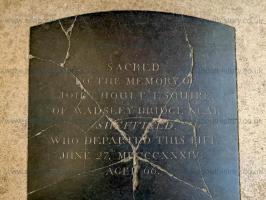
27th June 1834. St Giles' Church, Great Longstone [Map]. Sacred to the memory of John Hoult Esquire of Wadsley Bridge near Sheffield.
On 5th July 1839 Flora Elizabeth Rawdon-Hastings [aged 33] died. She had suffered a swelling in her abdomen. She refused an examination. Rumours were spread, by among others the future Queen Victoria [aged 20], that she was pregnant. When Lady Flora did finally consent to an examination she was found to an advanced cancerous liver tumour, and had only months left to live. The future Queen Victoria visited Lady Flora on 27th June 1839 eight days before her death.


The London Gazette 20618. Whitehall, June 27', 1846. The Queen has been pleased to direct letters patent to be passed under the Great Seal, granting the dignities of Viscount and Earl of the United Kingdom of Great Britain and Ireland unto the Right Honourable Lord Francis Egerton [aged 46], and the heirs male of his body lawfully begotten,by the names, stiles, and titles of Viscount Brackley, of Brackley, in the county of Northampton, and Earl of Ellesmere, of Ellesmere, in the county of Salop. [Harriet Greville Countess Ellesmere [aged 43] by marriage Countess Ellesmere.]

On 27th June 1849 George Leveson-Gower 3rd Duke Sutherland [aged 20] and Anne Hay Mackenzie Duchess Sutherland [aged 20] were married. He the son of George Sutherland Leveson-Gower 2nd Duke Sutherland [aged 62] and Harriet Elizabeth Georgiana Howard Duchess Sutherland [aged 43].
Ten Years' Digging. On the 27th of June, we examined a low barrow [Longstone Edge Barrow [Map]], eighteen yards diameter, at the extreme point of the range of hills called Longstone Edge, in the direction of Wardlow. It was composed of earth and stone, heaped above a natural elevation, in the middle of which was a rock grave two feet deep, containing the remains of a full grown skeleton that had evidently been disturbed at no very remote period, and a small piece of urn.
Ten Years' Digging. In the afternoon, we opened another mound of the same size, situated about a quarter of a mile nearer Wardlow, chiefly composed of stone raised over a similar rock grave, which had likewise been spoiled of its contents. By emptying it we found many pieces of calcined human bone, a neat javelin-head of burnt flint, that had probably accompanied them, and another weapon point, made from a piece of animal bone rubbed smooth.
Chronicle of Walter of Guisborough
A canon regular of the Augustinian Guisborough Priory, Yorkshire, formerly known as The Chronicle of Walter of Hemingburgh, describes the period from 1066 to 1346. Before 1274 the Chronicle is based on other works. Thereafter, the Chronicle is original, and a remarkable source for the events of the time. This book provides a translation of the Chronicle from that date. The Latin source for our translation is the 1849 work edited by Hans Claude Hamilton. Hamilton, in his preface, says: 'In the present work we behold perhaps one of the finest samples of our early chronicles, both as regards the value of the events recorded, and the correctness with which they are detailed; Nor will the pleasing style of composition be lightly passed over by those capable of seeing reflected from it the tokens of a vigorous and cultivated mind, and a favourable specimen of the learning and taste of the age in which it was framed.'
Available at Amazon in eBook and Paperback format.
On 27th June 1857 Walter Williams [aged 22] and Jane Caroline Pearcy [aged 25] were married at St George's Church, Hanover Square. They had two children.
The Diary of George Price Boyce 1855-1857. 27th June 1857. To P.R.B. Exhibition in Russell Place .... I found my little "Sunset" sketch in North Wales mounted in a preposterously wide gilt flat, whereas I had left it in my room mounted on white paper. A lot of the foreground is covered by the mount which completely spoils the sketch and looks ridiculously pretentious besides. Saw (at Hogarth's) a rather clever caricature-etching founded on Millais' "Dream of the Past" picture, to which the outlines were pretty strictly kept to. Millais [aged 28] himself is the old Knight, Rossetti [aged 29] the girl in front, Holman Hunt [aged 30] the child behind. Ruskin [aged 38] the ass on which they are riding and which is by far the best thing in the etching in every respect.

On 27th June 1858 Anne Constance Dutton Baroness Dunsany [aged 41] died. She was buried in the Saint Mary Magdalene's Church, Sherborne [Map]. Monument sculpted by Thomas Gaffin.
Anne Constance Dutton Baroness Dunsany: On 12th September 1816 she was born to John Dutton 2nd Baron Sherborne. On 22nd September 1846 Edward Plunkett 16th Baron Dunsany and she were married. On 7th April 1852 Randall Edward Plunkett 15th Baron Dunsany died. His brother Edward succeeded 16th Baron Dunsany. She by marriage Baroness Dunsany.

On 27th June 1872 William Gray [aged 75] died. Memorial at the Chapel of St John the Evangelist, Bolton [Map].
William Gray: On 14th November 1796 he was born to Bishop Robert Gray. In or before 1834 he and Eleanor Ker were married.
The London Gazette 25486. St. James's Palace, June 27, 1885. The Queen [aged 66] has been pleased to appoint the Duchess of Buccleuch [aged 48] to be Mistress of the Robes, in the room of the Duchess of Roxburghe [aged 30], resigned
The London Gazette 25485. Master of thee Horse's Office, Royal Mews, Pimlico, June 27, 1885. Her Majesty has been graciously pleased to appoint the Right Honourable John Henry Delapoer [aged 41], Marquis of Waterford, K.P., to be Master of Her Majesty's Buckhounds, in the room of the Right Honourable Richard Edmund St. Lawrance [aged 56], Earl of Cork and Orrery, K.P., resigned.
The London Gazette 25485. At the Court at Windsor, the 27th day of June, 1885. Present, The Queen's Most Excellent Majesty in Council. This day the Most Honourable John Henry [aged 41], Marquess of Waterford, K.P., was, by Her Majesty's command, sworn of Her Majesty's Most Honourable Privy Council, and took his place at the Board accordingly.

The London Gazette 25486. St. James's Palace, June 27, 1885.
The Queen [aged 66] has been pleased to appoint George William [aged 61], Viscount Barrington, to be Captain of Her Majesty's Body Guard of Yeomen of the Guard, in the room of!William John [aged 56], Lord Monson, resigned.
W6GBhi0WThe Queen has been pleased to appoint the following to be Lords in Waiting in Ordinary to Her Majesty, viz.:—
Dudley Charles, Lord de Ros, in the room of Frederick Henry Paul, Lord Methuen, resigned.
Algernon Hawkins Thomoud, Earl of Kintore, in the room of John William, Earl of Dalhousie, resigned.
Cornwallis, Viscount Hawarden, in the room of William, Lord Sandhurst, resigned.
John Major, Lord Henniker, in the room of Thomas, Lord Ribblesdale, resigned.
John Adrian Louis [aged 24], Earl of Hopetoun, in the room of Thomas John, Lord Thurlow, resigned.
William, Lord Elphinstone [aged 56], in the room of Arthur, Lord Wrottesley, resigned.
On 27th June 1910 Mary Constance Grosvenor was born to Hugh "Bendor" Grosvenor 2nd Duke Westminster [aged 31] and Constance Edwina "Shelagh" Cornwallis-West Duchess Westminster [aged 33].
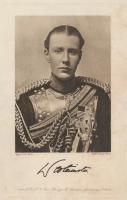


Black Watch Boer War Memorial, Edinburgh [Map]. Unveiled 27th June 1910. Bronze figure of a Black Watch Serviceman in the uniform of 1899. The sculptor was Mr William Birnie Rhind. There are 211 names listed. The words 'Am Freiceadan Dubh' being Gaelic for 'The Black Watch'.
Henrici Quinti, Angliæ Regis, Gesta, is a first-hand account of the Agincourt Campaign, and subsequent events to his death in 1422. The author of the first part was a Chaplain in King Henry's retinue who was present from King Henry's departure at Southampton in 1415, at the siege of Harfleur, the battle of Agincourt, and the celebrations on King Henry's return to London. The second part, by another writer, relates the events that took place including the negotiations at Troye, Henry's marriage and his death in 1422.
Available at Amazon in eBook and Paperback format.
On 27th June 1913 Cromartie Sutherland-Leveson-Gower 4th Duke of Sutherland [aged 61] died. His son George [aged 24] succeeded 5th Duke Sutherland, 23rd Earl Sutherland, 7th Earl Gower, 8th Baron Gower, 12th Baronet Gower of Stittenham in Yorkshire.
On 27th June 1987 Edward Fitzalan-Howard 18th Duke of Norfolk [aged 30] and Georgina Susan Gore Duchess of Norfolk [aged 25] were married at Arundel Cathedral, Sussex [Map]. He the son of Miles Stapleton Fitzalan Howard 17th Duke of Norfolk [aged 71] and Anne Constable-Maxwell Duchess Norfolk [aged 59].
On 27th June 1430 Henry Holland 3rd Duke Exeter was born to John Holland 2nd Duke Exeter [aged 35] and Anne Stafford Duchess Exeter. He a great x 2 grandson of King Edward III of England. Coefficient of inbreeding 2.71%. He married 1447 his half second cousin Anne York Duchess Exeter, daughter of Richard Plantagenet 3rd Duke of York and Cecily "Rose of Raby" Neville Duchess York, and had issue.
On 27th June 1462 Louis XII King France was born to Charles Valois Duke Orléans [aged 67] and Mary de la Marck Duchess Orléans. Coefficient of inbreeding 2.20%. He married (1) 1476 his second cousin once removed Joan Valois Queen Consort France (2) 8th January 1499 his first cousin once removed Anne of Brittany Queen Consort France and had issue (3) 9th October 1514 his second cousin twice removed Mary Tudor Queen Consort France, daughter of King Henry VII of England and Ireland and Elizabeth York Queen Consort England.
On 27th June 1550 Charles IX King France was born to King Henry II of France [aged 31] and Catherine Medici Queen Consort France [aged 31]. He married 26th November 1570 his fourth cousin Elisabeth of Austria Queen Consort France, daughter of Maximilian Habsburg Spain II Holy Roman Emperor and Maria of Spain Holy Roman Empress, and had issue.
On 27th June 1633 Auguste Oldenburg Duchess Schleswig Holstein Sonderburg Augustenburg was born to Philip Oldenburg [aged 49]. She married 15th June 1651 her first cousin Ernest Günther Oldenburg I Duke Schleswig Holstein Sonderburg Augustenburg, son of Alexander Oldenburg I Duke Schleswig Holstein Sonderburg and Dorothea Schwarzburg Duchess Schleswig Holstein Sonderburg, and had issue.

On 27th June 1703 Elizabeth Adriana Bentinck was born to William Bentinck 1st Earl of Portland [aged 53] and Jane Martha Temple Countess Portland [aged 31]. She married 18th December 1720 Bishop Henry Egerton, son of John Egerton 3rd Earl Bridgewater and Jane Paulet Countess Bridgewater, and had issue.
On 27th June 1716 Louise Diane Bourbon was born to Philippe Bourbon II Duke Orléans [aged 41] and Françoise Marie Bourbon Duchess Orléans [aged 39]. She a great x 3 granddaughter of King James I of England and Ireland and VI of Scotland. Coefficient of inbreeding 7.39%. She married her third cousin Louis François Bourbon Condé Conti.
On 21st June 1721 John Reade 5th Baronet was born to Thomas Reade 4th Baronet [aged 38] and Jane Mary Dutton Lady Reade at Golden Square Soho. He was baptised 27th June 1721 at St James' Church, Piccadilly. He married 18th October 1759 Harriet Barker and had issue.
On 27th June 1735 Elizabeth Bentinck Marchioness Bath was born to William Bentinck 2nd Duke Portland [aged 26] and Margaret Cavendish Harley 2nd Duchess Portland [aged 20] at Welbeck Abbey, Nottinghamshire [Map]. She married 1759 her third cousin Thomas Thynne 1st Marquess of Bath, son of Thomas Thynne 2nd Viscount Weymouth and Louisa Carteret Viscountess Weymouth, and had issue.

The True Chronicles of Jean le Bel Volume 1 Chapters 1-60 1307-1342
The True Chronicles of Jean le Bel offer one of the most vivid and immediate accounts of 14th-century Europe, written by a knight who lived through the events he describes, and experienced some of them first hand. Covering the early decades of the Hundred Years’ War, this remarkable chronicle follows the campaigns of Edward III of England, the politics of France and the Low Countries, and the shifting alliances that shaped medieval warfare. Unlike later historians, Jean le Bel writes with a strong sense of eyewitness authenticity, drawing on personal experience and the testimony of fellow soldiers. His narrative captures not only battles and sieges, but also the realities of military life, diplomacy, and the ideals of chivalry that governed noble society. A key source for Jean Froissart, Le Bel’s chronicle stands on its own as a compelling and insightful work, at once historical record and literary achievement. This translation builds on the 1905 edition published in French by Jules Viard, adding extensive translations from other sources Rymer's Fœdera, the Chronicles of Adam Murimuth, William Nangis, Walter of Guisborough, a Bourgeois of Valenciennes, Geoffrey le Baker of Swinbroke and Richard Lescot to enrich the original text and Viard's notes.
Available at Amazon in eBook and Paperback format.

On 27th June 1775 Thomas Harvie Farquhar 2nd Baronet was born to Walter Farquhar 1st Baronet [aged 36].
On 27th June 1778 John Murray 5th Duke Atholl was born to John Murray 4th Duke Atholl [aged 22].
On 27th June 1778 John Dugdale Astley 1st Baronet was born.

On 27th June 1785 Louisa Emma Fox-Strangways Marchioness of Lansdowne was born to Henry Thomas Fox-Strangways 2nd Earl of Ilchester [aged 37] and Mary Theresa O'Grady Countess of Ilchester [aged 30]. She married 1808 Henry Petty-Fitzmaurice 3rd Marquess Lansdowne, son of William Petty 1st Marquess Lansdowne and Louisa Fitzpatrick Marchioness Lansdowne, and had issue.
On 27th June 1786 John Hobhouse 1st Baron Broughton was born to Benjamin Hobhouse 1st Baronet [aged 29] and Charlotte Cam. He married 1828 Julia Tomasina Hay Lady Hobhouse, daughter of George Hay 7th Marquess Tweedale and Hannah Maitland Marchioness Tweddale, and had issue.
On 27th June 1791 Chandos Leigh 1st Baron Leigh was born to James Henry Leigh of Adlestrop [aged 26] and Julia Judith Twisleton [aged 19]. Coefficient of inbreeding 1.76%. He married 8th June 1819 Margarette Willes Baroness Leigh and had issue.
On 27th June 1818 Adolphus Frederick Octavious Liddell was born to Thomas Liddell 1st Baron Ravensworth [aged 43] and Maria Susannah Simpson Baroness Calthorpe [aged 45]. He married 14th October 1845 Elizabeth Lane-Fox and had issue.
On 27th June 1820 Alfred Phillipps Ryder was born to Bishop Henry Dudley Ryder [aged 42] and Sophia March Phillips.
On 27th June 1822 George Augustus Hamilton Chichester 5th Marquess Donegal was born to Edward Chichester 4th Marquess Donegal [aged 23] and Amelia Ogrady Marchioness County Donegal. He married (1) 9th August 1859 Virginia Elizabeth Mure (2) 31st August 1865 Mary Cobb Marchioness Donegal (3) 23rd December 1902 Violet Gertrude Twining Marchioness Donegal and had issue.
On 27th June 1829 Henry Bourchier Toke Wrey 10th Baronet was born to Henry Bourchier Wrey 9th Baronet [aged 32] and Ellen Maria Toke [aged 28]. Coefficient of inbreeding 6.45%. He married 6th September 1854 Marianne Sarah Sherard Lady Wrey, daughter of Henry or Philip Sherard 9th Baron Sherard, and had issue.
On 27th June 1831 Anthony Ashley-Cooper 8th Earl Shaftesbury was born to Anthony Ashley-Cooper 7th Earl Shaftesbury [aged 30] and Emily Caroline Catherine Frances Cowper Countess Shaftesbury. He married 22nd August 1857 Harriet Augusta Anna Seymourina Chichester Countess Shaftesbury, daughter of George Chichester 3rd Marquess Donegal and Harriet Anne Butler Marchioness Donegal, and had issue.


On 27th June 1836 Wager Joseph Watson 4th Baronet was born to Charles Wager Watson 2nd Baronet [aged 36].
This is a translation of the 'Memoires of Jacques du Clercq', published in 1823 in two volumes, edited by Frederic, Baron de Reissenberg. In his introduction Reissenberg writes: 'Jacques du Clercq tells us that he was born in 1424, and that he was a licentiate in law and a counsellor to Philip the Good, Duke of Burgundy, in the castellany of Douai, Lille, and Orchies. It appears that he established his residence at Arras. In 1446, he married the daughter of Baldwin de la Lacherie, a gentleman who lived in Lille. We read in the fifth book of his Memoirs that his father, also named Jacques du Clercq, had married a lady of the Le Camelin family, from Compiègne. His ancestors, always attached to the counts of Flanders, had constantly served them, whether in their councils or in their armies.' The Memoires cover a period of nineteen years beginning in in 1448, ending in in 1467. It appears that the author had intended to extend the Memoirs beyond that date; no doubt illness or death prevented him from carrying out this plan. As Reissenberg writes the 'merit of this work lies in the simplicity of its narrative, in its tone of good faith, and in a certain air of frankness which naturally wins the reader’s confidence.' Du Clercq ranges from events of national and international importance, including events of the Wars of the Roses in England, to simple, everyday local events such as marriages, robberies, murders, trials and deaths, including that of his own father in Book 5; one of his last entries.
Available at Amazon in eBook and Paperback format.
On 27th June 1837 Andrew Marshall Porter 1st Baronet was born.
On 27th June 1874 Victor Alexander Frederick Villiers Russell and Alexander Victor Frederick Villiers Russell were born to Odo Russell 1st Baron Ampthill [aged 45] and Emily Theresa Villiers Baroness Ampthill [aged 31].
On 27th June 1876 Alice Heathcote-Willoughby-Drummond was born to Gilbert Henry Heathcote Drummond Willoughby 1st Earl Ancaster [aged 45] and Evelyn Elizabeth Gordon Countess Ancaster [aged 30].

On 27th June 1897 Elizabeth Pleydell-Bouverie was born to Jacob Pleydell-Bouverie 6th Earl Radnor [aged 28] and Julian Eleanor Adelaide Balfour.
On 27th June 1903 John Charles Dundas Harington was born to Richard Harington 12th Baronet [aged 42] and Selina Louise Grace Dundas Lady Harington [aged 28]. He married 30th April 1941 Lavender Cecilia Denny and had issue.
On 27th June 1910 Mary Constance Grosvenor was born to Hugh "Bendor" Grosvenor 2nd Duke Westminster [aged 31] and Constance Edwina "Shelagh" Cornwallis-West Duchess Westminster [aged 33].
On 27th June 1949 Quentin John le Fleming 12th Baronet was born to William Kelland le Fleming [aged 27].
On 27th June 1960 David Cholmondeley 7th Marquess of Cholmondeley was born to Hugh Cholmondeley 6th Marquess of Cholmondeley [aged 41] and Lavinia Margaret Leslie Marchioness Cholmondeley [aged 38].
On 27th June 1990 Sophie Alice Augusta Neville was born to Christopher Neville 6th Marquess Abergavenny [aged 35] and Venetia Maynard Marchioness Abergavenny [aged 32].
On 27th June 1990 George Rupert Gerrard Neville was born to Christopher Neville 6th Marquess Abergavenny [aged 35] and Venetia Maynard Marchioness Abergavenny [aged 32]. He died aged less than one years old.
Annals of the six Kings of England by Nicholas Trivet
Translation of the Annals of the Six Kings of England by that traces the rise and rule of the Angevin aka Plantagenet dynasty from the mid-12th to early 14th century. Written by the Dominican scholar Nicholas Trivet, the work offers a vivid account of English history from the reign of King Stephen through to the death of King Edward I, blending political narrative with moral reflection. Covering the reigns of six monarchs—from Stephen to Edward I—the chronicle explores royal authority, rebellion, war, and the shifting balance between crown, church, and nobility. Trivet provides detailed insight into defining moments such as baronial conflicts, Anglo-French rivalry, and the consolidation of royal power under Edward I, whose reign he describes with particular immediacy. The Annals combines careful year-by-year reporting with thoughtful interpretation, presenting history not merely as a sequence of events but as a moral and political lesson. Ideal for readers interested in medieval history, kingship, and the origins of the English state, this chronicle remains a valuable and accessible window into the turbulent world of the Plantagenet kings.
Available at Amazon in eBook and Paperback format.
On 27th June 1316 Edmund Mortimer [aged 13] and Elizabeth Badlesmere Countess Northampton [aged 3] were married at Kinlet, Cleobury Mortimer [Map]. He the son of Roger Mortimer 1st Earl March [aged 29] and Joan Geneville Baroness Mortimer 2nd Baroness Geneville [aged 30]. They were fourth cousins. He a great x 4 grandson of King John of England. She a great x 4 granddaughter of King Henry "Curtmantle" II of England.
On 27th June 1328 Stephen Wittelsbach II Duke Bavaria [aged 9] and Elisabeth Barcelona Duchess Bavaria [aged 18] were married. He the son of Louis Wittelsbach IV Holy Roman Emperor [aged 46] and Beatrix Świdnica Holy Roman Empress. They were fifth cousins. He a great x 4 grandson of King Henry "Curtmantle" II of England. She a great x 4 granddaughter of King Henry "Curtmantle" II of England.
On 27th June 1374 Rupert King Germany [aged 22] and Elisabeth Hohenzollern [aged 16] were married at Amberg. She the daughter of Frederick Hohenzollern V Burgrave Nuremburg [aged 41].
On 27th June 1481 George Talbot 4th Earl of Shrewsbury [aged 13] and Anne Hastings Countess Shrewsbury and Waterford [aged 10] were married. She by marriage Countess of Shrewsbury, Countess Waterford. He the son of John Talbot 3rd Earl of Shrewsbury and Catherine Stafford Countess Shrewsbury and Waterford. They were second cousins. He a great x 3 grandson of King Edward III of England. She a great x 3 granddaughter of King Edward III of England.
On 27th June 1584 Francis Hay 9th Earl Erroll [aged 20] and Margaret Stewart Countess Erroll [aged 15] were married. She by marriage Countess Erroll. She the daughter of James Stewart 1st Earl of Moray Regent and Agnes Keith Countess Moray and Mar [aged 53]. He the son of Andrew Hay 8th Earl Erroll [aged 53] and Jean Hay [aged 44]. They were fourth cousins. She a great x 2 granddaughter of King Henry VII of England and Ireland.
On 27th June 1602 John Egerton 1st Earl Bridgewater [aged 23] and Frances Stanley Countess Bridgewater [aged 19] were married. She the daughter of Ferdinando Stanley 5th Earl of Derby and Alice Spencer Countess Derby [aged 53].
On 27th June 1655 Robert Montagu 3rd Earl Manchester [aged 21] and Anne Yelverton Countess Manchester [aged 25] were married at St Giles' in the Fields Church [Map]. He the son of Edward Montagu 2nd Earl Manchester [aged 53] and Anne Rich Viscountess Mandeville.
On 27th June 1723 Robert Clifton 5th Baronet [aged 33] and Frances Coote Lady Clifton were married. She the daughter of Nanfan Coote 2nd Earl Bellomont and Lucia Anna van Nassau [aged 39].
On 27th June 1724 Thomas Lumley-Saunderson 3rd Earl Scarborough [aged 33] and Frances Hamilton Countess Scarborough were married. She the daughter of George Hamilton 1st Earl Orkney [aged 58] and Elizabeth Villiers Countess Orkney [aged 67]. He the son of Richard Lumley 1st Earl Scarborough and Frances Jones Countess Scarborough. They were fourth cousins.
On 27th June 1731 William Maxwell 6th Earl Nithsdale and Catherine Stewart [aged 26] were married. She the daughter of Charles Stewart 4th Earl Traquair [aged 72] and Mary Maxwell Countess Traquair [aged 60]. He the son of William Maxwell 5th Earl Nithsale and Winifred Herbert Countess Nithsdale [aged 51]. They were first cousins.
Annals of the six Kings of England by Nicholas Trivet
Translation of the Annals of the Six Kings of England by that traces the rise and rule of the Angevin aka Plantagenet dynasty from the mid-12th to early 14th century. Written by the Dominican scholar Nicholas Trivet, the work offers a vivid account of English history from the reign of King Stephen through to the death of King Edward I, blending political narrative with moral reflection. Covering the reigns of six monarchs—from Stephen to Edward I—the chronicle explores royal authority, rebellion, war, and the shifting balance between crown, church, and nobility. Trivet provides detailed insight into defining moments such as baronial conflicts, Anglo-French rivalry, and the consolidation of royal power under Edward I, whose reign he describes with particular immediacy. The Annals combines careful year-by-year reporting with thoughtful interpretation, presenting history not merely as a sequence of events but as a moral and political lesson. Ideal for readers interested in medieval history, kingship, and the origins of the English state, this chronicle remains a valuable and accessible window into the turbulent world of the Plantagenet kings.
Available at Amazon in eBook and Paperback format.
On 27th June 1748 Bennet Sherard 3rd Earl Harborough [aged 38] and Elizabeth Verney [aged 28] were married at St James' Church, Piccadilly. She the daughter of Ralph Verney 1st Earl Verney [aged 65]. He the son of Philip Sherard 2nd Earl Harborough [aged 68] and Anne Pedley Countess Harborough [aged 73].
On 27th June 1848 Arthur Edwin Hill aka Hill-Trevor 1st Baron Trevor [aged 28] and Emily Mary Sutton were married. He the son of Arthur Blundell Sandys Trumbull Hill 3rd Marquess Downshire and Maria Windsor Marchioness Downshire [aged 58]. They were fourth cousins.
On 27th June 1849 George Leveson-Gower 3rd Duke Sutherland [aged 20] and Anne Hay Mackenzie Duchess Sutherland [aged 20] were married. He the son of George Sutherland Leveson-Gower 2nd Duke Sutherland [aged 62] and Harriet Elizabeth Georgiana Howard Duchess Sutherland [aged 43].
On 27th June 1857 Walter Williams [aged 22] and Jane Caroline Pearcy [aged 25] were married at St George's Church, Hanover Square. They had two children.
On 27th June 1926 Marmaduke Furness 1st Viscount Furness [aged 42] and Thelma Morgan Viscountess Furness [aged 21] were married. She by marriage Viscountess Furness of Grantley in the West Riding of Yorkshire. The difference in their ages was 20 years.
On 27th June 1987 Edward Fitzalan-Howard 18th Duke of Norfolk [aged 30] and Georgina Susan Gore Duchess of Norfolk [aged 25] were married at Arundel Cathedral, Sussex [Map]. He the son of Miles Stapleton Fitzalan Howard 17th Duke of Norfolk [aged 71] and Anne Constable-Maxwell Duchess Norfolk [aged 59].
On 27th June 992 Conan "Crooked" Penthièvre III Duke Brittany died. His son Geoffrey [aged 12] succeeded I Duke Brittany.
On 27th June 1194 Sancho "Wise" King Navarre [aged 62] died at Pamplona [Map]. His son Sancho [aged 40] succeeded VII King Navarre.
On 27th June 1241 Gilbert Marshal 4th Earl Pembroke [aged 44] was killed in a tournament at Ware, Hertfordshire [Map]. He was buried at Temple Church, London [Map] next to his father. His brother Walter [aged 42] succeeded 5th Earl Pembroke; he had also attended the tournament. The King King Henry III of England [aged 33] had expressly forbidden the tournament leading to anger at his disobeying the King's orders.
On 27th June 1296 Floris Gerulfing V Count Holland [aged 42] was killed. His son John [aged 12] succeeded I Count Holland.
Floris has transferred his allegiance to France inviting the enmity of King Edward I of England [aged 57] who relied on him to support the valuable English wool trade. Edward conspired with Guy of Flanders to kidnap Floris. Floris was captured during a hunting party and taken to Muiderslot castle. Concerned about their safety the kidnappers attempted to take Floris to a safer location during which jounrney they were attacked by an angry mob of local peasants. Floris was killed.
On 27th June 1335 William Grandison 1st Baron Grandison [aged 73] died at Lambourne, Berkshire [Map]. His son Piers [aged 44] succeeded 2nd Baron Grandison. Blanche Mortimer Baroness Grandison [aged 23] by marriage Baroness Grandison.
The Deeds of the Dukes of Normandy
The Gesta Normannorum Ducum [The Deeds of the Dukes of Normandy] is a landmark medieval chronicle tracing the rise and fall of the Norman dynasty from its early roots through the pivotal events surrounding the Norman Conquest of England. Originally penned in Latin by the monk William of Jumièges shortly before 1060 and later expanded at the behest of William the Conqueror, the work chronicles the deeds, politics, battles, and leadership of the Norman dukes, especially William’s own claim to the English throne. The narrative combines earlier historical sources with firsthand information and oral testimony to present an authoritative account of Normandy’s transformation from a Viking settlement into one of medieval Europe’s most powerful realms. William’s history emphasizes the legitimacy, military prowess, and governance of the Norman line, framing their expansion, including the conquest of England, as both divinely sanctioned and noble in purpose. Later chroniclers such as Orderic Vitalis and Robert of Torigni continued the history, extending the coverage into the 12th century, providing broader context on ducal rule and its impact. Today this classic work remains a foundational source for understanding Norman identity, medieval statesmanship, and the historical forces that reshaped England and Western Europe between 800AD and 1100AD.
Available at Amazon in eBook and Paperback format.
On 27th June 1376 Joan Montagu Countess Suffolk [aged 27] died. Her half sister Audrey succeeded 2nd Baroness Montagu.
On 27th June 1458 Alfonso V King Aragon [aged 62] died. His son Ferdinand [aged 35] succeeded I King Naples. Isabella Clermont Queen Consort Naples [aged 34] by marriage Queen Consort Naples. His brother John [aged 59] succeeded II King Aragon.
On 27th June 1477 Adolf Egmont 2nd Duke Guelders [aged 39] died at Tournai [Map]. He was buried at Tournai Cathedral [Map]. His son Charles [aged 10] succeeded 3rd Duke Guelders.
On 27th June 1509 Elizabeth Hay Countess Huntley [aged 59] died.
On 27th June 1601 Henry Norreys [aged 76] died at Rycote, Oxfordshire [Map]. His grandson Francis [aged 21] succeeded 2nd Baron Norreys of Rycote. Bridget Vere Baroness Norreys Rycote [aged 17] by marriage Baroness Norreys of Rycote. Francis Norreys 1st Earl Berkshire inherited the Rycote and Wytham estates. His title to his estates was challenged by his uncle, Sir Edward Norreys, but the latter died in 1603, whose estates also passed to Lord Norreys.
On 27th June 1618 William Cecil 16th Baron Ros Helmsley [aged 28] died. His first cousin once removed Francis [aged 40] succeeded 17th Baron Ros Helmsley. Cecily Tufton Countess Rutland by marriage Baroness Ros Helmsley.
On 27th June 1621 Richard Worsley 1st Baronet [aged 32] died. His son Henry [aged 8] succeeded 2nd Baronet Worsley of Appuldurcombe.
On 27th June 1641 Michiel Janszoon van Mierevelt [aged 75] died.
On 27th June 1672 Roger Twysden 2nd Baronet [aged 74] died. His son William [aged 36] succeeded 3rd Baronet Twysden of Roydon in Kent.
On 27th June 1721 Denzil Onslow of Pyrford [aged 79] died without issue. His estate was inherited by the children of his nephew Richard Onslow 1st Baron Onslow.


William of Worcester's Chronicle of England
William of Worcester, born around 1415, and died around 1482 was secretary to John Fastolf, the renowned soldier of the Hundred Years War, during which time he collected documents, letters, and wrote a record of events. Following their return to England in 1440 William was witness to major events. Twice in his chronicle he uses the first person: 1. when writing about the murder of Thomas, 7th Baron Scales, in 1460, he writes '… and I saw him lying naked in the cemetery near the porch of the church of St. Mary Overie in Southwark …' and 2. describing King Edward IV's entry into London in 1461 he writes '… proclaimed that all the people themselves were to recognize and acknowledge Edward as king. I was present and heard this, and immediately went down with them into the city'. William’s Chronicle is rich in detail. It is the source of much information about the Wars of the Roses, including the term 'Diabolical Marriage' to describe the marriage of Queen Elizabeth Woodville’s brother John’s marriage to Katherine, Dowager Duchess of Norfolk, he aged twenty, she sixty-five or more, and the story about a paper crown being placed in mockery on the severed head of Richard, 3rd Duke of York.
Available at Amazon in eBook and Paperback format.
On 27th June 1752 Henry Flower 1st Viscount Ashbrook [aged 32] died. His son William [aged 8] succeeded 2nd Viscount Ashbrook.
On 27th June 1778 Charles Ingram 9th Viscount Irvine [aged 51] died without male issue. Viscount Irvine extinct.
On 27th June 1787 Thomas Heathcote 2nd Baronet [aged 65] died. His son William [aged 41] succeeded 3rd Baronet Heathcote of Hursley in Hampshire. Frances Thorpe Lady Heathcote [aged 45] by marriage Lady Heathcote of Hursley in Hampshire.
On 27th June 1792 John Morgan [aged 50] died. His sister Jane Morgan [aged 61] and her husband Charles Gould aka Morgan 1st Baronet [aged 66] and inherited Tredegar House, Monmouthshire on condition he changed his name from Gould to Morgan which he did by royal licence on 20th November 1792. His children including Charles Gould aka Morgan 2nd Baronet [aged 32] also changed their surname.


On 27th June 1816 John Peachey 2nd Baron Selsey [aged 67] died. His son Henry [aged 29] succeeded 3rd Baron Selsey of Selsey in Sussex.
On 27th June 1823 John Fletcher aka Boughey 2nd Baronet [aged 39] died. His son Thomas [aged 14] succeeded 3rd Baronet Boughey of Newcastle under Lyme in Staffordshire.
On 27th June 1831 Sophie Germain [aged 55] died from breast cancer at 13 rue de Savoie, Paris. She was buried at Père Lachaise Cemetery in Paris.
On 5th July 1839 Flora Elizabeth Rawdon-Hastings [aged 33] died. She had suffered a swelling in her abdomen. She refused an examination. Rumours were spread, by among others the future Queen Victoria [aged 20], that she was pregnant. When Lady Flora did finally consent to an examination she was found to an advanced cancerous liver tumour, and had only months left to live. The future Queen Victoria visited Lady Flora on 27th June 1839 eight days before her death.
On 27th June 1858 Anne Constance Dutton Baroness Dunsany [aged 41] died. She was buried in the Saint Mary Magdalene's Church, Sherborne [Map]. Monument sculpted by Thomas Gaffin.
Anne Constance Dutton Baroness Dunsany: On 12th September 1816 she was born to John Dutton 2nd Baron Sherborne. On 22nd September 1846 Edward Plunkett 16th Baron Dunsany and she were married. On 7th April 1852 Randall Edward Plunkett 15th Baron Dunsany died. His brother Edward succeeded 16th Baron Dunsany. She by marriage Baroness Dunsany.
On 27th June 1860 Henry Allen Johnson 2nd Baronet [aged 74] died. His son Henry [aged 41] succeeded 3rd Baronet Johnson of Bath in Somerset.
On 27th June 1870 George William Villiers 4th Earl Clarendon [aged 70] died. His son Edward [aged 24] succeeded 5th Earl Clarendon, 5th Baron Hyde of Hindon in Wiltshire 1756.
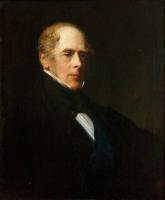
Jean de Waurin's Chronicle of England Volume 6 Books 3-6: The Wars of the Roses
Jean de Waurin was a French Chronicler, from the Artois region, who was born around 1400, and died around 1474. Waurin’s Chronicle of England, Volume 6, covering the period 1450 to 1471, from which we have selected and translated Chapters relating to the Wars of the Roses, provides a vivid, original, contemporary description of key events some of which he witnessed first-hand, some of which he was told by the key people involved with whom Waurin had a personal relationship.
Available at Amazon in eBook and Paperback format.
On 27th June 1871 Henry Wilson 11th Baron Berners [aged 74] died. His niece Emma [aged 35] succeeded 12th Baroness Berners. Henry Thomas Tyrwhitt-Jones 3rd Baronet [aged 47] by marriage Baron Berners.
On 27th June 1890 James McGarel-Hogg 1st Baron Magheramorne [aged 67] died. He was buried at Brompton Cemetery, Kensington. His son James [aged 29] succeeded 2nd Baron Magheramorne of Magheramorne in Antrim, 3rd Baronet Hogg of Upper Grosvenor Street in London. Evelyn Ashley-Cooper Baroness Magheramorne [aged 25] by marriage Baroness Magheramorne of Magheramorne in Antrim.

On 27th June 1897 William Molyneux 4th Earl Sefton [aged 61] died. His son Charles [aged 30] succeeded 5th Earl Sefton, 12th Viscount Molyneux, 13th Baronet Molyneux of Sefton.
On 27th June 1902 John Major Henniker-Major 5th Baron Henniker [aged 59] died. His son Charles [aged 30] succeeded 6th Baron Henniker of Stratford upon Slaney in County Wicklow, 7th Baronet Major of Worlingsworth Hall in Suffolk.
On 27th June 1913 Cromartie Sutherland-Leveson-Gower 4th Duke of Sutherland [aged 61] died. His son George [aged 24] succeeded 5th Duke Sutherland, 23rd Earl Sutherland, 7th Earl Gower, 8th Baron Gower, 12th Baronet Gower of Stittenham in Yorkshire.
On 27th June 1934 Feodorowna Yorke Baroness Alington [aged 70] died.
On 27th June 1939 Constance Evelyn Primrose Baroness Leconfield [aged 93] died.
On 27th June 1943 William Frederick Style 11th Baronet [aged 55] died. His son William [aged 26] succeeded 12th Baronet Style of Wateringbury in Kent.
On 27th June 1961 Richard Morland Tollemache Bethell 4th Baron Westbury [aged 46] died. His brother David [aged 39] succeeded 5th Baron Westbury of Westbury in Wiltshire.
On 27th June 1973 John Littleton 6th Baron Hatherton [aged 66] died. His brother Thomas [aged 65] succeeded 7th Baron Hatherton.
On 27th June 1974 Synolda Emily Thursby-Pelham Lady Walker and Jaffray died.
The True Chronicles of Jean le Bel Volume 1 Chapters 1-60 1307-1342
The True Chronicles of Jean le Bel offer one of the most vivid and immediate accounts of 14th-century Europe, written by a knight who lived through the events he describes, and experienced some of them first hand. Covering the early decades of the Hundred Years’ War, this remarkable chronicle follows the campaigns of Edward III of England, the politics of France and the Low Countries, and the shifting alliances that shaped medieval warfare. Unlike later historians, Jean le Bel writes with a strong sense of eyewitness authenticity, drawing on personal experience and the testimony of fellow soldiers. His narrative captures not only battles and sieges, but also the realities of military life, diplomacy, and the ideals of chivalry that governed noble society. A key source for Jean Froissart, Le Bel’s chronicle stands on its own as a compelling and insightful work, at once historical record and literary achievement. This translation builds on the 1905 edition published in French by Jules Viard, adding extensive translations from other sources Rymer's Fœdera, the Chronicles of Adam Murimuth, William Nangis, Walter of Guisborough, a Bourgeois of Valenciennes, Geoffrey le Baker of Swinbroke and Richard Lescot to enrich the original text and Viard's notes.
Available at Amazon in eBook and Paperback format.
On 27th June 1975 Cuthbert Patrick Blake 6th Baronet [aged 90] died. Baronet Blake of Langham in Suffolk extinct.
On 27th June 2003 Gerald Balfour 4th Earl Balfour [aged 77] died. His second cousin once removed Roderick [aged 54] succeeded 5th Earl Balfour of Whittingehame of Haddingtonshire.
On 27th June 2012 Valentine Abdy 6th Baronet [aged 74] died. His son Robert [aged 34] de jure 7th Baronet Abdy of Albyns in Essex. He has yet to prove his claim the title so the Baronetcy is regard as vacant.