

29 Jul is in July.
1399 Execution of Richard II's Favourites
1476 Reburial of Richard and Edmund of York
1503 Margaret Tudor's Journey to Scotland
1540 Execution of Thomas Cromwell
1641 Jul 1641 Creation of Baronets
Anglo-Saxon Chronicle. 796. This year died Pope Adrian; and also Offa, King of Mercia, on the fourth day before the ides of August, after he had reigned forty winters.
On 29th July 796 King Offa of Mercia died. His son Ecgfrith succeeded King Mercia.
On 29th July 1030 King Olaf II of Norway [aged 35] was killed by his own people.
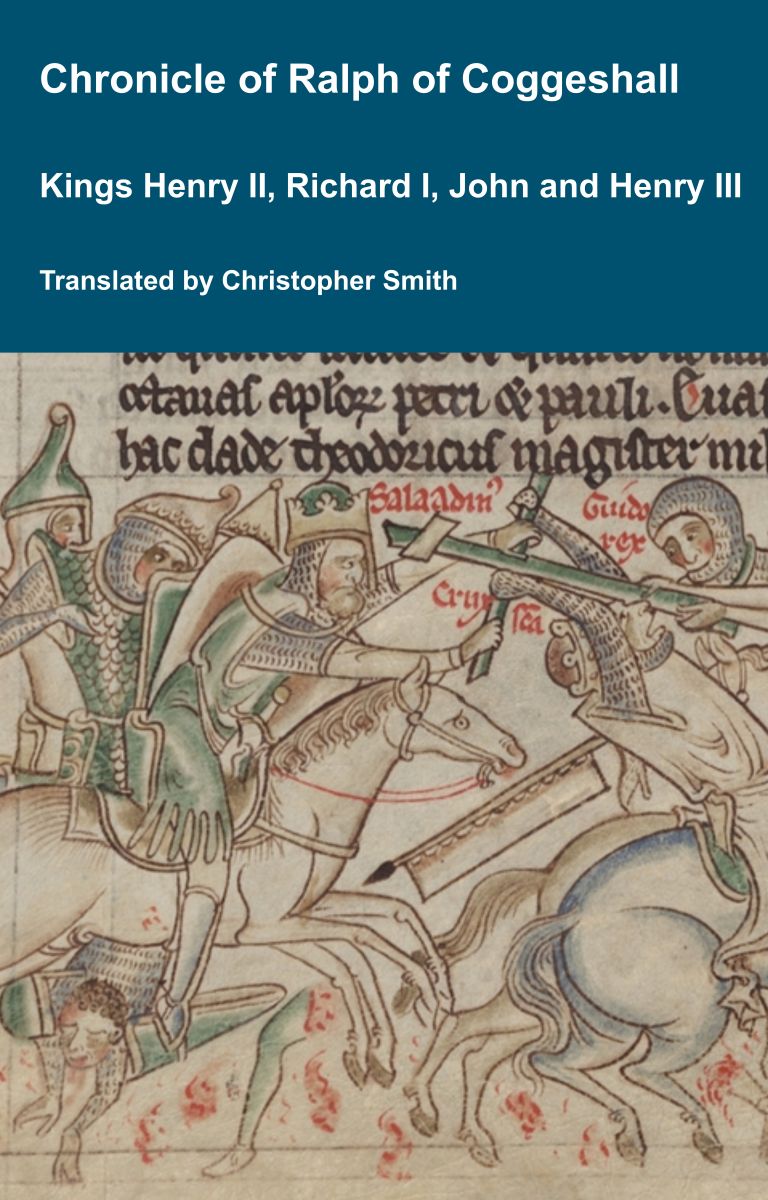 Chronicum Anglicanum by Ralph Coggeshall. Likewise, on the night of St Felix1 [29th July 1205] after the feast of St James, such a crash of dreadful thunders, and an unceasing flashing of crackling lightning from the clash of clouds, appeared through the whole night throughout all England at one and the same time, that it was believed the Day of Judgment was at hand, men and animals alike being almost struck senseless with fear and the horror of the expectation which had come upon the whole kingdom. For many men of both sexes perished in different places, struck by the lightning. Animals likewise were struck down, houses were overturned and burned, crops were battered by hailstones which in some places were said to be as large as goose eggs, and jagged all around. Some trees were torn up by the roots and shifted, some twisted as if like ropes, others appeared split in two. On the next day also certain monstrous footprints were seen in many places, such as had never been seen before, which people said were the footprints of demons, who sought to flee here and there from the terrifying blows of the good Angels. As Jerome says in the Ethics: 'Against the ancient enemy the good angels rage with diverse blows and darts, restraining the paths of the air, and the rollings of clouds, thunders, and crackling lightnings into angelic persecution, until in the stroke of arrows and in the gaping of lightnings they are compelled to be slaughtered and thrust back into the gulf of the abyss.' For so great is the force of the fiery hands of the Angels, that rocks are shattered into fragments, the uprooting of trees is cut down. If ever the fury of rebellious men should break out, by the stroke of one angel countless thousands of people might be struck down and fall. This philosopher disputed on these matters more deeply than others.
Item, in nocte Sancti-Felicis post festum Sancti Jacobi, tantus fragor horrendorum tonitruorum, et crepitantium fulminum indesinens choruscatio per totam noctem ex nubium collisione per totam Angliam uno eodemque tempore apparuerunt, ut dies Judicii instare crederetur, exanimatis fere hominibus et animalibus præ timore et expectationis horrore qui supervenerat universo regno. Nam plures homines utriusque sexus per diversa loca fulmine percussi interierunt. Animalia quoque similiter percussa sunt, domus eversæ et combustæ, segetes grandinum lapidibus attritæ, qui adeo magni esse ferebantur in quibusdam locis quasi ova anserina, undique aculeati. Arbores quædam radicitus evulsæ, et transpositæ, quædam quasi funes sunt contortæ, nonnullæ per medium conscissæ apparebant. In crastino quoque quædam monstruosa vestigia in plerisque locis visebantur, qualia nusquam visa sunt, quæ homines dicebant fuisse vestigia demoniorum, quæ a terrifica percussione bonorum Angelorum huc illucque diffugere exoptabant, secundum illud Hieronimi ex Ethico. In antiquum hostem angeli boni sæviunt diversibus ictibus et jaculis, arcendo vias aerum, nubiumque, tonitruorum et fulminum crepitantium volutiones in persecutionem Angelicam, donec in ictu sagittarum et fulgurum hiatu terræ et voragine abyssi compulsi trucidentur et retrudantur. Tantam enim vim Angelorum manus igneæ habent, ut petræ minutatim scindantur, arborum evulsio desecetur. Si hominum rebellium furor ingruerit, unius angeli ictu innumerabilium millia populorum cæsi corruant. Philosophus hic, plusquam alii alta disputavit.
Note 1. Pope Felix II died on 22nd November 365. Some confusion occurred between Pope Felix II and a Roman Martyr Felix whose feast day was the 29th of July. Pope Felix' Feast Day is no longer celebrated since he is now considered to be an antipope i.e. a person established as pope in opposition to one held by others to be canonically chosen. The feast of St James is the 25th of July.
On 29th July 1328 Gerhard Jülich V Count Jülich [aged 78] died. His son William [aged 29] succeeded V Count Jülich.
 Chronicle of Jean le Bel Volume 1. Moreover, the aforesaid lords agreed that they would also secure for them the support of other lords from beyond the Rhine who had the power to bring a great number of men-at-arms, provided they were sufficiently supplied with the means to do so. Then they took their leave and returned to their own lands. The Bishop of Liège, who at that time was Sir Adolphe of La Marck1, was duly summoned and great embassies were sent to him, with fine jewels presented; yet he would never agree to it nor do anything against the King of France, to whom he had become liege man and entered into fealty. The noble King of Bohemia2 was neither asked nor summoned, for it was well known that he was so closely bound to the King of France through the marriage of their two children, by which the kingdom was to pass, that he would not act against him.
Encore convenencherrent ces seigneurs dessusdis qu'ilz les ayderoient d'aultres seigneurs d'oultre le Ryn qui avoient pouoir de mener grand foison de gens d'armes, mais qu'ilz eussent souffisaument le pourquoy. Adoncques prirent congié et ralerrent en leur pays. L'evesque de Liege, messire Aoust de la Marche, qui adoncques estoit, y fut bien souffisaument mandé et grans messages envoyez pour luy et beaulx joyaulx presentés, mais oncques n'y voult entendre ne faire riens contre le roy de France, duquel il estoit devenu homme et entré en feaulté. Le noble roy de Boheme n'y fut point pryé ne mandé, car on sçavoit bien qu'il estoit si conjoins au roy de France par le mariage de leurs deux enfans, auxquelx le royaume debvoit parvenir, qu'il n'yroit point contre luy.
Note 1. Adolphe of La Marck, Bishop of Liège, allied himself with Philip of Valois and, by a treaty of 29th July 1337, promised to assist him against the King of England with 500 men-at-arms, who would follow him as far as Compiègne. In return, the king was to give him 15,000 livres parisis in ready money, 50 livres tournois per day for his expenses, and to pay his men their customary wages (Archives Nationales, J 527, no. 13).
1. Adolphe de la Marck, évèque de Liège, s'allia à Philippe de Valois, et par un traité du 29 juillet 1337, promit de le secourir contre le roi d'Angleterre avec 500 hommes d'armes qui le suivraient jusqu'à Compiègne. En retour, le roi devait lui donner 15,000 livres parisis comptant, 50 livres touruois par jour pour ses dépens et payer à ses gens les gages accoutumés. (Arch. nat., J 527, no 13.)
Note 2. On 6th August 1337, at the request of Philip of Valois, John, King of Bohemia, promised to assist him in person with 500 men-at-arms at the customary wages paid in the kingdom of France. Philip VI was moreover to give him 30,000 livres parisis for the equipment of his men (Archives Nationales).
2. Le 6 août 1337, sur la demande de Philippe de Valois, Jean, roi de Bohème, promit de l'aider en personne avec 500 hommes d'armes aux gages accoutumés dans le royaume de France. Philippe VI devait lui donner en outre 30,000 livres parisis pour l'équipement de ses gens. (Arch. nat., J 432, no 11.)
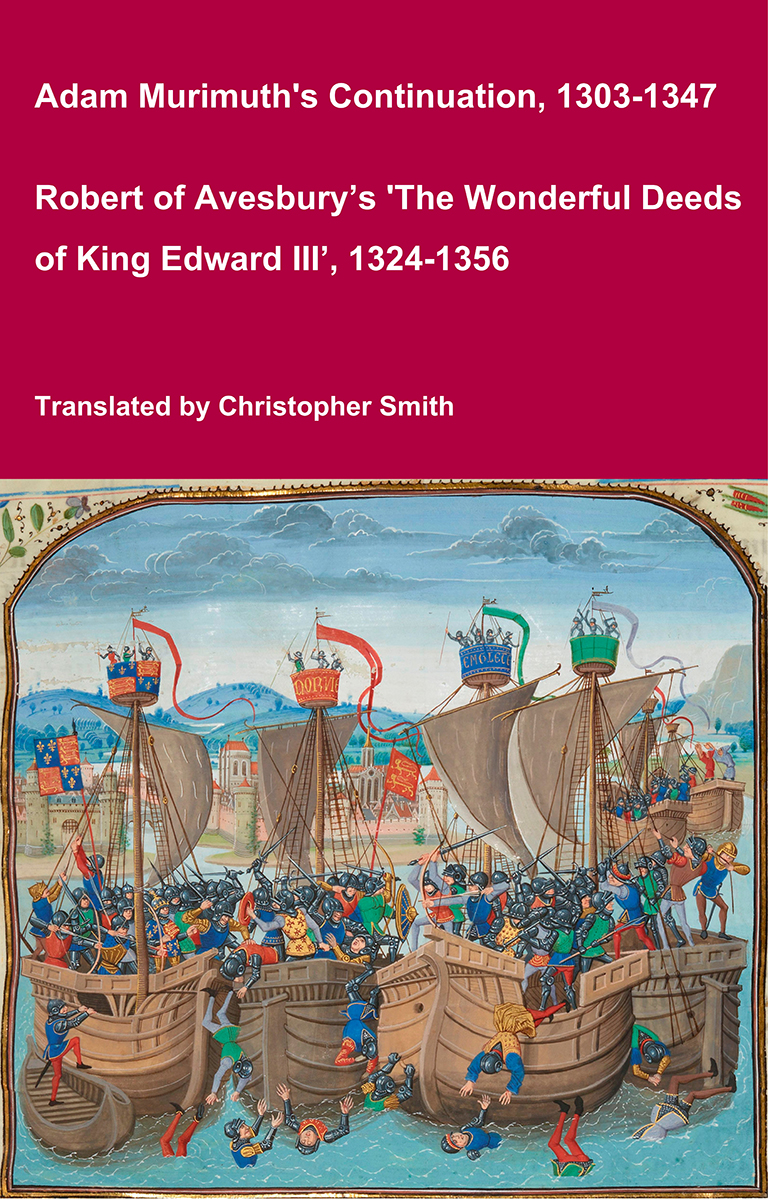 Adam Murimuth Continuation. "To the most reverend father in God and my most honoured lord, Because I well know that you are very eager to hear good news of my lord the king and of the achievements he has made since he came into the parts of Normandy, please be informed that, from the hour he began his march, he took his way from La Hogue, where he landed, directly toward Caen, passing through good towns, namely Valognes, Carentan, Saint-Lô, and through many other fine towns. But there was no man or woman of status who dared to remain in the towns, castles, or countryside through which the host passed, for they all fled, until the king came to Caen. There, the Constable of France, the Count of Eu, the Chamberlain of Tankerville, along with many knights and men-at-arms and commoners of the town, had prepared to hold the town against my lord the king and all his power. But when the king came with his host and presented himself before the town, the enemies retreated across a bridge in the middle of the town and held their position there. When we had come as close to the town as we could, our archers went straight to the bridge and began to attack them with arrows. Meanwhile, some of our men-at-arms came and gave them a fierce assault, such that, for fear of injury to our men, since it was believed there were no men-at-arms with us except for the archers of my Lord of Warwick, the marshal, a message was sent from the king for them to withdraw. But when he came to the bridge, he found them fighting hand to hand at the barricades. He himself behaved very well and honourably, and at last, with the help of Our Lord, our men gained the bridge from them and thus entered the town and routed them. Soon after, the Constable of France surrendered to my lord Thomas de Holland, along with many knights and squires who were with him; and the Chamberlain of Tankerville was taken by a bachelor knight of my lord the prince and is now the prince's prisoner. Between 600 and 700 proven and valiant knights were taken or killed, of whom around 100 are still alive, and among the squires, burgesses, and common people, around 5,000 were taken or killed. Thus, praise be to Our Lord, events have gone up to now as graciously as they could. The king stayed there for two or three days to refresh his host with victuals, which were plentiful in the town, and he plans to draw himself straight toward his adversary to bring matters to such an end as God has ordained. The ships have come to the mouth of the river that flows to Caen, and they have burned and destroyed around 100 vessels along the coast and done great destruction to the land by fire and other means. Other news, sire, I do not presently have to send you. May the Holy Spirit preserve you in your honours, in good life and long. Written at Caen, the 29th day of July [1346]."
"My lord, it pleaseth the king that all the prisoners which be taken be sent to England, without being delivered by ransom or otherwise, until he hath accomplished further in his war."
"Tres reverent piere en Dieu et mon tres honure seignur, pur ceo qe jeo eai bien ge vous estes molt desironsc de saver bones novels de roi mon seignur et del espleit gil ad cu puis qil vynt en parties de Normandie, pleise a vous saver qe, del heure gil comensa a chivacher, si prist il soun chymyn de la Hoge, la ou il ariva, dreit a Kaam, et ala tot par les bones villes, saver Valeyns, Karantan, Seint Loo, et par altres bones villes tot pleyn. Mes il ny avoit home ne femme destat qc osa attendre en villes, ' chastels, no en pays, la ou le oust passa, ge touz ne sen fuyrount, taunge le roy vynt a Kasam. Et la fuy le conestable de France, counte de Eu, le chaumbleyne de Tankerville, ou tot pleyn de chivalers et de genz des armes et comuns de pais ect de la ville, les queux se avoient ordeyne daver tenuz la dite ville encountre le roi mon seignur et tot soun poair. Mes, quant le roi y vynt od soun hoste et se mostra devant la ville, les enemys se retrerunt outre un pount gest en myluy de la ville et so tindrount la, Et quant nous estoiomus venuz tot a la ville, si pres com nous poyemus, noz archers alerunt tot dreit a pount et les asailerunt par trere. Eten le meyn temps vindrunt a eux ascuns gentz darmez et lour donerunt fort asaut, si qe pur doute de blessure de noz gentz, par cause qe home quida qe nuls gens darmez de noz i fusount, forke archers moun Seignur de Warewyke, mareschal, il fut maunde de part le roi pur eux retrere. Et quant il vynt a pount, il les trova combatant les unus ou les autres dreit a les barres, par ou il se porta mesmes bien et noblement, et a dreyn home les presa tant qe, ou leido nostre Seignur, nous gentz gainerunt le pount sour eux, et ensi entrerunt la ville et les descomfirount. Et taunstot le conestable de France se rendi a moun seignur Thomas de Holond ou tost pleyn de chivalers et equiers qe furunt ovesque luy; et le chambelen de Tankervile fust pris dun bacheler mon seignur le prince, si qil est le prison moun seignur. Et farunt pris et mortz entre VJxx et VIJxx chivalers pruis et vailauns, dount i sount unqore vifs entour C; et desquiers, burgeys, et de comune poeple pris et mortz entour V mille; si qe, leye ent soit nostre Seignur!, les besoignez sunt ales tange encea si graciousement com il pount. Et le roi il demurra deux jours ou treis pur affrecher soun houst de vitailes qi furunt en la ville tot pleyn, et pense de sui trere tot dreit devers soun adversere, de faire tiel fyn com Dieu luy ad ordeyne. Et les neefs furunt venuz a bout del entre de lewe qe va a Kaam, et ount ars et destruit enviroun C vesceus par les coustes et grant destruccoun fait sour la terre par arsyn et par altre voie. Altres novels, sire, ne vous say jeo en present maunder. Le Seynt Espyrit vous meintengne en voz honurs, en bone vie et longe. Escrit a Kaan, le XXIX jour de Juyl."
"Sire, il plest a roy qe touz les prisouns qe sount pris soient maundez en Engleterre, saunz estre delivers par raunsoun ou par autre voie, tauge il cit altre espleite de sa guere."
On 29th July 1356 King Martin I of Aragon was born to Peter IV King Aragon [aged 36] and Eleanor of Sicily Queen Consort Aragon [aged 31]. Coefficient of inbreeding 2.45%. He married (1) Maria Luna Queen Consort Aragon (2) 17th September 1409 Margaret Prades Queen Consort Aragon.
On 29th July 1399 William Scrope 1st Earl Wiltshire [aged 49], Henry Green of Drayton, Northamptonshire [aged 52] and John Bussy were beheaded at Bristol Castle, Gloucestershire [Map]. Earl Wiltshire forfeit.
On 29th July 1418 the English forces commenced the Siege of Rouen. Robert Willoughby 6th Baron Willoughby [aged 33] fought. John Blount [aged 30] died. William Harrington [aged 45], the King's Standard Bearer, was wounded.
Walter Hungerford 1st Baron Hungerford [aged 40] fought.
Henry Beaufort 2nd Earl Somerset [aged 17] was killed. His brother John [aged 15] succeeded 3rd Earl Somerset.
On 29th July 1460 Thomas Browne [aged 58] was beheaded at Tyburn [Map].
Before 29th July 1476 the remains of Richard Plantagenet 3rd Duke of York and his son Edmund were removed from Pontefract Priory [Map] to be reburied at St Mary and All Saints Church, Fotheringhay [Map]. On their journey south they spent two nights at Blackfriars Friary, Stamford [Map].
On 29th July 1476 Edward I's paternal grand-father Edward of York, Richard of York and his younger brother Edmund were reburied at St Mary and All Saints in Fotheringhay [Map] in a ceremony attended by King Edward IV of England [aged 34], George York 1st Duke of Clarence [aged 26], Thomas Grey 1st Marquess Dorset [aged 21], William Hastings 1st Baron Hastings [aged 45], Anthony Woodville 2nd Earl Rivers [aged 36].
Thomas Whiting, Chester Harald wrote:
On 24 July [1476] the bodies were exhumed, that of the Duke, garbed in an ermine furred mantle and cap of maintenance, covered with a cloth of gold lay in state under a hearse blazing with candles, guarded by an angel of silver, bearing a crown of gold as a reminder that by right the Duke had been a king. On its journey, Richard, Duke of Gloucester, with other lords and officers of arms, all dressed in mourning, followed the funeral chariot, drawn by six horses, with trappings of black, charged with the arms of France and England and preceded by a knight bearing the banner of the ducal arms. Fotheringhay was reached on 29 July, where members of the college and other ecclesiastics went forth to meet the cortege. At the entrance to the churchyard, King Edward waited, together with the Duke of Clarence, the Marquis of Dorset, Earl Rivers, Lord Hastings and other noblemen. Upon its arrival the King made obeisance to the body right humbly and put his hand on the body and kissed it, crying all the time. The procession moved into the church where two hearses were waiting, one in the choir for the body of the Duke and one in the Lady Chapel for that of the Earl of Rutland, and after the King had retired to his closet and the princes and officers of arms had stationed themselves around the hearses, masses were sung and the King's chamberlain offered for him seven pieces of cloth of gold which were laid in a cross on the body. The next day three masses were sung, the Bishop of Lincoln preached a very noble sermon and offerings were made by the Duke of Gloucester and other lords, of The Duke of York's coat of arms, of his shield, his sword, his helmet and his coursers on which rode Lord Ferrers in full armour, holding in his hand an axe reversed. When the funeral was over, the people were admitted into the church and it is said that before the coffins were placed in the vault which had been built under the chancel, five thousand persons came to receive the alms, while four times that number partook of the dinner, served partly in the castle and partly in the King's tents and pavilions. The menu included capons, cygnets, herons, rabbits and so many good things that the bills for it amounted to more than three hundred pounds.
Collectanea by John Leland [1502-1552]. The XXIXth Day of the sayd Monneth [29th July 1503] the said Qwene departed from Alnewyk, for to go for Barrwyk, and at Half of the Way, named Belleford, she bayted. For SyrThomas Darcy, Capittayne of the said Barrwicke, had maid rady hyr' Dynner at the said Place very well and honnestly.
For that the said Maister Henry Grays abouffe named is Sheryffe of Ellaund Shyre and Northumberland Shyre, he bore his Rod before the said Qwene, sens the Entrynge of the said Lordschips, to Barrwyk.
Betwyx Alnewyk and Barrwyk cam to the Qwene Maister Rawff Wodryngton, having in hys Company many Gentylmen well appoynted. His Folks arayd in Liveray, well horsed, to the Nomber of an hundreth Horsys.
At the Comyng ny to Barrwyk was shot Ordonnounce, the wiche was fayr fer to here. And ny to the sayd Place the Qwene drest hyr. And Ichon in fair Aray, went she on after the other in fayyr Ordre.
At the Entrynge of the Bryge was the said Capitaine well apoynted, and in hys Company hys Gentylmen and Men of Armes, who receyved the said Qwene into the said Place.
At the tother End of the Bryge toward the Gatt, was the Maister Marshall compayned of hys Company, Ichon bearing a Staffe in hys Haund.
After hym was the College revested with the Crosse, the wiche was gyffen hyr for to kysse by th Archbifshop as before.
At the Gatt of the said Towne was the Maister Porter, with the Gard and Soyars of the said Place, in a Row well apoynted. Ichon of those had an Haiiebarde or other Staffe in his Haund, as the others. And apon the said Gatt war the Mynslraylls of the sayd Capltayn, playnge of their Instruments.
In the Midds of the said Town was the Maistre Chamberlayn, and the Mayre, acompayned of the Bourges and Habitaunts of the said Place, in rayre Ordre, and well apoynted.
In such fayr Ordre and Company she was conveyd and brought to the Castell [Map], wher she was receyved by the Lady D'arcy honnestly accompayned.
After 29th July 1509. St Mary the Virgin Church, Chipping Norton [Map]. Monument to Richard "The Elder" Croft and Eleanor Cornwall [aged 81]. Finely made in alabaster. Fluted Period. Two complete effigies,still Gothic in line and detail, on a crocketed niched chest with angels and shields. Chunky Lions Mane. Chest with Weepers. Chest with Angels with Rounded Wings holding Shields. Gabled Headress with Lappets.
Richard "The Elder" Croft: he was born to William Croft in Croft Castle, Herefordshire [Map]. Before 1458 Richard "The Elder" Croft and Agnes or Annes Fox were married. In or before 1470 Richard "The Elder" Croft and Eleanor Cornwall were married. On 29th July 1509 Richard "The Elder" Croft died in Croft Castle, Herefordshire [Map].
Eleanor Cornwall: In 1428 she was born to Edmund Cornwall and Elizabeth Barre at Burford, Shropshire [Map]. Around 1454 Hugh Mortimer and she were married. On 23rd December 1519 Eleanor Cornwall died at Yarpole, Herefordshire.


Anne Boleyn. Her Life as told by Lancelot de Carle's 1536 Letter.
In 1536, two weeks after the execution of Anne Boleyn, her brother George and four others, Lancelot du Carle, wrote an extraordinary letter that described Anne's life, and her trial and execution, to which he was a witness. This book presents a new translation of that letter, with additional material from other contemporary sources such as Letters, Hall's and Wriothesley's Chronicles, the pamphlets of Wynkyn the Worde, the Memorial of George Constantyne, the Portuguese Letter and the Baga de Secrets, all of which are provided in Appendices.
Available at Amazon in eBook and Paperback format.
Wriothesley's Chronicle [1508-1562]. 29th July 1518. aThis yeare, on a Thursday, the 29th day of Julie, a legat [aged 43]b came from the Pope, and was receaved into London at after-noone. And there receaved him at the Black Heath [Map] the Bishop of Dunham [aged 46], Bishop of Ely, the Duke of Northfolke [aged 45],c with divers other great lordes and knightes, and all the orders of friers, channons, moncks of Stratforde and Tower Hill, with all parsons and priestes of all the parishe churches in London, stoode all in coopes with crosses, candlestickes, and sensors, from St. Georges barre in Southwark to Leaden Hall comer. And ever as the legatt passed by them they sensed him; and so was he receaved thorowe the Cittie; he havinge borne before him 2 pillers of sylver and guylt, and he himselfe ridinge in redd chamlett,d with his cardinalls hatt on his heade, and the Major and Aldermen, with all the crafts of the Cittie, standinge in Cheepe-syde in their best liveries. And when he came before the Major and Aldermen yonge Mr. More [aged 40] made there to him a proposition for the Cittie,e and so he rode thorowe Paules Churche yeard. And when he came at the west dore of Powles the Bishop of London,f with all Powles quier, receaved him with procession in copes of cloth of golde, and a riche canopie of cloth of golde borne over his heade, and so brought him to the highe alter, where he saide his devotions and offered; and that done, he rode to the Bishopp of Bathes place at Temple barre, which was prepared for him, and so there remayned.
Note a. This is the first instance in which onr Chronicler gires a nrach fuller account of the proceedings than is to be found in Arnold's Chronicle, which ends in the jear following.
Note b. Cardinal Campeggio, called also Laurence Campeins.
Note c. Thomas Howard, Earl of Surrey, had the title of Duke of Norfolk restored to him for the great victory gained by him at Flodden, 1513, Sept 9.
Note d. Whilst delaying at Calais for the return of the papal bull Wolsey [aged 45]s had snpplied him with red cloth to clothe his servants, who, at their first coming, were but meanly apparelled. Hall, ed. 1809, p. 692.
Note e. Sir Thomas More made a brief oration to him in the name of the City. — Hall's Chronicle, cd. 1809, p. 693.
Note f. Richard Fitz-James.


Correspondence of Castillon et Marillac. 29th July 1540. Marillac au Connetable.
The matter of Monsieur de la Rochepot remains in the same state, quite unresolved, every day they promise to give a final answer.
Master Thomas Cromwell, long since condemned by Parliament, was this morning beheaded at the customary place where such executions are carried out. He was granted clemency in the manner of his death, having originally been sentenced to a harsher and more shameful punishment. Alongside him, Lord Hungerford was likewise beheaded, a man of about forty years of age, convicted of sodomy, of having violated his own daughter, and of practicing magical arts and the invocation of devils. And since midday, I have been informed that Doctor Barnes and several others are to be burned, which is why I shall withhold this present letter until the evening, in order to report the full account to you, the total is said to be around forty-two. It is believed, Monseigneur, that further executions will take place this very week of those who were condemned by the said Parliament and are not included in the general pardon and amnesty granted by the King. All of them have received sentences either of death or of perpetual imprisonment, depending on whether the King chooses to exercise mercy or severity toward them. Of these, beyond those already executed, I have noted the names of some whose cases deserve to be known, and mention of them is made in a list that I enclose herewith for your review.
My Lord, the brother of the Duke of Ferrara, Lord Pietro, after having stayed here for seven days, during which he was ceremoniously entertained, and after having seen some of this king's residences, such as Hampton Court and Greenwich, departed yesterday with the evening tide to return to the Emperor. This king gave him a gift of only two fine hackneys, just as he had done for the Prince of Salerno, from which it can easily be understood that they did not come here to negotiate, but only to see the country.
My Lord, the new ambassador of the Emperor, of whom I wrote earlier, arrived six days ago and has received a rather cold welcome at this court, where, in truth, he is not much liked. According to what this king has said to me about him, he does not hold him in good esteem. Moreover, the Duke of Norfolk, who now has the principal management of affairs, clearly shows that he likes him very little, telling me among other things that he will no longer find his Cromwell to shield him from the follies he has previously undertaken. Besides this, the poor man has long been so broken and now is so weakened by illness that people believe he has come more to make his last will and testament in England than to render any great service to the Emperor, his master. The Emperor, for his part, was quite willing to send him back in this role, knowing he is of no use elsewhere, being a man who can neither walk nor ride. For this reason, he has taken lodging near mine, beside the river, so that he might conveniently travel by water to court whenever affairs require it. My Lord, I cannot omit, as a matter of duty, to mention a courtesy worthy of note that this ambassador showed me: namely, that he informed me of his arrival as soon as he landed here although he concealed it from others, especially from his predecessor in the ambassadorship, which has surprised everyone. He excused himself for not being able to visit me before speaking with the king, in order to comply with English ceremonial protocol; but as soon as he had had his audience, he came directly from court to my lodging without even stopping at his own, thereby anticipating the courtesy I had intended to extend to him. He told me that he was charged by the Emperor to communicate to me everything he would do here, which I assured him was likewise my instruction from the king — just as I had done with his predecessor. However, in practice, he told me he had said nothing to the king beyond offering the Emperor's greetings and presenting his letters of credence. Since then, we have frequently visited one another to demonstrate the friendship between our masters. That, my Lord, is all I can write for now, though I hope soon to give you full information on what has been decided in this Parliament, which closed only two days ago.
L'affaire de M. de la Rochepot est toujours en mêmes termes bien nue tous les jours on promette d'en donner finale réponse.
Maistre Thomas Cramvel piéça condempné par le parlement, ce matin a eu la teste trenchée au lieu acoustumé ou telles exécutions se font, et luy a esté faicte grace sur la facon de mourir, pour avoir eu condamnation d'endurer plus griefve et plus ignominieuse peine. Avec luy a esté semblablement décollé le seigneur de Haigrefort, homme aigé d'ung quarente ans, attaint de sodomye, d'avoir foreé sa propre fille et d'avoir usé d'art magieque et invocation de dyables. Et depuis midy on m'a adverty que le docteur Barnes et quelques aultres seront bruslez, qui sera cause que je retiendray la présente jusques au soir pour vous advertir du tout, qui sont environ quarente deux (sic). L'on estime, monseigneur, que ceste sepmaine mesmes se feront encores quelques aultres exécutions de ceulx qui ont esté condamnez par ledit parlement, qui ne sont comprins dans le pardon et abolition générale que ce roy a octroyé, lesquelz tous ont eu sentence de mort ou aultres de prison perpétuel, selon qu'il plaira au roy user envers eulx de grace ou rigueur, desquelz j'ay observé oultre les exécutez les noms d'auleungs qui méritent bien d'estre sceuz, dont mention est faicte en ung brevet qu'il vous plaira icy veoir encloz avec la présente.
Monseigneur, le frere du due de Ferrare, le seigneur Petro, apres avoir icy séjourné sept jours oir il a esté solennellement festoyé, et aussi apres avoir veu quelques maisons de ce roy comme Hampteourt et Grenvys, partit hier a la marée du soir pour s'en relourner devers I'em- pereur. Ce roy lui a faict présent de deux belles hacquenées seullement, comme il feit le semblable au prince de Salerne, par ou l'on peult aisément congnoistre qu'ilz n'estoient icy venuz pour négocier, ains seullement veoir le pays.
Le nouveanambassadeur de 'empereur, dont cy devant j'avoys escript, depuis six jours est arrivé et trouve bien meigre racueil en ceste court, out a la vérité il n'y est guéres aymé, aux propoz que ce roy m'a lenuz de luy, qui ne le tient en bonne estime, avee ce que le duc de Norfolk, [qui a] maintenant le principal maniment des affaires, monstre clairement ne 'aymer guéres, me disant entre aultres choses qu'il ne trouvera plus son Cramvel pour le garentir és follyes que aultres foys il a entrepris. Au demourant le pouvre homme est de longtemps si cassé el maintenant si abattu de maladye que I'on estime qu'il soit plus tost venu pour faire son dernier testament en Angleterre que grant service a I'empereur son maistre, lequel I'a bien voulu renvoyer en ceste charge congnoissant que ailleurs il Iuy estoit inutille comme celuy qui ne peult aller ny a pied ny a cheval, et pour aultant s'est logé aupres de moy joignant a la riviere, pour avoir commodité d'aller par eaue en ceste court quant les affaires le requerront. Monseigneur, je ne puis obmettre pour le debvoir une gratieuseté digne d'estre sceue dont le dit seigneur ambassadeur a usé envers moy, qui est de m'avoir adverty de son arrivée aussitost qu'il print icy terre, bien qu'il la celast aux aultres et spéciallement & I'ambassadeur son prédécesseur, dont tout le monde s'est esmerveillé; et s'estant excusé de ne me pouvoir visiter avant que avoir parlé a ce roy, pour satisfaire a la cérymonie des angloys, incontinent qu'il eust eu son audience, il veint tout droit de la court me trouver en mon logis sans descendre au sien, en me prévenant de loffice que j'avoys délibéré de faire envers luy, et me dict avoir charge de I'empereur de me communiquer tout ce qu'il feroit par deca, ce que pareillement je luy confermay avoir eu du roy ainsi que j'avoys faict a celluy qui avoit esté devant luy. Toutteffoys en effect il ne me dict riens avoir dict a ce roy si n'est de I'avoir salué de la part dudit seigneur empereur et luy avoir présenté ses lettres de créance. Depuis nous nous sommes souvent entre visitez pour donner a entendre 'amityé qui est entre les maistres. C'est en effect, monseigneur, ce que pour 'heure puis escripre, espérant bien tost vous donner ample advertissement de ce qui aura esté résolu en ce parlement qui fut cloz il y a seullement deux jours.
Chronicle of Queen Jane and Two Years of Queen Mary 1553. 29th July 1553. "The lady Elizabethes [aged 19] grace came the 29. of July to Somerset place, well accompanyed with gentlemen, and others, righte strongly, and theare she rested a nighte, and the morowe ensuinge she went throwghe Cheapside to meete the queenes grace to London-wardes, who is loked for the 3. or 4. of Auguste.


Henry Machyn's Diary. 29th July 1557. The sam day began the herse at Westmynster for my lade Anne of Cleyff [deceased], with carpynters worke of vij prensepalles, as goodly a hers as ....
On 29th July 1558 Henry Sacheverell [aged 32] died at Ratcliffe on Soar, Nottinghamshire [Map]. He was buried at Holy Trinity Church Ratcliffe on Soar [Map].
On 10th February 1554 Lucie Pole [aged 26] died.
She wearing a puffed sleeve gown with triple chain with French Hood. His head on a great helm with Goat Crest. Possibly Richard Parker of Burton on Trent with Dogs chewing at her dress.
Henry Sacheverell: In 1526 he was born to Ralph Sacheverell and Cecilia Durance at Ratcliffe on Soar, Nottinghamshire [Map]. Before 1547 Henry Sacheverell and Lucie Pole were married.
Lucie Pole: In 1528 she was born to John Pole of Hartington.


Henry Machyn's Diary. 29th July 1560. The xxix day of July the Quen('s) [aged 26] grace removyd from Grenwyche [Map] on her grace('s) progresse, and at Lambeth [Map] she dynyd with my lord of Canturbere [aged 55] and her consell; and after [took her] gorney towhard Rychmond [Map], and her grace lay ther v [5] days; and after to Ottland [Map], and ther So[nday and] Monday dener, and to Suttun to soper.
On 29th July 1565 Henry "Lord Darnley" Stewart [aged 19] and Mary Queen of Scots [aged 22] were married at Holyrood Palace, Holyrood. She the daughter of King James V of Scotland and Mary of Guise Queen Consort Scotland. He the son of Matthew Stewart 4th Earl Lennox [aged 48] and Margaret Douglas Countess Lennox [aged 49]. They were half first cousins. He a great grandson of King Henry VII of England and Ireland. She a great granddaughter of King Henry VII of England and Ireland.


On 29th July 1567 King James I of England and Ireland and VI of Scotland [aged 1] was crowned VI King Scotland.
John Graham 6th Earl Menteith was present.


On 29th July 1609 Maria Gonzaga Duchess of Montferrat was born to Francesco IV Gonzaga Duke of Mantua [aged 23] and Margaret of Savoy Vicereine Portugal [aged 20]. Coefficient of inbreeding 1.79%. She married December 1627 her second cousin once removed Charles Gonzaga Duke Nevers Duke Rethel, son of Charles Gonzaga I Duke Mantua, and had issue.
On 14th July 1641 King Charles I of England, Scotland and Ireland [aged 40] created new Baronets:
John Cotton 1st Baronet [aged 25] was created 1st Baronet Cotton of Landwade in Cambridgeshire.
Thomas Abdy 1st Baronet [aged 29] was created 1st Baronet Abdy of Felix Hall in Kelveden in Essex.
John Bampfylde 1st Baronet [aged 31] was created 1st Baronet Bampfylde of Poltimore in Devon.
On 29 or 30th July 1641 William Strickland 1st Baronet [aged 45] was created 1st Baronet Strickland of Boynton in Yorkshire. Frances Finch Lady Strickland by marriage Lady Strickland of Boynton in Yorkshire.


On 29th July 1643 Henri Jules Bourbon Condé Prince Condé was born to Louis "Le Grand Condé" Bourbon Condé II Prince Condé [aged 21] and Claire Clémence Maillé Brézé Princess Condé. He married his fifth cousin once removed Anne Henriette Palatinate Simmern and had issue.
From 3rd July 1660 to 29th July 1660 a major eruption of Mount Vesuvius [Map] occurred. A dark eruption column is said to have risen at least 4 km high and was driven to the SE. During the final stage of the eruption, white ash was erupted - a feature common in the late stages of all final (that is, sub-cycle-closing) Vesuvian eruptions. It was in this eruption that free twinned augite phenocrysts were ejected along with the ash, the cross-shaped objects falling from the sky causing much superstition among the population. The crater was filled by a significant amount during the 1660 eruption.

Samuel Pepys' Diary. 29th July 1660. Lord's Day. I and my boy Will to Whitehall, and I with my Lord to White Hall Chappell, where I heard a cold sermon of the Bishop of Salisbury's [aged 71], and the ceremonies did not please me, they do so overdo them. My Lord went to dinner at Kensington with my Lord Camden [aged 49]. So I dined and took Mr. Birfett, my Lord's chaplain, and his friend along with me, with Mr. Sheply at my Lord's. In the afternoon with Dick Vines and his brother Payton, we walked to Lisson Green and Marybone and back again, and finding my Lord at home I got him to look over my accounts, which he did approve of and signed them, and so we are even to this day. Of this I was glad, and do think myself worth clear money about £120. Home late, calling in at my father's [aged 59] without stay. To bed.
John Evelyn's Diary. 29th July 1666. The pestilence now fresh increasing in our parish, I forbore going to church. In the afternoon came tidings of our victory over the Dutch, sinking some, and driving others aground, and into their ports.
Samuel Pepys' Diary. 29th July 1666. Lord's Day. Up and all the morning in my chamber making up my accounts in my book with my father and brother and stating them. Towards noon before sermon was done at church comes newes by a letter to Sir W. Batten [aged 65], to my hand, of the late fight, which I sent to his house, he at church. But, Lord! with what impatience I staid till sermon was done, to know the issue of the fight, with a thousand hopes and fears and thoughts about the consequences of either. At last sermon is done and he come home, and the bells immediately rung soon as the church was done. But coming; to Sir W. Batten to know the newes, his letter said nothing of it; but all the towne is full of a victory.
Samuel Pepys' Diary. 29th July 1667. By and by he is informed that Sir H. Bellasses's [aged 28] coach was coming: so Tom Porter went down out of the Coffee-house where he stayed for the tidings, and stopped the coach, and bade Sir H. Bellasses come out. "Why", says H. Bellasses, "you will not hurt me coming out, will you?"-"No", says Tom Porter. So out he went, and both drew: and H. Bellasses having drawn and flung away his scabbard, Tom Porter asked him whether he was ready? The other answering him he was, they fell to fight, some of their acquaintance by. They wounded one another, and H. Bellasses so much that it is feared he will die: and finding himself severely wounded, he called to Tom Porter, and kissed him, and bade him shift for himself; "for", says he, "Tom, thou hast hurt me; but I will make shift to stand upon my legs till thou mayest withdraw, and the world not take notice of you, for I would not have thee troubled for what thou hast done". And so whether he did fly or no I cannot tell: but Tom Porter shewed H. Bellasses that he was wounded too: and they are both ill, but H. Bellasses to fear of life. And this is a fine example; and H. Bellasses a Parliament-man too, and both of them most extraordinary friends! Among other discourse, my cozen Roger [aged 50] told us a thing certain, that the Archbishop of Canterbury [aged 69]; that now is, do keep a wench, and that he is as very a wencher as can be; and tells us it is a thing publickly known that Sir Charles Sidley [aged 28] had got away one of the Archbishop's wenches from him, and the Archbishop sent to him to let him know that she was his kinswoman, and did wonder that he would offer any dishonour to one related to him. To which Sir Charles Sidley is said to answer, "A pox take his Grace! pray tell his Grace that I believe he finds himself too old, and is afraid that I should outdo him among his girls, and spoil his trade". But he makes no more of doubt to say that the Archbishop is a wencher, and known to be so, which is one of the most astonishing things that I have heard of, unless it be, what for certain he says is true, that my Baroness Castlemayne [aged 26] hath made a Bishop lately, namely,-her uncle, Dr. Glenham, who, I think they say, is Bishop of Carlisle; a drunken, swearing rascal, and a scandal to the Church; and do now pretend to be Bishop of Lincoln, in competition with Dr. Raynbow [aged 59], who is reckoned as worthy a man as most in the Church for piety and learning: which are things so scandalous to consider, that no man can doubt but we must be undone that hears of them.


William of Worcester's Chronicle of England
William of Worcester, born around 1415, and died around 1482 was secretary to John Fastolf, the renowned soldier of the Hundred Years War, during which time he collected documents, letters, and wrote a record of events. Following their return to England in 1440 William was witness to major events. Twice in his chronicle he uses the first person: 1. when writing about the murder of Thomas, 7th Baron Scales, in 1460, he writes '… and I saw him lying naked in the cemetery near the porch of the church of St. Mary Overie in Southwark …' and 2. describing King Edward IV's entry into London in 1461 he writes '… proclaimed that all the people themselves were to recognize and acknowledge Edward as king. I was present and heard this, and immediately went down with them into the city'. William’s Chronicle is rich in detail. It is the source of much information about the Wars of the Roses, including the term 'Diabolical Marriage' to describe the marriage of Queen Elizabeth Woodville’s brother John’s marriage to Katherine, Dowager Duchess of Norfolk, he aged twenty, she sixty-five or more, and the story about a paper crown being placed in mockery on the severed head of Richard, 3rd Duke of York.
Available at Amazon in eBook and Paperback format.
Samuel Pepys' Diary. 29th July 1667. After dinner comes W. How and a son of Mr. Pagett's to see me, with whom I drank, but could not stay, and so by coach with cozen Roger [aged 50] (who before his going did acquaint me in private with an offer made of his marrying of Mrs. Elizabeth Wiles, whom I know; a kinswoman of Mr. Honiwood's, an ugly old maid, but a good housewife; and is said to have £2500 to her portion; but if I can find that she hath but £2000, which he prays me to examine, he says he will have her, she being one he hath long known intimately, and a good housewife, and discreet woman; though I am against it in my heart, she being not handsome at all) and it hath been the very bad fortune of the Pepyses that ever I knew, never to marry an handsome woman, excepting Ned Pepys and Creed, set the former down at the Temple [Map] resolving to go to Cambridge to-morrow, and Creed and I to White Hall to the Treasury chamber there to attend, but in vain, only here, looking out of the window into the garden, I saw the King [aged 37] (whom I have not had any desire to see since the Dutch come upon the coast first to Sheerness, for shame that I should see him, or he me, methinks, after such a dishonour) come upon the garden; with him two or three idle Lords; and instantly after him, in another walk, my Baroness Castlemayne [aged 26], led by Bab. May [aged 39]: at which I was surprised, having but newly heard the stories of the King and her being parted for ever. So I took Mr. Povy [aged 53], who was there, aside, and he told me all, how imperious this woman is, and hectors the King to whatever she will. It seems she is with child, and the King says he did not get it: with that she made a slighting "puh" with her mouth, and went out of the house, and never come in again till the King went to Sir Daniel Harvy's to pray her; and so she is come to-day, when one would think his mind should be full of some other cares, having but this morning broken up such a Parliament, with so much discontent, and so many wants upon him, and but yesterday heard such a sermon against adultery. But it seems she hath told the King, that whoever did get it, he should own it; and the bottom of the quarrel is this:-She is fallen in love with young Jermin who hath of late lain with her oftener than the King, and is now going to marry my Lady Falmouth; the King he is mad at her entertaining Jermin, and she is mad at Jermin's going to marry from her: so they are all mad; and thus the Kingdom is governed! and they say it is labouring to make breaches between the Duke of Richmond and his lady that the King may get her to him. But he tells me for certain that nothing is more sure than that the King, and Duke of York [aged 33], and the Chancellor [aged 58], are desirous and labouring all they can to get an army, whatever the King says to the Parliament; and he believes that they are at last resolved to stand and fall all three together: so that he says match of the Duke of York with the Chancellor's daughter hath undone the nation. He tells me also that the King hath not greater enemies in the world than those of his own family; for there is not an officer in the house almost but curses him for letting them starve, and there is not a farthing of money to be raised for the buying them bread. Having done talking with him I to Westminster Hall [Map], and there talked and wandered up and down till the evening to no purpose, there and to the Swan [Map], and so till the evening, and so home, and there to walk in the garden with my wife, telling her of my losing £300 a year by my place that I am to part with, which do a little trouble me, but we must live with somewhat more thrift, and so home to supper and to play on the flageolet, which do do very prettily, and so to bed. Many guns were heard this afternoon, it seems, at White Hall and in the Temple [Map] garden very plain; but what it should be nobody knows, unless the Dutch be driving our ships up the river. To-morrow we shall know.
Samuel Pepys' Diary. 29th July 1667. By and by up to the Duke of York's [aged 33] chamber; and there all the talk was about Jordan's coming with so much indiscretion, with his four little frigates and sixteen fire-ships from Harwich, Essex [Map], to annoy the enemy. His failures were of several sorts, I know not which the truest: that he come with so strong a gale of wind, that his grapplings would not hold; that he did come by their lee; whereas if he had come athwart their hawse, they would have held; that they did not stop a tide, and come up with a windward tide, and then they would not have come so fast. Now, there happened to be Captain Jenifer by, who commanded the Lily in this business, and thus says that, finding the Dutch not so many as they expected, they did not know but that there were more of them above, and so were not so earnest to the setting upon these; that they did do what they could to make the fire-ships fall in among the enemy; and, for their lives, neither Sir J. Jordan nor others could, by shooting several times at them, make them go in; and it seems they were commanded by some idle fellows, such as they could of a sudden gather up at Harwich, Essex [Map]; which is a sad consideration that, at such a time as this, where the saving the reputation of the whole nation lay at stake, and after so long a war, the King [aged 37] had not credit to gather a few able men to command these vessels. He says, that if they had come up slower, the enemy would, with their boats and their great sloops, which they have to row with a great many men, they would, and did, come and cut up several of our fireships, and would certainly have taken most of them, for they do come with a great provision of these boats on purpose, and to save their men, which is bravely done of them, though they did, on this very occasion, shew great fear, as they say, by some men leaping overboard out of a great ship, as these were all of them of sixty and seventy guns a-piece, which one of our fireships laid on board, though the fire did not take. But yet it is brave to see what care they do take to encourage their men to provide great stores of boats to save them, while we have not credit to find one boat for a ship. And, further, he told us that this new way used by Deane [aged 33], and this Sir W. Coventry [aged 39] observed several times, of preparing of fire-ships, do not do the work; for the fire, not being strong and quick enough to flame up, so as to take the rigging and sails, lies smothering a great while, half an hour before it flames, in which time they can get her off safely, though, which is uncertain, and did fail in one or two this bout, it do serve to burn our own ships. But what a shame it is to consider how two of our ships' companies did desert their ships for fear of being taken by their boats, our little frigates being forced to leave them, being chased by their greater! And one more company did set their ship on fire, and leave her; which afterwards a Feversham fisherman come up to, and put out the fire, and carried safe into Feversham, where she now is, which was observed by the Duke of York, and all the company with him, that it was only want of courage, and a general dismay and abjectness of spirit upon all our men; and others did observe our ill management, and God Almighty's curse upon all that we have in hand, for never such an opportunity was of destroying so many good ships of theirs as we now had. But to see how negligent we were in this business, that our fleete of Jordan's should not have any notice where Spragg was, nor Spragg of Jordan's, so as to be able to meet and join in the business, and help one another; but Jordan, when he saw Spragg's fleete above, did think them to be another part of the enemy's fleete! While, on the other side, notwithstanding our people at Court made such a secret of Jordan's design that nobody must know it, and even this Office itself must not know it; nor for my part I did not, though Sir W. Batten [aged 66] says by others' discourse to him he had heard something of it; yet De Ruyter [aged 60], or he that commanded this fleete, had notice of it, and told it to a fisherman of ours that he took and released on Thursday last, which was the day before our fleete came to him. But then, that, that seems most to our disgrace, and which the Duke of York did take special and vehement notice of, is, that when the Dutch saw so many fire-ships provided for them, themselves lying, I think, about the Nore, they did with all their great ships, with a North-east wind, as I take it they said, but whatever it was, it was a wind that we should not have done it with, turn down to the Middle-ground; which the Duke of York observed, never was nor would have been undertaken by ourselves. And whereas some of the company answered, it was their great fear, not their choice that made them do it, the Duke of York answered, that it was, it may be, their fear and wisdom that made them do it; but yet their fear did not make them mistake, as we should have done, when we have had no fear upon us, and have run our ships on ground. And this brought it into my mind, that they managed their retreat down this difficult passage, with all their fear, better than we could do ourselves in the main sea, when the Duke of Albemarle [aged 58] run away from the Dutch, when the Prince was lost, and the Royal Charles and the other great ships come on ground upon the Galloper. Thus, in all things, in wisdom, courage, force, knowledge of our own streams, and success, the Dutch have the best of us, and do end the war with victory on their side. The Duke of York being ready, we into his closet, but, being in haste to go to the Parliament House, he could not stay. So we parted, and to Westminster Hall [Map], where the Hall full of people to see the issue of the day, the King being come to speak to the House to-day.


Samuel Pepys' Diary. 29th July 1667. But presently comes down the House of Commons, the King [aged 37] having made then a very short and no pleasing speech to them at all, not at all giving them thanks for their readiness to come up to town at this busy time; but told them that he did think he should have had occasion for them, but had none, and therefore did dismiss them to look after their own occasions till October; and that he did wonder any should offer to bring in a suspicion that he intended to rule by an army, or otherwise than by the laws of the land, which he promised them he would do; and so bade them go home and settle the minds of the country in that particular; and only added, that he had made a peace which he did believe they would find reasonable, and a good peace, but did give them none of the particulars thereof. Thus they are dismissed again to their general great distaste, I believe the greatest that ever Parliament was, to see themselves so fooled, and the nation in certain condition of ruin, while the King, they see, is only governed by his lust, and women, and rogues about him. The Speaker, they found, was kept from coming in the morning to the House on purpose, till after the King was come to the House of Lords, for fear they should be doing anything in the House of Commons to the further dissatisfaction of the King and his courtiers. They do all give up the Kingdom for lost that I speak to; and do hear what the King says, how he and the Duke of York [aged 33] do do what they can to get up an army, that they may need no more Parliaments: and how my Baroness Castlemayne [aged 26] hath, before the late breach between her and the King, said to the King that he must rule by an army, or all would be lost, and that Bab. May [aged 39] hath given the like advice to the King, to crush the English gentlemen, saying that £300 a-year was enough for any man but them that lived at Court. I am told that many petitions were provided for the Parliament, complaining of the wrongs they have received from the Court and courtiers, in city and country, if the Parliament had but sat: and I do perceive they all do resolve to have a good account of the money spent before ever they give a farthing more: and the whole kingdom is everywhere sensible of their being abused, insomuch that they forced their Parliament-men to come up to sit; and my cozen Roger [aged 50] told me that (but that was in mirth) he believed, if he had not come up, he should have had his house burned. The Kingdom never in so troubled a condition in this world as now; nobody pleased with the peace, and yet nobody daring to wish for the continuance of the war, it being plain that nothing do nor can thrive under us. Here I saw old good Mr. Vaughan [aged 63], and several of the great men of the Commons, and some of them old men, that are come 200 miles, and more, to attend this session-of Parliament; and have been at great charge and disappointments in their other private business; and now all to no purpose, neither to serve their country, content themselves, nor receive any thanks from the King. It is verily expected by many of them that the King will continue the prorogation in October, so as, if it be possible, never to have [this] Parliament more. My Lord Bristoll [aged 54] took his place in the House of Lords this day, but not in his robes; and when the King come in, he withdrew but my Lord of Buckingham [aged 39] was there as brisk as ever, and sat in his robes; which is a monstrous thing, that a man proclaimed against, and put in the Tower [Map], and all, and released without any trial, and yet not restored to his places.
Samuel Pepys' Diary. 29th July 1667. But, above all, I saw my Lord Mordaunt [aged 41] as merry as the best, that it seems hath done such further indignities to Mr. Taylor' since the last sitting of Parliament as would hang (him), if there were nothing else, would the King [aged 37] do what were fit for him; but nothing of that is now likely to be. After having spent an hour or two in the hall, my cozen Roger [aged 50] and I and Creed to the Old Exchange [Map], where I find all the merchants sad at this peace and breaking up of the Parliament, as men despairing of any good to the nation, which is a grievous consideration; and so home, and there cozen Roger and Creed to dinner with me, and very merry:-but among other things they told me of the strange, bold sermon of Dr. Creeton yesterday, before the King; how he preached against the sins of the Court, and particularly against adultery, over and over instancing how for that single sin in David, the whole nation was undone; and of our negligence in having our castles without ammunition and powder when the Dutch come upon us; and how we have no courage now a-days, but let our ships be taken out of our harbour. Here Creed did tell us the story of the dwell last night, in Coventgarden [Map], between Sir H. Bellasses [aged 28] and Tom Porter. It is worth remembering the silliness of the quarrell, and is a kind of emblem of the general complexion of this whole kingdom at present. They two it seems dined yesterday at Sir Robert Carr's [aged 30], where it seems people do drink high, all that come. It happened that these two, the greatest friends in the world, were talking together: and Sir H. Bellasses talked a little louder than ordinary to Tom Porter, giving of him some advice. Some of the company standing by said, "What! are they quarrelling, that they talk so high?" Sir H. Bellasses hearing it, said, "No!" says he: "I would have you know that I never quarrel, but I strike; and take that as a rule of mine!"-"How?" says Tom Porter, "strike! I would I could see the man in England that durst give me a blow!" with that Sir H. Bellasses did give him a box of the eare; and so they were going to fight there, but were hindered. And by and by Tom Porter went out; and meeting Dryden [aged 35] the poet, told him of the business, and that he was resolved to fight Sir H. Bellasses presently; for he knew, if he did not, they should be made friends to-morrow, and then the blow would rest upon him; which he would prevent, and desired Dryden to let him have his boy to bring him notice which way Sir H. Bellasses goes.


On 29th July 1672 Charles Lennox 1st Duke Richmond was born illegitimately to King Charles II of England Scotland and Ireland [aged 42] and Louise Kéroualle 1st Duchess Portsmouth [aged 22].
On 29th July 1724 Elizabeth Howland Duchess Bedford [aged 42] died.
On 29th July 1735 Sophia Louise Mecklenburg-Schwerin Queen Consort Prussia [aged 50] died.
On 29th July 1783 Anna-Maria Clinton was born to Thomas Pelham-Clinton 3rd Duke Newcastle-under-Lyne [aged 31] and Anna Maria Stanhope Countess Lincoln. She a great x 3 granddaughter of King Charles II of England Scotland and Ireland. She married 1st January 1801 Stapleton Cotton 1st Viscount Combermere, son of Robert Salusbury Cotton 5th Baronet.
1911 Encyclopædia Britannica. [Percy Bysshe Shelley [aged 11]] ... at twelve (or immediately before that age, on the 29th of July 1804) to Eton. The headmaster of Eton, up to nearly the close of Shelley's sojourn in the school, was Dr Goodall, a mild disciplinarian; it is therefore a mistake to suppose that Percy (unless during his very brief stay in the lower school) was frequently flagellated by the formidable Dr Keate, who only became headmaster after Goodall. Shelley was a shy, sensitive, mopish sort of boy from one point of view - from another a very unruly one, having his own notions of justice, independence and mental freedom; by nature gentle, kindly and retiring - under provocation dangerously violent. He resisted the odious fagging system, exerted himself little in the routine of school-learning, and was known both as "Mad Shelley" and as "Shelley the Atheist." Some writers try to show that an Eton boy would be termed atheist without exhibiting any propensity to atheism, but solely on the ground of his being mutinous. However, as Shelley was a declared atheist a good while before attaining his majority, a shrewd suspicion arises that, if Etonians dubbed him atheist, they had some relevant reason for doing so.


On 29th July 1811 William Cavendish 5th Duke Devonshire [aged 63] died. His son William [aged 21] succeeded 6th Duke Devonshire, 9th Earl Devonshire, 9th Baron Cavendish Hardwick, 8th Baron Clifford.


Abbot John Whethamstede’s Chronicle of the Abbey of St Albans
Abbot John Whethamstede's Register aka Chronicle of his second term at the Abbey of St Albans, 1451-1461, is a remarkable text that describes his first-hand experience of the beginning of the Wars of the Roses including the First and Second Battles of St Albans, 1455 and 1461, respectively, their cause, and their consequences, not least on the Abbey itself. His text also includes Loveday, Blore Heath, Northampton, the Act of Accord, Wakefield, and Towton, and ends with the Coronation of King Edward IV. In addition to the events of the Wars of the Roses, Abbot John, or his scribes who wrote the Chronicle, include details in the life of the Abbey such as charters, letters, land exchanges, visits by legates, and disputes, which provide a rich insight into the day-to-day life of the Abbey, and the challenges faced by its Abbot.
Available at Amazon in eBook and Paperback format.

After 29th July 1816. Church of the Holy Cross, Ilam [Map]. Monument to David Pike Watts [deceased]. Sculpted by Francis Leggatt Chantrey [aged 35].
David Pike Watts: On 29th January 1754 he was born. In 1809 David Pike Watts purchased Ilam Hall, Staffordshire from the Port family. On 29th July 1816 he died. His daughter Mary Watts and her husband Jesse Watts-Russell inherited Ilam Hall, Staffordshire.
Greville Memoirs. 29th July 1830. But the great event of the day was the reception of the King of France's two decrees, and the address of his Ministers, who produced them; nothing could surpass the universal astonishment and consternation. Falck told me he was reading the newspaper at his breakfast regularly through, and when he came to this the teacup almost dropped from his hands, and he rubbed his eyes to see whether he read correctly. Such was the secresy with which this measure was conceived and acted on, that Pozzo, who is quicker and has better intelligence than anybody, had not a notion of it, as Matuscewitz told me. Aberdeen learnt it through the 'Times,' and had not a line from Stuart. That, however, is nothing extraordinary. I suspect somebody had it, for Raikes wrote me a note the day before, to ask me if there was not something bad from France. Matuscewitz told me that Russia would not afford Charles X. the smallest support in his new crusade against the Constitution of France, and this he pronounced openly à qui voulait l'entendre. I suspect the Duke will be desperately annoyed. The only Minister I had a word with about it was Lord Bathurst [aged 68], whose Tory blood bubbled a little quicker at such a despotic act, and while owning the folly of the deed he could not help adding that 'he should have repressed the press when he dissolved the Chambers, then he might have done it.'
Greville Memoirs. 29th July 1830. Yesterday a standing Council at the levee to swear in Lord Hereford and Vesey Fitzgerald, and to declare Lord Bathurst [aged 68] President of the Council and the Duke of Northumberland Lord-Lieutenant of Ireland. Previously the King received the address of the dissenting ministers, and then that of the Quakers, presented by William Allen; they were very prim and respectable persons; their hats were taken off by each other in the room before the Throne Room, and they did not bow, though they seemed half inclined to do so; they made a very loyal address, but without 'Majesty,' and said 'O King.' There was a question after his answer what they should do. I thought it was whether they should kiss hands, for the King said something to Peel, who went and asked them, and I heard the King say, 'Oh, just as they like; they needn't if they don't like; it's all one.'
On 29th July 1843 Charles Sackville 5th Duke Dorset [aged 75] died unmarried. He was buried in St Peter's Church, Lowick [Map]. Duke Dorset, Earl Dorset, Earl Middlesex, Viscount Sackville of Drayton in Sussex, Baron Buckhurst, Baron Cranfield of Cranfield in Middlesex and Baron Bolebrooke in Sussex extinct.
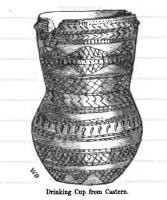
Thomas Bateman 1846. On the 29th of July, 1846, was examined a large tumulus at Castern [Note. Castern Barrow, Derbyshire [Map] has no tumulus marked near it on the OS Map?], near Wetton, Staffordshire, distant about a quarter of a mile from that opened near Castern [Map] on the 14th of June, 1845 (on which occasion the one under notice first attracted attention); it was composed principally of a very solid kind of soil, intermixed with clay, amongst which were dispersed many chippings of flint, as well as others of a more determinate form; also a few animal bones, such as fragments of deer's horns, teeth of horses, &c. Towards the centre the stiff earth did not prevail so much, that part of the mound being constructed of loose stones, which were found to continue below the natural surface, to the depth of four feet, making an entire depth of eight feet from the summit of the barrow; at this depth lay the original and most important interment, in a square cist cut out of the primitive rock; the skeleton lay upon its left side, on a thin bed of very tenacious blue clay, with the knees contracted, accompanied by the most elegant and elaborately ornamented drinking-cup, or vase, hitherto discovered and one small instrument of calcined flint; the vase was placed in an upright position about a foot in the rear of the skull, and exhibited signs of having been two thirds full of some substance, or rather liquid, at the time of being buried, an incrustation having formed inside, at about one third of its depth from the mouth. The skeleton was that of an individual rather above the common size, the large bones of the thigh measuring in length nineteen inches and a half, and all the bones having the ridges and other points of muscular attachment remarkably well developed. At a short distance from the centre of the barrow there was every appearance of the remains of a fire which had been made upon a flat stone, surrounded by others, the edges of which were calcined until they were converted into lime. Can this be the place where the drinking-cup was baked? - there were certainly no calcined bones to be seen. Another body was found in a similar position to the foregoing, within six inches of the summit of the tumulus; it owed its preservation mainly to a large flat stone which was placed over it, and which was literally destitute of turf, and exposed to the observation of any person walking over the barrow. Neither urn nor weapon accompanied this interment.

On 29th July 1861 Richard Temple-Nugent-Brydges-Chandos-Grenville 2nd Duke of Buckingham and Chandos [aged 64] died at the Great Western Hotel Paddington. His son Richard [aged 37] succeeded 3rd Duke of Buckingham and Chandos, 4th Marquess Buckingham, 3rd Marquess of Chandos, 6th Earl Temple, 5th Earl Nugent, 3rd Earl Temple of Stowe, 7th Viscount Cobham
On 29th July 1865 Walter Charles Gordon-Lennox was born to Charles Gordon-Lennox 6th Duke Richmond [aged 47] and Frances Harriett Greville Duchess Richmond [aged 41].
On 29th July 1889 George Wellesley was born to Arthur Charles Wellesley 4th Duke Wellington [aged 40] and Kathleen Emily Bulkeley Williams Duchess Wellington [aged 41]. He married (1) 12th March 1917 Louise FitzGerald (2) 25th November 1955 Jean McGillivray.
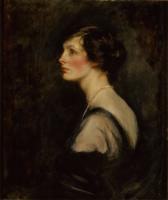
On 29th July 1895 Mary Alice Gascoyne-Cecil Duchess Devonshire was born to James Gascoyne-Cecil 4th Marquess Salisbury [aged 33] and Cicely Anne Gore Marchioness Salisbury [aged 28]. She married 1917 Edward William Spencer Cavendish 10th Duke Devonshire, son of Victor Christian William Cavendish 9th Duke Devonshire and Evelyn Emily Mary Petty-Fitzmaurice Duchess Devonshire, and had issue.
On 29th July 1904 Frederick Goodall [aged 81] died.

After 29th July 1918. Grave of Thomas Francis Anson 3rd Earl Lichfield [deceased] and Mildred Coke Countess Lichfield [aged 64] at St Stephen's Church, Great Heywood [Map].
Thomas Francis Anson 3rd Earl Lichfield: In 1856 he was born to Thomas George Anson 2nd Earl Lichfield and Harriet Georgiana Louisa Hamilton Countess Lichfield. He was educated at Harrow School and Trinity College, Cambridge University [Map] taking a BA in 1876. On 5th November 1878 Thomas Francis Anson 3rd Earl Lichfield and Mildred Coke Countess Lichfield were married at St Withburga's Church, Holkham [Map]. She the daughter of Thomas Coke 2nd Earl of Leicester and Juliana Whitbread Countess Leicester. He the son of Thomas George Anson 2nd Earl Lichfield and Harriet Georgiana Louisa Hamilton Countess Lichfield. They were half first cousin twice removed. He a great x 5 grandson of King Charles II of England Scotland and Ireland. She a great x 5 granddaughter of King Charles II of England Scotland and Ireland. On 7th January 1892 Thomas George Anson 2nd Earl Lichfield died. His son Thomas succeeded 3rd Earl Lichfield, 4th Viscount Anson of Shugborough and Orgrave in Staffordshire and 4th Baron Soberton of Soberton in Hampshire. Mildred Coke Countess Lichfield by marriage Countess Lichfield. On 29th July 1918 Thomas Francis Anson 3rd Earl Lichfield died. He was buried at St Stephen's Church, Great Heywood [Map]. His son Thomas succeeded 4th Earl Lichfield, 5th Viscount Anson of Shugborough and Orgrave in Staffordshire and 5th Baron Soberton of Soberton in Hampshire. Evelyn Maud Keppel Countess Lichfield by marriage Countess Lichfield.
Mildred Coke Countess Lichfield: In 1854 she was born to Thomas Coke 2nd Earl of Leicester and Juliana Whitbread Countess Leicester. On 12th May 1941 Mildred Coke Countess Lichfield died. She was buried at St Stephen's Church, Great Heywood [Map].
Adam Murimuth's Continuation and Robert of Avesbury’s 'The Wonderful Deeds of King Edward III'
This volume brings together two of the most important contemporary chronicles for the reign of Edward III and the opening phases of the Hundred Years’ War. Written in Latin by English clerical observers, these texts provide a vivid and authoritative window into the political, diplomatic, and military history of fourteenth-century England and its continental ambitions. Adam Murimuth Continuatio's Chronicarum continues an earlier chronicle into the mid-fourteenth century, offering concise but valuable notices on royal policy, foreign relations, and ecclesiastical affairs. Its annalistic structure makes it especially useful for establishing chronology and tracing the development of events year by year. Complementing it, Robert of Avesbury’s De gestis mirabilibus regis Edwardi tertii is a rich documentary chronicle preserving letters, treaties, and official records alongside narrative passages. It is an indispensable source for understanding Edward III’s claim to the French crown, the conduct of war, and the mechanisms of medieval diplomacy. Together, these works offer scholars, students, and enthusiasts a reliable and unembellished account of a transformative period in English and European history. Essential for anyone interested in medieval chronicles, the Hundred Years’ War, or the reign of Edward III.
Available at Amazon in eBook and Paperback format.
New York Times 29 Jul 1922. 29th July 1922. Obituary. New York Times.
Former Adele Grant of New York Stricken With Heart Attack After Dinner Party.
TRIED TO SUMMON HELP
Dowager, Once Famous Beauty, Was Model for Herkomer's "A Lady in White." [Note. This appears to be a mistake - A Lady in White]
1922 by The New York Times Company. By Wireless to The New York Times.
London, July 28. Dowager Countess Essex [deceased], who was the daughter of the late Beach Grant of New York and the second wife of the Seventh Earl of Essex, was found dead in her bath today at her home, 72 Brook Street, by one of her maids.
Lady Essex attended last night a dinner party given by the Hon. Mrs. Rupert Beckett and appeared in the best of spirits. She was driven home by Mrs. Asquith, with whom she was to have lunched today.
Apparently she took her bath before going to bed and had the seizure. She seemed to have endeavored to get help as the hanging electric bell push had been pulled into the bath. The tragedy was not discovered until this morning when Lady Essex's maid found her bed had not been slept in.
The bath room door was locked and the electric lights were full on. When the door was forced Lady Essex was found dead. She had suffered for years from a weak heart and it is presumed that she had the seizure when she could not help herself.
In her prime Lady Essex was famed for her beauty, being tall and graceful, with soft eyes and dark hair. Indeed she belonged to the group that was playfully christened "Lovely Five" and included Lady Warwick [aged 60], Lady Lytton [aged 80], Lady Westmoreland and the Duchess of Sutherland [aged 54]. She was the model for Herkomer's famous picture "A Lady in White."
A coroner's inquest into Lady Essex's death will be held on Monday.
Adele Grant. daughter of the late Beach Grant of this city, was married to the seventh Earl of Essex in St. Margaret's Church, Westminster [Map], Dec. 14 1893. Archdeacon Farrar performed the ceremony, the occasion being one of the brilliant social events of that Winter in London. There have been two children, Lady Iris Mary [aged 27] and Lady Joan Rachel [aged 23], respectively 26 and 22 years old. Presumably they will share their mother's fortune, which is not inconsiderable since her inheritance in 1915 of some $600,000 from her uncle, R. Suydam Grant, of the New York Stock Exchange.
Her husband was a widower when she married him. The present Earl [aged 38], son of his father's first marriage, did not have sufficient income to keep up the magnificent ancestral estate of Cassiobury Park, and last Fall it was offered for sale. On previous occasions it had been rented to Americans, among others to Otto H. Kahn.
An anecdote of the family that reveals the firmness of the Countess is that of her refusal of the tempting offers repeatedly made to her by Lady Meux, widow of Sir Henry Meux, the wealthy brewer. The story has it that Lady Meux, originally a "queen of burlesque" and aunt by marriage of the Earl of Essex, offered to make the Earl her heir if only the Countess would introduce her to society. But the Countess did not allow her thorough disapproval of the brewer's widow to be overcome by the bribe.
Before her marriage Adele Grant had been engaged to the late Earl Cairns, the unfortunate man who acquired the nickname of "Gumboil," thanks to his courtesy title of Lord Garmoyle. She broke off the match on the eve of the wedding owing to the prospective bridegrooms extortionate demands for a settlement. And, in 1920, after the death of her husband, she was reported, not on the highest authority, however, to be engaged to the Duke of Connaught [aged 72], brother of Edward Vll. The affair progressed no further than the circulation of the report.
During the World War the Countess did much relief work, serving with Queen Mary's Needlework Guild, on the Urban Executive Committee of the Urban Council for War Relief, and also as President of the Soldiers and Sailors Families' Association.


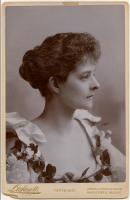


On 29th July 1949 Irving Ramsey Wiles [aged 88] died.
On 29th July 1981 Prince Charles [aged 32] and Diana Spencer Princess Wales [aged 20] were married at St Paul's Cathedral [Map]. She by marriage Princess of Wales. She the daughter of John Spencer 8th Earl Spencer [aged 57] and Frances Ruth Roche Countess Spencer [aged 45]. He the son of Philip Mountbatten Duke Edinburgh [aged 60] and Queen Elizabeth II of the United Kingdom [aged 55].

On 29th July 1992 William Mathias [aged 57] died. He was buried at St Asaph Cathedral [Map].
William Mathias: On 1st November 1934 he was born.
On 29th July 1166 Henry of Champagne was born to Henry Blois I Count Champagne [aged 38] and Marie Capet Countess Champagne [aged 21]. He a great x 2 grandson of King William "Conqueror" I of England. He married 6th May 1192 his half third cousin twice removed Isabella Anjou Queen Jerusalem, daughter of Almaric I King Jerusalem and Maria Komnenos Queen Jerusalem.
On 29th July 1356 King Martin I of Aragon was born to Peter IV King Aragon [aged 36] and Eleanor of Sicily Queen Consort Aragon [aged 31]. Coefficient of inbreeding 2.45%. He married (1) Maria Luna Queen Consort Aragon (2) 17th September 1409 Margaret Prades Queen Consort Aragon.
On 29th July 1509 Archdeacon George Neville was born to Richard Neville 2nd Baron Latimer of Snape [aged 41] and Anne Stafford Baroness Latimer [aged 38]. He a great x 4 grandson of King Edward III of England.
On 29th July 1609 Maria Gonzaga Duchess of Montferrat was born to Francesco IV Gonzaga Duke of Mantua [aged 23] and Margaret of Savoy Vicereine Portugal [aged 20]. Coefficient of inbreeding 1.79%. She married December 1627 her second cousin once removed Charles Gonzaga Duke Nevers Duke Rethel, son of Charles Gonzaga I Duke Mantua, and had issue.
On 29th July 1623 Anne Wentworth 7th Baroness Wentworth Baroness Lovelace was born to Thomas Wentworth 1st Earl Cleveland [aged 32] and Anne Crofts Countess Cleveland. She married before 1641 John Lovelace 2nd Baron Lovelace, son of Richard Lovelace 1st Baron Lovelace and Margaret Dodworth Baroness Lovelace, and had issue.
On 29th July 1633 Drury Wray 9th Baronet was born to Christopher Wray [aged 32] and Albinia Cecil. He married before 1672 Anne Casey and had issue.
Adam Murimuth's Continuation and Robert of Avesbury’s 'The Wonderful Deeds of King Edward III'
This volume brings together two of the most important contemporary chronicles for the reign of Edward III and the opening phases of the Hundred Years’ War. Written in Latin by English clerical observers, these texts provide a vivid and authoritative window into the political, diplomatic, and military history of fourteenth-century England and its continental ambitions. Adam Murimuth Continuatio's Chronicarum continues an earlier chronicle into the mid-fourteenth century, offering concise but valuable notices on royal policy, foreign relations, and ecclesiastical affairs. Its annalistic structure makes it especially useful for establishing chronology and tracing the development of events year by year. Complementing it, Robert of Avesbury’s De gestis mirabilibus regis Edwardi tertii is a rich documentary chronicle preserving letters, treaties, and official records alongside narrative passages. It is an indispensable source for understanding Edward III’s claim to the French crown, the conduct of war, and the mechanisms of medieval diplomacy. Together, these works offer scholars, students, and enthusiasts a reliable and unembellished account of a transformative period in English and European history. Essential for anyone interested in medieval chronicles, the Hundred Years’ War, or the reign of Edward III.
Available at Amazon in eBook and Paperback format.
On 29th July 1641 William Thomas 1st Baronet was born.
On 29th July 1643 Henri Jules Bourbon Condé Prince Condé was born to Louis "Le Grand Condé" Bourbon Condé II Prince Condé [aged 21] and Claire Clémence Maillé Brézé Princess Condé. He married his fifth cousin once removed Anne Henriette Palatinate Simmern and had issue.
On 29th July 1658 Nicholas Shireburn 1st Baronet was born to Richard Shireburn [aged 32] and Isabel Ingleby [aged 31].
On 29th July 1672 Charles Lennox 1st Duke Richmond was born illegitimately to King Charles II of England Scotland and Ireland [aged 42] and Louise Kéroualle 1st Duchess Portsmouth [aged 22].
On 29th July 1736 Andrew Archer 2nd Baron Archer was born to Thomas Archer 1st Baron Archer [aged 41] and Catherine Tipping Baroness Archer. He married before 1762 Sarah West Baroness Archer and had issue.
On 29th July 1736 Catherine Archer Countess Plymouth was born to Thomas Archer 1st Baron Archer [aged 41] and Catherine Tipping Baroness Archer. She married 11th August 1750 Other Lewis Windsor 4th Earl Plymouth, son of Other Windsor 3rd Earl Plymouth, and had issue.
On 29th July 1779 Henry Caulfeild was born to James Caulfeild 1st Earl Charlemont [aged 50].
On 29th July 1783 Anna-Maria Clinton was born to Thomas Pelham-Clinton 3rd Duke Newcastle-under-Lyne [aged 31] and Anna Maria Stanhope Countess Lincoln. She a great x 3 granddaughter of King Charles II of England Scotland and Ireland. She married 1st January 1801 Stapleton Cotton 1st Viscount Combermere, son of Robert Salusbury Cotton 5th Baronet.
On 29th July 1787 Sarah Spencer was born to George John Spencer 2nd Earl Spencer [aged 28] and Lavinia Bingham Countess Spencer [aged 25]. She married March 1813 William Henry Lyttelton 3rd Baron Lyttelton, son of William Henry Lyttelton 1st Baron Lyttelton and Caroline Bristow Baroness Lyttelton, and had issue.


On 29th July 1812 Richard Edward Howard was born to Thomas Howard 16th Earl Suffolk 9th Earl Berkshire [aged 35] and Elizabeth Jane Dutton Countess Suffolk and Berkshire [aged 37].
On 29th July 1821 Mary Augusta Frederica Grimston was born to James Walter Grimston 1st Earl Verulam [aged 45] and Charlotte Jenkinson Countess Verulam. She married 30th October 1840 Jacob Pleydell-Bouverie 4th Earl Radnor, son of William Pleydell-Bouverie 3rd Earl Radnor and Judith St John-Mildmay Countess Radnor, and had issue.
On 29th July 1822 Augusta Margaret Fitz-Clarence was born to George Fitz-Clarence 1st Earl Munster [aged 28] and Mary Wyndham Countess Munster [aged 29]. She a granddaughter of King William IV of the United Kingdom.

On 29th July 1823 Alexandrina Octavia Maria Vane Countess Portarlington was born to Charles William Vane 3rd Marquess Londonderry [aged 45] and Frances Vane Tempest Marchioness Londonderry [aged 23]. She married 3rd September 1847 Henry John Reuben Dawson-Damer 3rd Earl of Portarlington.
This is a translation of the 'Memoires of Jacques du Clercq', published in 1823 in two volumes, edited by Frederic, Baron de Reissenberg. In his introduction Reissenberg writes: 'Jacques du Clercq tells us that he was born in 1424, and that he was a licentiate in law and a counsellor to Philip the Good, Duke of Burgundy, in the castellany of Douai, Lille, and Orchies. It appears that he established his residence at Arras. In 1446, he married the daughter of Baldwin de la Lacherie, a gentleman who lived in Lille. We read in the fifth book of his Memoirs that his father, also named Jacques du Clercq, had married a lady of the Le Camelin family, from Compiègne. His ancestors, always attached to the counts of Flanders, had constantly served them, whether in their councils or in their armies.' The Memoires cover a period of nineteen years beginning in in 1448, ending in in 1467. It appears that the author had intended to extend the Memoirs beyond that date; no doubt illness or death prevented him from carrying out this plan. As Reissenberg writes the 'merit of this work lies in the simplicity of its narrative, in its tone of good faith, and in a certain air of frankness which naturally wins the reader’s confidence.' Du Clercq ranges from events of national and international importance, including events of the Wars of the Roses in England, to simple, everyday local events such as marriages, robberies, murders, trials and deaths, including that of his own father in Book 5; one of his last entries.
Available at Amazon in eBook and Paperback format.
On 29th July 1832 Frances Dora Smith Countess Strathmore and Kinghorne was born to Oswald Smith [aged 38] and Henrietta Mildred Hodgson [aged 27]. She married 28th September 1853 Claude Bowes-Lyon 13th Earl Strathmore and Kinghorne and had issue.
On 29th July 1843 Thomas Grey 6th Baron Walsingham was born to Thomas Grey 5th Baron Walsingham [aged 39] and Augusta Louisa Frankland Baroness Walsingham.

On 29th July 1846 Susan Henrietta Cavendish Viscountess Hampden was born to George Henry Cavendish [aged 35] and Louisa Lascelles [aged 33]. She married 14th April 1868 Henry Brand 2nd Viscount Hampden, son of Henry Brand 1st Viscount Hampden and Eliza Ellice, and had issue.
On 29th July 1850 George St John Colthurst 6th Baronet was born to George Colthurst 5th Baronet [aged 26]. He married 27th August 1881 Edith Jane Morris Lady Colthurst and had issue.
On 29th July 1853 Jane Harriet Stanhope Baroness Wallscourt was born to Charles Stanhope 7th Earl of Harrington [aged 43]. She married 7th February 1874 Erroll Augustus Blake 4th Baron Wallscourt, son of Joseph Henry Blake 3rd Baron Wallscourt, and had issue.
On 29th July 1865 Walter Charles Gordon-Lennox was born to Charles Gordon-Lennox 6th Duke Richmond [aged 47] and Frances Harriett Greville Duchess Richmond [aged 41].
On 29th July 1867 Gilbert Heathcote-Willoughby-Drummond 2nd Earl Ancaster was born to Gilbert Henry Heathcote Drummond Willoughby 1st Earl Ancaster [aged 36] and Evelyn Elizabeth Gordon Countess Ancaster [aged 21]. He married 6th December 1905 Eloise Lawrence Breese Countess Ancaster and had issue.
On 29th July 1870 Mary Catherine Buxton was born to Thomas Fowell Buxton 3rd Baronet [aged 33] and Victoria Noel Lady Buxton [aged 31]. She married 27th November 1889 Reverend Stewart Gordon Ponsonby and had issue.
On 29th July 1889 George Wellesley was born to Arthur Charles Wellesley 4th Duke Wellington [aged 40] and Kathleen Emily Bulkeley Williams Duchess Wellington [aged 41]. He married (1) 12th March 1917 Louise FitzGerald (2) 25th November 1955 Jean McGillivray.
On 29th July 1893 Rowland George Winn 3rd Baron St Oswald was born to Rowland Winn 2nd Baron St Oswald [aged 35] and Mabel Susan Forbes Baroness Winn. He married before 19th September 1916 Evie Carew Greene and had issue.
On 29th July 1895 Mary Alice Gascoyne-Cecil Duchess Devonshire was born to James Gascoyne-Cecil 4th Marquess Salisbury [aged 33] and Cicely Anne Gore Marchioness Salisbury [aged 28]. She married 1917 Edward William Spencer Cavendish 10th Duke Devonshire, son of Victor Christian William Cavendish 9th Duke Devonshire and Evelyn Emily Mary Petty-Fitzmaurice Duchess Devonshire, and had issue.
On 29th July 1901 Anthony Myles Cholmeley Dering 11th Baronet was born to Henry Dering 10th Baronet [aged 35].
On 29th July 1902 Henry Burrows Shiffner 7th Baronet was born to John Shiffner 5th Baronet [aged 44].
Chronicle of Walter of Guisborough
A canon regular of the Augustinian Guisborough Priory, Yorkshire, formerly known as The Chronicle of Walter of Hemingburgh, describes the period from 1066 to 1346. Before 1274 the Chronicle is based on other works. Thereafter, the Chronicle is original, and a remarkable source for the events of the time. This book provides a translation of the Chronicle from that date. The Latin source for our translation is the 1849 work edited by Hans Claude Hamilton. Hamilton, in his preface, says: 'In the present work we behold perhaps one of the finest samples of our early chronicles, both as regards the value of the events recorded, and the correctness with which they are detailed; Nor will the pleasing style of composition be lightly passed over by those capable of seeing reflected from it the tokens of a vigorous and cultivated mind, and a favourable specimen of the learning and taste of the age in which it was framed.'
Available at Amazon in eBook and Paperback format.
On 29th July 1904 Robert Cecil Byng 7th Earl of Strafford was born to Ivo Francis Byng [aged 30].
On 29th July 1912 Oswald Phipps 4th Marquess Normanby was born to Constantine Phipps 3rd Marquess Normanby [aged 65] and Gertrude Stansfeld Foster Marchioness Normanby. He was educated at Eton College [Map] and Christ Church College, Oxford University. He married 10th February 1951 Grania Guinness Marchioness of Normanby, daughter of Walter Guiness 1st Baron Moyne and Evelyn Erskine Baroness Moyne, and had issue.
On 29th July 1921 Cathleen Blanche Lily Eliot was born to John Granville Cornwallis Eliot 6th Earl St Germans [aged 31] and Blanche Linnie Fitzroy Countess St Germans [aged 24].
On 29th July 1925 Matthew White Ridley 4th Viscount Ridley was born to Matthew White Ridley 3rd Viscount Ridley [aged 22] and Ursula Lutyens. He married 3rd June 1953 Anne Katharine Gabrielle Lumley Viscountess Ridley, daughter of Roger Lumley 11th Earl of Scarbrough and Katherine Isobel McEwen Countess Scarborough, and had issue.
On 29th July 1946 James Fergus Surtees Graham 7th Baronet was born to Charles Spencer Richard Graham 6th Baronet [aged 27]. He married 5th February 1975 Serena Jane Kershaw.
On 29th July 1947 Jeremy Francis Addington 8th Viscount Sidmouth was born to John Addington 7th Viscount Sidmouth [aged 32].
On 29th July 1961 Anthony Robert Cecil 4th Baron Rockley was born to James Cecil 3rd Baron Rockley [aged 27] and Sarah Cadogan.
On 29th July 1523 William Blount 4th Baron Mountjoy [aged 45] and Dorothy Grey Baroness Mountjoy, Willoughby and Latimer [aged 43] were married. She by marriage Baroness Mountjoy. She the daughter of Thomas Grey 1st Marquess Dorset and Cecily Bonville Marchioness Dorset [aged 63]. He the son of John Blount 3rd Baron Mountjoy and Lora Berkeley Countess Ormonde.
On 29th July 1565 Henry "Lord Darnley" Stewart [aged 19] and Mary Queen of Scots [aged 22] were married at Holyrood Palace, Holyrood. She the daughter of King James V of Scotland and Mary of Guise Queen Consort Scotland. He the son of Matthew Stewart 4th Earl Lennox [aged 48] and Margaret Douglas Countess Lennox [aged 49]. They were half first cousins. He a great grandson of King Henry VII of England and Ireland. She a great granddaughter of King Henry VII of England and Ireland.
On 29th July 1585 George Sinclair 5th Earl Caithness [aged 14] and Jean Gordon [aged 25] were married. She the daughter of George Gordon 5th Earl Huntley and Anne Hamilton Countess Huntley. They were half fourth cousins.
Chronicle of Geoffrey le Baker of Swinbroke
Baker was a secular clerk from Swinbroke, now Swinbrook, an Oxfordshire village two miles east of Burford. His Chronicle describes the events of the period 1303-1356: Gaveston, Bannockburn, Boroughbridge, the murder of King Edward II, the Scottish Wars, Sluys, Crécy, the Black Death, Winchelsea and Poitiers. To quote Herbert Bruce 'it possesses a vigorous and characteristic style, and its value for particular events between 1303 and 1356 has been recognised by its editor and by subsequent writers'. The book provides remarkable detail about the events it describes. Baker's text has been augmented with hundreds of notes, including extracts from other contemporary chronicles, such as the Annales Londonienses, Annales Paulini, Murimuth, Lanercost, Avesbury, Guisborough and Froissart to enrich the reader's understanding. The translation takes as its source the 'Chronicon Galfridi le Baker de Swynebroke' published in 1889, edited by Edward Maunde Thompson.
Available at Amazon in eBook and Paperback format.
On 29th July 1587 Archibald Douglas 8th Earl Angus 5th Earl Morton and Jean Lyon Countess Angus and Morton [aged 31] were married. She by marriage Countess Angus, Countess Morton. He the son of David Douglas 7th Earl Angus and Margaret Hamilton Countess Angus [aged 62]. They were second cousin once removed.
On 29th July 1696 Robert Haselrigge 6th Baronet [aged 28] and Dorothy Maynard Lady Haselrigge [aged 28] were married.
On 29th July 1765 Edward Stratford 2nd Earl Aldborough [aged 29] and Barbara Herbert Countess Aldborough [aged 23] were married. He the son of John Stratford 1st Earl Aldborough [aged 66] and Martha O'Neale Countess Aldborough [aged 59].
On 29th July 1791 Thomas Stapleton 12th Baron Despencer [aged 24] and Elizabeth Eliot Baroness Despencer [aged 33] were married. She by marriage Baroness Despencer.
On 29th July 1829 Charles Wood 1st Viscount Halifax [aged 28] and Mary Grey Viscountess Halifax [aged 22] were married. She the daughter of Charles Grey 2nd Earl Grey [aged 65] and Mary Elizabeth Ponsonby Countess Grey [aged 53].
On 29th July 1833 John Josiah Guest 1st Baronet [aged 48] and Charlotte Elizabeth Bertie [aged 21] were married. The difference in their ages was 27 years. She the daughter of Albermarle Bertie 9th Earl Lindsey and Charlotte Layard Countess Lindsey [aged 53].
On 29th July 1843 William John Butler [aged 25] and Emma Barnett were married.
On 29th July 1845 Evelyn Boscawen 6th Viscount Falmouth [aged 26] and Mary Stapleton Viscountess Falmouth 13th Baroness Despencer [aged 23] were married.
On 29th July 1889 Arthur Saunders Gore 5th Earl Arran [aged 50] and Winifred Reilly Countess of Arran [aged 49] were married. She by marriage Countess Arran. He the son of Philip Gore 4th Earl Arran and Elizabeth Marianne Napier Countess Arran [aged 69].
On 29th July 1953 Robert Throckmorton 11th Baronet [aged 45] and Isabel Violet Kathleen Manners [aged 35] were married at the Church of St Nicholas, Alcester [Map]. She the daughter of John Henry Montagu Manners 9th Duke Rutland and Kathleen Tennant Duchess Rutland [aged 58].
On 29th July 1981 Prince Charles [aged 32] and Diana Spencer Princess Wales [aged 20] were married at St Paul's Cathedral [Map]. She by marriage Princess of Wales. She the daughter of John Spencer 8th Earl Spencer [aged 57] and Frances Ruth Roche Countess Spencer [aged 45]. He the son of Philip Mountbatten Duke Edinburgh [aged 60] and Queen Elizabeth II of the United Kingdom [aged 55].
On 29th July 796 King Offa of Mercia died. His son Ecgfrith succeeded King Mercia.
On 29th July 1030 King Olaf II of Norway [aged 35] was killed by his own people.
On 29th July 1102 Albert Namur III Count Namur [aged 75] died. His son Godfrey [aged 34] succeeded I Count Namur.
Adam Murimuth's Continuation and Robert of Avesbury’s 'The Wonderful Deeds of King Edward III'
This volume brings together two of the most important contemporary chronicles for the reign of Edward III and the opening phases of the Hundred Years’ War. Written in Latin by English clerical observers, these texts provide a vivid and authoritative window into the political, diplomatic, and military history of fourteenth-century England and its continental ambitions. Adam Murimuth Continuatio's Chronicarum continues an earlier chronicle into the mid-fourteenth century, offering concise but valuable notices on royal policy, foreign relations, and ecclesiastical affairs. Its annalistic structure makes it especially useful for establishing chronology and tracing the development of events year by year. Complementing it, Robert of Avesbury’s De gestis mirabilibus regis Edwardi tertii is a rich documentary chronicle preserving letters, treaties, and official records alongside narrative passages. It is an indispensable source for understanding Edward III’s claim to the French crown, the conduct of war, and the mechanisms of medieval diplomacy. Together, these works offer scholars, students, and enthusiasts a reliable and unembellished account of a transformative period in English and European history. Essential for anyone interested in medieval chronicles, the Hundred Years’ War, or the reign of Edward III.
Available at Amazon in eBook and Paperback format.
On 29th July 1189 Matilda Fitzrobert Countess Chester died.
On 29th July 1326 Richard "Red Earl" Burgh 2nd Earl of Ulster [aged 67] died at Altassel Priory. His grandson William [aged 13] succeeded 3rd Earl of Ulster.
On 29th July 1328 Gerhard Jülich V Count Jülich [aged 78] died. His son William [aged 29] succeeded V Count Jülich.
On 29th July 1349 Roger Strange 4th Baron Strange Knockin [aged 47] died at Sedgebrook [Map]. His son Roger [aged 23] succeeded 5th Baron Strange Knockin. Aline Fitzalan Baroness Strange Knockin by marriage Baroness Strange Knockin.
On 29th July 1363 John Bardolf 3rd Baron Bardolf [aged 49] died at Assisi. His son William [aged 13] succeeded 4th Baron Bardolf of Wormegay in Norfolk. Agnes Poynings Baroness Bardolf by marriage Baroness Bardolf of Wormegay in Norfolk.
On 29th July 1369 Joan Orreby Baroness Percy [aged 20] died.
On 29th July 1399 William Scrope 1st Earl Wiltshire [aged 49], Henry Green of Drayton, Northamptonshire [aged 52] and John Bussy were beheaded at Bristol Castle, Gloucestershire [Map]. Earl Wiltshire forfeit.
On 29th July 1418 the English forces commenced the Siege of Rouen. Robert Willoughby 6th Baron Willoughby [aged 33] fought. John Blount [aged 30] died. William Harrington [aged 45], the King's Standard Bearer, was wounded.
Walter Hungerford 1st Baron Hungerford [aged 40] fought.
Henry Beaufort 2nd Earl Somerset [aged 17] was killed. His brother John [aged 15] succeeded 3rd Earl Somerset.
On 29th July 1504 Thomas Stanley 1st Earl of Derby [aged 69] died. He was buried at Burscough Priory [Map]. His grandson Thomas [aged 19] succeeded 2nd Earl Derby, 10th Baron Strange Knockin, 6th Baron Mohun of Dunster, 3rd Baron Stanley.
On 29th July 1629 Paul Bayning 1st Viscount Bayning [aged 41] died at Mark Lane [Map]. His son Paul [aged 13] succeeded 2nd Viscount Bayning, 2nd Baron Bayning of Horkesley in Essex.
On 29th July 1674 William Grey 1st Baron Grey Werke [aged 80] died. His son Ralph [aged 44] succeeded 2nd Baron Grey Werke in Northumberland.
On 29th July 1704 Christopher Musgrave 4th Baronet [aged 72] died. He was buried at Holy Trinity Church, Minories [Map]. His grandson Christopher [aged 15] succeeded 5th Baronet Musgrave of Hartley Castle in Westmoreland.
Henrici Quinti, Angliæ Regis, Gesta, is a first-hand account of the Agincourt Campaign, and subsequent events to his death in 1422. The author of the first part was a Chaplain in King Henry's retinue who was present from King Henry's departure at Southampton in 1415, at the siege of Harfleur, the battle of Agincourt, and the celebrations on King Henry's return to London. The second part, by another writer, relates the events that took place including the negotiations at Troye, Henry's marriage and his death in 1422.
Available at Amazon in eBook and Paperback format.
On 29th July 1705 Mary Sone Lady Kemp died at Ubbeston, Suffolk. She was buried at St Mary's Church, Gissing.
On 29th July 1724 Elizabeth Howland Duchess Bedford [aged 42] died.
On 29th July 1729 Hugh Acland 6th Baronet [aged 32] died. His son John [aged 6] succeeded 7th Baronet Acland of Columb John in Devon.
On 29th July 1735 Sophia Louise Mecklenburg-Schwerin Queen Consort Prussia [aged 50] died.
On 29th July 1748 Price Devereux 10th Viscount Hereford [aged 54] died. His second cousin Edward [aged 38] succeeded 11th Viscount Hereford, 8th Baronet Devereux of Castle Bromwich
On 29th July 1778 Mary Cavendish Countess of Westmoreland [aged 78] died.

On 29th July 1780 Mary Stawell 1st Baroness Stawell [aged 55] died. Her son Henry [aged 23] succeeded 2nd Baron Stawell of Somerton in Somerset. Mary Curzon Baroness Stawell [aged 19] by marriage Baroness Stawell of Somerton in Somerset.
On 29th July 1781 Richard Fiennes 6th Viscount of Saye and Sele [aged 65] died. Viscount Saye and Sele extinct.
On 29th July 1791 Randal William MacDonnell 1st Marquess of Antrim [aged 41] died. Marquess of Antrim 2C extinct. His daughter Anne [aged 13] succeeded 2nd Countess Antrim 2C, 2nd Viscountess Dunluce.
On 29th July 1795 John West 4th Earl De La Warr [aged 37] died. His son George [aged 3] succeeded 5th Earl De La Warr, 5th Viscount Cantalupe, 11th Baron De La Warr.
The History of William Marshal was commissioned by his son shortly after William’s death in 1219 to celebrate the Marshal’s remarkable life; it is an authentic, contemporary voice. The manuscript was discovered in 1861 by French historian Paul Meyer. Meyer published the manuscript in its original Anglo-French in 1891 in two books. This book is a line by line translation of the first of Meyer’s books; lines 1-10152. Book 1 of the History begins in 1139 and ends in 1194. It describes the events of the Anarchy, the role of William’s father John, John’s marriages, William’s childhood, his role as a hostage at the siege of Newbury, his injury and imprisonment in Poitou where he met Eleanor of Aquitaine and his life as a knight errant. It continues with the accusation against him of an improper relationship with Margaret, wife of Henry the Young King, his exile, and return, the death of Henry the Young King, the rebellion of Richard, the future King Richard I, war with France, the death of King Henry II, and the capture of King Richard, and the rebellion of John, the future King John. It ends with the release of King Richard and the death of John Marshal.
Available at Amazon in eBook and Paperback format.
On 29th July 1805 Walter Aston 8th Baronet [aged 72] died. His son Walter [aged 35] succeeded 9th Baronet Aston of Tixall.
On 29th July 1811 William Cavendish 5th Duke Devonshire [aged 63] died. His son William [aged 21] succeeded 6th Duke Devonshire, 9th Earl Devonshire, 9th Baron Cavendish Hardwick, 8th Baron Clifford.
On 29th July 1818 Lowther Pennington 2nd Baron Muncaster [aged 73] died.
On 29th July 1843 Charles Sackville 5th Duke Dorset [aged 75] died unmarried. He was buried in St Peter's Church, Lowick [Map]. Duke Dorset, Earl Dorset, Earl Middlesex, Viscount Sackville of Drayton in Sussex, Baron Buckhurst, Baron Cranfield of Cranfield in Middlesex and Baron Bolebrooke in Sussex extinct.
On 29th July 1861 Richard Temple-Nugent-Brydges-Chandos-Grenville 2nd Duke of Buckingham and Chandos [aged 64] died at the Great Western Hotel Paddington. His son Richard [aged 37] succeeded 3rd Duke of Buckingham and Chandos, 4th Marquess Buckingham, 3rd Marquess of Chandos, 6th Earl Temple, 5th Earl Nugent, 3rd Earl Temple of Stowe, 7th Viscount Cobham
On 29th July 1898 Isabella Elizabeth Wynn Viscountess Hill [aged 54] died.
On 29th July 1899 Lucy Cavendish-Scott-Bentinck [aged 91] died. Her son Frederick Ellis 7th Baron Howard de Walden 3rd Baron Seaford [aged 68] inherited her estates includin those of her mother, which included those of his maternal grandfather William Henry Cavendish-Scott-Bentinck 4th Duke Portland making him the richest peer in England albeit only for four months since he died in November 1899.
On 29th July 1904 Frederick Goodall [aged 81] died.

On 29th July 1912 Anna Theresa Cockerell Countess Shrewsbury and Waterford [aged 76] died.
On 29th July 1918 Thomas Francis Anson 3rd Earl Lichfield [aged 62] died. He was buried at St Stephen's Church, Great Heywood [Map]. His son Thomas [aged 34] succeeded 4th Earl Lichfield, 5th Viscount Anson of Shugborough and Orgrave in Staffordshire and 5th Baron Soberton of Soberton in Hampshire. Evelyn Maud Keppel Countess Lichfield [aged 31] by marriage Countess Lichfield.
Chronicle of Abbot Ralph of Coggeshall
The Chronicle of Abbot Ralph of Coggeshall (Chronicon Anglicanum) is an indispensable medieval history that brings to life centuries of English and European affairs through the eyes of a learned Cistercian monk. Ralph of Coggeshall, abbot of the Abbey of Coggeshall in Essex in the early 13th century, continued and expanded his community’s chronicle, documenting events from the Norman Conquest of 1066 into the tumultuous reign of King Henry III. Blending eyewitness testimony, careful compilation, and the monastic commitment to record-keeping, this chronicle offers a rare narrative of political intrigue, royal power struggles, and social upheaval in England and beyond. Ralph’s work captures the reigns of pivotal figures such as Richard I and King John, providing invaluable insights into their characters, decisions, and the forces that shaped medieval rule. More than a simple annal, Chronicon Anglicanum conveys the texture of medieval life and governance, making it a rich source for scholars and readers fascinated by English history, monastic authorship, and the shaping of the medieval world.
Available at Amazon in eBook and Paperback format.
On 29th July 1936 Charles Botolph Joseph Stourton 21st Baron Stourton 23rd Baron Segrave 22nd Baron Mowbray [aged 69] died. His son William [aged 40] succeeded 22nd Baron Stourton, 24th Baron Segrave and 23rd Baron Mowbray.
On 29th July 1949 Irving Ramsey Wiles [aged 88] died.
On 29th July 1951 William Stephan Hyde Parker 11th Baronet [aged 59] died. His son Richard [aged 14] succeeded 12th Baronet Parker of Melford Hall in Suffolk.
On 29th July 1968 Marjorie Lowther Baroness Rodney [aged 73] died.
On 29th July 2001 Richard William Orde-Powlett 7th Baron Bolton [aged 72] died. His son Harry [aged 47] succeeded 8th Baron Bolton of Bolton in Yorkshire.
On 29th July 2009 John Barry Salusbury-Trelawny 13th Baronet [aged 74] died. His son John [aged 49] succeeded 14th Baronet Salusbury-Trelawny of Trelawny in Cornwall.
On 29th July 2024 Robert Fellowes 1st Baron Fellowes [aged 83] died. Baron Fellowes of Shotesham in Norfolk extinct.