

11 Jan is in January.
On 11th January 1311 Reginald "Black" I Duke Guelders [aged 16] and Sophia Berthout Berthout were married. He the son of Reginald I Count Guelders [aged 56] and Margaret Dampierre Countess Guelders [aged 39].
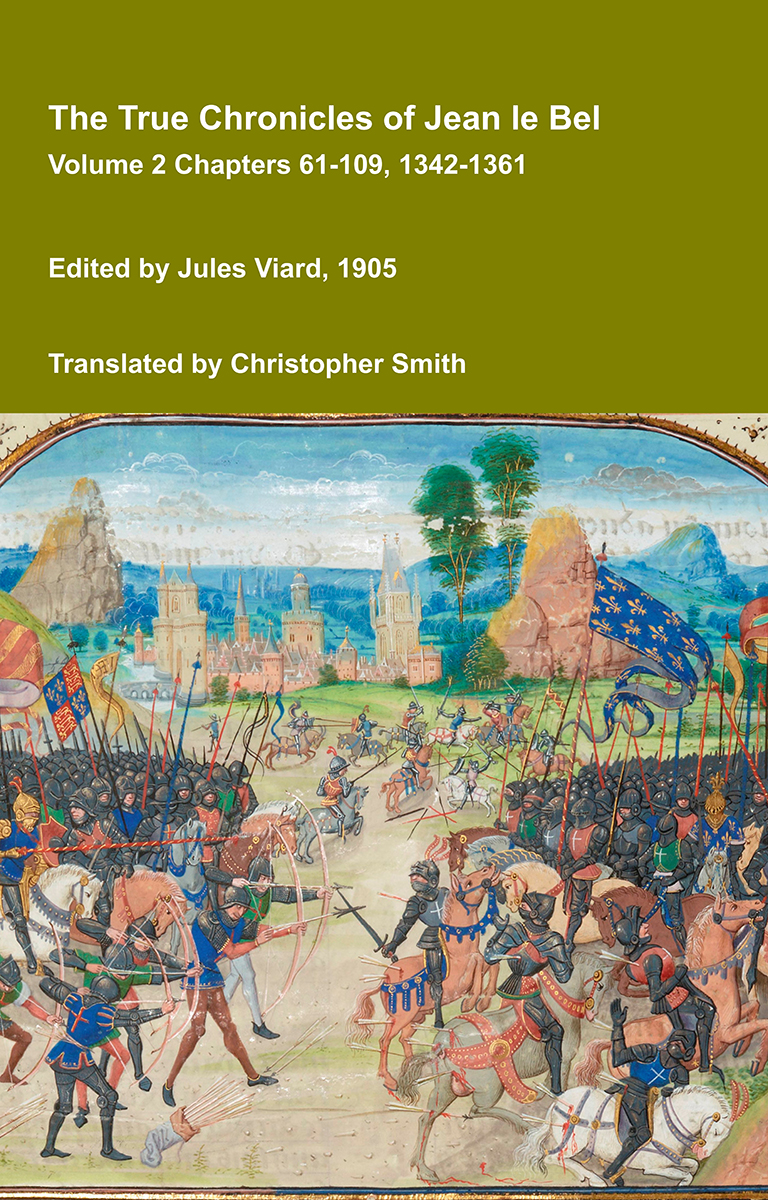 Chronicle of Jean le Bel Volume 2. Quite soon after that adventure in which King Edward had rescued the castle of Calais from treason, the Queen of France, wife of King Philip and sister of the Duke of Burgundy, departed from this world1. Madame Bonne2, wife of the Duke of Normandy and daughter of the noblest king and the gentlest heart that ever was, namely the King of Bohemia, also died. I do not know which of these two ladies died first, but many people said that Madame Bonne’s death had been hastened. I do not know why, nor whether this was true or not. In any case, the father and the son both became widowers quite soon one after the other, and were remarried quite soon afterwards. The father took a beautiful young damsel whom his son would gladly have had, but the father preferred to have her for himself, because she was so beautiful and so gracious, exactly as one could wish, although he was first cousin to the damsel3. She was the daughter of the King of Navarre who died in Granada when the King of Spain was before Algeciras, and sister to the present King of Navarre, of whom you shall hear marvellous things recounted hereafter. And the son, the Duke of Normandy, took, on his father’s advice, the daughter of the Countess of Boulogne4, who was his godmother, and who had been wife to his first cousin, the young Duke of Burgundy, who through great misfortune died at the siege of Aiguillon5.
Assez tost aprez celle aventure que le roÿ Edowart eut rescous le chastel de Calais de trahison, trespassa de ce siecle la royne de France femme au roy Philippe, et suer au duc de Bourgogne. Aussy trespassa madame Boine, femme au duc de Normendye, et fille du plus noble et plus gentil cuer de roy qui fut oncques, ce fut le roy de Boheme. Je ne sçay laquelle de ces II dames trespassa premierement; maiz moult de gens disoient que on avoit avancé la mort à madame Boine; je ne sçay pour quoy, ne ce fut vraÿ ou non. Toutesfois, le pere et le filz furent tous deux vesves assez tost l'un aprez l'aultre, et assez tost aprez remariez, et prist le pere une belle jæune damoiselle que son filz eust voulentiers eue; mais le pere l'eut plus chier pour luy, pour tant qu'elle estoit si belle et sy gracieuse que droit souhet, combien qu'il fut cousin germain à la damoiselle, Elle estoit fille du roy de Navarre qui trespassa en Grenade quant le roy d'Espaigne estoit devant Alghesyde, el suer au roy de Navarre qui est maintenant, de quy vous orrez compter merveilles ey aprez. Et le filz, duc de Normendye, prit, par le conseil de son pere, la fille de la contesse de Boulongne' qui estoit sa commere, et avoit esté femme à son cousin germain le jœune duc de Bourgongne, qui par grande mescheance trespassa au siege d'Aguillon.
Note 1. Joan of Burgundy died on 12th December 1349. She was buried at Saint-Denis on Thursday the 17th of that month, and her heart was taken to Cîteaux, Côte-d’Or.
1. Jeanne de Bourgogne mourut le 12 décembre 1349; elle fut enterrée à Saint-Denis le jeudi 17 de ce mois et son cœur porté à Citeaux (Côte-d'Or). (Grandes chroniques de France, éd. Paulin Paris, t. V, p. 490.) Cf. Journaur du Trésor de Philippe VI de Valois, n° 3444, 8445 et 3447.
Note 2. Bonne of Luxembourg is said to have died on 11th September 1349, according to L’Art de vérifier les dates, and on Friday 11th August 1349, with burial at Maubuisson on the 18th of the same month, according to the Grandes Chroniques. The date given by L’Art de vérifier les dates is the correct one, if one relies on the epitaph which was on this princess’s tomb in the abbey of Maubuisson, and finally on the fact that 11th August 1349 fell not on a Friday, but on a Tuesday, whereas 11th September was indeed a Friday.
2. Bonne de Luxembourg serait morte le II septembre 1349 d'après l'Art de vérifier les dates, éd. in-8, t. VI, p. 41, et le vendredi II août 1349 et enterrée à Maubuisson le 18 du mème mois d'après les Grandes chroniques (t. V, p. 490). La date donnée par l'Art de vérifier les dutes est la bonne, si l'on s'en rapporte à l'épitaphe qui était sur le tombeau de cette princesse dans l'abbaye de Maubuisson (Froissart, éd. Luce, & IV, pe xouv, n. 3), aux Journaux du Trésor de Philippe VI de Valois, n°* 2646 et 2647, et enfin à ce que le 11 août 1349 tombe non pas un vendredi, mais un mardi, tandis que le II septembre est bien un vendredi.
Note 3. The marriage of Philip of Valois and Blanche of Navarre, daughter of Philip of Évreux, took place at Brie-Comte-Robert, 'more privately than openly', say the Grandes Chroniques, on 11th January 1350.
3. Le mariage de Philippe de Valois et de Blanche de Navarre, fille de Philippe d'Évreux, eut lieu à Brie-ComteRobert "privéenent plus que en appert" disent les Grandes chroniques, 1. V, p. 492, le 41 janvier 1350. Les auteurs de l'Art de vérifier les dates lui assignent la date du 29 janvier sans faire conmitre à quelle source ils l'ont puisée. Nous acceptons plutôt celle des Grandes chroniques, qui, en général, sont bien informées pour la plupart des dates, quoique le 11 janvier soit en 1350, non un mardi, comme elles le disent, mais un lundi. Voy., dans les Mémoires de la Société de l'Hisroire de Paris ex de l'Ile-de-France, 1, XI, p. 1-64, le testament de Blanche de Navarre, publié par M. Delisle.
Note 4. It was on Tuesday 9th February 1350 that John, Duke of Normandy, married Jeanne, Countess of Boulogne, 'in the chapel of Madame Saint James, near Saint-Germain-en-Laye'. The festivities were held at a town called Les Mureaux, Seine-et-Oise.
Note 4. C'est le mardi 9 février 1350 que Jean, duc de Normandie, épousa Jeame, comtesse de Boulogne, "en la chapelle de madame saint Jame, près de Saint Germain en Laye (aujourd'hui Sainte-Gemme, Seine-et-Oise, arr. de Versailles, cant. de Marly-le-Roi, comm. de Feucherolles), et fu la feste faite à une ville qui est appelle Muriaux, près de Meulent" (auj. les Mureaux, Scine-et-Oise, arr. de Versailles, cant. de Meulan). (Les Grandes chroniques, t. V, p. 492.)
Note 5. Jean le Bel is referring here to the accidental death, before Aiguillon, of Philip, son of Eudes IV, probably on 10ht August 1346.
5. Jean le Bel rappelle ici la mort accidentelle, devant Aiguillon, de Philippe, fils d'Eudes IV, sans doute le 10 août 1346. (E. Petit, Hist. des ducs de Bourgogne de la race capétienne, à. VIN, p. 9 à 11.)
On 11th January 1350 King Philip "Fortunate" VI of France [aged 56] and Blanche Évreux Queen Consort France [aged 19] were married. She by marriage Queen Consort of France. The difference in their ages was 37 years. She the daughter of Philip "Noble" III King Navarre and Joan Capet II Queen Navarre. He the son of Charles Valois I Count Valois and Margaret Capet Countess Valois. They were half first cousin once removed. He a great x 4 grandson of King Henry "Curtmantle" II of England. She a great x 3 granddaughter of King Henry III of England.
Archaeologia Volume 35 1853 XXXIII. On the 10th and 11th of January, 1358, Isabella [aged 63] is visited by the Countess of Pembroke [aged 41], the Countess of Kent [aged 28], and Sir John de Wynewyk. Of these, the Countess of Pembroke has been already noticed. The Countess of Kent was Isabella, daughter of the Marquess of Juliers [aged 59], and widow of John Plantagenet, Earl of Kent. Her husband had died in the year 13531; upon which she took the veil at Waverley [Map]; but afterwards, as Dugdale tells us, "quitting her profession, was clandestinely married to Sir Eustace Dabrischecourt." The name of this knight is usually written D'Ambreticourt. He was the son of Sir Sanchez D'Ambreticourt [aged 28], Knight of the Garter, and a descendant of the poor knight of Ostrevant, in Hainaut, in whose house Isabella found shelter on her dismissal from the court of her brother, Charles IV. of France, and whom, with his whole family, she had invited over into England, and had in various ways advanced. In reference to the Countess of Kent, Froissart says— "This lady was greatly attached to Sir Eustace D'Ambreticourt, for his gallant deeds of arms, which had been related to her: and she sent him coursers, hackneys, and letters full of love; which so much emboldened Sir Eustace, and spurred him to perform such feats of chivalry and of arms, that all those under him made fortunes." Dugdale tells us, in respect of the Countess's breach of her vows, that "she and her said husband, being personally convented before the said Archbishop of Canterbury in his manor house of Maghfeld," the Archbishop imposed on them a certain penance of prayers and alms very skilfully adapted to their offence.
Of Sir John de Wynewyk, I have been unable to learn anything of certainty. He appears to have been attached to the King's court, and was perhaps the medium employed for managing Isabella's affairs. He visited her and exchanged letters with her constantly.
Note 1. Possibly a mistake for 1352? John Plantagenet 3rd Earl Kent died 26 Dec 1352.
Chronicle of Jean le Bel Volume 2. King Edward rode on until he came near Cambrai. There he found the country a little richer, and so he let his men stay there for four or five days. Then he set out on the road towards Saint-Quentin, and passed through the whole Vermandois in ordered formation, as I have described to you. He crossed the river Somme, the river Oise and the river Aisne, and came to lodge in the march of the city of Reims, namely at Saint-Thierry, Pontfaverger and thereabouts. He remained in that country from the feast of Saint Andrew1 [30th November 1359] until five weeks after Christmas, which should be counted as the year of the Incarnation 1360. It rained continually all the while, and his men were always riding here and there, wherever they thought they might gain something, such as in the county of Rethel, as far as Warcq, Mézières, Donchery and Mouzon. They lodged in the country for three or four days at a time, robbing everything and laying it waste. But King Edward had commanded, on pain of hanging, that no one should burn in a town except one house or two, so that the rest might be ransomed more profitably. His men took Attigny by force, though it was strongly fortified, and found plenty of wine inside, with which they refreshed themselves at their pleasure, and distributed some to the lords of the army. Their captain was a very valiant knight of Hainaut, named Sir Eustace d’Aubrecicourt, who was captain of all those who raided through the county of Rethel. They had taken the town of Rethel up to the castle, and the town of Le Chesne. Those who rode towards Laon and Soissons had taken the town of Cormicy up to the castle. The noble king and his children lay quietly in their camp, and did not move, and went hunting on the river every day when it pleased them. Nor did they ever keep watch by night, however far they went.
Tant chevaucha le noble [roy] Edowart qu'il vint enprez Cambray; sy y trouva le pays ung petit plus gras; pour quoy il y laissa sejourner ses gens IIII ou V jours, el puis se mist au chemin par devers Saint Quentin et passa tout le Vermendoys ordonnéement, ainsy que devisé vous ay, et passa la riviere de Somme, la riviere d'Oise, la riviere d'Ayne, et fist tant qu'il se vint logier en la marche de la cité de Rains; c'est assavoir à Saint Thierry, au Pont Favregié et là entour, et demoura en celluy pays de la feste Saint Andryeu jusques à v septmaines aprez Noël, que on debvoit compter l'an de l'incarnation mil CCCLX. El tousjours plouvoit continuellement, et tousjours chevauchoïent ses gens de costé et d'aultre, par où ilz cuidoient gaagnier, comme en la conté de Rethés, jusques à Warck', à Masieres, à Donchery, à Moison, et se logoyent ou pays par III ou III jours, et desroboyent tout et gastoient. Mais le roy Edowart avoit commandé sur la hart que nul n’ardist en une ville, fors une maison ou II, pour les aultres mielx raenchonner. Ces gens gaagnierent par force Athegny, durement renforcié, si trouverrent [à] foison vin dedens, dont ilz s’aiserrent à leur poste, et en departirent aux seigneurs de l’ost. Et en fut cappitaine ung moult vaillant chevalier de Haynau, nommé messire Eustace d’Obrechicourt, qui estoit cappitaine de tous ceulx qui couroient par la conté de Rethés; et avoient gaagnié la ville de Rethés jusques au chastel et la ville de Chayne Poullieux, et les aultres qui chevauchoient vers Laon et Soissons avoient gaagnié la ville de Cormessy jusques au chastel. Et le noble roy et ses enfans gisoient en leur ost tous coys, et ne se mouvoient, et aloient à chasse en sur (sic) riviere tous les jours, quant il leur plaisoit, ne oncques ne firent guettier par nuit, combien que loing alassent.
Note 1. Edward III arrived before Reims on 4th December 1359 and remained there until 11th January 1360. Knighton: 'By chance, as two of the divisions were passing by, they met the king at a little village ten leagues from Reims in Champagne. There the king held a great council with the Duke of Lancaster and his other magnates on the eve of Saint Andrew [29th October 1359] and on the following day. From there they took their road towards Reims in three divisions, as they had done before, yet in such a way that each could know where the others were. Nor did any of their armies suffer any adversity or loss, nor was it ever challenged by the enemy during this whole march. Everything turned out prosperously for them, except that on 26th November a certain Baldwin Bartyn came with sixty adventurous men upon the Earl of Stafford, who was lodged in a small village near the prince, and challenged him. But the earl came out, and at the first attack killed one man and threw another to the ground. Thus they were all captured or killed, and not one escaped. Baldwin himself was taken. And it should be noted that in that whole expedition none of our men perished or suffered loss, except that Lord Thomas de Morreus was struck in the body by a gun. On 18th December 1359, the king came with all his men to the town of Reims, and they took lodgings on every side of the town, and rested peacefully, doing no one harm or injury. Each lord feasted with another as though they had been on their own soil in England. On the night of the feast of Saint Thomas of Canterbury 29th December 1359, the Duke of Lancaster, the Earl of Richmond, the Earl of March, and Lord John Chandos, who was held to be the most renowned knight in those days, went out to scale the town of Cernay-en-Dormois, which was a very strong town, fortified with a double ditch and a great wall, full of towers and furnished with armed men. The next day, before they had come within a league of the town, those inside perceived them and raised the alarm against them.'
@@ 1. Édouard III arriva devant Reims le 4 décembre 1359 et resta jusqu'au 11 janvier 1360. Sur la résistance de cette ville et les opératiors de l'armée anglaise pendant ce siège, voy. Varin, Arch. adnin. de Reims, 1.U, p. 156 à 159; Moranvillé, le Siège de Reins, dans Bibl. de l'École des chartes, &. AVI, p. 90 à 98. Voy. aussi, pour l'emplacement occupé par les Anglais autour de Reims, les Grandes chroniques, t. VI, p. 165 et 166. (Cf. Knighton, op. ait., 1. 11, p. 106 à 108; Denifle, op. cit., p. 340 à 343, et le D' A. Lapierre, la Guerre de Cent ans dans l'Argonne et le Rethelois, p. 15 à 22.)
Chronicle of Jean le Bel Volume 2. Quite soon after this news, King Edward left the marches1 where he had remained through the winter for the space of six weeks, and went towards Champagne, passing near Châlons. There he found better provisions, and then went towards the city of Troyes. But he had left large garrisons in the marches of Reims, over which Sir Eustace d’Aubrecicourt was commander, with fully two thousand combatants, who robbed and laid waste everything. But no one knew what to think about the purpose for which the king was moving through Champagne.
Et assez tost aprez ces nouvelles, le roy Edowart se parti des marches, là où il avoit demouré par yver par l'espace de vit septmainnes, et s'en ala par devers Champaigne, et passa par emprez Chalons. Là il trouva mielx à vivre, et puis ala vers la cité de Troyes; mais il avoit laissié grosses garnisons es marches de Rains, dont messire Eustace d'Obrechicourt estoit souverain et avoit bien IIM combatans qui desroboyent et gastoient tout, maiz on ne sçavoit que penser à quelle fin le roy tiroit parmi Champaigne.
Note 1. Edward III raised the siege of Reims during the night of Sunday, 11th January 1360; Grandes Chroniques.
1. Édouard III leva le siège de Reims dans la nuit du dimanche 11 janvier 1360. (Grandes chroniques, 1. Vi, p. 167.)
On 11th January 1395 Michelle Valois Duchess Burgundy was born to Charles "Beloved Mad" VI King France [aged 26] and Isabeau Wittelsbach Queen Consort France [aged 25]. She married 28th January 1405 her second cousin Philip "Good" Valois III Duke Burgundy, son of John "Fearless" Valois Duke Burgundy and Margaret Wittelsbach Duchess Burgundy.
On 11th January 1494 Domenico Ghirlandaio [aged 45] died.
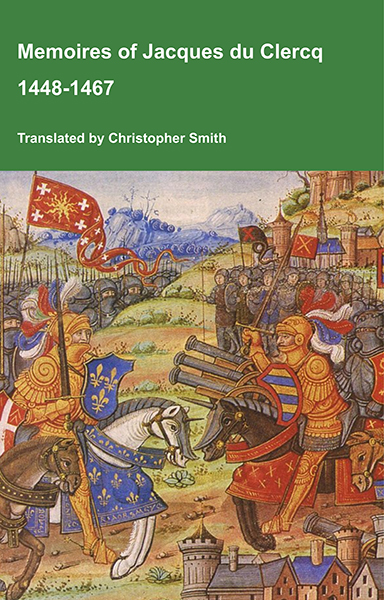
This is a translation of the 'Memoires of Jacques du Clercq', published in 1823 in two volumes, edited by Frederic, Baron de Reissenberg. In his introduction Reissenberg writes: 'Jacques du Clercq tells us that he was born in 1424, and that he was a licentiate in law and a counsellor to Philip the Good, Duke of Burgundy, in the castellany of Douai, Lille, and Orchies. It appears that he established his residence at Arras. In 1446, he married the daughter of Baldwin de la Lacherie, a gentleman who lived in Lille. We read in the fifth book of his Memoirs that his father, also named Jacques du Clercq, had married a lady of the Le Camelin family, from Compiègne. His ancestors, always attached to the counts of Flanders, had constantly served them, whether in their councils or in their armies.' The Memoires cover a period of nineteen years beginning in in 1448, ending in in 1467. It appears that the author had intended to extend the Memoirs beyond that date; no doubt illness or death prevented him from carrying out this plan. As Reissenberg writes the 'merit of this work lies in the simplicity of its narrative, in its tone of good faith, and in a certain air of frankness which naturally wins the reader’s confidence.' Du Clercq ranges from events of national and international importance, including events of the Wars of the Roses in England, to simple, everyday local events such as marriages, robberies, murders, trials and deaths, including that of his own father in Book 5; one of his last entries.
Available at Amazon in eBook and Paperback format.
11th January 1513. Ferdinand King of Aragon [aged 60] to Pedro De UREA, his Ambassador at the Imperial Court.
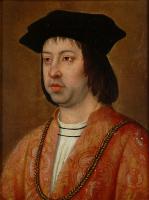
Shows that the treaty which the Cardinal of Gurk [aged 45] has, with the consent of Urea and Vich, concluded at Rome, by excluding the Venetians, undoes all that has been done against France. Henceforth they must make no binding declaration without consulting Ferdinand. Had the English followed his plan they would now be masters of Guienne; and, like them, the Emperor has now hindered the accomplishment of his own wishes and made France stronger. Takes this as a command from God for Christian princes to unite in reforming the Church, and has therefore devised the measures explained in instructions sent by Beltrian. Gurk is to be shown the instructions, but not this letter. If the King of France [aged 50] offers Madame Renée [aged 2] as security, or offers to put fortresses in trust of third persons, Urea shall point out to the Emperor how little these offers are to be trusted. The marriage of Prince Charles [aged 12] with the King of England's [aged 21] sister [aged 16] must not be broken off; or France will gain the King of England, to the detriment of Spain and the House of Burgundy. Another essential condition is that all acts of the schismatical Council be annulled. Is glad to hear of the meeting between the Emperor and the King of England, whose alliance is both the guarantee that France will keep peace if concluded and the most valuable support in case of war.


On 11th January 1546 Ernest I Duke of Brunswick-Lüneburg [aged 48] died. His son William [aged 10] succeeded Duke Brunswick Lüneburg.
Henry Machyn's Diary. 11th January 1562. The xj day of January was bered in Suffoke my lade contes of Bayth wedow, and the last wyff to the sed erle, and late the wyff of ser Thomas Cutsun, and late to ser Recherd Longe knyght; with a grett banar of armes and vj banar-rolles of all mareges [marriages], and a x dosen skochyons of armes, and vj of sylke wrought with fyne gold.
Note. P. 275. Funeral of the countess of Bath. Margaret, only child of John Donnington, of Stoke Newington in Middlesex, married successively to sir Thomas Kytson, sir Richard Long, and John Bourchier earl of Bath. The last died in 1560. Her monument in Hengrave church, Suffolk, with recumbent effigies of herself and her three husbands, is engraved in Gage's History of that parish, 1822, 4to. p. 65; and in the same volume are several letters to and from her, an inventory of her property, her will, and an account of her funeral expenses, &c.
On 11th January 1564 Richard Southwell [aged 61] died at Windham Manor, Norfolk. He was buried in the north side of the chancel of St Nicholas' Church, Woodrising [Map]. His will of 24 Jul 1561, to which he had added a codicil on the day of his death, was proved on 22 June by Norfolk, Thomas Cornwallis and Thomas aka Francis Gawdy [aged 36]. He bequeathed over 10,000 sheep to members of his family and left his personal armour to his 'cousin and friend' Henry Bedingfield [aged 55] and other armour to the young 4th Duke of Norfolk [aged 27], whom he named an executor


The Huntingdon Peerage Chapter IX Ferdinando Sixth Earl of Huntingdon. FERDINANDO, sixth Earl of Huntingdon, heir and successor of Henry the fifth Earl [aged 21], was born at Ashby [Map], January 11th, 1608. In March, 1627, he was returned to serve in Parliament for the county of Leicester, and two years after was joined with his father in the Lieutenancy of the counties of Leicester and Rutland. By indenture, dated May, 1638, he and his brother Henry, in consideration of the sum of 4,50l. granted, to John Earl of Bridgewater [aged 29] and Thomas Davies, a moiety of the rectory of Mould, otherwise Mouldesdale, in Flintshire. On the 13th of November, 1641, his father being then still living, he had summons to Parliament amongst the barons of the realm; and in 1643 he succeeded to the family honours. He married Lucy, daughter and sole heir to Sir John Davys [aged 38], of Englefield, Berks, Knt. (Premier Serjeant at Law to James the First, and Charles the First, as also Solicitor, and afterwards Attorney General in Ireland, and finally Lord Chief Justice of the King's Bench,) by his wife Lady Eleanor [aged 18], youngest daughter of George Lord Audley, Earl of Castlehaven [aged 57], and, settling at Donnington Park, had by her four sons; Henry, John, Ferdinando, and Theophilus, born after the decease of his three brothers; and likewise six daughters, Alice, Eleanor, both of whom died young; Elizabeth, married to Sir James Laughan, of Cottesbroke, in Nottinghamshire, Bart, being his second wife, and dying without issue; Lucy, who died unmarried; Mary, espoused to Sir William Joliffe, of Caverswell Castle in Staffordshire, Knt.; and lastly Christiana.

Diary of Anne Clifford. 11th January 1619. The 11th my Lord [aged 29] went to Knole.
On 11th January 1655 Henry Howard 7th Duke of Norfolk was born to Henry Howard 6th Duke of Norfolk [aged 26] and Anne Somerset Countess Norfolk [aged 24]. He married (1) 8th August 1677 his third cousin twice removed Mary Mordaunt Duchess Norfolk, daughter of Henry Mordaunt 2nd Earl Peterborough and Penelope O'Brien Countess Peterborough.


Samuel Pepys' Diary. 11th January 1660. Wednesday. Being at Will's with Captain Barker, who hath paid me £300 this morning at my office, in comes my father [aged 58], and with him I walked, and leave him at W. Joyce's, and went myself to Mr. Crew's [aged 62], but came too late to dine, and therefore after a game at shittle-cocks with Mr. Walgrave and Mr. Edward [aged 12], I returned to my father, and taking him from W. Joyce's, who was not abroad himself, we inquired of a porter, and by his direction went to an alehouse, where after a cup or two we parted. I went towards London, and in my way went in to see Crowly, who was now grown a very great loon and very tame. Thence to Mr. Steven's with a pair of silver snuffers, and bought a pair of shears to cut silver, and so homeward again. From home I went to see Mrs. Jem, who was in bed, and now granted to have the smallpox. Back again, and went to the Coffee-house, but tarried not, and so home.
Samuel Pepys' Diary. 11th January 1661. Office day. This day comes news, by letters from Portsmouth, Hampshire [Map], that the Princess Henrietta [aged 16] is fallen sick of the meazles on board the London, after the Queen [aged 51] and she was under sail. And so was forced to come back again into Portsmouth, Hampshire [Map] harbour; and in their way, by negligence of the pilot, run upon the Horse Sand. The Queen and she continue aboard, and do not intend to come on shore till she sees what will become of the young Princess. This news do make people think something indeed, that three of the Royal Family should fall sick of the same disease, one after another.


John Evelyn's Diary. 11th January 1662. I received of Sir Peter Ball, the Queen's [aged 52] attorney, a draft of an Act against the nuisance of the smoke of London, to be reformed by removing several trades which are the cause of it, and endanger the health of the King [aged 31] and his people. It was to have been offered to the Parliament, as his Majesty commanded.
Abbot John Whethamstede’s Chronicle of the Abbey of St Albans
Abbot John Whethamstede's Register aka Chronicle of his second term at the Abbey of St Albans, 1451-1461, is a remarkable text that describes his first-hand experience of the beginning of the Wars of the Roses including the First and Second Battles of St Albans, 1455 and 1461, respectively, their cause, and their consequences, not least on the Abbey itself. His text also includes Loveday, Blore Heath, Northampton, the Act of Accord, Wakefield, and Towton, and ends with the Coronation of King Edward IV. In addition to the events of the Wars of the Roses, Abbot John, or his scribes who wrote the Chronicle, include details in the life of the Abbey such as charters, letters, land exchanges, visits by legates, and disputes, which provide a rich insight into the day-to-day life of the Abbey, and the challenges faced by its Abbot.
Available at Amazon in eBook and Paperback format.
John Evelyn's Diary. 11th January 1662. I dined at Arundel House [Map], where I heard excellent music performed by the ablest masters, both French and English, on theorbos, viols, organs, and voices, as an exercise against the coming of the Queen [aged 23], purposely composed for her chapel. Afterward, my Lord Aubigny [aged 42] her Majesty's Almoner to be) showed us his elegant lodging, and his wheel-chair for ease and motion, with divers other curiosities; especially a kind of artificial glass, or porcelain, adorned with relievos of paste, hard and beautiful. Lord Aubigny (brother to the Duke of Lennox) was a person of good sense, but wholly abandoned to ease and effeminacy.
Samuel Pepys' Diary. 11th January 1663. After dinner comes a footman of my Lord Sandwich's [aged 37] (my Lord being come to town last night) with a letter from my father, in which he presses me to carry on the business for Tom with his late mistress, which I am sorry to see my father do, it being so much out of our power or for his advantage, as it is clear to me it is, which I shall think of and answer in my next.


Samuel Pepys' Diary. 11th January 1664. Thence after dinner to White Hall, where the Duke [aged 30] being busy at the Guinny business, the Duke of Albemarle [aged 55], Sir W. Rider, Povy [aged 50], Sir J. Lawson [aged 49] and I to the Duke of Albemarle's lodgings, and there did some business, and so to the Court again, and I to the Duke of York's lodgings, where the Guinny company are choosing their assistants for the next year by ballotting.


Samuel Pepys' Diary. 11th January 1664. Thence to the Coffee-house, whither comes Sir W. Petty [aged 40] and Captain Grant [aged 43], and we fell in talke (besides a young gentleman, I suppose a merchant, his name Mr. Hill [aged 34], that has travelled and I perceive is a master in most sorts of musique and other things) of musique; the universal character; art of memory; Granger's counterfeiting of hands and other most excellent discourses to my great content, having not been in so good company a great while, and had I time I should covet the acquaintance of that Mr. Hill. This morning I stood by the King [aged 33] arguing with a pretty Quaker woman, that delivered to him a desire of hers in writing. The King showed her Sir J. Minnes [aged 64], as a man the fittest for her quaking religion, saying that his beard was the stiffest thing about him, and again merrily said, looking upon the length of her paper, that if all she desired was of that length she might lose her desires; she modestly saying nothing till he begun seriously to discourse with her, arguing the truth of his spirit against hers; she replying still with these words, "O King!" and thou'd him all along.
Samuel Pepys' Diary. 11th January 1664. I heard the Duke of York [aged 30] tell to-night, how letters are come that fifteen are condemned for the late plot1 by the judges at York; and, among others, Captain Oates, against whom it was proved that he drew his sword at his going out, and flinging away the scabbard, said that he would either return victor or be hanged.
Note 1. The 1663 Farneley Wood Plot.
Samuel Pepys' Diary. 11th January 1666. Up and to the office. By and by to the Custome House to the Farmers, there with a letter of Sir G. Carteret's [aged 56] for £3000, which they ordered to be paid me. So away back again to the office, and at noon to dinner all of us by invitation to Sir W. Pen's [aged 44], and much other company. Among others, Lieutenant of the Tower [aged 51], and Broome, his poet, and Dr. Whistler, and his (Sir W. Pen's) son-in-law Lowder [aged 25], servant [lover] to Mrs. Margaret Pen, and Sir Edward Spragg [aged 46], a merry man, that sang a pleasant song pleasantly. Rose from table before half dined, and with Mr. Mountney of the Custome House to the East India House, and there delivered to him tallys for £3000 and received a note for the money on Sir R. Viner [aged 35].


Samuel Pepys' Diary. 11th January 1668. Lay some time, talking with my wife in bed about Pall's [aged 27] business, and she do conclude to have her married here, and to be merry at it; and to have W. Hewer [aged 26], and Batelier, and Mercer, and Willet bridemen and bridemaids, and to be very merry; and so I am glad of it, and do resolve to let it be done as soon as I can. So up, and to the office, where all the morning busy, and thence home to dinner, and from dinner with Mercer, who dined with us, and wife and Deb. to the King's house, there to see "The Wild-goose Chase", which I never saw, but have long longed to see it, being a famous play, but as it was yesterday I do find that where I expect most I find least satisfaction, for in this play I met with nothing extraordinary at all, but very dull inventions and designs. Knepp come and sat by us, and her talk pleased me a little, she telling me how Mis Davis [aged 20] is for certain going away from the Duke's house, the King [aged 37] being in love with her; and a house is taken for her, and furnishing; and she hath a ring given her already worth £600: that the King did send several times for Nelly [aged 17], and she was with him, but what he did she knows not; this was a good while ago, and she says that the King first spoiled Mrs. Weaver, which is very mean, methinks, in a Prince, and I am sorry for it, and can hope for no good to the State from having a Prince so devoted to his pleasure. She told me also of a play shortly coming upon the stage, of Sir Charles Sidly's [aged 28], which, she thinks, will be called "The Wandering Ladys", a comedy that, she thinks, will be most pleasant; and also another play, called "The Duke of Lerma"; besides "Catelin", which she thinks, for want of the clothes which the King promised them, will not be acted for a good while.


Samuel Pepys' Diary. 11th January 1669. Thence to the New Exchange, to buy some things; and, among others, my wife did give me my pair of gloves, which, by contract, she is to give me in her £30 a-year. Here Mrs. Smith tells us of the great murder thereabouts, on Saturday last, of one Captain Bumbridge, by one Symons, both of her acquaintance; and hectors that were at play, and in drink: the former is killed, and is kinsman1 to my Lord of Ormond [aged 58], which made him speak of it with so much passion, as I overheard him this morning, but could not make anything of it till now, but would they would kill more of them.
Note 1. Captain Francis Bromwich's mother Ann was half-sister of the Duke of Ormond's mother Elizabeth Poyntz [aged 82].


John Evelyn's Diary. 19th February 1693. The Bishop of Lincoln [aged 56] preached in the afternoon at the Tabernacle near Golden Square, set up by him. Proposals of a marriage between Mr. Draper and my daughter Susanna [aged 24]. Hitherto an exceedingly warm winter, such as has seldom been known, and portending an unprosperous spring as to the fruits of the earth; our climate requires more cold and winterly weather. The dreadful and astonishing earthquake swallowing up Catania, and other famous and ancient cities, with more than 100,000 persons in Sicily [Map], on 11th January last, came now to be reported among us.
John Evelyn's Diary. 11th January 1694. Supped at Mr. Edward Sheldon's, where was Mr. Dryden [aged 62], the poet, who now intended to write no more plays, being intent on his translation of Virgil. He read to us his prologue and epilogue to his valedictory play now shortly to be acted.


On 11th January 1695 Francis Scott 2nd Duke Buccleuch was born to James Scott [aged 20] and Henrietta Hyde Countess Dalkeith [aged 18]. He was baptised on 20th January 1695 at St Margaret's Church, Westminster [Map]. He a great grandson of King Charles II of England Scotland and Ireland. He married (1) 5th April 1720 his second cousin Jane Douglas, daughter of James Douglas 2nd Duke Queensberry and Mary Boyle Duchess Queensbury, and had issue (2) 4th September 1744 Alice Powell Duchess Buccleuch.
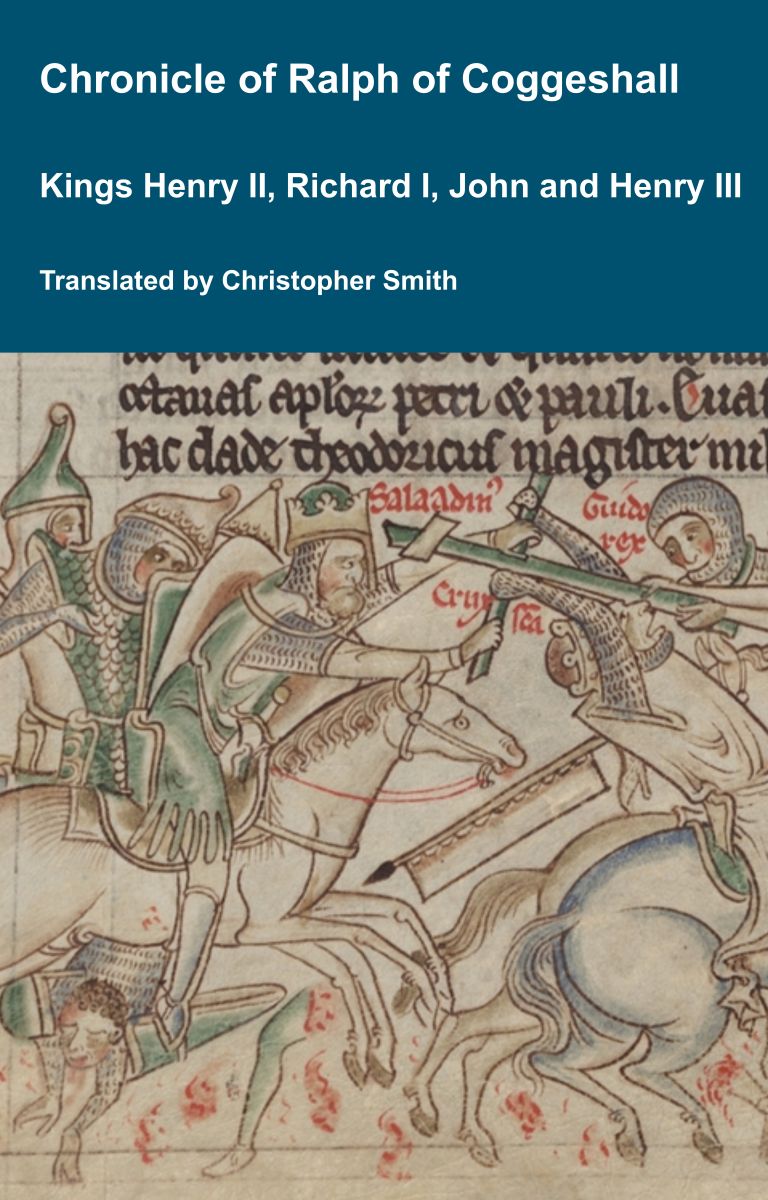
Chronicle of Abbot Ralph of Coggeshall
The Chronicle of Abbot Ralph of Coggeshall (Chronicon Anglicanum) is an indispensable medieval history that brings to life centuries of English and European affairs through the eyes of a learned Cistercian monk. Ralph of Coggeshall, abbot of the Abbey of Coggeshall in Essex in the early 13th century, continued and expanded his community’s chronicle, documenting events from the Norman Conquest of 1066 into the tumultuous reign of King Henry III. Blending eyewitness testimony, careful compilation, and the monastic commitment to record-keeping, this chronicle offers a rare narrative of political intrigue, royal power struggles, and social upheaval in England and beyond. Ralph’s work captures the reigns of pivotal figures such as Richard I and King John, providing invaluable insights into their characters, decisions, and the forces that shaped medieval rule. More than a simple annal, Chronicon Anglicanum conveys the texture of medieval life and governance, making it a rich source for scholars and readers fascinated by English history, monastic authorship, and the shaping of the medieval world.
Available at Amazon in eBook and Paperback format.
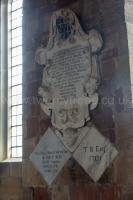
After 11th January 1701 Monument to Thomas Brotherton [deceased].

On 11th January 1716 Edmund Sheffield 2nd Duke of Buckingham and Normanby was born to John Sheffield 1st Duke of Buckingham and Normanby [aged 67] and Catherine Darnley Duchess Buckingham and Normandby [aged 36]. He a grandson of King James II of England Scotland and Ireland.
On 11th January 1744 Scroop Egerton 1st Duke Bridgewater [aged 62] died. His son John [aged 16] succeeded 2nd Duke Bridgewater, 5th Earl Bridgewater, 6th Viscount Brackley, 6th Baron Ellesmere.

On 11th January 1762 Louis Francois Roubiliac [aged 59] died. He was buried in St Martin in the Fields Church [Map]. His funeral was attended by Joshua Reynolds [aged 38] among many others. His apprentice Nicholas Read [aged 29] took over his studio at 66 St Martin's Lane.
On 11th January 1797 Jemima Campbell 2nd Marchioness Grey [aged 73] died at the family's London House, 4 Saint James' Square. Marquess Grey extinct. Her daughter Amabel [aged 45] succeeded 5th Baroness Lucas of Crudwell. She was buried at the De Grey Mausoleum, St John the Baptist Church, Flitton [Map] on 21st January 1797. Her will stated that she was to be buried in the vault "in as private a manner as may be consistent with proper decency. A Hearse with six horses, without any Ornament or Escutcheons and two Coaches with six horses each will be sufficient, without any Family Coach or Livery Servant. I would not have the Church hung with black or any Escutcheons to be used there nor any mourning rings given". It went on to give £50 to the poor of Flitton with Silsoe and of Clophill. She also gave her servant Jane Band an annuity of £40 per annum. She also stated: "It is my intention to erect a Monument in the Church at Flitton to the memory of my late Lord. If it shall happen that I do not carry this my intention into execution I then direct that one shall be placed there to his memory and mine plain and neat in the design but not magnificent or expensive and that the same be placed in the Division now empty on the right hand side of the Duke of Kent's Monument". In fact she did raise Hardwicke's monument in his lifetime as it states that she did so and 'waits to follow him'. The eulogy on the monument reads: "Her excellent & cultivated understanding, her serene & benevolent temper, her polished manners, her domestic virtues and exemplary piety will ever be revered and regretted by her children, relations and friends". In a codicil to her will she wrote: "I desire my Body to be kept as long as is proper and then buried with Lime in the Coffin to promote a speedier dissolution". She also willed "If any letters or papers are found in my handwriting which have been returned to me from Friends I correspond with not burnt (which it is my intention to do) I desire my Executrix will burn them".
Amabel Yorke Countess Grey: On 22nd February 1751 she was born to Philip Yorke 2nd Earl of Hardwicke and Jemima Campbell 2nd Marchioness Grey. In 1816 Amabel Yorke Countess Grey was created 1st Countess de Grey with a special remainder to her sister Mary Jemima Yorke Baroness Grantham and her sister's male heirs.


On 11th January 1800 Charles Nevinson Howard [aged 24] died in a shooting accident at Holker Hall, Cartmel.

On 11th January 1812 Henry Scott 3rd Duke Buccleuch [aged 65] died. His son Charles [aged 39] succeeded 4th Duke Buccleuch, 6th Duke Queensberry, 4th Earl Doncaster, 4th Baron Scott of Tynedale. Harriet Katherine Townshend Duchess Buccleuch Duchess Queensbury [aged 38] by marriage Duchess Buccleuch.
On 11th January 1821 John Henry Campbell was born to John Douglas Edward Henry Campbell 7th Duke Argyll [aged 43] and Joan Glassel [aged 46].
On 11th January 1837 François Gérard [aged 66] died.
Ten Years' Digging. January 11th [1848]. The cutting was carried forwards to the intended limit beyond the centre of the barrow, yielding in its progress more animal bones, a dog's tooth, numerous calcined flakes of flint, and a neatly formed arrow head of the same substance.
On 11th January 1855 Eva Fitzgerald was born to Charles William Fitzgerald Fitzgerald 4th Duke Leinster [aged 35] and Caroline Leveson-Gower Duchess Leinster [aged 27] at Kilkea Castle, Castledermot, County Kildare.

Anne Boleyn. Her Life as told by Lancelot de Carle's 1536 Letter.
In 1536, two weeks after the execution of Anne Boleyn, her brother George and four others, Lancelot du Carle, wrote an extraordinary letter that described Anne's life, and her trial and execution, to which he was a witness. This book presents a new translation of that letter, with additional material from other contemporary sources such as Letters, Hall's and Wriothesley's Chronicles, the pamphlets of Wynkyn the Worde, the Memorial of George Constantyne, the Portuguese Letter and the Baga de Secrets, all of which are provided in Appendices.
Available at Amazon in eBook and Paperback format.
On 11th January 1877 Gwendolen Constable-Maxwell Duchess Norfolk was born to Marmaduke Constable-Maxwell 11th Lord Herries [aged 39] and Angela Mary Charlotte Fitzalan Howard Lady Herries. She married 5th February 1904 her first cousin once removed Henry Fitzalan Howard 15th Duke of Norfolk, son of Henry Granville Fitzalan 14th Duke of Norfolk and Augusta Mary Minna Catherine Lyons Duchess Norfolk, and had issue.
The London Gazette 25308. Whitehall, January 11, 1884. The Queen has been pleased to direct Letters Patent to be passed under the Great Seal, for appointing Ernest Augustus Charles, Marquess of Ailesbury [aged 73], to be Lieutenant and Custos Rotulorum of the county of Berks, in the room of George Grimston, Earl of Craven, deceased.

On 11th January 1900 Archibald James Leofric Temple Hamilton-Temple-Blackwood [aged 36] died from wounds received a week before at Wagon Hill during the Siege of Ladysmith.

On 11th January 1923 Constantine I King Greece [aged 54] died.
On 11th January 1931 Giovanni Boldini [aged 88] died. The New York Times: "Boldini was a fashionable portrait painter. He 'did' all the grandes dames of Paris, and at a certain period to have a portrait painted by Boldini was a crowning event of social season. His style was racy and advanced for his time, and he believed that his décolleté paintings touched the extreme limit of convention. His work was the talk of numerous salons. And then he was superseded by Vandongens and Etcheverrys and Domergues and others whose daring shocked and discouraged Boldini. He had not painted for many years before his death. His body was taken to Ferrara, his native city, for burial."
On 11th January 1934 María del Rosario de Silva Duchess of Alba [aged 33] died of tuberculosis.
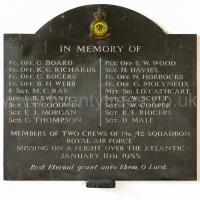
After 11th January 1955. Memorial at St Columb's Church, St Columb. On 11 January 1955, two squadron Shackleton MR.2s (WG531 and WL743) disappeared while operating near Fastnet Rock. Both missing believed to have collided. Eighteen aircrew missing presumed killed. The two Shackletons departed on a routine exercise off Fastnet Rock on the southwest Irish coast. The two maritime patrol aircraft took off from RAF St Eval at 10:14 and 10:20 respectively to carry out search exercises as part of their 15-hour patrol. Radio messages received from the two airplanes through 20:00 that night indicated that they were flying at the prescribed 85 mi (137 km) distance from one another, despite their having departed St. Eval with only six minutes' separation. From 20:58 all contact was lost. A three-day search was conducted, but both aircraft remained missing without a trace, leading to the assumption that there had been a mid-air collision. In 1966, the starboard outer (No. 4) engine of WL743 was recovered about 75 miles north of where authorities had long assumed the collision had occurred.
On 11th January 1395 Michelle Valois Duchess Burgundy was born to Charles "Beloved Mad" VI King France [aged 26] and Isabeau Wittelsbach Queen Consort France [aged 25]. She married 28th January 1405 her second cousin Philip "Good" Valois III Duke Burgundy, son of John "Fearless" Valois Duke Burgundy and Margaret Wittelsbach Duchess Burgundy.
On 11th January 1591 Robert Devereux 3rd Earl Essex was born to Robert Devereux 2nd Earl Essex [aged 25] and Frances Walsingham Countess Essex [aged 24]. He married (1) 1603 his fourth cousin Frances Howard Countess Essex and Somerset, daughter of Thomas Howard 1st Earl Suffolk and Catherine Knyvet Countess Suffolk (2) 11th March 1630 his fourth cousin Elizabeth Paulet Countess Essex.


On 11th January 1597 Anne Erskine Countess of Rothes was born to John Erskine 19th Earl of Mar [aged 35] and Mary Stewart Countess Mar [aged 15] at Stirling Castle [Map]. She married 28th December 1614 John Leslie 6th Earl Rothes and had issue.
On 11th January 1620 Elizabeth Leigh Countess Southampton was born to Francis Leigh 1st Earl Chichester [aged 21] and Audrey Boteler Countess Chichester. She married before 1646 Thomas Wriothesley 4th Earl of Southampton 2nd Earl Chichester, son of Henry Wriothesley 3rd Earl of Southampton and Elizabeth Vernon Countess Southampton, and had issue.
On 11th January 1630 Charles Berkeley 1st Earl Falmouth was born to Charles Berkeley 2nd Viscount Fitzhardinge [aged 30] and Penelope Godolphin Viscountess Fitzhardinge. He married 1664 Mary Bagot Countess Falmouth and Dorset.
On 11th January 1640 Robert Burdett 3rd Baronet was born to Francis Burdett 2nd Baronet [aged 32] and Elizabeth Walter. He married (1) 1666 Mary Pigot (2) 1676 Magdalen Aston, daughter of Thomas Aston 1st Baronet and Anne Willoughby Lady Aston, and had issue (3) after 1694 Mary Brome Lady Burdett.
Annals of the six Kings of England by Nicholas Trivet
Translation of the Annals of the Six Kings of England by that traces the rise and rule of the Angevin aka Plantagenet dynasty from the mid-12th to early 14th century. Written by the Dominican scholar Nicholas Trivet, the work offers a vivid account of English history from the reign of King Stephen through to the death of King Edward I, blending political narrative with moral reflection. Covering the reigns of six monarchs—from Stephen to Edward I—the chronicle explores royal authority, rebellion, war, and the shifting balance between crown, church, and nobility. Trivet provides detailed insight into defining moments such as baronial conflicts, Anglo-French rivalry, and the consolidation of royal power under Edward I, whose reign he describes with particular immediacy. The Annals combines careful year-by-year reporting with thoughtful interpretation, presenting history not merely as a sequence of events but as a moral and political lesson. Ideal for readers interested in medieval history, kingship, and the origins of the English state, this chronicle remains a valuable and accessible window into the turbulent world of the Plantagenet kings.
Available at Amazon in eBook and Paperback format.
On 11th January 1655 Henry Howard 7th Duke of Norfolk was born to Henry Howard 6th Duke of Norfolk [aged 26] and Anne Somerset Countess Norfolk [aged 24]. He married (1) 8th August 1677 his third cousin twice removed Mary Mordaunt Duchess Norfolk, daughter of Henry Mordaunt 2nd Earl Peterborough and Penelope O'Brien Countess Peterborough.
On 3rd January 1657 Heneage Finch 5th Earl Winchilsea was born to Heneage Finch 3rd Earl Winchilsea [aged 29] and Mary Seymour Countess Winchelsea [aged 20]. He was baptised on 11th January 1657. He married 15th May 1684 Anne Kingsmill Countess Winchelsea.
On 11th January 1659 Ambrose Browne was born to Adam Browne 2nd Baronet [aged 33] and Philippa Cooper Lady Browne.
On 11th January 1668 John Egerton was born to John Egerton 3rd Earl Bridgewater [aged 21] and Elizabeth Cranfield. He died aged two in 1670.
On 11th January 1688 William St Lawrence 14th Baron Howth was born to Thomas St Lawrence 13th Baron Howth [aged 29] and Mary Barnewall Baroness Howth [aged 23]. He married in or after 1727 Lucy Gorges Baroness Howth, daughter of Richard Gorges and Nichola Sophia Hamilton Lady Beresford, and had issue.
On 11th January 1694 Eleonore Antoine Hesse-Kassel was born to Charles I Landgrave Hesse-Kassel [aged 39] and Maria Amalia of Courland Landgravine Hesse-Kassel [aged 40]. Coefficient of inbreeding 7.10%. She died aged less than one years old.
On 11th January 1695 Francis Scott 2nd Duke Buccleuch was born to James Scott [aged 20] and Henrietta Hyde Countess Dalkeith [aged 18]. He was baptised on 20th January 1695 at St Margaret's Church, Westminster [Map]. He a great grandson of King Charles II of England Scotland and Ireland. He married (1) 5th April 1720 his second cousin Jane Douglas, daughter of James Douglas 2nd Duke Queensberry and Mary Boyle Duchess Queensbury, and had issue (2) 4th September 1744 Alice Powell Duchess Buccleuch.
On 11th January 1697 William Capell 3rd Earl Essex was born to Algernon Capell 2nd Earl Essex [aged 26] and Mary Bentinck Countess Essex [aged 17]. He married (1) 27th November 1718 his fourth cousin Jane Hyde Countess Essex, daughter of Henry Hyde 2nd Earl Rochester 4th Earl Clarendon and Jane Leveson-Gower Countess Rochester and Clarendon, and had issue (2) after January 1724 his fourth cousin Elizabeth Russell Countess Essex, daughter of Wriothesley Russell 2nd Duke Bedford and Elizabeth Howland Duchess Bedford, and had issue.


On 11th January 1716 Edmund Sheffield 2nd Duke of Buckingham and Normanby was born to John Sheffield 1st Duke of Buckingham and Normanby [aged 67] and Catherine Darnley Duchess Buckingham and Normandby [aged 36]. He a grandson of King James II of England Scotland and Ireland.
On 11th January 1727 Nigel Gresley 6th Baronet was born to Thomas Gresley 4th Baronet [aged 28] and Dorothy Bowyer at Drakelow Hall, Derbyshire. He married 18th May 1752 Elizabeth Wynn Lady Gresley and had issue.
On 11th January 1751 Anne Croker 1st Baroness Crofton was born.
Annals of the six Kings of England by Nicholas Trivet
Translation of the Annals of the Six Kings of England by that traces the rise and rule of the Angevin aka Plantagenet dynasty from the mid-12th to early 14th century. Written by the Dominican scholar Nicholas Trivet, the work offers a vivid account of English history from the reign of King Stephen through to the death of King Edward I, blending political narrative with moral reflection. Covering the reigns of six monarchs—from Stephen to Edward I—the chronicle explores royal authority, rebellion, war, and the shifting balance between crown, church, and nobility. Trivet provides detailed insight into defining moments such as baronial conflicts, Anglo-French rivalry, and the consolidation of royal power under Edward I, whose reign he describes with particular immediacy. The Annals combines careful year-by-year reporting with thoughtful interpretation, presenting history not merely as a sequence of events but as a moral and political lesson. Ideal for readers interested in medieval history, kingship, and the origins of the English state, this chronicle remains a valuable and accessible window into the turbulent world of the Plantagenet kings.
Available at Amazon in eBook and Paperback format.

On 11th January 1771 John Wodehouse 2nd Baron Wodehouse was born to John Wodehouse 1st Baron Wodehouse [aged 29] and Sophia Berkeley Baroness Wodehouse [aged 24]. He married 1796 Charlotte Norris Baroness Woodhouse and had issue.
On 11th January 1776 Elizabeth Southwell Countess Albermarle was born to Edward Southwell 20th Baron Clifford [aged 37]. She married 9th April 1792 William Charles Keppel 4th Earl Albermarle, son of George Keppel 3rd Earl Albermarle and Anne Miller Countess Albermarle, and had issue.

On 11th January 1803 Dudley Coutts Stuart was born to John Stuart 1st Marquis of the Isle of Bute [aged 58] and Frances Coutts Marchioness Bute.

On 11th January 1805 Maria Augusta Windham Countess Listowel was born to Vice Admiral William Lukin Windham [aged 36] and Anne Sara Thellusson [aged 30] at Felbrigg Hall, Norfolk. She married (1) before 5th February 1830 George Thomas Wyndham of Cromer Hall Norfolk and had issue (2) 23rd July 1831 William Hare 2nd Earl Listowel and had issue.
On 11th January 1807 Bishop Charles Baring was born to Thomas Baring 2nd Baronet [aged 34] and Mary Ursula Sealy Lady Baring [aged 33].
On 11th January 1810 Susan Liddell Countess Hardwicke was born to Thomas Liddell 1st Baron Ravensworth [aged 34] and Maria Susannah Simpson Baroness Calthorpe [aged 37]. She married August 1833 Charles Yorke 4th Earl of Hardwicke and had issue.
On 11th January 1812 Blanche Georgiana Howard was born to George Howard 6th Earl Carlisle [aged 38] and Georgiana Cavendish Countess Carlisle [aged 28]. She married 1829 her second cousin William Cavendish 7th Duke Devonshire and had issue.


On 11th January 1814 Theresa Anna Maria Fox-Strangways Baroness Digby was born to Henry Fox-Strangways 3rd Earl of Ilchester [aged 26] and Caroline Leonora Murray Countess Ilchester. She married 1837 her third cousin Edward St Vincent Digby 9th and 3rd Baron Digby and had issue.
On 11th January 1818 William Twisden 9th Baronet was born to William Twisden [aged 19].
On 11th January 1821 John Henry Campbell was born to John Douglas Edward Henry Campbell 7th Duke Argyll [aged 43] and Joan Glassel [aged 46].

The True Chronicles of Jean le Bel Volume 1 Chapters 1-60 1307-1342
The True Chronicles of Jean le Bel offer one of the most vivid and immediate accounts of 14th-century Europe, written by a knight who lived through the events he describes, and experienced some of them first hand. Covering the early decades of the Hundred Years’ War, this remarkable chronicle follows the campaigns of Edward III of England, the politics of France and the Low Countries, and the shifting alliances that shaped medieval warfare. Unlike later historians, Jean le Bel writes with a strong sense of eyewitness authenticity, drawing on personal experience and the testimony of fellow soldiers. His narrative captures not only battles and sieges, but also the realities of military life, diplomacy, and the ideals of chivalry that governed noble society. A key source for Jean Froissart, Le Bel’s chronicle stands on its own as a compelling and insightful work, at once historical record and literary achievement. This translation builds on the 1905 edition published in French by Jules Viard, adding extensive translations from other sources Rymer's Fœdera, the Chronicles of Adam Murimuth, William Nangis, Walter of Guisborough, a Bourgeois of Valenciennes, Geoffrey le Baker of Swinbroke and Richard Lescot to enrich the original text and Viard's notes.
Available at Amazon in eBook and Paperback format.
On 11th January 1825 Thomas Fermor-Hesketh 5th Baronet was born to Thomas Hesketh 4th Baronet [aged 25] and Annette Maria Bomford Lady Hesketh [aged 26]. He married 1846 Arabella Fermor Lady Hesketh, daughter of Thomas Fermor 4th Earl Pomfret and Amabel Elizabeth Borough Countess of Pomfret, and had issue.
On 11th January 1825 Isaac Newton Wallop 5th Earl of Portsmouth was born to Newton Wallop aka Fellowes 4th Earl of Portsmouth [aged 52] and Catherine Fortescue Countess Portsmouth [aged 38]. He married 15th February 1855 his third cousin once removed Eveline Howard Herbert Countess Portsmouth, daughter of Henry John George Herbert 3rd Earl Carnarvon and Henrietta Anna Howard-Molyneux-Howard Countess Carnarvon, and had issue.
On 11th January 1855 Eva Fitzgerald was born to Charles William Fitzgerald Fitzgerald 4th Duke Leinster [aged 35] and Caroline Leveson-Gower Duchess Leinster [aged 27] at Kilkea Castle, Castledermot, County Kildare.
On 11th January 1859 George Nathaniel Curzon 1st Marquess Kedleston was born to Alfred Nathaniel Holden Curzon 4th Baron Scarsdale [aged 27] and Blanche Pocklington Senhouse Baroness Scarsdale [aged 21]. He married (1) 22nd April 1895 Mary Victoria Leiter Baroness Curzon Kedleston and had issue (2) 2nd January 1917 Grace Elvina Hinds Marchioness Curzon Kedleston.


On 11th January 1864 Gustavus Hamilton-Russell 9th Viscount Boyne was born to Gustavus Hamilton-Russell 8th Viscount Boyne [aged 33] and Katherine Frances Scott [aged 26]. He married 4th October 1906 Margaret Selina Lascelles Viscountess Boyne, daughter of Henry Ulrick Lascelles 5th Earl Harewood and Florence Katharine Bridgeman Countess Harewood, and had issue.
On 11th January 1877 Gwendolen Constable-Maxwell Duchess Norfolk was born to Marmaduke Constable-Maxwell 11th Lord Herries [aged 39] and Angela Mary Charlotte Fitzalan Howard Lady Herries. She married 5th February 1904 her first cousin once removed Henry Fitzalan Howard 15th Duke of Norfolk, son of Henry Granville Fitzalan 14th Duke of Norfolk and Augusta Mary Minna Catherine Lyons Duchess Norfolk, and had issue.
On 11th January 1933 Caroline Anne Pole-Carew was born to John Pole-Carew 12th Baronet [aged 30] and Cynthia Mary Burns Lady Pole [aged 24]. She married 16th July 1963 Paul Asquith.

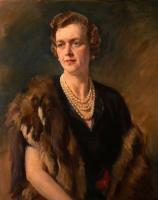
On 11th January 1950 Richard Thomas Legh 5th Baron Newton was born to Peter Legh 4th Baron Newton [aged 34] and Priscilla Egerton-Warburton [aged 34]. Coefficient of inbreeding 6.25%.
On 11th January 1311 Reginald "Black" I Duke Guelders [aged 16] and Sophia Berthout Berthout were married. He the son of Reginald I Count Guelders [aged 56] and Margaret Dampierre Countess Guelders [aged 39].
On 11th January 1350 King Philip "Fortunate" VI of France [aged 56] and Blanche Évreux Queen Consort France [aged 19] were married. She by marriage Queen Consort of France. The difference in their ages was 37 years. She the daughter of Philip "Noble" III King Navarre and Joan Capet II Queen Navarre. He the son of Charles Valois I Count Valois and Margaret Capet Countess Valois. They were half first cousin once removed. He a great x 4 grandson of King Henry "Curtmantle" II of England. She a great x 3 granddaughter of King Henry III of England.
On 11th January 1673 Henry St John 1st Viscount St John [aged 20] and Mary Rich [aged 35] were married. She the daughter of Robert Rich 3rd Earl Warwick and Anne Cheeke Countess Warwick.


On 11th January 1755 William Legge 2nd Earl Dartmouth [aged 23] and Frances Catherine Gounter Nicoll Countess Dartmouth [aged 22] were married. She by marriage Countess Dartmouth.


On 11th January 1894 John Shiffner 5th Baronet [aged 36] and Elsie Burrows were married.
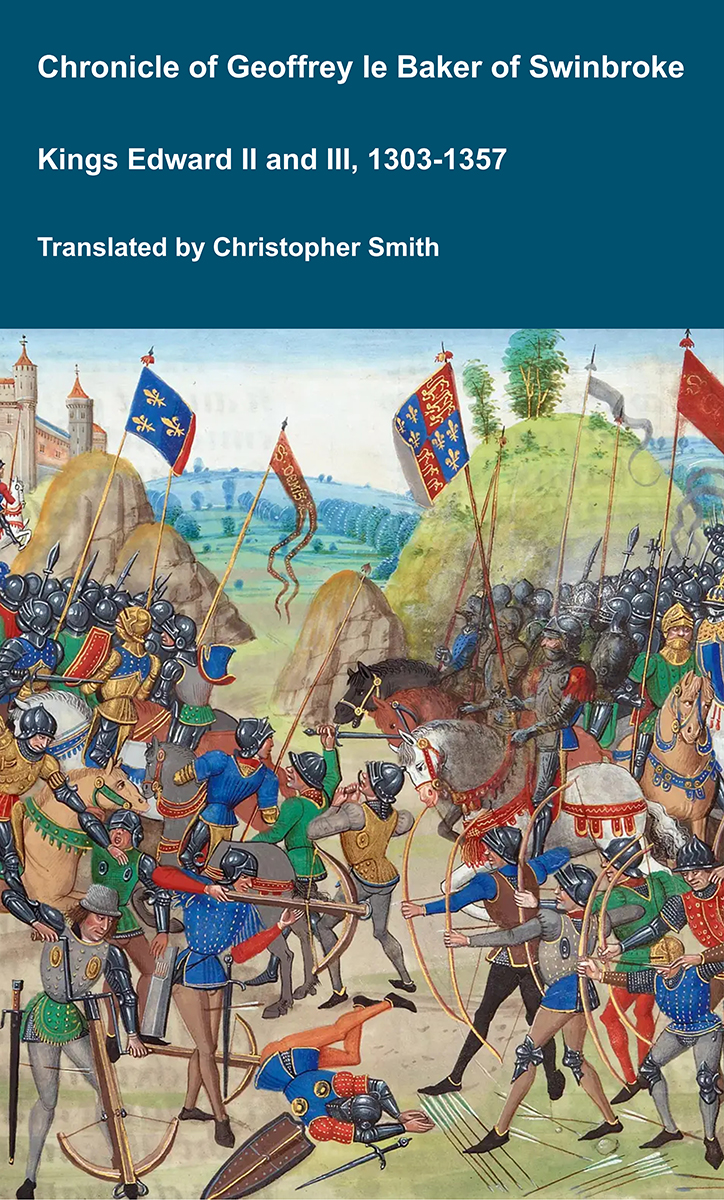
Chronicle of Geoffrey le Baker of Swinbroke
Baker was a secular clerk from Swinbroke, now Swinbrook, an Oxfordshire village two miles east of Burford. His Chronicle describes the events of the period 1303-1356: Gaveston, Bannockburn, Boroughbridge, the murder of King Edward II, the Scottish Wars, Sluys, Crécy, the Black Death, Winchelsea and Poitiers. To quote Herbert Bruce 'it possesses a vigorous and characteristic style, and its value for particular events between 1303 and 1356 has been recognised by its editor and by subsequent writers'. The book provides remarkable detail about the events it describes. Baker's text has been augmented with hundreds of notes, including extracts from other contemporary chronicles, such as the Annales Londonienses, Annales Paulini, Murimuth, Lanercost, Avesbury, Guisborough and Froissart to enrich the reader's understanding. The translation takes as its source the 'Chronicon Galfridi le Baker de Swynebroke' published in 1889, edited by Edward Maunde Thompson.
Available at Amazon in eBook and Paperback format.
On 11th January 1372 Eleanor Plantagenet Countess Arundel and Surrey [aged 53] died at Arundel [Map]. She was buried at Lewes Priory [Map].
On 11th January 1374 Alice Audley Baroness Greystoke and Neville [aged 70] died at Greystoke, Cumberland. She was buried at Durham Cathedral [Map].
On 11th January 1425 Henry Fitzhugh 3rd Baron Fitzhugh [aged 67] died at Ravensworth Castle, North Yorkshire [Map]. He was buried at Jervaulx Abbey, North Yorkshire [Map]. His son William [aged 26] succeeded 4th Baron Fitzhugh. Margery Willoughby Baroness Fitzhugh [aged 28] by marriage Baroness Fitzhugh.
On 11th January 1464 William Marrow [aged 54] died.
On 11th January 1494 Domenico Ghirlandaio [aged 45] died.
On 11th January 1546 Ernest I Duke of Brunswick-Lüneburg [aged 48] died. His son William [aged 10] succeeded Duke Brunswick Lüneburg.
On 12th December 1561 Margaret Donnington Countess Bath [aged 52] died at Stoke Newington [Map]. She was buried on 11th January 1562 at the Church of St John Lateran, Hengrave; see Henry Machyn's Diary.
On 11th January 1564 Richard Southwell [aged 61] died at Windham Manor, Norfolk. He was buried in the north side of the chancel of St Nicholas' Church, Woodrising [Map]. His will of 24 Jul 1561, to which he had added a codicil on the day of his death, was proved on 22 June by Norfolk, Thomas Cornwallis and Thomas aka Francis Gawdy [aged 36]. He bequeathed over 10,000 sheep to members of his family and left his personal armour to his 'cousin and friend' Henry Bedingfield [aged 55] and other armour to the young 4th Duke of Norfolk [aged 27], whom he named an executor
On 11th January 1629 Thomas Haselrigge 1st Baronet [aged 65] died. His son Arthur [aged 28] succeeded 2nd Baronet Haselrigge of Noseley Hall in Leicestershire.

On 28th December 1660 Thomas Pope 2nd Earl Downe [aged 38] died. On 11th January 1661 he was buried in Wroxton, Oxfordshire. His uncle Thomas [aged 62] succeeded 3rd Earl Downe.
The True Chronicles of Jean le Bel Volume 1 Chapters 1-60 1307-1342
The True Chronicles of Jean le Bel offer one of the most vivid and immediate accounts of 14th-century Europe, written by a knight who lived through the events he describes, and experienced some of them first hand. Covering the early decades of the Hundred Years’ War, this remarkable chronicle follows the campaigns of Edward III of England, the politics of France and the Low Countries, and the shifting alliances that shaped medieval warfare. Unlike later historians, Jean le Bel writes with a strong sense of eyewitness authenticity, drawing on personal experience and the testimony of fellow soldiers. His narrative captures not only battles and sieges, but also the realities of military life, diplomacy, and the ideals of chivalry that governed noble society. A key source for Jean Froissart, Le Bel’s chronicle stands on its own as a compelling and insightful work, at once historical record and literary achievement. This translation builds on the 1905 edition published in French by Jules Viard, adding extensive translations from other sources Rymer's Fœdera, the Chronicles of Adam Murimuth, William Nangis, Walter of Guisborough, a Bourgeois of Valenciennes, Geoffrey le Baker of Swinbroke and Richard Lescot to enrich the original text and Viard's notes.
Available at Amazon in eBook and Paperback format.
On 11th January 1668 Thomas Pope 3rd Earl Downe [aged 70] died.
On 11th January 1700 Elizabeth Gerard Baroness Gerard [aged 41] died.
On 11th January 1719 John Wynn 5th Baronet [aged 91] died without issue. Baronet Wynn of Gwydir extinct. He bequeathed his estates, the second or third largest in Wales, to his second-cousin once-removed Jane Thelwall, who had predeceased him, daughter of his great-aunt Sydney Wynn [aged 79]. By doing so the his estates and the Williams estates of her former husband William Williams-Wynn 2nd Baronet [aged 54], also the second or third largest in Wales, were combined into the largest estate in Wales which far execeeded any other. At this time William Williams-Wynn 2nd Baronet changed his surname from Williams to Williams-Wynn.
On 11th January 1744 Scroop Egerton 1st Duke Bridgewater [aged 62] died. His son John [aged 16] succeeded 2nd Duke Bridgewater, 5th Earl Bridgewater, 6th Viscount Brackley, 6th Baron Ellesmere.
On 11th January 1744 James Hamilton 7th Earl Abercorn [aged 57] died. His son James [aged 31] succeeded 8th Earl Abercorn.
On 11th January 1762 Louis Francois Roubiliac [aged 59] died. He was buried in St Martin in the Fields Church [Map]. His funeral was attended by Joshua Reynolds [aged 38] among many others. His apprentice Nicholas Read [aged 29] took over his studio at 66 St Martin's Lane.
On 11th January 1769 Thomas Style 4th Baronet [aged 84] died. His son Charles succeeded 5th Baronet Style of Wateringbury in Kent.
On 11th January 1794 Bishop John Hinchliffe [aged 63] died. He was buried in Peterborough Cathedral [Map].
On 11th January 1794 Bishop John Hinchcliffe [aged 63] died. He was buried at Peterborough Cathedral [Map].
On 11th January 1794 Caroline Campbell 1st Baroness Greenwich [aged 76] died. Baron Greenwich extinct since her
On 11th January 1797 Jemima Campbell 2nd Marchioness Grey [aged 73] died at the family's London House, 4 Saint James' Square. Marquess Grey extinct. Her daughter Amabel [aged 45] succeeded 5th Baroness Lucas of Crudwell. She was buried at the De Grey Mausoleum, St John the Baptist Church, Flitton [Map] on 21st January 1797. Her will stated that she was to be buried in the vault "in as private a manner as may be consistent with proper decency. A Hearse with six horses, without any Ornament or Escutcheons and two Coaches with six horses each will be sufficient, without any Family Coach or Livery Servant. I would not have the Church hung with black or any Escutcheons to be used there nor any mourning rings given". It went on to give £50 to the poor of Flitton with Silsoe and of Clophill. She also gave her servant Jane Band an annuity of £40 per annum. She also stated: "It is my intention to erect a Monument in the Church at Flitton to the memory of my late Lord. If it shall happen that I do not carry this my intention into execution I then direct that one shall be placed there to his memory and mine plain and neat in the design but not magnificent or expensive and that the same be placed in the Division now empty on the right hand side of the Duke of Kent's Monument". In fact she did raise Hardwicke's monument in his lifetime as it states that she did so and 'waits to follow him'. The eulogy on the monument reads: "Her excellent & cultivated understanding, her serene & benevolent temper, her polished manners, her domestic virtues and exemplary piety will ever be revered and regretted by her children, relations and friends". In a codicil to her will she wrote: "I desire my Body to be kept as long as is proper and then buried with Lime in the Coffin to promote a speedier dissolution". She also willed "If any letters or papers are found in my handwriting which have been returned to me from Friends I correspond with not burnt (which it is my intention to do) I desire my Executrix will burn them".
Amabel Yorke Countess Grey: On 22nd February 1751 she was born to Philip Yorke 2nd Earl of Hardwicke and Jemima Campbell 2nd Marchioness Grey. In 1816 Amabel Yorke Countess Grey was created 1st Countess de Grey with a special remainder to her sister Mary Jemima Yorke Baroness Grantham and her sister's male heirs.
Abbot John Whethamstede’s Chronicle of the Abbey of St Albans
Abbot John Whethamstede's Register aka Chronicle of his second term at the Abbey of St Albans, 1451-1461, is a remarkable text that describes his first-hand experience of the beginning of the Wars of the Roses including the First and Second Battles of St Albans, 1455 and 1461, respectively, their cause, and their consequences, not least on the Abbey itself. His text also includes Loveday, Blore Heath, Northampton, the Act of Accord, Wakefield, and Towton, and ends with the Coronation of King Edward IV. In addition to the events of the Wars of the Roses, Abbot John, or his scribes who wrote the Chronicle, include details in the life of the Abbey such as charters, letters, land exchanges, visits by legates, and disputes, which provide a rich insight into the day-to-day life of the Abbey, and the challenges faced by its Abbot.
Available at Amazon in eBook and Paperback format.
On 11th January 1812 Henry Scott 3rd Duke Buccleuch [aged 65] died. His son Charles [aged 39] succeeded 4th Duke Buccleuch, 6th Duke Queensberry, 4th Earl Doncaster, 4th Baron Scott of Tynedale. Harriet Katherine Townshend Duchess Buccleuch Duchess Queensbury [aged 38] by marriage Duchess Buccleuch.
On 11th January 1817 Francis North 4th Earl Guildford [aged 55] died. His brother Frederick [aged 50] succeeded 5th Earl Guildford, 7th Baron Guildford.
On 11th January 1837 François Gérard [aged 66] died.
On 11th January 1841 Anne Buck Lady Wood died.
On 11th January 1876 Mary Tyrell Lady Champion de Crespigny [aged 53] died.
On 11th January 1890 Thomas Edward Colebrooke 4th Baronet [aged 76] died. His son Edward [aged 28] succeeded 5th Baronet Colebrooke of Gatton in Surrey.
On 11th January 1892 George Robert Osborn 6th Baronet [aged 78] died. His grandson Algernon [aged 21] succeeded 7th Baronet Osborn of Chicksands in Bedfordshire.
On 11th January 1900 Henry Bruce Meux 3rd Baronet [aged 43] died without issue. Baronet Meux of Theobald's Park in Hertfordshire extinct.
On 11th January 1923 Constantine I King Greece [aged 54] died.
On 11th January 1931 Giovanni Boldini [aged 88] died. The New York Times: "Boldini was a fashionable portrait painter. He 'did' all the grandes dames of Paris, and at a certain period to have a portrait painted by Boldini was a crowning event of social season. His style was racy and advanced for his time, and he believed that his décolleté paintings touched the extreme limit of convention. His work was the talk of numerous salons. And then he was superseded by Vandongens and Etcheverrys and Domergues and others whose daring shocked and discouraged Boldini. He had not painted for many years before his death. His body was taken to Ferrara, his native city, for burial."
Abbot John Whethamstede’s Chronicle of the Abbey of St Albans
Abbot John Whethamstede's Register aka Chronicle of his second term at the Abbey of St Albans, 1451-1461, is a remarkable text that describes his first-hand experience of the beginning of the Wars of the Roses including the First and Second Battles of St Albans, 1455 and 1461, respectively, their cause, and their consequences, not least on the Abbey itself. His text also includes Loveday, Blore Heath, Northampton, the Act of Accord, Wakefield, and Towton, and ends with the Coronation of King Edward IV. In addition to the events of the Wars of the Roses, Abbot John, or his scribes who wrote the Chronicle, include details in the life of the Abbey such as charters, letters, land exchanges, visits by legates, and disputes, which provide a rich insight into the day-to-day life of the Abbey, and the challenges faced by its Abbot.
Available at Amazon in eBook and Paperback format.
On 11th January 1939 Edward Arthur Palk 5th Baron Haldon [aged 85] died. Baron Haldon of Haldon in Devon extinct. His second cousin Wilmot [aged 62] succeeded 9th Baronet Palk of Haldon House in Devon.
On 11th January 1943 Walter Geoffrey Shakerley 3rd Baronet [aged 83] died. His brother George [aged 79] succeeded 4th Baronet Shakerley of Somerford-Park in Cheshire. Evelyn Mary France-Hayhurst Lady Shakerley [aged 73] by marriage Lady Shakerley of Somerford-Park in Cheshire.
On 11th January 1960 Major Wilfred Barrow 5th Baronet [aged 62] died. His son Richard [aged 26] succeeded 6th Baronet Barrow of Ulverstone in Lancashire.
On 11th January 1967 Algar de Clifford Charles Meysey-Thompson 3rd Baronet [aged 81] died. Baronet Meysey-Thompson of Kirby Hall in the West Riding of Yorkshire extinct. There was a potential 4th Baronet, (Humphrey) Simon Meysey-Thompson 1935–2002, who never successfully proved his succession and was never on the Official Roll of the Baronetage.
On 11th January 1975 Victor Elliot-Murray-Kynynmound 5th Countess Minto [aged 83] died.
On 11th January 1997 Michael Henry Croft 2nd Baron Croft [aged 80] died. His son Bernard [aged 47] succeeded 3rd Baron Croft of Bournemouth in Hampshire, 3rd Baronet Croft of Knole in Hampshire.