

13 Feb is in February.
1194 Release of King Richard I
1536 Henry VIII becomes Supreme Head of the Church
1542 Execution of Catherine Howard and Jane Parker
1547 Funeral of King Henry VIII
1575 Coronation and Marriage of Henry III King France
1601 First Voyage of the East India Company
On 13th February 999 Archbishop Ethelgar died.
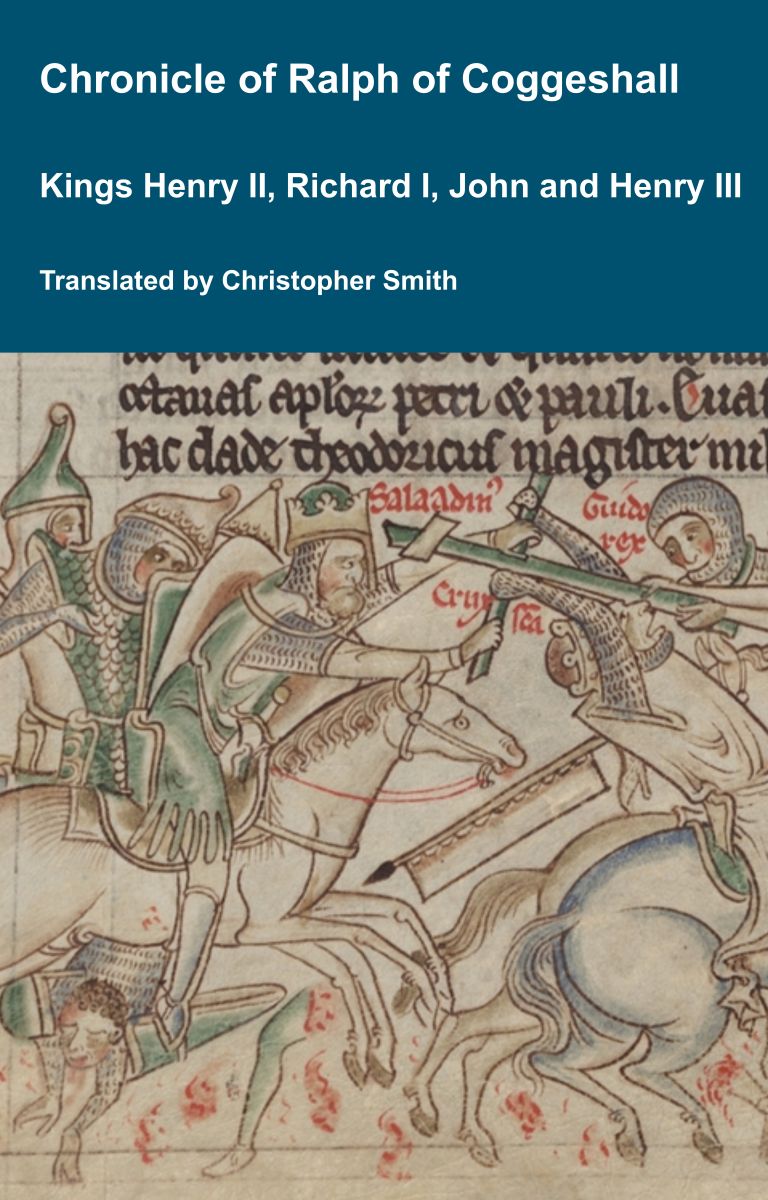 Chronicum Anglicanum by Ralph Coggeshall. In the year 1194, King Richard, having already paid the greater part of his ransom, and having given many hostages for the remainder that was still to be paid, on the feast of the Purification of the Blessed Mary [2nd February]1 was freed from all custody of the emperor, and was permitted to return to his own kingdom. Journeying with his mother and the chancellor through the land of the Duke of Louvain toward the British sea, he waited for a long time at Antwerp for a suitable time to cross. On the Sunday[13th February 1194] after the feast of Saint Gregory2 he landed in England at the port of Sandwich, with great rejoicing. And at the very hour when the king arrived with his company, namely, the second hour of the day, the sun shining with great brightness, there appeared a most serene and unusual radiance, not far distant from the sun, about the height and breadth of a human body, containing within itself a shining whiteness and a reddish hue, like the likeness of a rainbow. Many who gazed upon this brightness declared that the king had come ashore in England. The king immediately set out for Canterbury, where devoutly he visited Blessed Thomas; then proceeding to London, he was received by the citizens of London with the greatest pomp of joy, the whole city being adorned in many ways and decorated with countless riches in anticipation of the king's arrival. And when news of the king's coming spread, both nobles and commoners hastened eagerly to meet the returning king, longing greatly to see him come back from captivity, whom they had feared would never return.
Anno MCXCIV. Rex Ricardus, maxima jam parte redemptionis suæ persoluta, datisque pluribus obsidibus pro reliqua parte quæ restabat persolvenda, die Purificationis beatæ Mariæ ab omni custodia imperatoris liber effectus est, et ad proprium regnum redire permissus. Qui cum matre sua et cancellario per terram ducis Luvanæ ad mare Britannicum proficiscens, apud Andeworpe aptum tempus transfretandi diutius exspectavit; qui in die Dominica post festum Sancti Gregorii in Angliam cum magno gaudio ad portum Sandwicensem applicuit. Hora autem qua rex cum suis applicuit, scilicet secunda hora diei, sole clarius rutilante, apparuit quidam serenissimus atque insolitus splendor, non longius a sole distans, quasi ad longitudinem et latitudinem humani corporis, candorem præfulgidum atque rubedinem quasi species iridis in se continens; quem splendorem plures intuentes, pronunciabant regem in Anglia fore appulsum. Rex autem illico Cantuariam profectus, beatum Thomam devotus expetiit; deinde Londoniam proficiscens, a civibus Londoniæ cum maxima lætitiæ pompa exceptus est, universa civitate contra regis adventum innumerabilium opum varietate decorata atque multiformiter adornata. Audito autem regis adventu, nobiles pariter et ignobiles adventanti regi cum magna alacritate occurrunt, cernere plurimum cupientes a captivitate regressum, quem pertimuerant nunquam reversurum.
Note 1. The letter from Walter, archbishop of Rouen to Ralph de Diceto has the 4th February: "Let your love know that after we had come to our most beloved lord, the illustrious king of the English, we wrote to no one in England, nor up to the morrow [4th February 1194] of Saint Blaise did we hear anything worth reporting and worthy to be written to you. But on that day the merciful Lord visited his people at Mainz in the liberation of our lord the king. For while we were standing by the lord king until the ninth hour, the archbishops of Mainz and Cologne, speaking before the lord emperor and the lord king and the duke of Austria concerning the king's release, after many anxieties and labours, the same archbishops, who had devoted the greatest effort to securing the king's release, came before the lady queen, and before us, and the bishops of Bath, Ely, and Saintes, and many other nobles, and approached the lord king, bringing him a brief but joyful word. It was this: that the lord emperor signified to him that, though he had long held him in his custody, yet he now released him and set him free, that henceforth he might have power over himself."
Note 2. The Feast of Saint Gregory the Great is 12th March, commemorating the date of his death in 604 AD. He was Pope from 590 to 604AD.
Letters. 13th February 1254. Letter XII. Eleanor of Provence Queen Consort England [aged 31] and Richard of Cornwall 1st Earl Cornwall [aged 45] to King Henry III of England [aged 46].
To their most excellent lord, the lord Henry, by God's grace the illustrious king of England, lord of Ireland, duke of Normandy and Aquitaine, and earl of Anjou, his most devoted consort Eleanora, by the same grace queen of England, and his devoted and faithful Richard earl of Cornwall, send health with all reverence and honour.
Be it known to your revered lordship that the lords the earl marshall [aged 45] and John de Bailiol [aged 46], being hindered at sea by a contrary wind during twelve days, came to us in England on the Wednesday after the Purification of Blessed Mary last past.
We had been treating with your prelates and the magnates of your kingdom of England before the advent of the said Earl and John, on the quinzaines of St. Hilary last past about your subsidy, and after the arrival of the said Earl and John, with certain of the aforesaid prelates and magnates, the archbishops and bishops answered us that if the King of Castile [aged 32] should come against you in Gascony each of them would assist you from his own property, so that you would be under perpetual obli gations to them; but with regard to granting you an aid from their clergy, they could do nothing without the assent of the said clergy; nor do they believe that their clergy can be induced to give you any help, unless the tenth of clerical goods granted to you for the first year of the crusade, which should begin in the present year, might be relaxed at once by your letters patent, and the collection of the said tenth for the said crusade, for the two following years, might be put in respite up to the term of two years before your passage to the Holy Land; and they will give diligence and treat with the clergy submitted to them, to induce them to assist you according to that form with a tenth of their benefices, in case the King of Castile should attack you in Gascony; but at the departure of the bearer of these presents no subsidy had as yet been granted by the aforesaid clergy. Moreover, as we have elsewhere signified to you, if the King of Castile should come against you in Gascony, all the earls and barons of your kingdom, who are able to cross the sea, will come to you in Gascony, with all their power; but from the other laymen who do not sail over to you we do not think that we can obtain any help for your use, unless you write to your lieutenants in England firmly to maintain your great charters of liberties, and to let this be distinctly perceived by your letters to each Sheriff of your kingdom, and publicly proclaimed through each county of the said kingdom; since, by this means, they would be more strongly animated cheerfully to grant you aid; for many persons complain that the aforesaid charters are not kept by your sheriffs and other bailiffs as they ought to be kept. Be it known, therefore, to your lordship, that we shall hold a conference with the aforesaid clergy and laity at Westminster, in the quinzaines of Passover next, about the aforesaid aid, and we supplicate your lordship that you will write us your good pleasure concerning these affairs with the utmost possible haste. For you will find us prepared and devoted, according to our power, to solicit the aforesaid aid for your use, and to do and procure all other things ....* which can contribute to your convenience and the increase of your honour. Given at Windsor [Map], the 13th of February, in the thirty-eighth year of your reign.
On 13th February 1293 Archbishop Robert Winchelsey [aged 48] was elected Archbishop of Canterbury.
Rymer's Fœdera Volume 2. Concerning the conveyance of Thomas Gournay into England.
The King, to his beloved the mayor, jurats, and good men of his city of Bayonne, greeting.
Whereas we are sending our beloved serjeant-at-arms, Peter Bernard of Pynsole, to conduct Thomas de Gournay, knight, captured overseas for sedition against the person of Lord Edward, late King of England, our father, and conspiracy in his death, and now in your custody under guard, to us in England, as we have more fully charged him on our behalf:
We ask and strictly command you that in those things which concern the safe and secure conveyance of the said Thomas to us, as aforesaid, you shall be advising and assisting the same Peter in such ways and means as you see fit, and in no way shall you omit this.
Given at Waltham, the 13th day of February [1332].
Super ductione Thoma Gournay in Angliam.
Rex, dilectis sibi majori, juratis, & probis hominibus, civitatis suæ Baiona, salutem.
Cùm mittamus, dilectum servientem nostrum ad arma, Petrum Bernardi de Pynsole, ad Thomam Gournaye militem, pro seditione contra personam domini E. nuper Regis Angliæ, patris nostri, ac conspiratione in mortem ejusdem, factis, in partibus transmarinis captum, & jam penes vos sub carcerali custodiâ existentem; ad nos in Angliam ducendum, prout sibi per nos pleniùs est injunctum;
Vos rogamus mandantes, firmiter injungendo, quatenùs eidem Petro in hiis, quæ salvam & securam ductionem dicti Thomæ ad nos, sicut prædictum est, contingunt, consulentes sitis & auxiliantes, modis & viis quibus videritis expedire; et hoc nullatenus omittatis.
Dat' apud Waltham, xiii, die Februarii.
Patent Rolls. 13th February 1400. Grant to the king's servant William Flaxman of a furred gown of 'motley Westminster. velvet' of 'damask' late of Thomas, lord le Despenser [deceased], in which he was seized without the house of the mayor of Bristol and which is in the hands of the burgesses. By p.s.
On 13th February 1457 Mary Valois Duchess Burgundy was born to Charles "Bold" Valois Duke Burgundy [aged 23] and Isabella Bourbon [aged 21]. She a great x 3 granddaughter of King Edward III of England. Coefficient of inbreeding 7.47%. She married 18th August 1477 her second cousin Maximilian Habsburg I Holy Roman Emperor, son of Frederick "Peaceful or Fat" Habsburg III Holy Roman Emperor and Eleanor Aviz Holy Roman Empress, and had issue.
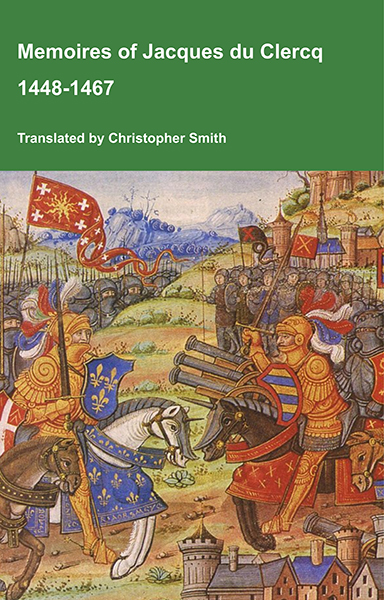 Memoires Jacques du Clercq. In that same year also, on the 13th day of February, on a Saturday after dinner, a man named Jennin Frion, and another, Philipenie le Camus, who claimed to belong to the household of the Habart family, entered a tavern called the Bottles, in the city near Arras. There they wounded a young man, son of the tavern keeper of Gomiecprès, striking him on the head and piercing his thighs, and then went away, passing in the open street before the provost of Beauquesne and of the city, who had indeed heard the disturbance and already knew of it, yet neither he nor any of his men took action. Thus was justice administered.
Audit an aussy, xiije jour de febvrier, par ung samedy après disner, ung nommé Jennin Frion, et l'aultre Philipenie le Camus, lesquels se disoient aulx enfants de Habart, entrerent en une taverne, nommée les Bouteilles en cité lez Arras; et illecq navrerent ung compagnon, fils du tavernier de Goemcemprès en le teste et lui percherent les cuisses, puis s'en allerent et passerent devant le prevost de Beauquesne et de cité en pleine rue; et sy avoit bien ouit l'effroy et le sçavoit ja bien, mais oncques ne s'en meult ny homme de par lui; ainsy estoit justice gouvernée.
On 13th February 1468 Juana Enríquez Queen Consort Aragon [aged 43] died at Tarragona.
Wriothesley's Chronicle [1508-1562]. 13th February 1536. The seconde sermon, being on Septuagesima Sundaie, their preached at Powles Crosse [Map] the Bishop of Rochester.a
Note a. John Hilsey, Prior of the Dominican Friars in London, appointed 4th October, 1535, to this see, then vacant by the execution of Bishop Fisher.
On 13th February 1542 Queen Catherine Howard [aged 19] and Jane Parker Viscountess Rochford [aged 37] were beheaded at Tower Green [Map]. Henry Howard Earl of Surrey [aged 26] attended. They were both buried at St Peter ad Vincula Church, Tower of London [Map].
Mary Boleyn [aged 43] was the heir of Jane Parker Viscountess Rochford being the sister of her deceased husband George Boleyn Viscount Rochford.


Grafton's Chronicle [1507-1573]. To the which peticions the king graunted, saiyng that he thanked the Commons, that they tooke his sorow to be theirs. Wherevpon the Queene and the Ladie Rocheford were attainted by both the houses. And on Saterday beyng the xj. day of February, the king sent his roial assent, by his great Seale: and then all the Lordes were in their Robes, and the common house called vp, and there the acte read, and his assent declared. And so on the thirtene daye [13th February 1540], these two Ladies were behedded on the greene, within the Tower with an axe, and confessed their offences, and died repentaunt. And shortly after the maryed the Lady Katheryn Parre that had bene wife to the Lorde Latimer, and she was sister to the Marques of Northampton.
Chronicle of Edward Hall [1496-1548]. 13th February 1542. To the whiche peticions the kyng graunted, saiyng that he thanked the Commons, that thei tooke his sorowe to bee theirs: Whereupon the Quene [aged 19] and the Lady Rocheforde [aged 37], were attainted by bothe the houses.
This is a translation of the 'Memoires of Jacques du Clercq', published in 1823 in two volumes, edited by Frederic, Baron de Reissenberg. In his introduction Reissenberg writes: 'Jacques du Clercq tells us that he was born in 1424, and that he was a licentiate in law and a counsellor to Philip the Good, Duke of Burgundy, in the castellany of Douai, Lille, and Orchies. It appears that he established his residence at Arras. In 1446, he married the daughter of Baldwin de la Lacherie, a gentleman who lived in Lille. We read in the fifth book of his Memoirs that his father, also named Jacques du Clercq, had married a lady of the Le Camelin family, from Compiègne. His ancestors, always attached to the counts of Flanders, had constantly served them, whether in their councils or in their armies.' The Memoires cover a period of nineteen years beginning in in 1448, ending in in 1467. It appears that the author had intended to extend the Memoirs beyond that date; no doubt illness or death prevented him from carrying out this plan. As Reissenberg writes the 'merit of this work lies in the simplicity of its narrative, in its tone of good faith, and in a certain air of frankness which naturally wins the reader’s confidence.' Du Clercq ranges from events of national and international importance, including events of the Wars of the Roses in England, to simple, everyday local events such as marriages, robberies, murders, trials and deaths, including that of his own father in Book 5; one of his last entries.
Available at Amazon in eBook and Paperback format.
Chronicle of Edward Hall [1496-1548]. And so on the thirtene daie, these twoo Ladies were behedded on the Grene, within the Tower [Map] with an axe, and confessed their offences, and died repentaunt.
Spanish Chronicle Chapter 39. [13th February 1542] When she mounted the scaffold she turned to the people, who were numerous, and said, Brothers, by the journey upon which I am bound I have not wronged the King, but it is true that long before the King took me I loved Culpepper, and I wish to God I had done as he wished me, for at the time the King wanted to take me he urged me to say that I was pledged to him. If I had done as he advised me I should not die this death, nor would he. I would rather have him for a husband than be mistress of the world, but sin blinded me and greed of grandeur, and since mine is the fault mine also is the suffering, and my great sorrow is that Culpepper should have to die through me." Then she turned to the headsman and said, "Pray hasten with thy office." And he knelt before her and asked her pardon, and she said, "I die a Queen, but I would rather die the wife of Culpepper. God have mercy on my soul. Good people, I beg you pray for me." And then, falling on her knees, she said certain prayers, and the headsman performed his office, striking off her head when she was not expecting it. She was carried to the Tower Church, and buried near Queen Anne.
Holinshed's Chronicle [1525-1582]. 13th February 1542. And so on the thirtéenth daie, those two ladies [Queen Catherine Howard of England [aged 19] and Jane Parker Viscountess Rochford [aged 37]] were beheaded on the greene within the towre with an ax, where they confessed their offenses, and died repentant.
Letters and Papers Foreign and Domestic Henry VIII 1542. 13 Feb [1542]. R. O. Kaulek, 388. (Full abstract.) 100. Marillac To Francis I.
The Scottish ambassadors yesterday came to report that they had received this King's answer about the interview; which was in substance what he wrote on the 5th, viz., that this King would willingly grant an interview for two, but not for three. As they are sending the Cardinal of St. Andrews the said answer, which was given them in writing, Marillac could do no less than forward their letters with these; to which there is nothing to add but that Parliament has condemned this Queen [aged 19] and the lady of Rochefort [aged 37] to death. Her execution was expected this week, for last night she was brought from Syon to the Tower, but as she weeps, cries, and torments herself miserably, without ceasing, it is deferred for three or four days, to give her leisure to recover, and "penser au faict de sa conscience." As to the old duchess of Norfolk, some say she shall die, others that she shall keep perpetual prison, like her son lord William and daughter the countess of Brizchwatre. A few days will show.
All her goods are already confiscated, and are of marvellous value, 400,000 or 500,000 cr., for ladies in this country succeed for life to the moveables of their deceased husbands. Norfolk is greatly interested, since the greater part came to her through his late father; yet the times are such that he dare not show that the affair touches him, but approves all that is done.
P.S.—13 Feb.: After writing the above, was informed that to-day, Monday, 13th inst., the condemned ladies should be executed; and, indeed, about nine o'clock in the morning, this Queen first, and afterwards the lady of Rochefort, within the Tower, had their heads cut off with an axe, after the manner of the country. The Queen was so weak that she could hardly speak, but confessed in few words that she had merited a hundred deaths for so offending the King who had so graciously treated her. The lady of Rochefort said as much in a long discourse of several faults which she had committed in her life. It is not yet said who will be Queen; but the common voice is that this King will not be long without a wife, for the great desire he has to have further issue.
French. Modern transcript, pp. 3. Headed: Londres, 11 Fevrier.
Wriothesley's Chronicle [1508-1562]. 13th February 1542. And the 13th of February, beinge Monday, the sayd Quene, Katharine [aged 19] put otherwise Lady Haward, was beheaded within the Tower on the grene, and my Lady of Rochforde [aged 37] allso; the Lordes of the Counsell, with other noblemen, and certeine commoners, beinge there present at the execution, she beinge afore condempned by the body of the whole Parliament of high treason.
Chronicle of Greyfriars. 13th February 1542. And the 13th day of February was the Queen Katherine [aged 19] and Lady Rocheford [aged 37] be-heddyd within the tower, and there burryd.
Letters and Papers Foreign and Domestic Henry VIII 1542. Next morning [13th February 1542], about 7, those of the Council except Suffolk, who was ill, and Norfolk, were at the Tower, accompanied by various lords and gentlemen, such as Surrey (Norfolk's son and the Queen's cousin), and she [Queen Catherine Howard of England [aged 19]] was beheaded in the same spot where Anne Boleyn had been executed. Her body was then covered [with a black cloak]. and her ladies took it away. Then Lady Rochford [aged 37] was brought, who had shown symptoms of madness till they told her she must die. Neither she nor the Queen spoke much on the scaffold; they only confessed their guilt and prayed for the King's welfare.
The History of the Reformation Volume 2. This being agreed on the 13th of February [1547], on the day following King Henry's body was, with all the pomp of a royal funeral, removed to Syon, in the way to Windsor. There great observation was made on a thing that was no extraordinary matter: he had been extreme corpulent, and dying of a dropsy, or something like it, it was no wonder if, a fortnight after, upon so long a motion, some putrid matter might run through the coffin. But Syon having been a house of religious women, it was called a signal mark of the displeasure of Heaven, that some of his blood and fat dropped through the lead in the night: and to make this work mightily on weak people, it was said, that the dogs licked it next morning. This was much magnified in commendation of Friar Peto, afterwards made cardinal, who (as was told in page 247 of the former Part) had threatened him in a sermon, at Greenwich, "that the dogs should lick his blood." Though, to consider things more equally, it had been a wonder indeed if it had been otherwise. But having met with this observation in a written near that time, I would not envy the world the pleasure of it.
Diary of Edward VI. 13th February 1551. The bishop of Winchester [aged 68], after a longe triall, was deposed of his bishoprike.
Henry Machyn's Diary. 13th February 1562. The fryday after dyd pryche a-for the quen [aged 28] at the cowrt the dene of Westmynster master Goodman [aged 33].


On 13th February 1575 Henry III King France [aged 23] was crowned III King France: Capet Valois Angoulême at Reims Cathedral.
General History of Voyages Volume 8 Chapter 10 Section 1 Preparation. Every thing being in readiness, the fleet departed from Woolwich, in the river Thames, on the 13th of February, 1600, after the English mode of reckoning, or more properly 1601. They were so long delayed in the Thames and the Downs, for want of wind, that it was Easter before they arrived at Dartmouth, where they spent, five or six days, taking in bread.and,other provisions, appointed to be procured there.
On 13th February 1608 Bess of Hardwick [aged 81] died. She was buried in All Saints Church, Derby [Map]. Her monument, which she had constructed before her death, was designed by Robert Smythson [aged 38]. She left nothing in her will for her 'bad son' Henry Cavendish [aged 57]. He did, however, inherit Chatsworth House, Derbyshire [Map] which he subsequently sold in 1609 to his brother William Cavendish 1st Earl Devonshire [aged 55] for £10,000.
The date of her funeral somewhat complicated. Rawsons 1910 book "Bess of Hardwick and her Circle" quotes Simpson's National Records of Derby for 1608: "The old Countess of Shrewsbury died about Candlemas this year, whose funeral was about Holy Thursday. A great frost this year. The witches of Bakewell hanged." Holy Thursday, the Feast of the Ascension, is thirty-nine days after Easter. Easter in 1608 was on the 6th of April, putting Holy Thursday on the 15th of May.
Ethel Carleton Williams "Bess of Hardwick", 1959, has a note: "9. The date of Bess of Hardwick's funeral is uncertain. The date on the coffin plate is said to be February 1608 (Cox and Hope, Chronicles of the Collegiate Church of All Saints, Derby), but on 31 March 1608 Gilbert Talbot wrote to Robert Cecil, excusing himself for not attending St George's Feast on the ground that his mother-in-law's funeral was to be on St George's Day (23 April). Later, on 3rd of April, the Earl of Arundel wrote to Gilbert (his father-in-law), 'the funeral at Derby is appointed to be either on the fourth or fifth of May, which Garter yet knoweth not, but rather thinketh on the fourth because the other is a holy day'".
Neither of which provide a definite answer. The former being around the 15th of May, the latter 'rather thinketh' the 4th of May. Are there any other contemporary sources available?


Diary of Anne Clifford. 13th February 1617. Upon the 13th the King made a speech in the Star Chamber about duels and combats, my Lord [aged 27] standing by his chair where he talked with him all the while, being in extraordinary grace and favour with the King.

Anne Boleyn. Her Life as told by Lancelot de Carle's 1536 Letter.
In 1536, two weeks after the execution of Anne Boleyn, her brother George and four others, Lancelot du Carle, wrote an extraordinary letter that described Anne's life, and her trial and execution, to which he was a witness. This book presents a new translation of that letter, with additional material from other contemporary sources such as Letters, Hall's and Wriothesley's Chronicles, the pamphlets of Wynkyn the Worde, the Memorial of George Constantyne, the Portuguese Letter and the Baga de Secrets, all of which are provided in Appendices.
Available at Amazon in eBook and Paperback format.
On 13th February 1652 August Oldenburg was born to August Philipp Oldenburg I Duke Schleswig-Holstein-Sonderburg-Beck [aged 39] and Marie Sibylle Nassau Saarbrücken Duchess Schleswig-Holstein-Sonderburg-Beck.
On 13th February 1660 Charles Gustav X King Sweden [aged 37] died. His son Charles [aged 4] succeeded XI King Sweden.
Samuel Pepys' Diary. 13th February 1660. Monday. To my office till noon, thence home to dinner, my mouth being very bad of the cancer and my left leg beginning to be sore again. After dinner to see Mrs. Jem, and in the way met with Catan on foot in the street and talked with her a little, so home and took my wife to my father's [aged 59]. In my way I went to Playford's [aged 37], and for two books that I had and 6s. 6d. to boot I had my great book of songs which he sells always for 4s. At my father's I staid a while, while my mother sent her maid Bess to Cheapside for some herbs to make a water for my mouth. Then I went to see Mr. Cumberland [aged 28], and after a little stay with him I returned, and took my wife home, where after supper to bed. This day Monk [aged 51] was invited to White Hall to dinner by my Lords; not seeming willing, he would not come. I went to Mr. Fage from my father's, who had been this afternoon with Monk, who do promise to live and die with the City, and for the honour of the City; and indeed the City is very open-handed to the soldiers, that they are most of them drunk all day, and have money given them. He did give me something for my mouth which I did use this night.


Diary of John Nicoll. 13th February 1661. Upone Weddinfday the 13 day of Februar 1661, the Marques of Ergyll [aged 53], being prilfoner in the Caftell of Edinburgh, was callit for to anfuer to findry poyntis of horrid treafone, and, in his douncuming to the Parliament, wes gairdit with a number of mulketeiris; and thair, eftir fum fmall debaitt quhidder he fould be fuffered to fpeik befoir the reiding of the indictment; it wes caryed in the negative aganes him. So the accufation wes red, quhich wes of fourtene articles of treafone, and heich and liynous treafone, and being demandit Giltie or No Giltie; befoir he anfuered he had a long harangue, much relating to purge him felff by folempne oathes and proteftationes that he was frie of his Majefteis blood, that of the Marques of Huntleis and Montrois, as alfo of the Duke of Hammiltoun. He pretendit want of tyme to confult the proces with his advocattis, and fo the Parliament hath given him the 26 of this moneth of Februar, to prepare his defencis aganelt that tyme. Then the Lord Proveft of Edinburgh, wes ordored to returne him priffoner to the Caftell, quhilk wes reallie performit by a ftrong gaird of mulketeiris. Yit eftir this day, viz. the 26 day of Februar, upone the Marques fuplication to the Counfell, the Eftates of Parliament wer pleafit to grante a farder day to advyfe and confult his proces with his advocattis, viz. to the 5 of Marche thaireftir.
Samuel Pepys' Diary. 13th February 1662. So to the office till night, and then home and to write by the post about many businesses, and so to bed. Last night died the Queen of Bohemia [aged 65].


On 13th February 1662 Princess Elizabeth Stewart Queen Bohemia [aged 65] died of pneumonia shortly after midnight. She was buried at Westminster Abbey [Map].
Samuel Pepys' Diary. 13th February 1663. Took my wife home, and I to my office. Find myself pretty well but fearful of cold, and so to my office, where late upon business; Mr. Bland sitting with me, talking of my Lord Windsor's [aged 36] being come home from Jamaica, unlooked-for; which makes us think that these young Lords are not fit to do any service abroad, though it is said that he could not have his health there, but hath razed a fort of the King of Spain [aged 57] upon Cuba, which is considerable, or said to be so, for his honour.


Samuel Pepys' Diary. 13th February 1664. Up, and after I had told my wife in the morning in bed the passages yesterday with Creed my head and heart was mightily lighter than they were before, and so up and to the office, and thence, after sitting, at 11 o'clock with Mr. Coventry [aged 36] to the African House, and there with Sir W. Ryder by agreement we looked over part of my Lord Peterborough's [aged 42] accounts, these being by Creed and Vernaty.
Samuel Pepys' Diary. 13th February 1665. Thence I to Westminster and by water (taking Mr. Stapely the rope-maker by the way), to his rope-ground and to Limehouse [Map], there to see the manner of stoves and did excellently inform myself therein, and coming home did go on board Sir W. Petty's [aged 41] "The Experiment", which is a brave roomy vessel, and I hope may do well. So went on shore to a Dutch House to drink some mum, and there light upon some Dutchmen, with whom we had good discourse touching stoveing1 and making of cables. But to see how despicably they speak of us for our using so many hands more to do anything than they do, they closing a cable with 20, that we use 60 men upon.
Note 1. Stoveing, in sail-making, is the heating of the bolt-ropes, so as to make them pliable. B.
Samuel Pepys' Diary. 13th February 1666. I away home, and there at the office all the afternoon till late at night, and then away home to supper and to bed. Ill newes this night that the plague is encreased this week, and in many places else about the towne, and at Chatham, Kent [Map] and elsewhere. This day my wife wanting a chambermaid with much ado got our old little Jane to be found out, who come to see her and hath lived all this while in one place, but is so well that we will not desire her removal, but are mighty glad to see the poor wench, who is very well and do well.
Samuel Pepys' Diary. 13th February 1667. Up, and by water to White Hall, where to the Duke of York [aged 33], and there did our usual business; but troubled to see that, at this time, after our declaring a debt to the Parliament of £900,000, and nothing paid since, but the debt increased, and now the fleete to set out; to hear that the King [aged 36] hath ordered but £35,000 for the setting out of the fleete, out of the Poll Bill, to buy all provisions, when five times as much had been little enough to have done any thing to purpose. They have, indeed, ordered more for paying off of seamen and the Yards to some time, but not enough for that neither.
Samuel Pepys' Diary. 13th February 1668. At noon home to dinner, and thence with my wife and Deb. to White Hall, setting, them at her tailor's, and I to the Commissioners of the Treasury, where myself alone did argue the business of the East India Company against their whole Company on behalf of the King [aged 37] before the Lords Commissioners, and to very good effect, I think, and with reputation. That business being over, the Lords and I had other things to talk about, and among the rest, about our making more assignments on the Exchequer since they bid us hold, whereat they were extraordinary angry with us, which troubled me a little, though I am not concerned in it at all. Waiting here some time without, I did meet with several people, among others Mr. Brisband, who tells me in discourse that Tom Killigrew [aged 56] hath a fee out of the Wardrobe for cap and bells1, under the title of the King's Foole or jester; and may with privilege revile or jeere any body, the greatest person, without offence, by the privilege of his place.
Note 1. The Lord Chamberlain's Records contain a copy of a warrant dated July 12th, 1661, "to deliver to Mr. Killegrew thirty yards of velvett, three dozen of fringe, and sixteene yards of Damaske for the year 1661". The heading of this entry is "Livery for ye jester" (Lowe's "Betterton [aged 32]", p. 70).


Samuel Pepys' Diary. 13th February 1668. Thence took up my wife, and home, and there busy late at the office writing letters, and so home to supper and to bed. The House was called over to-day. This morning Sir G. Carteret [aged 58] come to the Office to see and talk with me: and he assures me that to this day the King [aged 37] is the most kind man to my Lord Sandwich [aged 42] in the whole world; that he himself do not now mind any publick business, but suffers things to go on at Court as they will, he seeing all likely to come to ruin: that this morning the Duke of York [aged 34] sent to him to come to make up one of a Committee of the Council for Navy Affairs; where, when he come, he told the Duke of York that he was none of them: which shews how things are now-a-days ordered, that there should be a Committee for the Navy; and the Lord Admiral not know the persons of it! And that Sir G. Carteret and my Lord Anglesey [aged 53] should be left out of it, and men wholly improper put into it. I do hear of all hands that there is a great difference at this day between my Lord Arlington [aged 50] and Sir W. Coventry [aged 40], which I am sorry for.


John Evelyn's Diary. 13th February 1669. I presented his Majesty [aged 38] with my "History of the Four Impostors;" he told me of other like cheats. I gave my book to Lord Arlington [aged 51], to whom I dedicated it. It was now that he began to tempt me about writing "The Dutch War"..
On 13th February 1686 John Churchill was born to John Churchill 1st Duke of Marlborough [aged 35].


The History of William Marshal was commissioned by his son shortly after William’s death in 1219 to celebrate the Marshal’s remarkable life; it is an authentic, contemporary voice. The manuscript was discovered in 1861 by French historian Paul Meyer. Meyer published the manuscript in its original Anglo-French in 1891 in two books. This book is a line by line translation of the first of Meyer’s books; lines 1-10152. Book 1 of the History begins in 1139 and ends in 1194. It describes the events of the Anarchy, the role of William’s father John, John’s marriages, William’s childhood, his role as a hostage at the siege of Newbury, his injury and imprisonment in Poitou where he met Eleanor of Aquitaine and his life as a knight errant. It continues with the accusation against him of an improper relationship with Margaret, wife of Henry the Young King, his exile, and return, the death of Henry the Young King, the rebellion of Richard, the future King Richard I, war with France, the death of King Henry II, and the capture of King Richard, and the rebellion of John, the future King John. It ends with the release of King Richard and the death of John Marshal.
Available at Amazon in eBook and Paperback format.
John Evelyn's Diary. 13th February 1692. Mr. Boyle having made me one of the trustees for his charitable bequests, I went to a meeting of the Bishop of Lincoln [aged 55], Sir Rob.... wood, and serjeant, Rotheram, to settle that clause in the will which related to charitable uses, and especially the appointing and electing a minister to preach one sermon the first Sunday in the month, during the four summer months, expressly against Atheists, Deists, Libertines, Jews, etc., without descending to any other controversy whatever, for which £50 per annum is to be paid quarterly to the preacher; and, at the end of three years, to proceed to a new election of some other able divine, or to continue the same, as the trustees should judge convenient. We made choice of one Mr. Bentley, chaplain to the Bishop of Worcester (Dr. Stillingfleet) [aged 56]. The first sermon was appointed for the first Sunday in March, at St. Martin's [Map]; the second Sunday in April, at Bow Church [Map], and so alternately.


On 13th February 1698 Charles Fitzroy was born to Charles Fitzroy 1st Duke Southampton 2nd Duke Cleveland [aged 35] and Anne Pulteney Duchess Southampton Duchess of Cleveland [aged 34]. He a grandson of King Charles II of England Scotland and Ireland.
On 13th February 1743 Elizabeth Gerard Duchess Brandon [aged 63] died.
On 13th February 1744 Pierre Gobert [aged 82] died.
On 13th February 1803 Samuel Mitchell was born to Samuel Mitchell of Sheffield and Whiteley Wood and Elizabeth Brightmore. He married 1829 Eliza Riddell.
On 13th February 1818 Richard Croft 6th Baronet [aged 56] shot himself as a consequence of the death of Princess Charlotte Augusta Hanover to whom he had been physician during her labour. A copy of Shakespeare's Love's Labour's Lost was found open with the passage (Act V, Scene II): "Fair Sir, God save you! Where is the Princess?". He was buried at St James' Church, Piccadilly.His son Thomas [aged 19] succeeded 7th Baronet Croft of Croft Castle in Herefordshire.
On 13th February 1842 Beatrice Violet Graham was born to James Graham 4th Duke Montrose [aged 42] and Caroline Agnes Horsley Beresford "Mr Manton" Duchess Montrose [aged 24]. She married 16th December 1863 her sixth cousin Algernon Greville-Nugent 2nd Baron Greville, son of Fulke Southwell Greville-Nugent 1st Baron Greville and Rosa Emily Nugent Baroness Greville, and had issue.

On 13th February 1849 Randolph Henry Spencer-Churchill was born to John Winston Spencer-Churchill 7th Duke of Marlborough [aged 26] and Frances Anne Emily Vane Duchess of Marlborough [aged 26] at 3 Wilton Terrace, Belgravia. He married 15th April 1874 Jenny Jerome and had issue.
On 13th February 1854 Flora Paulyna Hetty Barbara Clifton Duchess Norfolk was born to Charles Frederick Abney-Hastings 1st Baron Donington [aged 31] and Edith Maud Rawdon-Hastings 10th Countess Loudon [aged 20]. She married 1877 Henry Fitzalan Howard 15th Duke of Norfolk, son of Henry Granville Fitzalan 14th Duke of Norfolk and Augusta Mary Minna Catherine Lyons Duchess Norfolk, and had issue.
The Diary of George Price Boyce 1858. 13th February 1858. February 13. Miss Cooke came to sit for me. Little Simeon Solomon [aged 17] called and stayed a long while and jawed and bored us considerably. Burges came up and I introduced them.


On 13th February 1859 William Strang was born at Dumbarton, the son of Peter Strang, a builder, and was educated at the Dumbarton Academy.
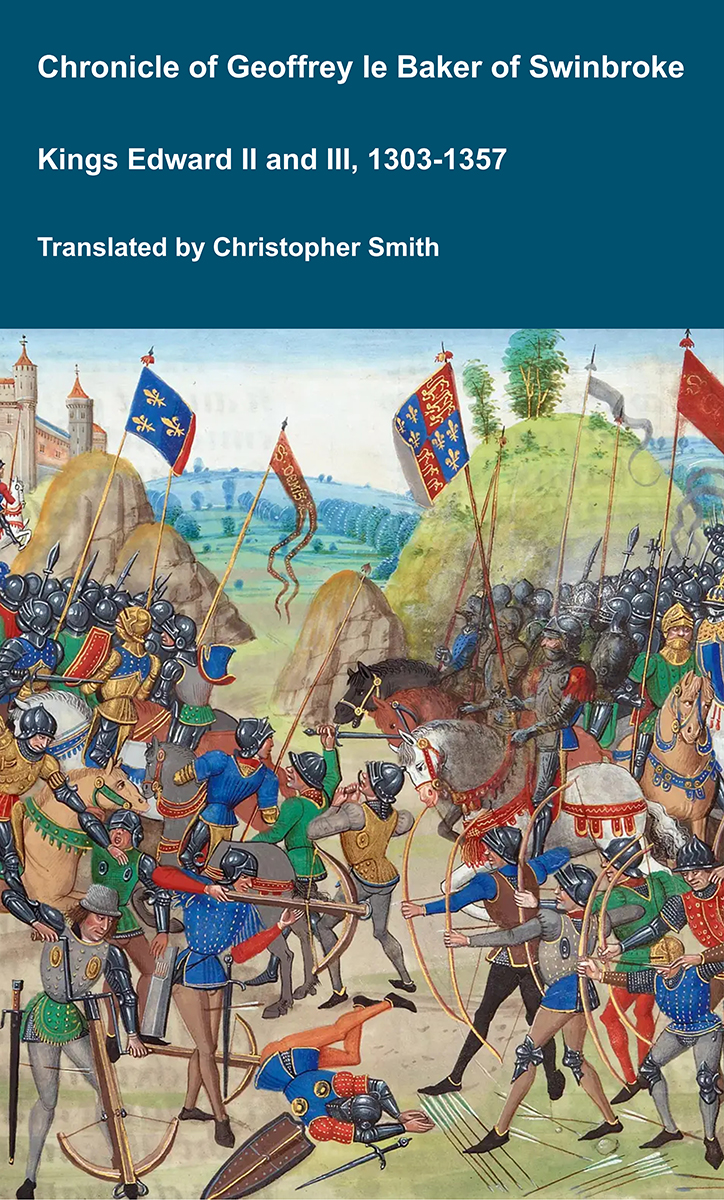
Chronicle of Geoffrey le Baker of Swinbroke
Baker was a secular clerk from Swinbroke, now Swinbrook, an Oxfordshire village two miles east of Burford. His Chronicle describes the events of the period 1303-1356: Gaveston, Bannockburn, Boroughbridge, the murder of King Edward II, the Scottish Wars, Sluys, Crécy, the Black Death, Winchelsea and Poitiers. To quote Herbert Bruce 'it possesses a vigorous and characteristic style, and its value for particular events between 1303 and 1356 has been recognised by its editor and by subsequent writers'. The book provides remarkable detail about the events it describes. Baker's text has been augmented with hundreds of notes, including extracts from other contemporary chronicles, such as the Annales Londonienses, Annales Paulini, Murimuth, Lanercost, Avesbury, Guisborough and Froissart to enrich the reader's understanding. The translation takes as its source the 'Chronicon Galfridi le Baker de Swynebroke' published in 1889, edited by Edward Maunde Thompson.
Available at Amazon in eBook and Paperback format.
The Times. 13th February 1867. DEATH OF LORD FEVERSHAM. We regret to announce the death, after a short illness, of Lord Feversham [deceased], which occurred on Monday night at his residence in Great Cumberland Street. The late William Duncombe Baron Feversham, of Dancombe Park, County York, in the Peerage of the United Kingdom, was son of Charles first Lord by his marriage with Lady Charlotte Legge, only daughter of William, second Earl of Dartmouth. He was born on the 14th of January, 1798, so that he was in his 69th year. The deceased nobleman was educted at Eton [Map], and afterwards proceeded to Christ Church, Oxford. He married l8th of December, 1823, Lady Louisa Stewart [aged 63], third daughter of George, eighth Earl of Galloway, by whom,who survives his Lordship, he leaves issue the Hon. Wiliam E. Duncombe [aged 38], M.P., and Captain the Hon. Cecil Duncombe, of the 1st Life Guards, and three daughters, the Hon Jane, married l1th of April, 1849, to the Hon. Laurence Parsons; the Hon. Gertrude [aged 39], married 27th of November 1&19, to Mr. Francis Horatio Fitzroy [aged 43]; and the Hon. Helen, married 18th of July, 1855, to Mr. William Becket Denison. Previously to his accession to the peerage on the death of his father in July, 1841, he represented Yorkshire in the House of Commons from 1826 to 1830. At the general election in 1831 he was unsuceessful candidate for the coenty, but was returned for the North Riding in the following year, which he continued to represent till 18S1. He voted against the Reforzn Bill of 1832, and was uniformly in favour of agricultural protection. He took great interest in agricultural pursuit, And was a distinguished member of the Royal Agricultural Society, of which he was one of the trustees The deceased noblemna is succeded by his eldest son, the Hon. Wiliam Ernest Duncombe, above mentioned, who was born January 28 1829, and married, August 7, 1851, Mabel Violet [aged 33], second daughter of the late Right Hon. Sir James Graham, of Netherby. He was M.P. for East Retford from February, 1852, to 1857 and elected for the North Riding of Yorkshire inI 1859, anA was also returned at the last general election After a sharp contest, being second on the poll. He is Captain of the Yorkshire Yeomianry (Hussars) Cavalry, and Lientenent Colonel of the 2d North Riding like his deceased father, he is a supporter of Lord Derby, but in favour of such a measure of Parliamentary Reforms would give no undue preponderance to any one class, but would ensure to a fair distribution of political privileges.


On 13th February 1884 George Godolphin Osborne 10th Duke Leeds [aged 21] and Katherine Frances Lambton Duchess Leeds [aged 21] were married. She the daughter of George Frederick D'Arcy Lambton 2nd Earl Durham and Beatrix Frances Hamilton Countess Durham. He the son of George Godolphin Osborne 9th Duke Leeds [aged 55] and Fanny Georgiana Pitt-Rivers Duchess Leeds [aged 47]. They were fourth cousin once removed. She a great x 5 granddaughter of King Charles II of England Scotland and Ireland.
On 13th February 1887 Eileen Wellesley was born to Arthur Charles Wellesley 4th Duke Wellington [aged 37] and Kathleen Emily Bulkeley Williams Duchess Wellington [aged 38].
On 13th February 1891 Grant Wood was born. The son of Francis Maryville Wood and Hattie DeEtte Weaver.

On 13th February 1904 Princess Irene Glücksburg was born to Constantine I King Greece [aged 35] and Sophia Hohenzollern Queen Consort Greece [aged 33]. He a great grandson of Queen Victoria of the United Kingdom.
On 13th February 1907 Gerald Hugh Grosvenor 4th Duke Westminster was born to Hugh William Grosvenor [aged 22] and Mabel Florence Mary Creighton.

The Times. 13th February 1915. Death of Sir Edward Antrobus [deceased]
Owner and Guardian of Stonehenge.
Colonel Sir Edward Antrobus, Bt., died at Amesbury Abbey [Map], on Thursday afternoon at the age of 67. He is succeeded by his only remaining brother, Mr. Cosmo Gordon Antrobus [aged 55]. His only son [Edmund Antrobus], who was a Lieutenant in the Grenadier Guards, was killed in action on October 24 last.
Sir Edmund Antrobus will be remembered as the owner of the famous Stonehenge, on Salisbury Plain, which was included in the Amesbury Abbey estate of about 8000 acres. After consulting with the Society of Antiquaries, the Society of Ancient Monuments, and the Wilts Archaeological Society, Sir Edmund determined to enclose the monument by wire fencing, and the action led to litigation in the High Court. In April, 1905, the Solicitor-General claimed an order against the owner to remove the fencing, and an injunction to restrain him from erecting such fencing. The claim was based on two grounds - (1) That Stonehenge was a national monument of great interest, and was subject to trust for its freer use by the public: and (2) that there were public roads running up to and through Stonehenge, and that those roads had been blocked by the defendant's fencing. Sir Edmund produced title deeds showing the purchase in fee by this great-great-uncle from the trustees of the Duke of Queensbury, some seventy years before, and an absolute fee simple title in himself. Mr. Justice Farwell, in giving judgement for Sir Edmund, observed that it was only fair to the defendant to say that he was not acting capriciously, but on expert advice, the preservation of the stones.
Sir Edmund, who was the fourth baromet, took a large share in local administration. He was an alderman of the Wilts County Council, a justice of the peace, a member of the Amesbury Rural District Council, and served on many local committees. A few years ago his intention of selling the Amesbury Abbey estate was announced, but the sale was never effected.
Sir Edmund Antrotus was formerly colonel of the 3rd Battalion of the Grenadier Guards, and served in the Suakin Expedition of 1885. He married, in 1886, Florence [aged 59], daughter of the late Mr. J. A. Sartoris, of Hopsford Hall, Coventry.
Cosmo Gordon Antrobus 5th Baronet: On 22nd October 1859 he was born to Edmund Antrobus 3rd Baronet and Marianne Georgiana Dashwood Lady Antrobus. On 11th February 1915 Edmund Antrobus 4th Baronet died at his home Amesbury Abbey, Wiltshire [Map]. His brother Cosmo succeeded 5th Baronet Antrobus of Antrobus in Cheshire, and inherited the Amesbury Abbey, Wiltshire [Map] estate including Stonehenge. On 21st September 1915 Cosmo Gordon Antrobus 5th Baronet sold Stonehenge at auction. It was bought by Cecil Herbert Edward Chubb 1st Baronet; see Archaeologia Cambrensis Series 6 Volume 15 1905 Stonehenge. On 29th June 1939 Cosmo Gordon Antrobus 5th Baronet died. His first cousin Philip succeeded 6th Baronet Antrobus of Antrobus in Cheshire.

Daily Telegraph Obituary, 13th February 1917, by Sir Claude Phillips. DEATH OF MR. J.W. WATERHOUSE, R.A. SPECIAL MEMOIR By SIR CLAUDE PHILLIPS. We regret to announce the death of Mr John William Waterhouse [deceased], R.A., who passed away on Saturday, after a long illness, in his 68th year. There are painters who are known as painters' painters. In other words, there are artists whose vocation would seem to lie in catering for the great public, and others who use palette and brush from sheer delight in their handicrafts. A modern of the moderns, Mr Waterhouse may be said to have spent his life in experimenting in and perfecting himself in his technique. An eclectic and a devout believer in "art for art's sake", the late Academician passed through many stages in the drastic business of educating himself for his life task. A symbolist, to start with, it was impossible for a painter of Mr Waterhouse's susceptibilities not to be caught in the great naturalistic wave which swept Europe in the early eighties. Thus we find him for a considerable number of years going direct to nature for the inspiration, while, like many other realists, he went the length of posing his models out of doors in the brilliant sunlight. Plein air was the gospel of the movement, and it is certain that Mr Waterhouse succeeded in giving his canvases those vibrating, atmospheric qualities which were the aim of the new prismatic school. It is true that the critics have sought to establish the fact that Mr Waterhouse was at the time influenced by Alma-Tadema. The fact that he interested himself largely in classic subjects no doubt gave colour to the idea that he was at heart a classicist. But this was far from being the case. With the late Academician the manner and not the matter was the thing. For whether he was depicting Miranda, Diogenes, or St Eulalia, it was a colour problem that the artist envisaged his subject. Who, for instance, does not recall the exquisite harmonies of the picture called "The Magic Circle", where the subtle juxtaposition of mauves and blues recall the happiest inspirations in Persian art? And a dozen other instances might be cited. It was as no cold formalist that Mr Waterhouse envisaged scenes historical. The glamour of the born colourist is to be traced on nearly every canvas to which he put his hand. John William Waterhouse was born in Rome in the year 1849, and was fortunate in possessing a father who not only devoted his life to art, but encouraged his son to follow his own profession. Thus the boy had leisure to spend his days studying the art treasures accumulated with such profusion in London. The National Gallery, the British Museum, and South Kensington became the happy haunts of a student who devised the most original modes of familiarising himself with the work of the great masters. For not only did he model from the antique (it was modelling rather that painting that the youngster essayed in those early days), but established a system of drawing from memory, which he believed to be of great assistance to him in his after-work. Thus, the picture closely scrutinised and examined in the National Gallery by day would be reproduced from memory at night, a valuable aid to training the retentive qualities of the artistic mind. It was while he was thus engaged in sitting at the feet of the old masters that Mr Waterhouse conceived the idea of painting that first series of allegorical subjects which dwelt with the mysteries of human existence. The artist, indeed, was only twenty-five when he exhibited in the Royal Academy the important picture called "Sleep and his half-brother, Death" an allegorical work which attracted a good deal of attention in the spring exhibition of 1874. It was a year later that Mr Waterhouse sent "Miranda" to Burlington House, when he also contributed the canvas called "Whispered Words". It was not, however, till the year 1876 that Mr Waterhouse was honoured to the extent of being placed on the line. This coveted privilege was accorded the picture called "After the Dance";, since when the later artist may be said to have been invariably well hung. For, apart from the brilliance of his technique, his shapely way of laying on paint (a subject we have already touched upon), many of Mr Waterhouse's themes were calculated to attract popular attention. Such, for instance, was the work of 1875, called "A Sick Child Brought into the Temple of Aesculaplus", and such, again, was undoubtedly the historical picture named "The Remorse of Nero after his Mother's Death". A canvas called "The Tibia" was exhibited at Burlington House the same year, while the painter completed the work entitled "La Favorita" the following year. ELECTED TO THE ACADEMY Passing to the year 1882, we find Mr Waterhouse engaged on a "Diogenes", while the ensuing season he exhibited the most important picture he had as yet essayed, "The Favourites of the Emperor Honorius". Another canvas, called "The Bubbles", was also seen at Burlington House the same spring, while two years later the artist was elected as Associate of the Royal Academy. In truth Mr Waterhouse would seem to have been working at white heat at this particular time, for we find him tackling in succession such difficult subjects as "Consulting the Oracle" (the oracle Mr Waterhouse presents us with is the far-famed human head of the Teraph), "St Eulalia" and "The Magic Circle", already alluded to. In the canvas called "St Eulalia" the painter shows us the saint lying in the forum, covered with "the miraculous fall of snow", which Prudentius describes as "shrouding the body after her martyrdom." After such a theme the subjects of Ulysses and Circe would naturally present no difficulties to an artist, and accordingly we find Mr Waterhouse busying himself in 1891 with the canvas entitled "Ulysses and the Sirens". In natural sequence Circe followed, the painter breaking away from the traditional representation of the enchantress turning men into swine to the less hackneyed episode of "Circe Poisoning the Sea". A Danae was the output of the same year, the two pictures "A Hamadryad" and "La Belle Dame sans Merci" following in 1893, a year Mr Waterhouse also exhibited a canvas called "A Naiad" at the New Gallery. "The Lady of Shalott" occupied the painter's attention next, and this subject, with the picture called "Field Flowers" represented his labours for 1894, yet it was neither with Tennyson's nor Keats' mystic heroine that Mr Waterhouse reached the high-water mark of his popularity. This was attained with his "St Cecilia" in the year 1895, when the Associate was raised to full Academic honours. "Pandora", another notable success, was the artist's next venture, and in 1897 we find the Academician exhibiting "Hylas and the Nymphs" at Burlington House, and picture entitled "Mariana in the South" at the New Gallery. It was to the last-named gallery that Mr Waterhouse sent a "Juliet" in the succeeding spring, his Royal Academy exhibits being two classic themes, namely "Flora and the Zephyrs" and "Ariadne". Of Mr Waterhouse's subsequent work it is hardly necessary to speak. His style, settling in the early nineties into the more or less definite groove that we have all come to know it by, had not materially altered since. Hence we need no more than refer to Mr Waterhouse's diploma picture "A Mermaid", his "Nymphs finding the Head of Orpheus" (exhibited in 1901), or "Echo and Narcissus", given to the world the following year. Other classic subjects include "Psyche opening the Golden Box", "Boreas", and "Psyche opening the Door into Cupid's Garden". Of the few portraits executed by the late Academician we have left ourselves small space to speak. But they were not the happiest inspirations emanating from his hand. Of the half-dozen limned by the painter in late years, Mrs Schreiber, Miss Molly Rickman and Mrs Charles Newton Robinson are perhaps most familiar to the public.
Birmingham Daily Post Obituary. 13th February 1917. MR. J. W. WATERHOUSE, R.A. Mr. John William Waterhouse [deceased] died at his house in St. John's Wood on Saturday, after a long illness, in his sixty-eighth year. SPECIAL MEMOIR The careers of few artists have been marked by so complete a change of aim as that of Mr. Waterhouse. He began, broadly speaking, as a painter of historical pictures and "genre" subjects, in both of which there was often to be found a strong dramatic and even tragic note. He ended in a series of works in which his chief concern was a suave tranquility and decorative effect. To the first, dramatic, period in which the story was regarded as of high importance belong "The Favourites of the Emperor Honorius" (1883), "Consulting the Oracle" (1884), and "St. Eulalia" (1885), this last, perhaps, his sole conscious effort at a "tour de force" in draughtmanship by the wonderful fore-shortening of the dead maiden's body. These three pictures did much to win him his Associateship in 1885, after a strenuous exhibiting career of fifteen years. Then followed "The Magic Circle" (1886), that striking presentation of a witch's spells, and "Mariamne", wife of Herod the Great, going to her execution, a most noble and queenly figure (1887). The pictures of this first period, harmonious in colour, are his nearest approach to the academic in painting, but in truth an academic painter Mr. Waterhouse never was. That mere surface finish to attain which the genuine academic will risk truth of tone and freshness of colour was ?? ?? Waterhouse desired . His subjects might occasionally confound him with the academic class, but his paintings never. It was always suggestive, never sought to worry out all the folds and convolutions of a drapery, the vast articulation of a tree, the unnumbered petals of a flower, for mere local completeness's sake at the expense of unity. Yet with this comparative freedom of execution, or rather contempt of tight finish, Waterhouse contrived to give an appearance of reality, truth to nature, and the freshness of first intention which no amount of merely conscientious labour can achieve. He was a realist in so far that he was not content with elaborate colour schemes divorced from nature such as may be found in the work of Rossetti and Burne-Jones. No old-master-like brown tinge pervades his pictures. The colour of his flesh painting has ranked for years with the very best; some, indeed, would rank him as the protagonist in this respect amongst his contemporaries. But realism with Waterhouse was never carried to its ruthless conclusion. He understood that a picture should be a decorative whole, and that minor truths of nature may fairly be subordinated to this great end. So in that very original "Ulysees and the Sirens" (1891), which England has lost to the Melbourne Gallery, there is not a cast shadow to be seen, yet such is the intensity of colour on ship and figures, rocks, and deep toned sea that the impression of Mediterranean sunlight is triumphantly attained. Waterhouse had a receptive mind as regards the work of other painters—he had early leanings towards the sterling art of Alma Tadema—but he never allowed his admiration of other men's work to swamp his own individuality. His style is his own, and he has had many young imitators. The year 1886 was important for him, as then he first saw the early Pre-Raphaelite pictures of Millais. They did not make him a Pre-Raphaelite, but their themes and feeling caused him to divide his interests in future between the classical subjects to which he was always faithful and those derived from Shakespeare and the English nineteenth century poets such as Keats and Tennyson. Though, too, he was wise enough not to attempt the meticulous Pre-Raphaelite delineation of Nature—a quest of the impossible—he found in their wonderful efforts at complete realisation direct from Nature confirmation in his belief that there is no reason why the treatment of the most poetical themes of any period should be divorced from natural truth. Waterhouse was the most virile draughtsman, and he painted with a vigorous full brush. There was no softening of angles at the expense of truth; there was always accent, but never any ostentation or cleverness in brushwork. His skill in two matters of details may be observed in all his pictures, the beautifully expressive, and apparently effortless, drawing of the hands, and the tender modelling of the turn of the brow toward the eye-sockets which gives a charming spirituality to so many of his heads. After 1892 the dramatic leaning may be said to have ceased, and henceforward Mr. Waterhouse aimed at a decorative serenity and a fairness of colour completely in harmony with his often very personal renderings of poetical motives, be they from his long-loved Homeric tales, and classical myths or from the later English poets of his choice. Thanks to the early insight of the late Sir Henry Tate, Waterhouse is well represented in the National Gallery of British Art, while many other public collections contain examples of one of the best painters and colourists our British school can show. F.S.R.
On 13th February 1947 John Ian Robert Russell 13th Duke Bedford [aged 29] and Lydia Yarde-Buller Duchess Bedford [aged 29] were married. She the daughter of John Yarde-Buller 3rd Baron Churston and Jessie Smither aka Denise Orme Duchess Leinster [aged 61]. He the son of Hastings William Russell 12th Duke Bedford [aged 58] and Louisa Crommelin Roberta Jowitt Whitwell Duchess Bedford.
Jean de Waurin's Chronicle of England Volume 6 Books 3-6: The Wars of the Roses
Jean de Waurin was a French Chronicler, from the Artois region, who was born around 1400, and died around 1474. Waurin’s Chronicle of England, Volume 6, covering the period 1450 to 1471, from which we have selected and translated Chapters relating to the Wars of the Roses, provides a vivid, original, contemporary description of key events some of which he witnessed first-hand, some of which he was told by the key people involved with whom Waurin had a personal relationship.
Available at Amazon in eBook and Paperback format.
On 13th February 1457 Mary Valois Duchess Burgundy was born to Charles "Bold" Valois Duke Burgundy [aged 23] and Isabella Bourbon [aged 21]. She a great x 3 granddaughter of King Edward III of England. Coefficient of inbreeding 7.47%. She married 18th August 1477 her second cousin Maximilian Habsburg I Holy Roman Emperor, son of Frederick "Peaceful or Fat" Habsburg III Holy Roman Emperor and Eleanor Aviz Holy Roman Empress, and had issue.
On 13th February 1539 Elizabeth Hesse Electress Palatine was born to Landgrave Philip I of Hesse [aged 34] and Christine of Saxony [aged 33]. She married 8th July 1560 Louis VI Elector Palatine.

On 13th February 1588 Anne West was born to Thomas West 2nd Baron De La Warr [aged 32] and Anne Knollys Baroness De La Warr [aged 32]. She married (1) Christopher Swale and had issue (2) Leonard Lechford (3) 30th August 1608 John Pellatt.
On 13th February 1602 Landgrave William V of Hesse-Kassel was born to Landgrave Maurice of Hesse-Kassel [aged 29].
On 13th February 1645 Vere Fane 4th Earl of Westmoreland was born to Mildmay Fane 2nd Earl of Westmoreland [aged 43] and Mary Vere Countess of Westmoreland [aged 37] at Lamport Hall, Buckinghamshire. He married 13th July 1671 Rachel Bence Countess of Westmoreland and had issue.
On 13th February 1652 August Oldenburg was born to August Philipp Oldenburg I Duke Schleswig-Holstein-Sonderburg-Beck [aged 39] and Marie Sibylle Nassau Saarbrücken Duchess Schleswig-Holstein-Sonderburg-Beck.
On 13th February 1686 John Churchill was born to John Churchill 1st Duke of Marlborough [aged 35].
On 13th February 1698 Charles Fitzroy was born to Charles Fitzroy 1st Duke Southampton 2nd Duke Cleveland [aged 35] and Anne Pulteney Duchess Southampton Duchess of Cleveland [aged 34]. He a grandson of King Charles II of England Scotland and Ireland.
On 13th February 1698 Lieutenant-Colonel John Johnstone of Netherwood was born to William Johnstone 2nd Baronet [aged 35]. He married 1st December 1731 Charlotte van Lore van den Bempdé Marchioness of Annandale.

On 13th February 1751 Richard Worsley 7th Baronet was born to Thomas Worsley 6th Baronet [aged 24] at Appuldurcombe House, Isle of Wight. He married 20th September 1775 Seymour Dorothy Fleming, daughter of John Fleming 1st Baronet.
This is a translation of the 'Memoires of Jacques du Clercq', published in 1823 in two volumes, edited by Frederic, Baron de Reissenberg. In his introduction Reissenberg writes: 'Jacques du Clercq tells us that he was born in 1424, and that he was a licentiate in law and a counsellor to Philip the Good, Duke of Burgundy, in the castellany of Douai, Lille, and Orchies. It appears that he established his residence at Arras. In 1446, he married the daughter of Baldwin de la Lacherie, a gentleman who lived in Lille. We read in the fifth book of his Memoirs that his father, also named Jacques du Clercq, had married a lady of the Le Camelin family, from Compiègne. His ancestors, always attached to the counts of Flanders, had constantly served them, whether in their councils or in their armies.' The Memoires cover a period of nineteen years beginning in in 1448, ending in in 1467. It appears that the author had intended to extend the Memoirs beyond that date; no doubt illness or death prevented him from carrying out this plan. As Reissenberg writes the 'merit of this work lies in the simplicity of its narrative, in its tone of good faith, and in a certain air of frankness which naturally wins the reader’s confidence.' Du Clercq ranges from events of national and international importance, including events of the Wars of the Roses in England, to simple, everyday local events such as marriages, robberies, murders, trials and deaths, including that of his own father in Book 5; one of his last entries.
Available at Amazon in eBook and Paperback format.

On 13th February 1774 Robert Curzon Baron Zouche was born to Assheton Curzon 1st Viscount Curzon [aged 44] and Dorothy Grosvenor Baroness Curzon. He married 1808 Harriet Anne Bishopp 13th Baroness Zouche, daughter of Cecil Bishopp 12th Baron Zouche, and had issue.
On 13th February 1783 Hugh Fortescue 2nd Earl Fortescue was born to Hugh Fortescue 1st Earl Fortescue [aged 29] and Hester Granville Countess Fortescue [aged 17]. He married (1) 4th July 1817 his fourth cousin Susan Ryder, daughter of Dudley Ryder 1st Earl of Harrowby and Susanna Leveson-Gower Countess Harrowby Lincolnshire, and had issue (2) 1841 Elizabeth Geale Countess Fortescue.
On 13th February 1794 John Rous 2nd Earl Stradbroke was born to John Rous 1st Earl Stradbroke [aged 43] and Charlotte Maria Whittaker Countess of Stradbroke [aged 24]. He married 26th May 1857 Augusta Musgrave Countess Stradbrooke, daughter of Christopher Musgrave 9th Baronet, and had issue.
On 13th February 1803 Samuel Mitchell was born to Samuel Mitchell of Sheffield and Whiteley Wood and Elizabeth Brightmore. He married 1829 Eliza Riddell.
On 13th February 1820 Augustus Anthony Frederick Irby was born to George Irby 3rd Baron Boston [aged 42] and Rachel Ives Drake Baroness Boston [aged 37].
On 13th February 1829 Henry Lygon 5th Earl Beauchamp was born to Henry Beauchamp Lygon 4th Earl Beauchamp [aged 45] and Susan Caroline Eliot [aged 27].
On 13th February 1842 Beatrice Violet Graham was born to James Graham 4th Duke Montrose [aged 42] and Caroline Agnes Horsley Beresford "Mr Manton" Duchess Montrose [aged 24]. She married 16th December 1863 her sixth cousin Algernon Greville-Nugent 2nd Baron Greville, son of Fulke Southwell Greville-Nugent 1st Baron Greville and Rosa Emily Nugent Baroness Greville, and had issue.
On 13th February 1847 Frederick Archibald Vaughan Campbell 3rd Earl Cawdor was born to John Frederick Vaughan Campbell 2nd Earl Cawdor [aged 29] and Sarah Mary Compton Cavendish Countess Cawdor [aged 33]. He married 16th September 1868 his half fourth cousin twice removed Edith Georgiana Turnor Countess Cawdor and had issue.
On 13th February 1849 Randolph Henry Spencer-Churchill was born to John Winston Spencer-Churchill 7th Duke of Marlborough [aged 26] and Frances Anne Emily Vane Duchess of Marlborough [aged 26] at 3 Wilton Terrace, Belgravia. He married 15th April 1874 Jenny Jerome and had issue.
On 13th February 1854 Flora Paulyna Hetty Barbara Clifton Duchess Norfolk was born to Charles Frederick Abney-Hastings 1st Baron Donington [aged 31] and Edith Maud Rawdon-Hastings 10th Countess Loudon [aged 20]. She married 1877 Henry Fitzalan Howard 15th Duke of Norfolk, son of Henry Granville Fitzalan 14th Duke of Norfolk and Augusta Mary Minna Catherine Lyons Duchess Norfolk, and had issue.
On 13th February 1859 William Strang was born at Dumbarton, the son of Peter Strang, a builder, and was educated at the Dumbarton Academy.
Abbot John Whethamstede’s Chronicle of the Abbey of St Albans
Abbot John Whethamstede's Register aka Chronicle of his second term at the Abbey of St Albans, 1451-1461, is a remarkable text that describes his first-hand experience of the beginning of the Wars of the Roses including the First and Second Battles of St Albans, 1455 and 1461, respectively, their cause, and their consequences, not least on the Abbey itself. His text also includes Loveday, Blore Heath, Northampton, the Act of Accord, Wakefield, and Towton, and ends with the Coronation of King Edward IV. In addition to the events of the Wars of the Roses, Abbot John, or his scribes who wrote the Chronicle, include details in the life of the Abbey such as charters, letters, land exchanges, visits by legates, and disputes, which provide a rich insight into the day-to-day life of the Abbey, and the challenges faced by its Abbot.
Available at Amazon in eBook and Paperback format.

On 13th February 1866 Cecil Victoria Kerr Baroness Montagu of Beaulieu was born to Schomberg Henry Kerr Kerr 9th Marquess Lothian [aged 32] and Victoria Alexandrina Montagu-Douglas-Scott Marchioness Lothian [aged 21]. She married 4th June 1889 her first cousin John Douglas-Scott-Montagu 2nd Baron Montagu of Beaulieu, son of Henry John Montagu-Douglas-Scott 1st Baron Montagu Beaulieu and Cecily Susan Stuart-Wortley-Mackenzie Baroness Montagu, and had issue.
On 13th February 1887 Eileen Wellesley was born to Arthur Charles Wellesley 4th Duke Wellington [aged 37] and Kathleen Emily Bulkeley Williams Duchess Wellington [aged 38].
On 13th February 1891 Grant Wood was born. The son of Francis Maryville Wood and Hattie DeEtte Weaver.
On 13th February 1893 Richard Tihel Leighton 10th Baronet was born to Bryan Baldwin Mawddwy Leighton 9th Baronet [aged 25].
On 13th February 1894 David John Colville 1st Baron Clydesmuir was born.
On 13th February 1898 Neville Arthur Pearson 2nd Baronet was born to Cyril Arthur Pearson 1st Baronet [aged 31].
On 13th February 1898 Gilbert George Benson Boileau 6th Baronet was born to Francis James Boileau 5th Baronet [aged 26].
On 13th February 1904 Princess Irene Glücksburg was born to Constantine I King Greece [aged 35] and Sophia Hohenzollern Queen Consort Greece [aged 33]. He a great grandson of Queen Victoria of the United Kingdom.
On 13th February 1907 Gerald Hugh Grosvenor 4th Duke Westminster was born to Hugh William Grosvenor [aged 22] and Mabel Florence Mary Creighton.
On 13th February 1914 William Gerald Charles Cadogan 7th Earl Cadogan was born to Gerald Oakley Cadogan 6th Earl Cadogan [aged 44]. He married 11th June 1936 Primrose Lilian Yarde-Buller Countess Cadogan, daughter of John Yarde-Buller 3rd Baron Churston and Jessie Smither aka Denise Orme Duchess Leinster, and had issue.
On 13th February 1915 Roderic Pratt was born to John Pratt 4th Marquess Camden [aged 43] and Joan Marion Neville Marchioness Camden [aged 38].


Anne Boleyn. Her Life as told by Lancelot de Carle's 1536 Letter.
In 1536, two weeks after the execution of Anne Boleyn, her brother George and four others, Lancelot du Carle, wrote an extraordinary letter that described Anne's life, and her trial and execution, to which he was a witness. This book presents a new translation of that letter, with additional material from other contemporary sources such as Letters, Hall's and Wriothesley's Chronicles, the pamphlets of Wynkyn the Worde, the Memorial of George Constantyne, the Portuguese Letter and the Baga de Secrets, all of which are provided in Appendices.
Available at Amazon in eBook and Paperback format.
On 13th February 1925 Caroline Cecily Douglas-Scott-Montagu was born to John Douglas-Scott-Montagu 2nd Baron Montagu of Beaulieu [aged 58] and Alice Pearl Crake Baroness Montagu [aged 30]. She married 15th February 1950 George Grainger Weston.
On 13th February 1348 William "Rich" Dampierre I Marquis Namur [aged 24] and Jeanne Beaumont Count Soissons, Blois, Chatillon and Namur [aged 25] were married. He by marriage Marquis Namur. She the daughter of John Beaumont Count Soissons [aged 60] and Margaret Nesle Countess Soissons [aged 43]. He the son of John Dampierre I Marquis Namur and Marie Artois. They were second cousins. He a great x 2 grandson of King Henry III of England. She a great x 5 granddaughter of King Stephen I England.
On 13th February 1585 William Russell 1st Baron Russell [aged 25] and Elizabeth Long Baroness Russel Thornhaugh were married at Watford, Hertfordshire. He the son of Francis Russell 2nd Earl Bedford [aged 58] and Margaret St John Countess Bedford.
On 13th February 1598 John Vaughan 1st Earl Carbery [aged 23] and Margaret Meyrick [aged 23] were married.
On 13th February 1711 James Berkeley 3rd Earl Berkeley [aged 31] and Louisa Lennox Countess Berkeley [aged 16] were married. She by marriage Countess Berkeley. She the daughter of Charles Lennox 1st Duke Richmond [aged 38] and Anne Brudenell Duchess Richmond [aged 40]. He the son of Charles Berkeley 2nd Earl Berkeley and Elizabeth Noel Countess Berkeley [aged 57]. They were sixth cousins. She a granddaughter of King Charles II of England Scotland and Ireland.
On 13th February 1794 James Henry Blake 3rd Baronet [aged 24] and Louisa Elizabeth Gage [aged 28] were married at St George's Church, Hanover Square.

On 13th February 1808 Charles Cockerell 1st Baronet [aged 52] and Harriet Rushout [aged 38] were married.

On 13th February 1809 William Eliot 2nd Earl St Germans [aged 41] and Letitia à Court were married at Heytesbury, Wiltshire [Map]. She died eleven months later.
On 13th February 1884 George Godolphin Osborne 10th Duke Leeds [aged 21] and Katherine Frances Lambton Duchess Leeds [aged 21] were married. She the daughter of George Frederick D'Arcy Lambton 2nd Earl Durham and Beatrix Frances Hamilton Countess Durham. He the son of George Godolphin Osborne 9th Duke Leeds [aged 55] and Fanny Georgiana Pitt-Rivers Duchess Leeds [aged 47]. They were fourth cousin once removed. She a great x 5 granddaughter of King Charles II of England Scotland and Ireland.
On 13th February 1947 John Ian Robert Russell 13th Duke Bedford [aged 29] and Lydia Yarde-Buller Duchess Bedford [aged 29] were married. She the daughter of John Yarde-Buller 3rd Baron Churston and Jessie Smither aka Denise Orme Duchess Leinster [aged 61]. He the son of Hastings William Russell 12th Duke Bedford [aged 58] and Louisa Crommelin Roberta Jowitt Whitwell Duchess Bedford.
Abbot John Whethamstede’s Chronicle of the Abbey of St Albans
Abbot John Whethamstede's Register aka Chronicle of his second term at the Abbey of St Albans, 1451-1461, is a remarkable text that describes his first-hand experience of the beginning of the Wars of the Roses including the First and Second Battles of St Albans, 1455 and 1461, respectively, their cause, and their consequences, not least on the Abbey itself. His text also includes Loveday, Blore Heath, Northampton, the Act of Accord, Wakefield, and Towton, and ends with the Coronation of King Edward IV. In addition to the events of the Wars of the Roses, Abbot John, or his scribes who wrote the Chronicle, include details in the life of the Abbey such as charters, letters, land exchanges, visits by legates, and disputes, which provide a rich insight into the day-to-day life of the Abbey, and the challenges faced by its Abbot.
Available at Amazon in eBook and Paperback format.
On 13th February 999 Archbishop Ethelgar died.
On 13th February 1067 Geoffrey Arles 2nd Count Provence Count Forcalquier died. His niece Adelaide succeeded Countess Forcalquier.
On 13th February 1131 Elizabeth Capet Countess Leicester, Meulan and Surrey [aged 46] died.
On 13th February 1214 Theobald of Bar I Count of Bar [aged 54] died. His son Henry succeeded II Count Bar.
On 13th February 1389 Bishop Adam de Houghton died.
On 13th February 1468 Juana Enríquez Queen Consort Aragon [aged 43] died at Tarragona.
On 13th February 1542 Queen Catherine Howard [aged 19] and Jane Parker Viscountess Rochford [aged 37] were beheaded at Tower Green [Map]. Henry Howard Earl of Surrey [aged 26] attended. They were both buried at St Peter ad Vincula Church, Tower of London [Map].
Mary Boleyn [aged 43] was the heir of Jane Parker Viscountess Rochford being the sister of her deceased husband George Boleyn Viscount Rochford.
On 13th February 1602 Dean Alexander Nowell [aged 85] died.
On 13th February 1608 Bess of Hardwick [aged 81] died. She was buried in All Saints Church, Derby [Map]. Her monument, which she had constructed before her death, was designed by Robert Smythson [aged 38]. She left nothing in her will for her 'bad son' Henry Cavendish [aged 57]. He did, however, inherit Chatsworth House, Derbyshire [Map] which he subsequently sold in 1609 to his brother William Cavendish 1st Earl Devonshire [aged 55] for £10,000.
The date of her funeral somewhat complicated. Rawsons 1910 book "Bess of Hardwick and her Circle" quotes Simpson's National Records of Derby for 1608: "The old Countess of Shrewsbury died about Candlemas this year, whose funeral was about Holy Thursday. A great frost this year. The witches of Bakewell hanged." Holy Thursday, the Feast of the Ascension, is thirty-nine days after Easter. Easter in 1608 was on the 6th of April, putting Holy Thursday on the 15th of May.
Ethel Carleton Williams "Bess of Hardwick", 1959, has a note: "9. The date of Bess of Hardwick's funeral is uncertain. The date on the coffin plate is said to be February 1608 (Cox and Hope, Chronicles of the Collegiate Church of All Saints, Derby), but on 31 March 1608 Gilbert Talbot wrote to Robert Cecil, excusing himself for not attending St George's Feast on the ground that his mother-in-law's funeral was to be on St George's Day (23 April). Later, on 3rd of April, the Earl of Arundel wrote to Gilbert (his father-in-law), 'the funeral at Derby is appointed to be either on the fourth or fifth of May, which Garter yet knoweth not, but rather thinketh on the fourth because the other is a holy day'".
Neither of which provide a definite answer. The former being around the 15th of May, the latter 'rather thinketh' the 4th of May. Are there any other contemporary sources available?
On 13th February 1633 James Home 2nd Earl of Home [aged 26] died. His half fifth cousin once removed James [aged 17] succeeded 3rd Earl of Home. Jean Douglas Countess Home by marriage Countess of Home.
On 13th February 1639 Katherine Anderson Lady Dunham Massey [aged 71] died at Bowdon, Altrincham, Cheshire.
On 13th February 1656 Ferdinando Hastings 6th Earl Huntingdon [aged 48] died. His son Theophilus [aged 5] succeeded 7th Earl Huntingdon, 12th Baron Botreaux, 11th Baron Hungerford, 9th Baron Moleyns and 9th Baron Hastings.
Anne Boleyn. Her Life as told by Lancelot de Carle's 1536 Letter.
In 1536, two weeks after the execution of Anne Boleyn, her brother George and four others, Lancelot du Carle, wrote an extraordinary letter that described Anne's life, and her trial and execution, to which he was a witness. This book presents a new translation of that letter, with additional material from other contemporary sources such as Letters, Hall's and Wriothesley's Chronicles, the pamphlets of Wynkyn the Worde, the Memorial of George Constantyne, the Portuguese Letter and the Baga de Secrets, all of which are provided in Appendices.
Available at Amazon in eBook and Paperback format.
On 13th February 1660 Charles Gustav X King Sweden [aged 37] died. His son Charles [aged 4] succeeded XI King Sweden.
On 13th February 1662 Princess Elizabeth Stewart Queen Bohemia [aged 65] died of pneumonia shortly after midnight. She was buried at Westminster Abbey [Map].
On 13th February 1722 William Bowyer 2nd Baronet [aged 83] died. His grandson William [aged 12] succeeded 3rd Baronet Bowyer of Denham Court.
On 13th February 1743 Elizabeth Gerard Duchess Brandon [aged 63] died.
On 13th February 1744 Pierre Gobert [aged 82] died.
On 13th February 1758 John Werden 2nd Baronet [aged 74] died without male issue. Baronet Werden of Cholmeaton in Cheshire extinct.
On 13th February 1769 Mary Fitzwilliam Countess Pembroke and Montgomery [aged 61] died.
On 13th February 1786 Cæsar Hawkins 1st Baronet [aged 75] died. He was buried at St Nicholas' Church, Kelston. His grandson Cæsar succeeded 2nd Baronet Hawkins of Kelston in Somerset.
On 13th February 1796 Elizabeth Curtis Lady Smith died.
On 13th February 1797 Robert Burdett 4th Baronet [aged 80] died. His grandson Francis [aged 27] succeeded 5th Baronet Burdett of Bramcote in Warwickshire.

On 13th February 1818 Richard Croft 6th Baronet [aged 56] shot himself as a consequence of the death of Princess Charlotte Augusta Hanover to whom he had been physician during her labour. A copy of Shakespeare's Love's Labour's Lost was found open with the passage (Act V, Scene II): "Fair Sir, God save you! Where is the Princess?". He was buried at St James' Church, Piccadilly.His son Thomas [aged 19] succeeded 7th Baronet Croft of Croft Castle in Herefordshire.
On 13th February 1835 Georgiana Charlotte Graham Countess Nottingham Winchelsea [aged 41] died at Haverholme Priory, Lincolnshire [Map].
Chronicle of Walter of Guisborough
A canon regular of the Augustinian Guisborough Priory, Yorkshire, formerly known as The Chronicle of Walter of Hemingburgh, describes the period from 1066 to 1346. Before 1274 the Chronicle is based on other works. Thereafter, the Chronicle is original, and a remarkable source for the events of the time. This book provides a translation of the Chronicle from that date. The Latin source for our translation is the 1849 work edited by Hans Claude Hamilton. Hamilton, in his preface, says: 'In the present work we behold perhaps one of the finest samples of our early chronicles, both as regards the value of the events recorded, and the correctness with which they are detailed; Nor will the pleasing style of composition be lightly passed over by those capable of seeing reflected from it the tokens of a vigorous and cultivated mind, and a favourable specimen of the learning and taste of the age in which it was framed.'
Available at Amazon in eBook and Paperback format.
On 13th February 1845 Kenneth Alexander Howard 1st Earl of Effingham [aged 77] died. His son Henry [aged 38] succeeded 2nd Earl of Effingham, 12th Baron Howard of Effingham. Eliza Drummond Baroness Howard [aged 34] by marriage Countess of Effingham.
On 13th February 1847 Elizabeth Hoey Countess Shrewsbury and Waterford died.
On 13th February 1853 Jane Naper Lady Cornewall died.
On 13th February 1876 Theodosia Brabazon Countess Gosford [aged 65] died.
On 13th February 1881 Richard Courtenay Musgrave 11th Baronet [aged 42] died. His son Richard [aged 8] succeeded 12th Baronet Musgrave of Hartley Castle in Westmoreland.
On 13th February 1907 Wentworth Beaumont 1st Baron Allendale [aged 77] died. His son Wentworth [aged 46] succeeded 2nd Baron Allendale of Allendale and Hexham in Northumberland.
On 13th February 1909 Dudley Gordon Alan Duckworth-King 5th Baronet [aged 57] died. His son George [aged 17] succeeded 6th Baronet King of Bellevue in Kent.
On 13th February 1942 William St John Brodrick 1st Earl of Midleton [aged 85] died. His son George Brodrick [aged 53] succeeded 2nd Earl Midleton, 9th Viscount Midleton of Midleton in Cork, 9th Baron Brodrick of Midleton in Cork, 7th Baron Brodrick of Peper Harrow in Surrey.
On 13th February 1955 John Frankland-Payne-Gallwey 4th Baronet [aged 65] died. His first cousin Reginald [aged 65] succeeded 5th Baronet Payne-Gallwey of Hampton Hill.
On 13th February 1955 Gervas Pierrepont 6th Earl Manvers [aged 73] died. Earl Manvers, Viscount Newark, Baron Pierrepont of Holme Pierrepoint extinct.
On 13th February 1975 Richard David Harvey Blunt 11th Baronet [aged 62] died. His son David [aged 36] succeeded 12th Baronet Blunt of the City of London.
On 13th February 1976 Sholto Douglas 20th Earl of Morton [aged 68] died. His first cousin John [aged 48] succeeded 21st Earl Morton. Mary Sheila Gibbs Countess Morton [aged 48] by marriage Countess Morton.
On 13th February 2011 George Brydges Rodney 10th Baron Rodney [aged 58] died. His son John [aged 11] succeeded 11th Baron Rodney of Rodney Stoke in Somerset.
Henrici Quinti, Angliæ Regis, Gesta, is a first-hand account of the Agincourt Campaign, and subsequent events to his death in 1422. The author of the first part was a Chaplain in King Henry's retinue who was present from King Henry's departure at Southampton in 1415, at the siege of Harfleur, the battle of Agincourt, and the celebrations on King Henry's return to London. The second part, by another writer, relates the events that took place including the negotiations at Troye, Henry's marriage and his death in 1422.
Available at Amazon in eBook and Paperback format.
On 13th February 2019 Shaun Agar 6th Earl Normanton [aged 73] died. His son James [aged 37] succeeded 6th Earl Normanton, 10th Baron Mendip of Mendip in Somerset.