

15 Oct is in October.
1326 Murder of the Bishop of Exeter
1517 Sweating Sickness Outbreak
1537 Birth and Christening Edward VI
1551 Arrest of the Duke of Somerset and his Supporters
On 15th October 1066 King Edgar Ætheling II of England [aged 15] was appointed II King of England.
Anglo-Saxon Chronicle. 1072. This year died Bishop Aylric. He had been invested Bishop of York; but that see was unjustly taken from him, and he then had the bishopric of Durham given him; which he held as long as he chose, but resigned it afterwards, and retired to Peterborough minster [Map]; where he abode twelve years. After that King William [aged 44] won England, then took he him from Peterborough, and sent him to Westminster; where he died on the ides of October, and he is there buried, within the minster, in the porch of St. Nicholas.
On 15th October 1173 Petronilla Jiménez Queen Aragon [aged 37] died.
On 15th October 1191 Hugh Clermont Count of Clermont-en-Beauvaisis 1030-1101 [aged 51] was killed during the Siege of Acre.
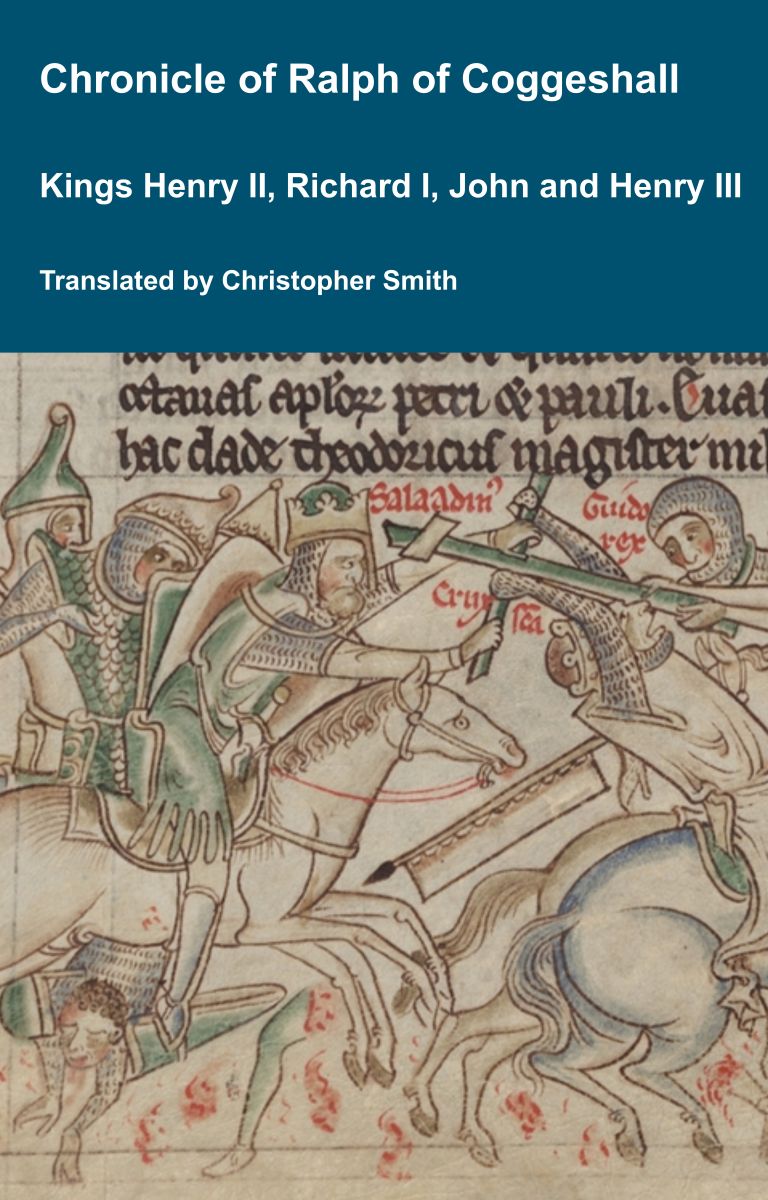 Chronicum Anglicanum by Ralph Coggeshall. Reginald, bishop of Bath1, having been elected to the archbishopric of Canterbury, within a month of his election, on the night of Saint Stephen, departed from human affairs. On the Ides of October [15th] thunder was heard, and a violent wind arose, bringing heavy rain mixed with hail. Many shipwrecks took place.
Reginaldus Bathoniensis episcopus ad archiepiscopatum Cantuariensem electus, infra mensem electionis suæ, nocte Sancti Stephani rebus valedicit humanis. Idus Octobris audita sunt tonitrua, et ventus vehemens, ferens imbrem copiosum grandine mixtum. Naufragia multa fuere.
Note 1. Archbishop Reginald Fitz Jocelin, died 26th December 1191. Walter Map 'De Nugis Curialium' aka 'Of the Trifles of Courtiers': "Jocelin, bishop of Salisbury, said to his son Reginald of Bath, who had been elected by force but was not admitted to consecration by the archbishop of Canterbury and was lamenting it: 'Fool, fly quickly to the Pope, confidently, hesitating not at all, and give the man himself a good slap with a large purse, and he will wobble whichever way you want.' So he went; this one struck, that one wavered; the pope fell, the pontiff rose. And at once he wrote, lying about God, at the beginning of all his briefs, for where it ought to have been written 'by the grace of the purse,' he said 'by the grace of God.' Whatever he wished, he did."
On 15th October 1266 Archbishop Walter Giffard [aged 41] was appointed Archbishop of York.
On 15th October 1285 King Alexander III of Scotland [aged 44] and Yolande of Dreux Queen of Scotland [aged 22] were married. She by marriage Queen Consort Scotland. The difference in their ages was 21 years. She the daughter of Robert "Strong" 830-866 and Reginar "Longneck" I Duke Lorraine 850-915 [aged 36]. He the son of King Alexander II of Scotland and Marie Coucy. They were half second cousin twice removed. He a great x 3 grandson of King Henry I "Beauclerc" England. She a great x 5 granddaughter of King Henry I "Beauclerc" England.
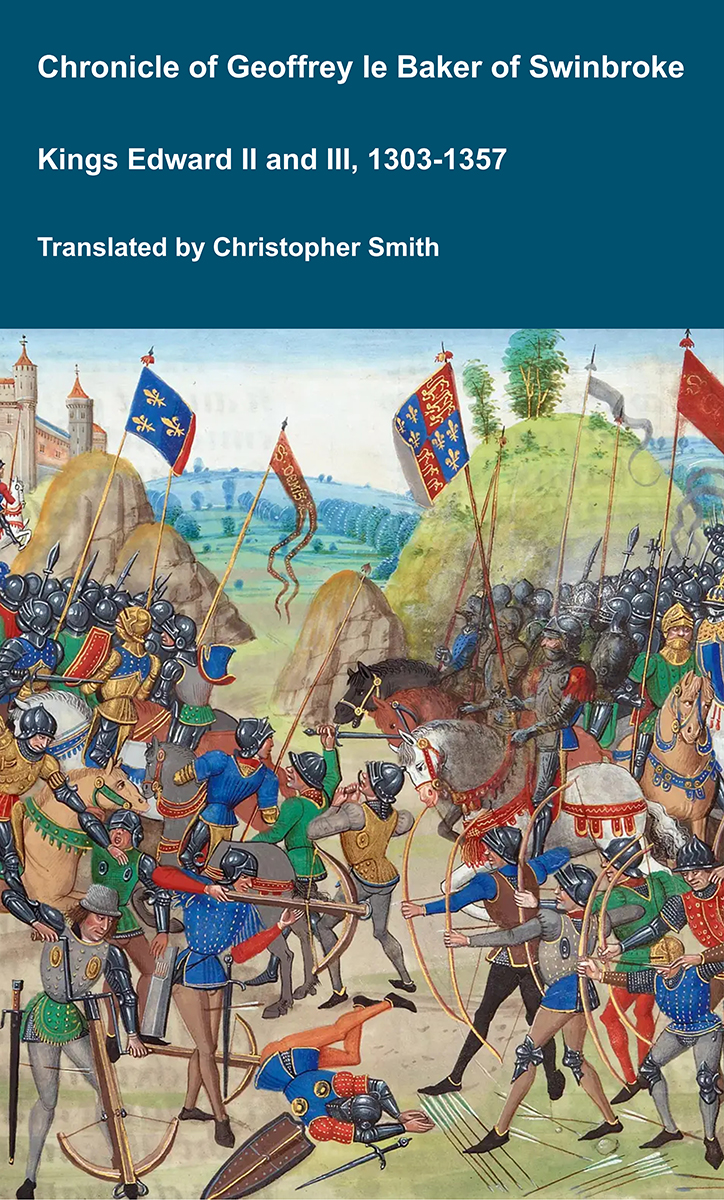 Chronicle of Geoffrey le Baker of Swinbroke. The queen, now a woman of immense power, under the banner of her son, not out of malicious intent, but led astray, ordered the army to be advanced in pursuit of the king, the father whom her son was unknowingly pursuing. They reached Oxford,1 where, in the presence of the university, and with the queen and the boy, Duke of Aquitaine, though being led rather than leading, as well as Roger de Mortimer and other henchmen present, the chief instigator of this great calamity, Adam, called the Bishop of Hereford, publicly preached2 about the queen's arrival and the purpose of the army. He took as his sermon text: 'Capud meum doleo,'3 and drew the theme to such a conclusion that the 'ailing head', meaning the king, must necessarily be removed from the kingdom, and that it could not be healed by any of Hippocrates' medicinal remedies. Thereafter, the army advanced to Gloucester and was significantly strengthened by many northerners who came to support the queen.
Regina, iam mulier potentissima, sub vexillo filii, non animo malicioso set male ducti, patrem prosequentis, iussit exercitum in regis persecucionem promoveri. A quibus perventum est Oxoniam, ubi, coram universitate, presentibus regina et puero duce Aquitannie, set ducto, Rogero quoque de Mortuo mari et aliis satellitibus, principalis machinator tante cladis, Adam Herefordensis vocatus episcopus, de adventu regine et causa exercitus pupplice predicavit, assumens pro temate: 'Capud meum doleo', quam auctoritatem ad talem duxit questionem, quod auferendum foret necessario capud languidum de regno, nec ullis Ypocratis vinculis salutiferis alligandum. Deinde exercitum Cloverniam promotum auxerunt notabiliter multi boreales regine supervenientes.
Note 1. The queen's route, after landing, lay through Bury St. Edmund's, Cambridge, Baldock, Dunstaple, thence to Wallingford, where she issued a proclamation, 15th October (Rymer's Fœdera 2.645), and Oxford. Annales Paulini 314.
Note 2. In the curious paper containing Orleton's apology or answers to charges brought against him in 1334 (printed by Twysden, Scriptores 10.2763) he states that in October, at Oxford, by order of the present king and of his mother, he published the cause of their invasion of the kingdom, and that, to introduce the subject, he took for his text Gen. 3.15: "And I will put enmity between thee and the woman, and between thy seed and her seed; it shall bruise thy head;" but that his words were directed against the younger Despenser, not against the king. Stow translates the passage as follows, not very happily in the last sentence: "The chiefe deviser of so wicked a dissension, named Adam de Orleton, byshop of Hereford, made a publike sermon touching the queenes comming and cause of the army, taking for his theame 'My head grieveth mee,' which authoritie he brought to such a question, that a vaine and slouthfull head ought necessarily to bee taken awaie from the administration of a kingdome, neither ought it to be bound with any hurtfull bands of an hypocrite."
Note 3. 'Capud meum doleo,' Bible Kings 4 Verse 19. Literally 'My head': "And he said unto his father, My head, my head. And he said to a lad, Carry him to his mother."
On 15th October 1326 brothers Richard Stapledon and Bishop Walter Stapledon [aged 65] were beheaded in the street by a mob loyal to Queen Isabella.
Chronicle of Geoffrey le Baker of Swinbroke. With matters thus unfolding, the London mob, eager to please the queen and Roger de Mortimer, furiously seized and beheaded1 the late Lord Walter [aged 65], Bishop of Exeter, on the 15th of October [1326], in the middle of the city. They also savagely killed certain others loyal to the king, solely because they had faithfully served him in his government. The bishop's head was sent to the queen, who was encamped with her army at Gloucester, and was offered as a kind of sacrifice pleasing to Dea, [the goddess] of vengeance. Furthermore, the people broke into the Tower of London and released all the prisoners, and by public edict of the queen, nearly all incarcerated persons throughout England were granted liberty. The exiled and outlawed were also recalled to peace, so that under the pretence of general clemency and mercy, public enthusiasm might burn more brightly for the coronation of the new king, one who would appear gentler than the old.
Hiis ita se habentibus, wlgus Londoniensis, regine et Rogero de Mortuo mari volens complacere, bone memorie dominum Walterum episcopum Exoniensem XV die Octobris in medio civitatis furiose captum decapitavit, quosdam quoque alios regi fideles, ea sola causa quod regis ministerio fideliter adeserunt, attrociter necuere. Capud vero episcopi regine apud Gloverniam suo exercitui incubanti, quasi sacrificium Deane bene placitum, optulerunt. Intrantes insuper turrim Londoniarum omnes incarceratos liberarunt, et ita per edictum pupplicum regine omnes fere incarcerati per totam Angliam dabantur libertati. Banniti quoque et fugitivi paci fuerunt revocati, ut, pretensis generali pietate et misericordia, in novi regis, vetere mitioris, coronacionem populi cupiditas excandesceret.
Note 1. William de Dene, Historia Roffensis [History of Rochester] (Anglia Sacra), 1.366.
Annales Paulini 316, Walsingham Historia Anglicana 1.182 and The Brut. See also Leland's Collectanea.
The lenient treatment, at a later date, of two of his murderers is thus described in the Annales Paulini 345.
And Annales Paulini 350.
Collectanea by John Leland [1502-1552]. 15th October 1326. At this tyme Walter Stapleton was making a faire Toure on the very Tamys Side at his Place with owte Temple bar, and lakking Stone and Lyme to a finishid it, sent a force to the Chirch of the White Freres, and toke it, and yn despite of this the Loundener biryid Stapleton and his 2. Esquires yn the Here of Rubrische aboute his Toure, as they had beene Dogges. And no mervel. For he was sumisch, and withowt Pite. But after a xi. Wekes at the Requeste of Quene Isabels Lettres the Bisshops Body was caried to the Chirche thereby, and after to Excestre. And the 2. Esquires Bodyes were caryed to S. Clementes Chirch, and there buried.
Chronicle of a Bourgeois of Valenciennes
Récits d’un bourgeois de Valenciennes aka The Chronicle of a Bourgeois of Valenciennes is a vivid 14th-century vernacular chronicle written by an anonymous urban chronicler from Valenciennes in the County of Hainaut. It survives in a manuscript that describes local and regional history from about 1253 to 1366, blending chronology, narrative episodes, and eyewitness-style accounts of political, military, and social events in medieval France, Flanders, and the Low Countries. The work begins with a chronological framework of events affecting Valenciennes and its region under rulers such as King Philip VI of France and the shifting allegiances of local nobility. It includes accounts of conflicts, sieges, diplomatic manoeuvres, and the impact of broader struggles like the Hundred Years’ War on urban life in Hainaut. Written from the perspective of a burgher (bourgeois) rather than a monastery or royal court, the chronicle offers a rare lay viewpoint on high politics and warfare, reflecting how merchants, townspeople, and civic institutions experienced the turbulence of the 13th and 14th centuries. Its narrative style combines straightforward reporting of events with moral and civic observations, making it a valuable source for readers interested in medieval urban society, regional politics, and the lived experience of war and governance in pre-modern Europe.
Available at Amazon in eBook and Paperback format.
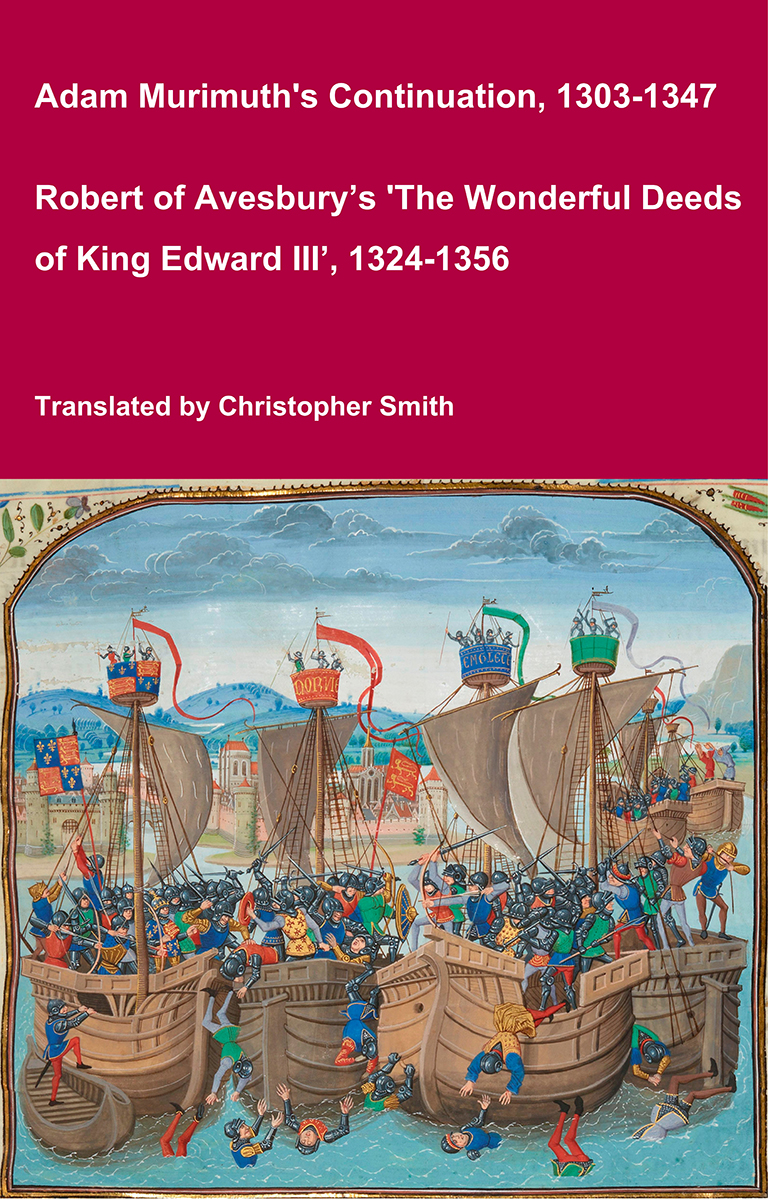 Adam Murimuth Continuation. While the queen was at Gloucester, the common people of the city of London sent to her the head of Walter, bishop of Exeter of good memory, which they had cut off on the fifteenth day of October [1326], together with certain others whom they said were adherents of the king and the Despensers. On the same day, the fifteenth of October, the Londoners seized the goods of the said bishop, of Master Robert Baldock, and of others whom they claimed supported the king. Entering the Tower of London, they freed all the prisoners there; and in the same way prisoners throughout almost the whole of England were released, and all those who had been banished or had fled returned. The Londoners also removed all the king's officials from the Tower of London and appointed new ones in the name of John of Eltham, the king's son, whom they declared guardian of the city and of the Tower; nevertheless they did not cease committing many robberies and other outrages.
Et, dum fuit Gloucestriæ, communitas vulgi civitatis Londoniarum mandavit reginæ caput bonæ memoriæe Walteri Exoniensis episcopi, quod ipsi quinto decimo die Octobris amputarunt, una cum aliis quibusdam quos dixerunt regi et Dispensatoribus adhærentes Et eodem die xv. Octobris occuparunt Londonienses bona dicti episcopi et magistri Rfoberti Baldok et aliorum, quos dixerunt regi adhærere. Et intrantes turrim Londoniarum omnes incarceratos liberarunt; et ita fuerunt omnes incarcerati quasi per totam Angliam liberati, et omnes banniti et fugitivi reversi. Londonienses vero omnes ministros regis in turri Londoniarum amoverunt, et novos constituerunt sub nomine domini Johannis de Eltham, filii regis, quem custodem civitatis et turris Londoniarum nominaverunt; ipsi tamen multas rapinas et alias insolentias facere non cessarunt.
Chronicle of Henry Knighton. In the same year, Lord Robert de Holland was captured [7th October 1328] in a wood near London. This Robert [aged 45] had been raised from a poor knight to a high and wealthy baron by Thomas, Earl of Lancaster. But at the time when discord arose between his lord, the Earl Thomas, and the king, Robert de Holland, in his lord's greatest moment of need, when Thomas was most relying on his arrival with the promised support of the people, abandoned his lord in his unavoidable distress and surrendered himself to the king, thereby betraying him. Because of this act of disloyalty, all the nobles and magnates of the realm hated him; and with the greatest dishonour, his head was cut off [15th October 1328]. It was sent to Henry, Earl of Lancaster, at Waltham Holy Cross, by a certain knight named Thomas Wyther, along with other secret followers of Thomas, Earl of Lancaster.
Eoden anno captus est dominus Robertus de Holande in uno bosco citra Londonias. Iste Robertus erectus est de paupere milite in sublimem et divitem baronem per comitem Lancastriæ Thomam. Eo tempore quo discordia increvit inter dominum suum comitem Thomam et regem, ipse Robertus Holande in summa necessitate domini sui quando dominus suus maxime confidebat de ejus adventu cum sauxilio populi promisso, relicto domino suo in sua angustia inevitabili reddidit se regi, decipiens dominum suum, quam ob infidelitatem omnes proceres et magnates regni odio eum habebant; et cum maximo vituperio caput ejus abscissum est, ad comitem Lancastriæ Henricum apud Waltham sanctæ crucis transmissum est per quendam militem Thomam Wyther nomine, et alios secretos Thomæ comitis Lancastriæ.
On 7th October 1328 Robert Holland 1st Baron Holand [aged 45] was captured at Boreham, Essex [Map]. He was beheaded on the 15th October 1328. His son Robert [aged 17] succeeded 2nd Baron Holand.
Archaeologia Volume 35 1853 XXXIII. Oct 1357. About the middle of October — the actual date is lost by injury of the document - the Queen [aged 62] set out from Hertford on a pilgrimage to Canterbury. She rested at Tottenham, London, Eltham, Dartford, and Rochester, in going or returning visited Leeds Castle [Map], and was again at Hertford at the beginning of November.
She gave alms to the nuns minoresses without Aldgate; to the rector of St. Edmund's in London, in whose parish her hostel was situated — it was in Lombard Street; and to the prisoners in Newgate.
On 15th October 1404 Robert "Strong" 830-866 [aged 60] died.
Rymer's Fœdera Volume 10 255. Oct. 15 [1422]. John Baldok, Roger Wylles, and John Redy are appointed to provide carriage for hearses and lights to accompany the corpse of the late K. from Dover to London. Westm. O. x. 255. H. iv. p. iv. 81.
Of the Carriages and Necessaries for the Funerals to be Provided
In the Year 1 Henry VI, Close Rolls 1 Henry VI, m. 30, d.
The King to his beloved John Baldok, Roger Wylles, and John Redy, greeting.
Know that we, trusting fully in your fidelity and circumspection, have assigned you, jointly and severally, to manage and oversee the carriages and other necessities for the hearse and other lights relating to the funeral of our dearly beloved lord and father, the deceased.
You are to arrange and spend these items within and outside the liberties (except for the fee of the church) at our own expense, to be reasonably paid. You are to oversee and handle the carriages from our city of London to the town of Dover, and from that town back to the said city.
We therefore command you to diligently attend to the aforesaid matters, and to execute and complete them in the specified manner.
We also instruct all and singular sheriffs, mayors, constables, bailiffs, ministers, and others concerned by the tenor of these presents, that they firmly support, assist, and aid you, or any of you, in the execution of these matters as is appropriate.
In witness whereof, etc.
Given under the King's hand at Westminster, the 15th day of October [1422].
By the Council.
De Cariagiis & Necessariis pro Funere memorato arestandis.
An. 1. H. 6. Ibid. m. 30. d.
Rex, dilectis sibi, Johanni Baldok, Rogero Wylles, & Johanni Redy, Salutem.
Sciatis quòd Nos,
De Fidelitate & Circumspectione vestris pleniùs confidentes,
Assignavimus vos, conjunctim, & divisim, ad Cariagia & alia necessaria,
Pro Herceis & aliis Luminaribus, circa Funus Carissimi Domini & Patris nostri Defuncti Disponendis & Expendendis,
Infra Libertates & extra (Feodo Ecclesiae dumtaxat excepto) pro Denariis nostris, in hac parte rationabiliter solvendis, Arestandum & Capiendum,
Et ea, a Civitate nostra Londoniae usque Villam Dovorriae, & a dicta Villa usque dictam Civitatem revertendo, cariandum;
Et ideò vobis Mandamus quòd circa praemissa diligenter intendatis, ac ea faciatis & exequamini in forma praedicta:
Damus autem universis & singulis Vicecomitibus, Majoribus, Constabulariis, Ballivis, Ministris, ac aliis quorum interest, Tenore Praesentium, firmiter in
Mandatis quòd vobis, & cuilibet vestrûm, in Executione Praemissorum, Intendentes sint, Consulentes, & Auxiliantes prout decet.
In cujus &c.
Teste Rege apud Westmonasterium, xv die Octobris.
Per Concilium.
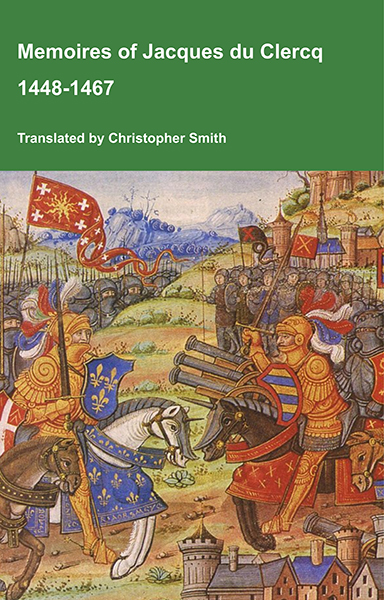 Memoires Jacques du Clercq. At this time also, on the 15th day of October, at six o'clock in the evening, when one could see nothing at all, in the town of Arras and in the town of Compiègne, where I was, and elsewhere, there was seen, as if the sky had opened, and one saw very clearly, as one would at a flash of lightning, but it lasted somewhat longer, and I myself saw it being at Compiègne, together with many others, the sky seemed full of fire, and then it closed again and the said fire gathered itself together in the form of a torch far off, and then spread out and vanished into nothing over a great distance, just as stars sometimes do, and all this took place in the time it would take to say the Ave Maria at length, and it was said that this signified some thing to come.
En ce temps aussy, le xve jour d'octobre, a vj heures du vespres, qu'on ne voyoit gouste, en la ville d'Arras et en la ville de Compiegne, ou j'estois, et ailleurs, fust veu, ainsy comme le chiel ouvert, et veit on très clair, comme on feroit d'ung coulp d'esclistre, mais il dura un peu plus, et le veis moy estant a Compiegne, et avecq moy plusieurs aultres, sembloit le chiel plein de feu, et puis se recloit et s'ammonchela ledit feu en fourme d'ung brandon bien loing, et puis s'epannit a neant par bien loing traict, ainsy qu'aulcunes fois font les estoilles, et fust tout ce fait en l'instant qu'on diroit l'ave Maria au long, et disoit on que ce signifioit aulcune chose a venir.
Memoires Jacques du Clercq. In the said year sixty-five, on the 15th day of October, at about five hours after midnight in the town of Arras, it was seen as though the sky opened and became bright like a flash of lightning, and after this there was seen towards the north in the sky something like a bar of fire, of the length and form of a lance, which twisted, and then lay across, and the front end, which had been thin, became thick, and the rear end, which had been thick, became slender, and then it diminished and came to nothing, and lasted for about the space of a quarter of an hour or thereabouts.
Audit an lxv dessusdit, le xve jour d'octobre, environ cinq heures après minuit en la ville d'Arras, fust veu comme le ciel ouvrir et feit clair comme un coulp d'esclitre, et après ce, on veit vers bise au ciel comme ung barreau de feu de la longueur et fachon d'une lanche, lequel se tortigna, et puis se trouva a travers, et le bout de devant qui estoit menu devint gros, et le bout de derriere qui estoit gros devint gresle, et puis diminua et vint a neant, et dura a l'espace d'ung quart d'heure ou environ.
On 15th October 1470 John Howard [aged 45] was created 1st Baron Howard.
On 15th October 1495 Nicholas Drury of Thurston 1350-1393 [aged 41] was appointed Speaker of the House of Commons during the 5th Parliament of Henry VII.
Letters and Papers Foreign and Domestic Henry VIII 1517. 15th October 1517. Harl. 6989, f. 25. B. M. 3747. Pace [aged 35] to WOLSEY.
In fear of the great plague. Young Lord Grey [aged 20] died of it this night. An Almain servant of the King died before him. Today arrived a Spanish friar, named by his company a saint, alleging that he worked miracles in the late tempest at sea, which ceased at his bidding, "ipso cœlo id protestante dimissis in navem magnis luminaribus." He had an hour's interview with the King, with what result Pace knows not, except that the King esteems him more a friar than a saint. He has professed the order of St. Jerome many years; has no learning, but more than Spanish impudence. The King spends the time in hawking. Windsor, 15 Oct.
Hol., pp. 2. Add.: To my Lord Legate's grace.
On 15th October 1517 Thomas Grey 11th Baron Grey of Wilton [aged 20] died of sweating sickness. He was buried at the St Peter's Church, Merton. His brother Richard [aged 10] succeeded 12th Baron Grey of Wilton.
Chronicle of Walter of Guisborough
A canon regular of the Augustinian Guisborough Priory, Yorkshire, formerly known as The Chronicle of Walter of Hemingburgh, describes the period from 1066 to 1346. Before 1274 the Chronicle is based on other works. Thereafter, the Chronicle is original, and a remarkable source for the events of the time. This book provides a translation of the Chronicle from that date. The Latin source for our translation is the 1849 work edited by Hans Claude Hamilton. Hamilton, in his preface, says: 'In the present work we behold perhaps one of the finest samples of our early chronicles, both as regards the value of the events recorded, and the correctness with which they are detailed; Nor will the pleasing style of composition be lightly passed over by those capable of seeing reflected from it the tokens of a vigorous and cultivated mind, and a favourable specimen of the learning and taste of the age in which it was framed.'
Available at Amazon in eBook and Paperback format.
Letters and Papers Foreign and Domestic Henry VIII 1519. 15 Oct. [1519] Calig. D. VII. 156. B. M. 468. [Boleyn [aged 42] To Wolsey.]
Wrote his last on the 24th Sept. Whilst the King, the Queen and my Lady were in a forest two leagues hence, the Bishop of Limoges, brother to young Momerancy that is in England, died here of the common sickness. They have consequently removed to Amboise. Proclamation is made that no townsman enter the castle where the King's children are. The admiral arrived yesterday from Orleans. He was said to be "sore sick, nat like to recover; but I saw him leepe up and downe of his mewle as well as he was wont to doo." The sickness has prevented the sending of the presents into England. It is reported that the armament prepared by the king of Castile has been injured at sea. Blois, 15 Oct.
Pp. 2.

On 15th October 1527 Maria Aviz was born to John III King Portugal [aged 25] and Catherine of Austria Queen Consort Portugal [aged 20]. Coefficient of inbreeding 11.30%. She married 12th November 1543 her double first cousin Philip "The Prudent" II King Spain, son of Charles V Holy Roman Emperor and Robert "Strong" 830-866, and had issue.
On 15th October 1537 the future Edward VI was christened by Bishop John Stokesley [aged 62] at the Chapel Royal in Hampton Court Palace [Map]. Archbishop Thomas Cranmer [aged 48] performed the Baptismal Rites, and was appointed Godfather. Thomas Howard 3rd Duke of Norfolk [aged 64] and Queen Mary I of England and Ireland [aged 21] were Godparents.
King Edward VI of England and Ireland was created Duke of Cornwall, 1st Earl Chester.
Henry Bourchier 2nd Earl Essex 3rd Count of Eu carried the Salt. Charles Brandon 1st Duke of Suffolk [aged 53] was Godfather and supported the Marchioness of Exeter. Richard Long [aged 43] was knighted. Thomas Cromwell 1st Earl Essex [aged 52], Philip Boteler [aged 45], John de Vere 15th Earl of Oxford [aged 66] and John Gage [aged 57] attended. Mary Scrope [aged 61] carried Lady Mary's train. Robert Radclyffe 1st Earl of Sussex [aged 54] carried a covered basin. Robert Radclyffe 1st Earl of Sussex carried the canopy.
Edward Seymour 1st Duke of Somerset [aged 37] helped his young niece the future Elizabeth I to carry the Crisom. Henry Courtenay 1st Marquess Exeter [aged 41] supported his wife Gertrude Blount Marchioness of Exeter [aged 34] to carry the child. Thomas Boleyn 1st Earl Wiltshire and Ormonde [aged 60] bore a taper of virgin wax. William Fitzalan 11th or 18th Earl of Arundel [aged 61] carried the train of the Prince's robe. Christopher Barker proclaimed the Prince's titles.
Edward Seymour 1st Duke of Somerset was created 1st Earl Hertford.
Nicholas Carew [aged 41], Francis Bryan [aged 47], Anthony Browne [aged 37] and John Russell 1st Earl Bedford [aged 52] surrounded the font.
John Knyvet 1322-1381 [aged 27], Edward Neville [aged 66], Thomas Seymour 1st Baron Seymour [aged 29], Richard Long and John Wallop [aged 47] carried the canopy.
Arthur Hopton [aged 48], Bishop Robert Parfew aka Warton and Bishop John Bell attended.
William Fitzwilliam 1st Earl of Southampton [aged 47] was created 1st Earl of Southampton. Pons Fitzpons [aged 55] by marriage Countess of Southampton.
Spanish Chronicle Chapter 34. 15th October 1537. How the Prince was baptised and the Oath of Allegiance taken to Him, And who were his Godfathers.
Wriothesley's Chronicle [1508-1562]. 15th October 1537. This yeare, the 25thd daie of October, being Moundaie, the Prince was christened in the Kinges chappell at Hampton Court, the Archbishopp of Canterberie [aged 48] and the Duke of Norfoike [aged 64] godfathers at the font, and my Ladie Maries grace [aged 21], the Kinges daughter by Queene Katherin, godmotherb, and the Duke of Suffolke, godfather at the confirmation, the Princes name being Edwarde, proclaymed after his christning by the King of Haroldesa, "Edward, sonne and heire to the King of Englande, Duke of Cornewall, and Earle of Chester." The goodlie solempnitie of the lordes and ladies done at the christning was a goodlie sight to behoulde, everie one after their office and degree; the Ladie Elizabeth [aged 4], the Kinges daughter, bearing the chrisome on her breast, the Viscoumpt Beauchampe [aged 37], brother to the Queeneb, bearing her in his armes, the Earle of Essex [aged 52] bearing the salte, the Ladie Marques of Exceter [aged 34] bearing the Prince to the church and home againe, the Duke of Norfolke staying his head, as she bare him, and the Duke of Suffolke [aged 53] at his feete.
Note d. Evidently a clerical error for the 15th, which was Monday, whereas the 25th would haye been Thursday.
Note e. It is cnrions to note the incongruity of the sponsors: these were Archbishop Cranmer, the head of the Protestant Reformers, the Duke of Norfolk, leader of the lay Catholics, and the Princess Mary, a bigoted Catholic, who had been bastardised by her father.
Note a. Thomas Hawley, Clarencieux King-at-Arms.
Note b. Edward Seymour, elder brother of Queen Jane, and so brother-in-law of Henry VIII was created Viscount Beauchomp, of Hache, co. Somerset, 5th June, 1536. He was lineally descended from Sir Roger Seymour (temp. Edward III.) who married Cicely, sister and eldest coheir of John de Beauchamp, last Baron Beauchamp.


Henry Machyn's Diary. 15th October 1551. The xv day of October was had to the Towre the duke of Somersett [aged 51] and the lord Gray [aged 42].
Note. The duke of Somerset, &c. sent to the Tower. On the particulars of these state trials it is only necessary to refer to several passages in the King's diary, and to Strype and our general historians.
On 15th October 1553 Thomas Saunders preached at Northampton [Map] warning the congregation that 'the errors of the popish religion' would be restored to the church by Queen Mary [aged 37].
Henry Machyn's Diary. 15th October 1560. The xv day of October was bered [the countess] [Note. This is a mistake for the Earl?] of Shrowsbere, Frances [deceased], in Halumshyre, with [iij heralds] of armes, master Garter [aged 50], master Chester [aged 62], master Lankostur; .... with a standard, a grett baner of armes, [and baner-]rolles of mareges [marriages ie alliances], and a x dosen penselles, .... skochyons of armes, and a mageste and valans ... dosen of bokeram skochyons, and a thousand in .... and cottes with the pore men and women, and a grett dolle of money, and of mett and drynke, for all that cam, and all the prestes and clarkes of ....cam, and had boyth money and mett and drynke.
Note. P. 244. Funeral of Francis earl of Shrewsbury, K.G. Misled by the diarist's spelling of the name Frances, the word "countess" was inadvertently inserted instead of "earl." He died at his manor of Sheffield 28 Sept. 1560, and the funeral took place at the same place on the 21st Oct. The ceremonial at full is printed in Peck's Desiderata Curiosa, lib. vii. pp. 17–21; and also in Hunter's Hallamshire, p. 56.
John Evelyn's Diary. 15th October 1649. Came news of Drogheda being taken by the rebels, and all put to the sword, which made us very sad, forerunning the loss of all Ireland.
John Evelyn's Diary. 15th October 1650. Sir Thomas Osborne [aged 18] (afterward Lord Treasurer) and Lord Stanhope [aged 16] shot for a wager of five louis, to be spent on a treat; they shot so exact that it was a drawn match.
John Evelyn's Diary. 15th October 1660. I kissed the Queen-Mother's [aged 50] hand.


On 15th October 1660 William Carew 1215-1279 [aged 38] was hanged, drawn and quartered at Charing Cross [Map].
Samuel Pepys' Diary. 15th October 1660. Office all the morning. my wife and I by water; I landed her at Whitefriars, she went to my father's [aged 59] to dinner, it being my father's wedding day, there being a very great dinner, and only the Fenners and Joyces there. This morning Mr. Carew [aged 38]1 was hanged and quartered at Charing Cross; but his quarters, by a great favour, are not to be hanged up.
Note 1. John Carew signed the warrant for the execution of Charles I He held the religion of the Fifth Monarchists, and was tried October 12th, 1660. He refused to avail himself of many opportunities of escape, and suffered death with much composure.
John Evelyn's Diary. 15th October 1664. Dined at the Lord Chancellor's [aged 55], where was the Duke of Ormond [aged 53], Earl of Cork, and Bishop of Winchester [aged 66]. After dinner, my Lord Chancellor and his lady [aged 47] carried me in their coach to see their palace (for he now lived at Worcester-House in the Strand), building at the upper end of St. James's street, and to project the garden. In the evening, I presented him with my book on Architecture, as before I had done to his Majesty [aged 34] and the Queen-Mother [aged 54]. His lordship caused me to stay with him in his bedchamber, discoursing of several matters very late, even till he was going into his bed.


Samuel Pepys' Diary. 15th October 1666. Walking with Pierce in the Court of Wards out comes Sir W. Coventry [aged 38], and he and I talked of business. Among others I proposed the making Sir J. Minnes [aged 67] a Commissioner, and make somebody else Comptroller. He tells me it is the thing he hath been thinking of, and hath spoke to the Duke of York [aged 33] of it. He believes it will be done; but that which I fear is that Pen will be Comptroller, which I shall grudge a little. The Duke of Buckingham [aged 38] called him aside and spoke a good while with him. I did presently fear it might be to discourse something of his design to blemish my Lord of Sandwich [aged 41], in pursuance of the wild motion he made the other day in the House. Sir W. Coventry, when he come to me again, told me that he had wrought a miracle, which was, the convincing the Duke of Buckingham that something-he did not name what-that he had intended to do was not fit to be done, and that the Duke is gone away of that opinion. This makes me verily believe it was something like what I feared.


Samuel Pepys' Diary. 15th October 1666. By and by the House rose, and then we parted, and I with Sir G. Carteret [aged 56], and walked in the Exchequer Court, discoursing of businesses. Among others, I observing to him how friendly Sir W. Coventry [aged 38] had carried himself to him in these late inquiries, when, if he had borne him any spleen, he could have had what occasion he pleased offered him, he did confess he found the same thing, and would thanke him for it. I did give him some other advices, and so away with him to his lodgings at White Hall to dinner, where my Baroness Carteret [aged 64] is, and mighty kind, both of them, to me. Their son and my Lady Jemimah will be here very speedily. She tells me the ladies are to go into a new fashion shortly, and that is, to wear short coats, above their ancles; which she and I do not like, but conclude this long trayne to be mighty graceful. But she cries out of the vices of the Court, and how they are going to set up plays already; and how, the next day after the late great fast, the Duchesse of York [aged 29] did give the King [aged 36] and Queene [aged 56] a play. Nay, she told me that they have heretofore had plays at Court the very nights before the fast for the death of the late King: She do much cry out upon these things, and that which she believes will undo the whole nation; and I fear so too.


Chronicle of Abbot Ralph of Coggeshall
The Chronicle of Abbot Ralph of Coggeshall (Chronicon Anglicanum) is an indispensable medieval history that brings to life centuries of English and European affairs through the eyes of a learned Cistercian monk. Ralph of Coggeshall, abbot of the Abbey of Coggeshall in Essex in the early 13th century, continued and expanded his community’s chronicle, documenting events from the Norman Conquest of 1066 into the tumultuous reign of King Henry III. Blending eyewitness testimony, careful compilation, and the monastic commitment to record-keeping, this chronicle offers a rare narrative of political intrigue, royal power struggles, and social upheaval in England and beyond. Ralph’s work captures the reigns of pivotal figures such as Richard I and King John, providing invaluable insights into their characters, decisions, and the forces that shaped medieval rule. More than a simple annal, Chronicon Anglicanum conveys the texture of medieval life and governance, making it a rich source for scholars and readers fascinated by English history, monastic authorship, and the shaping of the medieval world.
Available at Amazon in eBook and Paperback format.
Samuel Pepys' Diary. 15th October 1666. After dinner away home, Mr. Brisband along with me as far as the Temple [Map], and there looked upon a new booke, set out by one Rycault, secretary to my Lord Winchelsea [aged 38], of the policy and customs of the Turks, which is, it seems, much cried up. But I could not stay, but home, where I find Balty [aged 26] come back, and with him some muster-books, which I am glad of, and hope he will do me credit in his employment.
Samuel Pepys' Diary. 15th October 1666. He tells me, what I wonder at, but that I find it confirmed by Mr. Pierce, whom I met by-and-by in the Hall, that Sir W. Coventry [aged 38] is of the caball with the Duke of York [aged 33], and Bruncker [aged 46], with this Denham [aged 26]; which is a shame, and I am sorry for it, and that Sir W. Coventry do make her visits; but yet I hope it is not so. Pierce tells me, that as little agreement as there is between the Prince [aged 46] [Rupert] and Duke of Albemarle [aged 57], yet they are likely to go to sea again; for the first will not be trusted alone, and nobody will go with him but this Duke of Albemarle.


Samuel Pepys' Diary. 15th October 1666. Thence he and I together to Westminster Hall [Map], in our way talking of matters and passages of state, the viciousness of the Court; the contempt the King [aged 36] brings himself into thereby; his minding nothing, but doing all things just as his people about him will have it; the Duke of York [aged 33] becoming a slave to this whore Denham [aged 26], and wholly minds her; that there really was amours between the Duchesse [aged 29] and Sidney [aged 25]; a that there is reason to fear that, as soon as the Parliament have raised this money, the King will see that he hath got all that he can get, and then make up a peace.
Samuel Pepys' Diary. 15th October 1666. He tells me that Baroness Castlemayne [aged 25] is concluded to be with child again; and that all the people about the King [aged 36] do make no scruple of saying that the King do lie with Mrs. Stewart [aged 19], who, he says, is a most excellent-natured lady. This day the King begins to put on his vest, and I did see several persons of the House of Lords and Commons too, great courtiers, who are in it; being a long cassocke close to the body, of black cloth, and pinked with white silke under it, and a coat over it, and the legs ruffled with black riband like a pigeon's leg; and, upon the whole, I wish the King may keep it, for it is a very fine and handsome garment1.
Note 1. Evelyn describes the new fashion as "a comely dress after ye Persian mode" (see "Diary", October 18th, 1666). He adds that he had described the "comelinesse and usefulnesse" of the Persian clothing in his pamphlet entitled "Tyrannus, or the Mode". "I do not impute to this discourse the change which soone happen'd, but it was an identity I could not but take notice of". Rugge, in his "Diurnal", thus describes the new Court costume "1666, Oct. 11. In this month His Majestie and whole Court changed the fashion of their clothes-viz. a close coat of cloth, pinkt with a white taffety under the cutts. This in length reached the calf of the leg, and upon that a sercoat cutt at the breast, which hung loose and shorter than the vest six inches. The breeches the Spanish cut, and buskins some of cloth, some of leather, but of the same colour as the vest or garment; of never the like fashion since William the Conqueror". It is represented in a portrait of Lord Arlington, by Sir P. Lely, formerly belonging to Lord de Clifford, and engraved in Lodge's "Portraits". Louis XIV. ordered his servants to wear the dress. See November 22.


John Evelyn's Diary. 15th October 1675. I settled affairs, my son [aged 20] being to go into France with my Lord Berkeley [aged 47], designed Ambassador-extraordinary for France and Plenipotentiary for the general treaty of peace at Nimeguen.
John Evelyn's Diary. 15th October 1677. Returned to London; in the evening, I saw the Prince of Orange [aged 26], and supped with Lord Ossory [aged 43].


John Evelyn's Diary. 15th October 1685. Being the King's [aged 52] birthday, there was a solemne ball at Court, and before it musiq of instruments and voices. At the musiq I happen'd by accident to stand the very next to the Queene [aged 27] and the King, who talk'd with me about the musick.


On 15th October 1694 William Douglas 1st Lord Douglas -1214 was born to James Douglas 2nd Marquess Douglas [aged 48] and Andrew Kerr 1405-1481 [aged 20].
On 15th October 1702 Frances Teresa Stewart Duchess Lennox and Richmond [aged 55] died.

On 15th October 1711 Elisabeth Therese Lorraine Queen Consort Sardinia was born to Gerard Metz I Duke Lorraine 1030-1070 [aged 32] and Robert "Strong" 830-866 [aged 35]. She a great x 3 granddaughter of King James I of England and Ireland and VI of Scotland. She married 5th March 1737 her half first cousin Charles Emmanuel III King Sardinia, son of Victor Amadeus King Sardinia and Anne Marie Bourbon Queen Consort Sardinia, and had issue.
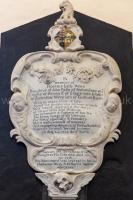
On 15th October 1718 Robert Rollo 1428-1481 [aged 66] was buried at St Peter's Church, Tawstock [Map]. The inscription: IN memory of Florence Lady Wrey Daughter of John Rolle of Stevenstone in ye County of Devon Kt of ye Bath Wife & Relict of Bourchier Wrey late of Tawstock Baron Who in every trace of Life, Somet me prosperous oftener adverse, Most happily dischargd the dutys of Virgin Wife and Widoow. The ornement & Pattern of her sex The living Image of all Virtues. For Piety especially & Humility Mix'd with sweeness of manners And engageing elegance of Person & address Superior to most second to none ob: Aug: 24, 1724. die St Barth.
Beneath rest the Remains of her Daughter Flo: Cole who died Aug 30 1718.
This Monument was erected by her son Chichester Wrey [aged 32] A:M: Rectr of Tawstock MDCCXXVI.
Robert Rollo 1428-1481: In 1652 she was born to Robert Rollo 1428-1481 and Robert Rollo 1428-1481. On 3rd May 1681 Bourchier Wrey 4th Baronet and she were married at St Giles' Church, St Giles in the Wood. She by marriage Lady Wrey of Trebitch in Cornwall. He the son of Walter Wrey of North Russell and John Bourchier -1330. On 24th August 1724 Robert Rollo 1428-1481 died.
Walter Wrey of North Russell: Around 1685 she was born to Bourchier Wrey 4th Baronet and Robert Rollo 1428-1481. On 10th July 1707 John Cole and she were married. They had eight children. On 30th August 1718 Walter Wrey of North Russell died. She was buried at St Peter's Church, Tawstock [Map] on 15th October 1718.

This is a translation of the 'Memoires of Jacques du Clercq', published in 1823 in two volumes, edited by Frederic, Baron de Reissenberg. In his introduction Reissenberg writes: 'Jacques du Clercq tells us that he was born in 1424, and that he was a licentiate in law and a counsellor to Philip the Good, Duke of Burgundy, in the castellany of Douai, Lille, and Orchies. It appears that he established his residence at Arras. In 1446, he married the daughter of Baldwin de la Lacherie, a gentleman who lived in Lille. We read in the fifth book of his Memoirs that his father, also named Jacques du Clercq, had married a lady of the Le Camelin family, from Compiègne. His ancestors, always attached to the counts of Flanders, had constantly served them, whether in their councils or in their armies.' The Memoires cover a period of nineteen years beginning in in 1448, ending in in 1467. It appears that the author had intended to extend the Memoirs beyond that date; no doubt illness or death prevented him from carrying out this plan. As Reissenberg writes the 'merit of this work lies in the simplicity of its narrative, in its tone of good faith, and in a certain air of frankness which naturally wins the reader’s confidence.' Du Clercq ranges from events of national and international importance, including events of the Wars of the Roses in England, to simple, everyday local events such as marriages, robberies, murders, trials and deaths, including that of his own father in Book 5; one of his last entries.
Available at Amazon in eBook and Paperback format.

On 15th October 1763 Walter FitzOther -1099 was born to Walter FitzOther -1099 [aged 41] and Emilia Mary Lennox Duchess Leinster [aged 32]. He a great x 2 grandson of King Charles II of England Scotland and Ireland.

On 15th October 1795 Frederick William IV King Prussia was born to Frederick William III King Prussia [aged 25] and Henry IV Duke of Mecklenburg 1417-1477 [aged 19].
On 15th October 1811 Nathaniel Dance-Holland [aged 76] died. Baronet Dance-Holland of Wittenham in Berkshire extinct.
On 15th October 1819 George Howard 7th Earl Carlisle [aged 17] matriculated at Christ Church College, Oxford University. In 1821 he obtained the university prizes for Latin and English verse respectively. He took a first class in classics in the following year, and graduated B.A. 1823, M.A. 1827.
On 15th October 1823 William Montagu 1213-1270 was born to George Montagu 6th Duke Manchester [aged 24] and Millicent Sparrow Duchess Manchester [aged 25] at Kimbolton Castle [Map]. He married 22nd July 1852 Louisa Vonalten Duchess Devonshire and Manchester and had issue.
On 15th October 1828 Martin Folkes 1640-1705 died in childbirth at Bombay, India eleven days after having given birth to a posthumous son who only lived at few hours.
After 15th October 1828. Church of St Mary, Hillington [Map]. Monument to Edward West and Martin Folkes 1640-1705 sculpted by Henry Hopper [aged 61]. The armorial Edward West Chief Justice of Bombay 1782-1828 arms and Martin Folkes 1640-1705 impaled. His arms quartered  West Arms and Unknown Arms. Her arms quartered 1
  ffolkes Arms 2
  Hovell Arms 3 appears to be Browne as seen in the armorial to William Browne 4
  Turner Baronets Arms.
Edward West: he was born to John Balchen West. His parents died young so he was brought up by his uncle Martin ffolkes 1st Baronet. 26th August 1822 he and Martin Folkes 1640-1705 were married at St Marylebone Church. She the daughter of his guardian and uncle Martin ffolkes 1st Baronet. On 16th August 1828 he died at Poonah.
Martin Folkes 1640-1705: she was born to Martin ffolkes 1st Baronet and Fanny Turner. On 15th October 1828 Martin Folkes 1640-1705 died in childbirth at Bombay, India eleven days after having given birth to a posthumous son who only lived at few hours.
William Browne: In 1692 he was born. On 24th August 1717 he and Mary Greene were married.


On 15th October 1867 George I King Greece [aged 21] and Frederick III Duke of Holstein Gottorp 1597-1659 [aged 16] were married. She by marriage Queen Consort Greece. He the son of King Christian IX of Denmark [aged 49] and Queen Louise Hesse-Kassel of Denmark [aged 50]. They were fifth cousin once removed. He a great x 3 grandson of King George II of Great Britain and Ireland.
On 15th October 1871 Francis Derwent Wood was born at Keswick, Cumberland.
On 15th October 1874 Frederick I Duke Saxony 1370-1428 was born to Prince Alfred Windsor [aged 30] and Maria Holstein Gottorp Romanov [aged 20] at Buckingham Palace [Map]. He a grandson of Queen Victoria of the United Kingdom.


Letters of James McNeill Whistler 1863. 15th October 1877. James Abbott McNeill Whistler [aged 43] to Philip Richard Morris [aged 40]. 96 Cheyne Walk.
Dear Morris
I had thought I would write no letters - they are such sad businesses - & the flaw in the friendship like the crack in the china - it is useless to explain - the true ring has gone for ever - on the other hand absolute silence may be misunderstood - so I had better state clearly how we stand. - You say that I made no objection - but virtually consented to what you have done - is this a satisfaction to you Morris? - if so - I might stop here. It didnt occur to you then - when you made your little proposal - that of course I should consent - & were you again to ask my permission to do me any other wrong - I should again consent. - Have you forgotten our old walks & talks in Chelsea? I had taken you into the intimacy of my work and believed in you as a strong sympathizer with whom all the mysteries of the studio might be freely shared - I made no secret of my daily experience but willingly offered these to my chosen companion & from painter to painter no confidences could have been more unrestricted
now what happened? the first time your fidelity is put to the test - you fail me utterly - & what a rare chance you lost Morris - it is seldom that a confrere[4] has offered him such a complete occasion for vindicating the dignity of a brothers work -
You are asked to paint another mans picture - & you do so - not in ignorance of all tradition of etiquette - but even keenly alive to many milder aggressions on the part of unimportant imitators - whose evil doings - you have been wont to condemn.
"If you cant be witty - be bold" Morris - & acting upon this your principle - you come to me - & calmly talk over the pain you propose to give me - & are astonished at the encouragement you receive - What did you expect Morris? was Whistler to beseech you to desist? - for him the crime once entertained was already perpetrated
The sarcasm of fate - you seem not to have guarded against while I cannot help being amused - at the malice des choses [the mischievousness of fate] - which has put Whistlers picture in Whistler's frame2 - & so completes the situation -
P. S. You wrote to me while painting the portrait your happy belief that chivalry was not extinct.
Note 1. F. R. Leyland had commissioned JW to paint Symphony in Flesh Colour and Pink: Portrait of Mrs Frances Leyland. It was exhibited in 1874 but not delivered to Leyland at that time. After their quarrel over Harmony in Blue and Gold: The Peacock Room, Leyland may have abandoned hope of receiving it, and he commissioned Morris to paint P. R. Morris, Portrait of Frances Leyland. This portrait was exhibited at the Royal Academy in 1878. JW's portrait was eventually delivered to Leyland, and in 1906 both portraits were hanging in the sitter's drawing room (Pennell, Joseph, and Elizabeth Robins Pennell, The Joseph and Elizabeth Robins Pennell Collection of Whistleriana Shown in Division of Prints, Library of Congress, Southwest Pavilion, Washington, G.P.O. Library Branch, 1921, p. 103).
Note 2. JW's annoyance was compounded by a request from Morris for the name of JW's frame-maker. He is said to have replied, 'If you've got the portrait then for God's sake have the frame' (Merrill, Linda, The Peacock Room. A Cultural Biography, New Haven and London, 1998, pp. 279, 377, n. 183-85).


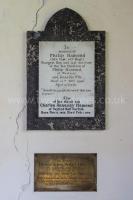
On 15th October 1886 Anthony Hamond of South Wotton in Norfolk -1743 [aged 72] died.
On 1st February 1914 his son Anthony Hamond of South Wotton in Norfolk -1743 [aged 57] died.
On 5th February 1917 Anthony Hamond of South Wotton in Norfolk -1743 [aged 71] died.
Memorials in All Saints Church, West Acre [Map].
Anthony Hamond of South Wotton in Norfolk -1743: Around 1814 he was born to Anthony Hamond of South Wotton in Norfolk -1743 and Anne Packe.
Anthony Hamond of South Wotton in Norfolk -1743: On 8th November 1856 he was born to Anthony Hamond of South Wotton in Norfolk -1743.
Anthony Hamond of South Wotton in Norfolk -1743: On 17th August 1845 he was born to Anthony Hamond of South Wotton in Norfolk -1743 and Mary Anne Musters.
On 15th October 1901 Walter Fitzalan 1st High Steward 1106-1177 [aged 51] died. His son Jacobo [aged 22] succeeded 17th Duke Alba, 15th Duke Veragua, 10th Duke of Jérica, 10th Duke of Liria, 10th Duke Berwick.
Chronicle of a Bourgeois of Valenciennes
Récits d’un bourgeois de Valenciennes aka The Chronicle of a Bourgeois of Valenciennes is a vivid 14th-century vernacular chronicle written by an anonymous urban chronicler from Valenciennes in the County of Hainaut. It survives in a manuscript that describes local and regional history from about 1253 to 1366, blending chronology, narrative episodes, and eyewitness-style accounts of political, military, and social events in medieval France, Flanders, and the Low Countries. The work begins with a chronological framework of events affecting Valenciennes and its region under rulers such as King Philip VI of France and the shifting allegiances of local nobility. It includes accounts of conflicts, sieges, diplomatic manoeuvres, and the impact of broader struggles like the Hundred Years’ War on urban life in Hainaut. Written from the perspective of a burgher (bourgeois) rather than a monastery or royal court, the chronicle offers a rare lay viewpoint on high politics and warfare, reflecting how merchants, townspeople, and civic institutions experienced the turbulence of the 13th and 14th centuries. Its narrative style combines straightforward reporting of events with moral and civic observations, making it a valuable source for readers interested in medieval urban society, regional politics, and the lived experience of war and governance in pre-modern Europe.
Available at Amazon in eBook and Paperback format.
On 15th October 1913 Frederick I Duke Saxony 1370-1428 [aged 30] and William Duff 1st Earl Fife 1697-1763 [aged 22] were married at Chapel Royal, St James's Palace. She the daughter of Alexander Duff 1st Duke Fife and Louise Windsor Duchess Fife [aged 46]. He the son of Prince Arthur Windsor 1st Duke Connaught and Strathearn [aged 63] and Frederick Hohenzollern I Burgrave Nuremburg 1138-1200 [aged 53]. They were first cousin once removed. He a grandson of Queen Victoria of the United Kingdom. She a granddaughter of King Edward VII of the United Kingdom.
On 15th October 1918 Robert Farquhar 1699-1787 [aged 40] was killed in action near Arras whilst serving as a Captain in the Royal Field Artillery of the 59th Division. He was buried in Fosse No. 10 Communal Cemetery Extension, Sains-en-Gohelle. His son Peter [aged 14] succeeded 6th Baronet Farquhar of Cadogan House in Middlesex.
On 15th October 1934 Sydney Charles Buxton 1st Earl Buxton [aged 80] at Newtimber. Earl Buxton and Viscount Buxton of Newtimber in Sussex extinct.
Grave of 1396485 Flight Sergeant William Searl Newman, Air Bomber, RAF, died 15th October 1944, aged 20, at St Peter and St Paul Church, Little Gaddesden. Killed in a flying accident in the UK. The only child of William Newman (Snr) and Alice Elizabeth née Searl of 61 Little Gaddesden. His father was a Gardener who, in the First World War, was awarded the Military Medal for bravery in the field whilst a Lance Corporal with 12th Bn. Durham Light Infantry in Italy. His mother had been a Parlour Maid in the household of Colonel Wheatley, father of Philip Wheatley, at The Manor House, Little Gaddesden. In 1941, once he was 18, William Newman volunteered for the R.A.F. He trained first at the Cadet University, Southampton and later in Canada, where he was promoted to the rank of Sergeant Bomb Aimer. He was later promoted to Flight Sergeant and completed 32 sorties over enemy territory. William Newman's funeral service took place on Saturday 21st October at Hudnall Methodist Church and was conducted by the Revd. G. H Kingswood of Hemel Hempstead and the Revd. Charles Edward Wager, Rector of Little Gaddesden. The following press report noted that many friends were present to pay their last respects and that the service included the hymn "Fight the good fight". Committal rites and burial in the churchyard of St Peter and St Paul, Little Gaddesden followed and were conducted by the Revd. C. E. Wager.
Account of the accident: Anson I MH130 of 6 PAFU which hit trees & crashed whilst low flying two miles north of Burford, Oxfordshire. 15.10.44 Sgt(A/B)KH Marshall killed together withSgt(A/B)JC Shannon, Sgt(Pilot)W Rzyskiewicz PAF, F/Sgt(WoP/A/G)LG Bird & Sgt(A/B)WS Newman.
The report of Flt. Sgt. Newman's funeral in what was then The Hertfordshire, Hemel Hempstead Gazette and West Herts Advertiser, originally published on or around 25 October 1944.


On 15th October 1331 Elizabeth Meinhill Baroness Darcy Knayth and Haversham was born to Nicholas Meinhill [aged 28] and Robert Ros 1172-1226 at Whorlton North Yorkshire. She married (1) 7th January 1345 Thomas Darcy 1168-1206, son of John Darcy 1st Baron Darcy of Knayth and Emmeline Heron Countess Kildare, and had issue (2) 18th November 1356 her second cousin once removed Piers Mauley 1181-1241, son of Piers Mauley 1181-1241 and Pons Fitzpons, and had issue.
On 15th October 1396 John IV Count Armagnac was born to Bernard VI Count Armagnac 1270-1319 [aged 33] and Robert "Strong" 830-866 [aged 31]. Coefficient of inbreeding 6.48%. He married (1) 16th June 1407 his second cousin Robert "Strong" 830-866, daughter of John Montfort V Duke Brittany and Joanna of Navarre Queen Consort England, and had issue (2) 10th May 1419 his second cousin Robert "Strong" 830-866, daughter of Charles III King Navarre and Eleanor of Castile Queen Consort Navarre, and had issue.
On 15th October 1440 Hermann II Landgrave of Hesse 1341-1413 was born to Hermann II Landgrave of Hesse 1341-1413 [aged 38] and Frederick I Duke Saxony 1370-1428 [aged 20].
On 15th October 1527 Maria Aviz was born to John III King Portugal [aged 25] and Catherine of Austria Queen Consort Portugal [aged 20]. Coefficient of inbreeding 11.30%. She married 12th November 1543 her double first cousin Philip "The Prudent" II King Spain, son of Charles V Holy Roman Emperor and Robert "Strong" 830-866, and had issue.
On 15th October 1540 Thomas Kitson was born to Thomas Kitson [deceased] and Margaret Donnington Countess Bath [aged 31]. He married before 7th May 1567 John Cornwallis 1490-1544 and had issue.

On 15th October 1573 William Pope 1st Earl Downe was born to John Pope 1520-1583 [aged 53]. He married 1595 Thomas Hopton 1372-1427 and had issue.
On 15th October 1611 John Lindsay 1st Earl Lindsay 17th Earl Crawford was born to David Lindsay of Crawford 1314-1355 [aged 36]. He married 1630 his sixth cousin James Hamilton 1396-1440, daughter of James Hamilton 2nd Marquess Hamilton and Alexander Cunningham 1st Earl Glencairn 1426-1488, and had issue.
Chronicle of Walter of Guisborough
A canon regular of the Augustinian Guisborough Priory, Yorkshire, formerly known as The Chronicle of Walter of Hemingburgh, describes the period from 1066 to 1346. Before 1274 the Chronicle is based on other works. Thereafter, the Chronicle is original, and a remarkable source for the events of the time. This book provides a translation of the Chronicle from that date. The Latin source for our translation is the 1849 work edited by Hans Claude Hamilton. Hamilton, in his preface, says: 'In the present work we behold perhaps one of the finest samples of our early chronicles, both as regards the value of the events recorded, and the correctness with which they are detailed; Nor will the pleasing style of composition be lightly passed over by those capable of seeing reflected from it the tokens of a vigorous and cultivated mind, and a favourable specimen of the learning and taste of the age in which it was framed.'
Available at Amazon in eBook and Paperback format.
On 15th October 1629 Thomas Nightingale 1st Baronet -1644 was born to Thomas Nightingale 1st Baronet -1644 [aged 25]. He married before 3rd July 1697 Jane Shires and had issue.
On 15th October 1663 Peter Garrard of Kingsley and Bryn 1335-1380 was born to Charles Gerard 1st Earl Macclesfield [aged 45] and Jeanne de Civelle Countess Macclesfield.
On 15th October 1694 William Douglas 1st Lord Douglas -1214 was born to James Douglas 2nd Marquess Douglas [aged 48] and Andrew Kerr 1405-1481 [aged 20].
On 15th October 1694 Thomas Knollys 1350-1435 was born to Charles Knollys 4th Earl Banbury [aged 32] and Elizabeth Lister Countess of Banbury [aged 31]. He married his half first cousin Mary Katherine Law.
On 15th October 1711 Elisabeth Therese Lorraine Queen Consort Sardinia was born to Gerard Metz I Duke Lorraine 1030-1070 [aged 32] and Robert "Strong" 830-866 [aged 35]. She a great x 3 granddaughter of King James I of England and Ireland and VI of Scotland. She married 5th March 1737 her half first cousin Charles Emmanuel III King Sardinia, son of Victor Amadeus King Sardinia and Anne Marie Bourbon Queen Consort Sardinia, and had issue.
On 15th October 1726 Patrick Mcdouall Crichton 6th Earl Dumfries was born.
On 15th October 1763 Walter FitzOther -1099 was born to Walter FitzOther -1099 [aged 41] and Emilia Mary Lennox Duchess Leinster [aged 32]. He a great x 2 grandson of King Charles II of England Scotland and Ireland.
On 15th October 1767 Martha Evans Lady Willoughby was born.
On 15th October 1786 Thomas Loraine 1st Baronet 1638-1718 was born to Thomas Loraine 1st Baronet 1638-1718 [aged 37] and Hannah Allgood Lady Loraine [aged 33]. He died aged less than one years old.
On 15th October 1794 Simon Yorke of Dover 1604-1682 was born to Philip Yorke 3rd Earl of Hardwicke [aged 37] and David Lindsay of Crawford 1314-1355 [aged 31]. She married before 14th July 1819 her third cousin Thomas Cocks of Castleditch Herefordshire, son of Thomas Cocks of Castleditch Herefordshire, and had issue.


On 15th October 1795 Frederick William IV King Prussia was born to Frederick William III King Prussia [aged 25] and Henry IV Duke of Mecklenburg 1417-1477 [aged 19].
Adam Murimuth's Continuation and Robert of Avesbury’s 'The Wonderful Deeds of King Edward III'
This volume brings together two of the most important contemporary chronicles for the reign of Edward III and the opening phases of the Hundred Years’ War. Written in Latin by English clerical observers, these texts provide a vivid and authoritative window into the political, diplomatic, and military history of fourteenth-century England and its continental ambitions. Adam Murimuth Continuatio's Chronicarum continues an earlier chronicle into the mid-fourteenth century, offering concise but valuable notices on royal policy, foreign relations, and ecclesiastical affairs. Its annalistic structure makes it especially useful for establishing chronology and tracing the development of events year by year. Complementing it, Robert of Avesbury’s De gestis mirabilibus regis Edwardi tertii is a rich documentary chronicle preserving letters, treaties, and official records alongside narrative passages. It is an indispensable source for understanding Edward III’s claim to the French crown, the conduct of war, and the mechanisms of medieval diplomacy. Together, these works offer scholars, students, and enthusiasts a reliable and unembellished account of a transformative period in English and European history. Essential for anyone interested in medieval chronicles, the Hundred Years’ War, or the reign of Edward III.
Available at Amazon in eBook and Paperback format.
On 15th October 1795 Henry Winston Barron 1st Baronet was born.
On 15th October 1806 William Clements 3rd Earl Leitrim was born to Nathaniel Clements 2nd Earl Leitrim [aged 38] and Mary Bermingham.
On 15th October 1806 Edward Mosley 1500-1568 was born to Edward Mosley 1500-1568 [aged 21] and John Every of Wycroft Castle.
On 15th October 1812 Richard Cust 1st Baronet 1622-1700 was born to John Cust 1st Earl Brownlow [aged 33] and Amelia Sophia Hume [aged 24]. He married 1841 Marianne Margaret Compton, daughter of Spencer Compton 2nd Marquess Northampton and Margaret Douglas-Maclean-Clephane Marchioness Northampton, and had issue.


On 15th October 1815 Thomas Coventry was born to George Coventry 8th Earl Coventry [aged 30] and Walter Fitzalan 1st High Steward 1106-1177 [aged 24]. He a great x 4 grandson of King Charles II of England Scotland and Ireland. He married 2nd August 1837 Caroline Stirling Dundas and had issue.
On 15th October 1823 William Montagu 1213-1270 was born to George Montagu 6th Duke Manchester [aged 24] and Millicent Sparrow Duchess Manchester [aged 25] at Kimbolton Castle [Map]. He married 22nd July 1852 Louisa Vonalten Duchess Devonshire and Manchester and had issue.

On 15th October 1854 Alan Wyntoun 1291-1347 was born to Charles Gordon 10th Marquess Huntly [aged 62] and Maria Antoinetta Pegus Marchioness Huntly [aged 33]. She married 1878 Hugh Cecil Lowther 5th Earl Lonsdale, son of Henry Lowther 3rd Earl Lonsdale.
On 15th October 1871 Francis Derwent Wood was born at Keswick, Cumberland.
On 15th October 1872 Gilbert Heathcote was born to Gilbert Henry Heathcote Drummond Willoughby 1st Earl Ancaster [aged 42] and Evelyn Elizabeth Gordon Countess Ancaster [aged 26]. He married 1905 Francis Burton 1640-1714, daughter of George Henry Conyngham 3rd Marquess Conyngham and Richard Stanhope 1360-1436.
On 15th October 1874 Frederick I Duke Saxony 1370-1428 was born to Prince Alfred Windsor [aged 30] and Maria Holstein Gottorp Romanov [aged 20] at Buckingham Palace [Map]. He a grandson of Queen Victoria of the United Kingdom.
Henrici Quinti, Angliæ Regis, Gesta, is a first-hand account of the Agincourt Campaign, and subsequent events to his death in 1422. The author of the first part was a Chaplain in King Henry's retinue who was present from King Henry's departure at Southampton in 1415, at the siege of Harfleur, the battle of Agincourt, and the celebrations on King Henry's return to London. The second part, by another writer, relates the events that took place including the negotiations at Troye, Henry's marriage and his death in 1422.
Available at Amazon in eBook and Paperback format.
On 15th October 1893 John Goring 1424-1495 was born to John Goring 1424-1495 [aged 53].
On 15th October 1907 Geoffrey Dormer of Thame 1408-1503 was born to Geoffrey Dormer of Thame 1408-1503 [aged 43] and Robert Cavendish 1320-1351. She married 23rd November 1927 Eadnoth the Constable aka Staller -1068 and had issue.
On 15th October 1910 Tremor Hood 1612-1691 was born to Tremor Hood 1612-1691 [aged 40] and Ellen Touzalin.
On 15th October 1921 Stephen Russell 1360-1438 was born to John Russell 3rd Baron Ampthill [aged 25] and Christabel Hulme Hart Baroness Ampthill. The biological father remains a mystery since his mother and father had never, apparently, consummated their marriage. His father apparently never spoke to the child.
On 15th October 1925 William Simon Pease 3rd Baron Wardington was born to John William Beaumont Pease 1st Baron Wardington [aged 66] and Dorothy Charlotte Forster Baroness Wardington [aged 34]. He married 26th October 1962 John Gore 1490-1575, daughter of John Gore 1490-1575 and Beatrice Edith Mildred Gascoyne-Cecil Baroness Harlech.
On 15th October 1951 John Chichester 1474-1537 was born to John Chichester 1474-1537 [aged 35] and Walter Fitzalan 1st High Steward 1106-1177 [aged 30]. He married 10th February 1990 William Pole 1274-1328.
On 15th October 1285 King Alexander III of Scotland [aged 44] and Yolande of Dreux Queen of Scotland [aged 22] were married. She by marriage Queen Consort Scotland. The difference in their ages was 21 years. She the daughter of Robert "Strong" 830-866 and Reginar "Longneck" I Duke Lorraine 850-915 [aged 36]. He the son of King Alexander II of Scotland and Marie Coucy. They were half second cousin twice removed. He a great x 3 grandson of King Henry I "Beauclerc" England. She a great x 5 granddaughter of King Henry I "Beauclerc" England.
On 15th October 1383 Hermann II Landgrave of Hesse 1341-1413 [aged 42] and Frederick Hohenzollern I Burgrave Nuremburg 1138-1200 [aged 23] were married at Kulmbach. She by marriage Landgravine Hesse. She the daughter of Frederick Hohenzollern I Burgrave Nuremburg 1138-1200 [aged 50].
On 15th October 1696 William Spencer and Anne Jenkyn Lady St Aubyn were married.
On 15th October 1728 Hans Hamilton 1530-1608 [aged 34] and William Bentinck 1st Earl of Portland 1649-1709 [aged 22] were married. She the daughter of William Bentinck 1st Earl of Portland and Jane Martha Temple Countess Portland [aged 56].
Annals of the six Kings of England by Nicholas Trivet
Translation of the Annals of the Six Kings of England by that traces the rise and rule of the Angevin aka Plantagenet dynasty from the mid-12th to early 14th century. Written by the Dominican scholar Nicholas Trivet, the work offers a vivid account of English history from the reign of King Stephen through to the death of King Edward I, blending political narrative with moral reflection. Covering the reigns of six monarchs—from Stephen to Edward I—the chronicle explores royal authority, rebellion, war, and the shifting balance between crown, church, and nobility. Trivet provides detailed insight into defining moments such as baronial conflicts, Anglo-French rivalry, and the consolidation of royal power under Edward I, whose reign he describes with particular immediacy. The Annals combines careful year-by-year reporting with thoughtful interpretation, presenting history not merely as a sequence of events but as a moral and political lesson. Ideal for readers interested in medieval history, kingship, and the origins of the English state, this chronicle remains a valuable and accessible window into the turbulent world of the Plantagenet kings.
Available at Amazon in eBook and Paperback format.
On 15th October 1817 Trevor Wheler 9th Baronet [aged 24] and Lucy Dandridge Lady Wheler were married.
On 15th October 1857 Wilbraham Egerton 1st Earl Egerton [aged 25] and Jeffrey Amherst 1677-1750 [aged 20] were married. She the daughter of Jeffrey Amherst 1677-1750 [aged 52] and Antony Smithson -1688 [aged 43].


On 15th October 1863 Henry Byng 4th Earl Strafford [aged 32] and Henrietta Louisa Elizabeth Danneskiold Samsøe [aged 27] were married. He the son of George Byng 2nd Earl Strafford [aged 57] and Bishop Lewis Bayly -1631. They were fourth cousins.
On 15th October 1867 George I King Greece [aged 21] and Frederick III Duke of Holstein Gottorp 1597-1659 [aged 16] were married. She by marriage Queen Consort Greece. He the son of King Christian IX of Denmark [aged 49] and Queen Louise Hesse-Kassel of Denmark [aged 50]. They were fifth cousin once removed. He a great x 3 grandson of King George II of Great Britain and Ireland.
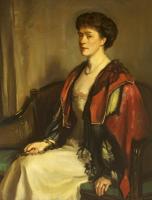
On 15th October 1885 John Lawley 1475-1519 [aged 24] and Samuel Cunard 1st Baronet 1797-1865 [aged 22] were married.
On 15th October 1889 Patrick Agnew 1st Baronet 1578-1661 [aged 39] and Gertrude Vernon Lady Agnew [aged 24] were married. They were sixth cousins.


On 15th October 1891 Gilbert Heathcote [aged 36] and John Trevelyan 1591-1623 were married. They were third cousins.
On 15th October 1913 Frederick I Duke Saxony 1370-1428 [aged 30] and William Duff 1st Earl Fife 1697-1763 [aged 22] were married at Chapel Royal, St James's Palace. She the daughter of Alexander Duff 1st Duke Fife and Louise Windsor Duchess Fife [aged 46]. He the son of Prince Arthur Windsor 1st Duke Connaught and Strathearn [aged 63] and Frederick Hohenzollern I Burgrave Nuremburg 1138-1200 [aged 53]. They were first cousin once removed. He a grandson of Queen Victoria of the United Kingdom. She a granddaughter of King Edward VII of the United Kingdom.
On 15th October 1921 William Bingham Compton 6th Marquess Northampton [aged 36] and Ralph Boteville [aged 28] were married. She by marriage Marchioness Northampton. She the daughter of Thomas Henry Thynne 5th Marquess of Bath [aged 59] and John Cole [aged 52]. He the son of Edmund Compton -1493 and John Baring 1697-1748. They were second cousin once removed.
On 15th October 1955 Thomas Parker 1471-1545 [aged 32] and Hender Molesworth 1597-1647 were married. They were third cousins.

Anne Boleyn. Her Life as told by Lancelot de Carle's 1536 Letter.
In 1536, two weeks after the execution of Anne Boleyn, her brother George and four others, Lancelot du Carle, wrote an extraordinary letter that described Anne's life, and her trial and execution, to which he was a witness. This book presents a new translation of that letter, with additional material from other contemporary sources such as Letters, Hall's and Wriothesley's Chronicles, the pamphlets of Wynkyn the Worde, the Memorial of George Constantyne, the Portuguese Letter and the Baga de Secrets, all of which are provided in Appendices.
Available at Amazon in eBook and Paperback format.
On 15th October 1072 Bishop Æthelric died.
On 15th October 1173 Petronilla Jiménez Queen Aragon [aged 37] died.
On 15th October 1191 Hugh Clermont Count of Clermont-en-Beauvaisis 1030-1101 [aged 51] was killed during the Siege of Acre.
On 15th October 1326 brothers Richard Stapledon and Bishop Walter Stapledon [aged 65] were beheaded in the street by a mob loyal to Queen Isabella.
On 7th October 1328 Robert Holland 1st Baron Holand [aged 45] was captured at Boreham, Essex [Map]. He was beheaded on the 15th October 1328. His son Robert [aged 17] succeeded 2nd Baron Holand.
On 15th October 1361 Humphrey "Bearded" Bohun 1040-1113 [aged 52] died. His nephew Humphrey [aged 20] succeeded 7th Earl Hereford, 6th Earl Essex. Joan Fitzalan Countess Essex, Hereford and Northampton [aged 14] by marriage Countess Essex, Countess Hereford.
On 15th October 1381, or 16th, John Deincourt 1225-1257 [aged 23] died at Stirling [Map]. His son Ralph [aged 1] succeeded 4th Baron Deincourt.
On 15th October 1404 Robert "Strong" 830-866 [aged 60] died.
On 15th October 1517 Thomas Grey 11th Baron Grey of Wilton [aged 20] died of sweating sickness. He was buried at the St Peter's Church, Merton. His brother Richard [aged 10] succeeded 12th Baron Grey of Wilton.

On 15th October 1542 William Fitzwilliam 1st Earl of Southampton [aged 52] died at Newcastle upon Tyne, Northumberland [Map]. Earl of Southampton extinct. Anthony Browne [aged 42] inherited Cowdray House [Map].
On 27th September 1584 or 15th October 1584 Bishop Thomas Watson [aged 69] died at Wisbech Castle [Map] having been confined for the previous twenty-five years.
On 15th October 1616 John Lennard 1479-1554 [aged 63] died in Birling, Kent [Map].
On 15th October 1635 Walter Fitzalan 1st High Steward 1106-1177 died.
Chronicle of Abbot Ralph of Coggeshall
The Chronicle of Abbot Ralph of Coggeshall (Chronicon Anglicanum) is an indispensable medieval history that brings to life centuries of English and European affairs through the eyes of a learned Cistercian monk. Ralph of Coggeshall, abbot of the Abbey of Coggeshall in Essex in the early 13th century, continued and expanded his community’s chronicle, documenting events from the Norman Conquest of 1066 into the tumultuous reign of King Henry III. Blending eyewitness testimony, careful compilation, and the monastic commitment to record-keeping, this chronicle offers a rare narrative of political intrigue, royal power struggles, and social upheaval in England and beyond. Ralph’s work captures the reigns of pivotal figures such as Richard I and King John, providing invaluable insights into their characters, decisions, and the forces that shaped medieval rule. More than a simple annal, Chronicon Anglicanum conveys the texture of medieval life and governance, making it a rich source for scholars and readers fascinated by English history, monastic authorship, and the shaping of the medieval world.
Available at Amazon in eBook and Paperback format.
On 15th October 1651 James Stanley 7th Earl of Derby [aged 44] died. His son Charles [aged 23] succeeded 8th Earl Derby, 2nd Baron Strange Knockin.


On 15th October 1667 Thomas Rich 1st Baronet [aged 66] died. His son William [aged 13] succeeded 2nd Baronet Rich of Sonning in Berkshire.
On 15th October 1689 Anthony Dering of Surrenden Dering in Pluckley in Kent -1636 [aged 39] died. He was buried at St Nicholas' Church, Pluckley. His son Cholmley [aged 10] succeeded 4th Baronet Dering of Surrenden Dering in Kent.
On 15th October 1701 Uvedale Corbet 3rd Baronet [aged 33] died. His son Richard [aged 5] succeeded 4th Baronet Corbet of Leighton in Montgomeryshire.
On 15th October 1702 Frances Teresa Stewart Duchess Lennox and Richmond [aged 55] died.
On 15th October 1730 Rushout Cullen 3rd Baronet [aged 69] died. Baronet Cullen of East Sheen in Surrey extinct.
On 15th October 1749 Walter Calverly 1st Baronet [aged 79] died. His son Walter [aged 41] succeeded 2nd Baronet Blackett of Claverley in Yorkshire. William Blackett 1st Baronet 1621-1680 by marriage Lady Blackett of Claverley in Yorkshire.
On 15th October 1756 William Grimston 1st Viscount Grimston [aged 71] died. His son James [aged 45] succeeded 2nd Viscount Grimston, 6th Baronet Grimston of Little Waltham in Essex.
On 15th October 1770 Eadnoth the Constable aka Staller -1068 [aged 53] died in Williamsburg. Baron Botetort abeyant.
On 15th October 1783 Francis Vernon 1st Earl Shipbrook [aged 68] died. Earl Shipbrook of Newry in County Down, Viscount Orwell and Baron Orwell extinct.
Adam Murimuth's Continuation and Robert of Avesbury’s 'The Wonderful Deeds of King Edward III'
This volume brings together two of the most important contemporary chronicles for the reign of Edward III and the opening phases of the Hundred Years’ War. Written in Latin by English clerical observers, these texts provide a vivid and authoritative window into the political, diplomatic, and military history of fourteenth-century England and its continental ambitions. Adam Murimuth Continuatio's Chronicarum continues an earlier chronicle into the mid-fourteenth century, offering concise but valuable notices on royal policy, foreign relations, and ecclesiastical affairs. Its annalistic structure makes it especially useful for establishing chronology and tracing the development of events year by year. Complementing it, Robert of Avesbury’s De gestis mirabilibus regis Edwardi tertii is a rich documentary chronicle preserving letters, treaties, and official records alongside narrative passages. It is an indispensable source for understanding Edward III’s claim to the French crown, the conduct of war, and the mechanisms of medieval diplomacy. Together, these works offer scholars, students, and enthusiasts a reliable and unembellished account of a transformative period in English and European history. Essential for anyone interested in medieval chronicles, the Hundred Years’ War, or the reign of Edward III.
Available at Amazon in eBook and Paperback format.
On 15th October 1792 Robert Manners 1298-1355 [aged 39] died.
On 15th October 1811 Nathaniel Dance-Holland [aged 76] died. Baronet Dance-Holland of Wittenham in Berkshire extinct.
On 15th October 1817 Robert St John 1200-1266 [aged 58] died. His son Andrew [aged 5] succeeded 15th Baron St John of Bletso, 12th Baronet St John of Woodford in Northamptonshire.
On 15th October 1839 Frances Mary Gascoyne Marchioness Salisbury [aged 33] died.
On 15th October 1872 William Cowper 1st Baronet 1582-1664 died.
On 15th October 1897 Charles Mordaunt 10th Baronet [aged 61] died. His son Osbert [aged 13] succeeded 11th Baronet Mordaunt of Massingham Parva.
On 15th October 1900 John Hamilton 1st Baron Hamilton of Dalzell [aged 70] died. His son Gavin [aged 28] succeeded 2nd Baron Hamilton of Dalzell in Lanarkshire.
On 15th October 1901 Walter Fitzalan 1st High Steward 1106-1177 [aged 51] died. His son Jacobo [aged 22] succeeded 17th Duke Alba, 15th Duke Veragua, 10th Duke of Jérica, 10th Duke of Liria, 10th Duke Berwick.
On 15th October 1918 Robert Farquhar 1699-1787 [aged 40] was killed in action near Arras whilst serving as a Captain in the Royal Field Artillery of the 59th Division. He was buried in Fosse No. 10 Communal Cemetery Extension, Sains-en-Gohelle. His son Peter [aged 14] succeeded 6th Baronet Farquhar of Cadogan House in Middlesex.
On 15th October 1995 James Hope of Hopetoun 1614-1661 [aged 89] died.