

21 Aug is in August.
Chronicle of William Nangis. 1118. The king of Jerusalem, Baldwin I, died; he was succeeded by Baldwin of Bourcq1, his kinsman, count of the city of Roas, which was formerly called Edessa.
Note 1. Baldwin I died on 2nd April 1118. Baldwin II of Bourcq, son of Hugh I, Count of Rethel, crowned on Easter Day in the year 1118, died on 21st August 1131.
MCXVIII. Rex Jerusalem Balduinus primus moritur; cui successit Balduinus de Burgo ejus consanguincus, corms de Roasa civitate, quæ olim dicta fuit Edissa.
1. Baudouin II, du Bourg, fils de Hugues Ier, comte de Rethel, couronné le jour de Pâques de l'an 1118, mourut le 21 août 1131.
On 21st August 1131 Baldwin II King Jerusalem [aged 56] died. Fulk "Young" King Jerusalem [aged 42] succeeded King Jerusalem. Melisende Queen of Jerusalem [aged 26] by marriage Queen Consort Jerusalem.
Chronicle of William Nangis. Baldwin of Bourcq, king of Jerusalem, died [on 21st August 1131]; he was succeeded by his son-in-law Fulk [count of Anjou].
Balduinus de Burgo, rex Jerusalem obiit, cui successit Fulco [comes Andegavis] gener ejus (2).
On 21st August 1157 Alfonso VII King Castile VII King Leon [aged 52] died. His son Sancho [aged 23] succeeded III King Castile. His son Ferdinand [aged 20] succeeded II King Leon.
On 21st August 1190 Godfrey Reginar VIII Duke Lower Lorraine [aged 48] died.
On 21st August 1274 King Philip III of France [aged 29] and Maria of Brabant Queen Consort France [aged 18] were married. She by marriage Queen Consort of France. She the daughter of Henry Reginar III Duke Brabant and Adelaide Burgundy Duchess Brabant. He the son of King Louis IX of France and Margaret Provence Queen Consort France [aged 53]. They were fourth cousins. He a great x 2 grandson of King Henry "Curtmantle" II of England. She a great x 3 granddaughter of King Stephen I England.
Archaeologia Volume 35 1853 XXXIII. On the 21st [Aug 1358] the Countess of Warren [aged 62] arrived at the Castle [Map], and remained during the following day, to attend at the death-bed of Queen Isabella [aged 63], who expired on the 22nd of August. Sir John de Wynewyk also supped at the castle on the day of the Queen's death.
Respecting Isabella's death, she is stated by chroniclers to have sunk, in the course of a single day, under the effect of a too powerful medicine, administered at her own desire. From several entries however in this account, it would appear that she had been in a state requiring medical treatment for some time previous to her decease.
As early as the 15th of February a payment had been made to a messenger going on three several occasions to London, for divers medicines for the Queen, and for the hire of a horse for Master Lawrence, the physician; and again for another journey by night to London. On the same day a second payment was made to the same messenger for two other journeys by night to London, and two to St. Alban's, to procure medicines for the Queen. On the 1st of August a payment was made to Nicholas Thomasyn apothecary, of London, for divers spices and ointment supplied for the Queen's use. On the 12th of August messengers were paid for several night journeys to London for medicines. On the 20th of August, two days only before the Queen's death, payment was made to a messenger who had been sent to London to fetch Master Simon de Bredon "ad videndum statum Reginæ1." Increased alarm for the Queen's health is now visible, for by a payment made on the 24th of August, two days after her death, it appears that a messenger had been sent to Canterbury "cum maxima festinatione2" with letters of the Queen, to bring Master Lawrence, the physician, to see the Queen's state. And another entry occurs of a payment made on the 12th of September to Master Lawrence, of forty shillings, for attendance on the Queen and the Queen of Scotland, at Hertford, for an entire month. Finally an allowance is made to the accountant, on the 6th of December, in terms which, as they are somewhat obscure, I prefer to quote in the original words, "Magistro Johanni Gateneys, de dono, in precio xv. florenorum de xl. denariis, sibi liberatorum in vita Reginæ, ad decoquend' cum medicinis pro corpore Reginæ3, l. s."
It is evident that the body of the Queen remained in the chapel of the Castle until the 23rd of November, as a payment is made to fourteen poor persons for watching the Queen's corpse there, day and night, from Saturday the 25th of August to that date, each of them receiving two pence daily, besides his food. The body was probably removed from Hertford Castle on the 24th of November, as we find, by the continuation of the Account of the expenses of the household, that on the 22nd and 23rd the Bishop of Lincoln, the Abbot of Waltham (? ), the Prior of Coventry, and "plures extranei4" were there for the performance of a solemn mass in the chapel; and the daily expenditure on those days, and on the 24th, rises from the average of six pounds to fifteen and twenty-five pounds. Moreover, from the 25th to the 28th of November the household is in London, after which it returns again to Hertford. The statement, therefore, of chroniclers that the Queen's funeral took place on the 27th is confirmed. She was interred in the choir of the church of the Grey Friars [Map], within Newgate, now Christ Church, the Archbishop of Canterbury officiating, and the King [aged 45] himself being present at the ceremony. Just twenty-eight years before, on nearly the same day, the body of her paramour Mortimer was consigned to its grave in the same building
Note 1. "to see the state of the Queen".
Note 2. "with the greatest haste".
Note 3. "to see the state of the Queen's Master John Gateneys, of the gift, at the price of xv. 40 florins denarii, which had been delivered to him during the Queen's lifetime, to be decoctioned together with the medicines for the Queen's body".
Note 4. "many strangers".
On 21st August 1400 Rupert King Germany [aged 48] was appointed King Germany.
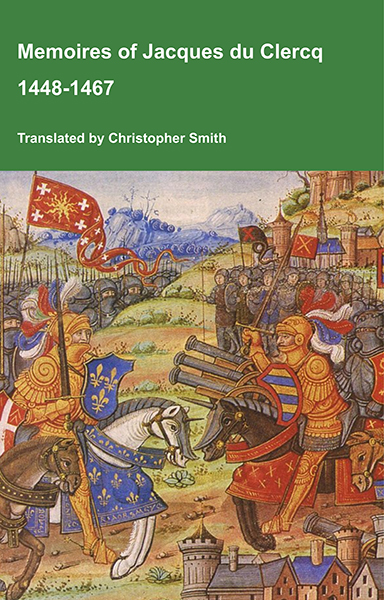 Memoires Jacques du Clercq. Charles, King of France, who, as has been said above, had intended to hold his parliament, called a lit de justice, at Montargis, for several matters concerning the welfare of his kingdom, and especially regarding the case of the Duke of Alençon, who was a prisoner; but because at Montargis there was too little lodging to house so many people as were gathering for this purpose, he decided to carry out what he had intended to do at Montargis in the town of Vendôme. Into which town of Vendôme, to hold the said session, he entered as follows, on the 21st day of August in the said year 1458.
CHARLES, roy de Franche, lequel comme dit est dessus, avoit eu intention de tenir son parlement qu'on appelloit lit de justice a Mortargis, pour plusieurs choses touchant le bien de son royaume, et par especial touchant le fait du duc d'Allenchon lequel estoit prisonnier; pourtant que audit Montargis avoit trop peu de logis pour loger tant de gens, comme a ce faire il commençoit, ordonna de faire ce qu'il avoit en pensée de faire a Montargis, a Vendosme, en laquelle ville de Vendosme, pour tenir sondit siége, il entra comme il s'ensuit, le xxje d'aoust audit an cinquante huict.
On 21st August 1463 Richard Welles 7th Baron Welles, Baron Willoughby [aged 35] arrived at Dover, Kent [Map] with King Edward IV of England [aged 21].
Abbot John Whethamstede’s Chronicle of the Abbey of St Albans
Abbot John Whethamstede's Register aka Chronicle of his second term at the Abbey of St Albans, 1451-1461, is a remarkable text that describes his first-hand experience of the beginning of the Wars of the Roses including the First and Second Battles of St Albans, 1455 and 1461, respectively, their cause, and their consequences, not least on the Abbey itself. His text also includes Loveday, Blore Heath, Northampton, the Act of Accord, Wakefield, and Towton, and ends with the Coronation of King Edward IV. In addition to the events of the Wars of the Roses, Abbot John, or his scribes who wrote the Chronicle, include details in the life of the Abbey such as charters, letters, land exchanges, visits by legates, and disputes, which provide a rich insight into the day-to-day life of the Abbey, and the challenges faced by its Abbot.
Available at Amazon in eBook and Paperback format.
Memoires Jacques du Clercq. In that year, on the 21st day of August [1463], outside the gate of Saint Nicholas at Arras, before the Carmelites, at about eight o'clock in the evening, one named Pierret de Chaumont killed a labourer named Henry, a good and honest man; and the said Pierret was one of four involved in the deed, and it was through drunkenness, for, upon coming out of a tavern which was fairly near the Carmelites, he encountered the said Henry and gave him a blow, because he carried a staff, and then they gave him six dagger wounds, from which he died quickly. The said Henry had six children in wedlock, well regarded and diligent in their work; and the said Pierret, and another besides, were summoned before the chief authority of the town of Arras, and there was no other cause than that the said Henry, carrying a staff, was asked why he bore it, and he replied that it was not for doing harm; whereupon they contradicted him and struck him.
Audit an le xxje jour d'aoust, hors de la porte Saint Nicolas d'Arras, devant les Carmes, environ huict heures du vespres, ung nommé Pierret de Chaumont tua ung mannouvrier, nommé Henry, bon preudhomme, et estoit ledit Pierret, lui quatriesme a faire le fait, et fust par ivrongneté; car a l'issir hors d'une taverne qui estoit assés près des Carmes, trouva ledit Henry, et lui donna une buffe, pourtant qu'il portoit un baston, et puis lui donnerent six coulps de dague, dont il mourut prestement. Icelluy Henry avoit six enfants en marriage, bien renommés et bien faisants leur labeur; lequel Pierret et encoires ung aultre feurent semons sur la teste de la ville d'Arras, et n'y olt aultre cause que ce que ledit Henry, portant ung baston, lui demanderent pourquoy il le portoit, et il respondit que ce n'estoit pour mal faire; lors le desmentirent et frapperent sur lui.
On 21st August 1485, King Richard [aged 32] and his army marched out of Leicester, leaving through the west gate and over Bow Bridge [Map], as they made their way towards Bosworth.

On 21st August 1497 Lorenzo Tornabuoni [aged 32] was beheaded for scheming with France against Florence.
On 21st August 1535 Nicholas Poyntz [aged 25] visited by Henry VIII [aged 44] and Queen Anne Boleyn of England [aged 34] at Acton Court Iron Acton, Gloucestershire [Map].


Henry Machyn's Diary. 21st August 1553. The xxj of August was, by viij of the cloke in the mornyng, on the Towre hylle a-boythe x M1. men and women for to have [seen] the execussyon of the duke of Northumberland [aged 49], for the skaffold was mad rede, and sand and straw was browth, and all the men [that] longest to the Towre, as Hogston, Shordyche, Bow, Ratclyff [Map], Lymhouse, Sant Kateryns, and the waters of the Towre, and the gard, and shyreyffs offesers, and evere man stand in order with ther holbardes, and lanes made, and the hangman was ther, and sodenly they wher commondyd to [depart].
On 21st August 1557 Admiral John Clere [aged 46] drowned with around ninety of his men whilst attempting to storm the Bishop's Palace, Kirkwall.
Henry Machyn's Diary. 21st August 1559. The xxj day of August dyd the veseturs [visitors] sat at sant Brydes, doctur Horne [aged 49] and ij [2] more, for ij [2] churche-wardens and ij [2] more wher sworne to bryng a truw envetore [inventory] of the chyrche.
On 21st August 1565 William Devereux of Merevale [aged 40] was knighted at Kenilworth Castle [Map] by Robert Dudley 1st Earl of Leicester [aged 33].


On 21st August 1627 Maria Eugenia Habsburg Spain [aged 1] died.
On 21st August 1643 Alfonso VI King Portugal was born to John IV King Portugal [aged 39] and Luisa de Guzman Queen Consort Portugal [aged 29]. He married 2nd August 1666 Marie Françoise Élisabeth of Savoy Queen Consort of Portugal, daughter of Charles Amadeus Duke of Nemours and Élisabeth Bourbon Vendôme.
Archaeologia Cambrensis 1820 Page 464. Aug. 21. "The Montgom forces invaded again Meirionyddshyre, and lay for a week at Bala, until they were driven out of the country by Sir John Owen and the North Wales men.
"In this voyage the Parlm burnt Caer Gai1.
Note 1. Caer Gai, supposed to have been a Roman station, was at this time the seat of Rowland Vychan, Esq. a staunch loyalist, who suffered much in the royal cause.—See Camero-Briton, No. 6, p. 231, Note.—Ed.
John Evelyn's Diary. 19th August 1649. I went to salute the French King [aged 10] and the Queen Dowager [aged 47]; and, on the 21st, returned in one of the Queen's coaches with my Lord Germain, Duke of Buckingham [aged 21], Lord Wentworth [aged 37], and Mr. Croftes [aged 38], since Lord Croftes.


John Evelyn's Diary. 21st August 1655. I went to Ryegate [Map], to visit Mrs. Cary, at my Lady Peterborough's [aged 33], in an ancient monastery well in repair, but the park much defaced; the house is nobly furnished. The chimney-piece in the great chamber, carved in wood, was of Henry VIII., and was taken from a house of his in Bletchingley. At Ryegate, was now the Archbishop of Armagh, the learned James Usher [aged 74], whom I went to visit. He received me exceeding kindly. In discourse with him, he told me how great the loss of time was to study much the Eastern languages; that, excepting Hebrew, there was little fruit to be gathered of exceeding labor; that, besides some mathematical books, the Arabic itself had little considerable; that the best text was the Hebrew Bible; that the Septuagint was finished in seventy days, but full of errors, about which he was then writing; that St. Hierome's was to be valued next the Hebrew; also that the seventy translated the Pentateuch only, the rest was finished by others; that the Italians at present understood but little Greek, and Kircher was a mountebank; that Mr. Selden's best book was his "Titles of Honor"; that the church would be destroyed by sectaries, who would in all likelihood bring in Popery. In conclusion he recommended to me the study of philology, above all human studies; and so, with his blessing, I took my leave of this excellent person, and returned to Wotton, Surrey [Map].
Samuel Pepys' Diary. 21st August 1660. This morning I went to White Hall with Sir W. Pen [aged 39] by water, who in our passage told me how he was bred up under Sir W. Batten [aged 59]. We went to Mr. Coventry's [aged 32] chamber, and consulted of drawing my papers of debts of the Navy against the afternoon for the Committee. So to the Admiralty, where W. Hewer [aged 18] and I did them, and after that he went to his Aunt's Blackburn (who has a kinswoman dead at her house to-day, and was to be buried to-night, by which means he staid very late out). I to Westminster Hall [Map], where I met Mr. Crew [aged 62] and dined with him, where there dined one Mr. Hickeman, an Oxford man, who spoke very much against the height of the now old clergy, for putting out many of the religious fellows of Colleges, and inveighing against them for their being drunk, which, if true, I am sorry to hear. After that towards Westminster, where I called on Mr. Pim, and there found my velvet coat (the first that ever I had) done, and a velvet mantle, which I took to the Privy Seal Office, and there locked them up, and went to the Queen's Court, and there, after much waiting, spoke with Colonel Birch [aged 44], who read my papers, and desired some addition, which done I returned to the Privy Seal, where little to do, and with Mr. Moore towards London, and in our way meeting Monsieur Eschar (Mr. Montagu's man), about the Savoy, he took us to the Brazennose Tavern, and there drank and so parted, and I home by coach, and there, it being post-night, I wrote to my Lord to give him notice that all things are well; that General Monk [aged 51] is made Lieutenant of Ireland, which my Lord Roberts [aged 54] (made Deputy) do not like of, to be Deputy to any man but the King himself. After that to bed.


Samuel Pepys' Diary. 21st August 1661. From thence about two o'clock to Mrs. Whately's, but she being going to dinner we went to Whitehall and there staid till past three, and here I understand by Mr. Moore that my Lady Sandwich [aged 36] is brought to bed yesterday of a young Lady, and is very well. So to Mrs. Whately's again, and there were well received, and she desirous to have the thing go forward, only is afeard that her daughter is too young and portion not big enough, but offers £200 down with her. The girl is very well favoured, and a very child, but modest, and one I think will do very well for my brother: so parted till she hears from Hatfield, Hertfordshire from her husband, who is there; but I find them very desirous of it, and so am I Hence home to my father's, and I to the Wardrobe, where I supped with the ladies, and hear their mother is well and the young child, and so home.
William of Worcester's Chronicle of England
William of Worcester, born around 1415, and died around 1482 was secretary to John Fastolf, the renowned soldier of the Hundred Years War, during which time he collected documents, letters, and wrote a record of events. Following their return to England in 1440 William was witness to major events. Twice in his chronicle he uses the first person: 1. when writing about the murder of Thomas, 7th Baron Scales, in 1460, he writes '… and I saw him lying naked in the cemetery near the porch of the church of St. Mary Overie in Southwark …' and 2. describing King Edward IV's entry into London in 1461 he writes '… proclaimed that all the people themselves were to recognize and acknowledge Edward as king. I was present and heard this, and immediately went down with them into the city'. William’s Chronicle is rich in detail. It is the source of much information about the Wars of the Roses, including the term 'Diabolical Marriage' to describe the marriage of Queen Elizabeth Woodville’s brother John’s marriage to Katherine, Dowager Duchess of Norfolk, he aged twenty, she sixty-five or more, and the story about a paper crown being placed in mockery on the severed head of Richard, 3rd Duke of York.
Available at Amazon in eBook and Paperback format.
John Evelyn's Diary. 21st August 1662. I was admitted and then sworn one of the Council of the Royal Society, being nominated in his Majesty's [aged 32] original grant to be of this Council for the regulation of the Society, and making laws and statutes conducible to its establishment and progress, for which we now set apart every Wednesday morning till they were all finished. Lord Viscount Brouncker [aged 51] (that excellent mathematician) was also by his Majesty, our founder, nominated our first President. The King gave us the arms of England to be borne in a canton in our arms, and sent us a mace of silver gilt, of the same fashion and size as those carried before his Majesty, to be borne before our president on meeting days. It was brought by Sir Gilbert Talbot [aged 56], master of his Majesty's jewel house.


Samuel Pepys' Diary. 21st August 1663. Up betimes and among my joyners, and to my office, where the joyners are also laying mouldings in the inside of my closet. Then abroad and by water to White Hall, and there got Sir G. Carteret [aged 53] to sign me my last quarter's bills for my wages, and meeting with Mr. Creed he told me how my Lord Teviott hath received another attaque from Guyland at Tangier [Map] with 10,000 men, and at last, as is said, is come, after a personal treaty with him, to a good understanding and peace with him.
Samuel Pepys' Diary. 21st August 1663. After dinner altered our design to go to Woolwich, Kent [Map], and put it off to to-morrow morning, and so went all to Greenwich, Kent [Map] (Mrs. Waith excepted, who went thither, but not to the same house with us, but to her father's, that lives there), to the musique-house, where we had paltry musique, till the master organist came, whom by discourse I afterwards knew, having employed him for my Lord Sandwich [aged 38], to prick out something (his name Arundell), and he did give me a fine voluntary or two, and so home by water, and at home I find my girl that run away brought by a bedel of St. Bride's Parish, and stripped her and sent her away, and a newe one come, of Griffin's helping to, which I think will prove a pretty girl. Her name, Susan, and so to supper after having this evening paid Mr. Hunt £3 for my viall (besides the carving which I paid this day 10s. for to the carver), and he tells me that I may, without flattery, say, I have as good a Theorbo viall and viallin as is in England. So to bed.

Samuel Pepys' Diary. 21st August 1665. Called up, by message from Lord Bruncker [aged 45] and the rest of my fellows, that they will meet me at the Duke of Albemarle's [aged 56] this morning; so I up, and weary, however, got thither before them, and spoke with my Lord, and with him and other gentlemen to walk in the Parke, where, I perceive, he spends much of his time, having no whither else to go; and here I hear him speake of some Presbyter people that he caused to be apprehended yesterday, at a private meeting in Covent Garden [Map], which he would have released upon paying £5 per man to the poor, but it was answered, they would not pay anything; so he ordered them to another prison from the guard.
Samuel Pepys' Diary. 21st August 1668. After dinner I by coach to my bookseller's in Duck Lane [Map], and there did spend a little time and regarder su moher, and so to St. James's, where did a little ordinary business; and by and by comes Monsieur Colbert [aged 43], the French Embassador, to make his first visit to the Duke of York [aged 34], and then to the Duchess [aged 31]: and I saw it: a silly piece of ceremony, he saying only a few formal words. A comely man, and in a black suit and cloak of silk, which is a strange fashion, now it hath been so long left off: This day I did first see the Duke of York's room of pictures of some Maids of Honour, done by Lilly [aged 49]: good, but not like1.
Note 1. The set of portraits known as "King Charles's Beauties", formerly in Windsor Castle, but now at Hampton Court [Map]. B.


On 21st August 1670 James Fitzjames 1st Duke Berwick was born illegitimately to King James II of England Scotland and Ireland [aged 36] and Arabella Churchill [aged 21].


On 21st August 1673 the Battle of Texel was a naval battle between the English and Dutch. Prince Rupert Palatinate Simmern 1st Duke Cumberland [aged 53] commanded the Allied fleet of about 92 ships and 30 fireships. Jean II d'Estrées commanding the van, and Sir Edward Spragge [aged 53] the rear division. The Dutch fleet of 75 ships and 30 fireships was commanded by Admiral Michiel de Ruyter [aged 66].
Although there were no major ship losses, many were seriously damaged and about 3,000 men died, two-thirds of them English or French.
The Gloucester fought.


John Evelyn's Diary. 21st August 1674. In one of the meadows at the foot of the long Terrace below the Windsor Castle [Map], works were thrown up to show the King [aged 44] a representation of the city of Maestricht, newly taken by the French. Bastians, bulwarks, ramparts, palisadoes, graffs, horn-works, counter-scarps, etc., were constructed. It was attacked by the Duke of Monmouth [aged 25] (newly come from the real siege) and the Duke of York [aged 40], with a little army, to show their skill in tactics. On Saturday night they made their approaches, opened trenches, raised batteries, took the counter-scarp and ravelin, after a stout defense; great guns fired on both sides, grenadoes shot, mines sprung, parties sent out, attempts of raising the siege, prisoners taken, parleys; and, in short, all the circumstances of a formal siege, to appearance, and, what is most strange all without disorder, or ill accident, to the great satisfaction of a thousand spectators. Being night, it made a formidable show. The siege being over, I went with Mr. Pepys [aged 41] back to London, where we arrived about three in the morning.


On 21st August 1690 John Margetson [aged 34] died at Limerick, County Limerick during the Siege of Limerick.
On 21st August 1733 Fredericka Magdalene Saxe Coburg Saalfeld was born to Francis Josias Saxe Coburg Saalfeld Duke Saxe Coburg Saalfeld [aged 35] and Duchess Anna Sophie Of Saxe-Coburg-Saalfeld [aged 32] at Coburg. Coefficient of inbreeding 3.40%. She died aged less than one years old.
On 21st August 1737 James Hamilton 5th Duke Hamilton 2nd Duke Brandon [aged 34] and Anne Spencer Duchess Hamilton Duchess Brandon [aged 27] were married. She by marriage Duchess Hamilton, Duchess Brandon of Suffolk. He the son of James Hamilton Duke Hamilton, 1st Duke Brandon and Elizabeth Gerard Duchess Brandon [aged 57].
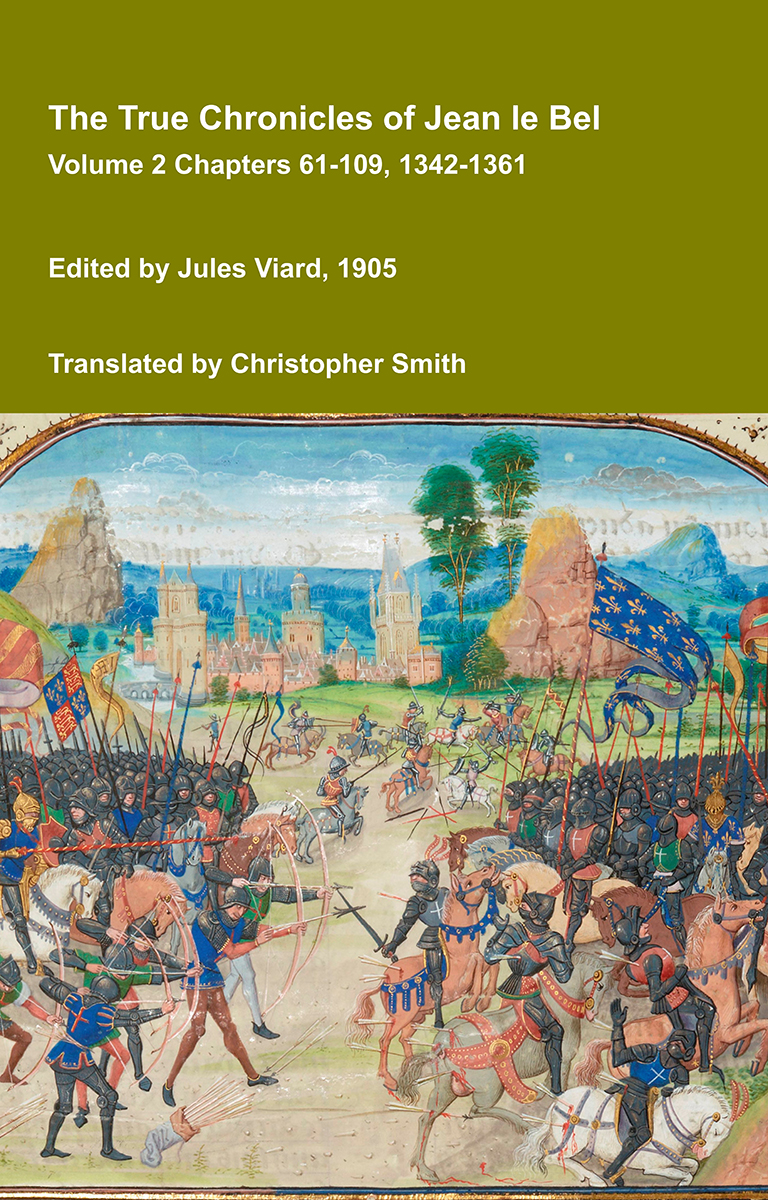 Chronicle of Jean le Bel Volume 2. In the year of grace 1350, King Philip of France died1, and his son, the Duke of Normandy, was crowned at Reims2. He was called King John of France, and he immediately debased the coinage out of greed3, and had new écus made which were called 'Johannes', of which the third part was copper.
L'an de grace mil CCCL, trespassa le roy Philippe de France', et fut couronné son filz le duc de Normendye à Rains. Si fut appellé le roy Jehan de France, et empira tantost les monnoyes par convoitise, et fit faire nouveaulx escus qu'on nommoit Johannes, dont la tierce partie estoit cuivre.
Note 1. Philip VI died in the night from Sunday 22nd to Monday 23rd August, as Gilles li Muisis indicates,, although he makes an error in saying that the night of Saint Bartholomew, that is, the 23rd, was a Sunday. This error is repeated by the Grandes Chroniques, which say that Philip of Valois died on Sunday 23rd August. But 23rd August was a Monday. The Chronique de Richard Lescot 22nd August. All these errors and divergences are very well explained by the fact that he died in the night of 22nd to 23rd August, the eve of Saint Bartholomew. Although the Grandes Chroniques and Richard Lescot say that he died at Nogent-le-Roi, Eure-et-Loir, Luce's Froissart, relying on the fact that the castle of Nogent-le-Roi belonged to the King of Navarre, says that Philip VI must rather have died at the abbey of Coulombs, situated one kilometre from Nogent. His opinion is confirmed by Gilles li Muisis, who says that he died 'in the monastery of Sainte-Colombe, of the order of Saint Benedict, which is situated near the city of Chartres'. According to the Grandes Chroniques, Philip VI’s body was brought to Notre-Dame of Paris on Thursday 26th August, and on Saturday 28th August his funeral took place. He was buried at Saint-Denis 'on the left side of the high altar'. His entrails were taken to the Jacobins in Paris, and his heart to Bourgfontaine in Valois.
1. Philippe VI mourut dans la nuit du dimanche 22 au lundi 23 août, comme l'indique Gilles li Muisis (op. cé P400), qui, cependant, commet une erreur en disant que la nuit de la Saint-Barthélemy (soit le 23) était un dimanche. Cette erreur est reproduite par les Grandes chroniques, t. V, p495, qui disent que Philippe de Valois mourut le dimanche 23 août. Or, le 23 août est un lundi. La Chronique de Richard Lescot (p. 88), place sa mort le 22 août. Toutes ces erreurs et ces divergences s'expliquent très bien par ce fait qu'il mourut dans la nuit du 22 au 23 (veille de la Saint-Barthélemy). Bien que les Grandes chroniques et Richard Lescot disent qu'il mourut à Nogent-le-Roi (Eure-et-Loir, arr. de Dreux, ch-l. de cant.), M. Luce, dans son édition de Froissart, t. LV, p. x1, n.2, s'appuyant sur ce que le château de Nogent-le-Roi appartenait au roi de Navarre, dit que Philippe VI dut plutôt mourir à l'abbaye de Coulombs, située à un kilomètre de Nogent. Son opirion est confirmée par Gilles li Muisis, qui dit qu'il mourut "in monasterio S. Columbæ ordinis Sancti Benedicti quod est situm prope eivitatem Carnotensem". D'après les Grandes chroniques, le corps de Philippe VI fut apporté à Notre-Dame de Paris le jeudi 26 août et le samedi 28 août eurent lieu ses obsèques, et il fut enterré à Saint-Denis "au costé senestre du grant autel". Ses entrailles furent portées aux Jacobins, à Paris, et son cœur à Bourgfontainc en Valois. Voy. aussi Guillaume de Nangis, éd. Géraud, t. Il, p. 221 et 222, et le compte des obsèques de ce roi publiées dans les Archives historiques, artistiques et linéraires, t. Il, p. 49 et suiv.
Note 2. The coronation of John the Good took place at Reims on Sunday 26th September 1350.
2. Le couronnement de Jean le Bon eut lieu à Reims le dimanche 26 septembre 1350. (Froissart, éd. Luce, t. IV, p400, et Grandes Chroniques, t. VI, p. 1.)
Note 3. Already Philip of Valois, by an ordinance of 21st August 1350, had debased the coinage. John the Good, who had to put this into effect, himself ordered a further debasement on 19th March and 14th May 1351.
3. Déjà Philippe de Valois, par ordonnance du 21 août 1350, avait affaibli la monnaie, (Ord., t. XII, p. 95.) Jean le Bon, qui avait dà la mettre à exécution, ordonna lui-même un nouvel affaiblissement le 19 mars et le 14 mai 1351. (Ord., t I, p. 389 et 428.)
On 21st August 1765 Aubrey Beauclerk 6th Duke St Albans was born to Aubrey Beauclerk 5th Duke St Albans [aged 25] and Catherine Ponsonby Duchess St Albans [aged 22]. He a great x 2 grandson of King Charles II of England Scotland and Ireland. He married (1) 9th July 1788 Jane Moses and had issue (2) 15th August 1802 his half third cousin Louisa Grace Manners Duchess St Albans, daughter of John Manners and Louisa Tollemache 7th Countess Dysart, and had issue.
On 21st August 1765 King William IV of the United Kingdom was born to King George III of Great Britain and Ireland [aged 27] at Buckingham Palace [Map]. He married 11th July 1818 Queen Adelaide of England and had issue.
The Deeds of the Dukes of Normandy
The Gesta Normannorum Ducum [The Deeds of the Dukes of Normandy] is a landmark medieval chronicle tracing the rise and fall of the Norman dynasty from its early roots through the pivotal events surrounding the Norman Conquest of England. Originally penned in Latin by the monk William of Jumièges shortly before 1060 and later expanded at the behest of William the Conqueror, the work chronicles the deeds, politics, battles, and leadership of the Norman dukes, especially William’s own claim to the English throne. The narrative combines earlier historical sources with firsthand information and oral testimony to present an authoritative account of Normandy’s transformation from a Viking settlement into one of medieval Europe’s most powerful realms. William’s history emphasizes the legitimacy, military prowess, and governance of the Norman line, framing their expansion, including the conquest of England, as both divinely sanctioned and noble in purpose. Later chroniclers such as Orderic Vitalis and Robert of Torigni continued the history, extending the coverage into the 12th century, providing broader context on ducal rule and its impact. Today this classic work remains a foundational source for understanding Norman identity, medieval statesmanship, and the historical forces that reshaped England and Western Europe between 800AD and 1100AD.
Available at Amazon in eBook and Paperback format.

After 21st August 1780. Memorial to George Venables-Vernon 1st Baron Vernon [deceased] at All Saints Church, Sudbury [Map].


On 21st August 1786 George Brudenell aka Montagu 1st Duke Montagu [aged 74] was created 1st Baron Montagu of Boughton in Northamptonshire.
On 21st August 1791 Augustus Fitzgerald 3rd Duke Leinster was born to William Robert Fitzgerald 2nd Duke Leinster [aged 42] and Emilia St George Duchess Leinster. He a great x 3 grandson of King Charles II of England Scotland and Ireland. He married 16th June 1816 his half fourth cousin Charlotte Augusta Stanhope Duchess Leinster, daughter of Charles Stanhope 3rd Earl of Harrington and Jane Fleming Countess Harrington, and had issue.

On 21st August 1796 William Henry Cavendish-Scott-Bentinck was born to William Henry Cavendish-Scott-Bentinck 4th Duke Portland [aged 28] and Henrietta Scott Duchess Portland [aged 22].
On 21st August 1808 the Battle of Vimeiro was fought at which Earl of Wellington [aged 39] defeated the French under Major-General Jean-Andoche Junot near the village of Vimeiro.
General Thomas Bradford [aged 30] fought.


On 21st August 1813 Queen Sophia of Sweden [aged 67] died.
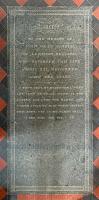
St Mary the Virgin Church, Edelsborough [Map]. Memorial to John Gray Ginger, died 21st August 1835, aged 30 years.
Ten Years' Digging. On the 21st of August we examined a very large barrow [Map] [Brund Low [Map]] near Sheen, in Staffordshire, about 35 yards diameter and more than 9 feet deep, wholly composed of earth, which, near the natural surface, was mixed with charcoal, and varied by layers of moss. The latter in a great measure retained its natural colour, and contained many beetles, some of which were well preserved. About a yard from the bottom a thin ferruginous seam ran through the mound, perfectly solid and hard like pottery, which might possibly be the effect of heat. No interment was found, but there is little doubt of the existence of a deposit of calcined bones in some part of the mound.
After 26th April 1865. Monument to Emily Eglantine Balfour [deceased] who probably died in childbirth, or as a consequence of childbirth, having given birth to three children since her marriage on 21st August 1861. Sculpted by James Forsyth [aged 37]. Holy Cross Church, Burley-on-the-Hill [Map].
Emily Eglantine Balfour: On 21st August 1841 she was born to Colonel John Balfour 7th of Balbirnie and Georgiana Campbell. On 21st August 1861 George Henry Finch and she were married at St Peter's Church, Pimlico. They were half second cousin twice removed. On 26th April 1865 Emily Eglantine Balfour died at Burley-on-the-Hill, Rutlandshire.


On 21st August 1871 Sybil Evelyn De Vere Beauclerk was born to William Amelius Aubrey Beauclerk 10th Duke St Albans [aged 31] and Sybil Mary Grey Duchess St Albans [aged 22]. She married before 17th September 1900 her fifth cousin William Frank Lascelles and had issue.
On 21st August 1885 Gerald Wellesley 7th Duke Wellington was born to Arthur Charles Wellesley 4th Duke Wellington [aged 36] and Kathleen Emily Bulkeley Williams Duchess Wellington [aged 37]. He married 30th April 1914 Dorothy Violet Ashton Duchess Wellington, daughter of Robert Ashton and Lucy Cecilia Dunn-Garnder Countess Scarborough, and had issue.
Chronicle of a Bourgeois of Valenciennes
Récits d’un bourgeois de Valenciennes aka The Chronicle of a Bourgeois of Valenciennes is a vivid 14th-century vernacular chronicle written by an anonymous urban chronicler from Valenciennes in the County of Hainaut. It survives in a manuscript that describes local and regional history from about 1253 to 1366, blending chronology, narrative episodes, and eyewitness-style accounts of political, military, and social events in medieval France, Flanders, and the Low Countries. The work begins with a chronological framework of events affecting Valenciennes and its region under rulers such as King Philip VI of France and the shifting allegiances of local nobility. It includes accounts of conflicts, sieges, diplomatic manoeuvres, and the impact of broader struggles like the Hundred Years’ War on urban life in Hainaut. Written from the perspective of a burgher (bourgeois) rather than a monastery or royal court, the chronicle offers a rare lay viewpoint on high politics and warfare, reflecting how merchants, townspeople, and civic institutions experienced the turbulence of the 13th and 14th centuries. Its narrative style combines straightforward reporting of events with moral and civic observations, making it a valuable source for readers interested in medieval urban society, regional politics, and the lived experience of war and governance in pre-modern Europe.
Available at Amazon in eBook and Paperback format.
On 21st August 1886 John Henry Montagu Manners 9th Duke Rutland was born to Henry John Brinsley Manners 8th Duke Rutland [aged 34] and Violet Lindsay Duchess Rutland [aged 30]. He was educated at Eton College [Map] and Trinity College, Cambridge University [Map]. He married 27th January 1916 Kathleen Tennant Duchess Rutland and had issue.

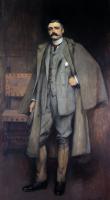


On 21st August 1891 Harry George Powlett 4th Duke Cleveland [aged 88] died at Cleveland House, 16 St James' Square, St James'. Duke of Cleveland, Marquess of Cleveland, Earl Darlington and Viscount Barnard, Baron Raby of Raby Castle in County Durham extinct.
Henry de Vere Vane 9th Baron Barnard [aged 37] succeeded 9th Baron Barnard. Catherine Sarah Cecil Baroness Barnard [aged 30] by marriage Baroness Barnard.
On 21st August 1915 John Peniston Milbanke 10th Baronet [aged 42] was killed in action leading his men on Hill 70 at the farthest point reached by British troops at Suvla Bay. His body was not recovered. His son John [aged 13] succeeded 11th Baronet Milbanke of Halnaby in Yorkshire.
On 21st August 1915 Thomas Pakenham 5th Earl of Longford [aged 50] was killed in action during the Gallipoli Campaign. His son Edward [aged 12] succeeded 6th Earl Longford, 7th Baron Longford, 5th Baron Silchester of Silchester in Hampshire.
On 21st August 1930 Princess Margaret was born to King George VI of the United Kingdom [aged 34] and Elizabeth Bowes-Lyon Queen Consort England [aged 30] at Glamis Castle. She married 6th May 1960 Antony Armstrong-Jones 1st Earl of Snowdon and had issue.


On 21st August 1944 Lieutenant Edward Norman Petty-Fitzmaurice [aged 22] was killed in action in Italy. He is commemorated on Panel 2 of the Cassino memorial. His older brother Charles Petty-Fitzmaurice 7th Marquess of Lansdowne [aged 27] was killed nine days later.
On 21st August 1948 Frederick Hall [aged 88] died.
On 21st August 1959 Jacob Epstein [aged 78] died.
On 21st August 1331 Count Nicholas Orsini was born to Count Roberto Orsini [aged 36] and Sueva del Balzo. He a great x 3 grandson of King John of England. He married Jeanne Sabran and had issue.
On 21st August 1597 Roger Twysden 2nd Baronet was born to William Twysden 1st Baronet [aged 31] and Anne Finch Lady Twysden [aged 23]. He married 1635 Isabella Saunders and had issue.
On 21st August 1619 John Borlase 1st Baronet was born to William Borlase [aged 30] and Jane Popham at Littlecote House. He married 4th December 1637 Alice Bankes Lady Borlase and had issue.
On 21st August 1643 Alfonso VI King Portugal was born to John IV King Portugal [aged 39] and Luisa de Guzman Queen Consort Portugal [aged 29]. He married 2nd August 1666 Marie Françoise Élisabeth of Savoy Queen Consort of Portugal, daughter of Charles Amadeus Duke of Nemours and Élisabeth Bourbon Vendôme.
On 21st August 1657 Charles Yelverton 14th Baron Grey of Ruthyn was born to Henry Yelverton Baron Grey of Ruthyn [aged 24] and Susan Longueville 13th Baroness Grey of Ruthyn.
William of Worcester's Chronicle of England
William of Worcester, born around 1415, and died around 1482 was secretary to John Fastolf, the renowned soldier of the Hundred Years War, during which time he collected documents, letters, and wrote a record of events. Following their return to England in 1440 William was witness to major events. Twice in his chronicle he uses the first person: 1. when writing about the murder of Thomas, 7th Baron Scales, in 1460, he writes '… and I saw him lying naked in the cemetery near the porch of the church of St. Mary Overie in Southwark …' and 2. describing King Edward IV's entry into London in 1461 he writes '… proclaimed that all the people themselves were to recognize and acknowledge Edward as king. I was present and heard this, and immediately went down with them into the city'. William’s Chronicle is rich in detail. It is the source of much information about the Wars of the Roses, including the term 'Diabolical Marriage' to describe the marriage of Queen Elizabeth Woodville’s brother John’s marriage to Katherine, Dowager Duchess of Norfolk, he aged twenty, she sixty-five or more, and the story about a paper crown being placed in mockery on the severed head of Richard, 3rd Duke of York.
Available at Amazon in eBook and Paperback format.
On 21st August 1670 James Fitzjames 1st Duke Berwick was born illegitimately to King James II of England Scotland and Ireland [aged 36] and Arabella Churchill [aged 21].
On 21st August 1691 Anne Master Countess Coventry was born to Streynsham Master of Codnor Castle in Derbyshire and Elizabeth Leigh. She married (1) 25th June 1715 Gilbert Coventry 4th Earl Coventry, son of Thomas Coventry 1st Earl Coventry and Winifred Edgecumbe (2) 12th December 1752 Edmund Pytts of Kyre in Worcestershire.

On 21st August 1702 Robert Throckmorton 4th Baronet was born to Robert Throckmorton 3rd Baronet [aged 40] and Mary Yate Lady Throckmorton [aged 34]. He married (1) 1721 Theresa Herbert Lady Throckmorton, daughter of William Herbert 2nd Marquess Powis and Mary Preston Marchioness Powis, and had issue (2) January 1738 Catherine Collingwood Lady Throckmorton.
On 21st August 1733 Fredericka Magdalene Saxe Coburg Saalfeld was born to Francis Josias Saxe Coburg Saalfeld Duke Saxe Coburg Saalfeld [aged 35] and Duchess Anna Sophie Of Saxe-Coburg-Saalfeld [aged 32] at Coburg. Coefficient of inbreeding 3.40%. She died aged less than one years old.

On 21st August 1754 Banastre Tarleton 1st Baronet was born to John Tarleton [aged 36] and Jane Parker [aged 28]. He married 1798 Susan Bertie, daughter of Robert Bertie 4th Duke Ancaster and Kesteven.
On 21st August 1765 Aubrey Beauclerk 6th Duke St Albans was born to Aubrey Beauclerk 5th Duke St Albans [aged 25] and Catherine Ponsonby Duchess St Albans [aged 22]. He a great x 2 grandson of King Charles II of England Scotland and Ireland. He married (1) 9th July 1788 Jane Moses and had issue (2) 15th August 1802 his half third cousin Louisa Grace Manners Duchess St Albans, daughter of John Manners and Louisa Tollemache 7th Countess Dysart, and had issue.
On 21st August 1765 King William IV of the United Kingdom was born to King George III of Great Britain and Ireland [aged 27] at Buckingham Palace [Map]. He married 11th July 1818 Queen Adelaide of England and had issue.
On 21st August 1766 William Assheton Harbord 2nd Baron Suffield was born to Harbord Morden aka Harbord 1st Baron Suffield [aged 32] and Mary Assheton Baroness Suffield. He married before 7th February 1821 his half second cousin Caroline Hobart Baroness Suffield, daughter of John Hobart 2nd Earl Buckinghamshire and Mary Anne Drury Countess Buckinghamshire.
On 21st August 1773 Augustus George Legge was born to William Legge 2nd Earl Dartmouth [aged 42] and Frances Catherine Gounter Nicoll Countess Dartmouth [aged 40]. He married 15th December 1795 his second cousin Honora Bagot and had issue.


On 21st August 1776 James Langham 10th Baronet was born to James Langham 7th Baronet [aged 40] and Juliana Musgrave Lady Langham. He married 26th May 1800 Elizabeth Burdett Lady Langham and had issue.
Henrici Quinti, Angliæ Regis, Gesta, is a first-hand account of the Agincourt Campaign, and subsequent events to his death in 1422. The author of the first part was a Chaplain in King Henry's retinue who was present from King Henry's departure at Southampton in 1415, at the siege of Harfleur, the battle of Agincourt, and the celebrations on King Henry's return to London. The second part, by another writer, relates the events that took place including the negotiations at Troye, Henry's marriage and his death in 1422.
Available at Amazon in eBook and Paperback format.
On 21st August 1791 Augustus Fitzgerald 3rd Duke Leinster was born to William Robert Fitzgerald 2nd Duke Leinster [aged 42] and Emilia St George Duchess Leinster. He a great x 3 grandson of King Charles II of England Scotland and Ireland. He married 16th June 1816 his half fourth cousin Charlotte Augusta Stanhope Duchess Leinster, daughter of Charles Stanhope 3rd Earl of Harrington and Jane Fleming Countess Harrington, and had issue.
On 21st August 1796 William Henry Cavendish-Scott-Bentinck was born to William Henry Cavendish-Scott-Bentinck 4th Duke Portland [aged 28] and Henrietta Scott Duchess Portland [aged 22].
On 21st August 1797 Thomas Charles Style 8th Baronet was born to Charles Style 6th Baronet.
On 21st August 1808 John Charles Dundas was born to Lawrence Dundas 1st Earl Zetland [aged 42] in Marylebone and Harriet Hale Baroness Dundas [aged 39].
On 21st August 1819 George Croxton-Shiffner 4th Baronet was born to George Shiffner 3rd Baronet [aged 28].

On 21st August 1823 George Thomas Orlando Bridgeman was born to George Bridgeman 2nd Earl Bradford [aged 33] and Georgina Elizabeth Moncrieffe Countess Bradford [aged 33]. He married 1850 Emily Mary Bagot, daughter of Bishop Richard Bagot and Harriet Villiers, and had issue.
On 21st August 1831 Henry Byng 4th Earl Strafford was born to George Byng 2nd Earl Strafford [aged 25] and Agnes Paget [aged 27]. He married (1) 15th October 1863 his fourth cousin Henrietta Louisa Elizabeth Danneskiold Samsøe and had issue (2) 6th December 1898 Cora Smith Countess Strafford.
On 21st August 1838 Richard Courtenay Musgrave 11th Baronet was born to George Musgrave 10th Baronet [aged 39] and Charlotte Graham Lady Musgrave [aged 34]. He married 1867 Adora Frances Olga Wells Lady Musgrave and Baroness Brougham and had issue.
On 21st August 1841 Bernard Thomas Howard was born to Charles Howard 17th Earl Suffolk 10th Earl Berkshire [aged 35] and Isabella Catherine Mary Howard-Molyneux-Howard Countess Suffolk and Berkshire [aged 34].
On 21st August 1846 Henry Ulrick Lascelles 5th Earl Harewood was born to Henry Thynne Lascelles 4th Earl Harewood [aged 22] and Elizabeth Joanna Burgh [aged 20]. He married 5th November 1881 his third cousin Florence Katharine Bridgeman Countess Harewood, daughter of Orlando Bridgeman 3rd Earl Bradford and Selina Weld-Forester Countess Bradford, and had issue.
Adam Murimuth's Continuation and Robert of Avesbury’s 'The Wonderful Deeds of King Edward III'
This volume brings together two of the most important contemporary chronicles for the reign of Edward III and the opening phases of the Hundred Years’ War. Written in Latin by English clerical observers, these texts provide a vivid and authoritative window into the political, diplomatic, and military history of fourteenth-century England and its continental ambitions. Adam Murimuth Continuatio's Chronicarum continues an earlier chronicle into the mid-fourteenth century, offering concise but valuable notices on royal policy, foreign relations, and ecclesiastical affairs. Its annalistic structure makes it especially useful for establishing chronology and tracing the development of events year by year. Complementing it, Robert of Avesbury’s De gestis mirabilibus regis Edwardi tertii is a rich documentary chronicle preserving letters, treaties, and official records alongside narrative passages. It is an indispensable source for understanding Edward III’s claim to the French crown, the conduct of war, and the mechanisms of medieval diplomacy. Together, these works offer scholars, students, and enthusiasts a reliable and unembellished account of a transformative period in English and European history. Essential for anyone interested in medieval chronicles, the Hundred Years’ War, or the reign of Edward III.
Available at Amazon in eBook and Paperback format.
On 21st August 1850 Marcia Louisa Pitt-Rivers was born to George Pitt-Rivers 4th Baron Rivers [aged 40] and Susan Georgiana Leveson-Gower Baroness Rivers [aged 40]. She died aged less than one years old.
On 21st August 1860 Adelaide Forbes was born to George Arthur Hastings Forbes 7th Earl Granard [aged 27] at Dublin [Map]. She married 13th April 1880 Maurice Fitzgerald, son of Charles William Fitzgerald Fitzgerald 4th Duke Leinster and Caroline Leveson-Gower Duchess Leinster.
On 21st August 1864 Philip Petre 15th Baron Petre was born to William Bernard Petre 12th Baron Petre [aged 46] and Mary Theresa Clifford [aged 40]
On 21st August 1869 Lieutenant-Colonel William Orde-Powlett 5th Baron Bolton was born to William Thomas Orde-Powlett 4th Baron Bolton [aged 24] and Algitha Frederica Lumley Baroness Bolton [aged 21].
On 21st August 1871 Sybil Evelyn De Vere Beauclerk was born to William Amelius Aubrey Beauclerk 10th Duke St Albans [aged 31] and Sybil Mary Grey Duchess St Albans [aged 22]. She married before 17th September 1900 her fifth cousin William Frank Lascelles and had issue.
On 21st August 1871 Thomas Garmondsay Wrightson 2nd Baronet was born to Thomas Wrightson 1st Baronet [aged 32].
On 21st August 1885 Gerald Wellesley 7th Duke Wellington was born to Arthur Charles Wellesley 4th Duke Wellington [aged 36] and Kathleen Emily Bulkeley Williams Duchess Wellington [aged 37]. He married 30th April 1914 Dorothy Violet Ashton Duchess Wellington, daughter of Robert Ashton and Lucy Cecilia Dunn-Garnder Countess Scarborough, and had issue.
On 21st August 1886 John Henry Montagu Manners 9th Duke Rutland was born to Henry John Brinsley Manners 8th Duke Rutland [aged 34] and Violet Lindsay Duchess Rutland [aged 30]. He was educated at Eton College [Map] and Trinity College, Cambridge University [Map]. He married 27th January 1916 Kathleen Tennant Duchess Rutland and had issue.
On 21st August 1924 Gerald David Lascelles was born to Henry Lascelles 6th Earl Harewood [aged 41] and Princess Mary Windsor Countess Harewood [aged 27] at Goldsborough Hall, Knaresborough. He a grandson of King George V of the United Kingdom.


On 21st August 1930 Princess Margaret was born to King George VI of the United Kingdom [aged 34] and Elizabeth Bowes-Lyon Queen Consort England [aged 30] at Glamis Castle. She married 6th May 1960 Antony Armstrong-Jones 1st Earl of Snowdon and had issue.
On 21st August 1937 Philippa Dorothy Bluet Wallop was born to Gerard Wallop 9th Earl of Portsmouth [aged 39]. She married Charles Gerald John Cadogan 8th Earl Cadogan, son of William Gerald Charles Cadogan 7th Earl Cadogan and Primrose Lilian Yarde-Buller Countess Cadogan.
Chronicle of Walter of Guisborough
A canon regular of the Augustinian Guisborough Priory, Yorkshire, formerly known as The Chronicle of Walter of Hemingburgh, describes the period from 1066 to 1346. Before 1274 the Chronicle is based on other works. Thereafter, the Chronicle is original, and a remarkable source for the events of the time. This book provides a translation of the Chronicle from that date. The Latin source for our translation is the 1849 work edited by Hans Claude Hamilton. Hamilton, in his preface, says: 'In the present work we behold perhaps one of the finest samples of our early chronicles, both as regards the value of the events recorded, and the correctness with which they are detailed; Nor will the pleasing style of composition be lightly passed over by those capable of seeing reflected from it the tokens of a vigorous and cultivated mind, and a favourable specimen of the learning and taste of the age in which it was framed.'
Available at Amazon in eBook and Paperback format.
On 21st August 1941 Robin Chetwynd 9th Baronet was born to Arthur Ralph Chetwynd 8th Baronet [aged 28].
On 21st August 1945 Shaun Agar 6th Earl Normanton was born to Edward Agar 5th Earl Normanton [aged 35] and Fiona Pratt Countess Normanton.
On 21st August 1274 King Philip III of France [aged 29] and Maria of Brabant Queen Consort France [aged 18] were married. She by marriage Queen Consort of France. She the daughter of Henry Reginar III Duke Brabant and Adelaide Burgundy Duchess Brabant. He the son of King Louis IX of France and Margaret Provence Queen Consort France [aged 53]. They were fourth cousins. He a great x 2 grandson of King Henry "Curtmantle" II of England. She a great x 3 granddaughter of King Stephen I England.

On 21st August 1636 Dutton Gerard 3rd Baron Gerard [aged 23] and Elisabeth O'Brien Baroness Gerard were married. She by marriage Baroness Gerard of Gerard's Bromley. She the daughter of Henry O'Brien 5th Earl Thomond [aged 48] and Mary Brereton Countess Thomond [aged 56].
On 21st August 1737 James Hamilton 5th Duke Hamilton 2nd Duke Brandon [aged 34] and Anne Spencer Duchess Hamilton Duchess Brandon [aged 27] were married. She by marriage Duchess Hamilton, Duchess Brandon of Suffolk. He the son of James Hamilton Duke Hamilton, 1st Duke Brandon and Elizabeth Gerard Duchess Brandon [aged 57].
On 21st August 1777 Charles Townshend 1st Baron Bayning [aged 47] and Annabella Smith-Powlett [aged 23] were married at Lambeth Palace [Map]. The difference in their ages was 24 years. They were first cousin once removed.
On 21st August 1799 Richard Borough 1st Baronet [aged 43] and Anna Maria Lake [aged 24] were married.
On 21st August 1844 William Compton 4th Marquess Northampton [aged 26] and Eliza Harriet Elliot Marchioness Northampton [aged 24] were married at Naples [Map]. He the son of Spencer Compton 2nd Marquess Northampton [aged 54] and Margaret Douglas-Maclean-Clephane Marchioness Northampton.
On 21st August 1890 Henry Cubitt 2nd Baron Ashcombe [aged 23] and Maud Marianne Calvert [aged 25] were married.
On 21st August 1915 Hubert Acland 4th Baronet [aged 25] and Lalage Mary Kathleen Acland [aged 26] were married at All Saints Church, Dorchester. They were second cousins.
On 21st August 1131 Baldwin II King Jerusalem [aged 56] died. Fulk "Young" King Jerusalem [aged 42] succeeded King Jerusalem. Melisende Queen of Jerusalem [aged 26] by marriage Queen Consort Jerusalem.
Chronicle of a Bourgeois of Valenciennes
Récits d’un bourgeois de Valenciennes aka The Chronicle of a Bourgeois of Valenciennes is a vivid 14th-century vernacular chronicle written by an anonymous urban chronicler from Valenciennes in the County of Hainaut. It survives in a manuscript that describes local and regional history from about 1253 to 1366, blending chronology, narrative episodes, and eyewitness-style accounts of political, military, and social events in medieval France, Flanders, and the Low Countries. The work begins with a chronological framework of events affecting Valenciennes and its region under rulers such as King Philip VI of France and the shifting allegiances of local nobility. It includes accounts of conflicts, sieges, diplomatic manoeuvres, and the impact of broader struggles like the Hundred Years’ War on urban life in Hainaut. Written from the perspective of a burgher (bourgeois) rather than a monastery or royal court, the chronicle offers a rare lay viewpoint on high politics and warfare, reflecting how merchants, townspeople, and civic institutions experienced the turbulence of the 13th and 14th centuries. Its narrative style combines straightforward reporting of events with moral and civic observations, making it a valuable source for readers interested in medieval urban society, regional politics, and the lived experience of war and governance in pre-modern Europe.
Available at Amazon in eBook and Paperback format.
On 21st August 1148 William II Count Nevers died. Possibly 5th August 1089.
On 21st August 1157 Alfonso VII King Castile VII King Leon [aged 52] died. His son Sancho [aged 23] succeeded III King Castile. His son Ferdinand [aged 20] succeeded II King Leon.
On 21st August 1190 Godfrey Reginar VIII Duke Lower Lorraine [aged 48] died.
On 21st August 1271 Alphonse Count Poitiers II Count Toulouse [aged 50] died.
On 21st August 1337 Joan Lovel Baroness Maynard [aged 40] died at Castle Cary, Somerset.
On 21st August 1400 Isabel Loring Baroness Harington died.
On 21st August 1600 Mary Howard Baroness Dudley [aged 52] died.
On 21st August 1627 Maria Eugenia Habsburg Spain [aged 1] died.
On 21st August 1631 Simon Bennett 1st Baronet [aged 47] died. Baronet Bennett of Bechampton extinct.
On 20th August 1632 Dorothy St John Countess Bath died. She was buried on 21st August 1632 at St Peter's Church, Tawstock [Map]. There are letters from her husband Edward Bourchier 4th Earl Bath [aged 42] and from the Earl of Bedford, both dat. 26 May 1633, referring to "the fresh sense he hath of the loss of so noble a wife," and to his unwillingness on that account to marry "Mistress Dorothy Seymour," as suggested by the King.

On 21st August 1673 Henry Grey 1st Earl Stamford [aged 74] died. His grandson Thomas [aged 19] succeeded 2nd Earl Stamford, 3rd Baron Grey of Groby.
On 21st August 1760 Edward Devereux 11th Viscount Hereford [aged 50] died. His son Edward [aged 20] succeeded 12th Viscount Hereford, 9th Baronet Devereux of Castle Bromwich
Adam Murimuth's Continuation and Robert of Avesbury’s 'The Wonderful Deeds of King Edward III'
This volume brings together two of the most important contemporary chronicles for the reign of Edward III and the opening phases of the Hundred Years’ War. Written in Latin by English clerical observers, these texts provide a vivid and authoritative window into the political, diplomatic, and military history of fourteenth-century England and its continental ambitions. Adam Murimuth Continuatio's Chronicarum continues an earlier chronicle into the mid-fourteenth century, offering concise but valuable notices on royal policy, foreign relations, and ecclesiastical affairs. Its annalistic structure makes it especially useful for establishing chronology and tracing the development of events year by year. Complementing it, Robert of Avesbury’s De gestis mirabilibus regis Edwardi tertii is a rich documentary chronicle preserving letters, treaties, and official records alongside narrative passages. It is an indispensable source for understanding Edward III’s claim to the French crown, the conduct of war, and the mechanisms of medieval diplomacy. Together, these works offer scholars, students, and enthusiasts a reliable and unembellished account of a transformative period in English and European history. Essential for anyone interested in medieval chronicles, the Hundred Years’ War, or the reign of Edward III.
Available at Amazon in eBook and Paperback format.
On 21st August 1763 Charles Wyndham 2nd Earl Egremont [aged 53] died. His son George [aged 11] succeeded 3rd Earl Egremont, 5th Baronet Wyndham of Orchard in Somerset.


On 21st August 1780 Georgiana Caroline Carteret [aged 64] died.

On 21st August 1780 George Venables-Vernon 1st Baron Vernon [aged 71] died. His son George [aged 45] succeeded 2nd Baron Vernon of Kinderton in Cheshire.
On 21st August 1788 Anne Master Countess Coventry [aged 97] died.
On 21st August 1805 James Whalley-Smythe-Gardiner 2nd Baronet [aged 56] died. His son James [aged 19] succeeded 3rd Baronet Whalley-Smythe-Gardiner of Roch Court in Hampshire.
On 21st August 1807 William Gleadowe-Newcomen 1st Baronet [aged 66] died. His son Thomas [aged 30] succeeded 2nd Baronet Newcomen of Carrickglass.
On 21st August 1813 Queen Sophia of Sweden [aged 67] died.
On 21st August 1846 William O'Brien 2nd Marquess Thomond [aged 81] died. His brother James [aged 77] succeeded 3rd Marquess Thomond, 7th Earl Inchiquin.
On 21st August 1891 Harry George Powlett 4th Duke Cleveland [aged 88] died at Cleveland House, 16 St James' Square, St James'. Duke of Cleveland, Marquess of Cleveland, Earl Darlington and Viscount Barnard, Baron Raby of Raby Castle in County Durham extinct.
Henry de Vere Vane 9th Baron Barnard [aged 37] succeeded 9th Baron Barnard. Catherine Sarah Cecil Baroness Barnard [aged 30] by marriage Baroness Barnard.
On 21st August 1905 Charles Marsham 4th Earl Romney [aged 64] died. His son Charles [aged 40] succeeded 5th Earl Romney, 5th Viscount Marsham, 7th Baron Romney, 11th Baronet Marsham of Cuckston in Kent. Anne Louisa Scott Countess of Romney [aged 37] by marriage Countess Romney.
On 21st August 1915 John Peniston Milbanke 10th Baronet [aged 42] was killed in action leading his men on Hill 70 at the farthest point reached by British troops at Suvla Bay. His body was not recovered. His son John [aged 13] succeeded 11th Baronet Milbanke of Halnaby in Yorkshire.
On 21st August 1915 Thomas Pakenham 5th Earl of Longford [aged 50] was killed in action during the Gallipoli Campaign. His son Edward [aged 12] succeeded 6th Earl Longford, 7th Baron Longford, 5th Baron Silchester of Silchester in Hampshire.
On 21st August 1916 Martha Solomon Countess Stamford and Warrington [aged 78] died.
On 21st August 1944 Lieutenant Edward Norman Petty-Fitzmaurice [aged 22] was killed in action in Italy. He is commemorated on Panel 2 of the Cassino memorial. His older brother Charles Petty-Fitzmaurice 7th Marquess of Lansdowne [aged 27] was killed nine days later.

Anne Boleyn. Her Life as told by Lancelot de Carle's 1536 Letter.
In 1536, two weeks after the execution of Anne Boleyn, her brother George and four others, Lancelot du Carle, wrote an extraordinary letter that described Anne's life, and her trial and execution, to which he was a witness. This book presents a new translation of that letter, with additional material from other contemporary sources such as Letters, Hall's and Wriothesley's Chronicles, the pamphlets of Wynkyn the Worde, the Memorial of George Constantyne, the Portuguese Letter and the Baga de Secrets, all of which are provided in Appendices.
Available at Amazon in eBook and Paperback format.
On 21st August 1948 Frederick Hall [aged 88] died.
On 21st August 1949 Thomas William Coke 4th Earl of Leicester [aged 69] died. His son Thomas [aged 41] succeeded 5th Earl of Leicester. Elizabeth Mary Yorke Countess of Leicester [aged 37] by marriage Countess of Leicester.
On 21st August 1954 Frederick George Morgan 5th Baron Tredegar [aged 80] died. His son Frederick [aged 46] succeeded 6th Baron Tredegar of Tredegar in Monmouthshire, 8th Baronet Morgan of Tredegar.
On 21st August 1959 Jacob Epstein [aged 78] died.
On 21st August 1964 Edward Fox-Strangways 7th Earl of Ilchester [aged 58] died without surviving male issue. His fourth cousin Walter [aged 77] succeeded 8th Earl Ilchester, 8th Baron Ilchester and Stavordale of Redlynch in Somerset, 8th Baron Strangways of Woodford in Dorset, 8th Baron Ilchester of Ilchester in Somerset.

On 21st August 1968 Vera Edyth Griffith-Boscawen Lady Boughton [aged 74] died.
On 21st August 1970 Cyril Holland Shakerley 5th Baronet [aged 73] died. His son Geoffrey [aged 37] succeeded 6th Baronet Shakerley of Somerford-Park in Cheshire.