

27 May is in May.
1455 First Battle of St Albans
1464 July 1464 Sieges of Lancastrian Castles
1465 Coronation of Elizabeth Woodville
27 May 1541 Execution of Margaret Pole
Bede. 668. There was at that time in Rome, a monk, called Theodore [aged 66], well known to Hadrian [aged 31], born at Tarsus in Cilicia, a man well instructed in worldly and Divine literature, as also in Greek and Latin; of known probity of life, and venerable for age, being sixty-six years old. Hadrian offered him to the pope to be ordained bishop, and prevailed; but upon these conditions, that he should conduct him into Britain, because he had already travelled through France twice upon several occasions, and was, therefore, better acquainted with the way, and was, moreover, sufficiently provided with men of his own; as also that being his fellow-labourer in doctrine, he might take special care that Theodore should not, according to the custom of the Greeks, introduce any thing contrary to the true faith into the church where he presided. Hadrian, being ordained subdeacon, waited four months for his hair to grow, that it might be shorn into the shape of a crown; for he had before the tonsure of St. Paul, the apostle, after the manner of the eastern people. He was ordained by Pope Vitalian, in the year of our Lord 668, on Sunday, the 26th of March, and on the 27th of May was sent with Hadrian into Britain.
Bede. 27th May 669. Theodore [aged 67] arrived at his church the second year after his consecration, on Sunday, the 27th of May, and held the same twenty-one years, three months, and twenty-six days. Soon after, he visited all the island, wherever the tribes of the Angles inhabited, for he was willingly entertained and heard by all persons; and every where attended and assisted by Hadrian, he taught the right rule of life, and the canonical custom of celebrating Easter. This was the first archbishop whom all the English church obeyed. And forasmuch as both of them were, as has been said before, well read both in sacred and in secular literature, they gathered a crowd of disciples, and there daily flowed from them rivers of knowledge to water the hearts of their hearers; and, together with the books of holy writ, they also taught them the arts of ecclesiastical poetry, astronomy, and arithmetic. A testimony of which is, that there are still living at this day some of their scholars, who are as well versed in the Greek and Latin tongues as in their own, in which they were born. Nor were there ever happier times since the English came into Britain; for their kings being brave men and good Christians, they were a terror to all barbarous nations, and the minds of all men were bent upon the joys of the heavenly kingdom of which they had just heard; and all who desired to be instructed in sacred reading, had masters at hand to teach them.
On 27th May 866 Ordoño I King Asturias [aged 45] died. His son Alfonso [aged 18] succeeded III King Asturias.
 History of the Dukes of Normandy by William of Jumieges. In the same year, Lord Osbern the abbot, after he had ruled the monastery of Saint-Evroul for five years and two months, a good man and concerned for those under him, died on the sixth day before the Kalends of June [27th May 1066]. He was succeeded by the wise Mainier, a monk of the same monastery, who, with God's help and the good fortune of the time, built the new church and all the houses suited for the monks. After he had ruled the monastery for twenty-two years, in the days of Robert "the Idle" the duke1, and Gilbert Maminot, bishop of Lisieux, he died on the eleventh day before the Nones of March [25th February 1089]. He left the governance of the abbey of Ouche to the most distinguished Serlo, a man endowed with knowledge of the Scriptures and with eloquence, who after two years and three months, by God's grace, received the bishopric of Sées.
Eodem anno domnus Osbernus abbas, postquam cœnobio Sancti Ebrulfi quinque, annis et duobus mensibus præfuit, vir bonus et de subjectis sibi sollicitus, vi. Kal. Junii obiit. Cui sagax Mainnerius ejusdem coenobii monachus successit et novam ecclesiam, omnesque domos monachis congruas, Deo juvante, et temporis felicitate favente construxit. Qui postquam 22 annis monasterium rexit tempore Roberti ignavi ducis et Gisleberti Maminoti Luxoviensis epiocopi, xi Non. Martii obiit. Ulicensis vero abbatiæ regimen elegantissimo Serloni, peritia Scriputurarum et eloquentia pollenti, reliquit; qui post duos annos et tres menses præsulatum Sagiorum Dei gratia suscepit.
Note 1. Robert Curthose [aged 15], III Duke of Normandy, around 1051-1134, eldest son of William the Conqueror who inherited Normandy after William died in 1087.
On 27th May 1153 King Malcolm IV of Scotland [aged 12] was crowned IV King Scotland at Scone.
On 27th May 1199 King John of England [aged 32] was crowned I King of England by Archbishop Hubert Walter [aged 39] at Westminster Abbey [Map]. Bishop Herbert Poore attended.
 Annals of Six Kings of England by Nicholas Trivet. John, the younger son of Henry II, king of England, by Eleanor duchess of Aquitaine, not only by right of kinship but also by the will of his brother Richard having been designated his successor, obtained the kingdom of England in the year of the Lord 1199 after Richard's death. He was called by his father "John Lackland," because while his brothers had been raised to the greatest honours, Henry crowned king of England, Richard invested with the duchy of Aquitaine, and Geoffrey with the duchy of Brittany, he himself possessed nothing; although later he was enriched with the counties of Mortain in Normandy and Gloucester in England, and his father also granted him all the lands conquered in Ireland. He was thirty-two years old when, in the octave of Easter at Rouen [25th April 1199], he was girded with the sword of the duchy of Normandy. Immediately afterwards he crossed over into England, and on the Sunday within the octave of the Ascension [27th May 1199] he was anointed and crowned king of England in London by Archbishop Hubert, in the presence of an immense multitude of prelates, earls, barons, and other nobles.
JOANNES filius junior Henrici secundi, regis Anglorum, ex Alienora Aquitaniæ ducissa, non modo jure propinquitatis, sed testamento fratris sui Ricardi designatus successor post mortem ejusdem, anno Domini MCXCIX., regnum obtinuit Anglicanum. Hic a patre 'Joannes sine terra' cognominatus est, quia fratribus ejus ad amplissimos honores sublimatis, puta Henrico in regem Angliæ coronato, Ricardo vero ducatu Aquitanico et Galfrido ducatu Britannico insignitis, ipse nihil habebat; quanquam postea ditatus fuerit comitatibus Moritoniæ in Normannia et Gloverniæ in Anglia, collatis insuper eidem a patre terris omnibus in Hibernia conquisitis. Triginta duorum annorum erat, cum in octavis Paschæ apud Rothomagum ducatus Normannici gladio cingeretur. Statim vero in Angliam transfretans, die Dominica infra octavas Ascensionis, Londoniæ ab archiepiscopo Huberto inungitur, et coronatur in regem Angliæ; assistente prælatorum, comitum, et baronum, aliorumque nobilium multitudine infinita.
 Chronicum Anglicanum by Ralph Coggeshall. While the armies overseas were thus clashing with one another, Duke John in the meantime secretly crossed into England with his private retinue, and being peacefully received by the nobles of all England, was immediately, on the day of the Lord's Ascension [27th May 1199], crowned1 with the greatest pomp of the citizens at Westminster by Lord Hubert [aged 39], archbishop of Canterbury. Then King John returned to Normandy, bringing with him a great army from the English lands, which throughout that summer contended against the French host, and he experienced well enough the prowess of the enemy army.
Exercitibus autem transmarinis ita ad invicem congredientibus, dux Johannes interim cum privatis suis latenter in Angliam applicuit, atque a proceribus totius Angliæ pacifice susceptus, statim die Ascensionis Dominicæ a domno Huberto, Cantuariens archiepiscopo, apud Westmonasterium, cum maxima civium pompa coronatus est. Dein rex Johannes Normanniam regressus, maximum exercitum de Anglicanis partibus secum adduxit, qui per totam illam æstatem contra Gallicanum exercitum concertans, satis hostilis exercitus probitatem expertus est.
Note 1. Ralph de Decito: "John, lord of Ireland, the (legitimate) heir of his brother King Richard of Normandy, received the power of the duchy of Normandy by sword and blade at Rouen, through the hand of Walter, archbishop of Rouen, on the seventh day before the Kalends of May [25th April 1199]. When he came to England, on the solemn feast of the Lord's Ascension he was solemnly anointed king at Westminster by the hand of Hubert, archbishop of Canterbury, on the fifth day before the Kalends of June [27th May 1199]."
Letters. 27th May 1208. Letter VII. Eleanor "Fair Maid of Britanny" 4th Countess of Richmond [aged 24] to her subjects in Brittany.
Eleanora, duchess of Bretagne and countess of Richmond, to her dear and faithful lords the bishops of Nantes, Vannes, and Cornwall, and to Eudo de Poule, and Geoffry Espine, and Oliver de Rugy, and Pagan de Mal-Estrail, and all other her barons and faithful subjects of Bretagne, greeting.
We give you manifold thanks concerning the things of which you have informed us, and earnestly entreat you that you, the above-named, come to England to my lord and uncle the king of England [aged 41]; and know you, certainly, that your advent will, God willing, tend to your and our great honour and convenience, and, by God's grace, to our liberation.
We have spoken with our said uncle about affording you a safe-conduct, and he is glad of your coming, and sends you his letters patent of safe-conduct; and you may all come safely by means of those letters or as many of you as can, if all cannot come.
Witness myself, at Sarum, the 27th day of May.
The Deeds of the Dukes of Normandy
The Gesta Normannorum Ducum [The Deeds of the Dukes of Normandy] is a landmark medieval chronicle tracing the rise and fall of the Norman dynasty from its early roots through the pivotal events surrounding the Norman Conquest of England. Originally penned in Latin by the monk William of Jumièges shortly before 1060 and later expanded at the behest of William the Conqueror, the work chronicles the deeds, politics, battles, and leadership of the Norman dukes, especially William’s own claim to the English throne. The narrative combines earlier historical sources with firsthand information and oral testimony to present an authoritative account of Normandy’s transformation from a Viking settlement into one of medieval Europe’s most powerful realms. William’s history emphasizes the legitimacy, military prowess, and governance of the Norman line, framing their expansion, including the conquest of England, as both divinely sanctioned and noble in purpose. Later chroniclers such as Orderic Vitalis and Robert of Torigni continued the history, extending the coverage into the 12th century, providing broader context on ducal rule and its impact. Today this classic work remains a foundational source for understanding Norman identity, medieval statesmanship, and the historical forces that reshaped England and Western Europe between 800AD and 1100AD.
Available at Amazon in eBook and Paperback format.
On 27th May 1234 King Louis IX of France [aged 20] and Margaret Provence Queen Consort France [aged 13] were married. She by marriage Queen Consort of France. She the daughter of Raymond IV Count Provence [aged 36] and Beatrice Savoy Countess Provence [aged 36]. He the son of King Louis VIII of France and Blanche Ivrea Queen Consort France [aged 46]. They were half third cousins. He a great grandson of King Henry "Curtmantle" II of England.
On 27th May 1257 Sanchia Provence Queen Consort Germany [aged 29] was crowned Queen Consort Germany at Aachen Cathedral, Aachen aka Aix-le-Chapelle.
Archaeologia Volume 35 1853 XXXIII. On the 27th [May 1358], the Earl of Douglas [aged 35] dined with the Queen [aged 63]; and the Maréchal D'Audenham came to supper.
In September 1389 the Scrope vs Grosvenor Case was brought to the Court of Chivalry. Up to that time two families, Scrope and Grosvenor, had been using the armorial  Scrope Arms: Azure, a bend or.
Several hundred witnesses were called including John of Gaunt 1st Duke Lancaster [aged 49], Geoffrey Chaucer [aged 46] and John Savile of Shelley and Golcar [aged 64].
On 3rd September 1386 Owain ap Gruffudd "Glyndŵr" Mathrafal Prince Powys [aged 27] gave evidence at the Church of John the Baptist, Chester [Map].
The Court decided in favour of Scrope.
Neither party was happy with the decision so King Richard II [aged 22] was called upon to give his personal verdict.
On 27th May 1390 he confirmed that Grosvenor could not bear the undifferenced arms.
As a consequence of the case the Grosvenor has for many years used the name Bendor for horses and nicknames.


On 27th May 1405 Archbishop Richard Scrope [aged 55] and Thomas Mowbray 4th Earl Norfolk 2nd Earl Nottingham [aged 19] assembled a force of around 8000 men at Shipton Moor, Hambleton. Believing they had been given safe conduct by Ralph Neville 1st Earl of Westmoreland [aged 41] and assured their demands would be met, the rebel army disbanded
On 27th May 1425 Archbishop John Stafford was consecrated Bishop of Bath and Wells.
On 27th May 1435 Nicholas Montgomery [aged 59] died at Great Cubley, Derbyshire [Map]. He was buried at St Andrew's Church, Great Cubley [Map]. Damaged. Probably carved in 1461. Early Suns and Roses Collar. Hip Belt. IHC NASARE Lettering. Early Plate Bascinet and Gorget Period. Chest with Angels with Rounded Wings holding Shields.
Nicholas Montgomery: Around 1376 he was born to Nicholas Montgomery and Margaret Foljambe at Great Cubley, Derbyshire [Map]. In or before 1390 he and Joan Longford were married.


 Memoires Jacques du Clercq. The Turk, as has been said above, having fully resolved to assault the city of Constantinople, three days before the assault commanded that each of his men should make a solemn fast in reverence to the God of heaven, whom alone he worshipped. This fast he and his men kept for three continuous days, eating nothing all day, but only at night to sustain their bodies. During those nights they made innumerable lights with candles and burning wood, both on sea and on land, so that it seemed as if sea and land were aflame. At the same time, they made great sounds with drums and other instruments, for they had very few trumpets. When the three days were ended, on the 27th day of May in the said year [1453], the Turk began his assault slowly toward evening. He had arranged his forces as follows: Siglardy, general captain of Turkey, with twenty thousand men, at the Gate of the Well, where the main battle was; Sagom Bassa, counselor of the Turk, with a third part of the army, at the Gate of Saint Romanus, about a mile distant; Wigabec, general captain of Greece, was placed on the side of Galata, opposite the emperor's palace; and Sagom Bassa, the Albanian, had come by water toward Pera with many renegade Christians, for in that region many renounced the faith daily. When the assault began, those within defended themselves valiantly on all sides. At Saint Romanus was the place easiest to take and the weakest wall, part of which had already been destroyed in previous days. There the bombards had brought down a barbican and half of the wall, in which a breach of two hundred fathoms had opened. There were also culverins and missiles in such number that one could scarcely see the sky. Nevertheless, those inside repaired the breaches with large barrels, timber, earth, and other materials, and defended themselves as best they could. In that place fought bravely Sir John Justinian, a Genoese in the emperor's pay, who bore himself most valiantly, and in whom the whole city placed great hope. But at that moment, when the Turk made his final effort, with ten thousand men to guard his person, and two banners raised, and an infinite number of Turks besides, those from the wooden tower, with ladders and other devices, began to fill the ditches and climb the walls. Then Sir Justinian was wounded by a culverin shot and withdrew to be treated, leaving his position to two Genoese gentlemen. Nevertheless, the Turks mounted the walls, and the Christians, seeing themselves so hard pressed, and also that Justinian had departed, thinking he had fled, abandoned their posts and fled. Thus the Turks entered Constantinople on the 27th day of May in the year 1453, putting to the sword all who resisted them. There the emperor of Constantinople was killed; some said his head was cut off, others that he died at the gate in the crush, trying to escape. Both may be true, that he died in the press, and that afterward the Turks cut off his head, in that pitiful and grievous entry for the Christians. The Turks took peaceful possession of the city and went into its churches, especially the great one called Saint Sophia, which was very large and spacious. There they found many ladies, noblewomen, and women of high rank, as well as many young maidens, whom they violated by force and against their will, in contempt of God our Creator and of the faith. It was even said that the Turk himself violated the emperor's wife in that church, and afterward kept her as his concubine and took her with him when he departed the city. Many others of his men committed acts of lust in many and various ways, and it was said that they took the consecrated Host of the precious Body of Jesus Christ and dragged it through the streets, and that they burned the body of Saint Sophia, and killed all Christians, both great and small. Seeing this destruction, the Venetian galleys from Romania remained until midday, hoping to save some Christians, and about four hundred escaped from the city, among whom was Jacques le Talet, who had been on the wall at his post far from the gate where the Turks entered. He held out for two hours after their entry, then made his way to the sea, stripped himself, and swam to the galleys, which received him. It was also said that if the Venetian fleet led by Sir John Rendour had arrived one day earlier than it did, the city would have been well relieved. There were nine Venetian galleys and at least twenty ships, but they did not arrive in time; they came only to the harbour of Negroponte one day after the capture.
LE Turc, comme cy dessus est dit, tout desliberé d'assaillir la ville de Constantinople, trois jours devant l'assault commanda que chacun de son costé feit solemnelle jeune a la reverence du Dieu du ciel, lequel seul il adore; laquelle jeune, lui et ses gens feirent trois jours continuels, et ne mangeoient tout le jour rien, fors seulement la nuict, pour sustenter le corps, et feirent en ces nuicts infinies lumieres es chandelles et de bois qu'il brusloit de soy mesme en mer et en terre, tant qu'il semblat que mer et terre bruslassent; et avecq ce feirent grands sons de tambours et aultres instruments, car de trompettes avoient ils bien peu. Les trois jours finis, le vingt septiesme de may audit an cinquante trois, le Turc commencha son assault bien lentement au soir, et avoit ordonné icelluy Turc ses gens en la maniere qu'il s'ensuit; c'est a sçavoir: Siglardy, capitaine general de Turquie, a tout vingt mille hommes, a la porte du Puich, ou estoit la grande bataille, et Sagom Bassa, conseillier du Turc, avecq la tierche partie des gens du siege, a la porte de St Romain, loing du Puich environ ung mille; Wigabec, capitaine general de Grece, fust mis au costé de Galligara, a l'endroit du palais de l'empereur; Sagom Bassa, albanois, venu estoit l'eaue devers Pere avecq plusieurs chrestiens reniés, car de ce pays la moult se renient touts les jours. L'assault commenché, ceulx de dedans se deffendirent par tout valliamment. A St Romain estoit le lieu le plus legier a prendre, et la muraille la plus foible, de laquelle avoit ja esté abbatue par les jours passés une partie, et la estoient les bombardes qui ruerent jus une barbaquenne, et la moitié des murs du millieu desquels en cheut deux cens braches; la aussy avoit des couleuvrines et des traicts, tant que a peine veoit on le ciel; toutesfois ceulx de dedans relevoient les bresches du mur de grosses tonnes et de bois en terre et d'aultres choses, et se deffendirent au mieulx qu'ils pooient. En icelluy lieu se deffendoit fort messire Jean Justinian, ung Genenois qui estoit au gage de l'empereur, et s'y porta moult valliamment, mesme aussy toute la cité avoit grand espoir en lui et en sa valliance; mais en celluy lieu, pour faire son dernier effort, le Turc, avecq dix mille hommes pour garder sa personne, et deux bannieres elevées, et aultre infini nombre de Turcs avecq eulx, et ceulx du chasteau de bois par echelles et aultres instruments, commencherent a emplir les fossés et a mon ter sur les murs; lors fust messire Justinian blessié d'une couleuvrine, et s'en partist pour soy faire mediciner, et baillia sa garde a deux gentilhommes genenois; neanmoins les Tures monterent sur les murs, et adonc les chrestiens eulx voyant sy oppressés, et aussy que icelluy Justinian s'en estoit allé, cuidants qu'il s'enffuit, abbandonnerent leur: garde et s'enffuirent; lors entrerent les Turcs en Constantinople le xxviije jour de may audit an cinquante trois, mectant touts a l'espée ceulx qui lui faisoient resistence; illecq fust tué l'empereur de Constantinople, et dirent aulcuns qu'il eust la teste trenchiée; aultres dirent qu'il mourut a la porte, en la presse, cuidant issir. L'une et l'aultre poeult estre vraye, ce qu'il fust mort en la presse, et que depuis les Turcs lui eussent tranchié la teste, a icelle entrée piteuse et douloureuse pour les chrestiens. Les Turcs eurent paisible possession de la cité et se transporterent es eglises d'icelles, par especial en la maitresse qui est appellée Sainte Sophie, qui moult estoit grande, large et spacieuse, et la trouverent ils plusieurs dames et demoiselles, et femmes de grande autorité, avecq plusieurs filles pucelles, desquelles ils eurent leur compagnie charnelle, de forche et oultre leur gré et vollonté, et en contempt de Dieu nostre createur et de la foy; et mesmement le Turc viola en icelle eglise la femme de l'empereur, et la tint depuis pour sa concubine et l'emmena avecq lui quant il partist de la cité. Plusieurs aultres de ses gens commirent illecq peschié de luxure en plusieurs et diverses manieres, et disoit on qu'ils prindrent l'hostie sacrée du precieux corps de Jesus Christ, et la trainerent par les rues, et qu'ils ardirent le corps de Ste Sophie, et occirent touts les chrestiens grands et petits. Voyant les galleres venitiennes du pays de Romenie icelle perdition, ils demourerent jusques a midy, attendant de sauver aulcuns chrestiens, dont il en issit bien de la ville bien quatre cens, entre lesquels fust Jacques le Talet qui estoit sur le mur, a sa garde, bien loing de la porte ou entrerent les Turcs, et s'entretint bien deux heures après leur entrée, et gagna la mer, et se despouillia et nagea jusqu'aulx galleres qui le receurent. On disoit encoires que, sy l'armée de Venise que menoit messire Jehan Rendour fust arrivée ung jour devant qu'elle arriva, la ville eust esté bien secourue, en laquelle il y avoit noeuf galleres venitiennes et vingt navires du moings; mais elles ne vindrent pas a temps. Elle arriva seulement a Ingreport un jour après icelle prinse.
Revue de la Cote d'Or Volume 1. Battle of St Albans1
Account of the battle that took place in England on the 22nd day of May in the year 1455.
Bataille de Saint-Alban.
Relation de la bataille qui a esté en Angleterre le XXII jour de may l'an mil CCCC LV.
Note. This account was written on the 27th May 1455 - see last paragraph
Note. This 'Dijon Relation' was published by Boudot from the manuscript in the Archives de la Côte d'Or at Dijon. The Dijon manuscript, written in an official French hand of the time on a single sheet of paper, is not the original. Near the beginning some words are missing, 'and as no space was left in which they could be added later, 'they were evidently overlooked by a scribe in the process of copying. The passage in question runs as follows:— "et firent hastivement [viz. Somerset and his friends] ledit iiie jour . . jusques a la some de iii? v? personnes". To make sense of the sentence it is necessary in the first place to supply a verb such as 'assembler' before the word 'jusques'. Secondly, there is no previous reference to 'ledit iiie jour', which ought therefore to be related to a day of the week or month or else to some feast or particular event. It is suggested (infra, page 17) that the original ran thus: the said third day after the feast of the Ascension. But this is merely conjecture on grounds of probability.
The manuscript belongs to the state papers of the dukes of Burgundy and was indubitably copied and preserved for the political value of its contents. The narrative was finished on 27 May 1455 most probably in England, for the notice that the earl of Wiltshire was still then in hiding would scarcely have been included otherwise. 'There is nothing to show for or by whom the relation was made; but the rendering of Sir Richard Harrington's name proves that the author was not English. He may have been connected with a foreign business firm having a depot in Burgundian territory. The Dijon Relation' is free from the violent language against Somerset and his friends that is found in some degree in most English sources, and unlike the Stow, Phillipps and Fastolf relations it does not trace the development of events from the Yorkist side. However, the account can hardly be declared impartial, despite an apparent attempt to state facts objectively, until more is known about the sources from which the author drew his information.
On 27th May 1464 John Neville 1st Marquess Montagu [aged 33] was created 1st Earl of Northumberland as a reward for successfully suppressing the Lancastrian resistance in the North. The Earldom of Northumberland traditionally held by the Percy family with whom the Neville family had been feuding for generations.
Hearne's Fragment. 27th May 1464. The King lay in the Palace of York and kept his estate siege of solemnly, and there created he Sir John Neville Lord Montague, Earl of Northumberland. And then my Lord of Warwick took upon himself the journey by the King's commandment and authority to resist the rebellious of the North, accompanied with him my said Lord of Northumberland, his brother.
 Chronicle of England by William of Worcester. [25th May 1465]. And on Saturday, the Queen [aged 28] rode in a litter through Cheapside and the high streets of London, with all the newly made knights before her, until they arrived at Westminster. And on the following Sunday [26th May 1465], she was crowned Queen of England by Archbishop Thomas Bourchier [aged 47] of Canterbury. And on Monday [27th May 1465], the day after, there were great jousts at Westminster, and Lord Stanley had the honour. He had a ring with a ruby, a special honour. And Thomas Wingfield, esquire, and Roger Chamberlain jousted with lances before the King [aged 23] at Westminster. Throughout the entire month of May, during the Queen's coronation, the Earl of Warwick [aged 36] and Lord Hastings [aged 34], along with other ambassadors of the King, were with Lord Charolais and other ambassadors of the Duke of Burgundy at Boulogne across the sea; and although they superficially celebrated greatly, they ultimately could not come to an agreement, because Lord Charolais at that time strongly favoured Queen Margaret's party.
Et in die Sabbati regina in uno horsleter equitabat per Chepe et altos vicos Londoniæ, et omnes novi milites ante, usque dum venerunt apud Westmonasterium. Et die Dominica sequente coronata fuit in reginam Angliæ a domino Thoma Boughcher, Cantu arise archiepiscopo. Et die Lunæ in crastino fuerunt magna hastiludia apud Westmonasterium; et dominus de Stanley habuit honorem. Habuit annulum cum rubio, honore extra. Et Thomas Wyngfeld, armiger, et Rogerus Chambirleyne hastiludebant cum lanceis coram rege apud Westmonasterium. Toto illo mense Maii tempore coronationis reginæ comes Warrwici ac dominus de Hastynges, et alii ambassiatores regis fuerunt cum domino Charleys ac aliis ambassiatoribus ducis Burgundiæ apud Boleyne supra mare; et quamvis superficialiter fecerint magna festa, finaliter non potuerunt concordare, quia dominus de Charoloys illo tempore multum favebat parti reginæ Margaretæ.
Before 27th May 1480 Anthony Grey [aged 37] died. He was buried in St Albans Abbey where he has a brass in the Choir, St Albans Cathedral with a Yorkist Suns and Roses Collar.
Anthony Grey: In 1443 he was born to Edmund Grey 1st Earl Kent and Katherine Percy. He a great x 3 grandson of King Edward III of England. Coefficient of inbreeding 1.66%. Before 1475 Anthony Grey and Joan aka Eleanor Woodville were married. See Woodville Marriages. She the daughter of Richard Woodville 1st Earl Rivers and Jacquetta of Luxemburg Duchess Bedford. He the son of Edmund Grey 1st Earl Kent and Katherine Percy. They were sixth cousins. He a great x 3 grandson of King Edward III of England.


On 27th May 1508 Ludovico Sforza Duke Milan [aged 55] died.
Chronicle of Edward Hall [1496-1548]. 27th May 1522. The King of England [aged 30] was come to Canterbury [Map], the twenty-seventh day of May, and received by the Archbishop [aged 72]: and hearing of the Emperors arrival, with a small company on the Wednesday, being the Ascension eve, he rode to Dover, and with much joy and gladness the Emperor [aged 22] and he met, and there tarried the Ascension Day, and on Friday, the King brought the Emperor aboard on his new ship, called the Henry Grace Dieu, a ship of fifteen hundred tons and rowed about to all his great ships, which then lay in Dover road. The Emperor and his lords, much praised the making of the ships, and especially the artillery, they said, they never saw ships so armed.


Letters and Papers Foreign and Domestic Henry VIII 1530. 27th May 1530. 256. Anne Boleyn [aged 29].
Warrant to Lord Windsor, keeper of the Great Wardrobe, to deliver the following parcels to the use of the lady Anne Rocheford [aged 25]: (1) For a saddle of the French fashion, with a pillow of down, covered with black velvet, fringed with silk and gold, the head of copper and gilt, graven with antyke works; one footstool, covered with black velvet, fringed with silk and gold; one saddle hose of velvet, lined with black buckram; one harness of black velvet, both fringed with silk and gold, with buttons pear fashion, and tassels of silk and gold; one great tuft of silk and gold upon the crupper, with buckles and pendants of copper and gilt; one slophouse of leather, lined with cotton; two girths of white twine; and two bits with two pair of gilt bosses.
Item, for a pillion for the said lady Anne, of white fustian stuffed with fine down, with leathers and buckles to the same; one pillion cloth of velvet, fringed with black silk, and lined with black buckram; one footstool, covered with black velvet, and fringed with black silk, garnished with gilt nails, with two buckles of copper and gilt; one harness to the same pillion, of black velvet, fringed with black silk, with buckles and pendants of copper and gilt; two white girths of twine of the double fashion; one pair of reins, covered with black velvet fringed with silk and gold; two buttons and one tassel of silk and gold, with two buckles of copper and gilt, for a saddle of the French fashion for the same lady Anne, with a pillow of fine down covered with black velvet, lined with black buckram, fringed with silk and gold; one head for the same, of copper and gilt, graven with antique works; one footstool covered with black velvet, fringed with silk and gold, garnished with gilt nails, with two buckles of copper and gilt; one harness of black velvet, with a false crupper, fringed with silk and gold, with buttons and tassels of silk and gold, with buckles and pendants of copper and gilt; one slophowse of leather lined with cotton; four girths of twine of the double fashion, and two bits with two pair of gilt bosses; another saddle for the said lady Anne, of the French fashion, with a head of copper and gilt, graven with antique works; one pillion of fine down, covered with black velvet, fringed with silk and gold, lined with black buckram; one footstool, covered with black velvet, fringed with silk and gold, garnished with gilt nails, with two buckles of copper and gilt; one harness of black velvet, fringed with silk and gold, with buttons and tassels of silk and gold, with buckles and pendant of copper and gilt; one slophowse of leather, lined with black cotton; four girths of twine of the double fashion, and two bits with two pair of gilt bosses.
Item, for two moylettes; two saddles of black leather, garnished with white nails, for the said lady Anne's moylettes that carry her litter, with two pair of double harness, with collars and breeches double-lined and stuffed with buff leather; two headstalls with reins of black leather, and two leading reins eight... bosis varnished... double braces of black leather; eight great pins of iron, varnished black; two double girths of twine [of] the double [fashion], and two... of twine. Richmond, 27 May 22 Henry VIII. Signed.


On 27th May 1541, after some two and a half years of imprisonment, Margaret Pole Countess Salsbury [aged 67] was executed at Tower Green, Tower of London [Map] for her role in the Exeter Conspiracy.
Chronicle of Edward Hall [1496-1548]. 27th May 1541. On the same day was Margaret Countess of Salisbury [aged 67], which had been long prisoner in the Tower [Map], beheaded in the Tower, and she was the last of the right line and name, of Plantagenet.
Wriothesley's Chronicle [1508-1562]. 27th May 1541. This yeare, the seaven-and-twentith daie of Maie, 1541a, being Fridaie and the morrow after the Assention Daie, my Ladie of Poole [aged 67], Countesse of Salisburieb, and mother to the Lord Montague, late putt to death for treason, was beheaded within the Tower of London upon the Greene called East Smithfid for treasonc against the Kinges Majestie. And the same daie were three persons more drawen from the Tower of London to Tiburne, one called Lee, a gentleman of the north countrey, which was hanged and quartered; and another called Tartarsall, a cloath man of that countrey; and one Thome, a yeoman of the same partes, was hanged and headed; which persons with their affinitie had pretended to have made a new conspiracie or insurrection in the north countrey in Lent last past, and were brought up to London by Sir Richard Gresshame, knight and alderman of London; and tenne persons more of their affinitie were hanged, drawen, and quartered in Yorke for the same treason; and one Sir John Nevill [aged 53], knight, was sent from the Tower of London to Yorke to suffer execution their for treason, which was of their councell.
Note a. Nearly two years after the passing of the act of attainder.
Note b. Margaret Plantagenet, the nearest relation to the King in blood, was daughter, and eventually sole heir, of George Duke of Clarence, brother of Edward IV. She was created Countess of Salisbury in her own right, 14th October, 1513.
Note c. For a supposed treasonable correspondence with her sons, Cardinal Reginald Pole and Lord Montacute.

Letters and Papers Foreign and Domestic Henry VIII 1541. 29th May 1541. 868. Marillac to Francis I.
What has here happened since he wrote last, on the 22nd, gives matter to write. To begin with, a case more worthy of compassion than of long letters, the countess of Saalberi [aged 67], mother of Cardinal Pol [aged 41] and the late lord Montaigue, was yesterday morning, about 7 o'clock, beheaded in a corner of the Tower [Map], in presence of so few people that until evening the truth was still doubted. It was the more difficult to believe as she had been long prisoner, was of noble lineage, above 80 years old, and had been punished by the loss of one son and banishment of the other, and the total ruin of her house. Further reflections upon this. The manner of proceeding in her case and that of a lord who was executed at the same time (who is not yet named, but is presumed to be lord Leonard de Clidas [aged 62], formerly the King's lieutenant in Ireland) seems to argue that those here are afraid to put to death publicly those whom they execute in secret. It may be added that yesterday all the heads which were fixed upon the bridge of the river which passes by this town were taken down; in order that the people may forget those whose heads kept their memory fresh, if it were not that this will people the place with new, for Marillac hears from a good place that, before St. John's tide, they reckon to empty the Tower of the prisoners now there for treason.
The talk of going to the North continues, and provisions are already being sent; which are the greater as the company will be 4,000 or 5,000 horse, as well because the King [aged 49] wishes to go with more magnificence (as he has not yet been there) as to be secure against any seditious designs. They will be gentlemen of these quarters of King (Kent), whom he trusts most. The 50 gentlemen of the house will each have tent and war equipment, as also will several other young lords; so that it will be rather like following a camp than going to the chase.
As instructed in last packet of the 20th, will write to no one of affairs here. Would not have done it in the past had he known Francis's pleasure, but was only written to to address all he wrote to Francis, not that he should not write to others. Will write affairs concerning war or peace to Mons. de Vendosme, as long as he is in Picardy, and in his absence a word to M. du Bies, to prevent them thinking better or worse in the absence of news. Is not spoken to about the Cauchoide nor about the conversation he wrote last in cipher.
Note. For the French text of this letter see Correspondence of Castillon et Marillac, Page 309.
Letters and Papers Foreign and Domestic Henry VIII 1541. 10th June 1541. 897. Chapuys [aged 51] to the Queen of Hungary.
If the affair is mentioned, will follow her instructions in her letter of the 28th ult. Expects to be summoned before the King [aged 49] two days hence. Is vexed at not having received the copy of her answer to the King, referred to in his despatch of 26 May. The news since that date is that on the 27th three of the chief conspirators in the North - an abbot and two gentlemen - were hung and quartered. About the same time took place the lamentable execution of the countess of Salisbury [aged 67] at the Tower [Map] in presence of the Lord Mayor and about 150 persons. When informed of her sentence she found it very strange, not knowing her crime; but she walked to the space in front of the Tower, where there was no scaffold but only a small block. She there commended her soul to God, and desired those present to pray for the King, Queen, Prince, and Princess. The ordinary executioner being absent, a blundering "garçonneau" ["young man"] was chosen, who hacked her head and shoulders to pieces. A most virtuous lady nearly 90 years of age. When her death was resolved on her nephew (grandson) [aged 21], the son of lord Montague, who had been allowed occasionally to go about within the Tower, was more strictly guarded. It is to be supposed he will soon follow his father and grandmother. London, 10 June 1541. Original at Vienna.
Diary of Edward VI. 27th May 1550. The embassadours, after thei had hunted, sat with me at souper.3
Note 3. "Upon Tuesday the King's matie had them on hunting in Hyde park, and that night they supped with his highness in the privy chamber." (Ibid.)

The True Chronicles of Jean le Bel Volume 1 Chapters 1-60 1307-1342
The True Chronicles of Jean le Bel offer one of the most vivid and immediate accounts of 14th-century Europe, written by a knight who lived through the events he describes, and experienced some of them first hand. Covering the early decades of the Hundred Years’ War, this remarkable chronicle follows the campaigns of Edward III of England, the politics of France and the Low Countries, and the shifting alliances that shaped medieval warfare. Unlike later historians, Jean le Bel writes with a strong sense of eyewitness authenticity, drawing on personal experience and the testimony of fellow soldiers. His narrative captures not only battles and sieges, but also the realities of military life, diplomacy, and the ideals of chivalry that governed noble society. A key source for Jean Froissart, Le Bel’s chronicle stands on its own as a compelling and insightful work, at once historical record and literary achievement. This translation builds on the 1905 edition published in French by Jules Viard, adding extensive translations from other sources Rymer's Fœdera, the Chronicles of Adam Murimuth, William Nangis, Walter of Guisborough, a Bourgeois of Valenciennes, Geoffrey le Baker of Swinbroke and Richard Lescot to enrich the original text and Viard's notes.
Available at Amazon in eBook and Paperback format.
On 27th May 1564 Margherita Gonzaga was born to William Gonzaga I Duke Mantua [aged 26] and Eleanor of Austria Duchess Mantua [aged 29].

Hamilton Papers Volume 2. 27th May 1590. Queen Elizabeth to James VI. [fol. 226]
R[ight] high, right excellent and mighty prince, our deerest brother and cousin. Understanding how it hath pleased God lately to give you and our good sister the Queene your wife safe arrivall in your relm, we wold not but let youe know how greatly we joy thereat, and doo give God our most harty thankes for the same1 as who having had care in your absence for the good state and quyet of your relm, and for your surety allso, doo nowfynde ourselves well eased therof, — and for a more ample testymony wherof of this our contentacion for your good return, we have presently sent unto youe and to our said sister the Queene, our right trusty and right welbeloved cousin the Erle of Worcester [aged 40], to whom we pray youe give credence in such thinges as he shall imparte unto youe on our behalfe. Advertising youe furder, that in the assembly of the companyons of our order of the Garter, at the late celebracion of the feast therof, we have made choyce of your self and of our good brother the Frenche king, to be knightes of that honourable Society, without allowyng of any other than you twoo, beyng kynges, to be chosen at that tyme ; for that we wold therin joyne youe with none but of lyke qualitie and degree with your self. And so have acceptid youe into that order, which we trust will not be unpleasing to youe. And therupon doo looke for som aunswer from youe.
Draft corrected by Burghley. Indorsed: '27th M[ay] 1590. Draught of a lettre to the King of Scottes sent by the Erle of Worcestir.'
Note 1. The italics are scored out in the MS.

On 27th May 1601 Edward Seymour 1st Earl Hertford [aged 62] and Frances Howard Duchess Lennox and Richmond [aged 22] were married. She by marriage Countess Hertford. The difference in their ages was 39 years. He the son of Edward Seymour 1st Duke of Somerset and Anne Stanhope Duchess Somerset. They were half third cousins. He a great x 5 grandson of King Edward III of England.

Diary of Anne Clifford. 27th May 1616. Upon the 27th being Monday my Lord [aged 27] came down to Buckhurst. My Lord Vaux and his Uncle Sir Henry Neville and divers others came with him but the Lords that promised to go with him stayed behind agreeing to meet him the next day at Lewes.
Diary of Anne Clifford. 27th May 1617. The 27th I wrote a letter to my Lord [aged 28] to let him know how ill I took his cancelling my jointure, but yet told him I was content to bear it with patience, whatsoever he thought fit.
John Evelyn's Diary. 27th May 1641. Arrived at Hague, I went first to the Queen of Bohemia's [aged 44] Court, where I had the honour to kiss her Majesty's hand, and several of the Princesses' her daughters. Prince Maurice [aged 20] was also there, newly come out of Germany, and my Lord Finch [aged 19], not long before fled out of England from the fury of the Parliament. It was a fasting-day with the Queen for the unfortunate death of her husband, and the presence-chamber had been hung with black velvet ever since his decease.


On 27th May 1652 Elizabeth Charlotte Palatinate Simmern Duchess Orléans was born to Charles Louis Palatinate Simmern [aged 34] and Charlotte Hesse-Kassel [aged 24] at Heidelburg. She a great granddaughter of King James I of England and Ireland and VI of Scotland. She married 16th November 1671 her half fourth cousin twice removed Philip Bourbon I Duke Orléans, son of Louis XIII King France and Anne of Austria Spain Queen Consort France, and had issue.
Samuel Pepys' Diary. 27th May 1660 Lord's Day. Called up by John Goods to see the Garter and Heralds coat, which lay in the coach, brought by Sir Edward Walker1, King at Arms, this morning, for my Lord. My Lord hath summoned all the Commanders on board him, to see the ceremony, which was thus: Sir Edward putting on his coat, and having laid the George and Garter, and the King's [aged 29] letter to my Lord, upon a crimson cushion (in the coach, all the Commanders standing by), makes three congees to him, holding the cushion in his arms. Then laying it down with the things upon it upon a chair, he takes the letter, and delivers it to my Lord, which my Lord breaks open and gives him to read. It was directed to our trusty and well beloved Sir Edward Montagu, Knight, one of our Generals at sea, and our Companion elect of our Noble Order of the Garter. The contents of the letter is to show that the Kings of England have for many years made use of this honour, as a special mark of favour, to persons of good extraction and virtue (and that many Emperors, Kings and Princes of other countries have borne this honour), and that whereas my Lord is of a noble family, and hath now done the King such service by sea, at this time, as he hath done; he do send him this George and Garter to wear as Knight of the Order, with a dispensation for the other ceremonies of the habit of the Order, and other things, till hereafter, when it can be done. So the herald putting the ribbon about his neck, and the Garter about his left leg, he salutes him with joy as Knight of the Garter, and that was all. After that was done, and the Captain and I had breakfasted with Sir Edward while my Lord was writing of a letter, he took his leave of my Lord, and so to shore again to the King at Canterbury, where he yesterday gave the like honour to General Monk [aged 51]2, who are the only two for many years that have had the Garter given them, before they had other honours of Earldom, or the like, excepting only the Duke of Buckingham, who was only Sir George Villiers when he was made Knight of the Garter. A while after Mr. Thos. Crew and Mr. J. Pickering (who had staid long enough to make all the world see him to be a fool), took ship for London. So there now remain no strangers with my Lord but Mr. Hetley, who had been with us a day before the King went from us. My Lord and the ship's company down to sermon. I staid above to write and look over my new song book, which came last night to me from London in lieu of that that my Lord had of me. The officers being all on board, there was not room for me at table, so I dined in my cabin, where, among other things, Mr. Drum brought me a lobster and a bottle of oil, instead of a bottle of vinegar, whereby I spoiled my dinner. Many orders in the ordering of ships this afternoon. Late to a sermon. After that up to the Lieutenant's cabin, where Mr. Sheply, I, and the Minister supped, and after that I went down to W. Howe's cabin, and there, with a great deal of pleasure, singing till it was late. After that to bed.
Note 1. Edward Walker was knighted February 2nd, 1644-5, and on the 24th of the same month was sworn in as Garter King at Arms. He adhered to the cause of the king, and published "Iter Carolinum", being a succinct account of the necessitated marches, retreats, and sufferings of his Majesty King Charles I., from Jan. 10, 1641, to the time of his death in 1648, collected by a daily attendant upon his sacred Majesty during all that time: He joined Charles II in exile, and received the reward of his loyalty at the Restoration. He died at Whitehall, February 19th, 1676-7, and was buried at Stratford-on-Avon, his daughter having married Sir John Clepton of that place.
Note 2. "His Majesty put the George on his Excellency, and the two Dukes put on the Garter. The Princes thus honoured the Lord-General for the restoration of that lawful family".-Rugge's Diurnal.


On 27th May 1661 Archibald Campbell 1st Marquess Argyll [aged 54] was beheaded for his perceived treason on the restoration of Charles II at Edinburgh. He was buried at Kilmun Church.
Monument in the North Aisle, Edinburgh Cathedral [Map].


Samuel Pepys' Diary. 27th May 1663. Thence by water to Chelsey, all the way reading a little book I bought of "Improvement of Trade", a pretty book and many things useful in it. So walked to Little Chelsey, where I found my Lord Sandwich [aged 37] with Mr. Becke, the master of the house, and Mr. Creed at dinner, and I sat down with them, and very merry.


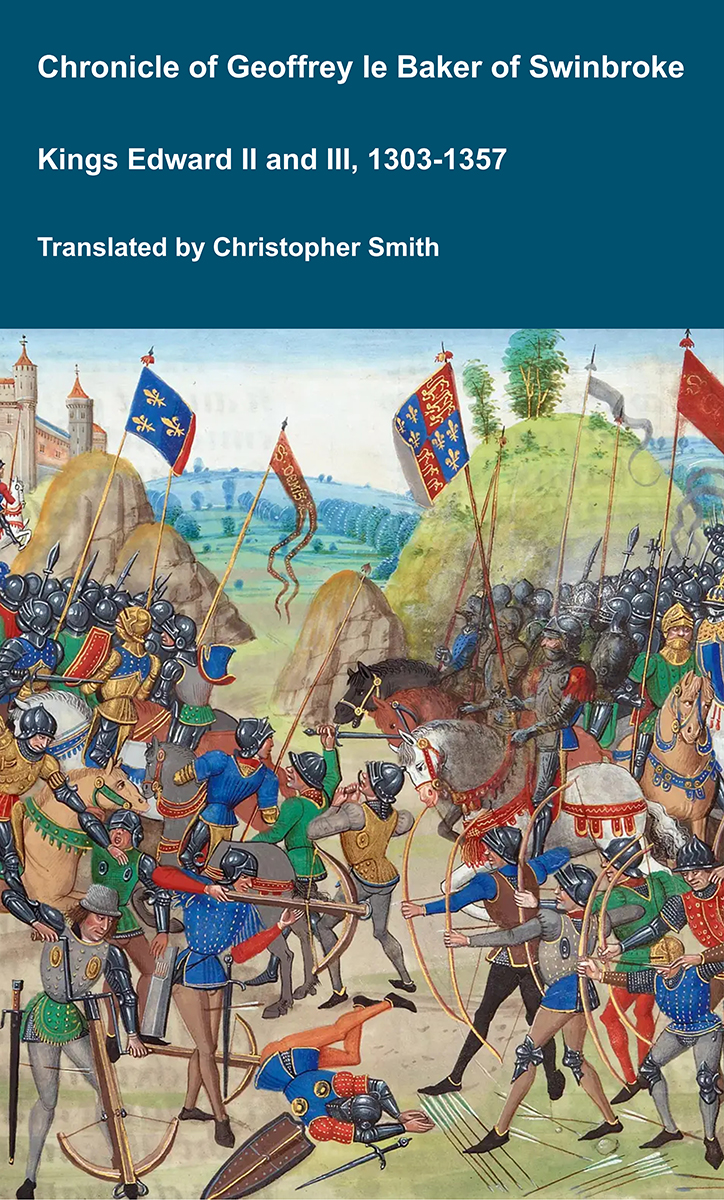
Chronicle of Geoffrey le Baker of Swinbroke
Baker was a secular clerk from Swinbroke, now Swinbrook, an Oxfordshire village two miles east of Burford. His Chronicle describes the events of the period 1303-1356: Gaveston, Bannockburn, Boroughbridge, the murder of King Edward II, the Scottish Wars, Sluys, Crécy, the Black Death, Winchelsea and Poitiers. To quote Herbert Bruce 'it possesses a vigorous and characteristic style, and its value for particular events between 1303 and 1356 has been recognised by its editor and by subsequent writers'. The book provides remarkable detail about the events it describes. Baker's text has been augmented with hundreds of notes, including extracts from other contemporary chronicles, such as the Annales Londonienses, Annales Paulini, Murimuth, Lanercost, Avesbury, Guisborough and Froissart to enrich the reader's understanding. The translation takes as its source the 'Chronicon Galfridi le Baker de Swynebroke' published in 1889, edited by Edward Maunde Thompson.
Available at Amazon in eBook and Paperback format.
Samuel Pepys' Diary. 27th May 1663. So I up and by water to the Temple [Map], and thence with Commissioner Pett [aged 52] to St. James's, where an hour with Mr. Coventry [aged 35] talking of Mr. Pett's proceedings lately in the forest of Sherwood, and thence with Pett to my Lord Ashley [aged 41], Chancellor [aged 54] of the Exchequer; where we met the auditors about settling the business of the accounts of persons to whom money is due before the King's time in the Navy, and the clearing of their imprests for what little of their debts they have received. I find my Lord, as he is reported, a very ready, quick, and diligent person.


Samuel Pepys' Diary. 27th May 1667. So to my chamber, and there did some little business, and then abroad, and stopped at the Bear-garden-stairs, there to see a prize fought. But the house so full there was no getting in there, so forced to go through an alehouse into the pit, where the bears are baited; and upon a stool did see them fight, which they did very furiously, a butcher and a waterman. The former had the better all along, till by and by the latter dropped his sword out of his hand, and the butcher, whether not seeing his sword dropped I know not, but did give him a cut over the wrist, so as he was disabled to fight any longer. But, Lord! to see how in a minute the whole stage was full of watermen to revenge the foul play, and the butchers to defend their fellow, though most blamed him; and there they all fell to it to knocking down and cutting many on each side. It was pleasant to see, but that I stood in the pit, and feared that in the tumult I might get some hurt. At last the rabble broke up, and so I away to White Hall and so to St. James's, but I found not Sir W. Coventry [aged 39], so into the Park and took a turn or two, it being a most sweet day, and so by water home, and with my father and wife walked in the garden, and then anon to supper and to bed. The Duke of Cambridge [aged 3] very ill still.

Samuel Pepys' Diary. 27th May 1668. Thence by coach to the Exchange [Map], and there met with Sir H. Cholmly [aged 35] at Colvill's; and there did give him some orders, and so home, and there to the office again, where busy till two o'clock, and then with Sir Prince to his house, with my Lord Brouncker [aged 48] and Sir J. Minnes [aged 69], to dinner, where we dined very well, and much good company, among others, a Dr., a fat man, whom by face I know, as one that uses to sit in our church, that after dinner did take me out, and walked together, who told me that he had now newly entered himself into Orders, in the decay of the Church, and did think it his duty so to do, thereby to do his part toward the support and reformation thereof; and spoke very soberly, and said that just about the same age Dr. Donne did enter into Orders. I find him a sober gentleman, and a man that hath seen much of the world, and I think may do good.
Samuel Pepys' Diary. 27th May 1668. Thence after dinner to the office, and there did a little business, and so to see Sir W. Pen [aged 47], who I find still very ill of the goute, sitting in his great chair, made on purpose for persons sick of that disease, for their ease; and this very chair, he tells me, was made for my Lady Lambert! Thence I by coach to my tailor's, there to direct about the making of me another suit, and so to White Hall, and through St. James's Park to St. James's, thinking to have met with Mr. Wren [aged 39], but could not, and so homeward toward the New Exchange, and meeting Mr. Creed he and I to drink some whey at the whey-house, and so into the 'Change [Map] and took a walk or two, and so home, and there vexed at my boy's being out of doors till ten at night, but it was upon my brother Jackson's [aged 28] business, and so I was the less displeased, and then made the boy to read to me out of Dr. Wilkins [aged 54] his "Real Character", and particularly about Noah's arke, where he do give a very good account thereof, shewing how few the number of the several species of beasts and fowls were that were to be in the arke, and that there was room enough for them and their food and dung, which do please me mightily and is much beyond what ever I heard of the subject, and so to bed.
Samuel Pepys' Diary. 27th May 1669. At the office all the morning, dined at home, Mr. Hollier [aged 60] with me. Presented this day by Mr. Browne with a book of drawing by him, lately printed, which cost me 20s. to him. In the afternoon to the Temple [Map], to meet with Auditor Aldworth about my interest account, but failed meeting him. To visit my cozen Creed, and found her ill at home, being with child, and looks poorly.
On 27th May 1723 Charles Lennox 1st Duke Richmond [aged 50] died. His son Charles [aged 22] succeeded 2nd Duke Richmond, 2nd Earl March, 2nd Baron Settrington. Sarah Cadogan Duchess Richmond [aged 17] by marriage Duchess Richmond.
On 27th May 1726 Anne Lennox was born to Charles Lennox 2nd Duke Richmond [aged 25] and Sarah Cadogan Duchess Richmond [aged 20]. She a great granddaughter of King Charles II of England Scotland and Ireland. She died aged less than one years old.
On 27th May 1773 Mary Blount Duchess Norfolk [aged 62] died.

The London Gazette 14012. Whitehall, May 27, 1797. The King has been pleased to grant the Dignities of Baron and Earl of the Kingdom of Great Britain to Sir John Jervis [aged 62], KB Admiral of the Blue, and the Heirs Male of his Body lawfully begotten, by the Name, Stile and Title of Baron Jervis, of Medsord in the County of Stafford, and Earl of St Vincent.

On 27th May 1819 George V King Hanover was born to Ernest Augustus King Hanover [aged 47] and Frederica Mecklenburg Strelitz Queen Consort Hanover [aged 41]. He a grandson of King George III of Great Britain and Ireland. Coefficient of inbreeding 6.45%. He married 18th February 1843 Marie Saxe Altenburg Queen Consort Hanover and had issue.
Abbot John Whethamstede’s Chronicle of the Abbey of St Albans
Abbot John Whethamstede's Register aka Chronicle of his second term at the Abbey of St Albans, 1451-1461, is a remarkable text that describes his first-hand experience of the beginning of the Wars of the Roses including the First and Second Battles of St Albans, 1455 and 1461, respectively, their cause, and their consequences, not least on the Abbey itself. His text also includes Loveday, Blore Heath, Northampton, the Act of Accord, Wakefield, and Towton, and ends with the Coronation of King Edward IV. In addition to the events of the Wars of the Roses, Abbot John, or his scribes who wrote the Chronicle, include details in the life of the Abbey such as charters, letters, land exchanges, visits by legates, and disputes, which provide a rich insight into the day-to-day life of the Abbey, and the challenges faced by its Abbot.
Available at Amazon in eBook and Paperback format.
On 27th May 1844 Henry Hopper [aged 77] died at 13 Wigmore Street Cavendish Square.
On 27th May 1848 Princess Sophia Hanover [aged 70] died at Vicarage Place Kensington. Princess Augusta Hesse-Kassel Duchess Cambridge [aged 50] and Marie Luise Victoria Saxe Coburg Gotha Duchess Kent and Strathearn [aged 61] were present.


On 27th May 1849 William Beauclerk 9th Duke St Albans [aged 48] died. His son William [aged 9] succeeded 10th Duke St Albans, 10th Earl Burford, 10th Baron Heddington, 7th Baron Vere of Hanworth in Middlesex.

On 27th May 1849 Archibald John Stuart-Wortley was born to James Archibald Stuart-Wortley-Mackenzie [aged 43] and Jane Lawley [aged 28].
The Diary of George Price Boyce 1851. 27th May 1851. To Great Exhibition for first time. The aerial effect of the same enhanced by the rich and brilliant colours of the various fabrics suspended about was more bewitching than I expected accompanied my sisters Ann and Joanna [aged 19] to R. Italian Opera—Beethoven's "Fidelio," the grandest piece of music I had ever heard.
On 27th May 1859 Susanna Euphemia Beckford Duchess Hamilton Duchess Brandon [aged 73] died.
On 27th May 1866 Paul Albert Steck was born at Troyes, France [Map].
On 27th May 1872 William Russell 8th Duke Bedford [aged 62] died. His first cousin Francis [aged 52] succeeded 9th Duke Bedford, 9th Marquess Tavistock, 13th Earl Bedford, 13th Baron Russell of Cheneys, 11th Baron Russell of Thornhaugh, 9th Baron Howland of Streatham
On 27th May 1893 Jane Gordon [aged 82] died. She was buried at St Edwen's Church, Llanedwen [Map].
Jane Gordon: On 20th April 1811 she was born. Before July 1844 James Hunter and she were married.
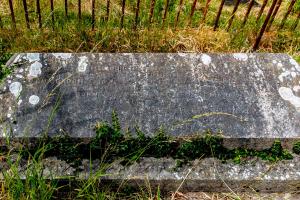
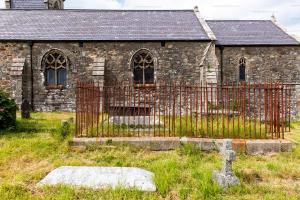
On 27th May 1900 Captain Ralph Nevile Fane [aged 30] died of pneumonia at Wynberg where he was buried.
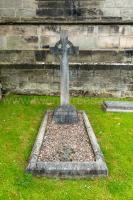
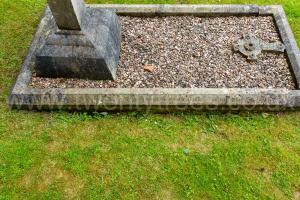
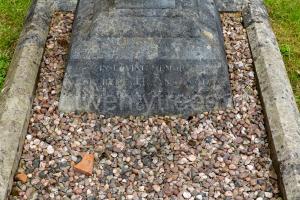
After 27th May 1909. Grave of Bishop Adelbert John Robert Anson [deceased] at St Michael and All Angels Church, Colwich [Map].
This is a translation of the 'Memoires of Jacques du Clercq', published in 1823 in two volumes, edited by Frederic, Baron de Reissenberg. In his introduction Reissenberg writes: 'Jacques du Clercq tells us that he was born in 1424, and that he was a licentiate in law and a counsellor to Philip the Good, Duke of Burgundy, in the castellany of Douai, Lille, and Orchies. It appears that he established his residence at Arras. In 1446, he married the daughter of Baldwin de la Lacherie, a gentleman who lived in Lille. We read in the fifth book of his Memoirs that his father, also named Jacques du Clercq, had married a lady of the Le Camelin family, from Compiègne. His ancestors, always attached to the counts of Flanders, had constantly served them, whether in their councils or in their armies.' The Memoires cover a period of nineteen years beginning in in 1448, ending in in 1467. It appears that the author had intended to extend the Memoirs beyond that date; no doubt illness or death prevented him from carrying out this plan. As Reissenberg writes the 'merit of this work lies in the simplicity of its narrative, in its tone of good faith, and in a certain air of frankness which naturally wins the reader’s confidence.' Du Clercq ranges from events of national and international importance, including events of the Wars of the Roses in England, to simple, everyday local events such as marriages, robberies, murders, trials and deaths, including that of his own father in Book 5; one of his last entries.
Available at Amazon in eBook and Paperback format.
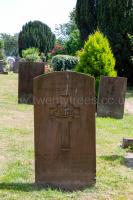
After 27th May 1918. Monument to Benjamin Footman who died of wounds on 27 May 1918. North Staffordshire Regiment Service Number: 42703. Son of Amelia Footman, of Hanbury Wharf, Droitwich, Worcs, and the late Benjamin Footman; husband of Julia Footman, of "Lincs," Fairfield Rd., Leckhampton, Cheltenham..
Benjamin Footman was born at Hanbury Wharf, Worcestershire in 1884. In 1911 he was working as a butler in Catsfield, Sussex when he married Julia Bartlett in Cheltenham. They moved to Somerset but by 1914 had moved to Fulbeck (where he was still a butler). He signed up for the Army in Nov 15 but wasn't mobilised until Jun 1916. He joined 3rd Battalion, Lincolnshire Regiment and was soon made Lieutenant Corporal, probably because he'd previously served 20 months in the Worcestershire Regiment (presumably before he became a butler). He was training at the Lincolnshire Regiment depot at Grimsby in Oct 1917, though he seems to have been ill or injured during this time.
In Oct 1917 he was sent to Ireland and based at Blackrock Castle, Cork. On 3rd March 1918 he sailed from Folkestone to France, where he was transferred to 8th Battalion, North Staffordshire Regiment.
On 12th (or 15th) April 1918 he received a gunshot wound to the head. He was evacuated and sent to the Royal Victoria Military Hospital, Netley, near Southampton. Here he had several operations but the wound became infected and he died on 27th May. His body was sent by train to Leadenham station and he was buried in Fulbeck churchyard. The gravestone is of an unusual design, so it may be that his former employer paid for it before the Commonwealth War Graves Commission was set up. Julia received a widows pension of 33/9d a week for herself and their four children. By the end of 1918 they'd moved to Cheltenham and were living at 6 Andover St. By 1920 her address was 'Lincs' Fairfield Rd., Leckhampton, Cheltenham.

On 27th May 1921 Haydn Keeton [aged 73] died. He was buried at Peterborough Cathedral [Map].
Haydn Keeton: On 26th October 1847 he was born. In 1870 he was appointed Organist at Peterborough Cathedral [Map].
On 27th May 1940 George Coventry 10th Earl Coventry [aged 39] was killed in action during the Battle of Wytschaete at La Bassée. His son George [aged 6] succeeded 11th Earl Coventry.
On 27th May 1941 the German Battleship "Bismarck" sank following an engagement with British ships. Some survivors reported they saw Captain Lindemann standing at attention at the stem of the ship as she sank. Out of a crew of over 2,200 men, only 114 survived.

On 27th May 1949 William Lever 2nd Viscount Leverhulme [aged 61] died. He was buried at Christ Church, Port Sunlight [Map]. His son Philip [aged 33] succeeded 3rd Viscount Leverhulme of the Western Isles, 3rd Baron Leverhulme of Bolton le Moors in Lancashire, 3rd Baronet Lever of Thornton Manor in Cheshire.
Philip Lever 3rd Viscount Leverhulme: On 1st July 1915 he was born to William Lever 2nd Viscount Leverhulme. In 1988 he was appointed 968th Knight of the Garter. On 4th July 2000 he died. Viscount Leverhulme of the Western Isles, Baron Leverhulme of Bolton le Moors in Lancashire, Baronet Lever of Thornton Manor in Cheshire extinct.
On 27th May 1975, a coach carrying elderly passengers crashed at the bottom of a steep hill at Dibbles Bridge, North Yorkshire [Map], over the River Dibb, near Hebden. Thirty-three people on board were killed, including the driver, and thirteen others injured. It was the worst-ever road accident in the United Kingdom by number of fatalities. An inquest at Skipton Town Hall, in July 1975, recorded a verdict of accidental death on the victims. Jury foreman John Mitchell said the accident was caused by the inability of the driver to negotiate the bend, owing to deficient brakes on the coach, due to possible lack of care in the maintenance of the braking system.
On 27th May 1220 Amice Clare Countess Devon was born to Gilbert Clare 5th Earl Gloucester 4th Earl Hertford [aged 40] and Isabel Marshal Countess Cornwall, Gloucester and Hertford [aged 19]. She a great x 3 granddaughter of King Henry I "Beauclerc" England. She married 1255 her fourth cousin Baldwin Redvers 6th Earl Devon and had issue.
On 27th May 1349 Maurice Berkeley was born to Thomas Berkeley 8th and 3rd Baron Berkeley [aged 53] and Katherine Clivedon Baroness Berkeley [aged 39]. He a great x 4 grandson of King John of England.
On 27th May 1564 Margherita Gonzaga was born to William Gonzaga I Duke Mantua [aged 26] and Eleanor of Austria Duchess Mantua [aged 29].
On 27th May 1652 Elizabeth Charlotte Palatinate Simmern Duchess Orléans was born to Charles Louis Palatinate Simmern [aged 34] and Charlotte Hesse-Kassel [aged 24] at Heidelburg. She a great granddaughter of King James I of England and Ireland and VI of Scotland. She married 16th November 1671 her half fourth cousin twice removed Philip Bourbon I Duke Orléans, son of Louis XIII King France and Anne of Austria Spain Queen Consort France, and had issue.
On 27th May 1690 Walter Shirley was born to Robert Shirley 1st Earl Ferrers [aged 39] and Elizabeth Washington Baroness Ferrers Chartley. He died aged three in 1694.


On 27th May 1700 William Molyneux 6th Baronet was born to Francis Molyneux 4th Baron Teverall [aged 44].
On 27th May 1712 Thomas Cave 5th Baronet was born to Thomas Cave 3rd Baronet [aged 31] and Margaret Verney Lady Cave. He was baptised at St Martin in the Fields Church [Map]. He married 1736 Elizabeth Davies Lady Cave and had issue.
Annals of the six Kings of England by Nicholas Trivet
Translation of the Annals of the Six Kings of England by that traces the rise and rule of the Angevin aka Plantagenet dynasty from the mid-12th to early 14th century. Written by the Dominican scholar Nicholas Trivet, the work offers a vivid account of English history from the reign of King Stephen through to the death of King Edward I, blending political narrative with moral reflection. Covering the reigns of six monarchs—from Stephen to Edward I—the chronicle explores royal authority, rebellion, war, and the shifting balance between crown, church, and nobility. Trivet provides detailed insight into defining moments such as baronial conflicts, Anglo-French rivalry, and the consolidation of royal power under Edward I, whose reign he describes with particular immediacy. The Annals combines careful year-by-year reporting with thoughtful interpretation, presenting history not merely as a sequence of events but as a moral and political lesson. Ideal for readers interested in medieval history, kingship, and the origins of the English state, this chronicle remains a valuable and accessible window into the turbulent world of the Plantagenet kings.
Available at Amazon in eBook and Paperback format.
On 27th May 1726 Anne Lennox was born to Charles Lennox 2nd Duke Richmond [aged 25] and Sarah Cadogan Duchess Richmond [aged 20]. She a great granddaughter of King Charles II of England Scotland and Ireland. She died aged less than one years old.
On 27th May 1735 James Dormer was born to John Dormer 7th Baron Dormer [aged 43].
On 27th May 1748 William Fitzherbert 1st Baronet was born to William Fitzherbert [aged 36] and Mary Meynell [aged 27]. He married 14th October 1777 Sarah Perrin and had issue.
On 27th May 1798 George Henry Roper-Curzon 16th Baron Teynham was born to Henry Francis Roper-Curzon 14th Baronet [aged 31] and Bridget Hawkins Baroness Teynham.
On 27th May 1814 John Manners-Sutton 3rd Viscount Canterbury was born to Charles Manners-Sutton 1st Viscount Canterbury [aged 34] and Lucy Maria Denison. He married 16th April 1872 Georgiana Tompson Viscountess Centerbury and had issue.
On 27th May 1819 George V King Hanover was born to Ernest Augustus King Hanover [aged 47] and Frederica Mecklenburg Strelitz Queen Consort Hanover [aged 41]. He a grandson of King George III of Great Britain and Ireland. Coefficient of inbreeding 6.45%. He married 18th February 1843 Marie Saxe Altenburg Queen Consort Hanover and had issue.
On 27th May 1826 Charles Watkin Cholmondeley was born to Thomas Cholmondeley 1st Baron Delamere [aged 58] and Henrietta Elizabeth Williams-Wynn Baroness Delamere [aged 55].
On 27th May 1836 Charles Hotham 4th Baron Hotham was born to George Frederick Hotham [aged 37] and Susan Maria O'Brien.
On 27th May 1839 Thomas Arundell was born to Henry Benedict Arundell 11th Baron Arundel [aged 34] and Theresa Stourton Baroness Arundel Wardour [aged 27]. He died aged less than one years old.
On 27th May 1845 Muriel Sarah Campbell was born to John Frederick Vaughan Campbell 2nd Earl Cawdor [aged 27] and Sarah Mary Compton Cavendish Countess Cawdor [aged 31].
On 27th May 1849 George Robert Hay was born to George Hay-Drummond 12th Earl Kinnoull [aged 21] and Emily Blanche Charlotte Somerset Countess Kinnoul [aged 21]. He married 4th October 1871 Agnes Cecil Emmeline Duff, daughter of James Duff 5th Earl Fife and Agnes Georgiana Elizabeth Hay Countess Fife.
On 27th May 1849 Archibald John Stuart-Wortley was born to James Archibald Stuart-Wortley-Mackenzie [aged 43] and Jane Lawley [aged 28].
Chronicle of a Bourgeois of Valenciennes
Récits d’un bourgeois de Valenciennes aka The Chronicle of a Bourgeois of Valenciennes is a vivid 14th-century vernacular chronicle written by an anonymous urban chronicler from Valenciennes in the County of Hainaut. It survives in a manuscript that describes local and regional history from about 1253 to 1366, blending chronology, narrative episodes, and eyewitness-style accounts of political, military, and social events in medieval France, Flanders, and the Low Countries. The work begins with a chronological framework of events affecting Valenciennes and its region under rulers such as King Philip VI of France and the shifting allegiances of local nobility. It includes accounts of conflicts, sieges, diplomatic manoeuvres, and the impact of broader struggles like the Hundred Years’ War on urban life in Hainaut. Written from the perspective of a burgher (bourgeois) rather than a monastery or royal court, the chronicle offers a rare lay viewpoint on high politics and warfare, reflecting how merchants, townspeople, and civic institutions experienced the turbulence of the 13th and 14th centuries. Its narrative style combines straightforward reporting of events with moral and civic observations, making it a valuable source for readers interested in medieval urban society, regional politics, and the lived experience of war and governance in pre-modern Europe.
Available at Amazon in eBook and Paperback format.
On 27th May 1852 Constance Mary Lascelles Baroness Wenlock was born to Henry Thynne Lascelles 4th Earl Harewood [aged 27] and Elizabeth Joanna Burgh [aged 26]. She married 1872 Beilby Lawley 3rd Baron Wenlock, son of Beilby Lawley 2nd Baron Wenlock and Elizabeth Grosvenor Baroness Wenlock, and had issue.
On 27th May 1854 Edgar Reginald Saunders 11th Baronet was born to Thomas Gage Saunders Sebright 8th Baronet [aged 52].

On 27th May 1864 Fiennes Cornwallis 1st Baron Cornwallis was born to Fiennes Wykeham-Martin Cornwallis [aged 32] and Harriet Elizabeth Mott at Chacombe Priory, Banbury [Map]. He married 1886 Mabel Leigh Baroness Cornwallis and had issue.
On 27th May 1866 Paul Albert Steck was born at Troyes, France [Map].
On 27th May 1867 Beatrice Thynne was born to John Alexander Thynne 4th Marquess of Bath [aged 36] and Frances Isabella Catherine Vesey Marchioness Bath.
On 27th May 1867 John Boteville Thynne was born to John Alexander Thynne 4th Marquess of Bath [aged 36] and Frances Isabella Catherine Vesey Marchioness Bath.
On 27th May 1867 Henry Roper-Curzon 18th Baron Teynham was born to Henry George Roper-Curzon 17th Baron Teynham [aged 44] and Harriet Anne Lovell Heathcote.
On 27th May 1870 Arthur Foljambe 2nd Earl of Liverpool was born to Cecil George Savile Foljambe 1st Earl Liverpool [aged 23] and Louise Blanche Howard [aged 28]. He married 27th July 1897 Annette Louise Monck Countess Liverpool, daughter of Henry Monck 5th Viscount Monck and Edith Caroline Sophia Scott Viscountess Monck.
On 27th May 1888 Henry Courtney Brocklehurst was born to Philip Lancaster Brocklehurst 1st Baronet [aged 60]. He married (1) 11th July 1918 Helen Alice Wyllington Ogilvy, daughter of David Ogilvy 11th Earl of Airlie and Mabell Gore Countess Airlie, and had issue.
On 27th May 1892 Frederick Somerset Gough-Calthorpe was born to Somerset Frederick Gough-Calthorpe 8th Baron Calthorpe [aged 29]. He married 5th September 1922 his fourth cousin Rose Mary Dorothy Vernon-Harcourt and had issue.
On 27th May 1893 Harry Frederick Crookshank 1st Viscount Crookshank was born at Cairo, Egypt.
Chronicle of Walter of Guisborough
A canon regular of the Augustinian Guisborough Priory, Yorkshire, formerly known as The Chronicle of Walter of Hemingburgh, describes the period from 1066 to 1346. Before 1274 the Chronicle is based on other works. Thereafter, the Chronicle is original, and a remarkable source for the events of the time. This book provides a translation of the Chronicle from that date. The Latin source for our translation is the 1849 work edited by Hans Claude Hamilton. Hamilton, in his preface, says: 'In the present work we behold perhaps one of the finest samples of our early chronicles, both as regards the value of the events recorded, and the correctness with which they are detailed; Nor will the pleasing style of composition be lightly passed over by those capable of seeing reflected from it the tokens of a vigorous and cultivated mind, and a favourable specimen of the learning and taste of the age in which it was framed.'
Available at Amazon in eBook and Paperback format.
On 27th May 1899 Charles Peter Denys 4th Baronet was born to Francis Denys-Burton 3rd Baronet [aged 50] and Grace Ellen Burton Lady Denys.
On 27th May 1912 Captain William Palmer was born to Roundell Palmer 3rd Earl Selborne [aged 25] and Grace Ridley Countess Selborne [aged 23]. He married 16th July 1936 Priscilla Egerton-Warburton and had issue.
On 27th May 1915 Garnet Wolseley 12th Baronet was born to Richard Bingham Wolseley [aged 61].
On 27th May 1925 Ela Helen Aline Beaumont Countess Carlisle was born to Wentworth Henry Canning Beaumont 2nd Viscount Allendale [aged 34] and Violet Lucy Emily Seely Viscountess Allendale [aged 28]. She married 3rd October 1945 Charles James Ruthven Howard 12th Earl Carlisle, son of George Josslyn L'Estrange Howard 11th Earl Carlisle and Bridget Helen "Biddy" Ruthven Countess Carlisle, and had issue.
On 27th May 1928 Benedict Leigh Hoskyns 16th Baronet was born to Edwyn Clement Hoskyns 13th Baronet [aged 43].

On 27th May 1935 Charles Thomas Wilson 5th Baron Nunburnholme was born to Charles John Wilson 3rd Baron Nunburnholme [aged 31] and Mary Beatrice Thynne Baroness Nunburnholme [aged 32].
On 27th May 1947 David Russell 5th Baron Ampthill was born to Geoffrey Russell 4th Baron Ampthill [aged 25].
On 27th May 1949 Hugh Lowther 8th Earl Lonsdale was born to James Lowther 7th Earl Londsdale [aged 26] and Tuppina Cecily Bennet.
On 27th May 1234 King Louis IX of France [aged 20] and Margaret Provence Queen Consort France [aged 13] were married. She by marriage Queen Consort of France. She the daughter of Raymond IV Count Provence [aged 36] and Beatrice Savoy Countess Provence [aged 36]. He the son of King Louis VIII of France and Blanche Ivrea Queen Consort France [aged 46]. They were half third cousins. He a great grandson of King Henry "Curtmantle" II of England.
On 27th May 1601 Edward Seymour 1st Earl Hertford [aged 62] and Frances Howard Duchess Lennox and Richmond [aged 22] were married. She by marriage Countess Hertford. The difference in their ages was 39 years. He the son of Edward Seymour 1st Duke of Somerset and Anne Stanhope Duchess Somerset. They were half third cousins. He a great x 5 grandson of King Edward III of England.
On 27th May 1703 Walter Chetwynd 1st Viscount Chetwynd [aged 24] and Mary Berkeley Viscountess Chetwynd [aged 32] were married at St Martin in the Fields Church [Map].
Chronicle of Geoffrey le Baker of Swinbroke
Baker was a secular clerk from Swinbroke, now Swinbrook, an Oxfordshire village two miles east of Burford. His Chronicle describes the events of the period 1303-1356: Gaveston, Bannockburn, Boroughbridge, the murder of King Edward II, the Scottish Wars, Sluys, Crécy, the Black Death, Winchelsea and Poitiers. To quote Herbert Bruce 'it possesses a vigorous and characteristic style, and its value for particular events between 1303 and 1356 has been recognised by its editor and by subsequent writers'. The book provides remarkable detail about the events it describes. Baker's text has been augmented with hundreds of notes, including extracts from other contemporary chronicles, such as the Annales Londonienses, Annales Paulini, Murimuth, Lanercost, Avesbury, Guisborough and Froissart to enrich the reader's understanding. The translation takes as its source the 'Chronicon Galfridi le Baker de Swynebroke' published in 1889, edited by Edward Maunde Thompson.
Available at Amazon in eBook and Paperback format.
On 27th May 1711 John Astley 2nd Baronet [aged 24] and Mary Prynce were married.
On 27th May 1758 Robert Mead Wilmot 2nd Baronet [aged 26] and Mary Woolett [aged 23] were married at St Wystan's Church, Repton [Map].
On 27th May 1800 Kenneth Alexander Howard 1st Earl of Effingham [aged 32] and Charlotte Primrose Countess Effingham [aged 24] were married. She by marriage Baroness Howard of Effingham. She the daughter of Neil Primrose 3rd Earl Rosebery [aged 71] and Mary Vincent Countess Rosebery [aged 48]. They were first cousin once removed.
On 27th May 1802 John Townshend 2nd Viscount Sydney [aged 38] and Caroline Elizabeth Letitia Clements Viscountess Sydney [aged 37] were married. She by marriage Viscountess Sydney. She the daughter of Robert Clements 1st Earl Leitrim [aged 69] and Elizabeth Skeffington Countess Leitrim.
On 27th May 1948 Nicholas Eliot 9th Earl of St Germans [aged 34] and Margaret Eleanor Wyndham [aged 34] were married. They were divorced in 1959. He the son of Montague Eliot 8th Earl of St Germans [aged 78].
On 27th May 866 Ordoño I King Asturias [aged 45] died. His son Alfonso [aged 18] succeeded III King Asturias.
On 27th May 1039 Dirk Gerulfing III Count Holland died. His son Dirk [aged 14] succeeded IV Count Holland.
On 27th May 1240 William Warenne 5th Earl of Surrey died. His son John [aged 9] succeeded 6th Earl Surrey and inherited his estates including Conisbrough Castle [Map].
On 27th May 1266 Elizabeth Brunswick-Lüneburg Countess Holland [aged 36] died.
On 27th May 1508 Ludovico Sforza Duke Milan [aged 55] died.
On 27th May 1541, after some two and a half years of imprisonment, Margaret Pole Countess Salsbury [aged 67] was executed at Tower Green, Tower of London [Map] for her role in the Exeter Conspiracy.
The History of William Marshal was commissioned by his son shortly after William’s death in 1219 to celebrate the Marshal’s remarkable life; it is an authentic, contemporary voice. The manuscript was discovered in 1861 by French historian Paul Meyer. Meyer published the manuscript in its original Anglo-French in 1891 in two books. This book is a line by line translation of the first of Meyer’s books; lines 1-10152. Book 1 of the History begins in 1139 and ends in 1194. It describes the events of the Anarchy, the role of William’s father John, John’s marriages, William’s childhood, his role as a hostage at the siege of Newbury, his injury and imprisonment in Poitou where he met Eleanor of Aquitaine and his life as a knight errant. It continues with the accusation against him of an improper relationship with Margaret, wife of Henry the Young King, his exile, and return, the death of Henry the Young King, the rebellion of Richard, the future King Richard I, war with France, the death of King Henry II, and the capture of King Richard, and the rebellion of John, the future King John. It ends with the release of King Richard and the death of John Marshal.
Available at Amazon in eBook and Paperback format.
On 27th May 1637 John Boteler 1st Baron Boteler [aged 71] died at St Martin in the Fields Church [Map]. He was buried at Higham Gobion, Bedfordshire. His son William succeeded 2nd Baron Boteler of Brantfield, 2nd Baronet Boteler of Hatfield Woodhall in Hertfordshire.
On 27th May 1661 Archibald Campbell 1st Marquess Argyll [aged 54] was beheaded for his perceived treason on the restoration of Charles II at Edinburgh. He was buried at Kilmun Church.
Monument in the North Aisle, Edinburgh Cathedral [Map].
On 27th May 1699 John Gage 4th Baronet [aged 57] died. His son John [aged 7] succeeded 5th Baronet Gage of Firley in Sussex.
On 27th May 1709 Thomas Preston 3rd Baronet [aged 69] died. Baronet Preston of Furness in Lancashire extinct.
On 27th May 1712 William Keith 9th Earl Marischal [aged 48] died. His son George [aged 20] succeeded 10th Earl Marischal.
On 27th May 1714 George Saunderson 5th Viscount Castleton [aged 82] died at Sandbeck Park Maltby. His son James [aged 47] succeeded 6th Viscount Castleton.
On 27th May 1719 Thomas Newport 1st Baron Torrington [aged 64] died without issue. Baron Torrington of Torrington in Devon extinct. He was buried at Wroxeter, Shropshire [Map].
On 27th May 1723 Charles Lennox 1st Duke Richmond [aged 50] died. His son Charles [aged 22] succeeded 2nd Duke Richmond, 2nd Earl March, 2nd Baron Settrington. Sarah Cadogan Duchess Richmond [aged 17] by marriage Duchess Richmond.
On 20th May 1737 Elizabeth Hall Lady Buckworth died. She was buried at St Peter le Poer Church, Broad Street on 27th May 1737.
On 27th May 1764 Gilbert Eliott 3rd Baronet [aged 84] died. His son John [aged 58] succeeded 4th Baronet Eliott of Stobs.

On 27th May 1771 Anthony Ashley-Cooper 4th Earl Shaftesbury [aged 60] died. His son Anthony [aged 9] succeeded 5th Earl Shaftesbury, 5th Baron Ashley of Wimborne St Giles, 6th Baronet Cooper of Rockbourne in Southampton.
Chronicle of Abbot Ralph of Coggeshall
The Chronicle of Abbot Ralph of Coggeshall (Chronicon Anglicanum) is an indispensable medieval history that brings to life centuries of English and European affairs through the eyes of a learned Cistercian monk. Ralph of Coggeshall, abbot of the Abbey of Coggeshall in Essex in the early 13th century, continued and expanded his community’s chronicle, documenting events from the Norman Conquest of 1066 into the tumultuous reign of King Henry III. Blending eyewitness testimony, careful compilation, and the monastic commitment to record-keeping, this chronicle offers a rare narrative of political intrigue, royal power struggles, and social upheaval in England and beyond. Ralph’s work captures the reigns of pivotal figures such as Richard I and King John, providing invaluable insights into their characters, decisions, and the forces that shaped medieval rule. More than a simple annal, Chronicon Anglicanum conveys the texture of medieval life and governance, making it a rich source for scholars and readers fascinated by English history, monastic authorship, and the shaping of the medieval world.
Available at Amazon in eBook and Paperback format.
On 27th May 1773 Mary Blount Duchess Norfolk [aged 62] died.
On 27th May 1776 Sarah Inwen Countess Suffolk died.
On 27th May 1808 Frances Rous Lady Peyton died.
On 27th May 1844 Henry Hopper [aged 77] died at 13 Wigmore Street Cavendish Square.
On 27th May 1848 Princess Sophia Hanover [aged 70] died at Vicarage Place Kensington. Princess Augusta Hesse-Kassel Duchess Cambridge [aged 50] and Marie Luise Victoria Saxe Coburg Gotha Duchess Kent and Strathearn [aged 61] were present.
On 27th May 1849 William Beauclerk 9th Duke St Albans [aged 48] died. His son William [aged 9] succeeded 10th Duke St Albans, 10th Earl Burford, 10th Baron Heddington, 7th Baron Vere of Hanworth in Middlesex.
On 27th May 1859 Susanna Euphemia Beckford Duchess Hamilton Duchess Brandon [aged 73] died.
On 27th May 1864 Edward Graham 9th Baronet [aged 44] died. His son Robert [aged 18] succeeded 10th Baronet Graham of Esk in Cumberland
On 27th May 1872 William Russell 8th Duke Bedford [aged 62] died. His first cousin Francis [aged 52] succeeded 9th Duke Bedford, 9th Marquess Tavistock, 13th Earl Bedford, 13th Baron Russell of Cheneys, 11th Baron Russell of Thornhaugh, 9th Baron Howland of Streatham
On 27th May 1873 Caroline Yorke Countess Somers [aged 78] died.
Henrici Quinti, Angliæ Regis, Gesta, is a first-hand account of the Agincourt Campaign, and subsequent events to his death in 1422. The author of the first part was a Chaplain in King Henry's retinue who was present from King Henry's departure at Southampton in 1415, at the siege of Harfleur, the battle of Agincourt, and the celebrations on King Henry's return to London. The second part, by another writer, relates the events that took place including the negotiations at Troye, Henry's marriage and his death in 1422.
Available at Amazon in eBook and Paperback format.
On 27th May 1876 James Hogg 1st Baronet [aged 86] died. His son James [aged 53] succeeded 2nd Baronet Hogg of Upper Grosvenor Street in London.
On 27th May 1924 John Lister-Kaye 3rd Baronet [aged 71] died. His brother Cecil [aged 70] succeeded 4th Baronet Lister-Kaye of Grange in Yorkshire.

On 27th May 1933 Amy Augusta Jackson Lawford Baroness Coleridge died.
On 27th May 1940 George Coventry 10th Earl Coventry [aged 39] was killed in action during the Battle of Wytschaete at La Bassée. His son George [aged 6] succeeded 11th Earl Coventry.
On 27th May 1942 Mary Thicknesse-Touchet 22nd Baroness Audley [aged 83] died unmarried. Her first cousin twice removed Thomas [aged 28] succeeded 23rd Baron Audley of Heighley in Staffordshire.
On 27th May 1949 William Lever 2nd Viscount Leverhulme [aged 61] died. He was buried at Christ Church, Port Sunlight [Map]. His son Philip [aged 33] succeeded 3rd Viscount Leverhulme of the Western Isles, 3rd Baron Leverhulme of Bolton le Moors in Lancashire, 3rd Baronet Lever of Thornton Manor in Cheshire.
Philip Lever 3rd Viscount Leverhulme: On 1st July 1915 he was born to William Lever 2nd Viscount Leverhulme. In 1988 he was appointed 968th Knight of the Garter. On 4th July 2000 he died. Viscount Leverhulme of the Western Isles, Baron Leverhulme of Bolton le Moors in Lancashire, Baronet Lever of Thornton Manor in Cheshire extinct.
On 27th May 1975 Charles Walter James Dormer 15th Baron Dormer [aged 71] died. His brother John [aged 60] succeeded 16th Baron Dormer of Wyng in Buckinghamshire, 16th Baronet Dormer of Wyng in Buckinghamshire.
On 27th May 1975 John Tollemache 4th Baron Tollemache [aged 65] died. His son Timothy [aged 35] succeeded 5th Baron Tollemache of Helmingham in Suffolk.
On 27th May 1991 William Hope Nelson 3rd Baronet [aged 77] died. His son Jamie [aged 41] succeeded 4th Baronet Nelson of Acton Park. Maralynn Beverly Pyatt Hedge Lady Nelson by marriage Lady Nelson of Acton Park.
On 27th May 2001 Digby Michael Godfrey John Willoughby 12th Baron Middleton [aged 80] died. His son Michael [aged 52] succeeded 13th Baron Middleton, 14th Baronet Willoughby of Wollaton. Lucy Corinna Agneta Sidney Baroness Middleton [aged 48] by marriage Baroness Middleton.
On 27th May 2002 Barbara Felicity Smith 14th Baroness Dudley [aged 95] died. Her son Jim [aged 71] succeeded 15th Baron Dudley.
Henrici Quinti, Angliæ Regis, Gesta, is a first-hand account of the Agincourt Campaign, and subsequent events to his death in 1422. The author of the first part was a Chaplain in King Henry's retinue who was present from King Henry's departure at Southampton in 1415, at the siege of Harfleur, the battle of Agincourt, and the celebrations on King Henry's return to London. The second part, by another writer, relates the events that took place including the negotiations at Troye, Henry's marriage and his death in 1422.
Available at Amazon in eBook and Paperback format.
On 27th May 2021 John Roper-Curzon 20th Baron Teynham [aged 92] died. His son John [aged 55] succeeded 21st Baron Teynham of Teynham in Kent.