

24 Aug is in August.
1217 Battle of Sandwich aka Dover
1346 Crossing of the Somme at Blanchetaque
Chronicon ex Chronicis by Florence and John of Worcester. 24th August 1065. In the month of August, Harold [aged 43], the brave earl of Wessex, ordered a large mansion to be built at a place called Portascith78, on the territory of the Welsh, and gave directions that it should be well stored with meat and drink, that his lord, king Edward [aged 62], might sometimes reside there for the sake of hunting. But Caradoc, son of Griffyth, king of South Wales, who a few years before had slain Griffyth, king of North Wales, and usurped his kingdom, came there with the whole force he could gather, on the feast-day of St. Bartholomew, the apostle [24th August], and slew all the workmen and their overseers, and carried off all the materials which had been collected there.
Note 78. Portskewet, on the coast of Monmouthshire, where there are some relics of a church supposed to have been built by Harold.
Chronicon ex Chronicis by Florence and John of Worcester. 24th August 1093. Malcolm [aged 62], king of the Scots, met king William [aged 37] the younger at Gloucester, on the day of the feast of St. Bartholomew the apostle, as they had previously concerted through their ambassadors, in order that peace being restored, there might be a firm alliance between them, agreeably to the wishes of some of the principal English nobles. But they separated without coming to any agreement; for William's pride and insolence was such, that he refused to have any interview and conference with Malcolm. Moreover, he sought to compel him to do him homage in his own court, and abide the judgment of his own barons only; but Malcolm was by no means disposed to do this, except on the borders of his own kingdom, where the kings of Scotland were wont to do homage to the kings of England, and according to the judgment of the barons of both kingdoms.
On 24th August 1113 Geoffrey Plantagenet Duke Normandy was born to Fulk "Young" King Jerusalem [aged 24] and Ermengarde of Maine Countess of Anjou. He married 17th June 1128 his fourth cousin once removed Empress Matilda, daughter of King Henry I "Beauclerc" England and Edith aka Matilda Dunkeld Queen Consort England, and had issue.
On 24th August 1198 King Alexander II of Scotland was born to King William I of Scotland [aged 55] and Ermengarde Beaumont Sarthe Queen Consort Scotland [aged 28] at Haddington, Haddingtonshire. He a great x 2 grandson of King Henry I "Beauclerc" England. He married (1) 21st June 1221 his half third cousin Joan Plantagenet Queen of Scotland, daughter of King John of England and Isabella of Angoulême Queen Consort England (2) 1239 his third cousin once removed Marie Coucy and had issue.
On 24th August 1200 King John of England [aged 33] and Isabella of Angoulême Queen Consort England [aged 12] were married. She had been engaged to Hugh IX of Lusignan IV Count of La Marche [aged 37] who subsequently appealed to King Philip II of France [aged 35], their feudal overlord, who used the position to justify a war against John. The difference in their ages was 21 years. She the daughter of Aymer I Count Angoulême [aged 40] and Alice Courtenay Countess Angoulême. He the son of King Henry "Curtmantle" II of England and Eleanor of Aquitaine Queen Consort Franks and England [aged 78]. They were fourth cousin once removed.
Chronicle of Roger de Hoveden. In this year also, a divorce was effected between John, king of England, and Hawisa [aged 27], his wife, daughter of William, earl of Gloucester, by Elias, bishop of Bordeaux, William, bishop of Poitou, and Henry, bishop of Saintes, because they were related in the third degree of affinity. After this divorce had taken place between John, king of England, and his wife, the king of England, by the advice of his lord, Philip, king of France, married Isabel [aged 12], the daughter of Ailmar, count of Angoulême, whom the said count, by the sanction and advice of Richard, king of England, had previously given to Hugh Le Brun, count de la Marche; and the said count had acknowledged her as his wife, by promise made as pledge for the future, and she had taken him for her husband by promise made for the future; for because she had not yet attained marriageble years, the said Hugh declined to be united to her in presence of the church. However, the father of the damsel, on seeing that John, king of England, had a fancy for her, took her out of the custody of Hugh Le Brun, and gave her in marriage to John, king of England; and she was immediately married to John [24th August 1200], king of England, at Angoulême, by Elias, archbishop of Bordeaux.
On 24th August 1217 Hubert de Burgh Count Mortain 1st Earl Kent [aged 47] commanded the King's forces at Sandwich, Kent [Map] during the Battle of Sandwich aka Dover. French re-enforcements had left Calais to join with the future Prince Louis's [aged 29] forces who were in short supply following the Second Battle aka Lincoln's Fair. Hubert Burgh's men routed the French ships. The battle marked the end of Prince Louis's invasion with the Treaty of Kingston aka Lambeth being signed shortly afterwards.
 Chronicle of Walter of Guisborough. And when the lord king was on his journey at Portsmouth, nearly ready to cross the sea, the aforesaid earls [Hereford and Norfolk] sent messengers to him to inquire about his will in regard to the aforesaid matters. To whom he replied: "My full council is not with me here; part of it, as you know, remains in London, and part has already gone on to Flanders. Nor can I answer your questions without the full council. But go, and say to those who sent you that if they wish to come with me, it will please me greatly. But if they do not wish to come, I ask that they at least do not harm me or the kingdom. I trust still, with the Lord's favour, that I shall return to this land and be received again into my kingdom." And the messengers returned, having been given a brief dismissal. The king then crossed the sea around the feast of Saint Bartholomew [24th August 1297] to Flanders and landed at the port of Swyne. His deeds there we do not pursue here, but further below in their place. The aforementioned earls, together with some of their baronial allies, returned to London. They forbade the king's chancellor and the barons of the Exchequer from collecting the "eighth penny" that the king had demanded from the people, or the "fifth" from the clergy, or from levying any other form of exaction or demand. They also petitioned the citizens of London, as friends and allies, to support them in defending the liberties of Magna Carta and to take faithful care that lost rights might be recovered and preserved. And so that they could not later be accused of robbery or illegal exaction, the said earls had it publicly proclaimed that no one among their company should take anything, however small, from anyone without paying a fair price; and that violators would be punished by the loss of their right hand or, if the offense warranted it, even by death. They then returned to their own lands, causing no harm or oppression to anyone.
Cumque esset dominus rex in suo itinere apud Portesmew quasi ad transfretandum paratus, miserunt ad eum prædicti comites nuncios qui voluntatem ipsius quærerent in præmissis. Quibus ille respondens ait: Concilium meum plenum non est mecum hic; pars enim, ut scitis, remansit Londoniis, et pars præcessit in Flandriam; nec absque concilio pleno respondere possum ad interrogata vestra. Sed ite et dicite hiis qui miserunt vos, ut si mecum venire velint placebit mihi multum; sin autem noluerint, rogo ut mihi, vel regno saltem, non noceant. Spero quidem adhuc favente Domino, quod revertar in terram hanc, et in regnum meum suscipiar. Et reversi sunt nuncii, levi data licentia. Transfretavitque rex circa festum beati Bartholomæi in Flandriam, et applicuit in portu de Swyne, cujus gesta non prosequimur hic, sed inferius in loco suo. Comites vero prædicti cum quibusdam baronibus complicibus suis reversi sunt Londonias, prohibentes cancellario regis et baronibus scaccarii ne octavum denarium quem rex expetierat a populo, vel quintum a clero, seu aliquam vexationem expeterent vel levarent quoquomodo. Rogaverunt etiam Londonienses, tanquam amicos et confratres, ut in expetendis libertatibus Magna Cartæ eis assistere vellent, et curam adhibere fidelem ita quod jura perdita recuperare possent et recuperata tueri; et ne rapina vel extortione illicita possent argui in posterum, prædicti comites publice proclamari fecerunt ne suorum quisquam rem quamcunque modicam caperet a quocunque, nisi justo dato pretio, et hoc sub pœna mutilationis manus dextræ, vel etiam capitis si culpa exposceret. Reversique sunt in terras suas, nulli molestiam inferentes aut gravamen.
Chronicle of Walter of Guisborough. Let us now return to the history of our king, which, as is evident, we have passed over up to this point. Our king, therefore, despite, as previously mentioned, the defection of the aforementioned earls, around the feast of Saint Bartholomew the Apostle1 [24th August 1297], changing his location but not his resolve, crossed over into Flanders with 1,500 armed horsemen and 50,000 selected foot soldiers, of whom 30,000 were Welsh. Immediately upon his landing at the port of Sluys, and after taking up his lodging, the sailors from the ports, recalling the long-standing enmity that had existed between themselves and the sailors of Yarmouth since ancient times, quickly ran to arms. In a furious outburst, they burned more than twenty of their ships, killing with the sword all they could seize. The king attempted to prohibit the violence, but was unable to restrain the fury of their assault. However, three large ships, in one of which part of the royal treasure had been stored, managed with difficulty to escape by sailing out into deeper waters. These events occurred at the port of Sluys. From there, the king proceeded to Bruges, where the Count of Flanders came out to meet him and received him with great joy. The king said to him: "Behold, we have come to your aid, Count. Tell us, should we now proceed against the enemy, or remain at rest for a time?" The army of the King of France, after all, was only about two short leagues (roughly 6–10 km) distant from them.
Ad historiam regis nostri, quam in prædictis, ut patet, ad tempus prætermisimus, nunc in præsenti revertamur. Rex itaque noster, non obstante, ut dictum est, mutatione comitum prædictorum, circa festum beati Bartholomæi Apostoli, aerem non animum mutans, transfretavit in Flandriam cum mille quingentis equis armatis, et quinquaginta millibus peditum electorum, de quibus fuerant Wallenses triginta millia. Statimque cum applicuisset rex in portu de Swyne, suoque se recepisset hospitio, marinarii de portubus, inveteratum illud odium quod inter ipsos et marinarios de Jarnemew ab antiquo duraverat, ad memoriam reducentes, mox currentes ad arma, in impetu furoris sui combusserunt plusquam viginti naves eorum, perimentes gladio quotquot ex ipsis comprehendere potuerunt; rege tamen prohibente, sed impetum furoris reprimere non valente; tres tamen magnæ naves, in quarum una thesaurus regis pro parte fuerat, retrahentes se in altum maris, cum difficultate fugerunt: et hæc acta fuerant in portu de Swyne. Inde perrexit rex apud Bruges, ubi comes Flandriæ occurrens ei obviam suscepit eum cum immenso gaudio. Cui rex ait, "Ecce in auxilium tuum venimus, comes. Num ergo in hostes procedere, an ad tempus quiescere debeamus, indica nobis." Exercitus enim regis Franciæ non distabat ab eis nisi per duas leucas modicas.
Note 1. Walsingham says the King sailed on the 21st; and on the Rot, Pat. 25 Edward I p. 2, m. 7, is a memorandum stating that on Thursday, August 22, the Chancellor, John de Langton, came to Winchelsea and delivered the great seal to King Edward, then in a ship called Cog Edward ready to embark for Flanders, who, having received it, gave it into the custody of Lord J. de Benstede. Rymer, Fœdera, 1.876.
 Bourgeois de Valenciennes. At that time John of Hainaut and Holland was serving as rear guard of the army of the king of France, and the men of Hainaut were with him. While the siege was being maintained before Lille, news was brought to John of Hainaut that his father, John, Count of Hainaut, who lay ill at Mons in Hainaut, had passed away. Then John of Hainaut took leave of the king of France and departed from him, bringing with him many fine knights, and they went to Mons. The body was brought to Valenciennes and buried in the church of the Friars Minor. A cross and a chapel were erected where the body had been laid before its removal. It was called "the Fair Cross of Hainaut," and the chapel was built in honour of Saint John, whose name the count bore. They were constructed and situated between Quiévrain and Mons, and their remains may still be seen. And this was in the year of grace 1304, around Saint Bartholomew’s Day [24th August 1304].
Et en ce tamps Jehan de Haynault et de Holande faisoit adont l’arière-garde de lost du roy de France, et sy avoient les Hainuyers avoeques luy. Et entandis qu’on tenoit siége devant Lille, on apporta nouvelles à Jehan de Haynault que Jehan le conte de Haynau son père qui gisoit malade à Mons en Haynault, estoit trespassés. Et adont print Jehan de Haynau congiet du roy de France et se party de luy; et emmena avoec luy moult de bonne chevalerie, et en allèrent à Mons. Se fut le corps apportés à Valenchiennes et mis en sépulture en l’église des Frères-Mineurs. Et fist-on venir une croix et une chappelle où on déposa le corps à aporter. Sy l’appella-on: la belle croix en Haynault, et la chappelle fut faite en l'onneur de saint Jehan duquel le conte portoit le nom, et furent faites et scituées entre Quiévrain et Mons, dont on voit encore l’apparant. Et ce fut l'an de grâce mil IIIc et IIII environ le Saint-Bertoleme.
On 24th August 1313 Henry Luxemburg VII Holy Roman Emperor [aged 38] died. He was buried at Pisa Duomo. His half fourth cousin Louis [aged 31] succeeded IV Holy Roman Emperor.
On 24th August 1340 Peter I King Portugal [aged 20] and Constanza Manuel Queen Consort Castile [aged 24] were married. She by marriage Queen Consort Portugal. He the son of Alfonso "Brave" IV King Portugal [aged 49] and Beatrice Ivrea Queen Consort Portugal [aged 47]. They were second cousins. He a great x 4 grandson of King Henry "Curtmantle" II of England. She a great x 4 granddaughter of King Henry "Curtmantle" II of England.
 Chronicle of Jean le Bel Volume 2. When the noble Earl of Derby1 had been with his company in the city of Bayonne for the space of six days, and had thanked the burgesses for their good welcome and generous offer, he went to the good city of Bordeaux, where he was expected, and all had great joy at his coming, and he was very highly entertained. There they had the horses and harness brought out of the ships, then took to the fields up the river Gironde, going about burning towns and villages and laying waste the country. They found the region so full of riches that they did not know what to do with what they found there. They went on until they came to a strong walled town and the castle of Bergerac2, well supplied with men-at-arms on behalf of King Philip of France. They remained before the town all night. The next day, the noble earl had preparations made for an assault. When the burgesses saw this, they were very greatly afraid of being destroyed, so they spoke to their captain and, by common agreement, they surrendered, saving their bodies and goods. The noble earl received them to mercy in the name of the King of England, and placed there a good captain and enough men-at-arms and archers to guard the town and the castle. Then he departed from there and went upstream along that same river, burning and laying waste everything, until he came to a good town called Sainte-Bazeille, which he besieged as he had Bergerac. When the burgesses of the town saw his power, and heard that those of Bergerac, who had a much stronger town and a stronger castle, had surrendered, they surrendered likewise. The noble earl similarly received them in the name of the King of England, and placed a good and sufficient garrison there.
Quant le gentil conte Derby eut esté avecques sa compaignie en la cité de Bayone par l'espace de vi jours et eut remercyé les bourgoys de leur bonne chiere et offre grande, il s'en ala à la bonne cité de Bordeaulx, où on l'attendoit, et eurent tous grande liesse de sa venue, et fut moult haultement festié. Là firent ilz mettre chevaulx et harnas hors des naves, puis se mirent aux champs contremont la riviere de Gyronde, et alerent ardant villes et villages et gastant pays, et trouverrent la contrée si plaine de richesses qu'ilz ne sçavoient que faire de ce qu'ilz y trouvoient. Tant alerent qu'ilz trouverrent une forte ville fermée et le chastel de Bergerac bien garnye de gens d'armes de par le roy Philippe de France. Il demourerent devant la ville toute la nuit. A l'endemain, le gentil conte fist appareiller pour assaillir. Quant les bourgoys virent ce, ilz eurent trés grand paour d'estre perdus, si parlerent à leur cappilaine, et de commun accord, ilz se rendirent saufs corps et biens, et le gentil conte les recheut à merey ou nom du roy d'Angleterre, et y mist bon cappitaine et assez de gens d'armes et d'archiers pour la ville et le chastel garder, puis de là se parti et ala contremont celle Ste riviere, ardant et gastant tout, tant qu'il r à une bonne ville qu'on appelle Saincte Basile, l'assiega comme Bergerac. Quant les bourgois de ï ville virent la poissance et ouyrent dire que ceulx de Bergerac, qui avoient biacop plus forte ville et plus fort chastel, s'estoient rendus, pareillement ilz se rendirent, et le gentil conte semblablement les rechut ou nom du roy d'Angleterre, et y mit garnison bonne et souffisant.
Note 1. Derby was held up by contrary winds throughout the whole month of June 1345. He was still at Southampton on 6th July, and it was only after that date that he was able to depart for Guyenne.
1. Derby fut retenu par des vents contraires pendant tout le mois de juin 1345. Il était encore à Southampton le 6 juillet, et c'est seulement après cette date qu'il put partir pour la Guyenne. (Voy. Bertrandy, Étude sur les chroniques de Froissart, guerre de Guienne, 1345-1346. Bordeaux, Lanefranque, 1870, in-8°, p. 27.)
Note 2. Bergerac, Dordogne, was taken on 24th August 1345, according to a manuscript chronicle placed at the head of the Customs of Bordeaux, Bergerac, and the Bazadais, and noted by Dom Vaissète.
2. Bergerac (Dordogne) fut prise le 24 août 1345, d'après une chronique manuscrite placée en tête des Coutumes de Bordeaux, de Bergerac et du Bazadais, et signalée par Dom Vaissète. (Hist. gén. de Languedoc, nouv. éd., t. IX, p. 574, et t X, p. 85. Voy. Bertrandÿ, op. cit., p. 31 à 39. Cf. Froissart, éd. Luce, t. III, p. XIII, n. 3.)
Henrici Quinti, Angliæ Regis, Gesta, is a first-hand account of the Agincourt Campaign, and subsequent events to his death in 1422. The author of the first part was a Chaplain in King Henry's retinue who was present from King Henry's departure at Southampton in 1415, at the siege of Harfleur, the battle of Agincourt, and the celebrations on King Henry's return to London. The second part, by another writer, relates the events that took place including the negotiations at Troye, Henry's marriage and his death in 1422.
Available at Amazon in eBook and Paperback format.
Chronicle of Jean le Bel Volume 2. The next day, the marshals went towards a large town called Le Crotoy1, well supplied with wine and wealth, for it stands on a seaport, and they won it easily. They plundered and ravaged all the country round about, then returned towards the army, going towards Crécy, bringing with them large and small livestock.
L'endemain, les mareschaulx s'en alerent par devers une grosse ville qu'on appelle le Crotoy, bien garnye de vins et de richesse, car elle siet sur ung port de mer et le gaagnierent legierement, et roberrent et exillerrent tout le pays d'autour, puis s'en retournerrent vers l'ost, alant par devers Cressy, en amenant bestes grosses et menues.
Note 1. Le Crotoy, Somme. This town was completely sacked and ravaged by Hugh Despenser on 24th August 1346, the day on which the English army had crossed the Somme; Northburgh in Deeds of King Edward III by Robert of Avesbury: 'And the same day my lord Hugh le Despenser took the town of Crotoy, and he and his men slew there four hundred men of arms and held the town and found great plenty of victuals.'
1. Le Crotoy, Somme, arr. d'Abbeville, cant. de Rue. Cette ville fut complètement mise à sac et ravagée par Hugues Spencer le 24 août, jour où l'armée anglaise avait franchi la Somme. (Michel de Northburgh, dans R. d'Avesbury (op. cit.), p. 368; G. Le Baker, p. 81. Cf. Froissart, éd. Luce, t. II, p. xivu, n.2.
On 24th August 1346 the English army crossed the River Somme at Blanchetaque at previously unknown ford. Accounts differ as to the amount of resistance by the French.
 Chronicle of Geoffrey le Baker of Swinbroke. After lodging at Acheux, on Thursday they came to Noyelle-sur-Mer, a ford of the river Somme at the Port, where the tides of the sea ebb and flow. Opposite this ford, the French came from the city of Abbeville1 and the surrounding region with very proud shouting, intending to prevent the crossing, arranged in three formidable battles. Against them, the English engaged in a fierce battle, Lord Hugh Despenser first launching the attack. But, by the grace of God, the far bank was taken despite resistance, and more than two thousand of the enemy were slain. That same night, the town of Le Crotoy was captured and burned, and over three hundred Genoese mercenaries, after a brave but dangerous defence, were slain.
Deinde, apud Acheu ospitati, die Iovis venerunt ad Noil sur la Meer, vadum aque de Summe de Port, ubi fluxus et refluxus maris succedunt. Ex opposito illius vadi venerunt Gallici de civitate Dabevile et illius patrie cum exclamacione valde superba proibituri transitum per vadum, in tres acies terribiles divisi; contra quas habuerunt Anglici dirum congressum, domino Hugone de Spenser illud primitus arripiente. Set, per Dei graciam, adverso litore invitis resistentibus adquisito, ibidem plures quam bis mille ceciderunt peremti, et eadem nocte, villa de Crotoye capta et incinerata, amplius quam trecenti stipendiarii Ianuenses post periculosam resistenciam corruerunt occisi.
Note 1. Wynkeleys's letter in Adam Murimuth Continuation.
Northburgh's Letter in Deeds of King Edward III by Robert of Avesbury.
Roxburghe Club 1842. [24th August 1346] When we came to the River Somme, we found the bridges destroyed, so we headed toward Saint-Valery to cross at a ford, where the sea ebbs and flows. Upon our arrival there, a great number of armed men and local forces met us to defend the crossing. But we forced our way through and, by God's grace, a thousand men crossed at the ford, where before barely three or four at a time could pass. Our whole host crossed safely within one day, and our enemies were defeated. Many were captured, and a great number slain, while we lost none of our men. That same day, soon after we had crossed, our said adversary suddenly appeared on the far side of the water with a great host of men. It was so sudden that we were scarcely prepared. Therefore, we stayed where we were, took position, and waited all that day and the next until the evening. At last, when we saw he would not cross there, but turned toward Abbeville, we marched to Crécy to confront him on the other side of the forest.
Edward par la grace de Dieu roy Dangleterre et de France et Sieur Dirland a son chier et feal chevalier Thomas Lucy, salus. Pour ceo qe nous savoms bien qe vous orret; volunters bones novelles de nous, nous fesóns savoir qe nous arrivams a la Hoge pres Harflus le dosisme jour de Juyll' darreyn passe avec touts nos gents seyns et saufs, loue en soit Dieux: et illeoqes demurasmes sur le deskippere de nos gents et chivaulx, et le vitailler de nos gents tantqe le Marsdi procheyn ensuant en quel iour nous movasmes avec notre host devers Valonges, et preims le chastel et la ville; et puys sur notre chymyn fesoms faire le pount de Ove qestoit debrise per nos enemys; et le passams, et preyms le Chastell et la ville de Carentyne. Et de illeokes nous tenismes le droit chemyn devers la vile de Saint Leo et trovasmes le pount Herbert prez cele ville rumpu pour avoir desturbe notre passage; et nous le feismes maintenaunt refaire: et lendemayn preismes la ville; et nous adresceasmes droitment a Caen, sans nulle iour soiourner del houre qe nous departismes del Hoge tantqe a notre venu illeoqes et mayntenaunt sur nostre herbergere a Caen nos gents comencerent de doner assault a la ville qestoit mout afforce et estuffe des gents darmes environ Mill 'et sis cents, et comunes armes et defensables et aisme trent Mill, qe se defenderent moult bien et apertement si qe le melle fust trefort et longe durant, mes loue soit Dieux la ville estoit prigns par force au derreine, sauns perdre de nous gent; et y furent pris le count de Ewe conestable de Fraunce; le chamberleyne Tankervill', qestoit a la iourne escries Mareschal' de Fraunce, et des aultres banerettes et chivalers environ cent et qaraunt et des esquiers et riches Burgesses grant foison: et sont morts tou pleyn de nobles chivalers et gentils hommes, et dez communes grant noumbre. Et notre navie qest demurre devers nous a ars et destruit tout la cost de la mere de Harflue iousquez a la fosse de Coluille prez Caen; et si ount y ars la ville de Shirburgh et lez niefs en la haven et sount ars dez grant neefs et aultres veasseals des enemys, qe par nous qe par nous gens C. ou plus. Et puis demorasmes quatre jours a Caen pour vitailler et frecssher notre hoste, et de illocques, pur ce que nous esteims certifies que notre adversaire fust venu a Roen, nous prims notre chemin droitement devers lui, et maintenant quaunt il savoit il fist rumper le pount de Roen que nous ney poyms passer, et en le mesme temps nous encounterent deux cardinalx a la cite de Lyseux et safforcerount de nous tenir per coleur de traitie pour nous desturber de notre voiage; mes nous les rendismes briefment qe nous ne levroms nulle journe pour tiel cause, mez quel hour qe raison nos serroit offert nous ferroms response covenable, et, quant nos estoms enformes qe le dit pount de Roen fust rumpu, nous nous logams sur la river, devers Pariz de Sayn bien prez le dicte ville, et ainsi tenismes notre chemyn auant sur la dicte riuer et trovams tous les pounts rumpuz ou afforces et defendus, sy qe en nulle maner ne povams passer devers notre dit adversaire; ne ile que nous costea de jour en aultre de lautre parte de leau ne vouloit au nous approchier, dount ile nous peisa moulte; et quaunt nos venismes a Poscy pre; de Parys nous trovams le pount rumpue, et a doncqe notre dicte adversaire estoiet plante; ou tout son host et pouaire en la cite de Paris et sy fist baser le pount de saint Olo, qe nous ne pouems passer a Paris de celui part de leawe ou nous estoims: pour quoy nous demouraims a Posey trei; jours, taunt pour attendre notre dit adversaire en caas quil vouloit a nous doner bataille, come pour refraire le dicte pount: et endeintres que le dit pount fust en reparilant, veint ung graunt povair des ennemies de lautre part leawe pour disturber le reparailler dudicte pount, mes devant qe le dicte pount fuist refait achuns dez nos gents y passerent au paser ung plaunke et les disconfirent et occirent graunt nombre. Et, quaunt nous veismes qe notre ennemiz ne vouloit venir pour doner bataille, sy fismes arder et gaster le paiz environ. Et chan jour nous gent; affair avec les ennemis et tout fois aiant le victoire, louez ensoit Dieu, et passams le pount avec notre hoste, et pour plus attraire notre ennemie a la bataille nous nous traiams devers Picardie, ou nos gent; aiant plusers belles journes sour nous ennemis,
... et quaunt nous venismes a la River de Some nous ytrovasmes les pount; rumpu; per quoi nous nous traiams devers Sayn Walleri pour passer a ung gene, ou la mere foule et refoule; et a notre venu illoqes graunt nombre de; gent; desarmes et des communes nous vindrent a lencontre pour nous defendre le passage, mes nous preignons maintenant le passage sur eux a force et parmi la grace de Dieu si passerent bien mille persons a frount ou avant cez houres a payn souloient passer trois au quatre, sy que nous et tout nre host passavems savement et en ung hour de jour et nous ennemis yfurent discomfi; et plusiers pris, et sy avoit il graunt nombre des ennemiz occis a la journe saun; perdre de nous gents; et mesme le jour bien tost aprez ce que nous estoms passer le eawe se monstra del autre part leau notre dicte adversaire ou graunt povair des gents si soudainement, qe nous nescoms de rien garnes pour quoy nous ydemouraims et preins notre place et attendans tout le jour et lendemain tantqe al hour de vespre, et au darain quant nous voiams qil ne vouloit illoques passer mes se tourna devers Abbevill, nous nous traams devers Crescy pour lui en contrer de lautre parte de la fforest,
Life of the Black Prince by Chandos Herald. 24th August 1346.
| Tant chevauchoient soir et matyn | They rode so much, evening and morning, |
| Qu'il vinrent a 'eawe de Some; | That they came to the water of the Somme; |
| De l'autre part avoit maint home, | On the other side there were many men, |
| Car la feurent, n'en doutez mye, | For there were, without a doubt, |
| Les comunes de Pikardye, | The common folk of Picardy, |
| Et s'i estoit, sachies de fi, | And there was, know this well, |
| Sire Godomars de Fai. | Sir Godemar du Fay. |
| Mout par fu large le riviere | The river was very wide, |
| Du flum de le mer, rade et fiere, | The flow of the sea, swift and fierce, |
| Dont Englois moult se merveilloient | Which made the English marvel greatly |
| Coment par dela passeroient. | At how they would cross over. |
| Mais li Princes o le corps gent | But the Prince, with his brave men, |
| ffist eslire chevaliers cent, | Chose one hundred knights, |
| Des meillours de son avant garde, | The best of his vanguard, |
| Et les fist aler prendre garde | And sent them to find a way |
| Coment il pourroient passer. | To see how they could cross. |
| Et cil qui firent a loer, | And those who did so commendably |
| Chevauchoient tout environ | Rode all around |
| Tant qu'ont trove un compaignon | Until they found a companion |
| Qui lour a enseignie le pas | Who showed them the ford |
| De Some, je ne vous menk pas, | Of the Somme, I tell you no lie, |
| Et tout li cent, a une fig, | And all the hundred, in one go, |
| En I'eawe, le lance baissié, | Lowered their lances in the water, |
| Se sont feru sur lour coursiers— | They spurred on their horses— |
| Moult furent vaillanz chevaliers— | They were very valiant knights— |
| Et li Princes venoit apres | And the Prince came after, |
| Qui ades les sievoit de pres. | Always closely following them. |
| Grant escarmuche ot sur le pas | There was a great skirmish at the ford |
| De Some, je ne vous menk pas, | Of the Somme, I tell you no lie, |
| Et fort combatoient chevalier; | And the knights fought fiercely; |
| Et la de traire et de lancier | And there, with arrows and lances, |
| Se penoient d'ambedeux pars, | They strove on both sides, |
| Mais assez tost feurent espars | But they were soon scattered |
| Et mys a fuite li Picart | And put to flight the Picards |
| Avoec monseignour Godemart; | With Lord Godemar |
| Mais avoec I'aide de Dieu | But with the help of God, |
| Tout passa en tamps et en lieu. | Everyone crossed in time and place. |
Anonimalle Chronicle. [24th August 1346] And when he came to the river Somme, he found the bridges broken, so that he turned toward Saint-Valery to cross at a ford where the sea ebbs and flows. And when he arrived there, a great number of men-at-arms and common folk came against him to defend the passage. But he immediately seized the passage across the waters by force, and by the grace of God more than a thousand persons crossed abreast, where before at most three or four had been wont to pass; so that the said king of England with all his host crossed safely within, as it were, the space of one hour of the day, and his enemies there were discomfited and many taken. And moreover, a great number of the enemies were slain in that encounter without loss of our men. And that same day, soon after the said king of England had crossed the water of the Somme, his said adversary showed himself on the other side of the water with great power of men, so suddenly that he (the king) was not at all prepared. Wherefore he halted, took up his position, and awaited all that day and the next until the hour of vespers.
Et quant il venist al ryver de Somme il trovast les pountz rumpuz par qoi il se traiast devers seint Wallery pur passer a un gewe ou le mere foule et refoule; et a soun venue illoeqs graunt noumbre des gentz darmes et des communes lui vindrent a lencountre pur lui defendre le passage. Mes il prist mentenaunt le passage sur eaux a force et par mye la grace de Dieux si passerent bien mille persones a frount ou, avaunt ces heures, a payn solent passer treis ou quatre, si ke le dit roi Dengleterre od tout soun host passast savement come en une heure de iour et ses enemys yfurent descomfitz et plusours pris. Et si avoit il graunt noumbre des enemys occis al iourne saunz perde des noz gentz. Et mesme le iour bien tost apres ceo qe le dit roi Dengleterre estoit passe leawe de Somme, se moustra del altre parte leawe soun dit adversere od graunt poer des gentz si sudeynement qil nestoit de rien garnyez, par qai il demurrast et prist soun place et attendist tout le iour et lendymayne tanqe al heure de vesper.
Froissart Book 3: 1342-1346. 269. The king of England did not sleep much that night; rather he rose at midnight and had the trumpet sounded, as a sign to break camp. Each man was quickly made ready, packhorses loaded, carts charged. So they departed, at the point of daybreak [24th August 1346], from the town of Oisemont, and rode under the guidance of that servant who led them. And they rode so far and so well that they came, about sunrise, close enough to the ford that is called the Blanchetaque; but the tide of the sea was then so full that they could not pass. And indeed it was needful that the king wait for his men, who were coming after him. So he tarried there until after prime [around 9 a.m.], when the tide had fully ebbed away.
And before the tide had fully ebbed, there came from the other side Sir Godemar du Fay to the ford of the Blanchetaque, with a great company of men-at-arms sent by the king of France, as you have already heard recounted above. And this same Sir Godemar, as he came to the Blanchetaque, had gathered a great number of the people of the countryside, so that they were well twelve thousand in all, who straightway arrayed themselves upon the ford of the river to guard and defend the passage. But King Edward of England did not forbear from crossing for that; rather he commanded his marshals at once to strike into the water, and his archers to shoot fiercely at the French, who were in the river and upon the bank. Then the two marshals of England caused their banners to advance, in the name of God and of Saint George, and they themselves after them; and they dashed into the water at full charge, the boldest and best mounted riding in the forefront. There in the very river were many jousts made, and many a man overthrown on one side and the other. There began a fierce struggle, for Sir Godemar and his men defended the passage valiantly. And there were some knights and squires of France, of Artois and of Picardy, and of the charge of my lord Godemar, who, to advance their honor, spurred into the said ford, and would not be found upon the banks, but chose rather to joust in the water than upon the land. And there, I tell you, were done many jousts and many fine feats of arms.
And there the English, at the first, had a very hard encounter. For all those who were with my lord Godemar, sent thither to defend and guard the passage, were men of choice, and they stood all well arrayed upon the narrow ground of the river crossing. So the English were sorely met when they came out of the water to gain the land. And there were Genoese, who with their shooting did them great harm. But the archers of England shot so strongly and so steadily that it was a marvel; and all the while, as they harassed the French, the men-at-arms kept passing over. And know that the English set themselves right eagerly to the fight, for it was openly said among them that the king of France was following after them with more than a hundred thousand men. And already some scouting companions from the French side had come as far as the English, who carried back true signs to the king of France, as you shall hear.
Li rois d'Engleterre ne dormi mies gramment celle nuit; ains se leva à mienuit, et fist sonner le trompette, en signe de deslogier. Cescuns fu'tantost appareilliés, sommier toursés, chars chargiés. Si se partirent, sour le point dou jour, de le ville de Oisemont; et chevaucièrent sur le conduit de ce varlet qui les menoit. Et fisent tant et si bien s'esploitièrent qu'il vinrent, environ soleil levant, assés'priès de ce gué que on claime le Blanche Take; mès li fluns de le mer estoit adonc si plains qu'il ne'peurent passer. Ossi bien couvenoit il au roy attendre ses gens, qui venoient apriès lui. Si demora là endroit jusques apriès prime, que li fluns s'en fu tous ralés.
Et ançois que li fluns s'en fust tous ralés, vint d'autre part messires Godemars dou Fay sus le pas de le Blanke Take, à grant fuison de gens d'armes envoiiés de par le roy de France, si com vous avés oy recorder chi dessus. Si avoit li dis messires Godemars,en venant à le Blanke Take, rassamblé grant fuison des gens dou pays, tant qu'il estoient bien douze mil, uns c'autres, qui tantos se rengièrent sus le pas de le rivière, pour garder et deffendre le passage. Mais li rois Edowars d'Engleterre ne laissa mies'à passer pour ce; ains commanda à ses mareschaus tantost ferir en l'aigue, et ses arciers traire fortement as François, qui estoient en l'aigue et sus le rivage. Lors fisent li doi mareschal d'Engleterre chevaucier leurs banières, ou nom de Dieu et de saint Gorge, et yaus apriès; si se ferirent en l'aigue de plains eslais, li plus bacelereus et li mieulz monté devant. Là eut en le meisme rivière fait mainte jouste, et maint homme reversé d'une part et d'aultre. Là commença uns fors hustins, car messires Godemars et li sien'deffendoient vassaument le passage. Là y eut aucuns chevaliers et escuiers françois, d'Artois et de Pikardie et de le carge monsigneur Godemar, qui pour leur honneur avancier se feroient ou dit gués, et ne voloient mies estre trouvé sus les camps, mès avoient'plus chier à jouster en l'aigue que sus terre. Si y eut, je vous di, là fait mainte jouste et mainte belle apertise d'armes.
Et eurent là li Englès, de premiers, un moult dur rencontre. Car tout cil, qui estoient avoecques monsigneur'Godemar là envoiiet pour deffendre et garder le passage, estoient gens d'eslitte; et se tenoient tout bien rengiet sus le destroit dou passage de le rivière: dont li Englès estoient dur rencontré, quant il venoient à l'issue de l'aigue, pour prendre terre.'Et y avoit Geneuois qui dou tret leur faisoient moult de maulz. Mais li arcier d'Engleterre traioient si fort et si ouniement c'à merveilles; et toutdis, entrues qu'il ensonnioient les François, gens d'armes passoient. Et sachiés que li Englès se prendoient bien'priés d'yaus combatre, car il leur estoit dit notorement que li rois de France les sievoit à plus de cent mil hommes. Et jà estoient aucun compagnon coureur, de le partie des François, venu jusques as Englès, li quel en reportèrent vraies ensengnes au roy'de France, si com vous orés dire.
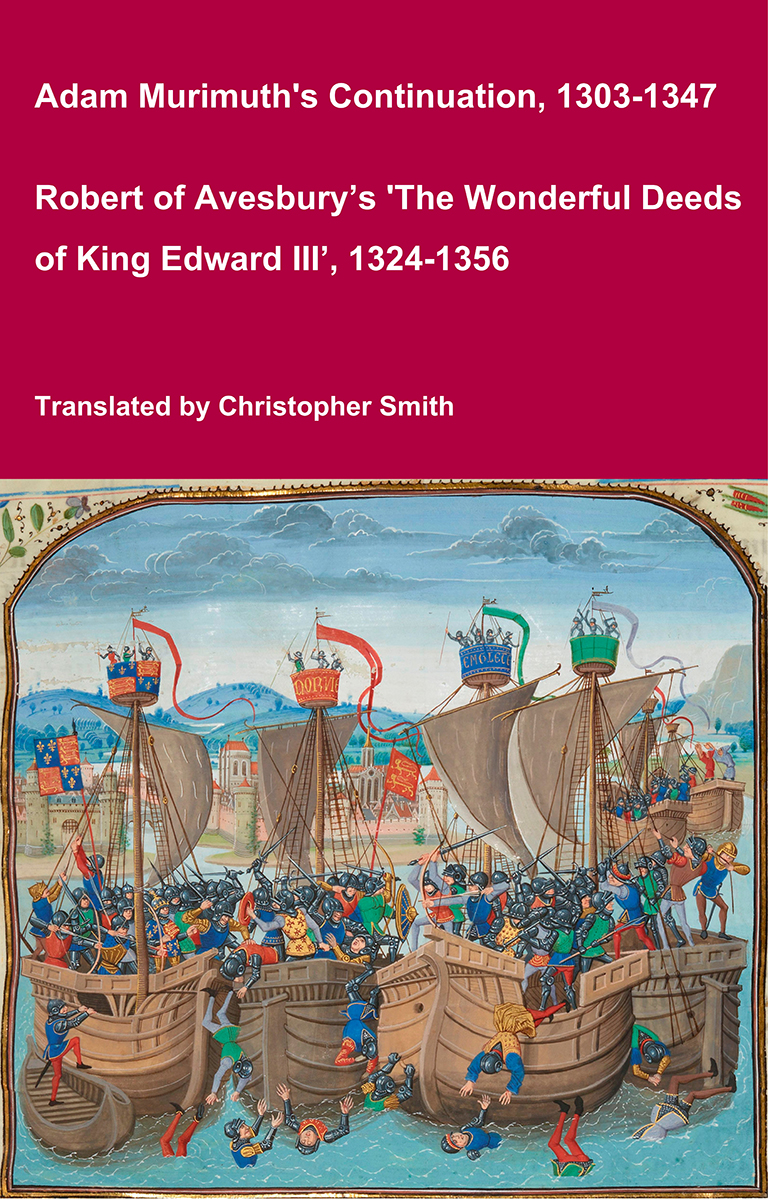 Deeds of King Edward III by Robert of Avesbury. "And then the king of England, whom God save, drew towards Ponthieu on the day of St. Bartholomew [24th August 1346], and came to the water of the Somme, which cometh to the sea from Abbeville in Ponthieu. And the king of France had appointed five hundred men of arms and three thousand of the commons armed, to hold the passage; and, thanks be to God, the king of England and his host took that water of the Somme, where never man passed before, without loss, and fought their enemies and slew1 more than two thousand armed men, and chased the rest right up to the gate of Abbeville, and took of knights and squires in great number. And the same day my lord Hugh le Despenser took the town of Crotoy, and he and his men slew there four hundred men of arms and held the town and found great plenty of victuals. And that night the king of England encamped in the forest of Crécy, upon the same water, for that the host of France came on the other side of the town after our passage; but it would not take the water against us, but returned towards Abbeville. And on the Friday next after the king of England encamped in the same forest of Crécy."
"Et puis le roi Dengleterre, ge Dieu eauve, se treia devers Pountif le jour de Seint Bartholomeu, et vient a leawe de Somme, qe vint a la meer du Abbeville en Pountif. Et le roi de Fraunce avoit ordeigne D hommes darmes et MMM des comunes armez de avoir garde la passage: et, mercie soit Dieux, le roi Dengleterre et son host pristrent cele eawe de Somme, ou unges homme ne passa avaunt, sauns perir nul dez gentz, et combateront od lour enemys et tueront plus qe MlMl gentz darmes, et lez remenantz enchacerent droit a la porte Dabbeville, et pristrent de chivalers et esquiers a graunt nombre. Et mesme le jour monsire Hughe le Despenser prist la ville de Crotoye, et lui et sa gent tuerent illeosqes CCCC hommes darmes et tindrent la ville et troveront graunt plente du vitailles. Et cele nuyt herberga le roy Dengleterre en la forest de Cressy, sour mesme leawe, purceo qe lost de Fraunce vint de lautre part de la ville apres nostre passage; mais il ne voudra prendre leawe sour nous, et retournerent vers Abbeville. Et le Vendredy proschein soi herberga le roy Dengleterre en mesme la forest de Cressy."
Note 1. Chronicle of Geoffrey le Baker of Swinbroke: "After lodging at Acheux, on Thursday they came to Noyelle-sur-Mer, a ford of the river Somme at the Port, where the tides of the sea ebb and flow. Opposite this ford, the French came from the city of Abbeville and the surrounding region with very proud shouting, intending to prevent the crossing, arranged in three formidable battles. Against them, the English engaged in a fierce battle, Lord Hugh Despenser first launching the attack. But, by the grace of God, the far bank was taken despite resistance, and more than two thousand of the enemy were slain. That same night, the town of Le Crotoy was captured and burned, and over three hundred Genoese mercenaries, after a brave but dangerous defence, were slain."
Chronicle of Henry Knighton: "And thus they crossed through a tidal ford of the sea, about one league in length, on the vigil [23rd August] of Saint Bartholomew. And on the other side of the ford the enemies had been ready for battle, three thousand men, under the captains of Ponthieu and the Countess of Aumale, in the field where the English must needs land. But the English seized the shore against them with swift strength; and the Earl of Warwick, the Earl of Northampton, and Lord Reginald of Cobham came out of the water, and before King Edward himself had reached the land, they had routed the enemy, killing two thousand men-at-arms and many of the common folk, and driving the rest in flight as far as the town of Abbeville, where King Philip himself was present with his full army. King Edward remained there in the field with his army all that day and night, and on the following day until the hour of Crécy."
Adam Murimuth Continuation. "Thus, our lord the king came to Poissy, where he found the bridge broken. The adversary remained on the Parisian side and sent 1,000 knights and 2,000 foot soldiers with crossbows to guard the bridge to prevent its repair. He had all bridges around Paris that might allow crossing broken down. However, three or four beams placed beyond the ruined bridge enabled a few of our archers to cross, though only a small number. According to estimates, around 1,000 of the enemy were slain and the rest fled. With the bridge repaired, the king made his way through Picardy, the enemy shadowing him from the side. The bridges again broken, our lord the king could not pass except between Crotoy and Abbeville, during a sea ebb, where the entire army crossed unharmed, even though the local people did not know a safe crossing existed, only a spot where six or ten might pass at once. Nevertheless, our men crossed indiscriminately, as if it were a broad and safe ford, an astonishing sight to all who knew the place. The adversary of our king had stationed around 1,000 knights and over 5,000 foot soldiers to guard the crossing and fiercely oppose the king. But the Earl of Northampton and Sir Reginald Cobham, advancing with 100 armed men and some archers ahead of the army, repelled them bravely. On that day [24th August 1346], over 2,000 of the enemy were slain, and the rest fled to Abbeville, where the adversary with his army had taken position."
"Et sic dominus noster rex usque ad Pusiscum venit, ubi invenit pontem fractum. Et adversarius suus citra Parisius non quievit, sed ordinavit Ml equites et MMl peditum cum balistis ad custodiam dicti pontis, ut non posset reparari. Omnes pontes in circuitu Parisius, per quos transitus esse posset, frangi fecit Protensis tamen IIJ vel IIIJ trabibus ultra pontem fractum, transierunt quidem sagittarii, licet pauci. Interfectis secundum estimationem hominibus mille vel circiter hostium, oceteri versi sunt in fugam. Reparato ponte, dominus rex per Picardiam fecit viam suam, et adversarii in latere sequebantur. Et, fractis pontibus, vis non potuit domino nostro regi, nisi inter Croteye et Abbatis villam in refluxu maris, ubi totus exercitus transivit illsesus, licet in loco a populo illius terræ nesciretur esse vadum tutum, nisi situm ubi sex vel decem transire poterant simul. Nostri tamen indifferenter quasi omni loco, tanquam in vado tuto, transierunt; quod mirum est in oculis omninm qui noverant locum illum. Et adversarius domini nostri regis ordinavit circiter M. equites et V. millia peditum vel ultra pro custodia illius passagii, ad resistendum fortiter domino regi; sed per dominum comitem Northamptoniæ et dominum Reoginaldum de Cobham, cum C. armatis et quibusdam sagittariis exercitum præcedentes, viriliter sunt repulsi, et, interfectis eo die duobus millibus vel ultra, ceteri fugerunt usque ad Abbatis villam, ubi dictus adversarius cum exercitu suo fuit."
Chronicle of Jean le Bel Volume 2. Then the rearguard crossed1 peacefully, carts, wagons, and packhorses. It was a great grace that God granted the noble king, in giving him this counsel, and people rightly hold it to be a miracle, for if he had not crossed that very day, King Philip would have enclosed him and done his will with all the English.
Adonq passerrent les derrains paisiblement, chars, charrettes, sommiers; ce fut grande grace que Dieu fit au noble roy comme de luy donner cel advis, et le tiennent les gens à droit miracle, car s’il n’eust passé ce jour mesmement, le roy Philippe l’eust enclos et de tous les Angloys fait sa voulenté.
Note 1. It was on Thursday 24th August 1346 that the crossing of the ford of Blanchetaque took place.
1. C'est le jeudi 24 août qu'eut lieu le passage du gué de la Blanchetaque. Michel de Northburgh, dans R. d'Avesbury (op. cit), p. 368; G. Le Baker, p. 81.
On 24th August 1358 John I King Castile was born to Henry "Fratricide" II King Castile [aged 24] and Juana Manuel Queen of Castile [aged 19]. He married before 4th October 1379 his third cousin once removed Eleanor Barcelona Queen Consort Castile, daughter of Peter IV King Aragon and Eleanor of Sicily Queen Consort Aragon, and had issue.
Chronicle of Jean le Bel Volume 2. At this time news came that the King of Navarre had reached agreement with the Duke of Normandy, who was lying before the town and castle of Melun, and everything was surrendered. But the manner of their agreement was not known. Nevertheless, they had entered Paris together by agreement1, at which many people marvelled, considering the many things which had been done. It was indeed feared that neither would ever have great trust in the other, and afterwards neither one nor the other ever made any show of harming the enemies of the kingdom.
En ce temps vinrent nouvelles que le roy de Navarre s'estoit acordé avecques le duc de Normendye seant devant la ville et chastel de Melun, et fut tout rendu, mais on ne sçavoit la maniere de leur acord, et toutesfois estoient ilzentrez ensemble à Paris par acord, de quoy de gens maintes s'esmerveilloient, attendues moult de choses lesquelles avoient esté faittes; et bien se doubtoit on que grand fiance n'avroit jamais lung de l'aultre, ne oncques puis ne fist ne lung ne l'aultre semblant de grever les anemis du royaume.
Note 1. Jean le Bel is alluding to the peace concluded at Pontoise, on 24th August 1358, between the Regent and Charles the Bad; Grandes Chroniques.
1. Jean le Bel fait allusion à la paix conclue à Pontoise, le 24 août 1358, entre le régent et Charles le Mauvais. (Grandes chroniques, t. Vi, p. 159. Cf. Secousse, Mémoires pour servir à l'histoire de Charles le Mauvais, t. 1, p. 390 à 398, et t. Il, p155.)
On 22nd August 1371 Guy of Luxemburg I Count Saint Pol and Ligny [aged 31] was killed at Baesweiler, Aachen aka Aix-le-Chapelle.
Waleran Luxemburg [aged 16] was captured.
On 24th August 1371 Edward Duke Guelders [aged 35] died from wounds..
Henrici Quinti, Angliæ Regis, Gesta, is a first-hand account of the Agincourt Campaign, and subsequent events to his death in 1422. The author of the first part was a Chaplain in King Henry's retinue who was present from King Henry's departure at Southampton in 1415, at the siege of Harfleur, the battle of Agincourt, and the celebrations on King Henry's return to London. The second part, by another writer, relates the events that took place including the negotiations at Troye, Henry's marriage and his death in 1422.
Available at Amazon in eBook and Paperback format.
On 24th August 1390 Otto I Wittelsbach I Count Palatine was born to Rupert King Germany [aged 38].
On 24th August 1393 Arthur Montfort III Duke Brittany was born to John Montfort V Duke Brittany [aged 54] and Joanna of Navarre Queen Consort England [aged 23]. He a great x 3 grandson of King Henry III of England. He married (1) 10th October 1423 his second cousin Margaret Valois, daughter of John "Fearless" Valois Duke Burgundy and Margaret Wittelsbach Duchess Burgundy (2) 29th August 1442 his second cousin once removed Jeanne Albret (3) 2nd July 1445 his third cousin twice removed Catherine Luxemburg, daughter of Peter Luxemburg I Count Saint Pol and Margherita Baux.
On 24th August 1423 Archbishop Thomas Rotherham was born to Thomas Rotherham of Brookgate in Rotherham and Alice Scott at Rotherham [Map].
On or before 24th August 1453 Thomas Neville [aged 23] and Maud Stanhope 4th Baroness Cromwell Baroness Willoughby of Eresby were married. Maud Stanhope 4th Baroness Cromwell Baroness Willoughby of Eresby was the niece and heiress of Ralph Cromwell 3rd Baron Cromwell [aged 50] meaning traditional Percy lands would become Neville lands. The Percy's, being the older family, especially Thomas Percy 1st Baron Egremont [aged 30], took umbrage with the ensuing two year feud known as the Neville-Percy Feud. He the son of Richard Neville Earl Salisbury [aged 53] and Alice Montagu 5th Countess of Salisbury [aged 46].
On 24th August 1453 John Neville 1st Marquess Montagu [aged 22] was ambushed at Heworth Moor York by Thomas Percy 1st Baron Egremont [aged 30] leading a force of 700 or more men when returning with his brother's wedding party from Tattershall Castle [Map] to Sheriff Hutton [Map]; sometimes decribed as the Battle of Heworth Moor.
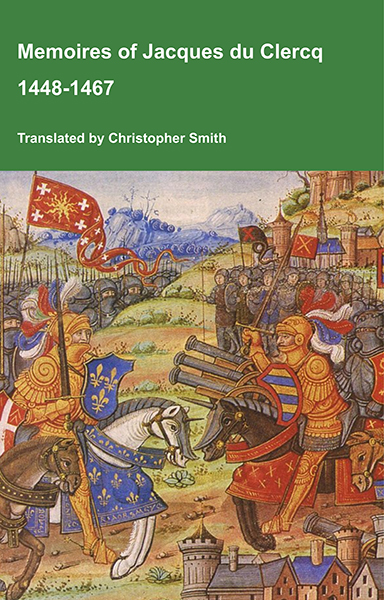 Memoires Jacques du Clercq. Around that time, a knight named the lord of Roncq, who had married the bastard sister of the Count of Saint-Pol, and who was one of those who carried out certain criminal acts when the said count wished them done, namely acts of violence, beating or killing, had a certain man hanged near the town of Renty, who had been betrothed to a young girl whom the said lord of Roncq did not wish him to marry, because he himself desired her. After having him hanged, he had him laid on the ground, the lacing of his doublet cut, then had his genitals and member cut off, then had his belly opened and his heart taken out and split in two, and thus he died. For this deed, Philip, Duke of Burgundy, sent into that region some of his archers to try to capture him; but the said lord of Roncq fled and could not be found, so the duke seized all his lands. Shortly afterward, he again sent two of the bastards of Renty, knights, his master of the household, chamberlain, and captain of his archers, accompanied by seven or eight of his body archers, to capture the said lord of Roncq if they could find him. They went to Hucqueliers, near where the said lord of Roncq had his lodging, and remained there eight or ten days without it being known why they stayed there. While they were at Hucqueliers, it was reported to the English garrison of Calais that there were archers of the duke spying to see whether any English might leave Calais so they could capture them. Therefore about fifty or sixty Englishmen left Calais and went to lie in ambush in a wood about three leagues from Hucqueliers, and eight of them went to reconnoitre around the place where the said men were. It was reported to the said bastards and archers that there were English nearby; they mounted and pursued the eight Englishmen, who fled, drawing them on; and as they pursued them, one of the English horses failed and fell behind, and that Englishman was killed by the archers. They chased them until they came to the place of the ambush, from which the English sprang upon the said bastards and archers; whereupon they turned and fled. In the flight one of the archers, named Colinet le Brasseur, was killed. Three of the archers escaped into the woods; the others took refuge in a nearby house and defended themselves there. When the English saw this, they tried to set fire to it; and when some of the archers perceived this, they came out into the courtyard and defended themselves, wounding several Englishmen; but in the end they were all put to death. When the eldest of the said bastards, named Bonnet, who, in his father's absence, was captain of the duke's archers, saw this, he asked whether there were any gentlemen among the English. Bonnet was a very valiant young man and well loved. When the English replied that there were, and that he might safely come down without harm, he descended unarmed after defending himself as long as he could, seeing that he could no longer resist; but as soon as he had come down, the English seized him and cut his throat, and thus he died. And this was done on the day of Saint Bartholomew, in [24th] August of the said year fifty-eight.
Environ ce temps, ung chevallier nommé le St de Roncq, lequel avoit espousé la soeur bastarde du comte de St Paul, et lequel estoit l'ung de ceulx qui mectoient a execution aulcuns crisminaux faits quant le comte de St Paul les voulloit faire faire; c'est a sçavoir: de voye de fait, et de battre ou tuer ung compagnon, lequel avoit fiancé une josne fille, laquelle ledit Sr de Roncq ne voulloit pas qu'il print, pour ce qu'il l'aimoit, feit pendre ledit compagnon environ la ville de Renty, puis le feit coucher a terre et coupper la lachure de son pourpoinct, puis coupper les genitoires et son membre, puis lui feit fendre le ventre et prendre le coeur de son ventre et partir en deux, et ainsy mourut. Pour lequel fait Philippe, duc de Bourgogne, envoya audit pays, pour le cuider prendre, aulcuns de ses archiers; mais ledit Sr de Roncq s'espaysa et ne le trouvat on point, pourquoy le duc feit mectre toutes terres dudit chevallier en sa main; et assés tost après derechief il envoya encoires deux des enfants bastards de Renty, chevalliers, son maitre d'hostel, chambellan et capitaine de ses archiers, accompagniés de sept ou huict de ses archiers de corps pour prendre ledit St de Roncq s'ils le pooient trouver, lesquels allerent a Hucqueliers assés près du lieu ou ledit St de Roncq avoit son logis, et illecq se tindrent huict a dix jours sans ce que on sceut pourquoy ils se y tenoient. Eulx estant audit lieu de Hucqueliers, on rapporta aulx Anglois de la garnison de Calaix qu'il y avoit des archiers du duc qui espioient s'il saudroit nuls Anglois dudit Calaix pour les prendre; pourquoy environ cinquante ou soixante Anglois se meirent hors dudit Calaix et s'en allerent embucher en ung bois a trois lieues près dudit Hucqueliers, et en y olt huict qui les allerent ourdoier autour dudit Huc queliers ou que les dessusdits estoient. On vint dire aulxdits bastards et archiers qu'il y avoit la entour des Anglois; lors lesdits bastards et archiers monterent a cheval et allerent après les huict Anglois, et quant lesdits Anglois les veirent, sy se meirent a courre et les aultres a cachier; et en courant l'ung des chevaulx desdits Anglois fust recrant, sy demoura derriere, et fust ledit Anglois tué de ces archiers; tant cachierent lesdits Anglois qu'ils vindrent la ou leur embuche estoit, de laquelle embuche saillirent sur lesdits bastards et archiers, lors se meirent a retourner et prindrent la fuite, et en fuyant y olt ung desdits archiers nommé Colinet le Brasseur, lequel fust tué; il y olt trois desdits archiers, lesquels se boutterent au bois, et par ainsy eschapperent; les aultres se boutterent en une maison assés près, et illecq se deffendirent. Quant les Anglois veirent ce, sy y vollurent boutter le feu; quant aulcuns desdits archiers apperceurent ce, ils saillirent en la cour, et se deffendirent et blesserent plusieurs Anglois; mais en la fin ils feurent touts mis a mort. Quant veit l'aisné desdits bastards, nommé Bonnet, lequel en l'absence de son pere estoit capitaine des archiers du duc, il demanda s'il n'y avoit nuls gentilhommes en la compagnie, et estoit ledit Bonnet moult valliant josne homme et bien aimé; lorsque les Anglois lui respondirent que ouy et que hardiment descen dist et que mal n'auroit de son corps, lors ledit Bonnet, après ce qu'il se fust deffendu le plus qu'il peut, et que bien voyoit qu'il ne pooit plus resister, descendit sans baston, lequel sitost qu'il fust descendu, lesdits Anglois le prindrent et lui coupperent la gorge, et ainsy mourut. Et fust ce fait le jour saint Betremieu, en aoust audit an cinquante huict.
On 24th August 1482 Edward Stanley 1st Baron Monteagle [aged 20] was knighted by King Richard III of England [aged 29] at Berwick-upon-Tweed, Northumberland [Map] during the Capture of Berwick.
Letters and Papers Foreign and Domestic Henry VIII 1535. 24th August 1535. R. O. 172. Thomas Broke to Cromwell.
I was at the Rolls, as you desired, on Bartholomew Even, at the payment of Geo. Robynson concerning the matter of Mr. Dudley. After paying the money to him, and delivering his acquittance to Henry Polsted, I reminded him how small in value of his goods he assessed himself to the King; "which to him was nothing pleasant." As to your building at Austin Friars, the frame which was set up last year will be fully finished within these 14 days. The main frame on the street side is fully set up. They are now laying the gutters, and in three weeks they trust it shall be covered with tile. I have viewed your house at Hackney. The kitchen is finished, except the paving. The wet and dry larders, and the filling of the pool in the garden, are well forward. I have seen Master Richard's house at Stepney. He and his folks are well and anxious for your return, "and, according to Mr. Richard's commandment, I sweetly kissed Mastres Beatrice his maid four or five times for failing." Your household at the Rolls are in good health, and will be glad of your return if the plague and sickness cease. By report there was much more death in London before my coming home than since. I thank the King for his goodness when I was last with him. I desire remembrances to my friends of the Privy Chamber, especially to Norris, Henneage, Russell, Long, my fellow Mewtas, Mr. Controller, Mr. Vice-Chamberlain, Baynton, Coffyn, and Uvedale. London, St. Bartholomew's Day. "By your true and faithful friend and fellow, Thomas Broke."
Hol., p. 1. Add.: Secretary. Endd.

Henry Machyn's Diary. 24th August 1555. The xxiiij day of August cam from Rome at afternone the bysshope of Ely [aged 49], the bysshope of Banger [aged 51], the lord Montycutt vycontt [aged 26], ser Hare Husse, and dyvers odur.

Henry Machyn's Diary. 24th August 1558. The xxiiij day at after-non was [buried] ser Gorge Pallett [aged 66] knyght, and brodur [to the lord] tressorer the marques of Wynchester [aged 75], and with standard of armes, cott, elmett, targett, sword, and a vj dosen [of pensils] and iiij dosen of skochyons.
On 24th August 1561 Thomas Howard 1st Earl Suffolk was born to Thomas Howard 4th Duke of Norfolk [aged 25] and Margaret Audley Duchess Norfolk [aged 21]. He married (1) before 1572 his half third cousin once removed Mary Dacre, daughter of Thomas Dacre 4th Baron Dacre Gilsland 8th Baron Greystoke and Elizabeth Leybourne Duchess Norfolk (2) before 1582 his third cousin Catherine Knyvet Countess Suffolk and had issue.


On 24th August 1647 Nicholas Stone [aged 60] died in Long Acre. He was buried in St Martin in the Fields Church [Map].
On 24th August 1652 Richard Evelyn was born to John Evelyn [aged 31] and Mary Browne [aged 17].


The History of William Marshal was commissioned by his son shortly after William’s death in 1219 to celebrate the Marshal’s remarkable life; it is an authentic, contemporary voice. The manuscript was discovered in 1861 by French historian Paul Meyer. Meyer published the manuscript in its original Anglo-French in 1891 in two books. This book is a line by line translation of the first of Meyer’s books; lines 1-10152. Book 1 of the History begins in 1139 and ends in 1194. It describes the events of the Anarchy, the role of William’s father John, John’s marriages, William’s childhood, his role as a hostage at the siege of Newbury, his injury and imprisonment in Poitou where he met Eleanor of Aquitaine and his life as a knight errant. It continues with the accusation against him of an improper relationship with Margaret, wife of Henry the Young King, his exile, and return, the death of Henry the Young King, the rebellion of Richard, the future King Richard I, war with France, the death of King Henry II, and the capture of King Richard, and the rebellion of John, the future King John. It ends with the release of King Richard and the death of John Marshal.
Available at Amazon in eBook and Paperback format.

On 24th August 1658 Edmund Sheffield 2nd Earl Mulgrave [aged 46] died. His son John [aged 10] succeeded 3rd Earl Mulgrave, 5th Baron Sheffield of Butterwick in Lincolnshire.
Samuel Pepys' Diary. 24th August 1663. Up very early, and my joyners came to work. I to Mr. Moore; from him came back home again, and drew up an account to my Lord, and that being done met him at my Lord Sandwich's [aged 38], where I was a good while alone with my Lord; and I perceive he confides in me and loves me as he uses to do, and tells me his condition, which is now very well all I fear is that he will not live within compass, for I am told this morning of strange dotages of his upon the slut at Chelsea, even in the presence of his daughter, my Lady Jem, and Mrs. Ferrets, who took notice of it. There come to him this morning his prints of the river Tagus and the City of Lisbon [Map], which he measured with his own hand, and printed by command of the King [aged 33]. My Lord pleases himself with it, but methinks it ought to have been better done than by jobing. Besides I put him upon having some took off upon white sattin, which he ordered presently. I offered my Lord my accounts, and did give him up his old bond for £500 and took a new one of him for £700, which I am by lending him more money to make up: and I am glad of it. My Lord would have had me dine with him, but I had a mind to go home to my workmen, and so took a kind good bye of him, and so with Creed to St. James's, and, missing Mr. Coventry [aged 35], walked to the New Exchange, and there drank some whey, and so I by water home, and found my closett at my office made very clean and neat to my mind mightily, and home to dinner, and then to my office to brush my books, and put them and my papers in order again, and all the afternoon till late at night doing business there, and so home to supper, and then to work in my chamber, making matters of this day's accounts clear in my books, they being a little extraordinary, and so being very late I put myself to bed, the rest being long ago gone.


Samuel Pepys' Diary. 24th August 1664. So after 'Change [Map] home and a good dinner, and then to White Hall to a Committee of the Fishery, where my Lord Craven [aged 56] and Mr. Gray mightily against Mr. Creed's being joined in the warrant for Secretary with Mr. Duke. However I did get it put off till the Duke of Yorke [aged 30] was there, and so broke up doing nothing.
On 24th August 1672 Charles Scott Earl Doncaster was born to James Scott 1st Duke Monmouth 1st Duke Buccleuch [aged 23] and Anne Scott Duchess Monmouth and Buccleuch [aged 21]. He a grandson of King Charles II of England Scotland and Ireland. He died aged one in 1674.


John Evelyn's Diary. 24th August 1678. I went to see my Lord of St. Alban's [aged 73] house, at Byfleet, Surrey, an old, large building. Thence, to the papermills, where I found them making a coarse white paper. They cull the rags which are linen for white paper, woolen for brown; then they stamp them in troughs to a pap, with pestles, or hammers, like the powder mills, then put it into a vessel of water, in which they dip a frame closely wired with wire as small as a hair and as close as a weaver's reed; on this they take up the pap, the superfluous water draining through the wire; this they dexterously turning, shake out like a pancake on a smooth board between two pieces of flannel, then press it between a great press, the flannel sucking out the moisture; then, taking it out, they ply and dry it on strings, as they dry linen in the laundry; then dip it in alum water, lastly, polish and make it up in quires. They put some gum in the water in which they macerate the rags. The mark we find on the sheets is formed in the wire.
On 24th August 1680 Ferdinand Bol [aged 64] died.
On 24th August 1682 John Maitland 1st Duke Lauderdale [aged 66] died. Duke Lauderdale, Earl Guildford, Baron Petersham extinct. His brother Charles succeeded 3rd Earl Lauderdale, 3rd Viscount Maitland, 3rd Viscount Lauderdale.


On 24th August 1695 Louise Emilie Saxe Coburg Saalfeld was born to John Ernest Saxe Coburg Saalfeld IV Duke Saxe Coburg Saalfeld [aged 37] and Charlotte Johanna Waldeck Wildungen Duchess Saxe Coburg Saalfeld at Saalfield.
On 24th August 1704 the largest naval of the War of the Spanish Sucession was fought at Vélez Málaga a week after the capture of Gibraltar by the British.

On 24th August 1715 George Fitzroy Earl Euston was born to Charles Fitzroy 2nd Duke Grafton [aged 31] and Henrietta Somerset Duchess Grafton [aged 24]. He a great grandson of King Charles II of England Scotland and Ireland. He married 10th October 1741 his fifth cousin Dorothy Boyle Countess Euston, daughter of Richard Boyle 3rd Earl Burlington and Dorothy Savile Countess Burlington.
On 24th August 1733 Pierre Etienne Monnot [aged 76] died.
Chronicle of Walter of Guisborough
A canon regular of the Augustinian Guisborough Priory, Yorkshire, formerly known as The Chronicle of Walter of Hemingburgh, describes the period from 1066 to 1346. Before 1274 the Chronicle is based on other works. Thereafter, the Chronicle is original, and a remarkable source for the events of the time. This book provides a translation of the Chronicle from that date. The Latin source for our translation is the 1849 work edited by Hans Claude Hamilton. Hamilton, in his preface, says: 'In the present work we behold perhaps one of the finest samples of our early chronicles, both as regards the value of the events recorded, and the correctness with which they are detailed; Nor will the pleasing style of composition be lightly passed over by those capable of seeing reflected from it the tokens of a vigorous and cultivated mind, and a favourable specimen of the learning and taste of the age in which it was framed.'
Available at Amazon in eBook and Paperback format.
On 24th August 1751 James Aston 5th Baronet [aged 28] died of smallpox without male issue. His fourth cousin once removed Philip [aged 40] succeeded 6th Baronet Aston of Tixall.
On 24th August 1770 probably by committing suicide by consuming arsenic at Brook Street, Holborn. He was 17 years and nine months old.
On 24th August 1779 Wilmot Vaughan 2nd Earl Lisburne [aged 24] was declared a lunatic. He spent most of his life at Shillingthorpe Hall, a private asylum in Lincolnshire
On 24th August 1814 Harriet Katherine Townshend Duchess Buccleuch Duchess Queensbury [aged 40] died.

On 24th August 1838 James Hamilton 2nd Duke of Abercorn was born to James Hamilton 1st Duke of Abercorn [aged 27] and Louisa Jane Russell Duchess Abercorn [aged 26]. He a great x 4 grandson of King Charles II of England Scotland and Ireland. He married 1869 Mary Anna Curzon Howe Duchess Abercorn, daughter of Richard William Penn Curzon Howe 1st Earl Howe and Anne Gore Countess Howe, and had issue.

On 24th August 1843 George Fitz-Clarence was born illegitimately to Prince George Hanover 2nd Duke Cambridge [aged 24] and Sarah Fairbrother [aged 28]. He a great grandson of King George III of Great Britain and Ireland.
Vestiges of the Antiquities of Derbyshire. Some years ago, a large and interesting barrow upon Bakewell Moor, called Bole Hill [Map], was carted away in order to build stone fences, at which time a vault was discovered, closed with a large, fiat stone, which, being removed, displayed to the astonished rustics engaged in the work of demolition, the unexpected sight of three human skeletons. The only relic found with them was a large spear of some kind of metal, which was preserved for a short time and then lost. There are yet traces of five vaults to be seen on the ground fonnerly covered by the tumulus. These vaults were filled up for about a foot in depth with soil which was dug out and examined on the 24th of August, 1843, in the hope of rescuing some relic before all traces of this once noble barrow shall have disappeared, and its existence be forgotten. In the largest vault the remains of four human skeletons and the pieces of a large sepulchral urn of coarse material and plain manufacture were brought to light. In another of the vaults were found a few bones, horses' teeth, and two skulls of the polecat. In the other three vaults nothing was found but rats' bones, which were equally prevalent in each vault.
On 28th June 1853 Francis Charteris 8th Earl of Wemyss Douglas 4th Earl March [aged 81] died. His son Francis [aged 56] succeeded 9th Earl Wemyss, 2nd Baron Wemyss of Wemyss in Fife. Louisa Bingham Countess Wemyss [aged 55] by marriage Countess Wemyss.
His obituary in the Gentleman's Magazine by Sylvanus Urban Volume XL reads as follows:
THE EARL OF WEMYSS AND MARCH June 28 At Gosford House East Lothian in his 81st year the Right Hon Francis Wemyss Charteris Wemyss sixth Earl of Wemyss and Lord Elcho and Methel 1633 Baron Wemyss of Elcho 1628 Earl of March Viscount of Peebles and Lord Niedpath, Lyne and Munard 1697 all dignities in the peerage of Scotland Baron Wemyss of Wemyss co Fife 1821 and Lord Lieutenant of Peebleshire.
He was born on the 15th April 1772 the only son of Francis Lord Elcho son and heir apparent of the fifth Earl by Miss Susan Tracy Keck one of the Maids of Honour to Queen Charlotte the second daughter of Anthony Tracy Keck esq of Great Tew co Oxford by Lady Susan Hamilton fourth daughter of James fourth Duke of Hamilton and first Duke of Brandon KG and KT.
In early life his lordship had a commission in the army and from 1793 to 1797 was aide de camp to his grand uncle Lord Adam Gordon Commander in chief of the forces in Scotland He quitted the army in 1797.
His father Lord Elcho died on the 20th June 1808 and his grandfather on the 24th August following whereupon he succeeded to the Earldom of Wemyss and its attendant titles. On the death of William fourth Duke of Queensberry [aged 83] in Dec 1810 he inherited the barony of Niedpath and the extensive property which had belonged to his Grace in the county of Peebles in pursuance of the terms of the marriage contract of the first Earl of March his Grace's grandfather. He also succeeded to the dignities of Earl of March, Viscount of Peebles and Lord Douglas of Niedpath, Lyne and Munard the patent of creation being to Lord William Douglas et heredes masculos de ejus corpore quibus deficientibus alios ejus hæredes masin culos et talliæ contentos in ejus infeofa mentis terrarum et dominii de Niedpath.
His Lordship was created a peer of the united kingdom by the title of Baron Wemyss at the Coronation of King George IV by patent dated 17th July 1821. He supported the Conservative party in parliament but took but little interest in politics.
He married May 31 1794 Margaret [aged 16] fourth daughter of Walter Campbell esq of Shawfield [aged 54] by his first wife Eleanor daughter of Robert Kerr of Newfield eldest son of Lord Charles Kerr second son of Robert first Marquess of Lothian. By that lady who died in 1850 he had issue two sons and nine daughters 1 Francis his successor 2 Lady Eleanor [aged 1] married in 1820 to Walter Frederick Campbell of Woodhall co Lanark esq eldest son of Colonel John Campbell [aged 26] by Lady Charlotte [aged 21] daughter of John fifth Duke of Argyle [aged 73] and died in 1832 3 the Hon Walter died 1818 4 Susan who died in infancy 5 Lady Margaret married in 1824 to Lieut Colonel John Wildman and died in 1825 6 Lady Katharine married in 1824 to her cousin George Harry Lord Grey of Groby who died in 1835 and she died in 1844 leaving issue the present Earl of Stamford and Warrington and Lady Margaret Milbanke 7 Lady Charlotte [aged 1] married in 1825 to Andrew Fletcher esq of Salton Castle East Lothian 8 Lady Louisa Antoinetta [aged 1] married in 1832 to William Forbes esq of Callendar co Stirling late MP for Stirlingshire 9 Lady Harriet [aged 1] married in 1829 to Sir George Grant Suttie Bart 10 Lady Jane and 11 Lady Caroline. The present Earls in 1796 married in 1817 Lady Louisa Bingham fourth daughter of Richard 2d Earl Lucan [aged 31] by whom he has issue Francis Lord Elcho four other sons and daughters.


On 24th August 1860 Jane Maria Baker Lady Simeon [aged 41] died from childbirth.
On 24th August 1872 George Capron of Southwick [aged 90] died. Memorial in Church of St Rumbold, Stoke Doyle [Map] by Thomas Gaffin.
George Capron of Southwick: Around 1782 he was born to Thomas Capron and Elizabeth Lucas.
On 24th August 1889 Evan Morris was knighted by Queen Victoria of the United Kingdom [aged 70] on her visit to Wrexham.


Anne Boleyn. Her Life as told by Lancelot de Carle's 1536 Letter.
In 1536, two weeks after the execution of Anne Boleyn, her brother George and four others, Lancelot du Carle, wrote an extraordinary letter that described Anne's life, and her trial and execution, to which he was a witness. This book presents a new translation of that letter, with additional material from other contemporary sources such as Letters, Hall's and Wriothesley's Chronicles, the pamphlets of Wynkyn the Worde, the Memorial of George Constantyne, the Portuguese Letter and the Baga de Secrets, all of which are provided in Appendices.
Available at Amazon in eBook and Paperback format.
On 24th August 1907 John Yarde-Buller 3rd Baron Churston [aged 33] and Jessie Smither aka Denise Orme Duchess Leinster [aged 21] were married.

On 24th August 1909 Edward Henry John Cornwallis Eliot [aged 23] died. Memorial at St Germans Priory [Map].
Edward Henry John Cornwallis Eliot: On 30th August 1885 he was born to Henry Cornwallis Eliot 5th Earl St Germans and Emily Harriet Labouchere Countess St Germans.
On 24th August 1944 John Francis Granville Scrope Egerton 4th Earl Ellesmere [aged 71] died. His son John [aged 29] succeeded 5th Earl Ellesmere, 5th Viscount Brackley. Diana Evelyn Percy [aged 26] by marriage Countess Ellesmere.


On 24th August 1961 William Ward, Viscount Ednam [aged 41] and Maureen Swanson Countess of Dudley [aged 28] were married. They had seven children. He the son of William Humble Eric Ward 3rd Earl of Dudley [aged 67] and Rosemary Millicent Sutherland-Leveson-Gower.
On 24th August 1970 Rita Emily Carr-Ellison Duchess Grafton [aged 58] died.
On 24th August 1972 Bernard Fitzalan Howard 3rd Baron Howard [aged 87] died. His son Miles [aged 57] succeeded 4th Baron Howard of Glossop in Derbyshire. Anne Constable-Maxwell Duchess Norfolk [aged 44] by marriage Baroness Howard of Glossop in Derbyshire.

After 24th August 1990. Hasting's Chapel, St Helen's Church, Ashby-de-la-Zouch [Map]. Monument to Francis Hastings 16th Earl Huntingdon [deceased] and his wife Margaret Lane Countess Huntingdon [aged 83].
Margaret Lane Countess Huntingdon: On 23rd June 1907 she was born. On 14th February 1944 Francis Hastings 16th Earl Huntingdon and she were married. She by marriage Countess Huntingdon. He the son of Warner Hastings 15th Earl Huntingdon and Maud Margaret Wilson Countess Huntingdon. On 14th February 1994 she died.
On 24th August 1113 Geoffrey Plantagenet Duke Normandy was born to Fulk "Young" King Jerusalem [aged 24] and Ermengarde of Maine Countess of Anjou. He married 17th June 1128 his fourth cousin once removed Empress Matilda, daughter of King Henry I "Beauclerc" England and Edith aka Matilda Dunkeld Queen Consort England, and had issue.
On 24th August 1198 King Alexander II of Scotland was born to King William I of Scotland [aged 55] and Ermengarde Beaumont Sarthe Queen Consort Scotland [aged 28] at Haddington, Haddingtonshire. He a great x 2 grandson of King Henry I "Beauclerc" England. He married (1) 21st June 1221 his half third cousin Joan Plantagenet Queen of Scotland, daughter of King John of England and Isabella of Angoulême Queen Consort England (2) 1239 his third cousin once removed Marie Coucy and had issue.
On 24th August 1337 Isabel Scrope was born to Henry Scrope 1st Baron Scrope of Masham [aged 24] and Joan Unknown [aged 17]. She married before 7th October 1404 Robert Plumpton and had issue.
On 24th August 1358 John I King Castile was born to Henry "Fratricide" II King Castile [aged 24] and Juana Manuel Queen of Castile [aged 19]. He married before 4th October 1379 his third cousin once removed Eleanor Barcelona Queen Consort Castile, daughter of Peter IV King Aragon and Eleanor of Sicily Queen Consort Aragon, and had issue.

The True Chronicles of Jean le Bel Volume 1 Chapters 1-60 1307-1342
The True Chronicles of Jean le Bel offer one of the most vivid and immediate accounts of 14th-century Europe, written by a knight who lived through the events he describes, and experienced some of them first hand. Covering the early decades of the Hundred Years’ War, this remarkable chronicle follows the campaigns of Edward III of England, the politics of France and the Low Countries, and the shifting alliances that shaped medieval warfare. Unlike later historians, Jean le Bel writes with a strong sense of eyewitness authenticity, drawing on personal experience and the testimony of fellow soldiers. His narrative captures not only battles and sieges, but also the realities of military life, diplomacy, and the ideals of chivalry that governed noble society. A key source for Jean Froissart, Le Bel’s chronicle stands on its own as a compelling and insightful work, at once historical record and literary achievement. This translation builds on the 1905 edition published in French by Jules Viard, adding extensive translations from other sources Rymer's Fœdera, the Chronicles of Adam Murimuth, William Nangis, Walter of Guisborough, a Bourgeois of Valenciennes, Geoffrey le Baker of Swinbroke and Richard Lescot to enrich the original text and Viard's notes.
Available at Amazon in eBook and Paperback format.
On 24th August 1377 Piers Mauley 5th Baron de Mauley was born to Piers Mauley [aged 20] and Margery Sutton Baroness Ferrers Harewood Baroness Haversham. He married before 6th September 1415 his third cousin Maud Neville Baroness Haversham, daughter of Ralph Neville 1st Earl of Westmoreland and Margaret Stafford Baroness Neville Raby.
On 24th August 1390 Otto I Wittelsbach I Count Palatine was born to Rupert King Germany [aged 38].
On 24th August 1393 Arthur Montfort III Duke Brittany was born to John Montfort V Duke Brittany [aged 54] and Joanna of Navarre Queen Consort England [aged 23]. He a great x 3 grandson of King Henry III of England. He married (1) 10th October 1423 his second cousin Margaret Valois, daughter of John "Fearless" Valois Duke Burgundy and Margaret Wittelsbach Duchess Burgundy (2) 29th August 1442 his second cousin once removed Jeanne Albret (3) 2nd July 1445 his third cousin twice removed Catherine Luxemburg, daughter of Peter Luxemburg I Count Saint Pol and Margherita Baux.
On 24th August 1423 Archbishop Thomas Rotherham was born to Thomas Rotherham of Brookgate in Rotherham and Alice Scott at Rotherham [Map].
On 24th August 1561 Thomas Howard 1st Earl Suffolk was born to Thomas Howard 4th Duke of Norfolk [aged 25] and Margaret Audley Duchess Norfolk [aged 21]. He married (1) before 1572 his half third cousin once removed Mary Dacre, daughter of Thomas Dacre 4th Baron Dacre Gilsland 8th Baron Greystoke and Elizabeth Leybourne Duchess Norfolk (2) before 1582 his third cousin Catherine Knyvet Countess Suffolk and had issue.
On 24th August 1646 Roger Boyle 2nd Earl Orrery was born to Roger Boyle 1st Earl Orrery [aged 25] and Margaret Howard Countess Orrery [aged 24] at Dublin [Map]. He married 1665 his third cousin Mary Sackville Countess Orrery, daughter of Richard Sackville 5th Earl Dorset and Frances Cranfield Countess Dorset, and had issue.
On 24th August 1652 Richard Evelyn was born to John Evelyn [aged 31] and Mary Browne [aged 17].
On 24th August 1653 Elizabeth Egerton Countess Leicester was born to John Egerton 2nd Earl Bridgewater [aged 30] and Elizabeth Cavendish Countess Bridgewater [aged 26]. She married 1672 her half fifth cousin once removed Robert Sidney 4th Earl of Leicester, son of Philip Sidney 3rd Earl of Leicester and Catherine Cecil, and had issue.


On 24th August 1672 Charles Scott Earl Doncaster was born to James Scott 1st Duke Monmouth 1st Duke Buccleuch [aged 23] and Anne Scott Duchess Monmouth and Buccleuch [aged 21]. He a grandson of King Charles II of England Scotland and Ireland. He died aged one in 1674.
On 24th August 1673 Charlotte de Vere was born to Aubrey de Vere 20th Earl of Oxford [aged 46] and Diana Kirke Countess of Oxford. She was baptised 13th September 1673 at St Martin in the Fields Church [Map].


Abbot John Whethamstede’s Chronicle of the Abbey of St Albans
Abbot John Whethamstede's Register aka Chronicle of his second term at the Abbey of St Albans, 1451-1461, is a remarkable text that describes his first-hand experience of the beginning of the Wars of the Roses including the First and Second Battles of St Albans, 1455 and 1461, respectively, their cause, and their consequences, not least on the Abbey itself. His text also includes Loveday, Blore Heath, Northampton, the Act of Accord, Wakefield, and Towton, and ends with the Coronation of King Edward IV. In addition to the events of the Wars of the Roses, Abbot John, or his scribes who wrote the Chronicle, include details in the life of the Abbey such as charters, letters, land exchanges, visits by legates, and disputes, which provide a rich insight into the day-to-day life of the Abbey, and the challenges faced by its Abbot.
Available at Amazon in eBook and Paperback format.
On 24th August 1676 Susannah Hanmer Lady Bunbury was born to William Hamner [aged 28] and Peregrina North. She married 15th May 1699 Henry Bunbury 3rd Baronet, son of Henry Bunbury 2nd Baronet and Mary Eyton, and had issue.
On 24th August 1695 Louise Emilie Saxe Coburg Saalfeld was born to John Ernest Saxe Coburg Saalfeld IV Duke Saxe Coburg Saalfeld [aged 37] and Charlotte Johanna Waldeck Wildungen Duchess Saxe Coburg Saalfeld at Saalfield.
On 24th August 1706 John Evelyn 2nd Baronet was born to John Evelyn 1st Baronet [aged 24] and Anne Boscawen Lady Evelyn [aged 31] at Wotton House. He married 17th August 1732 his first cousin Mary Boscawen, daughter of Hugh Boscawen 1st Viscount Falmouth and Charlotte Godfrey Viscountess Falmouth, and had issue.
On 24th August 1715 George Fitzroy Earl Euston was born to Charles Fitzroy 2nd Duke Grafton [aged 31] and Henrietta Somerset Duchess Grafton [aged 24]. He a great grandson of King Charles II of England Scotland and Ireland. He married 10th October 1741 his fifth cousin Dorothy Boyle Countess Euston, daughter of Richard Boyle 3rd Earl Burlington and Dorothy Savile Countess Burlington.
On 24th August 1730 Thomas Harley was born to Edward Harley 3rd Earl of Oxford and Earl Mortimer [aged 31] and Martha Morgan Countess of Oxford and Mortimer [aged 31]. He married 15th March 1752 Anne Bangham and had issue.

On 24th August 1754 Charles Knowles 2nd Baronet was born to Admiral Charles Knowles 1st Baronet [aged 52].
On 24th August 1758 Edward James Eliot was born to Edward Craggs Eliot 1st Baron Eliot [aged 31] and Catherine Elliston Baroness Eliott [aged 23]. He married 1785 Harriet Pitt, daughter of William "The Elder" Pitt 1st Earl Chatham and Hester Granville Countess Chatham, and had issue.
On 24th August 1771 Maria "Mie Mie" Seymour-Conway Marchioness of Hertford was born illegitimately to William Douglas 4th Duke Queensberry [aged 46].

On 24th August 1777 Frances Fox-Strangways was born to Stephen Fox-Strangways 1st Earl of Ilchester and Elizabeth Strangways-Horner Countess Ilchester [aged 55].
On 24th August 1783 Robert William Shirley was born to Washington Shirley 8th Earl Ferrers [aged 22] and Frances Ward. He married 12th December 1821 Anne Weston and had issue.
The True Chronicles of Jean le Bel Volume 1 Chapters 1-60 1307-1342
The True Chronicles of Jean le Bel offer one of the most vivid and immediate accounts of 14th-century Europe, written by a knight who lived through the events he describes, and experienced some of them first hand. Covering the early decades of the Hundred Years’ War, this remarkable chronicle follows the campaigns of Edward III of England, the politics of France and the Low Countries, and the shifting alliances that shaped medieval warfare. Unlike later historians, Jean le Bel writes with a strong sense of eyewitness authenticity, drawing on personal experience and the testimony of fellow soldiers. His narrative captures not only battles and sieges, but also the realities of military life, diplomacy, and the ideals of chivalry that governed noble society. A key source for Jean Froissart, Le Bel’s chronicle stands on its own as a compelling and insightful work, at once historical record and literary achievement. This translation builds on the 1905 edition published in French by Jules Viard, adding extensive translations from other sources Rymer's Fœdera, the Chronicles of Adam Murimuth, William Nangis, Walter of Guisborough, a Bourgeois of Valenciennes, Geoffrey le Baker of Swinbroke and Richard Lescot to enrich the original text and Viard's notes.
Available at Amazon in eBook and Paperback format.
On 24th August 1808 John Mordaunt 9th Baronet was born to Charles Mordaunt 8th Baronet [aged 37].
On 24th August 1808 John Butler 2nd Marquess Ormonde was born to James Wandesford Butler 1st Marquess Ormonde [aged 31] and Grace Louisa Staples Marchioness Ormonde. He married 19th September 1843 Frances Paget Marchioness Ormonde and had issue.

On 24th August 1814 Frederica Sophia Anson was born to Thomas Anson 1st Viscount Anson [aged 47] and Anne Margaret Coke Viscountess Anson [aged 35]. She married (1) Bouverie Francis Primrose, son of Archibald Primrose 4th Earl Rosebery and Harriett Bouverie Countess Camden (2) 1835 Charles John Murray, son of David William Murray 3rd Earl of Mansfield and Frederica Markham Countess Mansfield.

On 24th August 1838 William Augustus Frederick Craven was born to William Craven 2nd Earl Craven [aged 29] and Emily Mary Grimston Countess Craven [aged 22].
On 24th August 1838 James Hamilton 2nd Duke of Abercorn was born to James Hamilton 1st Duke of Abercorn [aged 27] and Louisa Jane Russell Duchess Abercorn [aged 26]. He a great x 4 grandson of King Charles II of England Scotland and Ireland. He married 1869 Mary Anna Curzon Howe Duchess Abercorn, daughter of Richard William Penn Curzon Howe 1st Earl Howe and Anne Gore Countess Howe, and had issue.
On 24th August 1843 George Fitz-Clarence was born illegitimately to Prince George Hanover 2nd Duke Cambridge [aged 24] and Sarah Fairbrother [aged 28]. He a great grandson of King George III of Great Britain and Ireland.
On 24th August 1844 Digby Wentworth Bayard Willoughby 9th Baron Middleton was born to Henry Willoughby 8th Baron Middleton [aged 26] and Julia Louisa Bosville Baroness Middleton [aged 20].
On 24th August 1851 Mary Louisa Cholmondeley Lady Massingham Parva was born to Henry Pitt Cholmondeley [aged 31] and Mary Leigh [aged 23]. She married 24th April 1878 Charles Mordaunt 10th Baronet, son of John Mordaunt 9th Baronet, and had issue.
On 24th August 1852 Theobald Butler was born to John Butler 2nd Marquess Ormonde [aged 44] and Frances Paget Marchioness Ormonde [aged 35]. He married Annabella Brydon and had issue.
On 24th August 1865 Richard Morden Harbord 10th Baron Suffield was born to Reverend John Harbord [aged 33].
Anne Boleyn. Her Life as told by Lancelot de Carle's 1536 Letter.
In 1536, two weeks after the execution of Anne Boleyn, her brother George and four others, Lancelot du Carle, wrote an extraordinary letter that described Anne's life, and her trial and execution, to which he was a witness. This book presents a new translation of that letter, with additional material from other contemporary sources such as Letters, Hall's and Wriothesley's Chronicles, the pamphlets of Wynkyn the Worde, the Memorial of George Constantyne, the Portuguese Letter and the Baga de Secrets, all of which are provided in Appendices.
Available at Amazon in eBook and Paperback format.
On 24th August 1870 Capel Charles Wolsleley 9th Baronet was born to Major William Charles Wolseley [aged 35] and Annie Wolseley. Coefficient of inbreeding 3.12%.
On 24th August 1880 Miles Lampson 1st Baron Killearn was born.
On 24th August 1880 Mary Caroline Magdalan Fitzalan Howard was born to Edmund Bernard Fitzalan Howard 1st Viscount Fitzalan Derwent Derby [aged 25] and Mary Caroline Bertie Viscountess Fitzalan Derwent Derby [aged 21].
On 24th August 1882 George Oliver Colthurst 7th Baronet was born to George St John Colthurst 6th Baronet [aged 32] and Edith Jane Morris Lady Colthurst [aged 22].
On 24th August 1888 Major Oscar Montague Guest was born to Ivor Bertie Guest [aged 52] and Cornelia Henrietta Maria Spencer-Churchill Baroness Wimborne [aged 40]. He married 19th January 1924 Kathleen Susan Paterson.
On 24th August 1889 Grenville Northey Irby 7th Baron Boston was born to Cecil Suamarez Irby [aged 27].
On 24th August 1897 Reginald Walter Bagot 8th Baron Bagot was born to Charles Frederick Heneage Bagot [aged 39] and Florence Eleanor Bagot. Coefficient of inbreeding 6.25%.
On 24th August 1899 Jane Grey was born to William Grey 9th Earl Stamford 5th Earl Warrington [aged 49] and Penelope Theobald Countess Stamford and Warrington She married 29th September 1927 Peverill Hayes Turnbull and had issue.
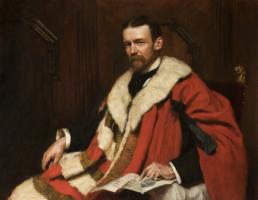
On 24th August 1900 Leila Seely Viscountess Hampden was born to Lieutenant-Colonel Frank Seely of Ramsdale Park in Nottinghamshire [aged 36]. She married 26th July 1923 Thomas Brand 4th Viscount Hampden, son of Thomas Brand 3rd Viscount Hampden and Katharine Mary Montagu-Douglas-Scott, and had issue.
On 24th August 1903 Bernard Hugh Denman Croft 13th Baronet was born to Hugh Matthew Fiennes Croft 12th Baronet [aged 29].
Henrici Quinti, Angliæ Regis, Gesta, is a first-hand account of the Agincourt Campaign, and subsequent events to his death in 1422. The author of the first part was a Chaplain in King Henry's retinue who was present from King Henry's departure at Southampton in 1415, at the siege of Harfleur, the battle of Agincourt, and the celebrations on King Henry's return to London. The second part, by another writer, relates the events that took place including the negotiations at Troye, Henry's marriage and his death in 1422.
Available at Amazon in eBook and Paperback format.

On 24th August 1905 Richard Sykes 7th Baronet was born to Mark Sykes 6th Baronet [aged 26] and Edith Violet Gorst [aged 33]. He married 29th September 1942 his half fifth cousin once removed Virginia Gilliat Lady Sykes, daughter of John Francis Grey Gilliat and Lilian Florence Chetwynd Marchioness of Anglesey, and had issue.
On 24th August 1907 Rupert Teck was born to Alexander Teck 1st Earl Athlone [aged 33] and Princess Alice Countess Athlone [aged 24]. He a great grandson of Queen Victoria of the United Kingdom.
On 24th August 1922 William Stanhope 11th Earl of Harrington was born to Charles Stanhope 10th Earl of Harrington [aged 34] and Margaret Trelawney Seaton. He married (1) 5th February 1942 Eileen Foley Grey Countess Harrington and had issue (2) 14th October 1964 Priscilla Margaret Cubitt Countess Harrington and had issue.
On 24th August 1952 Raymond Asquith 3rd Earl of Oxford and Asquith was born to Julian Asquith 2nd Earl of Oxford and Asquith [aged 36].
On 24th August 1957 Thomas Craven 7th Earl Craven was born to William Craven 6th Earl Craven [aged 39].
On 24th August 1200 King John of England [aged 33] and Isabella of Angoulême Queen Consort England [aged 12] were married. She had been engaged to Hugh IX of Lusignan IV Count of La Marche [aged 37] who subsequently appealed to King Philip II of France [aged 35], their feudal overlord, who used the position to justify a war against John. The difference in their ages was 21 years. She the daughter of Aymer I Count Angoulême [aged 40] and Alice Courtenay Countess Angoulême. He the son of King Henry "Curtmantle" II of England and Eleanor of Aquitaine Queen Consort Franks and England [aged 78]. They were fourth cousin once removed.
On 24th August 1340 Peter I King Portugal [aged 20] and Constanza Manuel Queen Consort Castile [aged 24] were married. She by marriage Queen Consort Portugal. He the son of Alfonso "Brave" IV King Portugal [aged 49] and Beatrice Ivrea Queen Consort Portugal [aged 47]. They were second cousins. He a great x 4 grandson of King Henry "Curtmantle" II of England. She a great x 4 granddaughter of King Henry "Curtmantle" II of England.
On 24th August 1369 Edmund Mortimer 3rd Earl March, Earl of Ulster [aged 17] and Philippa Plantagenet Countess March 2nd Countess Ulster [aged 14] were married at Reading Abbey, Berkshire [Map]. She by marriage Countess March. He by marriage Earl of Ulster. She the daughter of Lionel of Antwerp 1st Duke of Clarence and Elizabeth Burgh Duchess of Clarence. He the son of Roger Mortimer 2nd Earl March and Philippa Montagu Countess March [aged 37]. They were fourth cousins. She a granddaughter of King Edward III of England.
On 24th August 1714 Clobery Noel 5th Baronet [aged 19] and Elizabeth Rowney were married.

On 24th August 1738 Robert Deane 2nd Baronet [aged 31] and Charleton Tilson Lady Deane [aged 20] were married.
On 24th August 1777 Valentine Richard Wyndham-Quin 1st Earl Dunraven and Mount-Earl [aged 25] and Frances Muriel Fox-Strangways Baroness Adare were married. She the daughter of Stephen Fox-Strangways 1st Earl of Ilchester and Elizabeth Strangways-Horner Countess Ilchester [aged 55].
Chronicle of a Bourgeois of Valenciennes
Récits d’un bourgeois de Valenciennes aka The Chronicle of a Bourgeois of Valenciennes is a vivid 14th-century vernacular chronicle written by an anonymous urban chronicler from Valenciennes in the County of Hainaut. It survives in a manuscript that describes local and regional history from about 1253 to 1366, blending chronology, narrative episodes, and eyewitness-style accounts of political, military, and social events in medieval France, Flanders, and the Low Countries. The work begins with a chronological framework of events affecting Valenciennes and its region under rulers such as King Philip VI of France and the shifting allegiances of local nobility. It includes accounts of conflicts, sieges, diplomatic manoeuvres, and the impact of broader struggles like the Hundred Years’ War on urban life in Hainaut. Written from the perspective of a burgher (bourgeois) rather than a monastery or royal court, the chronicle offers a rare lay viewpoint on high politics and warfare, reflecting how merchants, townspeople, and civic institutions experienced the turbulence of the 13th and 14th centuries. Its narrative style combines straightforward reporting of events with moral and civic observations, making it a valuable source for readers interested in medieval urban society, regional politics, and the lived experience of war and governance in pre-modern Europe.
Available at Amazon in eBook and Paperback format.
On 24th August 1807 William Lewis Trelawny aka Salusbury-Trelawny 8th Baronet [aged 26] and Patience Christian Carpenter Lady Trelawny [aged 19] were married at Tavistock, Devon.
On 24th August 1813 Charles Knightley 2nd Baronet [aged 32] and Selina Mary Hervey Lady Knightley were married. She by marriage Lady Knightley of Fawsley.
On 24th August 1871 Thomas Southwell 4th Viscount Southwell [aged 35] and Charlotte Mostyn Viscountess Southwell [aged 20] were married.
On 24th August 1875 Arthur Cowell-Stepney 2nd Baronet [aged 40] and Margaret Warren were married.
On 24th August 1889 Edwin Abercromby Dashwood 8th Baronet [aged 34] and Florence Norton Lady Dashwood were married in Auckland. She by marriage Lady Dashwood of West Wycombe in Buckinghamshire.
On 24th August 1905 William Hanbury-Tracy 5th Baron Sudeley [aged 35] and Edith Celandine Cecil [aged 19] were married.
On 24th August 1907 John Yarde-Buller 3rd Baron Churston [aged 33] and Jessie Smither aka Denise Orme Duchess Leinster [aged 21] were married.
On 24th August 1961 William Ward, Viscount Ednam [aged 41] and Maureen Swanson Countess of Dudley [aged 28] were married. They had seven children. He the son of William Humble Eric Ward 3rd Earl of Dudley [aged 67] and Rosemary Millicent Sutherland-Leveson-Gower.
On 24th August 1093 Geoffrey "Boterel" Penthièvre I Count Penthièvre died.
On 24th August 1261 Ela of Salisbury 3rd Countess of Salisbury [aged 74] died. She was buried in Lacock Abbey [Map]. Her inscription reads... Below lie buried the bones of the venerable Ela, who gave this sacred house as a home for the nuns. She also had lived here as holy abbess and Countess of Salisbury, full of good works. Her great granddaughter Margaret succeeded 4th Countess Salisbury.
The Deeds of the Dukes of Normandy
The Gesta Normannorum Ducum [The Deeds of the Dukes of Normandy] is a landmark medieval chronicle tracing the rise and fall of the Norman dynasty from its early roots through the pivotal events surrounding the Norman Conquest of England. Originally penned in Latin by the monk William of Jumièges shortly before 1060 and later expanded at the behest of William the Conqueror, the work chronicles the deeds, politics, battles, and leadership of the Norman dukes, especially William’s own claim to the English throne. The narrative combines earlier historical sources with firsthand information and oral testimony to present an authoritative account of Normandy’s transformation from a Viking settlement into one of medieval Europe’s most powerful realms. William’s history emphasizes the legitimacy, military prowess, and governance of the Norman line, framing their expansion, including the conquest of England, as both divinely sanctioned and noble in purpose. Later chroniclers such as Orderic Vitalis and Robert of Torigni continued the history, extending the coverage into the 12th century, providing broader context on ducal rule and its impact. Today this classic work remains a foundational source for understanding Norman identity, medieval statesmanship, and the historical forces that reshaped England and Western Europe between 800AD and 1100AD.
Available at Amazon in eBook and Paperback format.
On 24th August 1313 Henry Luxemburg VII Holy Roman Emperor [aged 38] died. He was buried at Pisa Duomo. His half fourth cousin Louis [aged 31] succeeded IV Holy Roman Emperor.
On 24th August 1365 Idonia Clifford Baroness Percy [aged 62] died at Alnwick, Northumberland [Map].
On 22nd August 1371 Guy of Luxemburg I Count Saint Pol and Ligny [aged 31] was killed at Baesweiler, Aachen aka Aix-le-Chapelle.
Waleran Luxemburg [aged 16] was captured.
On 24th August 1371 Edward Duke Guelders [aged 35] died from wounds..
On 24th August 1505 Bishop Richard Redman died.
On 24th August 1507 Cecily York Viscountess Welles [aged 38] died.
On 24th August 1621 Elizabeth Hastings Countess of Worcester [aged 75] died.
On 24th August 1647 Nicholas Stone [aged 60] died in Long Acre. He was buried in St Martin in the Fields Church [Map].

On 24th August 1647 John Acland 1st Baronet [aged 56] died. His son Francis succeeded 2nd Baronet Acland of Columb John in Devon.
On 24th August 1658 Edmund Sheffield 2nd Earl Mulgrave [aged 46] died. His son John [aged 10] succeeded 3rd Earl Mulgrave, 5th Baron Sheffield of Butterwick in Lincolnshire.
On 24th August 1673 Charles Rich 4th Earl Warwick [aged 58] died. His first cousin Robert [aged 54] succeeded 5th Earl Warwick, 7th Baron Rich of Leez. Anne Montagu Countess Warwick and Holland by marriage Countess Warwick.
On 24th August 1678 Thomas Howard 2nd Baron Howard [aged 52] died. His brother William succeeded 3rd Baron Howard of Escrick.
On 24th August 1680 Ferdinand Bol [aged 64] died.
Chronicle of Walter of Guisborough
A canon regular of the Augustinian Guisborough Priory, Yorkshire, formerly known as The Chronicle of Walter of Hemingburgh, describes the period from 1066 to 1346. Before 1274 the Chronicle is based on other works. Thereafter, the Chronicle is original, and a remarkable source for the events of the time. This book provides a translation of the Chronicle from that date. The Latin source for our translation is the 1849 work edited by Hans Claude Hamilton. Hamilton, in his preface, says: 'In the present work we behold perhaps one of the finest samples of our early chronicles, both as regards the value of the events recorded, and the correctness with which they are detailed; Nor will the pleasing style of composition be lightly passed over by those capable of seeing reflected from it the tokens of a vigorous and cultivated mind, and a favourable specimen of the learning and taste of the age in which it was framed.'
Available at Amazon in eBook and Paperback format.
On 24th August 1682 John Maitland 1st Duke Lauderdale [aged 66] died. Duke Lauderdale, Earl Guildford, Baron Petersham extinct. His brother Charles succeeded 3rd Earl Lauderdale, 3rd Viscount Maitland, 3rd Viscount Lauderdale.
On 24th August 1689 Margaret Howard Countess Orrery [aged 67] died.
On 24th August 1703 Lionel Boyle 3rd Earl Orrery [aged 32] died at Earls Court, Kensington.
On 24th August 1720 Thomas Powell 1st Baronet [aged 55] died. His son Herbert [aged 20] succeeded 2nd Baronet Powell of Broadway in Carmarthenshire.
On 24th August 1724 Florence Rolle Lady Wrey [aged 72] died.
On 24th August 1733 Pierre Etienne Monnot [aged 76] died.
On 24th August 1737 Thomas Twisden 4th Baronet [aged 34] died. His brother Roger [aged 32] succeeded 5th Baronet Twisden of Bradbourne in Kent.
On 24th August 1747 Elizabeth Sedley Lady Burdett died.
On 24th August 1751 James Aston 5th Baronet [aged 28] died of smallpox without male issue. His fourth cousin once removed Philip [aged 40] succeeded 6th Baronet Aston of Tixall.
On 24th August 1756 James Stewart 3rd Baronet [aged 61] died. Alexander Stewart 6th Earl Galloway [aged 62] succeeded 4th Baronet Stewart of Burray in Orkney.
The True Chronicles of Jean le Bel Volume 1 Chapters 1-60 1307-1342
The True Chronicles of Jean le Bel offer one of the most vivid and immediate accounts of 14th-century Europe, written by a knight who lived through the events he describes, and experienced some of them first hand. Covering the early decades of the Hundred Years’ War, this remarkable chronicle follows the campaigns of Edward III of England, the politics of France and the Low Countries, and the shifting alliances that shaped medieval warfare. Unlike later historians, Jean le Bel writes with a strong sense of eyewitness authenticity, drawing on personal experience and the testimony of fellow soldiers. His narrative captures not only battles and sieges, but also the realities of military life, diplomacy, and the ideals of chivalry that governed noble society. A key source for Jean Froissart, Le Bel’s chronicle stands on its own as a compelling and insightful work, at once historical record and literary achievement. This translation builds on the 1905 edition published in French by Jules Viard, adding extensive translations from other sources Rymer's Fœdera, the Chronicles of Adam Murimuth, William Nangis, Walter of Guisborough, a Bourgeois of Valenciennes, Geoffrey le Baker of Swinbroke and Richard Lescot to enrich the original text and Viard's notes.
Available at Amazon in eBook and Paperback format.
On 24th August 1776 John Prideaux 6th Baronet [aged 81] died. His grandson John [aged 28] succeeded 7th Baronet Prideaux of Netherton in Devon.
On 24th August 1804 Elizabeth Terrick Baroness Harrowby died.
On 24th August 1808 Francis Charteris de jure 7th Earl of Wemyss [aged 84] died.
On 24th August 1809 Robert Salusbury Cotton 5th Baronet [aged 70] died. His son Stapleton [aged 35] succeeded 6th Baronet Cotton of Combermere in Cheshire.
On 24th August 1814 Harriet Katherine Townshend Duchess Buccleuch Duchess Queensbury [aged 40] died.
On 24th August 1818 George Thicknesse 19th Baron Audley 16th Baron Tuchet [aged 61] died. His son George [aged 35] succeeded 20th Baron Audley of Heighley in Staffordshire, 17th Baron Tuchet. Anne-Jane Donnelly Baroness Audley by marriage Baroness Audley of Heighley in Staffordshire.
On 24th August 1824 Valentine Richard Wyndham-Quin 1st Earl Dunraven and Mount-Earl [aged 72] died. His son Windham [aged 41] succeeded 2nd Earl Dunraven and Mount-Earl, 2nd Viscount Mount Earl, 2nd Baron Adare. Caroline Wyndham Countess Dunraven and Mount Earl by marriage Countess Dunraven and Mount-Earl.


On 24th August 1838 William Cave-Browne-Cave 9th Baronet [aged 73] died. His son John [aged 40] succeeded 10th Baronet Cave of Stanford in Northamptonshire.
On 24th August 1844 John Keane 1st Baron Keane [aged 63] died.

On 24th August 1846 Justinian Isham 9th Baronet [aged 29] died. His brother Charles [aged 26] succeeded 10th Baronet Isham of Lamport in Northamptonshire. Emily Vaughan Lady Isham by marriage Lady Isham of Lamport in Northamptonshire.
On 28th June 1853 Francis Charteris 8th Earl of Wemyss Douglas 4th Earl March [aged 81] died. His son Francis [aged 56] succeeded 9th Earl Wemyss, 2nd Baron Wemyss of Wemyss in Fife. Louisa Bingham Countess Wemyss [aged 55] by marriage Countess Wemyss.
His obituary in the Gentleman's Magazine by Sylvanus Urban Volume XL reads as follows:
THE EARL OF WEMYSS AND MARCH June 28 At Gosford House East Lothian in his 81st year the Right Hon Francis Wemyss Charteris Wemyss sixth Earl of Wemyss and Lord Elcho and Methel 1633 Baron Wemyss of Elcho 1628 Earl of March Viscount of Peebles and Lord Niedpath, Lyne and Munard 1697 all dignities in the peerage of Scotland Baron Wemyss of Wemyss co Fife 1821 and Lord Lieutenant of Peebleshire.
He was born on the 15th April 1772 the only son of Francis Lord Elcho son and heir apparent of the fifth Earl by Miss Susan Tracy Keck one of the Maids of Honour to Queen Charlotte the second daughter of Anthony Tracy Keck esq of Great Tew co Oxford by Lady Susan Hamilton fourth daughter of James fourth Duke of Hamilton and first Duke of Brandon KG and KT.
In early life his lordship had a commission in the army and from 1793 to 1797 was aide de camp to his grand uncle Lord Adam Gordon Commander in chief of the forces in Scotland He quitted the army in 1797.
His father Lord Elcho died on the 20th June 1808 and his grandfather on the 24th August following whereupon he succeeded to the Earldom of Wemyss and its attendant titles. On the death of William fourth Duke of Queensberry [aged 83] in Dec 1810 he inherited the barony of Niedpath and the extensive property which had belonged to his Grace in the county of Peebles in pursuance of the terms of the marriage contract of the first Earl of March his Grace's grandfather. He also succeeded to the dignities of Earl of March, Viscount of Peebles and Lord Douglas of Niedpath, Lyne and Munard the patent of creation being to Lord William Douglas et heredes masculos de ejus corpore quibus deficientibus alios ejus hæredes masin culos et talliæ contentos in ejus infeofa mentis terrarum et dominii de Niedpath.
His Lordship was created a peer of the united kingdom by the title of Baron Wemyss at the Coronation of King George IV by patent dated 17th July 1821. He supported the Conservative party in parliament but took but little interest in politics.
He married May 31 1794 Margaret [aged 16] fourth daughter of Walter Campbell esq of Shawfield [aged 54] by his first wife Eleanor daughter of Robert Kerr of Newfield eldest son of Lord Charles Kerr second son of Robert first Marquess of Lothian. By that lady who died in 1850 he had issue two sons and nine daughters 1 Francis his successor 2 Lady Eleanor [aged 1] married in 1820 to Walter Frederick Campbell of Woodhall co Lanark esq eldest son of Colonel John Campbell [aged 26] by Lady Charlotte [aged 21] daughter of John fifth Duke of Argyle [aged 73] and died in 1832 3 the Hon Walter died 1818 4 Susan who died in infancy 5 Lady Margaret married in 1824 to Lieut Colonel John Wildman and died in 1825 6 Lady Katharine married in 1824 to her cousin George Harry Lord Grey of Groby who died in 1835 and she died in 1844 leaving issue the present Earl of Stamford and Warrington and Lady Margaret Milbanke 7 Lady Charlotte [aged 1] married in 1825 to Andrew Fletcher esq of Salton Castle East Lothian 8 Lady Louisa Antoinetta [aged 1] married in 1832 to William Forbes esq of Callendar co Stirling late MP for Stirlingshire 9 Lady Harriet [aged 1] married in 1829 to Sir George Grant Suttie Bart 10 Lady Jane and 11 Lady Caroline. The present Earls in 1796 married in 1817 Lady Louisa Bingham fourth daughter of Richard 2d Earl Lucan [aged 31] by whom he has issue Francis Lord Elcho four other sons and daughters.
On 24th August 1860 Jane Maria Baker Lady Simeon [aged 41] died from childbirth.
On 24th August 1872 George Capron of Southwick [aged 90] died. Memorial in Church of St Rumbold, Stoke Doyle [Map] by Thomas Gaffin.
George Capron of Southwick: Around 1782 he was born to Thomas Capron and Elizabeth Lucas.
The History of William Marshal was commissioned by his son shortly after William’s death in 1219 to celebrate the Marshal’s remarkable life; it is an authentic, contemporary voice. The manuscript was discovered in 1861 by French historian Paul Meyer. Meyer published the manuscript in its original Anglo-French in 1891 in two books. This book is a line by line translation of the first of Meyer’s books; lines 1-10152. Book 1 of the History begins in 1139 and ends in 1194. It describes the events of the Anarchy, the role of William’s father John, John’s marriages, William’s childhood, his role as a hostage at the siege of Newbury, his injury and imprisonment in Poitou where he met Eleanor of Aquitaine and his life as a knight errant. It continues with the accusation against him of an improper relationship with Margaret, wife of Henry the Young King, his exile, and return, the death of Henry the Young King, the rebellion of Richard, the future King Richard I, war with France, the death of King Henry II, and the capture of King Richard, and the rebellion of John, the future King John. It ends with the release of King Richard and the death of John Marshal.
Available at Amazon in eBook and Paperback format.
On 24th August 1888 Sackville George Lane-Fox 15th Baron Darcy of Knayth 12th Baron Conyers [aged 60] died. Baron Conyers and Baron Darcy of Knayth abeyant between his two daughters Marcia Amelia Mary Lane-Fox Countess Yarborough [aged 24] and Violet Ida Evelyn Lane-Fox Countess Powis [aged 23].
On 24th August 1896 Charles Frederick Ashley-Cooper Ponsonby 2nd Baron de Mauley [aged 80] died. His son William [aged 53] succeeded 3rd Baron de Mauley.
On 24th August 1900 Henry Hope Edwardes 10th Baronet [aged 72] died. Baronet Edwardes of Shrewsbury in Shropshire extinct.
On 24th August 1921 William Henry Trollope 10th Baronet [aged 62] died. His brother Thomas [aged 62] succeeded 11th Baronet Trollope of Casewick in Lincolnshire.

On 24th August 1930 Edward George Littleton 3rd Baron Hatherton [aged 88] died. His son Edward [aged 62] succeeded 4th Baron Hatherton.
On 24th August 1937 William Gervase Beckett 1st Baronet [aged 71] died. His son Martyn [aged 18] succeeded 2nd Baronet Becket of Kirkdale Manor in North Yorkshire.
On 24th August 1944 John Francis Granville Scrope Egerton 4th Earl Ellesmere [aged 71] died. His son John [aged 29] succeeded 5th Earl Ellesmere, 5th Viscount Brackley. Diana Evelyn Percy [aged 26] by marriage Countess Ellesmere.
On 24th August 1950 Francis Edward Colquhoun Blake 2nd Baronet [aged 57] died. His son Francis [aged 7] succeeded 3rd Baronet Blake of Tillmouth Park in Cornhill in Northumberland.
On 24th August 1970 Rita Emily Carr-Ellison Duchess Grafton [aged 58] died.
On 24th August 1972 Bernard Fitzalan Howard 3rd Baron Howard [aged 87] died. His son Miles [aged 57] succeeded 4th Baron Howard of Glossop in Derbyshire. Anne Constable-Maxwell Duchess Norfolk [aged 44] by marriage Baroness Howard of Glossop in Derbyshire.
Abbot John Whethamstede’s Chronicle of the Abbey of St Albans
Abbot John Whethamstede's Register aka Chronicle of his second term at the Abbey of St Albans, 1451-1461, is a remarkable text that describes his first-hand experience of the beginning of the Wars of the Roses including the First and Second Battles of St Albans, 1455 and 1461, respectively, their cause, and their consequences, not least on the Abbey itself. His text also includes Loveday, Blore Heath, Northampton, the Act of Accord, Wakefield, and Towton, and ends with the Coronation of King Edward IV. In addition to the events of the Wars of the Roses, Abbot John, or his scribes who wrote the Chronicle, include details in the life of the Abbey such as charters, letters, land exchanges, visits by legates, and disputes, which provide a rich insight into the day-to-day life of the Abbey, and the challenges faced by its Abbot.
Available at Amazon in eBook and Paperback format.
On 24th August 1990 Francis Hastings 16th Earl Huntingdon [aged 89] died. He was buried at Hasting's Chapel, St Helen's Church, Ashby-de-la-Zouch [Map]. His first cousin once removed William [aged 42] succeeded 17th Earl Huntingdon.
On 24th August 1994 John Methuen 6th Baron Methuen [aged 68] died. His brother Robert [aged 63] succeeded 7th Baron Methuen of Corsham in Wiltshire.