

07 Jun is in June.
1329 Death of Robert the Bruce
1394 Death and Funeral of Anne of Bohemia
1509 Marriage and Coronation of Henry VIII and Catherine of Aragon
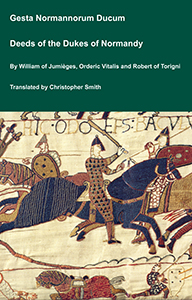 History of the Dukes of Normandy by William of Jumieges. Roger, therefore, relying on a great number of supporters, dared to rebel against the young duke. He openly despised all his neighbours and devastated their lands with robbery and fire, especially those of Humphrey of Vieilles. But Humphrey, unwilling to endure this any longer, sent against him his son Roger of Beaumont [aged 25] with his own household troops. Roger of Tosny recklessly scorned him and, fearing nothing, boldly engaged him in battle; but there, together with his two sons, Helbert and Elinant, he was slain, and left the victory to his enemies. There Robert of Grandmesnil received a mortal wound, from which he died after three weeks, on the fourth day before the Kalends of July1 [28th June 1040]. Before his death, however, he divided his land equally between his two sons, Hugh [aged 8] and Robert, and commended to them his youngest son, Ernauld, that they should treat him well as a brother when he should come of age.
Rogerius itaque fretus auxiliatorum multitudine, contra tenerum ducem ausus est rebellare. Omnes vicinos suos palam despiciebat et terras eorum, maxime Hunfridi de Vetulis, rapinis et incendiis devastabat. At ille diutius hoc ferre nolens, Rogerium de Bellomonte filium suum cum familia sua contra cum misit. Quem Rogerius Toeniensis temere sprevit, ot nil metuens cum eo audacter conflixit; sed ibidem cum duobus filiis suis Helberto et Elinantio peremptus, victoriam hostibus reliquit. Ibi Robertus de Grentemaisnil lethale vulnus accepit, quo post tres hebdomadas, iv Kal. Julii, obiit, Porro, ante mortem suam duobus filiis suis Hugoni et Roberto terram suam æqualiter distribuit, eisque Ernaldum minimum filium suum, ut ipsum, dum ad ætatem veniret, sicut fratrem bene tractarent, commendavit.
Note 1. Orderic Vitalis, Book 3, Chapter 2: "Thus his father Robert joined with Roger de Toni in battle against Roger de Beaumont, in which fight Roger de Toni, with his two sons Elbert and Elinance were slain outright, and Robert received a mortal wound in his bowels. Being carried off the field he survived three weeks, and divided his lands between his sons Hugh and Robert. Dying on the 14th of the calends of July [18th of June], he was interred without the church of St. Mary at Norrei."
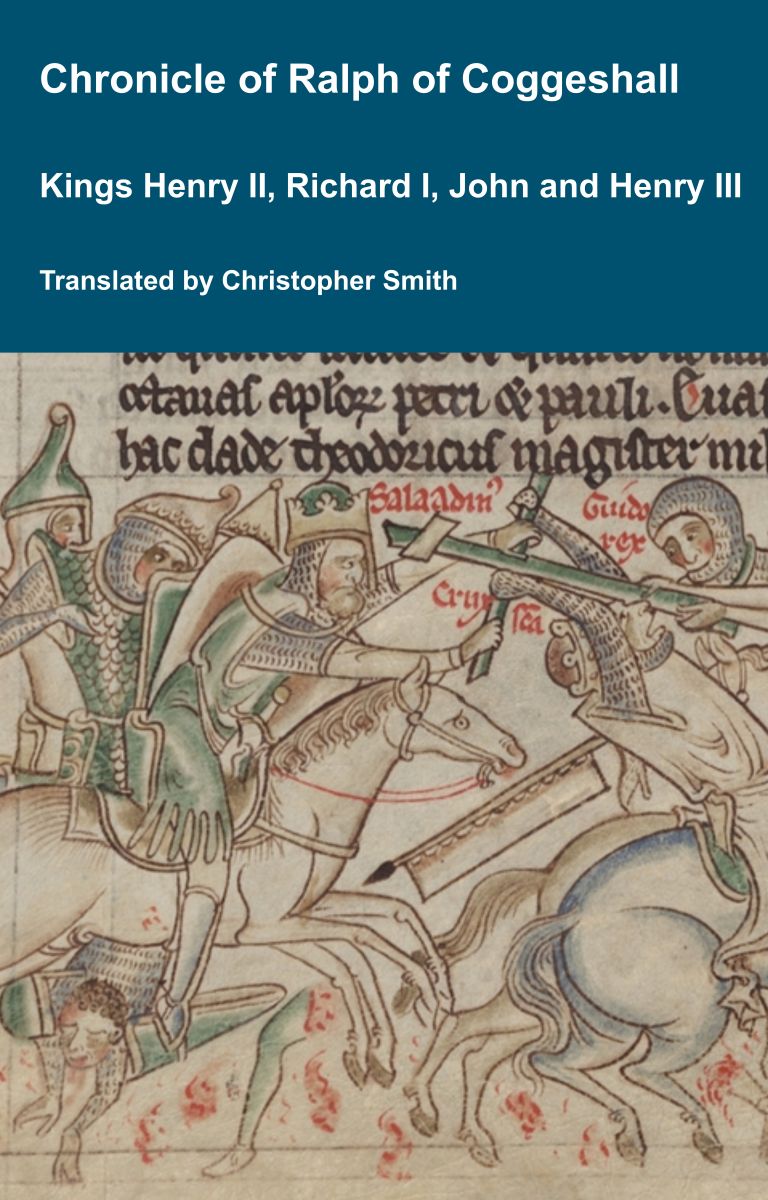 Chronicum Anglicanum by Ralph Coggeshall. 1104. A wondrous sign appeared in the sky from the sixth hour until the ninth hour on the seventh day before the Ides of June [7th June], during the week of Pentecost, on a Tuesday. Many beheld it with amazement, especially those in King Henry's court who were then in London. The phenomenon consisted of three circles: two of them joined together in the middle of the first, so that the sun, appearing within the first circle, seemed to be positioned inside the intersection of the other two. The middle circle emitted two horn-like projections, resembling goat's horns, from its right and left sides above the sun. Additionally, to the right and left of the outer circles, two semicircles appeared, slightly distant from them.
MCIV. Mirabile signum apparuit in coelo ab hora sexta usque ad horam nonam, septimo idus Junii in ebdomada Pentecostes, feria tertia, multis intuentibus atque mirantibus, et pene omnibus qui tunc in curia regis Henrici erant primi apud Londonias. Fuerunt autem tres circuli, quorum duo in medio primi sic sibi copulabantur ut sol intra primum existens infra convertionem duorum aliorum situs videretur. Primus quoque circulus (id est, medius) duo cornua ex se immittebat, quasi caprina, a dextra et laeva parte sua supra solem; a dextra quoque et laeva aliorum circulorum lateraliter apparebant duo semicirculi modico spatio ab eis distantes.
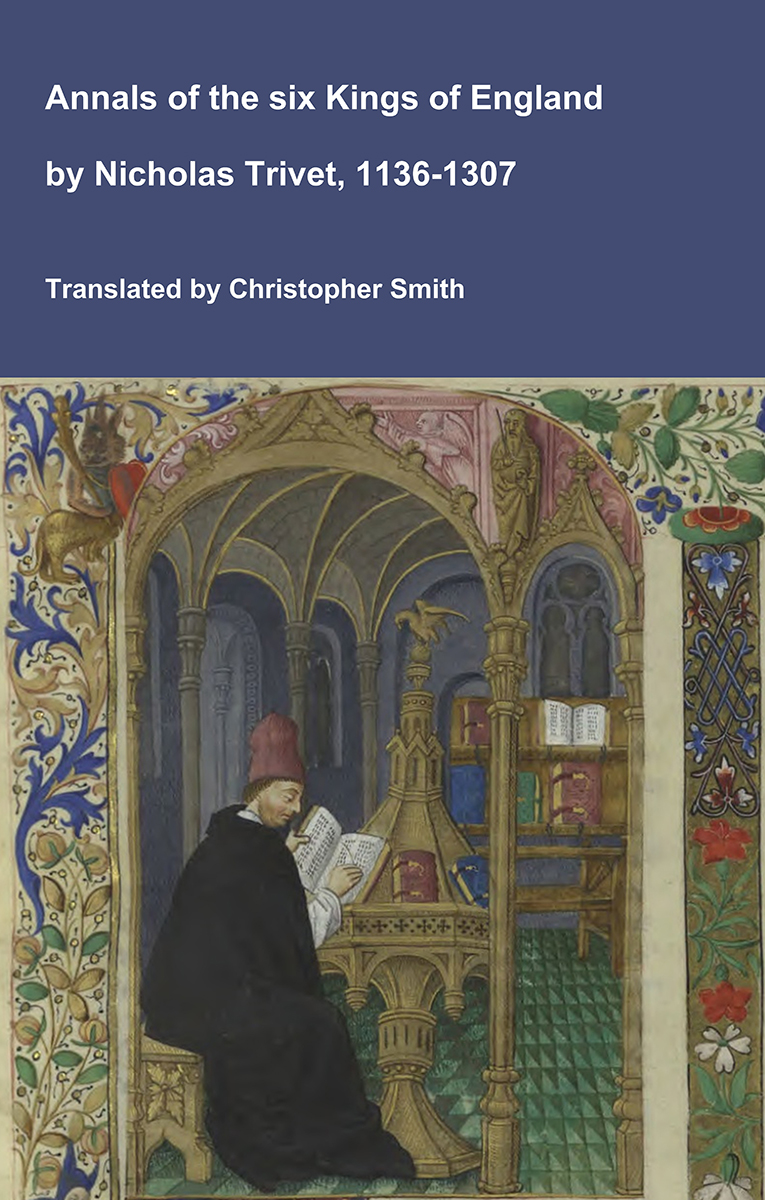 Annals of Six Kings of England by Nicholas Trivet. King Richard, hastening joyfully toward Acre, arrived there on the seventh day before the Ides of June [7th June 1191] with a great army of warriors. The Pisans immediately came to him and placed themselves in his service. When he learned that the king of France was giving each knight three gold coins for every month, he himself gave four to anyone willing to serve for his pay. After a few days, however, he fell into a very severe illness called 'arvoldia', caused by the climate of that unknown region not agreeing with his natural constitution. Nevertheless, when the king of France invited him to take part in an assault, he excused himself on account of his sickness. The king of France therefore, on the octave of St John the Baptist [1st July], attacked the city with his men. But since he made no progress, and indeed saw his engines and other instruments of war destroyed by Greek fire thrown by the Turks, he is said to have fallen into illness out of frustration. Soon recovering, however, he again assaulted the city, and the men of King Richard took part in the attack. Richard himself, though not yet fully recovered, was anxious about the conduct of the war. He had himself carried there on a silk mattress; and sitting beneath a canopy, he used a crossbow with which he was very skilled. With a shot from it he struck through the chest of a certain Saracen who, boasting in the armour of a Christian knight recently slain, had placed himself on a prominent part of the wall to provoke the Christians. When the towers and walls of the city were being thrown down and shattered, on one side by the engines of the king of France and on the other by those of the king of England, the Saracens within sent envoys to the kings asking for a truce. They promised that unless Saladin quickly sent them aid, they would surrender the city on condition that those besieged might depart freely with their arms and all their possessions. But King Richard opposed granting this request, declaring that after such a long and laborious siege it would be too grievous to enter an empty city. Therefore the envoys returned and consulted Saladin through intermediaries, who sent word that they should make whatever peace they could. After several days they again offered the kings that they would surrender the city itself and the True Cross, along with two thousand noble Christians and five hundred captives of lower rank, provided that the garrison might depart carrying nothing except their shirts. They would also give two thousand talents as the ransom for their Saracen prisoners, and as security for fulfilling these terms they would hand over noble Turkish hostages found in the city. When these conditions were accepted, the city of Acre was surrendered to the kings on the fourth day before the Ides of July, and the hostages were delivered. The city was then divided fairly: the noble palace of the Templars fell to the share of the king of France, while the royal palace fell to King Richard, in which he lodged his wife the queen and his sister. The arms and provisions found there, as well as the hostages, were likewise divided equally in proportion between them.
Rex versus Achon gaudenter properans septimo idus Junii applicuit cum magno exercitu bellatorum; cui statim concurrentes Pisani, se ejus obsequiis manciparunt. Cum autem didicisset regem Franciæ singulis militibus pro mense quolibet tres aureos dare, ipse quibusque volentibus stipendiis suis militare quatuor erogavit. Post dies autem paucos gravissimam incurrit ægritudinem, quæ vulgo arvoldia vocatur, ex ignotæ regionis constitutione cum sua complexione naturali minime concordante. Invitatus nihilominus per regem Franciæ ad assultum faciendum, cum se morbo excusaret, ipse rex Franciæ in octavis S. Joannis Baptistæ cum suis urbi dedit insultum. Sed cum non proficeret, quin immo machinas et alia instrumenta bellica igne Græco correpta dissipari per Turcos vidit, ex tædio in languorem dicitur incidisse; cito tamen convalescens iterum civitati dat insultum, cui intererant homines regis Ricardi. Et ipse quidem, licet plene non convaluerit, gerendorum tamen sollicitus, se illuc in culcitra serica deportari fecit; sedensque subter tricleia sua, cujus erat peritus utebatur balista, cujus jaculo Saraceni cujusdam, qui in armis militis Christiani nuper occisi gloriabundus, in eminentiori loco muri ad invidiam Christianorum se ostenderat, pectoris ampla transfixit. Cumque turres et muri civitatis ex una parte per machinas regis Franciæ, et ex alia parte per machinas regis Angliæ diruerentur et conquassarentur, Saraceni qui intus erant, missis ad reges legatis, petierunt inducias; spondentes quod nisi Saladinus cito eis destinaret adjutorium, civitatem redderent, ea conditione, ut obsessi libere abirent cum armis et omnibus quæ erant eorum. Sed ne huic petitioni assentiretur, obstitit rex Ricardus; asserens esse nimis grave post tanti temporis laboriosam obsidionem intrare vacuam civitatem. Regressi igitur, consultoque per internuntios Saladino (qui remandavit ut pacem facerent quam possent), iterum diebus aliquibus elapsis regibus obtulerunt, ut civitatem ipsam redderent, et crucem duoque millia Christianorum nobilium, et quingentos captivorum inferiorum, ita quod obsessi egredientes nihil præter camisias asportarent, darentque pro redemptione capitum suorum Saracenicorum duo millia talentorum, et super his fideliter observandis traderent obsides nobiliores Turcorum qui invenirentur in urbe. His conditionibus admissis, reddita est regibus civitas Achon quarto idus Julii, et obsides traditi. Fit igitur æqua distributio civitatis; in sortem regis Franciæ cessit Templariorum nobile palatium, regi Ricardo palatium regale, in quo reginas uxorem posuit et sororem: armorum quoque et victualium repertorum et obsidum proportionaliter divisionem sortiuntur æqualem.
On 7th June 1207 Archbishop Stephen Langton [aged 57] was consecrated Archbishop of Canterbury at Viterbo [Map] by Pope Innocent III [aged 47].
Chronicum Anglicanum by Ralph Coggeshall. In the year of the Lord 1218, the church of St Mary at Worcester was dedicated, and the body of St Wulfstan was translated on the same day, namely the seventh of the Ides of June [7th June 1218], on a Thursday in the week of Pentecost, with Sylvester, bishop of that church, presiding, together with the prior and monks of the same house. And shortly afterwards at Ramsey the said bishop [Sylvester] died, and William of Blois, archdeacon of Buckingham, succeeded him, and was consecrated at Westminster on the Sunday after the feast of St Faith the Virgin [7th October 1218].
Anno ab incarnatione Domini MCCXVIII, ecclesia Sanctæ-Mariæ Vigorniæ dedicata est, et corpus Sancti Wlstani translatum est uno eodem die, videlicet, vii. idus Junii, die Jovis in septimana Pentecostes, præsidente eidem ecclesiæ Silvestro episcopo, ejusdem ecclesiæ priore et monacho. Et paulo post apud Rameseyam obiit memoratus episcopus, cui successit Willelmus de Bleis, archidiaconus de Buckingeham, et consecratus est apud Westmonasterium Dominica in crastino Sanctæ Fidis, virginis.
Annals of Dunstable. Likewise, the bishop of the church of Durham [Bishop Robert of Holy Island], who was a monk, died [7th June 1283]; and Anthony Bek [aged 38], who was then the most renowned clerk of the lord king, succeeded him.
Item episcopus Dunelmensis ecclesiæ obiit, qui fuit monachus; et successit ei Antonius Bech, qui fuit clericus domini regis tunc nominatissimus.
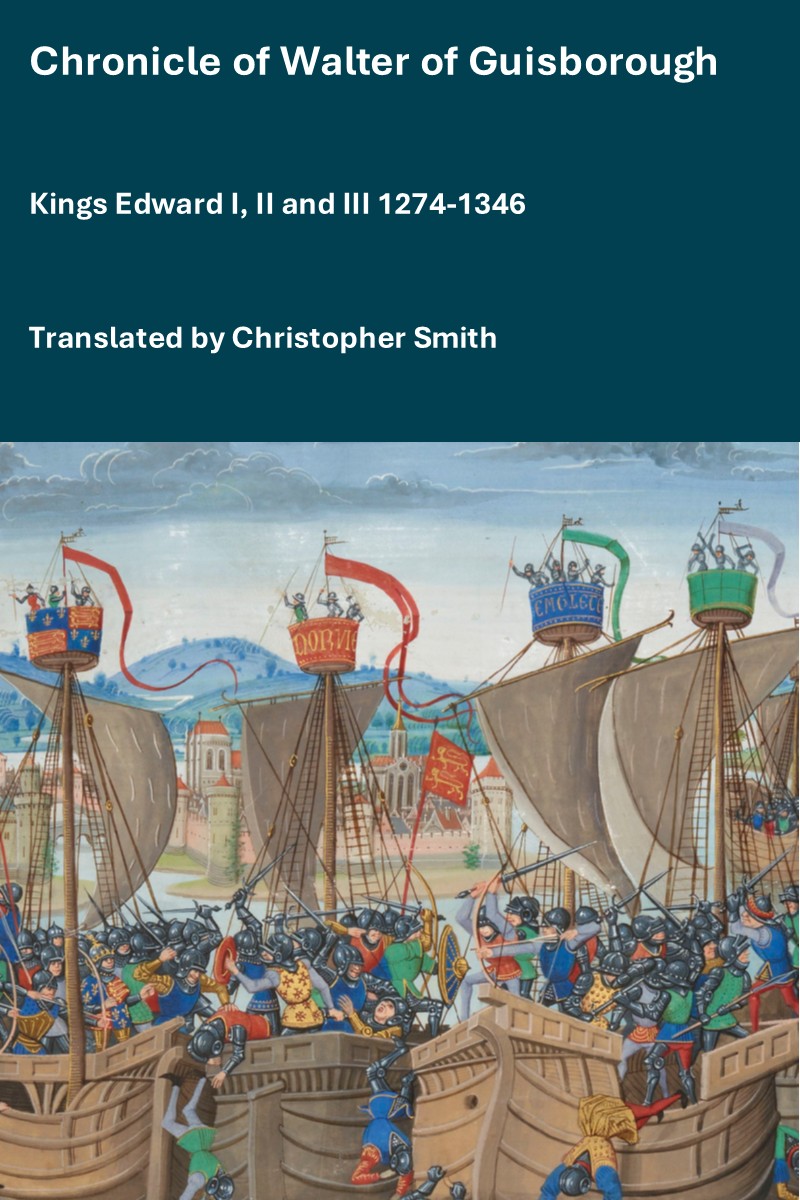 Chronicle of Walter of Guisborough. In the year of our Lord 1291, the hand of the Lord grew heavy upon the land of Jerusalem, and, according to the prophet Jeremiah, the plague of the enemy struck with cruel chastisement. For the city of Ptolemais, commonly called Acre, alas, fell into the hands of a profane and unclean nation. A most defiled people occupied it, and after erasing all signs of the Christian religion, they desecrated it with the sacrileges of their filthy sect. No one should doubt that the cause of this miserable and well-known destruction was the overflowing of sins more than usual. For those within that holy city were not, as in former times, holy and devout men from every nation under heaven, but rather foolish, lustful, drunken men, jesters, and players from every Christian nation. This entire base population had flowed into that holy city like into a sewer, defiling it with shameful manners and actions. These, then, we believe were the causes of God's displeasure, and the first stirrings of the ensuing destruction. Pope Nicholas IV, full of zeal for the Eastern Church, for the sake of Christ crucified, had sent to Acre fifteen thousand men at his own expense to strengthen the Christian army. These remained there a long while, and, lacking provisions, began to suffer want and live in poverty, murmuring against their commanders. They were then ordered either to return home or to provide for themselves. Seizing the opportunity, they attacked Saracen and Sultan merchants, who were lawfully trading under a mutual truce, killing some and slaughtering any who resisted. When this was reported to the Sultan, he sent messengers to the Templars, Hospitallers, and other Christians of the city, demanding justice that the perpetrators be punished without objection and handed over to him.
When this demand seemed harsh to the Christian, though the Templars urged that the Sultan's will be obeyed, the envoys were ultimately sent back empty-handed, with nothing accomplished. For the Christians presumed too much of themselves, making flesh their strength, trusting in man, particularly in one who had recently arrived with a great retinue, Lord Otto de Grandison, sent there with the treasures of the King of England to prepare the way before his face, for King Edward had planned to travel to the Holy Land himself. However, after a long siege by the enemy, Otto fled to Cyprus with those royal funds, changing his name, and in the military struggle, he made but a faint impression. The Sultan, thirsty for Christian blood and burning with vengeance for his slain subjects, gathered a vast army and ordered that no one able-bodied among his men remain behind. As he marched with terrifying force toward Acre, the Christians, alarmed, sent messenger after messenger to appease him with gifts, hoping to calm his wrath. But his rage could not be extinguished. At last, they offered to surrender the city and hold it under tribute to him, but he would not accept. Instead, arriving at Acre, he laid siege to it with great strength for about forty days. The number of his troops was so great, their attacks constant day and night, that they filled the ditches with earth and stones, making a level path to breach the city. The defenders could scarcely stand on the walls because of the sheer number of arrows and crossbow bolts raining down upon them. And although, on the women’s side, because of the life which we indeed call evil and execrable, for, as was said, more than fourteen thousand women were counted among the number of prostitutes, they had been driven back twice, nevertheless on the third attempt they entered the same place on 7th June [1291].Those who could fled by sea to Cyprus, but many perished, including the Master of the Knights Templar. After two days, the Sultans rage cooled somewhat, as he considered what to do with the remaining Christians. Meanwhile, his wicked troops profaned the sacred places and churches dedicated to God, committing acts of adultery and rape. When the Christians saw such outrages committed against their wives and daughters, they took counsel together, regained their courage, shut the gates, and armed themselves. With about five thousand Turks still within the city walls, the Christians rose up and killed them all. They then attempted to flee to the sea in the remaining boats and ships. But the Sultan, when he learned of this, was once more enraged. He stormed the city again, utterly destroyed it, and slaughtered all he found within.
Anno Domini MCCXCI aggravata est manus Domini super terram Jerosolimitanam, et secundum Jeremiam prophetam, plaga inimici percussit castigatione crudeli. Civitas enim Ptolomensis, quæ et Acra communiter dicitur, proh dolor! incidit in manus gentis profanæ et immundæ spurcissima gens eam occupavit, et abrasis Christianæ religionis insignibus immundissimæ sectæ suæ sacrilegiis profanavit. Hujus autem miserabilis et famosi exterminii causam fuisse peccata plus solito inundantia, nemo debet ambigere: erant enim nostri in civitate illa sancta, non, ut olim, viri sancti et religiosi ex omni natione quæ sub cœlo est, sed ex omni gente Christiana fatuosi, luxuriosi, ebriosi, mimi, et histriones; hoc omne genus in civitatem illam sanctam tanquam in sentinam quandam confluxerat, eamque obscoenis moribus et actibus inquinabant: istas ergo prædictas credimus esse offensionis causas Dei, perditionis vero sequentis primos motus esse tales. Papa quidem Nicolaus IV orientalis ecclesiæ zelum habens, pro Christo crucifixo in augmentum Christiani exercitus misit apud Acram XV millia hominum propriis suis stipendiis militaturos; qui cum ibidem facerent moram prolixiorem, deficientibus tandem necessariis, contigit eosdem multum egere et pauperem ducere vitam, murmurantes contra eorum præpositos, et jussi sunt aut repatriare vel sibimet ipsis in necessariis providere: qui, opportunitate captata, spoliaverunt mercatores Saracenorum et Soldani, in pace et treuga communi mercantes ibidem, trucidantes aliquos, et contradictores ex toto perimentes; quod cum Soldano esset nunciatum, missis nunciis ad Templarios et Hospitalares cæterosque Christianos prædictæ urbis petiit in hoc facto sibi et suis justitiam exhiberi, auctoresque facti absque omni reclamatione plectendos sibi mitti.
Quod cum Christianis durum videretur, licet instarent Templarii ut ejus voto pareretur, nuncios quasi infecto negotio remiserunt vacuos; præsumebant namque Christiani de se, ponentes carnem brachium suum, et confidentes in homine qui cum multis ibidem paulo ante advenerat, domino scilicet Othone de Grandi-sono, qui cum thesauris regis Angliæ ibidem missus ut viam pararet ante faciem ejus, habuit enim in proposito rex in terram dictam proficisci, durante diu subsidione hostium cum eisdem thesauris in Cyprum fugiens, mutato cognomine, in congressu militari parvum fecit sonum. Soldanus autem, Christianorum sanguinem sitiens et in vindictam suorum fremens, congregato exercitu immenso, jussit ut nullus sui potens excusatus remaneret. Cumque terribilibus suis copiis versus Acram tenderet, Christiani exterriti, missis et remissis ad eum nunciis, ejus animi motum muneribus placare probarunt, et quia accensus furor extingui non poterat tandem obtulerunt ei civitatem ab eo retinere velle sub tributo; sed non adquievit illis, quin potius civitati applicans eandem fortiter expugnavit diebus circiter XL. Tantaque extitit pugnantium copia certis vicibus mutantium et expugnantium nocte dieque, quod repletis fossatis humo et lapidibus viam sibi planam aggrediendi fecerunt, nec erat vix qui in muris resisteret præ multitudine telorum et quadrellorum. Et licet ex parte foeminarum de vita quam utique vitam malam dicimus et execrabilem, erant enim ut dicebaturs in numero meretricio plusquam XIIII millia mulierum numeratarum, essent dua bus vicibus retaciati, tertia tamen vice ibidem ingressi sunt VII die Junii, fugientibus qui poterant per mare in Cyprum; corrueruntque multi in illa die, inter quos et magister militiæ Templi occisus est. Sedatoque furore post biduum placatus est in parte Soldanus obtenta victoria; et cum deliberaret quid de Christianis residuis esset faciendum, sui execrabiles populi loca sacrata et ecclesias Deo dedicatas adulteriis et stupris profanaverunt, videntesque Christiani cum uxoribus et filiabus talia perpetrari, communicato consilio et reassumpto spiritu, portas clauserunt civitatis, et armis assumptis cum viribus circiter V millia Thurcorum qui infra muros extiterant peremerunt, continuo se credentes mari cum scaphis et navibus residuis: quo cognito Soldanus iterum accensus in civitatem irruit, et, eam quasi in nihilum redigens, quos invenire poterat peremit.
Annals of Worcester. On the seventh day before the Ides of June [7th June 1296], William de Poer died, and lies in the cloister near the chapter-house door. Edmund, the king’s brother, died in Gascony while leading an English army. A man of great virtue and outstanding holiness, Lord Philip, surnamed Aubin, prior of the cathedral church of Worcester.
Septimo idus Junii obiit Willelmus de Poer, et jacet in claustro juxta ostium capituli. Edmundus frater regis in Gasconia obiit, ducendo exercitum Anglicorum. Vir magnæ perfectionis et eximiæ sanctitatis dominus Philippus cognomento Aubin, prior ecclesiæ cathedralis Wygorniæ.
Rymer's Fœdera Volume 1. 7th June 1323. Robert K. of Scotland confirms the truce with England dated 30 May last. Berwick-upon-Tweed. K. ii. 524. 0. iii. 1030. H. ii. p. ii. 76.
Chronicle of Abbot Ralph of Coggeshall
The Chronicle of Abbot Ralph of Coggeshall (Chronicon Anglicanum) is an indispensable medieval history that brings to life centuries of English and European affairs through the eyes of a learned Cistercian monk. Ralph of Coggeshall, abbot of the Abbey of Coggeshall in Essex in the early 13th century, continued and expanded his community’s chronicle, documenting events from the Norman Conquest of 1066 into the tumultuous reign of King Henry III. Blending eyewitness testimony, careful compilation, and the monastic commitment to record-keeping, this chronicle offers a rare narrative of political intrigue, royal power struggles, and social upheaval in England and beyond. Ralph’s work captures the reigns of pivotal figures such as Richard I and King John, providing invaluable insights into their characters, decisions, and the forces that shaped medieval rule. More than a simple annal, Chronicon Anglicanum conveys the texture of medieval life and governance, making it a rich source for scholars and readers fascinated by English history, monastic authorship, and the shaping of the medieval world.
Available at Amazon in eBook and Paperback format.
 Chronicle of Jean le Bel Volume 1. After this, the young king, to honour these lords and all those of their company the more, held a great court on Trinity Sunday [7th June 1327] at the house of the Friars Minor [Francisans]. There he and the queen his mother were lodged and each kept his own household separately: the king with his knights, and the queen with her ladies, of whom she had a great number. At that court there were well over six hundred knights seated in the cloister, and on that day new knights were created. The queen held her court in the dormitory, and had at table some sixty ladies whom she had summoned in order to give greater honour to Sir John and the other lords.
Aprez cæ, le jœune roy, pour mielx festier ces seigneurs et tous ceulx de leur compaignie, tint une grand court au jour de la Trinité à la maison des Freres Mineurs. Là, il et madame sa mere estoient herbergiez et tenoient leur tinel chascun à par ly; c'est assavoir: le roy de ses chevaliers et la royne de ses dames, dont elle avoit grand foison. A celle court eust bien ly rois VIC chevaliers seans ou cloistre, et y ot à ce jour faiz nouveaulx chevaliers, et madame la royne tint sa court en dortoir, et eut bien de dames seans à table LX qu'elle avoit mandé pour mielx festier ledit messire Jehan et ces aultres seigneurs.
On 7th June 1329 King Robert the Bruce I of Scotland [aged 54] died at Cardross Manor, Argyll. He was buried at Dunfermline Abbey [Map]. His son David [aged 5] succeeded II King Scotland. Joan of the Tower Queen Consort Scotland [aged 7] by marriage Queen Consort Scotland.
Chronicle of Walter of Guisborough. In this year Robert Bruce, king of Scotland, stricken with leprosy, died on the seventh day before the Ides of June [7th June 1328].
Hoc anno Robertus Brus, rex Scotiæ, lepra Death of percussus obiit septimo idus Junii.
Chronicle of Jean le Bel Volume 1. Soon afterward the valiant King [Robert the Bruce] of Scotland passed from this world [on 7th June 1329] and was buried as honourably as befitted him, according to the custom of the land. His heart was removed and embalmed, as he had commanded. Then the noble knight, Sir James Douglas, began to make provision and prepare himself to depart, when time and season should be fitting, in order to accomplish what he had promised.
Assez Lost aprez trespassa le prœu roy d'Escoce de ce siecle, et fut enseveli si honnourablement, comme à luy afferoit, selonc l'usage du pays, et luy fut le cuer osté et enbasmé, ainsy comme il l'avoit commandé. Et se commença, le gentil chevalier, messire Guillaume Douglas, à pourveoir et appareillier de mouvoir quant temps et saison seroit d'achever ce que promis avoit.
Chronicle of Jean le Bel Volume 1. The appointed day drew near, and the said lords came there; but the noble prince, the Count of Hainaut, was not present, for he had passed from this world1 the winter before and had made his son, the young Count William, a knight with his own hand, of which I had forgotten to speak. This young count attended this parliament in place of his noble father, together with Sir John of Hainaut, his uncle. When these lords were all assembled, they held very great and lengthy counsel, for the matter pressed heavily upon them. They were reluctant to carry out their agreements, yet equally reluctant to break them for the sake of their honour.
Le jour aprocha, et y vindrent les dits seigneurs, maiz le gentil prince, le conte de Haynau, n'y fut pas, car il estoit trespassé de ce siecle' l'yver de devant et avoit fait son filz chevalier de sa propre main, le jœune conte Guillaume, or en avoye je oublié à parler. Ce jœune conte fut à ce parlement avecques les aultres pour son gentil pere, et messire Jehan de Haynau, son oncle, aussy. Quant ces seigneurs furent tous assemblez, ilz eurent trés grand conseil et long, car la besongne leur estraingnoit. Envys poursuivoyent leurs convenances et envys les rompoient pour leur honnour.
Note 1. Count William of Hainaut died on 7th June 1337. After his death, his widow, Joan of Valois, withdrew to the abbey of Fontenelles, where she died during Holy Week in 1353. (Lettenhove's Froissart).
1. Le comte Guillaume de Hainaut mourut le 7 juin 1337. Après sa mort, sa veuve, Jeanne de Valois, se retira en l'abbaye de Fontenelles, où elle mourut pendant la semaine sainte, 1353. Voy. Froissart, éd. Kervyn de Lettenhove, t. II, p. 529-530.
On 7th June 1337 William of Avesnes I Count Hainaut III Count Avesnes III Count Holland II Count Zeeland [aged 51] died. His son William [aged 30] succeeded II Count Hainaut. Joanna Reginar Duchess Brabant [aged 15] by marriage Countess Hainaut.
Anonimalle Chronicle. And at that same time, the commons of Kent came to Maidstone and beheaded one of the best men of the town and tore down various houses and tenements belonging to those who refused to rise up with them, as had been done in Essex. And on the following Friday [7th June 1381], they came to Rochester [Map] and there met with a great number of the commons from Essex. Because of the man from Gravesend, they laid siege to Rochester Castle in order to recover their companion, whom the aforesaid Sir Simon had imprisoned. They launched a fierce assault on the castle, and the constable defended it vigorously for half a day. But in the end, fearing such a vast crowd of people from Essex and Kent who had gathered without reason, he surrendered the castle to them. The commons entered and freed their companion and all the other prisoners from the prison. Those from Gravesend returned with their companion with great celebration, without doing more, while those from Maidstone continued their journey with the other commons through the surrounding countryside.
Et mesme le temps le comunes de Kent viendrent a Maydenstoun et couperount le test de une de les meliours hommes de la ville et abaterount a terre diverses places et tenementz des gentz queux ne vodroient lever ovesqe eux come firent en Exesse; et le venderdy prochien apres, viendrent a Rouchestre et illeoges encontrerount graunde noumbre des comunes de Exesse et par cause del homme de Grayvesende mistrent ensege al chastelle de Rouchestre pur avoir lour compaignoun del Gravesende, le quel sire Symond avauntdit avoit enprisone; et donerount fort assaute al chastelle, et les conestable se defendist vigurousement une dymy iour, mes au. darrein pur doute qil avoit de tiel multitude des gentz saunz resoun de Exesse et de Kent delivera le chastelle as eux et les comunes entrerent et pristrent lour compaignoun et toutz prisoners hors de prisone; et ceux de Gravesende repairerount od lour compaignoun od graunde leestee saunz pluis fair, et les autres de Maydenstoun pristrent lour viage ovesge les autres comunes par le pais enviroun.
On 7th June 1394 Anne of Bohemia Queen Consort England [aged 28] died of plague (probably) at Sheen Palace [Map]. King Richard II of England [aged 27] was so distraught at her death he ordered the destruction of Sheen Palalce [Map].


Chronicle of Adam of Usk [~1352-1430]. 7th June 1394. In the year of our Lord 1394, on Whitsun-day (7th June), died that most gracious lady Ann, queen of England [aged 28], at the manor of Shene [Map], which lies on Thames near to Brentford. Which manor, though a royal one and very fair, did king Richard, by reason that that lady's death happened therein, command and cause to be utterly destroyed. After the ceremony of her funeral, which was carried out with becoming honours on the morrow of Saint Peter ad Vincula (2nd August), the king, clad, with his train, in weeds of mourning, straightway passed over into Ireland with & great power, to subdue the rebellion of the Irish1. Yet he gained but little; for the Irish, then feigning submission to his will, straightway after his departure were in revolt, as all men know.
Note 1. Richard sailed for Iréland early in September, 1394, and returned in May of the next year.
Close Rolls Richard II 1396 1399 V6. 7th June 1399. Westminster Palace [Map]. To the keepers, occupiers, receivers or farmers of the lordship of Kyngeston in Dorsete for the time being. Order so long as the same shall remain in the king's hand to pay to John Swelle esquire 20 marks a year, which by a writing indented, confirmed by the king, John late duke of Lancastre granted him for life, to be taken of the issues of the said lordship.
On 7th June 1422 Bishop John Langdon was consecrated Bishop of Rochester by Archbishop Henry Chichele [aged 59].
After 7th June 1438. Monument to John Cockayne [deceased] at St Oswald's Church, Ashbourne [Map]. Early Plate Bascinet and Gorget Period. Lancastrian Esses Collar. Cockerel Crest (most of which is missing). Horned Headdress. Chest with Angels with Rounded Wings holding Shields. Possibly Sutton and Prentys.


Chronicle of Gregory. [7th June 1450] And yn the fowarde, as they wolde have folowyde the captayne, was slayn Syr Umfray Stafforde [aged 50] and Wylliam Stafford [aged 30], squyer, one the mannylste man of alle this realme of Engelonde, whythe many moo othyr of mene personys at Sevenocke [Map], in Kentt, in her oute ragyng fro her oste of our sovereign lordys the kyng, Harry the vj te. And the kyng [aged 28] loggyd that nyght at Grenewyche [Map], and son aftyr every lord whythe his retynewe rood home in to her contraye.
Note. The date sometimes given as the 8th June 1450 and 18th June 1850.
On 7th June 1492 Casimir IV King Poland [aged 64] died. His son Vladislaus [aged 36] succeeded II King Hungary.
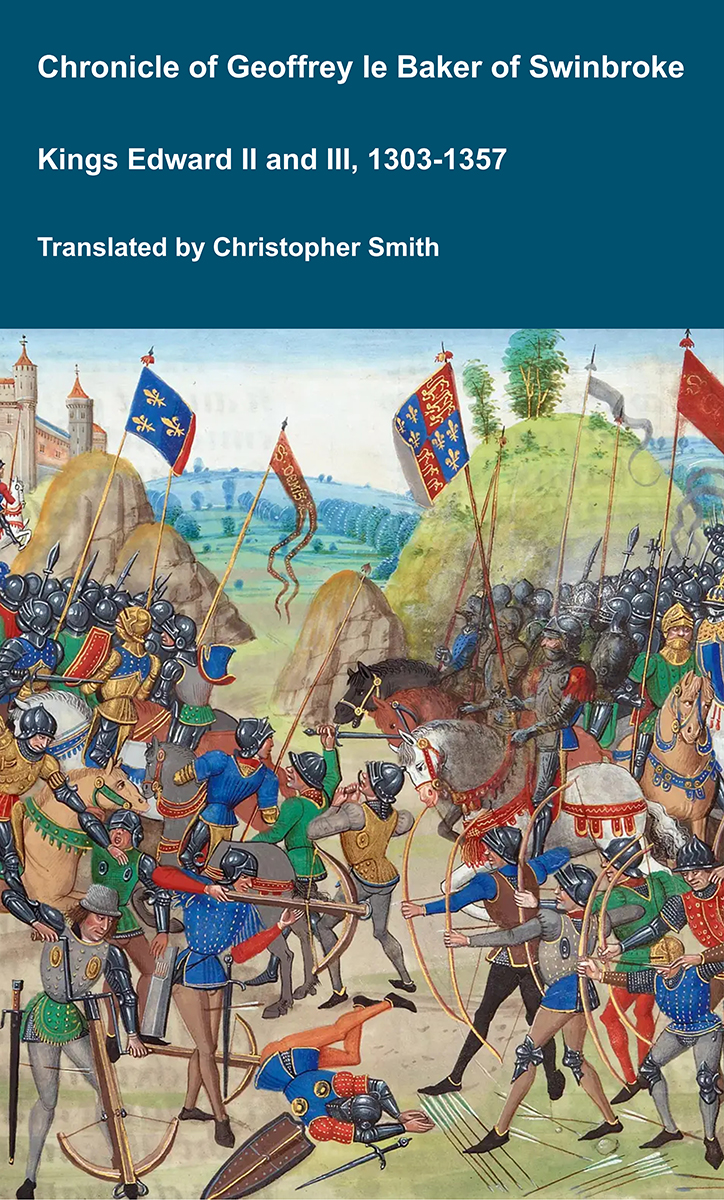
Chronicle of Geoffrey le Baker of Swinbroke
Baker was a secular clerk from Swinbroke, now Swinbrook, an Oxfordshire village two miles east of Burford. His Chronicle describes the events of the period 1303-1356: Gaveston, Bannockburn, Boroughbridge, the murder of King Edward II, the Scottish Wars, Sluys, Crécy, the Black Death, Winchelsea and Poitiers. To quote Herbert Bruce 'it possesses a vigorous and characteristic style, and its value for particular events between 1303 and 1356 has been recognised by its editor and by subsequent writers'. The book provides remarkable detail about the events it describes. Baker's text has been augmented with hundreds of notes, including extracts from other contemporary chronicles, such as the Annales Londonienses, Annales Paulini, Murimuth, Lanercost, Avesbury, Guisborough and Froissart to enrich the reader's understanding. The translation takes as its source the 'Chronicon Galfridi le Baker de Swynebroke' published in 1889, edited by Edward Maunde Thompson.
Available at Amazon in eBook and Paperback format.
On 7th June 1502 John III King Portugal was born to Manuel "Fortunate" I King Portugal [aged 33] and Maria Trastámara Queen Consort Portugal [aged 20]. He a great x 4 grandson of King Edward III of England. Coefficient of inbreeding 8.38%. He married 10th February 1525 his first cousin Catherine of Austria Queen Consort Portugal, daughter of Philip "Handsome Fair" King Castile and Joanna "The Mad" Trastámara Queen Castile, and had issue.
Letters and Papers Foreign and Domestic Henry VIII 1509. 7th June 1509. 60. [147.] Catharine of Aragon.
Renunciation by Catharine, in favour of Henry VIII, of her dowry of 200,000cr. (of 4s. 2d.) stipulated by the treaty of 3 June 1503. Greenwich, 7 June 1509.
Lat. Copy. See No. 65 iv.
R. O. Rym., XIII. 261.

Ellis' Letters. Sir Thomas Boleyn [aged 42] to Cardinal Wolsey [aged 46] upon the Christening of the Duke of Orleans, afterwards King Henry the Second of France. June 7th 1519.
[MS. COTTON. CALIG. D. VII. fol. 121. Orig.]
In a Letter of Sir Thomas Boleyn, dated Poissy, April 9th 1519, he says, he inquired of Francis the First when the Christening of his son should be, who answered "after Easter," because the child had a disease in his eyes: " and he sayeth, all his children have, shortly after they be borne; sayeng also yt was my lady his Mother's mynd, that the chyld shuld bee clene hole of any dysease afore the crystenyng; whos advyse he seyd ht should folow therein."a
In a succeeding Letter, Sir Thomas Boleyn gives an Account of a solempne procession at Court on April 15th "where went in the same the King, the Lady his Mother, with all the lords and ladys of the Court. The cause of this procession was, for to honnour the holy cordon or coorde that Our Lord was bounde to the Pyller with, and many other relyques, which wer sent to the Quene here from an Abbey in Poytow, and from dyvers other places, now when she was last delyuered of chyld."b
Pleasith yt youre.Grace to understand that the first day of this moneth I wrote my last lettres to your Grace; and on Sonday last past about x. of the clocke at nyght, the Kings yong sonne whos title is Henry of Seynt Germayn Duke of Orleans, was crystened, the Duke of Alaunson was the second godfather, and the duchesse of Denamours the god mother. And bicause York, this berar, was there present who can shewe your Grace all the maner and order of the crystenyng I leve to wry te to your Grace of the same; saving that according as your Grace hath here a fore tyme wryten to me I presented to the Quene here in the name of the Kings Highnesse the Salt, the Cuppe, and Layar of gold, which was very much praysed; and also the Quene and my Lady gave to the Kings Highnesse for the same their loving and harty thanks. And after all was doon the King came to me and sayd he thanked the King's Highnesse of the great honnor that he had doon hym in crystenyng of his chyld, sayeng that when so ever yt shall fortune the Kings Highnesse to have a Prince he shalbe glad to doo for hym in lyke maner, and that he is mynded after his said sonne shall come to age and be able to... he purposyth to send hym to the Kings Grace into Englande to doo hym service.
And the hundreth pounde that your Grace sent to gyve in reward, is bistowed as folowith. First the Noryce, oon hundreth crownes; to iiij. rockers of the yong Dukes chamber, ij. hundreth crownes; to iij. gentlewomen of the Quenes Pryve Chamber called femmes de Ret.. a hundreth and fyfty crownes; and at the Offryng xx nobils, which amounteth in all to the some of oone hundreth pounds sterling and xv. crownes over. All which money was paid and delyvered by the hands of York this berar and Richmount, which can shewe your Grace well inough therof.
Furthermore, as this berar can shewe your Grace, there hath been with me at my lodging the Kings Porters, the T... and Officers of Arrays which with importune manner asked reward saying that the Duke of Urbyn at the crystenyng of the Dolphyn rewarded them, and wyth the best answer that I could make them nothyng given they went away miscontent. Neverthelesse it is... by honorabull folks here that the gyftes to the Quene, and the money that is gyven in rewardes was sufficiently honorable, and largely inough for the Kings honnor.
I have also laid out xjli. xijs. in sendyng dyvers tymes myn own folks and other that I have hired to your Grace in to England, and to Calais, with Lettres in post and otherwise, the which xjli xijs. and xv. crownes that I have layd out now more than hundreth poundes that your Grace sent me by York to gyve in reward, is owing me. And forasmoch as the last money that your Grace sent me for a hundreth dayes ended the xxviijth. day of May last past I besech your Grace both to send me such dyett money as shall best please your Grace, and that the said xjli xijs. and xv. crownes that is owing me may be also delivered to my prest which shall attend upon your Grace for yt.
Also I receyved yester evyn from your Grace, a Letter dated the xxviijth. day of May, concernyng the Marchaunts matiers and divers other things, whereof after I have spoken with the King, my Lady, or the Counsell here I shall wryte to your Grace such answer as I shall have of them with diligence.
Here is moch speking in the Court and more at Parys of many straunge bouts, whereof this berar can shewe your Grace by mowth as he hath hard, and as I have shewed hym. Besechyng the Holy Trinite long to preserve your Grace. From Poyssy this vijV 1 day of June
Youre....
To my moste especial and singular Lord; my Lord Legat Cardinall, Chauncellar of England.
Note a. MS. Cotton. Calig. D. vn. fol. 108.
Note b. Ibid. fol. 110.
Letters and Papers Foreign and Domestic Henry VIII 1530. 7th June 1530. Add. MS. 28,580, f. 125. B. M. 6437. Mai to Charles V [aged 30].
The Pope has told me more plainly what I wrote to your Majesty that he knew very well, namely, that owing to the death of a lady to whom the Duke of Norfolk [aged 57] had married, or intended to marry, his son, they have treated to marry the same son to the princess of Wales; for which reason Boleyn [aged 53] has lost much hope of the marriage of Mrs. Anne [aged 29] with the King; and the King has spent much money in buying goods and lands for the support of the Lady. This is thought to be evidence that he begins to give up hope of his suit, because, if he meant to make her Queen, she would have no need of these things. Rome, 7 June 1530.


Henry Machyn's Diary. 7th June 1552. The vij day of Juin the duke of Northumberland [aged 48] and dyvers of the kynges consell sat at yeld-hall [to hear] serten causys, and toke up my lord mayre and [his] brodurne for vetell, because he lokyd not to yt, and for sellyng of the sam, and odur causys.
On 7th June 1557 William Harvey [aged 47] was sent to France to declare war on behalf of Queen Mary I of England and Ireland [aged 41].


Henry Machyn's Diary. 7th June 1557. The vij day of Juin was a proclamassyon in London by the quen('s) [aged 41] grace, of the latt duke of Northumberland was supported and furdered by Henry the Frenche kyng [aged 38] and ys menysters, and by the heddes of Dudley, Asheton, and by the consperacy of Wyatt and ys trayturs band; and the sayd kynges mynysters dyd secretly practysse and gyff, and they favorabulle; with trumpeters blohyng, and a x harroldes of armes, and with my lord mayre [aged 57] and the althermen; and by the lat Stafford [deceased] and with odur rebelles whom he had interteynyd in ys rayme, and dyver odur mo, the wyche be ther yett on-taken.
Note. P. 138. Proclamation of war with France. A transcript (from the printed copy) of this Proclamation may be found in Starkey's collections, MS. Harl. 353, f. 184. See also Holinshed, 1st edit. p. 1767; Stowe's Chronicle, 1631, p. 631.


On 7th June 1564 Ralph Gell [aged 73] died. He was buried in St Mary's Church, Wirksworth [Map]. Elizabethan Period. Chest with Weepers.
The inscription reads: Here lyeth RAFF GELL of Hopton sun of John Gell of Hopton and Godythe and Emme [aged 54] his wyffes, which Raff deceased ye VIIth day of June Anno Dmi MVLXIIII. THis body whych of kynde we have ... to earth it must. A gostly bodye shall at length be raised out of dust. What harm at all recyveth man by yeldyne uppe his brethe. Synce he unto a dyryng lyffe hath passage throughe dethe. God of His mercy meer us those in a lyves booke us writ. Dy must thou onced then yelde thyselfe and dred not deathe a wyt.
Ralph Gell: In 1491 he was born. Before 1522 Ralph Gell and Godeth Ashby were married. After 1535 Ralph Gell and Emma Beresford were married.
Godeth Ashby: Around 1500 she was born to Nicholas Ashby of Willoughby on the Wolds in Nottinghamshire. Around 1535 she died.
Emma Beresford: Around 1510 she was born to Hugh Beresford.

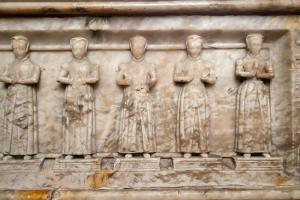


On 24th April 1576 Elizabeth Carey was born to George Carey 2nd Baron Hunsdon [aged 29] and Elizabeth Spencer Baroness Hunsdon and Eure [aged 23]. She was baptised on the 7th June 1576 at St Dunstan's Church, Hunsdon; her godmothers were Queen Elizabeth I of England and Ireland [aged 42] and Elizabeth Tailboys Countess Warwick. She married before 1601 her third cousin once removed Thomas Berkeley, son of Henry Berkeley 7th Baron Berkeley and Katherine Howard Baroness Berkeley, and had issue.


On 7th June 1594 Roderigo Lopes [aged 77], Ferreira da Gama and Tinoco were Hanged, drawn and quartered at Tyburn [Map]. Lopes' property was forfeited on his attainder.
On 7th June 1618 Thomas West 3rd Baron De La Warr [aged 41] died at sea while travelling from England to Virginia. His son Henry [aged 15] succeeded 4th Baron De La Warr.
The History of William Marshal was commissioned by his son shortly after William’s death in 1219 to celebrate the Marshal’s remarkable life; it is an authentic, contemporary voice. The manuscript was discovered in 1861 by French historian Paul Meyer. Meyer published the manuscript in its original Anglo-French in 1891 in two books. This book is a line by line translation of the first of Meyer’s books; lines 1-10152. Book 1 of the History begins in 1139 and ends in 1194. It describes the events of the Anarchy, the role of William’s father John, John’s marriages, William’s childhood, his role as a hostage at the siege of Newbury, his injury and imprisonment in Poitou where he met Eleanor of Aquitaine and his life as a knight errant. It continues with the accusation against him of an improper relationship with Margaret, wife of Henry the Young King, his exile, and return, the death of Henry the Young King, the rebellion of Richard, the future King Richard I, war with France, the death of King Henry II, and the capture of King Richard, and the rebellion of John, the future King John. It ends with the release of King Richard and the death of John Marshal.
Available at Amazon in eBook and Paperback format.

On 7th June 1650 William Hay [aged 39] was executed. He was buried in the same vault as his leader James Graham 1st Marquess Montrose [deceased] in the Moray Aisle, Edinburgh Cathedral [Map]. The
William Hay: Around 1611 he was born. Diary of John Nicoll. The tyme appoyntit for the folempnitie of his funerallis being cum, quhilk wes upone Settirday the elevint day of Maij 1661, his bones wer brocht bale agane from the Abay church to St. Geillis kirk of Edinburgh, at the bak of the tomb quhair his grandfehir wes buryed, and thair buryed him in maner following: — In the firft, the haill inhabitantes of Edinburgh, Cannogait, Potterraw, and Welt Port, being all in armour, to the number of 23 companyes, with thair difplayit baneris, gairdit the Toun of Edinburgh and Cannogait, on both fydes of the ftreit, from the kirk of Halyrudhous to the kirk of St. Geillis in Edinburgh. His Majefteis leiff gaird of hors, in the firft place, ryding alongs on thair hors bak, with thair carabines at thair fadillis, and thair drawin fwordis in thair handis, to the number of 160; nixt unto thame, 26 young boyis, all cled in murning habites from thair crounes and top of thair heidis to thair heillis, careying his airmes and uther branches of his familie; thairefter, marched up the proveft, bailleis, and counfell of Edinburgh, all in murning habites; and nixt unto thame, the burrowis and barones that wer memberis of Parliament; then came a gentillman all cled in bricht airmour on horfbak, with a trumpettour befoir him, ryding in a new fute of the Marques livray, and ane led hors behind him; thaireftir, come 18 gentill men, fum of thame careying in thair handis long baneris of honor, and utheris careying his fpures, gloves, breift and bak pece, all of airmour, on the poyntes of long ftaves; thaireftir, come ane led hors covered with his ryche broydered mantle, quhairwith he and his predicefforis wer wont to ryde at parliamentis, and his allakay richlie cled with liveray and airmes on breift and bak; then come the flour of the nobilitie all in good ordor; then the haill heraldis and purfevantis in thair koates of airmes, many of thame careying feverall honouris in thair handis; eftir thame came ane led hors all covered in blak; eftir him come the Lord Lyoun with his koat of airmes; thaireftir come many of the Marques freindis, all of thame in murning, and every ane of thame careying fum honoris in thair handis, one of thame haifand his parliament rob careying, ane uther a croun on a velwot cufcheon under a craip, and fum utheris with feverall foirtes of honores in thair handis; then come the corps and bones in a coffin, careyed under a riche paill, careyed by many honorable lordis and gentill men, with fex trumpetis all founding befoir; then came many noble ladyes cled all in murning behind the paill; eftir thame come the Erie of Middletoun, his Majelteis Commiffioner, in a koatche with fex hors, all cled in murning, and his koatche cled over in blak, none being in koatche bot himfelff, and the Lord Ramfay fitting in the bute bairheidit careying his commiffion; — the haill bellis of Edinburgh and Cannogait ringand all the tyme. Then come ten gentillmen careying each of thame in thair handis long flages, and uther peces of honor on the endis of long ftaves, befoir the bones of the Laird of Dalgatie, quhais bones wer raifed with the faid Marques from the Burrow Mure, quho wes alfo layd in the Abay kirk, as being beheadit for being in airmes with the Marques for the lait King; then nixt to these honores come two trumpettouris founding; eftir thame come the bones in a coffin, careyed by mony honorable gentillmen, with many epitaphes, and uther paynted paperis thairupone; and fo wes caryed in to the faid Yle of St. Geillis kirk, and layd on the rycht fyde of the faid noble Marques.
On 7th June 1657 George Evelyn was born to John Evelyn [aged 36] and Mary Browne [aged 22]. He died aged less than one years old.


In June 1660 King Charles II of England Scotland and Ireland [aged 30] rewarded those who supported his Restoration...
6th William Wray 1st Baronet [aged 35] and John Talbot of Lacock [aged 29] were knighted.
7th Geoffrey Palmer 1st Baronet [aged 62] was created 1st Baronet Palmer of Carlton in Northampton
7th Orlando Bridgeman 1st Baronet [aged 54] was created 1st Baronet Bridgeman of Great Lever in Lancashire.
7th John Langham 1st Baronet [aged 76] was created 1st Baronet Langham of Cottesbrooke in Northamptonshire.
11th Henry Wright 1st Baronet [aged 23] was created 1st Baronet Wright of Dagenham. Ann Crew Lady Wright by marriage Lady Wright of Dagenham.
13th Nicholas Gould 1st Baronet was created 1st Baronet Gould of the City of London.
14th Thomas Allen 1st Baronet [aged 27] was created 1st Baronet Allen of Totteridge in Middlesex.
18th Thomas Cullum 1st Baronet [aged 73] was created 1st Baronet Cullum of Hastede in Suffolk.
19th Thomas Darcy 1st Baronet [aged 28] was created 1st Baronet Darcy of St Osith's.
22nd Robert Cordell 1st Baronet was created 1st Baronet Cordell of Long Melford.
22nd John Robinson 1st Baronet [aged 45] was created 1st Baronet Robinson of London. Anne Whitmore Lady Robinson [aged 48] by marriage Lady Robinson of London.
25th William Bowyer 1st Baronet [aged 47] was created 1st Baronet Bowyer of Denham Court. Margaret Weld Lady Bowyer [aged 43] by marriage Lady Bowyer of Denham Court.
25th Thomas Stanley 1st Baronet [aged 63] was created 1st Baronet Stanley of Alderley in Cheshire.
26th Jacob Astley 1st Baronet [aged 21] was created 1st Baronet Astley of Hill Morton.
27th William Wray 1st Baronet was created 1st Baronet Wray of Ashby in Lincolnshire. Olympia Tufton Lady Ashby [aged 36] by marriage Lady Wray of Ashby in Lincolnshire.
28th Oliver St John 1st Baronet [aged 36] was created 1st Baronet St John of Woodford in Northamptonshire.
29th Ralph Delaval 1st Baronet [aged 37] was created 1st Baronet Delaval of Seaton in Northumberland. Anne Leslie Lady Delaval by marriage Lady Delaval of Seaton in Northumberland.
30th Andrew Henley 1st Baronet [aged 38] was created 1st Baronet Henley of Henley in Somerset.


Samuel Pepys' Diary. 7th June 1665. So took water and to Fox-Hall, to the Spring garden, and there walked an houre or two with great pleasure, saving our minds ill at ease concerning the fleete and my Lord Sandwich [aged 39], that we have no newes of them, and ill reports run up and down of his being killed, but without ground. Here staid pleasantly walking and spending but 6d. till nine at night, and then by water to White Hall, and there I stopped to hear news of the fleete, but none come, which is strange, and so by water home, where, weary with walking and with the mighty heat of the weather, and for my wife's not coming home, I staying walking in the garden till twelve at night, when it begun to lighten exceedingly, through the greatness of the heat. Then despairing of her coming home, I to bed.


Samuel Pepys' Diary. 7th June 1665. Thence to the office, and meeting Creed away with him to my Lord Treasurer's [aged 58], there thinking to have met the goldsmiths, at White Hall, but did not, and so appointed another time for my Lord to speak to them to advance us some money.
Samuel Pepys' Diary. 7th June 1665. This day, much against my will, I did in Drury Lane see two or three houses marked with a red cross upon the doors, and "Lord have mercy upon us" writ there; which was a sad sight to me, being the first of the kind that, to my remembrance, I ever saw. It put me into an ill conception of myself and my smell, so that I was forced to buy some roll-tobacco to smell to and chaw, which took away the apprehension.
Samuel Pepys' Diary. 7th June 1666. By and by comes Mr. Wayth to me; and discoursing of our ill successe, he tells me plainly from Captain Page's own mouth (who hath lost his arm in the fight), that the Dutch did pursue us two hours before they left us, and then they suffered us to go on homewards, and they retreated towards their coast: which is very sad newes. Then to my office and anon to White Hall, late, to the Duke of York [aged 32] to see what commands he hath and to pray a meeting to-morrow for Tangier in behalf of Mr. Yeabsly, which I did do and do find the Duke much damped in his discourse, touching the late fight, and all the Court talk sadly of it. The Duke did give me several letters he had received from the fleete, and Sir W. Coventry [aged 38] and Sir W. Pen [aged 45], who are gone down thither, for me to pick out some works to be done for the setting out the fleete again; and so I took them home with me, and was drawing out an abstract of them till midnight. And as to newes, I do find great reason to think that we are beaten in every respect, and that we are the losers. The Prince upon the Galloper, where both the Royall Charles and Royall Katharine had come twice aground, but got off. The Essex carried into Holland; the Swiftsure missing (Sir William Barkeley [deceased]) ever since the beginning of the fight. Captains Bacon, Tearne, Wood, Mootham, Whitty, and Coppin, slayne. The Duke of Albemarle [aged 57] writes, that he never fought with worse officers in his life, not above twenty of them behaving themselves like men. Sir William Clerke [deceased] lost his leg; and in two days died. The Loyall George, Seven Oakes, and Swiftsure, are still missing, having never, as the Generall writes himself, engaged with them. It was as great an alteration to find myself required to write a sad letter instead of a triumphant one to my Lady Sandwich [aged 41] this night, as ever on any occasion I had in my life. So late home and to bed.


Samuel Pepys' Diary. 7th June 1666. Up betimes, and to my office about business (Sir W. Coventry [aged 38] having sent me word that he is gone down to the fleete to see how matters stand, and to be back again speedily); and with the same expectation of congratulating ourselves with the victory that I had yesterday. But my Lord Bruncker [aged 46] and Sir T. H. [aged 41] that come from Court, tell me quite contrary newes, which astonishes me: that is to say, that we are beaten, lost many ships and good commanders; have not taken one ship of the enemy's; and so can only report ourselves a victory; nor is it certain that we were left masters of the field. But, above all, that The Prince run on shore upon the Galloper, and there stuck; was endeavoured to be fetched off by the Dutch, but could not; and so they burned her; and Sir G. Ascue [aged 50] is taken prisoner, and carried into Holland. This newes do much trouble me, and the thoughts of the ill consequences of it, and the pride and presumption that brought us to it.

Samuel Pepys' Diary. 7th June 1667. This day I read (shown me by Mr. Gibson) a discourse newly come forth of the King of France [aged 28], his pretence to Flanders, which is a very fine discourse, and the truth is, hath so much of the Civil Law in it, that I am not a fit judge of it, but, as it appears to me, he hath a good pretence to it by right of his Queene [aged 28]. So to bed.


Samuel Pepys' Diary. 7th June 1667. Up, and after with my flageolet and Mr. Townsend, whom I sent for to come to me to discourse about my Lord Sandwich's [aged 41] business; for whom I am in some pain, lest the Accounts of the Wardrobe may not be in so good order as may please the new Lords Treasurers, who are quick-sighted, and under obligations of recommending themselves to the King [aged 37] and the world, by their finding and mending of faults, and are, most of them, not the best friends to my Lord, and to the office, and there all the morning.

On 7th June 1671 Richard Beek died. Buried at St Andrew's Church, Wimpole [Map].
On 7th June 1673 and 14th June 1673 two naval battles took place between an allied Anglo-French fleet commanded by Prince Rupert Palatinate Simmern 1st Duke Cumberland [aged 53] on his flagship the Royal Charles, and the fleet of the United Provinces, commanded by Admiral Michiel de Ruyter [aged 66]. The Dutch won both battles.
The Gloucester took part.


John Evelyn's Diary. 7th June 1689. I visited the Archbishop of Canterbury [aged 72], and stayed with him till about seven o'clock. He read to me the Pope's excommunication of the French King [aged 50].
Roger Whitley's Diary. 7th June 1690. Satorday, severall of the King's servants came to provide for him; viz: Mr Isaack, Lambe, Clarke, Fronteene, &c. neare 2 o'clock the King [aged 39] came, with Lord: Portland [aged 40], Scarborow [aged 40]; Overkirk [aged 50], Solmes, Scranmore, Zulestein, &c. Dutch & English, the Bishop: & severall of the clergy, &c. the King went to dine, past 2; had severall of his noblemen & gentry to dine with him; he also commanded the Bishop: & me to sitt downe; Lord Warrington [aged 38] came when we were at dinner; sate downe; we were 13 or 14 at table; his Majesty did me the honor to drink to me; after dinner he talked with me a long while at the window; then retired, writ letters, &c. Sir Thomas Delves [aged 59] & severall gentlemen of the County dined with Mr Isack (who had tables provided in the Kilne) & the rest of the King's servants, officers of the Guards, &c. were provided for in one place or other; the King walked in the gardens, to the stables in the evening; discoursed often very obligingly with me after he came in; retired to his chamber; had some new layd eggs to his supper; went to bed before 11. in the afternoone the County gentlemen, clergy, cittisens of Chester & Recorder (who were sent to [fo. 119r] know his Majesty's: pleasure about coming to Chester) kissed his hand; & in the evening my daughters, grandchildren, aunts &c; when he walked in the garden he gathered cherryes & seemed well pleased, &c. there was a good supper prepared in the Kilne for those that would eate, besides many of the King's great officers & servants; Lord Warrington, Sir Rowland Gwynn [aged 32] & others lay in the house; I went to bed (weary) before 11 o'clock; Lord Brandon [aged 31] lay at Mr Hardwares, also Mr Row.


On 7th June 1696 Frederick Saxe Coburg Altenburg II Duke Saxe Gotha Altenburg [aged 19] and Magdalena Augusta Anhalt-Zerbst Duchess Saxe Gotha Altenburg were married. She by marriage Duchess Saxe Gotha Altenburg. He the son of Frederick Saxe Coburg Altenburg I Duke Saxe Gotha Altenburg and Duchess Magdalena Sibylle of Saxe Gotha Altenburg.
On 7th June 1697 John Aubrey [aged 71] died.
On 7th June 1712 Philip Bourbon was born to Philippe V King Spain [aged 28] and Maria Luisa Savoy [aged 23]. He a great x 2 grandson of King Charles I of England, Scotland and Ireland. Coefficient of inbreeding 5.82%. He died aged seven in 1719.


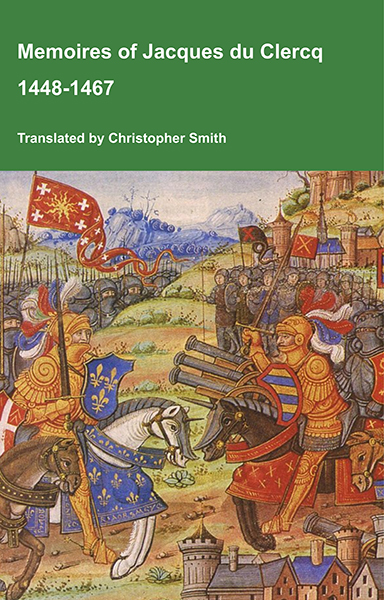
This is a translation of the 'Memoires of Jacques du Clercq', published in 1823 in two volumes, edited by Frederic, Baron de Reissenberg. In his introduction Reissenberg writes: 'Jacques du Clercq tells us that he was born in 1424, and that he was a licentiate in law and a counsellor to Philip the Good, Duke of Burgundy, in the castellany of Douai, Lille, and Orchies. It appears that he established his residence at Arras. In 1446, he married the daughter of Baldwin de la Lacherie, a gentleman who lived in Lille. We read in the fifth book of his Memoirs that his father, also named Jacques du Clercq, had married a lady of the Le Camelin family, from Compiègne. His ancestors, always attached to the counts of Flanders, had constantly served them, whether in their councils or in their armies.' The Memoires cover a period of nineteen years beginning in in 1448, ending in in 1467. It appears that the author had intended to extend the Memoirs beyond that date; no doubt illness or death prevented him from carrying out this plan. As Reissenberg writes the 'merit of this work lies in the simplicity of its narrative, in its tone of good faith, and in a certain air of frankness which naturally wins the reader’s confidence.' Du Clercq ranges from events of national and international importance, including events of the Wars of the Roses in England, to simple, everyday local events such as marriages, robberies, murders, trials and deaths, including that of his own father in Book 5; one of his last entries.
Available at Amazon in eBook and Paperback format.
On 7th June 1727 Rachel Cavendish was born to William Cavendish 3rd Duke Devonshire [aged 28] and Catherine Hoskins Duchess Devonshire [aged 28]. She married 12th May 1748 Horatio Walpole 1st Earl Orford, son of Horatio Walpole 1st Baron Walpole and Mary Magdalen Lombard, and had issue.


On 7th June 1731 William Aikman [aged 48] died.
On 7th June 1746 Jules 1st Duke of Polignac was born.
On 7th June 1757 Georgiana Spencer Duchess Devonshire was born to John Spencer 1st Earl Spencer [aged 22] and Margaret Georgiana Poyntz Countess Spencer [aged 20] at Althorp House, Northamptonshire [Map]. She married 7th June 1774 her fourth cousin William Cavendish 5th Duke Devonshire, son of William Cavendish 4th Duke Devonshire and Charlotte Elizabeth Boyle Marchioness Hartington, and had issue.


On 7th June 1760 at a ball Horace Walpole [aged 42] wrote to the Earl of Strafford [aged 38]... that there appeared a new Miss Bishop [aged 19] from Sir Cecil's [aged 59] endless hoard of beautiful daughters, who is still prettier than her sisters.


On 7th June 1774 William Cavendish 5th Duke Devonshire [aged 26] and Georgiana Spencer Duchess Devonshire [aged 17] were married at St Mary's Church, Wimbledon. It was her 17th birthday. She by marriage Duchess Devonshire. She the daughter of John Spencer 1st Earl Spencer [aged 39] and Margaret Georgiana Poyntz Countess Spencer [aged 37]. He the son of William Cavendish 4th Duke Devonshire and Charlotte Elizabeth Boyle Marchioness Hartington. They were fourth cousins.

On 7th June 1786 Anne Elizabeth Somerset was born to Henry Somerset 5th Duke Beaufort [aged 41] and Elizabeth Boscawen Duchess Beaufort [aged 39].

On 7th June 1789 Antoine Héraclius Agénor 9th Duc de Gramont was born to Antoine 8th Duke Gramont [aged 33] and Aglae de Polignac "Guichette" Duchess Gramont [aged 21].

On 7th June 1794 Henry Vane 1st Baronet [aged 66] died. His son Henry [aged 23] succeeded 2nd Baronet Vane of Long Newton in County Durham. He was buried at St Mary's Church, Long Newton [Map].
Henry Vane 1st Baronet: In 1728 he was born to George Vane of Long Newton and Ann Machon. Before 1771 Henry Vane 1st Baronet and Frances Tempest were married at St Mary-le-Bow Church, Cheapside [Map]. On 13th July 1782 Henry Vane 1st Baronet was created 1st Baronet Vane of Long Newton in County Durham.
On 7th June 1820 Charles Cavendish Fulke Greville [aged 26] noted in his diary "The Queen [aged 52] arrived in London yesterday at seven o'clock ... She travelled in an open landau, Alderman Wood [aged 52] sitting by her side and Lady Anne Hamilton [aged 54] and another woman opposite. Everybody was disgusted at the vulgarity of Wood in sitting in the place of honour, while the Duke of Hamilton's [aged 52] sister was sitting backwards in the carriage"


Chronicle of Walter of Guisborough
A canon regular of the Augustinian Guisborough Priory, Yorkshire, formerly known as The Chronicle of Walter of Hemingburgh, describes the period from 1066 to 1346. Before 1274 the Chronicle is based on other works. Thereafter, the Chronicle is original, and a remarkable source for the events of the time. This book provides a translation of the Chronicle from that date. The Latin source for our translation is the 1849 work edited by Hans Claude Hamilton. Hamilton, in his preface, says: 'In the present work we behold perhaps one of the finest samples of our early chronicles, both as regards the value of the events recorded, and the correctness with which they are detailed; Nor will the pleasing style of composition be lightly passed over by those capable of seeing reflected from it the tokens of a vigorous and cultivated mind, and a favourable specimen of the learning and taste of the age in which it was framed.'
Available at Amazon in eBook and Paperback format.

On 7th June 1821 Elizabeth Stephenson Countess Mexborough [aged 59] died. She was buried in Westminster Abbey [Map].
Monument in Church of St Oswald, Methley [Map] sculpted by Robert Blore [aged 41].
Elizabeth Stephenson Countess Mexborough: Around 1762 she was born to Henry Stephenson. In 1782 John Savile 2nd Earl Mexborough and she were married. She by marriage Countess Mexborough of Lifford in County Donegal. He the son of John Savile 1st Earl Mexborough and Sarah Delaval Countess Mexborough.
On 7th June 1822 Stillborn daughter Hesse Darmstadt was born to Louis Hesse Darmstadt II Grand Duke [aged 44] and Princess Wilhelmine Baden [aged 33]. Coefficient of inbreeding 7.03%.
On 7th June 1840 Frederick William III King Prussia [aged 69] died. His son Frederick [aged 44] succeeded IV King Prussia.
Thomas Bateman 1845. On the 7th of June 1845, was opened a large barrow near Wetton in Staffordshire, situated upon a piece of ground called the Three Lowes [Three Lows Barrow 1 [Map], Three Lows Barrow 2 [Map] or Three Lows Barrow 3 [Map]], which, as its name would signify, no doubt contains that number of tumuli; indeed there is a small one within fifty yards of the one now about to be described. In the centre was a cist, about eighteen inches deep, cut in the natural rock, which, the height of the barrow being included, was about five feet from the surface; in this cist was a human skeleton, which had evidently been interred in a sitting position, and whose left arm had been broken, and the bones united again in a very crooked form. By the side of this skeleton was a coarse urn in a very decayed state, having never been properly baked; dose to this nm lay a deposit of calcined human bones, amongst which was an instrument of flint, also burnt; a few inches above the cist, part of another urn, enriched with a lozenge-shaped ornament, and part of another human skull were found. In another part of the interior of the barrow were the remains of a large fire covering the floor for a considerable space; amongst which were many imperfectly burnt human bones, which had never been collected together, but had been left amongst the charcoal; upon this stratum of bones and ashes was laid the skeleton of a young person, aged about fourteen, with whom a rude arrow-head of flint was deposited; about six inches above this skeleton was another, which was that of an infant. In another part of this tumulus there was an adult skeleton, which had been previously disturbed; in various situations in the barrow, but more especially towards the outer part of the circle, were portions of red deer's horns and in one instance a perfect pair was found, which it was impossible to preserve complete, on account of their advanced state of decomposition; with them three flint arrow-heads of the rudest form were found, and in the immediate neighbourhood bones of dogs and rats; near the surface in the centre were collected remains of three ornamented urns, or drinking-cups, which had been destroyed by some former excavators, most probably lead miners, who had dug into this tumulus from a mistaken notion of its origin.

Ten Years' Digging. On the 7th of June, we went to the large chambered tumulus near Monyash, called Ringham Low [Map], some of the cists in which had been examined in 1847 (Vestiges, p. 103), for the purpose of investigating a cist that had been accidentally discovered. It was rather north of the centre of the mound, with the ends east and west (No. 1 of the Plan,) and was rhomboidal in shape, measuring eight feet six inches in length, by four feet in width, the sides were mostly formed by four very large stones, one of which was upwards of nine feet long; the bottom was paved with five slabs of limestone pretty well fitted to each other, the average depth was about eighteen indies. It was filled with limestone gravel, and small stones, covering a large quantity of human remains, most of which were in the utmost disorder, though near the bottom they had been less disturbed, and perhaps, in one or two cases, retained their original position. These have since been ascertained to include the remains of twelve individuals, comprising two infants and ten adults, mostly exhibiting the lengthened form of skull I have before observed to be constantly found in tumuli of the same description as the present.
The lower part of the gravel, and the interstices between the paving-stones, abounded with rats' bones; and on removing part of the floor we found that many human bones had been drawn beneath it by these restless creatures. In clearing out these joints we found three very beautiful leaf-shaped arrow points of white-flint, one of which, considering the material, is of wonderful execution; it measures 2¼ inches in length, is an inch broad in the middle, and weighs less than 48 grains, although it is not made from a thin flake, but is elaborately clipped all over both surfaces. We observed fragments of the skulls of oxen, teeth of horses, dogs, &c, but no trace of pottery, although a little charcoal was mixed with the clay on which the pavement rested.

On 7th June 1866 Frances Mary Quantock [aged 52] died. Memorial at the Chapel of St John the Evangelist, Bolton [Map].


On 7th June 1893 George Frampton [aged 32] and Christabel Cockerell [aged 28] were married at St George's Church, Hanover Square. Her father George Russell Cockerell [aged 55] was one of the witnesses.
On 7th June 1897 Princess Mary Windsor Countess Harewood was baptised by Archbishop William Dalrymple Maclagan [aged 70] at St Mary Magdalene's Church, Sandringham.


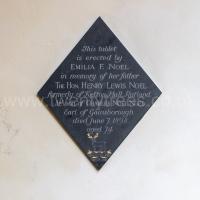
On 7th June 1898 Henry Lewis Noel [aged 74] died.
Memorial at the Church of St Peter and St Paul, Exton, Rutlandshire [Map] commissioned by his daughter Emilia F Noel.
Henry Lewis Noel: In 1824 he was born to Charles Noel 1st Earl Gainsborough and Arabella Hamlyn-Williams.
Emilia F Noel: she was born to Henry Lewis Noel.

On 7th June 1907 Sigvard Bernadotte was born to Gustaf Adolph VI King Sweden [aged 24] and Margaret "Daisy" Windsor [aged 25]. He a great grandson of Queen Victoria of the United Kingdom.

On 7th June 1916 Leading Seaman James Horace Wainscott died from wounds received at the Battle of Jutland whilst serving aboard HMS Southampton. Grave at All Hallows' Church Harthill [Map].
On 7th June 2024 Hugh Grosvenor 7th Duke of Westminster [aged 33] and Olivia Henson were married at Chester Cathedral [Map]. He the son of Gerald Cavendish Grosvenor 6th Duke Westminster and Natalia Phillips Duchess of Westminster [aged 65].
William Prince of Wales [aged 41] attended.
Guests included Edwina Grosvenor [aged 42] and her husband Dan Snow.
The city's annual Summer Flowers project has been funded by the couple, with 100,000 flowers planted as part of the wedding celebrations and they have also paid for free ice cream and sorbet from three local independent businesses to be given to visitors to Chester city centre through the day. BBC.
On 7th June 1348 Thomas Berkeley was born to Thomas Berkeley 8th and 3rd Baron Berkeley [aged 52] and Katherine Clivedon Baroness Berkeley [aged 38]. He a great x 4 grandson of King John of England.
On 7th June 1502 John III King Portugal was born to Manuel "Fortunate" I King Portugal [aged 33] and Maria Trastámara Queen Consort Portugal [aged 20]. He a great x 4 grandson of King Edward III of England. Coefficient of inbreeding 8.38%. He married 10th February 1525 his first cousin Catherine of Austria Queen Consort Portugal, daughter of Philip "Handsome Fair" King Castile and Joanna "The Mad" Trastámara Queen Castile, and had issue.
On 7th June 1532 Amy Robsart was born to John Robsart of Syderstone Hall. She married 4th June 1550 Robert Dudley 1st Earl of Leicester, son of John Dudley 1st Duke Northumberland and Jane Guildford Duchess Northumberland.


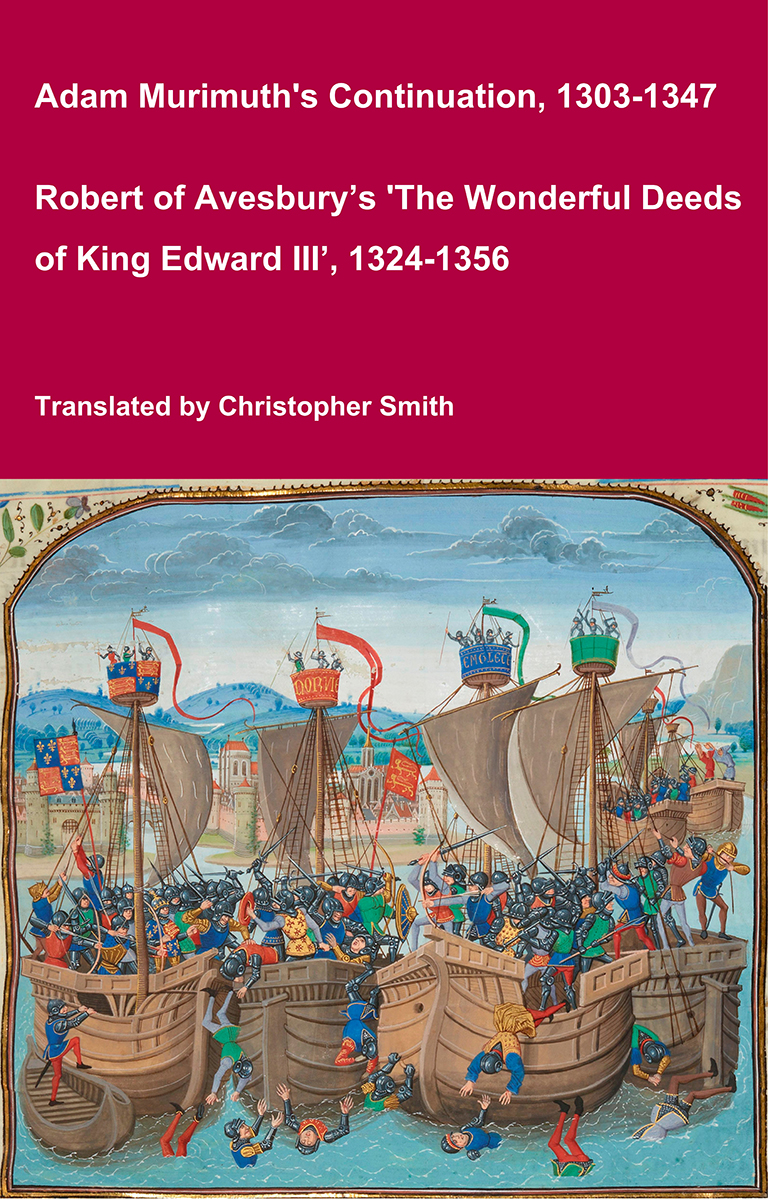
Adam Murimuth's Continuation and Robert of Avesbury’s 'The Wonderful Deeds of King Edward III'
This volume brings together two of the most important contemporary chronicles for the reign of Edward III and the opening phases of the Hundred Years’ War. Written in Latin by English clerical observers, these texts provide a vivid and authoritative window into the political, diplomatic, and military history of fourteenth-century England and its continental ambitions. Adam Murimuth Continuatio's Chronicarum continues an earlier chronicle into the mid-fourteenth century, offering concise but valuable notices on royal policy, foreign relations, and ecclesiastical affairs. Its annalistic structure makes it especially useful for establishing chronology and tracing the development of events year by year. Complementing it, Robert of Avesbury’s De gestis mirabilibus regis Edwardi tertii is a rich documentary chronicle preserving letters, treaties, and official records alongside narrative passages. It is an indispensable source for understanding Edward III’s claim to the French crown, the conduct of war, and the mechanisms of medieval diplomacy. Together, these works offer scholars, students, and enthusiasts a reliable and unembellished account of a transformative period in English and European history. Essential for anyone interested in medieval chronicles, the Hundred Years’ War, or the reign of Edward III.
Available at Amazon in eBook and Paperback format.
On 24th April 1576 Elizabeth Carey was born to George Carey 2nd Baron Hunsdon [aged 29] and Elizabeth Spencer Baroness Hunsdon and Eure [aged 23]. She was baptised on the 7th June 1576 at St Dunstan's Church, Hunsdon; her godmothers were Queen Elizabeth I of England and Ireland [aged 42] and Elizabeth Tailboys Countess Warwick. She married before 1601 her third cousin once removed Thomas Berkeley, son of Henry Berkeley 7th Baron Berkeley and Katherine Howard Baroness Berkeley, and had issue.
On 7th June 1657 George Evelyn was born to John Evelyn [aged 36] and Mary Browne [aged 22]. He died aged less than one years old.
On 7th June 1663 Elizabeth Lister Countess of Banbury was born to Michael Lister [aged 22]. She married 16th May 1689 Charles Knollys 4th Earl Banbury, son of Nicholas Knollys 3rd Earl Banbury and Anne or Abigail Sherard, and had issue.

On 7th June 1682 Lionel Tollemache was born to Lionel Tollemache 3rd Earl Dysart [aged 33] and Grace Wilbraham Countess Dysart [aged 21]. He married 6th December 1706 Henrietta Cavendish, daughter of William Cavendish 2nd Duke Devonshire and Mary Heneage, and had issue.
On 7th June 1712 Philip Bourbon was born to Philippe V King Spain [aged 28] and Maria Luisa Savoy [aged 23]. He a great x 2 grandson of King Charles I of England, Scotland and Ireland. Coefficient of inbreeding 5.82%. He died aged seven in 1719.
On 7th June 1722 George Paulett 12th Marquess Winchester was born to Norton Powlett [aged 41]. He married 7th January 1762 Martha Ingoldsby Marchioness Winchester and had issue.
On 7th June 1727 Rachel Cavendish was born to William Cavendish 3rd Duke Devonshire [aged 28] and Catherine Hoskins Duchess Devonshire [aged 28]. She married 12th May 1748 Horatio Walpole 1st Earl Orford, son of Horatio Walpole 1st Baron Walpole and Mary Magdalen Lombard, and had issue.
On 7th June 1740 Edward Lascelles 1st Earl Harewood was born to Edward Lascelles [aged 38]. He married 12th May 1761 Anne Chaloner Baroness Harewood and had issue.
On 7th June 1746 Jules 1st Duke of Polignac was born.
On 7th June 1752 James Lamb aka Burges 1st Baronet was born.
On 7th June 1757 Georgiana Spencer Duchess Devonshire was born to John Spencer 1st Earl Spencer [aged 22] and Margaret Georgiana Poyntz Countess Spencer [aged 20] at Althorp House, Northamptonshire [Map]. She married 7th June 1774 her fourth cousin William Cavendish 5th Duke Devonshire, son of William Cavendish 4th Duke Devonshire and Charlotte Elizabeth Boyle Marchioness Hartington, and had issue.
This is a translation of the 'Memoires of Jacques du Clercq', published in 1823 in two volumes, edited by Frederic, Baron de Reissenberg. In his introduction Reissenberg writes: 'Jacques du Clercq tells us that he was born in 1424, and that he was a licentiate in law and a counsellor to Philip the Good, Duke of Burgundy, in the castellany of Douai, Lille, and Orchies. It appears that he established his residence at Arras. In 1446, he married the daughter of Baldwin de la Lacherie, a gentleman who lived in Lille. We read in the fifth book of his Memoirs that his father, also named Jacques du Clercq, had married a lady of the Le Camelin family, from Compiègne. His ancestors, always attached to the counts of Flanders, had constantly served them, whether in their councils or in their armies.' The Memoires cover a period of nineteen years beginning in in 1448, ending in in 1467. It appears that the author had intended to extend the Memoirs beyond that date; no doubt illness or death prevented him from carrying out this plan. As Reissenberg writes the 'merit of this work lies in the simplicity of its narrative, in its tone of good faith, and in a certain air of frankness which naturally wins the reader’s confidence.' Du Clercq ranges from events of national and international importance, including events of the Wars of the Roses in England, to simple, everyday local events such as marriages, robberies, murders, trials and deaths, including that of his own father in Book 5; one of his last entries.
Available at Amazon in eBook and Paperback format.
On 7th June 1770 Robert Jenkinson 2nd Earl Liverpool was born to Charles Jenkinson 1st Earl Liverpool [aged 41] and Amelia Watts [aged 19]. His mother died one month later. He married (1) 25th March 1795 Louisa Theodosia Hervey Countess Liverpool, daughter of Frederick Augustus Hervey 4th Earl Bristol and Elizabeth Davers Countess Bristol (2) 22nd September 1822 Mary Chester Countess of Liverpool.


On 7th June 1771 Thomas Dingley Hatton 10th Baronet was born to Thomas Hatton 8th Baronet [aged 42].
On 7th June 1777 Henry Crichton-Stuart was born to John Stuart 1st Marquis of the Isle of Bute [aged 32] and Charlotte Jane Windsor Marchioness Bute [aged 31]. He married 15th July 1802 his sixth cousin Gertrude Amelia Mason Villiers, daughter of George Mason aka Villiers 2nd Earl Grandison and Gertrude Seymour-Conway, and had issue.


On 7th June 1786 Anne Elizabeth Somerset was born to Henry Somerset 5th Duke Beaufort [aged 41] and Elizabeth Boscawen Duchess Beaufort [aged 39].
On 7th June 1789 Antoine Héraclius Agénor 9th Duc de Gramont was born to Antoine 8th Duke Gramont [aged 33] and Aglae de Polignac "Guichette" Duchess Gramont [aged 21].
On 7th June 1807 James Hope-Wallace was born to John Hope 4th Earl Hopetoun [aged 41] and Louisa Dorothea Wedderburn [aged 20]. He married 4th May 1837 Mary Frances Nugent and had issue.
On 7th June 1811 James Young Simpson 1st Baronet was born to David Simpson [aged 50] and Mary Jarvey [aged 40] at Bathgate.
On 7th June 1814 Lieutenant Colonel Thomas Scott Hawkins was born to John Cæsar Hawkins 3rd Baronet [aged 32] and Charlotte Cassandra Surtees.
On 7th June 1822 Stillborn daughter Hesse Darmstadt was born to Louis Hesse Darmstadt II Grand Duke [aged 44] and Princess Wilhelmine Baden [aged 33]. Coefficient of inbreeding 7.03%.
On 3rd June 1830 Edward Joseph Bellew 2nd Baron Bellew was born to Patrick Bellew 1st Baron Bellew [aged 32] and Anna Fermina de Mendoza Baroness bellew. He was baptised on 7th June 1830 at the Roman Catholic Cathedral, Dublin. He married 7th February 1853 Augusta Mary Bryan and had issue.
Chronicle of Abbot Ralph of Coggeshall
The Chronicle of Abbot Ralph of Coggeshall (Chronicon Anglicanum) is an indispensable medieval history that brings to life centuries of English and European affairs through the eyes of a learned Cistercian monk. Ralph of Coggeshall, abbot of the Abbey of Coggeshall in Essex in the early 13th century, continued and expanded his community’s chronicle, documenting events from the Norman Conquest of 1066 into the tumultuous reign of King Henry III. Blending eyewitness testimony, careful compilation, and the monastic commitment to record-keeping, this chronicle offers a rare narrative of political intrigue, royal power struggles, and social upheaval in England and beyond. Ralph’s work captures the reigns of pivotal figures such as Richard I and King John, providing invaluable insights into their characters, decisions, and the forces that shaped medieval rule. More than a simple annal, Chronicon Anglicanum conveys the texture of medieval life and governance, making it a rich source for scholars and readers fascinated by English history, monastic authorship, and the shaping of the medieval world.
Available at Amazon in eBook and Paperback format.
On 7th June 1835 Alice Mary Emily Hay was born to William Hay 18th Earl Erroll [aged 34] and Elizabeth Fitz-Clarence Countess Erroll [aged 34]. She a granddaughter of King William IV of the United Kingdom.
On 4th June 1843 Mary Bruce was born to James Bruce 12th Earl Kincardine 8th Earl Elgin [aged 31] and Elizabeth Mary Cumming Bruce Countess Kincardine and Elgin at Jamaica. On 7th June 1843 she and her mother died.
On 7th June 1850 Lyulph Richard Grandby William Lumley was born to Richard Lumley 9th Earl Scarborough [aged 37] and Adeliza Drummond Countess Scarborough.
On 7th June 1862 Aubrey Fitz-Clarence 4th Earl Munster was born to William Fitz-Clarence 2nd Earl Munster [aged 38] and Wilhelmina Kennedy-Erskine [aged 31]. He a great grandson of King William IV of the United Kingdom. Coefficient of inbreeding 6.25%.

On 7th June 1877 George Herbert Hyde Villiers 6th Earl Clarendon was born to Edward Villiers 5th Earl Clarendon [aged 31] and Caroline Elizabeth Agar Countess Clarendon [aged 20] at 31 Upper Brook Street, Mayfair. He married 1905 Adeline Verena Ishbel Cocks Countess of Clarendon.

On 7th June 1889 Derrick Wernher 2nd Baronet was born to Julius Charles Wernher 1st Baronet [aged 39] and Alice Mankiewicz Baroness Ludlow.
On 7th June 1905 Ian Lawson Johnston 2nd Baron Luke was born to George Lawson Johnston 1st Baron Luke [aged 31] and Edith Laura St John Baroness Luke [aged 26]. He married 1932 Barbara Anstruther-Gough-Calthorpe and had issue.


On 7th June 1907 Sigvard Bernadotte was born to Gustaf Adolph VI King Sweden [aged 24] and Margaret "Daisy" Windsor [aged 25]. He a great grandson of Queen Victoria of the United Kingdom.
On 7th June 1917 John Dudley North 13th Baron North was born to Dudley William John North [aged 27].
On 7th June 1941 Elizabeth Georgiana Anson Lady Shakerley was born to Thomas William Anson [aged 28] and Anne Ferelith Bowes-Lyon [aged 23]. Her mother was niece of the Queen Elizabeth Bowes-Lyon Queen Consort England [aged 40]; as such he was a second cousin to King Charles III. She married 27th July 1972 Geoffrey Adam Shakerley 6th Baronet, son of Cyril Holland Shakerley 5th Baronet and Elizabeth Averil Eardley-Wilmot Lady Shakerley.
Annals of the six Kings of England by Nicholas Trivet
Translation of the Annals of the Six Kings of England by that traces the rise and rule of the Angevin aka Plantagenet dynasty from the mid-12th to early 14th century. Written by the Dominican scholar Nicholas Trivet, the work offers a vivid account of English history from the reign of King Stephen through to the death of King Edward I, blending political narrative with moral reflection. Covering the reigns of six monarchs—from Stephen to Edward I—the chronicle explores royal authority, rebellion, war, and the shifting balance between crown, church, and nobility. Trivet provides detailed insight into defining moments such as baronial conflicts, Anglo-French rivalry, and the consolidation of royal power under Edward I, whose reign he describes with particular immediacy. The Annals combines careful year-by-year reporting with thoughtful interpretation, presenting history not merely as a sequence of events but as a moral and political lesson. Ideal for readers interested in medieval history, kingship, and the origins of the English state, this chronicle remains a valuable and accessible window into the turbulent world of the Plantagenet kings.
Available at Amazon in eBook and Paperback format.
On 7th June 1950 John Lytton 5th Earl of Lytton was born to Noel Lytton 4th Earl of Lytton [aged 50].
On 7th June 1951 Ralph Palmer 12th Baron Lucas was born to Major Robert Jocelyn Palmer Baron Lucas [aged 32] and Anne Rosemary Cooper 11th Baroness Lucas [aged 32].
On 7th June 1576 Thomas Howard 1st Viscount Howard Bindon [aged 56] and Mabel Burton Viscountess Howard Bindon [aged 36] were married. She by marriage Viscountess Howard Bindon. The difference in their ages was 20 years. He the son of Thomas Howard 3rd Duke of Norfolk and Elizabeth Stafford Duchess Norfolk.
On 7th June 1661 Henry Ingram 1st Viscount Irvine [aged 21] and Essex Montagu Viscountess Irvine were married. She by marriage Viscountess Irvine. She the daughter of Edward Montagu 2nd Earl Manchester [aged 59].
On 7th June 1696 Frederick Saxe Coburg Altenburg II Duke Saxe Gotha Altenburg [aged 19] and Magdalena Augusta Anhalt-Zerbst Duchess Saxe Gotha Altenburg were married. She by marriage Duchess Saxe Gotha Altenburg. He the son of Frederick Saxe Coburg Altenburg I Duke Saxe Gotha Altenburg and Duchess Magdalena Sibylle of Saxe Gotha Altenburg.

On 7th June 1739 Henry Paget 1st Earl Uxbridge [aged 76] and Elizabeth Bagot Countess Uxbridge [aged 65] were married. She by marriage Countess Uxbridge. They were half fifth cousin once removed.
On 7th June 1749 Charles Fane 2nd Viscount Fane [aged 41] and Susanna Marriott Viscountess Fane were married at St Benet's Church, Paul's Wharf [Map]. She by marriage Viscountess Fane.
On 7th June 1774 William Cavendish 5th Duke Devonshire [aged 26] and Georgiana Spencer Duchess Devonshire [aged 17] were married at St Mary's Church, Wimbledon. It was her 17th birthday. She by marriage Duchess Devonshire. She the daughter of John Spencer 1st Earl Spencer [aged 39] and Margaret Georgiana Poyntz Countess Spencer [aged 37]. He the son of William Cavendish 4th Duke Devonshire and Charlotte Elizabeth Boyle Marchioness Hartington. They were fourth cousins.
On 7th June 1775 Robert Stewart 1st Marquess Londonderry [aged 35] and Frances Pratt Marchioness Londonderry [aged 24] were married. She the daughter of Charles Pratt 1st Earl Camden [aged 61] and Elizabeth Jeffreys [aged 50].


On 7th June 1824 William Fitzgerald De Ros 22nd Baron Ros Helmsley [aged 26] and Georgiana Lennox Baroness Ros of Helmsley [aged 28] were married. She the daughter of Charles Lennox 4th Duke Richmond and Charlotte Gordon Duchess Richmond [aged 55]. They were second cousins. He a great x 3 grandson of King Charles II of England Scotland and Ireland. She a great x 3 granddaughter of King Charles II of England Scotland and Ireland.
Chronicle of Walter of Guisborough
A canon regular of the Augustinian Guisborough Priory, Yorkshire, formerly known as The Chronicle of Walter of Hemingburgh, describes the period from 1066 to 1346. Before 1274 the Chronicle is based on other works. Thereafter, the Chronicle is original, and a remarkable source for the events of the time. This book provides a translation of the Chronicle from that date. The Latin source for our translation is the 1849 work edited by Hans Claude Hamilton. Hamilton, in his preface, says: 'In the present work we behold perhaps one of the finest samples of our early chronicles, both as regards the value of the events recorded, and the correctness with which they are detailed; Nor will the pleasing style of composition be lightly passed over by those capable of seeing reflected from it the tokens of a vigorous and cultivated mind, and a favourable specimen of the learning and taste of the age in which it was framed.'
Available at Amazon in eBook and Paperback format.

On 7th June 1851 Augustus Henry Vernon 6th Baron Vernon [aged 22] and Harriet Frances Maria Anson Baroness Vernon [aged 23] were married. She the daughter of Thomas William Anson 1st Earl Lichfield [aged 55] and Louisa Barbara Catherine Phillips Countess Lichfield [aged 51]. They were third cousins.
On 7th June 1893 George Frampton [aged 32] and Christabel Cockerell [aged 28] were married at St George's Church, Hanover Square. Her father George Russell Cockerell [aged 55] was one of the witnesses.
On 7th June 1962 Victor Montagu 10th Earl Sandwich [aged 56] and Anne Cavendish Countess Sandwich [aged 52] were married. She the daughter of Victor Christian William Cavendish 9th Duke Devonshire and Evelyn Emily Mary Petty-Fitzmaurice Duchess Devonshire. He the son of George Charles Montagu 9th Earl Sandwich [aged 87] and Alberta Sturges Countess Sandwich [aged 84].
On 7th June 1975 Michael Andrew Foster Jude Kerr 13th Marquess Lothian [aged 29] and Theresa Jane Fitzalan Marchioness Lothian [aged 29] were married. She by marriage Marchioness Lothian. She the daughter of Bernard Fitzalan 16th Duke of Norfolk and Lavinia Mary Strutt Duchess Norfolk [aged 59]. He the son of Peter Francis Walter Kerr 12th Marquess Lothian [aged 52].
On 7th June 2024 Hugh Grosvenor 7th Duke of Westminster [aged 33] and Olivia Henson were married at Chester Cathedral [Map]. He the son of Gerald Cavendish Grosvenor 6th Duke Westminster and Natalia Phillips Duchess of Westminster [aged 65].
William Prince of Wales [aged 41] attended.
Guests included Edwina Grosvenor [aged 42] and her husband Dan Snow.
The city's annual Summer Flowers project has been funded by the couple, with 100,000 flowers planted as part of the wedding celebrations and they have also paid for free ice cream and sorbet from three local independent businesses to be given to visitors to Chester city centre through the day. BBC.
On 7th June 1283 Bishop Robert of Holy Island died at Bishop Middleham,County Durham. He was buried in the CHapter House of Durham Cathedral [Map] on the 10th June 1283.
On 7th June 1329 King Robert the Bruce I of Scotland [aged 54] died at Cardross Manor, Argyll. He was buried at Dunfermline Abbey [Map]. His son David [aged 5] succeeded II King Scotland. Joan of the Tower Queen Consort Scotland [aged 7] by marriage Queen Consort Scotland.
On 7th June 1337 William of Avesnes I Count Hainaut III Count Avesnes III Count Holland II Count Zeeland [aged 51] died. His son William [aged 30] succeeded II Count Hainaut. Joanna Reginar Duchess Brabant [aged 15] by marriage Countess Hainaut.
On 7th June 1338 Giles Badlesmere 2nd Baron Badlesmere [aged 23] died. Baron Badlesmere abeyant between his sisters Margery Badlesmere Baroness Ros of Helmsley [aged 29], Maud Badlesmere Countess of Oxford [aged 29], Elizabeth Badlesmere Countess Northampton [aged 25] and Margaret Badlesmere Baroness Tibetot [aged 23].
On 7th June 1347 Dietrich Cleves VIII Count Cleves [aged 56] died. His brother Johann [aged 54] succeeded Count Cleves. Mathilde Guelders Countess Blois and Cleves [aged 22] by marriage Countess Cleves.
On 7th June 1394 Anne of Bohemia Queen Consort England [aged 28] died of plague (probably) at Sheen Palace [Map]. King Richard II of England [aged 27] was so distraught at her death he ordered the destruction of Sheen Palalce [Map].
On 7th June 1488 Anne Gascoigne Baroness Hastings [aged 52] died at Fenwick Manor.
On 7th June 1488 Hugh Hastings 10th Baron Hastings [aged 51] died. His son John [aged 22] de jure 11th Baron Hastings. Catherine Aske Baroness Hastings by marriage Baroness Hastings.
Annals of the six Kings of England by Nicholas Trivet
Translation of the Annals of the Six Kings of England by that traces the rise and rule of the Angevin aka Plantagenet dynasty from the mid-12th to early 14th century. Written by the Dominican scholar Nicholas Trivet, the work offers a vivid account of English history from the reign of King Stephen through to the death of King Edward I, blending political narrative with moral reflection. Covering the reigns of six monarchs—from Stephen to Edward I—the chronicle explores royal authority, rebellion, war, and the shifting balance between crown, church, and nobility. Trivet provides detailed insight into defining moments such as baronial conflicts, Anglo-French rivalry, and the consolidation of royal power under Edward I, whose reign he describes with particular immediacy. The Annals combines careful year-by-year reporting with thoughtful interpretation, presenting history not merely as a sequence of events but as a moral and political lesson. Ideal for readers interested in medieval history, kingship, and the origins of the English state, this chronicle remains a valuable and accessible window into the turbulent world of the Plantagenet kings.
Available at Amazon in eBook and Paperback format.
On 7th June 1492 Casimir IV King Poland [aged 64] died. His son Vladislaus [aged 36] succeeded II King Hungary.
On 7th June 1550 Ellen Barnewall Baroness Killeen [aged 37] died.
On 7th June 1618 Thomas West 3rd Baron De La Warr [aged 41] died at sea while travelling from England to Virginia. His son Henry [aged 15] succeeded 4th Baron De La Warr.
On 7th June 1646 Charles Shirley 3rd Baronet [aged 22] died. His brother Robert [aged 17] succeeded 4th Baronet Shirley of Staunton Harold in Leicestershire.
On 7th June 1697 John Aubrey [aged 71] died.
On 7th June 1699 Jane Monins Lady Knatchbull died.
On 7th June 1714 Henry Hamilton Moore 3rd Earl of Drogheda [aged 58] died. His grandson Henry [aged 13] succeeded 4th Earl Drogheda, 6th Viscount Moore of Drogheda, 6th Baron Moore of Mellefont in Louth.
On 25th May 1720 Gregory Page 1st Baronet [aged 51] died. He was buried at St Alfege's Church, Greenwich on 7th June 1720. His son Gregory [aged 25] succeeded 2nd Baronet Page of Greenwich in Kent.
On 7th June 1731 William Aikman [aged 48] died.
On 7th June 1748 Henry Harpur 5th Baronet [aged 39] died. His son Henry [aged 9] succeeded 6th Baronet Harpur of Calke Abbey in Derbyshire.


The Deeds of the Dukes of Normandy
The Gesta Normannorum Ducum [The Deeds of the Dukes of Normandy] is a landmark medieval chronicle tracing the rise and fall of the Norman dynasty from its early roots through the pivotal events surrounding the Norman Conquest of England. Originally penned in Latin by the monk William of Jumièges shortly before 1060 and later expanded at the behest of William the Conqueror, the work chronicles the deeds, politics, battles, and leadership of the Norman dukes, especially William’s own claim to the English throne. The narrative combines earlier historical sources with firsthand information and oral testimony to present an authoritative account of Normandy’s transformation from a Viking settlement into one of medieval Europe’s most powerful realms. William’s history emphasizes the legitimacy, military prowess, and governance of the Norman line, framing their expansion, including the conquest of England, as both divinely sanctioned and noble in purpose. Later chroniclers such as Orderic Vitalis and Robert of Torigni continued the history, extending the coverage into the 12th century, providing broader context on ducal rule and its impact. Today this classic work remains a foundational source for understanding Norman identity, medieval statesmanship, and the historical forces that reshaped England and Western Europe between 800AD and 1100AD.
Available at Amazon in eBook and Paperback format.
On 7th June 1768 George Heathcote [aged 60] died. At the time of his death he was known as the wealthiest commoner in England.
On 7th June 1782 Charles Louis Buck 4th Baronet [aged 60] died. Baronet Buck of Hamby Grange in Lincolnshire extinct.
On 7th June 1794 Henry Vane 1st Baronet [aged 66] died. His son Henry [aged 23] succeeded 2nd Baronet Vane of Long Newton in County Durham. He was buried at St Mary's Church, Long Newton [Map].
Henry Vane 1st Baronet: In 1728 he was born to George Vane of Long Newton and Ann Machon. Before 1771 Henry Vane 1st Baronet and Frances Tempest were married at St Mary-le-Bow Church, Cheapside [Map]. On 13th July 1782 Henry Vane 1st Baronet was created 1st Baronet Vane of Long Newton in County Durham.
On 7th June 1794 John Browne 1st Baron Kilmaine [aged 68] died. His son James [aged 29] succeeded 2nd Baron Kilmain, 8th Baronet Browne of The Neale in County Mayo.
On 7th June 1821 Elizabeth Stephenson Countess Mexborough [aged 59] died. She was buried in Westminster Abbey [Map].
Monument in Church of St Oswald, Methley [Map] sculpted by Robert Blore [aged 41].
Elizabeth Stephenson Countess Mexborough: Around 1762 she was born to Henry Stephenson. In 1782 John Savile 2nd Earl Mexborough and she were married. She by marriage Countess Mexborough of Lifford in County Donegal. He the son of John Savile 1st Earl Mexborough and Sarah Delaval Countess Mexborough.
On 7th June 1839 Robert John Buxton 1st Baronet [aged 85] died. His son John [aged 50] succeeded 2nd Baronet Buxton of Shadwell Lodge in Norfolk.
On 7th June 1840 Frederick William III King Prussia [aged 69] died. His son Frederick [aged 44] succeeded IV King Prussia.
On 7th June 1861 Anne Wauchope Baroness Dorchester died.
On 7th June 1866 Thomas Rokewood-Gage 8th Baronet [aged 55] died. His brother Edward [aged 54] succeeded 9th Baronet Gage of Hengrave in Suffolk.
On 7th June 1880 Robert Burdett 6th Baronet [aged 84] died. His first cousin Francis [aged 67] succeeded 7th Baronet Burdett of Bramcote in Warwickshire.
The Deeds of the Dukes of Normandy
The Gesta Normannorum Ducum [The Deeds of the Dukes of Normandy] is a landmark medieval chronicle tracing the rise and fall of the Norman dynasty from its early roots through the pivotal events surrounding the Norman Conquest of England. Originally penned in Latin by the monk William of Jumièges shortly before 1060 and later expanded at the behest of William the Conqueror, the work chronicles the deeds, politics, battles, and leadership of the Norman dukes, especially William’s own claim to the English throne. The narrative combines earlier historical sources with firsthand information and oral testimony to present an authoritative account of Normandy’s transformation from a Viking settlement into one of medieval Europe’s most powerful realms. William’s history emphasizes the legitimacy, military prowess, and governance of the Norman line, framing their expansion, including the conquest of England, as both divinely sanctioned and noble in purpose. Later chroniclers such as Orderic Vitalis and Robert of Torigni continued the history, extending the coverage into the 12th century, providing broader context on ducal rule and its impact. Today this classic work remains a foundational source for understanding Norman identity, medieval statesmanship, and the historical forces that reshaped England and Western Europe between 800AD and 1100AD.
Available at Amazon in eBook and Paperback format.
On 7th June 1883 George Bowyer 7th and 3rd Baronet [aged 71] died unmarried. He was buried at the Church of St James the Great, Radley. His brother William [aged 70] succeeded 8th Baronet Bowyer of Denham Court, 4th Baronet Bowyer of Radley.
On 7th June 1902 Charles Cornwallis Neville 5th Baron Braybrooke [aged 78] died. His brother Latimer [aged 75] succeeded 6th Baron Braybrooke of Braybrooke in Northamptonshire.
On 7th June 1923 Thomas Roe 1st Baron Roe [aged 90] died. Baron Roe of Derby extinct.
On 7th June 1934 Walter Striling 3rd Baronet [aged 94] died.
On 7th June 1945 Charles Pellew 7th Viscount Exmouth [aged 82] died. His second cousin Edward [aged 77] succeeded 8th Viscount Exmouth, 8th Baron Exmouth of Canonteign, 8th Baronet Pellew of Treverry in Cornwall. Frances Edwards Viscountess Exmouth by marriage Viscountess Exmouth.
On 7th June 2013 William Hay 15th Earl of Kinnoull [aged 78] died. His son Charles [aged 50] succeeded 16th Earl Kinnoull, 9th Baron Hay of Pedwardine in Herefordshire.