

20 Sep is in September.
On 20th September 1066 King Harald Hardrada III of Norway [aged 51], with Tostig Godwinson Earl Northumbria [aged 40], defeated the brothers Edwin Earl of Mercia and Morcar Earl Northumbria at the Battle of Fulford at Fulford York.
Anglo-Saxon Chronicle. 20th September 1066. When the ships were come home, then came Harald, King of Norway [aged 51], north into the Tine, unawares, with a very great sea-force-no small one; that might be, with three hundred ships or more; and Earl Tosty [aged 40] came to him with all those that he had got; just as they had before said: and they both then went up with all the fleet along the Ouse toward York.89 When it was told King Harold [aged 44] in the south, after he had come from the ships, that Harald, King of Norway, and Earl Tosty were come up near York, then went he northward by day and night, as soon as he could collect his army. But, ere King Harold could come thither, the Earls Edwin and Morkar had gathered from their earldoms as great a force as they could get, and fought with the enemy.90 They made a great slaughter too; but there was a good number of the English people slain, and drowned, and put to flight: and the Northmen had possession of the field of battle. It was then told Harold, king of the English, that this had thus happened. And this fight was on the eve of St. Matthew the apostle, which was Wednesday.
Note 89. Not only the twelve smacks with which he went into Scotland during the summer, as before stated, but an accession of force from all quarters.
Note 90. On the north bank of the Ouse, according to Florence of Worcester; the enemy having landed at Richale (now "Riccal"). Simeon of Durham names the spot "Apud Fulford," i.e. Fulford-water, south of the city of York.
Chronicon ex Chronicis by Florence and John of Worcester. 20th September 1066. After these transactions, Harold Harfaager [aged 51], king of Norway, brother [Note. maternal half-brother] of St. Olave the king, suddenly arrived at the mouth of the river Tyne [Map], with a powerful fleet of more than five hundred great ships. Earl Tosti [aged 40] joined him with his fleet, as they had before agreed, and they made all sail into the Humber; and then ascending the river Tyne against the current, landed their troops at a place called Richale. As soon as king Harold [aged 44] received this news, he marched with all expedition towards Northumbria; but, before the king's arrival, the two brothers, earls Edwin and Morcar, at the head of a large army, fought a battle with the Norwegians on the northern bank of the river Ouse, near York, on the eve of the feast of St. Matthew the Apostle [20th September], being Wednesday; and their first onset was so furious that numbers of the enemy fell before it. But, after a long struggle, the English, unable to withstand the attack of the Norwegians, fled with great loss, and many more of them were drowned in the river than slain in the fight. The Norwegians remained in possession of the field of death; and, having taken one hundred and fifty hostages from York, and leaving there one hundred and fifty hostages of their own, returned to their ships.
Chronicle of William of Malmesbury Book 2 Chapter 13. [20th September 1066] Both [Tosty and Harold Harfager], then, with united forces, laid waste the country beyond the Humber; and falling on the brothers [Edwin and Morcar], reposing after their recent victory and suspecting no attack of the kind, they first routed, and then shut them up in York.
Chronicle of Henry of Huntingdon 1066. [20th September 1066]. He escaped to Scotland, where he fell in with Harold [aged 51], king of Norway with 300 ships. Tosti [aged 40] was overjoyed, and tendered him his allegiance. Then they joined their forces and came up the Humber, as far as York, near which they were encountered by the Earls Edwin and Morcar; the place where the battle was fought is still shown on the south side of the city. Here Harold, king of Norway, and Tosti, his ally, gained the day.
 Annals of Six Kings of England by Nicholas Trivet. When he arrived at Rouen with a multitude of Welshmen, he sent them across the Seine to plunder provisions in the forests, supplies that were being carried to the army of the French. The French, therefore, fearing the king on one side and the Welsh on the other, came to the king of England to discuss peace. Rejoicing at this, the king appointed the Feast of the Nativity of the Blessed Virgin as the date for restoring peace, to be held at Gisors. On the vigil of the Assumption of the Blessed Mary [14th August 1174], the French army abandoned the siege of Rouen and withdrew. When the appointed time for restoring peace arrived, the two sides met, but accomplished nothing; instead they set another meeting for the Feast of St. Michael [20th September 1174] near the city of Tours. When they met again at that place and time, peace was finally achieved, and the three sons of the king humbly submitted themselves to their father. The king of France and the count of Flanders restored to the king of England the strongholds they had seized in Normandy. After the Feast of St. John, Amalric1, king of Jerusalem, died, and his son Baldwin IV succeeded him. Noradin, king of Aleppo, also died, and his son succeeded him—born of the sister of the count of Saint-Gilles, whom Noradin had taken captive during the expedition to Jerusalem. She and her son, having received a truce from the king of Jerusalem for seven years, promised him a very large sum of gold. Saraguntat, Noradin's nephew, killed the admiral of Babylon and became ruler both of Babylon and Alexandria. John of Oxford, dean of Salisbury, was elected bishop of Norwich.
Veniens autem Rothomagum cum multitudine Wallensium, misit eos trans Secanam, ut in nemoribus victualia diriperent, quæ ad Francorum exercitum vehebantur. Franci itaque, ex una parte timentes regem, et ex parte alia Wallenses, ad regem Anglorum de pace conveniunt locuturi. Super quo lætatus rex, terminum reformandæ pacis, apud Gisortium, statuit festum Nativitatis Virginis gloriosæ. In vigilia vero Assumptionis beatæ Mariæ, omissa obsidione Rothomagi, exercitus Francorum discessit. Adveniente termino reformandæ pacis convenerunt partes, sed nihil proficientes alium terminum in festo S. Michaelis juxta civitatem Turonis statuerunt. Quibus die et loco iterum convenientes, pax proHis three venit, et tres regis filii patri suo se humiliter subto him. diderunt. Rex autem Francorum et comes Flandriæ firmitates, quas in Normannia ceperant, regi Angliæ reddiderunt. Post festum S. Joannis moritur Almaricus rex Jerusalem, successitque filius ejus Baldewinus quartus. Obiit etiam Noradinus rex Halapiæ, et successit filius ejus, natus ex sorore comitis S. Ægidii, quam in itinere Ierosolymitano captivam acceperat. Ipsa vero et filius ejus, acceptis induciis a rege Jerusalem usque ad septennium, promiserunt ei plurimam summam auri. Saraguntat, Noradini nepos, occidit amiralium Babyloniæ, tam Babyloniæ quam Alexandriæ princeps factus. Joannes Oxoniensis, Saresberiensis decanus, ad episcopatum eligitur Norwicensem.
Note 1. Almaric [aged 38], King of Jerusalem, died on 11th July 1174. He was succeeded by his son Baldwin IV [aged 13].
 Chronicum Anglicanum by Ralph Coggeshall. After this, on the twentieth day of the month of September [1187], the holy city of Jerusalem was besieged by the unbelievers with great blaring of trumpets, the clash of arms, and the howling of those shouting. The people of Jerusalem for one week fought manfully against them. But at length the Christians, worn down and exhausted by the cruel and unrelenting struggle of the Turks, were so reduced that scarcely twenty or thirty appeared for the defence of the city's walls. Already there was no man so bold in the whole city who, even for the price of a hundred bezants, would dare to keep watch for one night in its defence. Meanwhile, the inhabitants of Jerusalem, compelled by necessity, three times sent envoys to the king of Syria, begging that he accept a hundred bezants for their ransom and allow them to depart freely with their goods from the holy city. But when he refused this, at last, after taking counsel, he imposed this tribute upon the Jerusalemites: that each male of ten years and above should pay ten bezants for his release, each woman five, and each child of seven years and under, one; and so, being freed from slavery, they might safely depart wherever they wished. This agreement pleased the lord patriarch and the others who had money; but those who had no gold wept continually with lamentable cries. Thus, in the year 1187, Jerusalem was handed over (alas!) into the hands of the wicked by the Christians, who had possessed it for eighty-seven years since it was first wrested from the power of the pagans.
Post hæc, vicesima die mensis Septembris sancta civitas Hierusalem obsessa est ab incredulis cum magno clangore tubarum, et strepitu armorum, et ululatu vociferantium. Hierosolymitæ vero per unam hebdomadam viriliter contra eos certabant. Sed tandem Christiani crudeli et indefesso Turcorum certamine sic defatigati et defecti erant, ut vix viginti vel triginta ad defensiones murorum civitatis apparerent. Non inveniebatur jam homo tam audax in omni civitate qui pro pretio centum Bisantiorum auderet una nocte ad defensionem vigilare. Inter hæc habitatores Hierusalem, necessitate compulsi, legatos ad regem Syriæ per ter mittunt, supplicantes quatenus centum Bisantiorum pro sua redemptione ab eis accipiat, et eos libere de sancta civitate cum suis egredi permittat. At illo renuente, tandem, accepto consilio, tale tributum Hierosolymitis instituit, quatenus unusquisque masculus decem annorum et supra, pro sui liberatione decem Bisantios persolveret, femina quinque, puer septem annorum et infra, unum; et sic a servitute liberati, quo vellent securi abirent. Placuit ergo conventio ista domino patriarchæ et cæteris qui pecunias habebant; qui vero aureos non habebant, lamentabili voce indesinenter plangebant. Igitur anno MCLXXXVII. tradita est Hierusalem (proh dolor!) in manibus nefandorum a Christianis, qui eam possederant per quater viginti et septem annos ex quo erepta fuerat a potestate paganorum.
On 20th September 1306 Nigel Bruce [aged 30] was hanged at Berwick-upon-Tweed, Northumberland [Map].
 Chronicle of Jean le Bel Volume 1. The day came when the noble king was to set out1 for France, as had been agreed at Mechelen among the lords. He departed from Vilvoorde with all his host and passed through Nivelles and through Hainaut by short marches, awaiting the other allied lords who followed him. At length they were all assembled, coming from Hainaut straight into the Cambresis, except for the Duke of Brabant, who arrived six or seven days after the others.
Le jour vint que le noble roy deut mouvoir pour aler vers France, ainsy que accordé avoit esté à Malignes entre les seigneurs. II se parti de Villevorde à tout son ost el passa parmy Nivelle et parmy Haynau, par petites journées, en attendant les aultres seigneurs à luy alliez, qui tous le suivoient, tant que tous furent ensemble acourans de Haynau droit en Cambresys, fors le duc de Brabant, qui y vint vi ou sept jours aprez les aultres.
Note 1. It was on 20th September 1339 that the army of Edward III of England set out to enter France. Lettenhove's Froissart publishes a document that records the march of the English army from that date until 17th October following.
1. C'est le 20 septembre 1339 que l'armée d'Édouard III s'ébranla pour pénétrer en France. Kervyn de Lettenhove, dans son édition de Froissart, t. XVII, p. 84, no 26, publie un document qui fait connaître la marche de l'armée anglaise depuis cette date jusqu'au 17 octobre suivant.
 Chronicle of Geoffrey le Baker of Swinbroke. In the year of our Lord 1339, and the thirteenth year of his reign over England, on the eve of the feast of Saint Matthew1 [20th September], the king began his march against the tyrant [Philip VI of France], with his banner openly displayed, accompanied by 12,000 armed men, burning and destroying villages and castles all around.
Anno Domini MCCCXXXIX et regni sui Anglie XIIJ, in vigilia sancti Mathei cum XIJ milibus armatorum contra tirannum vexillo displicato incepit equitare, comburens et destruens villas et castra circumquaque.
Note 1. Stow Annales 367.
On 20th September 1349 Archbishop Simon Islip was elected Archbishop of Canterbury. His two predecessors Archbishop Thomas Bradwardine [deceased] and Archbishop John de Ufford having died of plague in quick succession during the The Black Death.
On 20th September 1370 Edward Plantagenet [aged 6] died of plague at Bordeaux [Map].
Abbot John Whethamstede’s Chronicle of the Abbey of St Albans
Abbot John Whethamstede's Register aka Chronicle of his second term at the Abbey of St Albans, 1451-1461, is a remarkable text that describes his first-hand experience of the beginning of the Wars of the Roses including the First and Second Battles of St Albans, 1455 and 1461, respectively, their cause, and their consequences, not least on the Abbey itself. His text also includes Loveday, Blore Heath, Northampton, the Act of Accord, Wakefield, and Towton, and ends with the Coronation of King Edward IV. In addition to the events of the Wars of the Roses, Abbot John, or his scribes who wrote the Chronicle, include details in the life of the Abbey such as charters, letters, land exchanges, visits by legates, and disputes, which provide a rich insight into the day-to-day life of the Abbey, and the challenges faced by its Abbot.
Available at Amazon in eBook and Paperback format.
On 20th September 1384 Louis Valois Anjou I Duke Anjou [aged 45] died. His son Louis [aged 6] succeeded Louis II Duke Anjou.
On 20th September 1432 Anne Stafford Duchess Exeter died.
On 20th September 1440 Frederick I Elector Brandenburg [aged 68] died.
 Memoires Jacques du Clercq. And on the following Sunday, the 20th day of the said month, there were other jousts held, very noble and very rich. To speak briefly, it was a marvellous thing, and a great display of nobility and magnificence in the state that the said Duke of Burgundy maintained, and in the great dinners, suppers, and banquets that he gave to ladies and princes.
Et le dimanche encoires ensuivant, xxe jour dudit mois, y olt faites aultres joustes, moult nobles, et: moult riches, pour bref dire, merveilleuse chose estoit et grande noblesse de l'estat, que ledit duc de Bourgogne y tenoit et des grands disners, souppers et bancquets qu'il feit aux dames et aux princes.
On 20th September 1480 Anne Neville Duchess Buckingham [aged 72] died.
On 20th September 1486, eight months exactly after his parents married, Prince Arthur Tudor was born to King Henry VII of England and Ireland [aged 29] and Elizabeth York Queen Consort England [aged 20] at Winchester Priory [Map]. he was created Duke of Cornwall at birth. He married 14th November 1501 his half third cousin once removed Catherine of Aragon Queen Consort England, daughter of Ferdinand II King Aragon and Isabella Queen Castile.


Historia Regis Henrici Septimi by Bernado Andrea. The queen, now pregnant and near to childbirth, while the king at that time, settling the affairs of his then new reign and restoring the whole body of the commonwealth, long before maimed in its individual members, was residing at Winchester. But when the time of birth drew near, and the months fit for timely delivery had been duly completed, behold a newborn prince1 is brought forth, displaying such beauty, grace, and excellence that he seemed to hold forth a happiness unheard of before in all ages. This future prosperity of the most fortunate prince, indeed, one inspired with a kind of divine frenzy had foretold long beforehand, while he was celebrating in song the coronation of Queen Elizabeth, his most illustrious mother, in these lyric verses.
Gravida jam sed partui proxima regina, rex per id tempus regni tunc novi negotia determinans ac totius reipublicæ corpus diu antea per singula mutilatum membra reintegrans Wyntoniæ residebat. Partus vero tempore appropinquante, et revolutis mature pariendi mensibus, ecce princeps novellus oritur, tantam venustatem, gratiam ac virtutem præ se ferens ut omnem omnibus sæculis inauditam ante felicitatem protenderet. Hanc, equidem, faustissimi principis futuram prosperitatem quidam furore divino afflatus, dum Elizabeth reginæ clarissimæ genitricis suæ coronationem præcineret, longe ante prædixerat hisce carminibus lyricis.
Note 1. Prince Arthur was born on 20th September 1486 eight months after the marriage of his parents on 18th January 1486.
Polydore Vergil [1470-1555]. Around 20th September 1497. Learning of his enemies' departure, Henry [aged 40] headed straight for Taunton, Somerset [Map]. Duke Edward of Buckingham [aged 19] arrived there, a young man endowed with great spirit and virtue of character, and he was followed by a host of right noble knights with armour and all the other things requisite for warfare. In that number were Giles Briggs, Alexander Baynham, Maurice Berkeley, Robert Tames, John Guise, Robert Point, Henry Vernon, John Mortimer, Thomas Tremayle, Edward Sutton, Amyas Powlet [aged 40], John Bicknell, John Sapcot, Hugh Luterell, John Wadham and his son Nicholas, John Speck, Richard Beauchamp of St. Amand, Francis Cheney, Rogerd Tokett, Thomas Long, Nicholas Lattimer, John d'Urbeville, William Storton, Roger Newberg, William Martin, Thomas Lind, Henry Rogers, Walter Hungerford, John Semery, Edward Carell, Maurice Borroughs, William Norris, John Langford, Richard Corbett, Thomas Blount, Richard Lacon, Thomas Cornwallis, and many other excellent soldiers. Meanwhile, when the king had come up, either to avoid delaying the fight or fearing the fortune of war, he sent ahead Robert Lord Broke, Richard Thomas, and Giles Daubney [aged 46] to begin the battle, while he followed after, so that, when he saw the battle begin, he could either come to the aid of his men or launch a simultaneous attack on the enemy rear. But the king's plan was unnecessary. For Peter [aged 23] was so far from standing his ground, that after he learned the enemy were in arms, he furtively slipped away in the night and quickly fled to the asylum at Beaulieu Abbey [Map]. Whether he did this out of cowardice (with which he was well supplied), or because he suspected trickery, is not known, but it is well enough agreed that it was a good thing for the king that he was not compelled to come to blows with the Cornishmen, whose strength was so enhanced by despair that they had all determined on conquering or dying to the last man in that battle.


Chronicles of London Vitellius A XVI. 20th September 1497 ... where vpon the Weddensday folowyng he [Perkin Warbreck [aged 23]] mustrid, havyng to the numbre, as it was said, of viij Ml men; how be it they wer pore and naked. And the nyght folowyng aboute mydnyght the said Perkyn wt Ix horsmen accompanyed fled secretly fro the pore Comons levyng theym amased and disconsolat. And after my Lord Chamberleyn, havyng knowlege of this his departure, sent toward the Sees side CC. Sperys to Stoppe hym from the See, and to Serche the Cuntrey yf they myght take hym.
After 20th September 1543. Alabaster Monument to Thomas Manners 1st Earl of Rutland [deceased] and Eleanor Paston Countess Rutland [aged 48] in the Chancel of St Mary the Virgin Church, Bottesford, Leicestershire [Map].
Chest with Weepers. Monument sculpted by Richard Parker of Burton on Trent.


Detail of his head with a short haircut and beard. He wearing a circlet, possibly coronet. His head resting on a Great Helm with Peacock in Pride ie with its feathers displayed.

His Mitten Gauntlets with the cloven-hooved foot of the Unicorn visible.

Detail of his Great Helm with Cap of Maintenance and the Manners Peacock in Pride ie with its feathers displayed.


Detail of the panels of the chest.

Detail of her dress with fastenings, heart locket, hands crasped in prayer.
Wriothesley's Chronicle [1508-1562]. The 20th daie, being Sainct Matthewes Eaven, was a solemne sermon made in Poules [Map] by the Bishopp of Lincolne, with procession, Ponies. kneeling with their copes in the quire, and after that Te Deum song with the organns playinge to give laude to God for the said victorie, my lord major, with his brethren the aldermen, being present, with all the comens in their lyveries, and that night great fiars were made in everie streete with banqueting for joy of the said victorie.
On 20th September 1586 Anthony Babington [aged 24], John Ballard, Henry Donn, Thomas Salusbury [aged 22] and Chideock Tichbourne [aged 24] were hanged, drawn and quartered at St Giles' Field Holborn.
On 20th September 1638 Maria Theresa of Spain Queen Consort France was born to Philip IV King Spain [aged 33] and Elisabeth Bourbon Queen Consort Spain [aged 35]. Coefficient of inbreeding 4.39%. She married 1660 her double first cousin Louis "Sun King" XIV King France, son of Louis XIII King France and Anne of Austria Spain Queen Consort France, and had issue.


On 20th September 1643 the First Battle of Newbury was fought at Newbury, Berkshire [Map] with King Charles I of England, Scotland and Ireland [aged 42] commanding the Royalist army and Robert Devereux 3rd Earl Essex [aged 52] commanding the victorious Parliamentary army. For King Charles I of England, Scotland and Ireland John Byron 1st Baron Byron [aged 44] fought with distinction.
Henry Bertie was killed.
Robert Dormer 1st Earl Carnarvon [aged 33] was killed. His son Charles [aged 10] succeeded 2nd Earl Carnarvon, 3rd Baron Dormer of Wyng in Buckinghamshire, 3rd Baronet Dormer of Wyng in Buckinghamshire.
William Villiers 2nd Viscount Grandison [aged 29] was killed. His brother John succeeded 3rd Viscount Grandison.
Edward Villiers [aged 23] fought.
Lucius Carey 2nd Viscount Falkland [aged 33] was killed. His son Lucius [aged 11] succeeded 3rd Viscount Falkland.
Richard Neville [aged 28] served under the Earl Carnarvon. Carnarvon was killed and Neville took up the command as a Colonel of Horse.
Major General Charles Fleetwood [aged 25] was wounded.


After 20th September 1643. Monument to Lucius Carey 2nd Viscount Falkland [deceased] who was killed at the First Battle of Newbury and who is buried in St Michael & All Angels Church, Great Tew [Map]. The inscription reads:
This tablet is erected to record the fact that LUCIUS CAREY, VISCOUNT FALKLAND distinguished in the time of Charles the First is buried in this Church. The exact spot where his remains lie is not known, nor was there, so far as is known, any memorial to him in this Church until the erection of the present one in 1885, but his burial at Tew is certified by the parish register He fell fighting on the side of the King in the battle of Newbury, on the 20th September 1643, in the 34th year of his age. He was lord of the manor of Great Tew, and resided at Tew, attracting round him there a society of learned friends from Oxford, as is mentioned by Clarendon, who has celebrated his worth with an eloquent pen and with the warmth of friendship. The praises of Clarendon are confirmed by Sir Philip Warwick, Waller and Cowley, who all extol the eminence of his natural gifts and the variety and extent of his learning. But that which has yet more contributed to keep his memory and shed lustre upon it, is the admiration which he won by his fine and blameless character.
The True Chronicles of Jean le Bel Volume 1 Chapters 1-60 1307-1342
The True Chronicles of Jean le Bel offer one of the most vivid and immediate accounts of 14th-century Europe, written by a knight who lived through the events he describes, and experienced some of them first hand. Covering the early decades of the Hundred Years’ War, this remarkable chronicle follows the campaigns of Edward III of England, the politics of France and the Low Countries, and the shifting alliances that shaped medieval warfare. Unlike later historians, Jean le Bel writes with a strong sense of eyewitness authenticity, drawing on personal experience and the testimony of fellow soldiers. His narrative captures not only battles and sieges, but also the realities of military life, diplomacy, and the ideals of chivalry that governed noble society. A key source for Jean Froissart, Le Bel’s chronicle stands on its own as a compelling and insightful work, at once historical record and literary achievement. This translation builds on the 1905 edition published in French by Jules Viard, adding extensive translations from other sources Rymer's Fœdera, the Chronicles of Adam Murimuth, William Nangis, Walter of Guisborough, a Bourgeois of Valenciennes, Geoffrey le Baker of Swinbroke and Richard Lescot to enrich the original text and Viard's notes.
Available at Amazon in eBook and Paperback format.
On 20th September 1658 Essex Cheeke Countess Manchester died. Monument at St Andrew's Church, Kimbolton [Map].
Essex Cheeke Countess Manchester: she was born to Thomas Cheeke and Essex Rich. On 20th December 1642 Edward Montagu 2nd Earl Manchester and she were married. She by marriage Countess Manchester. He the son of Henry Montagu 1st Earl Manchester and Catherine Spencer.
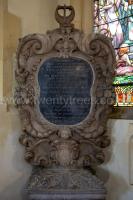
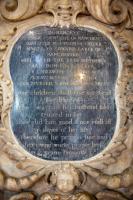

On 20th September 1659 Bishop Thomas Morton [aged 95] died at Easton Maudit at the home of Christopher Yelverton 1st Baronet whose tutor he once had been. Grave slab for Bishop Thomas Morton at the Church of St Peter and St Paul, Easton Maudit [Map]. Note his grave slab states his name as Thomas Dunelm. Dunelm is the surname traditionally taken by Bishops of Durham. Main armorial the arms of the Bishop of Durham impaled with unknown arms.
Bishop Thomas Morton: On 20th March 1564 he was born at York [Map]. In 1618 he was appointed Bishop of Norwich. In June 1632 he was appointed Bishop of Durham. Parliament deprived him of the see in 1647. After 1647 Bishop Thomas Morton became tutor to Henry Yelverton Baron Grey of Ruthyn the son of Christopher Yelverton 1st Baronet at Easton Maudit.


Samuel Pepys' Diary. 20th September 1660. At home, and at the office, and in the garden walking with both Sir Williams all the morning. After dinner to Whitehall to Mr. Dalton, and with him to my house and took away all my papers that were left in my closet, and so I have now nothing more in the house or to do with it. We called to speak with my Landlord Beale, but he was not within but spoke with the old woman, who takes it very ill that I did not let her have it, but I did give her an answer. From thence to Sir G. Downing [aged 35] and staid late there (he having sent for me to come to him), which was to tell me how my Lord Sandwich [aged 35] had disappointed him of a ship to bring over his child and goods, and made great complaint thereof; but I got him to write a letter to Lawson [aged 45], which it may be may do the business for him, I writing another also about it. While he was writing, and his Lady and I had a great deal of discourse in praise of Holland. By water to the Bridge, and so to Major Hart's lodgings in Cannon-street, who used me very kindly with wine and good discourse, particularly upon the ill method which Colonel Birch [aged 45] and the Committee use in defending of the army and the navy; promising the Parliament to save them a great deal of money, when we judge that it will cost the King more than if they had nothing to do with it, by reason of their delays and scrupulous enquirys into the account of both. So home and to bed.


On 20th September 1660 William Hamilton 1st Duke Hamilton [aged 25] was created 1st Duke Hamilton.
Samuel Pepys' Diary. 22nd September 1663. This day the King [aged 33] and Queen [aged 24] are to come to Oxford, Oxfordshire [Map]. I hear my Baroness Castlemaine [aged 22] is for certain gone to Oxford, Oxfordshire [Map] to meet him, having lain within here at home this week or two, supposed to have miscarried; but for certain is as great in favour as heretofore;1 at least Mrs. Sarah at my Lord's, who hears all from their own family, do say so.
Note 1. According to Collins, Henry Fitzroy, Baroness Castlemaine's second son by Charles II, was born on September 20th, 1663. He was the first Duke of Grafton. B.


Samuel Pepys' Diary. 20th September 1665. So I up, and after being trimmed, the first time I have been touched by a barber these twelvemonths, I think, and more, went to Sir J. Minnes's [aged 66], where I find all out of order still, they having not seen one another till by and by Sir J. Minnes and Sir W. Batten [aged 64] met, to go into my Lord Bruncker's [aged 45] coach, and so we four to Lambeth, Surrey [Map], and thence to the Duke of Albemarle [aged 56], to inform him what we have done as to the fleete, which is very little, and to receive his direction.


Samuel Pepys' Diary. 20th September 1665. But, Lord! what a sad time it is to see no boats upon the River; and grass grows all up and down White Hall court, and nobody but poor wretches in the streets! And, which is worst of all, the Duke [aged 31] showed us the number of the plague this week, brought in the last night from the Lord Mayor; that it is encreased about 600 more than the last, which is quite contrary to all our hopes and expectations, from the coldness of the late season. For the whole general number is 8,297, and of them the plague 7,165; which is more in the whole by above 50, than the biggest Bill yet; which is very grievous to us all.
Samuel Pepys' Diary. 20th September 1667. At the office doing business all the morning. At noon expected Creed to have come to dine with me and brought Mr. Sheres (the gentleman lately come from my Lord Sandwich [aged 42]) with him; but they come not, so there was a good dinner lost.
Samuel Pepys' Diary. 20th September 1668. Thence to St. Margaret's Church [Map], thinking to have seen Betty Michell, but she was not there. So back, and walked to Gray's Inn walks a while, but little company; and so over the fields to Clerkenwell, to see whether I could find that the fair Botelers do live there still, I seeing Frances the other day in a coach with Cary Dillon [aged 41], her old servant, but know not where she lives. So walked home, and there walked in the garden an hour, it being mighty pleasant weather, and so took my Lady Pen [aged 44] and Mrs. Markham home with me and sent for Mrs. Turner [aged 45], and by and by comes Sir W. Pen [aged 47] and supped with me, a good supper, part of my dinner to-day. They gone, Mrs. Turner staid an hour talking with me.... [Note. Missing text "and yo did now the first time tocar her cosa with my hand and did make her do the like con su hand to my thing, whereto neither did she show any aversion really, but a merry kind of opposition, but yo did both
Samuel Pepys' Diary. 20th September 1668. Lord's Day. Up, and to set some papers to rights in my chamber, and the like in my office, and so to church, at our own church, and heard but a dull sermon of one Dr. Hicks, who is a suitor to Mrs. Hovell, the widow of our turner of the Navy; thence home to dinner, staying till past one o'clock for Harris [aged 34], whom I invited, and to bring Shadwell the poet with him; but they come not, and so a good dinner lost, through my own folly. And so to dinner alone, having since church heard the boy read over Dryden's [aged 37] Reply to Sir R. Howard's [aged 42] Answer, about his Essay of Poesy, and a letter in answer to that; the last whereof is mighty silly, in behalf of Howard1.
Note 1. The title of the letter is as follows: "A Letter from a Gentleman to the Honourable Ed. Howard, Esq., occasioned by a Civiliz'd Epistle of Mr. Dryden's before his Second Edition of his Indian Emperour. In the Savoy, printed by Thomas Newcomb, 1668". The "Civiliz'd Epistle" was a caustic attack on Sir Robert Howard; and the Letter is signed, "Sir, your faithful and humble servant, R. F".-i.e., Richard Flecknoe.


On 20th September 1673 James, Duke of York [aged 39] and Mary of Modena Queen Consort England Scotland and Ireland [aged 14] were married. The difference in their ages was 24 years. He the son of King Charles I of England, Scotland and Ireland and Henrietta Maria Bourbon Queen Consort England.


On 20th September 1702 Karl Frederick Saxe Coburg Altenburg was born to Frederick Saxe Coburg Altenburg II Duke Saxe Gotha Altenburg [aged 26] and Magdalena Augusta Anhalt-Zerbst Duchess Saxe Gotha Altenburg at Gotha. He died aged one in 1703.
On 20th September 1724 David von Krafft [aged 69] died.
On 20th September 1733 Anne Grey [aged 27] died. She was buried at the De Grey Mausoleum, St John the Baptist Church, Flitton [Map].
Anne Grey: On 20th January 1706 she was born to Henry Grey 1st Duke Kent and Jemima Crew Marchioness Kent. On 9th January 1729 Charles Cavendish and she were married. She the daughter of Henry Grey 1st Duke Kent and Jemima Crew Marchioness Kent. He the son of William Cavendish 2nd Duke Devonshire and Rachel Russell Duchess Devonshire.


On 20th September 1751 Anne Vaughan Duchess Bolton died.
Jean de Waurin's Chronicle of England Volume 6 Books 3-6: The Wars of the Roses
Jean de Waurin was a French Chronicler, from the Artois region, who was born around 1400, and died around 1474. Waurin’s Chronicle of England, Volume 6, covering the period 1450 to 1471, from which we have selected and translated Chapters relating to the Wars of the Roses, provides a vivid, original, contemporary description of key events some of which he witnessed first-hand, some of which he was told by the key people involved with whom Waurin had a personal relationship.
Available at Amazon in eBook and Paperback format.
On 20th September 1768 Charlotte Gordon Duchess Richmond was born to Alexander Gordon 4th Duke Gordon [aged 25] and Jane Maxwell Duchess Gordon [aged 20]. She married 9th September 1789 her sixth cousin Charles Lennox 4th Duke Richmond and had issue.


On 20th September 1777 Edward Howard 9th Duke of Norfolk [aged 91] died. Earl Norwich and Baron Howard of Castle Rising extinct. His second cousin Charles [aged 56] succeeded 10th Duke Norfolk, 21st or 28th Earl Arundel, 11th Earl Surrey, 8th Earl Norfolk, 18th Baron Maltravers, 18th Baron Arundel. Catherine Brockholes Duchess Norfolk [aged 59] by marriage Duchess Norfolk. Baron Furnivall, Baron Talbot, Baron Strange Blackmere, Baron Mowbray and Baron Segrave abeyant.
On 20th September 1780 Jules 1st Duke of Polignac [aged 34] was created 1st Duke Poligac.
On 20th September 1790 Henry Frederick Stephenson was born illegitimately to Charles Howard 11th Duke of Norfolk [aged 44].


On 20th September 1799 William Lennox was born to Charles Lennox 4th Duke Richmond [aged 35] and Charlotte Gordon Duchess Richmond [aged 31]. He a great x 3 grandson of King Charles II of England Scotland and Ireland.
On 20th September 1814 George Augustus Frederick Murray 6th Duke Atholl was born to James Murray 1st Baron Glenlyon [aged 32] and Emily Frances Percy Baroness Goldolphin Helston [aged 26] at Great Cumberland Place.
On 20th September 1822 Georgiana Elizabeth Mundy Duchess Newcastle under Lyne [aged 33] died from childbirth. She had given birth to twins one of whom was stillborn, one survived thirteen days. Her 12th and 13th child. In 1823 her husband Henry [aged 37], the 4th Duke, commissioned Robert Smirke, a celebrated architect, to design a Mausoleum at Milton. The building was consecrated in 1833 by the Archbishop of York and given the dedication of All Saints.
Monument in Milton Mausoleum, Markham Clinton [Map] sculpted by Richard Westmacott [aged 47].
Georgiana Elizabeth Mundy Duchess Newcastle under Lyne: On 1st June 1789 she was born to Edward Miller Mundy. On 18th July 1807 Henry Pelham-Clinton 4th Duke Newcastle-under-Lyne and she were married in Lambeth Palace [Map]. She by marriage Duchess Newcastle under Lyme. He the son of Thomas Pelham-Clinton 3rd Duke Newcastle-under-Lyne and Anna Maria Stanhope Countess Lincoln.


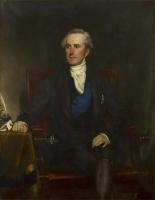

On 20th September 1843 Archibald John Primrose [aged 33] and Catherine Lucy Wilhelmina Stanhope Duchess of Cleveland [aged 24] were married. She the daughter of Philip Henry Stanhope 4th Earl Stanhope [aged 61] and Catherine Lucy Smith Countess Stanhope. He the son of Archibald Primrose 4th Earl Rosebery [aged 59] and Harriett Bouverie Countess Camden.
On 20th September 1854 Charles Pierrepont Darcy Lane-Fox [aged 24] was wounded, Poulett George Henry Somerset [aged 32] fought.
Major-General John Douglas [aged 37] commanded the 79th Regiment of Foot.
William Frederick Waldegrave [aged 38] died from wounds received.
Henry Hugh Manvers Percy [aged 37] was shot through the arm.
General George Augustus Frederick Paget [aged 36], Godfrey Morgan 1st Viscount Tredegar [aged 23] and Hedworth Jolliffe 2nd Baron Hylton [aged 25] fought.
Arthur Williams-Wynn [aged 35], Captain of the 23rd Royal Welsh Fusiliers, was killed.


On 20th September 1854 Captain William Monck [aged 31] was killed at the Battle of Alma.
On 20th September 1856 Frederick Grand Duke of Baden [aged 30] and Princess Louise of Prussia [aged 17] were married. She the daughter of William I King Prussia [aged 59]. They were fourth cousins. He a great x 3 grandson of King George II of Great Britain and Ireland.

20th September 1858. Dante Gabriel Rossetti [aged 30]. Drawing of Louisa Ruth Herbert [aged 27].
Life of Isambard Kingdom Brunel Chapter 17. The funeral was on September 20 [1859], at the Kensal Green Cemetery [Map].
Along the road leading to the chapel many hundreds of his private and professional friends, his neighbours among the tradespeople of Westminster, the Council of the Institution of Civil Engineers, and the servants of the Great Western Railway Company, had assembled, and, with his family, followed his body to its place of burial, in the grave of his father and mother1.
Note 1. A few weeks after Mr, Brunel's death, a meeting of his friends was held, when it was determined to raise some memorial to him. A statue was made by the late Baron Marochetti [aged 54], and a site for it promised by the First Commissioner of Works; but it has not yet been erected.
Mr. Brunel's family, by the permission of the Dean of Westminster, have placed a memorial window in the north aisle of the nave of Westminster Abbey. Along the bottom of the window (which consists of two lights, each 23 feet 6 inches high and 4 feet wide, surmounted by a quatrefoil opening, 6 feet 6 inches across) is the Inscription, 'IN MEMORY OF ISAMBARD KINGDOM BRUNEL, CIVIL ENGINEER. BORN APRIL 9, 1806. DEPARTED THIS LIFE, SEPTEMBER 15, 1859.' Over this are four allegorical figures (two in each light): Fortitude, Justice, Faith, and Charity. The upper part of the window consists of six panels, divided by a pattern work of lilies and pomegranates. The panels contain subjects from the history of the Temple. The three subjects in the western light represent scenes from the Old Testament—viz. the Dedication of the Temple by Solomon, the Finding of the Book of the Law by Hilkiah, and the Laying the Foundations of the Second Temple. The subjects in the eastern light are from the New Testament—viz. Simeon Blessing the Infant Saviour, Christ Disputing with the Doctors, and The Disciples pointing out to Christ the Buildings of the Temple. In the heads of each light are angels kneeling, and in the quatrefoil is a representation of Our Lord in Glory, surrounded by angels.
The work was placed in the hands of Mr. R. Norman Shaw, architect, who prepared the general design, arranged the scale of the various figures, and designed the ornamental pattern work. The figure subjects were drawn by Mr. Henry Holiday, and the whole design was executed in glass by Messrs. Heaton, Butler, & Bayne.
The Deeds of the Dukes of Normandy
The Gesta Normannorum Ducum [The Deeds of the Dukes of Normandy] is a landmark medieval chronicle tracing the rise and fall of the Norman dynasty from its early roots through the pivotal events surrounding the Norman Conquest of England. Originally penned in Latin by the monk William of Jumièges shortly before 1060 and later expanded at the behest of William the Conqueror, the work chronicles the deeds, politics, battles, and leadership of the Norman dukes, especially William’s own claim to the English throne. The narrative combines earlier historical sources with firsthand information and oral testimony to present an authoritative account of Normandy’s transformation from a Viking settlement into one of medieval Europe’s most powerful realms. William’s history emphasizes the legitimacy, military prowess, and governance of the Norman line, framing their expansion, including the conquest of England, as both divinely sanctioned and noble in purpose. Later chroniclers such as Orderic Vitalis and Robert of Torigni continued the history, extending the coverage into the 12th century, providing broader context on ducal rule and its impact. Today this classic work remains a foundational source for understanding Norman identity, medieval statesmanship, and the historical forces that reshaped England and Western Europe between 800AD and 1100AD.
Available at Amazon in eBook and Paperback format.
On 20th September 1915 Lieutenant Noel Henry Cragg [aged 22] was killed in action by shell fire at Nieuport, Belgium while in charge of a naval gun. He was buried at Dunkirk. While serving on H.M.S. King Edward VII he was publicly thanked by Admiral Sir Lewis Bayley and noted by the Admiralty for saving life at sea. As Sub-Lieutenant on H.M.S. Hind T.B.D. [Torpedo Boat Destroyer] he took part in the Battle of Heligoland Bight and the Cuxhaven Raid. He was mentioned in Sir John French's despatches for gallant and distinghuished conduct in the field.

On 20th September 1929 Hedworth Lambton aka Meux [aged 73] died. The wealth he inherited from Valerie Susan Langdon Lady Meux was inherited by his five step-daughters, children of his wife Mildred Cecilia Sturt Lady Montagu [aged 60]: Sibyl Louise Beatrix Cadogan [aged 36], Edith Mary Cadogan Baroness Hillingdon [aged 34], Cynthia Hilda Evelyn Cadogan [aged 33], Alexandra Mary Cadogan Duchess of Marlborough [aged 29] and Victoria Laura Cadogan.

On 20th September 1936 Johanna Hesse Darmstadt was born to Georg Donatus Hesse Darmstadt Grand Duke [aged 29] and Cecilie Glücksburg Grand Duchess [aged 25]. She a great x 2 granddaughter of Queen Victoria of the United Kingdom. Coefficient of inbreeding 3.83%. She died aged two in 1939.
On 20th September 1944 Lieutenant Richard Thomas Ward [aged 22] was killed in action.
On 20th September 1950 Tessa Fitzalan-Howard was born to Miles Stapleton Fitzalan Howard 17th Duke of Norfolk [aged 35] and Anne Constable-Maxwell Duchess Norfolk [aged 23]. She married 1971 her fifth cousin Roderick Balfour 5th Earl Balfour.
On 20th September 1973 Charles d'Orville Pilkington Jackson [aged 85] died.
On 20th September 1486, eight months exactly after his parents married, Prince Arthur Tudor was born to King Henry VII of England and Ireland [aged 29] and Elizabeth York Queen Consort England [aged 20] at Winchester Priory [Map]. he was created Duke of Cornwall at birth. He married 14th November 1501 his half third cousin once removed Catherine of Aragon Queen Consort England, daughter of Ferdinand II King Aragon and Isabella Queen Castile.
On 20th September 1638 Maria Theresa of Spain Queen Consort France was born to Philip IV King Spain [aged 33] and Elisabeth Bourbon Queen Consort Spain [aged 35]. Coefficient of inbreeding 4.39%. She married 1660 her double first cousin Louis "Sun King" XIV King France, son of Louis XIII King France and Anne of Austria Spain Queen Consort France, and had issue.
On 20th September 1649 Carr Scrope 1st Baronet was born to Adrian Scrope [aged 33] and Mary Carr.
On 20th September 1702 Karl Frederick Saxe Coburg Altenburg was born to Frederick Saxe Coburg Altenburg II Duke Saxe Gotha Altenburg [aged 26] and Magdalena Augusta Anhalt-Zerbst Duchess Saxe Gotha Altenburg at Gotha. He died aged one in 1703.
On 20th September 1726 Robert Brudenell was born to George Brudenell 3rd Earl Cardigan [aged 40] and Elizabeth Bruce 3rd Countess Cardigan [aged 37]. He married 27th January 1759 his half fourth cousin twice removed Anne Bishopp, daughter of Cecil Bishopp 6th Baronet and Anne Boscawen Lady Bishopp, and had issue.
On 20th September 1742 Anne Chaloner Baroness Harewood was born to William Chaloner [aged 28]. She married 12th May 1761 Edward Lascelles 1st Earl Harewood and had issue.
Henrici Quinti, Angliæ Regis, Gesta, is a first-hand account of the Agincourt Campaign, and subsequent events to his death in 1422. The author of the first part was a Chaplain in King Henry's retinue who was present from King Henry's departure at Southampton in 1415, at the siege of Harfleur, the battle of Agincourt, and the celebrations on King Henry's return to London. The second part, by another writer, relates the events that took place including the negotiations at Troye, Henry's marriage and his death in 1422.
Available at Amazon in eBook and Paperback format.
On 20th September 1768 Charlotte Gordon Duchess Richmond was born to Alexander Gordon 4th Duke Gordon [aged 25] and Jane Maxwell Duchess Gordon [aged 20]. She married 9th September 1789 her sixth cousin Charles Lennox 4th Duke Richmond and had issue.
On 20th September 1778 James Mann 5th Earl Cornwallis was born to James Cornwallis 4th Earl Cornwallis [aged 35] and Catherine Mann.
On 20th September 1783 Juliana Butler Countess Belmore was born to Henry Butler 2nd Earl Carrick [aged 37]. She married 20th October 1800 her first cousin Somerset Lowry-Corry 2nd Earl Belmore, son of Armar Lowry-Corry 1st Earl Belmore and Margaret Butler, and had issue.
On 20th September 1787 Charlotte Mary Nelson was born to Reverend William Nelson 1st Earl Nelson [aged 30] and Sarah Yonge Countess Nelson [aged 38]. She married 3rd July 1810 Samuel Hood 2nd Baron Bridport, son of Henry Hood 2nd Viscount Hood and Jane Wheler Viscountess Hood, and had issue.
On 20th September 1790 Henry Frederick Stephenson was born illegitimately to Charles Howard 11th Duke of Norfolk [aged 44].
On 20th September 1799 William Lennox was born to Charles Lennox 4th Duke Richmond [aged 35] and Charlotte Gordon Duchess Richmond [aged 31]. He a great x 3 grandson of King Charles II of England Scotland and Ireland.
On 20th September 1804 George Lewen Glyn 4th Baronet was born to George Glynn 2nd Baronet [aged 65]. He married 5th May 1829 his first cousin once removed Henrietta Amelia Glyn Lady Glyn and had issue.
On 20th September 1805 William Williams was born to John Williams 1st Baronet [aged 43] and Margaret Williams Lady Williams [aged 37].
On 20th September 1814 George Augustus Frederick Murray 6th Duke Atholl was born to James Murray 1st Baron Glenlyon [aged 32] and Emily Frances Percy Baroness Goldolphin Helston [aged 26] at Great Cumberland Place.
On 20th September 1834 William Vincent 12th Baronet was born to Frederick Vincent 11th Baronet [aged 36] and Louisa Norris [aged 32]. He married 24th May 1860 Margaret Erskine and had issue.
The True Chronicles of Jean le Bel Volume 1 Chapters 1-60 1307-1342
The True Chronicles of Jean le Bel offer one of the most vivid and immediate accounts of 14th-century Europe, written by a knight who lived through the events he describes, and experienced some of them first hand. Covering the early decades of the Hundred Years’ War, this remarkable chronicle follows the campaigns of Edward III of England, the politics of France and the Low Countries, and the shifting alliances that shaped medieval warfare. Unlike later historians, Jean le Bel writes with a strong sense of eyewitness authenticity, drawing on personal experience and the testimony of fellow soldiers. His narrative captures not only battles and sieges, but also the realities of military life, diplomacy, and the ideals of chivalry that governed noble society. A key source for Jean Froissart, Le Bel’s chronicle stands on its own as a compelling and insightful work, at once historical record and literary achievement. This translation builds on the 1905 edition published in French by Jules Viard, adding extensive translations from other sources Rymer's Fœdera, the Chronicles of Adam Murimuth, William Nangis, Walter of Guisborough, a Bourgeois of Valenciennes, Geoffrey le Baker of Swinbroke and Richard Lescot to enrich the original text and Viard's notes.
Available at Amazon in eBook and Paperback format.
On 20th September 1853 John Savile Lumley-Savile 2nd Baron Savile was born to Reverend Frederick Savile-Lumley [aged 34] and Mary Jenkins. He married (1) 3rd November 1894 Gertrude Violet Webster-Wedderburn (2) 1st February 1916 Esmé Grace Virginia Wolton Baroness Savile and had issue.
On 20th September 1875 Frederick Farrand Trollope 14th Baronet was born to Frederick James Anthony Trollope [aged 27].
On 20th September 1889 Trevor Wood Wheler 13th Baronet was born to Edward Wheler 12th Baronet [aged 31] and Mary Leontine Wood Lady Wheler.
On 20th September 1893 Geoffrey Frederick Neill Palmer 11th Baronet was born to Edward Geoffrey Broadley Palmer 10th Baronet [aged 29].
On 20th September 1936 Johanna Hesse Darmstadt was born to Georg Donatus Hesse Darmstadt Grand Duke [aged 29] and Cecilie Glücksburg Grand Duchess [aged 25]. She a great x 2 granddaughter of Queen Victoria of the United Kingdom. Coefficient of inbreeding 3.83%. She died aged two in 1939.
On 20th September 1939 Anthony FitzHardinge Gueterbock 18th Baron Berkeley was born to Brigadier Ernest Adolphus Leopold Gueterbock of The Plough in Terrick in Buckinghamshire and Cynthia Ella Foley [aged 30].
On 20th September 1950 Tessa Fitzalan-Howard was born to Miles Stapleton Fitzalan Howard 17th Duke of Norfolk [aged 35] and Anne Constable-Maxwell Duchess Norfolk [aged 23]. She married 1971 her fifth cousin Roderick Balfour 5th Earl Balfour.
On 20th September 1951 David Moreton 7th Earl of Ducie was born to Basil Howard Moreton 6th Earl of Ducie [aged 34].
On 20th September 1293 Henry of Bar III Count of Bar [aged 34] and Eleanor Plantagenet [aged 24] were married. She the daughter of King Edward I of England [aged 54] and Eleanor of Castile Queen Consort England. He the son of Theobald of Bar II Count of Bar and Jeanne Toucy Countess Bar. They were fourth cousin once removed. He a great x 5 grandson of King William "Conqueror" I of England.
On 20th September 1301 Roger Mortimer 1st Earl March [aged 14] and Joan Geneville Baroness Mortimer 2nd Baroness Geneville [aged 15] were married. They were third cousin once removed. He a great x 3 grandson of King John of England.
On 20th September 1650 Weston Ridgeway 3rd Earl Londonderry and Frances Temple were married at St Ann Blackfriars Church.

Anne Boleyn. Her Life as told by Lancelot de Carle's 1536 Letter.
In 1536, two weeks after the execution of Anne Boleyn, her brother George and four others, Lancelot du Carle, wrote an extraordinary letter that described Anne's life, and her trial and execution, to which he was a witness. This book presents a new translation of that letter, with additional material from other contemporary sources such as Letters, Hall's and Wriothesley's Chronicles, the pamphlets of Wynkyn the Worde, the Memorial of George Constantyne, the Portuguese Letter and the Baga de Secrets, all of which are provided in Appendices.
Available at Amazon in eBook and Paperback format.
On 20th September 1673 James, Duke of York [aged 39] and Mary of Modena Queen Consort England Scotland and Ireland [aged 14] were married. The difference in their ages was 24 years. He the son of King Charles I of England, Scotland and Ireland and Henrietta Maria Bourbon Queen Consort England.

On 20th September 1738 William Murray 1st Earl Mansfield [aged 33] and Elizabeth Finch Countess Mansfield [aged 34] were married. She by marriage Countess Mansfield in Nottinghamshire. She the daughter of Daniel Finch 2nd Earl Nottingham 7th Earl Winchilsea and Anne Hatton Countess Nottingham and Winchelsea.
On 20th September 1775 Richard Worsley 7th Baronet [aged 24] and Seymour Dorothy Fleming [aged 16] were married. She brought £52,000 to the marriage.


On 20th September 1783 Arthur Annesley 1st Earl Mountnorris [aged 39] and Sarah Cavendish Countess Mountnorris were married. She by marriage Viscountess Valentia. He the son of Richard Annesley 6th Earl Anglesey and Juliana Donovan Countess Anglesey.
On 20th September 1803 Henry Wellesley 1st Baron Cowley [aged 30] and Charlotte Cadogan Marchioness Anglesey [aged 22] were married. She the daughter of Charles Sloane Cadogan 1st Earl Cadogan [aged 74] and Mary Churchill Countess Cadogan [aged 45]. He the son of Garrett Wellesley 1st Earl Mornington and Anne Hill Countess Mornington [aged 61].
On 20th September 1810 Reynold Abel Alleyne 2nd Baronet [aged 21] and Rebecca Alton Lady Alleyne [aged 16] were married at St Philip, Barbados. She by marriage Lady Alleyne of Four Hills in Barbados.
On 20th September 1843 Archibald John Primrose [aged 33] and Catherine Lucy Wilhelmina Stanhope Duchess of Cleveland [aged 24] were married. She the daughter of Philip Henry Stanhope 4th Earl Stanhope [aged 61] and Catherine Lucy Smith Countess Stanhope. He the son of Archibald Primrose 4th Earl Rosebery [aged 59] and Harriett Bouverie Countess Camden.
On 20th September 1848 William Harry Hay 19th Earl Erroll [aged 25] and Eliza Amelia Gore Countess Erroll [aged 19] were married in Montreal. She by marriage Countess Erroll. He the son of William Hay 18th Earl Erroll and Elizabeth Fitz-Clarence Countess Erroll [aged 47].
On 20th September 1856 Frederick Grand Duke of Baden [aged 30] and Princess Louise of Prussia [aged 17] were married. She the daughter of William I King Prussia [aged 59]. They were fourth cousins. He a great x 3 grandson of King George II of Great Britain and Ireland.
On 20th September 1871 William Henry Paulett 6th Earl Paulett [aged 43] and Emma Sophia Johnson Countess Poulett were married six weeks after the death of his first wife Elizabeth Lavinia Newman Countess Poulett. She by marriage Countess Poulett.
Abbot John Whethamstede’s Chronicle of the Abbey of St Albans
Abbot John Whethamstede's Register aka Chronicle of his second term at the Abbey of St Albans, 1451-1461, is a remarkable text that describes his first-hand experience of the beginning of the Wars of the Roses including the First and Second Battles of St Albans, 1455 and 1461, respectively, their cause, and their consequences, not least on the Abbey itself. His text also includes Loveday, Blore Heath, Northampton, the Act of Accord, Wakefield, and Towton, and ends with the Coronation of King Edward IV. In addition to the events of the Wars of the Roses, Abbot John, or his scribes who wrote the Chronicle, include details in the life of the Abbey such as charters, letters, land exchanges, visits by legates, and disputes, which provide a rich insight into the day-to-day life of the Abbey, and the challenges faced by its Abbot.
Available at Amazon in eBook and Paperback format.
On 20th September 1949 John Douglas 21st Earl of Morton [aged 22] and Mary Sheila Gibbs Countess Morton [aged 22] were married.
On 20th September 1307 Joan Munchensi Countess Pembroke [aged 77] died. Her son Aymer [aged 32] succeeded 2nd Earl Pembroke.
On 20th September 1384 Louis Valois Anjou I Duke Anjou [aged 45] died. His son Louis [aged 6] succeeded Louis II Duke Anjou.
On 20th September 1398 Thomas Boteler 4th Baron Sudeley [aged 39] died at Bewsey, Lancashire. His son John [aged 13] succeeded 5th Baron Sudeley.
On 20th September 1400 Maud Mohun Baroness Strange Knockin [aged 43] died.
On 20th September 1404 Peter Valois II Count Alençon [aged 64] died.
On 20th September 1432 Anne Stafford Duchess Exeter died.
On 20th September 1440 Frederick I Elector Brandenburg [aged 68] died.
On 20th September 1480 Anne Neville Duchess Buckingham [aged 72] died.

On 20th September 1492 Anne Beauchamp 16th Countess Warwick [aged 66] died. Arguably, Her grandson Edward [aged 17] succeeded 17th Earl Warwick. His succession was unaffected by his father's attainder since the Earldom was held by his mother.
Her two daughters Isabel Neville Duchess Clarence and Anne Neville Queen Consort England had both predeceased her. Her remaining descendants were Isabel's children Margaret [aged 19] and Edward.
The succession is further complicated by Ann Beauchamp having been declared legally dead in 1471 at which time the Earldom was, arguably, abeyant between her two daughters.
Both Margaret and Edward were executed by the Tudors, in 1541 and 1499, respectively.
Chronicle of Abbot Ralph of Coggeshall
The Chronicle of Abbot Ralph of Coggeshall (Chronicon Anglicanum) is an indispensable medieval history that brings to life centuries of English and European affairs through the eyes of a learned Cistercian monk. Ralph of Coggeshall, abbot of the Abbey of Coggeshall in Essex in the early 13th century, continued and expanded his community’s chronicle, documenting events from the Norman Conquest of 1066 into the tumultuous reign of King Henry III. Blending eyewitness testimony, careful compilation, and the monastic commitment to record-keeping, this chronicle offers a rare narrative of political intrigue, royal power struggles, and social upheaval in England and beyond. Ralph’s work captures the reigns of pivotal figures such as Richard I and King John, providing invaluable insights into their characters, decisions, and the forces that shaped medieval rule. More than a simple annal, Chronicon Anglicanum conveys the texture of medieval life and governance, making it a rich source for scholars and readers fascinated by English history, monastic authorship, and the shaping of the medieval world.
Available at Amazon in eBook and Paperback format.
On 20th September 1492 George Neville 4th and 2nd Baron Abergavenny [aged 52] died. His son George [aged 23] succeeded 5th Baron Abergavenny, 3rd Baron Abergavenny.
On 20th September 1501 Thomas Grey 1st Marquess Dorset [aged 46] died. His son Thomas [aged 24] succeeded 2nd Marquess Dorset, 2nd Earl Huntingdon, 8th Baron Ferrers of Groby. Eleanor St John Marchioness Dorset by marriage Marchioness Dorset.
On 20th September 1543 Thomas Manners 1st Earl of Rutland [aged 51] died. He was buried in the Chancel of St Mary the Virgin Church, Bottesford, Leicestershire [Map]. His son Henry [aged 16] succeeded 2nd Earl of Rutland, 13th Baron Ros Helmsley. Margaret Neville Countess Rutland by marriage Countess of Rutland.
On 20th September 1580 Christina Stewart 4th Countess Buchan [aged 32] died.
On 20th September 1615 Samson Lennard Baron Dacre Gilsland [aged 71] died.
On 20th September 1643 Henry Spencer 1st Earl of Sunderland [aged 22] died. His son Robert [aged 2] succeeded 2nd Earl of Sunderland, 4th Baron Spencer Wormleighton.
On 20th September 1643 Major Thomas Eure [aged 36] died. His brother William [aged 35] succeeded 14th Baron Scrope of Bolton.
On 20th September 1643 the First Battle of Newbury was fought at Newbury, Berkshire [Map] with King Charles I of England, Scotland and Ireland [aged 42] commanding the Royalist army and Robert Devereux 3rd Earl Essex [aged 52] commanding the victorious Parliamentary army. For King Charles I of England, Scotland and Ireland John Byron 1st Baron Byron [aged 44] fought with distinction.
Henry Bertie was killed.
Robert Dormer 1st Earl Carnarvon [aged 33] was killed. His son Charles [aged 10] succeeded 2nd Earl Carnarvon, 3rd Baron Dormer of Wyng in Buckinghamshire, 3rd Baronet Dormer of Wyng in Buckinghamshire.
William Villiers 2nd Viscount Grandison [aged 29] was killed. His brother John succeeded 3rd Viscount Grandison.
Edward Villiers [aged 23] fought.
Lucius Carey 2nd Viscount Falkland [aged 33] was killed. His son Lucius [aged 11] succeeded 3rd Viscount Falkland.
Richard Neville [aged 28] served under the Earl Carnarvon. Carnarvon was killed and Neville took up the command as a Colonel of Horse.
Major General Charles Fleetwood [aged 25] was wounded.
On 20th September 1643 William Brooke [aged 44] died. Baron Cobham abeyant between his four daughters and co-heirs
On 20th September 1658 Essex Cheeke Countess Manchester died. Monument at St Andrew's Church, Kimbolton [Map].
Essex Cheeke Countess Manchester: she was born to Thomas Cheeke and Essex Rich. On 20th December 1642 Edward Montagu 2nd Earl Manchester and she were married. She by marriage Countess Manchester. He the son of Henry Montagu 1st Earl Manchester and Catherine Spencer.
On 20th September 1659 Bishop Thomas Morton [aged 95] died at Easton Maudit at the home of Christopher Yelverton 1st Baronet whose tutor he once had been. Grave slab for Bishop Thomas Morton at the Church of St Peter and St Paul, Easton Maudit [Map]. Note his grave slab states his name as Thomas Dunelm. Dunelm is the surname traditionally taken by Bishops of Durham. Main armorial the arms of the Bishop of Durham impaled with unknown arms.
Bishop Thomas Morton: On 20th March 1564 he was born at York [Map]. In 1618 he was appointed Bishop of Norwich. In June 1632 he was appointed Bishop of Durham. Parliament deprived him of the see in 1647. After 1647 Bishop Thomas Morton became tutor to Henry Yelverton Baron Grey of Ruthyn the son of Christopher Yelverton 1st Baronet at Easton Maudit.
Jean de Waurin's Chronicle of England Volume 6 Books 3-6: The Wars of the Roses
Jean de Waurin was a French Chronicler, from the Artois region, who was born around 1400, and died around 1474. Waurin’s Chronicle of England, Volume 6, covering the period 1450 to 1471, from which we have selected and translated Chapters relating to the Wars of the Roses, provides a vivid, original, contemporary description of key events some of which he witnessed first-hand, some of which he was told by the key people involved with whom Waurin had a personal relationship.
Available at Amazon in eBook and Paperback format.
On 20th September 1660 Bishop John Gauden died.
On 20th September 1663 Henry Vaux 5th Baron Vaux Harrowden [aged 72] died unmarried. Baron Vaux Harrowden abeyant between his sisters and their issue. In 1838 His great x 6 nephew George abeyance terminated 6th Baron Vaux Harrowden. Caroline Vansittart Baroness Vaux by marriage Baroness Vaux Harrowden.
On 20th September 1688 Elizabeth Leigh Viscountess Tracy died. She was buried at Toddington, Gloucestershire.
On 20th September 1705 Sarah Dashwood Baroness Brooke [aged 59] died.
On 20th September 1724 David von Krafft [aged 69] died.
On 20th September 1726 Thomas Mainwaring 3rd Baronet [aged 45] died. His nephew Henry succeeded 4th Baronet Mainwaring of Over Peover.
On 20th September 1751 Anne Vaughan Duchess Bolton died.
On 20th September 1777 Edward Howard 9th Duke of Norfolk [aged 91] died. Earl Norwich and Baron Howard of Castle Rising extinct. His second cousin Charles [aged 56] succeeded 10th Duke Norfolk, 21st or 28th Earl Arundel, 11th Earl Surrey, 8th Earl Norfolk, 18th Baron Maltravers, 18th Baron Arundel. Catherine Brockholes Duchess Norfolk [aged 59] by marriage Duchess Norfolk. Baron Furnivall, Baron Talbot, Baron Strange Blackmere, Baron Mowbray and Baron Segrave abeyant.
On 20th September 1797 Reverend Thomas Edwardes 7th Baronet [aged 67] died. He was buried at St Mark's Church, Frodesley where his memorial has the incription "JULIANA, wife of the Revd Thos EDWARDS Rector, was entombed beneath, July 16th 1778, Aged 56, Also the remains, of the Revd Sr Thos EDWARDES Bart, Rector, were interred 20th Septr 1797, Aged 70". His son John [aged 33] succeeded 8th Baronet Edwardes of Shrewsbury in Shropshire. Frances Gask Lady Edwardes [aged 32] by marriage Lady Edwardes of Shrewsbury in Shropshire.
On 20th September 1806 Matthew Blakiston 2nd Baronet [aged 45] died. His son Matthew [aged 23] succeeded 3rd Baronet Blakiston of the City of London.
On 20th September 1822 Georgiana Elizabeth Mundy Duchess Newcastle under Lyne [aged 33] died from childbirth. She had given birth to twins one of whom was stillborn, one survived thirteen days. Her 12th and 13th child. In 1823 her husband Henry [aged 37], the 4th Duke, commissioned Robert Smirke, a celebrated architect, to design a Mausoleum at Milton. The building was consecrated in 1833 by the Archbishop of York and given the dedication of All Saints.
Monument in Milton Mausoleum, Markham Clinton [Map] sculpted by Richard Westmacott [aged 47].
Georgiana Elizabeth Mundy Duchess Newcastle under Lyne: On 1st June 1789 she was born to Edward Miller Mundy. On 18th July 1807 Henry Pelham-Clinton 4th Duke Newcastle-under-Lyne and she were married in Lambeth Palace [Map]. She by marriage Duchess Newcastle under Lyme. He the son of Thomas Pelham-Clinton 3rd Duke Newcastle-under-Lyne and Anna Maria Stanhope Countess Lincoln.
On 20th September 1844 Lucy Elizabeth Byng Countess Bradford [aged 77] died.
On 20th September 1848 Henry Monck 1st Earl of Rathdowne [aged 63] died without male issue. Earl Rathdowne extinct. His brother Charles [aged 57] succeeded 2nd Viscount Monck.
On 20th September 1854 Charles Pierrepont Darcy Lane-Fox [aged 24] was wounded, Poulett George Henry Somerset [aged 32] fought.
Major-General John Douglas [aged 37] commanded the 79th Regiment of Foot.
William Frederick Waldegrave [aged 38] died from wounds received.
Henry Hugh Manvers Percy [aged 37] was shot through the arm.
General George Augustus Frederick Paget [aged 36], Godfrey Morgan 1st Viscount Tredegar [aged 23] and Hedworth Jolliffe 2nd Baron Hylton [aged 25] fought.
Arthur Williams-Wynn [aged 35], Captain of the 23rd Royal Welsh Fusiliers, was killed.
The True Chronicles of Jean le Bel Volume 1 Chapters 1-60 1307-1342
The True Chronicles of Jean le Bel offer one of the most vivid and immediate accounts of 14th-century Europe, written by a knight who lived through the events he describes, and experienced some of them first hand. Covering the early decades of the Hundred Years’ War, this remarkable chronicle follows the campaigns of Edward III of England, the politics of France and the Low Countries, and the shifting alliances that shaped medieval warfare. Unlike later historians, Jean le Bel writes with a strong sense of eyewitness authenticity, drawing on personal experience and the testimony of fellow soldiers. His narrative captures not only battles and sieges, but also the realities of military life, diplomacy, and the ideals of chivalry that governed noble society. A key source for Jean Froissart, Le Bel’s chronicle stands on its own as a compelling and insightful work, at once historical record and literary achievement. This translation builds on the 1905 edition published in French by Jules Viard, adding extensive translations from other sources Rymer's Fœdera, the Chronicles of Adam Murimuth, William Nangis, Walter of Guisborough, a Bourgeois of Valenciennes, Geoffrey le Baker of Swinbroke and Richard Lescot to enrich the original text and Viard's notes.
Available at Amazon in eBook and Paperback format.
On 20th September 1884 William Compton Domvile 3rd Baronet [aged 59] died. His son Compton [aged 27] succeeded 4th Baronet Domvile of Templeogue and Santry House in the County of Dublin.
On 20th September 1905 William Frederick Williams 4th Baronet [aged 19] died unmarried. His brother Frederick [aged 17] succeeded 5th Baronet Williams of Tregullow in Cornwall.
On 20th September 1929 Hedworth Lambton aka Meux [aged 73] died. The wealth he inherited from Valerie Susan Langdon Lady Meux was inherited by his five step-daughters, children of his wife Mildred Cecilia Sturt Lady Montagu [aged 60]: Sibyl Louise Beatrix Cadogan [aged 36], Edith Mary Cadogan Baroness Hillingdon [aged 34], Cynthia Hilda Evelyn Cadogan [aged 33], Alexandra Mary Cadogan Duchess of Marlborough [aged 29] and Victoria Laura Cadogan.
On 20th September 1943 Valentine Browne 6th Earl of Kenmare [aged 52] died. His brother Gerald [aged 46] succeeded Earl Kenmare, 7th Viscount Kenmare.
On 20th September 1973 Charles d'Orville Pilkington Jackson [aged 85] died.
On 20th September 1975 George Parker 7th Earl Macclesfield [aged 87] died. His son George [aged 61] succeeded 8th Earl Macclesfield. Valerie Mansfield Countess Macclesfield [aged 56] by marriage Countess Macclesfield.
On 20th September 2015 John Parker 6th Earl Morley [aged 92] died. His son Mark [aged 59] succeeded 7th Earl Morley, 7th Viscount Boringdon of North Malton in Devon, 8th Baron Boringdon.
On 20th September 2024 Henry Feilden 7th Baronet [aged 72] died. His son William [aged 41] succeeded 8th Baronet Feilden of Febiscowles in Lancashire.


