

22 Aug is in August.
1138 Battle of the Standard aka Northallerton
1358 Death of Isabella of France
1553 Trial and Execution of Lady Jane Grey's Supporters
On 22nd August 851 Lambert Guideschi II Count Nantes fought at Grand Fougeray during the Battle of Jengland.
On 22nd August 1036 Ramiro Sánchez I King Aragon [aged 29] and Gisberga or Ermesinda Bigorre Queen Consort Aragon [aged 21] were married. He the illegitmate son of Sancho "Great" III King Pamplona and Sancha Aibar.
On 22nd August 1138 an English army commanded by William of Blois 1st Earl Albemarle 1st Earl York [aged 37], William "The Younger" Peverell [aged 58] and Robert III Stuteville defeated a Scottish army led by King David I of Scotland [aged 54] and his son Henry Dunkeld 3rd Earl Huntingdon 1st Earl of Northumbria [aged 24]. The battle was fought at Cowton Moor, Northallerton. The name "Battle of the Standard" refers to the standard i.e. mast, pole, mounted on a cart on which the banners of the Bishops of Durham, York, Beverly and Ripon which were flown.
Robert III Stuteville: he was born to Robert Stuteville at Estouteville. Before 1186 Robert III Stuteville and Helewise de Murdac were married. In 1186 Robert III Stuteville died. Before 1186 Robert III Stuteville and Sibilla Valognes were married.


Anglo-Saxon Chronicle. 22nd August 1138. In this year came David, King of Scotland [aged 54], with an immense army to this land. He was ambitious to win this land; but against him came William, Earl of Albemarle [aged 37], to whom the king [aged 44] had committed York, and other borderers, with few men, and fought against them, and routed the king at the Standard, and slew very many of his gang.
On 22nd August 1138 Walter Gaunt [aged 58] died. Possibly at the Battle of the Standard aka Northallerton?
Chronicon ex Chronicis by Florence and John of Worcester. Irruption of the Scots, and Battle of the Standard
[22nd August 1138] During these events, David, king of Scotland, made a third irruption from the borders of his kingdom, with large bands both of horse and foot, and began to set on fire farms, towns, and castles, on the confines of Northumbria, and lay waste nearly all the country. But as he threatened at last to pursue his inroad as far as York and the Humber, Thurstan, archbishop of York, had a conference with the Yorkshiremen, and prevailed on them all, with one consent, to take the oath of fealty to king Stephen, and resist the king of Scots. David, however, was still more incensed at this, and rejecting all advice to the contrary, and reaching the river Tees on the octave of the Assumption of St. Mary [22nd August], which happened on a Monday, he determined to surprise our troops, there being a thick fog in the morning of that day. Hoping, in consequence, to come upon us unawares, he left many vills untouched, and would not suffer his men to set fire to any place, as they usually did. Meanwhile, our troops being warned by a squire, though somewhat late so that they were nearly taken by surprise, armed themselves, and drew up in order of battle with the utmost despatch, sending out archers in front, by whom the Scots were severely galled.
Then the king's barons marched with the knights, having all dismounted and stationed themselves in the first rank, and thus fought hand-in-hand with the enemy. The conflict was ended, and victory secured at the very first onset, for the Scots gave way, and either fell or fled in the greatest alarm. Our men, however, being on foot, and having caused all their horses to be led to some distance, were unable to continue the pursuit long, otherwise they would have taken or put to the sword the king himself, with his son, and all his immediate attendants. Of his army, nearly ten thousand men fell in different places, and as many as fifty persons of rank were made prisoners. The vanquished king himself escaped by flight, overwhelmed with terror and shame. His chancellor, William Comyn, was taken by the bishop of Durham; but being set at liberty, he gave thanks to God, heartily hoping he should never again fall into such a scrape. The king's son reached Carlisle on foot, attended by a single knight; and his father escaped with some difficulty through the woods and thickets to Roxburgh.
He had led an innumerable army consisting of French, as well as English, Scots, Galwegians, and the people of all the isles which owed him allegiance, but nineteen only out of two hundred of his mailed knights carried back their armour; for every one left nearly all that he had to become the spoil of the enemy, so that an immense booty, both of horses, arms, and clothing, and many other things, was taken from his army. Eustace Fitz-John, who had joined his expedition, met with a similar fate, having been wounded, and barely escaping with life to his castle. Among the valiant men who, in Christ's name, .fought on behalf of king Stephen, were the earl of Albemarle, Bernard de Baliol, and many others, but the earl was distinguished for his bravery in the battle.
On his return, the king of Scots, in order to encourage his adherents and console himself, laid siege with all his force, and various engines and machines, to the castle of Wark, or Carron, belonging to Walter d' Epec, from which he had been driven by the earl of Mellent; but the garrison making a stout and desperate resistance, he had no success, for they made frequent sallies, and either cut in pieces or burnt his engines, besides killing many of his soldiers; wherefore, at last, he despaired of being able to take it.
Note 1. A more detailed account of this famous "Battle of the Standard" will be found in Henry of Huntingdon's History, pp. 267, &c. [.Antiq. Lib.], and in Roger of Wendover, ibid, p. 489. Cf. also William of Newbury, Trivet, and Rieval "de Bello Standardi," in Twysden
Flowers of History by Roger of Wendover 1138. 22nd August 1138. Of the pitched battle between the Scots and English.
The Scots hearing the shout, like women, raised their usual war-cry of Alban! Alban! which was, however, soon drowned in the dreadful rush of the engaging armies. A body of the men of Lothian, who had obtained from the king [aged 54] the honour of striking the first blow, with numbers of missiles and with their long lances, bore down impetuously upon the mailed English knights, but fell upon them like as upon a wall, for they remained immovable. The English archers, then mingling with the cavalry, poured their arrows like a cloud upon the Scots, pierced all who were not protected by their armour, whilst the whole English line and the glory of the Normans, crowding around the standard, remained firm and unshaken. The commander of the men of Lothian fell slain by an arrow, and his men all took to flight. For the most high God was offended with them: therefore their valour was broken like a spider's web in the battle. The main body of the Scots, which was fighting in another part of the field, seeing their comrades routed, lost courage and retreated also. But the king's troops, who were of different clans, began first to flinch individually, and afterwards to recoil in a body, though the king still stood firm: but his friends compelled him to mount his horse and fly, whilst his brave son [aged 24], heeding not the flight of the rest, but solely bent on acquiring glory, charged the lines of the enemy with headlong valour, though his men could do no execution on knights that were sheathed in mail; but at last they were forced to take flight, not, without much bloodshed, and were ignominiously driven off the field in all directions. It was reported that eleven thousand of the Scots were slain, besides those who were found mortally wounded in the corn-fields and woods: our army happily triumphed with very little loss of life, and all the knights, the brother of Gilbert de Lacy was the only one slain. This battle was fought in the month of August, by the people who lived in the country beyond the Humber. The same year, in the month of October, the count of Anjou compelled the inhabitants of Orismes to surrender, and laid siege to Bayeux and Falaise.
Chronicle of Henry of Huntingdon Book 8. 22nd August 1138. While the king was thus engaged in the south, David of Scotland [aged 54] led an immense army into the north of England, against which the northern nobles, at the exhortation and under the command of Thurstan, archbishop of York [aged 68], made a resolute stand. The royal standard was planted at Alverton1, and as the archbishop was prevented by illness from being present at the battle, he commissioned Balph, bishop of Durham2, to fill his place, who, standing on an eminence in the centre of the army, roused their courage with words to this effect:
Brave nobles of England, Normans by birth; for it is well that on the eve of battle you should call to mind who you are, and from whom you are sprung: no one ever withstood you with success. Gallant France fell beneath your arms; fertile England you subdued; rich Apulia flourished again under your auspices; Jerusalem, renowned in story, and the noble Antioch, both submitted to you. Now, however, Scotland which was your own rightly, has tataken you at disadvantage, her rashness more fitting a skirmish than a battle. Her people have neither military skill, nor order in fighting, nor self command. There is, therefore, no reason for fear, whatever there may be for indignation, at finding those whom we have hitherto sought and conquered in their own country, madly reversing the order, making an irruption into ours. But that which I, a bishop, and by divine permission, standing here as the representative of our archbishop, tell you, is this: that those who in this land have violated the temples of the Lord, polluted his altars, slain his priests, and spared neither children nor women with child, shall on this same soil receive condign punishment for their crimes. This most just fulfilment of his will God shall this day accomphsh by our hands. Rouse yourselves, then, gallant soldiers, and bear down on an accrursed enemy with the courage of your race, and in the presence of God. Let not their impetuosity shake you, since the many tokens of our valour do not deter them. They do not cover themselves with armour3 in war; you are in the constant practice of arms in times of peace, that you may be at no loss in the chances of the day of battle. Your head is covered with the helmet, your breast with a coat of mail, your legs with greaves, and your whole body with the shield. Where can file enemy strike you when he finds you sheathed in steel? "What have we to fear in attacking the naked, bodies of men who know not the use of armour? Is it their numbers? It is not so much the multitude of a host, as the valour of a few, which is decisive. Numbers, without discipline, are an hindrance to success in the attack, and to retreat in defeat. Your4 ancestors were often victorious when they were but a few against many. What, then, does the renown of your fathers, your practice of arms, your military discipline avail, unless they make you, few though you are in numbers, invincible against the enemy's hosts? But I close my discourse, as I perceive them rushing on, and I am delighted to see that they are advancing in disorder. Now, then, if any of you who this day are called to avenge the atrocities committed in the houses of God, against the priests of the Lord, and his little flock, should fall in the battle, I, in the name of your archbishop, absolve them from all spot of sin, in the name of the Father, whose creatures the foe hath foully and horribly slain, and of the Son, whose altars they have defiled, and of the Holy Ghost, from whose grace they have desperately fallen."
Note 1. Allerton. This famous Battle of the Standard is also fully described by Roger of Wendover. See also William of Newbury and Trivet; but the MS. of the "Gesta Stepfani" after relating the irruption into Northumberland, becomes imperfect just in this place.
Note 2. Both the MSS. which I have consulted concur with Savile's printed text in the reading of "Orcadum;" but as Roger of Wendorer calls Ralph Bishop of Durham, and he was evidently a suffragan of the Archbishop of York, I have adopted that reading. Perhaps the bishop of Durham had jurisdiction in the Orkneys? [Note. Possibly Bishop Radulf Novell, Bishop of Orkney?]
Note 3. "Nesciunt annare se;" and just afterwards the historian calls them "nudos et inermes!" Not that they went to battle unarmed, as the passage has been rendered, but the rank and file of the Scots used no defensive armour, and perhaps, like their posterity, they only wore the kilt.
Note 4. Arundel MS., "our."
William of Newburgh. [22nd August 1138] The inhabitants, despairing of assistance from the king or the provinces beyond the Humber, and animated by the admonitions of archbishop Thurstan, of pious memory, determined to fight for their lives, their wives and their children. They unanimously assembled against a host formidable for its cruelty, and made a stand not far from the river Tees; and though they were very inferior indeed in point of numbers, yet they were greatly superior to their enemies by confidence in the goodness and justice of their cause. The Scots, setting fire to their camp early in the morning, passed the river, and, contemning the paucity of their opponents, rushed boldly to the conflict. The battle was not of long continuance, where little or nothing was done by the sword; for the light-armed troops, galled by arrows from a distance, soon turned their backs, and left the victory and the field to our countrymen. It is related that many thousands of the Scots were slain in the battle, or in the flight, and king David, accompanied by few soldiers, but with much disgrace, fled to his own country. This battle was, by the assistance of God, successfully fought against the Scots, in the month of August, in the fourth year of the reign of king Stephen.
The Ecclesiastical History of England and Normandy by Orderic Vitalis. [22nd August 1138] In the same week, a like good fortune smiled on King Stephen in another part of the kingdom. For the earl of Albemarle and Roger de Mowbray had an engagement with the king of Scotland,1 and having put to the sword a multitude of the Scots, avenged the cruel slaughter which these people had made of the English without any respect for the Christian religion. The Scots, it appears, fearing the sword which threatened them, fled towards the water, and rushing into the river Tweed where there was no ford, in their attempt to escape death, met it by drowning. After the war had continued for a length of time between the two kings, and it had been accompanied by great atrocities on the one side and on the other, to the general loss, envoys were sent, by divine inspiration, to treat of peace between the two kings, now weary of pillage and slaughter, as well as of continual anxiety and toil; and thus their alliance was renewed.
Note 1. This is the famous battle of THE STANDARD, fought at Allerton, in Yorkshire, in the month of August, 1138, of which a fuller account is given by Huntingdon and Wendover. Our author anticipates, in noticing it in this place. Indeed, he very naturally treats only in a cursory manner of events in England during these troublesome times; while his details of detached enterprises in Normandy, where every castle was a den of freebooters, are only rivalled by those which give so much interest to the work of the anonymous author of the Gesta Stephani.
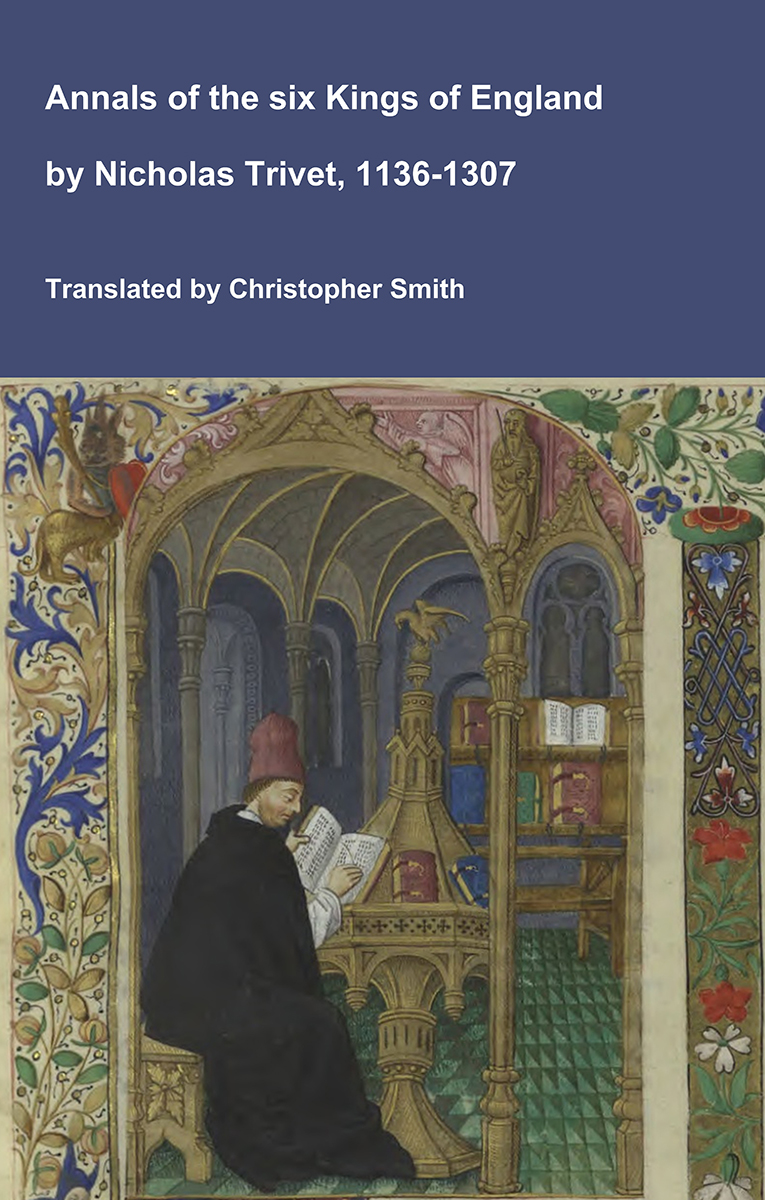
Annals of the six Kings of England by Nicholas Trivet
Translation of the Annals of the Six Kings of England by that traces the rise and rule of the Angevin aka Plantagenet dynasty from the mid-12th to early 14th century. Written by the Dominican scholar Nicholas Trivet, the work offers a vivid account of English history from the reign of King Stephen through to the death of King Edward I, blending political narrative with moral reflection. Covering the reigns of six monarchs—from Stephen to Edward I—the chronicle explores royal authority, rebellion, war, and the shifting balance between crown, church, and nobility. Trivet provides detailed insight into defining moments such as baronial conflicts, Anglo-French rivalry, and the consolidation of royal power under Edward I, whose reign he describes with particular immediacy. The Annals combines careful year-by-year reporting with thoughtful interpretation, presenting history not merely as a sequence of events but as a moral and political lesson. Ideal for readers interested in medieval history, kingship, and the origins of the English state, this chronicle remains a valuable and accessible window into the turbulent world of the Plantagenet kings.
Available at Amazon in eBook and Paperback format.
The Chronicle of John Prior of Hexham. All of them, advancing near Northallerton, in a certain field of the fee of Saint Cuthbert, set up the standard, that is, a ship's mast, hanging upon it the banner of Saint Peter, and of Saint John of Beverley, and of Saint Wilfrid of Ripon, and placing the body of the Lord upon it, so that He would be their standard-bearer and leader of the battle. Therefore Archbishop Thurstan sent with them Ralph Nowell, his suffragan bishop, and men of discipline, who would receive confessions, and instruct them about the hope of future life through satisfaction. The archbishop himself, having been more wisely restrained by the princes from setting out to the battle, persisted with prayers and entreaties, in great affliction and contrition of heart, with his clerics, until it was announced to him what great grace of deliverance God had granted to his people.
So, on the octave of the Assumption of Saint Mary, on the eleventh day before the Kalends of September [22nd August 1138], on a Monday, the whole army gathered around the Standard, lest anyone presume to flee, with the horses having been removed to a distance; and all, with one accord, resolved either to die or to conquer for their country. The princes who were foremost in honor and dignity were these: William, Earl of Albemarle; Walter de Gant; Robert de Brus; Roger de Mowbray; Walter Espec; William de Percy; Bernard de Balliol; Richard de Courcy; William Fossard; Robert de Stuteville; Ilbert de Lacy. This Ilbert, and his father Robert de Lacy, King Henry had driven from the kingdom of England. After the king's death, William Trussebut, who by the king's gift had held the honor, namely of Pontefract, was killed by a certain knight, Pagan, on account of that honor; and this Ilbert then possessed the honor by right of inheritance. Also present with their forces were William Peverel of Nottinghamshire, Robert de Ferrers of Derbyshire, and Geoffrey Halsalin.
The king of Scotland also advanced, with his legions, arrayed for battle, the Scots being placed in the front line, claiming that place for themselves by native right, as though they were one. They advanced naked and almost unarmed against the ranks of mailed men, and therefore against those who were invulnerable. Around the king stood the cavalry, equipped with military arms. The king judged it worthy of faith to conquer or to die for the oath which he had sworn to the heirs of King Henry, and with him the whole realm of England.
Thus the Scots and the Picts scarcely held out from the first hour of the battle until the third, seeing themselves pierced and riddled with arrows, overwhelmed and crushed. All of them fled from the field, throwing away their baggage. In disgrace of this event that place was called Baggamor. Immediately the resolve of the remaining army was disturbed and weakened. Therefore the elders, hastening, compelled the king to recall the horses and to withdraw with his ordered battle line, lest he too with his men should fall into ruin. The army of York also did not pursue those retreating, but each hastened to return to his own home. Many of the Scots, wandering and ignorant of the places, were slaughtered wherever they were found. Even the very battle-lines of the Scots and Picts, when on their retreat they encountered one another, contending with unhappy hostility, choked each other to death. The king therefore, having returned into his kingdom, summoned the Scots and Picts to him, and fined them a great sum of money, receiving hostages and oaths from them, that in every conflict and danger they would faithfully stand with him and for him. The king of England also, rejoicing in these successes of his, made William of Albemarle earl in Yorkshire, and Robert de Ferrers earl in Derbyshire.
Qui omnes procedentes secus Alvertun, in campo quodam de feudo Sancti Cuthberti standart, id est malum navis, erexerunt, vexillum Sancti Petri et Sancti Johannis de Beverlaco, et Sancti Wulfridi Ripum in eo suspendentes, et corpus Domini superinponentes, ut esset signifer et dux prælii eorum. Misit ergo cum eis archiepiscopus Turstinus Radulphum Nouellum, episcopum suffraganeum suum, et viros disciplinatos, qui ad pœnitentiam susciperent, et de spe futuræ vitæ per satisfactionem instruerent. Ipse archiepiscopus a principibus ab hac profectione ad pugnam consultius revocatus, orationibus et obsecrationibus in afflictione magna et contritione cordis instabat cum suis clericis, donec renuntiatum ei fuit, quantam ereptionis gratiam populo suo præstitit Deus.
Igitur, in octavis Assumptionis Sanctæ Mariæ, undecimo kalendas Septembris, feria secunda, universus exercitus circa standard convenit, ne quis de fuga præsumeret equis procul amotis; omnes autem mori aut vincere pro patria unanimiter decernentes. Fuerunt autem principes hii in honoribus et dignitatibus præminentes, Willelmus de Albamarla comes, Walterus de Gant, Rodbertus de Brus, Rogerus de Mulbrai, Walterus Espec, Willelmus de Perci, Bernardus de Baillel', Ricardus de Curceio, Willelmus Fossard, Robertus de Stuthavilla, Ilbertus de Lesceio. Hunc ipsum et patrem ipsius, Rodbertum de Lesceio, Henricus rex ejicit e regno Angliæ. Mortuo rege, Willelmum Transversum, qui ex datione regis honori scilicet Pontifracto præsedit, miles quidam Paganus, de honore illo, occidit, et iste Ilbertus honorem jure patrimonii possedit. Affuit etiam cum suis copiis de Nothingaham-scira Willelmus Peverel, et Rodbertus de Ferers de Derbi-scira, et Galfridus Halsalin.
Accessit etiam rex Scottiæ, cum suis legionibus, stipatus in prælium, Scottis in prima acie dispositis, id sibi ex nativa dignitate reclamantes quasi unus. Nudi ipsi et pæne inermes progressi adversus cuneos loricatos et iccirco invulnerabiles. Circa regem steterunt equestres ordines militaribus armis instructi. Fide dignum rex arbitratus est vincere vel mori pro sacramento quod juravit hæredibus Henrici regis, et universitas Angliæ cum eo.
Scotti itaque et Picti vix a prima hora initi conflictus usque ad tertiam perstiterunt, videntes se confodi et consui sagittis, et obrui, et opprimi. Qui omnes a campo dilapsi sunt, sarcinas suas a se rejicientes. In ignominiam hujus rei vocatus est locus ille Baggamor. Continuo constantia residui exercitus proturbata et infirmata est. Propterea seniores festinantes compulerunt regem equos reposcere, et cum sua conserta acie discedere, ne et ipse cum suis cederet in ruinam. Exercitus quoque Eboraci non est persecutus recedentes, sed unusquisque ad propria regredi festinavit. Plurimi vero Scottorum, ignari locorum aberrantes, ubicunque reperti sunt jugulati sunt. Ipsæ etiam acies Scottorum et Pictorum, ubi adinvicem in reditu concurrerunt, infelici hostilitate concertantes, sese suffocaverunt. Rex igitur, in regnum suum receptus, convocatos ad se Scottos et Pictos multa massa pecuniarum mulctavit, acceptis obsidibus et sacramentis ab eis, quod in omni conflictu et periculo fideliter cum eo et pro eo persisterent. Rex etiam Angliæ, lætatus super his successibus suis, Willelmum de Albamarla comitem in Eboracisciria fecit, et Rodbertum de Ferers comitem in Derbi scira.1
Note 1. After this passage there comes in the MS. the account of the comet of 1133, which I have transferred to that year. After that, there follows the poem of Serlo on the battle of the Standard, which is printed by Twysden (coll. 331-2), and the account of the same conflict by Aelred of Rievaux which occurs in the same collection (col. 333, etc.). At the end of Aelred's work is this colophon, - "Explicit descriptio Atheldredi abbatis. Incipit descriptio prædicti Prioris Haugustaldensis ecclesiæ." i.e. "Here ends the description of Abbot Æthelred. Here begins the description of the aforesaid Prior of the church of Hexham."
The chronicle of Prior John is then continued, after having been thus strangely cut in two. The transcriber seems to have been more of an utilitarian than a person of taste. The poem of Serlo and the work of Aelred relate to the year 1138, and, therefore, he ruthlessly disjointed the Prior's chronicle, and, without any regard to appearance, inserted what the other two had written in the intervening space, among the occurrences of 1138.
Annals of Six Kings of England by Nicholas Trivet. The Scots, having crossed the River Tyne, ravaged the land as far as the River Tees, believing that they would soon possess the province of Deira with the city of York. But the local inhabitants, despairing of help from King Stephen and from the people south of the Humber, encouraged by the exhortations of Archbishop Thurstan, gathered together unanimously and bravely stood against the multitude of the Scots, terrible in their ferocity, on a field not far from the River Tees in the month of August [22nd August 1138]. At daybreak the Scots burned their camp and mocked the small number of the English. But when they felt the lightly armed missiles hurled from a distance piercing them, they turned their backs to the enemy and, as the English pursued, conceded victory. King David fled with only a few soldiers attending him and, while many of his men were falling, scarcely escaped.
Scoti, amne Tyna transmisso, usque ad Thesis fluvium debacchantur, putantes se in brevi Deirorum provinciam cum civitate Eboracensi spe non dubia possessuros. Provinciales vero, a rege Stephano et Cis-Humbrana gente desperantes auxilium, monitis Thurstini archiepiscopi animati, unanimiter conglobati contra Scotorum multitudinem, immanitate terribilem, in campo non longe a flumine Thesa mense Augusto viriliter perstiterunt. Denique Scoti, incensis mane castris, Anglorum paucitatem habuere derisui; sed cum leviter armati confodientia eminus jacula sensissent hostibus dantes terga insequentibus Anglis victoriam concesserunt. Fugit rex David, raro stipatus milite, plurimisque de suis cadentibus vix evasit.
On 22nd August 1165 King Philip II of France was born to Louis VII King of the Franks [aged 45] and Adèle Queen of the Franks in Gonesse. The much longed for heir to the crown of France. He was also given the name 'Dieu Donné' meaning God Given. He a great x 2 grandson of King William "Conqueror" I of England. He married (1) 28th April 1180 his half third cousin Isabelle Flanders Queen Consort France, daughter of Baldwin Flanders V Count Hainaut and Margaret Metz Countess Hainaut and Flanders, and had issue (2) 15th August 1193 Ingeborg Estridsen Queen Consort France (3) 7th May 1196 Agnes of Merania Queen Consort France, daughter of Berthold Andechs Duke Merania and Agnes Rochlitz, and had issue.
Annals of Six Kings of England by Nicholas Trivet. He had had as a companion in the schools Master Robert Bacon, who, while teaching theology at Oxford, entered the Order of Friars Preachers. After his entry he continued his lectures in the schools of Saint Edward for many years, under whom Brother Richard of Fishacre of the diocese of Exeter was the first among the friars to begin, reading together with the aforesaid Brother Robert in the schools which the friars had within the place where they now dwell. He, Richard, composed in his time a very useful work upon the Sentences, and published most excellent commentaries on the Psalter as far as the seventieth psalm, interwoven with very pleasing moral reflections. In the same year Llywelyn, Prince of Wales, died, and between his sons, Gruffydd, illegitimate, and David, born of lawful marriage, nephew of the King of England by his sister, a serious dispute arose over the principality; but at length Gruffydd, having been captured by his brother, was committed to prison. Pope Gregory the Ninth died [on 22nd August 1241], and after a vacancy of two months and six days, Celestine the Fourth succeeded him, a Milanese by birth, formerly called Geoffrey, Bishop of Sabina; a man commendable for life and learning, though old and infirm when elected, he died after eighteen days, and was buried in the church of Saint Peter. After the death of Celestine, the see was vacant for twenty-two months and fourteen days.
Annals of Six Kings of England by Nicholas Trivet. 1280. Pope Nicholas the Third died [on 22nd August 1280], and was succeeded by Martin the Fourth, formerly called Simon of Tours, a Frenchman by birth. In this year King Edward, having returned from the regions of France, caused his father’s tomb to be repaired with stones of jasper which he had brought with him. Oliver of Sutton was made bishop of Lincoln, having previously been dean of that same church. Brother John, archbishop of Canterbury, convened a council at Lambeth, in which, renewing the constitutions of Otto and Ottobono, former legates in England, he ordered that they should be observed by all.
1280. NICOLAUS papa tertius moritur, successitque ei Martinus quartus, prius dictus Symon Turonensis, Gallicus natione. Edwardus rex hoc anno reversus de partibus Gallicanis, de lapidibus jaspidum, quos secum attulerat, paternum fecit reparari sepulcrum. Oliverus de Suttona fit episcopus Lincolniensis, qui prius fuerat ecclesiæ ejusdem decanus. Frater Joannes Cantuariensis convocat conciliam apud Lamhuthe, in quo constitutiones Ottonis et Ottoboni, quondam legatorum in Anglia, innovans, jussit eas ab omnibus custodiri.
Annals Londonienses. In the same year [1305], on the 22nd of August, Sir William Wallace, a knight of Scottish birth, arrived in London. A great crowd of men and women came out to see him, and he was lodged in the house of William de Leyre, a citizen of London, in the parish of All Hallows at the Hay (Fenchurch Street).
Eodem anno, XIo kalendas Septembris, dominus Willelmus Waleis miles, ex natione Scotica natus, venit Londonias; cui multitudo hominum ac mulierum ibi obviavit, et hospitabatur in domibus Willelmi de Leyre civis Londoniensis in parochia Omnium Sanctorum ad fenum.
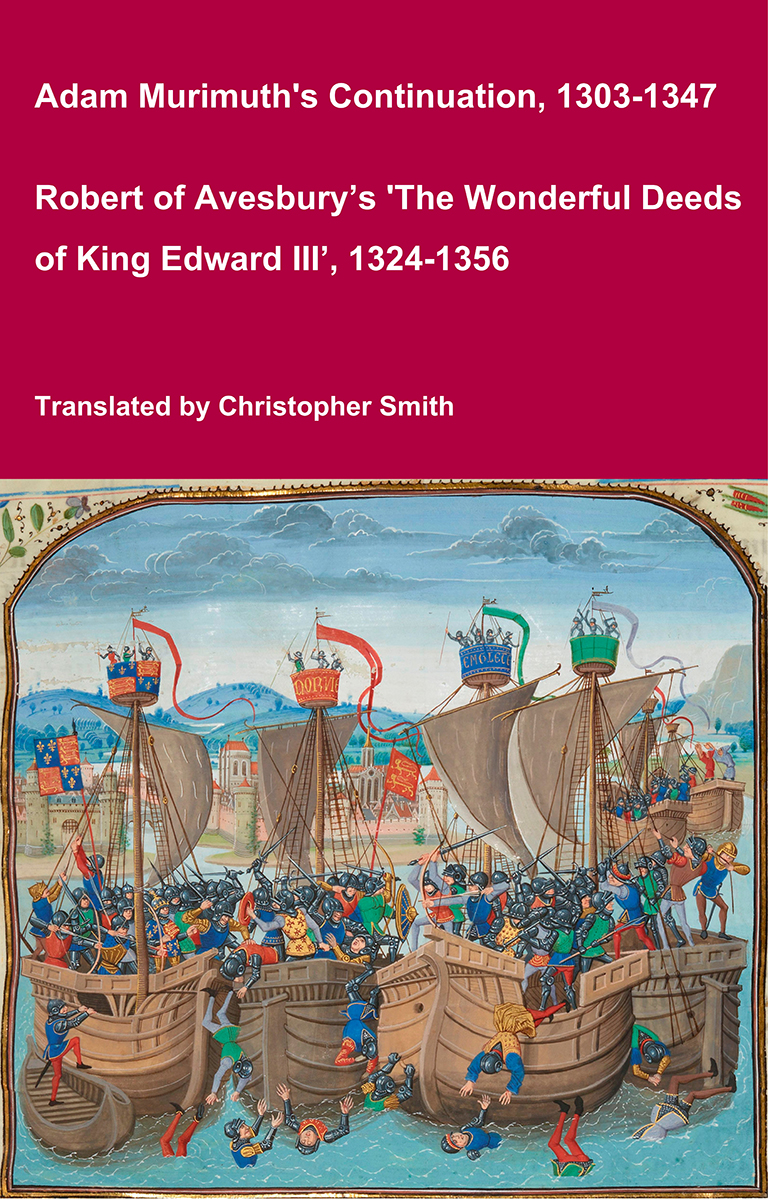 Adam Murimuth Continuation. The king therefore remained with his forces in the region around York, and at York he held a parliament which began on the Wednesday [22nd August 1314] after the Assumption of the Blessed Mary and lasted until the feast of Saint Michael [29th September] and beyond. In that parliament little of note was done, except that the wife of Sir Robert le Bruce, the bishop of Glasgow, who had long before been held in England, and Donald of Mar were released in exchange for the earl of Hereford; but all the other prisoners redeemed themselves with their own money.
Remansit igitur rex eum suis circa partes Eboraci, et in Eboraco tenuit parliamentum, quod incepit quarta feria post Assumptionem beate Marie et duravit usque ad festum sancti Michaelis, et ultra; in quo parliamento parum notabile fuit factum, nisi quod uxor domini Roberti le Bruys et episcopus Glascuensis, qui diu prius in Anglia tenebantur, et Donaldus de Mar fuerunt redditi pro comite Herefordiæ; sed omnes alii captivi se propria pecunia redemerunt.
On the night of Sunday 22nd and Monday 23rd August 1350 King Philip "Fortunate" VI of France [aged 56] died. His son John [aged 31] succeeded II King France: Capet Valois.
Deeds of King Edward III by Robert of Avesbury. Afterwards, in the aforesaid year of our Lord, about the feast of Saint Lawrence [10th August], the aforesaid lord Philip of Valois, who was called, wrongfully, the king of the French, ended his life1. And shortly afterwards his son, Lord John of France, was crowned king of France in the city of Reims.
Subsequenter, anno Domini supradicto, circiter festum sancti Laurencii, præfatus dominus Philippus de Valesio, dictus per injuriam rex Francorum, diem suum clausit extremum, et ex modico intervallo filius suus, dominus Johannes de Francia, in civitate Remensi in regem Francis coronatur.
Note 1. King Philip VI of France [aged 56] died at Coulombes Abbey, Eure-et-Loir, on 22nd August 1350. He was succeeded by his son, by his first wife Joan of Burgundy, King John [aged 31], 1319-1364. He was interred with Joan at the Basilica of Saint-Denis.
On 22nd August 1358 Isabella of France Queen Consort England [aged 63] died at Hertford Castle [Map]; see Archaeologia Vol. 35 XXXIII. She was buried in Christ Church, Greyfriars [Map].
The funeral was performed by Archbishop Simon Islip. She was buried in the mantle she had worn at her wedding and at her request, Edward's heart, placed into a casket thirty years before, was interred with her.
On 22nd August 1371 Guy of Luxemburg I Count Saint Pol and Ligny [aged 31] was killed at Baesweiler, Aachen aka Aix-le-Chapelle.
Waleran Luxemburg [aged 16] was captured.
On 24th August 1371 Edward Duke Guelders [aged 35] died from wounds..
Life Charles VI by a Monk of St Denis [~1420]. 22nd August 1393. While the king was thus troubled by the inconveniences of strangers, on the twenty-fourth day of the month of August, in the royal house of Saint Paul, the venerable queen bore him a daughter [Marie Valois], who was called Mary after being baptized; and she vowed to dedicate her to God and to commit her to His service perpetually, if He would free her from the darkness of ignorance and approve the vow she had made. Not long after, the Duchess of Orléans [aged 22], the wife of the Lord Duke of Orléans [aged 21], the brother of the king, bore a son, whom it pleased to name Philip.
Dum sic rex peregrinis vexaretur incommodis, mensis augusti vicesima quarta die, in domo regia Sancti Pauli ei peperit fliam regina venerabilis, que baptizata Maria vocata fuit; et hanc Deo dicandam et ejus servicio perpetuo mancipandam vovit, si ipsum a tenebris ignorancie liberaret et votum quod emiserat approbaret. Nec multum post, domina Aurelianensis ducissa, uxor domini ducis Aurelianensis, fratris regis, filium peperit, quem Philippum placuit nominare.
On 22nd August 1393 Marie Valois was born to Charles "Beloved Mad" VI King France [aged 24] and Isabeau Wittelsbach Queen Consort France [aged 23].
On 22nd August 1485 King Richard III of England [aged 32] was killed during the Battle of Bosworth. His second cousin once removed Henry Tudor [aged 28] succeeded VII King of England.
Humphrey Cotes [aged 35] died. It isn't clear on which side he was fighting.
Those supporting Henry Tudor included:
John Blount 3rd Baron Mountjoy [aged 35].
John Cheney 1st Baron Cheyne [aged 43].
Richard Guildford [aged 35].
Walter Hungerford [aged 21].
Thomas Stanley 1st Earl of Derby [aged 50].
Edward Woodville Lord Scales [aged 29].
Edward Courtenay 1st Earl Devon [aged 26].
Rhys ap Thomas Deheubarth [aged 36].
Jasper Tudor 1st Duke Bedford [aged 53].
William Beaumont 2nd Viscount Beaumont [aged 47].
Giles Daubeney 1st Baron Daubeney [aged 34].
William Stanley [aged 50].
Roger Kynaston of Myddle and Hordley [aged 52].
Henry Marney 1st Baron Marney [aged 38].
William Brandon [aged 29] was killed.
James Harrington [aged 55] was killed.
John Howard 1st Duke of Norfolk [aged 60] was killed and attainted. He was buried firstly at Thetford Priory, Norfolk [Map] and therafter at Church of St Michael the Archangel, Framlingham [Map]. Duke Norfolk, Baron Mowbray, Baron Segrave, Baron Howard forfeit.
John Sacheverell [aged 85] was killed.
Philibert Chandee 1st Earl Bath
William Norreys [aged 44], Gilbert Talbot [aged 33], John de Vere 13th Earl of Oxford [aged 42] and John Savage [aged 41] commanded,.
Robert Poyntz [aged 35] was knighted.
Those who fought for Richard III included:
John Bourchier 6th Baron Ferrers of Groby [aged 47].
John Conyers [aged 74].
Thomas Dacre 2nd Baron Dacre Gilsland [aged 17].
William Berkeley 1st Marquess Berkeley [aged 59].
Richard Fitzhugh 6th Baron Fitzhugh [aged 28].
John Scrope 5th Baron Scrope of Bolton [aged 48].
Thomas Scrope 6th Baron Scrope of Masham [aged 26].
Henry Grey 4th or 7th Baron Grey of Codnor [aged 50].
Edmund Grey 1st Earl Kent [aged 68].
Ralph Neville 3rd Earl of Westmoreland [aged 29].
John de la Pole Earl Lincoln 1st [aged 23].
Humphrey Stafford [aged 59].
George Talbot 4th Earl of Shrewsbury [aged 17].
Thomas Howard 2nd Duke of Norfolk [aged 42] was wounded, captured and imprisoned in the Tower of London [Map] for three years. He was attainted; Earl Surrey forfeit.
Francis Lovell 1st Viscount Lovell [aged 29] fought and escaped.
John Zouche 7th Baron Zouche Harringworth [aged 26] was captured.
John Babington [aged 62], William Alington [aged 65], Robert Mortimer [aged 43], Robert Brackenbury, Richard Ratclyffe [aged 55] and Richard Bagot [aged 73] were killed
Walter Devereux Baron Ferrers of Chartley [aged 53] was killed.
William Catesby [aged 35] was executed at Leicester, Leicestershire [Map] after the battle.
George Stanley 9th Baron Strange Knockin 5th Baron Mohun Dunster [aged 25] held as a hostage by Richard III before the Battle of Bosworth.
Henry Percy 4th Earl of Northumberland [aged 36] betrayed King Richard III of England by not committing his forces at the Battle of Bosworth.
John Iwardby [aged 35] was killed.


Abbot John Whethamstede’s Chronicle of the Abbey of St Albans
Abbot John Whethamstede's Register aka Chronicle of his second term at the Abbey of St Albans, 1451-1461, is a remarkable text that describes his first-hand experience of the beginning of the Wars of the Roses including the First and Second Battles of St Albans, 1455 and 1461, respectively, their cause, and their consequences, not least on the Abbey itself. His text also includes Loveday, Blore Heath, Northampton, the Act of Accord, Wakefield, and Towton, and ends with the Coronation of King Edward IV. In addition to the events of the Wars of the Roses, Abbot John, or his scribes who wrote the Chronicle, include details in the life of the Abbey such as charters, letters, land exchanges, visits by legates, and disputes, which provide a rich insight into the day-to-day life of the Abbey, and the challenges faced by its Abbot.
Available at Amazon in eBook and Paperback format.
On 22nd August 1532 Archbishop William Warham [aged 82] died.


Ancient Funeral Monuments Canterbury Cathedral. In a little Chappell built by himslfe, lieth William Warham [deceased], Archbishop of this See. A gentleman of an ancient house in Hampshire, brought up in the Colledge of Winchester, and chosen thence to the new Colledge in Oxford, where he proceeded Doctor of Law. Presently upon which, he practised as an Advocate in the Arches, then hee was Parson of Barley in Hertfordshire as I finde in that Church-windowes, and Master of the Rolls. He was sent Embassadour by Henry the Seventh, to the Duke of Burgundy, concerning the two counterfeits, Lambert, and Perkin Warbeck, which the Duchesse his wife had set up against him. In which businesse hee behaved himselfe fo wisely, as the King highly commended him, and preferred him upon his returne, to the Bishopricke of London; and upon the death of Henry Deane to this of Canterbury. He was also made Lord Chancellour of England by the same King; in which office he continued, untill hee was wrung out by Wolsey, the seventh of Henry the eight. The ceremony of his inthronization to Canterbury was performed in a most magnificent manner: the Duke of Buckingham, and many other great men of the kingdome being that day his officers. In his solemne and sumptuous feast, all his honours and offices were drawne, depicted,or delineated, after a strange manner, in gilded Marchpaine upon the banqueting dishes: and first because he was brought up in the University of Oxford, the Vicechancelour with the Bedels before him, and a multitude of Schollars following him, were described to present to the King and the Nobilitie, fitting in Parliament, this William Warham with this laudatorie Tetrafticon.
On 22nd August 1545 Charles Brandon 1st Duke of Suffolk [aged 61] died. His son Henry [aged 9] succeeded 2nd Duke Suffolk, 2nd Viscount Lisle.


On 22nd August 1553 John Dudley 1st Duke Northumberland [aged 49] was beheaded at Tower Hill [Map]. Duke Northumberland, Earl Warwick and Viscount Lisle forfeit. John Dudley 2nd Earl Warwick [aged 26], his son, was also attainted, with the Earldom of Warwick forfeit.
Thomas Palmer and John Gates [aged 49] were hanged, drawn and quartered.
Chronicle of Queen Jane and Two Years of Queen Mary 1553. 22nd August 1553. And when he [John Dudley 1st Duke Northumberland [aged 49]] came apon the scaffolde, first, he put of his gowne of crane-colored damaske, and then he leaned apon the raile towarde the est, and saide to the people, allmost in every poynt as he had saide in the chapella, saving that when he came to the confession of his belife tie saide, I trust, my lorde the bushopeb here will beare me witnes hereof." At the last he put of his jerkyn and doblet, and then saide his prayers; after which tyme the hangman reched to him a kerchef, which he dyd knit himself about his ees, and then layd him downe, and so was behedded.
Note a. "This present daye the duke of Northumberlande, sir John Gates, and master Palmere, came to executione, and suffered deathe. The duke's confessyon was in effecte but lytle, as I hard saye; hee confessed himselfe worthie to dye, and that he was a greate helper in of this religion which is false, thearfore God had punished us with the lose of kinge Henry 8, and also with the lose of king Edward 6, then with rebellione, and aftere with the swetinge sicknes, and yet we would not turne. Requiringe them all that weare presente to remember the ould learninge, thankinge God that he would vutsafe to call him nowe to be a Christyane, for this 16 yeares he had byne non. Theare weare a greate nomber turned with his words. He wished every man not to be covetous, for that was a greate parte of his distruction. He was asked further yf he had any thinge moare to saye, and he said nothinge but that he was worthie to dye, and so was moe than he, but he cam to dye, and not to accuse any mane. And thus bouldly he spak, tyll he layd his head on the block." (Letter of William Dalby, as before cited.) Another account of the duke of Northumberland's confession, from the MS. Harl. 284, is printed in Bayley's History of the Tower of London, Appx. p. xlviii.; and by Tytler, vol. ii. p. 230, who refers to others in MS. Cotton, Titus, B II. in MS. Reg. 12 A 26 (in Latin), and an abstract in MS. Harl. 2194.
Note b. Nicholas Heath [aged 52], bishop of Worcester.
England under the reigns of Edward VI and Mary. The Open Confession of John Duke Of Northumberland [aged 49], who suffered at Tower Hill, 22nd of August 1553. Orig. Harleian, 284; fol. 127.
"Good people. Hither I am come this day to diej as ye know. Indeed, I confess to you all that I have been an evil liver, and have done wickedly all the days of my life; and, of all, most against the Queen's Highness, [of] whom I here openly ask forgiveness (and bowed his knees): but not I alone the original doer thereof, I assure you, for there were some other which procured the same; but I will not name them, for I will hurt now no man. And the chiefest occasion hath been through false and seditious preachers, that I have erred from the Catholic faith and true doctrine of Christ. The doctrine, I mean, which hath continued thro' all Christendom since Christ. For, good people, there is, and hath been ever since Christ, one Catholic church; which church hath continued from him to his disciples in one unity and concord, and so hath alway continued from time to time until this day, and yet doth throughout all Christendom, only us excepted; for we are quite gone out of that church. For, whereas all holy fathers, and all other saints throughout alt Christendom, since Christ and his disciples, have ever agreed in one unity, faith, and doctrine; we alone dissent from their opinions, and follow our own private interpretation of Scriptures. Do you think, good people, that we, being one parcel in comparison, be wiser than all the world besides, ever since Christ? No, I assure you, you are far deceived. I do not say so for any great learning that I have, for, God knoweth, I have very little, or none; but for the experience which I have had.
" For I pray you, see, since the death of King Henry the Eighth, into what misery we have been brought; what open rebellion, what sedition, what great division hath been throughout the whole realm; for God hath delivered [us] up to [our] own sensualities, and every day [we] wax worse and worse. Look also in Germany, since they severed from the faith; unto what miserable state they have been brought, and how their realm is decayed. And herewith I have [braved] these preachers for their doctrine, and they were not able to answer any part thereof, no more than a little boy. They opened the books, and could not [reply to] them again. More than that, good people, you have in your Creed, Credo Eccksiam Catkolicam, which church is the same church which hath continued ever from Christ, throughout all the apostles', saints', and doctors' times, and yet doth, as I have said before. Of which church 1 do openly profess myself to be one, and do steadfastly believe therein; I speak unfeignedly from the bottom of my heart. This good man, the Bishop of Worcester, shall be my witness (and the Bishop said, ' Yea'), And I beseech you all bear nie witness that I die therein. And I do think, if I had had this belief sooner, I never had come to this pass: wherefore I exhort you all, good people, take you all example of me, and forsake this new doctrine betimes. Defer it not long, lest God plague you as he hath me, which now suffer this vile death most worthily.
" I have no more to say, good people; but all those which I have offended I ask forgiveness, and they which have offended me I forgive them, as I would God forgive me. And I trust the Queen's Highness hath forgiven me: where as I was with force and arms against her in the field, I might have been rent in pieces without law, her Grace hath give me time and respect to have judgment.
"And after he had desired all the people to pray for him, he humbled himself to God, and covered his own eyes with a cloth, and he suffered execution meekly."
The History and Antiquities of the Tower of London Part II Apendices. 22nd August 1553. The open Confession off Jhon Duke of Northumberlande [aged 49], wch sufferid at Tower hyl, 22 off August, 1553.
Good people, hyther I am come thys day to dye, as ye know. Indede, I co'fesse to you al y' I have liv'd an evyl lyfe, and have done wykydly al the days of my lyfe, and off al, most agay'st the queen's hyghness, who' I here openly aske forgeveniss; (and bowyd hys kneys) but not I alone the original doer thereoff, I assure yow: for there were some other wch the same, but I wyl not name them; for I wyl hurte now no man; and the first occasion hath byn thorow false and sedicious preachers, that I have erred from the catholyke fayth, and well doewine of Christ. The doewine I meane wch hath cotynuyd thorow al chrystyndom syns Chryst; for, good people, there ys and hath byn ever syns Christ one catholyke church; wch churche hathe contynued from him to hys discyples yn one unyte and concorde, and so hath alway continued from tyme to tyme untyl thys day, and yet dothe thorow owt al chrystendome, only us exceptyd; for wye are quyte gone owt of that churche; for whereas al holy fathers and al other sayntys, thorow owt al chrystyndome syns Christ and hys discyples, have ever agreyd yn one unyte, faith, and doctrine; wye alone dissent from ther opynyons, and folowe ower owne pryvate interpretacion off scriptures. Do yow thynke, good people, that wye, beyng one sparcle in comparyson, be wyser than al the worlde besydys, and ever syus Chryst? No, I assure you; you are far dyscevyd. I do not say so for any gret lerning that I have, for God knowyth that I have very lyttle or none; but for th❜experyence wch I have had; for, I pray you, se syns the death off kynge Henry the eyght, into whatte mysery wye have byn broght, what open rebellion, sedicion, what gret division hath byn thorow owt the whole realme; for God hath delyveryd uup to ower owne sensualytyes, and every day wax worse and worse. Loke also yn Germany, syns they swarvyd from the fayth, unto what miserable state they have byn broght, and how their realm ys decay'd. And herewyth I have spurnyd thes preachers for ther doctryne, and they ware not hable to answer any parte thereoff, no more than a lytle boy. They openyd the bookys, and cold not shut the' agayn. More than that, good people, you have yn yower crede, credo ecclesiam catholicam; whyche churche ys the same churche wch hath contynuyd ever from Chryst, thorow owt al th'apostles, saynts, and doctours tymys, and yet doth, as y have sayd before, off wch churche I do openly professe myselfe to be one, and do stedfastly belyve ther yn, I speke unfaynydly from the bottom of my harte. Thys good man, the bysshope off Wurcestre, shall be my wytnys. " [And the bysshopp said Je.] And I besyche yow al, bere me wytnes yt I dye theryn; and I do thynke yff I had had thys belyfe sowner, I never had come to thys passe: wherefore, I exhorte yow al, good people, take yow al exemple off me, and forsake thys new doctryne betyme; dyffer yt not longe, lest God plague yow, as he hath me, wch now suffer thys vyle death most worthely. I have no more to say, good people; but al those wch I have offendyd I aske forgevenys, and they wch have offendyd me I forgeve them, as I wold God forgeve me. And I trust the queenys hyghness hathe forgevyn me, where as I was wyth force and armes agaynst her yn the fylde, I myght have byn rente yn peces wyth owt law; here grace hath gevyn me tyme and respecte to have judgement. And after he had desyryd al the people to pray for hym, and had humblyd hymselfe to God, and coveryd bys own eyes with a clothe, he sufferyd execucion mykely. "
Note 1. Harl. MSS. No. 284.
The History and Antiquities of the Tower of London Part II Apendices. 22nd August 1553. Confession off sir Jhon Gates wch sufferyd the same day and yere.
My comyg hyther thys day, good people, ys to dye; wheroff I assure you al I am wel worthy, for I have lyvyd as vyciously and wyckedly al the days of my lyfe as any man hath doone yn the worlde. I was the gretyst reader off the scripture y ' myght be, off a man off my degree; and a worse follower ther off was not lyvyng: for I did not rede to th'entent to be edy- fiyd ther by, nor to eyde the glory of God, but contrarywyse arrogantly to be sedycious, and to dispute therof, and pryvately to ynterpretate hyt after my own lykyng and affection. Wherefore, good people, I exhorte you al to beware how and after what sorte ye come to rede God hys holy worde; for yt ys no.... or pleyng game to medle wyth God hys holy mysterys: stande not to much yn yower owne conceptys, for loke as the bee off evere flower doth gather hony, and the spyder poyson off the same, evyn so yow excepte yow humble submitte yower selfys to God, and charytable rede the same to th'entent to be edefiyd therby, yt ys unto yow as poyson and worse, and better yt ys to let yt alone.
Chronicle of Queen Jane and Two Years of Queen Mary 1553. 22nd August 1553. Afterwardes cam sir John Gates; and after a few wordes spokena he would have no kerchef, but laed downe his hed; where at iij. blowes his hed was striken of.
Note a. Sir John Gates's confession, as stated in the MS. Harl. 284, is printed in the Appendix to Bayley's History of the Tower of London, p. xlix.
Chronicle of Queen Jane and Two Years of Queen Mary 1553. 22nd August 1553. Next cam sir Thomas Palmer,c who assoone as he cam to the scaffolde toke every man by the hand, and desired them to praye for him; then putting of his gowne, he leaned upon the est raile and saide theis or moche-like wordes in effecte: "My maisters, God save you; yt is not unknowne unto you wherfore I am come hither, which I have wourthellie well deserved at God's hande, for I knowe yt to be his devine ordenaunce by this mean to call me to his mercy, and to teache me to knowe myself, what I am, and wherto we ar all subjecte. I thancke his mercyfull goodenes, for he hathe caused me to learne more in one littell darke corner in yonder Tower, then ever I learned by eny travaille in so many places as I have bene; for ther I say I have sene God, what he is, and howe unserchable his wonderouse works ar, and howe infynite his mercyes be. I have sene ther myself thorowhlie, and what I am; nothing but a lompe of synne, earthe, dust, and of all vylenes most vilest. I have seen ther and knowne what the hole worlde is, howe vayne, decetefull, transytorie, and short yt is; howe wicked and lothesome the works therof ar in the sight of God's majesty; how he neither regardeth the manaces of the proud men and mighty ones, nether despiseth the simplenes of the pore and lolie, which ar in the same worlde. Fynallie, I have seen ther what deathe is, howe nere hanging over every man's hed, and yet how uncertayn the tyme and howe unknowne to all men, and how littell it is to be feared. And shoulde I feare death, or be sad therfore? have I nott seene ij. die before myne eys, yea and within the hearing of myn eares? No, neither the sprinckling of the bludd or the shedding therof, nor the bludy axe itself, shall not make me afraied. And nowe, taking my leave to the same, I praye you all to praie for me. Come on, goode fellowe," quod he, "art thou he that must do the dede? I forgeve the with all my harte." And then kneled downe, and laed his hed downe, saying, "I will se howe met the blocke is for my neck; I praie the strike me not yet, for I have a fewe prayers to say, and that done, strike in God's name, goode leave have thowe." His prayers enden, and desyring eche man to praie for him, he layed downe his hed agayn, and so the hangman toke yt from him at one stroke. Theyr corpes, with the hedes, wer buryed in the chapell in the Tower; the duke at the highe alter, and the other too at the nether ende of the churche. You must understande that sir Thomas Palhner had moche longer talke on the scaffolde, but that afore rehersed was in maner the some therof.
Note c. "Then came sir Thomas Palmere, who when hee was upon the scaffold pute of his cape to the auditory and sayd: 'God geve you all good morowe,' and divers did byd him god morowe againe, and he replyed and sayd, 'I doe not doubt but that I have a good morowe, and shall have I truste a better good even. Good frends (quothe he) I am come hether to dye, for I have lyved heare under a lawe, and have offended the same, and for my so doinge the same lawe fyndethe me guilty, hathe condemned me to ende heare my lyfe this daye; for the which I give God thankes, in that he whichshewed me the thinge which I have seene, and which also I knowe to be juste and trewe, and that is this, I have since my cominge out of yonder place (pointing to the Towere) seene with myne eyes my Redeemere sittinge at the right hand of God the Father, in glory and majesty equall, whose powere is infinite, and in whome whoso puttethe his truste shall nevere be deceaved, and as he is almighty so can he doe what he lystethe, and to whom he wille, and when he will, and non in the heven above nor in the earthe beneathe can or maye let [i. e. withstand] his determinate will; by whom I lyve, by whom I am, and in whom I truste to lyve eternally. I have, as some of you doe knowe, good people, bine a man not altogether noreshid in England, but some parte of my brede I have eaten in other realmes; but to saye that befoare nowe I did [know] God arighte, the worlde arighte, or myselfe arighte, I did nevere. And nowe what I have sayde ye knowe. I saye God is such a one that without thowe wilt sit downe and behould the heavenes above, the sonne and moone, the starres above the firmament, the course of the sonne and moone, starres and clowds, the earthe with all that in them is, and howe they be all preserved, thow shalt nevere knowe God aright. The world is altogether vanity, for in it is nothinge but ambition, flatery, foolishe or vaine glory, pride, disorder, slander, bostinge, disdayne, hatred and mallis; all which thinges the same God that made the world, or as they saye man, which heare I compare to the world, dothe utterly deteste and abhor; in the which offences I have bine so noseled, that nowe, havinge a juste occasione to looke into myne owne selfe, I have seen nothing but a bodye voyde of all goodnes, filthie, a stinking karkas, worse then donge of beastes, a very miserable creature, and yet the verie worke of the mighti hand of God. But yet, notwithstandinge, in nowe knowinge my Creator arighte, I doe not thinke any sinne to be that I have not byne plunged even into the middeste of it; for the which prayinge God to pardon me, willinge you and prayinge you to praye for me and withe me unto the Lord my God and your God, which God I faithfully beleeve is in heaven, and at the laste daye shall with all triumphe come againe into this worlde, judginge the same by fyere. And nowe I will bide you all farwelle, prayenge you all to forgeve me, and to saye, the Lord receave me to his mercy, when you shall see the axe passe between my head and shoulders.' And so did prepare him to the deathe." Letter written in London by John Rowe, 24 Aug. 1563, in Starkey's transcripts, MS. Harl. 353.
After 22nd August 1553 John Dudley 1st Duke Northumberland [deceased] was buried at St Peter ad Vincula Church, Tower of London [Map].
Annals of the six Kings of England by Nicholas Trivet
Translation of the Annals of the Six Kings of England by that traces the rise and rule of the Angevin aka Plantagenet dynasty from the mid-12th to early 14th century. Written by the Dominican scholar Nicholas Trivet, the work offers a vivid account of English history from the reign of King Stephen through to the death of King Edward I, blending political narrative with moral reflection. Covering the reigns of six monarchs—from Stephen to Edward I—the chronicle explores royal authority, rebellion, war, and the shifting balance between crown, church, and nobility. Trivet provides detailed insight into defining moments such as baronial conflicts, Anglo-French rivalry, and the consolidation of royal power under Edward I, whose reign he describes with particular immediacy. The Annals combines careful year-by-year reporting with thoughtful interpretation, presenting history not merely as a sequence of events but as a moral and political lesson. Ideal for readers interested in medieval history, kingship, and the origins of the English state, this chronicle remains a valuable and accessible window into the turbulent world of the Plantagenet kings.
Available at Amazon in eBook and Paperback format.

Henry Machyn's Diary. 22nd August 1557. The xxij day of August was the herse [of my lade Anne of Cleves [deceased]] taken downe at Westmynster, the wyche the monkes [by night had spoiled of] all welvett cloth, armes, baners, penselles, of all the [majesty and] valans, the wyche was never sene a-fore so done.
Henry Machyn's Diary. 22nd August 1559. The xxij day of August the vesaturs [visitors] sat at sant Larens in the Jure, docthur Horne [aged 49] and mo veseturs.

On 22nd August 1572 Thomas Percy 7th Earl of Northumberland [aged 44] was beheaded at The Pavement in York. He was buried at St Crux Church, York [Map]. His brother Henry [aged 40] succeeded 8th Earl of Northumberland, 11th Baron Percy of Alnwick, 19th Baron Percy of Topcliffe, 2nd Baron Percy of Alnwick, 10th Baron Poynings.
On 22nd August 1575 Marie Oldenburg was born to John "Younger" Oldenburg Duke Schleswig Holstein Sonderburg [aged 30] and Elisabeth of Brunswick-Grubenhagen [aged 25].
22nd August 1582. The Raid of Ruthven was a plot by several nobles led by William Ruthven 1st Earl Gowrie [aged 39] to kidnap the fifteen years old King James VI of Scotland [aged 16], son of Mary Queen of Scots [aged 39], (before he became King of England) to reform the government of Scotland.
The nobles included John Erskine 19th Earl of Mar [aged 20], Thomas Lyon Master of Glamis, Robert Boyd 5th Lord Boyd [aged 65], Patrick Lindsay 6th Lord Lindsay of the Byres [aged 61], and David Erskine Commendator of Dryburgh.
They were opposed by Esme Stewart 1st Duke Lennox [aged 40] and James Stewart 1st Earl Arran who controlled the government.
King James VI of Scotland was captured whilst hunting near Ruthven Castle.
The rebels were joined by Francis Stewart 5th Earl Bothwell [aged 19] and James Cunningham 7th Earl Glencairn [aged 30].
Esme Stewart 1st Duke Lennox was exiled; he died a year later in Paris. James Stewart 1st Earl Arran was imprisoned.
On 22nd August 1591 Queen Elizabeth I of England and Ireland [aged 57] arrived in Chichester [Map] as a guest of John Lumley 1st Baron Lumley [aged 58].


After 22nd August 1591 Queen Elizabeth I of England and Ireland [aged 57] arrived in Titchfield, Hampshire [Map] as a guest of Henry Wriothesley 2nd Earl of Southampton.

Diary of Anne Clifford. 22nd August 1616. Upon the 22nd I met my Lord [aged 27] at Appleby Town's end where he came with a great company of horses, Lord William Howard, he and I riding in the coach together and so we came that night to Brougham.
There came with him Thomas Glenham [aged 22], Coventry, Grosvenor, Grey Dick, &c., &c. The same night Prudence1, Bess, Penelope2 and some of the men came hither but the stuff was not yet come so as they were fain to lie 3 or 4 in bed.3
Note 1. Prudence Bucher.
Note 2. enelope Tutty, the Lady Margaret's Maid, belonging to the Laundry Maids' Table.
Note 3. Upon Saturday my Lord shewed me his Will whereby he had given all his hand to the Child saving £3,500 per annum to my Brother Sackville, £1,500 per annum which is appointed for the payment of his debts, and my jointure excepted which was a matter I little expected.
On 22nd August 1620 Oliver Cromwell [aged 21] and Elizabeth Bourchier [aged 22] were married.


John Evelyn's Diary. 22nd August 1653. We all went to Guildford, to rejoice at the famous inn, the Red Lion, and to see the hospital, and the monument of Archbishop Abbot, the founder, who lies buried in the chapel of his endowment.
On 22nd August 1658 John Ernest Saxe Coburg Saalfeld IV Duke Saxe Coburg Saalfeld was born to Ernest "The Pious" Saxe Gotha I Duke Saxe Gotha [aged 56] and Elisabeth Sophie Saxe Altenburg Duchess Saxe Gotha [aged 38]. Coefficient of inbreeding 3.17%. He married (1) 18th February 1680 Sophie Hedwig Saxe Merseburg Duchess Saxe Coburg Saalfeld, daughter of Christian Saxe Merseburg 1st Duke Saxe Merseburg, and had issue (2) 2nd December 1690 Charlotte Johanna Waldeck Wildungen Duchess Saxe Coburg Saalfeld and had issue.
Samuel Pepys' Diary. 22nd August 1660. Office, which done, Sir W. Pen [aged 39] took me into the garden, and there told me how Mr. Turner do intend to petition the Duke for an allowance extra as one of the Clerks of the Navy, which he desired me to join with him in the furthering of, which I promised to do so that it did not reflect upon me or to my damage to have any other added, as if I was not able to perform my place; which he did wholly disown to be any of his intention, but far from it. I took Mr. Hater home with me to dinner, with whom I did advise, who did give me the same counsel. After dinner he and I to the office about doing something more as to the debts of the Navy than I had done yesterday, and so to Whitehall to the Privy Seal, and having done there, with my father (who came to see me) to Westminster Hall [Map] and the Parliament House to look for Col. Birch [aged 44], but found him not. In the House, after the Committee was up, I met with Mr. G. Montagu [aged 38], and joyed him in his entrance (this being his 3d day) for Dover. Here he made me sit all alone in the House, none but he and I, half an hour, discoursing how things stand, and in short he told me how there was like to be many factions at Court between Marquis Ormond, General Monk [aged 51], and the Lord Roberts [aged 54], about the business of Ireland; as there is already between the two Houses about the Act of Indemnity; and in the House of Commons, between the Episcopalian and Presbyterian men. Hence to my father's [aged 59] (walking with Mr. Herring, the minister of St. Bride's), and took them to the Sun Tavern, where I found George, my old drawer, come again. From thence by water, landed them at Blackfriars, and so home and to bed.


On 22nd August 1661 Roger Grosvenor [aged 33] was killed in a duel by his cousin Hugh Roberts.
The Deeds of the Dukes of Normandy
The Gesta Normannorum Ducum [The Deeds of the Dukes of Normandy] is a landmark medieval chronicle tracing the rise and fall of the Norman dynasty from its early roots through the pivotal events surrounding the Norman Conquest of England. Originally penned in Latin by the monk William of Jumièges shortly before 1060 and later expanded at the behest of William the Conqueror, the work chronicles the deeds, politics, battles, and leadership of the Norman dukes, especially William’s own claim to the English throne. The narrative combines earlier historical sources with firsthand information and oral testimony to present an authoritative account of Normandy’s transformation from a Viking settlement into one of medieval Europe’s most powerful realms. William’s history emphasizes the legitimacy, military prowess, and governance of the Norman line, framing their expansion, including the conquest of England, as both divinely sanctioned and noble in purpose. Later chroniclers such as Orderic Vitalis and Robert of Torigni continued the history, extending the coverage into the 12th century, providing broader context on ducal rule and its impact. Today this classic work remains a foundational source for understanding Norman identity, medieval statesmanship, and the historical forces that reshaped England and Western Europe between 800AD and 1100AD.
Available at Amazon in eBook and Paperback format.
John Evelyn's Diary. 22nd August 1662. I dined with my Lord Brouncker [aged 51] and Sir Robert Murray [aged 54], and then went to consult about a newly modeled ship at Lambeth, the intention being to reduce that art to as certain a method as any other part of architecture.


Samuel Pepys' Diary. 22nd August 1665. Up, and after much pleasant talke and being importuned by my wife and her two mayds, which are both good wenches, for me to buy a necklace of pearle for her, and I promising to give her one of £60 in two years at furthest, and in less if she pleases me in her painting, I went away and walked to Greenwich, Kent [Map], in my way seeing a coffin with a dead body therein, dead of the plague, lying in an open close belonging to Coome farme, which was carried out last night, and the parish have not appointed any body to bury it; but only set a watch there day and night, that nobody should go thither or come thence, which is a most cruel thing: this disease making us more cruel to one another than if we are doggs.
Samuel Pepys' Diary. 22nd August 1666. Up and by coach with £100 to the Exchequer to pay fees there. There left it, and I to St. James's, and there with; the Duke of Yorke [aged 32]. I had opportunity of much talk with Sir. W. Pen [aged 45] to-day (he being newly come from the fleete); and he, do much undervalue the honour that is given to the conduct of the late business of Holmes [aged 44] in burning the ships and town1 saying it was a great thing indeed, and of great profit to us in being of great losse to the enemy, but that it was wholly a business of chance, and no conduct employed in it. I find Sir W. Pen do hold up his head at this time higher than ever he did in his life. I perceive he do look after Sir J. Minnes's [aged 67] place if he dies, and though I love him not nor do desire to have him in, yet I do think (he) is the first man in England for it.
Note 1. The town burned (see August 15th, ante) was Brandaris, a place of 1000 houses, on the isle of Schelling; the ships lay between that island and the Fly (i.e. Vlieland), the adjoining island. This attack probably provoked that by the Dutch on Chatham, Kent [Map].


Samuel Pepys' Diary. 22nd August 1667. After dinner with my Lord Bruncker [aged 47] and his mistress to the King's playhouse, and there saw "The Indian Emperour"; where I find Nell [aged 17] come again, which I am glad of; but was most infinitely displeased with her being put to act the Emperour's daughter; which is a great and serious part, which she do most basely. The rest of the play, though pretty good, was not well acted by most of them, methought; so that I took no great content in it. But that, that troubled me most was, that Knipp sent by Moll to desire to speak to me after the play; and she beckoned to me at the end of the play, and I promised to come; but it was so late, and I forced to step to Mrs. Williams's lodgings with my Lord Bruncker and her, where I did not stay, however, for fear of her shewing me her closet, and thereby forcing me to give her something; and it was so late, that for fear of my wife's coming home before me, I was forced to go straight home, which troubled me.


Samuel Pepys' Diary. 22nd August 1667. Returning to the office, did ask whether we might visit Commissioner Pett [aged 57], to which, I confess, I have no great mind; and it was answered that he was close prisoner, and we could not; but the Lieutenant of the Tower would send for him to his lodgings, if we would: so we put it off to another time. Returned to the office, where we sat all the morning, and at noon to Captain Cocke's [aged 50] to dinner; where Lord Bruncker [aged 47] and his Lady, Matt. Wren [aged 38], and Bulteale, and Sir Allen Apsly [aged 51]; the last of whom did make good sport, he being already fallen under the retrenchments of the new Committee, as he is Master Falconer1 which makes him mad, and swears that we are doing that the Parliament would have done-that is, that we are now endeavouring to destroy one another. But it was well observed by some at the table, that they do not think this retrenching of the King's charge will be so acceptable to the Parliament, they having given the King [aged 37] a revenue of so many £100,000's a-year more than his predecessors had, that he might live in pomp, like a king.
Note 1. The post of Master Falconer was afterwards granted to Charles's son by Nell Gwyn [aged 17], and it is still held by the Duke of St. Albans, as an hereditary office. B.

On 22nd August 1680 John George Wettin Elector Saxony [aged 67] died. His son John [aged 33] succeeded Elector Saxony.
On 22nd August 1684 Maria Theresa Habsburg Spain was born to Leopold Habsburg Spain I Holy Roman Emperor [aged 44] and Eleonore Magdalene of Neuburg [aged 29]. Coefficient of inbreeding 1.61%.


On 22nd August 1701 Ferdinando Forster [aged 31] was killed in a duel by John Fenwick. Ferdinando slipped on the cobbles before the duel commenced, and was run through by John Fenwick. As Ferdinando had slipped this was regarded as murder and exactly one month later, Fenwick was hanged on the same spot, the authorities having barred all the city gates to prevent any attempt by supporters, to rescue the condemned man.
In the annals of the line of "Bamburgh Forsters", Ferdinando is known only for his untimely end, and for his armour hanging in the Chancel of St Aidan's church, Bamburgh. It has been suggested that in a brawl at a Newcastle pub, Ferdinando, MP for Berwick, and Fenwick taunted each other with partisan political songs. But there seems to be more to it…
On 22nd August 1705 King George II of Great Britain and Ireland [aged 21] and Caroline Hohenzollern Queen Consort England [aged 22] were married. He the son of King George I [aged 45] and Sophia Dorothea of Celle [aged 38].


On 22nd August 1713 Thomas Frankland 3rd Baronet [aged 28] was elected MP Thirsk during the 1713 General Election.
On 22nd August 1713 Leonard Smelt [aged 30] was elected MP Northallerton during the 1713 General Election.

22nd August 1723 Drawing of Nine Stones, Winterbourne Abbas [Map] by William Stukeley [aged 35]. Itinerarium Cuiriosum, Plate 92.
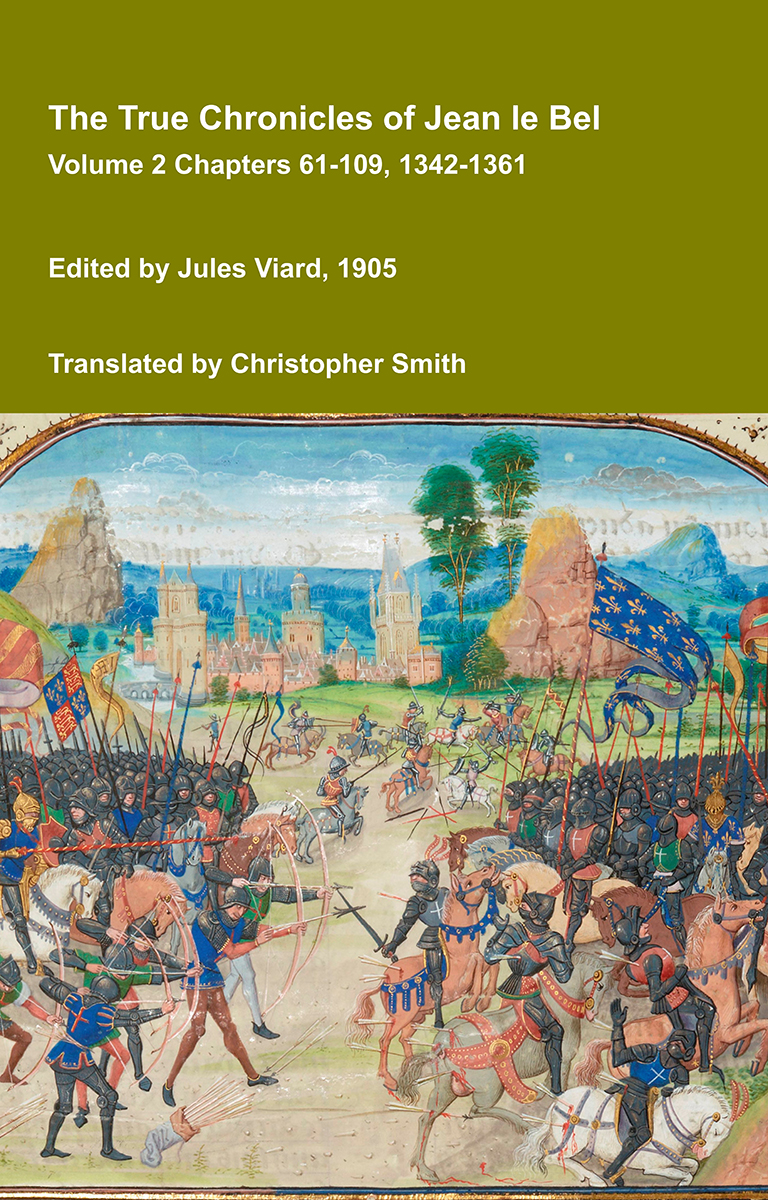 Chronicle of Jean le Bel Volume 2. In the year of grace 1350, King Philip of France died1, and his son, the Duke of Normandy, was crowned at Reims2. He was called King John of France, and he immediately debased the coinage out of greed3, and had new écus made which were called 'Johannes', of which the third part was copper.
L'an de grace mil CCCL, trespassa le roy Philippe de France', et fut couronné son filz le duc de Normendye à Rains. Si fut appellé le roy Jehan de France, et empira tantost les monnoyes par convoitise, et fit faire nouveaulx escus qu'on nommoit Johannes, dont la tierce partie estoit cuivre.
Note 1. Philip VI died in the night from Sunday 22nd to Monday 23rd August, as Gilles li Muisis indicates,, although he makes an error in saying that the night of Saint Bartholomew, that is, the 23rd, was a Sunday. This error is repeated by the Grandes Chroniques, which say that Philip of Valois died on Sunday 23rd August. But 23rd August was a Monday. The Chronique de Richard Lescot 22nd August. All these errors and divergences are very well explained by the fact that he died in the night of 22nd to 23rd August, the eve of Saint Bartholomew. Although the Grandes Chroniques and Richard Lescot say that he died at Nogent-le-Roi, Eure-et-Loir, Luce's Froissart, relying on the fact that the castle of Nogent-le-Roi belonged to the King of Navarre, says that Philip VI must rather have died at the abbey of Coulombs, situated one kilometre from Nogent. His opinion is confirmed by Gilles li Muisis, who says that he died 'in the monastery of Sainte-Colombe, of the order of Saint Benedict, which is situated near the city of Chartres'. According to the Grandes Chroniques, Philip VI’s body was brought to Notre-Dame of Paris on Thursday 26th August, and on Saturday 28th August his funeral took place. He was buried at Saint-Denis 'on the left side of the high altar'. His entrails were taken to the Jacobins in Paris, and his heart to Bourgfontaine in Valois.
1. Philippe VI mourut dans la nuit du dimanche 22 au lundi 23 août, comme l'indique Gilles li Muisis (op. cé P400), qui, cependant, commet une erreur en disant que la nuit de la Saint-Barthélemy (soit le 23) était un dimanche. Cette erreur est reproduite par les Grandes chroniques, t. V, p495, qui disent que Philippe de Valois mourut le dimanche 23 août. Or, le 23 août est un lundi. La Chronique de Richard Lescot (p. 88), place sa mort le 22 août. Toutes ces erreurs et ces divergences s'expliquent très bien par ce fait qu'il mourut dans la nuit du 22 au 23 (veille de la Saint-Barthélemy). Bien que les Grandes chroniques et Richard Lescot disent qu'il mourut à Nogent-le-Roi (Eure-et-Loir, arr. de Dreux, ch-l. de cant.), M. Luce, dans son édition de Froissart, t. LV, p. x1, n.2, s'appuyant sur ce que le château de Nogent-le-Roi appartenait au roi de Navarre, dit que Philippe VI dut plutôt mourir à l'abbaye de Coulombs, située à un kilomètre de Nogent. Son opirion est confirmée par Gilles li Muisis, qui dit qu'il mourut "in monasterio S. Columbæ ordinis Sancti Benedicti quod est situm prope eivitatem Carnotensem". D'après les Grandes chroniques, le corps de Philippe VI fut apporté à Notre-Dame de Paris le jeudi 26 août et le samedi 28 août eurent lieu ses obsèques, et il fut enterré à Saint-Denis "au costé senestre du grant autel". Ses entrailles furent portées aux Jacobins, à Paris, et son cœur à Bourgfontainc en Valois. Voy. aussi Guillaume de Nangis, éd. Géraud, t. Il, p. 221 et 222, et le compte des obsèques de ce roi publiées dans les Archives historiques, artistiques et linéraires, t. Il, p. 49 et suiv.
Note 2. The coronation of John the Good took place at Reims on Sunday 26th September 1350.
2. Le couronnement de Jean le Bon eut lieu à Reims le dimanche 26 septembre 1350. (Froissart, éd. Luce, t. IV, p400, et Grandes Chroniques, t. VI, p. 1.)
Note 3. Already Philip of Valois, by an ordinance of 21st August 1350, had debased the coinage. John the Good, who had to put this into effect, himself ordered a further debasement on 19th March and 14th May 1351.
3. Déjà Philippe de Valois, par ordonnance du 21 août 1350, avait affaibli la monnaie, (Ord., t. XII, p. 95.) Jean le Bon, qui avait dà la mettre à exécution, ordonna lui-même un nouvel affaiblissement le 19 mars et le 14 mai 1351. (Ord., t I, p. 389 et 428.)
Henrici Quinti, Angliæ Regis, Gesta, is a first-hand account of the Agincourt Campaign, and subsequent events to his death in 1422. The author of the first part was a Chaplain in King Henry's retinue who was present from King Henry's departure at Southampton in 1415, at the siege of Harfleur, the battle of Agincourt, and the celebrations on King Henry's return to London. The second part, by another writer, relates the events that took place including the negotiations at Troye, Henry's marriage and his death in 1422.
Available at Amazon in eBook and Paperback format.

On 22nd August 1785 Hester Lyttelton died from childbirth giving birth to her second child who also died.
On 22nd August 1789 Johann Heinrich Tischbein [aged 66] died.
On 22nd August 1793 John Thomas [aged 81] died. He has a memorial in the South Aisle of the Nave of Westminster Abbey. A grey and white marble with a bust and relief of the Holy Lamb, with a mitre and crozier behind. On either side are a chalice and paten and other emblems of the Eucharist made by John "The Elder" Bacon [aged 52]. The inscription reads .... Sacred to the memory of the Right Reverend John THOMAS, Doctor of Laws, Bishop of Rochester, Dean of this Collegiate Church, and of the most honourable Order of the Bath. Having passed a well spent boyhood at Carlisle School, he gathered the riper fruits of learning at Oxford, whence, by reason of his intellect, his character, his humane and profound scholarship, he emerged as an ornament to the legal profession. His fame thereafter growing and duly spreading abroad, he adorned his offices by his worthiness, increased his riches by his bounty, governed this church with his wisdom, protected it by his authority, and instructed it by his example. Unweared in his labours, indefatigable in his studies, his constant principle was edification: until, having virtuously fulfilled all life obligations, and for long sore pressed by a cruel disease, which was borne however with indomitable patience, he resigned his soul to God on 20th August 1793 in his 81st year. It fell to the lot of his relative, G.A.T., A.M. [Master of Arts] to offer this vain tribute, this token of sorrow, mean though it be.

On 22nd August 1805 Maria Elizabeth Boothby [aged 47] died. Monument in St Oswald's Church, Ashbourne [Map].
Maria Elizabeth Boothby: On 16th February 1758 she was born to Brooke Boothby 5th Baronet and Phoebe Hollins Lady Boothby in Ashbourne Hall, Derbyshire [Map].
On 22nd August 1807 Maria Walpole Duchess Gloucester and Edinburgh [aged 71] died.


On 22nd August 1817 Henry Hugh Manvers Percy was born to George Percy 5th Duke Northumberland [aged 39] and Louisa Harcourt Stuart-Wortley-Mackenzie [aged 35] at Burwood House, Cobham. He was educated at Eton College [Map].
On 28th June 1853 Francis Charteris 8th Earl of Wemyss Douglas 4th Earl March [aged 81] died. His son Francis [aged 56] succeeded 9th Earl Wemyss, 2nd Baron Wemyss of Wemyss in Fife. Louisa Bingham Countess Wemyss [aged 55] by marriage Countess Wemyss.
His obituary in the Gentleman's Magazine by Sylvanus Urban Volume XL reads as follows:
THE EARL OF WEMYSS AND MARCH June 28 At Gosford House East Lothian in his 81st year the Right Hon Francis Wemyss Charteris Wemyss sixth Earl of Wemyss and Lord Elcho and Methel 1633 Baron Wemyss of Elcho 1628 Earl of March Viscount of Peebles and Lord Niedpath, Lyne and Munard 1697 all dignities in the peerage of Scotland Baron Wemyss of Wemyss co Fife 1821 and Lord Lieutenant of Peebleshire.
He was born on the 15th April 1772 the only son of Francis Lord Elcho son and heir apparent of the fifth Earl by Miss Susan Tracy Keck one of the Maids of Honour to Queen Charlotte the second daughter of Anthony Tracy Keck esq of Great Tew co Oxford by Lady Susan Hamilton fourth daughter of James fourth Duke of Hamilton and first Duke of Brandon KG and KT.
In early life his lordship had a commission in the army and from 1793 to 1797 was aide de camp to his grand uncle Lord Adam Gordon Commander in chief of the forces in Scotland He quitted the army in 1797.
His father Lord Elcho died on the 20th June 1808 and his grandfather on the 24th August following whereupon he succeeded to the Earldom of Wemyss and its attendant titles. On the death of William fourth Duke of Queensberry [aged 83] in Dec 1810 he inherited the barony of Niedpath and the extensive property which had belonged to his Grace in the county of Peebles in pursuance of the terms of the marriage contract of the first Earl of March his Grace's grandfather. He also succeeded to the dignities of Earl of March, Viscount of Peebles and Lord Douglas of Niedpath, Lyne and Munard the patent of creation being to Lord William Douglas et heredes masculos de ejus corpore quibus deficientibus alios ejus hæredes masin culos et talliæ contentos in ejus infeofa mentis terrarum et dominii de Niedpath.
His Lordship was created a peer of the united kingdom by the title of Baron Wemyss at the Coronation of King George IV by patent dated 17th July 1821. He supported the Conservative party in parliament but took but little interest in politics.
He married May 31 1794 Margaret [aged 16] fourth daughter of Walter Campbell esq of Shawfield [aged 54] by his first wife Eleanor daughter of Robert Kerr of Newfield eldest son of Lord Charles Kerr second son of Robert first Marquess of Lothian. By that lady who died in 1850 he had issue two sons and nine daughters 1 Francis his successor 2 Lady Eleanor [aged 1] married in 1820 to Walter Frederick Campbell of Woodhall co Lanark esq eldest son of Colonel John Campbell [aged 26] by Lady Charlotte [aged 21] daughter of John fifth Duke of Argyle [aged 73] and died in 1832 3 the Hon Walter died 1818 4 Susan who died in infancy 5 Lady Margaret married in 1824 to Lieut Colonel John Wildman and died in 1825 6 Lady Katharine married in 1824 to her cousin George Harry Lord Grey of Groby who died in 1835 and she died in 1844 leaving issue the present Earl of Stamford and Warrington and Lady Margaret Milbanke 7 Lady Charlotte [aged 1] married in 1825 to Andrew Fletcher esq of Salton Castle East Lothian 8 Lady Louisa Antoinetta [aged 1] married in 1832 to William Forbes esq of Callendar co Stirling late MP for Stirlingshire 9 Lady Harriet [aged 1] married in 1829 to Sir George Grant Suttie Bart 10 Lady Jane and 11 Lady Caroline. The present Earls in 1796 married in 1817 Lady Louisa Bingham fourth daughter of Richard 2d Earl Lucan [aged 31] by whom he has issue Francis Lord Elcho four other sons and daughters.


On 22nd August 1863 Charles Francis Fuller [aged 33] and Helen Mary Ann Bagge [aged 24] were married at Boulogne sur Mer [Map].
On 22nd August 1867 George Percy 5th Duke Northumberland [aged 89] died. His son Algernon [aged 57] succeeded 6th Duke Northumberland, 3rd Earl Beverley, 9th Baronet Smithson of Stanwick in Yorkshire. Louisa Drummond Duchess Northumberland by marriage Duchess Northumberland.
On 22nd August 1878 Maria Christina of the Two Sicilies Queen Consort Spain [aged 72] died.
The London Gazette 26328. Whitehall, September 22, 1892. THE Queen has been pleased, by letters Patent under the Great Seal of the United Kingdom of Great Britain and Ireland, dated the 22nd August, 1892, to grant the dignities of an Earl and a Marquess of the said United Kingdom unto the Right Honourable Lawrence, Earl of Zetland [aged 48], and the heirs male of his body lawfully begotten, by the names, styles, and titles of Earl of Ronaldshay, in the county of Orkney and Zetland, and Marquess of Zetland. [Lilian Selina Elizabeth Lumley Marchioness Zetland [aged 40] by marriage Marchioness Zetland.]
On 22nd August 1893 Ernest Saxe Coburg Gotha II Duke Saxe Coburg Gotha [aged 75] died.
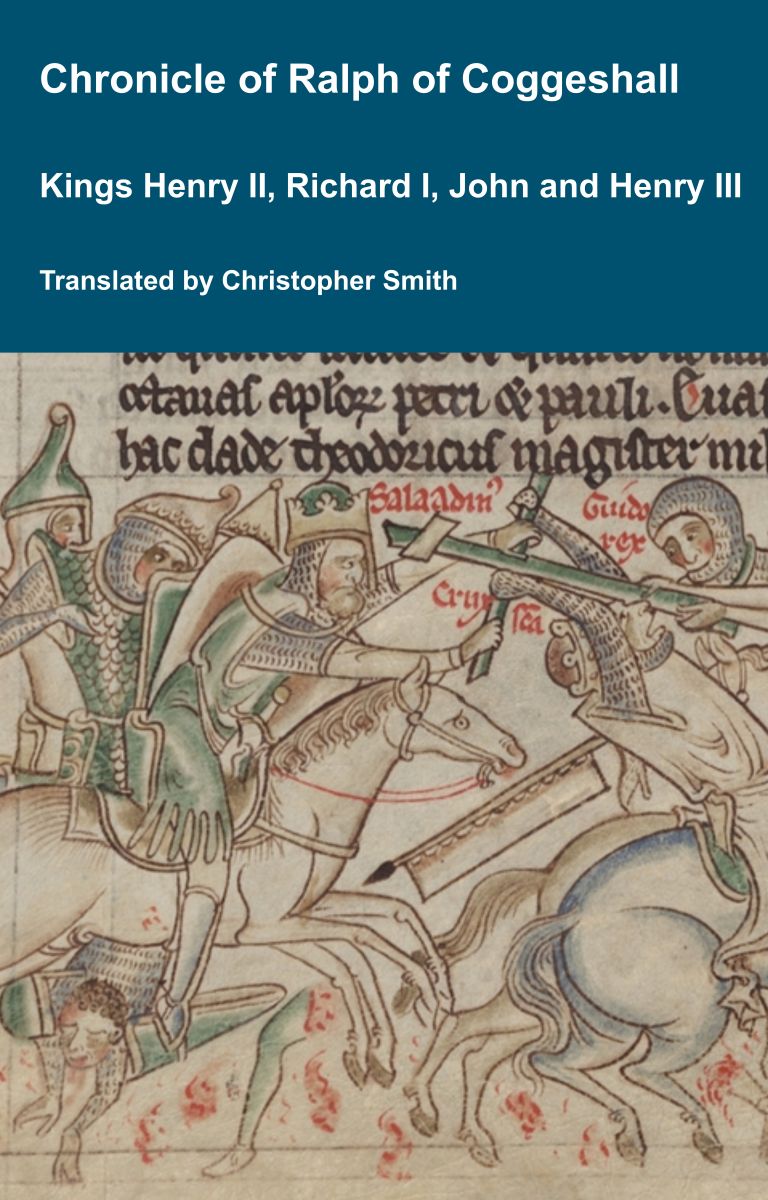
Chronicle of Abbot Ralph of Coggeshall
The Chronicle of Abbot Ralph of Coggeshall (Chronicon Anglicanum) is an indispensable medieval history that brings to life centuries of English and European affairs through the eyes of a learned Cistercian monk. Ralph of Coggeshall, abbot of the Abbey of Coggeshall in Essex in the early 13th century, continued and expanded his community’s chronicle, documenting events from the Norman Conquest of 1066 into the tumultuous reign of King Henry III. Blending eyewitness testimony, careful compilation, and the monastic commitment to record-keeping, this chronicle offers a rare narrative of political intrigue, royal power struggles, and social upheaval in England and beyond. Ralph’s work captures the reigns of pivotal figures such as Richard I and King John, providing invaluable insights into their characters, decisions, and the forces that shaped medieval rule. More than a simple annal, Chronicon Anglicanum conveys the texture of medieval life and governance, making it a rich source for scholars and readers fascinated by English history, monastic authorship, and the shaping of the medieval world.
Available at Amazon in eBook and Paperback format.
On 22nd August 1903 Robert Gascoyne-Cecil 3rd Marquess Salisbury [aged 73] died. Monument at St Etheldreda's Church, Hatfield [Map] by William Goscombe John [aged 43]. His son James [aged 41] succeeded 4th Marquess Salisbury in Wiltshire, 10th Earl Salisbury. Cicely Anne Gore Marchioness Salisbury [aged 36] by marriage Marchioness Salisbury in Wiltshire. Note the St George Pendant signifying his being a Knight of the Garter.
Cicely Anne Gore Marchioness Salisbury: On 15th July 1867 she was born to Arthur Saunders Gore 5th Earl Arran and Edith Jocelyn. On 17th May 1887 James Gascoyne-Cecil 4th Marquess Salisbury and she were married. She the daughter of Arthur Saunders Gore 5th Earl Arran and Edith Jocelyn. He the son of Robert Gascoyne-Cecil 3rd Marquess Salisbury and Georgina Alderson Marchioness of Salisbury. On 5th February 1955 Cicely Anne Gore Marchioness Salisbury died.


On 22nd August 1905 Alfred Waterhouse [aged 75] died.
The London Gazette 28876. 4th Battalion, The Leicestershire Regiment. The undermentioned Second Lieutenants to be Lieutenants. 1914: — Dated 22nd August
John H. M., Marquis of Granby [aged 28].
John S. Parsons.
John G. Abell.
Ambrose Childe Clarke to be Second Lieutenant. Dated 22nd August, 19.14.
On 22nd August 1918 Tom Cecil Noel [aged 20] was killed in action at Westrozebeke, West Flanders. Noel was flying with Latimer when they were shot down by Leutnant Willi Nebgen of Jasta 7. Noel was killed and Latimer was captured. He was awarded a Bar to his Military Cross.
After 22nd August 1918. Church of St Peter and St Paul, Exton, Rutlandshire [Map]. Monument to Tom Cecil Noel [deceased].

After 22nd August 1918. St John Lee Church, Hexham [Map]. Monument to George Pears Walton.
On 22nd August 1920 Anders Zorn [aged 60] died.
On 22nd August 1165 King Philip II of France was born to Louis VII King of the Franks [aged 45] and Adèle Queen of the Franks in Gonesse. The much longed for heir to the crown of France. He was also given the name 'Dieu Donné' meaning God Given. He a great x 2 grandson of King William "Conqueror" I of England. He married (1) 28th April 1180 his half third cousin Isabelle Flanders Queen Consort France, daughter of Baldwin Flanders V Count Hainaut and Margaret Metz Countess Hainaut and Flanders, and had issue (2) 15th August 1193 Ingeborg Estridsen Queen Consort France (3) 7th May 1196 Agnes of Merania Queen Consort France, daughter of Berthold Andechs Duke Merania and Agnes Rochlitz, and had issue.
On 22nd August 1393 Marie Valois was born to Charles "Beloved Mad" VI King France [aged 24] and Isabeau Wittelsbach Queen Consort France [aged 23].
On 22nd August 1575 Marie Oldenburg was born to John "Younger" Oldenburg Duke Schleswig Holstein Sonderburg [aged 30] and Elisabeth of Brunswick-Grubenhagen [aged 25].
On 22nd August 1610 Penelope Noel was born to Edward Noel 2nd Viscount Campden [aged 28] and Juliana Hicks Viscountess Campden [aged 24].
On 22nd August 1658 John Ernest Saxe Coburg Saalfeld IV Duke Saxe Coburg Saalfeld was born to Ernest "The Pious" Saxe Gotha I Duke Saxe Gotha [aged 56] and Elisabeth Sophie Saxe Altenburg Duchess Saxe Gotha [aged 38]. Coefficient of inbreeding 3.17%. He married (1) 18th February 1680 Sophie Hedwig Saxe Merseburg Duchess Saxe Coburg Saalfeld, daughter of Christian Saxe Merseburg 1st Duke Saxe Merseburg, and had issue (2) 2nd December 1690 Charlotte Johanna Waldeck Wildungen Duchess Saxe Coburg Saalfeld and had issue.
On 22nd August 1684 Maria Theresa Habsburg Spain was born to Leopold Habsburg Spain I Holy Roman Emperor [aged 44] and Eleonore Magdalene of Neuburg [aged 29]. Coefficient of inbreeding 1.61%.
The History of William Marshal was commissioned by his son shortly after William’s death in 1219 to celebrate the Marshal’s remarkable life; it is an authentic, contemporary voice. The manuscript was discovered in 1861 by French historian Paul Meyer. Meyer published the manuscript in its original Anglo-French in 1891 in two books. This book is a line by line translation of the first of Meyer’s books; lines 1-10152. Book 1 of the History begins in 1139 and ends in 1194. It describes the events of the Anarchy, the role of William’s father John, John’s marriages, William’s childhood, his role as a hostage at the siege of Newbury, his injury and imprisonment in Poitou where he met Eleanor of Aquitaine and his life as a knight errant. It continues with the accusation against him of an improper relationship with Margaret, wife of Henry the Young King, his exile, and return, the death of Henry the Young King, the rebellion of Richard, the future King Richard I, war with France, the death of King Henry II, and the capture of King Richard, and the rebellion of John, the future King John. It ends with the release of King Richard and the death of John Marshal.
Available at Amazon in eBook and Paperback format.
On 22nd August 1732 Thomas Henry Clifford was born to Hugh Clifford 3rd Baron Clifford Chudleigh and Elizabeth Blount Baroness Clifford Chudleigh. He married before 4th December 1762 his half third cousin Barbara Aston, daughter of James Aston 5th Baronet and Barbara Maria Talbot, and had issue.
On 22nd August 1752 Charles Philip Stourton 17th Baron Stourton was born to William Stourton 16th Baron Stourton [aged 48] and Winifrede Howard Baroness Stourton [aged 25]. He married 15th June 1775 his fifth cousin Mary Langdale Baroness Stourton, daughter of Marmaduke Langdale 5th Baron Langdale.
On 22nd August 1759 Andrew St John 14th Baron St John was born to John St John 12th Baron St John [aged 33] and Susanne Louise Simond at Woodford, Northamptonshire. He married before 15th October 1817 Louise Rouse-Boughton Baroness St John and had issue.
On 22nd August 1770 Vice-Admiral Jahleel Brenton 1st Baronet was born to Rear-Admiral Jahleel Brenton [aged 40] and Henrietta Cowley at Newport, Rhode Island. He married (1) March 1802 Isabella Stewart Lady Brenton and had issue (2) 1822 his first cousin Harriet Brenton Lady Brenton.
On 22nd August 1815 Philip Reginald Cocks 5th Baron Somers was born to Lieutenant-Colonel Philip James Cocks [aged 40].
On 22nd August 1817 Henry Hugh Manvers Percy was born to George Percy 5th Duke Northumberland [aged 39] and Louisa Harcourt Stuart-Wortley-Mackenzie [aged 35] at Burwood House, Cobham. He was educated at Eton College [Map].

On 22nd August 1820 Anne Primrose was born to Archibald Primrose 4th Earl Rosebery [aged 36] and Anna Margaret Anson Countess Camden [aged 23].
On 22nd August 1841 Erroll Augustus Blake 4th Baron Wallscourt was born to Joseph Henry Blake 3rd Baron Wallscourt [aged 44]. He married 7th February 1874 Jane Harriet Stanhope Baroness Wallscourt, daughter of Charles Stanhope 7th Earl of Harrington, and had issue.

On 22nd August 1845 Bishop Watkin Williams was born.
On 22nd August 1853 Edith Louisa Mary Bligh was born to John Stuart Bligh 6th Earl Darnley [aged 26] and Harriet Mary Pelham Countess Darnley [aged 24].
William of Worcester's Chronicle of England
William of Worcester, born around 1415, and died around 1482 was secretary to John Fastolf, the renowned soldier of the Hundred Years War, during which time he collected documents, letters, and wrote a record of events. Following their return to England in 1440 William was witness to major events. Twice in his chronicle he uses the first person: 1. when writing about the murder of Thomas, 7th Baron Scales, in 1460, he writes '… and I saw him lying naked in the cemetery near the porch of the church of St. Mary Overie in Southwark …' and 2. describing King Edward IV's entry into London in 1461 he writes '… proclaimed that all the people themselves were to recognize and acknowledge Edward as king. I was present and heard this, and immediately went down with them into the city'. William’s Chronicle is rich in detail. It is the source of much information about the Wars of the Roses, including the term 'Diabolical Marriage' to describe the marriage of Queen Elizabeth Woodville’s brother John’s marriage to Katherine, Dowager Duchess of Norfolk, he aged twenty, she sixty-five or more, and the story about a paper crown being placed in mockery on the severed head of Richard, 3rd Duke of York.
Available at Amazon in eBook and Paperback format.
On 22nd August 1864 John Ryder 5th Earl of Harrowby was born to Henry Ryder 4th Earl of Harrowby [aged 28]. He married 1887 Mabel Danvers Smith Countess Harrowby, daughter of William Henry Smith and Emily Danvers 1st Viscountess Hambleden.
On 22nd August 1875 Constance Grosvenor Countess of Shaftesbury was born to Victor Alexander Grosvenor [aged 22] and Sibell Mary Lumley [aged 20]. She married 15th July 1899 her fifth cousin Anthony Ashley-Cooper 9th Earl of Shaftesbury, son of Anthony Ashley-Cooper 8th Earl Shaftesbury and Harriet Augusta Anna Seymourina Chichester Countess Shaftesbury, and had issue.
On 22nd August 1879 Bertha Anson was born to Thomas Francis Anson 3rd Earl Lichfield [aged 23] and Mildred Coke Countess Lichfield [aged 25]. She married her fifth cousin once removed Thomas Henry Frederick Egerton, son of Francis Egerton 3rd Earl Ellesmere and Katherine Louisa Phipps Countess Ellesmere.
On 22nd August 1905 Martin Lindsay was born.
On 22nd August 1912 John Aubrey-Fletcher 7th Baronet was born to Henry Aubrey-Fletcher 6th Baronet [aged 24] and Mary Augusta Chilton Lady Fletcher. He married 1939 Diana Mary Fynola Egerton Lady Fletcher and had issue.
On 22nd August 1956 Mark Lionel Parker 7th Earl of Morley was born to John Parker 6th Earl Morley [aged 33] and Katherine Molesworth-St Aubyn Countess Morley.
On 22nd August 1036 Ramiro Sánchez I King Aragon [aged 29] and Gisberga or Ermesinda Bigorre Queen Consort Aragon [aged 21] were married. He the illegitmate son of Sancho "Great" III King Pamplona and Sancha Aibar.
On 22nd August 1455 Thomas Fitzgerald 7th Earl Desmond and Ellice Barry Countess Desmond [aged 35] were married. She by marriage Countess Desmond. He the son of James Fitzgerald 6th Earl Desmond.
On 22nd August 1620 Oliver Cromwell [aged 21] and Elizabeth Bourchier [aged 22] were married.
On 22nd August 1705 King George II of Great Britain and Ireland [aged 21] and Caroline Hohenzollern Queen Consort England [aged 22] were married. He the son of King George I [aged 45] and Sophia Dorothea of Celle [aged 38].
Adam Murimuth's Continuation and Robert of Avesbury’s 'The Wonderful Deeds of King Edward III'
This volume brings together two of the most important contemporary chronicles for the reign of Edward III and the opening phases of the Hundred Years’ War. Written in Latin by English clerical observers, these texts provide a vivid and authoritative window into the political, diplomatic, and military history of fourteenth-century England and its continental ambitions. Adam Murimuth Continuatio's Chronicarum continues an earlier chronicle into the mid-fourteenth century, offering concise but valuable notices on royal policy, foreign relations, and ecclesiastical affairs. Its annalistic structure makes it especially useful for establishing chronology and tracing the development of events year by year. Complementing it, Robert of Avesbury’s De gestis mirabilibus regis Edwardi tertii is a rich documentary chronicle preserving letters, treaties, and official records alongside narrative passages. It is an indispensable source for understanding Edward III’s claim to the French crown, the conduct of war, and the mechanisms of medieval diplomacy. Together, these works offer scholars, students, and enthusiasts a reliable and unembellished account of a transformative period in English and European history. Essential for anyone interested in medieval chronicles, the Hundred Years’ War, or the reign of Edward III.
Available at Amazon in eBook and Paperback format.
On 22nd August 1748 Charles Loraine 3rd Baronet [aged 45] and Dorothy Myloyt were married.
On 22nd August 1817 Francis Charles Charteris 9th Earl of Wemyss [aged 21] and Louisa Bingham Countess Wemyss [aged 19] were married in Paris [Map]. She the daughter of Richard Bingham 2nd Earl Lucan [aged 52] and Elizabeth Belasyse Duchess Norfolk [aged 47]. He the son of Francis Charteris 8th Earl of Wemyss Douglas 4th Earl March [aged 45].
On 22nd August 1843 Claude Champion de Crespigny 3rd Baronet [aged 25] and Mary Tyrell Lady Champion de Crespigny [aged 20] were married. She by marriage Lady Champion de Crespigny of Champion Lodge in Surrey.
On 22nd August 1848 Edmund Roche 1st Baron Fermoy [aged 33] and Elizabeth Caroline Boothby [aged 27] were married.
On 22nd August 1848 William Henry Leigh 2nd Baron Leigh [aged 24] and Caroline Grosvenor [aged 20] were married. They had eight children. She the daughter of Richard Grosvenor 2nd Marquess Westminster [aged 53] and Elizabeth Mary Leveson-Gower Marchioness Westminster [aged 51].
On 22nd August 1857 Anthony Ashley-Cooper 8th Earl Shaftesbury [aged 26] and Harriet Augusta Anna Seymourina Chichester Countess Shaftesbury were married. She the daughter of George Chichester 3rd Marquess Donegal [aged 60] and Harriet Anne Butler Marchioness Donegal [aged 58]. He the son of Anthony Ashley-Cooper 7th Earl Shaftesbury [aged 56] and Emily Caroline Catherine Frances Cowper Countess Shaftesbury.
On 22nd August 1861 Somerset Lowry-Corry 4th Earl Belmore [aged 26] and Anne Elizabeth Honoria Gladstone [aged 19] were married at St George's Church, Hanover Square. He the son of Armar Lowry-Corry 3rd Earl Belmore and Emily Louise Shepherd Countess Belmore [aged 47].
On 22nd August 1863 Charles Francis Fuller [aged 33] and Helen Mary Ann Bagge [aged 24] were married at Boulogne sur Mer [Map].
On 22nd August 1929 Guy Raymond Hill Wallace and Barbara Felicity Smith 14th Baroness Dudley [aged 22] were married.
On 22nd August 1936 Michael Addison 3rd Viscount Addison [aged 22] and Kathleen Wand were married. She the daughter of Bishop John William Wand [aged 51] and Amy Agnes Wiggins [aged 53].
On 22nd August 1941 Noel Percy Hugh Dryden 10th and 7th Baronet [aged 30] and Rosamund Mary Scrope Lady Dryden were married. She by marriage Lady Dryden of Ambrosden in Oxfordshire, Lady Dryden of Canons Ashby in Northamptonshire.
On 22nd August 1304 John of Avesnes II Count Hainaut II Count Holland [aged 57] died. His son William [aged 18] succeeded I Count Hainaut.
On 22nd August 1315 Robert Fitzpayn 1st Baron Fitzpayn [aged 61] died. His son Robert [aged 30] succeeded 2nd Baron Fitzpayn.
On 22nd August 1358 Isabella of France Queen Consort England [aged 63] died at Hertford Castle [Map]; see Archaeologia Vol. 35 XXXIII. She was buried in Christ Church, Greyfriars [Map].
The funeral was performed by Archbishop Simon Islip. She was buried in the mantle she had worn at her wedding and at her request, Edward's heart, placed into a casket thirty years before, was interred with her.
On 22nd August 1371 Guy of Luxemburg I Count Saint Pol and Ligny [aged 31] was killed at Baesweiler, Aachen aka Aix-le-Chapelle.
Waleran Luxemburg [aged 16] was captured.
On 24th August 1371 Edward Duke Guelders [aged 35] died from wounds..
On 22nd August 1485 King Richard III of England [aged 32] was killed during the Battle of Bosworth. His second cousin once removed Henry Tudor [aged 28] succeeded VII King of England.
Humphrey Cotes [aged 35] died. It isn't clear on which side he was fighting.
Those supporting Henry Tudor included:
John Blount 3rd Baron Mountjoy [aged 35].
John Cheney 1st Baron Cheyne [aged 43].
Richard Guildford [aged 35].
Walter Hungerford [aged 21].
Thomas Stanley 1st Earl of Derby [aged 50].
Edward Woodville Lord Scales [aged 29].
Edward Courtenay 1st Earl Devon [aged 26].
Rhys ap Thomas Deheubarth [aged 36].
Jasper Tudor 1st Duke Bedford [aged 53].
William Beaumont 2nd Viscount Beaumont [aged 47].
Giles Daubeney 1st Baron Daubeney [aged 34].
William Stanley [aged 50].
Roger Kynaston of Myddle and Hordley [aged 52].
Henry Marney 1st Baron Marney [aged 38].
William Brandon [aged 29] was killed.
James Harrington [aged 55] was killed.
John Howard 1st Duke of Norfolk [aged 60] was killed and attainted. He was buried firstly at Thetford Priory, Norfolk [Map] and therafter at Church of St Michael the Archangel, Framlingham [Map]. Duke Norfolk, Baron Mowbray, Baron Segrave, Baron Howard forfeit.
John Sacheverell [aged 85] was killed.
Philibert Chandee 1st Earl Bath
William Norreys [aged 44], Gilbert Talbot [aged 33], John de Vere 13th Earl of Oxford [aged 42] and John Savage [aged 41] commanded,.
Robert Poyntz [aged 35] was knighted.
Those who fought for Richard III included:
John Bourchier 6th Baron Ferrers of Groby [aged 47].
John Conyers [aged 74].
Thomas Dacre 2nd Baron Dacre Gilsland [aged 17].
William Berkeley 1st Marquess Berkeley [aged 59].
Richard Fitzhugh 6th Baron Fitzhugh [aged 28].
John Scrope 5th Baron Scrope of Bolton [aged 48].
Thomas Scrope 6th Baron Scrope of Masham [aged 26].
Henry Grey 4th or 7th Baron Grey of Codnor [aged 50].
Edmund Grey 1st Earl Kent [aged 68].
Ralph Neville 3rd Earl of Westmoreland [aged 29].
John de la Pole Earl Lincoln 1st [aged 23].
Humphrey Stafford [aged 59].
George Talbot 4th Earl of Shrewsbury [aged 17].
Thomas Howard 2nd Duke of Norfolk [aged 42] was wounded, captured and imprisoned in the Tower of London [Map] for three years. He was attainted; Earl Surrey forfeit.
Francis Lovell 1st Viscount Lovell [aged 29] fought and escaped.
John Zouche 7th Baron Zouche Harringworth [aged 26] was captured.
John Babington [aged 62], William Alington [aged 65], Robert Mortimer [aged 43], Robert Brackenbury, Richard Ratclyffe [aged 55] and Richard Bagot [aged 73] were killed
Walter Devereux Baron Ferrers of Chartley [aged 53] was killed.
William Catesby [aged 35] was executed at Leicester, Leicestershire [Map] after the battle.
George Stanley 9th Baron Strange Knockin 5th Baron Mohun Dunster [aged 25] held as a hostage by Richard III before the Battle of Bosworth.
Henry Percy 4th Earl of Northumberland [aged 36] betrayed King Richard III of England by not committing his forces at the Battle of Bosworth.
John Iwardby [aged 35] was killed.
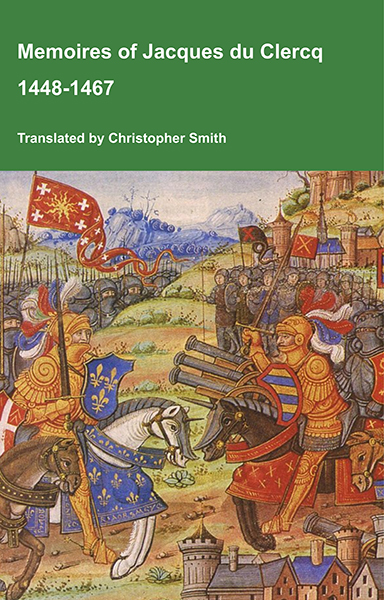
This is a translation of the 'Memoires of Jacques du Clercq', published in 1823 in two volumes, edited by Frederic, Baron de Reissenberg. In his introduction Reissenberg writes: 'Jacques du Clercq tells us that he was born in 1424, and that he was a licentiate in law and a counsellor to Philip the Good, Duke of Burgundy, in the castellany of Douai, Lille, and Orchies. It appears that he established his residence at Arras. In 1446, he married the daughter of Baldwin de la Lacherie, a gentleman who lived in Lille. We read in the fifth book of his Memoirs that his father, also named Jacques du Clercq, had married a lady of the Le Camelin family, from Compiègne. His ancestors, always attached to the counts of Flanders, had constantly served them, whether in their councils or in their armies.' The Memoires cover a period of nineteen years beginning in in 1448, ending in in 1467. It appears that the author had intended to extend the Memoirs beyond that date; no doubt illness or death prevented him from carrying out this plan. As Reissenberg writes the 'merit of this work lies in the simplicity of its narrative, in its tone of good faith, and in a certain air of frankness which naturally wins the reader’s confidence.' Du Clercq ranges from events of national and international importance, including events of the Wars of the Roses in England, to simple, everyday local events such as marriages, robberies, murders, trials and deaths, including that of his own father in Book 5; one of his last entries.
Available at Amazon in eBook and Paperback format.
On 22nd August 1485 Elizabeth Fitzwalter Baroness Dinham 8th Baroness Fitzwalter [aged 55] died. Her son John [aged 33] succeeded 9th Baron Fitzwalter.
On 22nd August 1529 Edith Sandys Baroness died.
On 22nd August 1532 Archbishop William Warham [aged 82] died.
On 22nd August 1545 Charles Brandon 1st Duke of Suffolk [aged 61] died. His son Henry [aged 9] succeeded 2nd Duke Suffolk, 2nd Viscount Lisle.
On 22nd August 1553 John Dudley 1st Duke Northumberland [aged 49] was beheaded at Tower Hill [Map]. Duke Northumberland, Earl Warwick and Viscount Lisle forfeit. John Dudley 2nd Earl Warwick [aged 26], his son, was also attainted, with the Earldom of Warwick forfeit.
Thomas Palmer and John Gates [aged 49] were hanged, drawn and quartered.
On 22nd August 1572 Thomas Percy 7th Earl of Northumberland [aged 44] was beheaded at The Pavement in York. He was buried at St Crux Church, York [Map]. His brother Henry [aged 40] succeeded 8th Earl of Northumberland, 11th Baron Percy of Alnwick, 19th Baron Percy of Topcliffe, 2nd Baron Percy of Alnwick, 10th Baron Poynings.
On 22nd August 1622 Henry Clere 1st Baronet [aged 24] died without surviving male issue. Baronet Clere of Ormesby in Norfolk extinct. He was buried at St Andrew's Church, Blickling [Map] where his inscription reads:
Here rests Henry Clere, Baronet, who married Meriel, daughter of Edmund Lord Mondeford, Knight of the Golden Knight, by whom he had an only daughter, Abigail, who died xxii. Augustus, Anno Domini Mdcxxii. of his age - - - - - - - - - - -.
Hic requiescit Henricus Clere Baronettus, qui Thalamo sibi Conjunxit, Merielem, Filiam Edmundi Domini Mondeford, Equitis Aurati, ex quâ habuit prolem Filiam unicam, Abigalem, obijt xxii. Augusti, Anno Domini Mdcxxii. Ætatis suæ - - - - - - - - - - -".
On 22nd August 1643 Philippe Carteret 3rd Seigneur Sark [aged 59] died. His son Philippe [aged 23] succeeded 4th Seigneur of Sark.
On 22nd August 1643 William Pennyman 1st Baronet [aged 36] died during the Oxford Plague. Baronet Pennyman of Marske in Yorkshire extinct.
On 22nd August 1667 Bishop Alexander Hyde [aged 75] died at St Giles' in the Fields Church [Map].
On 22nd August 1672 Anne Sackville Countess Home [aged 22] died.
On 22nd August 1680 John George Wettin Elector Saxony [aged 67] died. His son John [aged 33] succeeded Elector Saxony.
Jean de Waurin's Chronicle of England Volume 6 Books 3-6: The Wars of the Roses
Jean de Waurin was a French Chronicler, from the Artois region, who was born around 1400, and died around 1474. Waurin’s Chronicle of England, Volume 6, covering the period 1450 to 1471, from which we have selected and translated Chapters relating to the Wars of the Roses, provides a vivid, original, contemporary description of key events some of which he witnessed first-hand, some of which he was told by the key people involved with whom Waurin had a personal relationship.
Available at Amazon in eBook and Paperback format.
On 22nd August 1683 John Hobart 3rd Baronet [aged 55] died. His son Henry [aged 26] succeeded 4th Baronet Hobart of Intwood in Norfolk.
On 22nd August 1701 John Granville 1st Earl Bath [aged 72] died. His son Charles [aged 39] succeeded 2nd Earl Bath; he shot himself a month later.
On 22nd August 1706 Charles Home 6th Earl of Home died. His son Alexander succeeded 7th Earl of Home. Anne Kerr Countess Home by marriage Countess of Home.

On 22nd August 1719 Isabella Sackville Countess Northampton [aged 96] died at Compton Wynyates, Warwickshire [Map].
On 22nd August 1765 George Brodrick 3rd Viscount Midleton [aged 34] died of an abscess in the spleen. His son George Brodrick [aged 10] succeeded 4th Viscount Midleton of Midleton in Cork, 4th Baron Brodrick of Midleton in Cork.

On 22nd August 1773 George Lyttelton 1st Baron Lyttelton [aged 64] died. His son Thomas [aged 29] succeeded 2nd Baron Lyttelton of Frankley in Worcester, 6th Baronet Lyttelton of Frankley.
On 22nd August 1783 Robert Hampden-Trevor 1st Viscount Hampden [aged 77] died. His son Thomas [aged 37] succeeded 2nd Viscount Hampden, 5th Baron Trevor Bromham.
On 22nd August 1789 Johann Heinrich Tischbein [aged 66] died.
On 22nd August 1793 John Thomas [aged 81] died. He has a memorial in the South Aisle of the Nave of Westminster Abbey. A grey and white marble with a bust and relief of the Holy Lamb, with a mitre and crozier behind. On either side are a chalice and paten and other emblems of the Eucharist made by John "The Elder" Bacon [aged 52]. The inscription reads .... Sacred to the memory of the Right Reverend John THOMAS, Doctor of Laws, Bishop of Rochester, Dean of this Collegiate Church, and of the most honourable Order of the Bath. Having passed a well spent boyhood at Carlisle School, he gathered the riper fruits of learning at Oxford, whence, by reason of his intellect, his character, his humane and profound scholarship, he emerged as an ornament to the legal profession. His fame thereafter growing and duly spreading abroad, he adorned his offices by his worthiness, increased his riches by his bounty, governed this church with his wisdom, protected it by his authority, and instructed it by his example. Unweared in his labours, indefatigable in his studies, his constant principle was edification: until, having virtuously fulfilled all life obligations, and for long sore pressed by a cruel disease, which was borne however with indomitable patience, he resigned his soul to God on 20th August 1793 in his 81st year. It fell to the lot of his relative, G.A.T., A.M. [Master of Arts] to offer this vain tribute, this token of sorrow, mean though it be.
On 22nd August 1805 George Bussy Villiers 4th Earl Jersey [aged 70] died. His son George [aged 32] succeeded 5th Earl Jersey, 8th Viscount Grandison, 5th Viscount Villiers, 5th Baron Villiers. Sarah Sophia Fane Countess Jersey [aged 20] by marriage Countess Jersey.
On 22nd August 1807 Maria Walpole Duchess Gloucester and Edinburgh [aged 71] died.
Jean de Waurin's Chronicle of England Volume 6 Books 3-6: The Wars of the Roses
Jean de Waurin was a French Chronicler, from the Artois region, who was born around 1400, and died around 1474. Waurin’s Chronicle of England, Volume 6, covering the period 1450 to 1471, from which we have selected and translated Chapters relating to the Wars of the Roses, provides a vivid, original, contemporary description of key events some of which he witnessed first-hand, some of which he was told by the key people involved with whom Waurin had a personal relationship.
Available at Amazon in eBook and Paperback format.
On 22nd August 1817 Frances Perceval Baroness Redesdale died.
On 22nd August 1825 Richard Hely-Hutchinson 1st Earl of Donoughmore [aged 69] died. His brother John [aged 68] succeeded 2nd Earl of Donoughmore, 2nd Viscount Hutchinson of Knocklofty in Tipperary, 2nd Viscount Donoughmore of Knocklofty in Tipperary, 3rd Baron Donoughmore of Knocklofty in Tipperary.
On 28th June 1853 Francis Charteris 8th Earl of Wemyss Douglas 4th Earl March [aged 81] died. His son Francis [aged 56] succeeded 9th Earl Wemyss, 2nd Baron Wemyss of Wemyss in Fife. Louisa Bingham Countess Wemyss [aged 55] by marriage Countess Wemyss.
His obituary in the Gentleman's Magazine by Sylvanus Urban Volume XL reads as follows:
THE EARL OF WEMYSS AND MARCH June 28 At Gosford House East Lothian in his 81st year the Right Hon Francis Wemyss Charteris Wemyss sixth Earl of Wemyss and Lord Elcho and Methel 1633 Baron Wemyss of Elcho 1628 Earl of March Viscount of Peebles and Lord Niedpath, Lyne and Munard 1697 all dignities in the peerage of Scotland Baron Wemyss of Wemyss co Fife 1821 and Lord Lieutenant of Peebleshire.
He was born on the 15th April 1772 the only son of Francis Lord Elcho son and heir apparent of the fifth Earl by Miss Susan Tracy Keck one of the Maids of Honour to Queen Charlotte the second daughter of Anthony Tracy Keck esq of Great Tew co Oxford by Lady Susan Hamilton fourth daughter of James fourth Duke of Hamilton and first Duke of Brandon KG and KT.
In early life his lordship had a commission in the army and from 1793 to 1797 was aide de camp to his grand uncle Lord Adam Gordon Commander in chief of the forces in Scotland He quitted the army in 1797.
His father Lord Elcho died on the 20th June 1808 and his grandfather on the 24th August following whereupon he succeeded to the Earldom of Wemyss and its attendant titles. On the death of William fourth Duke of Queensberry [aged 83] in Dec 1810 he inherited the barony of Niedpath and the extensive property which had belonged to his Grace in the county of Peebles in pursuance of the terms of the marriage contract of the first Earl of March his Grace's grandfather. He also succeeded to the dignities of Earl of March, Viscount of Peebles and Lord Douglas of Niedpath, Lyne and Munard the patent of creation being to Lord William Douglas et heredes masculos de ejus corpore quibus deficientibus alios ejus hæredes masin culos et talliæ contentos in ejus infeofa mentis terrarum et dominii de Niedpath.
His Lordship was created a peer of the united kingdom by the title of Baron Wemyss at the Coronation of King George IV by patent dated 17th July 1821. He supported the Conservative party in parliament but took but little interest in politics.
He married May 31 1794 Margaret [aged 16] fourth daughter of Walter Campbell esq of Shawfield [aged 54] by his first wife Eleanor daughter of Robert Kerr of Newfield eldest son of Lord Charles Kerr second son of Robert first Marquess of Lothian. By that lady who died in 1850 he had issue two sons and nine daughters 1 Francis his successor 2 Lady Eleanor [aged 1] married in 1820 to Walter Frederick Campbell of Woodhall co Lanark esq eldest son of Colonel John Campbell [aged 26] by Lady Charlotte [aged 21] daughter of John fifth Duke of Argyle [aged 73] and died in 1832 3 the Hon Walter died 1818 4 Susan who died in infancy 5 Lady Margaret married in 1824 to Lieut Colonel John Wildman and died in 1825 6 Lady Katharine married in 1824 to her cousin George Harry Lord Grey of Groby who died in 1835 and she died in 1844 leaving issue the present Earl of Stamford and Warrington and Lady Margaret Milbanke 7 Lady Charlotte [aged 1] married in 1825 to Andrew Fletcher esq of Salton Castle East Lothian 8 Lady Louisa Antoinetta [aged 1] married in 1832 to William Forbes esq of Callendar co Stirling late MP for Stirlingshire 9 Lady Harriet [aged 1] married in 1829 to Sir George Grant Suttie Bart 10 Lady Jane and 11 Lady Caroline. The present Earls in 1796 married in 1817 Lady Louisa Bingham fourth daughter of Richard 2d Earl Lucan [aged 31] by whom he has issue Francis Lord Elcho four other sons and daughters.
On 22nd August 1860 James Maitland 9th Earl Lauderdale [aged 76] died unmarried at Thirlestane Castle. His brother Anthony [aged 75] succeeded 10th Earl Lauderdale, 10th Viscount Maitland, 10th Viscount Lauderdale, 3rd Baron Lauderdale of Thirlestane in Berwickshire, 6th Baronet Maitland of Ravelrig in Nova Scotia.
On 22nd August 1862 Caroline Janetta Beauclerk Countess Essex [aged 58] died.


On 22nd August 1867 George Percy 5th Duke Northumberland [aged 89] died. His son Algernon [aged 57] succeeded 6th Duke Northumberland, 3rd Earl Beverley, 9th Baronet Smithson of Stanwick in Yorkshire. Louisa Drummond Duchess Northumberland by marriage Duchess Northumberland.
On 22nd August 1878 Maria Christina of the Two Sicilies Queen Consort Spain [aged 72] died.
On 22nd August 1881 George Graham Otway 2nd Baronet [aged 65] died. His brother Arthur [aged 59] succeeded 3rd Baronet Otway of Brighthelmstone in Sussex.
On 22nd August 1884 Georgiana Elizabeth Ryder Baroness Wharncliffe [aged 80] died. She was buried at the Church of St Leonard, Wortley [Map].
On 22nd August 1893 Ernest Saxe Coburg Gotha II Duke Saxe Coburg Gotha [aged 75] died.
Chronicle of Walter of Guisborough
A canon regular of the Augustinian Guisborough Priory, Yorkshire, formerly known as The Chronicle of Walter of Hemingburgh, describes the period from 1066 to 1346. Before 1274 the Chronicle is based on other works. Thereafter, the Chronicle is original, and a remarkable source for the events of the time. This book provides a translation of the Chronicle from that date. The Latin source for our translation is the 1849 work edited by Hans Claude Hamilton. Hamilton, in his preface, says: 'In the present work we behold perhaps one of the finest samples of our early chronicles, both as regards the value of the events recorded, and the correctness with which they are detailed; Nor will the pleasing style of composition be lightly passed over by those capable of seeing reflected from it the tokens of a vigorous and cultivated mind, and a favourable specimen of the learning and taste of the age in which it was framed.'
Available at Amazon in eBook and Paperback format.
On 22nd August 1903 Robert Gascoyne-Cecil 3rd Marquess Salisbury [aged 73] died. Monument at St Etheldreda's Church, Hatfield [Map] by William Goscombe John [aged 43]. His son James [aged 41] succeeded 4th Marquess Salisbury in Wiltshire, 10th Earl Salisbury. Cicely Anne Gore Marchioness Salisbury [aged 36] by marriage Marchioness Salisbury in Wiltshire. Note the St George Pendant signifying his being a Knight of the Garter.
Cicely Anne Gore Marchioness Salisbury: On 15th July 1867 she was born to Arthur Saunders Gore 5th Earl Arran and Edith Jocelyn. On 17th May 1887 James Gascoyne-Cecil 4th Marquess Salisbury and she were married. She the daughter of Arthur Saunders Gore 5th Earl Arran and Edith Jocelyn. He the son of Robert Gascoyne-Cecil 3rd Marquess Salisbury and Georgina Alderson Marchioness of Salisbury. On 5th February 1955 Cicely Anne Gore Marchioness Salisbury died.
On 22nd August 1905 Alfred Waterhouse [aged 75] died.
On 22nd August 1920 Anders Zorn [aged 60] died.
On 22nd August 1927 Edward Sholto Douglas-Pennant 3rd Baron Penrhyn [aged 63] died. His son Hugh [aged 33] succeeded 4th Baron Penrhyn of Llandegai in Carnarvonshire. Sybil Mary Hardinge Countess Fortescue [aged 28] by marriage Baroness Penrhyn of Llandegai in Carnarvonshire.
On 22nd August 1931 Arthur Stanley 5th Baron Stanley, 5th Baron Sheffield, 4th Baron Eddisbury [aged 55] died. His son Edward [aged 23] succeeded 6th Baron Stanley Alderley, 6th Baron Sheffield of Roscommon in Roscommon, 5th Baron Eddisbury of Winnington in Cheshire, 12th Baronet Stanley of Alderley in Cheshire.
On 22nd August 1936 Ida Frances Annabella Lumley Countess Bradford [aged 87] died.
On 22nd August 1956 Mervyn Manningham-Buller 3rd Baronet [aged 80] died. His son Reginald [aged 51] succeeded 4th Baronet Manningham-Buller of Dilhorne in Staffordshire.
On 22nd August 1996 Ella Marguerite Farrar Lady Watson died.
On 22nd August 2018 Henry David Shiffner 8th Baronet [aged 88] died. His second cousin once removed Michael [aged 55] succeeded 9th Baronet Shiffner of Coombe in Sussex.