

12 May is in May.
1191 Marriage of King Richard I and Berengaria of Navarre
1535 Sweating Sickness Outbreak
1536 Trial of Brereton, Norris, Smeaton, and Weston
On 12th May 805 Archbishop Æthelhard died.
Around 12th May 878 King Alfred "The Great" of Wessex [aged 29] defeated the Viking army led by Guthrum Viking at the Battle of Edington at Edington, Wiltshire (the location is subject to dispute; possibly Heddington, Wiltshire).
Anglo-Saxon Chronicle. Around 12th May 878. Then, in the seventh week after Easter, he rode to Brixton by the eastern side of Selwood; and there came out to meet him all the people of Somersersetshire, and Wiltshire, and that part of Hampshire which is on this side of the sea; and they rejoiced to see him. Then within one night he went from this retreat to Hey; and within one night after he proceeded to Heddington; and there fought with all the army, and put them to flight, riding after them as far as the fortress, where he remained a fortnight. Then the army gave him hostages with many oaths, that they would go out of his kingdom. They told him also, that their king would receive baptism. And they acted accordingly; for in the course of three weeks after, King Guthrum, attended by some thirty of the worthiest men that were in the army, came to him at Aller, which is near Athelney [Map], and there the king became his sponsor in baptism; and his crisom-leasing was at Wedmor. He was there twelve nights with the king [aged 29], who honoured him and his attendants with many presents.
On 12th May 1182 Valdemar "Great" I King of Denmark [aged 51] died. His son Canute [aged 19] succeeded VI King of Denmark.
Before 12th May 1191 Berengaria of Navarre Queen Consort England [aged 26] and Eleanor of Aquitaine Queen Consort Franks and England [aged 69] met King Richard's sister Joan Plantagenet Queen Consort Sicily [aged 25] at Messina, Sicily [Map] from where they travelled to Limassol [Map].
On 12th May 1191 King Richard "Lionheart" I of England [aged 33] and Berengaria of Navarre Queen Consort England [aged 26] were married at Chapel of St George at Limassol Castle [Map]. She was crowned Queen Consort England the same day by the Hélie de Malemort, archbishop of Bordeaux, Jean aka John Fitz Luke, bishop of Évreux and Bernard II de Lacarre, Bishop of Bayonne. She the daughter of Sancho "Wise" King Navarre [aged 59] and Sancha Ivrea. He the son of King Henry "Curtmantle" II of England and Eleanor of Aquitaine Queen Consort Franks and England [aged 69]. They were half fourth cousins.
Richard's mother and sister Eleanor of Aquitaine Queen Consort Franks and England and Joan Plantagenet Queen Consort Sicily [aged 25] were present.
 Chronicum Anglicanum by Ralph Coggeshall. When he had thus obtained lordship over the whole island and the emperor's treasure, and had also received his daughter and other nobles as hostages, there in Cyprus he espoused his queen1, namely the daughter of the king of Navarre, whom Queen Eleanor had brought to her son while he was staying in Sicily.
Cumque dominium totius insulæ ac thesauros imperatoris obtinuisset, necnon et filiam ejus, nobiliores quoque loco obsidum recepisset, desponsavit ibidem reginam suam, filiam videlicet regis de Novaria, quam regina Alienor adduxerat ad filium suum in Sicilia commorantem.
Note 1. Berengaria of Navarre [aged 26] and King Richard were married on 12th May 1191 in the Chapel of St. George at Limassol on Cyprus. The marriage was attended by King Richard's mother, Eleanor of Aquitaine, and his sister Joan of England, the former Queen of Sicily. She was crowned on the same day. She is not believed to have ever travelled to England; the only English Queen not to have done so.
Itinerary of King Richard I. On the morrow, viz. on the Sunday [12th May 1191], which was the festival of St. Pancras, the marriage of King Richard and Berengaria [aged 26], the daughter of the king of Navarre, was solemnized at Limozin: she was a damsel of the greatest prudence and most accomplished manners, and there she was crowned queen. There were present at the ceremony the archbishop, and the bishop of Evreux, and the bishop of Baneria,1 and many other chiefs and nobles. The king was glorious on this happy occasion, and cheerful to all, and shewed himself very jocose and affable.
Note 1. 'Banera'. Hoveden has 'Baonia' i.e. Bayonne.
 Annals of Six Kings of England by Nicholas Trivet. On the following day, which was the feast of the holy martyrs Nereus and Achilleus [12th May 1191], the marriage was contracted between King Richard and Berengaria, daughter of the king of Navarre. There also, in the presence of the archbishop of Bordeaux and the bishops of Évreux and Bayonne, she was crowned and anointed as queen.
In crastino vero, qui erat dies sanctorum martyrum Nerei et Achillei, contractum est matrimonium inter regem Ricardum et Berengariam, filiam regis Navarræ, quæ et ibidem, præsentibus archiepiscopo Burdegalensi et episcopis Ebroicensi et Baneriensi, coronatur et inungitur in reginam.
Images of Histories by Ralph Diceto. The king, sailing with a prosperous course toward England, landed at Sandwich on a Sunday, namely on the thirteenth day before the Kalends of April. On the following Tuesday he was received with great rejoicing, both of clergy and people, and with a solemn procession he was welcomed into the church of St. Paul in London. From there he proceeded toward Nottingham; and when he arrived, within three days he received into his mercy all the besieged, who, having cast aside their arms, begged for surrender. He celebrated Easter at Northampton. On the octave of Easter, at Winchester, he received again the crown of the kingdom from the hands of Hubert, archbishop of Canterbury, in the presence of the bishop of Winchester; King William of Scotland was also present. On the feast of Saints Nereus and Achilleus [12th May 1194] he embarked at Portsmouth. Resting for a while in Normandy, at Brieux, he rose in the morning and met his brother John, who fell at his feet and sought his mercy, and found it. Proceeding toward Vernon, he heard that the king of France had surrounded the castle with a siege, and that for eight days he had not ceased in erecting stone-throwing engines, in bringing up great stones, in advancing machines, in undermining the walls, and in afflicting the bodies of the besieged. Now at that time there was approaching that great and celebrated day, that day dedicated to the Majesty on high, that most desirable day for the whole world, I mean the day of Pentecost, venerable everywhere to the Christian people throughout the world. On that day the French, once bound to visit their cathedrals and holy churches, strove to approach the sacred places. The priests of the second order, with hymns and praises, with banners and crosses, went before their flocks; choirs of virgins, gatherings of youths, processions of citizens and common folk delighted the eyes of the people. But because...
Rex prospero cursu tendens in Angliam applicuit Sandwich, apud Sandwicum die Dominica, scilicet xiiito kalendas is received Aprilis. Feria iiiita coronata civitate, cum exultatione magna tam cleri quam populi, sollempni processione receptus est in ecclesia Sancti Pauli Lundoniæ. Tendens inde versus Notingeham, postquam venit, infra triduum, obsessos omnes rejectis armis misericordiam expetentes in deditionem recepit. Pascha celebravit apud Norhamtonam. In octavis Paschæ regni diaWinchester, dema suscepit de manibus Huberti Cantuariensis archith of May episcopi Wintoniæ; Willelmus rex Scotia præsens fuit. Normandy. Die festo Sanctorum Nerei et Achillei, navem ascendit He takes Nottingham; is crowned at and on the embarks for apud Portesmues. In Normannia quiescens, apud Bruis, mane surgens, obvium habuit fratrem suum Johannem, qui procidens ad pedes ejus misericordiam petiit et He relieves invenit. Tendens versus Vernolium, regem Francorum audivit castellum obsidione vallasse, nec in petrariis erigendis, nec in magnis lapidibus comportandis, nec in machinis subvehendis, nec in murorum subfossionibus excavandis, nec in obsessorum corporibus affligendis per dies octo cessasse. Tunc temporis instabat dies ille magnus, celebris, ille dies, majestati dies altissimæ neuil on dedicatus, dies optabilis toti mundo, dies inquam Pentecostes, populo Christiano per orbem terrarum venerandus ubique. Quo tempore Franci quondam cathedralium visitationibus ecclesiarum obnoxii loca sancta contendebant adire. Sacerdotes ordinis secundi, cum ymnis et laudibus, cum vexillis et crucibus suas præcedebant plebeculas; chores virginum, juvenum evagationes, civium et plebeiorum oculos demulcebant: sed quia...
Abbot John Whethamstede’s Chronicle of the Abbey of St Albans
Abbot John Whethamstede's Register aka Chronicle of his second term at the Abbey of St Albans, 1451-1461, is a remarkable text that describes his first-hand experience of the beginning of the Wars of the Roses including the First and Second Battles of St Albans, 1455 and 1461, respectively, their cause, and their consequences, not least on the Abbey itself. His text also includes Loveday, Blore Heath, Northampton, the Act of Accord, Wakefield, and Towton, and ends with the Coronation of King Edward IV. In addition to the events of the Wars of the Roses, Abbot John, or his scribes who wrote the Chronicle, include details in the life of the Abbey such as charters, letters, land exchanges, visits by legates, and disputes, which provide a rich insight into the day-to-day life of the Abbey, and the challenges faced by its Abbot.
Available at Amazon in eBook and Paperback format.
Annals of Six Kings of England by Nicholas Trivet. Moreover, he appointed officials over the Jews who would decide disputes arising between Christians and Jews, and also among the Jews themselves. To restrain the deceitful schemes of the Jews, he decreed that nothing should be contracted secretly between a Christian and a Jew, but that agreements should be made publicly under the testimony of certain persons appointed for that purpose. For these agreements three written documents were to be made: one kept by the royal treasury officials, another in the custody of a trustworthy man, and the third with the Jewish creditor. If any fraud should be attempted, as had previously been done, it could be exposed by producing the duplicate documents. He forbade Christians to become moneylenders or to receive, under any form of agreement, more than what they had lent. If anyone accepted revenues or lands as a pledge from which an annual profit arose, once the principal had been repaid the pledged possession was to return to its owner, notwithstanding any agreement for a term that had not yet expired. These measures and others necessary for the people of the land, established by the king in his zeal for justice, remained in force throughout his reign. He also ordered his justiciars not to deny justice to anyone who complained. Observing that some rural churches lacked silver chalices, because they had been taken for the payment of his ransom, he considered himself at fault, since the divine offices might thereby be celebrated less fittingly. Therefore he ordered many chalices to be made in various places and distributed without delay to churches in need. While he was dining one day at Westminster in the hall called the 'Little Hall', he received certain news that Philip, king of the French, had entered Normandy and was besieging Verneuil. On hearing this he is said to have sworn that he would never turn his face away until he had confronted the king of France in battle. Breaking through a wall directly before him and going out through the opening, whose trace is still shown today, he hurried to the sea and on the fourth day before the Ides of May [12th May 1194] crossed over to Normandy. There he encountered his brother John; and when John asked mercy for his offences, the king immediately pardoned him, saying: "May your offence pass into forgetfulness with me, provided that it remains in your memory what you have done." The Normans, strengthened by King Richard's arrival, recovered the city of Évreux. The king of France, abandoning the siege of Verneuil, lest he should return to Paris having achieved nothing, captured a small fortification which had been guarded by only eight men. King Richard, however, striving to recover what had been taken, captured the castle called Loches and the city of Tours, expelling the canons who favoured the king of France. He also took Taillebourg and the whole territory of the count of Angoulême. When the king of France, Philip, approached Vendôme with an army, Richard frightened him and put him to flight.
Ad hæc etiam Judæis procuratores præposuit, qui inter Christianos et Judæos, vel etiam inter Jews, and to ipsos Judæos, si quid querelæ emergeret, diffinirent. Ad cohibenda etiam dolosa Judæorum machinamenta, statuit inter Catholicum et Judæum nihil clam contrahendum, sed sub quorundam testimonio ad hoc deputandorum publice contractus fieri; super quibus trina conficerentur scripta, quorum unum apud fiscarios, aliud sub custodia viri fide digni, tertium vero penes Judæum creditorem maneret; in quo siquid doli ut prius machinarentur, ex duplici convincerentur producta scriptura. Christianum feneratorem fieri prohibuit, aut quacunque conventionis occasione aliud recipere ultra id quod mutuo concessisset. Quod si quis reditus vel terras in pignus acceperit, unde annuum proveniret emolumentum, recepta tantum sorte obligata possessio rediret ad dominum, non obstante pactione cujuscunque termini nondum transacti. Hæc et alia populo terræ pernecessaria, zelo justitiæ a rege constituta, toto ejusdem tempore servabantur illæsa. Justitiariis autem suis præcepit, ne cuiquam conquerenti justitiam denegarent. Advertens etiam nonnullas ecclesiarum campestrium argenteis carere calicibus, cum didicisset eos suæ redemptionis occasione sublatos, sibi tanquam reo imputans ad culpam, divina minus digne in hac parte celebrari, jussit fieri per loca diversa calices quamplurimos, eosque ecclesiis indigentibus distribui sine mora. Cum apud Westmonasterium in aula sua, quæ dicitur Parva, die quodam pranderet, certum accepit rumorem, quod Philippus Francorum rex, ingressus Normanniam, Vernolium obsideret; quo audito jurasse fertur, se nunquam aversurum faciem, quousque regi Francorum cum eo pugnaturus occurreret: unde effracto muro e directo, per aperturam factam, cujus hodie vestigium ostenditur, egressus, acceleravit ad mare, quartoque idus Maii in Normanniam transfretavit; ubi obviam habens Joannem fratrem suum, eidem misericordiam petenti super commissa, culpam incunctanter indulgendo, hoc dicitur respondisse, 'Utinam apud me delictum tuum in oblivionem transeat, ita quod apud te permaneat in memoria quod fecisti.' Normanni, adventu regis Ricardi confortati, civitatem recuperaverunt Ebroicam. Rex autem Francorum, omissa obsidione Vernolii, ne revertendo Parisios nihil fecisse videretur, munitiunculam quandam cepit, ad cujus custodiam deputati fuerant homines tantum octo. Ricardus autem rex, ablata recuperare satagens, castrum cepit quod Locas vocant, civitatemque Turonis, inde expellens canonicos, regi Francorum faventes; cepit et Taleburgum, totamque terram comitis Engolismensis. Regem vero Francorum Philippum, Vindocino cum exercitu appropinquantem, exterruit et fugavit.
Chronicle of Roger de Hoveden. 12th May 1194... on the ninth day, a Thursday, on the feast of Saints Nereus, Achilleus, and Pancras the Martyrs (May 12), the king once again boarded his ships with his army and crossed to Normandy. He landed at Barfleur with one hundred great ships, fully loaded with warriors, horses, and arms. Immediately upon arrival, he hurried toward Verneuil, which the King of France had besieged. When King Philip of France heard of Richard's arrival, he abandoned the siege of Verneuil on the eve of Pentecost, without informing his army, after eighteen days of laying siege to the town.
... nono die, feria quinta, festo Sanctorum Nerei et Achillei atque Pancratii martyrum, iterum naves intravit ipse, cum exercitu suo, et transfretavit in Normanniam, et applicuit apud Barbeflet cum centum magnis navibus onustis viris bellicosis, et equis et armis; et statim properavit Vernolium ire, quod rex Francie obsederat. Cujus adventu audito, rex Franciæ ab obsidione Vernolii recessit, in vigilia Pentecosten, nesciente exercitu suo, postquam ipse ibidem moram octodecim dierum in obsidione fecerat.
Images of Histories by Ralph Diceto. 12th May 1194. On the feast day of Saints Nereus and Achilleus1, he boarded a ship at Portsmouth.
Die festo Sanctorum Nerei et Achillei, navem ascendit apud Portesmues.
Note 1. Sanctorum Nerei et Achillei. Altered to Sancti Pancratii, in D.: the 12th of May is dedicated to the three saints conjointly.
Rymer's Fœdera Volume 1. Amadeus, Count of Savoy, was appointed to contract, in the name of the King of England, the marriage with Margaret, sister of the King of France; and also to swear, on behalf of his son Edward, the betrothal with Isabella, daughter of the said King of France.
The King, to all to whom these present letters shall come, greetings. Whereas the most holy father in Christ, Lord Boniface, by divine providence Supreme Pontiff of the Holy Roman and Universal Church, in whom, as a private person, and in Lord Benedict Caetani, on our part and that of the King of France, authority was placed concerning the restoration of peace and concord between us on the one side, and the said King of France on the other:
And the same lord supreme Pontiff, acting as a private person, and as Lord Benedict [Caetani], as aforesaid, by virtue of the said compromise, declared, arbitrated, approved, determined, gave an arbitral sentence, commanded, ordained, disposed, and pronounced that there shall exist a perpetual and lasting peace between us and the said King of France; and for the purpose of confirming, strengthening, and preserving such peace;
And concerning those matters which pertain to peace, and concerning all and singular discords, wars, lawsuits, controversies, causes, questions, damages and injuries, petitions and actions, whether real, personal, or mixed, which have been, are, or could arise between us and the said King of France on any occasion whatsoever, there has recently been a commitment under certain forms and conditions.
Among other things, which are contained within the terms of his pronouncement, he ordained that a marriage be contracted between us and Margaret, sister of the said King of France, and also a betrothal between our son Edward and Isabella, daughter of the aforesaid King of France, under certain conditions, terms, and penalties.
Not wishing that any obstacle or fault may be attributed to us in this matter to prevent the business of the aforesaid peace from reaching its effective outcome and proper fulfillment, we make, appoint, and constitute our beloved and faithful kinsman, the noble man Amadeus, Count of Savoy, our true and lawful procurator and special envoy, to contract, on our behalf and in our name, the marriage with the aforesaid Margaret, and the betrothal, so far as it pertains to us, by virtue, form, and effect of the aforesaid arrangement, on behalf of our said son Edward, with the aforesaid Isabella.
And likewise to confirm the said marriage and betrothal with oaths and penalties; and to assign dowries to the aforesaid Margaret and Isabella, in our name, on behalf of ourselves and our said son; and to swear on our soul, for us and our said son, any lawful form of oath; and to do all and everything which we and our said son would do, or could do, if we were personally present, even if such acts require special mandate.
Holding and to hold as ratified and firm whatever shall have been done, transacted, or even procured by the aforesaid Count, in our name and that of our said son, in the foregoing matters and each of them.
For the approval, observance, fulfillment, execution, and completion of which, we bind ourselves, our heirs, and all our possessions.
And this we make known to all whom it concerns, or may concern in the future, through our open letters, confirmed with the protection of our seal.
Given at Stepney, on the twelfth day of May [1299].
Amadeus comes Sabaudiæ, ad contrahend' nomine Regis Angliæ, matrimonium cum Margareta, sorore Regis Franciæ; necnon ad jurand pro Edwardo filio suo, sponsalia cum Isabella filiâ dicti Regis Franciæ, assignatus.
Rex universis, ad quos litter presentes pervenerint, salutem. Cum sanctissimus in Christo pater, dominus B. divini providentiâ, sanctæ Romanæ ac universalis ecclesiæ summus Pontifex; In quem, tanquam in privatam personam, & dominum Benedictum Gaitanum, ex parte nostrâ & Regis Franciæ, super reformandâ pace & concordiæ inter nos ex parte unæ, & dictum Regem Franciæ ex alterâ.
Ac super hiis quæ ad pacem pertinent: & super omnibus & singulis discordiis, guerris, litibus, controversiis, causis, quæstionibus, dampnis & injuriis, petitionibus & actionibus, realibus & personalibus, atque mixtis, quæ fuerunt, & sunt, vel esse possent inter nos & ipsum Regem Franciæ, occasione quâcumque, sub certis formis & modis nuper fuerit compromissum:
Idemque dominus summus Pontifex, tanquam privata persona, & dominus Benedictus [Gaytanus,] ut prædicitur, virtute compromissi hujusmodi, dixerit, arbitratus fuerit, laudaverit, diffinierit, arbitraliter sententiaverit, mandaverit, ordinaverit, disposuerit, & pronunciaverit, quod inter nos & dictum Regem Franciæ perpetua & stabilis pax existat, & ad confirmandam, roborandam atque servandam pacem hujusmodi;
Inter cætera, quæ sub pronunciationis suæ serie continentur, inter nos & Margaretam sororem ipsius Regis Franciæ matrimonium, ac inter Edwardum filium nostrum & Isabellam prædicti Regis Franciæ filiam, sponsalia ordinaverit contrahenda, sub certis modis, conditionibus atque pœnis.
Nolentes quod nobis impingi valeat in hâc parte impedimentum aliquod, sive culpa, quo minus prædictæ pacis negotium ad efficacem eventum & debitum perducatur effectum; dilectum & fidelem nostrum, nobilem virum, Amadeum comitem Sabaudiæ consanguineum nostrum facimus, ordinamus & constituimus verum & legitimum procuratorem & nuncium specialem, ad contrahendum, pro nobis, & nostro nomine, matrimonium cum Margaretâ prædictâ, & sponsalia, quantum ad nos pertinet, ex vi, formâ, & effectu ordinationis prædictæ, pro prædicto Edwardo filio nostro, cum præfatâ Isabellâ:
Et eadem matrimonium & sponsalia juramentis & pœnis firmandum: & ad dotalicia prædictis Margaretæ & Isabellæ, nomine nostro, pro nobis, & dicto filio nostro, assignandum: & ad jurandum in animam nostram, pro nobis, & eodem filio nostro, quodlibet genus liciti sacramenti, & ad omnia & singula faciendum, quæ nos & idem filius noster faceremus, vel facere possemus, si personaliter interessemus, etiam si mandatum exigant speciale.
Ratum & firmum habentes, & habituri quicquid per præfatum comitem, in præmissis. & eorum singulis, nostro & memorati filii nostri nomine, actum & gestum fuerit, seu etiam procuratum.
Super quibus approbandis, tenendis, servandis, faciendis & complendis, nos & hæredes nostros, & bona nostra omnia obligamus;
Et hoc omnibus quorum interest, vel interesse potest, aut poterit in futuro, significamus per nostras patentes litteras, sigilli nostri munimine roboratas.
Dat' apud Stebenheth, duodecimo die Maii.
 Adam Murimuth Continuation. In this year, on the twelfth day of the month of May, in the year of our Lord 1313, Archbishop Robert of Winchelsea [deceased] died, and Master Thomas de Cobham [aged 45], who was then in France on affairs of the kingdom, was unanimously elected in his place. Nevertheless, the king asked Pope Clement that Lord Walter Reynolds, bishop of Worcester, should be transferred to the church of Canterbury. This was done on the first day of October in the following year, namely in the year of our Lord 1313. Immediately afterwards he gave the bishopric of Worcester to Lord Walter de Maidstone, a man indeed widely spoken against in England for dishonourable conduct and life, and secretly familiar with the pope in an unseemly way. He remained in that bishopric only a short time. Later Pope John gave the bishopric of Worcester to the said Master Thomas de Cobham, who, because of the shame of his voluntary rejection from the church of Canterbury, remained for a long time at the Roman Curia, as will appear below.
Hoc anno, XIJ die mensis Maii, anno Domini MCCCXIII, obiit archiepiscopus Robertus de Wynchelse et fuit concorditer electus magister Thomas de Cobham, exsistens in Francia pro regni negotiis. Et tamen rex rogavit papam Clementem pro domino Waltero Reginaldi, episcopo W ygorniensi, ut ipsum transferret ad ecclesiam Cantuariensem; quod et factum fuit primo die Octobris in anno sequenti, scilicet anno Domini MCCCXIII, et statim dedit episcopatum Wygorniensem domino Waltero de Manestone, viro utique diffamato in Anglia de inhonesta conversatione et vita, et papæ ex inhonesta familiaritate secreto, qui modico tempore postmodum in episcopatu duravit Et postes papa Johannes dedit ipsum episcopatum Wygorniensem dicto magistro Thome de Cobham, qui propter verecundiam voluntariæ repulsionis suæ ab ecclesia Cantuariensi diu in Romana curia morabatur, sicut inferius apparebit.
On 12th May 1330 William Wittelsbach I Duke Lower Bavaria was born to Louis Wittelsbach IV Holy Roman Emperor [aged 48] and Margaret Hainaut Holy Roman Empress [aged 18]. He a great x 4 grandson of King Henry "Curtmantle" II of England. He married 1352 his fourth cousin once removed Maud Plantagenet Duchess Lower Bavaria, daughter of Henry of Grosmont 1st Duke Lancaster and Isabel Beaumont Duchess Lancaster, and had issue.
On 12th May 1343 Edward "Black Prince" [aged 12] was created Prince of Wales.
 Chronicle of Jean le Bel Volume 2. Then King John besieged the finest and strongest castle in the county of Évreux, called Breteuil1, and he remained before it for a long time before he had it. Meanwhile Sir Philip of Navarre was making war elsewhere in the Cotentin country in Normandy, and he contrived2 so well that the valiant Duke of Lancaster crossed the sea3 and made port in the Cotentin. The said Sir Philip assembled so many Navarrese and soldiers that they had nearly 2,600 men in armour, and a great number of brigands and footmen. They came towards the French army to relieve the siege, or to fight, although there was no comparison in numbers. They came on, burning and ravaging the country, until they were within three leagues of them. But King John would not break camp to come and fight them, nor to extinguish the flames of his towns. And the Duke of Lancaster, who was wise and experienced in arms, thought well that the French army was so strong that they might lose more by attacking them than they could gain. So he went no further, and they withdrew, burning and wasting everything. They remained for a long time in the land of Normandy and the Cotentin, until everything was destroyed almost as far as Mont-Saint-Michel. When those in the castle saw that their provisions were failing and that they would have no help, they made a treaty in such a way that they went away free and discharged. And they were only twenty-four persons, as I have heard said, and not of high estate. This was in the year of grace 1356, in the month of August4.
Puis assiega le roy Jehan, le plus beau et le plus fort chastel qui fut en la conté de Evreux, qu'on nommoit Berchuel?, et y seoit longuement ainçoys qu'il l'eust; et messire Philippe de Navarre guerrioit d'aultre part sur le pays de Constentin en Normendye, et pour chassa tant que le vaillant duc de Lencaste passa la mer et prit port à Constentin, et ledit messire Philippe assembla tant de Navarrois et de souldoiers qu'ilz eurent bien prez de XXVICarmeures de fer, et grande foison de brigans et de gent à pyé. Si s'en vinrent par devers l'ost des Françoys pour le dessiegier ou pour combatre, combien qu'ilz n'y eut point de comparoison de gens. Si vinrent tant ardant el exillant pays qu'ilz furent d'eulx à nn liewes, mais le roy Jehan ne se voulut point deslogier pour les venir combatre, ne destaindre les flamesches de ses villes. Et le duc de Lancaste qui estoit sage et expert es armes se pensa bien que lost des Francoys estoit si fort, qu'ilz pourroient plus perdre à ferir sur eulx que gaagnier. Si n'ala plus avant et s'en retirerent, ardant et gastant tout, et se tinrent longuement ou pays de Normendyÿe et de Constentin, Lant que tout fut destruit bien prez du mont Saint Michiel. Quant ceulx du chastel veirent que leurs pourveances failloient et qu'ilz n'avroient point de secours, ilz firent Lraittié tellement qu'ilz s'en alerent francs et quittes. Et n'estoient que XXIIII personnes, comme j'ay ouÿ dire, non pas de grand estat. Ce fut l'an de grace mil CCCLVI, ou moys d'aoust.
Note 1. The siege of the castle of Breteuil probably began after 8th July 1356; Luce's Froissart.
1. Le siège du château de Breteuil commença probablement après le 8 juillet 1356. (Froissart, éd. Luce, t. IV, p. zxx, n. 2.)
Note 2. Philip of Navarre entered into negotiations with the King of England shortly after his brother’s arrest, for as early as 12th May 1536. Edward III issued safe-conducts in favour of Jean de Morbecque and Guillaume Carbonnel, Philip’s negotiators; Rymer 3.328–329.
2. Philippe de Navarre entama des pourparlers avec le roi d'Angleterre peu après l'arrestation de son frère, car, dès le 12 mai 1356, Édouard II délivrait des lettres de sauf-conduit en faveur de Jean de Morbecque et de Guillaume Carbonnel, négociateurs de Philippe. (Rymer t. Il, p. 328 et 329.)
Note 3. Deeds of King Edward III by Robert of Avesbury tells us that the Duke of Lancaster had part of his army leave Southampton on 1st June and land at La Hougue: 'Afterwards the said duke, having prepared his fleet at Southampton and gathered men-at-arms and archers, first sent ahead into Normandy, in forty-eight ships, beginning the crossing on the first day of June [1356], one hundred and forty men-at-arms and two hundred archers with 1,400 horses. When all these had been transported to La Hogue in Normandy, the said forty-eight ships returned safely to Southampton on the fifth day after they had begun the crossing, which was considered remarkable.' He himself landed at the same place with the rest of his forces only on 18th June. In a note dated from Montebourg on 16th July 1356, and published by Avesbury we have the Duke of Lancaster’s itinerary during the first month after his entry into Normandy.
3. Robert d'Avesbury (op. cit., p. 462) nous apprend que le duc de Lancastre fit partir de Southampton le 1" juin et débarquer à la Hougue une partie de son armée. Lui-même ne débarqua au même endroit avec le reste de ses forces que le 18 juin. Dans une note datée de Montebourg le 16 juillet 56, et publiée par R. d'Avesbury, p. 462 à 465, on a l'itinéraire du duc de Lancastre pendant le premier mois qui suivit son entrée en Normandie.
Note 4. The surrender of the castle of Breteuil must have taken place between 12th and 19th August 1356; Luce's Froissart.
4. La reddition du château de Breteuil dut avoir lieu entre le 12 et le 19 août 1356. (Froissurt, éd. Luce, 1. IV, p. xx, 2. 2.)
On 3rd February 1388 the Merciless Parliament commenced. It ended on 4th June 1388. Its primary function was to prosecute members of the Court of King Richard II of England [aged 21]. The term "Merciless" is contemporary having been coined by the chronicler Henry Knighton.
Michael de la Pole 1st Earl Suffolk [aged 58] was sentenced to be hanged, drawn and quartered in his absence. He had escaped to France.
Archbishop Alexander Neville [aged 47] was found guilty of treason and it was determined to imprison him for life in Rochester Castle, Kent [Map]. He fled to Louvain [Map] where he became a parish priest for the remainder of his life.
On 19th February 1388 Robert Tresilian was hanged naked and his throat cut. See Chronicle of Adam of Usk.
On 25th March 1388 Nicholas Brembre was hanged. He was buried at Christ Church, Greyfriars [Map].
On 5th May 1388 Simon Burley [aged 48] was executed despite the protestations of his friend Edmund of Langley 1st Duke of York [aged 46]. See Chronicle of Adam of Usk.
On 12th May 1388 John Beauchamp 1st Baron Beauchamp [aged 69] was beheaded at Tower Hill [Map]. He was buried at Worcester Cathedral [Map]. Baron Beauchamp of Kidderminster forfeit.
Robert de Vere 1st Duke Ireland [aged 26] was attainted.


On 12th May 1405 Marie Guelders Duchess Jülich died.
Letters and Papers Foreign and Domestic Henry VIII 1535. 12th May 1535. R. O. 708. John Husee to Lady Lisle [aged 41].
I received your letter today by Robert Johnson with the quails, which I have delivered, and for which all parties thank you. Mr. Basset is well, and is a great lawyer. Bremelcome has the water imperial, which shall be used according to your writing. As to the plague, Mr. Sulyer and Mr. Danestre will see to him as though he were their own kin. He breaks his fast daily before leaving his chamber. I have delivered him £3 as Bury has not yet come, and he is going to Mr. Danaster these holidays. The "febre" of his taffeta gown has made him a doublet. Of all this I will make plain reckoning at my coming. Today I have sent by John Awgur, master of the Julian of Erith, such vessel and liveries as my Lord wrote for. I hope the spices and wax have arrived, with Mr. James's cloak cloth, which I sent by Drywry. Mr. Wyndham cometh not up before the time, so I ride to him early tomorrow, and will be shortly after at Calais. London, 12 May.
Mr. Marshal1 is at Calais, and sped not to his mind.
Hol., p. 1. Add.
Note 1. Sir Edward Ryngeley.
Letters and Papers. 12 May. R. O. 848. Trial of Weston [aged 25], Norris [aged 54], and others.
Special commission of Oyer and Terminer for Middlesex to Sir Thomas Audeley, Chancellor, Thomas Duke of Norfolk [aged 63], Charles Duke of Suffolk [aged 52], John Earl of Oxford [aged 65], Ralph Earl of Westmoreland [aged 38], Thomas Earl of Wiltshire [aged 59], Rob. Earl of Sussex, William lord Sandys, Thomas Crumwell [aged 51], chief secretary, Sir William Fitzwilliam [aged 46], Sir William Paulet [aged 53], Sir John Fitzjames, Sir John Baldewyn, Sir Richard Lister, Sir John Porte, Sir John Spelman, Sir Walter Luke, Sir Ant. Fitzherbert, Sir Thomas Englefeld, and Sir William Shelley. Westm., 24 April 28 Henry VIII.
ii. The justices' precept to the sheriff of Middlesex for the return of the grand jury at Westminster on Wednesday, 10 May next. Dated 9 May 28 Henry VIII.—Grand jury panel annexed, 16 sworn.
iii. Indictment found in Middlesex against Anne Boleyn [aged 35], &c. as in No. 876, with marginal note stating that it was sent before the Duke of Norfolk as steward of England, hac vice, as regards all matters touching the Queen and Lord Rochford [aged 33].
iv. The justices' precept to the constable of the Tower to bring up Sir Francis Weston, Henry Noreys, William Bryerton, and Mark Smeton [aged 24], at Westminster, on Friday next after three weeks of Easter. Westm., 10 May 28 Henry VIII.—With reply of the Constable endorsed.
v. The justices' precept to the sheriff of Middlesex for the return of the petty jury for the trial of Henry Noreys, William Bryerton, and Sir Francis Weston [here follows an erasure which evidently contained the name of Mark Smeaton]. Westm., 12 May 28 Henry VIII.—With panel annexed.
vi. Special commission of Oyer and Terminer for Kent, to Sir Thomas Audeley [aged 48], Chancellor, Thomas Duke of Norfolk, Charles Duke of Suffolk, John Earl of Oxford, Ralph Earl of Westmoreland, Rob. Earl of Sussex, Thomas Crumwell, chief secretary, Sir William Fitzwilliam, Sir William Paulet, Sir John Fitzjames, Sir John Baldewyn, Sir Richard Lyster, Sir John Porte, Sir John Spelman, Sir Walter Luke, Sir Anth. Fitzherbert, Sir Thomas Englefeld, and Sir William Shelley. Westm., 24 April 28 Henry VIII.
vii. The justices' precept to the sheriff of Kent for the return of the grand jury at Deptford, on Thursday, 11 May. Endd. by Sir Edward Wotton, sheriff.—Panel of grand jury annexed.
viii. Indictment found in Kent, as in No. 876, with memorandum in margin, as in section iii.
ix. Record of the sessions holden Friday after three weeks of Easter 28 Henry VIII. before the above justices. Noreys, Bryerton, Weston, and Smeton were brought up in the custody of the constable of the Tower, when Smeton pleaded guilty of violation and carnal knowledge of the Queen, and put himself in the King's mercy. Noreys, Bryerton, and Weston pleaded Not guilty. The jury return a verdict of Guilty, and that they have no lands, goods, or chattels.
Judgment against all four as in cases of treason; execution to be at Tyburn.
The above file of documents is endorsed: "Sessiones Comitatuum Middlesexiæ et Kanciæ primo tentæ apud villam Westmonasterii in comitatu Midd. coram Thoma Audeley, milite, Cancellario Angliæ, et aliis, &c., et secundo tentæ apud Depford in comitatu Kanciæ coram Johanne Baldewyn, milite et aliis, anno regni Regis Henrici VIII. vicesimo octavo."


Letters and Papers. 12th May 1536. R. O. 854. Sir John Russell [aged 51] to Lord Lisle [aged 72].
On behalf of the bearer, who has been sore troubled to his utter undoing unless Lisle will make him a victualler in his retinue. Today Mr. Norres [aged 54] and such other as you know are cast, and the Queen [aged 35] shall go to her judgment on Monday next. I have delivered the King your letters. I wonder your Lordship did not write to me that I might have made suit for you. Westm., 12 May. Signed. P. 1. Add.: Deputy of Calais. Endd.

Letters and Papers. 12th May 1536. R. O. 855. John Husee to Lord Lisle [aged 72].
I delivered your letter to Mr. Secretary, who promises to be your very friend. I could not see the King, but delivered his letter through Sir John Russell, who promises to consult with Mr. Secretary on your behalf; but there is no time to make suit till the matters now in hand be overblown. As to the friar (Mr. Secretary would they were all at the Devil), he shall be rid, but it will be tomorrow ere I have the letter for his despatch, which Goodall will bring, who will depart tomorrow night. You may tell Mr. Porter, Mr. Treasurer will meddle with no matter till this business be rid. Today Mr. Norrys [aged 54], Weston [aged 25], Bryerton, and Markes [aged 24] have been arraigned, and are judged to be drawn, hanged, and quartered. They shall die tomorrow or Monday. Anne the queen [aged 35], and her brother [aged 33], shall be arraigned in the Tower, some think tomorrow, but on Monday at furthest, and that they will suffer there immediately "for divers considerations, which are not yet known." Mr. Payge and Mr. W[y]at [aged 15] are in the Tower, but it is thought without danger of life, though Mr. Payge is banished the King's court for ever. A new Parliament is summoned to commence on Thursday in Whitsun week. Walter Skynner comes over to your Lordship with my Lord Chancellor's letters, to summon you and lord Grey, but you will not go without further licence. Here is one Hall, serjeant-at-arms, who desires much to speak with Mr. Degory Graynfyld. London, 12 May.
Mr. Rossell sent his servant, the bearer, to me while I was writing. Please write some kind letter to Mr. Russell and Mr. Hennage, and write again to Mr. Secretary. Hol., p. 1. Add.
Wriothesley's Chronicle [1508-1562]. Item, the 12th daie of Maie, 1536, being Fridaie, their were arraygned at Westminster [Map]g Sir Frances Weston [aged 25], knight, Henrie Norrisy [aged 54] esquier, Brerton, and Markes [aged 24], being all fower of the Kinges Privie Chamberh, and their condemned of high treason against the Kinge [aged 44] for using fornication with Queene Anne [aged 35], wife to the Kinge, and also for conspiracie of the Kinges death, and their judged to be hanged, drawen, and quartered, their members cutt of and brent [burned] before theim, their heades cutt of and quartered; my Lord Chauncelor [aged 48] being the highest Commissioner he geving their judgment, with other lordes of the Kinges Counsell being presente at the same tyme.
Note g. They were tried by a Commission of Oyer and Terminer in Westminster Hall, after having been twice indicted. True bills were found by the two grand juries of the counties of Kent and Middlesex, the crimes they were charged with being said to be done in both counties.
Note h. Sir Francis Western and William Brereton, esq. of the King's Privy Chamber. Henry Norris, Groom of the Stole, and one Mark Smeton, a musician.


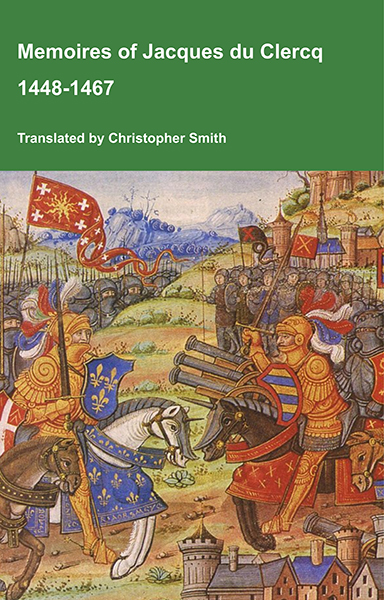
This is a translation of the 'Memoires of Jacques du Clercq', published in 1823 in two volumes, edited by Frederic, Baron de Reissenberg. In his introduction Reissenberg writes: 'Jacques du Clercq tells us that he was born in 1424, and that he was a licentiate in law and a counsellor to Philip the Good, Duke of Burgundy, in the castellany of Douai, Lille, and Orchies. It appears that he established his residence at Arras. In 1446, he married the daughter of Baldwin de la Lacherie, a gentleman who lived in Lille. We read in the fifth book of his Memoirs that his father, also named Jacques du Clercq, had married a lady of the Le Camelin family, from Compiègne. His ancestors, always attached to the counts of Flanders, had constantly served them, whether in their councils or in their armies.' The Memoires cover a period of nineteen years beginning in in 1448, ending in in 1467. It appears that the author had intended to extend the Memoirs beyond that date; no doubt illness or death prevented him from carrying out this plan. As Reissenberg writes the 'merit of this work lies in the simplicity of its narrative, in its tone of good faith, and in a certain air of frankness which naturally wins the reader’s confidence.' Du Clercq ranges from events of national and international importance, including events of the Wars of the Roses in England, to simple, everyday local events such as marriages, robberies, murders, trials and deaths, including that of his own father in Book 5; one of his last entries.
Available at Amazon in eBook and Paperback format.
Wriothesley's Chronicle [1508-1562]. King's Bench Records In The Public Record Office. Baga De Secretis. Pouch VIII.
This Pouch is indorsed "Sessiones Comitatuum Middlesexise et Kanciee primo tent apud villam Westmonasterii in comitatu Middlesexiæ coram Thoma Audeley, milite, Cancellario Angliæ et aliis &c. et secundo tent' apud Depford in comitatu Kanciæ coram Johanne Baldewyn, milite, et aliis, anno regni regis Henrici Octavi vicesimo octavo."
Trial and conviction of Mark Smeaton, Henry Noreys, William Bryerton, and Sir Francis Weston. Adultery with Queen Anne Boleyn. - Special Sessions of Oyer and Terminer, 12 May, 1536, 28 Hen.
On 12th May 1537 Abbot Adam Sedbar [aged 35] was captured. He was imprisoned in the Beauchamp Tower, Tower of London [Map] where his inscribed name on the wall "ADAM SEDBAR. ABBAS JOREVALL 1537" can still be seen.

Wriothesley's Chronicle [1508-1562]. 12th May 1538. This yeare, the 12th daie of Maie, being the third Soundaie after Easter, the Bishopp of Worcester, called Dr. Latymer [aged 51], preached at Poules Crosse [Map], at whose sermon should have bene present a penitent to have donne his penance called John Forrest, Friar Observant, Doctor of Divinitie, latelie abjured for heresie,b the eight daie of the said moneth of Maie, at Lambeth, before the most reverend father in God Thomas Cranmer [aged 48], Archbishopp of Canterberie, with other, and after his said abjuration, sworne upon the Evangelistes, to abide the injunction of the said most reverend father for his penance; which said Friar Forrest obstinatlie and frowardlie, not like a true penitent performing his said penance, but standing yet stiff and proud in his malicious mynde, refused to doe; yet this daie againe, intreated by the Deane of the Arches, called Doctor Quent, with other, like a good Christian to performe his pennance, he yet notwithstanding, maliciouslie by the instigation of the devill, refused to doe, although the said Deane opened unto him the indignation of God and dampnation of his bodie and soule perpetuallie, and also have a temporall death by brenning as all heretickes should have by the lawes of this realme; which said Friar Forrest should this daie have borne a fagott at Paules Crosse for his pennance, and also with a lowde voyce have declared certaine thinges by his owne month, after the said sermon enjoyned him, for his said pennance; all which said thinges he refusing to doe, the said bishoppa desiring all the awdience then present at the said sermon to pray hartelie unto God to convert the said friar from his said obstinacie and proude minde, that he might have grace to turne to be a true penitent the soner by the grace of God at their prayers, and further their declaring his said abjuration, and articles subscribed with his owne hande, and sworne and abjured on the same, and after sworne againe to abide such injunction and pennance as he shoulde be enjoyned by the said court, whose articles were theise, as the Bishopp then openlie read at the said crosse, his owne hand subscribed to the same: First, that the Holie Catholike Church was the Church of Rome, and that wee ought to beeleve out of the same. Second, that wee should beleeve on the Popes pardon for remission of our sinnes. Thirdlie, that wee ought to beleeve and doe as our fathers have donne aforetyme fowertene yeares past. Fourthlie, that a priest maie turne and change the paines of hell of a sinner, trulie penitent, contrite of his shins, by certaine pennance enjoyned him in the paines of purgatorie; which said articles be most abhominable heresies, blasphemie against God and the countrey,b1 to Scripture, and the teaching of Christ and all his Apostles, and to abhorr any true Christian hart to thinck.
Note b. Forest was apprehended for that in secret confession he had declared to many of the King s subjects that the King was not supreme head of the Church, "whereas, before, hee had beene sworne to the Supremacie; upon this point hee was examined, and answered that he tooke his oath with his outward man, but his inward man never consented thereunto; then, being further accused of clivers hereticall opinions, hee submitted himself e to the punishment of the Church; but having more libertie than before to talke with whom he would, when his abjuration was sent him to read, hee utterly refused it."; Stow, p. 575.
Note a. Dr. Latimer of Worcester.
b1. Evidently a clerical error for " contrary."

On 12th May 1539 Margaret Pole Countess Salsbury [aged 65] was attainted. Earl Salisbury, Baron Montagu, Baron Montagu, Baron Monthermer forfeit.
Henry Machyn's Diary. 12th May 1552. The xij day of May the Kynges [aged 14] grace [rode through] Grenwyche Parke [Map] unto Blake-heth [Map], with ys ga[rd with bows] and arowes, and in ther jerkenes and dobeletes. [The King's] grase ran at the ryng, and odur lordes and kn [yghts.]


On 12th May 1567 James "Lord Bothwell" Hepburn 1st Duke Orkney [aged 33] was created 1st Duke Orkney, 1st Marquess Fife.

On 12th May 1575 Henry III King France [aged 23] Abdicated King France: Capet Valois Angoulême. His second cousin Henry [aged 21] succeeded IV King France: Capet Valois Bourbon.
On 12th May 1606 Joachim von Sandrart was born.

Diary of Anne Clifford. 12th May 1616. The 12th at night Grosvenort came hither and told me how my Lord [aged 27] had won £200 at the Cocking Match and that my Lord of Essex [aged 25] and Lord Willoughby who was on my Lord's side won a great deal and how there was some unkind words between my Lord and his side and Sir William Herbert and his side. This day my Lady Grantham sent me a letter about these businesses between my Uncle Cumberland and me and returned me an answer.
All this time my Lord was in London where he had all and infinite great resort coming to him. He went much abroad to Cocking, to Bowling Alleys, to Plays and Horse Races, and commended by all the world. I stayed in the country having many times a sorrowful and heavy heart, and being condemned by most folks because I would not consent to the agreements, so as I may truly say, I am like an owl in the desert.
Diary of Anne Clifford. 12th May 1617. The 12th I began to dress my head with a roll without a wire.
I wrote not to my Lord [aged 28] because he wrote not to me since he went away. After supper I went with the Child who rode the piebald nag that came out of Westmoreland to Mrs .

On 12th May 1641 Thomas Wentworth 1st Earl Strafford [aged 48] was beheaded at Tower Hill [Map]. Earl Strafford, Viscount Wentworth, Baron Wentworth, Baronet Wentworth of Wentworth Woodhouse in Yorkshire forfeit. His execution was attended by an enormous crowd.
Wenceslaus Hollar [aged 33]. Engraving of the execution of Thomas Wentworth 1st Earl Strafford marked as C with James Ussher [aged 60] marked as A.
John Evelyn's Diary. 12th May 1641. I beheld on Tower-hill [Map] the fatal stroke which severed the wisest head in England from the shoulders of the Earl of Strafford [aged 48], whose crime coming under the cognizance of no human law, or statute, a new one was made, not to be a precedent, but his destruction. With what reluctancy the King [aged 40] signed the execution, he has sufficiently expressed; to which he imputes his own unjust suffering - to such exorbitancy were things arrived.


The Deeds of the Dukes of Normandy
The Gesta Normannorum Ducum [The Deeds of the Dukes of Normandy] is a landmark medieval chronicle tracing the rise and fall of the Norman dynasty from its early roots through the pivotal events surrounding the Norman Conquest of England. Originally penned in Latin by the monk William of Jumièges shortly before 1060 and later expanded at the behest of William the Conqueror, the work chronicles the deeds, politics, battles, and leadership of the Norman dukes, especially William’s own claim to the English throne. The narrative combines earlier historical sources with firsthand information and oral testimony to present an authoritative account of Normandy’s transformation from a Viking settlement into one of medieval Europe’s most powerful realms. William’s history emphasizes the legitimacy, military prowess, and governance of the Norman line, framing their expansion, including the conquest of England, as both divinely sanctioned and noble in purpose. Later chroniclers such as Orderic Vitalis and Robert of Torigni continued the history, extending the coverage into the 12th century, providing broader context on ducal rule and its impact. Today this classic work remains a foundational source for understanding Norman identity, medieval statesmanship, and the historical forces that reshaped England and Western Europe between 800AD and 1100AD.
Available at Amazon in eBook and Paperback format.
John Evelyn's Diary. 12th May 1650. Complaint being come to the Queen and Court of France of the affront we had received, the President was ordered to ask pardon of Sir R. Browne [aged 45], his Majesty's Resident, and the fellow to make submission, and be dismissed. There came along with him the President de Thou, son of the great Thuanus [the historian], and so all was composed. But I have often heard that gallant gentleman, my Lord Ossory [aged 15], affirm solemnly that in all the conflicts he was ever in at sea or on land (in the most desperate of both which he had often been), he believed he was never in so much danger as when these people rose against us. He used to call it the bataile de Vambre, and remember it with a great deal of mirth as an adventure, en cavalier.

Samuel Pepys' Diary. 12th May 1660. This morning I inquired for my boy, whether he was come well or no, and it was told me that he was well in bed. My Lord called me to his chamber, he being in bed, and gave me many orders to make for direction for the ships that are left in the Downs, giving them the greatest charge in the world to bring no passengers with them, when they come after us to Scheveling Bay, excepting Mr. Edward Montagu [aged 12], Mr. Thomas Crew [aged 36], and Sir H. Wright [aged 23]. Sir R. Stayner [aged 35] hath been here early in the morning and told my Lord, that my Lord Winchelsea understands by letters, that the Commissioners are only to come to Dover, Kent [Map] to attend the coming over of the King. So my Lord did give order for weighing anchor, which we did, and sailed all day. In our way in the morning, coming in the midway between Dover and Calais, we could see both places very easily, and very pleasant it was to me that the further we went the more we lost sight of both lands. In the afternoon at cards with Mr. North [aged 24] and the Doctor. There by us, in the Lark frigate, Sir R. Freeman and some others, going from the King to England, come to see my Lord and so onward on their voyage. In the afternoon upon the quarterdeck the Doctor told Mr. North and me an admirable story called "The Fruitless Precaution", an exceeding pretty story and worthy my getting without book when I can get the book.[??] This evening came Mr. Sheply on board, whom we had left at Deal and Dover getting of provision and borrowing of money. In the evening late, after discoursing with the Doctor, &c., to bed.
Samuel Pepys' Diary. 12th May 1661. At noon went with my Baroness Montagu at the Wardrobe, but I found it so late that I came back again, and so dined with my wife in her chamber. After dinner I went awhile to my chamber to set my papers right. Then I walked forth towards Westminster and at the Savoy [Map] heard Dr. Fuller [aged 53] preach upon David's words, "I will wait with patience all the days of my appointed time until my change comes;" but methought it was a poor dry sermon. And I am afeard my former high esteem of his preaching was more out of opinion than judgment.
Samuel Pepys' Diary. 12th May 1662. Mr. Townsend called us up by four o'clock; and by five the three ladies, my wife and I, and Mr. Townsend, his son and daughter, were got to the barge and set out. We walked from Mortlake, Richmond to Richmond, Surrey [Map], and so to boat again. And from Teddington to Hampton Court [Map] Mr. Townsend and I walked again. And then met the ladies, and were showed the whole house by Mr. Marriott; which is indeed nobly furnished, particularly the Queen's [aged 23] bed, given her by the States of Holland; a looking-glass sent by the Queen-Mother [aged 52] from France, hanging in the Queen's chamber, and many brave pictures.


Samuel Pepys' Diary. 12th May 1665. So home to dinner, and after dinner comes several people, among others my cozen, Thomas Pepys [aged 54], of Hatcham1, to receive some money, of my Lord Sandwich's [aged 39], and there I paid him what was due to him upon my uncle's score, but, contrary to my expectation, did get him to sign and seale to my sale of lands for payment of debts. So that now I reckon myself in better condition by £100 in my content than I was before, when I was liable to be called to an account and others after me by my uncle Thomas or his children for every foot of land we had sold before. This I reckon a great good fortune in the getting of this done.
Note 1. Thomas Pepys, of Hatcham Barnes, Surrey, Master of the Jewel House to Charles II and James II.


Samuel Pepys' Diary. 12th May 1666. So home by water, and there hard till 12 at night at work finishing the great letter to the Duke of Yorke [aged 32] against to-morrow morning, and so home to bed. This day come home again my little girle Susan, her sicknesse proving an ague, and she had a fit soon almost as she come home. The fleete is not yet gone from the Nore. The plague encreases in many places, and is 53 this week with us.
Samuel Pepys' Diary. 12th May 1666. At noon home, where I find my wife troubled still at my checking her last night in the coach in her long stories out of Grand Cyrus, which she would tell, though nothing to the purpose, nor in any good manner1. This she took unkindly, and I think I was to blame indeed; but she do find with reason, that in the company of Pierce, Knipp, or other women that I love, I do not value her, or mind her as I ought. However very good friends by and by, and to dinner, and after dinner up to the putting our dining room in order, which will be clean again anon, but not as it is to be because of the pictures which are not come home.
Note 1. Sir Walter Scott observes, in his "Life of Dryden [aged 34]", that the romances of Calprenede and Scuderi, those ponderous and unmerciful folios, now consigned to oblivion, were, in their day, not only universally read and admired, but supposed to furnish the most perfect models of gallantry and heroism. Dr. Johnson read them all. "I have", says Mrs. Chapone, "and yet I am still alive, dragged through 'Le Grand Cyrus,' in twelve huge volumes; 'Cleopatra,' in eight or ten; 'Ibrahim,' 'Clelie,' and some others, whose names, as well as all the rest of them, I have forgotten" ("Letters to Mrs. Carter"). No wonder that Pepys sat on thorns, when his wife began to recite "Le Grand Cyrus" in the coach, "and trembled at the impending tale". B.


Samuel Pepys' Diary. 12th May 1668. Up, and to the office, where we sat, and sat all the morning. Here Lord Anglesey [aged 53] was with us, and in talk about the late difference between the two Houses, do tell us that he thinks the House of Lords may be in an error, at least, it is possible they may, in this matter of Skinner; and he doubts they may, and did declare his judgement in the House of Lords against their proceedings therein, he having hindered 100 originall causes being brought into their House, notwithstanding that he was put upon defending their proceedings: but that he is confident that the House of Commons are in the wrong, in the method they take to remedy an error of the Lords, for no vote of theirs can do it; but, in all like cases, the Commons have done it by petition to the King [aged 37], sent up to the Lords, and by them agreed to, and so redressed, as they did in the Petition of Right. He says that he did tell them indeed, which is talked of, and which did vex the Commons, that the Lords were "Judices nati et Conciliarii nati"; but all other judges among us are under salary, and the Commons themselves served for wages; and therefore the Lords, in reason, were the freer judges.
Samuel Pepys' Diary. 12th May 1669. Thence to my Lord Sandwich's [aged 43], and there had a promise from Sidney [aged 18] to come and dine with me to-morrow; and so my wife and I home in our coach, and there find my brother John [aged 28], as I looked for, come to town from Ellington, where, among other things, he tell me the first news that my [sister Jackson [aged 28]] is with child, and fat gone, which I know not whether it did more trouble or please me, having no great care for my friends to have children; though I love other people's. So, glad to see him, we to supper, and so to bed.
On 12th May 1670 Frederick Augutus Elector Saxony King of Poland was born to John George Wettin III Elector Saxony [aged 22] and Anna Sophie Oldenburg [aged 22] at Dresden.
John Evelyn's Diary. 12th May 1684. The utter mine of the Low Country was threaten'd by the siege of Luxembergh, if not timely reliev'd, and by the obstinacy of the Hollanders, who refus'd to assist the Prince of Orange [aged 33], being corrupted by the French.


Henrici Quinti, Angliæ Regis, Gesta, is a first-hand account of the Agincourt Campaign, and subsequent events to his death in 1422. The author of the first part was a Chaplain in King Henry's retinue who was present from King Henry's departure at Southampton in 1415, at the siege of Harfleur, the battle of Agincourt, and the celebrations on King Henry's return to London. The second part, by another writer, relates the events that took place including the negotiations at Troye, Henry's marriage and his death in 1422.
Available at Amazon in eBook and Paperback format.
John Evelyn's Diary. 12th May 1684. I return'd to London, where I found the Commissioners of the Admiralty abolish'd, and the office of Admiral restor'd to ye Duke [aged 50], as to the disposal and ordering all Sea businesse; but his Ma* [aged 53] sign'd all Petitions, Papers, Warrants, and Commissions, that the Duke, not acting as Admiral by commission or office, might not incur the penalty of the late Act against Papists and Dissenters holding offices, and refusing the Oath and Test. Every one was glad of this change, those in the late Commission being utterly ignorant in their duty, to the greate damage of the Navy.


John Evelyn's Diary. 12th May 1686. I refus'd to put the Privy Seale to Dr Walker's [aged 70] licence for printing and publishing divers Popish books, of which I complain'd both to my Lord of Canterbury [aged 69] (with whom I went to advise in the Council Chamber), and to my Lord Treasurer [aged 44] that evening at his lodgings. My Lord of Canterbury's advice was, that I should follow my owne conscience therein; Mr. Treasurer's, that if in conscience I could dispense with it, for any other hazard he believ'd there was none. Notwithstanding this 1 persisted in my refusal.


John Evelyn's Diary. 12th May 1687. To London. Lord Sunderland [aged 45] being Lord President and Secretary of State, was made Knight of the Garter and Prime favorite. This day there was such a storm of wind as had seldom happened, being a sort of hurricane. It kept the flood out of the Thames, so that people went on foot over several places above bridge. Also an earthquake in several places in England about the time of the storm.

On 12th May 1724 William Strickland 3rd Baronet [aged 59] died from a fall from a horse during a fox hunt. His son William [aged 38] succeeded 4th Baronet Strickland of Boynton in Yorkshire. Catherine Sambrooke Lady Strickland [aged 18] by marriage Lady Strickland of Boynton in Yorkshire.
On 12th May 1725 Louis Philippe "The Fat" Bourbon I Duke Orléans was born to Louis Bourbon Duke Orléans [aged 21] and Margravine Johanna Baden Baden Duchess Orléans at Palace of Versailles, Versailles. He a great x 4 grandson of King James I of England and Ireland and VI of Scotland. He married 1743 Louise Henriette Bourbon Duchess Orléans.
Letters of Horace Walpole. 12th May 1752. Arlington Street. To George Montagu Esq [aged 39].
You deserve no charity, for you never write but to ask it. When you are tired of yourself and the country, you think over all London, and consider who will be proper to send you an account of it. Take notice, I won't be your gazetteer; nor is my time come for being a dowager, a maker of news, a day-labourer in scandal. If you care for nobody but for what they can tell you, you must provide yourself elsewhere. The town is empty, nothing in it but flabby mackerel, and wooden gooseberry tarts, and a hazy east wind. My sister is gone to Paris; I go to Strawberry Hill in three days for the summer, if summer there will ever be any.
If you want news you must send to Ireland, where there is almost a civil war, between the Lord Lieutenant and Primate on one side (observe, I don't tell you what that side is), and the Speaker on the other, who carries questions by wholesale in the House of Commons against the Castle; and the teterrima belli causa is not the common one.
Reams of scandalous verses and ballads are come over, too bad to send you, if I had them, but I really have not. What is more provoking for the Duke of Dorset [aged 64], an address is come over directly to the King (not as usual through the channel of the Lord Lieutenant), to assure him of their great loyalty, and apprehensions of being misrepresented. This is all I know, and you see, most imperfectly.
I was t'other night to see what is now grown the fashion, Mother Midnight's Oratory.309 It appeared the lowest buffoonery in the world even to me, who am used to my uncle Horace [aged 73]. There is a bad oration to ridicule, what it is too like, Orator Henley; all the rest is perverted music: there is a man who plays so nimbly on the kettle-drum, that he has reduced that noisy instrument to an object of sight; for, if you don't see the tricks with his hands, it is no better than ordinary: another plays on a violin and trumpet together: another mimics a bagpipe with a German flute, and makes it full as disagreeable. There is an admired dulcimer, a favourite salt-box, and a really curious jew's-harp. Two or three men intend to persuade you that they play on a broomstick, which is drolly brought in, carefully shrouded in a case, so as to be mistaken for a bassoon or bass-viol; but they succeed in nothing but the action. The last fellow imitates * * * * * curtseying to a French horn. There are twenty medley overtures, and a man who speaks a prologue and an epilogue, in which he counterfeits all the actors and singers upon earth: in short, I have long been convinced, that what I used to imagine the most difficult thing in the world, mimicry, is the easiest; for one has seen for these two or three years, at Foote's and the other theatres, that when they lost one mimic, they called,Odd man!" and another came and succeeded just as well.
Adieu! I have told you much more than I intended, and much more than I could conceive I had to say, except how does Miss Montagu?
P. S. Did you hear Captain Hotham's bon-mot on Sir Thomas Robinson's making an assembly from the top of his house to the bottom? He said, he wondered so many people would go to Sir Thomas's, as he treated them all de haut en bas.
Note 309. "Among other diversions and amusements which increase upon us, the town," says the Gentleman's Magazine for January 1752, "has been lately entertained with a kind of farcical performance, called 'The Old Woman's Oratory,' conducted by Mrs. Mary Midnight and her family, intended as a banter on Henley's Oratory, and a puff for the Old Woman's Magazine."-E.


On 4th May 1762 King George III of Great Britain and Ireland [aged 23] created a number of new peerages...
Edward Noel 1st Viscount Wentworth [aged 46] was created 1st Viscount Wentworth.
William Courtenay 7th Earl Devon [aged 53] was created 1st Viscount Courtenay.
Thomas Pelham Holles 1st Duke Newcastle-under-Lyne [aged 68] was created 1st Baron Pelham of Stanmer in Sussex with default to his cousin Thomas Pelham [aged 34].
Caroline Lennox 1st Baroness Holland [aged 39] was created 1st Baroness Holland in Lincolnshire. Henry Fox 1st Baron Holland [aged 56] by marriage Baron Holland in Lincolnshire.
John Perceval 2nd Earl Egmont [aged 51] was created 1st Baron Lovel and Holland of Enmore in Somerset.
John Montagu 1st Baron Montagu [aged 27] was created 1st Baron Montagu of Boughton in Northamptonshire.
Joseph Damer 1st Earl Dorchester [aged 44] was created 1st Baron Milton of Milton Abbey in Dorset.
Edward Hussey-Montagu 1st Earl Beaulieu [aged 41] was created 1st Baron Beaulieu of Beaulieu in Hampshire with a special remainder to his heirs male with his current wife Isabella Montagu Duchess Manchester [aged 56].
On 12th May 1762 George Venables-Vernon 1st Baron Vernon [aged 53] was created 1st Baron Vernon of Kinderton in Cheshire. Martha Harcourt Baroness Vernon of Kinderton [aged 46] by marriage Baroness Vernon of Kinderton in Cheshire.
George Fox Lane 1st Baron Bingley [aged 65] was created 1st Baron Bingley. Harriet Benson Baroness Bingley [aged 57] by marriage Baroness Bingley.
On 12th May 1765 Amy Lyon aka Emma Hart Lady Hamilton was baptised.


On 12th May 1771 Adolph Frederick King Sweden [aged 60] died in Stockholm apparently after having consumed a large meal, consisting of lobster, caviar, sauerkraut, kippers and champagne, topped off with 14 servings of his favourite dessert: hetvägg, made of semla pastries served in bowls of hot milk.
Gustav III King Sweden [aged 25] succeeded King Sweden. Queen Sophia of Sweden [aged 24] by marriage Queen Sweden.

Archaeologia Volume 3 Section XLIII. An Account of the Body of King Edward the First, as it appeared on opening his Tomb in the Year 1774. By Sir Joseph Ayloffe [aged 66], Bart. V. P. S. A. and F. R. S. Read at the Society of Antiquaries, May 12, 1774.
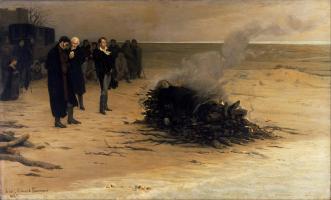
1911 Encyclopædia Britannica. Shelley [aged 29] and Williams, both of them insatiably fond of boating, had a small schooner named the "Don Juan" (or more properly the "Ariel"), built at Genoa after a design which Williams had procured from a naval friend, but the reverse of safe. They received her on the 12th of May, found her rapid and alert, and on the 1st of July started in her to Leghorn, to meet Leigh Hunt, whose arrival in Italy had just been notified.


This is a translation of the 'Memoires of Jacques du Clercq', published in 1823 in two volumes, edited by Frederic, Baron de Reissenberg. In his introduction Reissenberg writes: 'Jacques du Clercq tells us that he was born in 1424, and that he was a licentiate in law and a counsellor to Philip the Good, Duke of Burgundy, in the castellany of Douai, Lille, and Orchies. It appears that he established his residence at Arras. In 1446, he married the daughter of Baldwin de la Lacherie, a gentleman who lived in Lille. We read in the fifth book of his Memoirs that his father, also named Jacques du Clercq, had married a lady of the Le Camelin family, from Compiègne. His ancestors, always attached to the counts of Flanders, had constantly served them, whether in their councils or in their armies.' The Memoires cover a period of nineteen years beginning in in 1448, ending in in 1467. It appears that the author had intended to extend the Memoirs beyond that date; no doubt illness or death prevented him from carrying out this plan. As Reissenberg writes the 'merit of this work lies in the simplicity of its narrative, in its tone of good faith, and in a certain air of frankness which naturally wins the reader’s confidence.' Du Clercq ranges from events of national and international importance, including events of the Wars of the Roses in England, to simple, everyday local events such as marriages, robberies, murders, trials and deaths, including that of his own father in Book 5; one of his last entries.
Available at Amazon in eBook and Paperback format.
On 12th May 1828 Dante Gabriel Rossetti was born to Gabriele Pasquale Giuseppe Rossetti [aged 45] and Frances Mary Lavinia Polidori [aged 28]. He married 23rd May 1860 Elizabeth Siddal and had issue.


The London Gazette 18803. Whitehall, May 12, 1831. The King has been pleased to direct letters patent to be passed under the Great Seal, granting the dignities of Baron, Viscount, and Earl of the United Kingdom of Great Britain and Ireland unto George FitzClarence [aged 37], Esq. Colonel in the Army, and the heirs male of his body lawfully begotten, by the names, stiles, and titles of Baron Tewkesbury, Viscount Fitzclarence, and Earl of Munster. [Note. Mary Wyndham Countess Munster [aged 38] by marriage Countess Munster.]
Thomas Bateman 1845. On the 12th of May, 1845, was opened a very large cairn, or stony barrow, called Brier Lowe [Map], near Buxton; it was about six feet in central elevation, and about twenty yards in diameter. On approaching the centre, upon the level of the natural surface, it was found to be covered with rats' bones, amongst which were some small pieces of an urn, and some burnt human bones, which had doubtless been disturbed upon the occasion of the interment of a body, which was discovered in the middle of the barrow. This skeleton was laid upon some flat limestones, placed on the natural ground, with its head towards the south, and its knees contracted; it was very large and strong, and was accompanied by a bronze dagger, in excellent preservation, with three rivets remaining which had attached the handle: this fine instrument lay close to the middle of the left upper arm, and is the first of the kind ever found in Derbyshire. The skeleton was surrounded with a multitude of rats' bones, the remains of animals which had in former times feasted upon the carcass of the defunct warrior, which fact was satisfactorily proved by the gnawed appearance of the various bones, and from the circumstance of several of the smaller ones having been dragged under the large flat stones upon which the body lay, and which could not by any other means have got into that situation. This barrow is extremely interesting, as having produced conclusive evidence regarding the "quæstio vexata" of the cause of the perpetual occurrence of rats' bones in barrows in various places, which are the remains of generations of those unpleasant quadrupeds which have burrowed into the tumuli, in all probability to devour the bodies therein interred.
Ten Years' Digging. On the evenings of the 12th and 13th of May, we opened a second barrow [Ecton Barrow 3 [Map]] upon Hang Bank, about 300 yards east of that [Ecton Barrow 1 [Map]] previously examined. The diameter is about sixteen yards^ and the mound appears perfect; but notwithstanding its promising exterior, nothing of importance was discovered, a small deposit of burnt bones only being laid in a depression in the natural soil. About a foot from them were two pieces of flint — one a rounded, the other a pointed instrument which seems designed for an arrow-head. The barrow being raised on a ridge of rock was not so deep as it appeared, having an elevation of about two feet in the centre. It was found to be composed throughout of earth, although the neighbourhood abounds with stone, and was so completely excavated that we are satisfied no other interment has ever been made.
On 12th May 1879 Feodora Saxe Meiningen was born to Bernhard Saxe Meiningen III Duke Saxe Meiningen [aged 28] and Charlotte Hohenzollern [aged 18]. She a great granddaughter of Queen Victoria of the United Kingdom.
On 12th May 1883 Mary Cavendish Grosvenor was born to Hugh Lupus Grosvenor 1st Duke Westminster [aged 57] and Katherine Cavendish Duchess Westminster [aged 26]. She married (1) before 22nd November 1907 Henry Crichton, son of John Crichton 4th Earl Erne, and had issue (2) in or before 1959 her sixth cousin Algernon Francis Stanley, son of Frederick Arthur Stanley 16th Earl of Derby and Constance Villiers Countess Derby.


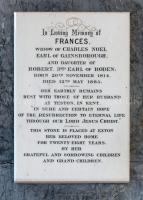
On 12th May 1885 Frances Jocelyn Countess Gainsborough [aged 70] died.
Memorial at the Church of St Peter and St Paul, Exton, Rutlandshire [Map].
Frances Jocelyn Countess Gainsborough: On 20th November 1814 she was born to Robert Jocelyn 3rd Earl Roden and Maria Frances Catherine Stapleton Countess Roden. On 25th July 1833 Charles Noel 1st Earl Gainsborough and she were married. The difference in their ages was 33 years. She the daughter of Robert Jocelyn 3rd Earl Roden and Maria Frances Catherine Stapleton Countess Roden. On 16th August 1841 Charles Noel 1st Earl Gainsborough was created 1st Earl Gainsborough. She by marriage Countess Gainsborough.
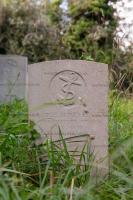
St James' Church, Antony [Map]. 12th May 1917. Grave of George James Penney, died aged twenty, Cooks Mate, Royal Navy, M/13203.
Cook's Mate M/13203, H.M.S. Vivid, Royal Navy. Died from disease of the brain 12 May 1917. Aged 20. Born 17 June 1896 in Torpoint. Son of Mrs. Janie Penney, of 8, Winchester Terrace, Swilly Rd., Swilly, Plymouth. Prior to enlisting he was a labourer in H.M. Dockyard. Enlisted 3rd May 1915 for 12 years. In 1917, he died of a brain tumour in Plymouth Hospital.
On 12th May 1917 Hans Albrecht Glücksburg was born to Wilhelm Friedrich Christian Glücksburg Duke Schleswig Holstein Sonderburg Glücksburg [aged 25] and Marie Melita Hohenlohe Langenburg Duchess Schleswig Holstein Sonderburg Glücksburg [aged 18]. He a great x 2 grandson of Queen Victoria of the United Kingdom.
On 7th May 1920 Alistair "Mouse" Grahame [aged 19] committed suicide. After his dinner at Christ Church College, Oxford University he lay down on a railway track running across Port Meadow and awaited the train that ended his life. His father, whose stories recited to Alistair "Mouse" Grahame when he was a child, became "The Wind in the Willows", never recovered from his son's death.
He was buried on 12th May 1920, his twentieth birthday, in Holywell Cemetery next to St Cross Church, Oxford.
After 12th May 1921. Church of St Oswald, Methley [Map]. Memorial to Archdeacon Henry Armstrong Hall [deceased] sculpted by Frederick John Wilcoxson [aged 33].
Archdeacon Henry Armstrong Hall: On 2nd June 1853 he was born at Parkhurst, Isle of Wight. In 1898 he was appointed Rector of Church of St Oswald, Methley [Map]. On 12th May 1921 he died at Methley Rectory.


On 12th May 1937 King George VI of the United Kingdom [aged 41] was crowned VI King of the United Kingdom at Westminster Abbey [Map].
Henrici Quinti, Angliæ Regis, Gesta, is a first-hand account of the Agincourt Campaign, and subsequent events to his death in 1422. The author of the first part was a Chaplain in King Henry's retinue who was present from King Henry's departure at Southampton in 1415, at the siege of Harfleur, the battle of Agincourt, and the celebrations on King Henry's return to London. The second part, by another writer, relates the events that took place including the negotiations at Troye, Henry's marriage and his death in 1422.
Available at Amazon in eBook and Paperback format.
On 12th May 1330 William Wittelsbach I Duke Lower Bavaria was born to Louis Wittelsbach IV Holy Roman Emperor [aged 48] and Margaret Hainaut Holy Roman Empress [aged 18]. He a great x 4 grandson of King Henry "Curtmantle" II of England. He married 1352 his fourth cousin once removed Maud Plantagenet Duchess Lower Bavaria, daughter of Henry of Grosmont 1st Duke Lancaster and Isabel Beaumont Duchess Lancaster, and had issue.
On 12th May 1515 Gilbert Kennedy 3rd Earl Cassilis was born to Gilbert Kennedy 2nd Earl Cassilis [aged 20]. He married 1540 his second cousin Margaret Kennedy Countess Cassilis and had issue.
On 12th May 1606 Joachim von Sandrart was born.
On 12th May 1615 Charles Hotham was born to John Hotham 1st Baronet [aged 25] in Scorborough and Anne Rokeby.
On 12th May 1669 John Lindsay-Crawford 1st Viscount Garnock was born to Patrick Lindsay [aged 16]. He married January 1697 Margaret Stuart Viscountess Garnock, daughter of James Stuart 1st Earl Bute, and had issue.
On 12th May 1670 Frederick Augutus Elector Saxony King of Poland was born to John George Wettin III Elector Saxony [aged 22] and Anna Sophie Oldenburg [aged 22] at Dresden.
On 12th May 1705 William Boyd 4th Earl Kilmarnock was born to William Boyd 3rd Earl Kilmarnock [aged 13]. He married Anne Livingston Countess Kilmarnock, daughter of James Livingston 5th Earl Linlithgow 4th Earl Callendar and Margaret Hay Countess Linlithgow, and had issue.
On 12th May 1725 Louis Philippe "The Fat" Bourbon I Duke Orléans was born to Louis Bourbon Duke Orléans [aged 21] and Margravine Johanna Baden Baden Duchess Orléans at Palace of Versailles, Versailles. He a great x 4 grandson of King James I of England and Ireland and VI of Scotland. He married 1743 Louise Henriette Bourbon Duchess Orléans.
On 12th May 1731 Other Lewis Windsor 4th Earl Plymouth was born to Other Windsor 3rd Earl Plymouth [aged 24]. He married 11th August 1750 Catherine Archer Countess Plymouth, daughter of Thomas Archer 1st Baron Archer and Catherine Tipping Baroness Archer, and had issue.
On 12th May 1744 Stephen Glynne 7th Baronet was born to John Glynne 6th Baronet [aged 32].
Adam Murimuth's Continuation and Robert of Avesbury’s 'The Wonderful Deeds of King Edward III'
This volume brings together two of the most important contemporary chronicles for the reign of Edward III and the opening phases of the Hundred Years’ War. Written in Latin by English clerical observers, these texts provide a vivid and authoritative window into the political, diplomatic, and military history of fourteenth-century England and its continental ambitions. Adam Murimuth Continuatio's Chronicarum continues an earlier chronicle into the mid-fourteenth century, offering concise but valuable notices on royal policy, foreign relations, and ecclesiastical affairs. Its annalistic structure makes it especially useful for establishing chronology and tracing the development of events year by year. Complementing it, Robert of Avesbury’s De gestis mirabilibus regis Edwardi tertii is a rich documentary chronicle preserving letters, treaties, and official records alongside narrative passages. It is an indispensable source for understanding Edward III’s claim to the French crown, the conduct of war, and the mechanisms of medieval diplomacy. Together, these works offer scholars, students, and enthusiasts a reliable and unembellished account of a transformative period in English and European history. Essential for anyone interested in medieval chronicles, the Hundred Years’ War, or the reign of Edward III.
Available at Amazon in eBook and Paperback format.

On 12th May 1749 Charles Francis Greville was born to Francis Greville 1st Earl Brooke Warwick Castle 1st Earl Warwick [aged 29] and Elizabeth Hamilton Countess Brooke Warwick Castle and Warwick [aged 29].
On 14th April 1755 Editha Rhoda Astley was born to Edward Astley 4th Baronet [aged 25] and Rhoda Delaval [aged 29]. She died before 12th May 1755 when she was buried at St Matthew's Church Widcombe.


On 12th May 1764 Andrew Windsor 7th Earl was born to Other Lewis Windsor 4th Earl Plymouth [aged 33] and Catherine Archer Countess Plymouth [aged 27].
On 12th May 1774 Henry Digby was born to Henry Digby 1st Earl Digby [aged 42]. He died aged one in 1776.

On 12th May 1784 James Maitland 9th Earl Lauderdale was born to James Maitland 8th Earl Lauderdale [aged 25] and Eleanor Todd Countess Lauderdale [aged 22].
On 12th May 1790 Henry Wyndham was born illegitimately to George O'Brien Wyndham 3rd Earl Egremont [aged 38] and Elizabeth Ilive Countess Egremont [aged 21].


On 12th May 1799 Captain Orlando George Gunning-Sutton was born to George William Gunning 2nd Baronet [aged 36] and Elizabeth Diana Bridgeman. He married 22nd June 1830 Mary Dorothea Seymour, daughter of Michael Seymour 1st Baronet.
On 12th May 1808 Robert Tolver Gerard 1st Baron Gerard was born to John Gerard of Windle Hall, Lancashire and Elizabeth Ferrers [aged 29].
On 12th May 1809 Richard Boyle 4th Earl Shannon was born to Henry Boyle 3rd Earl Shannon [aged 37]. He married 28th May 1832 Emily Henrietta Seymour-Conway Countess Shannon and had issue.
On 12th May 1816 Edmund Beckett 1st Baron Grimthorpe was born to Edmund Beckett aka Denison 4th Baronet [aged 29] and Maria Beverley Lady Beckett [aged 21] at Carlton Hall, Newark on Trent. He married 7th October 1845 Fanny Catherine Lonsdale Baroness Beckett, daughter of Bishop John Lonsdale and Sophia Bolland.
Annals of the six Kings of England by Nicholas Trivet
Translation of the Annals of the Six Kings of England by that traces the rise and rule of the Angevin aka Plantagenet dynasty from the mid-12th to early 14th century. Written by the Dominican scholar Nicholas Trivet, the work offers a vivid account of English history from the reign of King Stephen through to the death of King Edward I, blending political narrative with moral reflection. Covering the reigns of six monarchs—from Stephen to Edward I—the chronicle explores royal authority, rebellion, war, and the shifting balance between crown, church, and nobility. Trivet provides detailed insight into defining moments such as baronial conflicts, Anglo-French rivalry, and the consolidation of royal power under Edward I, whose reign he describes with particular immediacy. The Annals combines careful year-by-year reporting with thoughtful interpretation, presenting history not merely as a sequence of events but as a moral and political lesson. Ideal for readers interested in medieval history, kingship, and the origins of the English state, this chronicle remains a valuable and accessible window into the turbulent world of the Plantagenet kings.
Available at Amazon in eBook and Paperback format.
On 12th May 1828 Dante Gabriel Rossetti was born to Gabriele Pasquale Giuseppe Rossetti [aged 45] and Frances Mary Lavinia Polidori [aged 28]. He married 23rd May 1860 Elizabeth Siddal and had issue.
On 12th May 1829 Agnes Georgiana Elizabeth Hay Countess Fife was born to William Hay 18th Earl Erroll [aged 28] and Elizabeth Fitz-Clarence Countess Erroll [aged 28]. She a granddaughter of King William IV of the United Kingdom. She married 16th March 1846 James Duff 5th Earl Fife and had issue.
On 12th May 1834 Captain Arthur Lister-Kaye was born to John Lister Lister-Kaye 2nd Baronet [aged 32].

On 12th May 1836 Byron King-Noel 12th Baron Wentworth 16th Baron Despencer was born to William King Noel 1st Earl Lovelace [aged 31] and Augusta Ada Byron Countess Lovelace [aged 20]
On 12th May 1840 George Cadogan 5th Earl Cadogan was born to Henry Cadogan 4th Earl Cadogan [aged 28] and Mary Sarah Wellesley Countess Cadogan [aged 31]. Coefficient of inbreeding 6.25%. He married 16th January 1865 Beatrix Jane Craven Countess Cadogan, daughter of William Craven 2nd Earl Craven and Emily Mary Grimston Countess Craven, and had issue.
On 12th May 1847 Eva Elizabeth Carrington Countess Harrington was born to Robert Carrington 2nd Baron Carrington [aged 51] and Charlotte Augusta Annabella Drummond Willoughby Baroness Carrington [aged 32]. She married 5th July 1869 Charles Augustus Stanhope 8th Earl Harrington, son of Charles Stanhope 7th Earl of Harrington.
On 12th May 1849 Beilby Lawley 3rd Baron Wenlock was born to Beilby Lawley 2nd Baron Wenlock [aged 31] and Elizabeth Grosvenor Baroness Wenlock [aged 24]. He married 1872 Constance Mary Lascelles Baroness Wenlock, daughter of Henry Thynne Lascelles 4th Earl Harewood and Elizabeth Joanna Burgh, and had issue.
On 12th May 1879 Feodora Saxe Meiningen was born to Bernhard Saxe Meiningen III Duke Saxe Meiningen [aged 28] and Charlotte Hohenzollern [aged 18]. She a great granddaughter of Queen Victoria of the United Kingdom.
On 12th May 1883 Mary Cavendish Grosvenor was born to Hugh Lupus Grosvenor 1st Duke Westminster [aged 57] and Katherine Cavendish Duchess Westminster [aged 26]. She married (1) before 22nd November 1907 Henry Crichton, son of John Crichton 4th Earl Erne, and had issue (2) in or before 1959 her sixth cousin Algernon Francis Stanley, son of Frederick Arthur Stanley 16th Earl of Derby and Constance Villiers Countess Derby.
On 12th May 1896 Henry Palmer Temple Blackwood 5th Baronet was born to Henry Robert Temple Blackwood [aged 33].
The Deeds of the Dukes of Normandy
The Gesta Normannorum Ducum [The Deeds of the Dukes of Normandy] is a landmark medieval chronicle tracing the rise and fall of the Norman dynasty from its early roots through the pivotal events surrounding the Norman Conquest of England. Originally penned in Latin by the monk William of Jumièges shortly before 1060 and later expanded at the behest of William the Conqueror, the work chronicles the deeds, politics, battles, and leadership of the Norman dukes, especially William’s own claim to the English throne. The narrative combines earlier historical sources with firsthand information and oral testimony to present an authoritative account of Normandy’s transformation from a Viking settlement into one of medieval Europe’s most powerful realms. William’s history emphasizes the legitimacy, military prowess, and governance of the Norman line, framing their expansion, including the conquest of England, as both divinely sanctioned and noble in purpose. Later chroniclers such as Orderic Vitalis and Robert of Torigni continued the history, extending the coverage into the 12th century, providing broader context on ducal rule and its impact. Today this classic work remains a foundational source for understanding Norman identity, medieval statesmanship, and the historical forces that reshaped England and Western Europe between 800AD and 1100AD.
Available at Amazon in eBook and Paperback format.
On 12th May 1917 Hans Albrecht Glücksburg was born to Wilhelm Friedrich Christian Glücksburg Duke Schleswig Holstein Sonderburg Glücksburg [aged 25] and Marie Melita Hohenlohe Langenburg Duchess Schleswig Holstein Sonderburg Glücksburg [aged 18]. He a great x 2 grandson of Queen Victoria of the United Kingdom.
On 12th May 1919 David Mountbatten 3rd Marquess Milford Haven was born to George Mountbatten 2nd Marquess Milford Haven [aged 26] and Nadejda Mikhailovna Torby Marchioness Milford Haven [aged 23] at Edinburgh. He a great x 2 grandson of Queen Victoria of the United Kingdom. He married (1) 4th February 1950 Romaine Pierce Marchioness Milford Haven (2) 17th November 1960 Janet Bryce Marchioness Milford Haven and had issue.
On 12th May 1923 Rosemary Ann Portal 2nd Baroness Portal was born to Charles Portal 1st Viscount Portal [aged 29] and Joan Margaret Welby [aged 25].
On 12th May 1924 John Wodehouse 4th Earl Kimberley was born to John Wodehouse 3rd Earl Kimberley [aged 40] and Frances Margaret Irby Countess Kimberley [aged 39]. He married 27th October 1945 his fifth cousin once removed Diana Evelyn Legh Countess Kimberley.
On 12th May 1940 Richard Nigel Charles Mordaunt 14th Baronet was born to Nigel John Mordaunt 13th Baronet [aged 33].
On 12th May 1951 Edward Jervis 8th Viscount St Vincent was born to Ronald Jervis 7th Viscount St Vincent [aged 46].
On 12th May 1191 King Richard "Lionheart" I of England [aged 33] and Berengaria of Navarre Queen Consort England [aged 26] were married at Chapel of St George at Limassol Castle [Map]. She was crowned Queen Consort England the same day by the Hélie de Malemort, archbishop of Bordeaux, Jean aka John Fitz Luke, bishop of Évreux and Bernard II de Lacarre, Bishop of Bayonne. She the daughter of Sancho "Wise" King Navarre [aged 59] and Sancha Ivrea. He the son of King Henry "Curtmantle" II of England and Eleanor of Aquitaine Queen Consort Franks and England [aged 69]. They were half fourth cousins.
Richard's mother and sister Eleanor of Aquitaine Queen Consort Franks and England and Joan Plantagenet Queen Consort Sicily [aged 25] were present.
On 12th May 1656 Thomas Hickman Windsor 1st Earl Plymouth [aged 29] and Anne Savile [aged 22] were married.

On 12th May 1700 William Bentinck 1st Earl of Portland [aged 50] and Jane Martha Temple Countess Portland [aged 28] were married. She by marriage Countess of Portland. The difference in their ages was 22 years.
On 12th May 1748 Horatio Walpole 1st Earl Orford [aged 24] and Rachel Cavendish [aged 20] were married. She the daughter of William Cavendish 3rd Duke Devonshire [aged 49] and Catherine Hoskins Duchess Devonshire [aged 49].


On 12th May 1761 Edward Lascelles 1st Earl Harewood [aged 20] and Anne Chaloner Baroness Harewood [aged 18] were married at St George's Church, Hanover Square.
Henrici Quinti, Angliæ Regis, Gesta, is a first-hand account of the Agincourt Campaign, and subsequent events to his death in 1422. The author of the first part was a Chaplain in King Henry's retinue who was present from King Henry's departure at Southampton in 1415, at the siege of Harfleur, the battle of Agincourt, and the celebrations on King Henry's return to London. The second part, by another writer, relates the events that took place including the negotiations at Troye, Henry's marriage and his death in 1422.
Available at Amazon in eBook and Paperback format.
On 12th May 1767 Francis Baring 1st Baronet [aged 27] and Harriet Herring Lady Baring [aged 17] were married.
On 12th May 1803 Hans Francis Hastings 12th Earl Huntingdon [aged 23] and Frances Cobbe Countess Huntingdon were married.
On 12th May 1824 Brownlow Cecil 2nd Marquess Exeter [aged 28] and Frances Isabella Selina Poyntz Marchioness of Exeter [aged 21] were married. She by marriage Marchioness Exeter. He the son of Henry Cecil 1st Marquess Exeter and Sarah Hoggins Countess Exeter.
On 12th May 1854 Charles Watson-Copley 3rd Baronet [aged 26] and Georgiana Tredcroft Lady Watson-Copley [aged 27] were married at Genoa. She by marriage Lady Watson of Fulmer in Buckinghamshire.
On 12th May 805 Archbishop Æthelhard died.
On 12th May 1182 Valdemar "Great" I King of Denmark [aged 51] died. His son Canute [aged 19] succeeded VI King of Denmark.
On 12th May 1293 Bishop Thomas Bek [aged 49] died.
On 12th May 1361 John Strange 4th Baron Strange Blackmere [aged 29] died at Black Mere, Whitchurch. His son John [aged 8] succeeded 5th Baron Strange Blackmere.
On 12th May 1372 Margaret Neville [aged 43] died.
On 3rd February 1388 the Merciless Parliament commenced. It ended on 4th June 1388. Its primary function was to prosecute members of the Court of King Richard II of England [aged 21]. The term "Merciless" is contemporary having been coined by the chronicler Henry Knighton.
Michael de la Pole 1st Earl Suffolk [aged 58] was sentenced to be hanged, drawn and quartered in his absence. He had escaped to France.
Archbishop Alexander Neville [aged 47] was found guilty of treason and it was determined to imprison him for life in Rochester Castle, Kent [Map]. He fled to Louvain [Map] where he became a parish priest for the remainder of his life.
On 19th February 1388 Robert Tresilian was hanged naked and his throat cut. See Chronicle of Adam of Usk.
On 25th March 1388 Nicholas Brembre was hanged. He was buried at Christ Church, Greyfriars [Map].
On 5th May 1388 Simon Burley [aged 48] was executed despite the protestations of his friend Edmund of Langley 1st Duke of York [aged 46]. See Chronicle of Adam of Usk.
On 12th May 1388 John Beauchamp 1st Baron Beauchamp [aged 69] was beheaded at Tower Hill [Map]. He was buried at Worcester Cathedral [Map]. Baron Beauchamp of Kidderminster forfeit.
Robert de Vere 1st Duke Ireland [aged 26] was attainted.
On 12th May 1405 Marie Guelders Duchess Jülich died.
On 12th May 1529 Cecily Bonville Marchioness Dorset [aged 68] died. She was buried at Church St Mary the Virgin, Astley.
Thomas Grey 2nd Marquess Dorset [aged 51] succeeded 8th Baron Harington, 3rd Baron Bonville,
On 12th May 1551 Margaret Fortescue Baroness Wentworth [aged 49] died.
Henrici Quinti, Angliæ Regis, Gesta, is a first-hand account of the Agincourt Campaign, and subsequent events to his death in 1422. The author of the first part was a Chaplain in King Henry's retinue who was present from King Henry's departure at Southampton in 1415, at the siege of Harfleur, the battle of Agincourt, and the celebrations on King Henry's return to London. The second part, by another writer, relates the events that took place including the negotiations at Troye, Henry's marriage and his death in 1422.
Available at Amazon in eBook and Paperback format.
On 12th May 1576 Catherine Talbot Countess Pembroke [aged 26] died.
On 12th May 1642 Greville Verney 15th Baron Latimer 7th Baron Willoughby [aged 56] died. His son Greville [aged 22] succeeded 16th Baron Latimer of Corby, 8th Baron Willoughby Broke.
On 12th May 1662 Francis Lennard 14th Baron Dacre Gilsland [aged 43] died. He was buried at Chevening, Sevenoaks. His son Thomas [aged 7] succeeded 15th Baron Dacre Gilsland, 15th Baron Multon of Gilsland. Anne Fitzroy Countess Sussex [aged 1] by marriage Baroness Dacre Gilsland.
On 12th May 1689 John Reresby 2nd Baronet [aged 55] died. He was buried at St Leonards Church, Thrybergh. His son William [aged 21] succeeded 3rd Baronet Reresby of Thribergh in Yorkshire.
On 12th May 1691 Letitia Hicks Countess Donegal [aged 64] died.
On 12th May 1717 Walter Kirkham Blount 3rd Baronet [aged 67] died. His nephew Edward [aged 15] succeeded 4th Baronet Blount of Sodington.
On 12th May 1724 William Strickland 3rd Baronet [aged 59] died from a fall from a horse during a fox hunt. His son William [aged 38] succeeded 4th Baronet Strickland of Boynton in Yorkshire. Catherine Sambrooke Lady Strickland [aged 18] by marriage Lady Strickland of Boynton in Yorkshire.
On 12th May 1771 Adolph Frederick King Sweden [aged 60] died in Stockholm apparently after having consumed a large meal, consisting of lobster, caviar, sauerkraut, kippers and champagne, topped off with 14 servings of his favourite dessert: hetvägg, made of semla pastries served in bowls of hot milk.
Gustav III King Sweden [aged 25] succeeded King Sweden. Queen Sophia of Sweden [aged 24] by marriage Queen Sweden.
On 12th May 1782 Richard Lumley-Saunderson 4th Earl Scarborough [aged 57] died. His son George [aged 28] succeeded 5th Earl of Scarborough, 6th Viscount Lumley, 5th Baron Lumley.
On 12th May 1798 Philip Haughton Clarke 8th Baronet [aged 37] died. His brother Simon [aged 33] succeeded 9th Baronet Clarke of Salford Shirland in Warwickshire.
On 12th May 1812 William Henry Langham 9th Baronet [aged 16] died unmarried. His uncle James [aged 35] succeeded 10th Baronet Langham of Cottesbrooke in Northamptonshire. Elizabeth Burdett Lady Langham by marriage Lady Langham of Cottesbrooke in Northamptonshire.
On 12th May 1823 William Lygon 2nd Earl Beauchamp [aged 40] died at Madresfield, Court Malvern. His brother John [aged 39] succeeded 3rd Earl Beauchamp, 3rd Viscount Elmley of Worcestershire, 3rd Baron Beauchamp Powick in Worcestershire.
Annals of the six Kings of England by Nicholas Trivet
Translation of the Annals of the Six Kings of England by that traces the rise and rule of the Angevin aka Plantagenet dynasty from the mid-12th to early 14th century. Written by the Dominican scholar Nicholas Trivet, the work offers a vivid account of English history from the reign of King Stephen through to the death of King Edward I, blending political narrative with moral reflection. Covering the reigns of six monarchs—from Stephen to Edward I—the chronicle explores royal authority, rebellion, war, and the shifting balance between crown, church, and nobility. Trivet provides detailed insight into defining moments such as baronial conflicts, Anglo-French rivalry, and the consolidation of royal power under Edward I, whose reign he describes with particular immediacy. The Annals combines careful year-by-year reporting with thoughtful interpretation, presenting history not merely as a sequence of events but as a moral and political lesson. Ideal for readers interested in medieval history, kingship, and the origins of the English state, this chronicle remains a valuable and accessible window into the turbulent world of the Plantagenet kings.
Available at Amazon in eBook and Paperback format.
On 12th May 1845 John Evans 6th Baron Carbery [aged 79] died without surviving male issue. His nephew George [aged 35] succeeded 7th Baron Carbery.
On 12th May 1846 Robert Waller Otway 1st Baronet [aged 76] died. He was buried in the northwest quadrant in the centre Kensal Green Cemetery [Map]. His son George [aged 29] succeeded 2nd Baronet Otway of Brighthelmstone in Sussex.
On 12th May 1848 Alexander Baring 1st Baron Ashburton [aged 73] died. His son Bingham [aged 48] succeeded 2nd Baron Ashburton of Ashburton in Devon. Harriet Mary Montagu Baroness Ashburton [aged 42] by marriage Baroness Ashburton of Ashburton in Devon.
On 12th May 1856 Edward Digby 2nd Earl Digby [aged 83] died without issue. Earl Digby extinct. His first cousin once removed Edward [aged 49] succeeded 9th Baron Digby of Geashill in County Offaly, 3rd Baron Digby of Sherbourne in Dorset. Theresa Anna Maria Fox-Strangways Baroness Digby [aged 42] by marriage Baroness Digby of Geashill in County Offaly and Baroness Digby of Sherbourne in Dorset.
On 12th May 1870 Lucy Walbanke-Childers Baroness Auckland [aged 34] died.
On 12th May 1870 Richard William Penn Curzon Howe 1st Earl Howe [aged 73] died. His son George [aged 49] succeeded 2nd Earl Howe, 3rd Viscount Curzon of Penn in Buckinghamshire, 4th Baron Howe.
On 12th May 1885 Frances Jocelyn Countess Gainsborough [aged 70] died.
Memorial at the Church of St Peter and St Paul, Exton, Rutlandshire [Map].
Frances Jocelyn Countess Gainsborough: On 20th November 1814 she was born to Robert Jocelyn 3rd Earl Roden and Maria Frances Catherine Stapleton Countess Roden. On 25th July 1833 Charles Noel 1st Earl Gainsborough and she were married. The difference in their ages was 33 years. She the daughter of Robert Jocelyn 3rd Earl Roden and Maria Frances Catherine Stapleton Countess Roden. On 16th August 1841 Charles Noel 1st Earl Gainsborough was created 1st Earl Gainsborough. She by marriage Countess Gainsborough.
On 12th May 1891 Louisa Anne Stuart Marchioness Waterford [aged 73] died.


On 12th May 1909 John Floyd 3rd Baronet [aged 85] died. His nephew Henry [aged 53] succeeded 4th Baronet Floyd of Chearsley Hill in Buckinghamshire.
On 12th May 1924 Thomas Ashburnham 6th Earl Ashburnham [aged 69] died. He was buried at St Peter's Church, Ashburnham [Map]. Earl Ashburham, Baron Ashburnham of Ashburnham in Sussex extinct.
The History of William Marshal was commissioned by his son shortly after William’s death in 1219 to celebrate the Marshal’s remarkable life; it is an authentic, contemporary voice. The manuscript was discovered in 1861 by French historian Paul Meyer. Meyer published the manuscript in its original Anglo-French in 1891 in two books. This book is a line by line translation of the first of Meyer’s books; lines 1-10152. Book 1 of the History begins in 1139 and ends in 1194. It describes the events of the Anarchy, the role of William’s father John, John’s marriages, William’s childhood, his role as a hostage at the siege of Newbury, his injury and imprisonment in Poitou where he met Eleanor of Aquitaine and his life as a knight errant. It continues with the accusation against him of an improper relationship with Margaret, wife of Henry the Young King, his exile, and return, the death of Henry the Young King, the rebellion of Richard, the future King Richard I, war with France, the death of King Henry II, and the capture of King Richard, and the rebellion of John, the future King John. It ends with the release of King Richard and the death of John Marshal.
Available at Amazon in eBook and Paperback format.
On 12th May 1941 Mildred Coke Countess Lichfield [aged 87] died. She was buried at St Stephen's Church, Great Heywood [Map].

On 12th May 1941 Grace Cecilie Gordon Countess Lonsdale [aged 86] died.

On 12th May 1941 Charles Howard 20th Earl of Suffolk, 13th Earl Berkshire [aged 35] was killed. He had successfully defused thirty-four bombs. The thirty-fifth exploded at Erith Marshes, Kent bomb cemetery. The 250kg bomb, dropped six months earlier, contained a Zus 40 booby trap that detonated when the Type 17 fuse was withdrawn. The explosion killed fourteen people: the Earl, his chauffeur Fred Hards, his secretary Eileen Beryl Morden (who died in the ambulance), and eleven other people who were nearby.
Michael Howard 21st Earl of Suffolk, 14th Earl Berkshire [aged 6] succeeded 21st Earl Suffolk, 14th Earl Berkshire, 13th Viscount Andover in Hampshire, 13th Baron Howard of Charlton in Wiltshire.
On 12th May 1944 Spencer Maryon-Wilson 11th Baronet [aged 84] died. His nephew George [aged 47] succeeded 12th Baronet Wilson of Eastbourne in Sussex.
On 12th May 1948 Vere Fane 14th Earl of Westmoreland [aged 55] died at his home near Badminton, Gloucestershire. His son David [aged 24] succeeded 15th Earl of Westmoreland.
On 12th May 1968 John Digby Pepys 7th Earl of Cottenham [aged 60] died. His son Kenelm [aged 19] succeeded 8th Earl of Cottenham, 8th Viscount Crowhurst of Crowhurst in Surrey, 8th Baron Cottenham of Cottenham in Cambridgshire, 10th Baronet Pepys of Wimpole Street, 11th Baronet Pepys of Brook Street.
On 12th May 2024 Michael Brudenell-Bruce 8th Marquess of Ailesbury [aged 98] died after falling from a window at his home in the Shepherd's Bush area of London. His son David [aged 71] succeeded 9th Marquess Ailesbury, 15th Earl Cardigan, 10th Earl Ailesbury, 9th Earl Bruce of Whorlton in Yorkshire, 9th Viscount Savernake of Savernake Forest in Wiltshire, 15th Baron Brudenell of Stonton in Leicestershire, 10th Baron Bruce of Tottenham in Wiltshire.