

13 Oct is in October.
1269 Translation of the Relics of Edward the Confessor
1453 Birth of Edward of Westminster
1470 October 1470 King Henry VI Restored
On 13th October 1119 Alan Canhiart IV Duke Brittany [aged 56] died. His son Conan [aged 23] succeeded III Duke Brittany.
Chronicle of William Nangis. 1131. Philip, a boy, son of Louis, king of France, recently anointed king of the Franks, while riding on horseback in the city of Paris, when a pig by chance ran beneath the horse’s feet, caused the horse to fall headlong upon him, his head being dashed against the pavement, and by his sudden and pitiable death [on 13th October 1131] brought grief upon the French. His body, however, was buried in the church of Saint Denis. For at about the same time [as is found in the life of Saint Bernard of Clairvaux]1 Louis, king of France [his father], was hostile toward certain bishops of his kingdom, whom he had driven from their cities and sees. For the restoration of peace among them Saint Bernard, sending several letters2 to the king, achieved nothing. It afterwards happened that, with the holy man Bernard present, many bishops, wishing to soften the king’s anger, threw themselves down in all humility and held only his feet, yet even so they obtained no favor. Because of this the man of God, Bernard, moved by bold religious zeal, on the next day rebuked the king more harshly for having despised the Lord’s priests, and freely declared to him what had been revealed to him that same night: "This obstinacy," he said, "shall be punished by the death of your firstborn son Philip," which indeed happened, as is clear above.
On 13th October 1161 Eleanor Plantagenet Queen Consort Castile was born to King Henry "Curtmantle" II of England [aged 28] and Eleanor of Aquitaine Queen Consort Franks and England [aged 39] at Domfront Castle, Domfront named Eleanor after her mother Eleanor of Aquitaine Queen Consort Franks and England. She was baptised by Henry, Abbot of Hautecombe [aged 25]; Abbot Robert of Torigni [aged 51] and Bishop Achard of Saint Victor [aged 61] were her godparents. She married before 17th September 1177 her half fourth cousin Alfonso VIII King Castile, son of Sancho III King Castile and Blanche Ramirez Queen Consort Castile, and had issue.
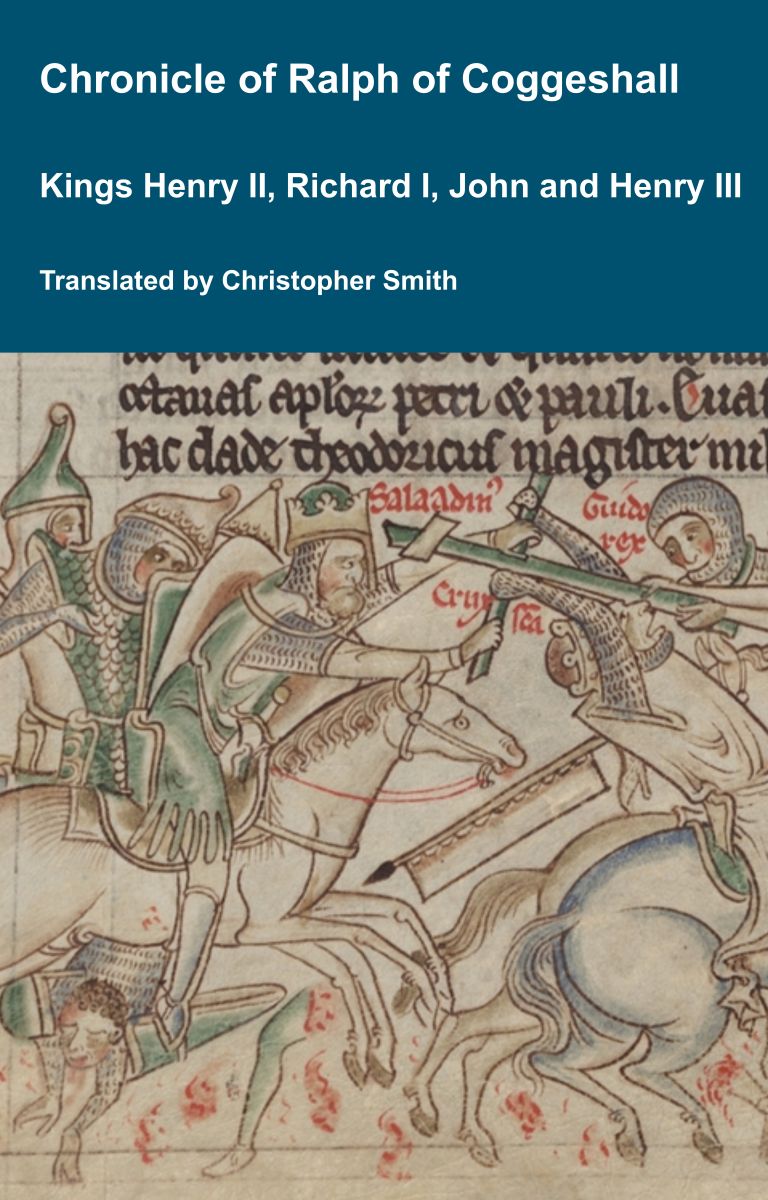 Chronicum Anglicanum by Ralph Coggeshall. Therefore, when all the forces had been prepared and the foreigners set sail for England, the Lord raised storms and whirlwinds more dreadful than usual, and broke up a great multitude of ships in the heart of the sea, together with the aforesaid Hugh, their leader, who, with the king's own ship, a great company of soldiers, and much treasure, was swallowed up like lead in the mighty waters. Yet some escaped shipwreck, of which many, being intercepted by the English, endured a wretched imprisonment. The king, grieving bitterly at this loss, gathered many forces and came to Rochester1 on the side of the intervening river, wishing to burn the bridge, lest any help should be able to reach the men of Rochester from London by that way. But Robert fitzWalter, with sixty knights and squires and stout crossbowmen, defended the bridge, put out the fire, and forced the king, frustrated in his plan, to flee, with many of his men drowned, wounded, or slain. There were captured there from among the barons' knights Oliver de Argentan and David Giffard, who, striving too far beyond their strength to seize the king's soldiers, when no help could come to them because their companions were otherwise engaged, were themselves violently carried off by the victors, though conquered. On account of this capture, when the king had cruelly resolved to kill the valiant Oliver by starvation, his elder brother, who was one of the fiercest in advancing the cause of the barons, moved by brotherly compassion, after he had offered the king much money for his ransom and could not be heard, at last, after his brother had endured three days of hunger, with the barons' permission, transferred himself in body, not in mind, to the king's party, and, giving hostages for his steadfastness, delivered his brother from so great a peril.
Igitur dum præparatis omnibus copiis, alienigenæ in Angliam vela darent, suscitavit Dominus tempestates et turbines præter solitum horrendas, et multitudinem copiosam navium contrivit in corde maris, cum prædicto H., duce ipsarum, qui cum navi regis propria et milite copioso, ac thesauro plurimo, submersus est quasi plumbum in aquis vehementibus. Evaserunt tamen nonnullæ naufragium, quarum plures ab Anglis interceptæ luctuosum subierunt ergastulum. Rex igitur hanc jacturum graviter dolens, collectis plurimis copiis, Roffecestriam ex parte fluminis intercurrentis adiit, cupiens pontem incendere, ne quod subsidium Roffensibus ea parte a Londonia posset accedere. Sed Robertus filius W., cum sexaginta militibus et servientibus ac balistariis strenuis, pontem defendit, et accensum extinxit, regemque, inanem consilii sui, aufugere compulit, pluribus ex parte regis submersis, vel vulneratis, aut occisis. Capti sunt ibi ex militibus baronum Oliverius de Argentan, et David Giffard, qui, dum nimis supra vires niterentur milites regis capere, ipsi, dum a sociis alias occupatis succursum non haberent, victores a victis violenter abducti sunt. Hujus captionis occasione, cum rex prædictum Oliverium strenuum crudeliter fame necare proposuisset, frater ejusdem O. primogenitus, qui fuit in causa baronum alleganda acerrimus, compassione fraterna permotus, cum ad ejus redemptionem multam regi pecuniam obtulisset, nec exaudiri potuisset, tandem post triduanam fratris famem, de licentia baronum, in partes regis corpore, non mente, se transtulit, et, datis de perseverantia obsidibus, fratrem tanto discrimini exemit.
Note 1. He reached Rochester on Tuesday, 13th October 1215, and continued in that city until Sunday, 6th December.
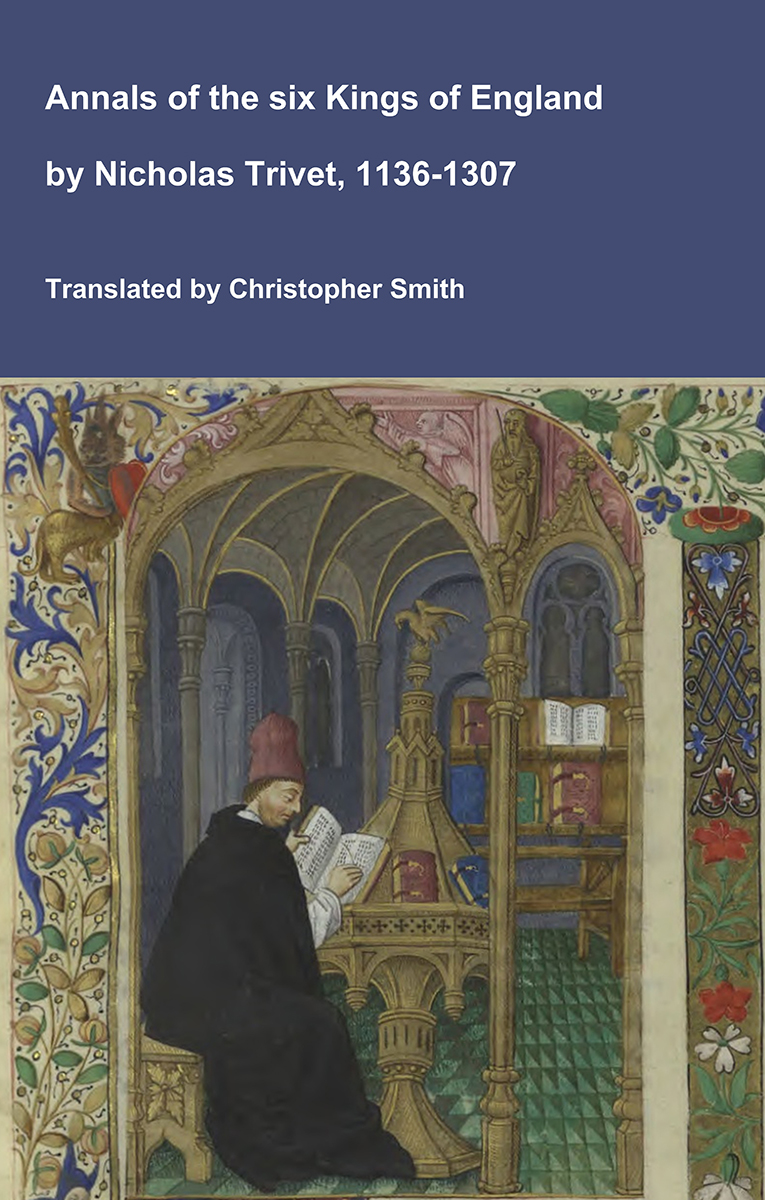 Annals of Six Kings of England by Nicholas Trivet. At length, the enemies having been overcome, the king, restored to royal authority, on the counsel of his victorious son and others, summoned a parliament on the Nativity of the Virgin Mary [8th September 1265] at Winchester, where, after deliberation, he deprived the city of London, on account of its rebellion, of all its ancient privileges and liberties, and ordered the leaders of the faction against him to be imprisoned, to be punished at his pleasure. On the Feast of Saint Edward the Confessor [13th October 1265], all who had stood with Earl Simon against their lord the king were publicly disinherited; and the king soon granted their lands to those who had faithfully adhered to him, according to the merits of each. The disinherited, however, gathering together in various places, carried out acts of plunder and arson.
Denique triumphatis hostibus, rex potestati regiæ restitutus, Wintoniam de consilio filii victoris aliorumque parlliamentum convocat in Nativitate Virginis gloriosæ, ubi inito consilio civitatem Londoniarum ob suam rebellionem privavit omnibus privilegiis libertatibusque antiquis, capitaneosque factionis contra regem juxta voluntatem suam plectendos jubet carceri mancipari. In festo vero S. Edwardi regis omnes, qui contra dominum suum regem cum comite Symone!steterant, edicto publico exheredantur; quorum mox terras rex illis, qui sibi fideliter adhæserant, contalit pensatis meritis singulorum. Exheredati vero coadunantes se passim deprædationes et incendia exercebant.
On 13th October 1269 the remains of King Edward "The Confessor" of England were moved to a chapel east of the sanctuary in Westminster Abbey [Map]. King Alexander III of Scotland [aged 28] and Margaret Queen of Scotland [aged 29] attended.
On 13th October 1272 Edmund "Almain" 2nd Earl Cornwall [aged 22] was knighted by King Henry III of England at Westminster Abbey [Map].
Annals of Six Kings of England by Nicholas Trivet. 1278. Brother Robert, archbishop of Canterbury, having been raised to the cardinalate, was made bishop of Porto. The king of England gave in marriage to the prince of Wales1 the daughter of the earl of Leicester, who had been captured at the Scilly Isles, celebrating the solemnity of the wedding at his own expense, and honouring it with his own presence and that of the queen.
1278. FRATER Robertus Cantuariensis archiepiscopus, ad cardinalatum assumptus, factus est episcopus Portuensis. Rex Angliæ filiam comitis Leicestriæ apud insulas Sillinas captam principi Walliæ uxorem dedit, nuptiarum solemnitatem impensis propriis agens, suaque ac reginæ præsentia illas honorans.
Note 1. Llywelyn ap Gruffudd, the Last, and Eleanor de Montfort, daughter of Simon de Montfort 'the Younger', 6th Earl of Leicester, who had been killed with his father at the Battle of Evesham, and Eleanor, daughter of King John and Isabella of Angoulême, were married at Worcester Cathedral on 13th October 1278, the Feast Day of Saint Edward the Confessor.
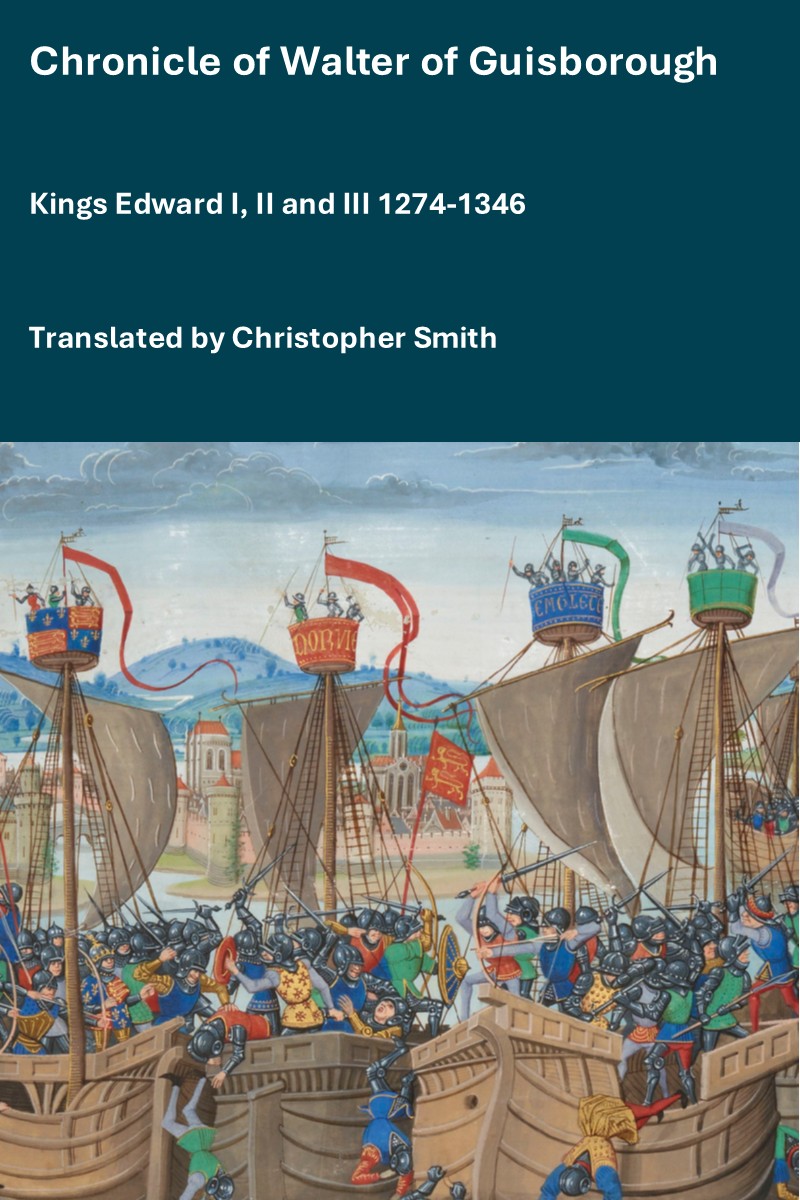 Chronicle of Walter of Guisborough. This same Boniface also deposed two cardinals of the Colonna family, namely James and his nephew Peter, the son of James's brother, for their offenses, even degrading them to the fourth degree, and declared them to be schismatics, because they had plotted his death. In turn, they gathered armies and harassed him and his supporters, overthrowing their castles wherever they could. They also had a certain nephew, a powerful and very valiant knight, who, on the eve of the Nativity of the Blessed Virgin Mary, came to Anagni with a large army. There, in the most secure palace, was stored the pope's treasure, which had been kept safe for a long time, and the lord pope himself was there. This knight conspired and made an agreement with the nobles of the city, under the promise that they would share in the profit to come, that they would not resist his entry or exit. They swore to him, and he entered the city at daybreak. He assaulted the palace until after the ninth hour, and, setting fire to it, burned down the palace gates and forced his way inside. After some on both sides were cut down, he seized Pope Boniface and the great treasure. But when he refused to share it with the nobles as agreed, they cried out to the common people that they had been deceived, and that if the pope were carried off in such a way, it would become a proverb, bringing shame upon them and their descendants forever. So they rushed to arms, attacked the invaders with force, and drove them out of the city. They seized the pope and recovered him to his place, speaking words of comfort to him so that he would not be afraid. Having regained his spirit, he blessed them and gave boundless thanks for their loyalty and steadfastness. He explained to them why he had gathered the treasure, namely, to advance the cause of the Holy Land, which he planned soon to visit himself or send a great army to visit. He earnestly begged them to escort him safely to Rome for his own security and the blessing of God. They did as he commanded, bringing him there with strength and honour. But grief was followed by illness, and after a few days there he passed away, namely on the 13th day of October [1303]. He was succeeded by Pope Benedict XI of the Order of Preachers [Dominicans], chosen in that same year.
Hic etiam Bonifacius duos cardinales de Columna, Jacobum scilicet et Petrum nepotem Jacobi, propter eorum demerita deposuit etiam usque in quartum gradum, et pronunciavit eos esse schismaticos, eo quod imaginati fuerant in mortem ipsius. At illi congregatis exercitibus persequebantur se et suos, et everterunt castra suorum ubi poterant. Habebant etiam quendam nepotem, militem potentem et strenuissimum, qui in vigilia Nativitatis beatæ Mariæ venit Ananiam cum exercitu copioso, ubi erat thesaurus papæ a multo tempore reconditus in tutissimo palatio, et erat ibi tunc dominus papa. Hic conspiravit et convenit cum optimatibus civitatis ejusdem, sub spe participationis futuri lucri, quod non resisterent ei ad introitum neque exitum, et juraverunt ei, ingressusque est civitatem quasi summo mane, et in sultum fecit palatio usque post horam nonam, appositoque igne combussit portas palatii, et potenter ingressus est. Cæsisque hinc et inde aliquibus, cepit papam Bonifacium et thesaurum copiosum. Cumque participare nollet, ut convenerat, conclamabant optimates ad plebem, dicentes se esse deceptos, et si abduceretur papa sic, verteretur in proverbium, et cederet eis et hæredibus suis in opprobrium sempiternum. Cucurreruntque ad arma, et irruentes in eos, fortiter extra civitatem ejecerunt. Rapueruntque papam, et dispersus est thesaurus hinc et inde. Restitueruntque papam in locum suum, et confortatoriis verbis loquebantur ei ut non timeret. Qui reassumpto tandem spiritu benedixit eos, et gloriæ et fidelitati eorum gratias egit immensas. Exposuitque eis causam quare thesaurum congregaverat, pro negotio scilicet Terræ Sanctæ promovendo, quam per se vel per potentem exercitum proposuerat visitasse in proximo. Rogavitque cum instantia ut eum Romam salvo conducerent pro sua et benedictione Dei. Feceruntque quod jusserat, et eum potenter et cum His death. honore duxerunt. Successitque dolori infirmitas, et post dies paucos ibidem requievit, scilicet XIII die Octobris, cui successit papa Benedictus XI de ordine fratrum Prædicatorum, assumptus et eodem anno.
On 13th October 1308 Archbishop Walter Reynolds was consecrated Bishop of Worcester.
On 13th October 1321 Isabella of France Queen Consort England [aged 26] was returning from Canterbury, Kent [Map] to London. She sought accommodation at Leeds Castle, Kent [Map] which was under the protection of Margaret Clare Baroness Badlesmere [aged 34] the wife of Bartholomew Badlesmere 1st Baron Badlesmere [aged 46]. Margaret Clare Baroness Badlesmere refused entry to the Queen killing around six of her retinue when they tried to force entry. King Edward II of England [aged 37] commenced the Siege of Leeds Castle. Once King Edward II of England gained possession of the castle, he had the garrison hanged from the battlements. His wife Margaret Clare Baroness Badlesmere, her five children (Margery Badlesmere Baroness Ros of Helmsley [aged 13], Maud Badlesmere Countess of Oxford [aged 13], Elizabeth Badlesmere Countess Northampton [aged 8], Giles Badlesmere 2nd Baron Badlesmere [aged 6] and Margaret Badlesmere Baroness Tibetot [aged 6]), and her nephew Bartholomew "The Elder" Burghesh 1st Baron Burghesh [aged 34], were imprisoned in the Tower of London [Map].
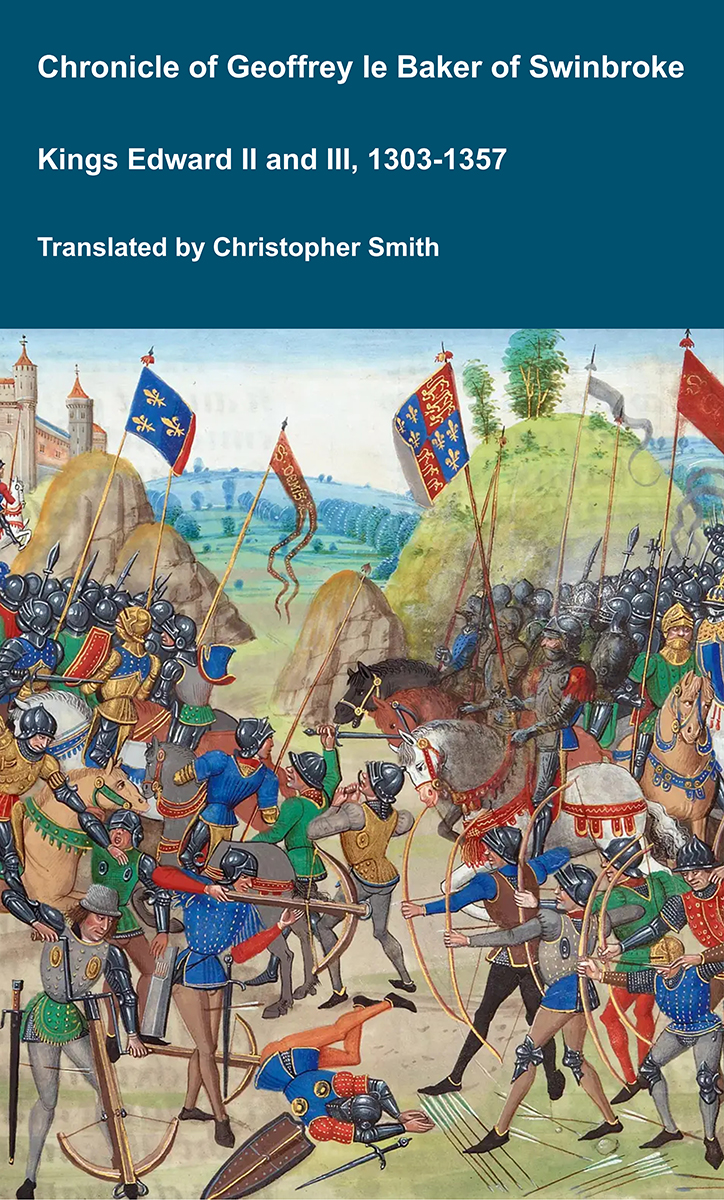
Chronicle of Geoffrey le Baker of Swinbroke
Baker was a secular clerk from Swinbroke, now Swinbrook, an Oxfordshire village two miles east of Burford. His Chronicle describes the events of the period 1303-1356: Gaveston, Bannockburn, Boroughbridge, the murder of King Edward II, the Scottish Wars, Sluys, Crécy, the Black Death, Winchelsea and Poitiers. To quote Herbert Bruce 'it possesses a vigorous and characteristic style, and its value for particular events between 1303 and 1356 has been recognised by its editor and by subsequent writers'. The book provides remarkable detail about the events it describes. Baker's text has been augmented with hundreds of notes, including extracts from other contemporary chronicles, such as the Annales Londonienses, Annales Paulini, Murimuth, Lanercost, Avesbury, Guisborough and Froissart to enrich the reader's understanding. The translation takes as its source the 'Chronicon Galfridi le Baker de Swynebroke' published in 1889, edited by Edward Maunde Thompson.
Available at Amazon in eBook and Paperback format.
Chronicle of Geoffrey le Baker of Swinbroke. In the year 1321, around the feast of Saint Michael, when Queen Isabella [aged 26] was travelling and came to Leeds Castle in Kent,1 desiring to stay there for the night, her entry was stubbornly denied. The king, considering this rejection of the queen as an insult to himself, ordered the castle to be besieged by the local people, those from Essex, and some Londoners. The castle was held by Bartholomew de Badlesmere [aged 46], who had left behind his wife, children, and household retainers fit for its defence while he himself had gone with other barons to plunder the treasures of Hugh [Despenser]. The king pressed the siege fiercely, and as those inside despaired of holding the castle, the earls and barons who had been ravaging Hugh's lands, supported by a large retinue of armed men, arrived at Kingston on the eve [27th October 1321] of the feast of Saints Simon and Jude. They sent envoys to request the Archbishop of Canterbury, the Bishop of London, and the Earl of Pembroke to intercede with the king to lift the siege, promising to surrender the castle to him after the next parliament. However, the king, realizing that the castle's defenders could not hold out much longer and angered by their rebellion, refused to heed the barons' request. When the barons withdrew to other regions, the castle was eventually taken after considerable effort. Six of the strongest men2 found within were immediately hanged, and Bartholomew de Badlesmere's wife and children were sent to the Tower of London to be held in custody.
Anno MCCCXXJ domine regine Isabelle, circa festum sancti Michaelis itinerando venienti ad castrum de Ledes in Cancia et in eo volenti pernoctasse, fuerat ingressus pertinaciter denegatus. Regine repudium rex estimans in sui contemptum redundare, per populares vicinos et illos de Essexia atque nonnullos Londonienses iussit castrum obsideri. Castri firmamentum tenuit Bartholomeus de Baddesmere in quo uxore et filiis relictis cum vernaculis ad eius defensionem aptis, proficissebatur cum aliis baronibus ad demolicionem gazarum Hugonis. Obsidioni acriter insistente rege, inclusis desperantibus de castri tuicione, comites et barones Hugonis vastatores, armatorum suffulti magna comitiva, venerunt Kingestonam in vigilia apostolorum Simonis et Iude, rogantes per nuncios intermissos, dominos Cantuariensem et Londoniensem ac comitem Penbrochiensem, quod obsidionem rex amoveret, promittentes quod post proximum parliamentum castrum regi redditum subderent. Rex vero, perpendens castelanos non posse diu resistere et exasperatus rebellione inclusorum, peticiones baronum noluit exaudire; quibus in partes alias regressis, castro tandem labore non modico expungnato, VJ de forcioribus in ipso repertis indilate suspensis, uxorem Bartholomei de Baddesmere et filios eius misit turri Londoniarum custodiendos.
Note 1. The refusal to admit the queen into Leeds castle took place on the 13th October 1321. On the 16th the king's proclamation and summonses to the men of the southern counties were issued. Rymer's Fœdera, 2.458.
According to the Annales Paulini 298.
Note 2. Annales Paulini 299: "The wife and sister of Lord Bartholomew de Badlesmere were committed to custody at Dover Castle. On the next day, being All Souls' Day [2nd of November 1321], the said Walter Culpepper and twelve of his accomplices, all strong and able men, were condemned by judgment and hanged."
On 13th October 1453 Edward of Westminster Prince of Wales was born to Henry VI [aged 31] and Margaret of Anjou [aged 23] at Westminster Palace [Map]. King Henry had suffered his first bout of mental illness three months before. When presented with Prince in January 1454 he made no response - see Paston Letters Volume 2 235. A letter from Prospero di Camulio, Milanese Ambassador to the Court of France, etc., to Francesco Sforza, Duke of Milan makes reference to Henry having said that the child "must be the son of the Holy Spirit".
In 1459 the English Chronicle makes reference to Edward being illegitimate eight years after his birth... "The quene was defamed and desclaundered, that he that was called Prince, was nat hir sone, but a bastard goten in avoutry [adultery]"
Various online sources suggest the child was fathered by either Edmund Beaufort 1st or 2nd Duke of Somerset [aged 47] or his son-in-law James Butler 1st Earl Wiltshire 5th Earl Ormonde [aged 32] without referring to contemporarty sources. He married 13th December 1470 his half third cousin Anne Neville Queen Consort England, daughter of Richard "Kingmaker" Neville Earl Warwick, 6th Earl Salisbury and Anne Beauchamp 16th Countess Warwick.
Bale's Chronicle [1450-1460]. Item the moneth of Octobr [1453] the day of seint Edwarde which is the xiij day þerof of the quene beyng at Westminster had a prince. Wherefor the belles rang in every chirch and Te Deum prince solempny song. And he was cristened at Westminster and his godfadres been the Cardinall Erchebisshop of Cauntbury Chanceller called Kemp and the Duk of Somerset and his Godmoder Duches of Buk. Of whoos birth the peple spake stranngely. And a geinst his birth was begonne a newerk at Westminster a place for a worys.1
Note 1. "And about the time of his birth, a new building was begun at Westminster — a place for the nuns." 'worys' the plural of 'wore' i.e. a woman under religious vows.
Chronicle of Robert Fabyan [-1512]. 13th October 1453. And in ende of this mayers yere, and begynnynge of the xxxii yere of the kyng, that is to meane, upon the daye of Translancion of seynt Edwarde, or the xiii day of Octobre, the quene [aged 23], at Westmynster, was delyuered of a fayre prynce, for the whiche great reioysynge and gladnesse was made in sundry placys of Englonde, and speciallye within the cytie of London, wherof the expressement of the cyrcumstance wolde axe longe leysoure to vtter. This prynce beynge with all honour and reuerence sacryd & crystened, was named Edwarde, and grewe after to perfyght and goodlye personage; and lastlye of Edwarde the iiii was slayen at Tewkysburye felde, as after to you shall be shewyd, whose noble mother susteynyd not a little dysclaunder and obsequye of the common people, sayinge that he was not the naturall sone of kynge Henrye, but changyd in ye the cradell, to hyr great dyshonour and heuynesse, which I ouer passe.
An English Chronicle. 13th October 1453. The xxxij. yere of kyng Harry, and the yere of oure Lorde M1.iiijc.liiij. [Prince Edward was born Saturday 13th October, feast of translation of Edw. Conf. 1453.] on the Saturday the xiiij. day of Octobre, in the feste of seynt Edwarde the Confessoure, was bore at Westmynstre Edward the furst sone of kyng Harry [aged 31]; whoos godfadres were master Johan Kempe [aged 73], archebysshoppe of Caunterbury and bysshoppe cardinal of Rome, and Edmunde [aged 47] duke of Somerset, his godmother was the duchesse of Buckynghame [aged 45]: and master William Wayneflete [aged 55], bysshop of Wynchestre, hym baptized.
On 13th October 1364 Stephen "Magnificient Fop" Wittelsbach III Duke Bavaria [aged 27] and Taddea Visconti Duchess Bavaria [aged 13] were married. She by marriage Duchess Bavaria. He the son of Stephen Wittelsbach II Duke Bavaria [aged 45] and Elisabeth Barcelona Duchess Bavaria.
On 13th October 1399 King Henry IV of England [aged 32] was crowned IV King of England at Westminster Abbey [Map]. Archbishop Thomas Fitzalan aka Arundel [aged 46] officiated. Bishop Robert Braybrooke carried the sacraments and said mass.
The future King Henry V of England [aged 13] carried the Sword Curtana. Thomas Beauchamp 12th Earl Warwick [aged 61] and/or John Beaufort 1st Marquess Somerset and Dorset [aged 26] carried a sword wrapped in red and bound with golden straps symbolising two-fold mercy. Henry Percy 1st Earl of Northumberland [aged 57] carried the Lancaster Sword.
Thomas Percy 1st Earl of Worcester [aged 56] carried the Steward's baton. Thomas Erpingham [aged 44] carried a Sword.
Edmund Stafford 5th Earl Stafford [aged 21] was appointed Knight of the Bath. John Lancaster 1st Duke Bedford [aged 10], John Arundell [aged 33] and Richard Beauchamp 13th Earl Warwick [aged 17] were knighted.
Archbishop Richard Scrope [aged 49] attended.


Froissart Book 4 Chapter 116. 13th October 1399. The procession entered the church about nine o'clock; in the middle of which was erected a scaffold covered with crimson cloth, and in the centre a royal throne of cloth of gold. When the duke entered the church, he seated himself on the throne, and was thus in regal state, except having the crown on his head. The archbishop of Canterbury proclaimed from the four corners of the scaffold, how God had given them a man for their lord and sovereign, and then asked the people if they were consenting to his being consecrated and crowned king. They unanimously shouted out, "Ay!" and held up their hands, promising fealty and homage. After this, the duke descended from his throne, and advanced to the altar to be consecrated. This ceremony was performed by two archbishops and ten bishops: he was stripped of all his royal state before the altar, naked to his shirt, and was then anointed and consecrated at six places; that is to say, on the head, the breast, the two shoulders, before and behind, on the back and hands: they then placed a bonnet on his head; and, while this was doing, the clergy chanted the litany, or the service that is performed to hallow a font.
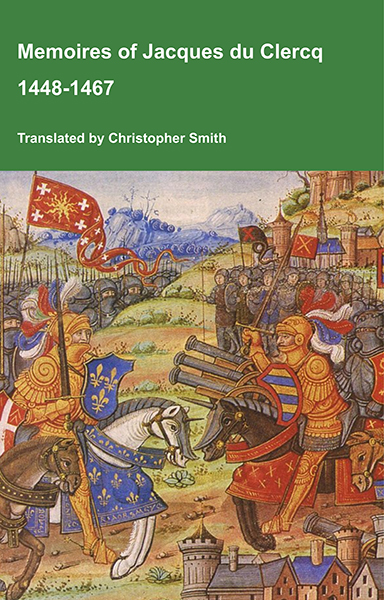 Memoires Jacques du Clercq. "Louis, by the grace of God, King of France, to all who shall see these present letters, greeting. Whereas by our other letters, dated the fifth day of this present month of October, and for the causes therein contained, we have, among other things, granted and transferred to our very dear and well-beloved brother and cousin Charles, Count of Charolais, all the lands situated upon the River Somme, which our very dear and well-beloved uncle the Duke of Burgundy, his father, held and possessed by virtue of the Treaty of Arras before the redemption and release which we have lately made from him, as is more fully contained in our said letters; and whereas our said brother and cousin has humbly represented to us that within the bailiwick of Amiens there are and have customarily been three provostships, that is to say, the provostship of Vimeu, the provostship of Beauvaisis, which extends in part within the town of Amiens, and the provostship of Fouilloy, which extends on both sides of the River Somme, which, because our said uncle did not hold and possess them before the said redemption, are not included in the said grant of the said lands which we have made to our said brother and cousin; And he has petitioned us that, in order to avoid disputes and disagreements which might arise between the officers appointed by us in the said provostships and those appointed in the said lands, and also so that the said provostships may not be separated from the said bailiwick of Amiens, it may please us to add to the said grant and transfer of the said lands the said provostships with all their appurtenances, and to make to him a new grant thereof, to enjoy them as the other lands; Know therefore that we, of our certain knowledge, and for the causes and considerations contained in our said other letters, and for other just causes moving us thereto, have granted and transferred, and do grant and transfer to our said brother and cousin the Count of Charolais, for him and his heirs likewise descending from him, and the heirs of his heirs likewise descending from them in direct line, the said provostships of Vimeu, Beauvaisis, and Fouilloy, with all their appurtenances, belonging to the said bailiwick of Amiens, to hold and enjoy them in the same manner, with the same rights, and subject to the same conditions of redemption, as the said lands already granted to him. And we will that our said brother and cousin and his said heirs, with respect to the said provostships and their appurtenances, may avail themselves of the letters which we have granted to him concerning the said lands, as if the said provostships had been expressly named and specified therein. And we command and expressly enjoin our well-beloved and faithful Chancellor, and our well-beloved and faithful counsellors of our great council, those holding our parliament, of our accounts and finances, and all our bailiffs, justices, officers, and subjects, that they cause our said brother and cousin to enjoy and use this our present grant, concession, and addition peacefully, without causing or allowing any hindrance or impediment to the contrary, and that they verify, publish, and register these present letters wherever it shall be necessary, notwithstanding any ordinances, restrictions, or other things to the contrary. And likewise we command and appoint our well-beloved and faithful commissioners, whom we have assigned to deliver possession of the said lands to our said brother and cousin, that they likewise place him, or his deputies, in possession of the said provostships, and cause him to enjoy them without any difficulty or contradiction, for such is our pleasure. In witness whereof we have caused our seal to be affixed to these present letters. Given at Paris on the 13th day of October in the year of grace 1465, and of our reign the fifth. Signed: By the King, the lords des Landes, du Lau, de Basoges, and others present. Signed Picart. Read and published at Paris in Parliament on the 16th day of October in the year of Our Lord 1465. The King's procurator was summoned, who did not oppose the publication and registration of the aforesaid. Done in Parliament on the said day and year, signed Cheneteau".
Loys, par la grace de Dieu, roy de Franche, a touts ceulx qui ces presentes lettres verront, salut: Comme par nos aultres lettres de la date du cinquiesme jour du present mois d'octobre, et pour les causes contenues en icelles, nous ayons entre aultres choses baillié et transporté a nostre très chier et très amé frere et cousin Charles, comte de Charollois, toutes terres estant sur la riviere de Somme, que nostre très chier et aimé oncle le due de Bourgogne, son pere, tenoit et possedoit au moien du traictié d'Arras, paravant le rachapt et desengagement que nous en avons naguerres fait de lui, comme est plus a plein contenu en nosdites lettres, et depuis nostre dit frere et cousin nous ait humblement fait remonstrer, que du bailliage d'Amiens, sont et ont accoustumé d'estre trois prevostés; c'est a sçavoir, la prevosté Vineu, la prevosté de Beauvoisis, qui s'estend partie dedans la ville d'Amiens, et la prevosté de Foeully, qui s'estend decha et dela la riviere de Somme, lesquelles par ce que nostre dit oncle ne les tenoit et possedoit paravant les rachapts ne sont point comprinses audit transport que nous avons fait desdites terres a nostre dit frere et cousin, en nous suppliant que pour eviter les discords et desbats qui polroient estre entre les officiers qui seroient commis de par nous esdites prevostés, et les officiers ordonnés esdites terres, et aussy adfin que lesdites prevostés ne soient demembrées dudit bailliage d'Amiens, il nous plaise adjoindre audit bail et transport desdites terres lesdites prevostés et leurs appartenances et appendances quelconques, et lui en faire nouveau transport, pour en joyr comme des aultres terres, sçavoir faisons: que nous de nostre certaine science, et pour les causes, considerations contenues en nosdites aultres lettres et aultres justes causes ad ce nous mouvans, avons baillié et transporté, baillions et transportons a nostre dit frere et cousin le comte de Charollois, pour lui et ses hoirs aussy descendants de lui, et les hoirs de ses hoirs aussy descendants d'eulx en droite ligne, lesdites prevostés de Vineu, Beauvoisis et Foeulloy, et les appartenances et appendances quelconques, estant dudit bailliage d'Amiens, pour en joyr en la fourme et maniere, et en tels et semblables droits, et soubs telles et semblables reservations de rachapt, que icelluy nostre dit frere et cousin, et sesdits hoirs descendants de lui en droite ligne, lesdites terres transportées tiendront et polront tenir; et voullons que nostre dit frere et cousin et sesdits hoirs, quant aulxdites prevostés et leurs appartenances, se puissent ayder des lettres que nous lui avons bailliées et octroyées, contenant lesdites terres, et de tout le contenu en icelles, tout ainsy que sy lesdites prevostés et leurs dites appartenances estoient nommées, et expressement desclarées et specifiées en nosdites lettres. Sy mandons et expressement enjoignons a nostre amé et feal chancellier, et a nos amez et feaulx les gens de nostre grand conseil, les gens tenants nostre parlement, de nos comptes generaulx, de nos finanches, et a touts nos baillys, justiciers, officiers et subjets, que de nostre present don, octroy et adjonction ils fassent, soeuffrent joyr et user nostre dit frere et cousin paisiblement, sans lui faire ne souffrir estre fait aulcun destourbier ou empeschement au contraire, et que ces nos presentes ils veriffient, publient et fassent enregistrer partout ou il appartiendra, nonobstant toutes ordonnances, restrinctions et aultres choses faisables au contraire; et aussy mandons et commectons a nos amés et feaulx les commissaires par nous commis et ordonnés a baillier les possessions desdites terres a nostre dit frere et cousin, et pareillement ils mectent lui ou ses commis en possession desdites prevostés et l'en fassent joyr et sans difficulté ou contradiction quelconque; car tel est nostre plaisir. En temoings de ce nous avons fait mectre nostre scel a ces presentes. Donné a Paris le xiije jour d'octobre l'an de grace mil iiijc lxv, et de nostre regne le cinquiesme. Signé par le Roy, les sieurs des Landes, du Lau, de Basoges et aultres presents. Signatum Picart. Lecta et publicata Parisiis in Parlamento, xvje die octo bris anno Domini mo iiijc lxv. Vocatus fuit procurator Regis qui publicare et registrare prædicta non contradixit. Actum in Parlamento, die et an nis prædictis, Cheneteau.
A Brief Latin Chronicle. In this year, Lord Anthony Scales [aged 28] and Lord Walter Blount [aged 52], then called Lord Mountjoy, around the feast of the Translation of Saint Edward the Confessor [13th October 1468], boarded ships with many thousands of armed men. But being disrupted by great storms, they accomplished nothing and returned to England in disgrace.
Hoc anno dominus Antonius Scales, dominus Walterus Blownt, tunc dictus dominus de Mowtjoye, circiter festum Translacionis Sancti Edwardi Confessoris, cum multis milibus armatorum, naves ingressi et tempestatibus magnis turbati, nichil proficientes, in Angliam cum dedecore redierunt.
Croyland Chronicle 1470. [6th October 1470] In this manner did the lords before-mentioned gloriously triumph over the said king Edward, and that without the least slaughter or bloodshed; after which, they repaired to London with a degree of pomp befitting such great success. Taking king Henry the Sixth out of the Tower, where he had been so long detained in captivity, they once more placed him on the throne of the kingdom: and in the month of October, on the feast of the Translation of Saint Edward the King and Confessor [13th October 1470], after walking in solemn procession, had the crown publicly placed on his head. Now all laws were once more enacted in the name of this king Henry, and all letters patent, writs, mandates, chirographs, and instruments whatsoever were published with a twofold mode of annotation in reference to this king's government in this manner; "In the year from the beginning of the reign of king Henry the Sixth, forty eight, and in the first year of the recovery of his throne by the said king."
On 13th October 1494 Isabella Stewart Duchess Brittany [aged 68] died.
Letters and Papers Foreign and Domestic Henry VIII 1535. 13th October 1535. 594. Cromwell having several times written to me that on his return from Court we should discuss matters of the Queen and Princess, I have waited two days since his return to see what show he would make of doing so, and finding none, I sent to him to ask at what hour I might speak with him. He excused himself for two days on account of business, and did so again yesterday, the third day, saying, however, to my messenger, that he would be here this morning; as he really was. After congratulation of the Emperor on his glorious victory and his arrival in Sicily, and thanking me on the part of the King and himself for the news I had sent them from time to time he replied about the Princess according to what he had written to me, which was to the effect that the King, his master, was good and wise, and that he would take good care, and better than any other, to treat his daughter well; that it was unnecessary to remind him of his duty, whether it were to change her gouvernante [aged 59], to get her better companions, or to place her again with the Queen [aged 49], her mother. As to the arrears due to the Queen, it was true he had several times promised to get her prompt payment, and if it was only a question of presenting her with the sum due he would do it at once very willingly; but he knew the disposition of the King, his master, was such that if he meddled with it he fell under suspicion of taking the Queen's part, which might cost him his head, and said the King might well give the Queen any sum she could demand, if she would undertake to maintain her own household; and on doing so, he would give her perfect liberty to keep what servants she pleased. This bargain, I think, she will never accept, as it would in some degree prejudice her position; moreover, I think Cromwell threw out the suggestion more by way of compliment than otherwise. After this, Cromwell mentioned that the King was informed from France, Italy, and elsewhere, that your Majesty intended to prepare an army against him and his countries in favour of the Pope, whom he sometimes called bishop of Rome and sometimes idol, but not without begging me to pardon him, and that to stir the fire, some bishop and legate had already come to Flanders; and that the King, his master, notwithstanding the said rumours, which might have been propagated by ill-disposed people, could not well believe that your Majesty, considering the great friendship and repeated alliances between you so solemnly ratified and sworn, would attempt any such thing, especially when there was no cause; for, as regards disobedience to the Pope, the King did not think he had said or done anything to any Christian prince inconsistent with the law of God, and he believed that the Christian religion was not better regulated and reformed in any country in the world than in this kingdom; and the King requested that I would add to the other good offices I had done by notifying this to your Majesty. Cromwell added that, perhaps the King might send you a very honorable embassy, provided he thought that you would give favorable audience to it, both to represent these and other matters, and to promote amities and confederations; on which subject the King wished to have my advice. I replied that I was not so rash as to put myself forward in giving counsel to such a Prince lest I should give him occasion justly to reproach me, as was done without occasion when the earl of Wiltshire was at Bologna with your Majesty; but I fully believed that if such an embassy were sent to your Majesty it would not only be kindly received and heard, but would obtain what it asked for, provided it were a thing that your Majesty could rightly grant according to reason and conscience; and otherwise I would neither advise nor dissuade its despatch, for the above reason. He made no reply to this, and I think, from the way he spoke of the said embassy, there has been no suggestion of it among them, and that he spoke only of himself. He then said I must be already informed that the bishop of Winchester [aged 52] was going to France, and the bishop of Atfort (Hereford), formerly the King's almoner, into Germany. He told me nothing more, and I asked if he, who was going into Germany, was to go further than Saxony? He said he did not know where he was going to; and he said the same to a merchant of whom he desired a letter of exchange of 1,000 crs. for the said Bishop, in case he should have need of them, which he did not expect, because he was taking plenty of money with him, and Cromwell wished the said letters to be general for the principal cities of Germany. Cromwell has confessed that the bailly of Troyes had made request for the marriage of the Princess with the Dauphin, and also that he brought the brief of which I before wrote.


Chronicle of Walter of Guisborough
A canon regular of the Augustinian Guisborough Priory, Yorkshire, formerly known as The Chronicle of Walter of Hemingburgh, describes the period from 1066 to 1346. Before 1274 the Chronicle is based on other works. Thereafter, the Chronicle is original, and a remarkable source for the events of the time. This book provides a translation of the Chronicle from that date. The Latin source for our translation is the 1849 work edited by Hans Claude Hamilton. Hamilton, in his preface, says: 'In the present work we behold perhaps one of the finest samples of our early chronicles, both as regards the value of the events recorded, and the correctness with which they are detailed; Nor will the pleasing style of composition be lightly passed over by those capable of seeing reflected from it the tokens of a vigorous and cultivated mind, and a favourable specimen of the learning and taste of the age in which it was framed.'
Available at Amazon in eBook and Paperback format.
On 13th October 1559 Margaret Neville Countess Rutland
Henry Machyn's Diary. 13th October 1559. The xiij day of October at nyght ded the good lade the contes of Ruttland at Halewell [Map], sum-tyme yt was a nunre, that ser Thomas Lovell dyd beld yt for hym.
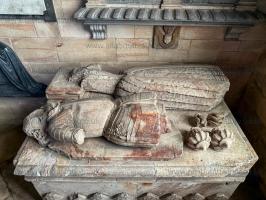
Between 6th October 1590, when he made his will, and 13th October 1590, when he was buried, John Fleetwood [aged 73] died. He had intended to be buried at St Peter's Church, Ellastone where he had a tomb prepared but died in Lancashire and was buried there. The tomb is believed to contain the remains of his son Thomas Fleetwood [aged 30]. His son Thomas Fleetwood inherited Wootton Lodge, Staffordshire [Map].
Thomas Fleetwood: Around 1560 he was born to John Fleetwood. In 1603 he died. His son Richard Fleetwood 1st Baronet inherited Wootton Lodge, Staffordshire [Map].
On 13th October 1613 Luisa de Guzman Queen Consort Portugal was born to Manuel Perez de Guzman y Silva 8th Duke of Medina Sidonia [aged 34]. She married 1633 John IV King Portugal and had issue.
On 13th October 1637 Sovereign was launched. Brothers John Christmas [aged 38] and Mathias Christmas [aged 32] had worked together on her decoration.
On 13th October 1642 King Charles I [aged 41] stayed the night at the house of William Cavendish 3rd Earl Devonshire [aged 25] at Latimer House, Chesham.


On 13th October 1660 Ernest August Oldenburg was born to Ernest Günther Oldenburg I Duke Schleswig Holstein Sonderburg Augustenburg [aged 50] and Auguste Oldenburg Duchess Schleswig Holstein Sonderburg Augustenburg [aged 27]. Coefficient of inbreeding 6.27%.
On 13th October 1660 General Thomas Harrison [aged 44] was hanged, drawn and quartered for his role in the regicide of King Charles I.
Samuel Pepys' Diary. 13th October 1660. Thus it was my chance to see the King beheaded at White Hall, and to see the first blood shed in revenge for the blood of the King at Charing Cross. From thence to my Lord's, and took Captain Cuttance and Mr. Sheply to the Sun Tavern, King Street, and did give them some oysters. After that I went by water home, where I was angry with my wife for her things lying about, and in my passion kicked the little fine basket, which I bought her in Holland, and broke it, which troubled me after I had done it. Within all the afternoon setting up shelves in my study. At night to bed.
Samuel Pepys' Diary. 13th October 1663. Then to the office, and there busy till late, and so home to my wife, with some ease and pleasure that I hope to be able to follow my business again, which by God's leave I am resolved to return to with more and more eagerness. I find at Court, that either the King [aged 33] is doubtfull of some disturbance, or else would seem so (and I have reason to hope it is no worse), by his commanding all commanders of castles, &c., to repair to their charges; and mustering the Guards the other day himself, where he found reason to dislike their condition to my Lord Gerard [aged 45], finding so many absent men, or dead pays1.
Note 1. This is probably an allusion to the practice of not reporting the deaths of soldiers, that the officers might continue to draw their pay. B.
Samuel Pepys' Diary. 13th October 1663. Thence with Sheply to Huntingdon [Map] to the Crown, and there did sit and talk, and eat a breakfast of cold roast beef, and so he to St. Ives Market, and I to Sir Robert Bernard's for council, having a letter from my Lord Sandwich [aged 38] to that end. He do give it me with much kindness in appearance, and upon my desire do promise to put off my uncle's admittance, if he can fairly, and upon the whole do make my case appear better to me than my cozen Roger [aged 46] did, but not so but that we are liable to much trouble, and that it will be best to come to an agreement if possible. With my mind here also pretty well to see things proceed so well I returned to Brampton, and spent the morning in looking over papers and getting my copies ready against to-morrow.


Abbot John Whethamstede’s Chronicle of the Abbey of St Albans
Abbot John Whethamstede's Register aka Chronicle of his second term at the Abbey of St Albans, 1451-1461, is a remarkable text that describes his first-hand experience of the beginning of the Wars of the Roses including the First and Second Battles of St Albans, 1455 and 1461, respectively, their cause, and their consequences, not least on the Abbey itself. His text also includes Loveday, Blore Heath, Northampton, the Act of Accord, Wakefield, and Towton, and ends with the Coronation of King Edward IV. In addition to the events of the Wars of the Roses, Abbot John, or his scribes who wrote the Chronicle, include details in the life of the Abbey such as charters, letters, land exchanges, visits by legates, and disputes, which provide a rich insight into the day-to-day life of the Abbey, and the challenges faced by its Abbot.
Available at Amazon in eBook and Paperback format.
Samuel Pepys' Diary. 13th October 1663. My Baroness Castlemaine's [aged 22], I hear, is in as great favour as ever, and the King [aged 33] supped with her the very first night he came from Bath: and last night and the night before supped with her; when there being a chine of beef to roast, and the tide rising into their kitchen that it could not be roasted there, and the cook telling her of it, she answered, "Zounds! she must set the house on fire but it should be roasted!" So it was carried to Mrs. Sarah's husband's, and there it was roasted.


Samuel Pepys' Diary. 13th October 1664. After being at the office all the morning, I home and dined, and taking leave of my wife with my mind not a little troubled how she would look after herself or house in my absence, especially, too, leaving a considerable sum of money in the office, I by coach to the Red Lyon in Aldersgate Street, and there, by agreement, met W. Joyce and Tom Trice, and mounted, I upon a very fine mare that Sir W. Warren helps me to, and so very merrily rode till it was very darke, I leading the way through the darke to Welling, and there, not being very weary, to supper and to bed. But very bad accommodation at the Swan. In this day's journey I met with Mr. White, Cromwell's chaplin that was, and had a great deale of discourse with him. Among others, he tells me that Richard [aged 38] is, and hath long been, in France, and is now going into Italy. He owns publiquely that he do correspond, and return him all his money. That Richard hath been in some straits at the beginning; but relieved by his friends. That he goes by another name, but do not disguise himself, nor deny himself to any man that challenges him. He tells me, for certain, that offers had been made to the old man, of marriage between the King [aged 34] and his daughter [aged 26], to have obliged him, but he would not1. He thinks (with me) that it never was in his power to bring in the King with the consent of any of his officers about him; and that he scorned to bring him in as Monk [aged 55] did, to secure himself and deliver every body else. When I told him of what I found writ in a French book of one Monsieur Sorbiere, that gives an account of his observations herein England; among other things he says, that it is reported that Cromwell did, in his life-time, transpose many of the bodies of the Kings of England from one grave to another, and that by that means it is not known certainly whether the head that is now set up upon a post be that of Cromwell, or of one of the Kings. Mr. White tells me that he believes he never had so poor a low thought in him to trouble himself about it. He says the hand of God is much to be seen; that all his children are in good condition enough as to estate, and that their relations that betrayed their family are all now either hanged or very miserable.
Note 1. The Protector wished the Duke of Buckingham [aged 36] to marry his daughter Frances. She married, 1. Robert Rich, grandson and heir to Robert, Earl of Warwick, on November 11th, 1657, who died in the following February; 2. Sir John Russell, Bart [aged 24]. She died January 27th, 1721-22 [Note. Other sources day 1720], aged eighty-four. In T. Morrice's life of Roger, Earl of Orrery [aged 43], prefixed to Orrery's "State Letters" (Dublin, 1743, vol. i., p. 40), there is a circumstantial account of an interview between Orrery (then Lord Broghill) and Cromwell, in which the former suggested to the latter that Charles II should marry Frances Cromwell. Cromwell gave great attention to the reasons urged, "but walking two or three turns, and pondering with himself, he told Lord Broghill the King would never forgive him the death of his father. His lordship desired him to employ somebody to sound the King in this matter, to see how he would take it, and offered himself to mediate in it for him. But Cromwell would not consent, but again repeated, 'the King cannot and will not forgive the death of his father;' and so he left his lordship, who durst not tell him he had already dealt with his majesty in that affair. Upon this my Lord withdrew, and meeting Cromwell's wife and daughter, they inquired how he had succeeded; of which having given them an account, he added they must try their interest in him, but none could prevail"..
Samuel Pepys' Diary. 13th October 1665. But, Lord! to hear the silly talke between these three great people! Yet I have no reason to find fault, the Duke [aged 56] and Lord Craven [aged 57] being my very great friends. Here did the business I come about, and so back home by water, and there Cocke [aged 48] comes to me and tells me that he is come to an understanding with Fisher, and that he must give him £100, and that he shall have his goods in possession to-morrow, they being all weighed to-day, which pleases me very well.


Samuel Pepys' Diary. 13th October 1665. So to the office, and there very busy till about noon comes Sir W. Warren, and he goes and gets a bit of meat ready at the King's Head [Map] for us, and I by and by thither, and we dined together, and I am not pleased with him about a little business of Tangier that I put to him to do for me, but however, the hurt is not much, and his other matters of profit to me continue very likely to be good. Here we spent till 2 o'clock, and so I set him on shore, and I by water to the Duke of Albemarle [aged 56], where I find him with Lord Craven [aged 57] and Lieutenant of the Tower [aged 50] about him; among other things, talking of ships to get of the King [aged 35] to fetch coles for the poore of the city, which is a good worke.

Samuel Pepys' Diary. 13th October 1666. He being ready, he and my Chancellor [aged 57], and Duke of Albemarle [aged 57], and Prince Rupert [aged 46], Lord Bellasses [aged 52], Sir H. Cholmly [aged 34], Povy [aged 52], and myself, met at a Committee for Tangier. My Lord Bellasses's propositions were read and discoursed of, about reducing the garrison to less charge; and indeed I am mad in love with my Chancellor, for he do comprehend and speak out well, and with the greatest easinesse and authority that ever I saw man in my life. I did never observe how much easier a man do speak when he knows all the company to be below him, than in him; for though he spoke, indeed, excellent welt, yet his manner and freedom of doing it, as if he played with it, and was informing only all the rest of the company, was mighty pretty. He did call again and again upon Mr. Povy for his accounts. I did think fit to make the solemn tender of my accounts that I intended. I said something that was liked, touching the want of money, and the bad credit of our tallys. My Chancellor moved, that without any trouble to any of the rest of the Lords, I might alone attend the King [aged 36], when he was with his private Council; and open the state of the garrison's want of credit; and all that could be done, should. Most things moved were referred to Committees, and so we broke up. And at the end Sir W. Coventry [aged 38] come; so I away with him, and he discoursed with me something of the Parliament's business. They have voted giving the [King] for next year £1,800,000; which, were it not for his debts, were a great sum. He says, he thinks the House may say no more to us for the present, but that we must mend our manners against the next tryall, and mend them we will. But he thinks it not a fit time to be found making of trouble among ourselves, meaning about Sir J. Minnes [aged 67], who most certainly must be removed, or made a Commissioner, and somebody else Comptroller. But he tells me that the House has a great envy at Sir G. Carteret [aged 56], and that had he ever thought fit in all his discourse to have touched upon the point of our want of money and badness of payment, it would have been laid hold on to Sir G. Carteret's hurt; but he hath avoided it, though without much reason for it, most studiously, and in short did end thus, that he has never shewn so much of the pigeon in all his life as in his innocence to Sir G. Carteret at this time; which I believe, and will desire Sir G. Carteret to thank him for it.


Samuel Pepys' Diary. 13th October 1667. And so walked over the Park to White Hall, and there met Sir H. Cholmly [aged 35], who walked with me, and told me most of the news I heard last night of the Parliament; and thinks they will do all things very well, only they will be revenged of my Chancellor [aged 58]; and says, however, that he thinks there will be but two things proved on him; and that one is, that he may have said to the King [aged 37], and to others, words to breed in the King an ill opinion of the Parliament-that they were factious, and that it was better to dissolve them: and this, he thinks, they will be able to prove; but what this will amount to, he knows not. And next, that he hath taken money for several bargains that have been made with the Crown; and did instance one that is already complained of: but there are so many more involved in it, that, should they unravel things of this sort, every body almost will be more or less concerned. But these are the two great points which he thinks they will insist on, and prove against him.

On 13th October 1698 Leopold Duke of Lorraine [aged 19] and Élisabeth Charlotte Bourbon Duchess Lorraine [aged 22] were married. She by marriage Duchess Lorraine. She the daughter of Philip Bourbon I Duke Orléans [aged 58] and Elizabeth Charlotte Palatinate Simmern Duchess Orléans [aged 46]. They were fifth cousin once removed. She a great x 2 granddaughter of King James I of England and Ireland and VI of Scotland.
On 13th October 1713 Allan Ramsay was born to Allan Ramsay [aged 26] in Edinburgh. He married 1739 Anne Bayne.

On 13th October 1731 Charlotte Murray Duchess Atholl was born to James Murray 2nd Duke Atholl [aged 41] and Jane Frederick Duchess Atholl. She married 23rd October 1753 her first cousin John Murray 3rd Duke Atholl and had issue.

On 13th October 1788 Frederick Murray was born to John Murray 4th Duke Atholl [aged 33]. He died aged less than one years old.
The History of William Marshal was commissioned by his son shortly after William’s death in 1219 to celebrate the Marshal’s remarkable life; it is an authentic, contemporary voice. The manuscript was discovered in 1861 by French historian Paul Meyer. Meyer published the manuscript in its original Anglo-French in 1891 in two books. This book is a line by line translation of the first of Meyer’s books; lines 1-10152. Book 1 of the History begins in 1139 and ends in 1194. It describes the events of the Anarchy, the role of William’s father John, John’s marriages, William’s childhood, his role as a hostage at the siege of Newbury, his injury and imprisonment in Poitou where he met Eleanor of Aquitaine and his life as a knight errant. It continues with the accusation against him of an improper relationship with Margaret, wife of Henry the Young King, his exile, and return, the death of Henry the Young King, the rebellion of Richard, the future King Richard I, war with France, the death of King Henry II, and the capture of King Richard, and the rebellion of John, the future King John. It ends with the release of King Richard and the death of John Marshal.
Available at Amazon in eBook and Paperback format.
On 13th October 1798 Jane Paget Marchioness Conyngham was born to Henry William Paget 1st Marquess Anglesey [aged 30] and Caroline Elizabeth Villiers Duchess Argyll [aged 23]. She married 23rd April 1824 Francis Nathaniel Conyngham 2nd Marquess Conyngham, son of Henry Conyngham 1st Marquess Conyngham and Elizabeth Denison Marchioness Conyngham, and had issue.


On 13th October 1805 Charlotte Murray Duchess Atholl [aged 74] died. Her son John [aged 50] succeeded 9th Baron Strange Knockin.
On 13 or 20th October 1809 Thomas Charles Gascoigne [aged 23] died in a hunting accident. He was buried at All Saints' Church, Barwick-in-Elmet [Map]. 2,000 people and over 400 of his father's tenants attended his funeral.
Wiltshire Archaeological Magazine 1885 V22 Pages 234-238. "Monday, 13 June, 1814. Fine day. From Swindon to Broad Blunsdon Camp. Pass through village of Blunsdon, enter camp by a lane south— another entrance opposite, to north, from whence there are marks of a raised causeway, descending from the camp and apparently following the line of some wide hedges, across several fields. Eamparts of moderate height, wide space between them. Natural slope of the ground forms the boundary towards the north. Area is of rich meadow. Exceeding fine view. Camp situate on a point of hill looking north over a great extent of country, and across N.W. into Gloucestershire. See Cricklade, Cirencester, and numerous other villages. Dined at Highworth— Inn, King William and Queen Mary— Darby, landlord, returned to Marlbro' 14th.
On 13th October 1822 Antonio Canova [aged 64] died.

On 13th October 1825 Hugh Lupus Grosvenor 1st Duke Westminster was born to Richard Grosvenor 2nd Marquess Westminster [aged 30] and Elizabeth Mary Leveson-Gower Marchioness Westminster [aged 28]. He married (1) 28th April 1852 his first cousin Constance Leveson-Gower Duchess Westminster, daughter of George Sutherland Leveson-Gower 2nd Duke Sutherland and Harriet Elizabeth Georgiana Howard Duchess Sutherland, and had issue (2) June 1882 his second cousin twice removed Katherine Cavendish Duchess Westminster, daughter of William George Cavendish 2nd Baron Chesham and Henrietta Frances Lascelles Baroness Chesham, and had issue.
Ten Years' Digging. October 13th, we opened a barrow at Three Lows [Either Three Lows Barrow 1 [Map] or Three Lows Barrow 2 [Map]?], between Cotton and Ramshom, which is a flat mound, sixteen yards across. We first removed a large space in the centre, where it was much intermixed with stone. At the natural level was a layer of grey earth a few inches thick, so compact as not to be penetrable by the spade, which was succeeded by soft red earth, covering a pavement of flat stones, where we found a small piece of fused lead. Proceeding northward, we perceived the stratum of grey earth to be broken up and mixed with charcoal, and found a good instrument of flint. Abandoning the north side, we excavated towards the south, and shortly discovered an interment of calcined bones, spread upon a layer of charcoal; they contained a spear-point of calcined flint, and two arrow-heads of the same material, unburnt.
Ten Years' Digging. On the 13th of October, in consequence of information kindly communicated by Miss Worsley, I went to Winster, a small town about six miles from Bakewell, to see an interment [Winster Barrow [Map]] that had been accidentally discovered by removing a bank of earth in the garden of that lady. There was no external indication of such a deposit having been made, and if any mound had existed it would probably be levelled when the garden was laid out. The bones had been disturbed by the labourers previous to my visit, but it was observed that the body bad been placed on the natural surface in a contracted posture, with the head to the north-east; by examining the contents of the grave, it appeared that the deceased had been accompanied by an iron spear head and the lower stone of a quern or hand-mill, the former was broken by the finders. The body was covered with large stones of the same sorts as may be met with in the neighbourhood, yet evidently collected from different places, there being grey waterworn limestones from the surface of the land and other black limestones of a shaly texture that had clearly been quarried. The earth whereon the skeleton lay, exhibited traces of a large fire, and among the ashes were a few particles of calcined bone, together with the remains of wood; many of the stones, including the quern, had also been in the fire. The height of the earth above them was near 5 feet, and it appeared to be quite free from any other stones. I observed the lower jaw of an ox lying about, which was found during the progress of the work, but could not learn that it was connected with the interment, though from discoveries of former years, I am induced to think that it would be. A second interment of similar character was discovered on the following day, about 3 yards further in the bank of earth; the mode of sepulture was in every way identical with the former, and the bones having been, by the judicious kindness of Miss Worsley, preserved untouched for my inspection, I was enabled by removing them myself to make the following observations as to the manner of burial:- A large wood fire was made upon the natural surface, in which the stones used for covering the body, and part at least of the weapons of the deceased, were first burnt, as is abundantly clear from their present condition; after the fire was exhausted, the body was laid on the spot where it had been kindled, upon its right side with the knees drawn up, and the head pointing to the north-east; at the head was placed a small vessel of very coarse and unornamented pottery, much decayed when found; and at the back of the skeleton were laid a very large iron spear head of coarse workmanship, of the unusual length of 2 feet, found with the point towards the feet of the skeleton; a small curved instrument of iron, 5 inches long, originally inserted in a wooden handle, the bone ferule of which still remains; and a bead-formed ring of stoneware or porcelain, 1½ inch diameter, slightly ornamented with two incised lines round the outer edge, and two recessed places, which, but for its brittleness, might have received a pin to constitute it a fibula. After the completion of these arrangements, the stones having been burnt, were carefully placed over the corpse, and earth was finally heaped over the whole to the height of between 4 and 5 feet. It is very remarkable, that amongst the stones around this interment, was found the upper half of the same hand-mill, the lower stone of which was buried with the first skeleton; it is a very neatly wrought example of the bee-hive shaped quern, having both a funnel shaped hopper for the reception of the grain, and a hole at the side for the handle; it is made from the millstone grit of the neighbourhood, obtained probably from Harthill Moor, not more than two miles distant, a locality where numerous pieces of similar querns have been from time to time turned up by cultivating the land. From the great heat to which it had been exposed it was split into several pieces. The human bones were much decayed in consequence, I think, of the corpse having been interred whilst the grave and the surrounding stones were hot; perhaps, however, some more recondite cause must be sought to account for their nearer approximation to their original dust, than those of the other skeleton, which were undoubtedly of contemporary date.
Note A. far as I can judge, both skeletons were of men of ordinary stature, and it is singular that interments of this late period should have been deposited in the ancient contracted position.
I noticed in the last grave one or two bits of calcined bone, and the unburnt tooth of a sheep. The jaws and other bones of a dog, and some shapeless fragments of iron, were found in the earth a little above the interment, before my arrival; and I would observe that another specimen of the large and heavy spear, which consists of a wide socket terminating in a blade, the section of which is rectangular, found in the Thames near Kingston, is in the collection at Lomberdale House [Map], where the foregoing relics are also deposited, by the liberality of Miss Worsley, and her brother, Charles Worsley, Esq.

On 13th October 1856 Frederick Spencer Hamilton was born to James Hamilton 1st Duke of Abercorn [aged 45] and Louisa Jane Russell Duchess Abercorn [aged 44]. He a great x 4 grandson of King Charles II of England Scotland and Ireland.

On 13th October 1864 Henry Holiday [aged 25] and Catherine Raven [aged 25] were married at Betws-y-Coed [Map].
On 13th October 1884 Sarah Elizabeth Beresford Countess Talbot Shrewsbury Waterford [aged 76] died. Memorial window at St Mary the Virgin Church, Ingestre [Map].
Sarah Elizabeth Beresford Countess Talbot Shrewsbury Waterford: On 8th November 1807 she was born to Henry de la Poer Beresford 2nd Marquess Waterford and Susan Hussey Carpenter Marchioness Waterford. In 1828 Henry John Chetwynd-Talbot 3rd Earl Talbot 18th Earl of Shrewsbury and she were married. She the daughter of Henry de la Poer Beresford 2nd Marquess Waterford and Susan Hussey Carpenter Marchioness Waterford. He the son of Charles Chetwynd-Talbot 2nd Earl Talbot and Frances Thomasina Lambart Countess Talbot. They were fifth cousins. Adeline Horsey Recollections. Lady Victoria Talbot, who was staying at Gopsall, was very much in love with Lord Anson, and was always trying to make a sketch of him. I got tired of seeing impressions of the Anson profile, full face, three-quarter face, lying about as thick as leaves in Vallambrosa; but Lady Victoria went on blissfully sketching, until one morning her mother discovered the work of the love-smitten amateur artist. "Who did these .'" she demanded, thinking somebody was Anson mad. Lady Victoria apparently dreaded confession, for the Countess seemed by her manner to consider sketching young men rather a fast proceeding. Lady Victoria cast an appealing glance at me - "Miss de Horsey did them, mamma!" I accepted the lie, and after that the Anson sketching mania died a natural death. On 10th January 1849 Charles Chetwynd-Talbot 2nd Earl Talbot died at Ingestre Hall, Staffordshire. His son Henry succeeded 3rd Earl Talbot, 3rd Viscount Ingestre, 5th Baron Talbot of Hensol in Glamorganshire. She by marriage Countess Talbot.


On 13th October 1893 John Atkinson Grimshaw [aged 57] died.
On 13th October 1898 Henry Paget 4th Marquess Anglesey [aged 62] died. He was buried at St Edwen's Church, Llanedwen [Map]. His son Henry [aged 23] succeeded 5th Marquess Anglesey, 6th Earl Uxbridge, 14th Baron Paget Beaudasert, 8th Baronet Bayly of Plas Newydd in Anglesey. Lilian Florence Chetwynd Marchioness of Anglesey [aged 22] by marriage Marchioness Anglesey.


On 13th October 1914 Maximilian Friedrich Hesse-Kassel [aged 19] died from wounds received in action at Saint-Jean-Chappelle, near Bailleul.
On 13th October 1914 Greville Arthur Bagot Chester [aged 23] was killed in action at Hazelbrouck while leading his platoon in an attack on German rearguard, and was buried at Outtersteene Communal Cemetery, Calais. Lieutenant Chester's commanding officer wrote: "The Battalion was carrying out an attack on a German rearguard at Oulterstern, a small village a few miles east of Hazebrouk. Your boy's company was in front, and stood the brunt of the attack, and his Captain, Hume Kelly (who was himself killed a few days later), told me he behaved exceedingly well, and showed not only courage but common sense in leading his platoon. I personally am very sorry to lose him, for he was not only a thoroughly nice lad, but had the makings of a first rate office - willing, keen and reliable."
On 13th October 1915 Captain Paulyn Charles James Reginald Abney-Hastings [aged 25] was killed in action at the attack on the Hohenzollern Redoubt. Captain Rawdon-Hastings decided to attempt a bayonet attack and led his men.

After 13th October 1915. Hasting's Chapel, St Helen's Church, Ashby-de-la-Zouch [Map]. Monument to Captain Paulyn Charles James Reginald Abney-Hastings [deceased] and Edward Hugh Hastings Abney-Hastings [deceased], brothers, who died on active service within one month of one another.
Captain Paulyn Charles James Reginald Abney-Hastings: On 27th November 1889 he was born to Major Paulyn Abney-Hastings and Maud Grimston. On 13th October 1915 Captain Paulyn Charles James Reginald Abney-Hastings was killed in action at the attack on the Hohenzollern Redoubt. Captain Rawdon-Hastings decided to attempt a bayonet attack and led his men.
Edward Hugh Hastings Abney-Hastings: On 31st August 1895 he was born to Major Paulyn Abney-Hastings and Maud Grimston.
Jean de Waurin's Chronicle of England Volume 6 Books 3-6: The Wars of the Roses
Jean de Waurin was a French Chronicler, from the Artois region, who was born around 1400, and died around 1474. Waurin’s Chronicle of England, Volume 6, covering the period 1450 to 1471, from which we have selected and translated Chapters relating to the Wars of the Roses, provides a vivid, original, contemporary description of key events some of which he witnessed first-hand, some of which he was told by the key people involved with whom Waurin had a personal relationship.
Available at Amazon in eBook and Paperback format.

On 13th October 1977 Gladys Marie Deacon Duchess of Marlborough [aged 96] died.
On 13th October 1161 Eleanor Plantagenet Queen Consort Castile was born to King Henry "Curtmantle" II of England [aged 28] and Eleanor of Aquitaine Queen Consort Franks and England [aged 39] at Domfront Castle, Domfront named Eleanor after her mother Eleanor of Aquitaine Queen Consort Franks and England. She was baptised by Henry, Abbot of Hautecombe [aged 25]; Abbot Robert of Torigni [aged 51] and Bishop Achard of Saint Victor [aged 61] were her godparents. She married before 17th September 1177 her half fourth cousin Alfonso VIII King Castile, son of Sancho III King Castile and Blanche Ramirez Queen Consort Castile, and had issue.
On 13th October 1370 Eleanor Holland Countess March and Ulster was born to Thomas Holland 2nd Earl Kent [aged 20] and Alice Fitzalan Countess Kent [aged 20] at Upholland, Lancashire. She a great x 2 granddaughter of King Edward I of England. She married (1) 7th October 1388 her second cousin once removed Roger Mortimer 4th Earl March 3rd Earl of Ulster, son of Edmund Mortimer 3rd Earl March, Earl of Ulster and Philippa Plantagenet Countess March 2nd Countess Ulster, and had issue (2) before 19th June 1399 her half third cousin once removed Edward Charleton 5th Baron Cherleton, son of John Charleton 3rd Baron Cherleton and Joan Stafford Baroness Cherleton and Talbot, and had issue.
On 13th October 1381 Thomas Fitzalan 10th Earl of Surrey 5th or 12th Earl of Arundel was born to Richard Fitzalan 9th Earl of Surrey 4th or 11th Earl of Arundel [aged 35] and Elizabeth Bohun Countess Arundel and Surrey [aged 31]. He a great x 2 grandson of King Edward I of England. He married 26th November 1405 his half fourth cousin once removed Beatrice Aviz Duchess Exeter.
On 13th October 1453 Edward of Westminster Prince of Wales was born to Henry VI [aged 31] and Margaret of Anjou [aged 23] at Westminster Palace [Map]. King Henry had suffered his first bout of mental illness three months before. When presented with Prince in January 1454 he made no response - see Paston Letters Volume 2 235. A letter from Prospero di Camulio, Milanese Ambassador to the Court of France, etc., to Francesco Sforza, Duke of Milan makes reference to Henry having said that the child "must be the son of the Holy Spirit".
In 1459 the English Chronicle makes reference to Edward being illegitimate eight years after his birth... "The quene was defamed and desclaundered, that he that was called Prince, was nat hir sone, but a bastard goten in avoutry [adultery]"
Various online sources suggest the child was fathered by either Edmund Beaufort 1st or 2nd Duke of Somerset [aged 47] or his son-in-law James Butler 1st Earl Wiltshire 5th Earl Ormonde [aged 32] without referring to contemporarty sources. He married 13th December 1470 his half third cousin Anne Neville Queen Consort England, daughter of Richard "Kingmaker" Neville Earl Warwick, 6th Earl Salisbury and Anne Beauchamp 16th Countess Warwick.
On 13th October 1566 Richard Boyle 1st Earl Cork was born at Canterbury, Kent [Map].
On 13th October 1613 Luisa de Guzman Queen Consort Portugal was born to Manuel Perez de Guzman y Silva 8th Duke of Medina Sidonia [aged 34]. She married 1633 John IV King Portugal and had issue.
On 13th October 1622 Ralph Delaval 1st Baronet was born to Robert Delaval of Seaton Delaval [aged 22] and Barbara Selby. He was baptised on 27th October 1622. He was educated at Queen's College, Oxford University; matriculated 15th June 1638. He was admitted to Lincoln's Inn on 28th November 1639. He married 2nd April 1646 Anne Leslie Lady Delaval, daughter of Alexander Leslie 1st Earl Leven, and had issue.
On 13th October 1659 George Verney 20th Baron Latimer 12th Baron Willoughby was born to Richard Verney 19th Baron Latimer 11th Baron Willoughby [aged 38] and Mary Pretyman Baroness Latimer and Willoughby Broke [aged 28] at Compton Verney House, Warwickshire. He married 2nd December 1683 Margaret Heath Baroness Latimer and Willoughby and had issue.
On 13th October 1660 Ernest August Oldenburg was born to Ernest Günther Oldenburg I Duke Schleswig Holstein Sonderburg Augustenburg [aged 50] and Auguste Oldenburg Duchess Schleswig Holstein Sonderburg Augustenburg [aged 27]. Coefficient of inbreeding 6.27%.
On 13th October 1696 John Hervey 2nd Baron Hervey was born to John Hervey 1st Earl Bristol [aged 31] and Elizabeth Felton Countess Bristol [aged 19]. He married 25th October 1720 Mary Lepell Baroness Hervey and had issue.


On 13th October 1709 John Cole 1st Baron Mountflorence was born to John Cole at Dublin [Map].
The History of William Marshal was commissioned by his son shortly after William’s death in 1219 to celebrate the Marshal’s remarkable life; it is an authentic, contemporary voice. The manuscript was discovered in 1861 by French historian Paul Meyer. Meyer published the manuscript in its original Anglo-French in 1891 in two books. This book is a line by line translation of the first of Meyer’s books; lines 1-10152. Book 1 of the History begins in 1139 and ends in 1194. It describes the events of the Anarchy, the role of William’s father John, John’s marriages, William’s childhood, his role as a hostage at the siege of Newbury, his injury and imprisonment in Poitou where he met Eleanor of Aquitaine and his life as a knight errant. It continues with the accusation against him of an improper relationship with Margaret, wife of Henry the Young King, his exile, and return, the death of Henry the Young King, the rebellion of Richard, the future King Richard I, war with France, the death of King Henry II, and the capture of King Richard, and the rebellion of John, the future King John. It ends with the release of King Richard and the death of John Marshal.
Available at Amazon in eBook and Paperback format.
On 13th October 1713 Allan Ramsay was born to Allan Ramsay [aged 26] in Edinburgh. He married 1739 Anne Bayne.
On 13th October 1731 Charlotte Murray Duchess Atholl was born to James Murray 2nd Duke Atholl [aged 41] and Jane Frederick Duchess Atholl. She married 23rd October 1753 her first cousin John Murray 3rd Duke Atholl and had issue.
On 13th October 1739 Philip Roper Roper was born to Henry Roper 10th Baron Teynham [aged 31]. He married 21st March 1766 Barbara Lyttelton.
On 13th October 1761 Peter Isaac Thellusson 1st Baron Rendlesham was born to Pierre Thellusson [aged 26].
On 13th October 1764 Frances Gask Lady Edwardes was born to John Gask of Tickhill in Yorkshire. She married before 10th August 1785 Reverend John Thomas Cholmondeley Edwardes 8th Baronet, son of Reverend Thomas Edwardes 7th Baronet and Juliana Thomas, and had issue.
On 13th October 1766 Bishop George Pelham was born to Thomas Pelham 1st Earl Chichester [aged 38] and Anne Frankland Countess Chichester [aged 31]. He married 1792 Mary Rycroft, daughter of Richard Nelson aka Rycroft Baronet 1st Baronet.
On 13th October 1769 Lucy Sherard Lady Cave was born to Robert Sherard 4th Earl Harborough [aged 56]. She married (1) 3rd June 1791 Thomas Cave 7th Baronet, son of Thomas Cave 6th Baronet (2) 20th August 1798 Philip Bouverie-Pusey, son of Jacob Bouverie 1st Viscount Folkestone and Elizabeth Marsham Viscountess Fokestone, and had issue.

On 13th October 1772 Major-General William Ponsonby was born to William Ponsonby 1st Baron Ponsonby of Imokilly in County Cork [aged 28] and Louisa Molesworth Countess Fitzwilliam [aged 23]. He married before 25th February 1812 Georgiana Fitzroy, daughter of Charles Fitzroy 1st Baron Southampton and Anne Warren Baroness Southampton, and had issue.
On 13th October 1772 Peter Richard Hoare was born to Richard Hoare 1st Baronet [aged 37] and Frances Anne Acland [aged 37].


On 13th October 1772 William Charles Jerningham was born to William Jerningham of Cossey Park 6th Baronet [aged 36] and Frances Dillon [aged 25]. He a great x 3 grandson of King Charles II of England Scotland and Ireland.

On 13th October 1782 Georgiana Fitzroy was born to Charles Fitzroy 1st Baron Southampton [aged 45] and Anne Warren Baroness Southampton [aged 44]. She a great x 3 granddaughter of King Charles II of England Scotland and Ireland. She married before 25th February 1812 Major-General William Ponsonby, son of William Ponsonby 1st Baron Ponsonby of Imokilly in County Cork and Louisa Molesworth Countess Fitzwilliam, and had issue.
The History of William Marshal was commissioned by his son shortly after William’s death in 1219 to celebrate the Marshal’s remarkable life; it is an authentic, contemporary voice. The manuscript was discovered in 1861 by French historian Paul Meyer. Meyer published the manuscript in its original Anglo-French in 1891 in two books. This book is a line by line translation of the first of Meyer’s books; lines 1-10152. Book 1 of the History begins in 1139 and ends in 1194. It describes the events of the Anarchy, the role of William’s father John, John’s marriages, William’s childhood, his role as a hostage at the siege of Newbury, his injury and imprisonment in Poitou where he met Eleanor of Aquitaine and his life as a knight errant. It continues with the accusation against him of an improper relationship with Margaret, wife of Henry the Young King, his exile, and return, the death of Henry the Young King, the rebellion of Richard, the future King Richard I, war with France, the death of King Henry II, and the capture of King Richard, and the rebellion of John, the future King John. It ends with the release of King Richard and the death of John Marshal.
Available at Amazon in eBook and Paperback format.
On 13th October 1788 Frederick Murray was born to John Murray 4th Duke Atholl [aged 33]. He died aged less than one years old.
On 13th October 1798 Jane Paget Marchioness Conyngham was born to Henry William Paget 1st Marquess Anglesey [aged 30] and Caroline Elizabeth Villiers Duchess Argyll [aged 23]. She married 23rd April 1824 Francis Nathaniel Conyngham 2nd Marquess Conyngham, son of Henry Conyngham 1st Marquess Conyngham and Elizabeth Denison Marchioness Conyngham, and had issue.
On 13th October 1818 Reverend Hugh Henry Molesworth 9th Baronet was born to Reverend William Molesworth [aged 25] and Katherine Treby [aged 29].
On 13th October 1825 Hugh Lupus Grosvenor 1st Duke Westminster was born to Richard Grosvenor 2nd Marquess Westminster [aged 30] and Elizabeth Mary Leveson-Gower Marchioness Westminster [aged 28]. He married (1) 28th April 1852 his first cousin Constance Leveson-Gower Duchess Westminster, daughter of George Sutherland Leveson-Gower 2nd Duke Sutherland and Harriet Elizabeth Georgiana Howard Duchess Sutherland, and had issue (2) June 1882 his second cousin twice removed Katherine Cavendish Duchess Westminster, daughter of William George Cavendish 2nd Baron Chesham and Henrietta Frances Lascelles Baroness Chesham, and had issue.
On 13th October 1836 Mervyn Wingfield 7th Viscount Powerscourt was born to Richard Wingfield 6th Viscount Powerscourt [aged 21] and Elizabeth Frances Jocelyn Viscountess Powerscout [aged 22]. Coefficient of inbreeding 3.12%. He married 26th April 1864 his half fifth cousin once removed Julia Coke Viscountess Powerscourt, daughter of Thomas Coke 2nd Earl of Leicester and Juliana Whitbread Countess Leicester, and had issue.
On 13th October 1837 John Bosworth Smith-Marriott was born to Reverend William Marriott Smith-Marriott 4th Baronet [aged 36].
On 13th October 1847 Arthur Dyke Acland 13th Baronet was born to Thomas Dyke Acland 11th Baronet [aged 38] and Mary Mordaunt [aged 54] at Queen Anne Street Marylebone. He married 1873 Alice Sophia Cunningham Lady Acland and had issue.
On 13th October 1851 Edwin Charles William Ponsonby was born to Charles Frederick Ashley-Cooper Ponsonby 2nd Baron de Mauley [aged 36] and Maria Jane Elizabeth Ponsonby Baroness Mauley [aged 32]. Coefficient of inbreeding 6.27%.
On 13th October 1856 Frederick Spencer Hamilton was born to James Hamilton 1st Duke of Abercorn [aged 45] and Louisa Jane Russell Duchess Abercorn [aged 44]. He a great x 4 grandson of King Charles II of England Scotland and Ireland.
On 13th October 1860 William Frederick North 12th Baron North was born to William Henry Doyle aka North 11th Baron North [aged 24] and Frederica Cockerell Baroness North.
Annals of the six Kings of England by Nicholas Trivet
Translation of the Annals of the Six Kings of England by that traces the rise and rule of the Angevin aka Plantagenet dynasty from the mid-12th to early 14th century. Written by the Dominican scholar Nicholas Trivet, the work offers a vivid account of English history from the reign of King Stephen through to the death of King Edward I, blending political narrative with moral reflection. Covering the reigns of six monarchs—from Stephen to Edward I—the chronicle explores royal authority, rebellion, war, and the shifting balance between crown, church, and nobility. Trivet provides detailed insight into defining moments such as baronial conflicts, Anglo-French rivalry, and the consolidation of royal power under Edward I, whose reign he describes with particular immediacy. The Annals combines careful year-by-year reporting with thoughtful interpretation, presenting history not merely as a sequence of events but as a moral and political lesson. Ideal for readers interested in medieval history, kingship, and the origins of the English state, this chronicle remains a valuable and accessible window into the turbulent world of the Plantagenet kings.
Available at Amazon in eBook and Paperback format.
On 13th October 1861 Louisa Brownlow Lady Rowley was born to Charles Brownlow 2nd Baron Lurgan [aged 30]. She married before 23rd December 1891 Joshua Thellusson Rowley 5th Baronet, son of Charles Robert Rowley 4th Baronet and Maria Louisa Vanneck, and had issue.
On 13th October 1877 Orlando St Maur Weld-Forester was born to Orlando Weld-Forester 4th Baron Forester [aged 64].

On 13th October 1878 Montagu Brownlow Parker 5th Earl Morley was born to Albert Parker 3rd Earl Morley [aged 35] and Margaret Holford Countess Morley [aged 23].

On 13th October 1891 Arthur Robert Mills 3rd Baron Hillingdon was born to Charles Mills 2nd Baron Hillingdon [aged 36] and Alice Marion Harbord Baroness Hillingdon [aged 34]. He married 1916 his half fifth cousin Edith Mary Cadogan Baroness Hillingdon and had issue.
On 13th October 1897 Felix Brunner 3rd Baronet was born to John Brunner 2nd Baronet [aged 32] and Lucy Marianne Morgan Lady Brunner.
On 13th October 1912 Charles Rose 3rd Baronet was born to Frank Stanley Rose 2nd Baronet [aged 35].
On 13th October 1950 John Hugo Trenchard Russell was born to John Russell 3rd Baron Ampthill [aged 54] and Adeline Mary Constance Hone Baroness Ampthill [aged 41]
On 13th October 1966 Mathew Edward Amcotts Wilson 7th Baronet was born to Mathew John Anthony Wilson 6th Baronet [aged 31].
On 13th October 1225 William Warenne 5th Earl of Surrey and Maud Marshal Countess Norfolk and Surrey [aged 31] were married. She the daughter of William Marshal 1st Earl Pembroke and Isabel Clare Countess Pembroke. He the son of Hamelin Warenne Earl of Surrey and Isabella Warenne Countess Boulogne 4th Countess of Surrey. They were half second cousin once removed.
On 13th October 1364 Stephen "Magnificient Fop" Wittelsbach III Duke Bavaria [aged 27] and Taddea Visconti Duchess Bavaria [aged 13] were married. She by marriage Duchess Bavaria. He the son of Stephen Wittelsbach II Duke Bavaria [aged 45] and Elisabeth Barcelona Duchess Bavaria.
Chronicle of Geoffrey le Baker of Swinbroke
Baker was a secular clerk from Swinbroke, now Swinbrook, an Oxfordshire village two miles east of Burford. His Chronicle describes the events of the period 1303-1356: Gaveston, Bannockburn, Boroughbridge, the murder of King Edward II, the Scottish Wars, Sluys, Crécy, the Black Death, Winchelsea and Poitiers. To quote Herbert Bruce 'it possesses a vigorous and characteristic style, and its value for particular events between 1303 and 1356 has been recognised by its editor and by subsequent writers'. The book provides remarkable detail about the events it describes. Baker's text has been augmented with hundreds of notes, including extracts from other contemporary chronicles, such as the Annales Londonienses, Annales Paulini, Murimuth, Lanercost, Avesbury, Guisborough and Froissart to enrich the reader's understanding. The translation takes as its source the 'Chronicon Galfridi le Baker de Swynebroke' published in 1889, edited by Edward Maunde Thompson.
Available at Amazon in eBook and Paperback format.
On 13th October 1618 Edward Osborne 1st Baronet [aged 21] and Margaret Belasyse [aged 9] were married.
On 13th October 1698 Leopold Duke of Lorraine [aged 19] and Élisabeth Charlotte Bourbon Duchess Lorraine [aged 22] were married. She by marriage Duchess Lorraine. She the daughter of Philip Bourbon I Duke Orléans [aged 58] and Elizabeth Charlotte Palatinate Simmern Duchess Orléans [aged 46]. They were fifth cousin once removed. She a great x 2 granddaughter of King James I of England and Ireland and VI of Scotland.
On 13th October 1791 Charles Alexander Hohenzollern Margrave Brandenburg-Ansbach [aged 55] and Elizabeth Berkeley Margrave Brandenburg-Ansbach [aged 40] were married at Lisbon [Map]. She by marriage Margravine Brandenburg-Ansbach. She the daughter of Augustus Berkeley 4th Earl Berkeley and Elizabeth Drax Countess Berkeley and Nugent [aged 71]. They were fifth cousins. He a great x 4 grandson of King James I of England and Ireland and VI of Scotland. She a great x 2 granddaughter of King Charles II of England Scotland and Ireland.
On 13th October 1830 Peter Buckworth-Herne-Soame 7th Baronet [aged 37] and Mary Bradshaw Lady Buckwoth-Herne Soame [aged 30] were married. She by marriage Lady Buckworth-Herne-Soame of Sheen in Surrey.
On 13th October 1862 John Francis Arundell 12th Baron Arundel [aged 30] and Anne Lucy Errington Baroness Arundel Wardour [aged 19] were married. She by marriage Baroness Arundel of Wardour in Wiltshire.
On 13th October 1864 Henry Holiday [aged 25] and Catherine Raven [aged 25] were married at Betws-y-Coed [Map].
On 13th October 1924 Matthew White Ridley 3rd Viscount Ridley [aged 21] and Ursula Lutyens were married.
On 13th October 1955 Henry Hardinge 5th Viscount Hardinge [aged 26] and Zoe Ann Molson Countess Hardinge were married.
On 13th October 1093 Robert "The Frisian" I Count Flanders [aged 60] died.
On 13th October 1100 Guy aka Wido I Count of Ponthieu [aged 80] died. His daughter Agnes [aged 20] succeeded I Countess Ponthieu. Robert II Belleme 2nd Count Ponthieu 3rd Earl of Shrewsbury [aged 44] by marriage Count Ponthieu.
Adam Murimuth's Continuation and Robert of Avesbury’s 'The Wonderful Deeds of King Edward III'
This volume brings together two of the most important contemporary chronicles for the reign of Edward III and the opening phases of the Hundred Years’ War. Written in Latin by English clerical observers, these texts provide a vivid and authoritative window into the political, diplomatic, and military history of fourteenth-century England and its continental ambitions. Adam Murimuth Continuatio's Chronicarum continues an earlier chronicle into the mid-fourteenth century, offering concise but valuable notices on royal policy, foreign relations, and ecclesiastical affairs. Its annalistic structure makes it especially useful for establishing chronology and tracing the development of events year by year. Complementing it, Robert of Avesbury’s De gestis mirabilibus regis Edwardi tertii is a rich documentary chronicle preserving letters, treaties, and official records alongside narrative passages. It is an indispensable source for understanding Edward III’s claim to the French crown, the conduct of war, and the mechanisms of medieval diplomacy. Together, these works offer scholars, students, and enthusiasts a reliable and unembellished account of a transformative period in English and European history. Essential for anyone interested in medieval chronicles, the Hundred Years’ War, or the reign of Edward III.
Available at Amazon in eBook and Paperback format.
On 13th October 1119 Alan Canhiart IV Duke Brittany [aged 56] died. His son Conan [aged 23] succeeded III Duke Brittany.
On 13th October 1325 Robert VII Auvergne XII Count Auvergne [aged 43] died. His son William [aged 21] succeeded XII Count Auvergne, II Count Boulogne.
On 13th October 1348 Joan Ros Baroness Lovel [aged 88] died.
On 13th October 1415 Thomas Fitzalan 10th Earl of Surrey 5th or 12th Earl of Arundel [aged 34] died. His first cousin once removed John [aged 30] succeeded 5th or 13th Earl Arundel. Eleanor Berkeley Countess Arundel [aged 33] by marriage Countess Arundel. Earl Surrey extinct.
On 13th October 1494 Isabella Stewart Duchess Brittany [aged 68] died.
On 13th October 1542 William Holles [aged 71] died. He was buried at St Helen's Church, Bishopsgate.
On 13th October 1664 Mary Tresham Countess Cardigan died.
On 13th October 1668 Robert Sutton 1st Baron Lexinton [aged 73] died. His son Robert [aged 6] succeeded 2nd Baron Lexinton of Aram in Nottinghamshire.
On 13th October 1668 Algernon Percy 10th Earl of Northumberland [aged 66] died at Petworth. He was buried at Petworth. His son Josceline [aged 24] succeeded 11th Earl of Northumberland, 14th Baron Percy of Alnwick, 22nd Baron Percy of Topcliffe, 5th Baron Percy of Alnwick, 13th Baron Poynings.


On 13th October 1688 John Bright 1st Baronet [aged 68] died. He was buried at Saint Mary the Virgin Church, Badsworth. Baronet Bright of Badsworth in Yorkshire extinct. His estates were inherited by his daughter Catherine Bright [aged 23] and her husband Henry Liddell 3rd Baronet [aged 44].
On 13th October 1746 Theophilus Hastings 9th Earl Huntingdon [aged 49] died. His son Francis [aged 17] succeeded 10th Earl Huntingdon, 15th Baron Botreaux, 14th Baron Hungerford, 12th Baron Moleyns and 12th Baron Hastings.


On 13th October 1772 George Keppel 3rd Earl Albermarle [aged 48] died. His son William succeeded 4th Earl Albermarle, 4th Viscount Bury in Lancashire, 4th Baron Ashford of Ashford in Kent.

On 13th October 1788 Robert Nugent 1st Earl Nugent [aged 79] died. George Nugent Temple Grenville 1st Marquess Buckingham [aged 35] succeeded 2nd Earl Nugent. Viscount Clare, Baron Nugent extinct.
On 13th October 1791 Elizabeth Beckford Countess Effingham [aged 66] died at Royal Hospital Chelsea.
On 13th October 1804 Thomas Vesey 1st Viscount Vesci [aged 69] died. His son John [aged 33] succeeded 2nd Viscount Vesci of Abbeyleix in Queen's County, 3rd Baron Knapton, 4th Baronet Vesey of Abbeyleix.
Henrici Quinti, Angliæ Regis, Gesta, is a first-hand account of the Agincourt Campaign, and subsequent events to his death in 1422. The author of the first part was a Chaplain in King Henry's retinue who was present from King Henry's departure at Southampton in 1415, at the siege of Harfleur, the battle of Agincourt, and the celebrations on King Henry's return to London. The second part, by another writer, relates the events that took place including the negotiations at Troye, Henry's marriage and his death in 1422.
Available at Amazon in eBook and Paperback format.
On 13th October 1805 Charlotte Murray Duchess Atholl [aged 74] died. Her son John [aged 50] succeeded 9th Baron Strange Knockin.
On 13th October 1822 Antonio Canova [aged 64] died.
On 13th October 1824 James Lamb aka Burges 1st Baronet [aged 72] died. His son Charles [aged 39] succeeded 2nd Baronet Burges of Burghfield. Mary Montgomerie Lady Lamb [aged 37] by marriage Lady Burges of Burghfield.
On 13th October 1827 Archdeacon George Trevelyan [aged 62] died.
On 13th October 1838 Edward Poore 2nd Baronet [aged 42] died. His son Edward [aged 12] succeeded 3rd Baronet Poore of Rushall in Wiltshire.
On 13th October 1842 John Jacob Buxton 2nd Baronet [aged 54] died. His son Robert [aged 13] succeeded 3rd Baronet Buxton of Shadwell Lodge in Norfolk.
On 13th October 1845 Admiral Charles Rowley 1st Baronet [aged 74] died. His son Charles [aged 44] succeeded 2nd Baronet Rowley of Hill House in Berkshire. Peroline Marcowitz Lady Rowley by marriage Lady Rowley of Hill House in Berkshire.
On 13th October 1868 Agnes Marjoribanks Lady Poore [aged 68] died.
On 13th October 1884 Sarah Elizabeth Beresford Countess Talbot Shrewsbury Waterford [aged 76] died. Memorial window at St Mary the Virgin Church, Ingestre [Map].
Sarah Elizabeth Beresford Countess Talbot Shrewsbury Waterford: On 8th November 1807 she was born to Henry de la Poer Beresford 2nd Marquess Waterford and Susan Hussey Carpenter Marchioness Waterford. In 1828 Henry John Chetwynd-Talbot 3rd Earl Talbot 18th Earl of Shrewsbury and she were married. She the daughter of Henry de la Poer Beresford 2nd Marquess Waterford and Susan Hussey Carpenter Marchioness Waterford. He the son of Charles Chetwynd-Talbot 2nd Earl Talbot and Frances Thomasina Lambart Countess Talbot. They were fifth cousins. Adeline Horsey Recollections. Lady Victoria Talbot, who was staying at Gopsall, was very much in love with Lord Anson, and was always trying to make a sketch of him. I got tired of seeing impressions of the Anson profile, full face, three-quarter face, lying about as thick as leaves in Vallambrosa; but Lady Victoria went on blissfully sketching, until one morning her mother discovered the work of the love-smitten amateur artist. "Who did these .'" she demanded, thinking somebody was Anson mad. Lady Victoria apparently dreaded confession, for the Countess seemed by her manner to consider sketching young men rather a fast proceeding. Lady Victoria cast an appealing glance at me - "Miss de Horsey did them, mamma!" I accepted the lie, and after that the Anson sketching mania died a natural death. On 10th January 1849 Charles Chetwynd-Talbot 2nd Earl Talbot died at Ingestre Hall, Staffordshire. His son Henry succeeded 3rd Earl Talbot, 3rd Viscount Ingestre, 5th Baron Talbot of Hensol in Glamorganshire. She by marriage Countess Talbot.
On 13th October 1893 John Atkinson Grimshaw [aged 57] died.
On 13th October 1898 Henry Paget 4th Marquess Anglesey [aged 62] died. He was buried at St Edwen's Church, Llanedwen [Map]. His son Henry [aged 23] succeeded 5th Marquess Anglesey, 6th Earl Uxbridge, 14th Baron Paget Beaudasert, 8th Baronet Bayly of Plas Newydd in Anglesey. Lilian Florence Chetwynd Marchioness of Anglesey [aged 22] by marriage Marchioness Anglesey.
Adam Murimuth's Continuation and Robert of Avesbury’s 'The Wonderful Deeds of King Edward III'
This volume brings together two of the most important contemporary chronicles for the reign of Edward III and the opening phases of the Hundred Years’ War. Written in Latin by English clerical observers, these texts provide a vivid and authoritative window into the political, diplomatic, and military history of fourteenth-century England and its continental ambitions. Adam Murimuth Continuatio's Chronicarum continues an earlier chronicle into the mid-fourteenth century, offering concise but valuable notices on royal policy, foreign relations, and ecclesiastical affairs. Its annalistic structure makes it especially useful for establishing chronology and tracing the development of events year by year. Complementing it, Robert of Avesbury’s De gestis mirabilibus regis Edwardi tertii is a rich documentary chronicle preserving letters, treaties, and official records alongside narrative passages. It is an indispensable source for understanding Edward III’s claim to the French crown, the conduct of war, and the mechanisms of medieval diplomacy. Together, these works offer scholars, students, and enthusiasts a reliable and unembellished account of a transformative period in English and European history. Essential for anyone interested in medieval chronicles, the Hundred Years’ War, or the reign of Edward III.
Available at Amazon in eBook and Paperback format.

On 13th October 1927 Reginald Neville 2nd Marquess Abergavenny [aged 74] died at Cheadle, Cheshire [Map]. His brother Henry [aged 73] succeeded 3rd Marquess Abergavenny, 7th Earl Abergavenny, 7th Viscount Neville, 3rd Earl Lewes, 8th Baron Abergavenny.
On 13th October 1931 Roger Warin Beaconsfield Onslow 6th Baronet [aged 51] died. His son Richard [aged 25] succeeded 7th Baronet Onslow of Althain.
On 13th October 1934 Robert Boyle 11th Earl Cork [aged 69] died without issue. His second cousin William [aged 60] succeeded 12th Earl Cork. Florence Cecilia Keppel Countess Cork [aged 63] by marriage Countess Cork.
On 13th October 1960 James Grimston 5th Earl of Verulam [aged 50] died. His brother John [aged 48] succeeded 6th Earl Verulam, 6th Viscount Grimston, 9th Viscount Grimston, 7th Baron Verulam of Gorhambury in Hertfordshire, 13th Baronet Grimston of Little Waltham in Essex.
On 13th October 1977 Gladys Marie Deacon Duchess of Marlborough [aged 96] died.
On 13th October 1981 Samuel Hood 6th Viscount Hood [aged 70] died. His brother Alexander [aged 67] succeeded 7th Viscount Hood of Whitley in Warwickshire, 7th Baronet Hood of Catherington. Diana Maud Lyttelton Viscountess Hood [aged 61] by marriage Viscountess Hood of Whitley in Warwickshire.
On 13th October 1983 John Vesey 6th Viscount de Vesci [aged 64] died.
On 13th October 1992 John Francis Rodney 9th Baron Rodney [aged 72] died. His son George [aged 39] succeeded 10th Baron Rodney of Rodney Stoke in Somerset.
On 13th October 1999 Michael Culme-Seymour 5th Baronet [aged 90] died. His first cousin once removed Michael [aged 37] succeeded 6th Baronet Seymour of High Mount in Cork and Friery Park in Devon.