

15 May is in May.
1292 Battle of Point St Mathieu
1536 Trial of Anne and George Boleyn
1536 Trial of Brereton, Norris, Smeaton, and Weston
1567 Marriage of Mary "Queen of Scots" and Lord Bothwell
On 15th May 1092 Philip I King of the Franks [aged 39] and Bertrade Montfort Queen Consort France [aged 22] were married. She by marriage Queen Consort of France. They were married despite their both having living spouses: Bertha Gerulfing Queen Consort France [aged 37] and Fulk "Réchin" Anjou 4th Count Anjou [aged 49] respectively. He the son of Henry I King of the Franks and Anne of Kiev Queen Consort Francia. They were fourth cousin once removed.
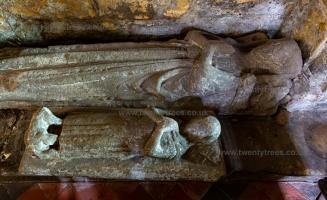
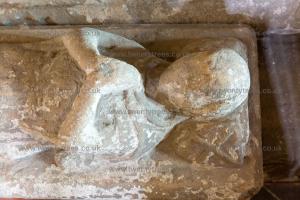
On 15th May 1254 Isabel Neville of Raby [aged 78] died. She has an effigy at St Mary's Church, Staindrop [Map] at the side of which is also an effigy of a child.
Isabel Neville of Raby: Around 1176 she was born. In or before 1197 Robert Fitzmaldred and she were married. The difference in their ages was 26 years.
On 15th May 1266 Henry "Almain" Cornwall [aged 30] and John Warenne 6th Earl of Surrey [aged 35] fought for the King at Chesterfield, Derbyshire [Map] during the Battle of Chesterfield. Henry Hastings [aged 31], John Clinton, Roger Mandeville, John Eyvil, Baldwin Wake [aged 28] all fought on the rebel side. The rebel Robert Ferrers 6th Earl of Derby [aged 27] was captured.
 Annals of Six Kings of England by Nicholas Trivet. 1266. The castle of Dover was surrendered to Edward, into which he brought Guy de Montfort to be held in custody. The legate Ottobono, having convened a council at Northampton, pronounced a sentence of excommunication against all bishops and clerics who had given aid or favour to Earl Simon against the king; and specifically against John of Winchester, Walter of Worcester, Henry of London, and Stephen of Chichester. Of these, the Bishop of Worcester soon after died, on the sixth day before the Nones of February [31st January 1266], and Nicholas de Ely, the king’s chancellor, succeeded him. The other three aforesaid bishops, going to Rome, awaited the favour of the pope. By the same sentence he also publicly bound all others opposing the king; there too he published the pope’s grant that a tenth of the English Church should be paid to the king for the following year. The keeper of Guy de Montfort in the castle of Dover, having been corrupted, released him after Easter, and he crossed the sea with him. Guy, going into the parts of Tuscany, attached himself to Count Rufus; and, since he was renowned in warfare, he took as wife his daughter and heiress. His brother Simon, a little earlier, in Lent, having escaped from prison, fled into France. The king appointed in each county a captain who, together with the sheriff, might restrain the violence of robbers, who were very numerous. On the vigil of Pentecost [15th May 1266], Robert de Ferrers, Earl of Derby, was captured near the town called Chesterfield by royal knights, his companions whom he had summoned for plunder being scattered in flight. Some of the disinherited, occupying the Isle of Axholme, were soon compelled to surrender by Lord Edmund, the king’s brother. A certain knight in the parts of Winchester, called Adam, surnamed Gurdon, being disinherited with others who had adhered to Earl Simon, refused to come to the king’s peace and settled with his followers near the road between the town of Alton and the castle of Farnham, which at that time ran winding through wooded heights in a valley, and was therefore well suited to robbers; and he harried the country with raids, especially the lands of those who adhered to the king’s party. Edward, wishing to test the strength and prowess of this man, of which he had heard by report, came upon him with a strong force as he was preparing for battle, and ordered his men that none should interfere with their single combat. Thus engaging, they struck repeated blows, and, with equal fortune, neither yielding to the other, they fought for a long time. At length Edward, delighted with the knight’s valour and spirit, while they were fighting advised him to surrender, promising him life and fortune. The knight agreeing, immediately cast down his arms and surrendered himself; and that same night Edward sent him to Guildford to be presented to the queen mother with earnest recommendation. Afterwards restored to his inheritance, Edward always held him dear and loyal.
1266. CASTRUM Dovoriæ redditum est Edwardo, in quod Guidonem de Monte-forti transtulit sub custodia detinendum. Ottobonus legatus, vocato concilio apud Northamptoniam, sententiam excommunicationis tulit in omnes episcopos et clericos, qui comiti Symoni contra regem præstiterant auxilium aut favorem; et nominatim in Joannem Wintoniensem, Walterum Wigorniensem, Henricum Londoniensem, Stephanum Cicestrensem; de quibus Wigorniensis cito post obiit ’sexto nonas Februarii, cui Nicolaus de Hely, cancellarius regis, successit. Reliqui vero tres præfati episcopi, Romam adeuntes, domini papæ gratiam expectabant. Eadem etiam sententia ceteros quosque regi adversantes publice innodavit; ibi etiam concessionem domini papæ de decima ecclesiæ Anglicanæ solvenda regi per annum sequentem proximo publicavit. Custos Guidonis de Monte-forti in castro Dovoriæ corruptus, ipsum post Pascha liberum dimisit, mare transiens cum eodem. Guido partes Tusciæ adiens, comiti Rufo adhæsit; cujus cum in militia famosus esset, uxorem accepit filiam et heredem. Symon vero frater ejus senior paulo ante, tempore Quadragesimali, de carcere evadens transfugit in Gallias. Rex in singulis comitatibus capitaneum unum constituit, qui una cum vicecomite prædonum, qui plurimum abundabant, violentias coerceret. In vigilia Pentecostes Robertus de Ferrariis, comes Derbeiæ, apud oppidum, quod Cestrefelde dicitur, captus est per milites regios, sociis quos ad prædandum acciverat per fugam dispersis. Exheredatorum quidam, insulam de Axeholme occupantes, per dominum Eadmundum, fratrem regis, in brevi ad deditionem coguntur. Miles quidam in partibus Wintoniæ Adam dictus, cognomento Gurdoun, exheredatus cum ceteris qui comiti Symoni adhæserant, ad pacem regis renuens venire, juxta viam inter villam de Aultonia, et castrum de Fernham, quam tunc in valle promuntoria nemorosa reddebant tortuosam, ac per hoc prædonibus opportunam, cum suis resedit patriam rapinis infestans, et præcipue terras illorum qui parti regiæ adhærebant. Cujus vires et probitatem ex fama cognitas cupiens Edwardus experiri, cum in manu forti supervenisset eidem se ad pugnam paranti, præcepit suis, ne quis inter eos impediret singulare certamen. Congressi itaque mutuos ictus ingeminant; parique sorte, neutro cedente alteri, diutius dimicant. Delectatus tandem Edwardus militis virtute et animo, inter pugnandum consulit ei ut se redderet, vitam pollicens et fortunam. Cui miles adquiescens, abjectis armis se illico reddidit, quem eadem nocte Gildfordiam Edwardus transmisit, reginæ matri cum recommendatione supplici præsentandum, quem postea hereditati restitutum, Edwardus semper carum habuit atque fidum.
On 15th May 1268 Peter of Savoy 1st Earl of Richmond [aged 65] died. He left the Honour of Richmond to his niece Eleanor of Provence Queen Consort England [aged 45] who transferred it to the crown.
Annals of Six Kings of England by Nicholas Trivet. 1292. Pope Nicholas IV passed along the way of all flesh [on 4th April 1292], who shortly before, inviting the King of England to recover the Holy Land, had appointed him leader and captain of all the Christians. After Easter of the same year, at the anchorage of ships which is usually at Saint-Mathieu in Brittany, a quarrel arose between the sailors of Bayonne and the Normans, and they began to attack one another both by land and sea1, and their sides having been strengthened, the conflict grew, while the English adhered to the men of Bayonne, but to the Normans the other sailors who were under the dominion of the King of France. Now ships on both sides were laden not only with merchandise, but with arms, and the calmer the breeze became, the sea lying smooth, the more dangerous shipwrecks they encountered, not dashed upon rocks, but violently overpowered by the enemy. Rudolf, King of the Romans, died, in whose place Adolf, Count of Nassau, was elected as successor, and without opposition was solemnly crowned King of Germany. Alfonso also, King of Aragon, died in this same year.
1292. NICOLAUS papa quartus viam universæ carnis ingressus est, qui paullo ante regem Angliæ ad recuperandum Terram Sanctam invitans, ducem et capitaneum omnium constituit Christianorum. Post Pascha anni ejusdem in statione navium, quæ solet esse apud Sanctum Matthæum in Britannia, suborta est inter nautas Baionenses et Normannos discordia, cœperuntque se terra marique mutuo impugnare: roboratisque partibus crevit seditio, dum Baionensibus adhærent Anglici; Normannis vero nautæ ccteri, qui erant de ditione regis Francorum. Onerantur jam naves hinc inde non tantum mercibus, sed armis, et quo magis aura placidior defervescebat, strato æquore maris, tanto periculosiora incurrebant naufragia, non cautibus illisæ, sed expugnatæ violenter ab hoste. Moritur rex Romanorum Radulphus, in cujus successorem electus est Adulfus comes de Naasso, et sine contradictione in regem Alemanniæ solemniter coronatur. Alfonsus etltam, Aragonum rex, mortuus est hoc anno.
Note 1. The Battle of Point St Mathieu was fought on 15th May 1293. Chronicle of Walter of Guisborough: 'At last, when the appointed day arrived they came together there fully equipped with weapons of war. And just as there had been a disparity in their spirits, so too on that day there arose the greatest imbalance in the elements, namely, snow, hail, and a fierce wind. A fierce battle was joined between the parties, and at last Almighty God granted victory to our side. Many thousands perished by the sword, besides those drowned with their ships, who were almost beyond number. Our men brought back about 240 ships laden with spoils.' Chronicle of Bury St Edmunds: '... which was the Friday before Pentecost [15th May], a fierce and terrible battle was fought at sea off the Pointe Saint-Mathieu between the English, Irish and men of Bayonne on one side and the Normans on the other. The Normans and their forces having been wiped out, some by drowning in the water, some felled by the sword, the English won a triumphant victory and took a huge spoil without any loss to their army. Nine score Norman ships were captured in the battle and distributed among the victors. Thirty of these ships were allotted to Yarmouth and were taken there laden with immense booty by way of prize. The rest of the ships were divided among the other belligerents according to their number and the amount of help they had supplied. Only three ships from Bayonne took part in the battle'.
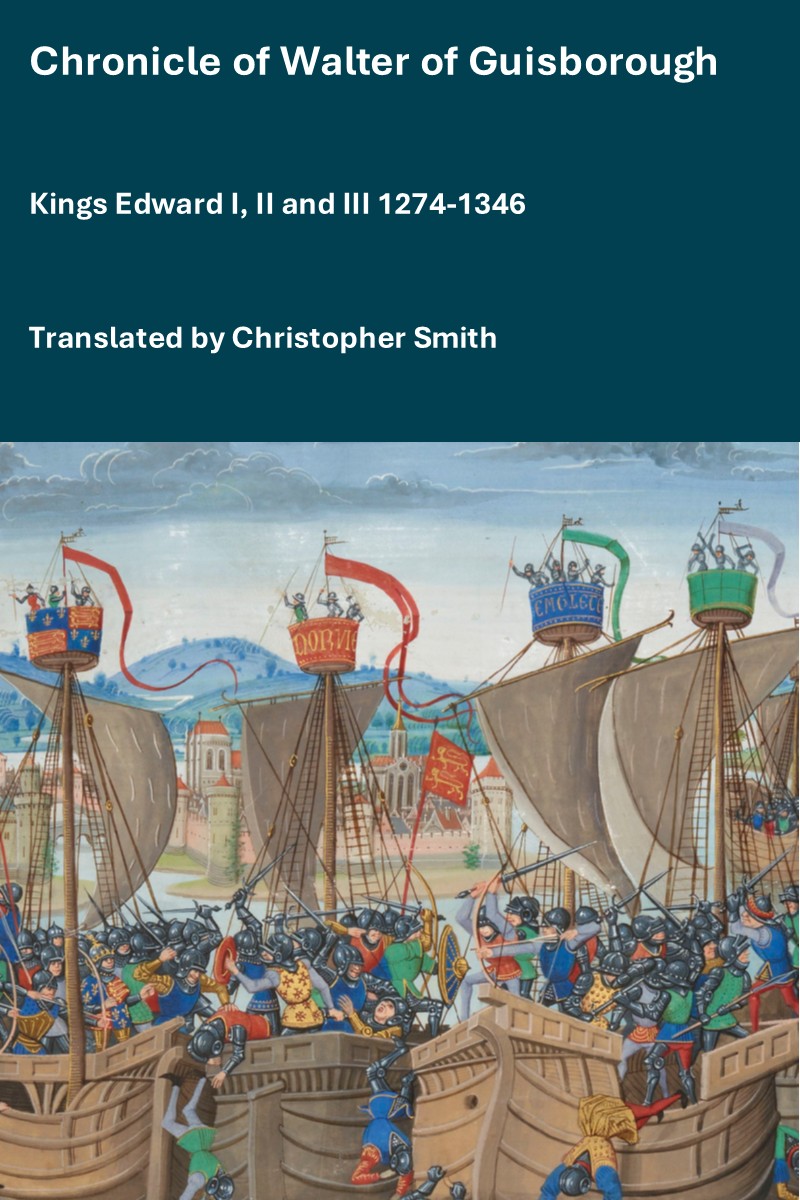 Chronicle of Walter of Guisborough. At last, when the appointed day arrived [15th May 1293], they came together there fully equipped with weapons of war. And just as there had been a disparity in their spirits, so too on that day there arose the greatest imbalance in the elements, namely, snow, hail, and a fierce wind. A fierce battle was joined between the parties, and at last Almighty God granted victory to our side. Many thousands perished by the sword, besides those drowned with their ships, who were almost beyond number. Our men brought back about 240 ships laden with spoils. When this was reported to King Philip of France, although his brother Charles had been the chief instigator of this naval battle, he nevertheless sent messengers to the King of England, urgently demanding that reparations be made, that the perpetrators be punished and handed over, and that an enormous sum of money be paid to compensate for the plundering of his merchants. To these demands our king wisely replied that he would respond through his own appointed representatives. And having sent his own envoys, he requested the King of France, as both kinsman and overlord, to name a specific day and place, to which both sides with common counsel might come together to discuss the matter amicably and to proceed according to what the truth of the case would require. But this offer was rejected by the King of France, who, with the advice of his nobles, ordered the King of England to be summoned by writ to appear on a fixed day before his court, to answer for the aforesaid injuries. When the King of England did not appear on the appointed day, it was ordered and judged by the court of the King of France that all his lands across the sea should be seized. He was to be summoned again to appear on another day, under penalty of forfeiting all his transmarine possessions.
Adveniente demum die, convenerunt ibidem armis bellicis sufficienter instructi, et sicut in eis fuerat disparitas animorum sic et eodem die contigit maxima inæqualitas elementorum, nivis scilicet et grandinis ventique validissimi; consertumque est grave proelium inter partes, et tandem victoriam dedit nostris ipse Deus omnipotens, perieruntque gladio multa millia præter submersos cum navibus quasi infinitos, reduxeruntque nostri onustas cum præda naves circiter CCXL. Quæ cum Philippo regi Francourum nunciata fuissent, licet frater ejus Carolus hujus navalis proelii auctor extitisset, missis tamen ad regem Angliæ nunciis obnixe petiit emendas sibi fieri, auctoresque facti puniendos tradi, et infinitam pecuniæ summam pro spoliatione mercatorum suorum liberari. Quibus rex noster prudenter respondit quod per proprios responsales ad interrogata responderet; missisque nunciis rogavit regem Francourum tanquam parentem et dominum ut certos diem et locum nominaret ad quos cum communi consilio hinc inde properarent, amicabiliter super hujusmodi tractaturi, et facturi ulterius quod ipsa rei veritas suaderet. Quod quidem oblatum rex Franciæ non admittens, de communi consilio magnatum suorum præcepit regem Angliæ per brevem vocari, certo die super hujusmodi injuriis in curia sua responsurum. Qui, cum ad diem non veniret, præceptum fuit et a curia regis Franciæ judicatum, quod tota terra sua transmarina seisiretur, et iterum recitaretur ad diem alterum, sub pœna forisfacturæ totius terræ suæ transmarinæ responsurus.
Chronicle of Bury St Edmunds. On 13 June [1293], which was the Friday before Pentecost1, a fierce and terrible battle was fought at sea off the Pointe Saint-Mathieu between the English, Irish and men of Bayonne on one side and the Normans on the other. The Normans and their forces having been wiped out, some by drowning in the water, some felled by the sword, the English won a triumphant victory and took a huge spoil without any loss to their army. Nine score Norman ships were captured in the battle and distributed among the victors. Thirty of these ships were allotted to Yarmouth and were taken there laden with immense booty by way of prize. The rest of the ships were divided among the other belligerents according to their number and the amount of help they had supplied. Only three ships from Bayonne took part in the battle.
Note 1. Friday before Pentecost was on 15th May 1293.
Chronicle of Walter of Guisborough. In the same year, during the Christmas season, the king prohibited all foreign coinage in his land from circulating any longer as sterling.1 Foreign merchants had introduced into England a large number of base coins of the worst metal, pollards, crocards, Brabantine scaldings, eagles, sleeping lions, and other coins of various names. All of these coins were white in appearance, pretending to be silver, but were artificially composed of silver, copper, and sulphur, and in four or five of them there was not the weight of even one penny of true silver. By the king's order, two of them passed for one sterling penny until Easter. It was a terrible time for debased currency, and many unfair exchanges were made in buying and selling goods. At the following Easter, however, the king completely banned these coins, and established exchange offices in many places, where five or six of the foreign coins were given for a single sterling penny. Still, people cared little for them due to the worthlessness of the coinage. Yet within the year, after people learned by experiment how to purify the metal using melted lead in fire, two of those coins came to be worth one penny, just as the proverb of Cato says:
"What is cheap, consider dear; what is dear, consider cheap."
And many became rich through exchange who had bought that coin at the time of its low value. And afterwards the king had an inquiry made concerning those who had conducted exchanges and traded in such a manner without special license, and he fined them heavily.
Eodem anno infra Natalis solemnia prohibuit Base coinage rex omnem monetam alienigenam in terra sua, ne ulterius pro sterlingo curreret. Mercatores enim alienigenæ introduxerant in Angliam monetas plurimas et pessimi metalli, pollardorum, crocardorum, scaldingorum Brabantium, aquilarum, leoninarum dormientium, et aliorum diversorum nominum. Erantque omnes monetæ albæ prætendentes argentum, et erant artificialiter compositæ de argento, cupro et sulphure, nec erat in quatuor ex eis vel quinque pondus unius denarii argentei; et ex præcepto regis currebant duo ex eis pro sterlingo usque ad Pascha; eratque pessimum sæculum pro vili moneta, et fiebant commutationes plurimæ in emptione et venditione rerum. In Paschate vero sequenti prohibuit rex ipsas monetas ex toto, et tenuit excambium in locis plurimis, dabanturque ex eis pro uno sterlingo quinque vel sex. Nec curabant ex eis homines propter vilitatem monetæ. Et tamen infra annum revolutum, postquam experimento didicerant homines artem purgandi metallum cum plumbo liquefacto cum eo in igne, valebant duo denarii unum, juxta verbum Catonis:
"Quod vile est carum, quod carum vile putato."
Fiebantque multi divites per excambium qui monetam illam emerant in tempore vilitatis. Et postea rex fecit inquiri de talibus qui absque speciali licentia excambium fecerant et taliter mercati fuerant, et mulctavit eos pecunia magna.
Note 1. By the statute De Falsa Moneta, given at Stepney, May 15, 1299, the importation of false money was prohibited under forfeiture of life and goods. Many other regulations were made concerning coin and plate, and exchange-tables were instituted at Dover and other ports. Statutes of the Realm, 1.131.
 Chronicle of Jean le Bel Volume 1. The English lords were well pleased, for it seemed to them that they had achieved much with the duke. They then returned to Valenciennes1 and, through their envoys and by means of the gold and silver they had brought, they so managed matters that the Duke of Guelders, the Marquess of Jülich (for himself and for the Archbishop of Cologne), Valerant his brother, and the Lord of Fauquemont came to Valenciennes2 to speak with them before the noble Count of Hainaut, who could neither ride nor travel, and before Sir John, his brother. In the end, by means of large sums of money which each was to receive for himself and his men, they agreed that they would defy the King of France and that each would serve with a specified number of men-at-arms wearing crowned helms.
Ces seigneurs d'Angleterre furent moult aises, car il leur sembla que moult bien eussent besongné au duc, si s'en retournerrent arriere à Valenchiennes? et firent tant par leurs messages et par l'or et l'argent qu'ilz avoient que le duc de Guerle, le marquis de Juley pour luy et pour l'archevesque de Coulongne, Valerant son frere et le sire de Fauquemont vindrent à Valenchiennes! parler à eulx par devant le gentil conte de Haynau, qui ne pouoit chevaucher n'aler, et par devant messire Jehan son frere, et en la fin firent tant à eulx parmy grandes sommes d'argent que chascun debvoit avoir pour luy et ses gens, que ilz debvoient deffier le roy de France et que chascun le serviroit à ung certain nombre de gens d'armes à heaumes couronnez.
Note 1. On 12th May 1337, the Bishop of Lincoln, together with William of Montagu and William of Clinton, was already concluding treaties at Valenciennes (Rymer 2.969–970). It was on 24th May that they treated with William of Hainaut, Count of Zeeland (Ibid 2.971).
1. Le 12 mai 1337, l'évêque de Lincoln, avec Guillaume de Montagu et Guillaume de Clinton, concluaient déjà des traités à Valenciennes. (Rymer Ibid p. 969 et 970.) C'est le 24 mai qu'ils traitèrent avec Guillaume de Hainaut, comte de Zélande. (Ibid p. 971.) Sur ces conférences de Valenciennes, voy. Chronographia Regum Francorum, éd. Moranvällé, t. II, p. 32.
Note 2. On 24th May 1337, at Valenciennes, the ambassadors of the King of England treated with the Counts of Hainaut and of Guelders and with the Marquess of Jülich to obtain their assistance against the King of France (Rymer 2.970). On 27th May following, at Mons, they negotiated in particular with William, Marquess of Jülich, and stipulated the sums that were to be paid to him by Edward III (Ibid 2.972). Finally, on 28th May, at Binche, they concluded a treaty with Herman of Blankart; and in this act they stated that they had already treated with the Duke of Brabant, the Counts of Hainaut, Holland, Guelders, and Zeeland, and the Marquess of Jülich (Rymer 2.973). Other treaties concluded by these ambassadors may also be noted. Thus, on 15th May 1337, one with Adolph, Count of Mons (Ibid 2.970). On 1st June, at Valenciennes, another with the Marquess of Jülich and his mother (Ibid p. 973). And on the eve of Pentecost 1337 (7th June), at Brussels, one with William of Duvenvoorde (Ibid 2.973).
2. Le 24 mai 1337, à Valenciennes, les ambassadeurs du roi d'Angleterre traitèrent avec les comtes de Hainaut et de Gueldre et avec le marquis de Juliers pour obtenir leur aide contre le roi de France. (Rymer op. cit., t. II, IIe partie, p. 970.) Le 27 mai suivant, à Mons, ils traitèrent en particulier avec Guillaume, marquis de Juliers, et stipulèrent les sommes qui lui seraieut versées par Édouard IL. (Rymer Ibid p. 972.) Enfin, le 28 mai, à Binche, ils conclurent un traité avec Herman de Blankart, et dans cet acte, ils disaient qu'ils avaient déjà traité avec le duc de Brabant, les comtes de Hainaut, de Hollande, de Gueldre et de Zélande et le marquis de Juliers. (Rymer op. cit., t, II, IIe partie, p. 973.) On peut encore signaler d'autres traités conclus par ces ambassadeurs. Ainsi, le 15 mai 1337, avec Adolphe, comte de Mons. (Ibid p.970.) Le 1er juin, à Valenciennes, avec le marquis de Juliers et sa mère. (Ibid p. 973.) La veille de la Pentecôte 1337 (7 juin, à Bruxelles, avec Guillaume de Dunenvorde. Ibid p. 973.)
The True Chronicles of Jean le Bel Volume 1 Chapters 1-60 1307-1342
The True Chronicles of Jean le Bel offer one of the most vivid and immediate accounts of 14th-century Europe, written by a knight who lived through the events he describes, and experienced some of them first hand. Covering the early decades of the Hundred Years’ War, this remarkable chronicle follows the campaigns of Edward III of England, the politics of France and the Low Countries, and the shifting alliances that shaped medieval warfare. Unlike later historians, Jean le Bel writes with a strong sense of eyewitness authenticity, drawing on personal experience and the testimony of fellow soldiers. His narrative captures not only battles and sieges, but also the realities of military life, diplomacy, and the ideals of chivalry that governed noble society. A key source for Jean Froissart, Le Bel’s chronicle stands on its own as a compelling and insightful work, at once historical record and literary achievement. This translation builds on the 1905 edition published in French by Jules Viard, adding extensive translations from other sources Rymer's Fœdera, the Chronicles of Adam Murimuth, William Nangis, Walter of Guisborough, a Bourgeois of Valenciennes, Geoffrey le Baker of Swinbroke and Richard Lescot to enrich the original text and Viard's notes.
Available at Amazon in eBook and Paperback format.
Calendar of Papal Letters 1344. 15th May 1344. 169. Ides of May. Villeneuve by Avignon. (f. 251.)
To the bishop of St. Asaph. Mandate to absolve John de Warenna [aged 57], earl of Surrey and Strathearn, lord of Bromfield and Yal, from the excommunication which he has incurred by intermarrying with Joan [aged 48], daughter of Henry [aged 85], count of Barre, whose [Joan's] mother's [Eleanor Plantagenet] sister Mary he had carnally known. A penance is to be enjoined, and as to the marriage, canonical action is to be taken.
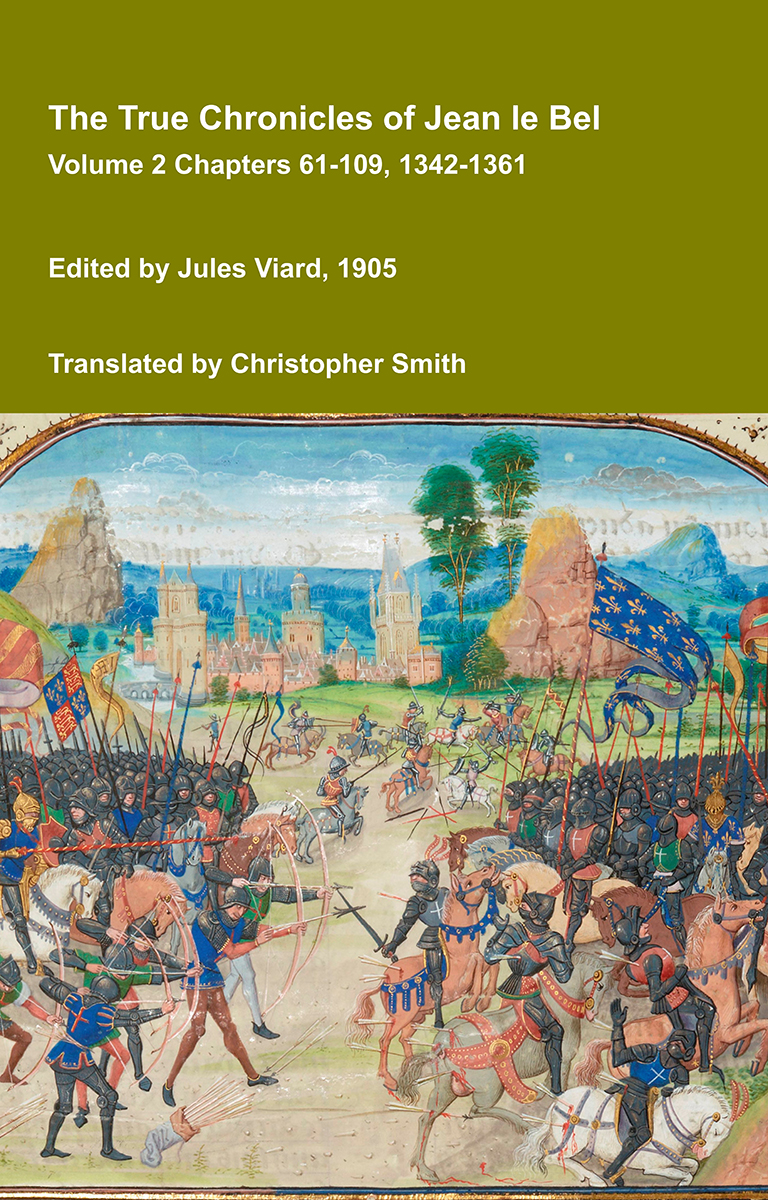 Chronicle of Jean le Bel Volume 2. When all these things had been made and agreed, the Duke of Normandy1 swore to maintain and pursue them as eldest heir of France, in the presence of the Prince of Wales2, the Duke of Lancaster and several barons of England, as representatives of King Edward. Several lords of France who were present did likewise, and the aforesaid representatives also swore to them on the other side.
Quant toutes ces choses furent faittes el acordées, le duc de Normendye jura les maintenir et poursuivir comme hoir aisné de France en la presence du prince de Galles', du duc de Lencaste et pluseurs barons d'Angleterre comme procureurs du roy Edowart. Aussy firent pluseurs seigneurs de France qui li furent presens; aussy le jurerent d'aultre part les dessusdis procureurs.
Note 1. It was in Paris, on 10th May 1360, that the Regent ratified the Treaty of Brétigny and swore to observe it; Grandes Chroniques.
1. Cest à Paris, le 10 mai 1360, que le régent ratifia le traité de Brétigny et jura de l'observer. (Grandes chroniques, 1. VI, p. 200, 201, 242 et 213.)
Note 2. On 15th May 1360, at Louviers, the Prince of Wales in turn swore to conform to the clauses of this treaty, and, on the 16th, he had letters drawn up recording this oath; Grandes Chroniques.
2. Le 15 mai, à Louviers, le prince de Galles jura à son tour de se conformer aux clauses de ce traité, et, le 16, il fit faire les lettres constatant ce serment. (Grandes chroniques, &. VI, p. 201 et 214.)
On 15th May 1434 Cardinal Thomas Bourchier [aged 16] was appointed Bishop of Worcester.
On 15th May 1464 a Yorkist army commanded by John Neville 1st Marquess Montagu [aged 33] defeated a Lancastrian army commanded by Henry Beaufort 2nd or 3rd Duke of Somerset [aged 28] at Hexham, Northumberland [Map].
Those fighting for York included John Stafford 1st Earl Wiltshire [aged 36], John Scrope 5th Baron Scrope of Bolton [aged 26] and Richard Welles 7th Baron Welles, Baron Willoughby [aged 36].
Henry Beaufort 2nd or 3rd Duke of Somerset was beheaded following the battle. The general pardon which he has previously received was annulled. Duke Somerset, Marquess Dorset, Earl Somerset and Earl Dorset forfeit for the second time. His son Edmund Beaufort [aged 25] was styled by supporters of the House of Lancaster as Duke of Somerset but had not right to do so.
Philip Wentworth [aged 40] was executed at Middleham [Map].
Thomas Ros 9th Baron Ros Helmsley [aged 36] and Robert Hungerford 3rd Baron Hungerford 1st Baron Moleyns [aged 33] fought for the Lancastrians.
 Chronicle of England by Jean de Waurin. [15th May 1464]. Chapter 4.30. Of a battle that took place quite near Newcastle upon Tyne where the Duke of Somerset was captured, along with several other great lords captured and killed by the Earl of Northumberland.
It so happened around this time that between Scotland and Northumberland, the Duke of Somerset, the principal governor of Queen Margaret, had assembled a large force to raid and inflict damage upon the Kingdom of England, particularly targeting those loyal to King Edward. Although the said Duke of Somerset had recently received a pardon from the King and returned to his court, he could not hold himself back. Instead, he preferred to return to King Henry's side rather than remain with King Edward's party. He clearly recognized that King Henry's faction lacked the strength to resist against King Edward's power, who had previously shown him great honour and respect. Despite this, he abandoned King Edward's side to rejoin King Henry and support those who had no power to benefit him, as he had previously experienced.
Chapter 4.30. Dune bataille qui se fist assez pres de Neufchastel sur Thim ou le duc de Sombresset fut prins, plusieurs autres grans seigneurs prins aussi et mors par le comte de Northumbelland.
Or advint environ ce tempore que entre Escoche et Northumbelland le duc de Sombresset, principal gouverneur de la royne Marguerite, avoit de nouvel assamble grans gens pour courir sus et dhommagier le royaulme dAngleterre, et par especial grever auz tenans le party du roy Edouard, ja soit que ycellui duc de Sombresset eust un peu par avant eu son pardon du roy et depuis retourne a sa court; mais toutesfois il ne si scent tenir, ains ama mieulz soy retourner devers le roy Henry que demourer a la partye du roy Edouard, ja congneust il assez et veist bien que ladite partie du roy Henry navoit force ne vigueur pour resister a lencontre de la puissance du roy Edouard qui luy avoit fait grant honneur et grant chiere, lequel toutesfois il delaissa pour retourner au roy Henry et aller levers ceulz quy nulle puissance navoient de lui quelque bien faire, comme bien lavoit paravant experimente.
Warkworth's Chronicle [1461-1474]. 15th May 1464. Also in the iiijth yere of the Kynge Edwarde, the monethe of Maij, the Duke of Somersett, the Lorde Roos [aged 36], the Lorde Moleyns [aged 33], Talboys the Earl [Baron] of Kyme [aged 49], Sire Phylippe Wenterworth [aged 40], Sire Thomas Fynderne, gadred a grete peple of the northe contre1. And Sere Jhon Nevelle, that tyme beynge Earl of Northumberlonde, with 10,000 men come uppon them, and there the comons fleede that were with them, and ther the forseide lordes were takene and afterward behedede3. But thenne the Lorde Montagu [aged 33], the Earl of Warwick [aged 35]s brothere, whiche the Kynge had made Earl of Northumberlonde, was mighty and strong by the same, &c. And for so moche as the Kynge and his counselle thought that he wolde holde with his Earl of Warwick, therfor the Kyng and his counselle made the countre to desire that they might have the ryghtfull heyre Percy, sonne to Henry Percy that was slayne at Yorke Feld, to be the Earl of Northumberlond, and so it was doone. And after this the Kynge made Lorde Montagu, Marquyus Montagu, and made his sonne [aged 3] Duke of Bedford, whiche schulde wedde the princesse, the Kynges heldest doughter, whiche, by possibylite, schuld be Kynge of England, and so he hade many fayre wordys and no lordeschyppys, but alwey he promysed he wuld do, &c,
Note 1. Gadred a grete peple of the northe contre. The following very curious document is from a MS. in the College of Arms (L.9):— "Anno Edwardi quarti quarto et mensis Maij die xxvij. scilicet in die san[c]te Trinitatis.
The Kyng lay in the Palois of York, and kept his astate solemply; and tho there create he Sir John Nevelle, Lord Mowntage, Earl of Northumberland. And than my lorde of Warrewike toke upon hym the jorney, by the Kynges commandement and auctoritee, to resiste the Rebellions of the Northe, acompanyed with hym my sayde Lorde of Northumberland his brother.
"Item, the xxiijti, day of Juyne, my saide Lorde of Warrewike, with the puissaunce, cam before the castelle of Alwike, and ad it delivered by appointement; And also the castell of Dunstanboroughe, where that my said Lord kept the feest of Saint John Baptist."
"Item, my said Lorde of Warrewike, and his broder Earl of Northumberland, the xxv. day of Juyn, leyede siege unto the Castelle of Bamburghe, there within being Sir Rauf Grey, with suche power as attendid for to keepe the said castelle ayen the power of the Kinges and my said Lord, as it apperith by the heroudes reporte, by the whiche my Lord sent to charge them to delyvere it under this forme, as ensewithe; Chester, the Kinges heroude, and Warrewike the heroude, had this commaundement, as foloweth, -to say unto Sir Rauf Gray, and to other that kept his Rebelliouse oppynyon, that they shule delivere that place contynent aftyr that summacion, and every man for the tyme being disposed to receyve the Kynges grace, my said Lord of Warrewike, the Kinges lieutenant, and my Lord of Northumbreland, Wardeyn of themarches, grauntith the Kyng['s] grace and pardon, body, lyvelodes, reservyng ij. persounes, is understoude, Sir Humfrey Neville and Sir Rauf Grey, thoo tweyn to be oute of the Kinges grace, without any redempcion. Than the answere of Sir Rauf Grey followithe unto the said heroudes, he clerely determynyng withinne hymself to liffe or to dye within the said place; the heroudes, according to my Lordes commandement, charged hym with all inconveniences that by possible might fall in offence ayenst Allemighty God, and sheding of bloode; the heroude saying in this wise, My Lordes ensurithe yow, upon their honour, to susteyne siege before yowe these vij. yeres, or elles to wynne yowe."
Item, my sayde Lorde Lieutenant, and my Lord Wardeyn, hath yeven us ferther comaundement to say unto yowe, if ye deliver not this Juelle, the whiche the king our most dradde soverain Lord hath so gretly in favour, seing it marcheth so nygh hys awncient enemyes of Scotland, he specially desirethe to have it, hoole, unbroken, with ordennaunce; if ye suffre any greet gunne laide unto the wal, and be shote and prejudice the wal, it shall cost yowe the Chiftens hede; and so proceding for every gunne shet, to the leest hede of any persoune within the said place. Than the saide Sir Rauf Grey deperted from the saide heroud, ant put hym in devoir to make deffence.
And than my Lorde lieutenant had ordennede alle the Kinges greet gonnes that where charged at oons to shute unto the said Castelle, Newe-Castel the Kinges greet gonne, and London the second gonne of irne; the whiche betyde the place, that stones of the walles flewe unto the see; Dysyon, a brasin gonne of the Kinges, smote thouroughe Sir Rauf Grey's chamber oftentimes; Edward and Richard Bombartell, and other of the Kinges ordennaunce, so occupied by the ordonnaunce of my said Lord, with men of armes and archirs, wonne the castelle of Bamburg with asawte, mawgrey Sir Rauf Grey, and tooke hym, and brought hym to the Kynge to Doncastre, and there was he execut in this fourme as followith. My lorde Earl of Worcestre, Connestable of Englond, sitting in jugement, told hym jugement, and remambrid hym, saying unto hym; "Sir Rauf Grey, thou hast take the ordir of Knyghthode of the Batthe, and any soe taking that ordir ought to kepe his faithe the whiche he makes; therfor remembre the[e] the lawe! wilt thou shall procede to jugement? thees maters shewith so evidently agayn the, that they nedithe not to examyn the of them, by certein persounes of the Kinges true subgettes, the whiche thou hast wounded, and shewithe here that thou canst not deny this; thou hast drawen the with force of armes unto the Kyng oure most natural soverain Lorde, the whiche tho wotest wele yave unto the suche trust, and in suche wise mynystred his grace unto the, that thou haddist his castels in the Northe partie to kepe; thou hast betraied Sir John Asteley Knyght, and brother of the gartier, the whiche remaignethe in the hand of the Kynges oure soverain Lord enemyes in Fraunce.
Item, thou hast withstoud and maade fences ageynst the Kynges maiestie, and his lieutenant the worthy Lorde my broder of Warrwike; it apperith by the strookes of the greet gunnes in the Kyng walles of his castell of Bamburghe. For the[se] causes, dispost the to suffre thy penaunce aftyr the lawe. The Kyng had ordenned that thou shuldest have hadd thy sporys striken of by the hard heles, with the hand of the maister cooke, that whiche is here redy to doo, as was promysed at the tyme that he tooke of thy spurres; he said to yee, as ys accustumed, that 'And thou be not true to thy soverain Lord, I shal smyte of thy sporys with this knyf herd by the helys,' and so shewne hym the maistre cooke redy to doo his office, with apron and his knyff.
"Item, Sir Rauff Grey, the Kyng had ordenned here, thou maist see, the Kynge of armes and heroudes, and thine own propre cote of armes, that whiche they shuld teere of thy body, and so thou shuldist as wel be disgraded of thy worshipp, noblesse, and armes, as of the order of Knyghthode; and also here is an oder cote of thin armes reversed, the which thou shuldest have werne of thy body, going to that dethe warde, for that belongethe aftyr the lawe. Notwithstanding, of the disgrading of knygthode, and of thine armes, et noblesse, the King pardons that for thy noble grauntfader, the whiche suffrid trouble for the Kynges moost noble predecesseurs2. Than, Sir Rauf Grey, this shal be thy penaunce, thou shalt goo on thy feet unto the towneseend, and there thou shalt be laide downe and drawen to a scaffold maade for thee, and that thou shalt have thyne hede smite of thi body, to be buriede in the freres; thi heede where it pleased the Kyng."
Note 2. Sir Ralph Grey, of Wark, Heton, and Chillingham (lineal ancestor of the Earls of Tankerville, as well as of the present Earl Grey) was the grandson of Sir Thomas Grey, beheaded at Southampton with the Earl of Cambridge, Aug. 5, 1415. See the whole sheet pedigree of Grey in Raine's North Durham. - J.G.N.
Note 3. Were takene and afterward behedede: On the fifteenth day of May, at Hexham, Northumberland [Map], the Duke of Somerset [aged 28], Edmund Fizthu, Bradshaw, Wauter Hunt, and Black Jakis were decapitated. On the seventeenth day of May, at Newcastle, the Lord of Hungerford, Lord Roos, Lord Thomas Fynderum, Edward de la Mare, and Nicholas Massam were decapitated. At Middleham Castle [Map], on the eighteenth day of May, the Lord Philip Wentworth, William Penyngton, Ward of Topcliff, Oliver Wentworth, William Spilar, Thomas Hunt, the footman of King Henry, were decapitated. At York, on the twenty-fifth day of May, Lord Thomas Husye, Thomas Gosse, Robert Merfynn, John Butler, Roger Water, the doorkeeper of King Henry, Thomas Fenwyke, Robert Cocfeld, William Bryte, William Dawsonn, and John Chapman were decapitated. At York, on the twenty-eighth day of May, John Elderbek, Richard Cawerum, John Roselle, and Robert Conqueror were decapitated." — MS. Arundel, Coll. Arm. 5, fol. 170, rº.
Quintodecimo die mensis Maij, apud Exham, decapitati sunt Dux Somersett, Edmundus Fizthu miles, Brasdshaw, Wauter Hunt, Blac Jakis. Decimo-septimo die mensis Maii, apud Novum-Castrum, decapitati sunt Dominus de Hungarforde, Dominus Roos, Dominus Thomas Fynderum, Edwardus de la Mare, Nicholaus Massam. Apud Medetham, xviijo die mensis Maii, decapitati sunt Dominus Philippus Wentworth, Willielmus Penyngton, Warde de Topcliff, Oliverus Wentworth, Willielmus Spilar, Thomas Hunt, le foteman Regis Henrici. Apud Eboracum, xxvº die mensis Maii, decapitati sunt Dominus Thomas Husye, Thomas Gosse, Robertus Merfynn, Johannes Butlerus, Rogerus Water, janitor Regis Henrici, Thomas Fenwyke, Robertus Cocfeld, Willielmus Bryte, Willielmus Dawsonn, Johannes Chapman. Apud Eboracum, xxviijo die mensis Maii, decapitati sunt Johannes Elderbek, Ricardus Cawerum, Johannes Roselle, Robertus Conqueror.


Chronicle of Gregory. 15th May 1464. The xv day of May folowynge this good Lord Mountegewe [aged 33] let to be smete of the heddys of thes men, the whyche that her namys here folowyn in wrytyng: Henry Beaufort Duke of Somerset [aged 28], Edmon Fysche, knyght, Edmon Bradschawe, Water Hunte, Blacke Jakys.
 Chronicle of England by William of Worcester. ... lords of the fleeing army camped on a certain hill about a mile from Hexham. They had with them no more than five hundred men. [....] On the [15th] day of the said month of May [1464], John Lord Montagu, Barons Greystoke and Willoughby, with an armed force numbering four thousand, arrived in sight of the Duke of Somerset's army. Upon seeing this, the Duke and a large part of his army fled, and his entire army was dispersed. In the chase, the Duke was captured by servants of John Middleton, knight, and presented to the lords at Hexham. On the same day, he was beheaded and buried in the abbey there. Along with the Duke, Edward Fysshe, knight, Blake Jakes, John Bryce, Thomas Hunt were beheaded.
... dominis de exercitu fugientibus campum super quendam montem ad unum miliare juxta Hexham, habueruntque in societate sua non ultra quingentos homines. [....] die dicti mensis Maii Johannes dominus Mountagu, barones de Graystok and Whiloughby, cum gente armata, ad numerum iiij.m. venerunt in conspectu exercitus ducis Somersetiæ. Quo viso, dux cum magna parte sui exercitus fugit et totus exercitus suus diruptus est. Et in chacea dux per servientes Johannis Medelton, militis, captus et præsentatus est dominis apud Hexham, et eodem die decollatus est, et in abbatia ibidem sepultus. Cum dicto duce decollati sunt Edus. Fysshe, miles, Blake Jakes, Johannes Bryce, Thomas Hunt.
Chronicle of Edward Hall [1496-1548]. [15th May 1464] The lord Montacute seyng fortune thus prosperously leadyng his saile, was auaunced with hardy corage toward his enemies, & then in passyng forward, he had by his espialles perfite intelligence, that kyng Henry with all his power, was incamped in a faire plaine called Lyuels, on the water of Dowill in Exham shire. It was no neede to bid hym hast, as he that thought not to lese the occasion, to hym so manifestly geven, & to leaue the good port of fortune, to hym opened and vaclosed: and therfore, in good ordre of battail, he manfully set on his enemies, in their awne cape, whiche like desperate persones, with no small corage received hym. There was a sore fought feld, and no partie by a long tract, could get any aduauntage of the other, till at the last, the lord Montacute, criyng on his men to do valiauntly, entered by plaine force, the battaill of his enemies, and brake their array, whiche like men amased, fled hether and thether, desperate of all succor. In whiche flight and chase, wer taken, Henry duke of Somerset, whiche before was reconciled to Kyng Edwarde, the Lorde Roos, the Lorde Molyns, the Lord Hungerford, sir Thomas Wentworth, sir Thomas Huse, sir Thon Fynderne, & many other. Kyng Henry was this day, the beste horseman of his company: for he fled so faste that no man could overtake hym, and yet he was so nere pursued, that certain of his henxmen or folowers wer taken, their horses beyng trapped in blew veluet: wherof one of thé had on his hed, thesaid kysg Henries healmet. Some say his high cap of estate, called abococket, garnished with twoo riche crounes, whiche was presented to kyng Edward, at Yorke the fourth daie of Maie. The duke of Somerset, was incontinently, for his greate mulabilitie and lightnes, heliedded at. Exam, the other lordes and knightes, wer had to New Castle, and there after alitle respite, wer likewise put in execucion. Beside these persones, diverse other to the numbre of XXV wer executed at Yorke, and in other places: wherby other fautors of kyng Henries partie, should be out of all trust of all victory, consideryng that their capitaines, had hopped hedles. Fro this battaill escaped kyng Henry the VI, sir Humfrey Neuell, Willia Taylboys, callyng hymself erle of Kent, sir Raufe Gray, and Richard Tunstall, and diverse other, whiche beyng in feare of takyng, hid themselfes and lurked in denes and wholes secretly. Thei wer not so closly hid, but they were espied: for the erle of Kent was taken in a close place in Riddesdale, and brought to New Castle, and there with an axe lost his life, Sir Humfrey Neuell, after long lurking in a Caue, was taken in Holdernes, and at Yorke behedded. Thus every man almoste that escaped, was after taken and scorged: so that it should seme that God had ordeined, all suche persones as rebelled against kyng Edward, to have in coclusion, death for their reward and guardone.
Collectanea by John Leland [1502-1552]. [15th May 1464] In this 4. Yere of Edward, in the Monith of May, the Duke of Somerset, the Lord Roos, the Lord Molynes, Talbois Erle of Kime, Syr Philip Wenteworth, Syr Thomas Fynderne, gatherid an Hoste in the North Cuntre.And Syr John Nevil, Erle then of Northumbreland, with x.M. Men cam apon them, whom the Commons forsakid and then the Capitaynes were taken and behedid.
King Edward ferid then the Lord Montacute, the Erle of Warwikes Brother, whom he had made Erle of Northumbrelande, and so prively caufid Men of the Countery to defire the rightful Heyre Percy, Sun to Henry that was slayne at York Felde: and fo Percy was restorid, and made Montacute a Marquis, and his Sunne Duke of Bedforde, which Monteacute should wedde the Kinges eldest Doughtter, which by Poffibilite should be King of Englande.
Grafton's Chronicle [1507-1573]. 15th May 1464. The Lorde Montucute sevng fortune thus prosperously leadyng his sayle, was aduaunced with hardie courage towarde his enemies, and then in passyng forwarde, he had by his espialles perfect intelligence, that king Henry with all his power, was encamped in a fayre plaine called Livels [Map], on the water of Dowill in Exhamshire. It was no neede to bid him haste haste, as he that thought not to leese the occasion to him so manifestly geuen, & therfore in good order of battaile, he manfully set on his enemies in their awne campe, which like desperate persons, with no smal courage receiued him. There was a sore fought field, and no partie by a long tract, could getany aduauntage of the other, till at the last, the Lorde Montacute criyng on his men to do valiauntly, entred by plaine force the battaile of his enemies, and brake their array, which like men amased, fled hether and thether, desperate of all succor. In which flight and chase, were taken Henry Duke of Sommerset, which before was reconciled to king Edward, the Lorde Roos, the Lorde Molyns, the Lorde Hungerford, syr Thomas Wentworth, syr Thomas Huse, syr John Finderne, and many other. King Henry was this day the best horseman of his company: for he fled so fast that no man could overtake him, and yet he was so nere pursued, that certaine of his Ilenchmen and folowers were taken, theyr horses beyng trapped in blew veluet: wherof one of them had on his head, the said king Henryes Helinet. Some say his high Cap of estate, called Abococket, garnished with two riche Crownes, which was presented to king Edward, at Yorke the fourth day of Muy. The Duke of Sommerset, was incontinently for his great mutabilitic and lightnesse, beliedled at Exbam, the other Lordes and knightes were had to Newe Castell, and there after a little vespite, were likewise put to execution. Besyde these persons, divers other to the number of XXV were executed at Yorke, and in other places: whereby other fautors of king Henryes partie, should be out of all trust of all victory, considering that theyr Capitaines had hopped hedlesse. From this battaile escaped king Henry the six, syr Humfrey Neuell, William Taylboys, calling himsclfe Erle of Kent, syr Raufe Grey, and Richard Tunstall, and dyvers other, which beyng in feare of takyng, hid themselves and lurked in dennes and holes secretly. They were not so closely hid, but they were espyed: For the Erle of Kent was taken in a close place in Riddesdale, and broughs to New castell, and there with an Axe lost his head. Sir huwmirey Newell after long lurkyng ina Caue, was taken in Holdernesse, and at Yorke behedded. Thus every man almost that escaped, was after taken and scorged: so that it should seeme that God had ordeyned all such persons as rebelled agaynst king Edward, to have in conclusion, death for there rewarde.
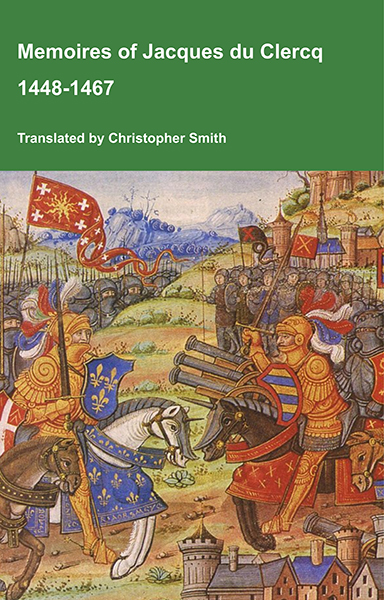
This is a translation of the 'Memoires of Jacques du Clercq', published in 1823 in two volumes, edited by Frederic, Baron de Reissenberg. In his introduction Reissenberg writes: 'Jacques du Clercq tells us that he was born in 1424, and that he was a licentiate in law and a counsellor to Philip the Good, Duke of Burgundy, in the castellany of Douai, Lille, and Orchies. It appears that he established his residence at Arras. In 1446, he married the daughter of Baldwin de la Lacherie, a gentleman who lived in Lille. We read in the fifth book of his Memoirs that his father, also named Jacques du Clercq, had married a lady of the Le Camelin family, from Compiègne. His ancestors, always attached to the counts of Flanders, had constantly served them, whether in their councils or in their armies.' The Memoires cover a period of nineteen years beginning in in 1448, ending in in 1467. It appears that the author had intended to extend the Memoirs beyond that date; no doubt illness or death prevented him from carrying out this plan. As Reissenberg writes the 'merit of this work lies in the simplicity of its narrative, in its tone of good faith, and in a certain air of frankness which naturally wins the reader’s confidence.' Du Clercq ranges from events of national and international importance, including events of the Wars of the Roses in England, to simple, everyday local events such as marriages, robberies, murders, trials and deaths, including that of his own father in Book 5; one of his last entries.
Available at Amazon in eBook and Paperback format.
A Brief Latin Chronicle. On the 15th day of the same month of May [1464], the Duke of Somerset, Lord Hungerford, Lord Roos, and the squire Tailboys, along with their accomplices, bitterly resenting their earlier defeat and the failure of their previous plans, gathered again for pitched battle near Hexham, still hoping for victory. But Lord Montagu, with his forces, fell upon them almost by surprise, and captured the said duke, Lord Thomas Findern, Lord Egremont, the bastard Waynsford, and others, and had them securely placed under guard. On the following Wednesday, the same Lord Montagu and his men also captured: Sir Edmund Fysh, recently a tailor in York; Bernard de la Mare, Lord Roos, Lord Hungerford, Sir Philip Wentworth, William Pennington, and Sir Hussey, all of whom were beheaded.
Quintodecimo insuper die ejusdem mensis Maii Dux Somersett, dominus Hungarford, dominus Roos, armiger ille Treilboz cum suis complicibus, graviter ferentes suam repulsam et propositi prioris frustracionem ad bellum campestre juxta Exham, iterum spe fruende victorie convenerunt. Quos dominus de Mowntagw cum suis, quasi subito insiliens, dictum ducem et dominum Thomam Findern, dominum Egremound, bastard Waynsford, etc. cepit et tutele arte commisit. Die Mercurii proximo sequenti capti sunt per dictum dominum Mowntagw cum suis dominus Edmundus Fysh, miles, nuper scissor Eboraci, Bernardus de la Mare, dominus Roos, dominus Hungarford, dominus Phillippus Wentworth, Willelmus Penyngton, Husy miles; qui omnes decapitati sunt.
A Brief Latin Chronicle. 15th May 1464 On the fifteenth day of the month of May, at Hexham, were beheaded the Duke of Somerset, Sir Edmund Fitzhugh, Bradshaw, Walter Hunt, and Black Jack.
Quintodecimo decimo die mensis Maii apud Exham decapitati sunt dux Somersett, Edmundus Fizthu miles, Bradshaw, Wauter Hunt, Blac Jakis.
Memoires Jacques du Clercq. Around the 15th day of May in the year of grace one thousand four hundred sixty-five, the Count of Charolais, who knew that all his army was ready, except those of Burgundy, who were still in Burgundy but fully prepared, being then in the town of Brussels, took leave of the duke his father. After taking leave, the count departed and went to Le Quesnoy in Hainaut, where there awaited him an embassy from Brittany and an embassy from the King of France, at the head of which was Sir Thibault of Saint-Pol, brother of the said Count Louis of Saint-Pol, bishop of Le Mans. This bishop, as has been said above, had become a monk at the abbey of Cercamp, leaving behind great lands and lordships, and it was believed that this had been done out of great devotion; but as soon as he had become a monk, he did not cease until he became abbot of Igny, and from abbot of Igny he became bishop of Le Mans, and above all things he loved money, as was said; and it was said that the said bishop accomplished little or nothing there. After this, the Count of Charolais departed from Le Quesnoy in Hainaut on the 15th day of May with all his army, and went to Hancourt, between Crèvecœur and Saint-Quentin, where all his artillery awaited him, of which he had great abundance. For through the town of Arras there had passed two hundred thirty-six wagonloads of artillery, including bombards, mortars, veuglaires, serpentines, and other powder-fired weapons, and all that is required for an army, which artillery had been taken from the castle of Lille; and it was said that other great quantities of artillery had passed through Cambrai, which had been taken from Brussels and Namur, all of which came to the count's army at Hancourt. The count departed from Hancourt and went to Rosières, about two leagues from Péronne, and there he remained for several days accompanied by all his host, which was the finest and largest that any Duke of Burgundy had ever assembled of men of war, not counting the common people. Those of Péronne believed and expected from day to day that the Count of Charolais would besiege them; but the count was thinking of something entirely different.
ENVIRON le xve jour de may l'an de grace mil quatre cent soixante cinq, le comte de Charollois qui sçavoit que toute son armée estoit preste, reservé ceulx de Bourgogne, lesquels estoient encoires en Bourgogne tout prests, lui estant en la ville de Bruxelles, print congié au duc son pere; après congié prins se partist le comte et s'en alla au Quesnoy en Haynault ou illecq l'attendoit une ambas sade de Bretaigne et une ambassade du roy de Franche, dont estoit chief messire Thyebault de Saint Pol, frere dudit comte Loys de Saint Pol, evesque du Mans, lequel evesque, comme dit est chy dessus, s'estoit rendu moisne es l'abbaye de Clerciaulx, et laissié grandes terres et seigneuries, et cuidoit on que ce fust par grande devotion; mais tantost qu'il fust moisne il ne cessa tant qu'il fust abbé d'Igny, et d'abbé d'Igny evesque de Mans, et sur toutes choses aimoit deniers, comme on disoit; et disoit on que ledit evesque y besoingna peu ou neant. Ce fait, le comte de Charollois se partist du Quesnoy-le-Comte en Haynault, le xv jour de may, avecq toute son armée, et s'en alla a Hencourt, entre Crefvecoeur et St Quentin, auquel lieu l'attendoit toute son artillerie dont il avoit foison; car parmy la ville d'Arras avoit passé deux cent trente six charées chargées d'artillerie, tant bombardes, mortiers, veuglaires, serpentines et aultres traicts a pouldre, et tel qu'il faut a ost, laquelle artillerie avoit esté prinse au chastel de Lille; et disoiton que aultres grandes quantités d'artillerie estoit passée par Cambray, que on avoit prinse a Bruxelles et a Namur, que tout vint en l'ost du comte a Hencourt. Le comte se partist de Hencourt et s'en alla a Rossy, a deux lieues près Peronne, et illecq se tint aulcuns jours accompagnié de tout son ost qui estoit le plus bel et plus grand que oncques duc de Bourgogne eult fait de gens de guerre, sans commune. Ceulx de Peronne cuidoient et attendoient de jour en jour, que le comte de Charollois les deubt assiegier '; mais le comte pensoit a toute aultre chose.

Letters and Papers Foreign and Domestic Henry VIII 1528. 11th June 1528. R. O. Wood's Lett., vol. II. 39. 4357. Lady Elizabeth Tailbois [aged 57] to Wolsey [aged 55].
Has received his letters, dated Durham Place, 15 May, desiring her to deliver to Sir Gilbert Tailbois [aged 30], her son, lands to the yearly value of £100, the residue of those worth £200, appointed by Act of Parliament to him and his wife [aged 30] after her husband's decease, an annuity of £40, and the money received from the lands from Mayday last. Will give him the lands, but begs to be excused from giving the money for the following reasons:-1. Since her husband's [aged 61] visitation, when he was committed to Wolsey by the King, his rents have been employed for household expences and the marriages of his children, and not in wasteful expences. 2. There is now 150 marks owing of the marriage money of one of their children, for which her nearest friends are bound. 3. Her other son [aged 26], brother to Sir Gilbert, has no assignment for his living, and must be provided for. 4. William Bongham, an old servant of her husband's, who was accustomed to provide wheat and grain for the household, has gone away with money enough to provide for the whole year, and she is obliged to make fresh provision with the rents of the lordships for which her son Sir Gilbert asks, and of other lands also. 6. There are 10 score wild beasts in the lordship of Kyme, from which they used to provide beef for the household, but from which they can now get no profit. Has had little comfort since her husband's last visitation, "and for the pleasure of God I have yielded me thereunto," and now my husband is aged it would be hard to live in penury, and be unable to discharge our friends of the sums in which they are bound for us. If my son obtain his demands, we shall be obliged to break up house and "sparpull" our children and servants. He has now in his hands lands worth £342 17s. 11¾d.,-more than she and her husband have. Will do all she can for him when her children are provided for and her debts paid. Goltaght, 11 June. Signed.
On 15th May 1531 Maria Habsburg Spain Duchess Cleves was born to Ferdinand I Holy Roman Emperor [aged 28] and Anne Jagiellon [aged 27]. She married 14th June 1541 her fourth cousin once removed William de la Marck Duke of Jülich Cleves Berg, son of John de la Marck III Duke Cleves and Maria Jülich Berg Duchess Cleves, and had issue.


Letters and Papers. 15th May 1536. R. O. 878. Rochford [aged 33], Norris [aged 54], and Brereton. Lord Rochford's lands. Account of their yearly value.
Farms:—Manor of South Kent, and honor and lordship of Rayley, Essex, sold to the Earl of Wiltshire [aged 59]; manor of Grymston, worth £10 a year. Offices:—Stewardship of Beaulyu, Essex, £10 and keeping of the new park there, £4 10s. 3d.; keeping of the house of Our Lady of Bethlem without Bishopsgate, without account; keeping, &c. of the parks of Rayley and Thundersley and the bailliwick of the hundred of Rocheford, £16 20d.; keeping of the park of King's Hatfelde, 100s. 10d.; keeping of the manor, &c. of Beaulyu, Essex, and baileywick of the m[anors] of Newhall, Dorehame, Walkefare hall and P[ower]s, [See Vol. IV., 4993 (15).] Essex, £21 5s. 10d.; stewardship and other offices of Tunbridge, receivership and bailliwick of Brestede, keeping, &c. of the manor and park of Penshurst and the parks of Northleigh and Northlands, Kent, £28 15s. 10d.; constableship of Dover and keeping of the v. ports, —; constableship of Kelingworth, £13 6s. 8d.; keeping of Kelingworth park, 60s. 8d.; portership of Kelingworth castle, 30s. 4d.; bailiff and feudary of the liberty of the duchy in Warwickshire; keeping of the King's woods at Kelingworth, £4 11s. Annuities:—One of 50 mks., of the bp. of Winchester £200, and of the abbot of St. Albans £133 6s. 8d.
Grand total, £441 10s. 9d.
ii. Lands, &c. of Henry Norres, Esquire to the Body.
Account of Edmund Asshefelde, his receiver, for the year ending Michaelmas, 27 Henry VIII.
Arrearages, £692 8s. 2¾d.
Farms:—In co. Linc., the lordships of Barton upon Humber, £65, and Thursway and Tewelly, £13; in co. Notts., manor and lordship of Stokebardolph, Shelforde and Gedlyng, £45; cos. Beds. and Hunts., manor and lordship of Tylbroke and Southoo, £36 10s.; cos. Berks. and Dors., divers lands, £36; co. Rutl., lordship of Longhame, £81; co. Kent, lands in Greenwich, £15 10s.; co. Oxford, lordship of Duklyngton Fryngforde and Barley park, £32 10s.; manor of Mynster Lovell, £46; co. Bucks, "lands with the park which was never rented," nil; co. Surrey, house in Kewe never rented, nil. Total, £370 10s.
Offices:—Of the "Exchequireship" to the Body, £33 6s. 8d.; mastership of the Hart hounds, £18 5s.; Black Rod, £18 5s.; "gravership" of the Tower, £20; collectorship of the subsidy in London, worth 80 marks a year, sold to Richard Hill his deputy for ready money, nil; mastership of the hawkes, £40; keeping of the manor of Pleasaunce at Green wich, £24 17s. 8d.; stewardship of Mynsterlovell, £4 13s. 4d.; of Burfor town, £8 12s. 4d.; chamberlainship of North Wales, £20; constableship of Wallingford castle, £50; "wayreship" (weighership) of Southampton —; baileywick of Watlington, £6 20d.; mastership of the game of Whichewoode with Cornebury park, £27 2s. 6d.; keeping of Windsor little park, £4 11s. 3d.; of Foly Johns park —; of Ewelme park and manor, &c., £12 3s. 6d.; constableship, &c. of Donyngton castle and park, £16; baileywick of Kydlington, 100s.; of Buckl . d, —; of Newnam, 60s.; lieutenantship of Waltham forest —; keeping of Copped Hall park, —; of Hoknorton park, —; mastership of game and fee-farm of the lordship of Eltam, —; stewardships of Banbury, £6, of Osney, £4; and of the seven hundreds of Circetor, £6 13s. 4d.; fee of my Lord of Northumberland, £13 6s. 8d.; of lord Conyers, 66s. 8d.; of the abbot of Welbeke, 66s. 8d.; office of Sunyng, of the gift of the bp. of Salisbury, £13 6s. 8d.; stewardship of Abendon, £10; of Reading abbey, 100s.; of Brewan abbey, 66s. 8d.; of Malmsbury abbey, £10; of the University of Oxford, 100s. Total of offices, £395 5s. 7d.
Annuities:—Out of the Exchequer, £33 6s. 8d.; of the see of Winchester, £122; from the chamberlain of North Wales, over and above 40 marks for the constableship of Bewmares castle given to Richard Bowkeley, £360; out of the King's receipt, £26 13s. 4d.; of lord Dacres of the South, £20 Total, £562
Total "ultra arrerag," £1,327 15s. 7d.
iii. Lands, &c. of William Brereton, Esquire. Account for the year ended Michaelmas last 27 Henry VIII.
Lands in farm of the King:—To him and my lady in survivorship, lordship of Echells, £68 6s. 3½d., manor of Alderlaie, £20 12s. 5½d., and manor and lordship of Aldeford, Chesh., £53 14s. 1½d., with lands of Aldeforde, in Flintshire, 106s. 8d.; in all £47 clear, and the King paid. Lordship of Mottrom in Londendale, £46 19s. 2d., to him and his brother Uryan in survivorship, manor and lordship of Shotwyks and Sage Hall, £22 12s. 8d.; lands in Chester, parcel of Mottrom in Longdendale, 20s., to him and his heirs; manor of Lesnes, —; lands in Charleyton, Chesh., £6 14s. 8d.; ferries of North Wales, £20 2s. 4d. clear; lordship of Fyncheley, Midd., £25 19s. 4½d.: total £271 7s. 9d. Lands in farm of the Duke of Richmond [aged 16]:—Demesnes of Holt Castle, with the "weyre houks" and other pasture in the lordship of Bromefeld, £19 17s. 9d.; the horsemill in Holt town, 33s. 4d.: total, £21 11s. 1d. Farms:—of the Earl of Derby, of marshes in Alford, Coddington, and Twylston, Chesh., £18 19s., worth £8 10s. 8d., the King paid; of lord Audelay, the lordship of Tatenhall, co. Chester, £38 3s. 4½d., "worth nothing;" gift of Sir Randall Brereton, his father, lands in Malpas, &c., of the annuity of William Brereton, Esquire, 64s. 1d.; of Sir Anthony Browne, the lordship of Newhall, Chesh., £65 17s. 6d., "worth nothing by the year:" total, £120 3s. 11½d.
Sir John Savage's lands in farm of the King during the nonage of John, son and heir of the said Sir John, with my lady his wife's jointure:—In co. Chester, the lordship of Shipbroke, £85 2s., manors and lordships of Clyfton, £27 11s. 4d., Bradley, £14 9s. 11d., Makkelfeld, £12 2s. 8d., Huxley, £7 13s. 8d., Barrowe, £67 19s. 4½d., Chedell, £74 10½d., Coulle and Hurleston, £20 11s. 8½d.; in co. Shropp., lordships of Edelburnell, £13 16s. 7d., Crofton (with the manor), £7 13s. 8d., Sutton, £6 10s. 11d., Wotton Ovenbury, £14 4s. 7d., Hopebowdler, 55s. 1d., Wycus Malbus (Nantwich) for the barony there, 30s.; in co. Derby, lordships of Stanby, 34s. 17s. ½d., Elmeton, £16, Ilkeston, £37, Holmeffeld, £13 6s. 8d.; lordship of Graundby and Sutton, Notts, £36 4s. 7d.; lordship of Dowre, Derb., "nil, for he hath not accounted;" castle and manors of Gryse, Notts., "nil, in the hands of Richard Savage, the elder;" in co. Stafford, manors and lordships of Rossheton, £18 6s. 7¼d., and Tayne, £12 7s. ½d.; lordship of Shepfeld, Leic., £10; a meadow and tenement in Leicester, "nil, in the hands of John Savage:" total, £534 4s. 3¾d.
In farm:—of Dr. Chamber, tithe corn of Pykyll, £13 6s. 8d.; of the abbot of Vala Crucis, tithe corn of Ruabon, £26 13s. 4d., "for the which he paid nothing:" total, £40 Offices by the King:—chamberlainship of Chester, £22 10s., and Randall Brereton for the fee of chamberlain, £26 13s. 4d., £49 3s. 4d. clear; constable of Chester castle, £18 5s.; escheator of Chester, £10 10s.; rangership of Dalamer forest, £4 11s. 3d.; stewardship of Halton, 100 [s.]; comptrollership of Chester and Flintshire, £12 3s. 4d.; stewardship of Bromefeld, £20; receivership there, £13 6s. 8d.; master fostership, 60s.; office of serjeant at Paxe there, £4; of improver there, 60s. 10d.; keeping of Mersley park, 60s. 10d.; stewardship of Crykeland, £10; receivership there, 100s.; annuity of Denbigh, £6 13s. 4d.; sheriffship of Flintshire, £20; keeping of Halton park, 60s. 10d.: total, £190 15s. 5d. Other offices:— stewardship of lord Audeley's lands in Chester, £6 13s. 4d.; receivership of Newhall, Coulle, and other lands of Sir Anthony Browne, 50s.; annuity of the abbot of Norton, £4 13s. 4d.; of Anthony Kingeston, 53s. 4d.; the abbot of Chester, £20; abbot of Vala Riall, £20; stewardship of Sir William Brereton's lands in Malpas, 40s: total, £58 10s.
Grand total of Brereton's lands, &c., 1,2361. 12s. 6¼d.
Large paper, pp. 16. 3 blank leaves.
R. O. 879. Norris and Brereton.
Grant to Henry Norres, squire of the Body, of the stewardship of the manors of Lewesham and East Greenwich, with a yearly fee of £3 6s. 8d. [A.D. 1532.—See Vol. V., 1065 (22)]. Lat. Draft, pp. 2. Endd.
R. O. 2. Draft warrant to the Treasurer and Chamberlains of the Exchequer, in behalf of Thomas Brigges, deputy to Henry Norres, to whom the rangership of Whichwood Forest, Oxon, was granted by patent 24 Nov. 21 Henry VIII., with 6d. a day out of the issues of cos. Oxon and Berks,—to levy £17 arrears of the said 6d., which are unpaid since 5 June 26 Henry VIII. through insufficiency of the said issues, out of the petty custom of the port of London. [Date apparently 16 April 1536]. Pp. 2. Draft, mutilated. Endd.: £55 12s. 6d.—£28
R. O. 3. A list of William Brereton's offices; viz., chamberlain of Chester, escheator, baron of the Exchequer [i.e., of Chester], receiver general and surveyor, constable of the castle. "Also he maketh the coroners." Steward of Halton Castle and keeper of the prisoners there, steward to all abbeys and priories within the shire. "Steward to the king of Mottram in Longdendale, wherein he hath great manrede; steward and farmer of Echees, .... and Alderly, and farmer for the King of the same .... £100 by the year," &c. P. 1. Mutilated and defaced by damp. Endd.:
William Brereton offices.
R. O. 4. Accounts of John Norbury, general receiver of the lands of William Brereton in cos. Chester, Flint, and other counties, from 22 to 25 Henry VIII., containing numerous names of tenants, farmers, and officers.
A large folio volume of 41 leaves, numbered in pencil.
S. B. 5. Grant to W. Breerton, page of the chamber, of the wardship and marriage of Godfrey son and heir of Roger Fuljambe. [This S. B. is undated, but was probably issued early in the year 1529. See Vol. IV. 5508 (1). It has accordingly been placed on the file of the 21st year].
R. O. 6. A remembrance to Master Secretary of three offices in the King's gift, which William Brearton late had, in Cheshire; the riding forestership of Dealamer Forest, 4d. a day; keepership of Shotwike park, 2d. the [day]; escheatorship, £10 a year. P. 1. Endd.: [Hen]ry Annesley, Groom of the Chamber.
R. O. 880. Robert B[arnes] to Cromwell. Is informed that through the death of these false men the mastership of Bedlam1 shall be void. Begs for that promotion, which he would rather have than a bishopric. Hears it is worth £40 If he had it, would be near Cromwell, who might be a witness of his conversation. Need compels him to write, for he has nothing and nobody to care for him. Hol., p. 1. Add.: Secretary. Endd.: Anno xxviio.
R. O. 881. Robert Bar [Barnes] [aged 41] to Cromwell. Desires to speak two or three words with him. "My matters pertain to God's glory and to the salvation of your soul, which our Heavenly Father ever keep for the sweet bulde (blood?) of his dear Son, Jesus Christ." Hol., p. 1. Add.: Master Secretary.
Note 1. Lord Rochford was master of Bethlehem Hospital. See IV. 5815 (27); also in this Vol., No. 878, preceding. The endorsement is therefore wrong.
On 15th May 1536 Queen Anne Boleyn [aged 35] tried at the King's Hall in the Tower of London [Map].
Thomas Howard 3rd Duke of Norfolk [aged 63] was appointed Lord High Steward and presided. Henry Howard Earl of Surrey [aged 20] attended. Henry Pole 1st Baron Montagu [aged 44] was one of the judges. Elizabeth Browne Countess of Worcester [aged 34] was the principal witness.
The jurors were:
Charles Brandon 1st Duke of Suffolk [aged 52].
Edward Clinton 1st Earl Lincoln [aged 24].
Thomas Fiennes 9th Baron Dacre Gilsland [aged 21].
George Hastings 1st Earl Huntingdon [aged 49].
Thomas Manners 1st Earl of Rutland [aged 44].
John Mordaunt 1st Baron Mordaunt [aged 56].
Ralph Neville 4th Earl of Westmoreland [aged 38].
Henry Parker 11th Baron Marshal 10th Baron Morley [aged 55].
Edward Stanley 3rd Earl of Derby [aged 27].
Thomas Stanley 2nd Baron Monteagle [aged 28].
John de Vere 15th Earl of Oxford [aged 65].
Thomas Wentworth 1st Baron Wentworth [aged 35].
Henry Somerset 2nd Earl of Worcester [aged 40].
Henry Percy 5th Earl of Northumberland.
Thomas Burgh 7th Baron Cobham 5th Baron Strabolgi 1st Baron Burgh [aged 48].
Henry Courtenay 1st Marquess Exeter [aged 40].
William Fitzalan 11th or 18th Earl of Arundel [aged 60].
Henry Fitzalan 12th or 19th Earl of Arundel [aged 24].
Thomas Audley 1st Baron Audley Walden [aged 48].
Edward Powers Lord Powers.
William Sandys 1st Baron Sandys of the Vyne [aged 66].
Thomas Ware.
Andrew Windsor 1st Baron Windsor [aged 69].
George Brooke 9th Baron Cobham [aged 39].
She was found guilty and sentenced to be beheaded. John Spelman [aged 56] signed the death warrant.
After Anne's trial her brother George Boleyn Viscount Rochford [aged 33] was also tried and found guilty.

Letters and Papers. 15th May 1536. R. O. 876. Trial of Anne Boleyn [aged 35] and Lord Rochford [aged 33].
Record of pleas held at the Tower of London before Thomas Duke of Norfolk [aged 63], treasurer and Earl marshal, lord high steward, citing:—
1. Patent appointing the said Duke steward of England hac vice for the trial of queen Anne and Lord Rochford. Westm., 12 May 28 Henry VIII.
2. Mandate to Sir John Baldewyn, Sir Richard Lister, Sir John Porte, Sir John Spelman, Sir Walter Luke, Sir Anth. Fitzherbert, Sir Thos. Englefeld, and Sir William Shelley, special commissioners of Oyer and Terminer for Middlesex, to return all indictments found against queen Anne and Lord Rochford. Westm., 13 May 28 Henry VIII.
3. Similar mandate to Sir John Baldewyn, Sir Walter Luke, Sir Anth. Fitzherbert, and Sir William Shelley, special commissioners for Kent. Westm., 13 May 28 Henry VIII.
4. Mandate to Sir William Kyngestone, constable of the Tower, to bring queen Anne and Lord Rochford before the Lord High Steward when required. Westm., 13 May 28 Henry VIII.
5. The Lord High Steward issued his precept, 13 May, to Sir John Baldewyn and his fellows in Middlesex, to return the indictments at the Tower before him on Monday, 15 May, and a similar precept to Sir J. Baldewyn, Luke, and his fellows in Kent; a third precept to the constable of the Tower to bring queen Anne and Lord Rochford that day before him; and a fourth to Ralph Felmyngham, serjeant-at-arms, to summon such and so many lords of the kingdom, peers of the said queen Anne and Lord Rochford, by whom the truth may appear.
6. Pleas held before the Duke of Norfolk, steward of England, at the Tower, on Monday, 15 May 28 Henry VIII.
The justices bring in the indictments for Middlesex and Kent, Sir William Kingston [aged 60] produces the prisoners, and Ralph Felmyngham declares that he has summoned the peers. Proclamation being then made, the peers answer to their names; viz., Charles Duke of Suffolk [aged 52], Henry marquis of Exeter, William Earl of Arundel, John Earl of Oxford [aged 65], Henry Earl of Northumberland [aged 34], Ralph Earl of Westmoreland [aged 38], Edward Earl of Derby [aged 27], Henry Earl of Worcester, Thomas Earl of Rutland [aged 44], Rob. Earl of Sussex, George Earl of Huntingdon, John lord Audeley, Thos. lord La Ware, Henry lord Mountague, Henry lord Morley, Thos. lord Dacre, George lord Cobham, Henry lord Maltravers, Edward lord Powes, Thos. lord Mount Egle, Edward lord Clynton, William lord Sandes, Andrew lord Wyndesore, Thos. lord Wentworth, Thos. lord Burgh, and John lord Mordaunt.
7. Indictment found at Westminster on Wednesday next after three weeks of Easter, 28 Henry VIII.1 before Sir John Baldwin, &c., by the oaths of Giles Heron [aged 32], Roger More, Richard Awnsham, Thos. Byllyngton, Gregory Lovell, Jo. Worsop, William Goddard, William Blakwall, Jo. Wylford, William Berd, Henry Hubbylthorn, William Hunyng, Rob. Walys, John England, Henry Lodysman, and John Averey; who present that whereas queen Anne has been the wife of Henry VIII. for three years and more, she, despising her marriage, and entertaining malice against the King, and following daily her frail and carnal lust, did falsely and traitorously procure by base conversations and kisses, touchings, gifts, and other infamous incitations, divers of the King's daily and familiar servants to be her adulterers and concubines, so that several of the King's servants yielded to her vile provocations; viz., on 6th Oct. 25 Henry VIII., at Westminster, and divers days before and after, she procured, by sweet words, kisses, touches, and otherwise, Henry Noreys, of Westminster, gentle man of the privy chamber, to violate her, by reason whereof he did so at Westminster on the 12th Oct. 25 Henry VIII.; and they had illicit intercourse at various other times, both before and after, sometimes by his procurement, and sometimes by that of the Queen. Also the Queen, 2 Nov. 27 Henry VIII. and several times before and after, at Westminster, procured and incited her own natural brother, George Boleyn, Lord Rochford, gentleman of the privy chamber, to violate her, alluring him with her tongue in the said George's mouth, and the said George's tongue in hers, and also with kisses, presents, and jewels; whereby he, despising the commands of God, and all human laws, 5 Nov. 27 Henry VIII., violated and carnally knew the said Queen, his own sister, at Westminster; which he also did on divers other days before and after at the same place, sometimes by his own procurement and sometimes by the Queen's. Also the Queen, 3 Dec. 25 Henry VIII., and divers days before and after, at Westminster, procured one William Bryerton, late of Westminster, gentleman of the privy chamber, to violate her, whereby he did so on 8 Dec. 25 Henry VIII., at Hampton Court, in the parish of Lytel Hampton, and on several other days before and after, sometimes by his own procurement and sometimes by the Queen's. Also the Queen, 8 May 26 Henry VIII., and at other times before and since, procured Sir Fras. Weston, of Westminster, gentleman of the privy chamber, &c., whereby he did so on the 20 May, &c. Also the Queen, 12 April 26 Henry VIII., and divers days before and since, at Westminster, procured Mark Smeton [aged 24], groom of the privy chamber, to violate her, whereby he did so at Westminster, 26 April 27 Henry VIII.
Moreover, the said Lord Rochford, Norreys, Bryerton, Weston, and Smeton, being thus inflamed with carnal love of the Queen, and having become very jealous of each other, gave her secret gifts and pledges while carrying on this illicit intercourse; and the Queen, on her part, could not endure any of them to converse with any other woman, without showing great displeasure; and on the 27 Nov. 27 Henry VIII., and other days before and after, at Westminster, she gave them great gifts to encourage them in their crimes. And further the said Queen and these other traitors, 31 Oct. 27 Henry VIII., at Westminster, conspired the death and destruction of the King, the Queen often saying she would marry one of them as soon as the King died, and affirming that she would never love the King in her heart. And the King having a short time since become aware of the said abominable crimes and treasons against himself, took such inward displeasure and heaviness, especially from his said Queen's malice and adultery, that certain harms and perils have befallen his royal body.
And thus the said Queen and the other traitors aforesaid have committed their treasons in contempt of the Crown, and of the issue and heirs of the said King and Queen.
8. Record of indictment and process before Baldewyn, Luke, and others, in co. Kent.
The indictment found at Deptford, on Thursday, 11 May 28 Henry VIII., is precisely similar in character to the Middlesex indictment, except as regards times and places; viz., that the Queen at Estgrenewyche, 12 Nov. 25 Henry VIII., and divers days before and since, allured one Henry Noreys, late of Est Grenewyche, to violate her, whereby he did so on the 19 Nov., &c.; that on 22 Dec. 27 Henry VIII., and divers other days, at Eltham, she allured George Boleyn, Lord Rochford, &c., whereby he did so, 29 Dec., &c.; that on the 16 Nov. 25 Henry VIII., and divers, &c., at Est Grenewyche, she allured one William Bryerton, late of Est Grenewyche, &c., whereby he did so, 27 Nov., &c.; that on the 6 June 26 Henry VIII., &c., at Est Grenewyche, she allured Sir Fras. Weston, &c., whereby he did so, 20 June, &c.; that on the 13 May 26 Henry VIII. &c., at Est Grenewyche, she allured Mark Smeton, &c., whereby he did so, 19 May 26 Henry VIII.
And further that the said Boleyn, &c. grew jealous of each other; and the Queen, to encourage them, at Eltham, 31 Dec. 27 Henry VIII., and divers times before and since, made them presents, &c.; that the Queen and the others, 8 Jan. 27 Henry VIII., conspired the King's death, &c., and that she promised to marry one of the traitors whenever the King was dead, affirming she would never love him, &c.
And afterwards, Monday, 15 May, queen Anne comes to the bar before the Lord High Steward in the Tower, in the custody of Sir William Kingston, pleads not guilty, and puts herself on her peers; whereupon the said Duke of Suffolk, marquis of Exeter, and other peers, are charged by the High Steward to say the truth; and being examined from the lowest peer to the highest, each of them severally saith that she is guilty.
Judgment:—To be taken to prison in the Tower, and then, at the King's command, to the Green within the Tower, and there to be burned or beheaded as shall please the King.
The same day, Lord Rochford is brought before the High Steward in the custody of Sir William Kingston, and pleads not guilty. The peers are charged, with the exception of the Earl of Northumberland, who was suddenly taken ill, and each of them severally saith that he is guilty.
Judgment:—To be taken to prison in the Tower, and then drawn through the city of London, to the gallows at Tyburn, &c., as usual in high treason.
R. O. 2. Originals of the above indictments, commission to the Lord High Steward, mandates and precept, with the original panel of peers. Several of these documents are a good deal injured.
Note 1. See Report III. of Dep. Keeper of the Pub. Records, App. ii. 243. The whole of the proceedings are printed by Mr. Hamilton in the Appendix to Vol. I. of Wriothesley's Chronicle.
Letters and Papers. 15th May 1536. Hannaert has written to Granvelle on the 9th that he had just heard that the king of England's Concubine [aged 35] had been surprised in bed with the King's organist [aged 24]. If this be so, as it is very probable that God has permitted it after her damnable life, we think the King will be more inclined to treat, especially as regards our cousin; but you must use great dexterity lest the King intend a marriage in France, and that he should rather choose one of his own subjects, either the one with whom he is in love or some other. We trust that if there be anything in it you will let us know with diligence. We send letters of credence for you for the dukes of Richmond, Norfolk, and Suffolk, and also for Cromwell, such as you will see by the copies. Pontremulo, 15 May 1536.
P.S.—Since the above was written your man George has arrived, who confirms the news touching the King's Concubine, and, as we suppose that the King will put her and her accomplices to death and take another wife, as he is of amorous complexion and always desires to have a male child, and as on the side of France they will not fail to offer him a match, you will suggest, when you can, to him or Cromwell, a marriage with the Infanta of Portugal, daughter of our sister the queen of France, who has 400,000 ducats dowry by testament. Another marriage might be arranged for the Infant Don Loys of Portugal, our brother-in-law, with the princess of England. You must point out to them that these matches would be very expedient, both to remove past scruples and to promote strict amity between us, him, and Portugal, and would be very advantageous to England in case the King should have a male child by this marriage, as he may reasonably hope from the youth and bringing up of the Infanta. If you see the King not inclined to these marriages you might propose one between the King and our niece, the duchess dowager of Milan, a beautiful young lady, well brought up and with a good dowry; treating at the same time of the other marriage between Don Loys and our cousin. But we should greatly prefer the former match with the Infanta, for the good of both, and in order to be able to dispose of our niece of Milan otherwise. Bersel, 15 May 1536. Fr., from a modern copy, pp. 3.
Letters and Papers. 15th May 1536. 908. Chapuys [aged 46] to Charles V.
On the 15th the said Concubine and her brother [aged 33] were condemned of treason by all the principal lords of England, and the Duke of Norfolk [aged 63] pronounced sentence. I am told the Earl of Wiltshire [aged 59] was quite as ready to assist at the judgment as he had done at the condemnation of the other four. Neither the putain [aged 35] nor her brother was brought to Westminster like the other criminals. They were condemned within the Tower, but the thing was not done secretly, for there were more than 2,000 persons present. What she was principally charged with was having cohabited with her brother and other accomplices; that there was a promise between her and Norris [aged 54] to marry after the King's death, which it thus appeared they hoped for; and that she had received and given to Norris certain medals, which might be interpreted to mean that she had poisoned the late Queen and intrigued to do the same to the Princess. These things she totally denied, and gave to each a plausible answer. Yet she confessed she had given money to Weston [aged 25], as she had often done to other young gentlemen. She was also charged, and her brother likewise, with having laughed at the King and his dress, and that she showed in various ways she did not love the King but was tired of him. Her brother was charged with having cohabited with her by presumption, because he had been once found a long time with her, and with certain other little follies. To all he replied so well that several of those present wagered 10 to 1 that he would be acquitted, especially as no witnesses were produced against either him or her, as it is usual to do, particularly when the accused denies the charge.
I must not omit, that among other things charged against him as a crime was, that his sister had told his wife [aged 31] that the King "nestoit habile en cas de soy copuler avec femme, et quil navoit ne vertu ne puissance1." This he was not openly charged with, but it was shown him in writing, with a warning not to repeat it. But he immediately declared the matter, in great contempt of Cromwell and some others, saying he would not in this point arouse any suspicion which might prejudice the King's issue. He was also charged with having spread reports which called in question whether his sister's daughter was the King's child. To which he made no reply. They were judged separately, and did not see each other. The Concubine was condemned first, and having heard the sentence, which was to be burnt or beheaded at the King's pleasure, she preserved her composure, saying that she held herself "pour toute saluee de la mort2," and that what she regretted most was that the above persons, who were innocent and loyal to the King, were to die for her. She only asked a short space for shrift (pour disposer sa conscience3). Her brother, after his condemnation, said that since he must die, he would no longer maintain his innocence, but confessed that he had deserved death. He only begged the King that his debts, which he recounted, might be paid out of his goods.
Although everybody rejoices at the execution of the putain, there are some who murmur at the mode of procedure against her and the others, and people speak variously of the King; and it will not pacify the world when it is known what has passed and is passing between him and Mrs. Jane Semel [aged 27]. Already it sounds ill in the ears of the people, that the King, having received such ignominy, has shown himself more glad than ever since the arrest of the putain; for he has been going about banqueting with ladies, sometimes remaining after midnight, and returning by the river. Most part of the time he was accompanied by various musical instruments, and, on the other hand, by the singers of his chamber, which many interpret as showing his delight at getting rid of a "maigre vieille et mechante bague4," with hope of change, which is a thing specially agreeable to this King. He supped lately with several ladies in the house of the Bishop of Carlisle, and showed an extravagant joy, as the said Bishop came to tell me next morning, who reported, moreover, that the King had said to him, among other things, that he had long expected the issue of these affairs, and that thereupon he had before composed a tragedy, which he carried with him; and, so saying, the King drew from his bosom a little book written in his own hand, but the Bishop did not read the contents. It may have been certain ballads that the King has composed, at which the putain and her brother laughed as foolish things, which was objected to them as a great crime.
Note 1. "was not skilful in case of copulating with a woman, and that he had neither virtue nor power".
Note 2. "for every death salute".
Note 3. to dispose of one's conscience.
Note 4. skinny old nasty ring
Note 5. This part of the letter was written on the 17th. See further on, at the beginning of the last paragraph.


Wriothesley's Chronicle [1508-1562]. 15th May 1536. And first the Kinges commission was redd, and then the Constable of the Tower [aged 60]e and the Lieutenant [aged 56] brought forthe the Queene [aged 35] to the barre, where was made a chaire for her to sitt downe in, and then her indictment was redd afore her,g whereunto she made so wise and discreet aunsweres to all thinges layde against her, excusinge herselfe with her wordes so clearlie, as thoughe she had never bene faultie to the same,a and at length putt her to the triall of the Peeres of the Realme, and then were 26 of the greatest peeres there present chosen to passe on her, the Duke of Suffolke beinge highest, and, after they had communed together, the yongest lorde of the saide inquest was called first to give verdict, who sayde guiltie, and so everie lorde and earle after their degrees sayde guiltie to the last and so condemned her. And then the Duke of Northfolke [aged 63] gave this sentence on her, sayinge: Because thou haste offended our Sovereigne the Kinges grace, in committinge treason against his person, and here attaynted of the same,' the lawe of the realme is this, that thou haste deserved death, and thy judgment is this: That thow shalt be brent here within the Tower of London on the Greene [Map], els to have thy head smitten of as the Kinges pleasure shal be further knowne of the same; and so she was brought to warde agayne, and two ladies wayted on her, which came in with her at the first, and wayted still on her, whose names were the Ladie Kingstone [aged 60] and the Ladie Boleyn [aged 56], her aunte.
Note e. Sir William Kingston.
Note f. Sir Edmond Walsingham.
Note g. Her indictment, which comprised six several charges, is preserved in the Public Record Office, with the subsequent proceedings thereon.
Note a. Upon her examination she positively denied she had ever been false to the King; but, being told that Norris, Weston, Brereton, and Smeton had accused her, she said she ought not to conceal certain things which had passed between her and them. See Burnet, tom, i. pp. 191, 280, &c.
Calendar of State Papers Foreign Series Elizabeth I 1558-1559 Volume 1. [15th May 1536] 25. The Queen was accused of having danced in the bedroom with the gentlemen of the King's chamber [cum cubiculariis regis] and of having kissed her brother, Lord Rochfort. When she made no answer to these accusations, the King's syndic or proctor, Master Polwarck, produced certain letters and bawled out that she could not deny she had written to her brother, informing him that she was pregnant. Still she continued silent.
26. When the sentence of death was pronounced, the Queen raised her eyes to heaven, nor did she condescend to look at her judges, but went to the place of execution. Kneeling down, she asked that time for prayer should be granted her. When she had ceased praying, she herself arranged her hair, covered her eyes, and commanded the executioner to strike.
27. The Queen exhibited such constancy, patience, and faith towards God that all the spectators, even her enemies, and those persons who previously had rejoiced at her misfortune out of their hatred to the doctrine of the religion which she had introduced into England, testified and proclaimed her innocence and chastity.
28. "Without being questioned they themselves answered the accusations brought against the Queen. It is no new thing, said they, that the King's Chamberlains should dance with the ladies in the bedchamber. Nor can any proof of adultery be collected from the fact that the Queen's brother took her by the hand and led her into the dance among the other ladies, or handed her to another, especially if that person was one of the royal chamberlains. For it is a usual custom thougliout the whole of Britain that ladies married and unmarried, even the most coy, kiss not only a brother, but any honourable person, even in public. It is the custom also with young women to write to their near relatives when they have become pregnant, in order to receive their congratulations. The King also was most anxious for an heir, and longed for nothing more than to know that the Queen was pregnant.
29. From such arguments as those which were advanced against the Queen they affirmed that no probable suspicion of adultery could be collected; and that therefore there must have been some other reason which moved the King. Possibly it might be the same as that which induced him to seek for a cause of divorce from his former Queen, namely, the desire of having an heir.
30. He was still further strengthened in his desire for a new marriage by perceiving that all the male children to which the Queen gave birth came into the world dead, and that for some years past she had not conceived. For the King was apprehensive that after his own decease civil wars would break out, and that the crown would again be transferred to the family of the White Rose if he left no heir behind him.
31. And further, the King was angry with the Queen because of the want of success which attended the embassy which, at her instigation, he had despatched into Germany, the Princes of which would not enter into a league with him against the Emperor, unless for the defence of the purer doctrine. They demanded more money than he was willing to give, nor would they permit Philip [Melanctlion] to come into England. And the King was exceedingly indignant because the Princes of Germany doubted his faith.

Wriothesley's Chronicle [1508-1562]. Item, on Munday,c the 15th of May, 1536, there was arreigned within the Tower of London [Map] Queene Anne [aged 35],d for treason againste the Kinges owne person, and there was a great scaffold made in the Kinges Hall within the Tower of London [Map], and there were made benches and seates for the lordes, my Lord of Northfolke [aged 63] sittinge under the clothe of estate, representinge there the Kinges person as Highe Steward of Englande and uncle to the Queene, he holdinge a longe white staffe in his hande, and the Earle of Surrey [aged 20] his sonne and heire, sittinge at his feete before him holdinge the golden staffe for the Earle Marshall of Englande, which sayde office the saide duke had in his handes; the Lord Awdley Chauncellour of England [aged 48], sittinge on his right hande, and the Duke of Suffolke on his left hande, with other marqueses, earles, and lordes, everie one after their degrees.
Note c. Stow's account seems to hare been taken from this, with considerable verbal differences and some omissions.
Note d. There was no precedent for the trial of a Queen for treason, so Henry determined that she should be arraigned before a commission of Lords, as had been practised in the case of the Duke of Buckingham.
Wriothesley's Chronicle [1508-1562]. 15th May 1536. After this, immediately the Lord of Rocheforde [aged 33], her brother, was arreigned for treason, which was for knowinge the Queene, his sister, carnallie, moste detestable against the lawe of God and nature allso, and treason to his Prince, and allso for conspiracie of the Kinges death: Whereunto he made aunswere so prudentlie and wiselie to all articles layde against him, that manreil it was to heare, and never would confesse anye thinge, but made himselfe as cleare as though he had never offended. Howbeit he was there condemned by 26 lordes and barons of treason, and then my Lord of Northfolke [aged 63] gave him this judgment: That he should goo agayne to prison in the Tower [Map] from whence he came, and to be drawne from the saide Towre of London thorowe the Cittie of London to the place of execution called Tybume [Map], and there to be hanged, beinge alyve cutt downe, and then his members cutt of and his bowells taken owt of his bodie and brent [burned] before him, and then his head cutt of and his bodie to be divided in 4 peeces, and his head and bodie to be sett at suche places as the King should assigne; and after this the court brake up for that tyme. The Major of London with certeyne Aldermen were present at this arreignment of the Queene and her brother, with the wardeins and 4 persons more of 12 of the principall craftes of London.
Jean de Waurin's Chronicle of England Volume 6 Books 3-6: The Wars of the Roses
Jean de Waurin was a French Chronicler, from the Artois region, who was born around 1400, and died around 1474. Waurin’s Chronicle of England, Volume 6, covering the period 1450 to 1471, from which we have selected and translated Chapters relating to the Wars of the Roses, provides a vivid, original, contemporary description of key events some of which he witnessed first-hand, some of which he was told by the key people involved with whom Waurin had a personal relationship.
Available at Amazon in eBook and Paperback format.
Letters and Papers. 24th May 1536. Add. MS. 8,715, f. 252. B. M. 956. Bishop of Faenza [aged 36] to Mons. Ambrogio.
According to information from England, received by the King yesterday, on the 15th inst. the Queen [deceased] was degraded, and the following day was to be executed,—either burnt or beheaded; but first her brother [deceased], four gentlemen, and an organist [deceased], with whom she had misconducted herself, were to be quartered in her presence. It is not true that her father [aged 59] and mother were imprisoned, but the former, being on the Council, was present at his daughter's sentence. All was done in the presence of the French ambassador only. It is said that the King has been in danger of being poisoned by that lady for a whole year, and that her daughter [aged 2] is supposititious, being the child of a countryman (villano); but these particulars are not known for certain, according to what the King said today. The discovery was owing to words spoken by the organist from jealousy of others. They are expecting now the declaration of the true daughter to reinstate her and annul what was done in favour of the other. Has not omitted to show what may be done on this occasion for the honor of God, &c. The French king answered that he ardently desired to bring back Henry to the Church, and that he would not fail in endeavouring to do so. He knows that the Imperialists have offered the king of England the queen of Hungary as a wife, but it is thought he will not take her, as she is in bad health, and not fit to bear children. He has today sent a person to his Ambassador about these affairs. He thinks it would be easy to bring back the King if it were not for his avarice, which is increased by the profit he draws from Church goods. The English ambassadors here are in very great joy. Knowing that one of them was a good man, and a friend of his, caused the opportunity and advantage of the King's coming back to the Pope to be shown to him; and that he should be neutral, and give the Emperor and (French) king to understand that he would oppose whoever refused peace; that there was not a better opportunity of wiping out the stains on his character, and making himself the most glorious King in the world; that every one should do his duty, and they would find in the Pope that true piety and goodness which ought now to be known to all the world. The Ambassador, and Winchester also, who is the other, thanked him, saying, with many tears, that this was their only desire, and they would do their part, so that they hoped we should soon embrace each other.
Ital., modern copy, pp. 6. Headed: Al Signor Protonotario Ambrogio, Da Lione, li 24 Maggio 1536.
Letters and Papers. Norris [aged 54], Weston [aged 25], Brereton, and Marks [aged 24] are already condemned to death, having been arraigned at Westminster on Friday last. The Queen and her brother are to be arraigned tomorrow, and will undoubtedly go the same way. "I write no particularities; the things be so abominable that I think the like was never heard. Gardiner will receive £200 of the £300 that were out amongst these men, notwithstanding great suit hath been made for the whole; which though the King's highness might give in this case, yet his Majesty doth not forget your service; and the third £100 is bestowed of the Vicar of Hell [aged 46], upon [whom]1 though it be some charge unto you, his Highness trusteth ye will think it well bestowed." From the Rolls in haste, 14 May.
P.S.—Wallop will not be forgotten, though Cromwell cannot tell at present how much he is to have. The King is highly pleased with the services of both. Signed.
Pp. 3. In Wriothesley's hand. Add. Endd.
Note 1. This word seems to be omitted. The despatch must have been hurriedly written, and two or three verbal errors have been overlooked.
15th May 1544 the Abbey of St Mary, Haddington [Map], was burnt during the 'Rough Wooing': "The same day (May 15th 1544) we burnt a fair town of the Earl of Bothwell called Hadyngtoun with a great nunnery and house of the friars."

Diary of Edward VI. 15th May 1550. It was apointed that al the light horsmen of Bolein [Boulogne] and the men of armes shuld be paid their wages, and be led by the lord marquis of Northampton [aged 38], capitain of the pensionaries, and al the gard of Bolein [Boulogne] under the lord admiral. Also that the chiefest capitaines shuld be sent, with 600 with them, to the strenghthening of the frontieres of Scoteland.
The comprehension of peax with Scoteland1 was accepted so fare as the league went, and sealed with the (unfinished).
Note 1. The act of comprehension of Scotland in the peace with France, dated at Edinburgh 13 kal. Maii 1555, and sealed with the great seal of Scotland, is printed in Rymer's Foedera, &c. xv. 255.
Henry Machyn's Diary. 15th May 1551. The xv day the Lady Mary [aged 35] rode through London unto St. John's, her place, with fifty knights and gentlemen in velvet coats and chains of gold afore] her, and after her iiij [score gentlemen and ladies, every] one havyng a peyre of bedes [of black. She rode through] Chepe-syde and thrugh Smythfeld, -the v. K. E. vj.
Note. The lady Mary rode to St. John's, her place. That is, to the house of the late knights hospitallers at Clerkenwell. On the circumstances of the princess's visit to court at this time see her brother's diary in Burnet.


Henry Machyn's Diary. 15th May 1559. The xv day of May dyd pryche at Powlles [cross] [Map] master Gryndalle [aged 40], and ther was the quens consell, the duke of Norfoke [aged 23], my lord keper of the seylle, and my lord of Arundell [aged 47], my lord treysorer [aged 76], my lord marques of Northamtun [aged 47], my lord admerall [aged 49], my lord of Sussex [aged 34], my lord of Westmorland [aged 34], my lord of Rutland [aged 32], and mony mo lordes and knyghtes, my lord mare [aged 50] and the althermen; and after sermon done they whent to my lord mayre to dener, and my lord Russell [aged 32].


On 15th May 1567 James "Lord Bothwell" Hepburn 1st Duke Orkney [aged 33] and Mary Queen of Scots [aged 24] were married in the Great Hall Holyrood House. She the daughter of King James V of Scotland and Mary of Guise Queen Consort Scotland. He the son of Patrick Hepburn 3rd Earl Bothwell and Agnes Sinclair Countess Bothwell. They were half third cousin once removed. He a great x 5 grandson of King Edward III of England. She a great granddaughter of King Henry VII of England and Ireland.


Diary of Anne Clifford. 15th May 1616. Upon the 15th my Lord [aged 27] came down from London and my Coz. Cecily Neville [aged 16]1, my Lord lying in Leslie Chamber and I in my own.
Note 1. Daughter to Lady Abergavenny, who was sister to Robert Earl of Dorset.
Diary of Anne Clifford. 15th May 1617. The 15th the Child put on her white coats and left off many things from her head, the weather growing extreme hot.
Mrs Ryder came here and told me Lord Sheffield's [aged 51] wife [aged 77] was lately dead since the King went from York.
Diary of Anne Clifford. 15th May 1619. The 15th I went by water to the Savoy to my Lord Carew, and spoke to him very earnestly in behalf of Peter Coolinge and his son for a gunner's place in Carlisle and received a reasonable good answer from him. After the shower was past, my Lady Dudley which was my Mother's old friend came to see me and brought her daughter Margaret with her.
My Lord [aged 30] and I intended to have gone home into the country and had sent the coach and horses; about then there came a sudden great shower which stayed our going.
My Lord brought me to Westminster Abbey where I stayed to see the tombs and the place where the Queen was buried in an angle in Henry 7th's Chapel.
Samuel Pepys' Diary. 15th May 1663. After dinner I went up to Sir Thomas Crew [aged 39], who lies there not very well in his head, being troubled with vapours and fits of dizziness: and there I sat talking with him all the afternoon from one discourse to another, the most was upon the unhappy posture of things at this time; that the King [aged 32] do mind nothing but pleasures, and hates the very sight or thoughts of business; that my Baroness Castlemaine's [aged 22] rules him, who, he says, hath all the tricks of Aretin1 that are to be practised to give pleasure. In which he is too able .... but what is the unhappiness in that, as the Italian proverb says, "lazzo dritto non vuolt consiglio [Translation: An erection seeks no advice]". If any of the sober counsellors give him good advice, and move him in anything that is to his good and honour, the other part, which are his counsellers of pleasure, take him when he is with my Baroness Castlemaine's, and in a humour of delight, and then persuade him that he ought not to hear nor listen to the advice of those old dotards or counsellors that were heretofore his enemies: when, God knows! it is they that now-a-days do most study his honour. It seems the present favourites now are my Lord Bristol [aged 50], Duke of Buckingham [aged 35], Sir H. Bennet [aged 45], my Lord Ashley [aged 41], and Sir Charles Barkeley [aged 33]; who, among them, have cast my Chancellor [aged 54] upon his back, past ever getting up again; there being now little for him to do, and he waits at Court attending to speak to the King as others do: which I pray God may prove of good effects, for it is feared it will be the same with my Lord Treasurer [aged 56] shortly. But strange to hear how my Lord Ashley, by my Lord Bristol's means (he being brought over to the Catholique party against the Bishopps, whom he hates to the death, and publicly rails against them; not that he is become a Catholique, but merely opposes the Bishopps; and yet, for aught I hear, the Bishopp of London [aged 64] keeps as great with the King as ever) is got into favour, so much that, being a man of great business and yet of pleasure, and drolling too, he, it is thought, will be made Lord Treasurer upon the death or removal of the good old man. My Lord Albemarle [aged 54], I hear, do bear through and bustle among them, and will not be removed from the King's good opinion and favour, though none of the Cabinett; but yet he is envied enough. It is made very doubtful whether the King do not intend the making of the Duke of Monmouth [aged 14] legitimate2; but surely the Commons of England will never do it, nor the Duke of York [aged 29] suffer it, whose lady [aged 26], I am told, is very troublesome to him by her jealousy.
Note 1. An allusion to Aretin's infamous letters and sonnets accompanying the as infamous "Postures" engraved by Marc Antonio from the designs of Julio Romano (Steinman's "Memoir of Barbara, Duchess of Cleveland", privately printed, 1871).
Note 2. Thomas Ross, Monmouth's tutor, put the idea into his head that Charles II had married his mother. The report was sedulously spread abroad, and obtained some kind of credence, until, in June, 1678, the King set the matter at rest by publishing a declaration, which was entered in the Council book and registered in Chancery. The words of the declaration are: "That to avoid any dispute which might happen in time to come concerning the succession of the Crown, he (Charles) did declare, in the presence of Almighty God, that he never gave, nor made any contract of marriage, nor was married to Mrs. Barlow, alias Waters, the Duke of Monmouth's mother, nor to any other woman whatsoever, but to his present wife, Queen [aged 24] Catherine, then living".
Samuel Pepys' Diary. 15th May 1663. Thence to Mr. Coventry [aged 35]; and sitting by his bedside, he did tell me that he sent for me to discourse upon my Lord Sandwich's [aged 37] allowances for his several pays, and what his thoughts are concerning his demands; which he could not take the freedom to do face to face, it being not so proper as by me: and did give me a most friendly and ingenuous account of all; telling me how unsafe, at this juncture, while every man's, and his actions particularly, are descanted upon, it is either for him to put the Duke upon doing, or my Lord himself to desire anything extraordinary, 'specially the King [aged 32] having been so bountifull already; which the world takes notice of even to some repinings. All which he did desire me to discourse with my Lord of; which I have undertook to do. We talked also of our office in general, with which he told me that he was now-a-days nothing so satisfied as he was wont to be. I confess I told him things are ordered in that way that we must of necessity break in a little time a pieces.


Samuel Pepys' Diary. 15th May 1663. Thence walked to Westminster, and there up and down in the Hall and the Parliament House all the morning; at noon by coach to my Lord Crew's, hearing that Lord Sandwich [aged 37] did dine there; where I told him what had passed between Mr. Coventry [aged 35] and myself; with which he was contented, though I could perceive not very well pleased. And I do believe that my Lord do find some other things go against his mind in the House; for in the motion made the other day in the House by my Lord Bruce, that none be capable of employment but such as have been loyal and constant to the King [aged 32] and Church, the General [Monk] and my Lord were mentioned to be excepted; and my Lord Bruce did come since to my Lord, to clear himself that he meant nothing to his prejudice, nor could it have any such effect if he did mean it. After discourse with my Lord; to dinner with him; there dining there my Lord Montagu of Boughton, Northamptonshire, Mr. William Montagu [aged 45] his brother, the Queen's Sollicitor, &c., and a fine dinner. Their talk about a ridiculous falling-out two days ago at my Lord of Oxford's [aged 36] house, at an entertainment of his, there being there my Lord of Albemarle [aged 54], Lynsey [aged 55], two of the Porters, my Lord Bellasses [aged 48], and others, where there were high words and some blows, and pulling off of perriwiggs; till my Lord Monk took away some of their swords, and sent for some soldiers to guard the house till the fray was ended. To such a degree of madness the nobility of this age is come!


Samuel Pepys' Diary. 15th May 1663. But it is wonderful that Sir Charles Barkeley [aged 33] should be so great still, not [only] with the King [aged 32], but Duke also; who did so stiffly swear that he had lain with her1. And another one Armour that he rode before her on horseback in Holland I think.... No care is observed to be taken of the main chance, either for maintaining of trade or opposing of factions, which, God knows, are ready to break out, if any of them (which God forbid!) should dare to begin; the King and every man about him minding so much their pleasures or profits.
Note 1. The conspiracy of Sir Charles Berkeley, Monsieur Blanfort aka Lord Arran, Jermyn, Talbot, and Killigrew to traduce Anne Hyde [aged 26] was peculiarly disgraceful, and the conduct of all the actors in the affair of the marriage, from Lord Clarendon downwards, was far from creditable (see Lister's "Life of Clarendon", ii. 68-79).


Samuel Pepys' Diary. 15th May 1663. The Portugalls have choused us1, it seems, in the Island of Bombay, in the East Indys; for after a great charge of our fleets being sent thither with full commission from the King [aged 32] of Portugall to receive it, the Governour by some pretence or other will not deliver it to Sir Abraham Shipman, sent from the King, nor to my Lord of Marlborough [aged 45]; which the King takes highly ill, and I fear our Queen [aged 24] will fare the worse for it. The Dutch decay there exceedingly, it being believed that their people will revolt from them there, and they forced to give over their trade. This is talked of among us, but how true I understand not. Sir Thomas showed me his picture and Sir Anthony Vandike's, in crayon in little, done exceedingly well.
Note 1. The word chouse appears to have been introduced into the language at the beginning of the seventeenth century. In 1609, a Chiaus sent by Sir Robert Shirley, from Constantinople to London, had chiaused (or choused) the Turkish and Persian merchants out of £4,000, before the arrival of his employer, and had decamped. The affair was quite recent in 1610, when Jonson's "Alchemist" appeared, in which it is alluded to.
Samuel Pepys' Diary. 15th May 1663. My Lord Hinchingbrooke [aged 15], I am told, hath had a mischance to kill his boy by his birding-piece going off as he was a-fowling. The gun was charged with small shot, and hit the boy in the face and about the temples, and he lived four days.
Samuel Pepys' Diary. 15th May 1664. In the evening came Mr. Vernaty to see me and discourse about my Lord Peterborough's [aged 42] business, and also my uncle Wight [aged 62] and Norbury, but I took no notice nor showed any different countenance to my uncle Wight, or he to me, for all that he carried himself so basely to my wife the last week, but will take time to make my use of it. So, being exceeding hot, to bed, and slept well.
Samuel Pepys' Diary. 15th May 1665. Thence to the Duke of Albemarle [aged 56] to give him account of my day's works, where he shewed me letters from Sir G. Downing [aged 40], of four days' date, that the Dutch are come out and joyned, well-manned, and resolved to board our best ships, and fight for certain they will.
The History of William Marshal was commissioned by his son shortly after William’s death in 1219 to celebrate the Marshal’s remarkable life; it is an authentic, contemporary voice. The manuscript was discovered in 1861 by French historian Paul Meyer. Meyer published the manuscript in its original Anglo-French in 1891 in two books. This book is a line by line translation of the first of Meyer’s books; lines 1-10152. Book 1 of the History begins in 1139 and ends in 1194. It describes the events of the Anarchy, the role of William’s father John, John’s marriages, William’s childhood, his role as a hostage at the siege of Newbury, his injury and imprisonment in Poitou where he met Eleanor of Aquitaine and his life as a knight errant. It continues with the accusation against him of an improper relationship with Margaret, wife of Henry the Young King, his exile, and return, the death of Henry the Young King, the rebellion of Richard, the future King Richard I, war with France, the death of King Henry II, and the capture of King Richard, and the rebellion of John, the future King John. It ends with the release of King Richard and the death of John Marshal.
Available at Amazon in eBook and Paperback format.

Samuel Pepys' Diary. 15th May 1666. Up and to the office, where we met and sat all the morning. At noon home to dinner, and after dinner by coach to Sir Philip Warwicke's [aged 56], he having sent for me, but was not within, so I to my Lord Crew's [aged 68], who is very lately come to towne, and with him talking half an houre of the business of the warr, wherein he is very doubtful, from our want of money, that we shall fail. And I do concur with him therein. After some little discourse of ordinary matters, I away to Sir Philip Warwicke's again, and was come in, and gone out to my Lord Treasurer's [aged 59]; whither I followed him, and there my business was, to be told that my Lord Treasurer hath got £10,000 for us in the Navy, to answer our great necessities, which I did thank him for; but the sum is not considerable.
Samuel Pepys' Diary. 15th May 1667. At his accounts, wherein I very high against him, till late, and then we broke up with little done, and so broke up, and I to my office, where late doing of business, and then home to supper and to bed. News still that my Lord Treasurer [aged 60] is so ill as not to be any man of this world; and it is said that the Treasury shall be managed by Commission. I would to God Sir G. Carteret [aged 57], or my Lord Sandwich [aged 41], be in it! But the latter is the more fit for it.

Samuel Pepys' Diary. 15th May 1667. So with utmost content I away with Sir G. Carteret [aged 57] to London, talking all the way; and he do tell me that the business of my Lord Hinchingbrooke [aged 19] his marriage with my Lord Burlington's [aged 54] daughter [aged 22] is concluded on by all friends; and that my Lady is now told of it, and do mightily please herself with it; which I am mighty glad of.
Samuel Pepys' Diary. 15th May 1667. Yet, Lord! to see how our silly Lord Bruncker [aged 47] would have stood to have justified this rogue, though to the reproach of all us who have signed, which I shall never forget to have been a most malicious or a most silly act, and I do think it is as much the latter as the other, for none but a fool could have done as this silly Lord hath done in this business. So the Duke of York [aged 33] did like our report, and ordered his being secured till he did give his security, which did fully content me, and will I hope vindicate the office. It happened that my Lord Arlington [aged 49] coming in by chance was at the hearing of all this, which I was not sorry for, for he did move or did second the Duke of York that this roguery of his might be put in the News-book that it might be made publique to satisfy for the wrong the credit of this office hath received by this rogue's occasion.


Samuel Pepys' Diary. 15th May 1668. Thence with Lord Brouncker [aged 48] to Loriners'-hall1, by Mooregate, a hall I never heard of before, to Sir Thomas Teddiman's burial, where most people belonging to the sea were. And here we had rings: and here I do hear that some of the last words that he said were, that he had a very good King, God bless him! but that the Parliament had very ill rewarded him for all the service he had endeavoured to do them and his country; so that, for certain, this did go far towards his death. But, Lord! to see among [the company] the young commanders, and Thomas Killigrew [aged 56] and others that come, how unlike a burial this was, O'Brian taking out some ballads out of his pocket, which I read, and the rest come about me to hear! and there very merry we were all, they being new ballets.
Note 1. The Loriners, or Lorimers (bit-makers), of London are by reputation an ancient mistery, but they were first incorporated by letters patent of 10 Queen Anne (December 3rd, 1711). Their small hall was at the corner of Basinghall Street in London Wall. The company has no hall now.


Samuel Pepys' Diary. 15th May 1668. By and by the corpse went; and I, with my Lord Brouncker [aged 48], and Dr. Clerke, and Mr. Pierce, as far as the foot of London-bridge; and there we struck off into Thames Street, the rest going to Redriffe [Map], where he is to be buried. And we 'light at the Temple [Map], and there parted; and I to the King's house, and there saw the last act of "The Committee", thinking to have seen Knepp there, but she did not act. And so to my bookseller's, and there carried home some books-among others, "Dr. Wilkins's Reall Character", and thence to Mrs. Turner's [aged 45], and there went and sat, and she showed me her house from top to bottom, which I had not seen before, very handsome, and here supped, and so home, and got Mercer, and she and I in the garden singing till ten at night, and so home to a little supper, and then parted, with great content, and to bed. The Duchesse of Monmouth's hip is, I hear, now set again, after much pain. I am told also that the Countess of Shrewsbury is brought home by the Duke of Buckingham [aged 40] to his house, where his Duchess saying that it was not for her and the other to live together in a house, he answered, Why, Madam, I did think so, and, therefore, have ordered your coach to be ready, to carry you to your father's, which was a devilish speech, but, they say, true; and my Lady Shrewsbury is there, it seems.


Samuel Pepys' Diary. 15th May 1668. Thence to the Duke of York [aged 34], and there did a little navy business as we used to do, and so to a Committee for Tangier, where God knows how my Lord Bellasses's [aged 53] accounts passed; understood by nobody but my Lord Ashly [aged 46], who, I believe, was mad to let them go as he pleased. But here Sir H. Cholmly [aged 35] had his propositions read, about a greater price for his work of the Mole, or to do it upon account, which, being read, he was bid to withdraw. But, Lord! to see how unlucky a man may be, by chance; for, making an unfortunate minute when they were almost tired with the other business, the Duke of York did find fault with it, and that made all the rest, that I believe he had better have given a great deal, and had nothing said to it to-day; whereas, I have seen other things more extravagant passed at first hearing, without any difficulty.


John Evelyn's Diary. 15th May 1677. Came the Earl of Peterborough [aged 55], to desire me to be a trustee for Lord Viscount Mordaunt and the Countess, for the sale of certain lands set out by Act of Parliament, to pay debts.
On 15th May 1683 Christian Ludwig II Duke of Mecklenburg-Schwerin was born to Frederick I Duke of Mecklenburg Grabow [aged 45].
John Evelyn's Diary. 15th May 1692. My niece, M. Evelyn, was now married to Sir Cyril Wyche [aged 60], Secretary of State for Ireland. After all our apprehensions of being invaded, and doubts of our success by sea, it pleased God to give us a great naval victory, to the utter ruin of the French fleet, their admiral and all their best men-of-war, transport-ships, etc.

St Albans Cathedral [Map]. Memorial to John Thrale, died 15th May 1704, his wife Nargaret, and three of their children who died young.
The History of William Marshal was commissioned by his son shortly after William’s death in 1219 to celebrate the Marshal’s remarkable life; it is an authentic, contemporary voice. The manuscript was discovered in 1861 by French historian Paul Meyer. Meyer published the manuscript in its original Anglo-French in 1891 in two books. This book is a line by line translation of the first of Meyer’s books; lines 1-10152. Book 1 of the History begins in 1139 and ends in 1194. It describes the events of the Anarchy, the role of William’s father John, John’s marriages, William’s childhood, his role as a hostage at the siege of Newbury, his injury and imprisonment in Poitou where he met Eleanor of Aquitaine and his life as a knight errant. It continues with the accusation against him of an improper relationship with Margaret, wife of Henry the Young King, his exile, and return, the death of Henry the Young King, the rebellion of Richard, the future King Richard I, war with France, the death of King Henry II, and the capture of King Richard, and the rebellion of John, the future King John. It ends with the release of King Richard and the death of John Marshal.
Available at Amazon in eBook and Paperback format.
On 15th May 1711 Anne Crewe [aged 61] died. Monument at St Bertoline's Church, Barthomley [Map].
Anne Crewe: John Offley of Madely in Staffordshire and she were married. In September 1649 she was born to John Crewe of Crewe and Carew Gorges.


Avebury by William Stukeley. 15th May 1724. Table XXII. Prospect of Kennet Avenue from the Druids tumulus on Hakpen hill. May 15th 1724.
Note. On the left West Kennet Long Barrow [Map], in the middle Silbury Hill [Map], Avebury very right. Looking west; the opposite view of the drawing made on the 24th of May 1724. Note the absence of Falkner's Circle [Map].
On 15th May 1759 James Waldegrave 2nd Earl Waldegrave [aged 44] and Maria Walpole Duchess Gloucester and Edinburgh [aged 22] were married. She by marriage Countess Waldegrave. The difference in their ages was 21 years. He the son of James Waldegrave 1st Earl Waldegrave and Mary Webb.


On 15th May 1787 Anthony Lechmere 1st Baronet [aged 20] and Mary Berwick Lady Lechmere were married at St Mary's Church, Hanley Castle [Map].
The Newgate Calendar Volume 2. On the 15th of May, 1812, four days after the death of Mr Perceval, the trial of the prisoner came on at the Old Bailey. The judges at ten o'clock took their seats on each side of the Lord Mayor; and the recorder, the Duke of Clarence, the Marquis Wellesley and almost all the aldermen of the City of London occupied the bench. The court was crowded to excess, and no distinction of rank was observed, so that Members of the House of Commons were forced to mingle in the throng. There were also present a great number of ladies, all led by the most intense curiosity to behold the assassin, and to hear what he might urge in defence or in palliation of his atrocious act.
At length Bellingham appeared, and advanced to the bar with a firm step, and quite undismayed. He bowed to the Court most respectfully, and even gracefully; and it is impossible to describe the impression which his appearance, accompanied by this unexpected fortitude, produced. He was dressed in a light brown surtout coat and striped yellow waistcoat; his hair plainly dressed, and without powder.
Before the prisoner was called on regularly to plead, Mr Alley, his counsel, made application to have the trial postponed, for the purpose of procuring proofs of his client's insanity, which was alleged in two affidavits he held: he said that he had no doubt, if time were allowed, that the prisoner could be proved to be insane. Mr Alley was here interrupted by the court, who refused to hear him until the prisoner had first pleaded.
The indictment was then read, and the usual question, 'Guilty, or not guilty?' was put to Bellingham, when he addressed the court: 'My lords — Before I can plead to this indictment, I must state, in justice to myself, that by hurrying on my trial I am placed in a most remarkable situation. It so happens that my prosecutors are actually the witnesses against me. All the documents on which alone I could rest my defence have been taken from me and are now in possession of the Crown. It is only two days since I was told to prepare for my defence, and when I asked for my papers, I was told they could not be given up. It is therefore, my lords, rendered utterly impossible for me to go into my justification, and under the circumstances in which I find myself, a trial is absolutely useless. The papers are to be given to me after the trial, but how can that avail me for my defence? I am, therefore, not ready for my trial.'
The Attorney-General was proceeding to explain to the court what had been done with reference to the prisoner's papers, when Chief Justice Mansfield interrupted him, observing, it was necessary the prisoner should first plead.
The prisoner was again interrogated, when he pleaded 'Not guilty' to both counts of the indictment.
The Attorney-General — 'I will now answer what has fallen from the prisoner. He says that he has been denied access to his papers. It is true that Government, for the purposes of justice, has retained them — but it is also true that he has been informed that if he asked for them at the time of his trial they should be ready, and any of them, which he might think useful to his defence, should be given to him: and in the meantime, if he considered it necessary, he might have copies of them. This we are ready to verify on oath.'
The clerk of the arraigns, Mr Shelton, then read the indictment, which charged the prisoner in the usual way with the murder of the Right Hon Spencer Perceval, with which he was also charged on the coroner's inquisition.
Thomas Bateman 1845. On the 15th of May, 1845, four barrows, [Note. These barrows have been consumed by Hillhead and Hind Low Quarries] situated at short distances from each other upon a tract of land denominated Hind Lowe, distant about a mile from the village of Church Sterndale, were examined. The first barrow opened was the smallest and the most perfect in appearance. On digging down the centre, part of a rude urn was found immediately beneath the surface of the barrow; a little lower down was a small square cist, formed of four flat limestones, placed on an edge, and covered with a similar stone, which contained the skeleton of an infant. Below this were found the remains of three more infants, part of the skeleton of an adult, a calcined flint arrow-head, various animal teeth, and many rats' bones. The second barrow had, at some former period, been almost entirely removed, a small portion round the outside of the circle, distinctly showing the former size of the mound, being all which now remains. Into this two small excavations were made, which produced numerous human teeth and bones, a small piece of an urn, a flint saw, and a spear-head of the same material, both of them calcined, and the usual adjunct of rats' bones.
The third barrow is about fifteen yards in diameter and four feet in height, and is formed of loose stones, with a slight admixture of soil. A cutting was made through the centre, without the effect of discovering the primary interment. Probably the labourers (being left to themselves) were not sufficiently carefull in their researches, and overlooked it. On this account, nothing of the slightest interest occurred, all that was found being the bones of two human skeletons, animal bones, and the remains of rats, in a confused heap just beneath the turf.
The fourth is a very large, stony tumulus, or cairn, owing to which and to want of time, it was by no means satisfactorily examined. Nevertheless, an excavation was made, ten feet in length and six feet in width, through the centre of the barrow, and continued downwards until the solid rock was reached, without finding any interment, the only articles found being some small pieces of an urn, human bones, both burnt and unburnt, bones of deer and rats, and a small bit of thin brass, of indefinite form, and probably of no great antiquity. The original interment is most probably still lying undisturbed in some part of the area of this huge barrow but certainly not in the centre. Owing to the shortness of time allowed by the length of the day after the opening of the other three tumuli, nothing decisive could be ascertained, except a conviction of the impolicy of attempting to explore so many barrows in one day.
On 15th May 1875 Bishop Joseph Barber Lightfoot [aged 47] was enthroned as Bishop of Durham.
15th May 1878. St Giles' Church, Great Longstone [Map]. Sacred to the memory of Thomas William Hoult.
On 15th May 1891 Edwin Longsden Long [aged 61] died of pneumonia resulting from influenza at his home, "Kelston" in Netherhall Gardens, Hampstead. He was buried in West Hampstead Cemetery. His will, signed on the day of his death, was the subject of a lawsuit, to which his relatives were parties, but the matter in dispute was amicably settled.
On 15th May 1894 Henry Alexander [aged 34] committed suicide, for want of money, by swallowing oxalic acid in the Oriental Hotel at Broadway and Thirty-Ninth Street.
Memorial at St Peter's Church, Elmton [Map] to brothers William Milnes, died of wounds, 15th May 1918, aged 26, Thomas Milnes, killed in action, 11th March 1917 aged 23, and Joseph Milnes, killed in action 1st July 1917, aged 27.

On 15th May 1958 Charles John Robert Manners 10th Duke Rutland [aged 38] and Frances Helen Sweeny Duchess of Rutland [aged 21] were married. She by marriage Duchess Rutland. She the daughter of Charles Francis Sweeny [aged 48] and Margaret Whigham Duchess of Argyll [aged 45]. He the son of John Henry Montagu Manners 9th Duke Rutland and Kathleen Tennant Duchess Rutland [aged 63].

On 15th May 1970 Beryl Ford died. She was buried at All Saints Church, Youlgreave [Map].
Beryl Ford: In 1917 Charles Waterhouse of Lomberdale Hall and she were married. They had two sons and one daughter.
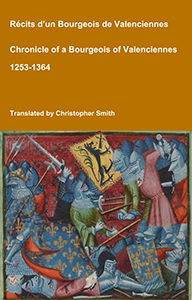
Chronicle of a Bourgeois of Valenciennes
Récits d’un bourgeois de Valenciennes aka The Chronicle of a Bourgeois of Valenciennes is a vivid 14th-century vernacular chronicle written by an anonymous urban chronicler from Valenciennes in the County of Hainaut. It survives in a manuscript that describes local and regional history from about 1253 to 1366, blending chronology, narrative episodes, and eyewitness-style accounts of political, military, and social events in medieval France, Flanders, and the Low Countries. The work begins with a chronological framework of events affecting Valenciennes and its region under rulers such as King Philip VI of France and the shifting allegiances of local nobility. It includes accounts of conflicts, sieges, diplomatic manoeuvres, and the impact of broader struggles like the Hundred Years’ War on urban life in Hainaut. Written from the perspective of a burgher (bourgeois) rather than a monastery or royal court, the chronicle offers a rare lay viewpoint on high politics and warfare, reflecting how merchants, townspeople, and civic institutions experienced the turbulence of the 13th and 14th centuries. Its narrative style combines straightforward reporting of events with moral and civic observations, making it a valuable source for readers interested in medieval urban society, regional politics, and the lived experience of war and governance in pre-modern Europe.
Available at Amazon in eBook and Paperback format.
On 15th May 1976, her seventy-third birthday, Marigold Lubbock Countess Londesborough [aged 73] died.
Marigold Lubbock Countess Londesborough: On 15th May 1903 she was born to Edgar Lubbock. On 7th September 1935 Hugo Denison 4th Earl of Londesborough and she were married at St Oswald's Church, Blankney. He the son of William Henry Francis Denison 2nd Earl Londesborough and Grace Adelaide Fane Countess Londesborough.


On 15th May 2001 Princess Anne Windsor [aged 50] visited St Laurence's Church, Ludlow [Map] to celebrate 21 years of restoration work and to commemorate the 800th anniversary of its first rebuilding.
Princess Anne Windsor: On 15th August 1950 she was born to Philip Mountbatten Duke Edinburgh and Queen Elizabeth II of the United Kingdom. On 13th January 1960 David Nightingale Hicks and Pamela Mountbatten were married at Romsey Abbey [Map]. The bridesmaids were Princess Anne Windsor, Princess Clarissa of Hesse, her god-daughter Victoria Marten, Joanna Knatchbull and the Amanda Knatchbull She the daughter of Louis Mountbatten 1st Earl Mountbatten of Burma and Edwina Ashley Countess Mountbatten Burma.
On 15th May 2012 John Murray 11th Duke of Atholl [aged 83] died. His son Bruce [aged 52] succeeded 12th Duke Atholl, 13th Marquess Atholl, 14th Earl Atholl, 15th Earl Tullibardine, 8th Baron Glenlyon of Glenlyon in Perthshire.
On 15th May 1531 Maria Habsburg Spain Duchess Cleves was born to Ferdinand I Holy Roman Emperor [aged 28] and Anne Jagiellon [aged 27]. She married 14th June 1541 her fourth cousin once removed William de la Marck Duke of Jülich Cleves Berg, son of John de la Marck III Duke Cleves and Maria Jülich Berg Duchess Cleves, and had issue.
On 15th May 1613 George Seton Master of Seton was born to George Seton 3rd Earl Winton [aged 28] and Anne Hay Countess Winton [aged 21]. He married 1630 his second cousin Henrietta Gordon, daughter of George Gordon 2nd Marquess Huntly and Anna Campbell Marchioness Huntly, and had issue.


On 15th May 1645 George "Hanging Judge" Jeffreys 1st Baron Jeffreys was born to John Jeffreys [aged 37] at Acton Park. He married 1667 Sarah Needham and had issue.


On 17th April 1664 Aubrey de Vere was born to Aubrey de Vere 20th Earl of Oxford [aged 37] and Hester Davenport Countess of Oxford [aged 22]. He was baptised on 15th May 1664 at St Paul's Church, Covent Garden.
On 15th May 1674 John Cecil 6th Earl Exeter was born to John Cecil 5th Earl Exeter [aged 26] and Anne Cavendish Countess Exeter [aged 25]. He married (1) 1697 his fifth cousin Anabella Grey, daughter of Ford Grey 1st Earl Tankerville and Mary Berkeley Countess Tankerville (2) 1699 Elizabeth Brownlow Countess Exeter, daughter of John Brownlow 3rd Baronet and Alice Sherard Baroness Brownlow, and had issue.
On 15th May 1683 Christian Ludwig II Duke of Mecklenburg-Schwerin was born to Frederick I Duke of Mecklenburg Grabow [aged 45].
On 15th May 1706 Charles Mathew Goring 5th Baronet was born to Henry Goring 4th Baronet [aged 26].
Annals of the six Kings of England by Nicholas Trivet
Translation of the Annals of the Six Kings of England by that traces the rise and rule of the Angevin aka Plantagenet dynasty from the mid-12th to early 14th century. Written by the Dominican scholar Nicholas Trivet, the work offers a vivid account of English history from the reign of King Stephen through to the death of King Edward I, blending political narrative with moral reflection. Covering the reigns of six monarchs—from Stephen to Edward I—the chronicle explores royal authority, rebellion, war, and the shifting balance between crown, church, and nobility. Trivet provides detailed insight into defining moments such as baronial conflicts, Anglo-French rivalry, and the consolidation of royal power under Edward I, whose reign he describes with particular immediacy. The Annals combines careful year-by-year reporting with thoughtful interpretation, presenting history not merely as a sequence of events but as a moral and political lesson. Ideal for readers interested in medieval history, kingship, and the origins of the English state, this chronicle remains a valuable and accessible window into the turbulent world of the Plantagenet kings.
Available at Amazon in eBook and Paperback format.
On 15th May 1724 Elizabeth Dormer Countess Shrewsbury and Waterford was born to John Dormer 7th Baron Dormer [aged 32]. She married 21st November 1743 George Talbot 14th Earl of Shrewsbury.

On 15th May 1757 John Hely-Hutchinson 2nd Earl of Donoughmore was born to John Hely-Hutchinson [aged 33] and Christiana Nixon 1st Baroness Donoughmore [aged 25].
On 15th May 1794 Robert John Malet Palk was born to Lawrence Palk 2nd Baronet [aged 28] and Dorothy Elizabeth Vaughan [aged 30].
On 15th May 1797 Constantine Phipps 1st Marquess Normanby was born to Henry Phipps 1st Earl Mulgrave [aged 42] and Martha Sophia Thomson Maling Countess Mulgrave. He a great x 3 grandson of King James II of England Scotland and Ireland. He married 1818 Maria Liddell Marchioness Normanby, daughter of Thomas Liddell 1st Baron Ravensworth and Maria Susannah Simpson Baroness Calthorpe, and had issue.

On 15th May 1804 Henry Anson was born to Thomas Anson 1st Viscount Anson [aged 37] and Anne Margaret Coke Viscountess Anson [aged 25].
On 15th May 1839 George John Brudenell was born to Ernest Brudenell-Bruce 3rd Marquess Ailesbury [aged 28] and Louisa Elizabeth Horsley Beresford Marchioness Ailesbury [aged 25]. He married 7th August 1862 his fourth cousin twice removed Evelyn Mary Craven, daughter of William Craven 2nd Earl Craven and Emily Mary Grimston Countess Craven, and had issue.
On 15th May 1851 Bache Cunard 3rd Baronet was born to Edward Cunard 2nd Baronet [aged 35]. He married April 1895 Maud Burke Lady Cunard and had issue.
On 15th May 1852 John Manners-Sutton 3rd Baron Manners was born to John Manners-Sutton 2nd Baron Manners [aged 34] and Lydia Sophia Dashwood [aged 27]. He married (1) 12th August 1885 Constance Hamlyn-Fane Baroness Manners and had issue (2) 5th September 1922 Zoe Virginie Nugent.
On 15th May 1867 Lionel Sackville-West 3rd Baron Sackville was born to William Sackville-West [aged 37] and Georgina Dodwell. He married 1892 his first cousin Victoria Sackville-West Baroness Sackville, daughter of Lionel Sackville-West 2nd Baron Sackville, and had issue.
On 15th May 1869 Mary Stuart Keppel was born to William Keppel 7th Earl Albermarle [aged 37] and Sophia Mary MacNab of Dundurn Castle [aged 36].
This is a translation of the 'Memoires of Jacques du Clercq', published in 1823 in two volumes, edited by Frederic, Baron de Reissenberg. In his introduction Reissenberg writes: 'Jacques du Clercq tells us that he was born in 1424, and that he was a licentiate in law and a counsellor to Philip the Good, Duke of Burgundy, in the castellany of Douai, Lille, and Orchies. It appears that he established his residence at Arras. In 1446, he married the daughter of Baldwin de la Lacherie, a gentleman who lived in Lille. We read in the fifth book of his Memoirs that his father, also named Jacques du Clercq, had married a lady of the Le Camelin family, from Compiègne. His ancestors, always attached to the counts of Flanders, had constantly served them, whether in their councils or in their armies.' The Memoires cover a period of nineteen years beginning in in 1448, ending in in 1467. It appears that the author had intended to extend the Memoirs beyond that date; no doubt illness or death prevented him from carrying out this plan. As Reissenberg writes the 'merit of this work lies in the simplicity of its narrative, in its tone of good faith, and in a certain air of frankness which naturally wins the reader’s confidence.' Du Clercq ranges from events of national and international importance, including events of the Wars of the Roses in England, to simple, everyday local events such as marriages, robberies, murders, trials and deaths, including that of his own father in Book 5; one of his last entries.
Available at Amazon in eBook and Paperback format.
On 15th May 1875 Mary Cecil Curzon 17th Baroness Zouche was born to George Augutus Curzon [aged 38]. She married in or before 1906 Frederick Frankland 10th Baronet, son of Colonel William Adolphus 9th Baronet, and had issue.
On 15th May 1883 Ninian Edward Crichton-Stuart was born to John Crichton-Stuart 3rd Marquis of the Isle of Bute [aged 35] and Gwendolen Mary Anne Fitzalan Howard Marchioness Bute [aged 29]. He married 16th June 1906 Ismay Lucretia Mary Preston.
On 15th May 1885 Maurice Roche 4th Baron Fermoy was born to James Roche 3rd Baron Fermoy [aged 33] and Frances Ellen Work Lady Fermoy [aged 27]. He married 17th September 1931 Ruth Sylvia Gill Baroness Fermoy and had issue.
On 15th May 1886 Mary Borden Lady Spears was born.


On 15th May 1904 William Edwardes 7th and 4th Baron Kensington was born to Hugh Edwardes 6th and 3rd Baron Kensington [aged 30].
On 15th May 1919 Robert Charles Darling 2nd Baron Darling was born to Major John Clive Darling [aged 31] and Eleanor Joan Martin Powell. He married 15th August 1942 Bridget Rosemary Whishaw Dickson Baroness Darling and had issue.
On 15th May 1092 Philip I King of the Franks [aged 39] and Bertrade Montfort Queen Consort France [aged 22] were married. She by marriage Queen Consort of France. They were married despite their both having living spouses: Bertha Gerulfing Queen Consort France [aged 37] and Fulk "Réchin" Anjou 4th Count Anjou [aged 49] respectively. He the son of Henry I King of the Franks and Anne of Kiev Queen Consort Francia. They were fourth cousin once removed.
On 15th May 1346 James Butler 2nd Earl Ormonde [aged 14] and Elizabeth Darcy Countess Ormonde [aged 14] were married at Ormond, County Tipperary. She by marriage Countess Ormonde. She the daughter of John Darcy 1st Baron Darcy of Knayth [aged 66] and Joan Burgh Countess Kildare [aged 46]. He the son of James Butler 1st Earl Ormonde and Eleanor Bohun Countess Ormonde [aged 41]. They were third cousins. He a great grandson of King Edward I of England.
On 15th May 1459 James Douglas 1st Earl Morton and Joan Stewart Countess Morton [aged 31] were married. She by marriage Countess Morton. She the daughter of King James I of Scotland and Joan Beaufort Queen Consort Scotland. They were first cousin once removed. She a great x 2 granddaughter of King Edward III of England.
On 15th May 1567 James "Lord Bothwell" Hepburn 1st Duke Orkney [aged 33] and Mary Queen of Scots [aged 24] were married in the Great Hall Holyrood House. She the daughter of King James V of Scotland and Mary of Guise Queen Consort Scotland. He the son of Patrick Hepburn 3rd Earl Bothwell and Agnes Sinclair Countess Bothwell. They were half third cousin once removed. He a great x 5 grandson of King Edward III of England. She a great granddaughter of King Henry VII of England and Ireland.
On 15th May 1651 Thomas Loraine 1st Baronet [aged 13] and Grace Fenwick Lady Loraine [aged 12] were married.
The History of William Marshal was commissioned by his son shortly after William’s death in 1219 to celebrate the Marshal’s remarkable life; it is an authentic, contemporary voice. The manuscript was discovered in 1861 by French historian Paul Meyer. Meyer published the manuscript in its original Anglo-French in 1891 in two books. This book is a line by line translation of the first of Meyer’s books; lines 1-10152. Book 1 of the History begins in 1139 and ends in 1194. It describes the events of the Anarchy, the role of William’s father John, John’s marriages, William’s childhood, his role as a hostage at the siege of Newbury, his injury and imprisonment in Poitou where he met Eleanor of Aquitaine and his life as a knight errant. It continues with the accusation against him of an improper relationship with Margaret, wife of Henry the Young King, his exile, and return, the death of Henry the Young King, the rebellion of Richard, the future King Richard I, war with France, the death of King Henry II, and the capture of King Richard, and the rebellion of John, the future King John. It ends with the release of King Richard and the death of John Marshal.
Available at Amazon in eBook and Paperback format.
On 15th May 1684 Heneage Finch 5th Earl Winchilsea [aged 27] and Anne Kingsmill Countess Winchelsea [aged 23] were married. She by marriage Countess Winchilsea. He the son of Heneage Finch 3rd Earl Winchilsea [aged 56] and Mary Seymour Countess Winchelsea.
On 15th May 1699 Henry Bunbury 3rd Baronet [aged 22] and Susannah Hanmer Lady Bunbury [aged 22] were married. They had four sons and five daughters. She by marriage Lady Bunbury of Bunbury in Oxfordshire and Stanney Hall in Cheshire.
On 15th May 1707 George Brudenell 3rd Earl Cardigan [aged 21] and Elizabeth Bruce 3rd Countess Cardigan [aged 18] were married at St Martin in the Fields Church [Map]. She by marriage Countess Cardigan. She the daughter of Thomas Bruce 3rd Earl Elgin 2nd Earl Ailesbury [aged 51] and Elizabeth Seymour Countess Elgin and Ailesbury. They were half fourth cousin once removed.

On 15th May 1742 Francis Greville 1st Earl Brooke Warwick Castle 1st Earl Warwick [aged 22] and Elizabeth Hamilton Countess Brooke Warwick Castle and Warwick [aged 22] were married. She by marriage Baroness Brooke of Beauchamps Court in Warwickshire.
On 15th May 1759 James Waldegrave 2nd Earl Waldegrave [aged 44] and Maria Walpole Duchess Gloucester and Edinburgh [aged 22] were married. She by marriage Countess Waldegrave. The difference in their ages was 21 years. He the son of James Waldegrave 1st Earl Waldegrave and Mary Webb.
On 15th May 1775 Frederick Irby 2nd Baron Boston [aged 25] and Christian Methuen were married.
On 15th May 1787 Anthony Lechmere 1st Baronet [aged 20] and Mary Berwick Lady Lechmere were married at St Mary's Church, Hanley Castle [Map].
On 15th May 1792 Lawrence Palk 2nd Baronet [aged 26] and Dorothy Elizabeth Vaughan [aged 28] were married. She the daughter of Wilmot Vaughan 1st Earl Lisburne [aged 64] and Dorothy Shafto Countess Lisburne [aged 59].
On 15th May 1845 Lawrence Palk 1st Baron Haldon [aged 27] and Maria Harriett Hesketh Baroness Haldon were married. They had four sons and two daughters.
On 15th May 1901 John Frecheville Ramsden 6th Baronet [aged 24] and Joan Buxton Lady Ramsden [aged 20] were married.
Abbot John Whethamstede’s Chronicle of the Abbey of St Albans
Abbot John Whethamstede's Register aka Chronicle of his second term at the Abbey of St Albans, 1451-1461, is a remarkable text that describes his first-hand experience of the beginning of the Wars of the Roses including the First and Second Battles of St Albans, 1455 and 1461, respectively, their cause, and their consequences, not least on the Abbey itself. His text also includes Loveday, Blore Heath, Northampton, the Act of Accord, Wakefield, and Towton, and ends with the Coronation of King Edward IV. In addition to the events of the Wars of the Roses, Abbot John, or his scribes who wrote the Chronicle, include details in the life of the Abbey such as charters, letters, land exchanges, visits by legates, and disputes, which provide a rich insight into the day-to-day life of the Abbey, and the challenges faced by its Abbot.
Available at Amazon in eBook and Paperback format.
On 15th May 1958 Charles John Robert Manners 10th Duke Rutland [aged 38] and Frances Helen Sweeny Duchess of Rutland [aged 21] were married. She by marriage Duchess Rutland. She the daughter of Charles Francis Sweeny [aged 48] and Margaret Whigham Duchess of Argyll [aged 45]. He the son of John Henry Montagu Manners 9th Duke Rutland and Kathleen Tennant Duchess Rutland [aged 63].
On 15th May 2026 Charles Spencer 9th Earl Spencer [aged 61] and Catrine Jarman Countess Spencer [aged 44] were married in Arizona. She by marriage Countess Spencer. He the son of John Spencer 8th Earl Spencer and Frances Ruth Roche Countess Spencer.
On 15th May 1268 Peter of Savoy 1st Earl of Richmond [aged 65] died. He left the Honour of Richmond to his niece Eleanor of Provence Queen Consort England [aged 45] who transferred it to the crown.
On 15th May 1464 a Yorkist army commanded by John Neville 1st Marquess Montagu [aged 33] defeated a Lancastrian army commanded by Henry Beaufort 2nd or 3rd Duke of Somerset [aged 28] at Hexham, Northumberland [Map].
Those fighting for York included John Stafford 1st Earl Wiltshire [aged 36], John Scrope 5th Baron Scrope of Bolton [aged 26] and Richard Welles 7th Baron Welles, Baron Willoughby [aged 36].
Henry Beaufort 2nd or 3rd Duke of Somerset was beheaded following the battle. The general pardon which he has previously received was annulled. Duke Somerset, Marquess Dorset, Earl Somerset and Earl Dorset forfeit for the second time. His son Edmund Beaufort [aged 25] was styled by supporters of the House of Lancaster as Duke of Somerset but had not right to do so.
Philip Wentworth [aged 40] was executed at Middleham [Map].
Thomas Ros 9th Baron Ros Helmsley [aged 36] and Robert Hungerford 3rd Baron Hungerford 1st Baron Moleyns [aged 33] fought for the Lancastrians.
On 15th May 1509 Nicholas Griffin 10th Baron Latimer Braybrooke [aged 33] died. His son Thomas de jure 11th Baron Latimer of Braybrook.
On 15th May 1609 Edward Stradling [aged 80] died. His second cousin John Stradling 1st Baronet [aged 46] inherited St Donat's Castle [Map].
On 15th May 1630 Thomas Gerard 2nd Baronet [aged 46] died at Winwick Parish Newhall, Rufford. His son William [aged 18] succeeded 3rd Baronet Gerard of Bryn in Lancashire.
On 15th May 1670 John Browne 1st Baronet [aged 66] died. His son George [aged 43] succeeded 2nd Baronet Browne of The Neale in County Mayo. Alicia Bingham Lady Browne [aged 39] by marriage Lady Browne of The Neale in County Mayo.
On 15th May 1682 Bishop Henry Bridgeman died.
On 15th May 1684 Frances Yelverton Viscountess Hatton died.
On 15th May 1695 Patrick Lyon 3rd Earl Strathmore and Kinghorne [aged 51] died. His son John [aged 32] succeeded 4th Earl Strathmore and Kinghorne. Elizabeth Stanhope Countess Strathmore and Kinghorne [aged 32] by marriage Countess Strathmore and Kinghorne.
On 15th May 1713 Thomas Delves 3rd Baronet [aged 82] died. His son Thomas [aged 60] succeeded 4th Baronet Delves of Dodington in Cheshire.
On 15th May 1843 George Coventry 8th Earl Coventry [aged 58] died. His grandson George [aged 5] succeeded 9th Earl Coventry.
On 15th May 1846 Spencer Rodney 5th Baron Rodney [aged 61] died at Harley Street Marylebone. He was buried at Eye, Suffolk. His nephew Robert [aged 25] succeeded 6th Baron Rodney of Rodney Stoke in Somerset.

Anne Boleyn. Her Life as told by Lancelot de Carle's 1536 Letter.
In 1536, two weeks after the execution of Anne Boleyn, her brother George and four others, Lancelot du Carle, wrote an extraordinary letter that described Anne's life, and her trial and execution, to which he was a witness. This book presents a new translation of that letter, with additional material from other contemporary sources such as Letters, Hall's and Wriothesley's Chronicles, the pamphlets of Wynkyn the Worde, the Memorial of George Constantyne, the Portuguese Letter and the Baga de Secrets, all of which are provided in Appendices.
Available at Amazon in eBook and Paperback format.
On 15th May 1854 Bishop Richard Bagot [aged 71] died.
On 15th May 1870 Harriet Anne Bishopp 13th Baroness Zouche [aged 82] died. Her son Robert [aged 60] succeeded 14th Baron Zouche Harringworth.
On 15th May 1891 Edwin Longsden Long [aged 61] died of pneumonia resulting from influenza at his home, "Kelston" in Netherhall Gardens, Hampstead. He was buried in West Hampstead Cemetery. His will, signed on the day of his death, was the subject of a lawsuit, to which his relatives were parties, but the matter in dispute was amicably settled.

On 15th May 1915 Edith Somerset Countess Londesborough [aged 76] died.
On 15th May 1925 Edward Geoffrey Broadley Palmer 10th Baronet [aged 60] died. His son Geoffrey [aged 31] succeeded 11th Baronet Palmer of Carlton in Northampton.
On 15th May 1941 Arthur Foljambe 2nd Earl of Liverpool [aged 70] died. His half brother Gerald [aged 63] succeeded 3rd Earl Liverpool.
On 15th May 1983 Dorothy Charlotte Forster Baroness Wardington [aged 92] died.
On 15th May 2000 Ziki Robertson 11th Baroness Wharton [aged 66] died. Her son Myles [aged 35] succeeded 12th Baron Wharton.
On 15th May 2005 Anthony Ashley-Cooper 11th Earl of Shaftesbury [aged 27] died of a heart attack. His brother Nicholas [aged 25] succeeded 12th Earl Shaftesbury, 12th Baron Ashley of Wimborne St Giles, 13th Baronet Cooper of Rockbourne in Southampton.
On 15th May 2012 John Murray 11th Duke of Atholl [aged 83] died. His son Bruce [aged 52] succeeded 12th Duke Atholl, 13th Marquess Atholl, 14th Earl Atholl, 15th Earl Tullibardine, 8th Baron Glenlyon of Glenlyon in Perthshire.
The History of William Marshal was commissioned by his son shortly after William’s death in 1219 to celebrate the Marshal’s remarkable life; it is an authentic, contemporary voice. The manuscript was discovered in 1861 by French historian Paul Meyer. Meyer published the manuscript in its original Anglo-French in 1891 in two books. This book is a line by line translation of the first of Meyer’s books; lines 1-10152. Book 1 of the History begins in 1139 and ends in 1194. It describes the events of the Anarchy, the role of William’s father John, John’s marriages, William’s childhood, his role as a hostage at the siege of Newbury, his injury and imprisonment in Poitou where he met Eleanor of Aquitaine and his life as a knight errant. It continues with the accusation against him of an improper relationship with Margaret, wife of Henry the Young King, his exile, and return, the death of Henry the Young King, the rebellion of Richard, the future King Richard I, war with France, the death of King Henry II, and the capture of King Richard, and the rebellion of John, the future King John. It ends with the release of King Richard and the death of John Marshal.
Available at Amazon in eBook and Paperback format.
On 15th May 2021 Edward John Peregrine Cust 7th Baron Brownlow [aged 85] died. His son Peregrine [aged 46] succeeded 8th Baron Brownlow of Belton in Lincolnshire, 11th Baronet Cust of Stamford in Lincolnshire