

21 Mar is in March.
1152 King Louis and Queen Eleanor's Annulment
1330 Execution of Edmund of Woodstock
1377 Revolt against John of Gaunt
1556 Execution of Archbishop Thomas Cranmer
Anglo-Saxon Chronicle. 21st March 867. Late in the year, however, they returned to their allegiance, and they were now fighting against the common enemy; having collected a vast force, with which they fought the army [Battle of York] at York [Map]; and breaking open the town, some of them entered in. Then was there an immense slaughter of the Northumbrians, some within and some without; and both the kings [Osberht King of Northumbria and Ælla King of Northumbria] were slain on the spot. The survivors made peace with the army.
On 21st March 867 Osberht King of Northumbria and Ælla King of Northumbria were killed during the Battle of York.
On 21st March 1076 Robert I Duke Burgundy [aged 65] died. His grandson Hugh [aged 19] succeeded I Duke Burgundy.
On 21st March 1152 the marriage of Louis VII King of the Franks [aged 32] and Eleanor of Aquitaine Queen Consort Franks and England [aged 30] was dissolved by Hugh Toucy Archbishop of Sens at the Château de Beaugency on the grounds of consanguinity. Both Louis and Eleanor were present as were the Archbishops of Rouen and Bordeaux. Samson Mauvoison Archbishop of Reims acted on behalf of Eleanor. In dissolving the marriage Louis lost control of the Duchy of Aquitaine which was to have far reaching consequences for the next three centuries.
After 21st March 1152 Theobald "Good" Blois V Count Blois [aged 22] attempted to abduct Eleanor of Aquitaine Queen Consort Franks and England [aged 30] from Blois. She fled in the middle of the night taking a barge to Tours.
Flowers of History by Roger of Wendover 1152. 21st March 1152. The same year, Louis king of France was divorced from his queen Eleanor; for they were connected with one another in the fourth degree of consanguinity.
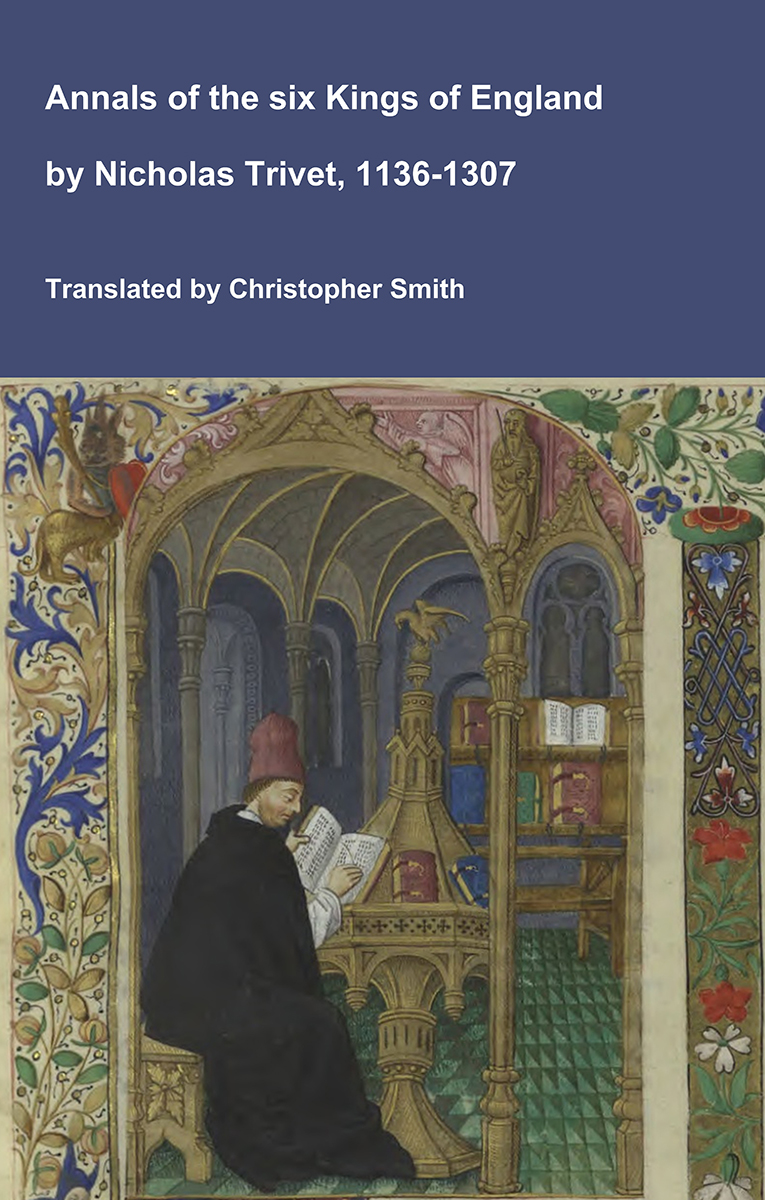 Annals of Six Kings of England by Nicholas Trivet. 1152. A divorce was celebrated [on 21st March 1152] between the king of the Franks and his wife Eleanor after their consanguinity had been established1; and in the same year Henry, duke of Normandy and count of Anjou, married the same Eleanor, receiving with her the entire duchy of Aquitaine. Pope Eugenius, after making peace with the Romans, entered the city and remained there for one year. The count of Vermandois died, and his county passed to Philip, count of Flanders. In this year Conrad, king of the Romans, died, having never received the imperial coronation. His nephew Frederick I, who was duke of Saxony, succeeded him. Henry, count of the Northumbrians, son of the king of the Scots, died, leaving three sons. Of these the grandfather appointed the eldest, Malcolm, to succeed him; and the second son, William, he made count of the Northumbrians.
INTER regem Francorum et uxorem Alianordem, probata consanguinitate, celebratur divortium; et, eodem anno, Henricus dux Normanniæ, Andegavensisque comes, eandem duxit Alianordem, integrum Aquitaniæ ducatum accipiens cum eadem. Eugenius papa, pace facta cum Romanis, urbem ingreditur, moram in ea faciens uno anno. Comes Viromandensis moritur, cujus ad comitem Flandriæ Philippum devolvitur comitatus. Decessit hoc anno Conradus, Romanorum rex, imperialem benedictionem minime assucceeds secutus. Successit eidem Fredericus primus, nepos ejus, Saxoniæ dux existens. Henricus, comes Northumbrorum, regis Scotorum filius, obiit, relictis [tribus] filiis, quorum primogenitum Malcolmum avus sibi successurum constituit; secundo vero genitum, Willelmum, fecit comitem Northumbrorum.
Note 1. King Louis VII and Eleanor of Aquitaine were third cousins once-removed. Despite her first marriage being annulled on the grounds of consanguinity she and her second husband were more closely related being half-third cousins.
On 21st March 1227 King Charles Capet of Sicily was born to King Louis VIII of France and Blanche Ivrea Queen Consort France [aged 39]. He a great grandson of King Henry "Curtmantle" II of England. He married (1) 31st January 1246 his half third cousin Beatrice Provence Queen Consort Sicily, daughter of Raymond IV Count Provence and Beatrice Savoy Countess Provence, and had issue (2) November 1268 his third cousin twice removed Margaret Burgundy Queen Consort Sicily.
 Bourgeois de Valenciennes. Then the King of England departed and went aboard ship1 and went to London his city, and Count Guy of Flanders and his sons remained at Ghent.
Adont se party le roy d'Engleterre et monta sur mer et s’en alla à Londres sa cité, et le conte Guy de Flandres et ses enffans demourèrent à Gand.
Note 1. Flowers of History: "Many of them were executed by hanging. At last, after a two-year truce had been concluded between the kings of France and England and their allies, the King of England returned from Flanders and landed at Sandwich on the twelth kalends of April [21st March 1298]."
Annals of Ghent: "Around the middle of March [1298], the king returned to England; and John and Guy, sons of the count, were made knights by the same king when he was at Ghent."
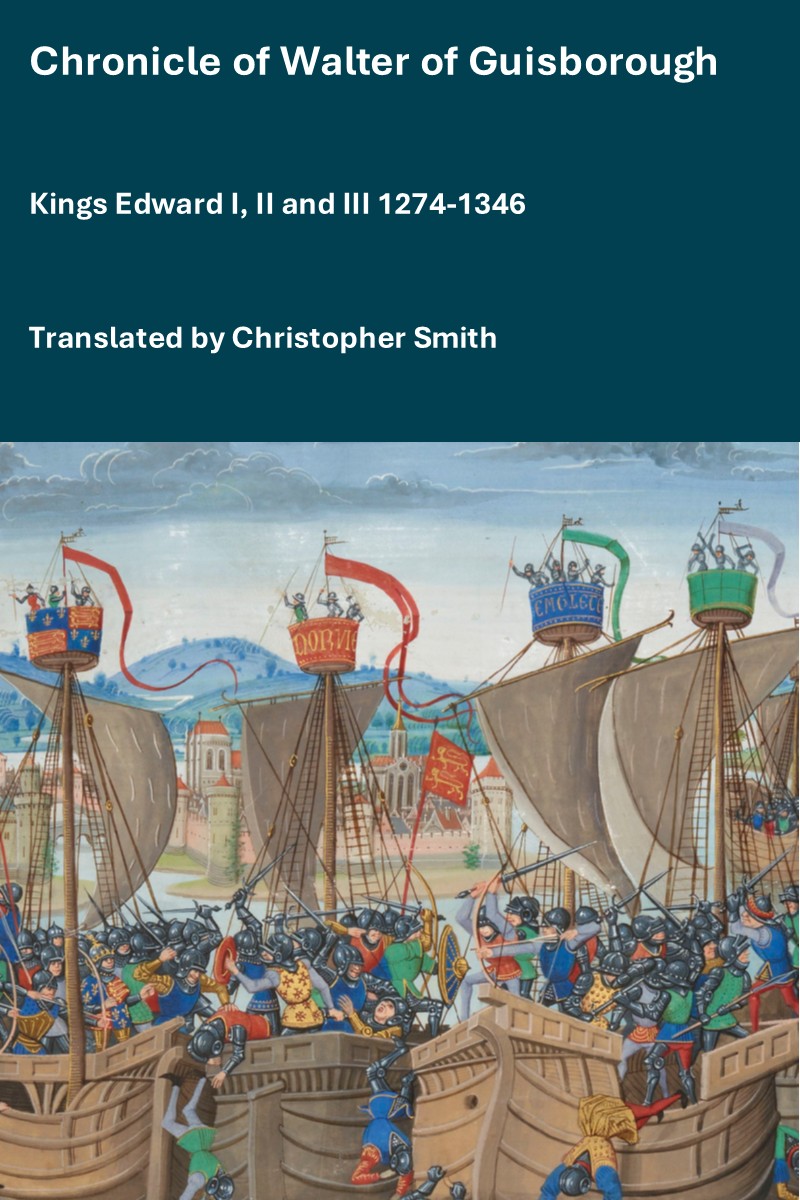 Chronicle of Walter of Guisborough. Now, with both sides prepared to meet each other, the Count of Flanders came to our king, with a sorrowful expression and a downcast face, and said to the king, "My lord king, have mercy on your servant and on my people." And the king said, "What is this, Count? Have you brought us into your land only to betray us?" To this, the Count replied, "God forbid, my lord. For He who knows the hidden secrets of the heart knows that these things were done without my will and without my knowledge. I am innocent and free of guilt in this matter. But this people is stiff-necked and, at present, nearly ungovernable to me." And the king said, "Go quickly and punish your people, so that they cease from this wrongful course and come to rest. Otherwise, by the living God, I will punish them today in a way that will be remembered for all generations." The Count then hurried off and, after calming the people, returned within about an hour. He entered into a pact with the king, and they agreed upon a truce of three days. During that time, all goods taken on both sides were to be returned, under penalty of death and dismemberment. Justice would be administered jointly, according to the judgment of impartial men. While these negotiations were taking place, the Flemings put forward their excuses. They claimed to have suffered many injuries at the hands of the English, including the looting of property, the violation of their wives, the oppression of their daughters, and also many murders and atrocious outrages. And because they did not expect equal compensation for these wrongs, they had taken up arms, hoping at least that fear would force the English to make restitution. The king, finding himself in a difficult position, for they were many in number and very bold, and knowing that neither he nor his men could easily depart from that land except by the will of the people, also aware that often, because of the multitude, a crime passes unpunished, spoke to them peaceably. He paid them a large sum of money for their losses and injuries, and then returned to England around the middle of Lent.1
Partibus itaque ad congrediendum hinc inde paratis, venit comes ipse Flandrensis ad regem nostrum, tristis quidem vultu et facie mutata, et ait regi, "Domine mi rex, miserere servo tuo et populo meo huic." Et ait rex, "Quid est hoc, comes, num introduxisti nos in terram tuam ut seduceres nos?" Et comes ad hæc, "Absit a me hoc, domine mi: novit enim Ille cui nota sunt secreta cordis abscondita, quod absque voluntate et scientia mea facta sunt hæc, et innocens ego sum et immunis sceleris hujus; populus autem iste duræ cervicis est, et mihi in præsenti quasi incastigabilis." Et ait rex, "Vade quantocius et castiga po pulum tuum, ut ab incepto errore sileant et con quiescant, alioquin per viventem Deum ego cas tigabo eos hodie pro omnibus sæculis." Festina vit ergo comes, et, sedato populo, quasi post horam reversus est. Iniitque cum rege fœdus, et trium dierum treugas inter se statuerunt, infra quas restituerentur omnia hinc inde ablata, et hoc sub pœna capitis et membrorum, fierentque communes justitiæ secundum arbitrium discre torum. Cumque inter partes hujusmodi tracta tus haberentur, proposuerunt Flandrenses, ad excusationem eorum, se multas ab Anglicis passos injurias, scilicet in direptione bonorum, violationibus uxorum, et oppressionibus filiarum suarum, insuper in homicidiis multis et atro cissimis injuriis. Et quia æquales emendas fieri non sperabant, ideo armata manu proces serunt, sic ut saltem timore perterriti satisfacere cogerentur. Rex autem in arcto positus, eo quod multi erant numero et præsumptuosi valde, sciensque e terra illa nisi de voluntate eorum sibi et suis facilem non patere egressum, sciens etiam contingere frequenter quod ob populum multum crimen pertransit inultum, pacifice loquebatur ad eos. Et data pecunia magna pro damnis eorum et injuriis, reversus est in Angliam circa medium Quadragesimæ.
Note 1. He landed at Sandwich, Friday 21st March 1298. Matthew of Westminster.
On 21st March 1306 Robert II Duke Burgundy [aged 58] died. His son Hugh [aged 24] succeeded V Duke Burgundy.
Patent Rolls. 21st March 1330. Winchester. Commission to John Mautravers [aged 40], Oliver de Ingham, John de Stonore, Richard de Wyhighby, John Trevaignon and Roger de Wodelok to make inquisition in the county of Southampton to discover the adherents of Edmund de Wodestok, late earl of Kent, who has been condemned to death by his peers in the present Parliament for high treason. By K
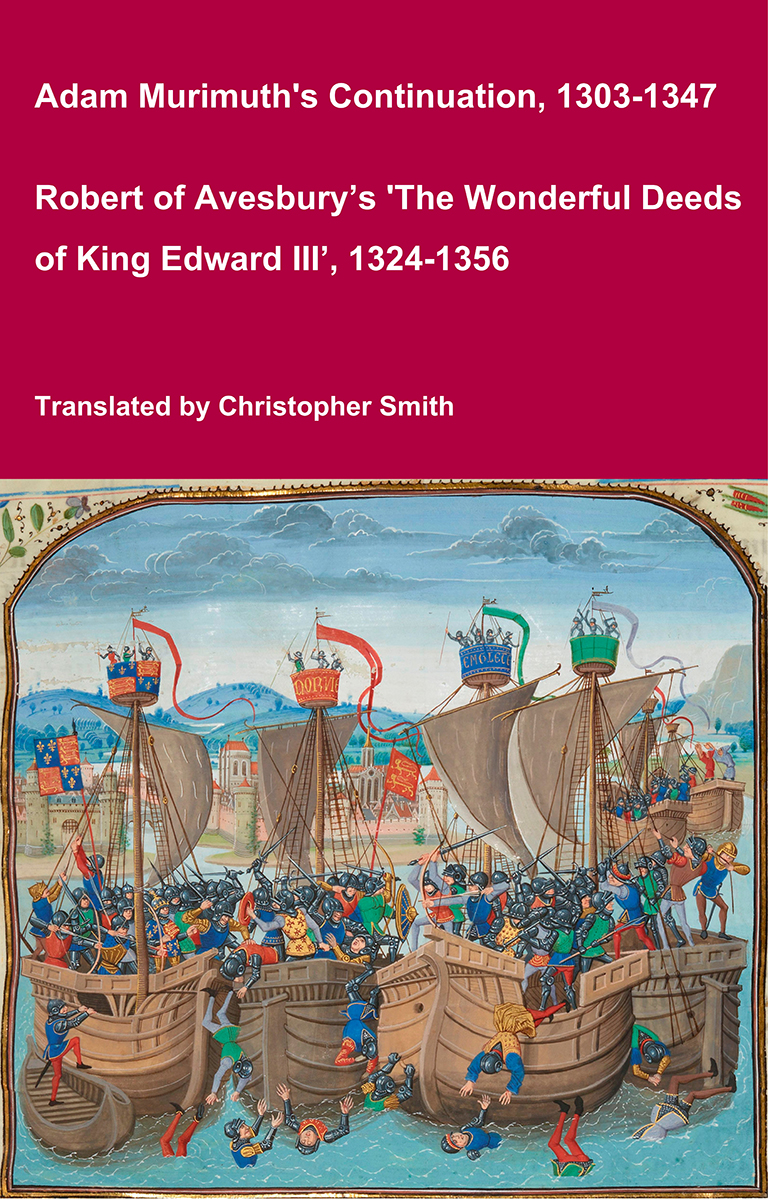
Adam Murimuth's Continuation and Robert of Avesbury’s 'The Wonderful Deeds of King Edward III'
This volume brings together two of the most important contemporary chronicles for the reign of Edward III and the opening phases of the Hundred Years’ War. Written in Latin by English clerical observers, these texts provide a vivid and authoritative window into the political, diplomatic, and military history of fourteenth-century England and its continental ambitions. Adam Murimuth Continuatio's Chronicarum continues an earlier chronicle into the mid-fourteenth century, offering concise but valuable notices on royal policy, foreign relations, and ecclesiastical affairs. Its annalistic structure makes it especially useful for establishing chronology and tracing the development of events year by year. Complementing it, Robert of Avesbury’s De gestis mirabilibus regis Edwardi tertii is a rich documentary chronicle preserving letters, treaties, and official records alongside narrative passages. It is an indispensable source for understanding Edward III’s claim to the French crown, the conduct of war, and the mechanisms of medieval diplomacy. Together, these works offer scholars, students, and enthusiasts a reliable and unembellished account of a transformative period in English and European history. Essential for anyone interested in medieval chronicles, the Hundred Years’ War, or the reign of Edward III.
Available at Amazon in eBook and Paperback format.
Chronicle of Walter of Guisborough. On the Sunday next before Lady Day [21st March 1333], Archibald Douglas entered the English border with three thousand men, burning the district of Gilsland for sixteen leagues in length and six in breadth, and returned to Scotland with a great booty and captives without resistance. Sir Anthony Lucy, a noble knight, and William of Lochmaben, with eight hundred men, one night entered Scotland for twenty miles, and on their return burned, slew, and seized a very great prey of livestock. William Douglas came against them with a great multitude, but was defeated and taken prisoner together with William Barde and a hundred others. Sir Humphrey de Bosco, Sir Humphrey de Gardino, and Sir William of Carlisle, with one hundred and sixty men-at-arms, perished by the sword.
Die Dominica proxima ante Annunciationem Dominicam, Archebaudus Douglas Angliæ marchiam cum tribus millibus intravit, pagum de Gilleslond per XVI leucas in longum et sex in latum combussit, cum præda magna et captivis in Scotiam sine resistentia remeavit. Anthonius de Lusci nobilis miles et Willelmus de Lacu-Mabonis cum DCCC hominibus nocte quadam per XX milliaria Scotiam ingressi sunt, et in redeundo combusserunt, occiderunt, et maximam animalium prædam ceperunt; quibus Willelmus Douglas cum magna multitudine occurrit, sed devictus est et captus una cum Willelmo Barde et centum aliis. Humfridus de Bosco, Humfridus de Gardino, milites, Willelmus de Carliolo cum CLX. valentibus, gladio perierunt.
Archaeologia Volume 35 1853 XXXIII. On the 21st [Mar 1358], William, Archbishop of Sens, now in England to negotiate a treaty of peace for his Sovereign with the English Monarch, the Maréchal D'Audenham, and the Countess of Pembroke [aged 41], spend the entire day with Isabella [aged 63]; and her grandson, the Earl of Richmond [aged 18], arrives to supper.
Bourgeois de Valenciennes. Meanwhile, while King Edward of England was riding through France as you have heard, a fleet was assembled by the men of Ponthieu to go into England and destroy, pillage, and burn the country. Their captains were Sir Hugh of Châtillon and Sir John of Neuville. They numbered about three thousand men. They departed from the harbour of Le Crotoy and from Saint-Valery, and sailed until they came to Winchester, believing the country to be unprovided and undefended. There they disembarked from their ships and went ashore, and they burned the town of Winchester. After this they withdrew, for the country rose against them and came upon them in strength and in good order. The French returned to the sea, but one of their vessels was lost, and all the men aboard were taken by the English, who fell upon them vigorously. This occurred in the year 1358, on the twenty-first day of the month of March.
Endementiers que le roy Édouart d'Engleterre chevauchoit ainsy parmy France que vous avés oy, se fist une armée de ceulx de Pontieu, pour aler en Engleterre et destruire, pillier et brûler le pays. Sy en estoient capitaines monseigneur Hue de Chastellon et monseigneur Jehan de Noefville. Sy estoient bien IIIe hommes. Sy se départirent de la Fosse de Caieu et de Saint-Waléry, et singlèrent tant qu'ils vindrent à Wincestre, car ils cuidoient que le pays fust despourveus. Là yssirent-ils des vasseaulx et se misrent à terre. Sy ardirent la ville de Wincestre, et puis s'en retournèrent; car le pays s'esmut contre eulx, et y vinrent fort et taillamment. Sy retournèrent les Françoys en mer, et y eult ung de leurs vasseaux perdus et tous les gens de dedens par les Englecqs qui vindrent sur eulx vigoreusement. Et fut en l'an mil IIIc etLVIII, leXXIe jour du mois de mars.
On 21st March 1373 John Devereux 1st Baron Devereux [aged 36] was captured during the Battle of Chiset at Chizé at which the English were defeated by the French forces commanded by Bertrand Geusclin [aged 53]. The battle brought an end to English control in Poitou.
Archaeologia Volume 22 Section XVI. The Londoners go to the Kyng about the enjoyning their Liberties.
[Around 21st March 1377] The Londoners having held a comon councill about this present matter, sent of the chefe of there citie, ether to justifie that which had happened, or to excuse them unto the kyng, who suing long tyme to come unto the kynges speache, were kept from the kynges presence thorough the procurement of the duke as ytt is thought, yett att length after one dayes stayeng, the duke seing that they resolutely persisted in theyre determination to speak wyth the king, came unto them, willing them to declare unto him the cause of the coming, affirming that his Lord the King was very ill at ease, & that his sickness myght lightly be encreased yf that he were moved to anger, or should heare ought that dyd encounter or crosse his will & that which he would have. But the citizens, whose speaker & chefest man was John Philpott,g answered the duke wyth due reverence that they were not come by any meanes to augment the kinges sicknes ether by their coming or speache, but rather to mitigate his greif, that he myght be strong to defend them & others if that they myght obteyne access unto his highnes, moreover they sayd that they were charged that they should not communicate those matters which they had in commission from the citie, unto any other than unto theyre liegelord the king himselffe, specially seing that their liege the king had oftentymes willed them that in any matter that touched the citie & citizens, they should not make any other men mediators unto him, but declare theire owne matters them selves unto hym, face to face. But yf they should otherwyse doo then he him self had commanded & the citie had enjoyned them, that then they should gett them evill thankes att both their handes, when they had by such allegations obteyned accesse, they shewed unto the king, how ytt had been published in the parliament that ytt was his will that contrarye unto theyre liberties, the maior should be deposed, & a capteyne created, & other matters in parliament which sowned against there libertyes, also they excused themselves of dyvers things which had been done during the tyme of the comotion of the comonaltie of the citie, which myght redounde unto the dyshonor of the duke, sayeng that they were not pryvie unto any such doinges, but that among so greate a multitude, some lewd felowes had done such matters, they being unwittinge & unwilling, nether can so great a multitude be moved by the exhortations of the maire, when they be once upp, but they goo like a whirlwynd, hither & thither according unto the indiscrete direction of sundry heddes, untill they have done some great thing to the hurt of other or themselves; yet, blessed be God, our duke hath felt no harme, nether hath any of his ben hurt. But the king being a little cheared upp with theire comyng, answered that he would not the diminishing of theire liberties; no, he was rather ready yf neede were to augment them, nether dyd any such resolution ever come out of his mouth, & therefore he encouraged them not to feare, commanding them to depart home, & to appease the citizens, & to keape them in peace. After they had taken theire leave of the king, as they were comyng back agayne, they mett wyth the duke in the haule, who chardging them wyth those matters that we have told how they dyd, they answered as we have told you, they reported unto the king, adding there unto that yff they would fynd out or learne what he was that had devised such a dyshonor unto the reproach of the duke, that they would punish him as the duke him self would, or yff he would rather so, delyver him unto him for to be punished according to his owne pleasure. They sayed moreover that the citie dyd desyre him to stand theyre good Lord as he was wont, & yfi that ought had ben done otherwyse than became them, he should find the citie ready to satisfye him in all thinges. When the duke heard this he was glad, hoping that he should gayne some greate somme of money of the citizens, for he thought that they had used such speache for feare, but ytt was far otherwise then he trusted, for when he sayd that he would presently entreat wyth them about the instant matter, because he thought that, seing the chief of the citie were there, they were sufficient for to deale for all the comons, they answered, that they being citizens had ben sent by the citie unto there leige the king for dyvers causes, which being dispatched, there ambassade was expired, wherefore they could not entreat wyth him unless they had receaved new commission from the citie, & so the joyfulnes of the duke was deluded. But the citizens returning unto the citie, & declarynge in order what had happened, brought no small joye to all the citizens.
Note g. John Philpot was Mayor of London in 1378, and was knighted in Smithfield by Richard the Second in 1381, upon the overthrow of Wat Tyler. "A man," says Stow, "of jolly wit, and very rich in substance." Of the wealth and spirit of this citizen, some estimate will be formed, when we are told by Stow that, in 1378, "he hired with his own money 1000 soldiers, and defended the realm against the incursions of the enemy; so that in small time his hired men took John Mercer, a sea rover, with all his ships which he had before taken from Scarborough, and fifteen Spanish ships laden with great riches." Survey of London, b. i. p. 261, edit. 1720. For undertaking this adventure without the sanction of the Council, his conduct was censured, but he made a stout and triumphant defence, and it appears in Rymer that he was afterwards employed in affairs of trust by Richard the Second, to whom he had furnished loans.
On 21st March 1425 Henry Beauchamp 1st Duke Warwick was born to Richard Beauchamp 13th Earl Warwick [aged 43] and Isabel Despencer Countess Warwick and Worcester [aged 24] at Hanley Castle, Worcestershire. He a great x 2 grandson of King Edward III of England. He married 1434 his third cousin Cecily Neville Duchess Warwick, daughter of Richard Neville Earl Salisbury and Alice Montagu 5th Countess of Salisbury, and had issue.
Patent Rolls. 21st March 1461. Westminster Palace [Map]. Protection for two years for Edmund Grey of Ruthyn [aged 44], knight, going beyond the seas, and his men, and possessions.
On 21st March 1504 Louis Bourbon Prince of La Roche sur Yon [aged 31] and Louise Bourbon Duchess of Monpensier [aged 22] were married. He the son of John Bourbon VIII Count Vendôme and Isabelle Beauvau Countess Vendôme. They were fourth cousin once removed.
On 21st March 1551 Maria Anna Wittelsbach was born to Albert V Wittelsbach V Duke Bavaria [aged 23] and Anna Habsburg Spain Duchess Bavaria [aged 22]. Coefficient of inbreeding 1.58%. She married 26th August 1571 her uncle Charles Habsburg Spain II Archduke Austria, son of Ferdinand I Holy Roman Emperor and Anne Jagiellon, and had issue.

On 21st March 1556 Archbishop Thomas Cranmer [aged 66] was burned at the stake at Oxford, Oxfordshire [Map].
Henry Machyn's Diary. 21st March 1556. The xxj day of Marche was bornyd at Oxford doctur Cranmer [aged 66], late archebysshope of Canturbere.
Henry Machyn's Diary. 21st March 1556. The xxj day of Marche was bered at [Chenies, in] Bukynghamshyre my old contes of Bedford [aged 77] .... of armes and a grett baner of armes and a v [banner-] rolles of her progene and vii dosen of skochyons .... vj of sarsenett, and iiij dosen of grett stayffe torchys.
Note. P. 191. Funeral of the old countess of Bedford. Anne, sole daughter and heiress of sir Guy Sapcote, of Thornhaugh, co. Bedford, married first to sir John Broughton, of Toddington, co. Bedford; secondly, about 1518, to sir Richard Jerningham, who was one of the governors of Tournay, and afterwards employed in an embassy to Spain, who died in 1524; and, thirdly, in the spring of 1526, to sir John Russell, afterwards earl of Bedford (see note, p. 343). By her will, dated 19 Aug. 1557, she committed her burial to the discretion of the marquess of Winchester lord treasurer, the abbat of Westminster, and the lord St. John. See further in Wiffen's Memoirs of the House of Russell, i. 391.
Henry Machyn's Diary. 21st March 1557. The sam day at after-non cam downe that evere chyrche shuld in London syng Te Deum laudamus by the commondement of my lord bysshope of London [aged 57], and rynggyng alle that whylle, to ryng with grett presse [praise] to God; and ther cam iij huwysse [hoys] of Spaneards the sam day to London.
On 21st March 1557 Anne Dacre Countess Arundel was born to Thomas Dacre 4th Baron Dacre Gilsland 8th Baron Greystoke [aged 30] and Elizabeth Leybourne Duchess Norfolk [aged 21] at Carlisle, Cumberland [Map]. She married 1571 her half third cousin once removed Philip Howard 13th or 20th Earl of Arundel, son of Thomas Howard 4th Duke of Norfolk and Mary Fitzalan Duchess Norfolk, and had issue.
Henrici Quinti, Angliæ Regis, Gesta, is a first-hand account of the Agincourt Campaign, and subsequent events to his death in 1422. The author of the first part was a Chaplain in King Henry's retinue who was present from King Henry's departure at Southampton in 1415, at the siege of Harfleur, the battle of Agincourt, and the celebrations on King Henry's return to London. The second part, by another writer, relates the events that took place including the negotiations at Troye, Henry's marriage and his death in 1422.
Available at Amazon in eBook and Paperback format.
Henry Machyn's Diary. 21st March 1557. The xxj day of Marche the Kyng [aged 29] and the Quen [aged 41] [went] thrugh the galere unto ther closett, and ther thay [heard mass]; and ther was ij swordes borne a-for them, on by lord Cobham [aged 60], and the thodur (by) my lord admerall [aged 47]; [and from] ther closett bake to dener, boyth the Kyng and the Quen together, and ther my lord chanseler [aged 56] was ther and dyvers [other lords.]


Henry Machyn's Diary. 21st March 1558. The sam day of Marche wher browth in-to the (blank) afor the bysshope of London [aged 58] and odur lernyd men of the temporolte iij men, the wyche ther openions wher shyche that they wher juged and condemnyd to suffer deth by fyre; one man was a hossear [hosier] dwellyng in Wodstret, ys nam ys (blank).
Henry Machyn's Diary. 21st March 1558. The sam day at after-none the yerle of Sussex [aged 33] toke gorney [journey] in post toward Yrland.
Note. P. 169. Earl of Sussex took his journey toward Ireland. Where he had been for some time lord deputy.
Henry Machyn's Diary. 21st March 1559. The xxj of Marche the quen('s) master cokes and odur her offesers, and at Mylle-end [Map] ther they dynyd, [with] all maner of mett and drynke; and ther was all maner of artelere, as drumes, flutes, trumpetes, gones, mores pykes, halbardes, to the nomber of v C.; the gonners in shurtes of maylle and .... pykes in bryght harnes, and mony swardes and v grett pesses of gones and shot in ... the wyche dyd myche hurt unto glass wy[ndows;] and cam a grett gyant danssyng, and after [that a] mores dansse dansyng, and gones and mor[es pikes]; and after cam a cart with a grett wyth and ij [bears?] with-in the cartt, and be-syd whent a gret .... of grett mastes; and then cam the master cokes rydyng in cottes in brodere, and chynes of gold, and mony of the quen('s) [aged 25] servandes in ther levery, to the cowrt, and ther they shott ther pesses, and with-in the parke was ij C. chamburs gret and smalle shot, and the Quen('s) grace standyn in the galere; and so evere man whent in-to the parke, showhyng them in batell ray, shutyng and playhyng at bowt the parke; and a-for the quen was on of bayres [one of the bears.] was bated, and after the mores dansers whent in-to the cowrt, dansyng in mony offeses.


Henry Machyn's Diary. 21st March 1563. The xxj day of Marche dyd pryche at Powlles crosse [Map] the byshope of Wynchastur [aged 53], and mad a godly sermon.
Henry Machyn's Diary. 21st March 1563. The xxj day of Marche tydynges cam to the cowrt that on off the quen's shypes callyd the Grahond was lost gohyng to Nuwhavyn; the captayn was ser Thomas Fynche [deceased] knyghtt of Kent, and ys brodur and on of my lord Cobbam('s) brodur and ij of my lord Whentforth ('s) bredurne [John Wentworth [deceased] and James Wentworth [deceased]] and mony gentyll men and mynstorels; [one] of my lord of Warwyke('s) newys [nephews], and a good mastur; and mony [good] marenars and sawgears [soldiers] to the nombur of (blank)
Samuel Pepys' Diary. 21st March 1662. Thence to Westminster Hall [Map]; and there walked up and down and heard the great difference that hath been between my Lord Chancellor [aged 53] and my Lord of Bristol [aged 49], about a proviso that my Lord Chancellor would have brought into the Bill for Conformity, that it shall be in the power of the King [aged 31], when he sees fit, to dispense with the Act of Conformity; and though it be carried in the House of Lords, yet it is believed it will hardly pass in the Commons.


Samuel Pepys' Diary. 21st March 1663. Up betimes and to my office, where busy all the morning, and at noon, after a very little dinner, to it again, and by and by, by appointment, our full board met, and Sir Philip Warwick [aged 53] and Sir Robert Long [aged 63] came from my Lord Treasurer [aged 56] to speak with us about the state of the debts of the Navy; and how to settle it, so as to begin upon the new foundation of £200,000 per annum, which the King [aged 32] is now resolved not to exceed.


Samuel Pepys' Diary. 21st March 1664. This day the Houses of Parliament met; and the King [aged 33] met them, with the Queene [aged 54] with him. And he made a speech to them1 among other things, discoursing largely of the plots abroad against him and the peace of the Kingdom; and, among other things, that the dissatisfied party had great hopes upon the effect of the Act for a Triennial Parliament granted by his father, which he desired them to peruse, and, I think, repeal. So the Houses did retire to their own House, and did order the Act to be read to-morrow before them; and I suppose it will be repealed, though I believe much against the will of a good many that sit there.
Note 1. March 16th, 1663-64. This day both Houses met, and on the gist the King opened the session with a speech from the throne, in which occurs this Passage: "I pray, Mr. Speaker, and you, gentlemen of the House of Commons, give that Triennial Bill once a reading in your house, and then, in God's name, do what you think fit for me and yourselves and the whole kingdom. I need not tell you how much I love parliaments. Never king was so much beholden to parliaments as I have been, nor do I think the crown can ever be happy without frequent parliaments" (Cobbett's "Parliamentary History", vol. iv., cc. 290, 291).


Samuel Pepys' Diary. 21st March 1666. Thence home, and there met Sir W. Warren, and after I had eat a bit of victuals (he staying in the office) he and I to White Hall. He to look after the business of the prize ships which we are endeavouring to buy, and hope to get money by them. So I to London by coach and to Gresham College, where I staid half an houre, and so away home to my office, and there walking late alone in the darke in the garden with Sir W. Warren, who tells me that at the Committee of the Lords for the prizes to-day, there passed very high words between my Lord Ashly [aged 44] and Sir W. Coventry [aged 38], about our business of the prize ships. And that my Lord Ashly did snuff and talk as high to him, as he used to do to any ordinary seaman. And that Sir W. Coventry did take it very quietly, but yet for all did speak his mind soberly and with reason, and went away, saying, he had done his duty therein, and so left it to them, whether they would let so many ships go for masts or not: Here he and I talked of 1,000 businesses, all profitable discourse, and late parted, and I home to supper and to bed, troubled a little at a letter from my father, telling me how (he) is like to be sued for a debt of Tom's, by Smith, the mercer.


Samuel Pepys' Diary. 21st March 1669. Lord's Day. Up, and by water over to Southwarke [Map]; and then, not getting a boat, I forced to walk to Stangate; and so over to White Hall, in a scull; where up to the Duke of York's [aged 35] dressing-room, and there met Harry Saville [aged 27], and understand that Sir W. Coventry [aged 41] is come to his house last night. I understand by Mr. Wren [aged 40] that his friends having, by Secretary Trevor [aged 45] and my Lord Keeper [aged 63], applied to the King [aged 38] upon his first coming home, and a promise made that he should be discharged this day, my Lord Arlington [aged 51] did anticipate them, by sending a warrant presently for his discharge which looks a little like kindness, or a desire of it; which God send! though I fear the contrary: however, my heart is glad that he is out.


Anne Boleyn. Her Life as told by Lancelot de Carle's 1536 Letter.
In 1536, two weeks after the execution of Anne Boleyn, her brother George and four others, Lancelot du Carle, wrote an extraordinary letter that described Anne's life, and her trial and execution, to which he was a witness. This book presents a new translation of that letter, with additional material from other contemporary sources such as Letters, Hall's and Wriothesley's Chronicles, the pamphlets of Wynkyn the Worde, the Memorial of George Constantyne, the Portuguese Letter and the Baga de Secrets, all of which are provided in Appendices.
Available at Amazon in eBook and Paperback format.
Samuel Pepys' Diary. 21st March 1669. Thence up and down the House. Met with Mr. May [aged 47], who tells me the story of his being put by Sir John Denham's place, of Surveyor of the King's Works, who it seems, is lately dead, by the unkindness of the Duke Buckingham [aged 41], who hath brought in Dr. Wren [aged 45]: though, he tells me, he hath been his servant for twenty years together in all his wants and dangers, saving him from want of bread by his care and management, and with a promise of having his help in his advancement, and an engagement under his hand for £1000 not yet paid, and yet the Duke of Buckingham so ungrateful as to put him by: which is an ill thing, though Dr. Wren is a worthy man. But he tells me that the King [aged 38] is kind to him, and hath promised him a pension of £300 a-year out of the Works; which will be of more content to him than the place, which, under their present wants of money, is a place that disobliges most people, being not able to do what they desire to their lodgings. Here meeting with Sir H. Cholmly [aged 36] and Povy [aged 55], that tell me that my Lord Middleton [aged 61] is resolved in the Cabal that he shall not go to Tangier; and that Sir Edward Harlow [Harley], whom I know not, is propounded to go, who was Governor of Dunkirke, and, they say, a most worthy brave man, which I shall be very glad of.


The London Gazette 662. 21st March 1672. The Hague. 1672 Attack on the Smyrna Fleet. Most of our Smirna Fleet are arrived in Zealand and in the Maes, together with the Mep of war, under whose Convoy they were, though extremely torn and very much disabled five of our Merchant men were taken bythe English-two of which were the richest in the Fleet, laden with Silks and other rich Commodities, and were called the Landtman oi Amsterdam, and the Vrede of Rotterdam, besides one of our men of War, called the Little Holland, mounted with 44 Guns and 150 men J Captain de Hies Admiral of this Fleet was killed in this engagement, with many of our men, and many more wounded, who have been since brought a shore at Rotterdam and other places. The men of War which served for Convoys to the said Fleet were.
Ships, Captains, Guns, Men.
The Ulisstiing, Adrian de Haes, 50, 250.
The Dort, Thomas de Bois, 46, 170.
The Entrecht, Cornelius Everfon, 48, 220.
the Hollandia, Thomas Nes, 44, 150.
The Delf, Pourt, 38, 145.
The Lion, Lenny, 34, 140.
The Centaur, Thomas Anderson, 41, 120.
The Friezland, Jacon Anderson, 30, 110.
The Munnick, a considerable Merchant man mounted with 30 guns was so torn and disabled that with much difficulty they have brought her into port, Captain du Bois Vice-=Admiral of this Fleet hath lost his right arm, and many of his men.
John Evelyn's Diary. 21st March 1672. I visited the coasts in my district of Kent, and divers wounded and languishing poor men, that had been in the Smyrna conflict. I went over to see the new-begun Fort of Tilbury; a royal work, indeed, and such as will one day bridle a great city to the purpose, before they are aware.
On 21st March 1681 Edward Hungerford [aged 48] was elected MP Chippenham at Oxford, Oxfordshire [Map] during the Oxford Parliament 5C2.
Before 21st March 1683 the Rye House Plot was an attempt to assassinate King Charles II of England Scotland and Ireland [aged 52] and his brother King James II of England Scotland and Ireland [aged 49] as they passed Rye House, Hoddesdon when were returning from the races at Newmarket, Suffolk on 1st April 1683. In the event a fire at Newmarket, Suffolk on the 22nd March 1683 the races were cancelled.


After 21st March 1683 Edward Hungerford [aged 50] was implicated and his home was searched during the Rye House Plot.
John Evelyn's Diary. 21st March 1683. Dr. Tenison [aged 46] preached at Whitehall [Map] on 1 Cor. vi. 12; I esteem him to be one of the most profitable preachers in the Church of England, being also of a most holy conversation, very learned and ingenious. The pains he takes and care of his parish will, I fear, wear him out, which would be an inexpressible loss.
John Evelyn's Diary. 23rd March 1688. Dr. Parker, Bishop of Oxford [deceased], who so lately published his extravagant treatise about transubstantiation, and for abrogating the test and penal laws, died. He was esteemed a violent, passionate, haughty man, but yet being pressed to declare for the Church of Rome, he utterly refused it. A remarkable end!
John Evelyn's Diary. 21st March 1691. Dined at Sir William Fermor's [aged 42], who showed me many good pictures. After dinner, a French servant played rarely on the lute. Sir William had now bought all the remaining statues collected with so much expense by the famous Thomas, Earl of Arundel, and sent them to his seat at Easton, near Towcester.


On 21st March 1693 Walter Chetwynd [aged 60] died of smallpox. He was buried at St Mary the Virgin Church, Ingestre [Map]. John Chetwynd of Boughton [aged 50] inherited Ingestre Hall, Staffordshire.
On 21st March 1706 Mary Brookes aka Channing [aged 18] was strangled then burned at the stake at Maumbury Rings [Map].
On 21st March 1726 Samuel Pegge [aged 21] was elected to a lay fellowship on the Beresford foundation of his college but was removed in favour of Michael Burton (afterwards vice-master of St. John's), who claimed founder's kin.
On 21st March 1769 Duke Ernest of Saxe Coburg Altenburg [aged 24] and Charlotte Saxe Meiningen Duchess Saxe Gotha Altenburg [aged 17] were married at Meiningen. She by marriage Duchess Saxe Gotha Altenburg. He the son of Duke Frederick III of Saxe Coburg Altenburg III [aged 69] and Luise Dorothea Saxe Meiningen Duchess Saxe Gotha Altenburg. They were first cousin once removed.

The True Chronicles of Jean le Bel Volume 1 Chapters 1-60 1307-1342
The True Chronicles of Jean le Bel offer one of the most vivid and immediate accounts of 14th-century Europe, written by a knight who lived through the events he describes, and experienced some of them first hand. Covering the early decades of the Hundred Years’ War, this remarkable chronicle follows the campaigns of Edward III of England, the politics of France and the Low Countries, and the shifting alliances that shaped medieval warfare. Unlike later historians, Jean le Bel writes with a strong sense of eyewitness authenticity, drawing on personal experience and the testimony of fellow soldiers. His narrative captures not only battles and sieges, but also the realities of military life, diplomacy, and the ideals of chivalry that governed noble society. A key source for Jean Froissart, Le Bel’s chronicle stands on its own as a compelling and insightful work, at once historical record and literary achievement. This translation builds on the 1905 edition published in French by Jules Viard, adding extensive translations from other sources Rymer's Fœdera, the Chronicles of Adam Murimuth, William Nangis, Walter of Guisborough, a Bourgeois of Valenciennes, Geoffrey le Baker of Swinbroke and Richard Lescot to enrich the original text and Viard's notes.
Available at Amazon in eBook and Paperback format.
On 21st March 1807 Amelia Fitz-Clarence Viscountess Falkland was born illegitimately to King William IV of the United Kingdom [aged 41] and Dorothea Bland aka "Mrs Jordan" [aged 45].


On 21st March 1809 Katherine Lowther Duchess of Bolton [aged 73] died.
Life of Henry Pelham. Six weeks later [21st March 1829] Lord Winchelsea [aged 37] again called on the Duke of Newcastle [aged 44] on precisely the same errand. The latter, however, was away at Clumber, and was not available, which was a great relief to him, for he would have felt bound not to refuse, and Lord Falmouth [aged 41] acted as second instead of him. There was no mistake this time. The duel took place on Wimbledon Common. Lord Winchelsea, after receiving the Duke of Wellington's [aged 59] fire, fired his own pistol in the air, and then tendered an apology. The Duke of Newcastle writes in his journal:
'Lord Falmouth gave me an account of the duel. He says the Duke of Wellington behaved in a very churlish, overbearing manner, and when the affair was over did not shake hands, and departed sulkily. One is almost tempted to wish that a life so dangerous had been taken away, but one must not indulge in such unchristian feelings .... The Duke of Wellington's time may not yet be come, but it may, and that shortly, for assuredly he is a villain and a [word illegible].'
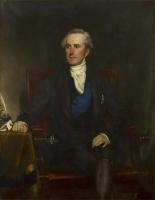


On 21st March 1843 Robert Southey [aged 68] died.
On 21st March 1852 Marie Sophie Hesse-Kassel Queen Consort Denmark and Norway [aged 84] died.
On 21st March 1868 Henrietta Auriol Drummond-Hay [aged 38] died. She was buried at St Andrew's Church, Radbourne [Map].
Henrietta Auriol Drummond-Hay: In 1830 she was born to Edward William Dummond-Hay. In 1851 Henry Chandos-Pole-Gell and she were married.
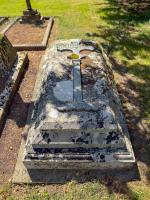
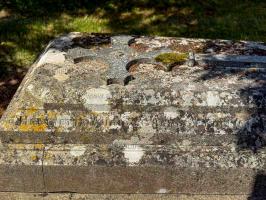
On 21st March 1887 Eustace Sutherland Campbell Percy 1st Baron Percy Newcastle on Tyne was born to Henry George Percy 7th Duke Northumberland [aged 40] and Edith Campbell Duchess Northumberland [aged 37].

On 21st March 1901 George David Boyle [aged 72] died. Salisbury Cathedral [Map].
George David Boyle: On 17th May 1828 he was born. In 1880 he was appointed Dean Salisbury Cathedral which position he held until he died.
On 21st March 1918 Lieutenant-Colonel John Stuart Wortley [aged 38] was killed in action.
His service record includes two letters sent to his widow in late 1918, in response to an advertisement she had placed in The Times of 2 November, asking for any news of him. Both men were close by at the time he was shot.
Eric Whitehouse wrote, "I was with the Colonel all the morning of March 21st from the time the enemy artillery became active till after the German attack had been made and they were well past our H.Q. As our trench was not one in which we could meet this attack, it was necessary to evacuate the position and while doing this I was close to the Colonel. I saw he was hit and I saw him fall, as far as I could tell he was shot through the head by machine gun fire. There was a very heavy barrage from enemy M[achine] G[uns] at this time…My firm conviction is that he was killed."
Percy Pick (241148 Stretcher Bearer, C Coy HQ, 2/6th South Staffs) also wrote to Jack's wife on his return from Germany, where he had been a Prisoner of War. He wrote:
"As near the time as I can judge it was 9.45 a.m. when Col. Stuart Wortley met his death. [Being] a battalion stretcher bearer, I was out seeking and tending wounded, and whilst carrying out these duties, I came across the Colonel. I regret to say that I was unable to do anything as life was extinct, anyway I searched the Colonel's pockets etc. for valuables or papers, but in this, I was also too late as all pockets had been emptied. The place of Col. Stuart Wortley's death was directly in front and about 200 yards away from battalion head quarters, Railway Reserve trench, Bullecourt sector."

After 21st March 1918. Memorial to Lieutenant Reginald Arthur Shann, East Lancashire Regiment, younger son of Reginald Shann, for 33 years Rector of St Michael's Church, Chenies [Map]. Fell in action at Hargiicourt. Tablet erected by Adeline Marie Somers Duchess Bedford [aged 65].
Adeline Marie Somers Duchess Bedford: On 24th September 1852 she was born to Charles Somers-Cocks 3rd Earl Somers. On 24th October 1886 George William Sackville Russell 10th Duke Bedford and she were married. She the daughter of Charles Somers-Cocks 3rd Earl Somers. He the son of Francis Russell 9th Duke Bedford and Elizabeth Sackville-West Duchess Bedford.
On 21st March 1938 Charles Beauclerk 13th Duke St Albans [aged 22] and Nathalie Chatham Walker were married.
Annals of the six Kings of England by Nicholas Trivet
Translation of the Annals of the Six Kings of England by that traces the rise and rule of the Angevin aka Plantagenet dynasty from the mid-12th to early 14th century. Written by the Dominican scholar Nicholas Trivet, the work offers a vivid account of English history from the reign of King Stephen through to the death of King Edward I, blending political narrative with moral reflection. Covering the reigns of six monarchs—from Stephen to Edward I—the chronicle explores royal authority, rebellion, war, and the shifting balance between crown, church, and nobility. Trivet provides detailed insight into defining moments such as baronial conflicts, Anglo-French rivalry, and the consolidation of royal power under Edward I, whose reign he describes with particular immediacy. The Annals combines careful year-by-year reporting with thoughtful interpretation, presenting history not merely as a sequence of events but as a moral and political lesson. Ideal for readers interested in medieval history, kingship, and the origins of the English state, this chronicle remains a valuable and accessible window into the turbulent world of the Plantagenet kings.
Available at Amazon in eBook and Paperback format.
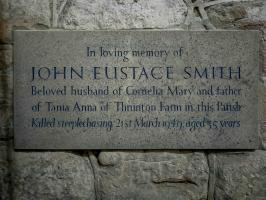
21st March 1949. Memorial at St Bartholomew's Church, Whittingham [Map] to Captain John Eustace Smith who died steeplechasing riding Dancing Sun in a chase at Catterick on March 19, 1949. A farmer, he came from a Northumberland farming family. He was invalided from the Northumberland Hussars early in the war. He left a wife and a daughter. Possibly the John Eustace-Smith who rode in the 1947 and 1948 Grand Nationals on Ulster Monarch and Brighter Sandy respectively.
A notice from the Berwick Advertiser, Thursday 31st March 1949:
MEMORIAL SERVICE
A memorial service for Captain John Eustace Smith, the well-known amateur jockey, who died after an injury at Catterick races, was held at St. Bartholomews Church, Whittingham. The Rev. P. G. Forman, Archdeacon of Lindisfame, assisted by the Rev. G. Henderson, Vicar of Whittingham, conducted the service. Included among the mourners were. The Duke of Northumberland [aged 34]; Capt. R. Carr Ellison; Major A. S. C. Brown; Mrs J. G. G. Rea; Lord Joicey, Colonel R. Taylor, Major and Mrs A. C. Straker. Colonel J. W. Sale and Mr E. F. Collingwood.
On 21st March 1977 William Arthur Henry Cavendish-Bentinck 7th Duke Portland [aged 84] died. He was buried at St Winifred's Church, Holbeck. His third cousin Ferdinand [aged 87] succeeded 8th Duke Portland, 9th Earl of Portland. Baron Bolsover of Bolsover in Derbyshire extinct.
The heir to the Duke's titles was a distant cousin. Rather than allow the entailed estates to pass with the titles, the Duke arranged to break the entails and thus enrich his own daughters. The family seat of Welbeck Abbey [Map] passed to his elder daughter, Lady Anne [aged 60], who never married; upon her death, it passed to the son of her deceased younger sister, Lady Margaret, who had died in 1955
On 21st March 1227 King Charles Capet of Sicily was born to King Louis VIII of France and Blanche Ivrea Queen Consort France [aged 39]. He a great grandson of King Henry "Curtmantle" II of England. He married (1) 31st January 1246 his half third cousin Beatrice Provence Queen Consort Sicily, daughter of Raymond IV Count Provence and Beatrice Savoy Countess Provence, and had issue (2) November 1268 his third cousin twice removed Margaret Burgundy Queen Consort Sicily.
On 21st March 1316 Isabel Verdun Baroness Ferrers Groby was born to Theobald Verdun 2nd Lord Verdun [aged 37] and Elizabeth Clare Lady Verdun [aged 20] at Amesbury, Wiltshire [Map]. She a great granddaughter of King Edward I of England. She married before 28th February 1333 her fourth cousin once removed Henry Ferrers 2nd Baron Ferrers of Groby, son of William Ferrers 1st Baron Ferrers of Groby and Ellen or Margaret Segrave Baroness Ferrers Groby, and had issue.
On 21st March 1425 Henry Beauchamp 1st Duke Warwick was born to Richard Beauchamp 13th Earl Warwick [aged 43] and Isabel Despencer Countess Warwick and Worcester [aged 24] at Hanley Castle, Worcestershire. He a great x 2 grandson of King Edward III of England. He married 1434 his third cousin Cecily Neville Duchess Warwick, daughter of Richard Neville Earl Salisbury and Alice Montagu 5th Countess of Salisbury, and had issue.
On 21st March 1501 Elizabeth Braye was born to Edmund Braye 1st Baron Braye [aged 17] and Jane Halwell Baroness Bray. She married in or before 1539 Ralph Verney and had issue.
On 21st March 1501 Anne Braye Baroness Cobham was born to Edmund Braye 1st Baron Braye [aged 17] and Jane Halwell Baroness Bray at Eaton Bray, Bedfordshire. She married 1517 George Brooke 9th Baron Cobham, son of Thomas Brooke 8th Baron Cobham and Dorothy Heydon Baroness Cobham, and had issue.
On 21st March 1551 Maria Anna Wittelsbach was born to Albert V Wittelsbach V Duke Bavaria [aged 23] and Anna Habsburg Spain Duchess Bavaria [aged 22]. Coefficient of inbreeding 1.58%. She married 26th August 1571 her uncle Charles Habsburg Spain II Archduke Austria, son of Ferdinand I Holy Roman Emperor and Anne Jagiellon, and had issue.
On 21st March 1557 Anne Dacre Countess Arundel was born to Thomas Dacre 4th Baron Dacre Gilsland 8th Baron Greystoke [aged 30] and Elizabeth Leybourne Duchess Norfolk [aged 21] at Carlisle, Cumberland [Map]. She married 1571 her half third cousin once removed Philip Howard 13th or 20th Earl of Arundel, son of Thomas Howard 4th Duke of Norfolk and Mary Fitzalan Duchess Norfolk, and had issue.

On 17th March 1609 Elizabeth Hobart was born to Henry Hobart 1st Baronet [aged 49] and Dorothy Bell Lady Hobart. She was baptised at St Ann Blackfriars Church on 21st March 1609. She married 15th February 1632 John Lisle.
Abbot John Whethamstede’s Chronicle of the Abbey of St Albans
Abbot John Whethamstede's Register aka Chronicle of his second term at the Abbey of St Albans, 1451-1461, is a remarkable text that describes his first-hand experience of the beginning of the Wars of the Roses including the First and Second Battles of St Albans, 1455 and 1461, respectively, their cause, and their consequences, not least on the Abbey itself. His text also includes Loveday, Blore Heath, Northampton, the Act of Accord, Wakefield, and Towton, and ends with the Coronation of King Edward IV. In addition to the events of the Wars of the Roses, Abbot John, or his scribes who wrote the Chronicle, include details in the life of the Abbey such as charters, letters, land exchanges, visits by legates, and disputes, which provide a rich insight into the day-to-day life of the Abbey, and the challenges faced by its Abbot.
Available at Amazon in eBook and Paperback format.
On 21st March 1632 John Hotham 2nd Baronet was born to John Hotham [aged 22] and Frances Wray [aged 20]. He married 8th August 1650 Elizabeth Beaumont, daughter of Thomas Beaumont 1st Viscount of Swords and Elizabeth Sapcote, and had issue.
On 21st March 1635 Thomas Culpepper 2nd Baron Culpepper was born to John Culpepper 1st Baron Culpeper [aged 35] and Judith Culpeper [aged 29] in Hollingbourne, Kent.
On 21st March 1644 Walter Bagot 3rd Baronet was born to Edward Bagot 2nd Baronet [aged 27]. He married June 1670 Jane Salusbury and had issue.
On 21st March 1652 Piers Butler 1st Earl Newcastle was born to Edward Butler 2nd Viscount Galmoye [aged 25]. He married 3rd April 1695 Henrietta Fitzjames Countess Newcastle, daughter of King James II of England Scotland and Ireland and Anne Hyde Duchess of York.
On 21st March 1661 Philip Musgrave was born to Christopher Musgrave 4th Baronet [aged 29] and Mary Cogan. He married before 25th December 1688 Mary Legge, daughter of George Legge 1st Baron Dartmouth and Barbara Archbold Baroness Dartmouth, and had issue.
On 21st March 1679 Benedict Calvert 4th Baron Baltimore was born to Charles Calvert 3rd Baron Baltimore [aged 41] and Jane Lowe Baroness Baltimore [aged 35]. He married 2nd January 1699 Charlotte Lee Baroness Baltimore, daughter of Edward Lee 1st Earl Lichfield and Charlotte Fitzroy Countess Lichfield, and had issue.
On 21st March 1724 John Bulkeley Coventry was born to William Coventry 5th Earl Coventry [aged 48] and Elizabeth Allen Countess Coventry. He was initially educated at Winchester College from 1731 and later matriculated at University College, Oxford, as did each of his brothers, in 1740, aged 16.
On 21st March 1728 Alexander Maitland 1st Baronet was born.
On 21st March 1756 Hugh Bateman 1st Baronet was born to Richard Bateman of Hartington Hall [aged 38] and Catherine Fitzherbert.
On 21st March 1780 Charlotte Layard Countess Lindsey was born to Charles Peter Layard [aged 31]. She married (1) 1809 Albermarle Bertie 9th Earl Lindsey and had issue (2) in or before 1821 Reverend William Peter Pegus and had issue.
On 21st March 1785 Robert Haldane-Duncan 1st Earl of Camperdown was born to Adam Duncan 1st Viscount Duncan [aged 53] and Henrietta Dundas. He married 8th June 1805 Janet Dalrymple.


The Deeds of the Dukes of Normandy
The Gesta Normannorum Ducum [The Deeds of the Dukes of Normandy] is a landmark medieval chronicle tracing the rise and fall of the Norman dynasty from its early roots through the pivotal events surrounding the Norman Conquest of England. Originally penned in Latin by the monk William of Jumièges shortly before 1060 and later expanded at the behest of William the Conqueror, the work chronicles the deeds, politics, battles, and leadership of the Norman dukes, especially William’s own claim to the English throne. The narrative combines earlier historical sources with firsthand information and oral testimony to present an authoritative account of Normandy’s transformation from a Viking settlement into one of medieval Europe’s most powerful realms. William’s history emphasizes the legitimacy, military prowess, and governance of the Norman line, framing their expansion, including the conquest of England, as both divinely sanctioned and noble in purpose. Later chroniclers such as Orderic Vitalis and Robert of Torigni continued the history, extending the coverage into the 12th century, providing broader context on ducal rule and its impact. Today this classic work remains a foundational source for understanding Norman identity, medieval statesmanship, and the historical forces that reshaped England and Western Europe between 800AD and 1100AD.
Available at Amazon in eBook and Paperback format.
On 21st March 1788 Edward Methuen Irby was born to Frederick Irby 2nd Baron Boston [aged 38] and Christian Methuen.
On 21st March 1793 Andrew Agnew 7th Baronet was born to Andrew Agnew.
On 21st March 1801 Reverend Miles Stapleton was born to Thomas Stapleton 12th Baron Despencer [aged 34] and Elizabeth Eliot Baroness Despencer [aged 43]. He married 29th December 1820 Anne Byam Kerby and had issue.
On 21st March 1807 Amelia Fitz-Clarence Viscountess Falkland was born illegitimately to King William IV of the United Kingdom [aged 41] and Dorothea Bland aka "Mrs Jordan" [aged 45].
On 21st March 1812 Theresa Stourton Baroness Arundel Wardour was born to William Joseph Stourton 18th Baron Stourton [aged 35]. She married 19th June 1838 Henry Benedict Arundell 11th Baron Arundel, son of James Everard Arundell 9th Baron Arundel and Mary Christina Arundell Baroness Arundel Wardour, and had issue.
On 21st March 1817 Stephen Fox-Strangways was born to Henry Fox-Strangways 3rd Earl of Ilchester [aged 30] and Caroline Leonora Murray Countess Ilchester.
On 21st March 1822 Jacob Henry Delaval Astley 17th Baron Hastings was born to Jacob Astley 16th Baron Hastings [aged 24] and Georgiana Carolina Dashwood Lady Astley [aged 26].


On 21st March 1835 Lieutenant Colonel George Henry Grey was born to George Grey 2nd Baronet [aged 35] and Anne Sophia Ryder Lady Grey [aged 29]. He married before 11th December 1874 Harriet Jane Pearson and had issue.
On 21st March 1840 Gertrude Frances Chetwynd-Talbot Countess Pembroke and Montgomery was born to Henry John Chetwynd-Talbot 3rd Earl Talbot 18th Earl of Shrewsbury [aged 36] and Sarah Elizabeth Beresford Countess Talbot Shrewsbury Waterford [aged 32]. She married 8th May 1877 George Robert Charles Herbert 13th Earl Pembroke 10th Earl Montgomery, son of Sidney Herbert 1st Baron Herbert Lea.


On 21st March 1843 Robert Boughey 7th Baronet was born to Thomas Fletcher Fenton Boughey 3rd Baronet [aged 34].
The True Chronicles of Jean le Bel Volume 1 Chapters 1-60 1307-1342
The True Chronicles of Jean le Bel offer one of the most vivid and immediate accounts of 14th-century Europe, written by a knight who lived through the events he describes, and experienced some of them first hand. Covering the early decades of the Hundred Years’ War, this remarkable chronicle follows the campaigns of Edward III of England, the politics of France and the Low Countries, and the shifting alliances that shaped medieval warfare. Unlike later historians, Jean le Bel writes with a strong sense of eyewitness authenticity, drawing on personal experience and the testimony of fellow soldiers. His narrative captures not only battles and sieges, but also the realities of military life, diplomacy, and the ideals of chivalry that governed noble society. A key source for Jean Froissart, Le Bel’s chronicle stands on its own as a compelling and insightful work, at once historical record and literary achievement. This translation builds on the 1905 edition published in French by Jules Viard, adding extensive translations from other sources Rymer's Fœdera, the Chronicles of Adam Murimuth, William Nangis, Walter of Guisborough, a Bourgeois of Valenciennes, Geoffrey le Baker of Swinbroke and Richard Lescot to enrich the original text and Viard's notes.
Available at Amazon in eBook and Paperback format.
On 21st March 1849 John Augustus Grey 7th Baron Walsingham was born to Thomas Grey 5th Baron Walsingham [aged 44] and Emily Julia Thellusson Baroness Walsingham [aged 31].
On 21st March 1853 Lionel Gascoyne-Cecil was born to James Brownlow William Gascoyne-Cecil 2nd Marquess Salisbury [aged 61] and Mary Catherine Sackville-West Marchioness Salisbury [aged 28].
On 21st March 1857 Charles Lamb 4th Baronet was born to Charles Lamb.
On 21st March 1869 Gerald Wellesley Liddell 6th Baron Ravensworth was born to Arthur Thomas Liddell 5th Baron Ravensworth [aged 31] and Sophia Harriett Waller Baroness Ravensworth. He married 11th October 1899 Isolda Blanche Prideaux-Brune Baroness Ravensworth and had issue.
On 21st March 1875 Nora Maitland Lady Fitzherbert was born to Frederick Maitland 13th Earl of Lauderdale [aged 34]. She married 24th October 1889 William FitzHerbert 7th Baronet, son of Richard Fitzherbert 5th Baronet and Mary Anne Arkwright Lady Fitzherbert.
On 21st March 1887 Eustace Sutherland Campbell Percy 1st Baron Percy Newcastle on Tyne was born to Henry George Percy 7th Duke Northumberland [aged 40] and Edith Campbell Duchess Northumberland [aged 37].
On 21st March 1898 Maynard Greville was born to Francis Greville 5th Earl Warwick 5th Earl Brooke [aged 45] and Frances Evelyn "Daisy" Maynard Countess Warwick [aged 36]. Some sources suggest his father was Joseph Frederick Laycock [aged 30].


On 21st March 1926 Anthony Fitz-Clarence 7th Earl of Munster was born to Edward Fitz-Clarence 6th Earl of Munster [aged 26] and Monica Sheila Grayson. He a great x 3 grandson of King William IV of the United Kingdom. He married 28th July 1949 Louise Delvigne Countess Munster.
On 21st March 1152 the marriage of Louis VII King of the Franks [aged 32] and Eleanor of Aquitaine Queen Consort Franks and England [aged 30] was dissolved by Hugh Toucy Archbishop of Sens at the Château de Beaugency on the grounds of consanguinity. Both Louis and Eleanor were present as were the Archbishops of Rouen and Bordeaux. Samson Mauvoison Archbishop of Reims acted on behalf of Eleanor. In dissolving the marriage Louis lost control of the Duchy of Aquitaine which was to have far reaching consequences for the next three centuries.
On 21st March 1504 Louis Bourbon Prince of La Roche sur Yon [aged 31] and Louise Bourbon Duchess of Monpensier [aged 22] were married. He the son of John Bourbon VIII Count Vendôme and Isabelle Beauvau Countess Vendôme. They were fourth cousin once removed.
On 21st March 1720 Richard Boyle 3rd Earl Burlington [aged 25] and Dorothy Savile Countess Burlington [aged 21] were married. She by marriage Countess Burlington. She the daughter of William Savile 2nd Marquess Halifax and Mary Finch Duchess Roxburghe [aged 43]. He the son of Charles Boyle 2nd Earl Burlington and Juliana Noel Countess Burlington [aged 48]. They were fourth cousin once removed.


Annals of the six Kings of England by Nicholas Trivet
Translation of the Annals of the Six Kings of England by that traces the rise and rule of the Angevin aka Plantagenet dynasty from the mid-12th to early 14th century. Written by the Dominican scholar Nicholas Trivet, the work offers a vivid account of English history from the reign of King Stephen through to the death of King Edward I, blending political narrative with moral reflection. Covering the reigns of six monarchs—from Stephen to Edward I—the chronicle explores royal authority, rebellion, war, and the shifting balance between crown, church, and nobility. Trivet provides detailed insight into defining moments such as baronial conflicts, Anglo-French rivalry, and the consolidation of royal power under Edward I, whose reign he describes with particular immediacy. The Annals combines careful year-by-year reporting with thoughtful interpretation, presenting history not merely as a sequence of events but as a moral and political lesson. Ideal for readers interested in medieval history, kingship, and the origins of the English state, this chronicle remains a valuable and accessible window into the turbulent world of the Plantagenet kings.
Available at Amazon in eBook and Paperback format.
On 21st March 1760 John Roper [aged 25] and Anna Gabriella Head were married. A Marriage of Two Sets of Siblings; her sister Maria Wilhelmina Head had previously married his brother Henry Roper 11th Baron Teynham [aged 26]. Further, their two younger brothers Francis Roper [aged 22] and Philip Roper Roper [aged 20] also married siblings Mary Lyttelton [aged 26] and Barbara Lyttelton respectively.
On 21st March 1761 Bennet Sherard 3rd Earl Harborough [aged 51] and Margaret Hill Countess Harborough [aged 31] were married at St Martin in the Fields Church [Map]. She by marriage Countess Harborough. He the son of Philip Sherard 2nd Earl Harborough and Anne Pedley Countess Harborough.
On 21st March 1766 Philip Roper Roper [aged 26] and Barbara Lyttelton were married. A Marriage of Two Sets of Siblings; her sister Mary Lyttelton [aged 32] was previously married to his brother Francis Roper [aged 28]. Further, their two older brothers John Roper [aged 31] and Henry Roper 11th Baron Teynham [aged 32] also married siblings Anna Gabriella Head and Maria Wilhelmina Head respectively.
On 21st March 1769 Duke Ernest of Saxe Coburg Altenburg [aged 24] and Charlotte Saxe Meiningen Duchess Saxe Gotha Altenburg [aged 17] were married at Meiningen. She by marriage Duchess Saxe Gotha Altenburg. He the son of Duke Frederick III of Saxe Coburg Altenburg III [aged 69] and Luise Dorothea Saxe Meiningen Duchess Saxe Gotha Altenburg. They were first cousin once removed.

On 21st March 1772 William Douglas 4th Baronet [aged 42] and Grace d William Johnstone Lady Kelhead were married. She by marriage Lady Kelhead.

On 21st March 1801 George Howard 6th Earl Carlisle [aged 27] and Georgiana Cavendish Countess Carlisle [aged 17] were married. She the daughter of William Cavendish 5th Duke Devonshire [aged 53] and Georgiana Spencer Duchess Devonshire [aged 43]. He the son of Frederick Howard 5th Earl Carlisle [aged 52] and Margaret Caroline Leveson-Gower Countess Carlisle. They were fourth cousins.
On 21st March 1809 Bishop Edward Grey [aged 26] and Charlotte Elizabeth Croft were married. He the son of Charles Grey 1st Earl Grey and Elizabeth Grey Countess Grey [aged 65].
On 21st March 1854 Rowland Winn 1st Baron St Oswald [aged 34] and Harriet Dumaresq Baroness St Owsald were married.
On 21st March 1882 Henry Conyngham 4th Marquess Conyngham [aged 24] and Frances Elizabeth Sarah Eveleigh-de-Moleyns Marchioness Conyngham were married. He the son of George Henry Conyngham 3rd Marquess Conyngham [aged 57] and Jane St Maur Blanche Stanhope Marchioness Conyngham [aged 48].
On 21st March 1938 Charles Beauclerk 13th Duke St Albans [aged 22] and Nathalie Chatham Walker were married.
On 21st March 1076 Robert I Duke Burgundy [aged 65] died. His grandson Hugh [aged 19] succeeded I Duke Burgundy.
On 21st March 1306 Robert II Duke Burgundy [aged 58] died. His son Hugh [aged 24] succeeded V Duke Burgundy.
On 21st March 1540 John de Vere 15th Earl of Oxford [aged 69] died. His son John [aged 24] succeeded 16th Earl of Oxford. Dorothy Neville Countess of Oxford by marriage Countess of Oxford.
On 21st March 1556 Archbishop Thomas Cranmer [aged 66] was burned at the stake at Oxford, Oxfordshire [Map].
On 21st March 1656 James Ussher [aged 75] died at the house of Elizabeth Howard Countess Peterborough [aged 53] in Reigate, Surrey [Map].
On 21st March 1688 Bishop Samuel Parker [aged 48] died at Magdalen College, Oxford University.
Annals of the six Kings of England by Nicholas Trivet
Translation of the Annals of the Six Kings of England by that traces the rise and rule of the Angevin aka Plantagenet dynasty from the mid-12th to early 14th century. Written by the Dominican scholar Nicholas Trivet, the work offers a vivid account of English history from the reign of King Stephen through to the death of King Edward I, blending political narrative with moral reflection. Covering the reigns of six monarchs—from Stephen to Edward I—the chronicle explores royal authority, rebellion, war, and the shifting balance between crown, church, and nobility. Trivet provides detailed insight into defining moments such as baronial conflicts, Anglo-French rivalry, and the consolidation of royal power under Edward I, whose reign he describes with particular immediacy. The Annals combines careful year-by-year reporting with thoughtful interpretation, presenting history not merely as a sequence of events but as a moral and political lesson. Ideal for readers interested in medieval history, kingship, and the origins of the English state, this chronicle remains a valuable and accessible window into the turbulent world of the Plantagenet kings.
Available at Amazon in eBook and Paperback format.
On 14th March 1689 Joseph Alston 2nd Baronet [aged 49] died. He was buried 21st March 1689. His son Joseph [aged 24] succeeded 3rd Baronet Alston of Chelsea.
On 21st March 1721 Herbert Powell 2nd Baronet [aged 21] died unmarried. Baronet Powell of Broadway in Carmarthenshire extinct.
On 21st March 1750 Elizabeth Wentworth died.
On 21st March 1751 Baptist Noel 4th Earl Gainsborough [aged 43] died. His son Baptist [aged 11] succeeded 5th Earl Gainsborough, 8th Viscount Campden, 8th Baron Hicks of Ilmington in Warwickshire.
On 21st March 1756 James Wemyss 5th Earl of Wemyss [aged 56] died. His son David [aged 34] de jure 6th Earl Wemyss since he head been attainted around 1748.
On 21st March 1757 Henry Bowes Howard 4th Earl Berkshire 11th Earl Suffolk [aged 71] died. He was buried at All Saints Church, Charlton-All-Saints [Map]. His grandson Henry [aged 17] succeeded 12th Earl Suffolk, 5th Earl Berkshire, 5th Viscount Andover in Hampshire, 5th Baron Howard of Charlton in Wiltshire.
On 21st March 1770 John Dryden 7th Baronet died. Baronet Dryden of Canons Ashby in Northamptonshire extinct.
On 21st March 1772 Henrietta Dashwood Lady Sebright [aged 87] died.

On 21st March 1783 Charles Hervey [aged 79] died.

On 21st March 1797 Charles Fitzroy 1st Baron Southampton [aged 59] died at his home on Stanhope Street. His son George [aged 35] succeeded 2nd Baron Southampton.
Adam Murimuth's Continuation and Robert of Avesbury’s 'The Wonderful Deeds of King Edward III'
This volume brings together two of the most important contemporary chronicles for the reign of Edward III and the opening phases of the Hundred Years’ War. Written in Latin by English clerical observers, these texts provide a vivid and authoritative window into the political, diplomatic, and military history of fourteenth-century England and its continental ambitions. Adam Murimuth Continuatio's Chronicarum continues an earlier chronicle into the mid-fourteenth century, offering concise but valuable notices on royal policy, foreign relations, and ecclesiastical affairs. Its annalistic structure makes it especially useful for establishing chronology and tracing the development of events year by year. Complementing it, Robert of Avesbury’s De gestis mirabilibus regis Edwardi tertii is a rich documentary chronicle preserving letters, treaties, and official records alongside narrative passages. It is an indispensable source for understanding Edward III’s claim to the French crown, the conduct of war, and the mechanisms of medieval diplomacy. Together, these works offer scholars, students, and enthusiasts a reliable and unembellished account of a transformative period in English and European history. Essential for anyone interested in medieval chronicles, the Hundred Years’ War, or the reign of Edward III.
Available at Amazon in eBook and Paperback format.
On 21st March 1799 Mary Leslie Countess Portmore [aged 45] died.
On 21st March 1809 Katherine Lowther Duchess of Bolton [aged 73] died.
On 21st March 1810 Juliana Musgrave Lady Langham died.
On 21st March 1810 Charles Cave 8th Baronet [aged 63] died unmarried. His second cousin William [aged 45] succeeded 9th Baronet Cave of Stanford in Northamptonshire. Louisa Wilmot Lady Cave [aged 39] by marriage Lady Cave of Stanford in Northamptonshire.

On 21st March 1820 Assheton Curzon 1st Viscount Curzon [aged 90] died. His grandson Richard [aged 23] succeeded 2nd Viscount Curzon of Penn in Buckinghamshire.

On 21st March 1822 Henry Charles Englefield 7th Baronet [aged 70] died unmarried. Baronet Englefield of Wootton Bassett in Wiltshire extinct.
On 21st March 1843 Robert Southey [aged 68] died.
On 21st March 1851 Thomas Brand 20th Baron Dacre 19th Baron Multon [aged 76] died without issue. His brother Henry [aged 73] succeeded 21st Baron Dacre Gilsland, 20th Baron Multon of Gilsland.
On 21st March 1852 Marie Sophie Hesse-Kassel Queen Consort Denmark and Norway [aged 84] died.
On 21st March 1856 Hyde Parker 8th Baronet [aged 71] died. His half first cousin once removed William [aged 29] succeeded 9th Baronet Parker of Melford Hall in Suffolk.
On 21st March 1860 Charles Montolieu Lamb 2nd Baronet [aged 74] died. His grandson Archibald [aged 14] succeeded 3rd Baronet Lamb of Burghfield.
The Deeds of the Dukes of Normandy
The Gesta Normannorum Ducum [The Deeds of the Dukes of Normandy] is a landmark medieval chronicle tracing the rise and fall of the Norman dynasty from its early roots through the pivotal events surrounding the Norman Conquest of England. Originally penned in Latin by the monk William of Jumièges shortly before 1060 and later expanded at the behest of William the Conqueror, the work chronicles the deeds, politics, battles, and leadership of the Norman dukes, especially William’s own claim to the English throne. The narrative combines earlier historical sources with firsthand information and oral testimony to present an authoritative account of Normandy’s transformation from a Viking settlement into one of medieval Europe’s most powerful realms. William’s history emphasizes the legitimacy, military prowess, and governance of the Norman line, framing their expansion, including the conquest of England, as both divinely sanctioned and noble in purpose. Later chroniclers such as Orderic Vitalis and Robert of Torigni continued the history, extending the coverage into the 12th century, providing broader context on ducal rule and its impact. Today this classic work remains a foundational source for understanding Norman identity, medieval statesmanship, and the historical forces that reshaped England and Western Europe between 800AD and 1100AD.
Available at Amazon in eBook and Paperback format.
On 21st March 1869 John Hadley D'Oyly 8th Baronet [aged 74] died. His son Charles [aged 47] succeeded 9th Baronet D'Oyly of Shottisham in Suffolk.
On 21st March 1877 George Bertie 10th Earl Lindsey [aged 62] died without issue. His brother Montague [aged 61] succeeded 11th Earl Lindsey. Felicia Elizabetha Welby Countess Lindsey [aged 42] by marriage Countess Lindsey.
On 21st March 1895 William Edmund de la Pole 9th Baronet [aged 78] died. His son Edmund [aged 51] succeeded 10th Baronet Pole of Shute House in Devon.
On 21st March 1929 John Augustus Grey 7th Baron Walsingham [aged 80] died. His son George [aged 44] succeeded 8th Baron Walsingham of Walsingham in Norfolk.
On 21st March 1939 Gerald Gibbs 3rd Baron Aldenham [aged 60] died. His first cousin Walter [aged 50] succeeded 4th Baron Aldenham of Aldenham in Hertfordshire. Beatrix Elinor Paul Baroness Aldenham and Hunsdon [aged 48] by marriage Baroness Aldenham of Aldenham in Hertfordshire.
On 21st March 1942 Thomas Wodehouse Leigh 2nd Baron Newton [aged 85] died. His son Richard [aged 53] succeeded 3rd Baron Newton of Newton-in-Makerfield in Lancashire. Helen Meysey-Thompson Baroness Newton by marriage Baroness Newton of Newton-in-Makerfield in Lancashire.
On 21st March 1944 Reverend Hugh Smith-Marriott 9th Baronet [aged 75] died unmarried. His nephew Ralph [aged 43] succeeded 10th Baronet Smith of Sydling St Nicholas.
On 21st March 1957 Orlando Bridgeman 5th Earl Bradford [aged 83] died. His son Gerald [aged 45] succeeded 6th Earl Bradford, 6th Viscount Newport of Shropshire, 7th Baron Bradford in Shropshire, 11th Baronet Bridgeman of Great Lever in Lancashire. Mary Willoughby Montgomery Countess Bradford by marriage Countess Bradford.
On 21st March 1977 William Arthur Henry Cavendish-Bentinck 7th Duke Portland [aged 84] died. He was buried at St Winifred's Church, Holbeck. His third cousin Ferdinand [aged 87] succeeded 8th Duke Portland, 9th Earl of Portland. Baron Bolsover of Bolsover in Derbyshire extinct.
The heir to the Duke's titles was a distant cousin. Rather than allow the entailed estates to pass with the titles, the Duke arranged to break the entails and thus enrich his own daughters. The family seat of Welbeck Abbey [Map] passed to his elder daughter, Lady Anne [aged 60], who never married; upon her death, it passed to the son of her deceased younger sister, Lady Margaret, who had died in 1955
On 21st March 1991 John Edward Pelham 7th Earl of Yarborough [aged 70] died. His son Charles [aged 27] succeeded 8th Earl Yarborough, 9th Baron Yarborough.