

Extinct Baronetcies of England is in Baronetcies of England.
On 22nd August 1622 Henry Clere 1st Baronet [aged 24] died without surviving male issue. Baronet Clere of Ormesby in Norfolk extinct. He was buried at St Andrew's Church, Blickling [Map] where his inscription reads:
Here rests Henry Clere, Baronet, who married Meriel, daughter of Edmund Lord Mondeford, Knight of the Golden Knight, by whom he had an only daughter, Abigail, who died xxii. Augustus, Anno Domini Mdcxxii. of his age - - - - - - - - - - -.
Hic requiescit Henricus Clere Baronettus, qui Thalamo sibi Conjunxit, Merielem, Filiam Edmundi Domini Mondeford, Equitis Aurati, ex quâ habuit prolem Filiam unicam, Abigalem, obijt xxii. Augusti, Anno Domini Mdcxxii. Ætatis suæ - - - - - - - - - - -".
Around 1623 Claudius Forster 1st Baronet [aged 48] died without issue at Blanchland Abbey, Northumberland [Map]. He was buried at St Aidan's Church, Bamburgh [Map]. Baronet Forster of Bamburgh extinct. His brother John Forster [aged 46] inherited his estates including Blanchland Abbey, Northumberland [Map].
In 1624 Peter Courten 1st Baronet [aged 26] died. Baronet Courten of Addington in Worcestershire extinct.
In 1626 Thomas Mildmay 1st Baronet [aged 53] died. Baronet Mildmay of Moulsham extinct.
On 13th January 1628 Anthony Ashley 1st Baronet [aged 67] died. He was buried at Wimborne St Giles Church. Baronet Ashley of Wimborne St Giles in Dorset extinct.
On 18th February 1628 Thomas Harries aka Harris 1st Baronet [aged 78] died. Baronet Harris of Tong Castle in Shropshire extinct.

On 20th August 1628 Charles Morrison 1st Baronet [aged 41] died. Baronet Morrison of Cashiobury extinct. He was buried at St Marys Church, Watford where he has a monument by Nicholas Stone [aged 41]. Cassiobury House, Watford was inherited by his daughter Elizabeth Morrison Baroness Capell Hadham [aged 17] and her husband Arthur Capell 1st Baron Capell Hadham [aged 20].
On 18th October 1629 Baptist Hicks 1st Viscount Campden [aged 72] died. His son-in-law Edward Noel 2nd Viscount Campden [aged 47] succeeded 2nd Viscount Campden, 2nd Baron Hicks of Ilmington in Warwickshire. Baronet Hicks of Campden in Gloucestershire extinct. Juliana Hicks Viscountess Campden [aged 43] by marriage Viscountess Campden.
In 1630 John Anderson 1st Baronet died. Baronet Anderson of St Ives in Huntingdonshire extinct.
On 21st August 1631 Simon Bennett 1st Baronet [aged 47] died. Baronet Bennett of Bechampton extinct.
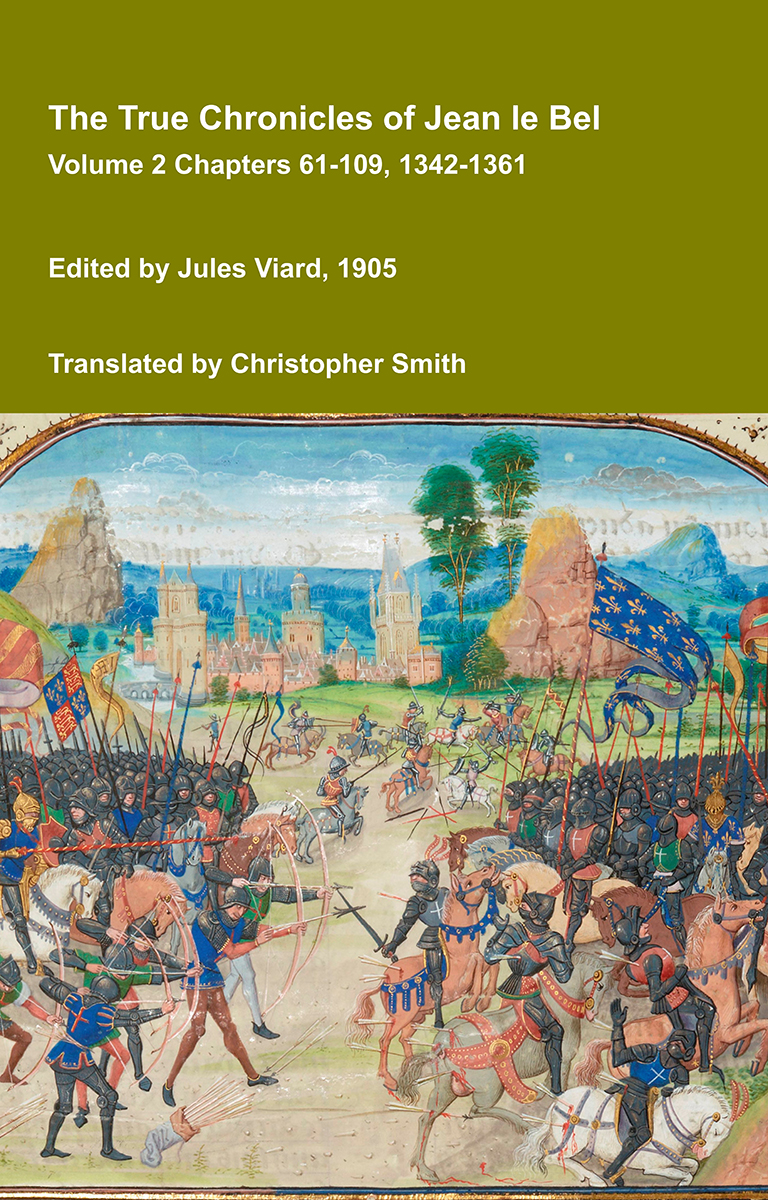
The True Chronicles of Jean le Bel Volume 2 Chapters 61-109 1342-1361
The Chronicle of Jean le Bel, Volume 2 continues one of the most important fourteenth-century accounts of the early Hundred Years’ War. Written by the Liège chronicler Jean le Bel, this vivid narrative follows the fortunes of Edward III, Jean II of France, the Black Prince, the great nobles of France and England, and the soldiers, captains and companies who shaped the conflict. This volume covers some of the most dramatic events of the period, including the battles of Crécy and Poitiers, the siege and capture of Calais, the captivity of King John, the rise of the Jacquerie, the turmoil in Paris under Étienne Marcel and Charles of Navarre, the devastation caused by the free companies, Edward III’s great campaign of 1359–1360, and the negotiations leading to the Treaty of Brétigny. Jean le Bel’s chronicle is especially valuable for its lively detail, its interest in chivalry, warfare, politics and reputation, and its influence on later chroniclers, most famously Froissart. This English translation presents the text in clear, readable British English while preserving the force and character of the original narrative. The translation includes extensive notes to help the reader better understand Jean le Bel's text. Volume 2 also includes translated appendices drawn from royal and administrative records, many from the English Record Office, which illuminate Edward III’s campaigns in Brittany, the siege and occupation of Calais, naval preparations, military finance, appointments, safe conducts and related affairs.
Available at Amazon in eBook and Paperback format.
On 12th December 1631 John Bamburgh 3rd Baronet [aged 18] died unmarried. Baronet Bamburgh of Howsham in Yorkshire extinct.
On 17th December 1640 Francis Foljambe 1st Baronet [aged 50] died at Bath, Somerset [Map]. Baronet Foljambe of Walton in Derbyshire extinct.
In 1642 William Hervey 1st Baron Hervey [aged 77] died. Baron Hervey of Kidbrooke in Kent, Baron Hervey of Rosse in County Wexford and Baronet Hervey of St Martin in the Fields extinct.
In 1643 Edward Fitton 2nd Baronet [aged 40] died of consumption at the Siege of Bristol without surviving issue. He was buried at the Church of St James, Gawsworth [Map]. Baronet Fitton of Gawsworth Hall extinct.
Originally a canopied monument what remains of the canopy is fixed to the wall. His daughter Margaret Fitton who predeceased him kneeling.
The inscription: Sacred to Memory. Among his most noble ancestors, Sir Edward Fitton of Gawsworth, Baronet, lies here, himself the greatest of them all. He at once completed and fulfilled the ancient house of the Fittons: the last, and yet in a sense the first, so the fates willed it. For he set the final crown upon the old glory of his lineage, gathering in himself alone all the virtues and praises of his forebears: grace, strength, and brilliance of body; honesty, faith, and uprightness of soul. This was his particular distinction: though nurtured in the lap of peace, he thundered more powerfully than any when engulfed in the fury of war, never having before known the field of Mars, he bore arms with unmatched brilliance. He was knighted as military tribune by King Charles I (that most blessed martyr), and remained a loyal companion through the king's dangers and distresses, bringing welcome support with no small forces. At Edgehill, on that bloody day, he served as commander of the royal artillery, with his cannons shaking the rebel ranks more than all others. Then at Banbury, Brentford, Reading, and in many other places, he served bravely with his fellow Cheshire men, never without praise or victory. Finally, at Bristol, but alas, though the city was captured and he was triumphant, he fell!
He married two wives. Both most excellent. The first was Jane, daughter of Sir John Trevor, knight, of Denbighshire, by whom he had one daughter, who, alas, was taken away in infancy. The second, second to none, was Felicia [aged 23], daughter of Ralph Sneyd, esquire, of Staffordshire, whom he left behind sorrowing, for their union was childless. He died at Bristol in the month of August, in the same year in which he was born: 1643, at the age of 43. There, in the Church of St Peter, his faithful heart, mind, and tender organs rest in a fragile urn. The remainder of his ashes, first deposited at Oxford due to the disturbances of war, after twenty years were at last, undamaged, untouched, moved here to Gawsworth, to the bosom of his most beloved home, according to his will. He named as his heir the Baron of Brandon, son of his sister. O posterity, celebrate his memory!
M.S. Inter nobilissimos majores ipse maximus D. Eduardus Fytton de Gawsworth, baronettus, heic situs est, qui antiquiss. Fyttonor' gentem clausit simul atq; implevit, ultimus primusq', sic fata voluere; nempe ut vetusto stirpis splendori coronidem sūmam imponeret, in se uno omnium virtutes atq; præconia congessit, decus, robur, fulgorem corporis, candorem, fidem, probitatem animi; hoc sibi proprium habuit, quod pacis gremio lactatus, belli furiis implicitus nemo grandius intonuit, nec rem Martis prius inexpertam præclarius gessit; a Carolo (beatiss. martyre) trib. mil. insignitus illius angustiis periculisq ; fidus comes adhæsit, nec spernendis copiis auxilium gratum tulit, primum ad Edghill, ubi die cruento tormentis regiis præfectus: omnibus magis tormentis rebelles tūrmas concussit, dein ad Banburiam, Brainford, Redding, atq: alibi sæpius, nunquam sine laude et lauro cum Cestriensibus suis fortissime meruit, demum Bristolliæ, sed urbe capta, atq; triumphans, Heu occidit!
Uxores duxit duas. lectissimas utrasq : primam Janam, fil D Joh. Trevor, in comit. Denbigh militis, e qua filiolam unicam sed imature ereptam suscepit; alteram, sed nulli secundam, Feliciam, filiam D Rad. Sneyd in agro Stafford, armig quam tristiorem, quia improlem, reliquit. Denatus Bristolliæ mense Aug, quo et natus An° D. MDCXLIII, ætat XLIIL ibi fidum cor, cerebrum, et mollia viscera in B Petri templo fragili urna conduntur; reliquus cinis Oxon. primo ob bellicas turbas depositus, inde demum post XX annos intercepedinem infractus, illæsus, heic in Gawsworthe su dilectiss sinu prout voluit, requiescit, Baronis de Brandon, Sororis filii, quem heredem instituit, Celebrate posteri.
Edward Fitton 2nd Baronet: In 1603 he was born to Edward Fitton 1st Baronet and Anne Barratt. Before 1631 Edward Fitton 2nd Baronet and Jane Trevor were married. After 1638 Edward Fitton 2nd Baronet and Felicia Sneyd were married.
Margaret Fitton: Around 1631 she was born to Edward Fitton 2nd Baronet and Jane Trevor. In 1638 Margaret Fitton died.


In February 1643 Robert Crane 1st Baronet [aged 57] died. Baronet Crane of Chilton in Suffolk extinct.
On or before 14th December 1643 Capell Bedell 1st Baronet [aged 41] died. Baronet Capell of Hamerton in Huntingdonshire extinct. He was buried on 14th December 1643.
On 6th October 1647 Richard Gurney 1st Baronet [aged 69] died. Baronet Gurney of London extinct.
On 3rd September 1648 Henry Boothby 1st Baronet [aged 56] died. Baronet Boothby of Clater Cote extinct.
On 26th October 1650 James Bellingham 2nd Baronet [aged 27] died. Baronet Bellingham of Hilsington extinct.
On 22nd January 1651 William Acton 1st Baronet [aged 81] died. Baronet Acton of the City of London extinct.
On 19th June 1652 Francis Cottingham 1st Baron Cottingham [aged 73] died at Valladolid [Map]. Baron Cottingham of Hanworth in Middlesex and Baronet Cottingham of Hanworth in Middlesex extinct.

On 21st December 1653 Francis Leigh 1st Earl Chichester [aged 55] died. Baronet Leigh of Newnham in Warwickshire, Baron Dunsmore of Dunsmore in Warwickshire extinct.
His son-in-law Thomas Wriothesley 4th Earl of Southampton 2nd Earl Chichester [aged 46] succeeded 2nd Earl Chichester.
In 1655 William Constable 1st Baronet [aged 75] died. Baronet Constable of Flamborough in Yorkshire extinct. He received a State Funeral when buried at Westminster Abbey [Map]. At the Restoration he body was exhumed and buried in a communal grave at St Margaret's Church, Westminster [Map].
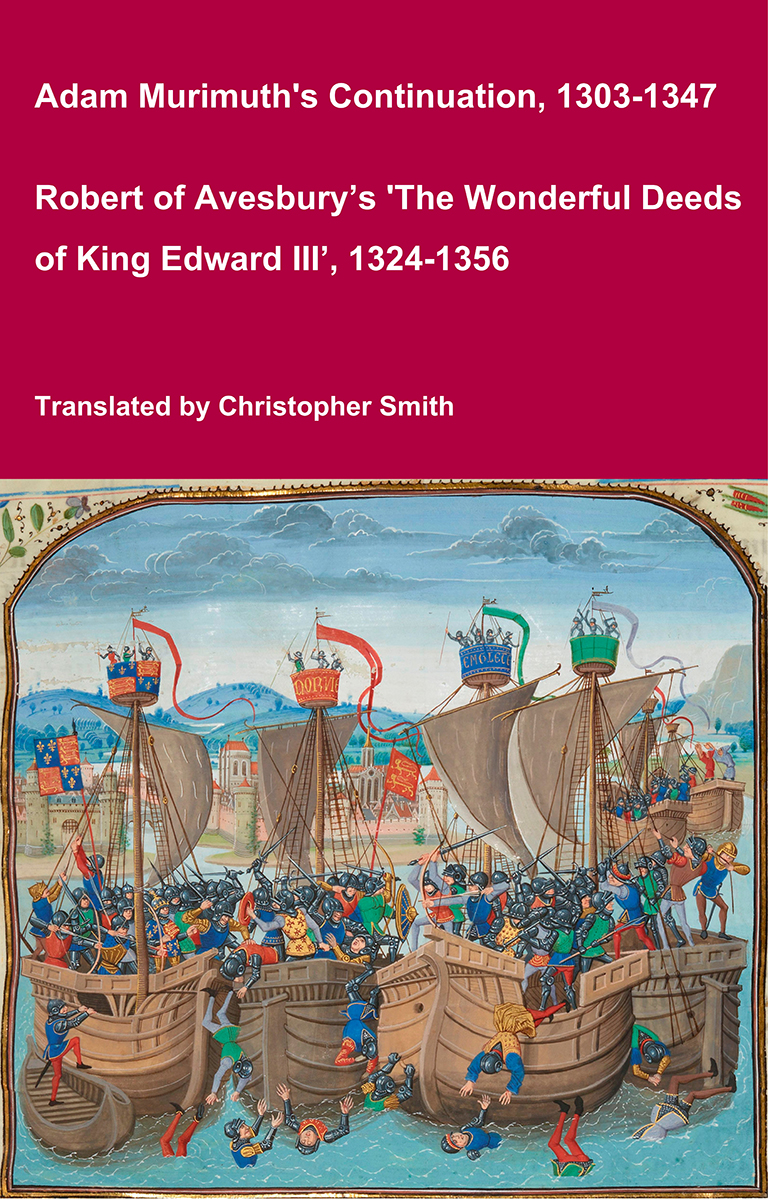
Adam Murimuth's Continuation and Robert of Avesbury’s 'The Wonderful Deeds of King Edward III'
This volume brings together two of the most important contemporary chronicles for the reign of Edward III and the opening phases of the Hundred Years’ War. Written in Latin by English clerical observers, these texts provide a vivid and authoritative window into the political, diplomatic, and military history of fourteenth-century England and its continental ambitions. Adam Murimuth Continuatio's Chronicarum continues an earlier chronicle into the mid-fourteenth century, offering concise but valuable notices on royal policy, foreign relations, and ecclesiastical affairs. Its annalistic structure makes it especially useful for establishing chronology and tracing the development of events year by year. Complementing it, Robert of Avesbury’s De gestis mirabilibus regis Edwardi tertii is a rich documentary chronicle preserving letters, treaties, and official records alongside narrative passages. It is an indispensable source for understanding Edward III’s claim to the French crown, the conduct of war, and the mechanisms of medieval diplomacy. Together, these works offer scholars, students, and enthusiasts a reliable and unembellished account of a transformative period in English and European history. Essential for anyone interested in medieval chronicles, the Hundred Years’ War, or the reign of Edward III.
Available at Amazon in eBook and Paperback format.

In 1657 Thomas Aylesbury 1st Baronet [aged 81] died. Baronet Aylesbury of London extinct.
On 8th October 1659 Robert Cholmondeley 1st Earl Leinster [aged 75] died. He was buried at the Chancel of St Oswald's Church, Malpas [Map]. Earl Leinster, Baron Cholmondley Wich Malbank in Cheshire, Viscount Cholmondeley of Kells in County Meath and Baronet Cholmondley of Cholmondeley extinct.
In April 1660 Richard Lee 2nd Baronet [aged 70] died. Baronet Lee of Langley extinct.
Before 21st February 1661 Thomas Beaumont's Baronetcy of Stoughton Grange was declared invalid since it has been created during the Interregnum by Oliver Cromwell.
Around 27th December 1663 Nicholas Gould 1st Baronet died. Baronet Gould of the City of London extinct.
In 1665 Thomas Hyde 2nd Baronet died. Baronet Hyde of Albury in Hertfordshire extinct
On or before 21st October 1665 Edward Mosley 2nd Baronet [aged 26] died. Baronet Mosley of Rolleston in Staffordshire extinct. He was buried at Didsbury on 21st October 1665. He left his estates to Edward Mosley [aged 46].
On 14th March 1666 William Jobson 2nd Baronet [aged 30] died without male issue at Heath. He was buried at Church of St Peter Kirkthorpe [Map]. Baronet Bolles extinct.
In August 1668 Richard Hastings [aged 58] died. Baronet Hastings of Redlinch in Somerset extinct.
On 10th August 1671 John Evelyn 1st Baronet [aged 38] died. Baronet Evelyn of Godstone extinct.
On 14th August 1671 John Lewis 1st Baronet [aged 56] died without male issue. Baronet Lewis of Ledstone extinct. His daughters Elizabeth Lewis Countess Huntingdon [aged 17] and Mary Lewis Countess Scarsdale [aged 13] inherited his estates. He and his wife Sarah Foote Lady Lewis [aged 43] were buried at All Saints Church, Ledsham [Map]. Hand On Skull. Sculpted by Thomas Cartwright [aged 36].
Elizabeth Lewis Countess Huntingdon: In 1654 she was born to John Lewis 1st Baronet and Sarah Foote Lady Lewis. John Evelyn's Diary. 24th June 1670. Came the Earl of Huntington and Countess, with the Lord Sherard, to visit us. On 19th February 1672 Theophilus Hastings 7th Earl Huntingdon and she were married. She by marriage Countess Huntingdon. He the son of Ferdinando Hastings 6th Earl Huntingdon and Lucy Davies Countess Huntingdon. In 1688 she died.
Mary Lewis Countess Scarsdale: In 1658 she was born to John Lewis 1st Baronet and Sarah Foote Lady Lewis. On 11th February 1672 Robert Leke 3rd Earl Scarsdale and she were married. He the son of Nicholas Leke 2nd Earl Scarsdale and Frances Rich Countess Scarsdale. On 27th January 1681 Nicholas Leke 2nd Earl Scarsdale died. His son Robert succeeded 3rd Earl Scarsdale, 3rd Baron Deincourt of Sutton, 3rd Baronet Leke of Sutton in Derbyshire. She by marriage Countess Scarsdale. In 1684 she died.


 Hastings Arms impaled
  Lewis Arms.

Unknown Arms impaled Lewis Arms.

On 9th January 1674 Thomas Brereton 2nd Baronet [aged 42] died. Baronet Brereton of Hanford in Cheshire extinct.
On 18th May 1678 James Bowyer 3rd and 1st Baronet [aged 33] surrendered the title of Baronet Bowyer of Leighthorne in Sussex; it isn't clear why he did so. On the same day he was created 1st Baronet Bowyer aka Goring of Highden in Sussex with the precedence of 23 July 1627 and with a special remainder to Henry Goring 2nd Baronet [aged 56] who subsequently succeeded; it isn't clear why the special remainder was included since there doesn't appear to be any relationship between James Bowyer and Henry Goring.
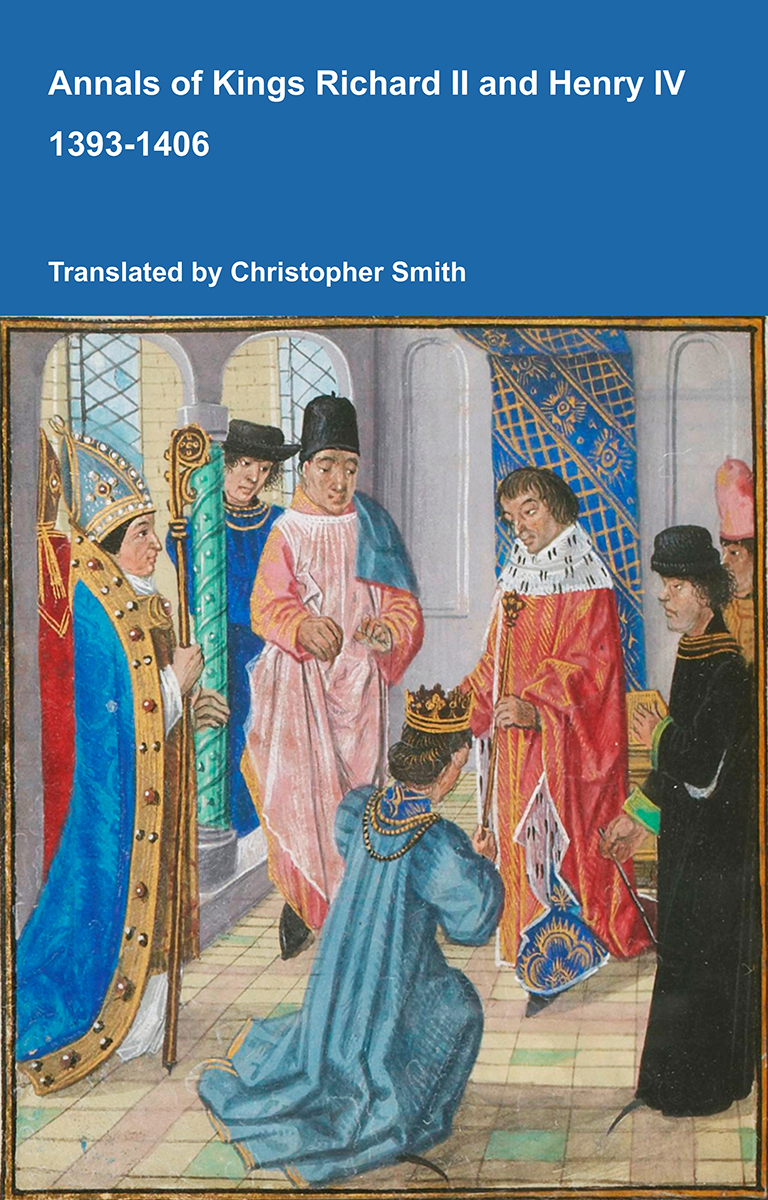
Annals of Kings Richard II and Henry IV 1393-1406
The Annals of Kings Richard II and Henry IV offers a vivid contemporary account of one of the most turbulent periods in late medieval England. Covering the reigns of Richard II and Henry IV, the chronicle records royal ceremonies, political conflict, rebellion, war, taxation, religious controversy, executions, popular unrest and remarkable portents. Its pages include a detailed description of Richard II’s coronation, the fall and deposition of the king, Henry IV’s seizure of the throne, the Percy rebellion, the execution of Archbishop Richard Scrope, the campaigns of Owain Glyndŵr, and England’s relations with Scotland, France, Portugal and Scandinavia. Alongside affairs of state, the annalist preserves reports of miracles, eclipses, prophecies, supernatural events and the experiences of ordinary townspeople, clergy, soldiers and travellers. Written from a monastic perspective, the work combines political observation with moral judgement, presenting victories and disasters as evidence of divine favour or punishment. At once a historical record and a reflection of medieval belief, the Annals provides an invaluable window into the challenges, ceremonies and conflicts of England at the turn of the fifteenth century.
Available at Amazon in eBook and Paperback format.
On 11th March 1679 John Covert 1st Baronet [aged 58] died. Baronet Covert of Slaugham in Sussex extinct. They had one son and four daughters.
On 24th November 1679 John "Old Sir John" Brownlow 1st Baronet [aged 89] died without issue. Baronet Brownlow of Belton in Lincolnshire extinct. He left Belton House [Map] to his great-nephew John Brownlow 3rd Baronet [aged 20] (grand-son of his brother William Brownlow 1st Baronet) and niece Alice Sherard Baroness Brownlow [aged 20] (grand-daughter of his sister Elizabeth Brownlow ) who had married three years before in 1676. He also left them an income of £9,000 per annum and £20,000 in cash. They immediately bought a townhouse in Southampton Square.


On 30th August 1680 Charles Leventhorpe 5th Baronet [aged 85] died unmarried. Baronet Leventhorpe of Shingey Hall in Hertfordshire extinct.
In 1681 Francis Leke 2nd Baronet died. Baronet Leke of Newark on Trent in Nottinghamshire extinct.
On 12th February 1683 Richard Browne 1st Baronet [aged 78] died at Charlton, Kent. He was buried at St. Baronet Browne of Deptford in Kent extinct.
In February 1684 Aston Cockayne 1st Baronet [aged 75] died in poverty. Baronet Cockayne of Ashbourne in Derbyshire extinct? Some sources describe his first cousin, once removed Caleb Cockayne as inheriting the title?
Before 20th November 1684 William Estcourt 3rd Baronet [aged 30] served as foreman of the jury which acquitted Edward Nosworthy [aged 46]. During the course of the celebrations that followed in the Globe Tavern, Fleet Street an altercation broke out between Henry St John 1st Viscount St John [aged 32] and Francis Stonehouse [aged 31]. William Estcourt 3rd Baronet was killed by either or both Henry St John 1st Viscount St John and Francis Stonehouse. Both were fined and pardoned. Baronet Estcourt of Newton in Wiltshire extinct.


In 1685 Thomas Bateman 1st Baronet [aged 63] died without issue. Baronet Bateman of How Hall in Norfolk extinct
On 6th December 1685 Edward Golding 3rd Baronet [aged 28] died. Baronet Golding of Colston Basssett in Nottinghamshire extinct.
In 1688 Michael Armine 3rd Baronet [aged 63] died. Baronet Armine of Osgodby South Kesteven Lincolnshire extinct.
On 13th October 1688 John Bright 1st Baronet [aged 68] died. He was buried at Saint Mary the Virgin Church, Badsworth. Baronet Bright of Badsworth in Yorkshire extinct. His estates were inherited by his daughter Catherine Bright [aged 23] and her husband Henry Liddell 3rd Baronet [aged 44].
Henrici Quinti, Angliæ Regis, Gesta, is a first-hand account of the Agincourt Campaign, and subsequent events to his death in 1422. The author of the first part was a Chaplain in King Henry's retinue who was present from King Henry's departure at Southampton in 1415, at the siege of Harfleur, the battle of Agincourt, and the celebrations on King Henry's return to London. The second part, by another writer, relates the events that took place including the negotiations at Troye, Henry's marriage and his death in 1422.
Available at Amazon in eBook and Paperback format.
On 9th January 1689 Hugh Cholmley 4th Baronet [aged 56] died without male issue. Baronet Cholmley of Whitby in Yorkshire extinct.
On 1st February 1689 John Borlase 2nd Baronet [aged 47] died unmarried. He was buried at Stratton Audley, Oxfordshire. Baronet Borlase of Bockmer in Buckinghamshire extinct. His estates were inherited by his nephew Borlase Warren [aged 12].
In 1690 Adam Browne 2nd Baronet [aged 64] died. Baronet Browne of Betchworth Castle in Surrey extinct since his son Ambrose Browne had predeceased him.
On 2nd May 1692 Edward Evelyn 1st Baronet [aged 66] died. Baronet Evelyn of Long Ditton in Surrey extinct.
In 1693 John Cutler 1st Baronet [aged 90] died without male issue. He was buried at St Margaret's Church, Westminster [Map]. Baronet Cutler of London extinct. His estates were inherited by his daughter Elizabeth Cutler Countess Radnor.
In 1694 Thomas Clifton 1st Baronet [aged 65] died. Baronet Clifton of Clifton in Lancashire extinct.
In 1695 Rochester Carr 5th Baronet died unmarried at Chancery Lane [Map]. Baronet Carr of Sleaford in Lincolnshire extinct.
On 5th July 1695 Henry North 2nd Baronet [aged 60] died unmarried. Baronet North of Mildenhall in Suffolk extinct. His nephew Thomas Hanmer 4th Baronet [aged 17], son of his sister Peregrina North, inherited his estates.
On 28th December 1695 William Barkham 3rd Baronet [aged 56] died. Baronet Barkham of South Acre in Norfolk extinct.
In 1696 Thomas Allin 2nd Baronet [aged 45] died. Baronet Allin of Blundeston in Suffolk extinct. His nephew Richard Anguish aka Allin 1st Baronet [aged 37] inherited his estates and changed his name from Anguish to Allin.
On 28th January 1697 John Fenwick 3rd Baronet [aged 52] was beheaded. He was buried at St Martin in the Fields Church [Map]. Baronet Fenwick of Fenwick in Northumberland extinct. He was the last person to be executed under an Act of Attainder.
Robert Burdett 3rd Baronet [aged 57] had spoken against the attainder in Parliament.
On 13th August 1697 Richard Earle 4th Baronet [aged 24] died unmarried. He was buried at St Michael's Church, Stragglethorpe [Map]. Baronet Earle of Stragglethorpe in Lincolnshire extinct.
William of Worcester's Chronicle of England
William of Worcester, born around 1415, and died around 1482 was secretary to John Fastolf, the renowned soldier of the Hundred Years War, during which time he collected documents, letters, and wrote a record of events. Following their return to England in 1440 William was witness to major events. Twice in his chronicle he uses the first person: 1. when writing about the murder of Thomas, 7th Baron Scales, in 1460, he writes '… and I saw him lying naked in the cemetery near the porch of the church of St. Mary Overie in Southwark …' and 2. describing King Edward IV's entry into London in 1461 he writes '… proclaimed that all the people themselves were to recognize and acknowledge Edward as king. I was present and heard this, and immediately went down with them into the city'. William’s Chronicle is rich in detail. It is the source of much information about the Wars of the Roses, including the term 'Diabolical Marriage' to describe the marriage of Queen Elizabeth Woodville’s brother John’s marriage to Katherine, Dowager Duchess of Norfolk, he aged twenty, she sixty-five or more, and the story about a paper crown being placed in mockery on the severed head of Richard, 3rd Duke of York.
Available at Amazon in eBook and Paperback format.
In 1698 George Darcy 2nd Baronet [aged 21] died. Baronet Darcy of St Osith's extinct.
In 1698 Gilbert Lord 3rd Baronet [aged 28] died without issue. Baronet Lort of Stackpole in Pembrokeshire extinct. His sister Elizabeth Lort [aged 48] and her husband Alexander Campbell 16th Thane of Cawdor inherited the estate in Stackpole.
In 1699 Robert Knyvet 2nd Baronet [aged 54] died without issue. Baronet Knyvet of Buckenham in Norfolk extinct.
In 1699 Richard Anderson 2nd Baronet [aged 64] died. Baronet Anderson of Penley in Hertfordshire extinct.
On 8th January 1699 John Morton 2nd Baronet [aged 71] died. Baronet Morton of Milbourne St Andrew in Dorset extinct.

On 18th October 1699 John Banks 1st Baronet [aged 72] died without surviving male issue. Baronet Banks of London extinct.
In October 1700 Samuel Grimston 3rd Baronet [aged 57] died. Baronet Grimston of Bradfield extinct. William Grimston 1st Viscount Grimston [aged 15] inherited the family estates and adopted the surname Grimston.
On 22nd January 1701 Henry Newton aka Puckering 3rd Baronet [aged 82] died without male issue. He was buried at St Mary's Church, Warwick [Map]. Baronet Newton aka Puckering of Charlton in Kent extinct.
On 8th June 1701 Thomas Cookes 2nd Baronet [aged 53] died. Baronet Cookes of Norgrove in Worcestershire extinct.


In 1702 William Bowyer 4th Baronet [aged 48] died. Baronet Bowyer of Knipersley in Staffordshire extinct.
The Deeds of the Dukes of Normandy
The Gesta Normannorum Ducum [The Deeds of the Dukes of Normandy] is a landmark medieval chronicle tracing the rise and fall of the Norman dynasty from its early roots through the pivotal events surrounding the Norman Conquest of England. Originally penned in Latin by the monk William of Jumièges shortly before 1060 and later expanded at the behest of William the Conqueror, the work chronicles the deeds, politics, battles, and leadership of the Norman dukes, especially William’s own claim to the English throne. The narrative combines earlier historical sources with firsthand information and oral testimony to present an authoritative account of Normandy’s transformation from a Viking settlement into one of medieval Europe’s most powerful realms. William’s history emphasizes the legitimacy, military prowess, and governance of the Norman line, framing their expansion, including the conquest of England, as both divinely sanctioned and noble in purpose. Later chroniclers such as Orderic Vitalis and Robert of Torigni continued the history, extending the coverage into the 12th century, providing broader context on ducal rule and its impact. Today this classic work remains a foundational source for understanding Norman identity, medieval statesmanship, and the historical forces that reshaped England and Western Europe between 800AD and 1100AD.
Available at Amazon in eBook and Paperback format.
In 1702 Thomas Beaumont 3rd Viscount Beaumont of Swords [aged 68] died. Viscount Beaumont of Swords and Baronet Beaumont of Cole Orton extinct.
On 8th May 1704 John Cordell 3rd Baronet [aged 26] died from a fall from a horse without issue. Baronet Cordell of Long Melford extinct.
On 8th January 1705 Peter Killigrew 2nd Baronet [aged 71] died. Baronet Killigrew of Arwennick in Cornwall extinct.
Around 1706 Thomas Kniveton 4th Baronet died. Baronet Kniveton of Mercaston in Derbyshire extinct.
In 1706 William Meux 3rd Baronet [aged 23] died. Baronet Meux of Kingston on the Isle of Wight extinct.
In 1706 Sackville Crowe 2nd Baronet [aged 69] died. Baronet Crowe of Llanherne in the Carmarthenshire extinct.
On or before 21st July 1706 William Duncombe 2nd Baronet [aged 48] died. He was buried on 21st July 1706. Baronet Duncombe of Tangley Park in Surrey extinct.
On 9th April 1709 Godfrey Copley 2nd Baronet [aged 56] died at Red Lion Square Holborn. Baronet Copley Sprotborough extinct.
On 31st December 1709 Thomas Littleton 3rd Baronet [aged 62] died without issue. Baronet Littleton of Stoke Milburgh in Suffolk extinct. His estates were inherited by Elizabeth Littleton.
Around 1710 Richard Hene 4th Baronet [aged 35] died. Baronet Hene of Winkfield in Berkshire extinct.
Adam Murimuth's Continuation and Robert of Avesbury’s 'The Wonderful Deeds of King Edward III'
This volume brings together two of the most important contemporary chronicles for the reign of Edward III and the opening phases of the Hundred Years’ War. Written in Latin by English clerical observers, these texts provide a vivid and authoritative window into the political, diplomatic, and military history of fourteenth-century England and its continental ambitions. Adam Murimuth Continuatio's Chronicarum continues an earlier chronicle into the mid-fourteenth century, offering concise but valuable notices on royal policy, foreign relations, and ecclesiastical affairs. Its annalistic structure makes it especially useful for establishing chronology and tracing the development of events year by year. Complementing it, Robert of Avesbury’s De gestis mirabilibus regis Edwardi tertii is a rich documentary chronicle preserving letters, treaties, and official records alongside narrative passages. It is an indispensable source for understanding Edward III’s claim to the French crown, the conduct of war, and the mechanisms of medieval diplomacy. Together, these works offer scholars, students, and enthusiasts a reliable and unembellished account of a transformative period in English and European history. Essential for anyone interested in medieval chronicles, the Hundred Years’ War, or the reign of Edward III.
Available at Amazon in eBook and Paperback format.
On 21st May 1710 Walter Long 2nd Baronet [aged 83] died unmarried at James Street Covent Garden. Baronet Long of Whaddon in Wiltshire extinct. His great-nephew Philip Parker 3rd Baronet [aged 28] inherited his estates and changed his name to Morley-Long.
On 27th August 1710 William Godolphin 1st Baronet [aged 70] died. Baronet Godolphin extinct.
On 12th February 1711 Edward Barkham 3rd Baronet died without issue. Baronet Barkham Waynflete extinct.
In December 1711 Humphrey Forster 2nd Baronet [aged 62] died. Baronet Forster of Aldermaston in Berkshire extinct.
The estate of Aldermaston devolved on Elizabeth, Baroness Stawell [aged 34], da. of his sister Elizabeth, by her first husband, William Pert. She d. in 1721. To its subsequent devolution, as given in Burke's Extinct Baronetage, may be added its purchase, in 1899, by Charles Keyser.
In 1712 Hele Hook 2nd Baronet [aged 47] died. Baronet Hooke of Flanchard in Surrey extinct.
After 4th May 1712 Nathaniel Barnardiston 4th Baronet [deceased] died. Baronet Barnardiston of Brightwell in Suffolk extinct.
On 19th May 1712 Henry Fletcher 3rd Baronet [aged 51] died unmarried and without issue having converted to a monk and lived at the English monastery of Douai in France where he was buried. Baronet Fletcher of Hutton le Forest in Cumberland extinct.

On 15th November 1712 Charles Mohun 4th Baron Mohun Okehampton [aged 37] duelled with James Hamilton Duke Hamilton, 1st Duke Brandon [aged 54] at Hyde Park [Map] over a legal dispute about the estate and inheritance of the late Earl Macclesfield. Mohun had married Charlotte Orby Baroness Mohun Okehampton grand-daughter of Charles Gerard 1st Earl Macclesfield. James Hamilton Duke Hamilton, 1st Duke Brandon had married Elizabeth Gerard Duchess Brandon [aged 32]. The two seconds, Macartney and Colonel Hamilton, were both charged as accessories to murder. Hamilton gave himself up, Macartney fled into exile in Hanover. Colonel Hamilton was found guilty of manslaughter.
James Hamilton Duke Hamilton, 1st Duke Brandon died from wounds received duelling. His son James [aged 9] succeeded 5th Duke Hamilton, 2nd Duke Brandon of Suffolk, 2nd Baron Dutton of Cheshire.
Charles Mohun 4th Baron Mohun Okehampton died from wounds received duelling; his father had also been killed in a duel. Baron Mohun Okehampton and Baronet Mohun of Boconnoc in Cornwall extinct.
On 29th November 1712 John Button 4th Baronet [aged 90] died. Baronet Button of Alton in Wiltshire extinct.
On 19th December 1712 John Berkeley 4th Viscount Fitzhardinge [aged 62] died at Windsor, Berkshire [Map]. Viscount Fitzhardinge of Berehaven in Kerry, Baronet Berkeley of Bruton in Somerset extinct. He was buried in Westminster Abbey [Map].
On or before 27th March 1713, the date he was buried at Westminster Abbey, Richard Maulever 5th Baronet [aged 24] died of smallpox. He was unmarried. Baronet Maulever of Allerton in Yorkshire extinct.
On 22nd October 1713 John Cropley 2nd Baronet [aged 50] died unmarried. Baronet Cropley of Clerkenwell in Middlesex extinct. He left an estate worth about £4,000 p.a. to Thomas Micklethwayte, described as a kinsman.
The Deeds of the Dukes of Normandy
The Gesta Normannorum Ducum [The Deeds of the Dukes of Normandy] is a landmark medieval chronicle tracing the rise and fall of the Norman dynasty from its early roots through the pivotal events surrounding the Norman Conquest of England. Originally penned in Latin by the monk William of Jumièges shortly before 1060 and later expanded at the behest of William the Conqueror, the work chronicles the deeds, politics, battles, and leadership of the Norman dukes, especially William’s own claim to the English throne. The narrative combines earlier historical sources with firsthand information and oral testimony to present an authoritative account of Normandy’s transformation from a Viking settlement into one of medieval Europe’s most powerful realms. William’s history emphasizes the legitimacy, military prowess, and governance of the Norman line, framing their expansion, including the conquest of England, as both divinely sanctioned and noble in purpose. Later chroniclers such as Orderic Vitalis and Robert of Torigni continued the history, extending the coverage into the 12th century, providing broader context on ducal rule and its impact. Today this classic work remains a foundational source for understanding Norman identity, medieval statesmanship, and the historical forces that reshaped England and Western Europe between 800AD and 1100AD.
Available at Amazon in eBook and Paperback format.
Around 1715 Charles Carteret 3rd Baronet [aged 36] died. Baronet Carteret of Saint Owen in Jersey extinct.
In 1716 Samuel Morland 2nd Baronet died. Baronet Morland of Sulhamstead Banister extinct.
In 1716 Cheeke Gerard 5th Baronet [aged 54] died. Baronet Gerard of Harrow on the Hill extinct.
On 4th September 1717 Henry Bendish 4th Baronet [aged 43] died. He was buried at St Mary's Church, Steeple Bumstead on 11th September 1717. Baronet Bendish of Steeple Bumstead in Essex extinct.
On 5th January 1718 William Myddelton 4th Baronet [aged 24] died unmarried. Baronet Myddelton of Chirk Castle extinct.

On 11th December 1718 John Germain 1st Baronet [aged 68] died. Baronet Germain of Westminster extinct. His wife survived him until 1769 when she left his and her etates to George Sackville aka Germain 1st Viscount Sackville [aged 2] who adopted the surname Germain.

On 16th July 1719 Philip Gell 3rd Baronet [aged 68] died without issue. He was buried at St Mary's Church, Wirksworth [Map]. Monument to Philip Gell 3rd Baronet. Baronet Gell of Hopton in Derbyshire extinct. His esates were inherited by his nephew John Gell son of William Eyre aka Gell and Philip's sister Katherine Gell who adopted the name Gell.
On 18th November 1719 Compton Felton 5th Baronet [aged 69] died. Baronet Felton of Playford in Suffolk extinct.
On or before 25th March 1720 Mark Cole 4th Baronet [aged 32] died. Baronet Cole of Brancepeth extinct.
On 7th July 1721 Tristram Dillington 5th Baronet [aged 43] died unmarried. Baronet Dillington of Knighton, Isle of Wight in Hampshire extinct.
On 30th July 1722 Thomas Modyford 5th Baronet [aged 43] died. Baronet Modyford of Lincoln's Inn extinct.
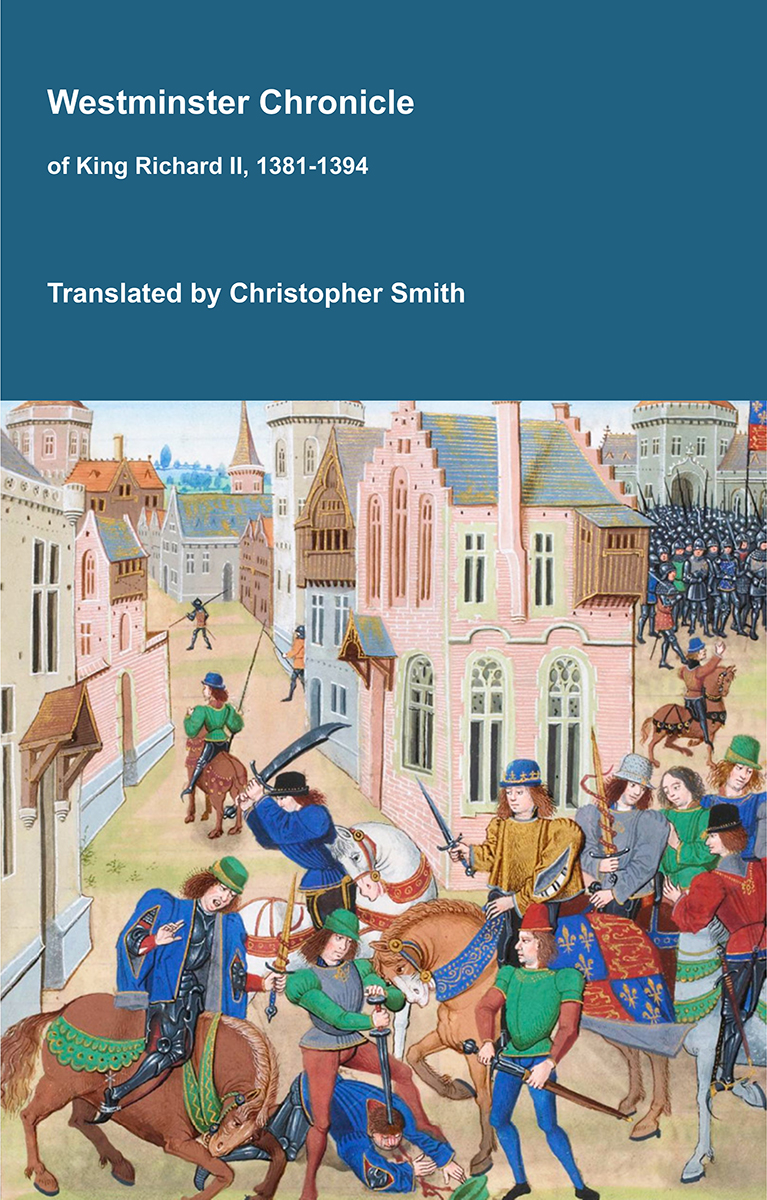
Westminster Chronicle of King Richard II, 1381-1394
The Westminster Chronicle is one of the most vivid and important narrative sources for the reign of Richard II. Written by an anonymous chronicler closely connected with Westminster Abbey, it covers the years 1381 to 1394, from the Peasants’ Revolt to the political tensions, court ceremonies, diplomatic negotiations, royal progresses, and public crises of Richard’s later reign. Rich in detail the chronicle records major events such as the conflicts between the King and Lords Appellant, King and the City of London, negotiations with France and Scotland, the death and funeral of Queen Anne of Bohemia, the illness of Charles VI of France, and the changing fortunes of leading nobles including John of Gaunt, Thomas of Gloucester, Robert de Vere, and the Earl of Arundel. The Chronicle offers readers a remarkable window into late fourteenth-century England, combining political observation, courtly spectacle, urban drama, ecclesiastical affairs, and moral judgement. It is an essential source for anyone interested in medieval monarchy, London, Westminster, and the troubled reign of Richard II.
Available at Amazon in eBook and Paperback format.
On 10th October 1723 Bassingbourne Gawdy 3rd Baronet died. Baronet Gawdy of West Harling extinct.
On 1st December 1723 William Massingberd 3rd Baronet [aged 46] died. Baronet Massingberd of Braycroft Hall extinct. His sistrer Elizabeth Massingberd [aged 47], or her son William Meux Massingberd [aged 20] inherited Gunby Hall, Lincolnshire.
On 29th February 1724 William Goring 3rd Baronet [aged 65] died. Baronet Goring of Burton in Sussex extinct.
On 25th April 1726 William Ingoldsby 3rd Baronet [aged 56] died. Baronet Ingoldsby of Lethenborough in Buckinghamshire extinct.
On 12th March 1727 Nicholas Garrard 3rd Baronet [aged 72] died. Baronet Garrard of Langford in Norfolk extinct.
On 12th September 1727 Thomas Delves 4th Baronet [aged 74] died. Baronet Delves of Dodington in Cheshire extinct.
On 25th September 1728 William Blackett 2nd Baronet [aged 38] died without issue. He was buried in Cathedral Church St Nicholas, Newcastle upon Tyne [Map]. Baronet Blackett of Newcastle upon Tyne in Northumberland extinct. His nephew Walter Calverley aka Blackett 2nd Baronet [aged 20] inherited his estates at Allendale, Northumberland and William Blackett 2nd Baronet, Cambo on condition that he marry William's illegitmate daughter Elizabeth Orde Lady Blackett, apparently within twelve months although he was late by four days, and change his surname to Blackett, which he duly did. He changed his surname by an Act of Parliament in 1733.
In 1729 William Holland 3rd Baronet [aged 29] died. Baronet Holland of Quiddenham in Norfolk extinct.
On 4th June 1729 John Delaval 3rd Baronet [aged 74] died. Baronet Delaval of Seaton in Northumberland extinct. Possibly succeeded by son Thomas?
Before 11th November 1729 Francis Fortescue 4th Baronet [aged 67] died. Baronet Fortescue of Salden in Buckinghamshire extinct.
Around 1730 Bradwardine Jackson 3rd Baronet [aged 60] died. Baronet Jackson of Hickleton in Yorkshire extinct.
Henrici Quinti, Angliæ Regis, Gesta, is a first-hand account of the Agincourt Campaign, and subsequent events to his death in 1422. The author of the first part was a Chaplain in King Henry's retinue who was present from King Henry's departure at Southampton in 1415, at the siege of Harfleur, the battle of Agincourt, and the celebrations on King Henry's return to London. The second part, by another writer, relates the events that took place including the negotiations at Troye, Henry's marriage and his death in 1422.
Available at Amazon in eBook and Paperback format.
On 10th June 1730 Thomas Allen 2nd Baronet [aged 82] died without surviving issue. Baronet Allen of Totteridge in Middlesex extinct.
On 15th October 1730 Rushout Cullen 3rd Baronet [aged 69] died. Baronet Cullen of East Sheen in Surrey extinct.
In 1731 Jermyn D'Ewes 4th Baronet [aged 43] died. Baronet D'Ewes of Stowlangtoft Hall extinct.
On 23rd May 1731 John Chaplin 2nd Baronet [aged 20] died of smallpox. Baronet Chaplin of the Inner Temple in London extinct.
In 1732 Henry Ashurst 2nd Baronet [aged 62] died. Baronet Ashurst of Waterstock in Oxfordshire extinct.
On 21st October 1733 William Drake 6th Baronet [aged 38] died without issue. Baronet Drake of Ashe in Devon extinct.
On 1st April 1734 Edward Hussey 5th Baronet [aged 27] died. Baronet Hussey of Honington in Lincolnshire and Baronet Hussey of Caythorpe in Lincolnshire extinct.
In 1735 Charles Kemeys 4th Baronet [aged 46] died unmarried. Baronet Kemeys of Kevanmabley in Glamorganshire extinct. His estates passed to his sister Jane Kemeys Lady Tynte [aged 50] who had married John Tynte 2nd Baronet in 1704.

In March 1735 Robert Furnses 3rd Baronet [aged 19] died unmarried. Baronet Furnese of Waldershare in Kent extinct. His estates were shared between his three sisters Anne Furnese [aged 23], Catherine Furnese Countess Guilford and Rockingham and Selina Furnese.
On 16th April 1736 Nicholas Leke 4th Earl Scarsdale [aged 54] died. Earl Scarsdale, Baron Deincourt of Sutton and Baronet Leke of Sutton in Derbyshire extinct.
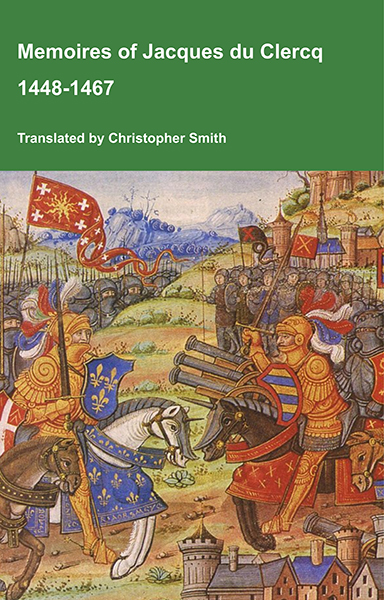
This is a translation of the 'Memoires of Jacques du Clercq', published in 1823 in two volumes, edited by Frederic, Baron de Reissenberg. In his introduction Reissenberg writes: 'Jacques du Clercq tells us that he was born in 1424, and that he was a licentiate in law and a counsellor to Philip the Good, Duke of Burgundy, in the castellany of Douai, Lille, and Orchies. It appears that he established his residence at Arras. In 1446, he married the daughter of Baldwin de la Lacherie, a gentleman who lived in Lille. We read in the fifth book of his Memoirs that his father, also named Jacques du Clercq, had married a lady of the Le Camelin family, from Compiègne. His ancestors, always attached to the counts of Flanders, had constantly served them, whether in their councils or in their armies.' The Memoires cover a period of nineteen years beginning in in 1448, ending in in 1467. It appears that the author had intended to extend the Memoirs beyond that date; no doubt illness or death prevented him from carrying out this plan. As Reissenberg writes the 'merit of this work lies in the simplicity of its narrative, in its tone of good faith, and in a certain air of frankness which naturally wins the reader’s confidence.' Du Clercq ranges from events of national and international importance, including events of the Wars of the Roses in England, to simple, everyday local events such as marriages, robberies, murders, trials and deaths, including that of his own father in Book 5; one of his last entries.
Available at Amazon in eBook and Paperback format.
On 14th June 1737 Orlando Humphreys 2nd Baronet [aged 32] died. Baronet Humphreys of London extinct.
In December 1738 Roger Meredith 5th Baronet [aged 61] died. He was buried at St Nicholas Church, Leeds in January 1739 where there is a monument. Baronet Meredith of Stainsley in Denbighshire extinct.
Around 1739 Robert Fisher 4th Baronet [aged 62] died without issue. Baronet Fisher of Packington Magna extinct.
On 22nd May 1739 John Coryton 4th Baronet [aged 49] died. He was buried on 9th June 1739 at St Melanus' Church, St Mellion. Baronet Coryton of Newton extinct. Despite having a sister Susanna Coryton his estates appear to have devolved to his cousin Peter Goodall, who took the name Coryton, grandson of Elizabeth Coryton who was daughter of John Coryton 1st Baronet.
Around July 1739 Thomas Browne 5th Baronet [aged 59] died. Baronet Browne of London extinct.
In 1740 Charles Herbert 6th Baronet [aged 60] died. Baronet Herbert of Tintern in Monmouthshire extinct.
In 1740 Robert Henley 4th Baronet died. Baronet Henley of Henley in Somerset extinct.
In 1740 William Juxon 2nd Baronet [aged 80] died. Baronet Juxon of Aldbourne extinct.
On 23rd February 1740 William Marwood 4th Baronet [aged 59] died. Baronet Marwood Little Busby in Yorkshire extinct.
On 9th July 1740 Charles Crispe 5th Baronet [aged 60] died. Baronet Crispe of Hammersmith in Middlesex extinct. His estates were inherited by
In 1741 William Dawes 5th Baronet [aged 12] died. Baronet Dawes of Putney extinct.

On 5th August 1742 Francis Leicester 3rd Baronet [aged 78] died. Baronet Leicester of Tabley in Cheshire extinct. His daughter Meriel Leicester [deceased] and her husband John Byrne aka Leicester 3rd Baronet inherited his estate worth £10,000 per annum at which time, in compliance with the will, changed their name from Byrne to Leicester,
In 1743 Charles Napier 2nd Baronet [aged 70] died. Baronet Napier of Punknoll extinct.
Westminster Chronicle of King Richard II, 1381-1394
The Westminster Chronicle is one of the most vivid and important narrative sources for the reign of Richard II. Written by an anonymous chronicler closely connected with Westminster Abbey, it covers the years 1381 to 1394, from the Peasants’ Revolt to the political tensions, court ceremonies, diplomatic negotiations, royal progresses, and public crises of Richard’s later reign. Rich in detail the chronicle records major events such as the conflicts between the King and Lords Appellant, King and the City of London, negotiations with France and Scotland, the death and funeral of Queen Anne of Bohemia, the illness of Charles VI of France, and the changing fortunes of leading nobles including John of Gaunt, Thomas of Gloucester, Robert de Vere, and the Earl of Arundel. The Chronicle offers readers a remarkable window into late fourteenth-century England, combining political observation, courtly spectacle, urban drama, ecclesiastical affairs, and moral judgement. It is an essential source for anyone interested in medieval monarchy, London, Westminster, and the troubled reign of Richard II.
Available at Amazon in eBook and Paperback format.

On 1st February 1743 John Dutton 2nd Baronet [aged 59] died. Baronet Dutton of Sherborne in Gloucestershire extinct.
He was buried at the Saint Mary Magdalene's Church, Sherborne [Map] at midnight on 4th February 1743. Monument to sculpted by John Michael Rysbrack [aged 48]. Full figure of man leaning on an Urn.

On 6th April 1743 Michael Newton 4th Baronet [aged 48] died. Baronet Newton of Barrs Court extinct. He was buried at St Michael's Church, Heydour [Map]. Sculpted by Peter Scheemakers [aged 52].


Before 10th May 1743 George Fettiplace 5th Baronet [aged 74] died unmarried. He was buried at St Mary's Church, Swinbrook [Map]. Baronet Fettiplace of Childrey in Berkshire extinct.
On 1st August 1745 John Chudleigh 6th Baronet died. Baronet Chudleigh of Ashton in Devon extinct.
Around September 1745 John Bardnardiston 6th Baronet died. Baronet Barnardiston of Ketton in Suffolk extinct.
In 1746 Marmaduke Constable 4th Baronet [aged 64] died. Baronet Constable of Everingham in Yorkshire extinct. His great-nephew William Haggerston aka Constable [aged 22] inherited his estates at which time he change his surname to Constable.
On 7th May 1746 Thomas Hanmer 4th Baronet [aged 68] died. Baronet Hamner of Hamner in Flintshire extinct.
On 5th December 1746 Orlando Bridgeman 2nd Baronet [aged 68] died at Gloucester Gaol, Gloucestershire where he had been imprisoned six years before for faking his own death. He was buried at St Nicholas' Church, Gloucester. Baronet Bridgeman of Ridley in Cheshire extinct.
In 1747 John Napier 6th or 3rd Baronet died. Baronet Napier of Luton Hoo in Bedfordshire extinct.
On 24th March 1748 Coventry Carew 6th Baronet [aged 31] died without issue. Baronet Carew of Antony in Cornwall extinct. Some sources refer to a seventh and eighth Baronet although it is unclear who these are? Reginald Pole aka Pole-Carew inherited the manor of Antony, Cornwall and changed his surname from Pole to Pole-Carew.
This is a translation of the 'Memoires of Jacques du Clercq', published in 1823 in two volumes, edited by Frederic, Baron de Reissenberg. In his introduction Reissenberg writes: 'Jacques du Clercq tells us that he was born in 1424, and that he was a licentiate in law and a counsellor to Philip the Good, Duke of Burgundy, in the castellany of Douai, Lille, and Orchies. It appears that he established his residence at Arras. In 1446, he married the daughter of Baldwin de la Lacherie, a gentleman who lived in Lille. We read in the fifth book of his Memoirs that his father, also named Jacques du Clercq, had married a lady of the Le Camelin family, from Compiègne. His ancestors, always attached to the counts of Flanders, had constantly served them, whether in their councils or in their armies.' The Memoires cover a period of nineteen years beginning in in 1448, ending in in 1467. It appears that the author had intended to extend the Memoirs beyond that date; no doubt illness or death prevented him from carrying out this plan. As Reissenberg writes the 'merit of this work lies in the simplicity of its narrative, in its tone of good faith, and in a certain air of frankness which naturally wins the reader’s confidence.' Du Clercq ranges from events of national and international importance, including events of the Wars of the Roses in England, to simple, everyday local events such as marriages, robberies, murders, trials and deaths, including that of his own father in Book 5; one of his last entries.
Available at Amazon in eBook and Paperback format.
On 18th March 1749 Matthew Decker 1st Baronet [aged 70] died. Baronet Decker of London extinct.
On 3rd December 1749 Charles Carrington Hungate 6th Baronet [aged 63] died at Blacksburg, Montgomery County. Baronet Hungate of Saxton in Yorkshire extinct.
In 1750 Basil Dixwell 2nd Baronet [aged 85] died. Baronet Dixwell of Broome House in Kent extinct. His nephew George Oxenden 5th Baronet [aged 55] inherited the Dixwell estate. As a condition of the inheritance he was required to take on the surname of Dixwell, but although he procured an Act of Parliament in 1751, to this effect, it is not clear if he took the surname on in practice.
On 24th January 1750 William Morice 3rd Baronet [aged 43] died without issue. Baronet Morice of Werrington in Devon extinct.
On 7th May 1750 Reverend Henry Corbet 6th Baronet [aged 47] died unmarried. Baronet Corbet of Stoke on Tern in Shropshire extinct.
On 29th November 1750 Bussy Mansel 4th Baron Mansel [aged 29] died. Baron Mansel of Margam and Baronet Mansel of Margam extinct.
On 27th March 1752 John Cotton 6th Baronet [aged 12] died without issue. Baronet Cotton of Conington in Huntingdonshire extinct.
In 1754 George Browne 3rd Baronet [aged 60] died. Baronet Browne of Kiddington in Oxfordshire extinct.
On 27th February 1754 John Brownlow 1st Viscount Tyconnel [aged 63] died. Viscount Tyconnel, Baronet Brownlow of Humby in Lincolnshire extinct. John Cust 3rd Baronet [aged 35] inherited Belton House [Map].


On 26th April 1755 John Chardin 1st Baronet [aged 67] died unmarried. Baronet Chardin of inner Temple in London extinct. He was buried at Westminster Abbey [Map] on 10th May 1755.
Inb 1756 Hungerford Bland 7th Baronet [aged 30] died. Baronet Bland of Kippax Park in Yorkshire extinct.
In 1757 Harry Pope Blount 3rd Baronet [aged 55] without issue. Baronet Blount of Tittenhanger extinct.
Around 1757 Hugh Myddelton 6th Baronet [aged 33] died. Baronet Myddelton of Ruthin in Denbighshire extinct or possibly dormant?
In 1759 Cordell Firebrace 3rd Baronet [aged 46] died. Baronet Firebrace of London extinct

On 19th January 1759 Thomas Drury 1st Baronet [aged 46] died. Baronet Drury of Overstone in Northamptonshire extinct.
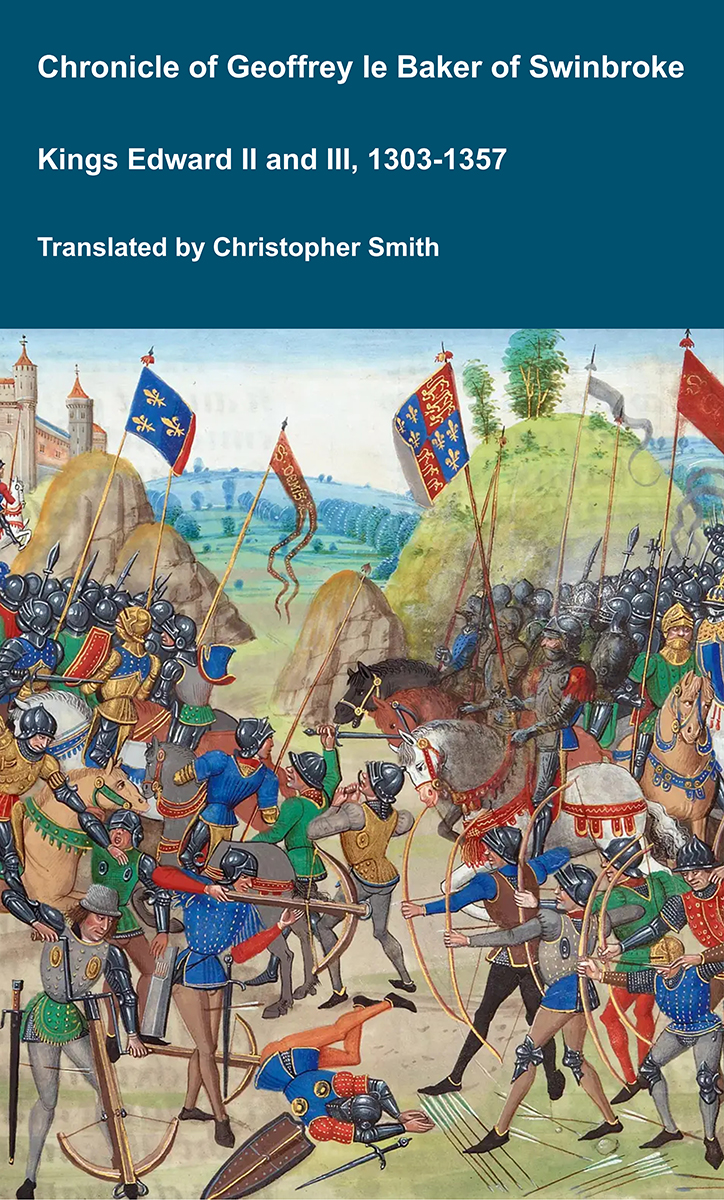
Chronicle of Geoffrey le Baker of Swinbroke
Baker was a secular clerk from Swinbroke, now Swinbrook, an Oxfordshire village two miles east of Burford. His Chronicle describes the events of the period 1303-1356: Gaveston, Bannockburn, Boroughbridge, the murder of King Edward II, the Scottish Wars, Sluys, Crécy, the Black Death, Winchelsea and Poitiers. To quote Herbert Bruce 'it possesses a vigorous and characteristic style, and its value for particular events between 1303 and 1356 has been recognised by its editor and by subsequent writers'. The book provides remarkable detail about the events it describes. Baker's text has been augmented with hundreds of notes, including extracts from other contemporary chronicles, such as the Annales Londonienses, Annales Paulini, Murimuth, Lanercost, Avesbury, Guisborough and Froissart to enrich the reader's understanding. The translation takes as its source the 'Chronicon Galfridi le Baker de Swynebroke' published in 1889, edited by Edward Maunde Thompson.
Available at Amazon in eBook and Paperback format.
On 15th September 1759 Edmund Allen 8th Baronet died unmarried. Baronet Allen of Hatfield in Essex extinct.
On 17th November 1759 Berkeley Lucy 3rd Baronet [aged 87] died without male issue. Baronet Lucy of Broxbourne in Hertfordshire extinct.
In 1762 John Hartopp 4th Baronet [aged 82] died. Baronet Hartopp of Freathby in Lincolnshire extinct.
In 1762 Tanfield Leman 4th Baronet [aged 48] died. Baronet Leman of Northaw in Hertfordshire extinct.
On 5th November 1763 John Fleming 1st Baronet [aged 33] died. Baronet Fleming of Brompton Park in Middlesex extinct.
On 22nd December 1763 William Lowther 2nd Baronet [aged 69] died. Baronet Lowther of Swillington in West Yorkshire extinct.
On 6th February 1764 Jacob Garrard Downing 4th Baronet [aged 47] died without issue at Hill Street, Berkeley Square. Baronet Downing of East Hatley in Cambridgeshire extinct. The will of George Downing 3rd Baronet stated the estate should be left to establish a Cambridge college in his name if Jacob Garrard Downing 4th Baronet had no son. Jacob Garrard Downing 4th Baronet, however, left the estate to his widow Margaret Price leading to forty years of litigation.
On 7th March 1765 Charles Dalston 4th Baronet [aged 46] died. Baronet Dalston of Dalston extinct.
On 20th July 1765 Robert Cann 6th Baronet [aged 24] died. Baronet Cann of Compton Green in Gloucestershire extinct.
On 31st December 1765 Ralph Assheton 3rd Baronet [aged 73] died without issue. Baronet Assheton of Middleton in Lancashire extinct.
Annals of Kings Richard II and Henry IV 1393-1406
The Annals of Kings Richard II and Henry IV offers a vivid contemporary account of one of the most turbulent periods in late medieval England. Covering the reigns of Richard II and Henry IV, the chronicle records royal ceremonies, political conflict, rebellion, war, taxation, religious controversy, executions, popular unrest and remarkable portents. Its pages include a detailed description of Richard II’s coronation, the fall and deposition of the king, Henry IV’s seizure of the throne, the Percy rebellion, the execution of Archbishop Richard Scrope, the campaigns of Owain Glyndŵr, and England’s relations with Scotland, France, Portugal and Scandinavia. Alongside affairs of state, the annalist preserves reports of miracles, eclipses, prophecies, supernatural events and the experiences of ordinary townspeople, clergy, soldiers and travellers. Written from a monastic perspective, the work combines political observation with moral judgement, presenting victories and disasters as evidence of divine favour or punishment. At once a historical record and a reflection of medieval belief, the Annals provides an invaluable window into the challenges, ceremonies and conflicts of England at the turn of the fifteenth century.
Available at Amazon in eBook and Paperback format.
On 29th April 1767 John Morgan 4th Baronet [aged 56] died without issue. Baronet Morgan of Langattock in Monmouthshire extinct.
On 22nd June 1767 Charles Bond 4th Baronet [aged 32] died unmarried. Baronet Bond of Peckham extinct.
On 1st July 1767 Benet Garrard 6th Baronet [aged 63] died. Baronet Garrard of Lamer extinct.
On 27th October 1767 Hugh Briggs 5th Baronet [aged 83] died. Baronet Briggs of Haughton in Shropshire extinct.
On 1st November 1768 John Haskins Eyles-Styles 4th Baronet [aged 27] died unmarried. Baronet Eyles of London extinct. He was buried on 5th November 1768 at St Helen's Church, Bishopsgate.
On 26th January 1770 John Brookes 3rd Baronet died unmarried. Baronet Brookes of York in Yorkshire extinct.
On 21st March 1770 John Dryden 7th Baronet died. Baronet Dryden of Canons Ashby in Northamptonshire extinct.
On 12th April 1770 Thomas Adams 6th Baronet [aged 41] died. Baronet Adams of London extinct.
On 29th December 1772 John Astley 2nd Baronet [aged 85] died. Baronet Astley of Patshull extinct.
In 1773 Reverend John D'Oyly 4th Baronet [aged 71] died unmarried. Baronet D'Oyly of Chislehampton in Oxfordshire extinct.
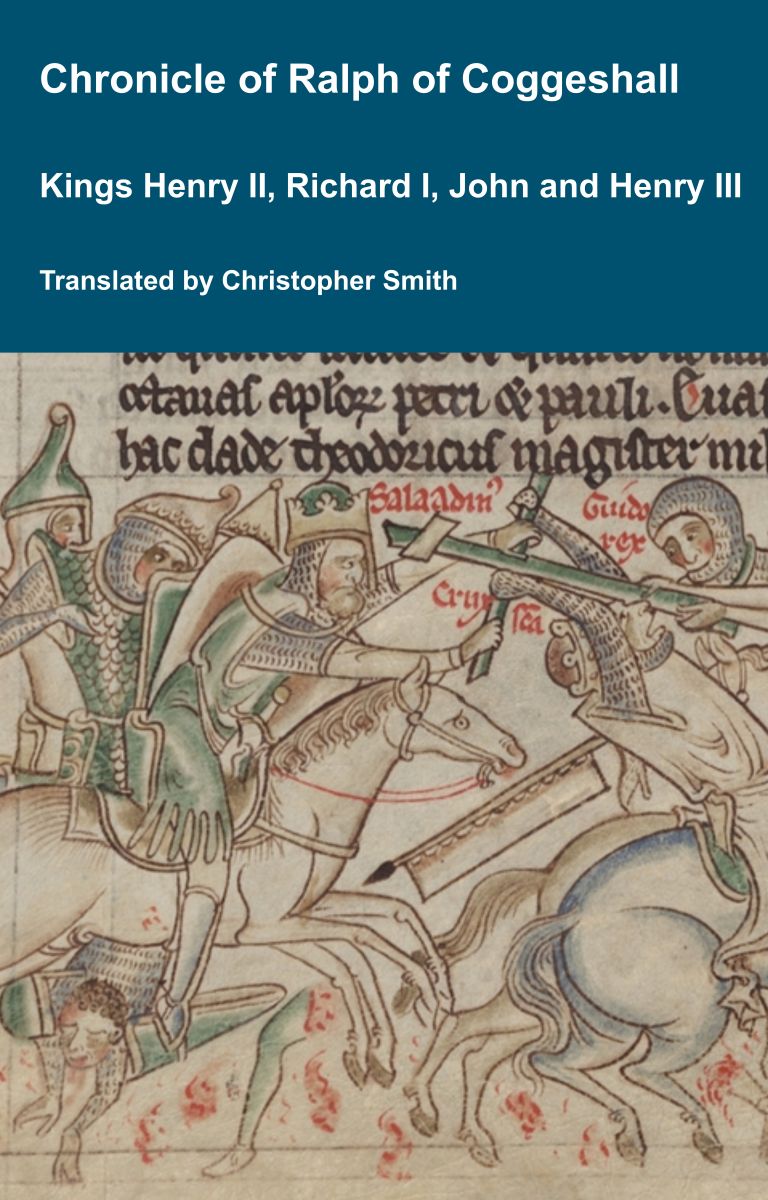
Chronicle of Abbot Ralph of Coggeshall
The Chronicle of Abbot Ralph of Coggeshall (Chronicon Anglicanum) is an indispensable medieval history that brings to life centuries of English and European affairs through the eyes of a learned Cistercian monk. Ralph of Coggeshall, abbot of the Abbey of Coggeshall in Essex in the early 13th century, continued and expanded his community’s chronicle, documenting events from the Norman Conquest of 1066 into the tumultuous reign of King Henry III. Blending eyewitness testimony, careful compilation, and the monastic commitment to record-keeping, this chronicle offers a rare narrative of political intrigue, royal power struggles, and social upheaval in England and beyond. Ralph’s work captures the reigns of pivotal figures such as Richard I and King John, providing invaluable insights into their characters, decisions, and the forces that shaped medieval rule. More than a simple annal, Chronicon Anglicanum conveys the texture of medieval life and governance, making it a rich source for scholars and readers fascinated by English history, monastic authorship, and the shaping of the medieval world.
Available at Amazon in eBook and Paperback format.
On 19th February 1773 Stephen Anderson 3rd Baronet [aged 64] died at Eyeworth, Bedfordshire. Baronet Anderson of Eyeworth in Bedfordshire extinct.
In 1774 Richard Corbet 4th Baronet [aged 78] died unmarried. Baronet Corbet of Leighton in Montgomeryshire extinct.
On 21st January 1775 John Browne 5th Baronet died. Baronet Browne of Caversham extinct.
On 25th January 1775 Gerard Napier 6th Baronet [aged 36] died. Baronet Napier of Middle Marsh in Dorset extinct.

On 4th August 1775 Gregory Page 2nd Baronet [aged 80] died without issue. He was buried at St Alfege's Church, Greenwich. His estates were inherited by his great-nephew Gregory Page-Turner 3rd Baronet [aged 27] who changed his surname from Turner to Page-Turner. Baronet Page of Greenwich in Kent extinct.
In 1776 Robert Carteret 3rd Earl Granville [aged 55] died. Earl Granville, Baron Carteret of Hawnes, Baronet Carteret of Metesches in Jersey extinct.
On 25th January 1776 Henry Chamberlayne 5th Baronet died. Baronet Chamberlayne of Wickham in Oxfordshire extinct.
On 14th June 1776 Samuel Masham 2nd Baron Masham [aged 63] died. Baron Masham of Otes in Essex and Baronet Masham of Long Ashton extinct.
On 20th August 1776 Michael D'Anvers 5th Baronet [aged 37] died unmarried. Baronet D'Anvers of Culworth in Northamptonshire extinct.
On 3rd November 1776 Robert Lee 4th Earl Lichfield [aged 70] died without issue. Earl Lichfield and Baronet Lee of Quarrendon in Buckinghamshire extinct.
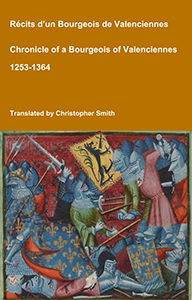
Chronicle of a Bourgeois of Valenciennes
Récits d’un bourgeois de Valenciennes aka The Chronicle of a Bourgeois of Valenciennes is a vivid 14th-century vernacular chronicle written by an anonymous urban chronicler from Valenciennes in the County of Hainaut. It survives in a manuscript that describes local and regional history from about 1253 to 1366, blending chronology, narrative episodes, and eyewitness-style accounts of political, military, and social events in medieval France, Flanders, and the Low Countries. The work begins with a chronological framework of events affecting Valenciennes and its region under rulers such as King Philip VI of France and the shifting allegiances of local nobility. It includes accounts of conflicts, sieges, diplomatic manoeuvres, and the impact of broader struggles like the Hundred Years’ War on urban life in Hainaut. Written from the perspective of a burgher (bourgeois) rather than a monastery or royal court, the chronicle offers a rare lay viewpoint on high politics and warfare, reflecting how merchants, townspeople, and civic institutions experienced the turbulence of the 13th and 14th centuries. Its narrative style combines straightforward reporting of events with moral and civic observations, making it a valuable source for readers interested in medieval urban society, regional politics, and the lived experience of war and governance in pre-modern Europe.
Available at Amazon in eBook and Paperback format.
On 14th February 1777 Walter Calverley aka Blackett 2nd Baronet [aged 69] died. Baronet Blackett of Claverley in Yorkshire extinct. He was buried at Calverley. His estates, including Wallington Hall, Northumberland [Map], in line with the will of William Blackett 2nd Baronet, passed to John Trevelyan 4th Baronet [aged 42], the son of Sir Walter's sister Julia [aged 64]; Wallington Hall, Northumberland [Map] remained in the Trevelyan family for over two centuries.

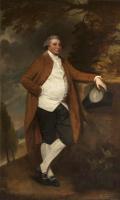
On 1st March 1778 John Elwill 4th Baronet died without male issue. Baronet Elwill of Exeter extinct.
On 11th June 1778 Vice-Admiral Peter Denis 1st Baronet [aged 65] died. Baronet Denis of St Mary's in Kent extinct.
On 23rd September 1779 John Mosley 3rd Baronet [aged 73] died. Baronet Mosley of Rolleston in Staffordshire extinct. Memorial at St Mary's Church, Rolleston on Dove [Map].
John Mosley 3rd Baronet: In or after 1706 he was born to Oswald Mosley 1st Baronet and Elizabeth Thornhaugh Lady Mosley. On 26th February 1757 Oswald Mosley 2nd Baronet died. His brother John succeeded 3rd Baronet Mosley of Rolleston in Staffordshire. In 1777 he was appointed Rector of St Mary's Church, Rolleston on Dove [Map].


In January 1780 Thomas Fleetwood 6th Baronet died unmarried. Baronet Fleetwod of Caldwick extinct.
In 1781 Nevile George Hickman 5th Baronet died. Baronet Hickman of Gainsborough in Lincolnshire extinct.
On 13th March 1782 Charles Holte 6th Baronet [aged 60] died. Baronet Holte of Aston in Warwickshire extinct. His daughter Mary Elizabeth Holte [aged 26] and her husband Abraham Bracebridge inheritedBrereton Hall, Cheshire [Map]. The inheritance complicated since Lister Holte, 5th Baronet, appears to have bequeathed Heneage Legge a lifetime's interest in the Hall.
On 7th June 1782 Charles Louis Buck 4th Baronet [aged 60] died. Baronet Buck of Hamby Grange in Lincolnshire extinct.
On 6th April 1783 William Guise 5th Baronet [aged 46] died unmarried. Baronet Guise of Elmore in Gloucestershire extinct.
In 1784 Charles Eversfield 2nd Baronet [aged 76] died unmarried. Baronet Fermor of Welches in Suffolk and Sevenoak in Kent extinct.
On 6th July 1784 Robert Keyt 5th Baronet [aged 60] died without issue. Baronet Keyt of Ebrington in Gloucestershire extinct.
On 4th June 1786 Edward Leigh 5th Baron Leigh [aged 44] died. He was buried at Church of the Virgin Mary, Stoneleigh [Map]. Baron Leigh of Stoneleigh in Warwickshire, Baronet Leigh of Stoneleigh in Warwickshire extinct. The estates of Stoneleigh, Warwickshire [Map] were inherited by his sister Mary Leigh.
Chronicle of Geoffrey le Baker of Swinbroke
Baker was a secular clerk from Swinbroke, now Swinbrook, an Oxfordshire village two miles east of Burford. His Chronicle describes the events of the period 1303-1356: Gaveston, Bannockburn, Boroughbridge, the murder of King Edward II, the Scottish Wars, Sluys, Crécy, the Black Death, Winchelsea and Poitiers. To quote Herbert Bruce 'it possesses a vigorous and characteristic style, and its value for particular events between 1303 and 1356 has been recognised by its editor and by subsequent writers'. The book provides remarkable detail about the events it describes. Baker's text has been augmented with hundreds of notes, including extracts from other contemporary chronicles, such as the Annales Londonienses, Annales Paulini, Murimuth, Lanercost, Avesbury, Guisborough and Froissart to enrich the reader's understanding. The translation takes as its source the 'Chronicon Galfridi le Baker de Swynebroke' published in 1889, edited by Edward Maunde Thompson.
Available at Amazon in eBook and Paperback format.
In January 1788 Edward Vaughan Mansel 3rd Baronet died. Baronet Mansel of Trimsaran in Carmarthenshire extinct.
On 22nd April 1788 Charles Philip Jennings-Clerke 2nd Baronet died. Baronet Jennings of Duddlestone Hall extinct.
In 1789 Robert Bernard 5th Baronet died. Baronet Bernard of Huntingdon extinct.

On 29th September 1789 James Brydges 3rd Duke Chandos [aged 57] died without male issue. Duke Chandos, Marquess Carnarvon, Earl Carnarvon, Viscount Wilton, Baron Chandos of Sudeley and Baronet Brydges of Wilton in Herefordshire extinct. His wife Anne Eliza Gamon Duchess Chandos [aged 52] had pulled away a chair, whether inadvertently or deliberately is unknown, he was about to sit in causing him injuries from which he ultimately died. She was, thereafter, declared a lunatic and confined to their London home, 2 Queen Anne Street aka Chandos House Marylebone.
On 19th October 1789 Francis Samuel Drake 1st Baronet [aged 60] died without issue. Baronet Drake of Prospect in Devon extinct.
In 1790 Samuel Hawley 4th Baron Hawley [aged 71] died. Baron Hawley of Donsmore, Baronet Hawley of Buckland in Somerset extinct.
In 1791 Rowland Alston 6th Baronet [aged 65] died. Baronet Alston of Odell in Bedfordshire extinct.
On 3rd May 1791 William Langham aka Jones 1st Baronet died. Baronet Jones of Ramsbury in Wiltshire extinct.
In 1792 Edward William James 2nd Baronet [aged 18] died. Baronet James of Park Farm Place in Eltham in Kent extinct.
On 19th February 1794 Francis Henry Drake 5th Baronet [aged 70] died unmarried. Baronet Drake of Buckland in Devon extinct. He left his estates and fortune to Francis Augustus Eliott 2nd Baron Heathfield [aged 43], the son of sister Anne Pollexfen Drake.
On 30th April 1794 Thomas Allin 4th Baronet died unmarried. Baronet Allin of Somerleyton in Suffolk extinct.
William of Worcester's Chronicle of England
William of Worcester, born around 1415, and died around 1482 was secretary to John Fastolf, the renowned soldier of the Hundred Years War, during which time he collected documents, letters, and wrote a record of events. Following their return to England in 1440 William was witness to major events. Twice in his chronicle he uses the first person: 1. when writing about the murder of Thomas, 7th Baron Scales, in 1460, he writes '… and I saw him lying naked in the cemetery near the porch of the church of St. Mary Overie in Southwark …' and 2. describing King Edward IV's entry into London in 1461 he writes '… proclaimed that all the people themselves were to recognize and acknowledge Edward as king. I was present and heard this, and immediately went down with them into the city'. William’s Chronicle is rich in detail. It is the source of much information about the Wars of the Roses, including the term 'Diabolical Marriage' to describe the marriage of Queen Elizabeth Woodville’s brother John’s marriage to Katherine, Dowager Duchess of Norfolk, he aged twenty, she sixty-five or more, and the story about a paper crown being placed in mockery on the severed head of Richard, 3rd Duke of York.
Available at Amazon in eBook and Paperback format.
In 1796 John Danvers 2nd Baronet [aged 74] died. Baronet Danvers of Swithland in Leicestershire extinct.
On 6th April 1797 Henry Mainwaring 4th Baronet [aged 70] died unmarried. Baronet Mainwaring of Over Peover extinct. Thomas Wittenhall [aged 61] succeeded to the Over Peover, Cheshire estates and adopted the name and arms of Mainwaring, in compliance with the will of his half-brother Henry Mainwaring 4th Baronet.
On 7th November 1797 George Booth 6th Baronet [aged 73] died. Baronet Booth of Dunham Massey extinct.
On 9th May 1801 Lambert Blackwell 3rd Baronet [aged 69] died. Baronet Blackwell of Sprowston Hall in Norfolk extinct. He left "all his estate, with his valuable collection of paintings, books, coins, etc., to William Foster, Junior, Esq., of Norwich."
On 14th September 1805 James Long aka Tylney-Long 8th Baronet [aged 11] died. Baronet Long of Westminster in London extinct. His sister Catherine "The Wiltshire Heiress" Tylney Long [aged 16] inherited his estates giving her the soubriquet "The Wiltshire Heiress".
On 4th June 1806 Charles Davers 6th Baronet [aged 69] died without legitimate issue. Baronet Davers of Rougham in Suffolk extinct. He was buried in St Nicholas' Church, Rushbrooke.
On 21st June 1806, whilst visiting Buxton, Derbyshire [Map], Wilfrid Lawson 10th Baronet [aged 42] developed an illness and died unexpectedly. Baronet Lawson of Isel Hall in Cumbria extinct. His estates, including Brayton Hall, Aspatria, were inherited by a Thomas Wybergh aka Lawson [aged 12], nephew of his wife Anne Hartley [aged 42]. He died six years later and the estates were inherited by his brother Wilfrid Wybergh aka Lawson 1st Baronet [aged 10] who was subsequently created Baronet Lawson.
In 1808 William Cheere 2nd Baronet died unmarried. Baronet Cheere of St Margaret's in Westminster extinct.

On 25th December 1809 Reverend Richard Kaye 6th Baronet [aged 73] died. Baronet Kaye of Woodsome Hall in Yorkshire extinct.
In 1810 Thomas Conyers 9th Baronet [aged 79] died. Baronet Conyers of Horden in County Durham extinct.
On 15th October 1811 Nathaniel Dance-Holland [aged 76] died. Baronet Dance-Holland of Wittenham in Berkshire extinct.
Chronicle of a Bourgeois of Valenciennes
Récits d’un bourgeois de Valenciennes aka The Chronicle of a Bourgeois of Valenciennes is a vivid 14th-century vernacular chronicle written by an anonymous urban chronicler from Valenciennes in the County of Hainaut. It survives in a manuscript that describes local and regional history from about 1253 to 1366, blending chronology, narrative episodes, and eyewitness-style accounts of political, military, and social events in medieval France, Flanders, and the Low Countries. The work begins with a chronological framework of events affecting Valenciennes and its region under rulers such as King Philip VI of France and the shifting allegiances of local nobility. It includes accounts of conflicts, sieges, diplomatic manoeuvres, and the impact of broader struggles like the Hundred Years’ War on urban life in Hainaut. Written from the perspective of a burgher (bourgeois) rather than a monastery or royal court, the chronicle offers a rare lay viewpoint on high politics and warfare, reflecting how merchants, townspeople, and civic institutions experienced the turbulence of the 13th and 14th centuries. Its narrative style combines straightforward reporting of events with moral and civic observations, making it a valuable source for readers interested in medieval urban society, regional politics, and the lived experience of war and governance in pre-modern Europe.
Available at Amazon in eBook and Paperback format.
In 1812 Francis Molyneux 7th Baronet [aged 74] died unmarried. Baronet Molyneux of Teversall in Nottinghamshire extinct.

On 18th May 1812 Edward Littleton 4th Baronet [aged 85] died without issue. Baronet Littleton of Pillaton Hall extinct. His estates were inherited by his great-nephew Edward John Walhouse aka Littleton 1st Baron Hatherton [aged 21] who took the surname Littleton.
On 19th September 1812 Thomas Dingley Hatton 10th Baronet [aged 41] died. Baronet Hatton of Long Stanton in Cambridgeshire extinct.
On 21st May 1813 John Anderson 1st Baronet [aged 77] died without issue. He was buried at St Mary's Church, Hendon [Map]. Baronet Anderson of Mill Hill, Hendon in Middlesex extinct.
On 2nd April 1814 Horatio Mann 2nd Baronet [aged 70] died. Baronet Mann of Linton in Kent extinct. His nephew James Mann 5th Earl Cornwallis [aged 35] inherited his estates of Boughton aka Bocton Place, Kent [Map] and Linton.
In 1815 Reverend Charles Belasyse 7th Viscount Fauconberg [aged 64] died without issue. Viscount Faunconberg and Baronet Belasyse of Newborough extinct.
On 22nd March 1815 Willoughby Aston 6th Baronet [aged 67] died. Baronet Aston of Aston extinct.
On 17th April 1815 Thomas Noel 2nd Viscount Wentworth [aged 69] died without legitmate issue. Viscount Wentworth, Baronet Noel extinct. Baron Wentworth, Baron Despencer abeyant. His sister Judith Noel [aged 64] inherited his estates at which time her husband Ralph Milbanke aka Noel 6th Baronet [aged 67] changed his name from Milbanke to Noel by Royal Licence.
In 1819 William Alston 8th Baronet [aged 73] died. Baronet Alston of Chelsea extinct.
On 19th June 1820 Joseph Banks 1st Baronet [aged 77] died at Spring Grove House. Baronet Banks of Revesby Abbey extinct.


Jean de Waurin's Chronicle of England Volume 6 Books 3-6: The Wars of the Roses
Jean de Waurin was a French Chronicler, from the Artois region, who was born around 1400, and died around 1474. Waurin’s Chronicle of England, Volume 6, covering the period 1450 to 1471, from which we have selected and translated Chapters relating to the Wars of the Roses, provides a vivid, original, contemporary description of key events some of which he witnessed first-hand, some of which he was told by the key people involved with whom Waurin had a personal relationship.
Available at Amazon in eBook and Paperback format.
On 30th December 1821 Jonathan Cope 4th Baronet [aged 63] died without surviving male issue. Baronet Cope of Bruern in Oxfordshire extinct.

On 21st March 1822 Henry Charles Englefield 7th Baronet [aged 70] died unmarried. Baronet Englefield of Wootton Bassett in Wiltshire extinct.
On 12th April 1824 Philip Hales 5th Baronet [aged 89] died. Baronet Hales of Beakesbourne in Kent extinct.

On 15th April 1824 Edward Buller 1st Baronet [aged 59] died. Baronet Buller of Trennant Park in Cornwall extinct. He was buried at St Cuby's Church, Duloe [Map].
Edward Buller 1st Baronet: On 24th December 1764 he was born to John Buller and Mary St Aubyn. On 3rd October 1808 Edward Buller 1st Baronet was created 1st Baronet Buller of Trennant Park in Cornwall.
On 27th September 1827 Reverend George Lee 6th Baronet [aged 60] died. Baronet Lee of Hartwell in Buckinghamshire extinct.
In 1828 Gilbert East 2nd Baronet [aged 64] died. Baronet East of Hall Place in Maidenhead in Berkshire extinct.
On 1st June 1828 George Berney Brograve 2nd Baronet [aged 56] died. Baronet Brograve of Worstead House in Norfolk extinct.
In 1829 Edward Hales 6th Baronet [aged 71] died. Baronet Hales of Woodchurch and Tunstall extinct.
On 6th January 1830 John Pakington 8th Baronet [aged 70] died. Baronet Pakington extinct. His John Somerset Russell aka Pakington 1st Baron Hampton [aged 30] inherited his estates and, a year later, changed his surname from Russell to Pakington by Royal Licence. The estate included Westwood House, Worcestershire and Pakington moved there with his first wife Mary, in 1832.
On 20th October 1830 William Augustus Brown 3rd Baronet [aged 66] died. Baronet Brown of the City and Liberty of Westminster extinct.
On 26th September 1832 Fitzwilliam Barrington 10th Baronet [aged 77] died at Swainston, Isle of Wight. Baronet Barrington of Barrington Hall extinct.
Around January 1834 Henry Lawson 6th Baronet [aged 83] died. Baronet Lawson of Brough Hall in Yorkshire extinct.
On 17th February 1834 Thomas Clarges 4th Baronet [aged 54] died unmarried. Baronet Clarges of St Martin's in the Fields in Middlesex extinct.

Anne Boleyn. Her Life as told by Lancelot de Carle's 1536 Letter.
In 1536, two weeks after the execution of Anne Boleyn, her brother George and four others, Lancelot du Carle, wrote an extraordinary letter that described Anne's life, and her trial and execution, to which he was a witness. This book presents a new translation of that letter, with additional material from other contemporary sources such as Letters, Hall's and Wriothesley's Chronicles, the pamphlets of Wynkyn the Worde, the Memorial of George Constantyne, the Portuguese Letter and the Baga de Secrets, all of which are provided in Appendices.
Available at Amazon in eBook and Paperback format.
In 1835 Charles Mill 10th Baronet [aged 70] died. Baronet Mill of Camois Court in Sussex extinct.
On 17th June 1835 Admiral Francis Laforey 2nd Baronet [aged 67] died unmarried and without issue. He was buried in the churchyard of St Nicholas' Church, Brighton. Baronet Laforey of Whitby in Devon extinct.
On 27th September 1837 John English Dolben 4th Baronet [aged 87] died. Baronet Dolben of Finedon in Northamptonshire extinct.
On 24th March 1838 Abraham Hume 2nd Baronet [aged 89] died. Baronet Hume of Wormleybury in Hertfordshire extinct.
On 3rd May 1843 Thomas Hislop 1st Baronet [aged 78] died. Baronet Hislop of Tothill extinct.
On 21st January 1845 Walter Aston 9th Baronet [aged 75] died. Baronet Aston of Tixall extinct.
In 1848 Edwin Bayntun-Sandys 1st Baronet [aged 74] died. Baronet Baytun-Sandys of Miserden Castle in Gloucestershire extinct.
In 1848 Charles William Egleton Kent 3rd Baronet [aged 29] died. Baronet Kent of Fornham extinct.
In 1848 Robert Harland 2nd Baronet [aged 83] died. Baronet Harland of Sproughton in Suffolk extinct.
On 28th August 1848 Hugh Evelyn 5th Baronet [aged 79] died without issue. He was buried on 9th September 1848 at St John's Church, Wotton. Baronet Evelyn of Wotton in Surrey extinct.
On 27th December 1848 Samuel Crompton 1st Baronet [aged 63] died. Baronet Crompton of Wood End in Yorkshire extinct.
This is a translation of the 'Memoires of Jacques du Clercq', published in 1823 in two volumes, edited by Frederic, Baron de Reissenberg. In his introduction Reissenberg writes: 'Jacques du Clercq tells us that he was born in 1424, and that he was a licentiate in law and a counsellor to Philip the Good, Duke of Burgundy, in the castellany of Douai, Lille, and Orchies. It appears that he established his residence at Arras. In 1446, he married the daughter of Baldwin de la Lacherie, a gentleman who lived in Lille. We read in the fifth book of his Memoirs that his father, also named Jacques du Clercq, had married a lady of the Le Camelin family, from Compiègne. His ancestors, always attached to the counts of Flanders, had constantly served them, whether in their councils or in their armies.' The Memoires cover a period of nineteen years beginning in in 1448, ending in in 1467. It appears that the author had intended to extend the Memoirs beyond that date; no doubt illness or death prevented him from carrying out this plan. As Reissenberg writes the 'merit of this work lies in the simplicity of its narrative, in its tone of good faith, and in a certain air of frankness which naturally wins the reader’s confidence.' Du Clercq ranges from events of national and international importance, including events of the Wars of the Roses in England, to simple, everyday local events such as marriages, robberies, murders, trials and deaths, including that of his own father in Book 5; one of his last entries.
Available at Amazon in eBook and Paperback format.
On 15th April 1850 John Edwards 1st Baronet [aged 80] died. He had no male heirs so Baronet Edwards of Garth in Montgomeryshire extinct.

On 29th January 1853 Frederick Lamb 3rd Viscount Melbourne [aged 70] died without issue. Viscount Melbourne of Kilmore in County Cavan, Baron Beauvale of Beauvale in Nottinghamshire and Baronet Lamb of Brocket Hall in Hertfordshire extinct. Melbourne Hall, Derbyshire [Map] was inherited by his sister Emily Lamb Countess Cowper [aged 65].
On 14th May 1854 William Amcotts-Ingilby 2nd Baronet [aged 70] died. Baronet Ingilby of Ripley in Yorkshire and Baronet Amcotts of Kettlethopre Park in Lincolnshire extinct.
On 29th May 1854 Robert Heron 2nd Baronet [aged 88] died. Baronet Heron of Newark upon Trent extinct.
On 26th January 1855 Thomas Gery Cullum 8th Baronet [aged 77] died. Baronet Cullum of Hastede in Suffolk extinct.
In 22nd June 1856 James Hunloke 7th Baronet [aged 72] died. Baronet Hunloke of Wingerworth in Derbyshire extinct.
On 5th September 1856 Thomas Digby Aubrey 7th Baronet [aged 73] died. Baronet Aubrey of Llantrithyd in Glamorganshire extinct.
On 30th July 1858 Charles Abney-Hastings 2nd Baronet [aged 65] died. Baronet Hastings of Willesley Hall in Derbyshire extinct. His estates of Blackfordby and Packington were inherited by Henry 4th Marquess Hastings [aged 16]. Willesley Hall and its estate were left to Edith Maud Rawdon-Hastings 10th Countess Loudon [aged 24] and her husband Charles Frederick Abney-Hastings 1st Baron Donington [aged 36] who changed his surname to Abney-Hastings.
On 20th February 1860 John Barker aka Barker-Mill 1st Baronet [aged 56] died at Mottisfont Abbey [Map]. Baronet Barker of Mottisfont in Southampton extinct.
On 2nd May 1860 William Fowle Middleton 2nd Baronet [aged 75] died. Baronet Middleton of Crowfield in Suffolk extinct.
On 10th September 1860 Francis Blake 3rd Baronet [aged 86] died. Baronet Blake of Twizel Castle in County Durham extinct.
The History of William Marshal was commissioned by his son shortly after William’s death in 1219 to celebrate the Marshal’s remarkable life; it is an authentic, contemporary voice. The manuscript was discovered in 1861 by French historian Paul Meyer. Meyer published the manuscript in its original Anglo-French in 1891 in two books. This book is a line by line translation of the first of Meyer’s books; lines 1-10152. Book 1 of the History begins in 1139 and ends in 1194. It describes the events of the Anarchy, the role of William’s father John, John’s marriages, William’s childhood, his role as a hostage at the siege of Newbury, his injury and imprisonment in Poitou where he met Eleanor of Aquitaine and his life as a knight errant. It continues with the accusation against him of an improper relationship with Margaret, wife of Henry the Young King, his exile, and return, the death of Henry the Young King, the rebellion of Richard, the future King Richard I, war with France, the death of King Henry II, and the capture of King Richard, and the rebellion of John, the future King John. It ends with the release of King Richard and the death of John Marshal.
Available at Amazon in eBook and Paperback format.
In 1861 James Hamlyn-Williams 3rd Baronet [aged 71] died. Baronet Hamlyn of Clovelly in Devon extinct. His daughter Susan Hester Hamlyn-Williams [aged 37] and her husband Colonel Henry Edward Fane aka Hamlyn-Fane [aged 43]. inherited his estates including Clovelly, Devon.
On 4th April 1861 James Caleb Anderson 1st Baronet [aged 68] died. Baronet Anderson of Fermoy in Cork extinct.
On 13th June 1862 Lancelot Brenton 2nd Baronet [aged 55] died. Baronet Brenton of London extinct.
On 8th August 1862 Colonel Allan Napier MacNab 1st Baronet [aged 64] died. Baronet MacNab of Dundurn Castle extinct.
On 25th January 1863 St Vincent Cotton [aged 61] died at 5 Hyde Park Terrace, Kensington Road. Baronet Cotton of Landwade in Cambridgeshire extinct.
On 28th April 1865 Henry Dymoke 1st Baronet [aged 64] died. Baronet Dymoke of Scrivelsby in Lincolnshire extinct.
On 19th May 1865 Charles Henry Maynard 3rd Viscount Maynard [aged 79] died. Viscount Maynard of Easton Lodge in Essex, Baron Maynard of Much Easton in Essex, Baronet Maynard of Walthamstow in Essex extinct.
On 8th June 1867 George William Fermor 5th Earl Pomfret [aged 42] died unmarried. Earl Pomfret aka Pontefract, Baron Leominster, Baronet Fermor of Easton Neston in Northamptonshire extinct.
On 28th January 1868 Edmund Walker Head 8th Baronet [aged 63] died without surviving male issue. Baronet Head of Hermitage in Kent extinct.
On 16th April 1868 William Abdy 7th Baronet [aged 89] died at 20 Hill Street, Berkeley Square. Baronet Abdy of Felix Hall in Kelveden in Essex extinct.
Anne Boleyn. Her Life as told by Lancelot de Carle's 1536 Letter.
In 1536, two weeks after the execution of Anne Boleyn, her brother George and four others, Lancelot du Carle, wrote an extraordinary letter that described Anne's life, and her trial and execution, to which he was a witness. This book presents a new translation of that letter, with additional material from other contemporary sources such as Letters, Hall's and Wriothesley's Chronicles, the pamphlets of Wynkyn the Worde, the Memorial of George Constantyne, the Portuguese Letter and the Baga de Secrets, all of which are provided in Appendices.
Available at Amazon in eBook and Paperback format.
On 30th May 1869 Robert Juckes Clifton 9th Baronet [aged 42] died without issue. Baronet Clifton of Clifton in Nottinghamshire extinct. His etates were inherited by his first-cousin once-removed Henry Robert Markham aka CLifton [aged 37], grandson of his aunt Frances Clifton.
Around 1870 Samuel Edgerton Leigh 3rd Baronet [aged 73] died. Baronet Leigh of South Carolina in America extinct. The baronetcy may be dormant since it is not known whether there were any descendants of the youngest son of the 1st Baronet, Thomas Egerton Leigh, who became a plantation owner in Georgetown County, South Carolina.
On 27th January 1870 Captain Edward Cecil Bishopp 12th Baronet [aged 43] died. Baronet Bishopp of Parham in Sussex extinct.
On 22nd October 1871 Roderick Impey Murchison 1st Baronet [aged 79] died. Baronet Murchison of Belgrave Square in Middlesex extinct.
In 1872 Edward Rokewood-Gage 9th Baronet [aged 59] died. Baronet Gage of Hengrave in Suffolk extinct.
In 1873 Richard Frederick 6th Baronet [aged 93] died. Baronet Frederick of Burwood House in Surrey extinct.
In 1874 Henry Oglander 7th Baronet [aged 63] died. Baronet Oglander of Nunwell in Hampshire extinct.
On 17th June 1874 Stephen Glynne 9th Baronet [aged 66] collapsed and died outside Bishopsgate railway station. He was buried at the Church of St Deiniol, Hawarden, Flintshire. He was unmarried. Baronet Glynne of Bicester aka Bisseter in Oxfordshire extinct. His estates, including Hawarden Castle [Map], were inherited by William Henry Gladstone [aged 34], eldest son of his sister Catherine Glynne [aged 62].
Church of St Deiniol, Hawarden, Flintshire. Recumbent effigy by Matthew Noble [aged 57] in a tomb recess designed by John Douglas.
Stephen Glynne 9th Baronet: On 22nd September 1807 he was born to Stephen Richard Glynne 8th Baronet and Mary Griffin. On 5th March 1815 Stephen Richard Glynne 8th Baronet died in Nice, France. His son Stephen succeeded 9th Baronet Glynne of Bicester aka Bisseter in Oxfordshire.
William Henry Gladstone: On 3rd June 1840 he was born to William Ewart Gladstone and Catherine Glynne. On 30th September 1875 William Henry Gladstone and Gertrude Stuart were married. On 4th July 1891 William Henry Gladstone died.
Catherine Glynne: In 1812 she was born to Stephen Richard Glynne 8th Baronet and Mary Griffin. On 25th July 1839 William Ewart Gladstone and she were married. In 1900 Catherine Glynne died.


In 1879 Edward Richard Borough 2nd Baronet [aged 78] died. Baronet Borough of Baseldon Park in Berkshire extinct.
On 4th January 1883 Joseph William Copley 4th Baronet [aged 78] died without issue. Baronet Copley Sprotborough extinct. He was buried at Brompton Cemetery, Kensington.
On 29th November 1887 John Thomas Duckworth aka Buller 2nd Baronet [aged 78] died. Baronet Duckworth of Topsham in Devon extinct.

The True Chronicles of Jean le Bel Volume 1 Chapters 1-60 1307-1342
The True Chronicles of Jean le Bel offer one of the most vivid and immediate accounts of 14th-century Europe, written by a knight who lived through the events he describes, and experienced some of them first hand. Covering the early decades of the Hundred Years’ War, this remarkable chronicle follows the campaigns of Edward III of England, the politics of France and the Low Countries, and the shifting alliances that shaped medieval warfare. Unlike later historians, Jean le Bel writes with a strong sense of eyewitness authenticity, drawing on personal experience and the testimony of fellow soldiers. His narrative captures not only battles and sieges, but also the realities of military life, diplomacy, and the ideals of chivalry that governed noble society. A key source for Jean Froissart, Le Bel’s chronicle stands on its own as a compelling and insightful work, at once historical record and literary achievement. This translation builds on the 1905 edition published in French by Jules Viard, adding extensive translations from other sources Rymer's Fœdera, the Chronicles of Adam Murimuth, William Nangis, Walter of Guisborough, a Bourgeois of Valenciennes, Geoffrey le Baker of Swinbroke and Richard Lescot to enrich the original text and Viard's notes.
Available at Amazon in eBook and Paperback format.
On 20th January 1888 Robert Jacob Buxton 3rd Baronet [aged 58] died. Baronet Buxton of Shadwell Lodge in Norfolk extinct.
On 8th October 1891 Charles Henry John Anderson 9th Baronet [aged 86] died. Baronet Anderson of Broughton in Lincolnshire extinct.
On 9th November 1893 Henry Augustus Clavering 10th Baronet [aged 69] died without male issue. Baronet Clavering of Axwell in County Durham extinct.
In 1894 Frederick Augustus Talbot Constable [aged 66] died without issue. Baronet Clifford of Tixal in Staffordshire extinct.
On 22nd November 1895 Charles Cavendish Clifford 4th Baronet [aged 74] died. Baronet Clifford of the Navy extinct.
In 1896 John Warren Hayes 3rd Baronet [aged 97] died. Baronet Hayes of Westminster extinct.
On 25th January 1896 Frederick Leighton 1st Baron Leighton [aged 65] died. Baron Leighton of Stretton in Shropshire and Baronet Leighton of Holland Park Road in St Mary Abbots in Kensington in Middlesex extinct. He left Ada Alice "Dorothy Dene" Pullen [aged 37] £5,000, plus another £5,000 in trust for herself and her sisters; the largest bequest he made.
On 4th April 1897 Reverend John Frederick Halford 4th Baronet [aged 66] died without male isse. Baronet Vaughan aka Halford of Wistow in Leicestershire extinct.
On 9th February 1898 Philip Haughton Clarke 11th Baronet [aged 78] died. Baronet Clarke of Salford Shirland in Warwickshire extinct.
On 27th November 1899 George Talbot Bridges 8th Baronet [aged 81] died. Baronet Bridges of Goodneston in Kent extinct.
On 11th January 1900 Henry Bruce Meux 3rd Baronet [aged 43] died without issue. Baronet Meux of Theobald's Park in Hertfordshire extinct.
On 24th August 1900 Henry Hope Edwardes 10th Baronet [aged 72] died. Baronet Edwardes of Shrewsbury in Shropshire extinct.
On 13th May 1902 George Floyd Duckett 3rd Baronet [aged 91] died. Baronet Jackson aka Duckett of Hartham House in Wiltshire extinct.
On 18th July 1905 Francis Thomas Cowper 7th Earl Cowper [aged 71] died. Earl Cowper, Baron Cowper of Wingham in Kent and Baronet Cowper of Ratling Court in Kent extinct. His nephew Auberon [aged 29] succeeded 9th Baron Lucas of Crudwell.
The True Chronicles of Jean le Bel Volume 1 Chapters 1-60 1307-1342
The True Chronicles of Jean le Bel offer one of the most vivid and immediate accounts of 14th-century Europe, written by a knight who lived through the events he describes, and experienced some of them first hand. Covering the early decades of the Hundred Years’ War, this remarkable chronicle follows the campaigns of Edward III of England, the politics of France and the Low Countries, and the shifting alliances that shaped medieval warfare. Unlike later historians, Jean le Bel writes with a strong sense of eyewitness authenticity, drawing on personal experience and the testimony of fellow soldiers. His narrative captures not only battles and sieges, but also the realities of military life, diplomacy, and the ideals of chivalry that governed noble society. A key source for Jean Froissart, Le Bel’s chronicle stands on its own as a compelling and insightful work, at once historical record and literary achievement. This translation builds on the 1905 edition published in French by Jules Viard, adding extensive translations from other sources Rymer's Fœdera, the Chronicles of Adam Murimuth, William Nangis, Walter of Guisborough, a Bourgeois of Valenciennes, Geoffrey le Baker of Swinbroke and Richard Lescot to enrich the original text and Viard's notes.
Available at Amazon in eBook and Paperback format.
On 2nd July 1909 Arthur Cowell-Stepney 2nd Baronet [aged 74] died. He was found dead at Yuma Railway Station. Baronet Cowell Stepney of Llanelli in Carmarthenshire extinct.
On 29th September 1911 Henry Northcote 1st Baron Northcote [aged 64] died. Baron Northcote of Exeter, Baronet Northcote of Seamore Place in the Parish of St George, Hanover Square, in Middlesex extinct.
On 8th June 1912 Arthur John Otway 3rd Baronet [aged 89] died at 34 Eaton Square, Belgravia. Baronet Otway of Brighthelmstone in Sussex extinct.
On 20th May 1915 George Herbert Farrar 1st Baronet [aged 55] died. Baronet Farrar of Chicheley Hall extinct.
On 16th September 1918 John Alexander Miller 3rd Baronet [aged 50] died. Baronet Miller of Manderston in Berwickshire extinct.
On 27th November 1918 George Edward Dallas 3rd Baronet [aged 76] died. Baronet Dallas of Upper Harley Street in Middlesex extinct.
On 25th March 1919 Colonel Simon Macdonald Lockhart [aged 70] died. Baronet Lockhart of Less and Carwath extinct.
On 19th March 1921 John Montagu Burgoyne 10th Baronet [aged 88] died. Baronet Burgoyne of Sutton in Bedfordshire extinct.
On 16th July 1921 Robert Anderson 1st Baronet [aged 83] died. Baronet Anderson of Parkmount in Belfast and Mullaghmore in Monaghan extinct.
On 27th January 1922 Arthur John Fludyer 5th Baronet [aged 77] died. He was buried at St Mary the Virgin's Church, Ayston where he has a mural memorial. Baronet Fludyer extinct.
In 1924 Robert Townsend-Farquhar 6th Baronet [aged 83] died. Baronet Farquhar of Mauritius extinct.
On 12th July 1924 Percy Dixwell Oxenden 10th Baronet [aged 86] died. Baronet Oxenden of Dene in Kent extinct.
Chronicle of Abbot Ralph of Coggeshall
The Chronicle of Abbot Ralph of Coggeshall (Chronicon Anglicanum) is an indispensable medieval history that brings to life centuries of English and European affairs through the eyes of a learned Cistercian monk. Ralph of Coggeshall, abbot of the Abbey of Coggeshall in Essex in the early 13th century, continued and expanded his community’s chronicle, documenting events from the Norman Conquest of 1066 into the tumultuous reign of King Henry III. Blending eyewitness testimony, careful compilation, and the monastic commitment to record-keeping, this chronicle offers a rare narrative of political intrigue, royal power struggles, and social upheaval in England and beyond. Ralph’s work captures the reigns of pivotal figures such as Richard I and King John, providing invaluable insights into their characters, decisions, and the forces that shaped medieval rule. More than a simple annal, Chronicon Anglicanum conveys the texture of medieval life and governance, making it a rich source for scholars and readers fascinated by English history, monastic authorship, and the shaping of the medieval world.
Available at Amazon in eBook and Paperback format.
On 13th December 1924 Vauncey Harpur-Crewe 10th Baronet [aged 78] died. Baronet Harpur of Calke Abbey in Derbyshire extinct.
On 23rd May 1925 Edward Hulton 1st Baronet [aged 56] died after a prolonged illness in Downside. He was buried in Putney Vale Cemetery. Baronet Hulton of Downside extinct since his son Edward Hulton [aged 18] was born before his parents married.
In 1928 Edgar Collins Boehm-Boteler 2nd Baronet [aged 59] died. Baronet Boehm of Wetherby Gardens in Kensington extinct.
In April 1928 Major-General Peter Ewart 1st Baronet [aged 89] died without surviving issue. Baronet Ewart of White House of Hythe in Southampton extinct.
In 1929 Alfred Jodrell 4th Baronet [aged 82] died without issue. Baronet Lombe aka Jodrell of Salle Park in Norfolk extinct.
In 1931 Charles Rushout 4th Baronet [aged 62] died. Baronet Cockerell of Sezincote in Gloucestershire extinct.

On 19th January 1931 Charles Leopold Cust 3rd Baronet [aged 66] died. He was buried at St Peter and St Paul Church, Belton [Map]. Baronet Cust of Leasowe Castle in Cheshire extinct.
On 14th June 1932 Arthur Lawley 6th Baron Wenlock [aged 71] died in Freiburg. Baron Wenlock of Wenlock in Shropshire and Baronet Lawley of Spoonhill in Shropshire extinct.
On 1st September 1932 Robert Alan Clayton-East-Clayton 9th and 5th Baronet [aged 24] died without issue. Baronet Clayton-East of Hall Place in Berkshire extinct. His second cousin twice removed Harold [aged 55] succeeded 10th Baronet Clayton of Marden Park in Surrey. Leila Cecilia Clayton Lady Clayton [aged 50] by marriage Lady Clayton of Marden Park in Surrey.
On 10th June 1934 Francis Patrick Fletcher-Vane 5th Baronet [aged 72] died. Baronet Fletcher of Hutton in Cumberland extinct.

On 5th December 1934 George Allardice 1st Baron Riddell [aged 69] died. Baron Riddell of Walton Heath in Surrey and Baronet Allardice of Walton Heath in Surrey extinct.
In 1935 William Henry Stafford Jerningham 11th Baronet [aged 68] died. Baronet Jerningham of Cossey extinct.
On 22nd April 1935 Compton Meade Domvile 4th Baronet [aged 78] died unmarried. Baronet Domvile of Templeogue and Santry House in the County of Dublin extinct.
On 22nd April 1936 Kenneth Hagar Kemp 12th Baronet [aged 83] died. Baronet Kemp of Gissing in Norfolk extinct.
In 1938 Henry Francis Knightley 6th Baronet [aged 83] died without issue. Baronet Knightley of Fawsley extinct.
The History of William Marshal was commissioned by his son shortly after William’s death in 1219 to celebrate the Marshal’s remarkable life; it is an authentic, contemporary voice. The manuscript was discovered in 1861 by French historian Paul Meyer. Meyer published the manuscript in its original Anglo-French in 1891 in two books. This book is a line by line translation of the first of Meyer’s books; lines 1-10152. Book 1 of the History begins in 1139 and ends in 1194. It describes the events of the Anarchy, the role of William’s father John, John’s marriages, William’s childhood, his role as a hostage at the siege of Newbury, his injury and imprisonment in Poitou where he met Eleanor of Aquitaine and his life as a knight errant. It continues with the accusation against him of an improper relationship with Margaret, wife of Henry the Young King, his exile, and return, the death of Henry the Young King, the rebellion of Richard, the future King Richard I, war with France, the death of King Henry II, and the capture of King Richard, and the rebellion of John, the future King John. It ends with the release of King Richard and the death of John Marshal.
Available at Amazon in eBook and Paperback format.
On 28th February 1939 Edward Arthur Colebrooke 1st Baron Colebrooke [aged 77] died. Baron Colebrooke of Stebunheath in Middlesex, Baronet Colebrooke of Gatton in Surrey extinct.
On 18th June 1940 Edmund Asgill Ogle 8th Baronet [aged 82] died. Baronet Ogle of Worthy in Hampshire extinct.
In 1942 Kenneth Skelton Anderson 1st Baronet [aged 76] died. Baronet Anderson of Ardtaraig in Perthshire extinct.
On 2nd January 1945 George James Ernest Lewis 3rd Baronet [aged 34] died. Baronet Lewis of Portland Place in Marylebone extinct.
On 27th October 1945 Wilmot Lawrence Lancelot Palk 9th Baronet [aged 69] died. Baronet Palk of Haldon House in Devon extinct.
On In 1948 Charles Lamb 4th Baronet [aged 90] died. Baronet Lamb of Burghfield extinct.
On 24th November 1949 Ralph Milbanke 12th Baronet [aged 42] died. Baronet Milbanke of Halnaby in Yorkshire extinct.

On 3rd January 1950 William Walter Carlile 1st Baronet [aged 87] died. Baronet Carlile of Gayhurst in Buckinghamshire extinct.
On 24th January 1950 Stuart Holland 2nd Baron Rotherham [aged 73] died. Baron Rotherham of Broughton in Lancashire, Baronet Holland of Queen's Gate in Kensington extinct.
On 27th September 1950 George Henry Bowyer 9th and 5th Baronet [aged 80] died. Baronet Bowyer of Radley extinct. His third cousin twice removed Bertram [aged 22] succeeded 10th Baronet Bowyer of Denham Court.
Chronicle of Walter of Guisborough
A canon regular of the Augustinian Guisborough Priory, Yorkshire, formerly known as The Chronicle of Walter of Hemingburgh, describes the period from 1066 to 1346. Before 1274 the Chronicle is based on other works. Thereafter, the Chronicle is original, and a remarkable source for the events of the time. This book provides a translation of the Chronicle from that date. The Latin source for our translation is the 1849 work edited by Hans Claude Hamilton. Hamilton, in his preface, says: 'In the present work we behold perhaps one of the finest samples of our early chronicles, both as regards the value of the events recorded, and the correctness with which they are detailed; Nor will the pleasing style of composition be lightly passed over by those capable of seeing reflected from it the tokens of a vigorous and cultivated mind, and a favourable specimen of the learning and taste of the age in which it was framed.'
Available at Amazon in eBook and Paperback format.
In 1951 William Bulkeley Hughes Hughes-Hunter 2nd Baronet [aged 71] died. Baronet Hunter of Plâs Côch in Anglesey extinct.
On 3rd March 1952 Vivian Tyrell Champion de Crespigny 8th Baronet [aged 44] shot himself in the head at Pulau Brani near Singapore. Baronet Champion de Crespigny of Champion Lodge in Surrey extinct.
In 1954 Albert Victor Jenner 3rd Baronet [aged 92] died. Baronet Jenner of Harley Street extinct.
On 29th September 1956 Charles Chute 1st Baronet [aged 77] died. Baronet Chute of The Vyne in Hampshire extinct. He bequeathed The Vyne, Sherbourne St John [Map], to the National Trust.
In 1957 John Corbin Chubb 2nd Baronet [aged 53] died. Baronet Chubb of Stonehenge in Wiltshire extinct.
In 1959 Hilton Lawson 4th Baronet [aged 64] died unmarried. Baronet Lawson of Brayton House in Cumberland extinct.
On 7th May 1959 Samuel Hoare 1st Viscount Templewood [aged 79] died at his home 12a Eaton Mansions. Viscount Templewood of Chelsea in Middlesex and Baronet Hoare of Sidestrand Hall extinct.
On 3rd October 1960 Charles Peter Denys 4th Baronet [aged 61] died. Baronet Denys of Stratford Place extinct.

On 23rd May 1961 Percy Lyham Loraine 12th Baronet [aged 80] died. Baronet Loraine of Kirkharle in Northumberland extinct. Memorial at St Wilfrid's Church, Kirkharle [Map].
Percy Lyham Loraine 12th Baronet: In 1881 he was born to Lambton Loraine 11th Baronet. On 13th May 1917 Lambton Loraine 11th Baronet died. His son Percy succeeded 12th Baronet Loraine of Kirkharle in Northumberland. On 23rd October 1924 Percy Lyham Loraine 12th Baronet and Louise Violet Beatrice Montagu-Stuart-Wortley were married. She by marriage Lady Loraine of Kirkharle in Northumberland. Birmingham Daily Post. Birmingham Daily Post, 24 May 1961: "Racehorse Owner Dies. Sir Percy Lyham Loraine the racehorse owner, who was elected a member of the Jockey Club in 1944, died yesterday at his home in Wilton Crescent, London. He was 80. His horse Ambergris won the Musidora Stakes at York last week and is well fancied for the Oaks next week."
In 1962 Frederick Charles John Morgan 6th Baron Tredegar [aged 54] died. Baron Tredegar of Tredegar in Monmouthshire and Baronet Morgan of Tredegar extinct.
The Deeds of the Dukes of Normandy
The Gesta Normannorum Ducum [The Deeds of the Dukes of Normandy] is a landmark medieval chronicle tracing the rise and fall of the Norman dynasty from its early roots through the pivotal events surrounding the Norman Conquest of England. Originally penned in Latin by the monk William of Jumièges shortly before 1060 and later expanded at the behest of William the Conqueror, the work chronicles the deeds, politics, battles, and leadership of the Norman dukes, especially William’s own claim to the English throne. The narrative combines earlier historical sources with firsthand information and oral testimony to present an authoritative account of Normandy’s transformation from a Viking settlement into one of medieval Europe’s most powerful realms. William’s history emphasizes the legitimacy, military prowess, and governance of the Norman line, framing their expansion, including the conquest of England, as both divinely sanctioned and noble in purpose. Later chroniclers such as Orderic Vitalis and Robert of Torigni continued the history, extending the coverage into the 12th century, providing broader context on ducal rule and its impact. Today this classic work remains a foundational source for understanding Norman identity, medieval statesmanship, and the historical forces that reshaped England and Western Europe between 800AD and 1100AD.
Available at Amazon in eBook and Paperback format.
On 18th May 1962 William Francis Cornewall 7th Baronet [aged 90] died. Baronet Amyand aka Cornewall of Moccas Court in Herefordshire extinct.
On 11th April 1963 John Anderson 1st Baronet [aged 84] died. Baronet Anderson of Harrold Priory in Bedfordshire extinct.
On 20th March 1964 Francis D'Arcy Godolphin Osborne 12th Duke of Leeds [aged 79] died unmarried without male issue. Duke Leeds, Earl of Danby, Viscount Osborne, Viscount Latimer, Baron Osborne of Kinderton, Baronet Osborne of Kiveton, Baron Godolphin of Farnham Royal in Buckinghamshire extinct.
In 1968 Francis Henry Godolphin Layland-Barratt 2nd Baronet [aged 72] died. Baronet Layland Barratt of the Manor House and of Trefgarne Lodge extinct.
On 8th November 1969 Egerton Hamond-Graeme 5th Baronet [aged 92] died. Baronet Hamond of Holly Grove in Berkshire extinct.
In 1972 Mordaunt Leckonby Cope 16th Baronet [aged 93] died. Baronet Cope of Hanwell in Oxfordshire extinct.
On 1st April 1972 John Richard Duckworth-King 7th Baronet [aged 72] died. Baronet King of Bellevue in Kent extinct.

On 13th April 1972 Hugh Molyneux 7th Earl of Sefton [aged 73] died without issue. Earl Sefton, Viscount Molyneux, Baronet Molyneux of Sefton extinct.
In 1975 Lieutenant-Colonel Rupert Yea Dering 12th Baronet [aged 59] died. Baronet Dering of Surrenden Dering in Kent extinct.
On 27th June 1975 Cuthbert Patrick Blake 6th Baronet [aged 90] died. Baronet Blake of Langham in Suffolk extinct.
On 11th July 1976 William Francis Gresley 13th Baronet [aged 78] died. Baronet Gresley of Drakelow in Derbyshire extinct.
On 25th August 1976 Brograve Beauchamp 2nd Baronet [aged 79] died. Baronet Beauchamp of Grosvenor Place in the City of Westminster extinct.
Annals of Kings Richard II and Henry IV 1393-1406
The Annals of Kings Richard II and Henry IV offers a vivid contemporary account of one of the most turbulent periods in late medieval England. Covering the reigns of Richard II and Henry IV, the chronicle records royal ceremonies, political conflict, rebellion, war, taxation, religious controversy, executions, popular unrest and remarkable portents. Its pages include a detailed description of Richard II’s coronation, the fall and deposition of the king, Henry IV’s seizure of the throne, the Percy rebellion, the execution of Archbishop Richard Scrope, the campaigns of Owain Glyndŵr, and England’s relations with Scotland, France, Portugal and Scandinavia. Alongside affairs of state, the annalist preserves reports of miracles, eclipses, prophecies, supernatural events and the experiences of ordinary townspeople, clergy, soldiers and travellers. Written from a monastic perspective, the work combines political observation with moral judgement, presenting victories and disasters as evidence of divine favour or punishment. At once a historical record and a reflection of medieval belief, the Annals provides an invaluable window into the challenges, ceremonies and conflicts of England at the turn of the fifteenth century.
Available at Amazon in eBook and Paperback format.
On 7th February 1978 John Holdsworth Dimsdale 3rd Baronet [aged 76] died. Baronet Dimsdale of Goldsmiths, Langdon Hills in Essex extinct.
On 24th December 1980 Henry Wilmot Chamberlain 5th Baronet [aged 81] died. Baronet Chamberlain of London extinct.
In 1981 John Ogilvy Brocklehurst 3rd Baronet [aged 54] died. Baronet Brocklehurst of Swythamley Park in Staffordshire extinct.
On 10th October 1981 Gerald Guy Domville 7th Baronet [aged 85] died. Baronet Domville of St Albans extinct.
On 1st September 1982 Patrick Charles Mills 5th Baron Hillingdon [aged 75] died. Baron Hillingdon, Baronet Mills of Hillingdon extinct.
On 20th May 1985 George Edwin Douglas Duntze 6th Baronet [aged 71] died. There were successors to the Baronetcy but none appear to have claimed their succession. Baronet Duntze of Tiverton in Devon is, therefore, not on the Official Roll of the Baronetage, with the baronetcy considered dormant since 1985.
In 1990 Alexander William Fuller-Acland-Hood 6th and 8th Baronet [aged 88] died. Baronet Bateman of Hartington Hall in Derbyshire, Baronet Hood of Tidlake in Surrey extinct.
On 13th June 1990 Edward Jessel 2nd Baronet Jessel [aged 86] died. Baron Jessel of Westminster in London, Baronet Jessel of Westminster extinct.
In 1994 Francis Jacob Dugdale Astley 6th Baronet [aged 85] died. Baronet Astley of Everleigh in Wiltshire extinct.
In 1996 Ewart Joseph Maurice Levy 2nd Baronet [aged 99] died. Baronet Levy of Humberstone Hall in Leicestershire extinct.
On 20th March 1996 John Vincent Corbet 7th Baronet [aged 85] died. Baronet Corbet of Moreton Corbet in Shropshire extinct.
On 23rd May 1997 Peter Waldo Somerset Gough-Calthorpe 10th Baron Calthorpe [aged 69] died. Baron Calthorpe of Calthorpe in Norfolk, Gough-Calthorpe of Edgbaston in Warwickshire extinct.
On 16th March 1999 Lawrence Monck Middleton 10th Baronet [aged 86] died. Baronet Middleton of Belsay Castle in Northumberland extinct.
On 8th June 2000 Kenneth Alston Cradock-Hartopp 10th Baronet [aged 82] died. Baronet Cradock-Hartopp extinct.
On 4th July 2000 Philip Lever 3rd Viscount Leverhulme [aged 85] died. Viscount Leverhulme of the Western Isles, Baron Leverhulme of Bolton le Moors in Lancashire, Baronet Lever of Thornton Manor in Cheshire extinct.
In 2003 Michael George Hamar Greenwood 3rd Viscount Greenwood [aged 80] died unmarried. Viscount Greenwood of Holbourne in London, Baron Greenwood of Llanbister in Radnorshire and Baronet Greenwood of Onslow Gardens in Kensington extinct.
On 12th December 2004 Walter Edward Alpin Blount 12th Baronet [aged 87] died. Baronet Blount of Sodington extinct.
William of Worcester's Chronicle of England
William of Worcester, born around 1415, and died around 1482 was secretary to John Fastolf, the renowned soldier of the Hundred Years War, during which time he collected documents, letters, and wrote a record of events. Following their return to England in 1440 William was witness to major events. Twice in his chronicle he uses the first person: 1. when writing about the murder of Thomas, 7th Baron Scales, in 1460, he writes '… and I saw him lying naked in the cemetery near the porch of the church of St. Mary Overie in Southwark …' and 2. describing King Edward IV's entry into London in 1461 he writes '… proclaimed that all the people themselves were to recognize and acknowledge Edward as king. I was present and heard this, and immediately went down with them into the city'. William’s Chronicle is rich in detail. It is the source of much information about the Wars of the Roses, including the term 'Diabolical Marriage' to describe the marriage of Queen Elizabeth Woodville’s brother John’s marriage to Katherine, Dowager Duchess of Norfolk, he aged twenty, she sixty-five or more, and the story about a paper crown being placed in mockery on the severed head of Richard, 3rd Duke of York.
Available at Amazon in eBook and Paperback format.
In 2009 John Michael Bennet Lawes 5th Baronet [aged 76] died. Baronet Lawes of Rothamsted in Hertfordshire extinct.
On 23rd March 2011 George Howland Francis Beaumont 12th Baronet [aged 86] died. Baronet Beaumont of Stoughton Grange in Leicestershire extinct.
On 14th April 2013 Richard James Dashwood 9th Baronet [aged 63] died. Baronet Dashwood of Kirtlington Park in Oxfordshire extinct.
On 10th January 2015 Henry Nicholas Hawley 8th Baronet [aged 75] died. Baronet Hawley of Leybourne Grange in Kent extinct.
In 2022 Richard Latham 3rd Baronet [aged 88] died. Baronet Latham of Crow Clump in Surrey extinct.