

02 Jun is in June.
1162 Thomas Becket appointed Archbishop of Canterbury
1420 Marriage of Henry V and Catherine of Valois
4th May 1471 Battle of Tewkesbury
On 2nd June 910 Richildis Bivinids Queen Consort West Francia [aged 65] died.
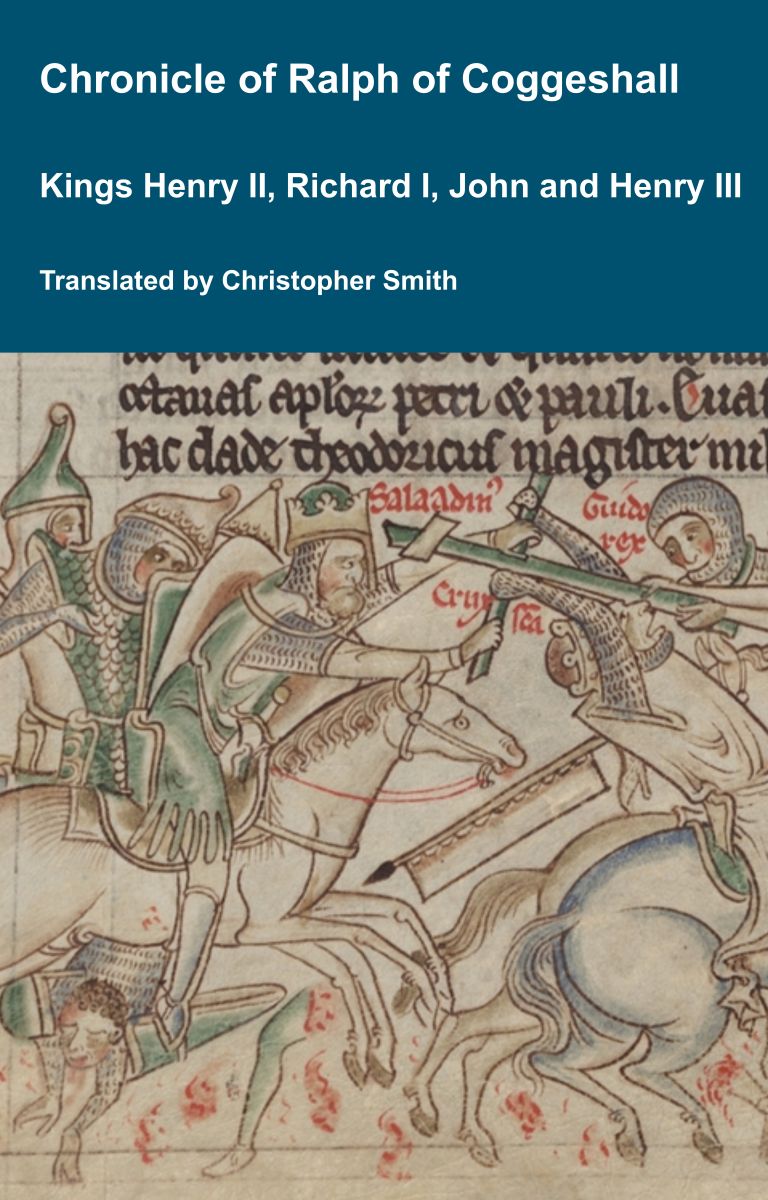 Chronicum Anglicanum by Ralph Coggeshall. Antioch was captured by the Christians on the fourth day before the Nones of June [2nd June 1098], on Wednesday, and the Holy Lance, with which the Saviour of the world had been wounded, was discovered through a revelation to Saint Andrew.
Antiochia a Christianis capta est quarto nonas Junii, feria quarta, et lancea, qua mundi Salvator vulneratus fuerat, Sancto Andrea revelante, inventa.
Chronicle of William Nangis. Fulk, count of Anjou, leaving the county of Anjou to his son Geoffrey and setting out for Syria, took as wife1 Melisende, the eldest daughter of Baldwin, king of Jerusalem.
Fulco comes Audegavis, relinquens comitatum Andegavensem Gaufrido filio suo et in Syriam proficiscens, accepit in uxorem Milisandem primogenitam filiam Balduini regis Jerusalem.
Note 1. Fulk, count of Anjou and Melisende were married on 2nd June 1129. When her father Baldwin II died in 1131 Fulk and Melisende became King and Queen of Jerusalem.
On 2nd June 1129 Fulk "Young" King Jerusalem [aged 40] and Melisende Queen of Jerusalem [aged 24] were married at Jerusalem [Map]. She by marriage Countess Anjou. Her father [aged 54] had written to Fulk "Young" King Jerusalem requesting the marriage since he had no male heirs. She the daughter of Baldwin II King Jerusalem. He the son of Fulk "Réchin" Anjou 4th Count Anjou and Bertrade Montfort Queen Consort France.
On 2nd June 1162 Archbishop Thomas Becket [aged 42] was ordained.
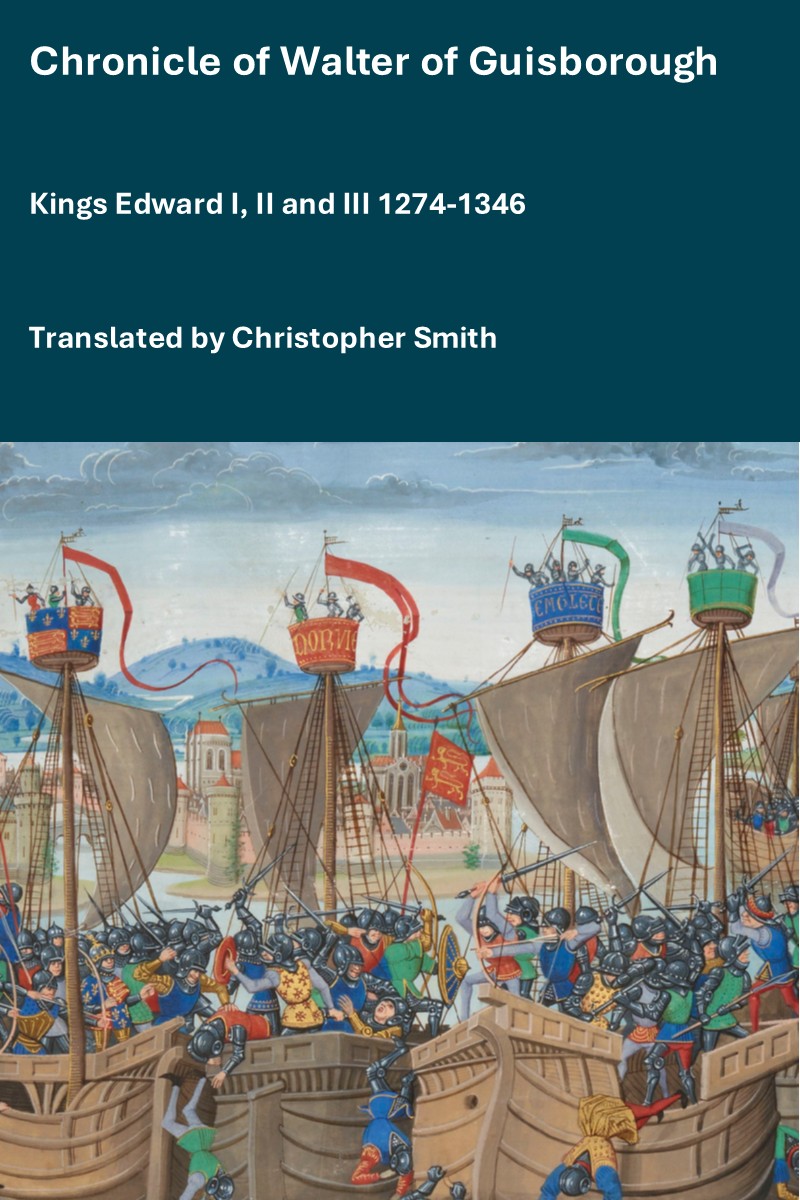 Chronicle of Walter of Guisborough. In the same year [1287], a certain Rhys ap Maredudd [aged 37], of the bloodline of Prince Llywelyn, rebelled in Wales. He was eventually captured by Sir Robert Tiptoft [aged 40], whom the king had appointed over those provinces before his departure. Rhys was then brought to York1, where he was tried, drawn and hanged.
Eodem anno rebellavit in Wallia quidam Rees a Meraduk ex sanguine principis Leulini, qui per dominum Robertum Typtoft, quem illi provinciæ rex profecturus præfecerat, tandem captus et ad Eborum deductus, ibidem judicatus est, tractus, et suspensus.
Note 1. Rhys ap Maredudd was executed on 2nd June 1292.
On 2nd June 1292 Rhys ap Maredudd [aged 42] was executed for treason at York [Map].
 Chronicle of Jean le Bel Volume 1. This truce was thus agreed, as you have heard. The King of Scotland then dismissed his men, and each returned to his own land. He sent messengers to King Philip of France to ratify what had been done, and it was not long before that king, at the request of the King of Scotland, sent back the Earl of Salisbury1 free. The King of England received him with great celebration and immediately released the Earl of Moray, sending him back to Scotland. Now I shall be silent for a while concerning the wars between England and Scotland, and will return to those of Brittany and to the history of Sir Charles of Blois.
Celle treve fut ainsy accordée que vous avez ouy. Si departi le roy d'Escoce ses gens et s'en ala chascun en sa contrée, et envoya messages au roy Philippe de France pour acorder ce que fait estoit, et ne demoura gueres que ledit roy renvoya le conte de Salbry? quitte, au pourchas du roy d'Escoce, et le roy d'Angleterre le recheut à grand feste et delivra tantost le conte de Moret et le renvoya en Escoce. Or me tairay je ung petit des guerres d'Angleterre et d'Escoce, et retourneray ores à celles de Bretaigne et à l'ystoire messire Charles de Bloys.
Note 1. As early as 22nd February 1342, a safe-conduct valid until the Feast of Saint John [24th June] was issued to the Earl of Moray, enabling him to go to France, no doubt to negotiate the terms of his exchange. The Earl of Salisbury appears to have recovered his liberty on 2nd June 1342.
1. Dès le 22 février 1342, un sauf-conduit, valable jusqu'à la Saint-Jean, fut délivré au comte de Moray pour aller en France traiter sans doute au sujet de son échange (Rymer op. cit., t. II, IIe partie, p. 1188), et le comte de Salisbury dut recouvrer sa liberté le 2 juin 1342. Cf. Kervyn de Lettenhove, éd. Froissart, t. III, p. 524, d'après Arch. nat., J362, no 1.
On 2nd June 1347 John Harrington 1st Baron Harington [aged 66] died at Aldingham Furness, Lancashire. His grandson John [aged 19] succeeded 2nd Baron Harington.
He was buried at Cartmel Priory, Lancashire [Map]. His wife Margaret aka Joan Dacre Baroness Harington [aged 64] was buried with him.
John Harrington 2nd Baron Harington: In 1328 he was born to Robert Harrington and Elizabeth Multon. In 1350 John Harrington 2nd Baron Harington and Joan Bermingham were married. The marriage somewhat speculative? On 28th May 1363 John Harrington 2nd Baron Harington died at Gleaston Castle [Map]. His son Robert succeeded 3rd Baron Harington. Given his young age Robert Harrington 3rd Baron Harington became a ward of King Edward III of England who granted his wardship to his daughter Isabella Countess Bedford and Soissons and her husband Enguerrand de Coucy 1st Earl Bedford 1st Count Soissons.
Margaret aka Joan Dacre Baroness Harington: John Harrington 1st Baron Harington and she were married. Around 1283 she was born to William Dacre and Joan Gernet at Aldingham Furness, Lancashire. In 1326 John Harrington 1st Baron Harington was created 1st Baron Harington by writ of summons to Parliament. She by marriage Baroness Harington. On 2nd July 1347 Margaret aka Joan Dacre Baroness Harington died at Aldingham Furness, Lancashire.


Archaeologia Volume 35 1853 XXXIII. On the 2nd of June [1358], the Countess of Pembroke [aged 41] came to dinner.
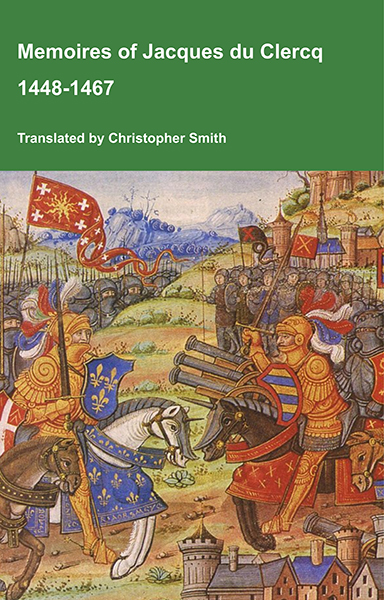
This is a translation of the 'Memoires of Jacques du Clercq', published in 1823 in two volumes, edited by Frederic, Baron de Reissenberg. In his introduction Reissenberg writes: 'Jacques du Clercq tells us that he was born in 1424, and that he was a licentiate in law and a counsellor to Philip the Good, Duke of Burgundy, in the castellany of Douai, Lille, and Orchies. It appears that he established his residence at Arras. In 1446, he married the daughter of Baldwin de la Lacherie, a gentleman who lived in Lille. We read in the fifth book of his Memoirs that his father, also named Jacques du Clercq, had married a lady of the Le Camelin family, from Compiègne. His ancestors, always attached to the counts of Flanders, had constantly served them, whether in their councils or in their armies.' The Memoires cover a period of nineteen years beginning in in 1448, ending in in 1467. It appears that the author had intended to extend the Memoirs beyond that date; no doubt illness or death prevented him from carrying out this plan. As Reissenberg writes the 'merit of this work lies in the simplicity of its narrative, in its tone of good faith, and in a certain air of frankness which naturally wins the reader’s confidence.' Du Clercq ranges from events of national and international importance, including events of the Wars of the Roses in England, to simple, everyday local events such as marriages, robberies, murders, trials and deaths, including that of his own father in Book 5; one of his last entries.
Available at Amazon in eBook and Paperback format.
On 2nd June 1410 William Valois was born to Anthony Valois Duke Brabant [aged 25] and Elisabeth of Görlitz Duchess Brabant [aged 19]. He a great x 4 grandson of King Edward I of England. Coefficient of inbreeding 1.59%. He died aged less than one years old.
On 2nd June 1418 Catherine of Lancaster Queen Consort Castile [aged 45] died at Valladolid [Map]. She was buried at Capilla de los Reyes Nuevos, Cathedral of Toledo.
On 2nd June 1420 Henry V [aged 33] and Catherine of Valois [aged 18] were married at Troyes Cathedral [Map]. She the daughter of Charles "Beloved Mad" VI King France [aged 51] and Isabeau Wittelsbach Queen Consort France [aged 50]. He the son of King Henry IV of England and Mary Bohun. They were half third cousin once removed. She a great x 5 granddaughter of King Henry III of England.
On 2nd June 1423 Ferdinand I King Naples was born illegitimately to Alfonso V King Aragon [aged 27] and Giralda Carlino.
On 2nd June 1448 Domenico Ghirlandaio was born in Florence, Tuscany.
Memoires Jacques du Clercq. On the 2nd day of June in that same year 1451, the Count of Dunois sent forces to lay siege, by sea and by land, before a place called Fronsac; and he himself remained for some time at Bourg to make certain arrangements and to establish order and governance for the good and benefit of the kingdom. Having done this, he came in person to the said siege of Fronsac, and sent a herald to summon those of Libourne to surrender. The inhabitants of Libourne sent their leading men to negotiate terms; and once these terms were agreed upon, the town was surrendered to the king and entrusted to the keeping of the Count of Angoulême. As for the castle of Fronsac, which was the strongest fortress on the frontiers of Guyenne and had always been held by Englishmen native to England, for it was considered a royal stronghold and the key to Guyenne and the Bordelais, the English held it as long as they could. Nevertheless, seeing the nobility and the great number of men-at-arms before them (which was not even a quarter of the king’s full strength), and how at that time the French archers maintained four separate sieges, unable to assist one another because of the great rivers of the Gironde and the Dordogne, then in flood, and also perceiving that none of the French-held sieges was too weak to withstand and fight all the forces that the King of England had in Guyenne at that time, those within the place entered into negotiations with the Count of Dunois. They agreed that, if by the eve of St John the Baptist following that day the French had not been attacked before the said place by the English, they would surrender it into the hands of the King of France. Likewise, those of Bordeaux negotiated, undertaking to cause all the places in Guyenne under the obedience of the King of England to be surrendered; and for the security of this agreement, they gave hostages to ensure its fulfilment. To be present on that day of St John, there came the Counts of Nevers, Clermont, Chastres, Vendôme, and Penthièvre, accompanied by many other knights and squires; and they stood in battle formation that day, awaiting their enemies. The occasion was held with great splendour and honour, with rich and magnificent attire. There were knighted on that day the Count of Vendôme, the Viscount of Turenne, the Lord of La Rochefoucauld, son of the Lord of Commercy, Sir Jean de Rocencourt, the Lord of Gounault, Sir Pierre de Bar, Sir Pierre de Montengam, Sir Ferry de Grancourt, Sir Jean de Bordelles, the Lord of Fontenelles, the Bastard of Vendôme, Sir Jean de La Haye, Sir Tristan l’Hermite, Sir Jean de L’Estrange, Sir Pierre de Louvain, and many others, to the number of sixty knights. On the following morning, which was the eve of St John the Baptist, the English surrendered the place of Fronsac, since no aid had been given to them by the English, and they delivered it into the hands of the Count of Dunois, who left it in the custody of Joachim Rohault. The said Count of Dunois then sent a herald to the Count of Armagnac, who was besieging the town of Riom, and gave him a copy of the treaty of Bordeaux; whereupon that town submitted to the obedience of the King of France and was entrusted to the Lord of Albret. From there the herald went on to the Lord of Foix, and then those of the city of Arques likewise submitted to the obedience of the said king.
Le second jour de juing, audit an cinquante et ung, le comte de Dunois envoya mectre le siege, par mer et par terre, debvant une place appellée Fronsacq, et il demoura devant Bourg, par aulcune espace de temps pour faire certaines ordonnances, et mectre regime et police au bien et proffit du royaulme, et ce fait, vint personnellement audit siege de Fronsacq, et envoya ung herault pour sommer ceulx de Libourne d'eulx rendre; lesquels de Libourne envoyerent les principaulx de la ville pour trouver traictié; lequel traictié fait et accordé, la ville fust rendue au roy et bailliée en garde au comte d'Angoulesme. Et au regard du chasteau de Fronsacq qui estoit le plus fort chasteau des marches de Guienne, et lequel avoit toujours esté gardé d'Anglois, natifs du pays d'Angleterre: pour ce que c'est chambre du roy et la clef de Guienne et de Bourdelois, les Anglois tindrent icelle place le plus qu'ils peurent. Toutesfois voyant la noblesse et la grande multitude des gens de guerre debvant eulx, qui n'estoit point la quarte partie de la puissance du roy, et comment pour icelle heure les francqs archiers tenoient quatre sieges, lesquels ne pooient secourir les ungs les aultres pour les grosses rivieres de Gironde et Dourdonne, qui lors estoient très grosses, veant aussy qu'il n'y avoit siege tenu des Franchois qui ne fust assés fort pour attendre et combattre toute la puissance que le roy d'Angleterre avoit en ce temps en Guienne, pour lesquelles choses ceulx de la place traicterent avecq le comte de Dunois, que sy endedans la veille de St Jehan Baptiste, ensuivant ce jour, les Franchois n'estoient combattus devant ladite place par les Anglois, qu'ils rendroient la place en la main du roy de Franche; pareillement traicterent ceulx de Bourdeaulx, eulx faisant fort de faire rendre toutes les places de Guienne, estant en l'obeisance du roy d'Angleterre, et pour seureté de ce faire, baillerent hostaiges, adfin d'entretenir ce que dict est. Et pour estre a icelle journée de la St Jehan, vindrent le comte de Nevers, de Clermont, de Chastres, de Vendosme, de Ponthievre, accompagniés de plusieurs aultres chevalliers et escuyers, et feurent en bataille ce jour pour attendre leurs ennemys, et fust la journée haultement et honnorablement tenue en riches et grands habillements, et la feurent faits chevalliers le comte de Vendosme, le vicomte de Turrenne, le St de la Rochefoucault, fils du Sr de Commery, messire Jehan de Rocencout, le S de Gounault, messire Pierre de Bar, messire Pierre de Motengam, messire Ferry de Grancourt, messire Jehan de Bordelles, le Sr de Fontenelles, le bastard de Vendosme, messire Jehan de la Haye, messire Tristan l'Hermite, messire Jehan de l'Estrange, messire Pierre de Louvain et plusieurs aultres, jusqu'au nombre de soixante chevaliers, et le lendemain matin qui fust la veille de St Jehan Baptiste, rendirent les Anglois la place de Fronsacq, car aulcun secours d'Anglois ne leur fust baillié, et le baillerent es mains du comte de Dunois, lequel le laissa en garde a Joachim Rohault, et envoya icelluy comte de Dunois un herault vers le comte d'Erminacq qui tenoit siege devant la ville de Riom, lequel lui baillia le double du traictié de Bourdeaulx, et lors se rendit icelle ville en l'obeissance du roy de Franche, et fust bailliée en garde au St d'Albreth, et de la s'en alla le herault devers le St de Foix, et adoncques se meirent ceulx de la cité d'Arques en l'obeissance dudit roy.
Memoires Jacques du Clercq. Although above I have treated at length the war that the Duke of Burgundy had against the people of Ghent, without interruption, as if no other events had taken place, so as not to mix one matter with another, nevertheless, in that same year 1453, after Charles VII, king of France, had spent all the winter making preparations to reconquer the lands of Guyenne and the Bordelais, on the 2nd day of June of that year, the king departed from the castle of Lusignan and went to Saint-Jean-d'Angély. On the 12th day of that same month, the siege was laid before Cadillac in the Bordelais by Sir Jacques de Chabannes, grand master of the king's household, and by the count of Penthièvre, lord of Saint-Sever-de-Boncat. On the 17th day following, the said Cadillac was taken by assault by the aforesaid lords and others of their company, numbering four to five hundred lances, along with archers and guisarmiers and a certain number of francs-archers. There were in the town a garrison of one hundred and sixty fighting men, of whom eighty were killed when the town was taken, and the others withdrew into a tower, where they held out for some time awaiting relief, which did not come; and so they were compelled to surrender at the king's will. They numbered eighty men, all of whom were beheaded, because they had previously sworn allegiance to the king and had then turned English. The lord of Lesparre had departed from Bordeaux, intending to come to their aid; but on the way he learned of the capture of the town, and therefore hastily turned back. In that same year 1453, on the 14th day of July, the French laid siege to the town of Castillon in Périgord, situated on the river Dordogne and held by the English. The siege was conducted by the lord of Lohéac and the lord of Jallanges, marshal of France, and several other knights and men-at-arms, to the number of sixteen to eighteen hundred men-at-arms, along with archers. Among them were the troops of the count of Maine and those of the count of Nevers, led by Sir Ferry de Francy; also the troops of the count of Castres, son of the lord of La Marche; Jean de Messignac and Guillaume de Luzarc; and the troops of the duke of Brittany, commanded by the count of Étampes, his nephew, though led in his stead by the lord of La Hunaudière and the lord of Montauban, since the count had remained with the king. There also was the king's great and small artillery, under the command of Master Jean Bureau and his brother Gaspard Bureau, master of the artillery, and they had in their company seven hundred labourers, who, by the direction of the said Jean Bureau and his brother, quickly enclosed a camp with ditches in which all the artillery was placed. Thus the siege was laid before Castillon. When this came to the knowledge of Lord Talbot, he departed immediately and in haste from the city of Bordeaux, accompanied by eight hundred to a thousand English cavalry, among whom were his son, the lord of Lisle, the lord of Molins, and several others from the kingdom of England, both knights and squires, as well as men from the Bordelais. Following them came four to five thousand English infantry, and the said Talbot arrived before the siege on Wednesday, the 17th of July, around daybreak.
COMBIEN que cy devant j'ay traictié tout au long la guerre que olt le duc de Bourgogne contre ceulx de Gand sans y entrelacher, comme n'y eust d'aultres choses advenues, adfin que je n'entrelache les unes matieres avec les aultres, toutesfois audit an mil iiija liij, après ce que Charles vije de ce nom, roy de Franche, olt tout l'hyver passé fait toutes ses preparations, pour reconquester le pays de Guyenne et de Bourdelois; le second jour de juing audit an, icelluy roy se partist du chasteau de Lusignem et alla à St Jehan d'Angely; et le douziesme jour dudit mois, fust mis le siege devant Calaix en Bourdelois, par messire Jacques de Chabanne, grand maitre d'hostel du roy, et par le comte de Penthievres, sieur de St Severe de Boncat; et le dix septiesme jour ensuivant, fust icelluy Calaix prins d'assault par les Srs dessusdits et aultres de leur compagnie, en nombre de quatre a cinq cens lanches, et les archiers et guisarmiers avecq certain nombre de francs archiers, et y avoit dedans la ville en garnison huit vingt combattants, desquels a la prinse de la ville feurent tués quatre vingt, et les aultres se retirerent en une tour ou ils feurent certain espace de temps en attendant secours, lequel ne leur vint pas, sy le convint rendre a la vollonté du roy, lesquels estoient au nombre de quatre vingt hommes, qui touts feurent descappités pour ce que auparavant avoient fait serment au roy et puis s'estoient retournés Anglois. Le Sr d'Engladres s'estoit party de Bourdaulx, les cuidant venir secourir; mais, en venant il sceut la prinse de la ville, pourquoy il s'en retourna hastivement. Audit an liij, le xiiije jour du mois de juillet fust mis le siege par les Franchois devant la ville de Chastillon en Perrigort, assis sur la riviere de Dordonne, occupée par les Anglois, et y fust mectre le siege le Sr de Loheur, et le Sr de Jalloinges, mareschal de Franche, et plusieurs aultres chevalliers et gens de guerre jusques au nombre de seize a dix huit cens hommes d'armes, et les archers, entre lesquels estoient les gens du comte du Maine et les gens du comte de Nevers, que conduisoit messire Ferry de Francy; aussy y estoient les gens du comte de Castres, fils du St de la Marche; Jehan de Messignac et Guillaume de Luzarc, et les gens du comte de Bretaigne, dont estoit chief le comte d'Estampes son nepveu; et pour lui le conduisoit le Sr de la Hinnaudiere et le Sr de Montauban, pour ce que ledit comte estoit demouré vers le roy. Et la estoit la grosse et menue artillerie du roy, dont avoit la charge maitre Jehan Bureau et Jaspart Bureau son frere, maitre de ladite artillerie, et avoient en leur compagnie sept cens mannouvriers, lesquels, par l'ordonnanche d'icelluy maitre Jehan Bureau et son frere, clorent hastivement un camp de fossés ou estoit toute l'artillerie: et adonc fust mis le siege devant Chastillon. Ce venu a la cognoissance du Sr Tallebot, il se partist incontinent et en haste de la ville de Bourdaulx, accompagnié de huict cens a mille Anglois de cheval, entre lesquels, estoit son fils, Sr de Lisle, le S de Molins et plusieurs aultres du royaume d'Angleterre, tant chevalliers que escuyers et aussy du pays de Bourdelois, et après venoient quatre a cinq mille Anglois de pied, et arriva icelluy Tallebot devant ledit siege, le merquerdy, xvije de juillet, environ le poinct du jour.
Memoires Jacques du Clercq. In that same year also, on the 8th day of June, in the town of Arras, a young man of twenty-four years of age, from the country of Brabant, named Henriet, was sentenced to be hanged and was hanged on the gallows. The reason was that he had stolen a chalice and committed other thefts.
En cest an aussy, le viije de juing, en la ville d'Arras, fust jugé a pendre, et pendu au gibet un josne compagnon de l'age de xxiiij ans, du pays de Braband, nommé Henriet, et la cause fust pourtant qu'il avoit emblé ung calice et fait aultres larcins.
Memoires Jacques du Clercq. And the said parties further alleged on both sides, as much in reply as in rejoinder, many facts and reasons tending to the aforesaid ends concluded by them, upon which matters, the parties having been fully heard on both sides by our said court, and the same court having allowed the said parties to produce before it whatsoever they wished to produce and had set down in law, thereupon, our said court having seen the matters litigated before it on the 21st day of the month of May 1461, and on other days following, together with the acts, demands and defences of the said parties thereafter delivered in writing by them, and also the confessions made in our said court by the said Jehan Thiebault, Jehan Pochon, Pierre and Mathieu du Hamel, Robert de Marquais, Gilles Flameng, Mathieu Paille, Jehan Boullengier, Guillaume de Berry and Jehan Forme, together with the criminal proceedings, both in the secular court and in the ecclesiastical court, against the said Collard de Beauffort, Tacquet, Aymery, Gavrelle, Bary, and the late Pierre du Carioeul, Jehan le Febvre, called le Cat, and Denis Grenier, and also against Jehanne Tannoy, called the 'abbot of little sense', Colette Lestrevée, Jehan Dauvergne, Bellote, Henri de la Boille, called Cancourt, Bellote du Quesnoy, Jehan du Bois, Gilles de Blencourt, Jehanne Griet, otherwise called Fer Cougon, Thomas le Braconnier, Catherine la Grigaulde, otherwise Kateron, one called Printemps Gay, otherwise Wistmande, Margaret called Beghuinne de Doue, Jehanne Bayarde, called le Luquet, another called la Parcheminiere, Jacques whose name was Roquet Rollequin, Jehanne Damiens, and also Master Antoine Sacquespée, Jehan Joshet, Henri de Royville, burgesses of the said town of Arras, Jacques Dacyes and Jehan le Febvre, all accused of the crime of sorcery and Waldensianism, those proceedings having been made and laid before our said court from that jurisdiction, and all other things delivered and produced before our said court by the said parties, together with their objections and answers, and also certain letters in the form of an agreement made and passed before the councillors of the said Duke of Burgundy by the said Robert de Marquais, and delivered, and alleged by him to have been made with the late Philippe de Beauffort, in his lifetime knight, son of the said Collard de Beauffort, and with the said Tacquet, Carioeul and Bary, and letters of relief from that agreement obtained by the said Philippe de Beauffort from our said most dear late predecessor on the second day of the month of June in the year of Our Lord 1478, the litigation thereupon having been argued, with productions, objections and answers, and also certain requests delivered by the said de Marquais, by which he sought that his confession made on the 11th day of the month of December in the year 1467 should be communicated to him, and likewise a certain agreement made in our said court on the 21st day of the month of July last past, between Jehan lord of Beauffort, nephew of the said Collard and also his heir, the said Pierre du Carioeul, Tapard, Bosquillon, husband and bailiff of Jehanne le Febvre, daughter of the said late le Cat, Jehan de Saillier, husband and bailiff of Isabelle le Vasseur, formerly wife of the said de Blencourt, Jehan Witegny, likewise husband and bailiff of Perrine de Bary, and the said Hugues Aymery, resuming the present proceedings in place of the said deceased persons, together with our said Attorney General joined with them on the one part, and our beloved and faithful counsellor in our said court, Master Philippe de Bery, Jehan de Torigny, esquire, and his wife, in place of the said late de Bery, on the other part, and also the supplication or request delivered to our said court by our beloved and faithful counsellor the bishop of Arras, and likewise the conclusions taken in this matter by our said Attorney General, and the said de Marquais having been heard and questioned by our said court upon certain points of the said proceedings, and all things in this regard having been considered which ought to be considered, our said court, by its judgment, without having regard to the said letters of agreement and the requests delivered by the said bishop of Arras and de Marquais, said and declared, and says and declares, that the said appellees and respondents had acted wrongly and abusively, had spoken, imprisoned, examined, proceeded, sentenced and executed wrongly and abusively, and that the said appellants had rightly appealed, and therefore the said Duke of Burgundy shall make amends to us, condemning the said respondents in the costs of the appeals, the taxation thereof being reserved to our said court. And likewise our said court said and declared, and says and declares, that all the said proceedings in the court of the count and elsewhere in the lay court, by the aforesaid du Bois, Flameng, Forme and de Marquais, or any of them, and also all the other proceedings in the ecclesiastical court signed by du Hamel, were false, abusive and null, made falsely and otherwise than ought to have been done, and that as such they, together with all their minutes and originals wherever they may be found and discovered, shall be publicly broken, annulled and torn up, both in our said court and in the said place of Arras, save only the proceeding made by the aforesaid defendants against Jehanne la Sellière, which shall be brought before our said court for it to be seen and for the final point of law to be set down. And it annulled and brought to nothing, and annuls and brings to nothing, all the sentences, judgments, confiscations of goods movable and immovable, condemnations to amends, pecuniary executions and all other things ensuing by means of such proceedings, and remitted and restores, and remits and restores, all the aforesaid condemned persons, executed persons and accused persons to their honour and good name. It lifted and lifts all seizures and all other impediments whatsoever placed upon the goods movable and immovable, fruits, revenues or rents of the said plaintiffs and of others against whom, by reason of imprisonment, condemnation or otherwise, proceedings had been taken and imposed by reason and through the matters laid to their charge, and placed and places those goods at their full liberty for their use and benefit. And moreover the same court, for the reparation of the said excesses, unlawful acts, defects and abuses committed by the oft-mentioned defendants, as much by means of the said appeals as by the intervention of our said Attorney General, ordered and orders the said defendants to restore and return to the said plaintiffs and to the others imprisoned and executed all the aforesaid goods movable and immovable, together with their fruits and revenues, taken and levied from them by reason of the said arrests, declarations, confiscations, condemnations and executions made against them, in the form which follows, namely:
Dicebantque ulterius prædictæ partes hinc inde tam repplicando quam duplicando plura facta et rationes ad supradictos fines per eos concludendo super quibus partibus ipsis, per dictam curiam nostram ad plenum, hinc inde auditis eadem curia nostra dictas partes ad producendum penes eam quicquid producere vellent et in jure appunctassent, tandem visis per dictam curiam nostram litigatis, prædictarum partium in ea vigesima prima die mensis maii 1461, et aliis inde sequentibus, factis, demandisque et deffensionibus ipsarum partium per eas, deinde inscriptis traditis, confessionibusque jam dictorum Joannis Thiebault, Joannis Pochon, Petri et Mathei du Hamel, Roberti de Marquais, Egidii Flameng, Mathei Paille, Joannis Boullengier, Guillelmi de Berry ac Joannis Forme, in dicta curia nostra factis, una cum processibus criminalibus, tam in curia seculari quam ecclesiastica contra jam dictos Collardum de Belloforti, Taquet, Aymery, Gavrelle, Bary, defunctosque Petrum du Carioeul, Joannem le Febvre, dictum le Cat, et Dyonisium Grenier, ac etiam Joannam Tannoy, dictum l'abbé de peu de sens, Colletam Lestrevée, Joannem Dauvergne, Bellotam, Henricum de la Boille, dictum Cancourt, Bellotam du Quesnoy, Joannem du Bois, Ægidium de Blencourt, Joannam Griet, alias Fer cougon, Thomam le Braconnier, Catharinam la Gringaulde, alias Kateron, quandam Printemps Gay, alias Wistmande vocatam, Margaretam, dictam Beghuinne de Doue, Joannam Bayarde, dictam le Luquet, alteram nuncupatam la Parcheminiere, Jacobum cui nomen erat Roquetum Rollequin, Joannam Damiens, nec non magistrum Antonium Sacquespée, Joannem Joshet, Henricum de Royville, burgenses dictæ villæ atrebatensis, Jacobum Dacyes et Joannem le Febvre, omnes de crimine sortilegii et valderiæ accusatos, factis et in eadem curia nostra ex ipsius gubernatione oblatis et cæteris aliis per ipsas partes penes ipsam curiam nostram traditis et productis, ipsarumque contradictis et salvationibus nec non certis litteris in forma accordii coram gentibus consilii jam dicti ducis Burgundiæ factis et passatis per dictum Robertum de Marquais, traditis ac per eum cum defuncto Philippo de Beauffort, in vita sua milite, jam dicti Collardi, de Beauffort, filio, dictisque Tacquet, Carioeul et Bary, factum fuisse prætenso, litterisque relevamenti ipsius accordii per eundem Philippum de Beauffort secunda die mensis junii anno Domini 1478, a jam dicto charissimo progenitore nostro obtentis, litigato super hoc agitato, productionibus, contradictis et salvationibus, nec non certis requestis per ipsum de Marquais traditis, per quas suam confessionem, undecima die mensis decembris anno 1467, factam sibi communicari requirebat, similiter certo accordo in ipsa curia nostra, vigesima prima die mensis julii ultimo præteritæ, in Joannem dominum de Beauffort, nepotem dicti Collardi atque etiam ipsius hæredem, dictum Petrum du Carioeul, Tapardum, Bosquillon, maritum et baillivum Joanne le Febvre, jam dicti defuncti le Cat filiæ, Joannem de Saillier, maritum et baillivum Isabellæ le Vasseur, per antea dicti de Blencourt uxoris, Joannem Witegny, etiam maritum et baillivum Perinæ de Bary, jam dictumque Hugonem Aymery, tamquam præsentem processum loco dictorum defunctorum resumentes ac dictum procuratorem nostrum generalem cum eis adjunctum ex una parte, et dilectum, et fidelem in ipsa curia nostra consiliarium nostrum magistrum Philippum de Bery, Joannem de Torrigny, scutiferum, et suam uxorem, loco dicti defuncti de Berry, ex parte altera facto, supplicationeque sive requesta eidem curiæ nostræ per dilectum et fidelem consiliarium nostrum episcopum atrebatensem tradita ac etiam conclusionibus in hac materia per dictum pro curatorem nostrum generalem captis et dicto de Marquais, per eandem curiam nostram, super aliquibus punctis ipsius processus audito et interrogato, ac consideratis in hac parte considerandis, præfata curia nostra per suum arrestum absque jam dictis litteris accordi, et requestis per dictos episcopum atrebatensem et de Marquais traditis respectum habendo, jam dictos appellatos et intimatos malè et abusivè fecisse, dixisse, incarcerasse, appunctasse, processisse, sententiasse et executasse, dictosque appellantes benè appellasse, et ob hoc dictus dux Burgundiæ nobis emendabit, ipsos intimatos in expensas appellationis causæ earumdem taxatione dictæ curiæ nostræ reservata condemnando, nec non eadem curia nostra omnes processus jam dictos in curia comitis et alibi in curia laïcali, per antedictos du Bois, Flameng, Forme et de Marquais, seu aliquem ipsorum ac etiam cæteros alios processus in curia ecclesiastica de Hamelo signatos, falsos, abusivos, nullos factos falsò et aliter quam debitè esse dixit et declaravit, dicit que et declarat, ac quod ut tales una cum omnibus minutis et originalibus ipsorum ubicumque reperiri et inveniri poterunt publicè tam in dicta curia nostra quam in dicto loco atrebatense frangentur, cassabuntur et lacerabuntur; dempto processu per supra nominatos deffensores contra Joannam le Selliere facto, qui penes curiam nostram, pro illo viso et fine rationis appunctando, afferetur, ordinavit et ordinat, omnesque sententias, judicia, bonorum confiscationes, mobilium et immobilium, condemnationes emendarum, pecuniarum executiones et cætera alia medio hujuscemodi processuum subsecuta, adnullavit seu ad nihillavit, adnullat seu adnihillat; prædictosque omnes condemnatos, executatos et accusatos ad suum honorem et famam remisit et remittit. Omnes manusumsias et certa alia impedimenta quæcumque in bonis tam mobilibus quam immobilibus, fructibus et revenutis seu reditibus dictorum actorum et aliorum contra quos per incarcerationem, condemnationem seu aliter ad causam et medio casuum sibi impositorum processum exstitit, factum et appositum levavit ac levat, ac illa ad plenariam liberationem ad eorum utilitatem posuit ac ponit; et insuper eadem curia nostra pro jam dictorum excessuum, attentatorum, defectuum et abusuum per sæpe dictos deffensores commissorum reparatione, tam medio dictarum appellationum quam ex beneficio dicti procuratoris nostri generalis, dictos deffensores, eisdem actoribus et aliis incarceratis et executatis omnia prædicta bona tam mobilia quam immobilia, ipsorumque fructus et revenutas super eis occasione dictarum captionum, declarationum, confiscationum, condemnationum et executionum contra eos factarum capta et levata, in forma quæ sequitur reddendum et restituendum, videlicet:
Memoires Jacques du Clercq. In that same year 1464, on the 2nd day of June, the Count of Charolais came to his father in the town of Lille, accompanied by eighty to one hundred gentlemen and a large number of horses. In that town of Lille the Lord of Croy was present. And although the duke was not well pleased with his son, the Lord of Saneuses managed things so that he spoke with his said son and forgave him entirely. However, he did not restore his pension, and it was said that this was due to the Lord of Croy and his followers. Nevertheless, the Lord of Croy managed to speak with the count, who told him, as was reported, that if he conducted himself as he ought, he would be a good lord to him.
Audit an lxiiij, le ije jour du mois de juing, vint le comte de Charollois devers son pere, en la ville de Lille, accompagnié de iiijxx a cent gentilhommes, et grand nombre de chevaulx; en laquelle ville de Lille le St de Croy estoit. Et combien que le duc ne fust pas bien content de son fils, le S de Saneuses feit tant qu'il parla a sondit fils et lui pardonna tout; mais il ne lui rendit pas sa pension, et disoit on que c'estoit par ledit S de Croy et les siens. Toutesfois le S de Croy feit tant qu'il parla au comte; lequel comte lui dit, comme on disoit, quant il feroit ce qu'il debvoit, il lui seroit bon seigneur.
Calendar of State Papers of Milan 1471. 2nd June 1471. Potenze Estere. Francia. Milan Archives. 218. Sforza di Bettini Of Florence, Milanese Ambassador in France to Galeazzo Maria Sforza, Duke of Milan.
Yesterday his Majesty here heard with extreme sorrow, by clear and manifest news from England, so it appears, that king Edward has recently fought a battle with the Prince of Wales, towards Wales, whither he had gone to meet him. He has not only routed the prince but taken and slain him, together with all the leading men with him.
He has also taken the queen and sent her to London to keep King Henry company, he also being a prisoner there; and so at length King Edward remains the peaceful lord and dominator of that Kingdom of England without having any further obstacle whatever.
Your Excellency may imagine the great joy and satisfaction of the Duke of Burgundy at these affairs. He has shown it by public demonstrations, constant processions, ringing of bells and bonfires so that one would imagine the whole country to be on fire. It is expected to make him so haughty (fiero) that he will no more consent to a year's truce.
Ham, the 2nd June, 1471. [Italian.]
On 2nd June 1489 Charles Bourbon Duke Vendôme was born to Francis Bourbon Count Vendôme and Soissons [aged 19] and Marie Luxemburg Countess Vendôme and Soissons. He married 8th May 1513 his half third cousin once removed Françoise Valois Countess Vendôme, daughter of Rene Valois Duke Alençon and Margaret Lorraine Duchess Alençon, and had issue.

Ellis' Letters. 2nd June 1520. Sir Thomas Boleyn [aged 43] to Cardinal Wolsey [aged 47] respecting the Interview with Francis the First. A. D.
[MS. COTTON. CALIG. D. vii. fol. 104. Orig.]
This Letter, and the three which immediately follow it, relate to the preparations for the Interview between Henry the Eighth and Francis the First, which at last took place, within the English pale, between Guisnes and Ardres, on June 7th 1520. The manner of meeting, and the regulation of the ceremonial were confided by both Monarchs to Wolsey; to whom three of these Letters are addressed.
Hall's account of this Interview in his Chronicle, and he was personally present at it, was drawn up by Henry's command. Another Journal of the Occurrences was also drawn up by order of Francis. This last was pub. lished by Montfaucon in his Monumens de la Monarchic Frangoise; together with a third Narrative by Robert de la Mark Mareschal de Florenges.
Francis was so gratified with the splendor of this Interview, that he ordered the cavalcade of the Monarchs at their first meeting on horseback, to be carved in Basso Relievo on five marble tables, and to be placed in front of the house of the procureur general at Rouen, where they still remain.
Henry directed the Interview, with its attendant circumstances, to be represented in a Picture, formerly at Windsor, but which by the munificence of his late Majesty now ornaments the Meeting Room of the Society of Antiquaries.
Barklay the black monk, who wrote "The Ship of Fools," was engaged by Wolsey to supply the mottoes and devices on the occasion.
The manner in which the nobility of the two countries vied with each other in this scene of grandeur, is described in warm colours. It appears to have been by far the most costly ceremonial known to our History. The English were said to have carried their manors, the French their forests, upon their backs: and the very plain on which the monarchs met, from the richness of the tents and pavilions, was thenceforward called Le Champ De Drap D'or.
Hall's description of the person of Francis the First, as he left the tent in which the monarchs had embraced, is worth transcribing. He was " a goodly Prince, stately of countenance, merry of chere, brown coloured, great eyes, high nosed, big-lipped, fair brested and shoulders, small legges, and long feet."
Pleasith it your Grace to understond that the xixth. day of this Moneth I wrote my last Lettres to your Grace. And as yestereven the Great Master supped here with me at my Lodging; and this day he is ryden out of this Towne onward on his journay to Mount pelyer ward; and this day or he tooke his hors, he sent for me to dyne with hym, and after dynner at my taking leve of hym, he first willed me, till he commyth ageyn, for all matiers that I shuld have to doo for the Kings Highnesse that I shuld resort all way to the King hym self, or els to my Lady, or to Robertet, and to non other. He also prayed me that I wold humbly and hartely recommend hym to your Grace, and willed me to wryte to you that as touching th'Entrevieu and Meting betwixt the King's Highnesse and the King here, though the King here commeth nat to Calais at the first, accordyng to the Kings Grace desire, wherin I have often spoken to hym according to myn Instruccions, he besechith your Grace that ye woll soo shew it to the King's Highnesse that it may be takyn in good part, and that it is for no mystrust nor diffidence that the King here hath to come to Calais, but he thinketh it is convenyent that they both (tyll the tyme of their meting) kepe somwhat to theymselfs, beyond and further, than that is agreed by there Counsells, to shewe more love, trust, and kindnesse ech to other, sayeng to me that he thinketh veryly after that both the Kings have mett and spoken to gyther, that the King here, within a day or two woll come secretly to Calais to doo the King's Grace more pleasure, or forther into England if the Kings Highnesse will desyre hym. He willed me also to wryt to your Grace of the great love, favour, and confidence that the King his master hath in your Grace, and the great desire that he hath to doo you pleasure; and toold me it had not bee seen nor hard of oon man, being a Cardinall, to bee in soo great estime, trust, and reputacion of both the Kings of Englond and of France, as your Grace is. Wherfor he thinketh it is in your Grace to employe them both, after your wisdome, in any thing at your owne pleasure. He shewed me also for his part, that, if ther wer any thing that he may doo your Grace pleasure or service in, he will as gladly doo it, and with as good will and diligence as for any brother he hath: and that ye shuld well perceyve and know by th'experience whan so ever it shuld please your Grace to prove hym. He toold me furthermore that in any thing that shalbe owther treated or concluded ther as he goyth now, your Grace shalbe advertised of it, sayeng also that if their matiers framyd well betwixt Mons r. de Chieuvres and hym, he thought he shuld goo and see the King Catholique at Parpinyan. He hath with hym a great Trayn, so that he maketh his rekenyng to bee above a thowsand horsys: and hath with hym a garde of xxx li. archers in goldsyths work uppon their cootes both before and behind.
I send your Grace herein inclosed a Papir in French of his devis...b the Meting and Entrevieu which Robertet hath delivered me by the... c Master's commaundement; and an other papir signed with Monsr. de F... hand conteynyng the Articles of th'order for the redresse of the ma... according to the forme of them your Grace wrote to me in Inglyshe: Whereto all the Counsell here is fully agreed as your Grace shall presently perceyve by the same Paper in French. Also where your Grace hath deputed the Master of the Holies and the Vice Admirall to examyn the Inglysh marchaunts robbed and spoyled in September and October... they have deputed alonly Monsr. de Frayn here for thexaminacion of French men robbed within the said ij. monethes.
Also the Great Master hath advised me that incontinent, after his departure, I shuld make myn abode at a Vyllage called Poyssy, half a league from the Court. And so I purpose to goo thider to-morrow; beseching the holy Trinitie long to preserve your Grace. From Parys this xxi l. h day of March.
Youres most bounden
Thomas.
Note a. Hall, edit. 1809. p. 610.
Note b. devise for.
Note c. Great.
Wriothesley's Chronicle [1508-1562]. 2nd June 1533. On the morrowe after was great justes at the tilte donne by eightene lordes and knightes, where was broken many speares valiantlie, but some of their horses would not come at their pleasure nere the tilt, which was great displeasure to somme of them that ranne; and, the justes donne, their was a goodlie banquett made to all the lordes, ladies, and gentlemen in the Queenes Chamber.
Letters and Papers. 2nd June 1536. Crapelet, Lettres de Henry VIII., 167. 1036. Anne Boleyn [deceased].
Poem descriptive of the life of Anne Boleyn, composed at London, 2 June 1536.
Speaks of her having first left this country when Mary went to France "to accomplish the alliance of the two Kings." She learned the language from ladies of honor. After Mary's return to England she was retained by Claude and became so accomplished that you would never have thought her an English, but a French woman. She learned to sing and dance, to play the lute and other instruments, and to order her discourse wisely (et ses propos sagement adjancer). She was beautiful and of an elegant figure, and still more attractive in her eyes, which invited to conversation, &c. On her return her eyes fascinated Henry, who made her, first a marchioness, and afterwards Queen, 1 June 1533. Describes the birth and baptism of Elizabeth, the establishment of the royal supremacy, and the death of More and the Carthusians, of which Anne was accused of being the cause. Hence a severe ordinance was issued against any that spoke ill of her; which shut people's mouths when they knew what ought not to be concealed. Meanwhile Queen Catharine suffered patiently her degradation and even being separated from her daughter. Anne, on the other hand, had her way in all things; she could go where she pleased, and if perhaps taken with the love of some favored person, she could treat her friends according to her pleasure, owing to the ordinance. But that law could not secure to her lasting friendships, and the King daily cooled in his affection. Anne met with divers ominous occurrences that presaged evil;—first a fire in her chamber, then the King had a fall from horseback which it was thought would prove fatal, and caused her to give premature birth to a dead son. Nevertheless she did not leave off her evil conversation, which at length brought her to shame.


Letters and Papers. 2nd June 1536. 1036. A Lord of the Privy Council seeing clear evidence that his sister loved certain persons with a dishonorable love, admonished her fraternally. She acknowledged her offence, but said it was little in her case in comparison with that of the Queen, as he might ascertain from Mark [deceased], declaring that she was guilty of incest with her own brother. The brother did not know what to do on this intelligence, and took counsel with two friends of the King, with whom he went to the King himself and one reported it in the name of all three. The King was astonished, and his color changed at the revelation, but he thanked the gentlemen. The Queen, meanwhile, took her pleasure unconscious of the discovery, seeing dogs and animals that day fight in a park. In the evening there was a ball, and the King treated her as if he knew no cause of displeasure. But Mark was then in prison and was forced to answer the accusation against him. Without being tortured he deliberately said that the Queen had three times yielded to his passion. The King was thus convinced, but made no show of it, and gave himself up to enjoyment. Especially on the 1 May, he got up a tournay with several combatants; among others, my Lord of Rocheford [deceased], the Queen's [deceased] brother, showed his skill in breaking lances and vaulting on horseback. Norris [deceased], also, best loved of the King, presented himself well armed, but his horse refused the lists and turned away as if conscious of the impending calamity to his master. The King seeing this, presented Norris with his own horse; who, however, knew that he could not keep it long. He, Weston [deceased], and Brereton did great feats of arms, and the King showed them great kindness "dissimulant leur ruyne prochaine." The Queen looked on from a high place, "et souvent envoioit les doulz regards," to encourage the combatants, who knew nothing of their danger. Immediately after the tournay archers were ordered to arrest Norris, and were much astonished and grieved, considering his virtue and intimacy with the King, that he should have committed disloyalty. Before he went to prison the King desired to speak to him, offering to spare his life and goods, although he was guilty, if he would tell him the truth. But being told the accusation, Norris offered to maintain the contrary with his body in any place. He was accordingly sent to the Tower. The Queen was conducted thither next day by the Duke of Norfolk [aged 63], and her brother also, who said he had well merited his fate. Waston and Barton followed, and pages also. The city rejoiced on hearing the report, hoping that the Princess would be restored. The whole town awaited her coming with delight.
"Et n'eussiez veu jusque aux petis enfans
Que tous chantans et d'aise triumphans.
Il n'y a cueur si triste qui ne rye
En attendant la princesse Marie."
But she did not remove from her lodging, and did not avenge herself by blaming the Queen when she heard that she was a prisoner; but only wished she had behaved better to the King, and hoped God would help her, adding:—
"Et si sa fille est au Roy, je promectz
Qu'a mon pouvoir ne luy fauldray jamais."
Here follows a eulogy of the Princess, describing her education in astronomy, mathematics, logic, morals, politics, Latin, Greek, &c. The expectation that she would be restored made the King apprehensive of some commotion; to appease which he caused his thanks to be conveyed to the people for their good will to him and his daughter, but told them they need not be anxious about her return, for they would shortly be satisfied. The joy of the people on this was converted into sorrow and they dispersed (et confuz s'en partit).
The Queen, meanwhile, having no further hope in this world, would confess nothing.
"Riens ne confesse, et ne resiste fort Comme voulant presque estre délivre De vivre icy, pour aulz cieulz aller vivre; Et l'espoir tant en icelle surmonte, Que de la mort ne tient plus aucun compte."
Letters and Papers. But she did not give up her greatness, but spoke to the lords as a mistress. Those who came to interrogate were astonished. They afterwards went to Rochford, who said he knew that death awaited him and would say the truth, but raising his eyes to Heaven denied the accusations against him. They next went to Norris, Waston, and Barton, who all likewise refused to confess, except Mark, who had done so already. The King ordered the trial at Westminster, which was held after the manner of the country.
Description of the process of indictment and how the archers of the guard turn the back [of the axe] to the prisoners in going, but after sentence of guilty the edge is turned towards their faces; the trial at Westminster; the verdict; whereupon suddenly the axe was turned towards them; and the sentence. Everyone was moved at their misfortune, especially at the case of Waston, who was young and of old lineage and high accomplishments; but no one dared plead for him, except his mother, who, oppressed with grief, petitioned the King, and his wife, who offered rents and goods for his deliverance. But the King was determined the sentence should be carried out. If money could have availed, the fine would have been 100,000 crowns.
Rochford [deceased] was not tried at Westminster, but at the Tower, with the Queen. His calm behaviour, and good defence. More himself did not reply better. The judges at first were of different opinions, but at last one view overturned the other and they were unanimous. The Duke of Norfolk [aged 63] as president, though maternal uncle of the accused, asked them if he was guilty or not, and one replied guilty. Rochford then merely requested the judges that they would ask the King to pay his debts. The Queen then was summoned by an usher. She seemed unmoved as a stock, and came away with her young ladies, not as one who had to defend her cause but with the bearing of one coming to great honor. She returned the salutations of the lords with her accustomed politeness, and took her seat. She defended herself soberly against the charges, her face saying more for her than her words; for she said little, but no one to look at her would have thought her guilty. In the end the judges said she must resign her crown to their hands; which she did at once without resistance, but protested she had never misconducted herself towards the King. She was then degraded from all her titles,—countess, marchioness, and princess, which she said she gave up willingly to the King who had conferred them. Sentence of death, either by sword or fire, at the pleasure of the King, was pronounced by Norfolk. Her face did not change, but she appealed to God whether the sentence was deserved; then turning to the judges, said she would not dispute with them, but believed there was some other reason for which she was condemned than the cause alleged, of which her conscience acquitted her, as she had always been faithful to the King. But she did not say this to preserve her life, for she was quite prepared to die. Her speech made even her bitterest enemies pity her.
Meanwhile the prisoners prepared to die and took the Sacrament. Description of the execution of Rochford, with his dying speech, not unlike the version given in No. 1107. The other four said nothing, as if they had commissioned Rochford to speak for them, except Mark, who persisted in what he said that he was justly punished for his misdeeds.
The Queen, in expectation of her last day, took the Sacrament. Then the day of her death was announced to her, at which she was more joyful than before. She asked about the patience shown by her brother and the others; but when told that Mark confessed that he had merited his death, her face changed somewhat. "Did he not exonerate me," she said, "before he died, of the public infamy he laid on me? Alas! I fear his soul will suffer for it."
Next day, expecting her end, she desired that no one would trouble her devotions that morning. But when the appointed hour passed she was disappointed,—not that she desired death, but thought herself prepared to die and feared that delay would weaken her. She, however, consoled her ladies several times, telling them that was not a thing to be regretted by Christians, and she hoped to be quit of all unhappiness, with various other good counsels. When the captain came to tell her the hour approached and that she should make ready, she bade him for his part see to acquit himself of his charge, for she had been long prepared. So she went to the place of execution with an untroubled countenance. Her face and complexion never were so beautiful. She gracefully addressed the people from the scaffold with a voice somewhat overcome by weakness, but which gathered strength as she went on. She begged her hearers to forgive her if she had not used them all with becoming gentleness, and asked for their prayers. It was needless, she said, to relate why she was there, but she prayed the Judge of all the world to have compassion on those who had condemned her, and she begged them to pray for the King, in whom she had always found great kindness, fear of God, and love of his subjects. The spectators could not refrain from tears. She herself having put off her white collar and hood that the blow might not be impeded, knelt, and said several times "O Christ, receive my spirit!"
One of her ladies in tears came forward to do the last office and cover her face with a linen cloth. The executioner then, himself distressed, divided her neck at a blow. The head and body were taken up by the ladies, whom you would have thought bereft of their souls, such was their weakness; but fearing to let their mistress be touched by unworthy hands, forced themselves to do so. Half dead themselves, they carried the body, wrapped in a white covering, to the place of burial within the Tower. Her brother was buried beside her, Weston [deceased] and Norris after them. Barton and Mark also were buried together (en ung couble).
The ladies were then as sheep without a shepherd, but it will not be long before they meet with their former treatment, because already the King has taken a fancy to a choice lady. And hereby, Monseigneur, is accomplished a great part of a certain prophecy which is believed to be true, because nothing notable has happened which it has not foretold. Other great things yet are predicted of which the people are assured. If I see them take place I will let you know, for never were such news. People say it is the year of marvels.Fr.
Letters and Papers. 2nd June 1536. Add. MS. 28,588, f. 284. B. M. 1043. Dr. Ortiz to the Empress.
The prayers of the late Queen of England and the Holy Martyrs have prevailed. The King's mistress [deceased] had six lovers, one being her own brother [deceased]. Another, a musician [Mark Smeaton [deceased]], seeing that he was less favoured, discovered the fact to the King, first asking for pardon and his life. Now they are all taken it is found to be true. Her father [aged 59], who was innocent, approved her condemnation. She was sentenced, first to be degraded from being Queen, then beheaded and burnt, seeing the others suffer the same death, with the exception of the one who revealed the crime. It was proved at the trial that she had behaved in this way before the conception of the child which the King thought to be his. It is intended to declare the child not to be the King's. Images have been restored and purgatory is preached again.
The cardinal of Burgos told him that a saint, who was martyred at the beginning of her tyrannical exaltation, prophesied that Anne would be burnt to death.
It is said that the process against her states that she poisoned the Queen. The King is enamoured of another lady [Jane Seymour [aged 27]]. Rome, 2 June 1536.
Sp., pp. 3. Modern copy.


The History of William Marshal was commissioned by his son shortly after William’s death in 1219 to celebrate the Marshal’s remarkable life; it is an authentic, contemporary voice. The manuscript was discovered in 1861 by French historian Paul Meyer. Meyer published the manuscript in its original Anglo-French in 1891 in two books. This book is a line by line translation of the first of Meyer’s books; lines 1-10152. Book 1 of the History begins in 1139 and ends in 1194. It describes the events of the Anarchy, the role of William’s father John, John’s marriages, William’s childhood, his role as a hostage at the siege of Newbury, his injury and imprisonment in Poitou where he met Eleanor of Aquitaine and his life as a knight errant. It continues with the accusation against him of an improper relationship with Margaret, wife of Henry the Young King, his exile, and return, the death of Henry the Young King, the rebellion of Richard, the future King Richard I, war with France, the death of King Henry II, and the capture of King Richard, and the rebellion of John, the future King John. It ends with the release of King Richard and the death of John Marshal.
Available at Amazon in eBook and Paperback format.
Letters and Papers. 2nd June 1536. 2 June. Add. MS. 28,588, f. 286. B.M. 1044. [Hannart] to the Empress.
Wrote last on the 27th ult. * * * Supposes the Empress has heard how Ana de Bolan [deceased] has been sent to the Tower with her brother "el conde de Sefort" (Rochford), and three other gentlemen of the King's chamber, named Norris [deceased], Wasten [deceased], and Brecton, and an organist [deceased]. On the 16th they were publicly beheaded for adultery with the Queen and conspiracy against the King. The Queen's head and body were taken to a church in the Tower, accompanied by four ladies. The other bodies were quartered. It is now said that her pretended daughter was taken from poor parents.
The king of Scotland seems to be putting off his marriage with the daughter of the duke of Vendome. De Leon Solarrona (Lyons), 2 June 1536.
Sp., pp. 5. Modern copy.
On 2nd June 1537 Thomas Percy [aged 33], Francis Bigod [aged 29], and John Bulmer and Ralph Bulmer were hanged at Tyburn [Map].
Chronicle of Edward Hall [1496-1548]. 2nd June 1537 In June the lord Darcy [aged 70] and the lord Hosey [Map] were arraigned at Westminster before the Marques of Exceter [aged 41], then High Steward of England, and they were both found guilty and had their judgement as in cases of high treason.
After 2nd June 1537. Shortly after were also arraigned Sir Robert Constable [aged 59], Sir Thomas Percy [deceased], Sir Fraunces Bygod [deceased], Sir Stephin Hamelton, Sir Jhon Bulmer and his wife [deceased], which some reported was not his wife but his paramour, also William Lumley, Nicholas Tempest [aged 57], and the Abbots of Jerney [deceased] and Rivers, and Robert Aske [aged 37], and all found guilty of high treason, and all put to death at Tiborne [Map], saving Sir Robert Constable, which was hanged in chains on Beverley gate at Hull and Aske was also hanged in chains in Yorke on a Tower, and Sir John Bulmer's Paramour, was burned in Smithfclde [Map] in London. And in the latter end of June, was the Lord Darcy beheaded at Tower Hill [Map], and shortly after was the Lord Hosey beheaded at Lyncolne [Map].
Chronicle of Greyfriars. 2nd June 1537. Also the 2nd day of June was drawn from the Tower of London to Tyborne Sir Thomas Percy [aged 33], sir Frances Bigod [aged 29], George Lumley heir to the Lord Lumley [aged 45], William Wood prior of Bridlington, Adam Sedbar [aged 35] abbott of Jervaulx [Map], and they were hanged, headed, and quartered, save sir Thomas Percy for he was but headed and was buried at the Cross Friars [Map], and the quarters of all the residee was buried at the Gray Friars in the cloister on the North side in the pamet [pavement?].
On 2nd June 1537 Abbot Adam Sedbar [aged 35] and Prior William Wood were hanged, drawn and quartered at Tyburn [Map] for their role in the Pilgrimage of Grace. Their heads were displayed on London Bridge [Map].
Henry Machyn's Diary. 2nd June 1556. The ij day of June was bered at sant Magnus [Map] at London bryge ser Recherd Morgayn knyght, a juge and on of the preve consell unto the nobull quen Mare, with a harold of armes bayryng ys cott armur, and with a standard and a penon of armes and elmett, sword, and targatt; and iiij dosen of skochyons, and ij whytt branchys and xij torchys and iiij gret tapurs, and xxiiij pore men in mantyll ffrysse gownes, and mony in blake; and master chansseler [aged 55] of London dyd pryche.
Note. P. 106. Funeral of sir Richard Morgan, chief justice of the common pleas. The following anecdote is recorded with regard to the death of this person, after describing the execution of lady Jane Grey: "Judge Morgan, that gave the sentence against hir, shortly after fell mad, and in hys raving cryed continuallye to have the ladie Jane taken away from him, and so ended his life." Holinshed, first edit. 1577, p. 1733; and Foxe, vol. iii. p. 37.
Henry Machyn's Diary. 2nd June 1560. The ij day of June my lord the byshope of London [aged 41] mad a goodly sermon a-boyff in Powlles.
On 2nd June 1567 Shane O'Neill [aged 37] was assassinated at Castle Cara.
In 1571 John Mordaunt 2nd Baron Mordaunt [aged 63] died. He was buried at All Saints Church, Turvey [Map]. His son Lewis [aged 32] succeeded 3rd Baron Mordaunt.
On 2nd June 1543 Ellen Fitzlewis [aged 21] died. In April 1592 Joan Fermor [aged 27] died.
Elizabethan Period monument with eight Doric Columns with John Mordaunt 2nd Baron Mordaunt in an elevated position with a wife either side, each lying on a rush mat. All three wearing ruffs. .
Ellen Fitzlewis: In 1522 she was born to John Fitzlewis. Before 1538 John Mordaunt 2nd Baron Mordaunt and she were married.
Joan Fermor: Around 1516 she was born to Richard Fermor and Anne Browne. After 1543 John Mordaunt 2nd Baron Mordaunt and she were married.


The Mordaunt crest an Blackamoor's Head.


What appear to be Harpies supporting the monument.


On 2nd June 1572 Thomas Howard 4th Duke of Norfolk [aged 36] was executed for his involvement in the Ridolphi Plot. He was buried at St Peter ad Vincula Church, Tower of London [Map]. Duke Norfolk, Earl Surrey, Baron Mowbray, Baron Segrave forfeit.

On 2nd June 1581 James Douglas 4th Earl Morton [aged 65] was executed for his part in the murder of Lord Darnley.
Samuel Pepys' Diary. 2nd June 1663. So I bade him good morrow, he being out of order to speak anything of our office business, and so away to Westminster Hall [Map], where I hear more of the plot from Ireland; which it seems hath been hatching, and known to the Lord Lieutenant [aged 52] a great while, and kept close till within three days that it should have taken effect. The term ended yesterday, and it seems the Courts rose sooner, for want of causes, than it is remembered to have done in the memory of man.


Samuel Pepys' Diary. 2nd June 1664. Up and to the office, where we sat all the morning, and then to the 'Change [Map], where after some stay by coach with Sir J. Minnes [aged 65] and Mr. Coventry [aged 36] to St. James's, and there dined with Mr. Coventry very finely, and so over the Parke to White Hall to a Committee of Tangier about providing provisions, money, and men for Tangier [Map]. At it all the afternoon, but it is strange to see how poorly and brokenly things are done of the greatest consequence, and how soon the memory of this great man is gone, or, at least, out of mind by the thoughts of who goes next, which is not yet knowne. My Lord of Oxford [aged 37], Muskerry, and several others are discoursed of. It seems my Lord Tiviott's design was to go a mile and half out of the towne, to cut down a wood in which the enemy did use to lie in ambush. He had sent several spyes; but all brought word that the way was clear, and so might be for any body's discovery of an enemy before you are upon them. There they were all snapt, he and all his officers, and about 200 men, as they say; there being left now in the garrison but four captains. This happened the 3d of May last, being not before that day twelvemonth of his entering into his government there: but at his going out in the morning he said to some of his officers, "Gentlemen, let us look to ourselves, for it was this day three years that so many brave Englishmen were knocked on the head by the Moores, when Fines made his sally out". Here till almost night, and then home with Sir J. Minnes by coach, and so to my office a while, and home to supper and bed, being now in constant pain in my back, but whether it be only wind or what it is the Lord knows, but I fear the worst.


On 2nd June 1664 Henry Guise II Duke Guise [aged 50] died.
Samuel Pepys' Diary. 2nd June 1665. Lay troubled in mind abed a good while, thinking of my Tangier and victualling business, which I doubt will fall. Up and to the Duke of Albemarle [aged 56], but missed him.


Samuel Pepys' Diary. 2nd June 1665. Up to Court about these two, and for the former was led up to my Baroness Castlemayne's [aged 24] lodgings, where the King [aged 35] and she and others were at supper, and there I read the letter and returned; and then to Sir G. Carteret [aged 55] about Hater, and shall have him released to-morrow, upon my giving bail for his appearance, which I have promised to do. Sir G. Carteret did go on purpose to the King to ask this, and it was granted.


Samuel Pepys' Diary. 2nd June 1665. Thence to visit the Duke of Albemarle [aged 56], and thence my Lady Sandwich [aged 40] and Lord Crew.

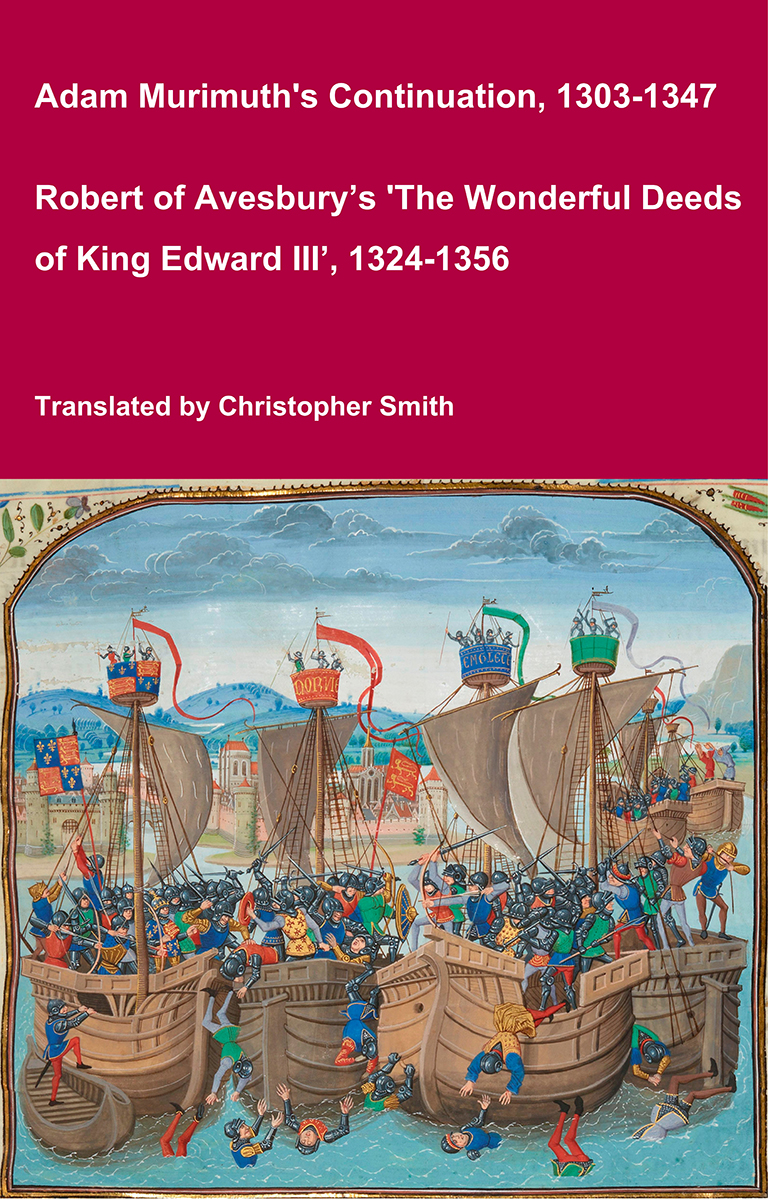
Adam Murimuth's Continuation and Robert of Avesbury’s 'The Wonderful Deeds of King Edward III'
This volume brings together two of the most important contemporary chronicles for the reign of Edward III and the opening phases of the Hundred Years’ War. Written in Latin by English clerical observers, these texts provide a vivid and authoritative window into the political, diplomatic, and military history of fourteenth-century England and its continental ambitions. Adam Murimuth Continuatio's Chronicarum continues an earlier chronicle into the mid-fourteenth century, offering concise but valuable notices on royal policy, foreign relations, and ecclesiastical affairs. Its annalistic structure makes it especially useful for establishing chronology and tracing the development of events year by year. Complementing it, Robert of Avesbury’s De gestis mirabilibus regis Edwardi tertii is a rich documentary chronicle preserving letters, treaties, and official records alongside narrative passages. It is an indispensable source for understanding Edward III’s claim to the French crown, the conduct of war, and the mechanisms of medieval diplomacy. Together, these works offer scholars, students, and enthusiasts a reliable and unembellished account of a transformative period in English and European history. Essential for anyone interested in medieval chronicles, the Hundred Years’ War, or the reign of Edward III.
Available at Amazon in eBook and Paperback format.

Samuel Pepys' Diary. 2nd June 1666. In the evening come up the River the Katharine yacht, Captain Fazeby, who hath brought over my Lord of Alesbury [aged 40] and Sir Thomas Liddall (with a very pretty daughter [aged 7], and in a pretty travelling-dress) from Flanders, who saw the Dutch fleete on Thursday, and ran from them; but from that houre to this hath not heard one gun, nor any newes of any fight. Having put the soldiers on board, I home and wrote what I had to write by the post, and so home to supper and to bed, it being late.
Samuel Pepys' Diary. 2nd June 1666. Up, and to the office, where certain newes is brought us of a letter come to the King [aged 36] this morning from the Duke of Albemarle [aged 57], dated yesterday at eleven o'clock, as they were sailing to the Gunfleete, that they were in sight of the Dutch fleete, and were fitting themselves to fight them; so that they are, ere this, certainly engaged; besides, several do averr they heard the guns all yesterday in the afternoon. This put us at the Board into a tosse. Presently come orders for our sending away to the fleete a recruite of 200 soldiers. So I rose from the table, and to the Victualling Office, and thence upon the River among several vessels, to consider of the sending them away; and lastly, down to Greenwich, Kent [Map], and there appointed two yachts to be ready for them; and did order the soldiers to march to Blackewall [Map]. Having set all things in order against the next flood, I went on shore with Captain Erwin at Greenwich, Kent [Map], and into the Parke, and there we could hear the guns from the fleete most plainly.
John Evelyn's Diary. 2nd June 1672. Next day I sailed to the fleet, now riding at the buoy of the "Nore", where I met his Majesty [aged 42], the Duke [aged 38], Lord Arlington [aged 54], and all the great men, in the "Charles", lying miserably shattered; but the miss of Lord Sandwich [deceased] redoubled the loss to me, and showed the folly of hazarding so brave a fleet, and losing so many good men, for no provocation but that the Hollanders exceeded us in industry, and in all things but envy.


John Evelyn's Diary. 2nd June 1672. At Sheerness [Map], I gave his Majesty [aged 42] and his Royal Highness [aged 38] an account of my charge, and returned to Queenborough [Map]; next day dined at Major Dorel's, Governor of Sheerness; thence, to Rochester, Kent [Map]; and the following day, home.
John Evelyn's Diary. 2nd June 1672. Trinity Sunday, I passed at Rochester, Kent [Map]; and, on the 5th, there was buried in the Cathedral [Map] Monsieur Rabiniére, Rear Admiral of the French squadron, a gallant person, who died of the wounds he received in the fight. This ceremony lay on me, which I performed with all the decency I could, inviting the Mayor and Aldermen to come in their formalities. Sir Jonas Atkins [aged 62] was there with his guards; and the Dean and Prebendaries: one of his countrymen pronouncing a funeral oration at the brink of his grave, which I caused to be dug in the choir. This is more at large described in the "Gazette" of that day; Colonel Reymes [aged 58], my colleague in commission, assisting, who was so kind as to accompany me from London, though it was not his district; for indeed the stress of both these wars lay more on me by far than on any of my brethren, who had little to do in theirs. I went to see Upnor Castle, Kent [Map], which I found pretty well defended, but of no great moment.
On 2nd June 1673 Alexandre Louis Bourbon was born to Philip Bourbon I Duke Orléans [aged 32] and Elizabeth Charlotte Palatinate Simmern Duchess Orléans [aged 21]. He a great x 2 grandson of King James I of England and Ireland and VI of Scotland. He died aged two in 1676.
On 2nd June 1675 James Drummond 3rd Earl Perth [aged 60] died. His son James [aged 27] succeeded 4th Earl Perth. Lilias Drummond Countess Tullibardine and Perth by marriage Countess Perth.
John Evelyn's Diary. 2nd June 1676. I went with my Lord Chamberlain [aged 58] to see a garden, at Enfield [Map] town; thence, to Mr. Secretary Coventry's [aged 48] lodge in the Chase. It is a very pretty place, the house commodious, the gardens handsome, and our entertainment very free, there being none but my Lord and myself. That which I most wondered at was, that, in the compass of twenty-five miles, yet within fourteen of London, there is not a house, barn, church, or building, besides three lodges. To this Lodge are three great ponds, and some few inclosures, the rest a solitary desert, yet stored with no less than 3,000 deer. These are pretty retreats for gentlemen, especially for those who are studious and lovers of privacy.

John Evelyn's Diary. 2nd June 1676. We returned in the evening by Hampstead, to see Lord Wotton's [aged 33] house and garden (Bellsize House), built with vast expense by Mr. O'Neale, an Irish gentleman who married Lord Wotton's mother, Baroness Stanhope. The furniture is very particular for Indian cabinets, porcelain, and other solid and noble movables. The gallery very fine, the gardens very large, but ill kept, yet woody and chargeable. The soil a cold weeping clay, not answering the expense.
On 2nd June 1680 John Maynard [aged 76] and Mary Upton [aged 30] were married. The difference in their ages was 46 years.
John Evelyn's Diary. 2nd June 1681. I went to Hampton Court [Map], when the Surrey gentlemen presented their addresses to his Majesty [aged 51], whose hand I kissed, introduced by the Duke of Albemarle [aged 27]. Being at the Privy Council, I took another occasion of discoursing with Sir Stephen Fox [aged 54] about his daughter [aged 12] and to revive that business, and at least brought it to this: That in case the young people liked one the other, after four years, he first desiring to see a particular of my Lord's [aged 39] present estate if I could transmit it to him privately, he would make her portion £14,000, though to all appearance he might likely make it £50,000 as easily, his eldest son [aged 15] having no child and growing very corpulent.


On 2nd June 1682 Leopold Joseph Habsburg Spain was born to Leopold Habsburg Spain I Holy Roman Emperor [aged 41] and Eleonore Magdalene of Neuburg [aged 27]. Coefficient of inbreeding 1.61%. He died aged two in 1684.


John Evelyn's Diary. 2nd June 1686. Such storms, raine and foul weather, seldom known at this time of the yeare. The camp at Hounslow Heath [Map], from sicknesse and other inconveniences of weather, forc'd to retire to quarters; ye storms being succeeded by excessive hot weather, many grew sick. Greate feasting there, especialy in Lord Dunbarton's [aged 51] quarters. There were many jealousies and discourses of what was the meaning of this incampment. A Seale this day, mostly pardons and discharges of Kn* Baronets fees, wch having ben pass'd over for so many yeares, did greatly dis oblige several families who had serv'd his Ma* [aged 52]. Lord Tirconnell [aged 56] gon to Ireland, with greate powers and commissions, giving as much cause of talke as the camp, especialy 19 new privy councillors and judges being now made, amongst wch but three Protestants, and Tirconnell made Generall.
John Evelyn's Diary. 2nd June 1687. I went to London, it having pleased his Majesty to grant me a Privy Seal for £6,000, for discharge of the debt I had been so many years persecuted for, it being indeed for money drawn over by my father-in-law, Sir R. Browne, during his residence in the Court of France, and so with a much greater sum due to Sir Richard from his Majesty; and now this part of the arrear being paid, there remains yet due to me, as executor of Sir Richard, above £6,500 more; but this determining an expensive Chancery suit has been so great a mercy and providence to me (through the kindness and friendship to me of Lord Godolphin [aged 41], one of the Lords Commissioners of the Treasury, that I do acknowledge it with all imaginable thanks to my gracious God.
Henrici Quinti, Angliæ Regis, Gesta, is a first-hand account of the Agincourt Campaign, and subsequent events to his death in 1422. The author of the first part was a Chaplain in King Henry's retinue who was present from King Henry's departure at Southampton in 1415, at the siege of Harfleur, the battle of Agincourt, and the celebrations on King Henry's return to London. The second part, by another writer, relates the events that took place including the negotiations at Troye, Henry's marriage and his death in 1422.
Available at Amazon in eBook and Paperback format.
On 2nd June 1687 George Villiers 2nd Duke of Buckingham was buried in the King Henry VII Chapel, Westminster Abbey [Map].


On 2nd June 1690 Margaret Campbell was born to Archibald Campbell 1st Duke Argyll [aged 31] and Elizabeth Tollemache Duchess Argyll [aged 30].
On 2nd June 1738 James Fitz James 2nd Duke Berwick [aged 41] died at Naples [Map]. His son James [aged 19] succeeded 3rd Duke Berwick.
On or before 2nd June 1754 Joseph Kendrick was born. He was baptised on 2nd June 1754 at St John's Church.
On 2nd June 1800 Jane Dutton [aged 46] died at Bath, Somerset [Map]. Monument in Church of St Mary the Virgin, Tittleshall [Map] sculpted by Joseph Nollekens [aged 62]. Flat obelisk background. Pedestal with inscription and supporting the carving which is centred around a broken column with standing figure of woman leaning on it in front of opened book. Angel on cloud above and putto below holding up a flaming heart.
Jane Dutton: On 29th November 1753 she was born to James Lenox Dutton and Jane Bond at Sherborne, Gloucestershire. On 25th October 1775 Thomas Coke 1st Earl of Leicester and she were married at Sherborne, Gloucestershire.


On 2nd June 1822 John Winston Spencer-Churchill 7th Duke of Marlborough was born to George Spencer-Churchill 6th Duke of Marlborough [aged 28] and Jane Stewart Duchess of Marlborough [aged 24]. Coefficient of inbreeding 6.26%. He married 12th July 1843 Frances Anne Emily Vane Duchess of Marlborough, daughter of Charles William Vane 3rd Marquess Londonderry and Frances Vane Tempest Marchioness Londonderry, and had issue.
On 2nd June 1831 the rebels marched to the Castle Inn in Merthyr Tydfil where a meeting of employers and magistrates was being held. The rebels demanded a reduction in the price of bread and an increase in wages. Their demands being rejected the rebels attcked the inn. Hundreds were injured, some fatally.
Memorial to Edmund Law, died 2nd June 1835, thirty years vicar of St Bartholomew's Church, Whittingham [Map], and his wife Elizabeth who were the paretns of fifteen children of whom twelve survived to adulthood.
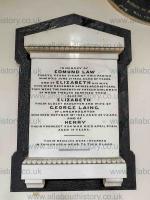
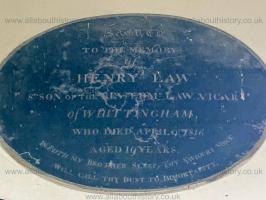
Thomas Bateman 1845. 2nd June 1845. On the 2d of June, 1845, was opened a large and well-known barrow called Moot Lowe [Map], which is situate about half way between Alsop Moor and Dovedale; it is a large tumulus, about thirty yards in diameter, and about four feet in height, being perfectly level on the top, which is planted with large trees. On digging through the centre a large cist was discovered which was cut in the rock, having, on account of the dip of the strata, a sloping floor; at the west end of the cist and upon the lowest part of the slanting floor lay the skeleton of a middle-sized man, whose legs were drawn up; near his head lay a fine bronze celt of novel form; it was placed in a line with the body, with its edge upwards. The lower jaw of a small pig was also found close to the skeleton. At the other extremity of the cist, which was near five yards from the situation of the last-described interment, were found the skeleton either of a female or young person, and a few burnt bones, which had been disturbed and thrown together in a heap at some remote period, as the overlying soil was as firm aud solid as in any other part of the tumulus. During the progress of the excavation there occurred part of the antler of a deer, some horses' teeth, and their usual concomitant, rats' bones.
Ten Years' Digging. 2nd June, we opened a barrow [Net Low Barrow [Map]] near Blore, In a field called Nettles (Net Lows?) formed around a natural elevation, which is only slightly covered at the top; the entire diameter is 13 yards. On the S.W. side we found a cist, the outer side formed of a long stone placed on edge, the inner being walled from the surface to the bottom, which was paved with flat stones; the depth was 2 feet. On the floor was a deposit of calcined bones, and in a corner was a broken urn of red clay, containing a small vase, or "incense cup," in better preservation.
The large vase, originally about 9 inches high by 5 diameter, is of clay, plentifully mixed with sand and imperfectly baked, whence the surface is much disintegrated. It has been of good form and workmanship, having a deep border ornamented with diagonal lines disposed in triangles in alternate directions. The cup is of similar clay, 2½ inches high, 3 inches across the mouth, and quite plain. Nearer the edge, on the same side of the barrow, we found some remains of an unburnt skeleton, which had been previously disturbed, and not far from it were two articles indicating the interment to have been of late period; namely, the bottom of a kiln-baked vessel of blue clay, showing marks of having been turned on the potter's wheel, and a small iron ring 1¼ inch in diameter. Fragments of bone, burnt and unburnt, rats' bones, teeth of oxen, and pebbles were found throughout the cuttings.
On 2nd June 1849 Paul-Albert Besnard was born.
The Diary of George Price Boyce 1858. 2nd June 1858. Rossetti [aged 30] called in the evening and stayed till about 12.30 chatting. He told me further particulars about Dickens, who it appears has left his wife and taken to Miss Fernan, the actress, with whom he is infatuated (platonically as he pretends). His daughters side or keep to him and his sons to their mother.


The Deeds of the Dukes of Normandy
The Gesta Normannorum Ducum [The Deeds of the Dukes of Normandy] is a landmark medieval chronicle tracing the rise and fall of the Norman dynasty from its early roots through the pivotal events surrounding the Norman Conquest of England. Originally penned in Latin by the monk William of Jumièges shortly before 1060 and later expanded at the behest of William the Conqueror, the work chronicles the deeds, politics, battles, and leadership of the Norman dukes, especially William’s own claim to the English throne. The narrative combines earlier historical sources with firsthand information and oral testimony to present an authoritative account of Normandy’s transformation from a Viking settlement into one of medieval Europe’s most powerful realms. William’s history emphasizes the legitimacy, military prowess, and governance of the Norman line, framing their expansion, including the conquest of England, as both divinely sanctioned and noble in purpose. Later chroniclers such as Orderic Vitalis and Robert of Torigni continued the history, extending the coverage into the 12th century, providing broader context on ducal rule and its impact. Today this classic work remains a foundational source for understanding Norman identity, medieval statesmanship, and the historical forces that reshaped England and Western Europe between 800AD and 1100AD.
Available at Amazon in eBook and Paperback format.
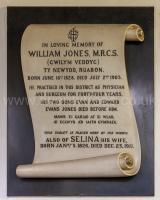
After 2nd June 1903. Memorial to William Jones of Ty Newydd, Ruabon.
On 2nd June 1908 General Redvers Henry Buller [aged 68] died at Downes House Downes Crediton, Devon. He was buried in the Church of the Holy Cross Crediton, Devon [Map]. Memorial in Winchester Cathedral [Map] sculpted by Bertram Mackennal [aged 44].
General Redvers Henry Buller: On 7th December 1839 he was born to James Wentworth Buller and Charlotte Juliana Jane Howard-Molyneux-Howard in Downes Crediton, Devon. In 1882 General Redvers Henry Buller and Audrey Jane Charlotte Townshend were married. She the daughter of John Townshend 4th Marquess Townshend and Elizabeth Jane Stuart.


On 2nd June 1913 Alexander Keiller [aged 23] and Florence Marianne Phil-Morris [aged 30] were married. She the daughter of Philip Richard Morris and Catherine Evans.
On 2nd June 1940 Constantine II King Hellenes was born to Paul I King Greece [aged 38] and Frederica Hanover Queen Consort Greece [aged 23]. He a great x 2 grandson of Queen Victoria of the United Kingdom. Coefficient of inbreeding 5.54%.
On 2nd June 1940 Gustavus Lascelles Hamilton-Russell [aged 32] was killed in action.
On 2nd June 1953 Queen Elizabeth II of the United Kingdom [aged 27] was crowned Queen of the United Kingdom by Archbishop Geoffrey Fisher [aged 66] at Westminster Abbey [Map].
Her ladies in waiting were:
Mistress of the Robes: Mary Alice Gascoyne-Cecil Duchess Devonshire [aged 57]
Maids of Honour:
Mary Baillie-Hamilton [aged 19]
Jane Antonia Frances Vane-Tempest-Stewart [aged 20]
Nancy Heathcote-Drummond-Willoughby 28th Baroness Willoughby de Eresby [aged 18]
Anne Veronica Coke Baroness Glenconner [aged 20]
Moyra Kathleen Hamilton [aged 23]

On 2nd June 1953 Queen Elizabeth II of the United Kingdom [aged 27] was crowned 2nd Queen of the United Kingdom.
On 2nd June 1983 Margaret Elizabeth Mcconnel Duchess Roxburghe [aged 64] died.
On 2nd June 2000 David Fitzroy 11th Duke Beaufort [aged 72] and Miranda Morley 11th Duchess Beaufort were married. She by marriage Duchess Beaufort.
On 2nd June 1202 Margaret II Countess Flanders was born to Baldwin IX Count Flanders VI Count Hainaut [aged 31] and Marie Blois Countess Flanders. She a great x 3 granddaughter of King William "Conqueror" I of England. She married (1) Bouchard Avesnes and had issue (2) 1223 William Dampierre II Count Flanders and had issue.
On 2nd June 1410 William Valois was born to Anthony Valois Duke Brabant [aged 25] and Elisabeth of Görlitz Duchess Brabant [aged 19]. He a great x 4 grandson of King Edward I of England. Coefficient of inbreeding 1.59%. He died aged less than one years old.
On 2nd June 1423 Ferdinand I King Naples was born illegitimately to Alfonso V King Aragon [aged 27] and Giralda Carlino.
The True Chronicles of Jean le Bel Volume 1 Chapters 1-60 1307-1342
The True Chronicles of Jean le Bel offer one of the most vivid and immediate accounts of 14th-century Europe, written by a knight who lived through the events he describes, and experienced some of them first hand. Covering the early decades of the Hundred Years’ War, this remarkable chronicle follows the campaigns of Edward III of England, the politics of France and the Low Countries, and the shifting alliances that shaped medieval warfare. Unlike later historians, Jean le Bel writes with a strong sense of eyewitness authenticity, drawing on personal experience and the testimony of fellow soldiers. His narrative captures not only battles and sieges, but also the realities of military life, diplomacy, and the ideals of chivalry that governed noble society. A key source for Jean Froissart, Le Bel’s chronicle stands on its own as a compelling and insightful work, at once historical record and literary achievement. This translation builds on the 1905 edition published in French by Jules Viard, adding extensive translations from other sources Rymer's Fœdera, the Chronicles of Adam Murimuth, William Nangis, Walter of Guisborough, a Bourgeois of Valenciennes, Geoffrey le Baker of Swinbroke and Richard Lescot to enrich the original text and Viard's notes.
Available at Amazon in eBook and Paperback format.
On 2nd June 1448 Domenico Ghirlandaio was born in Florence, Tuscany.
On 2nd June 1489 Charles Bourbon Duke Vendôme was born to Francis Bourbon Count Vendôme and Soissons [aged 19] and Marie Luxemburg Countess Vendôme and Soissons. He married 8th May 1513 his half third cousin once removed Françoise Valois Countess Vendôme, daughter of Rene Valois Duke Alençon and Margaret Lorraine Duchess Alençon, and had issue.
On 2nd June 1563 Margaret Brooke was born to William Brooke 10th Baron Cobham [aged 35] and Frances Newton Baroness Cobham [aged 24]. She married Thomas Sondes and had issue.

On 2nd June 1648 Cicely Tufton Viscountess Hatton was born to John Tufton 2nd Earl of Thanet [aged 39] and Margaret Sackville Countess Isle Thanet [aged 33]. She married 12th February 1667 her sixth cousin Christopher Hatton 1st Viscount Hatton, son of Christopher Hatton 1st Baron Hatton and Elizabeth Montagu Baroness Hatton, and had issue.
On 2nd June 1655 Foot Onslow was born to Arthur Onslow 1st and 2nd Baronet [aged 31] and Mary Foote [aged 24].
On 2nd June 1673 Alexandre Louis Bourbon was born to Philip Bourbon I Duke Orléans [aged 32] and Elizabeth Charlotte Palatinate Simmern Duchess Orléans [aged 21]. He a great x 2 grandson of King James I of England and Ireland and VI of Scotland. He died aged two in 1676.
On 2nd June 1682 Leopold Joseph Habsburg Spain was born to Leopold Habsburg Spain I Holy Roman Emperor [aged 41] and Eleonore Magdalene of Neuburg [aged 27]. Coefficient of inbreeding 1.61%. He died aged two in 1684.
On 2nd June 1689 Edward Harley 2nd Earl of Oxford and Earl Mortimer was born to Robert Harley 1st Earl of Oxford and Earl Mortimer [aged 27] and Elizabeth Foley Countess of Oxford and Mortimer. He married 31st August 1713 Henrietta Cavendish Holles Countess of Oxford and Mortimer, daughter of John Holles 1st Duke Newcastle upon Tyne and Margaret Cavendish Duchess Newcastle upon Tyne, and had issue.


On 2nd June 1689 Elizabeth Harley was born to Robert Harley 1st Earl of Oxford and Earl Mortimer [aged 27] and Elizabeth Foley Countess of Oxford and Mortimer. She married 16th December 1712 Peregrine Osborne 3rd Duke Leeds, son of Peregrine Osborne 2nd Duke Leeds and Bridget Hyde Duchess Leeds, and had issue.
On 2nd June 1690 Margaret Campbell was born to Archibald Campbell 1st Duke Argyll [aged 31] and Elizabeth Tollemache Duchess Argyll [aged 30].
The Deeds of the Dukes of Normandy
The Gesta Normannorum Ducum [The Deeds of the Dukes of Normandy] is a landmark medieval chronicle tracing the rise and fall of the Norman dynasty from its early roots through the pivotal events surrounding the Norman Conquest of England. Originally penned in Latin by the monk William of Jumièges shortly before 1060 and later expanded at the behest of William the Conqueror, the work chronicles the deeds, politics, battles, and leadership of the Norman dukes, especially William’s own claim to the English throne. The narrative combines earlier historical sources with firsthand information and oral testimony to present an authoritative account of Normandy’s transformation from a Viking settlement into one of medieval Europe’s most powerful realms. William’s history emphasizes the legitimacy, military prowess, and governance of the Norman line, framing their expansion, including the conquest of England, as both divinely sanctioned and noble in purpose. Later chroniclers such as Orderic Vitalis and Robert of Torigni continued the history, extending the coverage into the 12th century, providing broader context on ducal rule and its impact. Today this classic work remains a foundational source for understanding Norman identity, medieval statesmanship, and the historical forces that reshaped England and Western Europe between 800AD and 1100AD.
Available at Amazon in eBook and Paperback format.
On 2nd June 1691 John Dormer 7th Baron Dormer was born to Charles Dormer 5th Baron Dormer [aged 23] and Catherine Fettiplace.

On 2nd June 1701 Thomas Townshend was born to Charles Townshend 2nd Viscount Townsend [aged 27] and Elizabeth Pelham Viscountess Townsend. He married 1730 Albinia Selwyn and had issue.

On 2nd June 1708 Charles John Bentinck was born to William Bentinck 1st Earl of Portland [aged 58] and Jane Martha Temple Countess Portland [aged 36]. He married 11th January 1738 Margaret Cadogan, daughter of William Cadogan 1st Earl Cadogan and Margaret Cecilia Munter Countess Cadogan.
On 30th April 1743 John Beckett 1st Baronet was born to John Beckett [aged 38] and Elizabeth Wilkson [aged 27]. He was bvaptised in Barnsley on 2nd June 1743. He married 3rd March 1774 Mary Wilson Lady Beckett, daughter of Bishop Christopher Wilson and Anne Gibson, and had issue.
On 2nd June 1768 Matthew Wood 1st Baronet was born to William Wood and Catherine Cluse. He married 5th November 1795 Maria Page and had issue.
On 2nd April 1790 Maria FitzHardinge Berkeley was born illegitimately to Frederick Augustus Berkeley 5th Earl Berkeley [aged 45] at Mount Street Grosvenor Square and Mary Cole. On 2nd June 1793 Maria FitzHardinge Berkeley died. She a great x 3 granddaughter of King Charles II of England Scotland and Ireland.
On 2nd June 1794 Augustus Frederick Keppel 5th Earl Albermarle was born to William Charles Keppel 4th Earl Albermarle [aged 22] and Elizabeth Southwell Countess Albermarle [aged 18]. He a great x 3 grandson of King Charles II of England Scotland and Ireland. He married 4th May 1816 Frances Steer Countess Albemarle.
On 2nd June 1797 Joseph Henry Blake 3rd Baron Wallscourt was born to Colonel Henry James Blake [aged 22].
On 2nd June 1801 Brook William Bridges 1st Baron FitzWalter was born to Brook William Bridges 4th Baronet [aged 33] and Eleanor Foote [aged 30]. He married 1834 his first cousin Fanny Cage.
On 2nd June 1808 William Fitzherbert 4th Baronet was born to Henry FitzHerbert 3rd Baronet [aged 24] and Agnes Beresford Lady Fitzherbert [aged 23]. He married 20th February 1836 Ann Alleyne Lady Fitzherbert, daughter of Reynold Abel Alleyne 2nd Baronet and Rebecca Alton Lady Alleyne, and had issue.
On 2nd June 1816 John Salusbury Salusbury-Trelawny 9th Baronet was born to William Lewis Trelawny aka Salusbury-Trelawny 8th Baronet [aged 34] and Patience Christian Carpenter Lady Trelawny [aged 28]. He married (1) 25th January 1842 Harriet Jane Tremayne Lady Salusbury-Trelawny and had issue (2) 17th December 1872 his fourth cousin Harriet Jacqueline Buller Lady Salusbury-Trelawny.
On 2nd June 1821 Judith Fitzherbert was born to Henry FitzHerbert 3rd Baronet [aged 37] and Agnes Beresford Lady Fitzherbert [aged 36].
On 2nd June 1822 John Winston Spencer-Churchill 7th Duke of Marlborough was born to George Spencer-Churchill 6th Duke of Marlborough [aged 28] and Jane Stewart Duchess of Marlborough [aged 24]. Coefficient of inbreeding 6.26%. He married 12th July 1843 Frances Anne Emily Vane Duchess of Marlborough, daughter of Charles William Vane 3rd Marquess Londonderry and Frances Vane Tempest Marchioness Londonderry, and had issue.
William of Worcester's Chronicle of England
William of Worcester, born around 1415, and died around 1482 was secretary to John Fastolf, the renowned soldier of the Hundred Years War, during which time he collected documents, letters, and wrote a record of events. Following their return to England in 1440 William was witness to major events. Twice in his chronicle he uses the first person: 1. when writing about the murder of Thomas, 7th Baron Scales, in 1460, he writes '… and I saw him lying naked in the cemetery near the porch of the church of St. Mary Overie in Southwark …' and 2. describing King Edward IV's entry into London in 1461 he writes '… proclaimed that all the people themselves were to recognize and acknowledge Edward as king. I was present and heard this, and immediately went down with them into the city'. William’s Chronicle is rich in detail. It is the source of much information about the Wars of the Roses, including the term 'Diabolical Marriage' to describe the marriage of Queen Elizabeth Woodville’s brother John’s marriage to Katherine, Dowager Duchess of Norfolk, he aged twenty, she sixty-five or more, and the story about a paper crown being placed in mockery on the severed head of Richard, 3rd Duke of York.
Available at Amazon in eBook and Paperback format.
On 2nd June 1828 Charles Goring 9th Baronet was born to Harry Dent Goring 8th Baronet [aged 26]. He married 21st April 1857 Eliza Molyneux Lady Goring.
On 2nd June 1832 Paulyn Reginald Serlo Rawdon-Hastings 3rd Marquess Hastings was born to George Augustus Francis Rawdon-Hastings 2nd Marquess Hastings [aged 24] and Barbara Yelverton Marchioness Hastings [aged 22].
On 2nd June 1843 Chaloner Roe-Majendrie Ogle 4th Baronet was born to Chaloner Ogle 3rd Baronet [aged 40].
On 2nd June 1849 Paul-Albert Besnard was born.
On 2nd June 1858 Walter George Berkeley Portman was born to William Henry Portman 2nd Viscount Portman [aged 28] and Mary Selina Wentworth-Fitzwilliam Viscountess Portman [aged 22]. He died aged seven in 1865.
On 2nd June 1861 Kathleen Douglas-Pennant Viscount Falmouth was born to George Sholto Douglas-Pennant 2nd Baron Penrhyn [aged 24] and Pamela Blanche Rushout [aged 22]. She married 19th October 1866 Evelyn Boscawen 7th Viscount Falmouth, son of Evelyn Boscawen 6th Viscount Falmouth and Mary Stapleton Viscountess Falmouth 13th Baroness Despencer, and had issue.
On 2nd June 1873 George Child-Villiers 8th Earl of Jersey was born to Victor Albert George Child-Villiers 7th Earl Jersey [aged 28] and Margaret Elizabeth Leigh Countess Jersey [aged 23]. He married 8th October 1908 Cynthia Almina Needham Countess Jersey, daughter of Francis Needham 3rd Earl of Kilmorey, and had issue.
On 2nd June 1883 Heneage Greville Finch was born to Charles Wightwick Finch 8th Earl of Aylesford [aged 32]. He married 11th June 1907 his fifth cousin once removed Gladys Cecil Georgina Fellowes, daughter of William Henry Fellowes 2nd Baron de Ramsey of Ramsey Abbey and Rosamond Jane Frances Spencer-Churchill, and had issue.
On 2nd June 1902 Robert Arthur Liddell 7th Baron Ravensworth was born to Gerald Wellesley Liddell 6th Baron Ravensworth [aged 33] and Isolda Blanche Prideaux-Brune Baroness Ravensworth [aged 37].
On 2nd June 1915 Edmund George Felix Paston-Bedingfeld 9th Baronet was born to Henry Edward Paston-Bedingfeld 8th Baronet [aged 54].
On 2nd June 1920 John Edward Pelham 7th Earl of Yarborough was born to Marcus Herbert Pelham 6th Earl of Yarborough [aged 27]. He married before 5th November 1963 Florence Anne Petronel Upton Countess Yarborough and had issue.
On 2nd June 1940 Constantine II King Hellenes was born to Paul I King Greece [aged 38] and Frederica Hanover Queen Consort Greece [aged 23]. He a great x 2 grandson of Queen Victoria of the United Kingdom. Coefficient of inbreeding 5.54%.
On 2nd June 1947 Geoffrey Robert Newman 6th Baronet was born to Ralph Alured Newman 5th Baronet [aged 45] and Ann Rosemary Hope-Morley [aged 30].
Abbot John Whethamstede’s Chronicle of the Abbey of St Albans
Abbot John Whethamstede's Register aka Chronicle of his second term at the Abbey of St Albans, 1451-1461, is a remarkable text that describes his first-hand experience of the beginning of the Wars of the Roses including the First and Second Battles of St Albans, 1455 and 1461, respectively, their cause, and their consequences, not least on the Abbey itself. His text also includes Loveday, Blore Heath, Northampton, the Act of Accord, Wakefield, and Towton, and ends with the Coronation of King Edward IV. In addition to the events of the Wars of the Roses, Abbot John, or his scribes who wrote the Chronicle, include details in the life of the Abbey such as charters, letters, land exchanges, visits by legates, and disputes, which provide a rich insight into the day-to-day life of the Abbey, and the challenges faced by its Abbot.
Available at Amazon in eBook and Paperback format.
On 2nd June 1129 Fulk "Young" King Jerusalem [aged 40] and Melisende Queen of Jerusalem [aged 24] were married at Jerusalem [Map]. She by marriage Countess Anjou. Her father [aged 54] had written to Fulk "Young" King Jerusalem requesting the marriage since he had no male heirs. She the daughter of Baldwin II King Jerusalem. He the son of Fulk "Réchin" Anjou 4th Count Anjou and Bertrade Montfort Queen Consort France.
On 2nd June 1420 Henry V [aged 33] and Catherine of Valois [aged 18] were married at Troyes Cathedral [Map]. She the daughter of Charles "Beloved Mad" VI King France [aged 51] and Isabeau Wittelsbach Queen Consort France [aged 50]. He the son of King Henry IV of England and Mary Bohun. They were half third cousin once removed. She a great x 5 granddaughter of King Henry III of England.
On 2nd June 1492 Charles Somerset 1st Earl of Worcester [aged 32] and Elizabeth Herbert 3rd Baroness Herbert Raglan [aged 16] were married. She the daughter of William Herbert 2nd Earl Pembroke 1st Earl Huntingdon and Mary Woodville Countess Pembroke and Huntingdon. He the illegitmate son of Henry Beaufort 2nd or 3rd Duke of Somerset and Joan Hill [aged 80]. They were half sixth cousins. He a great x 3 grandson of King Edward III of England.
On 2nd June 1664 Stephen Anderson 1st Baronet [aged 20] and Mary Glynne Lady Anderson [aged 15] were married at St Giles' in the Fields Church [Map].
On 2nd June 1680 John Maynard [aged 76] and Mary Upton [aged 30] were married. The difference in their ages was 46 years.
On 2nd June 1722 John Arundell 4th Baron Arundell [aged 21] and Elizabeth Wentworth were married. She by marriage Baroness Arundel Trerice in Cornwall.
On 2nd June 1753 Henry Roper 11th Baron Teynham [aged 20] and Maria Wilhelmina Head were married. A Marriage of Two Sets of Siblings; her sister Anna Gabriella Head would subsequently marry his brother John Roper [aged 18]. Further, their two younger brothers Francis Roper [aged 15] and Philip Roper Roper [aged 13] also married siblings Mary Lyttelton [aged 19] and Barbara Lyttelton respectively.

On 2nd June 1761 William Henry Lyttelton 1st Baron Lyttelton [aged 36] and Mary Macartney were married.
On 2nd June 1762 Thomas Charles Bunbury 6th Baronet [aged 22] and Sarah Lennox Lady Bunbury [aged 17] were married. The marriage was dissolved in Feb 1769 since she had had a child with William Gordon [aged 18] in 1768. The decree for divorce was issued on 14th May 1776. One of her daughters with Colonel George Napier [aged 11], Emily Louisa Augusta Napier Lady Bunbury, would subsequently marry Charles Bunbury's nephew and heir Henry Edward Bunbury 7th Baronet. She the daughter of Charles Lennox 2nd Duke Richmond and Sarah Cadogan Duchess Richmond.
On 2nd June 1767 James Langham 7th Baronet [aged 31] and Juliana Musgrave Lady Langham were married. She by marriage Lady Langham of Cottesbrooke in Northamptonshire.
On 2nd June 1774 Edward Devereux 12th Viscount Hereford [aged 34] and Henrietta Charlotte Tracy Keck Viscountess Hereford [aged 33] were married. She by marriage Viscountess Hereford.
Abbot John Whethamstede’s Chronicle of the Abbey of St Albans
Abbot John Whethamstede's Register aka Chronicle of his second term at the Abbey of St Albans, 1451-1461, is a remarkable text that describes his first-hand experience of the beginning of the Wars of the Roses including the First and Second Battles of St Albans, 1455 and 1461, respectively, their cause, and their consequences, not least on the Abbey itself. His text also includes Loveday, Blore Heath, Northampton, the Act of Accord, Wakefield, and Towton, and ends with the Coronation of King Edward IV. In addition to the events of the Wars of the Roses, Abbot John, or his scribes who wrote the Chronicle, include details in the life of the Abbey such as charters, letters, land exchanges, visits by legates, and disputes, which provide a rich insight into the day-to-day life of the Abbey, and the challenges faced by its Abbot.
Available at Amazon in eBook and Paperback format.
On 2nd June 1808 John Dalrymple 7th Earl of Stair [aged 23] and Laura Manners Countess Stair were married albeit bigamously since he had previously married Johanna Gordon. The marriage was necessarily nullified by the decision in Dalrymple v. Dalrymple in 1811. Darlymple's marriage to Johanna was eventually dissolved in 1820. She the daughter of John Manners and Louisa Tollemache 7th Countess Dysart [aged 62].
On 2nd June 1815 William Henry Francis Petre 11th Baron Petre [aged 22] and Frances Charlotte Bedingfield [aged 19] were married. They were third cousin once removed. He a great x 4 grandson of King Charles II of England Scotland and Ireland. She a great x 4 granddaughter of King Charles II of England Scotland and Ireland.
On 2nd June 1821 Roger Gresley 8th Baronet [aged 21] and Sophia Catherine Coventry Lady Gresley and Des Voeux were married at St George's Church, Hanover Square. There was no issue from the marriage. She by marriage Lady Gresley of Drakelow in Derbyshire. She the daughter of George Coventry 7th Earl Coventry [aged 63] and Margaret "Peggy" Pitches Countess Coventry [aged 61].
On 2nd June 1840 George Baker 3rd Baronet [aged 23] and Mary Isabella Sutton Lady Baker were married St George's Church, Hanover Square. She by marriage Lady Baker of Loventor in Totnes in Devon.
On 2nd June 1840 Archibald William Douglas 8th Marquess Queensberry [aged 22] and Caroline Clayton Marchioness Queensbury [aged 19] were married at Gretna Green, Dumfrieshire having eloped against the wishes of his father. They had five sons and two daughters. He the son of John Douglas 7th Marquess Queensberry [aged 61].
On 18th June 1878 Paul Methuen 3rd Baron Methuen [aged 32] and Evelyn Hervey-Bathurst [aged 30] were married. She died less than a year later on 2nd June 1879.
On 2nd June 1898 John Pratt 4th Marquess Camden [aged 26] and Joan Marion Neville Marchioness Camden [aged 21] were married at St Alban's Church. She by marriage Marchioness Camden. She the daughter of Henry Neville 3rd Marquess Abergavenny [aged 43] and Violet Streatfeild. He the son of John Charles Pratt 3rd Marquess Camden and Clementina Augusta Spencer-Churchill Countess Camden.


On 2nd June 1913 Alexander Keiller [aged 23] and Florence Marianne Phil-Morris [aged 30] were married. She the daughter of Philip Richard Morris and Catherine Evans.
On 2nd June 1919 Alfred Duff Cooper 1st Viscount Norwich [aged 29] and Diana Manners Viscountess Norwich [aged 27] were married. She the daughter of Henry John Brinsley Manners 8th Duke Rutland [aged 67] and Violet Lindsay Duchess Rutland [aged 63].


On 2nd June 2000 David Fitzroy 11th Duke Beaufort [aged 72] and Miranda Morley 11th Duchess Beaufort were married. She by marriage Duchess Beaufort.
The History of William Marshal was commissioned by his son shortly after William’s death in 1219 to celebrate the Marshal’s remarkable life; it is an authentic, contemporary voice. The manuscript was discovered in 1861 by French historian Paul Meyer. Meyer published the manuscript in its original Anglo-French in 1891 in two books. This book is a line by line translation of the first of Meyer’s books; lines 1-10152. Book 1 of the History begins in 1139 and ends in 1194. It describes the events of the Anarchy, the role of William’s father John, John’s marriages, William’s childhood, his role as a hostage at the siege of Newbury, his injury and imprisonment in Poitou where he met Eleanor of Aquitaine and his life as a knight errant. It continues with the accusation against him of an improper relationship with Margaret, wife of Henry the Young King, his exile, and return, the death of Henry the Young King, the rebellion of Richard, the future King Richard I, war with France, the death of King Henry II, and the capture of King Richard, and the rebellion of John, the future King John. It ends with the release of King Richard and the death of John Marshal.
Available at Amazon in eBook and Paperback format.
On 2nd June 910 Richildis Bivinids Queen Consort West Francia [aged 65] died.
On 2nd June 1347 John Harrington 1st Baron Harington [aged 66] died at Aldingham Furness, Lancashire. His grandson John [aged 19] succeeded 2nd Baron Harington.
He was buried at Cartmel Priory, Lancashire [Map]. His wife Margaret aka Joan Dacre Baroness Harington [aged 64] was buried with him.
John Harrington 2nd Baron Harington: In 1328 he was born to Robert Harrington and Elizabeth Multon. In 1350 John Harrington 2nd Baron Harington and Joan Bermingham were married. The marriage somewhat speculative? On 28th May 1363 John Harrington 2nd Baron Harington died at Gleaston Castle [Map]. His son Robert succeeded 3rd Baron Harington. Given his young age Robert Harrington 3rd Baron Harington became a ward of King Edward III of England who granted his wardship to his daughter Isabella Countess Bedford and Soissons and her husband Enguerrand de Coucy 1st Earl Bedford 1st Count Soissons.
Margaret aka Joan Dacre Baroness Harington: John Harrington 1st Baron Harington and she were married. Around 1283 she was born to William Dacre and Joan Gernet at Aldingham Furness, Lancashire. In 1326 John Harrington 1st Baron Harington was created 1st Baron Harington by writ of summons to Parliament. She by marriage Baroness Harington. On 2nd July 1347 Margaret aka Joan Dacre Baroness Harington died at Aldingham Furness, Lancashire.
On 2nd June 1364 William Deincourt 2nd Baron Deincourt [aged 63] died. His eldest son died the same day - the cause of death of both men is unknown. His son William [aged 6] succeeded 3rd Baron Deincourt.
On 2nd June 1418 Catherine of Lancaster Queen Consort Castile [aged 45] died at Valladolid [Map]. She was buried at Capilla de los Reyes Nuevos, Cathedral of Toledo.
On 2nd June 1537 Henry Percy 6th Earl of Northumberland [aged 35] died. Richard Layton visited him on 29 June 1537 and says that he found him "languens in extremis, sight and speech failed, his stomach swollen so great as I never see none, and his whole body as yellow as saffron." Earl of Northumberland, Baron Percy of Alnwick, Baron Percy of Topcliffe, Baron Poynings forfeit. His brother Thomas Percy [aged 33] should have succeeded but he had been attainted.
On 2nd June 1572 Thomas Howard 4th Duke of Norfolk [aged 36] was executed for his involvement in the Ridolphi Plot. He was buried at St Peter ad Vincula Church, Tower of London [Map]. Duke Norfolk, Earl Surrey, Baron Mowbray, Baron Segrave forfeit.
On 2nd June 1581 James Douglas 4th Earl Morton [aged 65] was executed for his part in the murder of Lord Darnley.
On 2nd June 1631 William Pope 1st Earl Downe [aged 57] died. His grandson Thomas [aged 8] succeeded 2nd Earl Downe.


On 2nd June 1664 Henry Guise II Duke Guise [aged 50] died.
On 2nd June 1670 Mary Capell [aged 72] died.
On 2nd June 1675 James Drummond 3rd Earl Perth [aged 60] died. His son James [aged 27] succeeded 4th Earl Perth. Lilias Drummond Countess Tullibardine and Perth by marriage Countess Perth.
On 2nd June 1688 Anne Willoughby Lady Aston [aged 74] died.
Annals of the six Kings of England by Nicholas Trivet
Translation of the Annals of the Six Kings of England by that traces the rise and rule of the Angevin aka Plantagenet dynasty from the mid-12th to early 14th century. Written by the Dominican scholar Nicholas Trivet, the work offers a vivid account of English history from the reign of King Stephen through to the death of King Edward I, blending political narrative with moral reflection. Covering the reigns of six monarchs—from Stephen to Edward I—the chronicle explores royal authority, rebellion, war, and the shifting balance between crown, church, and nobility. Trivet provides detailed insight into defining moments such as baronial conflicts, Anglo-French rivalry, and the consolidation of royal power under Edward I, whose reign he describes with particular immediacy. The Annals combines careful year-by-year reporting with thoughtful interpretation, presenting history not merely as a sequence of events but as a moral and political lesson. Ideal for readers interested in medieval history, kingship, and the origins of the English state, this chronicle remains a valuable and accessible window into the turbulent world of the Plantagenet kings.
Available at Amazon in eBook and Paperback format.
On 2nd June 1694 Thomas Skipwith 1st Baronet [aged 74] died. His son Thomas [aged 42] succeeded 2nd Baronet Skipwith of Metheringham.
On 2nd June 1696 William Herbert 1st Marquess Powis [aged 70] died. His son William [aged 36] succeeded 2nd Marquess Powis, 2nd Earl Powis, 4th Baron Powis of Powis Castle in Powys, 3rd Baronet Powis of Red Castle in Montgomeryshire. Mary Preston Marchioness Powis by marriage Marchioness Powis. Mary Preston Marchioness Powis by marriage Marchioness Powis.


On 2nd June 1738 James Fitz James 2nd Duke Berwick [aged 41] died at Naples [Map]. His son James [aged 19] succeeded 3rd Duke Berwick.
On 2nd June 1751 Oswald Mosley 1st Baronet [aged 76] died. he was buried at St Mary's Church, Rolleston on Dove [Map] on 10th June 1751 His son Oswald [aged 46] succeeded 2nd Baronet Mosley of Rolleston in Staffordshire.
On 2nd June 1783 Walter Butler 16th Earl Ormonde 9th Earl Ossory [aged 79] died. His son John [aged 42] succeeded 17th Earl Ormonde, 11th Earl Ossory. Frances Wandesford Countess Ormonde and Ossory [aged 29] by marriage Countess Ormonde and Countess Ossory.
On 2nd June 1800 Jane Dutton [aged 46] died at Bath, Somerset [Map]. Monument in Church of St Mary the Virgin, Tittleshall [Map] sculpted by Joseph Nollekens [aged 62]. Flat obelisk background. Pedestal with inscription and supporting the carving which is centred around a broken column with standing figure of woman leaning on it in front of opened book. Angel on cloud above and putto below holding up a flaming heart.
Jane Dutton: On 29th November 1753 she was born to James Lenox Dutton and Jane Bond at Sherborne, Gloucestershire. On 25th October 1775 Thomas Coke 1st Earl of Leicester and she were married at Sherborne, Gloucestershire.
On 2nd June 1810 Jane Elizabeth Leslie 12th Countess of Rothes [aged 60] died. Her son George [aged 42] succeeded 13th Earl Rothes.
On 2nd June 1811 Henry Skeffington 3rd Earl Massereene [aged 67] died unmarried. His brother Chichester [aged 65] succeeded 4th Earl Massereene, 8th Viscount Massereene, 8th Baron Lough Neagh, 10th Baronet Skeffington of Fisherwick in Staffordshire.
On 2nd June 1823 George Cooke 7th Baronet died. His son William [aged 41] succeeded 8th Baronet Cooke of Wheatley Hall in Yorkshire. Isabella Cecilia Middleton Lady Cooke by marriage Lady Cooke of Wheatley Hall in Yorkshire.
On 2nd June 1825 William Weller Pepys 1st Baronet [aged 85] died. His son William [aged 47] succeeded 2nd Baronet Pepys of Wimpole Street
Henrici Quinti, Angliæ Regis, Gesta, is a first-hand account of the Agincourt Campaign, and subsequent events to his death in 1422. The author of the first part was a Chaplain in King Henry's retinue who was present from King Henry's departure at Southampton in 1415, at the siege of Harfleur, the battle of Agincourt, and the celebrations on King Henry's return to London. The second part, by another writer, relates the events that took place including the negotiations at Troye, Henry's marriage and his death in 1422.
Available at Amazon in eBook and Paperback format.
On 2nd June 1851 Cropley Ashley-Cooper 6th Earl Shaftesbury [aged 82] died. His son Anthony [aged 50] succeeded 7th Earl Shaftesbury, 7th Baron Ashley of Wimborne St Giles, 8th Baronet Cooper of Rockbourne in Southampton. Emily Caroline Catherine Frances Cowper Countess Shaftesbury by marriage Countess Shaftesbury.


On 2nd June 1853 Henry Reynolds-Moreton 2nd Earl Ducie [aged 51] died. His son Henry [aged 25] succeeded 3rd Earl Ducie, 6th Baron Ducie. Julia Langston Countess Ducie [aged 23] by marriage Countess Ducie.
On 2nd June 1853 General Henry Otway Trevor 21st Baron Dacre 20th Baron Multon [aged 75] died. His son Thomas [aged 44] succeeded 22nd Baron Dacre Gilsland, 21st Baron Multon of Gilsland.

On 2nd June 1882 George Henry Conyngham 3rd Marquess Conyngham [aged 57] died at Belgrave Square, Belgravia, Westminster. He was buried at St Marys Church, Patrixbourne. His son Henry [aged 24] succeeded 4th Marquess Conyngham in Donegal, 6th Baron Conyngham, 4th Baron Minster of Minster Abbey in Kent. Frances Elizabeth Sarah Eveleigh-de-Moleyns Marchioness Conyngham by marriage Marchioness Conyngham in Donegal.
On 2nd June 1892 Richard Mansel 12th Baronet [aged 42] died. His son Courtenay [aged 12] succeeded 13th Baronet Mansel of Muddlescombe.
On 2nd June 1908 General Redvers Henry Buller [aged 68] died at Downes House Downes Crediton, Devon. He was buried in the Church of the Holy Cross Crediton, Devon [Map]. Memorial in Winchester Cathedral [Map] sculpted by Bertram Mackennal [aged 44].
General Redvers Henry Buller: On 7th December 1839 he was born to James Wentworth Buller and Charlotte Juliana Jane Howard-Molyneux-Howard in Downes Crediton, Devon. In 1882 General Redvers Henry Buller and Audrey Jane Charlotte Townshend were married. She the daughter of John Townshend 4th Marquess Townshend and Elizabeth Jane Stuart.
On 2nd June 1913 Charles Henry Stuart Rich 4th Baronet [aged 54] died. His first cousin Almeric [aged 54] succeeded 5th Baronet Rich of Shirley House in Hampshire.
On 2nd June 1940 Reginald Guy Graham 9th Baronet [aged 62] died. His son Richard [aged 28] succeeded 10th Baronet Graham of Norton Conyers in Yorkshire.
On 2nd June 1974 Robin Edward Dysart Grey 6th Baronet [aged 87] died. His grandson Anthony [aged 24] succeeded 7th Baronet Grey of Fallodon.
On 2nd June 1975 Wenefryde Agatha Scott 10th Countess of Dysart [aged 85] died.
On 2nd June 1983 Margaret Elizabeth Mcconnel Duchess Roxburghe [aged 64] died.
Henrici Quinti, Angliæ Regis, Gesta, is a first-hand account of the Agincourt Campaign, and subsequent events to his death in 1422. The author of the first part was a Chaplain in King Henry's retinue who was present from King Henry's departure at Southampton in 1415, at the siege of Harfleur, the battle of Agincourt, and the celebrations on King Henry's return to London. The second part, by another writer, relates the events that took place including the negotiations at Troye, Henry's marriage and his death in 1422.
Available at Amazon in eBook and Paperback format.
On 2nd June 2008 George Lumley-Savile 3rd Baron Savile [aged 89] died. His nephew John [aged 61] succeeded 4th Baron Savile of Rufford in Nottinghamshire.