

16 May is in May.
16th May 1364 Battle of Cocherel
1414 Henry V awards his brothers Dukedoms
1568 Mary Queen of Scots escapes to England
1661 Creation of Baronets and Peerages by Charles II Post Coronation
 Chronicle of Walter of Guisborough. In the year of our Lord 1289, on the seventeenth day before the Kalends of June [16th May 1289], and on the first day of Rogationtide, a devouring flame consumed our church at Guisborough, together with many precious theological books, nine chalices, vestments, and costly images. And because the past gives shape to future events, I have deemed it necessary to insert this account into the present work, so that such misfortunes might be avoided in the future. On the said day, which was windy and unfavourable for us, a plumber ascended the church with two of his boys, to repair the old lead roofing by soldering it anew with tin, as he had already begun some days earlier, under unwise supervision. He placed his iron pans with coals and fire on the rubble and steps of the high structure, upon dry wood, beams, and other combustible materials, on the southern side of the transept, where the wind blew hot and strong from the south. After remaining there until after Mass, the plumber descended before the convents procession, trusting that his boys would extinguish the fire. But they, too, descended soon afterward, leaving the fire not fully extinguished. The coals reignited, and partly from the heat of the iron, partly from the scattering of coals, the fire caught the lower timbers and other flammable materials. Once started, the lead melted, the wooden boards above the beams ignited, and the fire grew immensely, consuming everything. And for such a great loss and considerable damage, with the workers fleeing, we received nothing in return but the common excuse: "What could I have done?"1 Let future generations learn from our negligence to guard themselves more carefully.
Anno Domini MCCLXXXIX XVII kalendas Junii et prima die rogationum, ecclesiam nostram Giseburniæ cum libris theologiæ multis et pretiosissimis, IX calicibus, vestimentis, imaginibus sumptuosis, vorax flamma consumpsit. Et quia præterita futuris dant formam negotiis, idcirco infortunii casum, ut hujusmodi casus in posterum declinetur, præsenti opusculo duxi inserendum. Die enim prædicto, qui quidem erat ventosus et nobis malus, ascendit plumbarius ecclesiam cum duobus garcionibus suis, ut foramina plumbi veteris de novo stanno consolidaret, sicut per dies aliquot ex dispositione mala jamdudum inceperat; apposuitque patellas suas ferreas cum carbonibus et igne in ruderibus sive gradibus excelsi operis, super ligna sicca, trabas aliquas, et cætera quæque cremabilia, et ex parte meridionali in cruce corporis ipsius ecclesiæ in qua erat ventus urens et perflans a meridie. Cumque mansisset ibidem usque post missam in opere suo, descendit tandem ante processionem conventus, credens garcionibus ignem extinguendum; at illi cito post eum descenderunt, igne non plene extincto, reaccensusque est ignis in carbonibus, et, partim ex calore ferri partim ex sparsione carbonum, sumpsit se ignis in inferiora ligna et cætera quæque cremabilia, quo incepto resolutum est plumbum et accensæ sunt tabulæ super tigna, deinde crevit in immensum et consumpsit omnia; et pro tanto dampno et jactura non modica, ipsis fugientibus, non plus consecuti sumus nisi vulgare verbum, Quid potui ego? Unde successores in posterum ex nostra negligentia discant cautius sibi providere.
Note 1. We learn by the Rolls of Parliament, 18 Edward I, that on account of this unfortunate destruction of their monastery, the King granted the prior and convent a licence to appropriate the churches of Esington, Bermingham, and Heselerton, of which they had the advowsons; the appropriation, however, does not seem to have taken place.
 Deeds of King Edward III by Robert of Avesbury. On the sixteenth day of the said month, in the aforesaid year of the Lord, Simon, archbishop of Canterbury, began to hold a provincial council in the church of St Paul in London. In this council the king, through his envoys, requested from the clergy a tenth to be paid for six years. But the clergy granted only a single annual tenth, and the bishops, for themselves personally, granted a tenth for two years.
Sextodecimo die dicti mensis, anno Domini supradicto, dominus Simon, Cantuariensis archiepiscopus, in ecclesia Sancti Pauli Londoniarum incepit celebrare concilium provinciale, in quo rex per nuncios suos petiit a clero decimam sexannalem. Sed clerus decimam annalem dumtaxat concessit, et episcopi pro se ipsis biennalem decimam concesserunt.
 Bourgeois de Valenciennes. When Sir Jean Joyel saw that the French were withdrawing across the bridge, as has just been described, he said to the Captal de Buch that the French were defeated. But the Captal told him they were not. Nevertheless Jean Joyel departed with his company, despite the Captal’s wishes; and when the Captal saw this, he said that he would not fight without him, and so he followed after, drawn up and in good order. When the French saw them come out from their strong position, they were greatly pleased, and they turned back, well ordered and closely ranked, their divisions properly arrayed. Then the Captal clearly perceived that he had done wrong to have moved so far from his stronghold. The English then began to shoot, and the thirty mounted Frenchmen advanced against the Captal’s banner, which was well guarded. But the French, with the help of their supports, seized it, struck it down, tore it away, and cast it to the ground. There the Captal was taken, securely bound and led across the bridge, and he swore to remain prisoner and to submit as such. Afterwards there was fierce fighting; but in the end the Navarrese and the English were defeated and utterly overthrown, and not one foot escaped from that battle who was not either killed or taken. This took place on the field called Cocherel, where there are many bushes, and the battle and defeat occurred on a Thursday, the 16th day of May, in the year of grace 1364. On the French side Sir Baudouin d’Annequin was slain; and the Archpriest withdrew with three companions, leaving his banners and his men on the field, at which his followers greatly marvelled.
Quant monseigneur Jehan Joyel vid que les Franchois retournoient par delà le pont, ainsy comme nous venons de faire mention, il dist au catal de Beuf que les François estoient desconfis, et le catal luy dist que non estoient. Et touttesfois Jehan Joyel se party, luy et sa routte, raaugrë le catal, et quant le catal vid ce, il dist que jà ne se combateroit sans luy, et adont le siëvy tout rengiés et ordonnés. Et quant les François les virent hors de leur fort, ils en furent moult lies, et retournèrent rengiés et serrés en bon aroy, leurs batailles toutes ordonnées. Et adont perchut bien le catal qu'il avoit fait mal d'estre sy eslongiés de son fort. Dont commenchèrent les Englès à traire, et les XXX François à cheval vindrent au guidon du catal qui estoit bien gardés; mais certainement les François parmy leurs aydes le prinrent, l'abatirent, le destachèrent et jettèrent par terre. Et là fut prins le catal, et bien loyés et emmenés delà le pont, et jura de tenir prison et à estre prisonnier. Et depuis y eult forte bataille, mais finablement Navarrois et Englès furent vaincus et desconfîs, et n'en eschappa onques pied de toute ceste bataille qu'ils tous ne fussent mors ou pris. Et cela fut au champ qu'on dist de Coquerel, où il y a maints buissons, et fut ceste bataille et desconfiture faite par ung joeudy l'an de grâce mil IIIc LX et IIII, XVIe jour du mois de may, et y morut de par les Franchois monseigneur Bauduin d'Anequin, et l'Arceprestre s'en ala luy IIIe, et ses bauières et ses gens deraourèrent au champ, de quoy ses gens s'esmervillèrent moult.
On 16th May 1414 King Henry V of England [aged 27] created Dukedoms for his two brothers:
Humphrey Lancaster 1st Duke Gloucester [aged 23] was created 1st Duke Gloucester, 1st Earl Pembroke.
John Lancaster 1st Duke Bedford [aged 24] was created 1st Duke Bedford, 1st Earl Kendal.
Chronicle of Gregory. 16th May 1441. Ande the xvj day of May the Duke of Yorke [aged 29], the Erle of Oxynforde [aged 33], the Erle of Ewe [aged 37], the Erle of Ormounde [aged 47], and Syr Richard Woodevyle [aged 56], whythe many othyr knyghtys and squyers, toke the way towarde Fraunce, and they schippyd at Portysmouthe [Map].
 Memoires Jacques du Clercq. In the said year, on the 16th day of the said month of May [1451], after the surrender of Montguyon, the Count of Dunois went to lay siege before one of the gates of the town of Blaye; and there joined him Messire Pierre de Beauvoir, Sieur de la Bessière, lieutenant of the Count of Maine and commander of his men-at-arms, and Geoffroy de Saint-Volin, who had in their companies eight lances furnished with archers and guisarmiers. There they found Messire Jacques de Chabannes, grand master of the household of the King of France, and Joachim Rohault, who, with their companies, took position on the side toward the castle and lodged at the Maladrerie, having with them two hundred lances with archers and guisarmiers, together with two thousand free archers. There arrived by sea a great number of ships, whose chief and commander was Jehan le Bouchier, general of France, in which ships were great numbers of men-at-arms and missile troops, and abundant provisions to supply the host. As these ships approached the siege, they found before the gate of the town five large well-armed boats, which had come from Bordeaux to provision the town of Blaye. These they attacked so vigorously and valiantly that the French ships put the English to flight, of whom there were many killed and wounded; and they were forced to cut their anchors to escape, and the French pursued them as far as the gates of Bordeaux, then returned with their ships to the port of Blaye, so that no aid or provisions might enter the said town, which was thus besieged by sea and by land on all sides. Two or three days after this, the Count of Ponthieu1 arrived before the said town with one hundred lances and three hundred crossbowmen, and took up position at the siege of the Count of Dunois. During this siege, great acts of valour were performed, and approaches were made by mines, ditches, and trenches, and the town was heavily battered by great engines, bombards, and cannons, so that the walls were broken down in many places within the town. To defend it were the most valiant men of the duchy of Guyenne, holding the party of the King of England. And about the 28th day of the month of May, a little before sunset, at the hour when the watch is sounded, certain archers of the company of Jehan de Meaux, called the Sieur de la Mangonnière, captain of the free archers of Touraine, and the men of Pierre de Louvain, mounted upon the wall of the town; then the assault began on all sides, so that the town was taken. In this taking there were of the English, both dead and wounded, about two hundred; and the mayor and deputy mayor of Bordeaux withdrew in great haste into the castle of the town. With them the French lords advanced to approach the castle; but when those within the castle saw that they were being pressed and that they could have no aid by sea or land, they made terms with the French and surrendered the castle into the obedience of Charles VII, King of France; and the mayor and deputy mayor of Bordeaux withdrew to Bordeaux, their lives and goods safe.
Oudit an, le xvje jour dudit mois de may, après la rendition de Montguyon, le comte de Dunois alla mectre le siege debvant l'une des portes de la ville de Blaye, et se joignirent avecq lui messire Pierre de Bauvoir, St de la Bessiere, lieutenant du comte du Maines, et gouverneur de ses gensdarmes, et Geoffroy de St Volin, lesquels avoient en leurs compagnies viij lanches, furnies d'archiers et guisarmiers, et la trouverent messire Jacques de Chabanne, grand maitre d'hostel du roy de Franche, et Joachim Rohault, lesquels, avecq leurs compagnies, se meirent du costel de devers le chasteau, et se meirent et logerent a la Maladrie, et avoient avecq eulx deux cens lanches, les archiers et guisarmiers, avecq deux mille de francqs archiers, et la arriva par mer grande foison de navires, dont estoit chief et gouverneur Jehan le Bouchier, general de Franche, esquels navires avoit grandes multitudes de gens d'armes et de traicts, et grande foison de vivres pour avitailler l'ost; lesquels navires, en approchant le siege, trouverent devant la porte d'icelle ville cinq gros basteaux bien armés, lesquels estoient venus de Bourdeaulx pour avitailler la ville de Blaye, lesquels ils assaillirent tellement et si valliamment, que les navires des Franchois meirent en fuite les Anglois, desquels il y olt plusieurs morts et navrez, et leur convint desancrer leurs basteaux pour eulx enffuire, et les chasserent les Franchois jusqu'aulx portes de Bourdeaulx, puis s'en retournerent avecq leurs navires au port de Blaye, adfin que secours ne vivres ne peuissent entrer dedans ladite ville, et ainsy fust assiegée par mer et par terre de toutes parts. Deux ou trois jours après ce faict, arriva devant ladite ville le comte de Ponthieu, a tout cens lanches et trois cens arbalestriers, et se logea au siege du comte de Dunois. Durant icelluy siege feurent faictes des grandes valliances et approchements de mines, de fossés et trencquis, et fust la ville fort battue de gros engins, bombardes et canons, tellement que les murailles feurent abbatues en plusieurs lieux dedans icelle ville. Pour la deffendre estoient les plus valliants gens de la duchié de Guienne, tenant le party du roy d'Angleterre; et environ le xxviij jour du mois de may, environ ung peu debvant soleil couchant, a l'heure que sonne le guet, aulcuns archiers de la compagnie de Jehan de Meause, nommé le S de la Mangonnerre, capitaine des francqs archiers de Tourraine, et les gens de Pierre de Louvain monterent sur la muraille de la ville; lors commencha l'assault de toutes parts, tellement, que la ville fust prinse; a laquelle prinse y olt des Anglois, que morts que navrez, deux cens ou environ, et se retraierent en grande haste le maire et le soubmaire de Bourdeaulx dedans le chastel de la ville, avecq eulx les seigneurs franchois approcherent aulcuns le chastel; mais quant ceulx du chastel veirent qu'ils approchoient et qu'ils ne pooient avoir secours par mer ne par terre, ils prindrent traictié avecq les Franchois et rendirent le chastel en l'obeissance du roy de Franche, Charles vije de ce nom, et se retirerent les maire et soubmaire de Bourdeaulx, audit Bourdeaulx, leurs vies et bagues saulves.
Note 1. The author mistakes Ponthieu for Penthièvre.
On 16th May 1464 Thomas Ros 9th Baron Ros Helmsley [aged 36] was found hiding with Robert Hungerford 3rd Baron Hungerford 1st Baron Moleyns [aged 33] in a wood although other sources say Hungerford was taken prisoner during the battle.
Archaeologia Volume 47 1882 Section 16. The Parliament was again adjourned, to meet at York on May 5th. But before this day came, the Lancastrians were encountered by Lord Montagug (who had shortly before taken the field) at Hedgeley Moor on St. Mark's Day (April 25), and at Hexham on May 8, 1464, and were completely routed. Henry himself was present at the second battle, and was all but taken prisoner.h He escaped, however, possibly into Scotland, but, as is well known, was captured in Lancashire not many months afterwards, and was conveyed to the Tower of London, and kept there until 1470.
Note g. Fabyan, sub annis 1463-4. "In this yere and moneth of May, whyche was in the begynnyng of the iiij yere of King Edwarde, Lord John of Montagu, havinge then the rule in the northe partes, beynge warned of the comyng of Henry late kynge wyth greate power out of Scotland, assembled the northyn wen, and mett with hym about Exam, &c." Not a word, be it observed, about the presence of Queen Margaret. The movements of Montagu immediately before the battles are given with some little detail by Gregory.
Note h. An episode of the battle of Hexham is not without interest. The author of the Brief Latin Chronicle, after noticing the battle, says "Shortly thereafter, the castles of Langley, the town tower of Hexham, and also the castle of Bywell [Map], were surrendered to Lord Montagu. And in that castle of Bywell, there was found the helmet of King Henry, along with his crown, sword, and trappings. But how or where he escaped, God knows, for the hearts of kings are in His hands."
"John, Lord Montagu," says Fabyan, (ccxv. v°.) "after the battle of Hexham, chased Henry so nere, that he wan from him certayne of his folowers trapped with blewe velvet, and hys bycocket garnysshed with two crownes of golde, and fret wyth perle and riche stone."
These two notes of trophies taken from Henry on the occasion of his flight differ in describing the head-piece as a "helmet" and as a "bycocket." They may or may not both mean the same thing. What a "bycocket" was we shall see presently, but first I wish to call attention to the wonderful transformations which the word itself has undergone at the hands of the later chroniclers.
Halle (followed by Grafton), with a sneer at this unfortunate prince, says "King Henry was the best horseman of his company, for he fled so fast that no man could overtake him, and yet he was so near pursued that certain of his henchmen and followers were taken, their horses trapped in blew velvet: whereof one of them had on his hed the said King Henry's healmet. Some say his high cap of estate called abococked (Halle, fol. ii. v°.), Abococket (Grafton, ii. 661), garnished with two riche crowns, which was presented to King Edward at Yorke, the fourth day of May."
The word seems to have puzzled the printers. Haile first misprints "abococked for a bycocket, and then Grafton restores the t, but throws the indefinite article into the word with a capital A. Holinshed has further improved on Grafton and turned the head-piece into Abacot.
Spelman in his glossary has got hold of this monstrous corruption, "Abacot," from Holinshed, whom he quotes, giving the definition "Pileus angustalis Regum Anglorum duobus coronis insignitus" i.e. "The narrow-fitting cap of the Kings of England, adorned with two crowns." And from Spelman (or from Holinshed), Bailey, Ash, and, I believe, other English dictionary makers have inserted the ridiculous word.
The first article in the late Mr. Planché's Cyclopedia of Costume is on "Abacot, Abocked, Abocket, Bycocket." This very agreeable and learned writer has failed, probably from quoting at second hand, to see that the true word is Bycocket, and that Abacot, &e. &c. are mere corruptions. But I think he has shown clearly and for the first time what a Bycocket is.
Willement in his Regal Heraldry quotes a passage from Leland's Collectanea, iv. 225, giving an account of the Coronation of Queen Elizabeth of York, on which occasion the Earl of Derby as Constable of England entered Westminster Hall, "mounted on a courser richely trapped, and enarmed (that is to say) Quarterly, Golde, in the first quarter a lion gowles, having a man's head in a Bycockett of silver, and in the second a lyon of sable. This trapper was right curiously wrought with the nedell, for the mannes visage in the Bycockett shewde veryle (?fayrle) well favorde.
Willement is inclined, but no doubt wrongly, to connect this curious bearing with another deviee borne in a banner at Elizabeth of York's funeral. Mr. Planché, however, more judiciously observes that the device of a lion with a man's head in a "bycocket" did not belong to the Stanleys. But, says he, it is to be seen in a standard of John Ratcliff, Baron Fitzwalter (Book of Standards, Coll. Arms,) and he finds that Fitzwalter and others were associated in 8rd Henry VIL for exercising the office of High Steward of England at Queen Elizabeth's Coronation." It is therefore clear that it was Lord Fitzwalter as High Steward, and not the Earl of Derby as constable, who rode the conrser so "trapped and enarmed."
Mr. Planché in his Plate I. lettered, I am sorry to say, "Abacot," instead of "Bycocket," figures the man-lion from Fitzwalter's standard, temp. Henry VII. where the Bycocket on his head is evidently identical with the so-called cap of estate or cap of maintenance, of which his drawings on the same plate show examples from the seals of Edward the Black Prince and Richard Duke of York, and from the grant to John de Kingston by Richard II Harl. MS. 5804, with other specimens. After remarking "that the (Abacot or) Bycocket was not peculiarly a royal cap of state appears from an entry in a fifteenth century MS. (L 5, fol. 54 b. Coll. Arms) entitled 'The apparel for the field of a baron in his Sovereign's company,' Item, another pe. (? paire) of hostyng harness [to] ryde daily with all, with a bycocket, and alle other apparel longynge thereto," he goes on to say, "It is, I think, evident, that the (abocock or) bycocket was the cap so frequently seen in illuminations of the fifteenth century turned up behind, coming to a peak in front, varying and gradually decreasing in height, encircled with a crown when worn by regal personages, and similar to if not identical with what is now called the knight's chapeau, first appearing in the reign of Edward III. and on which (when used upon a helmet) the crest is placed."
The word is French, but of uncertain derivation. Under the word Bigacia, Ducange says "Bicoquet vero, et biguoguet, ornamentum est capitis, capitii species, in Addit. ad Monstrel. anno 1465, fol. 10 v°. Un Breton, archier de corps du duc de Berry, accoustré d'une brigandines ..... et un Bicoquet sur son chief, garni de boutons d'argent doré" He cites also a will dated 1473 containing a bequest of a "Biquoquet Sourni d'argent." Roquefort gives the word with the same meaning. I cannot find it in any of the other old French glossaries which I have been able to consult, and M. Littré has not included it in his great French Dictionary.
There is some authority, at least so M. Viollet le Duc seems to think, for a bicoquet having at one time been a particular kind of helmet. See Planché's Cyclopedia, i. v. Bycocket, a distinct article, in which he discusses this opinion.
Close Rolls Edward IV Edward V Richard III 1476-1485. 16th May 1483. King Richard III of England [aged 30]. Westminster Palace [Map]. Grant for life to the king's servant Henry Duke of Buckingham [aged 28], of the offices of chief justice and chamberlain in South and North Wales, constable of the castles and counties of Kermerdyn and Cardigan, the castles of Abrustwith, co Cardigan, and Denevour in South Wales, the castle and town of Tonebigh, co. Pembroke, the castle and lordship of Kylgarvan in South Wales, the castle and town of Llan Stepham in South Wales, the lordship of Wallewynscastell in South Wales, the lordship of Westhaverford in South Wales, constable, steward, and receiver of the castle, lordshiop and manor of Uske, the castle and lordship of Carlion, the castle, lordship and manor of Dynas, the castle and a moiety of the lordship of Ewyas Lacy [Map], the castles, lordships and manors of Belth,Clifford, Radnore, Melenyth, Montgomery, Dynbigh, Elvell and Narberth, the castle, lordship and manors of Wygmore [Map] and Holt [Map] in the marches of Wales, and the lordship and manor of Bromfield [Map] in the same marches, steward and receiver of the lordships and manors of Norton, Knyghton, Raydor, Guerthrenyon, Comotoyder, Glasbury, Weryfreton, Cherbury, Terthic, Halcetur, Kadewyn, Newton, Kyry in the marches.

Ellis' Letters. 16th May 1536. Sir William Kingston [aged 60] to Secretary Cromwell [aged 51], May 16th 1536, upon the preparations for the execution of my Lord Rochford and Queen Anne.
Excerpta Historica Page 260. 16th May 1536. Translation Of A Letter From A Portuguese Gentleman To A Friend In Lisbon, Describing The Execution Of Anne Boleyn [aged 35], Lord Rochford [aged 33], Brereton, Norris [aged 54], Smeton [aged 24], And Weston [aged 25].
The following extremely interesting Letter, which has been translated and obligingly communicated by Viscount Strangford, from the original in the Cartorio of the Monastery of Alcobaja, in Portugal, conveys an account of the execution of Anne Boleyn and her presumed accomplices, by, probably, an eye-witness.
Several letters from Sir William Kingston [aged 60], the Lieutenant of the Tower, to Secretary Cromwell [aged 51], have been printed1, which afford minute information on the conduct of the unfortunate Queen, from the time of her committal to the Tower until the day before her execution, together with notices of Lord Rochford, whose request to receive the sacrament was thus alluded to:-
"I have told my Lord of Rochford," says Kingston, on the 16th of May, "that he be in readiness to-morrow to suffer execution, and so he accepts it very well, and will do his best to be ready, notwithstanding he would have received his rights [i.e. the sacrament] which hath not been used and in especial here."2
From the same letter it is manifest that the Queen still entertained hopes of mercy, as Sir William Kingston adds — "Yet this day at dinner the Queen said that she should go to Antwerp3, and is in hope of life." Her desire to go to Antwerp may be ascribed to its being the residence of many persons of the reformed religion, to one of whom she had rendered some service.4
Note 1. Ellis's Original Letters, First Series, vol. ii. p. 52 — 64.
Note 2. Ibid. p. 63.
Note 3. Bentley appears to have confused "anonre" for Antwerp rather than "a nunnery" - see Letters and Papers Foreign and Domestic Henry VIII 1536.
Note 4. Ibid. p. 46.


Letters and Papers. 16th May 1536. R. O. 891. Longland Bishop of Lincoln to Cromwell.
Thanks him for repressing evil persons haunting these parts of Buckinghamshire, as Swynnerton and Threder. The latter shall remain in prison till Cromwell's pleasure is known. Swynnerton is either in London or Essex. His costs were paid by poor men, not having enough for themselves. There is another like preacher with the King's great seal, named Garrard, of little learning and less discretion, against whom Lincolnshire much grudgeth.
Thanks him for accepting the stewardship of the university. Sends a gift of the next avoidance of the stewardship of Banbury. Cromwell can move the duke of Suffolk for his resignation at time convenient. To show what desire there is for it, sends a copy of a letter from the duke of Richmond. Trusts he will keep it himself, for they have ever been of honor that have had that room. He will have thereby "the manerhode of tall men, which hath good qualities besides."
Hasilwoode is suing again for the Earl of Wiltshire's [aged 59] debts, as executor to "my brother Lucas." Asks Cromwell to stay the matter again, by some commandment or injunction, till he sees the Earl's title, and "his" testament, which the Bishop will show him at Whitsontide.
Thanks Cromwell, for his nephew John Pate, and his brother the archdeacon of Lincoln. 16 May. Signed.
Pp. 2. Add.: Master Secretary. Endd.
2. Duke of Richmond [aged 16] to [Bishop of Lincoln].
As the stewardship of Banbury is like shortly to be vacant in consequence of Mr. Norres' [aged 54] trouble (many men thinking that there is no way but one with him,) asks the Bishop for a grant thereof under the chapter seal, that he may exercise the office by his deputy Gyles Forster, master of his horse, the bearer. London, 8 May.
Copy, p. 1.
This is a translation of the 'Memoires of Jacques du Clercq', published in 1823 in two volumes, edited by Frederic, Baron de Reissenberg. In his introduction Reissenberg writes: 'Jacques du Clercq tells us that he was born in 1424, and that he was a licentiate in law and a counsellor to Philip the Good, Duke of Burgundy, in the castellany of Douai, Lille, and Orchies. It appears that he established his residence at Arras. In 1446, he married the daughter of Baldwin de la Lacherie, a gentleman who lived in Lille. We read in the fifth book of his Memoirs that his father, also named Jacques du Clercq, had married a lady of the Le Camelin family, from Compiègne. His ancestors, always attached to the counts of Flanders, had constantly served them, whether in their councils or in their armies.' The Memoires cover a period of nineteen years beginning in in 1448, ending in in 1467. It appears that the author had intended to extend the Memoirs beyond that date; no doubt illness or death prevented him from carrying out this plan. As Reissenberg writes the 'merit of this work lies in the simplicity of its narrative, in its tone of good faith, and in a certain air of frankness which naturally wins the reader’s confidence.' Du Clercq ranges from events of national and international importance, including events of the Wars of the Roses in England, to simple, everyday local events such as marriages, robberies, murders, trials and deaths, including that of his own father in Book 5; one of his last entries.
Available at Amazon in eBook and Paperback format.

Letters and Papers. 16th May 1536. Harl. MS. 283, f. 134. B. M. Ellis, 1 Ser. ii. 62. 890. Sir William Kyngston [aged 60] to [Cromwell].
Was with the King today, and declared the petition of Lord Rochford [aged 33], wherein I was answered. The said Lord desires to speak with you on a matter which touches his conscience. I wish to know your pleasure, because of my promise to him, and also to know the King's pleasure touching the Queen, as well for her confession as for the preparation of scaffolds. The King told me that my Lord of Canterbury [aged 46] should be her confessor, and he was here today with her. "The time is short, for the King supposeth the gentlemen to die tomorrow, and my Lord of Rochford, with the residue of gentlemen, and as yet without Doctor Allryge (?), which I look for;" but I have told him to be ready to suffer tomorrow, and so he accepts it very well, and will do his best to be ready, "notwithstanding, he would have received his rights, which hath not been used, and in especial here." Yet this day at dinner the Queen [aged 35] said she would go to "anonre" (a nunnery)1, and is in hope of life.
Hol., p. 1. Mutilated. Endd.
Note 1. Misread by Ellis, "Anvures," which he interprets as "Antwerp."

On 16th May 1539 Thomas Howard 3rd Duke of Norfolk [aged 66] proposed the Six Articles.
Henry Machyn's Diary. 16th May 1552. The xvj day of May the Kyngs [aged 14] grace [rode into the said] parke [Map] for to se the goodly muster of ys [men] of armes, and every lord('s) men; severall [trumpets] bloghyng a-for ther men, and ther standards, and ther cottes in brodery of yche lords colers, and ther speyres coloryd lyke, and ther fott-men.


Henry Machyn's Diary. 16th May 1552. The ix, the yerlle of Huntyngtun [aged 38], with ys men; hys standard a babyon [baboon], cottes bluw brodered [velvet;] the penselles with bulles hed, crone a-bowt ys neke.

Henry Machyn's Diary. 16th May 1552. The x, the yerle of Penbroke [aged 51] ys men of armes; ys coler of hys standard of iij collers, red, whyt, and bluw, and a gren dragon with a arme in ys mowth; and penselles.
Henry Machyn's Diary. 16th May 1552. The xj, the lord Admerall [aged 40] with ys men of armes; hys gytton the crosse of sant Gorge blake, with a ankur of sylver, cottes blake, and brodered with whyt.


Henry Machyn's Diary. 16th May 1552. The Duke of Soffoke [aged 35], with ys men of armes, and ys standard a unycorne sylver armyn in a sune-beme gold, whyt and morrey, and ys penselles.
Henry Machyn's Diary. 16th May 1552. The vii, Master of the Horse, Warwyke [aged 25], ys men of [arms; his] gyttun a red damask, whyt lyon, crounyd gold, [and pow] deryd with rag(ged) stayffes of sylver, and pensells.

Henry Machyn's Diary. 16th May 1552. [The vj, the lord] Grett Chamburlayn, [marqwes of Northampton [aged 40]; his] standard yelow and blakke, a mayden hed [crowned gold; his coats] yelow welvet the alffe ys men, and th'odur [half cloth] and fott men in yelow welvet, and pensels.
Henry Machyn's Diary. 16th May 1552. The viij, the yerlle of Rottland [aged 25] with ysmen of armes; [his] standard of yelow and bluw with pekoke in [pride] gold, and pensells with a pecoke; cottes bluw in-brod [ery].
On 16th May 1568 Mary Queen of Scots [aged 25] escaped across the Solway Firth into England. The following day, 17th May 1568 she wrote to her cousin Queen Elizabeth I of England and Ireland [aged 34] from Workington Hall [Map]. The letter states...
describes the treasonable actions of her enemies, who 'have robbed me of everything I had in the world' and expresses her confidence in Elizabeth 'not only for the safety of my life, but also to aid and assist me in my just quarrel'. Describing herself as Elizabeth's 'very faithful and affectionate good sister, cousin and escaped prisoner, Mary begs for an audience; 'I entreat you to send to fetch me as soon as you possibly can', for 'I am', she bemoans, 'in a pitiable condition, not only for a queen, but for a gentlewoman, for I have nothing in the world but what I had on my person when I made my escape, travelling sixty miles across the country the first day, and not having since ever ventured to proceed except by night, as I hope to declare before you if it pleases you to have pity, as I trust you will, upon my extreme misfortune.'
Archaeologia Volume V32 1847 Section X. The Queen of Scots [aged 25] landed on the shore of Cumberland on the 16th of May, 1568. On the next day she wrote from Workington to Queen Elizabeth [aged 34], announcing her arrival. On the 18th she was conducted to Cockermouth, and the next day to Carlisle [Map]. There she remained till the 13th of July, when she was taken to Bolton [Map], castle of the Lord Scrope [aged 34], in the North Riding. She was at Bolton for more than half a year. Her last letter written from that place is dated January 25, 1569, the day before she reluctantly set out on her journey southward.
The History of William Marshal was commissioned by his son shortly after William’s death in 1219 to celebrate the Marshal’s remarkable life; it is an authentic, contemporary voice. The manuscript was discovered in 1861 by French historian Paul Meyer. Meyer published the manuscript in its original Anglo-French in 1891 in two books. This book is a line by line translation of the first of Meyer’s books; lines 1-10152. Book 1 of the History begins in 1139 and ends in 1194. It describes the events of the Anarchy, the role of William’s father John, John’s marriages, William’s childhood, his role as a hostage at the siege of Newbury, his injury and imprisonment in Poitou where he met Eleanor of Aquitaine and his life as a knight errant. It continues with the accusation against him of an improper relationship with Margaret, wife of Henry the Young King, his exile, and return, the death of Henry the Young King, the rebellion of Richard, the future King Richard I, war with France, the death of King Henry II, and the capture of King Richard, and the rebellion of John, the future King John. It ends with the release of King Richard and the death of John Marshal.
Available at Amazon in eBook and Paperback format.
On 16th May 1609 Ferdinand Habsburg Spain was born to Philip III King Spain [aged 31] and Margaret of Austria Queen Consort Spain [aged 24]. Coefficient of inbreeding 10.92%.


On 16th May 1620 George Villiers 1st Duke of Buckingham [aged 27] and Katherine Manners Duchess Buckingham [aged 18] were married. She by marriage Countess Buckingham. She the daughter of Francis Manners 6th Earl of Rutland [aged 42] and Frances Knyvet Lady Bevill. He the son of George Villiers of Brokesby and Mary Beaumont 1st Countess Buckingham [aged 50].


On 16th May 1641 Johann Ernest Saxe Gotha was born to Ernest "The Pious" Saxe Gotha I Duke Saxe Gotha [aged 39] and Elisabeth Sophie Saxe Altenburg Duchess Saxe Gotha [aged 21] at Gotha. Coefficient of inbreeding 3.17%.

On 16th May 1643 Henry Grey 1st Earl Stamford [aged 44] fought for the Parliamentary army at Stratton, Cornwall.
Colonel James Chudleigh [aged 25] was wounded and captured, and subsequently changed sides to the Royalist cause. His father also changed sides to the Royalist cause at the same time.

John Evelyn's Diary. 4th May 1648. Came up the Essex petitioners for an agreement between his Majesty and the rebels. The 16th, the Surrey men addressed the Parliament for the same; of which some of them were slain and murdered by Oliver Cromwell's [aged 49] guards, in the new palace yard [Map]. I now sold the impropriation of South Malling, near Lewes [Map], in Sussex, to Messrs. Kemp and Alcock, for £3,000.
In May 1661 King Charles II of England Scotland and Ireland [aged 30] created new Baronetcies and Peerages...
10th May 1661 William Smyth 1st Baronet [aged 45] was created 1st Baronet Smyth of Redcliff in Buckinghamshire.
16th May 1661 Hugh Smyth 1st Baronet [aged 29] was created 1st Baronet Smyth of Ashton Court in Somerset. Anne Ashburnham Lady Smyth [aged 23] by marriage Lady Smyth of Ashton Court in Somerset.
18th May 1661 Robert Jenkinson 1st Baronet [aged 40] was created 1st Baronet Jenkinson of Walcot in Oxfordshire and of Hawkesbury in Gloucestershire.
20th May 1661 William Glynne 1st Baronet [aged 23] was created 1st Baronet Glynne of Bicester aka Bisseter in Oxfordshire.
23rd May 1661 Henry Ingram 1st Viscount Irvine [aged 21] was created 1st Viscount Irvine.


Samuel Pepys' Diary. 16th May 1661. Thence homewards, and meeting Mr. Creed I took him by water to the Wardrobe with me, and there we found my Lord newly gone away with the Duke of Ormond [aged 50] and some others, whom he had had to the collation; and so we, with the rest of the servants in the hall, sat down and eat of the best cold meats that ever I eat on in all my life. From thence I went home (Mr. Moore with me to the waterside, telling me how kindly he is used by my Lord and my Lady since his coming hither as a servant), and to bed.


John Evelyn's Diary. 14th May 1662. To London, being chosen one of the Commissioners for reforming the buildings, ways, streets, and incumbrances, and regulating the hackney coaches in the city of London, taking my oath before my Lord Chancellor [aged 53], and then went to his Majesty's [aged 31] Surveyor's office, in Scotland Yard, about naming and establishing officers, adjourning till the 16th, when I went to view how St Martin's Lane might be made more passable into the Strand [Map]. There were divers gentlemen of quality in this commission.


Samuel Pepys' Diary. 16th May 1665. Up betimes, and to the Duke of Albemarle [aged 56] with an account of my yesterday's actions in writing. So back to the office, where all the morning very busy.


Samuel Pepys' Diary. 16th May 1666. Thence to Mr. Hales [aged 66], and paid him for my picture, and Mr. Hill's [aged 36], for the first £14 for the picture, and 25s. for the frame, and for the other £7 for the picture, it being a copy of his only, and 5s. for the frame; in all, £22 10s. I am very well satisfied in my pictures, and so took them in another coach home along with me, and there with great pleasure my wife and I hung them up, and, that being done, to dinner, where Mrs. Barbara Sheldon come to see us and dined with us, and we kept her all the day with us, I going down to Deptford, Kent [Map], and, Lord! to see with what itching desire I did endeavour to see Bagwell's wife, but failed, for which I am glad, only I observe the folly of my mind that cannot refrain from pleasure at a season above all others in my life requisite for me to shew my utmost care in. I walked both going and coming, spending my time reading of my Civill and Ecclesiastical Law book. Being returned home, I took my wife and Mrs. Barbary and Mercer out by coach and went our Grand Tour, and baited at Islington [Map], and so late home about 11 at night, and so with much pleasure to bed.
Samuel Pepys' Diary. 16th May 1667. Thence we to Islington, to the Old House, and there eat and drank, and then it being late and a pleasant evening, we home, and there to my chamber, and to bed. It is remarkable that this afternoon Mr. Moore come to me, and there, among other things, did tell me how Mr. Moyer, the merchant, having procured an order from the King [aged 36] and Duke of York [aged 33] and Council, with the consent of my Chancellor [aged 58], and by assistance of Lord Arlington [aged 49], for the releasing out of prison his brother, Samuel Moyer, who was a great man in the late times in Haberdashers'-hall, and was engaged under hand and seal to give the man that obtained it so much in behalf of my Chancellor; but it seems my Lady Duchess of Albemarle [aged 48] had before undertaken it for so much money, but hath not done it. The Duke of Albemarle [aged 58] did the next day send for this Moyer, to tell him, that notwithstanding this order of the King and Council's being passed for release of his brother, yet, if he did not consider the pains of some friends of his, he would stop that order. This Moyer being an honest, bold man, told him that he was engaged to the hand that had done the thing to give him a reward; and more he would not give, nor could own any kindness done by his Grace's interest; and so parted. The next day Sir Edward Savage did take the said Moyer in tax about it, giving ill words of this Moyer and his brother; which he not being able to bear, told him he would give to the person that had engaged him what he promised, and not any thing to any body else; and that both he and his brother were as honest men as himself, or any man else; and so sent him going, and bid him do his worst. It is one of the most extraordinary cases that ever I saw or understood; but it is true.


Samuel Pepys' Diary. 16th May 1667. Thence home, and to my office, where busy; anon at 7 at night I and my wife and Sir W. Pen [aged 46] in his coach to Unthanke's, my wife's tailor, for her to speak one word, and then we to my Lord Treasurer's [aged 60], where I find the porter crying, and suspected it was that my Lord is dead; and, poor Lord! we did find that he was dead just now; and the crying of the fellow did so trouble me, that considering I was not likely to trouble him any more, nor have occasion to give any more anything, I did give him 3s.; but it may be, poor man, he hath lost a considerable hope by the death of his Lord, whose house will be no more frequented as before, and perhaps I may never come thither again about any business. There is a good man gone: and I pray God that the Treasury may not be worse managed by the hand or hands it shall now be put into; though, for certain, the slowness, though he was of great integrity, of this man, and remissness, have gone as far to undo the nation, as anything else that hath happened; and yet, if I knew all the difficulties that he hath lain under, and his instrument Sir Philip Warwicke [aged 57], I might be brought to another mind.


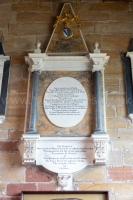
After 16th May 1671. Monument to the Reverend John Stanley.
Reverend John Stanley: On or before 6th September 1692, the day he was baptised, he was born to Thomas Horton Stanley 4th Baronet and Elizabeth Patten. On 23rd May 1753 Reverend John Stanley and Sarah Earle were married. The difference in their ages was 25 years. On 16th May 1781 Reverend John Stanley died.
Abbot John Whethamstede’s Chronicle of the Abbey of St Albans
Abbot John Whethamstede's Register aka Chronicle of his second term at the Abbey of St Albans, 1451-1461, is a remarkable text that describes his first-hand experience of the beginning of the Wars of the Roses including the First and Second Battles of St Albans, 1455 and 1461, respectively, their cause, and their consequences, not least on the Abbey itself. His text also includes Loveday, Blore Heath, Northampton, the Act of Accord, Wakefield, and Towton, and ends with the Coronation of King Edward IV. In addition to the events of the Wars of the Roses, Abbot John, or his scribes who wrote the Chronicle, include details in the life of the Abbey such as charters, letters, land exchanges, visits by legates, and disputes, which provide a rich insight into the day-to-day life of the Abbey, and the challenges faced by its Abbot.
Available at Amazon in eBook and Paperback format.
John Evelyn's Diary. 14th May 1672. To Dover, Kent [Map]; but the fleet did not appear till the 16th, when the Duke of York [aged 38] with his and the French squadron, in all 170 ships (of which above 100 were men-of-war), sailed by, after the Dutch, who were newly withdrawn. Such a gallant and formidable navy never, I think, spread sail upon the seas. It was a goodly yet terrible sight, to behold them as I did, passing eastward by the straits between Dover and Calais in a glorious day. The wind was yet so high, that I could not well go aboard, and they were soon got out of sight. The next day, having visited our prisoners and the Castle, and saluted the Governor, I took horse for Margate, Kent [Map]. Here, from the North Foreland Lighthouse top (which is a pharos, built of brick, and having on the top a cradle of iron, in which a man attends a great sea-coal fire all the year long, when the nights are dark, for the safeguard of sailors), we could see our fleet as they lay at anchor. The next morning, they weighed, and sailed out of sight to the N. E.


John Evelyn's Diary. 16th May 1675. This day was my dear friend, Mrs. Blagg [aged 22], married at the Temple Church [Map] to my friend, Mr. Sidney Godolphin [aged 29], Groom of the Bedchamber to his Majesty [aged 44].
John Evelyn's Diary. 16th May 1681. Came my Lady Sunderland [aged 35], to desire that I would propose a match to Sir Stephen Fox [aged 54] for her son [aged 6], Lord Spencer, to marry Mrs. Jane [aged 12], Sir Stephen's daughter. I excused myself all I was able; for the truth is, I was afraid he would prove an extravagant man: for, though a youth of extraordinary parts, and had an excellent education to render him a worthy man, yet his early inclinations to extravagance made me apprehensive, that I should not serve Sir Stephen by proposing it, like a friend; this being now his only daughter, well-bred, and likely to receive a large share of her father's opulence. Lord Sunderland [aged 39] was much sunk in his estate by gaming and other prodigalities, and was now no longer Secretary of State, having fallen into displeasure of the King [aged 50] for siding with the Commons about the succession; but which, I am assured, he did not do out of his own inclination, or for the preservation of the Protestant religion, but by mistaking the ability of the party to carry it. However, so earnest and importunate was the Countess, that I did mention it to Sir Stephen, who said it was too great an honor, that his daughter was very young, as well as my Lord, and he was resolved never to marry her without the parties' mutual liking; with other objections which I neither would or could contradict. He desired me to express to the Countess the great sense he had of the honor done him, that his daughter and her son were too young, that he would do nothing without her liking, which he did not think her capable of expressing judiciously, till she was sixteen or seventeen years of age, of which she now wanted four years, and that I would put it off as civilly as I could.


John Evelyn's Diary. 16th May 1685. Oates [aged 35] was sentenced to be whipped and pilloried with the utmost severity..
On 16th May 1687 William Petty [aged 63] died.
On 16th May 1696 Mariana of Austria Queen Consort Spain [aged 61] died.


On 16th May 1723 Henry Roper 8th Baron Teynham [aged 47] committed suicide. His son Philip [aged 16] succeeded 9th Baron Teynham of Teynham in Kent.
After 16th May 1758. Monument in the Church of St Mary, Southwick [Map] to George Lynn [deceased] commissioned by his widow Anne Bellamy attributed to Louis Francois Roubiliac [aged 55]. Grey and white marble with oval medallion of deceased suspended from broad flat obelisk; drapery below with figure of his wife seated female figure to right, leaning against Urn.
Anne Bellamy: In 1680 she was born to Edward Bellamy. In August 1734 George Lynn and she were married by which he came into possession of Frinton Manor, Essex. The difference in their ages was 27 years; she, unusually, being older than him. He the son of George Lynn and Elizabeth Bellamy. On 31st August 1741 she died.


On 16th May 1761 John Opie was born.
On 16th May 1770 Louis XVI King France [aged 15] and Queen Marie Antoinette of France [aged 14] were married. She the daughter of Francis I Holy Roman Emperor and Maria Theresa Habsburg Spain Holy Roman Empress [aged 53]. They were second cousin once removed. He a great x 4 grandson of King Charles I of England, Scotland and Ireland. She a great x 4 granddaughter of King James I of England and Ireland and VI of Scotland.


On 16th May 1777 James Lonsdale was born in Lancaster, Lancashire [Map].

Anne Boleyn. Her Life as told by Lancelot de Carle's 1536 Letter.
In 1536, two weeks after the execution of Anne Boleyn, her brother George and four others, Lancelot du Carle, wrote an extraordinary letter that described Anne's life, and her trial and execution, to which he was a witness. This book presents a new translation of that letter, with additional material from other contemporary sources such as Letters, Hall's and Wriothesley's Chronicles, the pamphlets of Wynkyn the Worde, the Memorial of George Constantyne, the Portuguese Letter and the Baga de Secrets, all of which are provided in Appendices.
Available at Amazon in eBook and Paperback format.
On 16th May 1782 John Sell Cotman was born.
On 30th May 1785 Frederick Augustus Berkeley 5th Earl Berkeley [aged 40] and Mary Cole were married at St Mary's Church, Berkeley by the Vicar. The marriage was kept secret until the couple were married again at Lambeth, Surrey [Map] on 16th May 1796. The absence of evidence led to subsequent issues with inheritance with the couple's fist six children effectively being illegitimate and the couple's children after the Lambeth marriage being legitimate and eligible to inherit.
On 16th May 1790 Philip Yorke 2nd Earl of Hardwicke [aged 69] died. His nephew Philip [aged 32] succeeded 3rd Earl Hardwicke, 3rd Viscount Royston. He was buried at St Andrew's Church, Wimpole [Map]. Monument at the De Grey Mausoleum, St John the Baptist Church, Flitton [Map] sculpted by Thomas Banks [aged 54]..


After 16th May 1790. St Andrew's Church, Wimpole [Map]. Monument to Philip Yorke 2nd Earl of Hardwicke [deceased]. White marble stele carved in bold relief with a kneeling female mourner garlanding an urn; signed 'T. BANKS, R.A. SCULPT.' [aged 54].


On 16th May 1791 Henry Charles Somerset 6th Duke Beaufort [aged 24] and Charlotte Sophia Leveson-Gower Duchess Beaufort [aged 20] were married at St Mary at Lambeth Church, Surrey [Map]. She the daughter of Granville Leveson-Gower 1st Marquess Stafford [aged 69] and Susanna Stewart Marchioness Stafford. He the son of Henry Somerset 5th Duke Beaufort [aged 46] and Elizabeth Boscawen Duchess Beaufort [aged 43]. They were half fourth cousin once removed.

On 16th May 1815 Charles Manners 6th Duke Rutland was born to John Henry Manners 5th Duke Rutland [aged 37] and Elizabeth Howard Duchess Rutland [aged 34]. He was educated at Eton College [Map].
On 16th May 1832 Casimir Pierre Périer [aged 54] died of cholera.
On 16th May 1838 Victoria Leveson-Gower was born to George Sutherland Leveson-Gower 2nd Duke Sutherland [aged 51] and Harriet Elizabeth Georgiana Howard Duchess Sutherland [aged 31]. Coefficient of inbreeding 3.23%. She died aged one in 1839.


Ten Years' Digging. On the same afternoon, we began an examination of a large mutilated flat-topped barrow [Hay Top Barrow [Map]], twenty yards diameter and four feet high, on the summit of a hill called Hay Top, overlooking the manufacturing colony of Cressbrook. The mound is piled upon a naturally elevated rock, so as not to present more than two feet of accumulated material in the middle, where we began to dig, finding remains of many individuals, from infants to adults of large stature (an imperfect femur, broken off below the neck, measuring near nineteen inches), but all were in disorder except one skeleton, which appeared to lie on its left side in the centre; it was, however, so much surrounded by other bones as to be rather difficult to identify, and, from the same confusion, we cannot positively assign all the following articles to it, though there is scarcely a doubt that the flints and bone ornament were buried with it: - The objects referred to, are ten jet beads of the three common shapes, several flints, including three thick arrow points, and a curious bone ornament, with a hole for suspension round the neck, where it was found, not unlike a seal with a rectangular face. The skeleton, from the slenderness of the bones, was judged to be that of a female. We casually found pieces of two vessels, a polecat's skull, and many bones of the water-vole.
Ten Years' Digging. On the 16th of May, we examined the remains of a tumulus [Hay Dale Barrow [Map]] about fifteen yards diameter, in a field on the left hand side of the road from Ashford to Wardlow, about a mile beyond the public-house at the entrance of Monsal Dale. Owing to the land having been much ploughed, the height of the tumulus had been considerably reduced, not more than a foot of artificial material being left. Immediately on removing the turf many fragments of human bone, detached from several skeletons, appeared, and near the centre was a skeleton not so much disturbed, lying on some large rough limestones, and having near the head a small shattered vase, still preserving an upright position in decay - it is slightly moulded and ornamented with oblique punctures. On a portion of the lower jaw of this skeleton is an osseous excrescence, of the shape and size of a small bullet. The bones of an infant, and one or two small fiints were also found.
On 16th May 1867 Anna Alma-Tadema was born to Lawrence Alma-Tadema [aged 31] and Marie-Pauline Gressin-Dumoulin.
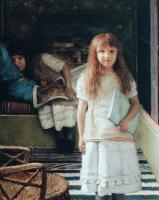
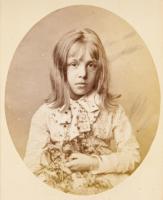
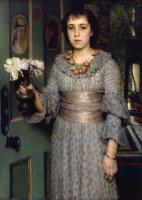
On 16th May 1877 Constance Edwina "Shelagh" Cornwallis-West Duchess Westminster was born to William Cornwallis-West [aged 42] and Mary "Patsy" Fitzpatrick [aged 21]. She married (1) 16th February 1901 Hugh "Bendor" Grosvenor 2nd Duke Westminster and had issue (2) 14th January 1920 John Fitzpatrick Lewis.

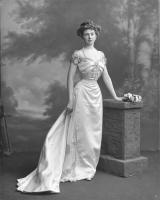


On 16th May 1895 William Douglas Hamilton 12th Duke Hamilton 9th Duke Brandon [aged 50] died at Algiers. His fourth cousin Alfred [aged 33] succeeded 13th Duke Hamilton, 10th Duke Brandon of Suffolk, 9th Marquess Douglas, 10th Baron Dutton of Cheshire.
Henrici Quinti, Angliæ Regis, Gesta, is a first-hand account of the Agincourt Campaign, and subsequent events to his death in 1422. The author of the first part was a Chaplain in King Henry's retinue who was present from King Henry's departure at Southampton in 1415, at the siege of Harfleur, the battle of Agincourt, and the celebrations on King Henry's return to London. The second part, by another writer, relates the events that took place including the negotiations at Troye, Henry's marriage and his death in 1422.
Available at Amazon in eBook and Paperback format.
On 16th May 1899 Henry Byng 4th Earl Strafford [aged 67] died in a railway accident. He was hit by an express train; (possible suicide but the coroner returned misadventure) at the Railway Station in Potter's Bar. He was buried at Byng Family Vault St John's Church, Potter's Bar. His brother Francis [aged 64] succeeded 5th Earl Strafford, 5th Viscount Enfield of Enfield in Middlesex, 5th Baron Strafford of Harmondsworth in Middlesex. Emily Georgina Kerr Countess Strafford [aged 52] by marriage Countess Strafford.
On 16th May 1915 John Torrington Morris [aged 18] was killed in action at the Battle of Festubert. Buried at the Guards Cemetery, Windy Corner, Cuinchy, Pas-de-Calais..
Extract from the Unit War Diary: Operations against Aubers Ridge & Festubert.
15th May. The Battalion formed up along the parapet on the Rue Chilloux.The Battalion was ordered to assault the German trenches to its immediate front, take the German 1st & 2nd Lines and then move S.E. & take up a line between the Rue Quinque & the Rue D'Ouvert.
At 3.15am, the battalion assaulted and suffered very heavily from shell & machine gun fire both in crossing the parapet and the space between our parapet and the 1st German line. The CO of the Battalion Lt Col Gabbatt and the OC of B Coy were killed at once. The 2nd in command Major G F Dickson, the OC C Coy Lt Chapman & the OC D Coy all fell severely wounded together with many officers NCOs & men. The German first line was however quickly stormed, and the 2nd line was also quickly carried, and the line pushed on. A heavy M.G. & rifle fire then opened from the left front.
He was one of 8 officers killed out of an initial 25. 559 Other Ranks out of an initial 806 were casualties.
John Torrington Morris: On 6th June 1896 he was born to Robert Armine Morris 4th Baronet. On 19th March 1915 John Torrington Morris embarked back into the field on 19th March 1915, and was transferred on the 26th March 1915 to the 1st Battalion. On 29th June 1915 John Torrington Morris was examining an automatic pistol and received a gun-shot wound in the left thigh on 29th Jan 1915 at Rouen whilst in the 3rd Battalion.

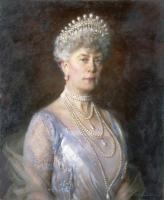
On 16th May 1928 Richard Gibbs 2nd Baron Wraxall was born to George Gibbs 1st Baron Wraxall [aged 54] and Ursula Mary Lawley. His godmother was Victoria Mary Teck Queen Consort England [aged 60].




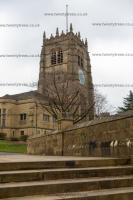
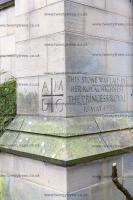
On 16th May 1953 the Princess Royal, Princess Mary Windsor Countess Harewood [aged 56], attended a ceremony marking the redevelopment and extension of Bradford Cathedral [Map]. The east end of the cathedral is by Edward Maufe work, as well as the two west wings which contain the Song Room and Cathedral offices.


On 16th May 1609 Ferdinand Habsburg Spain was born to Philip III King Spain [aged 31] and Margaret of Austria Queen Consort Spain [aged 24]. Coefficient of inbreeding 10.92%.

On 16th May 1641 Dudley North was born to Dudley North 4th Baron North [aged 39] and Anne Montagu Baroness North [aged 29]. He married 1683 Anne Cann, daughter of Robert Cann 1st Baronet and Cecily Hooke, and had issue.
On 16th May 1641 Johann Ernest Saxe Gotha was born to Ernest "The Pious" Saxe Gotha I Duke Saxe Gotha [aged 39] and Elisabeth Sophie Saxe Altenburg Duchess Saxe Gotha [aged 21] at Gotha. Coefficient of inbreeding 3.17%.
On 16th May 1654 William Estcourt 3rd Baronet was born to Giles Estcourt 1st Baronet and Anne Mordaunt.
On 16th May 1662 George Cooke 3rd Baronet was born to Henry Cooke 2nd Baronet [aged 28]. He married 19th June 1683 Catherine Copley Lady Cooke, daughter of Godfrey Copley 1st Baronet, and had issue.
On 16th May 1697 John Berkeley 5th Baron Berkeley was born to William Berkeley 4th Baron Berkeley [aged 34] and Frances Temple Baroness Berkeley.
On 16th May 1702 George Neville 2nd Baron Abergavenny was born to George Neville 1st Baron Abergavenny [aged 43] and Anne Walker. He married 21st February 1722 Elizabeth Thorneycroft Baroness Bergavenny.
On 16th May 1704 Reginald Graham 4th Baronet was born to Reginald Graham 2nd Baronet [aged 33] and Hester Bellingham Lady Graham [aged 31]. He was baptised on 18th May 1704. He married 5th June 1728 his second cousin once removed Jacoba Catherina Graham and had issue.
Annals of the six Kings of England by Nicholas Trivet
Translation of the Annals of the Six Kings of England by that traces the rise and rule of the Angevin aka Plantagenet dynasty from the mid-12th to early 14th century. Written by the Dominican scholar Nicholas Trivet, the work offers a vivid account of English history from the reign of King Stephen through to the death of King Edward I, blending political narrative with moral reflection. Covering the reigns of six monarchs—from Stephen to Edward I—the chronicle explores royal authority, rebellion, war, and the shifting balance between crown, church, and nobility. Trivet provides detailed insight into defining moments such as baronial conflicts, Anglo-French rivalry, and the consolidation of royal power under Edward I, whose reign he describes with particular immediacy. The Annals combines careful year-by-year reporting with thoughtful interpretation, presenting history not merely as a sequence of events but as a moral and political lesson. Ideal for readers interested in medieval history, kingship, and the origins of the English state, this chronicle remains a valuable and accessible window into the turbulent world of the Plantagenet kings.
Available at Amazon in eBook and Paperback format.

On 16th May 1710 William Talbot 1st Earl Talbot was born to Charles Talbot 1st Baron Talbot [aged 25] and Cecil Mathew Baroness Talbot at Worcester, Worcestershire [Map]. He married 21st February 1733 Mary Cardonnel Countess Talbot and had issue.
On 16th May 1761 John Opie was born.
On 16th May 1777 James Lonsdale was born in Lancaster, Lancashire [Map].
On 16th May 1782 John Sell Cotman was born.
On 19th October 1796 Thomas Moreton FitzHardinge Berkeley 6th Earl of Berkeley was born to Frederick Augustus Berkeley 5th Earl Berkeley [aged 51] and Mary Cole. He was the first of their children to be born after their recognised legal marriage on 16th May 1796. He a great x 3 grandson of King Charles II of England Scotland and Ireland.
On 16th May 1804 Richard Corbet was born to Andrew Corbet 1st Baronet [aged 38].
On 16th May 1809 Admiral George Grey was born to Charles Grey 2nd Earl Grey [aged 45] and Mary Elizabeth Ponsonby Countess Grey [aged 33]. He married 20th January 1845 Jane Frances Stuart and had issue.


On 16th May 1815 Charles Manners 6th Duke Rutland was born to John Henry Manners 5th Duke Rutland [aged 37] and Elizabeth Howard Duchess Rutland [aged 34]. He was educated at Eton College [Map].
On 16th May 1819 Emily Jane de Flahaut Marchioness Lansdowne was born to Charles Joseph Comte de Flahaut [aged 34] and Margaret Mercer Elphinstone Countess Flahaut and 2nd Baroness Keith [aged 30]. She married 1st November 1843 Henry Thomas Petty-Fitzmaurice 4th Marquess Lansdowne, son of Henry Petty-Fitzmaurice 3rd Marquess Lansdowne and Louisa Emma Fox-Strangways Marchioness of Lansdowne, and had issue.
On 16th May 1825 Henry Gerard Sturt 1st Baron Alington was born to Henry Charles Sturt [aged 29] and Charlotte Penelope Brudenell. He married (1) 10th September 1853 his first cousin Augusta Bingham Baroness Alington, daughter of George Charles Bingham 3rd Earl Lucan and Anne Brudenell Countess Lucan, and had issue (2) 10th February 1892 Evelyn Henrietta Leigh Baroness Alington.
On 16th May 1825 Valentine Browne 4th Earl of Kenmare was born to Thomas Browne 3rd Earl of Kenmare [aged 36]. He married 28th April 1858 Gertrude Thynne Countess Kenmare and had issue.
On 16th May 1830 Reverend John Frederick Halford 4th Baronet was born to Henry Halford 2nd Baronet [aged 33] and Barbara Vaughan. Coefficient of inbreeding 3.12%.
On 16th May 1838 Victoria Leveson-Gower was born to George Sutherland Leveson-Gower 2nd Duke Sutherland [aged 51] and Harriet Elizabeth Georgiana Howard Duchess Sutherland [aged 31]. Coefficient of inbreeding 3.23%. She died aged one in 1839.
On 16th May 1839 Edward Lyulph Stanley 4th Baron Stanley 3rd Baron Eddisbury was born to Edward John Stanley 2nd Baron Stanley and 1st Baron Eddisbury [aged 36] and Henrietta Maria Dillon Baroness Stanley Alderley and Eddisbury [aged 31]. He married 6th February 1873 Mary Catherine Bell Baroness Stanley, daughter of Isaac Lowthian Bell 1st Baronet and Margaret Pattinson, and had issue.
On 16th May 1841 William Assheton Eardley-Wilmot 3rd Baronet was born to John Eardley-Wilmot 2nd Baronet [aged 30] and Eliza Martha Williams Lady Eardley-Williams [aged 28].
On 16th May 1843 Charles Robert Wynn-Carington 1st Marquess of Lincolnshire was born to Robert Carrington 2nd Baron Carrington [aged 47] and Charlotte Augusta Annabella Drummond Willoughby Baroness Carrington [aged 28] at Whitehall Palace [Map]. He married 1878 Cecilia Margaret Harbord Marchioness, daughter of Charles Harbord 5th Baron Suffield and Cecilia Annetta Baring Baroness Suffield, and had issue.
On 16th May 1848 William Henry Fellowes 2nd Baron de Ramsey of Ramsey Abbey was born to Edward Fellowes 1st Baron de Ramsey of Ramsey Abbey [aged 39] and Mary Julia Milles Baroness de Ramsay. He married 12th July 1877 his sixth cousin Rosamond Jane Frances Spencer-Churchill, daughter of John Winston Spencer-Churchill 7th Duke of Marlborough and Frances Anne Emily Vane Duchess of Marlborough, and had issue.
On 16th May 1849 Victor Bruce 13th Earl Kincardine 9th Earl Elgin was born to James Bruce 12th Earl Kincardine 8th Earl Elgin [aged 37] and Mary Louisa Lambton Countess Kincardine and Elgin [aged 30]. He married 1876 his fifth cousin once removed Constance Mary Carnegie Countess Elgin, daughter of James Carnegie 9th Earl Southesk and Catherine Hamilton Noel.
On 16th May 1852 Reynold Henry Newton Alleyne was born to John Gay Newton Alleyne 3rd Baronet [aged 31] and Augusta Isabella Fitzherbert Lady Alleyne [aged 23] at St Lucy, Barbados.
Henrici Quinti, Angliæ Regis, Gesta, is a first-hand account of the Agincourt Campaign, and subsequent events to his death in 1422. The author of the first part was a Chaplain in King Henry's retinue who was present from King Henry's departure at Southampton in 1415, at the siege of Harfleur, the battle of Agincourt, and the celebrations on King Henry's return to London. The second part, by another writer, relates the events that took place including the negotiations at Troye, Henry's marriage and his death in 1422.
Available at Amazon in eBook and Paperback format.
On 16th May 1867 Anna Alma-Tadema was born to Lawrence Alma-Tadema [aged 31] and Marie-Pauline Gressin-Dumoulin.
On 16th May 1877 Constance Edwina "Shelagh" Cornwallis-West Duchess Westminster was born to William Cornwallis-West [aged 42] and Mary "Patsy" Fitzpatrick [aged 21]. She married (1) 16th February 1901 Hugh "Bendor" Grosvenor 2nd Duke Westminster and had issue (2) 14th January 1920 John Fitzpatrick Lewis.
On 16th May 1885 Grace Elvina Hinds Marchioness Curzon Kedleston was born to Joseph Monroe Hinds [aged 43] in Decatur Alabama. She married 2nd January 1917 George Nathaniel Curzon 1st Marquess Kedleston, son of Alfred Nathaniel Holden Curzon 4th Baron Scarsdale and Blanche Pocklington Senhouse Baroness Scarsdale.


On 16th May 1886 Ronald Lechmere 5th Baronet was born to Edmund Arthur Lechmere 4th Baronet [aged 20]. He married 7th August 1915 Constance Marguerite Long and had issue.

On 16th May 1890 Captain Edward James Kay-Shuttleworth was born to Ughtred Kay-Shuttleworth 1st Baron Shuttleworth [aged 45]. He married 5th December 1914 Sibell Eleanor Maud Adeane and had issue.
On 16th May 1892 John Parnell 6th Baron Congleton was born to Henry Parnell 4th Baron Congleton [aged 52] and Elizabeth Peter Dove.

On 16th May 1894 Katherine Pleydell-Bouverie was born to Jacob Pleydell-Bouverie 6th Earl Radnor [aged 25] and Julian Eleanor Adelaide Balfour.

On 16th May 1895 Edward William Bootle-Wilbraham 3rd Earl of Lathom was born to Edward George Bootle Wibraham 2nd Earl Lathom [aged 30] and Wilma Pleydell-Bouverie Countess Lathom [aged 25]. Coefficient of inbreeding 1.56%.
On 16th May 1898 Gerard Wallop 9th Earl of Portsmouth was born to Oliver Wallop 8th Earl of Portsmouth [aged 37].
On 16th May 1908 Major Thomas William Edward Coke 5th Earl of Leicester was born to Thomas William Coke 4th Earl of Leicester [aged 27] and Marion Gertrude Trefusis Countess Leicester [aged 25]. He married 1st October 1931 Elizabeth Mary Yorke Countess of Leicester, daughter of Charles Yorke 8th Earl of Hardwicke, and had issue.
On 16th May 1928 Richard Gibbs 2nd Baron Wraxall was born to George Gibbs 1st Baron Wraxall [aged 54] and Ursula Mary Lawley. His godmother was Victoria Mary Teck Queen Consort England [aged 60].

The True Chronicles of Jean le Bel Volume 1 Chapters 1-60 1307-1342
The True Chronicles of Jean le Bel offer one of the most vivid and immediate accounts of 14th-century Europe, written by a knight who lived through the events he describes, and experienced some of them first hand. Covering the early decades of the Hundred Years’ War, this remarkable chronicle follows the campaigns of Edward III of England, the politics of France and the Low Countries, and the shifting alliances that shaped medieval warfare. Unlike later historians, Jean le Bel writes with a strong sense of eyewitness authenticity, drawing on personal experience and the testimony of fellow soldiers. His narrative captures not only battles and sieges, but also the realities of military life, diplomacy, and the ideals of chivalry that governed noble society. A key source for Jean Froissart, Le Bel’s chronicle stands on its own as a compelling and insightful work, at once historical record and literary achievement. This translation builds on the 1905 edition published in French by Jules Viard, adding extensive translations from other sources Rymer's Fœdera, the Chronicles of Adam Murimuth, William Nangis, Walter of Guisborough, a Bourgeois of Valenciennes, Geoffrey le Baker of Swinbroke and Richard Lescot to enrich the original text and Viard's notes.
Available at Amazon in eBook and Paperback format.
On 16th May 1952 James Thomas Douglas-Home 28th Baron Dacre 27th Baron Multon was born to William Douglas-Home Baron Dacre [aged 39] and Rachel Leila Brand 27th Baroness Dacre [aged 22].
On 16th May 1957 Anthony St John 22nd Baron St John was born to Andrew St John 21st Baron St John of Bletso [aged 38].
On 16th May 1620 George Villiers 1st Duke of Buckingham [aged 27] and Katherine Manners Duchess Buckingham [aged 18] were married. She by marriage Countess Buckingham. She the daughter of Francis Manners 6th Earl of Rutland [aged 42] and Frances Knyvet Lady Bevill. He the son of George Villiers of Brokesby and Mary Beaumont 1st Countess Buckingham [aged 50].
On 16th May 1674 Thomas Lennard 1st Earl of Sussex [aged 20] and Anne Fitzroy Countess Sussex [aged 13] were married at Hampton Court Palace, Richmond [Map]. She the illegitmate daughter of King Charles II of England Scotland and Ireland [aged 43] and Barbara Villiers 1st Duchess of Cleveland [aged 33]. They were first cousin once removed.
On 16th May 1675 Sidney Godolphin 1st Earl Godolphin [aged 29] and Margaret Blagge [aged 22] were married.
On 16th May 1678 Heneage Finch 1st Earl Aylesford [aged 29] and Elizabeth Banks Countess Aylesford were married. He the son of Heneage Finch 1st Earl Nottingham [aged 56] and Elizabeth Harvey Baroness Finch.


On 16th May 1689 Charles Knollys 4th Earl Banbury [aged 26] and Elizabeth Lister Countess of Banbury [aged 25] were married. She by marriage Countess Banbury. Said to be at the Nag's Head Coffee-House James Street although this may have been the location of the reception. He the son of Nicholas Knollys 3rd Earl Banbury and Anne or Abigail Sherard.
On 16th May 1717 Henry Clinton 7th Earl Lincoln [aged 33] and Lucy Pelham Countess Lincoln were married. She by marriage Countess Lincoln. He the son of Francis Clinton 6th Earl Lincoln and Susan Penniston Countess Lincoln.
On 16th May 1719 Philip Yorke 1st Earl of Hardwicke [aged 28] and Margaret Cocks Countess Hardwicke were married.


On 16th May 1736 John Leveson-Gower 1st Earl Gower [aged 41] and Mary Tufton Countess Gower were married. She by marriage Baroness Gower. She the daughter of Thomas Tufton 6th Earl of Thanet and Catherine Cavendish Countess Isle Thanet. They were fourth cousins.
The History of William Marshal was commissioned by his son shortly after William’s death in 1219 to celebrate the Marshal’s remarkable life; it is an authentic, contemporary voice. The manuscript was discovered in 1861 by French historian Paul Meyer. Meyer published the manuscript in its original Anglo-French in 1891 in two books. This book is a line by line translation of the first of Meyer’s books; lines 1-10152. Book 1 of the History begins in 1139 and ends in 1194. It describes the events of the Anarchy, the role of William’s father John, John’s marriages, William’s childhood, his role as a hostage at the siege of Newbury, his injury and imprisonment in Poitou where he met Eleanor of Aquitaine and his life as a knight errant. It continues with the accusation against him of an improper relationship with Margaret, wife of Henry the Young King, his exile, and return, the death of Henry the Young King, the rebellion of Richard, the future King Richard I, war with France, the death of King Henry II, and the capture of King Richard, and the rebellion of John, the future King John. It ends with the release of King Richard and the death of John Marshal.
Available at Amazon in eBook and Paperback format.
On 16th May 1741 Richard Onslow 3rd Baron Onslow [aged 28] and Mary Elwill Baroness Onslow were married at her mother's residence in Clifford Street. She by marriage Baroness Onslow.
On 16th May 1757 George Hobart 3rd Earl Buckinghamshire [aged 25] and Albinia Bertie Countess Buckinghamshire [aged 18] were married at Chislehurst, Kent. He the son of John Hobart 1st Earl Buckinghamshire and Elizabeth Bristow Countess Buckinghamshire.


On 16th May 1770 Louis XVI King France [aged 15] and Queen Marie Antoinette of France [aged 14] were married. She the daughter of Francis I Holy Roman Emperor and Maria Theresa Habsburg Spain Holy Roman Empress [aged 53]. They were second cousin once removed. He a great x 4 grandson of King Charles I of England, Scotland and Ireland. She a great x 4 granddaughter of King James I of England and Ireland and VI of Scotland.
On 16th May 1780 Robert Salusbury 1st Baronet [aged 23] and Catherine Vanne of Llanwern were married. They had three sons and two daughters.
On 16th May 1791 Henry Charles Somerset 6th Duke Beaufort [aged 24] and Charlotte Sophia Leveson-Gower Duchess Beaufort [aged 20] were married at St Mary at Lambeth Church, Surrey [Map]. She the daughter of Granville Leveson-Gower 1st Marquess Stafford [aged 69] and Susanna Stewart Marchioness Stafford. He the son of Henry Somerset 5th Duke Beaufort [aged 46] and Elizabeth Boscawen Duchess Beaufort [aged 43]. They were half fourth cousin once removed.
On 16th May 1822 Richard King 2nd Baronet [aged 47] and Maria Susanna Cotton Lady King were married. She by marriage Lady Queen of Bellevue in Kent. They had four sons and three daughters.
On 16th May 1840 Alexander Cornewall Duff-Gordon 3rd Baronet [aged 29] and Lucie Austin [aged 18] were married. The couple lived at 8 Queen Square, Bloomsbury.
On 16th May 1843 Hugh Williams 3rd Baronet [aged 41] and Henrietta Charlotte Williams-Wynn [aged 24] were married.
On 16th May 1863 Leopold Cust 2nd Baronet [aged 32] and Charlotte Bridgeman Lady Cust were married.
On 16th May 1867 Christopher Furness 1st Baron Furness [aged 15] and Jane Annette Suggitt Baroness Furness were married.
On 16th May 1928 Valentine Browne 6th Earl of Kenmare [aged 36] and Doris Delevigne Viscountess Castlerosse [aged 27] were married. He the son of Valentine Charles Browne 5th Earl of Kenmare [aged 67] and Elizabeth Baring Countess Kenmare [aged 61].
Chronicle of a Bourgeois of Valenciennes
Récits d’un bourgeois de Valenciennes aka The Chronicle of a Bourgeois of Valenciennes is a vivid 14th-century vernacular chronicle written by an anonymous urban chronicler from Valenciennes in the County of Hainaut. It survives in a manuscript that describes local and regional history from about 1253 to 1366, blending chronology, narrative episodes, and eyewitness-style accounts of political, military, and social events in medieval France, Flanders, and the Low Countries. The work begins with a chronological framework of events affecting Valenciennes and its region under rulers such as King Philip VI of France and the shifting allegiances of local nobility. It includes accounts of conflicts, sieges, diplomatic manoeuvres, and the impact of broader struggles like the Hundred Years’ War on urban life in Hainaut. Written from the perspective of a burgher (bourgeois) rather than a monastery or royal court, the chronicle offers a rare lay viewpoint on high politics and warfare, reflecting how merchants, townspeople, and civic institutions experienced the turbulence of the 13th and 14th centuries. Its narrative style combines straightforward reporting of events with moral and civic observations, making it a valuable source for readers interested in medieval urban society, regional politics, and the lived experience of war and governance in pre-modern Europe.
Available at Amazon in eBook and Paperback format.
On 16th May 1935 Charles Moore 11th Earl of Drogheda [aged 25] and Joan Carr Countess Drogheda [aged 33] were married at City Hall, New York. She by marriage Countess Drogheda. He the son of Henry Moore 10th Earl of Drogheda [aged 51] and Kathleen Pelham Burn Countess Drogheda [aged 48].
On 16th May 1282 Thomas Savoy III Count Flanders [aged 36] was killed during a border dispute with Humbert I of Viennois.
On 16th May 1373 John I Count Armagnac [aged 62] died. His son John [aged 40] succeeded II Count Armagnac. Jeanne Countess Armagnac by marriage Countess Armagnac.
On 16th May 1417 Eberhard III Count of Württemberg [aged 53] died. His son Eberhard [aged 29] succeeded IV Count of Württemberg.
On 16th May 1462 William Botreaux 3rd Baron Botreaux [aged 73] died. He was buried at Church of St Michael North Cadbury, Somerset. His daughter Margaret succeeded 4th Baroness Botreaux.

On 16th May 1474 John Bourchier 1st Baron Berners [aged 58] died. His grandson John [aged 7] succeeded 2nd Baron Berners.
On 16th May 1515 Margaret Jenney Baroness Willoughby of Eresby [aged 55] died.

On 16th May 1645 Mary Curzon Countess Dorset [aged 55] died.
On 16th May 1662 Thomas Cotton 2nd Baronet [aged 68] died. His son John [aged 41] succeeded 3rd Baronet Cotton of Conington in Huntingdonshire.


On 16th May 1667 Thomas Wriothesley 4th Earl of Southampton 2nd Earl Chichester [aged 60] died. Earl of Southampton, Earl Chichester extinct.
Annals of the six Kings of England by Nicholas Trivet
Translation of the Annals of the Six Kings of England by that traces the rise and rule of the Angevin aka Plantagenet dynasty from the mid-12th to early 14th century. Written by the Dominican scholar Nicholas Trivet, the work offers a vivid account of English history from the reign of King Stephen through to the death of King Edward I, blending political narrative with moral reflection. Covering the reigns of six monarchs—from Stephen to Edward I—the chronicle explores royal authority, rebellion, war, and the shifting balance between crown, church, and nobility. Trivet provides detailed insight into defining moments such as baronial conflicts, Anglo-French rivalry, and the consolidation of royal power under Edward I, whose reign he describes with particular immediacy. The Annals combines careful year-by-year reporting with thoughtful interpretation, presenting history not merely as a sequence of events but as a moral and political lesson. Ideal for readers interested in medieval history, kingship, and the origins of the English state, this chronicle remains a valuable and accessible window into the turbulent world of the Plantagenet kings.
Available at Amazon in eBook and Paperback format.
On 16th May 1678 William Trollope 2nd Baronet [aged 57] died. His nephew Thomas [aged 11] succeeded 3rd Baronet Trollope of Casewick in Lincolnshire.

On 16th May 1680 William Blackett 1st Baronet [aged 59] died. His son Edward [aged 30] succeeded 2nd Baronet Blackett of Newcastle in Northumberland. Mary Yorke Lady Blackett [aged 23] by marriage Lady Blackett of Newcastle in Northumberland.
On 16th May 1687 William Petty [aged 63] died.
On 16th May 1696 Mariana of Austria Queen Consort Spain [aged 61] died.
On 16th May 1704 Elizabeth Skipwith Baroness Craven [aged 27] died.
On 16th May 1722 Anne Fitzroy Countess Sussex [aged 61] died.
On 16th May 1723 Henry Roper 8th Baron Teynham [aged 47] committed suicide. His son Philip [aged 16] succeeded 9th Baron Teynham of Teynham in Kent.
On 16th May 1743 Theophilus Biddulph 3rd Baronet [aged 58] died. His first cousin once removed Theophilus [aged 23] succeeded 4th Baronet Biddulph of Westcombe in Kent.
On 16th May 1747 Charles Fleming 7th Earl Wigtown [aged 72] died. Earl Wigtown extinct.
On 16th May 1760 Richard Mill 5th Baronet [aged 70] died. His son Richard [aged 43] succeeded 6th Baronet Mill of Camois Court in Sussex, the first of four sons to do so.
On 16th May 1762 William Courtenay 7th Earl Devon [aged 53] died. His son William [aged 19] de jure 8th Earl Devon, 2nd Viscount Courtenay. Frances Clack Countess Devon by marriage Countess Devon.

On 16th May 1778 Robert Darcy 4th Earl Holderness [aged 59] died. Earl Holderness, Baron Darcy of Meinhill extinct. His daughter Amelia [aged 23] succeeded 12th Baroness Darcy of Knayth, 9th Baroness Conyers.

On 16th May 1783 William Douglas 4th Baronet [aged 53] died. His son Charles [aged 6] succeeded 5th Baronet Kelhead.
Adam Murimuth's Continuation and Robert of Avesbury’s 'The Wonderful Deeds of King Edward III'
This volume brings together two of the most important contemporary chronicles for the reign of Edward III and the opening phases of the Hundred Years’ War. Written in Latin by English clerical observers, these texts provide a vivid and authoritative window into the political, diplomatic, and military history of fourteenth-century England and its continental ambitions. Adam Murimuth Continuatio's Chronicarum continues an earlier chronicle into the mid-fourteenth century, offering concise but valuable notices on royal policy, foreign relations, and ecclesiastical affairs. Its annalistic structure makes it especially useful for establishing chronology and tracing the development of events year by year. Complementing it, Robert of Avesbury’s De gestis mirabilibus regis Edwardi tertii is a rich documentary chronicle preserving letters, treaties, and official records alongside narrative passages. It is an indispensable source for understanding Edward III’s claim to the French crown, the conduct of war, and the mechanisms of medieval diplomacy. Together, these works offer scholars, students, and enthusiasts a reliable and unembellished account of a transformative period in English and European history. Essential for anyone interested in medieval chronicles, the Hundred Years’ War, or the reign of Edward III.
Available at Amazon in eBook and Paperback format.
On 16th May 1790 Philip Yorke 2nd Earl of Hardwicke [aged 69] died. His nephew Philip [aged 32] succeeded 3rd Earl Hardwicke, 3rd Viscount Royston. He was buried at St Andrew's Church, Wimpole [Map]. Monument at the De Grey Mausoleum, St John the Baptist Church, Flitton [Map] sculpted by Thomas Banks [aged 54]..
On 16th May 1797 John Wallop 2nd Earl Portsmouth [aged 54] died. His son John [aged 29] succeeded 3rd Earl Portsmouth, 3rd Viscount Lymington, 3rd Baron Wallop of Farley Wallop Hampshire.
On 16th May 1817 Charlotte Gleadowe-Newcomen 1st Viscountess Newcomen died. Thomas Gleadowe-Newcomen 2nd Viscount Newcomen [aged 40] succeeded 2nd Viscount Newcomen, 2nd Baron Newcomen.
On 16th May 1839 Edward Clive 1st Earl Powis [aged 85] died at 45 Berkeley Square, Mayfair. He was buried at St Mary the Virgin Church, Bromfield. His son Edward [aged 54] succeeded 2nd Earl Powis. Lucy Graham Countess Powis [aged 45] by marriage Countess Powis.


On 16th May 1847 John Ponsonby 4th Earl Bessborough [aged 65] died. His son John [aged 37] succeeded 5th Earl Bessborough, 6th Viscount Duncannon of Duncannon in Wexford, 6th Baron Bessborough of Bessborough in Kilkenny.
On 16th May 1855 William Francis Spencer Ponsonby 1st Baron de Mauley [aged 67] died. His son Charles [aged 39] succeeded 2nd Baron de Mauley. Maria Jane Elizabeth Ponsonby Baroness Mauley [aged 36] by marriage Baroness de Mauley.
On 16th May 1858 Emily Frances Kingscote Lady Kennaway [aged 52] died.
On 16th May 1860 Lawrence Palk 3rd Baronet [aged 67] died. His son Lawrence [aged 42] succeeded 4th Baronet Palk of Haldon House in Devon.
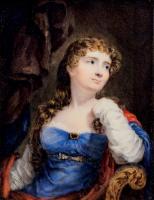
On 16th May 1860 Anne Isabella Noel Baroness Byron 11th Baroness Wentworth [aged 67] died at 67 St George's Terrace St George's Terrace. Her grandson Byron [aged 24] succeeded 12th Baron Wentworth, 16th Baron Despencer.
On 16th May 1877 Thomas Fitzmaurice 5th Earl Orkney [aged 73] died. George FitzMaurice 6th Earl of Orkney [aged 50] succeeded 6th Earl Orkney.
On 16th May 1888 Andalusia Carstairs Lady Molesworth [aged 78] died. She left the bulk of her personal estate £26,140 13s & 7d to her friends Lord Torrington's nephew George Stanley Byng 8th Viscount Torrington [aged 47] who she had never met.
Adam Murimuth's Continuation and Robert of Avesbury’s 'The Wonderful Deeds of King Edward III'
This volume brings together two of the most important contemporary chronicles for the reign of Edward III and the opening phases of the Hundred Years’ War. Written in Latin by English clerical observers, these texts provide a vivid and authoritative window into the political, diplomatic, and military history of fourteenth-century England and its continental ambitions. Adam Murimuth Continuatio's Chronicarum continues an earlier chronicle into the mid-fourteenth century, offering concise but valuable notices on royal policy, foreign relations, and ecclesiastical affairs. Its annalistic structure makes it especially useful for establishing chronology and tracing the development of events year by year. Complementing it, Robert of Avesbury’s De gestis mirabilibus regis Edwardi tertii is a rich documentary chronicle preserving letters, treaties, and official records alongside narrative passages. It is an indispensable source for understanding Edward III’s claim to the French crown, the conduct of war, and the mechanisms of medieval diplomacy. Together, these works offer scholars, students, and enthusiasts a reliable and unembellished account of a transformative period in English and European history. Essential for anyone interested in medieval chronicles, the Hundred Years’ War, or the reign of Edward III.
Available at Amazon in eBook and Paperback format.
On 16th May 1895 William Douglas Hamilton 12th Duke Hamilton 9th Duke Brandon [aged 50] died at Algiers. His fourth cousin Alfred [aged 33] succeeded 13th Duke Hamilton, 10th Duke Brandon of Suffolk, 9th Marquess Douglas, 10th Baron Dutton of Cheshire.
On 16th May 1899 Henry Byng 4th Earl Strafford [aged 67] died in a railway accident. He was hit by an express train; (possible suicide but the coroner returned misadventure) at the Railway Station in Potter's Bar. He was buried at Byng Family Vault St John's Church, Potter's Bar. His brother Francis [aged 64] succeeded 5th Earl Strafford, 5th Viscount Enfield of Enfield in Middlesex, 5th Baron Strafford of Harmondsworth in Middlesex. Emily Georgina Kerr Countess Strafford [aged 52] by marriage Countess Strafford.
On 16th May 1903 William Robert Williams 3rd Baronet [aged 43] died. His son William [aged 16] succeeded 4th Baronet Williams of Tregullow in Cornwall.

On 16th May 1906 Bishop Edward Bickersteth [aged 81] died.
On 16th May 1930 Florence Eveleen Eleanore Olliffe Lady Bell [aged 79] died.
On 16th May 1932 Frederick Joseph Trevelyan Perceval 10th Earl Egmont [aged 59] died. His son Frederick [aged 18] succeeded 11th Earl Egmont, 11th Viscount Perceval of Kanturk in County Cork, 11th Baron Perceval of Burton in County Cork, 8th Baron Arden of Lohort Castle in County Cork, 7th Baron Arden of Arden in Warwickshire, 14th Baronet Perceval of Kanturk in County Cork, 10th Baron Lovel and Holland of Enmore in Somerset.
On 16th May 1933 Cynthia Blanche Curzon Lady Ancoats [aged 34] died.
On 16th May 1953 Archibald Montagu Stuart-Wortley-Mackenzie 3rd Earl of Wharncliffe [aged 61] died. His son Alan [aged 18] succeeded 4th Earl Wharncliffe, 6th Baron Wharncliffe of Wortley in Yorkshire.
On 16th May 1954 Helen Venetia Duncombe Viscountess D'Abernon [aged 88] died.


On 16th May 1978 Diana Hay 23rd Countess of Erroll [aged 52] died.
The True Chronicles of Jean le Bel Volume 1 Chapters 1-60 1307-1342
The True Chronicles of Jean le Bel offer one of the most vivid and immediate accounts of 14th-century Europe, written by a knight who lived through the events he describes, and experienced some of them first hand. Covering the early decades of the Hundred Years’ War, this remarkable chronicle follows the campaigns of Edward III of England, the politics of France and the Low Countries, and the shifting alliances that shaped medieval warfare. Unlike later historians, Jean le Bel writes with a strong sense of eyewitness authenticity, drawing on personal experience and the testimony of fellow soldiers. His narrative captures not only battles and sieges, but also the realities of military life, diplomacy, and the ideals of chivalry that governed noble society. A key source for Jean Froissart, Le Bel’s chronicle stands on its own as a compelling and insightful work, at once historical record and literary achievement. This translation builds on the 1905 edition published in French by Jules Viard, adding extensive translations from other sources Rymer's Fœdera, the Chronicles of Adam Murimuth, William Nangis, Walter of Guisborough, a Bourgeois of Valenciennes, Geoffrey le Baker of Swinbroke and Richard Lescot to enrich the original text and Viard's notes.
Available at Amazon in eBook and Paperback format.
On 16th May 2013 Fiona Colquhoun Countess of Arran [aged 94] died.