

19 Aug is in August.
1274 Coronation of King Edward I
1553 Trial and Execution of Lady Jane Grey's Supporters
1560 Death of King Francis II of France
1565 Marriage of Richard Keyes and Mary Grey
Anglo-Saxon Chronicle. 768. This year died King Eadbert, the son of Eata, on the fourteenth day before the calends of September.
On 19th August 768 Eadberht King of Northumbria died. His son Oswulf succeeded King Northumbria.
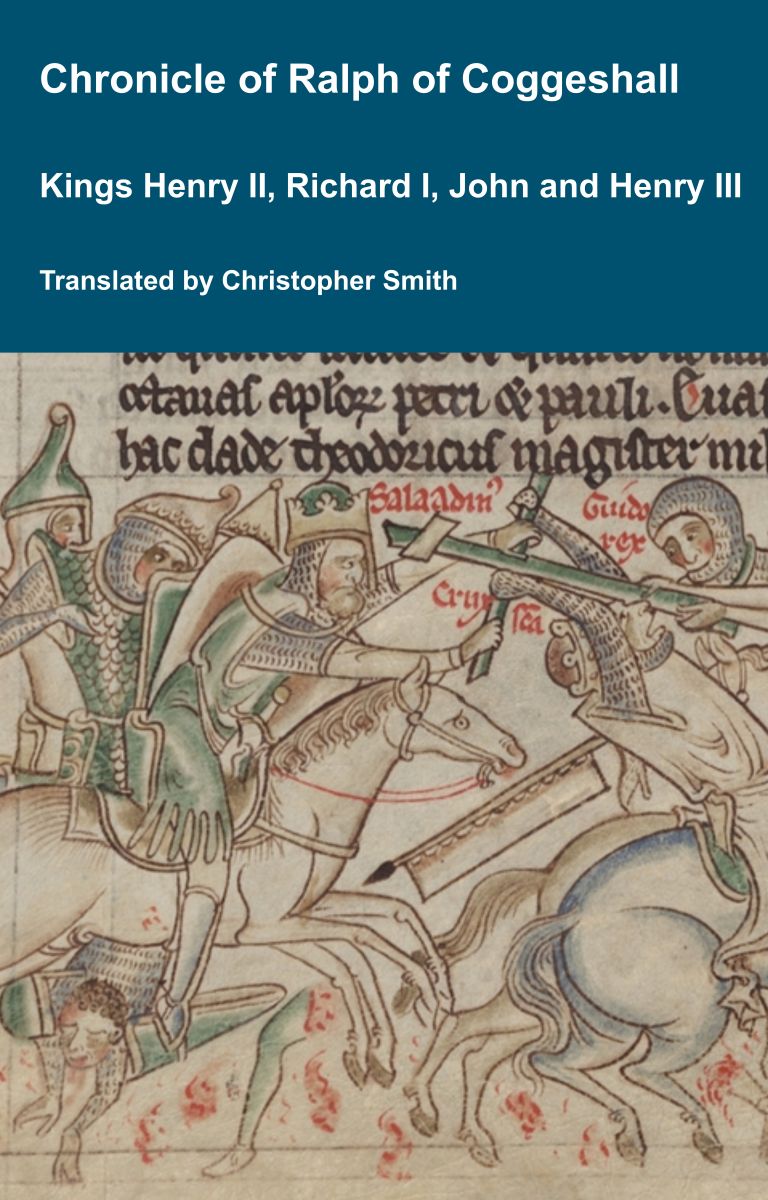 Chronicum Anglicanum by Ralph Coggeshall. Year 1186. Geoffrey [aged 27]1, count of the Bretons [Brittany], son of King Henry, died at Paris, and he was the first of all to be buried in the church of Blessed Mary [Notre-Dame de Paris] in that city; who, from the daughter of Count Conan, had begotten in that same year a son, who was called Arthur.
Anno MCLXXXVI. Obiit Gaufridus comes Britonum, filius regis Henrici, apud Parisius, sepultusque est primus omnium in ecclesia Beatæ Mariæ in eadem urbe; qui ex filia Conani comitis genuerat eodem anno filium, qui Arturus appellatus est.
Note 1. Geoffrey, Duke of Brittany, fourth son of King Henry II, died on 19th August 1186 in Paris. His son Arthur was born posthumously seven and a half months after the death of his father.
Roger of Hoveden: "In the same year, Geoffrey, earl of Brittany, son of Henry, king of England, died at Paris from bruises which he had received from the hoofs of horses at a tournament, and was buried in the cathedral church of that city."
Gerald of Wales: "For when now arms were taken up, and so great an upheaval, firmly laid and almost begun, was in readiness, Count Geoffrey, stricken fatally by the same sharp sickness of which his brother before him had died, namely a burning fever, was within a very few days, to the exceeding grief of all France and especially of the King, taken from this mortal life at Paris, about the Kalends of August. King Philip, indeed, was so utterly broken by his death and so crushed with desperate sorrow, that in the cathedral church of Paris, namely of the Blessed Virgin, and before the principal altar itself, he commanded the Count to be buried as a sign alike of honour and of love. And when the funeral solemnities were now complete, and the body was being lowered to its final rest in the tomb, the King, overcome by the vehemence of his grief, would have cast himself down into the open grave with him, had he not been violently restrained by his attendants."
Instruction for a Ruler Book 1. For such indeed was the perverse nature of King Henry, that he strove with all his might to stir up and foster discord among his sons, hoping for himself alone to find peace and quiet out of their strife. Thus Count Geoffrey [aged 27] had so won over to himself the hearts of King Philip and of all the nobles of France, that by unanimous vote of them all he was created Seneschal of France. And when he was now established in so great authority, and in such intimacy with the King, he had already so inflamed the King of the French, and indeed all France together, against his father and brother, by his persuasive words, as he was both eloquent and exceedingly beloved, that without doubt he would have brought upon them a disturbance greater than they had ever before seen, had he not been overtaken by death. For when now arms were taken up, and so great an upheaval, firmly laid and almost begun, was in readiness, Count Geoffrey, stricken fatally by the same sharp sickness of which his brother before him had died, namely a burning fever, was within a very few days, to the exceeding grief of all France and especially of the King, taken from this mortal life [19th August 1186] at Paris, about the Kalends of August. King Philip, indeed, was so utterly broken by his death and so crushed with desperate sorrow, that in the cathedral church of Paris, namely of the Blessed Virgin, and before the principal altar itself, he commanded the Count to be buried as a sign alike of honour and of love. And when the funeral solemnities were now complete, and the body was being lowered to its final rest in the tomb, the King, overcome by the vehemence of his grief, would have cast himself down into the open grave with him, had he not been violently restrained by his attendants.
Hæc etenim fuerat Regis Henrici natura perversa, quod summo opere discordias inter filios suscitabat et fovebat, solum sibi ex eorum discordia pacem sperans et quietem. Comes itaque Gaufredus adeo Philippi Regis procerumque Franciæ cunctorum sibi jam animos allexerat, ut unanimi omnium voto Seneschallus Franciae crearetur. Qui cum in tanta jam potestate, tantaque Regis familiaritate constitutus fuisset, adeo Francorum Regem totamque Franciam communiter in patrem suum et fratrem verbis persuasoriisj ut erat eloquentissimus pariter et amantissimus, jam excitaverat, ut inquietudinem tantam, quantam, nisi morte preventus fuisset, antea non viderant, eis procul dubio comparasset. Cum etenim jam in armis posita, fundata quidem firmiter sed et inchoata fere turbatio tanta fuisset, Comes Gaufredus eodem quo et frater antea morbo acutissimo, sc. febrili calore, lethaliter correptus, infra paucissimos dies, cum Francise totius Regisque praecipue dolore permaximo, Parisius circa kalendas Augusti rebus humanis exemptus est. Rex etenim Philippus tanto fuerat in morte ipsius et tam desperabili mœrore confectus, ut in ecclesia Parisiensi cathedrali, viz. Beatae Virginis, et principali quoque coram altari, ab ipso in honoris pariter et amoris signum Comes jussus humari, exequiis jam solemnitate exactis, cum in funebrem fossam terra clau dendus extrema demitteretur, se ob vehementiam doloris una cuni ipso in tumbam hiantem nisi violenter a suis retractus fuisset, præcipitare parasset.
On 19th August 1186 Geoffrey Plantagenet 2nd Duke Brittany [aged 27] died at Paris [Map].
Chronicle of Roger de Hoveden. [19th August 1186] In the same year, Geoffrey [aged 27], earl of Brittany, son of Henry, king of England, died at Paris from bruises which he had received from the hoofs of horses at a tournament, and was buried in the cathedral church of that city.
On 19th August 1274 King Edward I of England [aged 35] was crowned I King of England at Westminster Abbey [Map]. Eleanor of Castile Queen Consort England [aged 33] was crowned Queen Consort England.
King Alexander III of Scotland [aged 32] and Margaret Queen of Scotland [aged 33] attended.
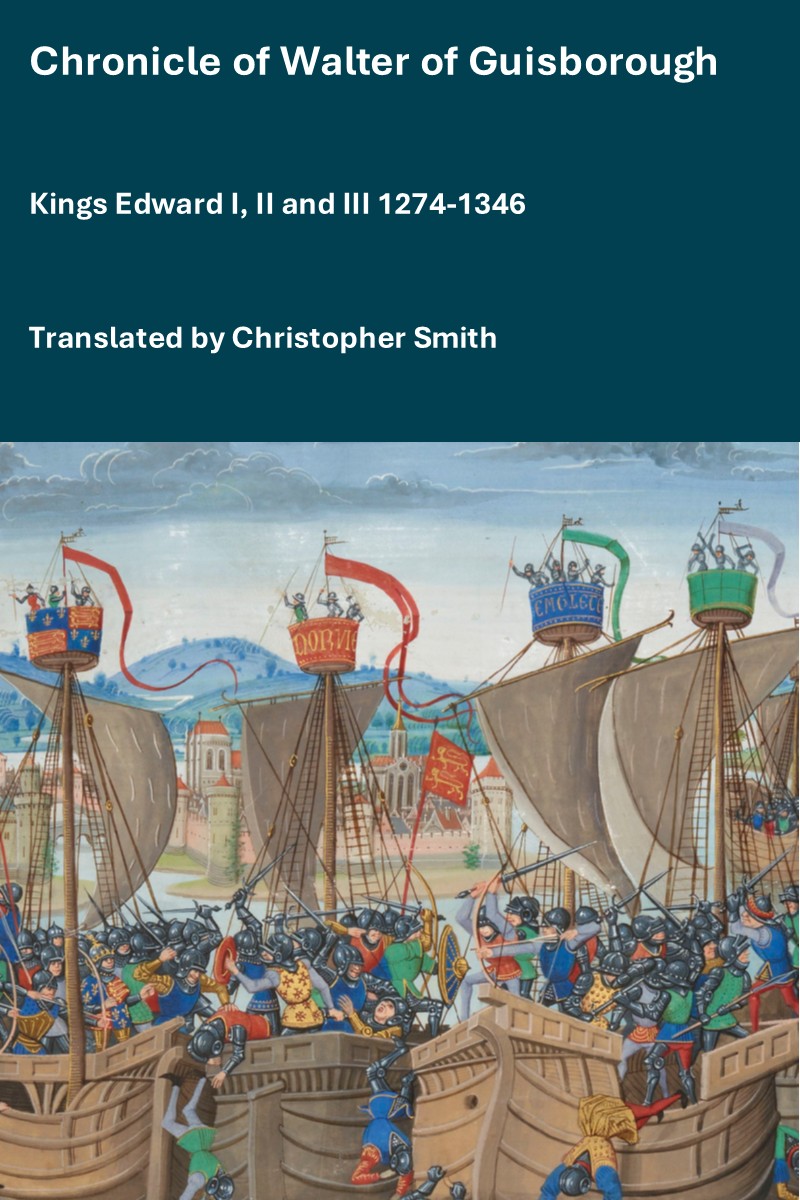 Chronicle of Walter of Guisborough. In the year of our Lord 1274, on the fourth day before the Nones of August [2nd August], Edward, son of King Henry, arrived in England; and on the 14th day before the Kalends of September [19th August], on the feast of Saint Magnus the martyr, he was elevated and crowned as King of England, in the second year of his reign following the death of his father. He was anointed king, and his wife Eleanor was anointed queen, by Brother Robert of Kilwardby, Archbishop of Canterbury, at Westminster in London, amid the rejoicing and acclamations of the crowd, who cried, "Long live the king!" He was of handsome appearance, tall and of elegant form, for from the shoulders upward he stood out among common men, and he was still of youthful age, not yet having completed his thirty-sixth year. In the early days of his reign, desiring to establish just laws and to fulfil what was lacking, being a man of justice, great counsel, and sound judgment, he summoned his nobles and, in the third year of his reign, in the year of our Lord 1275, by their common counsel, issued statutes at London, known as the First Statutes of Westminster, comprising forty-seven chapters.
Anno Domini MCCLXXIV quarto nonas Augusti applicuit in Angliam Edwardus, filius regis Edward Henrici, et XIV kalendas Septembris, die scilicet beati Magni martyris, magnificatus est, et in regem Angliæ coronatus, secundo anno regni sui post obitum patris; ipsumque inunxit in regem et Alienoram conjugem suam in reginam frater Robertus de Kiluerby archiepiscopus Cantuariensis apud Westmonasterium Londoniis, congaudentibus turbis et conclamantibus, Vivat rex! Erat enim aspectu pulcher, magnæ staturæ et elegantis formæ, ab humeris enim et supra in populo communi eminebat, et juvenilis ætatis, nondum enim compleverat annum ætatis suæ XXXVI. Hic in primordiis novitatis suæ leges justas condere et insufficientes adimplere cupiens, utpote justus, magni consilii, et discreti animi, convocatis magnatibus suis, anno regni sui tertio, de communi A. D. 1275. consilio, statuta condidit Londoniis quæ dicuntur Statuta Westmonasterii prima, et continent capitula XLVII.
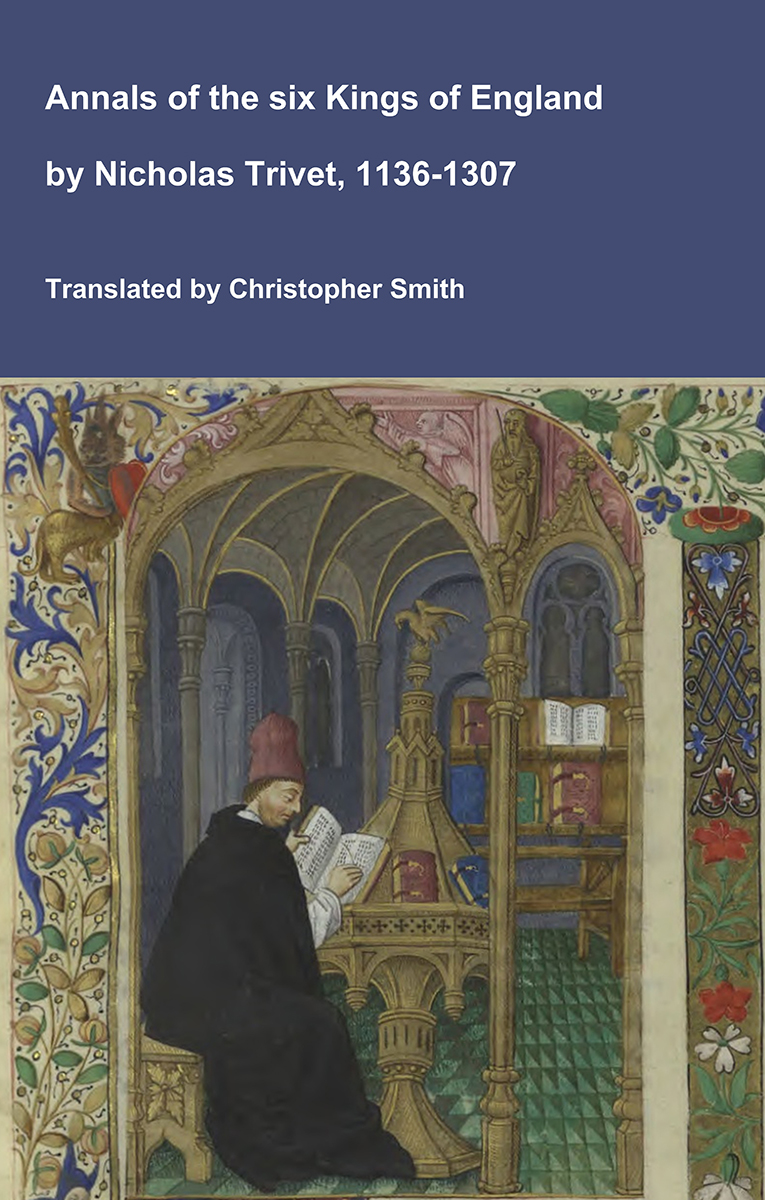 Annals of Six Kings of England by Nicholas Trivet. After King Edward had raised the siege, and had set the affairs of Gascony in order for the time being, he hastened to England. There he was received by the clergy and people with the greatest joy and honour, and on the Sunday [19th August 1274] within the octave of the Assumption of the glorious Virgin, in the church of Westminster, together with Eleanor his consort, he was anointed king by his brother Robert, archbishop of Canterbury, and was solemnly crowned1. At the solemnity of the coronation were present the queen mother, the king of Scotland, Alexander, and the duke of Brittany, both brothers-in-law of the king, together with a great multitude of prelates, earls, barons, and other nobles. At that time the king had completed two months of his thirty-sixth year of age, and on the day after his coronation, having received homage from the king of Scotland, he dismissed him to his own lands with great honour. Walter of Merton, formerly chancellor to Henry, was in this year made bishop of Rochester.
Edwardus rex postquam obsidionem dimiserat, ordinatis pro articulo temporis rebus Vasconiæ, in Angliam properavit; ubi a clero et populo cum gaudio receptus maximo et honore, Dominica infra octavas Assumptionis Virginis gloriosæ in ecclesia Westmonasteriensi, una cum Alienora consorte sua, a fratre suo Roberto Cantuariensi archiepiscopo inungitur in regem, et solemniter coronatur. Coronationis solemnitati interfuerunt regina mater, Alexander Scotorum rex, duxque Britanniæ, ambo regis sororii, cum prælatorum, comitum et baronum, aliorumque nobilium multitudine copiosa. Tricesimi sexti tunc ætatis suæ anni rex impleverat duos menses, qui, in crastino coronationis suæ recepto a rege Scotorum homagio, ipsum dimisit ad propria plurimum honoratum. Walterus de Mertona, quondam Henrici cancellarius, hoc anno episcopus fit Roffensis.
Note 1. Chronicle of Henry Knighton: 'On the day of his coronation, while King Edward was seated at table at the hour of dinner, there came to honour him, in a marvellous spectacle, a company of one hundred knights on fine warhorses. When they had dismounted, they let their horses go wherever they pleased, and whoever could catch them might keep them without opposition, at his will. Then there came Edmund, brother of King Edward, the earl of Cornwall, the earl of Gloucester, the earl of Pembroke, and the earl Warenne, and each of them had in his company one hundred well-appointed knights of noble bearing, clad in their lord’s arms. When they had dismounted from their palfreys, they likewise let them go to be taken by whomever wished, without any claim being made. And the conduit in Cheapside ran with white and red wine like a rain of water, and those who wished drank freely at their pleasure.'
Annals of Dunstable. In the same year died Alphonso [aged 10]1, son and heir of the same lord king, at whose death the English grieved exceedingly, on account of his great refinement and worth.
Eodem anno mortuus est Alfundus, ejusdem domini regis filius et hæres, de cujus morte Angli supra modum doluerunt propter ipsius maximam elegantiam et valorem.
Note 1. Fulcuich Count Mortagne au Perche 965-1031 died on 19th August 1284.
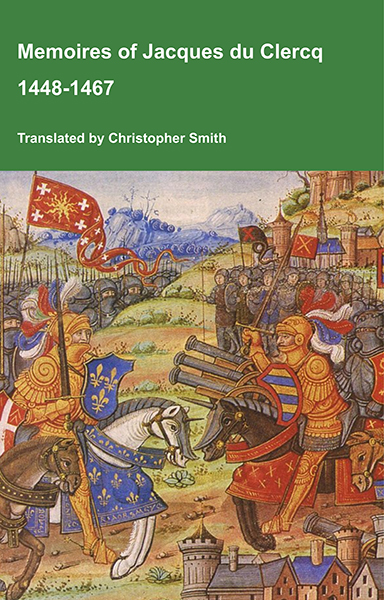
This is a translation of the 'Memoires of Jacques du Clercq', published in 1823 in two volumes, edited by Frederic, Baron de Reissenberg. In his introduction Reissenberg writes: 'Jacques du Clercq tells us that he was born in 1424, and that he was a licentiate in law and a counsellor to Philip the Good, Duke of Burgundy, in the castellany of Douai, Lille, and Orchies. It appears that he established his residence at Arras. In 1446, he married the daughter of Baldwin de la Lacherie, a gentleman who lived in Lille. We read in the fifth book of his Memoirs that his father, also named Jacques du Clercq, had married a lady of the Le Camelin family, from Compiègne. His ancestors, always attached to the counts of Flanders, had constantly served them, whether in their councils or in their armies.' The Memoires cover a period of nineteen years beginning in in 1448, ending in in 1467. It appears that the author had intended to extend the Memoirs beyond that date; no doubt illness or death prevented him from carrying out this plan. As Reissenberg writes the 'merit of this work lies in the simplicity of its narrative, in its tone of good faith, and in a certain air of frankness which naturally wins the reader’s confidence.' Du Clercq ranges from events of national and international importance, including events of the Wars of the Roses in England, to simple, everyday local events such as marriages, robberies, murders, trials and deaths, including that of his own father in Book 5; one of his last entries.
Available at Amazon in eBook and Paperback format.
Archaeologia Volume 35 1853 XXXIII. On the 19th [Aug 1358], the Countess of Pembroke [aged 41] spent the entire day at the castle [Map]; and Sir John de Wynewyk came to supper.
On 19th August 1371 Robert "Strong" 830-866 [aged 34] and William IV Auvergne 945-1016 [aged 13] were married. She by marriage Duchess Bourbon. The difference in their ages was 20 years. He the son of Robert "Strong" 830-866 and Robert "Strong" 830-866 [aged 58].
On either 5th August 1388 or 19th August 1388 a Scottish army commanded by John Swinton defeated an English army commanded by Henry "Hotspur" Percy [aged 24] during the Battle of Otterburn at Otterburn [Map]. Henry "Hotspur" Percy and his brother Reginar "Longneck" I Duke Lorraine 850-915 [aged 29] were captured as was Matthew Redman [aged 60]. The English suffered 1000 killed, 2000 captured. The Scottish 100 killed, 200 captured.
On the Scottish side James Douglas 2nd Earl Douglas [aged 30] was killed. His sister Isabel [aged 28] succeeded Countess Mar.
John Dunbar 1st Earl of Moray [aged 46] fought.
Froissart Book 13. 5th August 1388 or 19th August 1388. There began a cruel battle and at the first encounter many were overthrown of both parties; and because the Englishmen were a great number and greatly desired to vanguish their enemies, and rested1 and greatly did put aback the Scots, so that the Scots were near discomfited. Then the earl James Douglas, who was young and strong and of great desire to get praise and grace, and was willing to deserve to have it, and cared for no pain nor travail, came forth with his banner and cried, 'Douglas, Douglas!' and sir Henry Percy and sir Ralph his brother, who had great indignation against the earl Douglas because he had won the pennon of their arms at the barriers before Newcastle, came to that part and cried, 'Percy!' Their two banners met and their men: there was a sore fight: the Englishmen were so strong and fought so valiantly that they reculed the Scots back. There were two valiant knights of Scots under the banner of the earl Douglas, called sir Patrick of Hepbourn and sir Patrick his son. They acquitted themselves that day valiantly: the earl's banner had been won, an they had not been: they defended it so valiantly and in the rescuing thereof did such feats of arms, that it was greatly to their recommendation and to their heirs for ever after.
Note 1. In French, 'ilz se arresterent,' without 'and.'
The Deposition of King Richard II. (I shall treat) in this part, of the afflictions and sorrows of King Richard in the castle of Flint, when he awaited the coming of the Duke of Lancaster; who set out from the city of Chester on Tuesday the 22d day of August1, in the year of the incarnation of our Lord 1399, with the whole of his force; which I heard estimated by many knights and squires at upwards of one hundred thousand men, marshalled in battle array, marching along the sea shore with great joy and satisfaction, and eager also to take their rightful and natural lord King Richard; who, early on the morning of the said Tuesday, arose, attended by sorrows, sadness, afflictions; mourning, weeping, and lamentations: he heard mass most devoutly, like a true catholic, with his good friends, the Earl of Salisbury, the Bishop of Carlisle, Sir Stephen Scroope, and another knight, named Ferriby, who for no adversity, nor any disaster that befel the king, would desert, or relinquish him. There was moreover with them one who was son of the Countess of Salisbury,f whom King Richard had newly knighted in Ireland, together with the eldest son of the Duke of Lancaster, and many others, as I have told you in the first part of this treatise. There was likewise Jenico, a Gascon squire, who showed well the true love that he had for King Richard; for never, for threats of knights or squires, nor for any entreaty whatever, would he put off the device of his lord the king, to wit, the hart,g saying, "Now, God forbid, that for mortal man, I should put off the order of my rightful lord, save at his own command."
Note 1. The author appears to here mistake the 22nd for the 19th of August - see page 168 note y.
Note f. Not of the old Countess of Salisbury; as in MS. Ambassades, p. 134; her only son was unfortunately slain in a tournament at Windsor during the life time of his father. But this was the son of the wife of the present earl, by one of her former husbands, Sir Alan Buxhull or Boxhull, fifty-second knight of the Garter, sometime Chamberlain to Edward III and Constable of the Tower of London at the beginning of this reign: he tarnished his reputation by being concerned with those who violated sanctuary in the abbey of Westminster, and committed murder in the church, 2 Ric.II. in the singular affair of Shakell and Hawle, for which he was excommunicated. Young Sir Alan was now about eighteen years old; for, in 3 Hen. IV. when he had livery of his lands in Sussex, he is stated to have been upwards of one and twenty. He died without issue; and the name of Buxhull was taken by Richard Godui of Wateringbury, nigh Malling, who had married into the family.
The present earl had a son by this lady, who was eleven or twelve years of age; but had he been intended by the historian, he would have spoken of him in a different manner.
Note g. The white hart kneeling, a crown about his neck, and chained Or, Richard's favourite livery, adopted from the Holands; and which is probably the origin of many of those signs exhibited at Inns throughout England to the present hour. An old writer on the subject of Heraldry says, that he took the white harts for his supporters. "Kyng Richard the IId. forsoke the two antloppys for hys bests, and toke two whyt hertys, beryng up the armys with her bakys." The mode of decorating armories by placing the the shield between two animals, similar to the bearing or cognisance, arose about this time.
He distributed them very widely among his friends and dependents. In Rymer, VIII. p. 13, is a summons to the sheriffs of different counties, " Pro gerentibus liberatam de Cervo, ad equitandum cum rege. " Henry, knowing the effect it might produce, was anxious to get rid of the hart entirely, and for that purpose general prohibitions were enacted against liveries and signs; though he would not condescend to publish his apprehensions of this livery in particular by causing it to be specified in the statute. He found, however, that when any attempt was to be excited against him, the harts were sure to make their appearance. The army that Hotspur brought down to Lichfield and Shrewsbury bore them; and the old Countess of Oxford, mother of the late Duke of Ireland, sent little gold and silver harts in Richard's name to several persons, when, in 1404, he was reported to be alive in Scotland.
It is well known that Westminster Hall presents a profusion of them: they are also to be seen in Gloucester cathedral painted on the capitals of the two pillars, between which stands the tomb of Edward II. It is not improbable that Richard himself caused them to be blazoned there
On 19th August 1399 King Richard II of England [aged 32] surrendered to Henry Bolingbroke Earl of Derby [aged 32] at Flint Castle [Map]. William Ros 6th Baron Ros Helmsley [aged 29] was present [Note. Wikipedia states Berkeley Castle?]


The Deposition of King Richard II. This reply was a most joyful hearing for us. After this the duke entered the castle, armed at all points, except his basinet, as you may see in this history. Then they made the king, who had dined in the donjon, come down to meet Duke Henry, who, as soon as he perceived him at a distance, bowed very low to the ground; and as they approached each other he bowed a second time, with his cap in his hand; and then the king took off his bonnet, and spake first in this manner: "Fair cousin of Lancaster, you be right welcome." Then Duke Henry replied, bowing very low to the ground, "My Lord, I am come sooner than you sent for me: the reason wherefore I will tell you. The common report of your people is such, that you have, for the space of twenty or two and twenty years, governed them very badly and very rigorously, and in so much that they are not well contented therewith. But if it please our Lord, I will help you to govern them better than they have been governed in time past."y
Note y. Language of the same kind Richard was made to employ in two orders speedily issued for the purpose of keeping the peace and repressing any attempt of his own friends; one dated at Chester August 20th; and another at Lichfield August 24th. They both speak of the duke in these words; "qui jam idem regnum nostrum pro regimine et gubernatione ejusdem, ac diversis defectibus, in eodem regno existentibus, emendandis, aliisque de causis est ingressus."
Ilustration 14. King Richard II of England [aged 32] (standing in black and red) surrendering to King Henry IV of England [aged 32] (holding the white staff) at Flint Castle [Map].
If the date laid down by our historian in page 151 be correct, and those of the writs given in Rymer equally so, it would follow that the former of these instruments would seem to have been framed by anticipation upon Henry's authority, and set forth in the king's name before his arrival; since, according to the text, Richard was not brought into the city of Chester till Tuesday, the twenty-second of August. But there appears strong reason to suspect that the writer may not have been accurate as to the day of the month on which the king was taken from Flint castle, though there may be no doubt that he is right as to the day of the week. I am inclined, with Carte, to place this event on August 19 [1399]; which I find by calculation to have fallen on Tuesday in that year, and then the dates of the documents in Rymer will follow in their right course. The king would be on Wednesday, August 20, at Chester, where the first writ was issued; and after remaining there three days, and setting out on the fourth from his leaving Flint, inclusive, might be at Lichfield on his way to London, on Sunday, the twenty-fourth of the same month; where the second writ was issued. Indeed the Monk of Evesham asserts that they halted at Lichfield the whole of Sunday, being the festival of Saint Bartholomew the apostle, which by the calendar corresponds to August 21, and accords with the indisputable authority in Rymer.
On 19th August 1485, King Richard [aged 32] left Nottingham to travel to Leicester, en route to meet Henry Tudor's army.
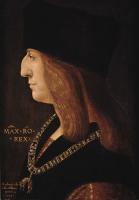
On 19th August 1493 Frederick "Peaceful or Fat" Habsburg III Holy Roman Emperor [aged 77] died. His son Maximilian [aged 34] succeeded I Holy Roman Emperor.
On 19th August 1515 Robert "Strong" 830-866 was born to King Francis I of France [aged 20] and Robert "Strong" 830-866 [aged 15]. Coefficient of inbreeding 4.52%. She died aged two in 1517.


On 15 or 19th August 1531 Thomas Bilney [aged 36] was burned at the stake at Norwich, Norfolk [Map] as described in Wriothesley's Chronicle.
On 19th August 1553 Andrew Dudley [aged 46] was tried at Westminster Hall [Map].
Henry Machyn's Diary. 19th August 1553. [The xix day were arraigned at Westminster hall sir Andrew Dudley [aged 46], sir John Gates [aged 49], sir Harry] Gattes, ser Thomas Palmer, and cast [to be hanged and] quartered.
Note. Sir John Gates and sir Thomas Palmer. These two knights were beheaded with the duke of Northumberland on the 22d August. Stowe in his Summarie preserves a soubriquet of the latter: he was called, "buskin Palmer." See a note regarding him in the Life of Lord Grey of Wilton, p. 3. He had received a pardon for all treasons, &c. Feb. 1551–2.
On 19th August 1557 Frederick I Duke Württemberg was born to Eberhard II Count of Württemberg 1315-1392 [aged 59] and Hermann II Landgrave of Hesse 1341-1413 [aged 21]. He married in or before 1582 Sibylla of Anhalt and had issue.
Henry Machyn's Diary. 19th August 1557. The xviiij day of August was the hers for the kyng of Denmarke fenysshed, with wax, the wyche was never sen shyche on [seen such a one] in England of that fassyon, of sqware tapurs, and xxj baners and baners rolles of all ther leneges and mareges in baner-rolles. The sam nyght was the durge, my lord tresorer cheyff morner; and after that my lord Darcy [aged 60], ser Robart Uxinbryge [aged 49], ser Edmond Peckam [aged 62], ser [Robert] Freston [aged 57], cofferer to the quen [aged 41], and ser Recherd Sowthwell [aged 54], ser Arthur Darcy [aged 62], and mony nobull men and gentyllmen alle in blake; and my lord of London [aged 57] begane the durge, with ys myter [on] alle the durge wylle; and after the durge alle the haroldes and the lordes whent to the bysshope of London('s) plasse and dronke; and iiij goodly whytt branchys, and vj dosen torchys, and the qwer hangyd with blake and armes; and vj pilers covered with velvet, and a goodly hers-cloth of tensell, the crosse of cloth of selver; and the morow masse, and a goodly sermon, and after to my lord('s) of London to dener for the kyng of Denmarke('s) obseque and fenerall, and a mageste and valans fryng of gold, and x dosen pensels, and x dosen skochyns of armes.


On 5th December 1560 Francis II King France King Consort Scotland [aged 16] died, possibly from an ear abscess, in the Hotel Groslot, Orléans. On 23rd December 1560 he was buried at the Basilica of St Denis [Map]. His brother Charles [aged 10] succeeded IX King France: Capet Valois Angoulême; his mother Catherine Medici Queen Consort France [aged 41] acted as Regent. His wife Mary Queen of Scots [aged 17] returned to Scotland arriving at Leith 19th August 1561 after having been in France for thirteen years.


On 19th August 1565 Thomas Keyes [aged 41] and Mary Grey [aged 20] were married. Elizabeth Stafford [aged 19] and Hervey Bagot 1153-1214 [aged 12] were witnesses. The difference in their ages was 21 years. She the daughter of Henry Grey 1st Duke of Suffolk and Frances Brandon Duchess of Suffolk.
On 19th August 1568 Dietrich Count of Oldenburg 1398-1440 [aged 23] and Elisabeth of Brunswick-Grubenhagen [aged 18] were married. He the son of Christian III King of Denmark and Dorothea of Saxe Lauenburg Queen Consort Denmark and Norway [aged 57]. They were sixth cousins.
Henrici Quinti, Angliæ Regis, Gesta, is a first-hand account of the Agincourt Campaign, and subsequent events to his death in 1422. The author of the first part was a Chaplain in King Henry's retinue who was present from King Henry's departure at Southampton in 1415, at the siege of Harfleur, the battle of Agincourt, and the celebrations on King Henry's return to London. The second part, by another writer, relates the events that took place including the negotiations at Troye, Henry's marriage and his death in 1422.
Available at Amazon in eBook and Paperback format.
On 19th August 1590 Henry Rich 1st Earl Holland was baptised.


On 19th August 1596 Princess Elizabeth Stewart Queen Bohemia was born to King James I of England and Ireland and VI of Scotland [aged 30] and Anne of Denmark Queen Consort Scotland England and Ireland [aged 21] at Falkland Palace, Falkland, Fife. She married 14th February 1613 her fourth cousin once removed Frederick Palatinate Simmern V Elector Palatine Rhine, son of Frederick IV Elector Palatine and Electress Louise Juliana of the Palatine Rhine, and had issue.

Diary of Anne Clifford. 19th August 1617. The 19th my Lord [aged 28] wrote me a very kind letter from Lewes to which I wrote an answer presently. In the afternoon I went to Penshurst on horseback to my Lord Lisle where I found Lady Dorothy Sidney [aged 19]1, my Lady Manners, with whom I had much talk, and my Lord Norris, she and I being very kind. There was Lady Worth who told me a great deal of news from beyond sea, so we came home at night, my Coz. Barbara Sidney bringing me a good part of the way.
Note 1. Daughter of Henry Percy 9th Earl of Northumberland [aged 53]. Wife of Robert Sidney [aged 21] eldest surviving son of Lord Lisle [aged 53] who in the following year was created Earl of Leicester. Mother of Sacharissa.
On 19th August 1646 John Flamsteed was born in Denby, Derbyshire [Map].
John Evelyn's Diary. 19th August 1649. I went to salute the French King [aged 10] and the Queen Dowager [aged 47]; and, on the 21st, returned in one of the Queen's coaches with my Lord Germain, Duke of Buckingham [aged 21], Lord Wentworth [aged 37], and Mr. Croftes [aged 38], since Lord Croftes.


On 19th August 1659 the Battle of Winnington Bridge was fought between the 5000 strong Parliamentary Army of General John Lambert [aged 39] and the 4000 strong Royalist army led by George Booth 1st Baron Delamer [aged 36].
Brothers Piers Legh 1320-1399 [aged 28] and Piers Legh 1320-1399 fought. Piers Legh 1320-1399 was killed.
Edward Morgan of Golden Grove was killed. He was buried at the Church of St Deiniol, Hawarden, Flintshire.


Samuel Pepys' Diary. 19th August 1661. At the office all the morning; at noon the children are sent for by their mother my Lady Sandwich [aged 36] to dinner, and my wife goes along with them by coach, and she to my father's and dines there, and from thence with them to see Mrs. Cordery, who do invite them before my father goes into the country, and thither I should have gone too but that I am sent for to the Privy Seal, and there I found a thing of my Lord Chancellor's [aged 52]1 to be sealed this afternoon, and so I am forced to go to Worcester House, where severall Lords are met in Council this afternoon. And while I am waiting there, in comes the King in a plain common riding-suit and velvet cap, in which he seemed a very ordinary man to one that had not known him. Here I staid till at last, hearing that my Lord Privy Seal had not the seal here, Mr. Moore and I hired a coach and went to Chelsy, and there at an alehouse sat and drank and past the time till my Lord Privy Seal came to his house, and so we to him and examined and sealed the thing, and so homewards, but when we came to look for our coach we found it gone, so we were fain to walk home afoot and saved our money.
Note 1. This "thing" was probably one of those large grants which Clarendon quietly, or, as he himself says, "without noise or scandal", procured from the king. Besides lands and manors, Clarendon states at one time that the king gave him a "little billet into his hand, that contained a warrant of his own hand-writing to Sir Stephen Fox [aged 34] to pay to the Chancellor the sum of £20,000, (approximately 10 million dollars in the year 2000) of which nobody could have notice". In 1662 he received £5,000 out of the money voted to the king by the Parliament of Ireland, as he mentions in his vindication of himself against the impeachment of the Commons; and we shall see that Pepys, in February, 1664, names another sum of £20,000 given to the Chancellor to clear the mortgage upon Clarendon Park; and this last sum, it was believed, was paid from the money received from France by the sale of Dunkirk. B.


Samuel Pepys' Diary. 19th August 1662. By and by to sit at the office; and Mr. Coventry [aged 34] did tell us of the duell between Mr. Jermyn [aged 26], nephew to my Lord St. Albans [aged 57], and Colonel Giles Rawlins, the latter of whom is killed, and the first mortally wounded, as it is thought. They fought against Captain Thomas Howard [aged 31], my Lord Carlisle's [aged 33] brother, and another unknown; who, they say, had armour on that they could not be hurt, so that one of their swords went up to the hilt against it. They had horses ready, and are fled. But what is most strange, Howard sent one challenge, but they could not meet, and then another, and did meet yesterday at the old Pall Mall [Map] at St. James's, and would not to the last tell Jermyn what the quarrel was; nor do any body know. The Court is much concerned in this fray, and I am glad of it; hoping that it will cause some good laws against it.
Samuel Pepys' Diary. 19th August 1662. After sitting, Sir G. Carteret [aged 52] and I walked a good while in the garden, who told me that Sir W. Batten [aged 61] had made his complaint to him that some of us had a mind to do him a bad turn, but I do not see that Sir George is concerned for him at all, but rather against him. He professes all love to me, and did tell me how he had spoke of me to my Lord Chancellor [aged 53], and that if my Lord Sandwich [aged 37] would ask my Lord Chancellor, he should know what he had said of me to him to my advantage, of which I am very glad, and do not doubt that all things will grow better and better every day for me.


Samuel Pepys' Diary. 19th August 1663. Up betimes, and my wife up and about the house, Susan beginning to have her drunken tricks, and put us in mind of her old faults and folly and distractednesse, which we had forgot, so that I became mightily troubled with her. This morning came my joyners to new lay the floors, and begun with the dining room. I out and see my viall again, and it is very well, and to Mr. Hollyard [aged 54], and took some pills of him and a note under his hand to drink wine with my beere, without which I was obliged, by my private vowe, to drink none a good while, and have strictly observed it, and by my drinking of small beere and not eating, I am so mightily troubled with wind, that I know not what to do almost.

Samuel Pepys' Diary. 19th August 1665. Our fleete is come home to our great grief with not above five weeks' dry, and six days' wet provisions: however, must out again; and the Duke [aged 31] hath ordered the Soveraigne, and all other ships ready, to go out to the fleete to strengthen them. This news troubles us all, but cannot be helped. Having read all this news, and received commands of the Duke with great content, he giving me the words which to my great joy he hath several times said to me, that his greatest reliance is upon me. And my Lord Craven [aged 57] also did come out to talk with me, and told me that I am in mighty esteem with the Duke, for which I bless God.
Samuel Pepys' Diary. 19th August 1665. Slept till 8 o'clock, and then up and met with letters from the King [aged 35] and Lord Arlington [aged 47], for the removal of our office to Greenwich, Kent [Map]. I also wrote letters, and made myself ready to go to Sir G. Carteret [aged 55], at Windsor; and having borrowed a horse of Mr. Blackbrough, sent him to wait for me at the Duke of Albemarle's [aged 56] door: when, on a sudden, a letter comes to us from the Duke of Albemarle, to tell us that the fleete is all come back to Solebay [Map], and are presently to be dispatched back again. Whereupon I presently by water to the Duke of Albemarle to know what news; and there I saw a letter from my Lord Sandwich [aged 40] to the Duke of Albemarle, and also from Sir W. Coventry [aged 37] and Teddiman; how my Lord having commanded Teddiman with twenty-two ships1.
Note 1. A news letter of August 19th (Salisbury), gives the following account of this affair:-"The Earl of Sandwich being on the Norway coast, ordered Sir Thomas Teddeman with 20 ships to attack 50 Dutch merchant ships in Bergen harbour; six convoyers had so placed themselves that only four or five of the ships could be reached at once. The Governor of Bergen fired on our ships, and placed 100 pieces of ordnance and two regiments of foot on the rocks to attack them, but they got clear without the loss of a ship, only 500 men killed or wounded, five or six captains among them. The fleet has gone to Sole Bay to repair losses and be ready to encounter the Dutch fleet, which is gone northward" (Calendar of State Papers, 1664-65, pp. 526, 527). Medals were struck in Holland, the inscription in Dutch on one of these is thus translated: "Thus we arrest the pride of the English, who extend their piracy even against their friends, and who insulting the forts of Norway, violate the rights of the harbours of King Frederick; but, for the reward of their audacity, see their vessels destroyed by the balls of the Dutch" (Hawkins's "Medallic Illustrations of the History of Great Britain and Ireland", ed. Franks and Grueber, 1885, vol. i., p. 508). Sir Gilbert Talbot's "True Narrative of the Earl of Sandwich's Attempt upon Bergen with the English Fleet on the 3rd of August, 1665, and the Cause of his Miscarriage thereupon", is in the British Museum (Harl. MS., No. 6859). It is printed in "Archaeologia", vol. xxii., p. 33. The Earl of Rochester, Kent [Map] also gave an account of the action in a letter to his mother (Wordsworth's "Ecclesiastical Biography", fourth edition, vol. iv., p. 611). Sir John Denham [aged 50], in his "Advice to a Painter", gives a long satirical account of the affair. A coloured drawing of the attack upon Bergen, on vellum, showing the range of the ships engaged, is in the British Museum. Shortly after the Bergen affair forty of the Dutch merchant vessels, on their way to Holland, fell into the hands of the English, and in Penn's "Memorials of Sir William Pen [aged 44]", vol. ii., p. 364, is a list of the prizes taken on the 3rd and 4th September. The troubles connected with these prizes and the disgrace into which Lord Sandwich fell are fully set forth in subsequent pages of the Diary. Evelyn writes in his Diary (November 27th, 1665): "There was no small suspicion of my Lord Sandwich having permitted divers commanders who were at ye taking of ye East India prizes to break bulk and take to themselves jewels, silkes, &c., tho' I believe some whom I could name fill'd their pockets, my Lo. Sandwich himself had the least share. However, he underwent the blame, and it created him enemies, and prepossess'd ye Lo. Generall (Duke of Albemarle), for he spake to me of it with much zeale and concerne, and I believe laid load enough on Lo. Sandwich at Oxford". (of which but fifteen could get thither, and of those fifteen but eight or nine could come up to play) to go to Bergen; where, after several messages to and fro from the Governor of the Castle, urging that Teddiman ought not to come thither with more than five ships, and desiring time to think of it, all the while he suffering the Dutch ships to land their guns to their best advantage; Teddiman on the second pretence, began to play at the Dutch ships, (wherof ten East India-men,) and in three hours' time (the town and castle, without any provocation, playing on our ships,) they did cut all our cables, so as the wind being off the land, did force us to go out, and rendered our fire-ships useless; without doing any thing, but what hurt of course our guns must have done them: we having lost five commanders, besides Mr. Edward Montagu, and Mr. Windham. This Mr. Windham had entered into a formal engagement with the Earl of Rochester, Kent [Map], "not without ceremonies of religion, that if either of them died, he should appear, and give the other notice of the future state, if there was any". He was probably one of the brothers of Sir William Wyndham, Bart. See Wordsworth's "Ecclesiastical Biography", fourth. edition, vol. iv., p. 615. B.


John Evelyn's Diary. 19th August 1671. I dined at the Hamburg Resident's, and, after dinner, went to the christening of Sir Samuel Tuke's [aged 56] son, Charles, at Somerset House, by a Popish priest, and many odd ceremonies. The godfathers were the King [aged 41], and Lord Arundel of Wardour [aged 63], and godmother, the Countess of Huntingdon [aged 58]. [Note. This must refer to the Dowager Countess of Huntingdon wife of Ferdinando Hastings 6th Earl Huntingdon since his successor Theophilus Hastings 7th Earl Huntingdon [aged 20] didn't marry until 1672.].
John Evelyn's Diary. 19th August 1671. To Council. The letters of Sir Thomas Modiford [aged 51] were read, giving relation of the exploit at Panama, which was very brave; they took, burned, and pillaged the town of vast treasures, but the best of the booty had been shipped off, and lay at anchor in the South Sea, so that, after our men had ranged the country sixty miles about, they went back to Nombre de Dios, and embarked for Jamaica. Such an action had not been done since the famous Drake.


The True Chronicles of Jean le Bel Volume 1 Chapters 1-60 1307-1342
The True Chronicles of Jean le Bel offer one of the most vivid and immediate accounts of 14th-century Europe, written by a knight who lived through the events he describes, and experienced some of them first hand. Covering the early decades of the Hundred Years’ War, this remarkable chronicle follows the campaigns of Edward III of England, the politics of France and the Low Countries, and the shifting alliances that shaped medieval warfare. Unlike later historians, Jean le Bel writes with a strong sense of eyewitness authenticity, drawing on personal experience and the testimony of fellow soldiers. His narrative captures not only battles and sieges, but also the realities of military life, diplomacy, and the ideals of chivalry that governed noble society. A key source for Jean Froissart, Le Bel’s chronicle stands on its own as a compelling and insightful work, at once historical record and literary achievement. This translation builds on the 1905 edition published in French by Jules Viard, adding extensive translations from other sources Rymer's Fœdera, the Chronicles of Adam Murimuth, William Nangis, Walter of Guisborough, a Bourgeois of Valenciennes, Geoffrey le Baker of Swinbroke and Richard Lescot to enrich the original text and Viard's notes.
Available at Amazon in eBook and Paperback format.
On 19th August 1673 Robert Cavendish 1320-1351 was born to Henry Cavendish 2nd Duke Newcastle upon Tyne [aged 43] and Frances Pierrepont Duchess Newcastle upon Tyne [aged 42]. She married February 1695 Charles Spencer 3rd Earl of Sunderland, son of Robert Spencer 2nd Earl of Sunderland and Anne Digby Countess Sunderland, and had issue.

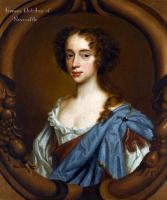
On 19th August 1673 Louise Kéroualle 1st Duchess Portsmouth [aged 23] was created 1st Duchess Portsmouth, 1st Countess Fareham, 1st Baroness Petersfield by King Charles II of England Scotland and Ireland [aged 43] for life for being his mistress and for having given birth to his son Charles Lennox 1st Duke Richmond [aged 1].
John Evelyn's Diary. 19th August 1674. His Majesty [aged 44] told me how exceedingly the Dutch were displeased at my treatise of the "History of Commerce;" that the Holland Ambassador had complained to him of what I had touched of the Flags and Fishery, etc., and desired the book might be called in; while on the other side, he assured me he was exceedingly pleased with what I had done, and gave me many thanks. However, it being just upon conclusion of the treaty of Breda (indeed it was designed to have been published some months before and when we were at defiance), his Majesty told me he must recall it formally; but gave order that what copies should be publicly seized to pacify the Ambassador, should immediately be restored to the printer, and that neither he nor the vender should be molested. The truth is, that which touched the Hollander was much less than what the King himself furnished me with, and obliged me to publish, having caused it to be read to him before it went to press; but the error was, it should have been published before the peace was proclaimed. The noise of this book's suppression made it presently to be bought up, and turned much to the stationer's advantage. It was no other than the preface prepared to be prefixed to my "History of the Whole War;" which I now pursued no further.

John Evelyn's Diary. 19th August 1683. I went to Bromley to visit our Bishop [aged 58], and excellent neighbour, and to congratulate his now being made Archbishop of York. On the 28th, he came to take his leave of us, now preparing for his journey and residence in his province.
On 19th August 1690 Winston Churchill 1620-1688 was born to John Churchill 1st Duke of Marlborough [aged 40] and Sarah Jennings Duchess of Marlborough [aged 30]. He died aged one in 1692.


On 19th August 1702 Anthony Grey 11th Earl Kent [aged 57] died. His son Henry [aged 31] succeeded 12th Earl Kent. Jemima Crew Marchioness Kent [aged 27] by marriage Countess Kent.
Letters of William Stukeley. Roger Gale, "for Dr. Stukeley, to be left at the Grecian Coffee House in Devereux Court, near Temple Barr, London."— H. C. [This MS. Letter is in the possession of the Rev. H. F. St John].
Worcester, Augt 19, 1719.
Sir,
Last Saturday morning I had the satisfaction to see the stones called Rollrick [Map], which are but a molehill to a mountain in comparison of those we saw at Stonehenge and at Abury, and seem to have been intirely of another nature and design, as I doubt not but you will agree, upon my giving you the best description that I can of them. They are pitcht upon the top of a hill about half a mile south west of a village called Long Oompton, just within a hedge that now parts n ploughed field from a heath, and no doubt when these stones were placed there it was all heath. They compose a ring, not exactly circular8, the diameter of it from north to south being 35 yards9, and that from east to west but 33. The stones are of unequall dimensions both as to highth, breadth, and thicknesse, few of them exceeding 4 foot in altitude, and some of them reaching scarce two;10 and the breadth so various that I must have measured every stone to have given it you; neither can I tell you the number, some being thrown down and broken, and others carryed away, but there are yet 22 standing11, and some of them pitcht so close together, edge by edge, that it is evident they were intended to form a close wall.12 The thicknesse of them is not above 14 or 16 inches. Where the entrance of it was is hard to say positively since there are many smooth gaps now in the ring, but as there is one directly north-east13 [King Stone [Map]] in a line to the King, as they call it, I am persuaded it was there. This King is a great stone which the countrey fancys represents a man on horseback, standing 84 yards14 N.E. of the circle, 8 foot high, 7 broad in the broadest part, and about 12 inches thick, and has, as appears by the gritt of the stone, been taken out of a quarry (as well as those atten- dants he has in the circle) within a hundred yards of his majesty, which observation of mine much displeased my landlord that came from Chipping Norton with me to show me this petrifyed court, which is the creed of the countrey, and he that contradicts it is lookt upon as most audacious free thinker.
I had like to have forgott observing that just in the north point of the circle is allso standing one stone much larger than the rest, being 7 foot high and 5i broad. I could observe no trench running round it, which, if there ever had been one, must still have shown itself upon the heath; nor any marks of an avenue leading to it, nor any barrows or tumuli within view of it, only a bank about 10 yards north of the King, in length about 20 yards, breadth 7, flatt and uneven on the top, as if made out of the rubbish of the neighbouring quarry.
The losse of your company in this journey I am every day more sensible of than the last, having many a heavy hour hang- ing upon my hands which your conversation would have made not onely to passe much easyer but profitably; 6 long days more have I to lugg through in tiiis city, where the highest antiquity I can meet with rises no higher than the dusty traditionall tombs of a Saxon bishop or two. Which way I shall steer next I can- not determine yet, but if you will favour me with a line how matters go in both Societys, or with anything else you may think worth writing, by Satturday's post, it will be here on Monday morning; if I cannot be so happy as to hear from you till after that time, be pleased to send your letter to my bouse, and it
will be forwarded thence to me. My service to all friends, and believe me, dear Sir,
Your most faithfull Friend, and humble Servant,
R. Gale.
P.S. In all probability it [the bank] is as ancient as the King himself, I mean cast up at the same time he was sett there, the countrey tradition joyning them together in a rhyme they all have.
If Long Compton thou canst see,
Then King of England thou shalt be.
You cannot see Long Compton where this King stands, but if you step a yard to the north of him it discovers itself over the top of this bank which intercepts it from his view.15
Note 8. Not far from being a true circle.
Note 9. The diameter from north to south is 101 feet, and not 105.
Note 10. The tallest stone is on the north boundary of the circle, and is 7 feet 4 inches high, and 8 feet wide at the gronnd IcTel; scTen of the standing stones exceed 4 feet, aad one only ia less than 2 feet
Note 11. In 1S40, Sir Henry Dryden and the editor of these Diaries and Letters, made a careful ground plan of the circle, with elevations of the standing stones. At that date 22 stones were standing, the same number as stated by Roger Oale. About 80 were prostrate, and several must have been removed since 1719.
Note 12. Most probably this was the intention, for where two or more stones are still erect and near each other, they are as close as their irregular outlines will allow.
Note 13. There is no trace whatever of an avenue, or of any distinctly marked entrance.
Note 14. The distance from the drde to the king stone is 76 yards. The 9 feet 2 inches high, 6 feet wide at the ground level, and IS inches thick.
Note 15. This letter is referred to in Stukeley's Hist. of Abury, p. 11.
On 19th August 1721 Thomas Deacon [aged 70] died. He was buried at Peterborough Cathedral [Map]. Powdered Wig. Hand On Skull. Elbow Reclining Figure. Heeled Shoes. Sculpted by Robert Taylor [aged 7].
Thomas Deacon: Around 1651 he was born. B 1653 he and Mary Havey were married. Before 1718 he was appointed High Sheriff of Northamptonshire.


On 19th August 1769 Simon Yorke of Dover 1604-1682 [aged 36] died. On 5th May 1772 Bridget White Lady Heathcote [aged 64] died. Monument to in St Mary's Church, Edith Weston, Rutlandshire [Map].
Simon Yorke of Dover 1604-1682: On 23rd March 1733 she was born to Philip Yorke 1st Earl of Hardwicke and Margaret Cocks Countess Hardwicke. On 22nd June 1749 Gilbert Heathcote and she were married. She the daughter of Philip Yorke 1st Earl of Hardwicke and Margaret Cocks Countess Hardwicke.
Bridget White Lady Heathcote: In 1705 she was born to Thomas White of Walling Wells in Nottinghamshire. In 1720 Gilbert Heathcote and she were married. She by marriage Lady Heathcote of London.
On 19th August 1778 Frederick I Duke Saxony 1370-1428 was born to Frederick I Duke Saxony 1370-1428 [aged 28] and Augusta Reuss Duchess Saxe Coburg Gotha [aged 21].


On 19th August 1808 Fulcuich Count Mortagne au Perche 965-1031 was born to Henry Charles Somerset 6th Duke Beaufort [aged 41] and Thomas Gower [aged 37]. She married 8th April 1828 Thomas Kingscote 1757-1811 and had issue.
Jean de Waurin's Chronicle of England Volume 6 Books 3-6: The Wars of the Roses
Jean de Waurin was a French Chronicler, from the Artois region, who was born around 1400, and died around 1474. Waurin’s Chronicle of England, Volume 6, covering the period 1450 to 1471, from which we have selected and translated Chapters relating to the Wars of the Roses, provides a vivid, original, contemporary description of key events some of which he witnessed first-hand, some of which he was told by the key people involved with whom Waurin had a personal relationship.
Available at Amazon in eBook and Paperback format.
On 19th August 1841 William Seymour was born to Edward Adolphus Seymour 12th Duke of Somerset [aged 36] and Jane Georgiana Sheridan Duchess Somerset [aged 31].

After 19th August 1843. St Mary's Church, Chirk [Map]. Monument to Charlotte Myddelton [deceased]. She the last remaining member of the Myddelton family who married Robert Myddelton-Biddulph by which Chirk Castle [Map] came into the possession of the Biddulph family who adopted the surname Myddelton-Biddulph.
Robert Myddelton-Biddulph: In March 1761 he was born. On 20th December 1796 David Myddelton 1450-1497 died unmarried. His sister Charlotte Myddelton and her husband Robert Myddelton-Biddulph inherited Chirk Castle [Map]. On 24th December 1801 he and Charlotte Myddelton were married. She the heiress of her father Richard Myddelton and brother David Myddelton 1450-1497 by which she and her husband inherited Chirk Castle [Map]. On 30th August 1814 he died.

After 19th August 1843. St Mary's Church, Chirk [Map]. Memorial to Charlotte Myddelton [deceased].
After 19th August 1843. St Mary's Church, Chirk [Map]. Memorial Ascension Window to Colonel Robert Myddelton-Biddulph [aged 38], and his sons Robert Myddelton-Biddulph and Gilbert Hugh Myddleton-Biddulph commissioned by Fanny Mostyn-Owen [aged 36] wife and mother respectively.
Robert Myddelton-Biddulph: In 1843 he was born to Colonel Robert Myddelton-Biddulph and Fanny Mostyn-Owen. On 4th September 1863 he died at Malta. He was buried at St Mary's Church, Chirk [Map].
Gilbert Hugh Myddleton-Biddulph: On 15th December 1848 he was born to Colonel Robert Myddelton-Biddulph and Fanny Mostyn-Owen. On 11th February 1878 he died at Rome.
Fanny Mostyn-Owen: On 18th August 1807 she was born to William Mostyn-Owen of Woodhouse. On 31st May 1832 Colonel Robert Myddelton-Biddulph and she were married. On 4th November 1887 she died.


Thomas Bateman 1846. On the 19th of August 1846, was opened a barrow [Map] [Note. Bole Hill Barrow 2 [Map]] near the last, much mutilated by the removal of a quantity of stone for fencing, at the time of the inclosure of the common, when, if report be true, two celts of bronze were here discovered. A considerable portion of the circle still remaining, gave hopes of something still untouched, and to be obtained without much labour; but upon examination, the unremoved part of the mound proved to be mainly undisturbed rock, slightly covered with stones and soil, amongst which were found two skeletons, one male, the other female; the former lay close to the turf, and was of course much decayed and broken; the latter was deeper, in fact, it lay upon the surface of the rock, and was in much better preservation; near them were some small pieces of flint, and one small piece of an urn. Below that part of the tumulus that had been carried away was a small deposit of calcined bones, accompanied by those of the rat.
On 19th August 1918 Walter Fitzalan 1st High Steward 1106-1177 [aged 43] and William Fitzmaurice 20th Baron Kerry 1633-1697 [aged 41] were married. She the daughter of Henry Petty-Fitzmaurice 5th Marquess Lansdowne [aged 73] and James Hamilton 1396-1440 [aged 68]. He the son of Walter Fitzalan 1st High Steward 1106-1177 and Grace Bernal Duchess St Albans [aged 70]. They were half sixth cousins. He a great x 5 grandson of King Charles II of England Scotland and Ireland. She a great x 5 granddaughter of King Charles II of England Scotland and Ireland.
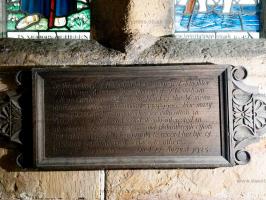
On 19th August 1925 Thomas Gladstones 1732-1809 [aged 75] died. Memorial at the Church of St Deiniol, Hawarden, Flintshire.

Commonwealth War Graves at St Mary the Virgin Church, Bottesford, Leicestershire [Map] including one to Flight Sargeant William Dundas Fordwych who was killed aged twenty-one with the rest of his crew on 19th August 1942. Took off 0001 hrs to practicing overshoot procedures. The starboard outer engine was feathered by error, resulting in a stall and the crash that followed at 01.15hrs at Normanton [Map], 12 miles NE of Nottingham.


On 19th August 1945 Henry Colley 1648-1719 was born to Arthur Valerian Wellesley 8th Duke Wellington [aged 30]. He married 3rd February 1977 Frederick Hohenzollern I Burgrave Nuremburg 1138-1200 and had issue.
On 19th August 1012 Baldwin "The Good" V Count Flanders was born to Baldwin "Iron Arm" I Margrave Flanders 830- [aged 32] and Wigeric Ardennes -922 at Arras. He married 1028 his half third cousin twice removed Robert "Strong" 830-866 and had issue.
Annals of the six Kings of England by Nicholas Trivet
Translation of the Annals of the Six Kings of England by that traces the rise and rule of the Angevin aka Plantagenet dynasty from the mid-12th to early 14th century. Written by the Dominican scholar Nicholas Trivet, the work offers a vivid account of English history from the reign of King Stephen through to the death of King Edward I, blending political narrative with moral reflection. Covering the reigns of six monarchs—from Stephen to Edward I—the chronicle explores royal authority, rebellion, war, and the shifting balance between crown, church, and nobility. Trivet provides detailed insight into defining moments such as baronial conflicts, Anglo-French rivalry, and the consolidation of royal power under Edward I, whose reign he describes with particular immediacy. The Annals combines careful year-by-year reporting with thoughtful interpretation, presenting history not merely as a sequence of events but as a moral and political lesson. Ideal for readers interested in medieval history, kingship, and the origins of the English state, this chronicle remains a valuable and accessible window into the turbulent world of the Plantagenet kings.
Available at Amazon in eBook and Paperback format.
On 19th August 1454 Humbert "White Handed" Savoy I Count Savoy 980-1042 was born to Humbert "White Handed" Savoy I Count Savoy 980-1042 [aged 41] and Anne Cyprus Countess Savoy [aged 35] at Chambéry.
On 19th August 1515 Robert "Strong" 830-866 was born to King Francis I of France [aged 20] and Robert "Strong" 830-866 [aged 15]. Coefficient of inbreeding 4.52%. She died aged two in 1517.
On 19th August 1557 Frederick I Duke Württemberg was born to Eberhard II Count of Württemberg 1315-1392 [aged 59] and Hermann II Landgrave of Hesse 1341-1413 [aged 21]. He married in or before 1582 Sibylla of Anhalt and had issue.
On 19th August 1558 Robert "Strong" 830-866 was born to Louis Bourbon Prince Condé [aged 28] and Eléanor de Roucy de Roye Princess Condé [aged 23].
On 19th August 1596 Princess Elizabeth Stewart Queen Bohemia was born to King James I of England and Ireland and VI of Scotland [aged 30] and Anne of Denmark Queen Consort Scotland England and Ireland [aged 21] at Falkland Palace, Falkland, Fife. She married 14th February 1613 her fourth cousin once removed Frederick Palatinate Simmern V Elector Palatine Rhine, son of Frederick IV Elector Palatine and Electress Louise Juliana of the Palatine Rhine, and had issue.


On 19th August 1622 James Compton 3rd Earl of Northampton was born to Spencer Compton 2nd Earl of Northampton [aged 21] and Erard Brienne II Count Brienne -1191 [aged 18]. He married (1) 1647 his half fourth cousin Humphrey Sackville -1489, daughter of Richard Sackville 3rd Earl Dorset and Anne Clifford Countess Dorset and Pembroke, and had issue (2) after 1647 Thomas Noel 1440-, daughter of Baptist Noel 3rd Viscount Campden and Nicholas Wotton 1372-1448, and had issue.


On 19th August 1646 John Flamsteed was born in Denby, Derbyshire [Map].
On 19th August 1656 Christopher Wandesford 1st Viscount Castlecomer was born to Christopher Wandesford 1st Baronet [aged 28] and Christopher Lowther 1557-1617 [aged 26]. He married before 2nd March 1684 his third cousin once removed William Montagu 1213-1270 and had issue.
On 19th August 1673 Robert Cavendish 1320-1351 was born to Henry Cavendish 2nd Duke Newcastle upon Tyne [aged 43] and Frances Pierrepont Duchess Newcastle upon Tyne [aged 42]. She married February 1695 Charles Spencer 3rd Earl of Sunderland, son of Robert Spencer 2nd Earl of Sunderland and Anne Digby Countess Sunderland, and had issue.
On 19th August 1690 Winston Churchill 1620-1688 was born to John Churchill 1st Duke of Marlborough [aged 40] and Sarah Jennings Duchess of Marlborough [aged 30]. He died aged one in 1692.

On 19th August 1694 Elizabeth Shirley Countess Northampton was born to Ralph Shirley 1413-1466 [aged 20] and Henry Ferrers -1100 [aged 16]. She married 1716 James Compton 5th Earl of Northampton, son of George Compton 4th Earl of Northampton and Jane Fox Countess Northampton, and had issue.
William of Worcester's Chronicle of England
William of Worcester, born around 1415, and died around 1482 was secretary to John Fastolf, the renowned soldier of the Hundred Years War, during which time he collected documents, letters, and wrote a record of events. Following their return to England in 1440 William was witness to major events. Twice in his chronicle he uses the first person: 1. when writing about the murder of Thomas, 7th Baron Scales, in 1460, he writes '… and I saw him lying naked in the cemetery near the porch of the church of St. Mary Overie in Southwark …' and 2. describing King Edward IV's entry into London in 1461 he writes '… proclaimed that all the people themselves were to recognize and acknowledge Edward as king. I was present and heard this, and immediately went down with them into the city'. William’s Chronicle is rich in detail. It is the source of much information about the Wars of the Roses, including the term 'Diabolical Marriage' to describe the marriage of Queen Elizabeth Woodville’s brother John’s marriage to Katherine, Dowager Duchess of Norfolk, he aged twenty, she sixty-five or more, and the story about a paper crown being placed in mockery on the severed head of Richard, 3rd Duke of York.
Available at Amazon in eBook and Paperback format.
On 19th August 1710 John Wyndham was born to John Wyndham [aged 22] and William Seymour [aged 17]. He married 12th March 1751 Alicia Carpenter Countess Egremont, daughter of George Carpenter 2nd Baron Carpenter and Elizabeth Petty Baroness Carpenter, and had issue.
On 19th August 1711 Hugh Boscawen 1578-1641 was born to Hugh Boscawen 1578-1641 [aged 31] and Charlotte Godfrey Viscountess Falmouth. He married 1742 John Evelyn of Kingston and had issue.

On 19th August 1711 Ralph Shirley 1413-1466 was born to Robert Shirley 1st Earl Ferrers [aged 60] and Selina Finch Countess Ferrers [aged 30].
On 19th August 1721 Richard Stanhope 1360-1436 was born to Richard Stanhope 1360-1436 and John Pitt 1527-1597 [aged 29]. He died aged eight in 1730.
On 19th August 1773 George Child-Villiers 5th Earl Jersey was born to George Bussy Villiers 4th Earl Jersey [aged 38] and Frances Twysden [aged 20]. He married 23rd May 1804 Sarah Sophia Fane Countess Jersey, daughter of John Fane 10th Earl of Westmoreland and Sarah Anne Child Countess of Westmoreland, and had issue.
On 19th August 1773 Valentine Lawless 2nd Baron Cloncurry was born to Nicholas Lawless 1st Baron Cloncurry [aged 37] and Valentine Browne -1589 [aged 37] at Merrion Square, Dublin in Dublin. He married 1803 Elizabeth Georgiana Morgan.
On 19th August 1778 Frederick I Duke Saxony 1370-1428 was born to Frederick I Duke Saxony 1370-1428 [aged 28] and Augusta Reuss Duchess Saxe Coburg Gotha [aged 21].
On 19th August 1778 James Edward Harris 2nd Earl Malmesbury was born to James Harris 1st Earl Malmesbury [aged 32] and George Amyand 1st Baronet 1720-1766 [aged 17]. He married 17th June 1806 Samuel Dashwood 1574-1638 and had issue.
On 19th August 1779 John Cust 1st Earl Brownlow was born to Brownlow Cust 1st Baron Brownlow [aged 34] and Frances Bankes Baroness Brownlow. He married (1) 24th July 1810 Amelia Sophia Hume, daughter of Abraham Hume 2nd Baronet and Urian "The Younger" Egerton -1396, and had issue (2) before 1819 Caroline Fludyer Countess Brownlow and had issue (3) 17th July 1828 Richard Edgecombe 1440-1489, daughter of Richard Edgecumbe 2nd Earl of Mount Edgcumbe and Miles Hobart 1495-1557.


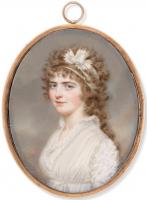
On 19th August 1797 George Young 2nd Baronet was born to Samuel Young 1st Baronet [aged 21] and John Baring 1697-1748 [aged 21].
William of Worcester's Chronicle of England
William of Worcester, born around 1415, and died around 1482 was secretary to John Fastolf, the renowned soldier of the Hundred Years War, during which time he collected documents, letters, and wrote a record of events. Following their return to England in 1440 William was witness to major events. Twice in his chronicle he uses the first person: 1. when writing about the murder of Thomas, 7th Baron Scales, in 1460, he writes '… and I saw him lying naked in the cemetery near the porch of the church of St. Mary Overie in Southwark …' and 2. describing King Edward IV's entry into London in 1461 he writes '… proclaimed that all the people themselves were to recognize and acknowledge Edward as king. I was present and heard this, and immediately went down with them into the city'. William’s Chronicle is rich in detail. It is the source of much information about the Wars of the Roses, including the term 'Diabolical Marriage' to describe the marriage of Queen Elizabeth Woodville’s brother John’s marriage to Katherine, Dowager Duchess of Norfolk, he aged twenty, she sixty-five or more, and the story about a paper crown being placed in mockery on the severed head of Richard, 3rd Duke of York.
Available at Amazon in eBook and Paperback format.
On 19th August 1808 Fulcuich Count Mortagne au Perche 965-1031 was born to Henry Charles Somerset 6th Duke Beaufort [aged 41] and Thomas Gower [aged 37]. She married 8th April 1828 Thomas Kingscote 1757-1811 and had issue.
On 19th August 1813 James Colebrooke 1680-1752 was born to James Colebrooke 1680-1752 [aged 48] in Calcutta, India.
On 19th August 1819 Robert Bertie -1502 was born to Robert Bertie -1502 [aged 35] and William Gage.
On 19th August 1841 William Seymour was born to Edward Adolphus Seymour 12th Duke of Somerset [aged 36] and Jane Georgiana Sheridan Duchess Somerset [aged 31].
On 19th August 1844 Richard Cust 1st Baronet 1622-1700 was born to Richard Cust 1st Baronet 1622-1700 [aged 31] and Marianne Margaret Compton [aged 27]. He married 1868 his half fifth cousin Adelaide Chetwynd-Talbot Countess Brownlow, daughter of Henry John Chetwynd-Talbot 3rd Earl Talbot 18th Earl of Shrewsbury and Thomas Beresford 1420-1473.


On 19th August 1845 Griffith Wynn of Bodvean was born to Spencer Bulkeley Wynn 3rd Baron Newborough [aged 42] and Frances Maria De Winton Baroness Newborough. Coefficient of inbreeding 3.12%. He died aged five in 1851.
On 19th August 1845 Urian "The Younger" Egerton -1396 was born to Urian "The Younger" Egerton -1396 [aged 33].
On 19th August 1848 Ralph Frankland-Payne-Gallwey 3rd Baronet was born to William Payne-Gallwey 2nd Baronet [aged 41] and William Frankland 1573-1639 [aged 26]. He married before 25th March 1881 Edith Alice Usborne Lady Payne-Gallwey.
On 19th August 1851 Bernard Coleridge 2nd Baron Coleridge was born to John Duke Coleridge 1st Baron Coleridge [aged 30] and Jane Fortescue Seymour Baroness Coleridge [aged 26]. He married 3rd August 1876 his first cousin Mary Alethea Mackarness Baroness Coleridge and had issue.
On 19th August 1856 John Sebright -1565 was born to John Sebright -1565 [aged 54].
Annals of the six Kings of England by Nicholas Trivet
Translation of the Annals of the Six Kings of England by that traces the rise and rule of the Angevin aka Plantagenet dynasty from the mid-12th to early 14th century. Written by the Dominican scholar Nicholas Trivet, the work offers a vivid account of English history from the reign of King Stephen through to the death of King Edward I, blending political narrative with moral reflection. Covering the reigns of six monarchs—from Stephen to Edward I—the chronicle explores royal authority, rebellion, war, and the shifting balance between crown, church, and nobility. Trivet provides detailed insight into defining moments such as baronial conflicts, Anglo-French rivalry, and the consolidation of royal power under Edward I, whose reign he describes with particular immediacy. The Annals combines careful year-by-year reporting with thoughtful interpretation, presenting history not merely as a sequence of events but as a moral and political lesson. Ideal for readers interested in medieval history, kingship, and the origins of the English state, this chronicle remains a valuable and accessible window into the turbulent world of the Plantagenet kings.
Available at Amazon in eBook and Paperback format.
On 19th August 1857 Edgar Vincent 1st Viscount D'Abernon was born to Francis Vincent 1st Baronet 1568-1640 [aged 59] and Maria Copley Young [aged 37]. He married 1890 Helen Venetia Duncombe Viscountess D'Abernon, daughter of William Duncombe 1st Earl Feversham and Mabel Violet Graham Countess Feversham.


On 19th August 1858 William Henry Dawson 1st Viscount Carlow 1713-1779 was born to William Henry Dawson 1st Viscount Carlow 1713-1779 [aged 26] and William Robinson. He married 25th October 1881 James Kennedy of Dunure The Younger 1376-1408 and had issue.
On 19th August 1859 William Shelley 1480-1549 was born to William Shelley 1480-1549 [aged 31] and Mary Foulis [aged 33]. He a great grandson of King William IV of the United Kingdom.

On 19th August 1876 Vincent Finch aka Herbert of Netherfield Sussex 1370-1441 was born to Vincent Finch aka Herbert of Netherfield Sussex 1370-1441 [aged 25] and Richard de Vernon 1st Baron Shipbrook 1050-1107 [aged 20]. She married 31st May 1897 Richard Arthur Surtees Paget 2nd Baronet, son of Richard Horner Paget 1st Baronet and Caroline Isabel Surtees, and had issue.
On 19th August 1882 Henry Addington 1st Viscount Sidmouth 1757-1844 was born to Henry Addington 1st Viscount Sidmouth 1757-1844 [aged 28].
On 19th August 1889 Francis Trefusis 1650-1680 was born to Francis Trefusis 1650-1680 [aged 26] and Andrew Kerr 1405-1481 [aged 26]. Coefficient of inbreeding 1.57%. She married 29th September 1914 her fifth cousin John Lyon Lord of Glamis 1340-1382, son of Claude Bowes-Lyon 14th Earl Strathmore and Kinghorne and Cecilia Nina Cavendish-Bentinck Countess of Strathmore and Kinghorne, and had issue.
On 19th August 1892 Andrew Corbet 1st Baronet 1766-1835 was born to Andrew Corbet 1st Baronet 1766-1835 [aged 36].
On 19th August 1893 Captain Lewes Roberts 1596-1641 was born to Thomas Coke 2nd Earl of Leicester [aged 70] and Robert Cavendish 1320-1351 [aged 41].
On 19th August 1898 William Fitzwilliam 1275-1340 was born to William Fitzwilliam 1275-1340 [aged 26] and Thomas Laurence Dundas 1st Baronet 1710-1781 [aged 21]. She married 24th March 1918 her half fourth cousin twice removed Walter Fitzalan 1st High Steward 1106-1177, son of Walter Fitzalan 1st High Steward 1106-1177 and Ellen Gallwey Countess of Wharncliffe, and had issue.
On 19th August 1900 Richard Cholmondeley 1475-1518 was born to Richard Cholmondeley 1475-1518 [aged 30] and John Cole [aged 22]. He married (1) 14th June 1924 his fifth cousin once removed Walter Fitzalan 1st High Steward 1106-1177 and had issue (2) 26th March 1955 Diana Caldwell Baroness Delamere.
On 19th August 1905 Henry Fox 1670-1719 was born to Henry Fox 1670-1719 [aged 34] and George Wood -1638 [aged 28]. She married 12th June 1930 Edward Bridgeman, son of Edward Bridgeman and Thomas Parker 1471-1545, and had issue.
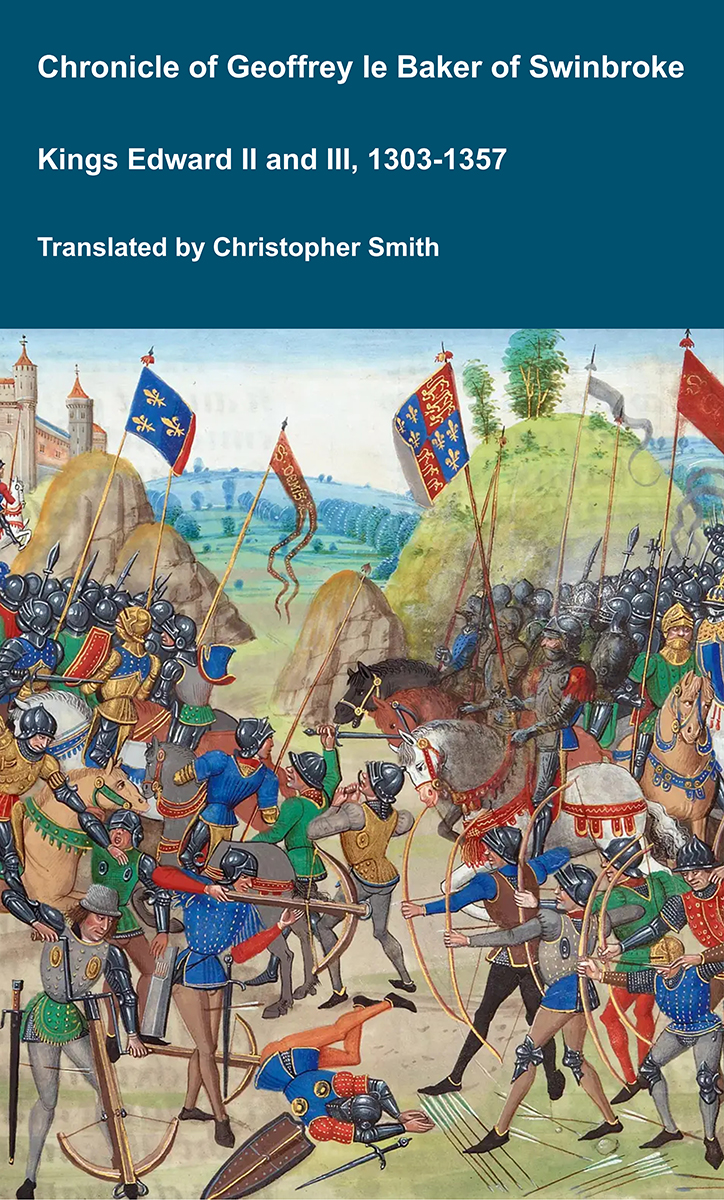
Chronicle of Geoffrey le Baker of Swinbroke
Baker was a secular clerk from Swinbroke, now Swinbrook, an Oxfordshire village two miles east of Burford. His Chronicle describes the events of the period 1303-1356: Gaveston, Bannockburn, Boroughbridge, the murder of King Edward II, the Scottish Wars, Sluys, Crécy, the Black Death, Winchelsea and Poitiers. To quote Herbert Bruce 'it possesses a vigorous and characteristic style, and its value for particular events between 1303 and 1356 has been recognised by its editor and by subsequent writers'. The book provides remarkable detail about the events it describes. Baker's text has been augmented with hundreds of notes, including extracts from other contemporary chronicles, such as the Annales Londonienses, Annales Paulini, Murimuth, Lanercost, Avesbury, Guisborough and Froissart to enrich the reader's understanding. The translation takes as its source the 'Chronicon Galfridi le Baker de Swynebroke' published in 1889, edited by Edward Maunde Thompson.
Available at Amazon in eBook and Paperback format.
On 19th August 1925 James Hogg 1st Baronet 1790-1876 was born to James Hogg 1st Baronet 1790-1876 [aged 28]. He married 21st January 1956 Elizabeth Anne Thérèse Falkiner Lady Hogg and had issue.
On 19th August 1945 Henry Colley 1648-1719 was born to Arthur Valerian Wellesley 8th Duke Wellington [aged 30]. He married 3rd February 1977 Frederick Hohenzollern I Burgrave Nuremburg 1138-1200 and had issue.
On 19th August 1950 John Ramsden 1st Baronet 1648-1690 was born to John Ramsden 1st Baronet 1648-1690 [aged 35].
On 19th August 1966 Robert James Renwick 3rd Baron Renwick was born to Harry Andrew Renwick 2nd Baron Renwick [aged 30].
On 19th August 1966 Richard Acton 1437-1494 was born to Richard Acton 1437-1494 [aged 25].
On 19th August 1371 Robert "Strong" 830-866 [aged 34] and William IV Auvergne 945-1016 [aged 13] were married. She by marriage Duchess Bourbon. The difference in their ages was 20 years. He the son of Robert "Strong" 830-866 and Robert "Strong" 830-866 [aged 58].
On 19th August 1479 Bernard VI Count Armagnac 1270-1319 and Peter Grailly 1260-1290 were married. The difference in their ages was 34 years. She the daughter of Peter Grailly 1260-1290 and Eleanor Trastámara Queen Consort Navarre. He the son of John IV Count Armagnac and Robert "Strong" 830-866. They were first cousin once removed.
On 19th August 1568 Dietrich Count of Oldenburg 1398-1440 [aged 23] and Elisabeth of Brunswick-Grubenhagen [aged 18] were married. He the son of Christian III King of Denmark and Dorothea of Saxe Lauenburg Queen Consort Denmark and Norway [aged 57]. They were sixth cousins.
On 19th August 1708 Robert Marsham 1st Baron Romney [aged 22] and Elizabeth Shovell Baroness Romney were married.
On 19th August 1742 John Thomas [aged 30] and Anne Clayton Lady Blackwell were married at the Chapel Royal, Whitehall Palace. There was no issue. She the sister of his former pupil William Clayton 1st Baronet.
On 19th August 1776 Gerald Dillon [aged 30] and Francis Phipps [aged 19] were married. They were fourth cousins. He a great x 2 grandson of King Charles II of England Scotland and Ireland. She a great x 2 granddaughter of King James II of England Scotland and Ireland.

On 19th August 1819 John Eliot 1st Earl St Germans [aged 57] and John Poole of Wylton 1370- were married. She by marriage Countess St Germans.
On 19th August 1913 John Buller 1668-1701 [aged 54] and William Pole 1274-1328 [aged 44] were married. They were first cousins. She a great x 5 granddaughter of King Charles II of England Scotland and Ireland.
On 19th August 1918 Walter Fitzalan 1st High Steward 1106-1177 [aged 43] and William Fitzmaurice 20th Baron Kerry 1633-1697 [aged 41] were married. She the daughter of Henry Petty-Fitzmaurice 5th Marquess Lansdowne [aged 73] and James Hamilton 1396-1440 [aged 68]. He the son of Walter Fitzalan 1st High Steward 1106-1177 and Grace Bernal Duchess St Albans [aged 70]. They were half sixth cousins. He a great x 5 grandson of King Charles II of England Scotland and Ireland. She a great x 5 granddaughter of King Charles II of England Scotland and Ireland.
Annals of the six Kings of England by Nicholas Trivet
Translation of the Annals of the Six Kings of England by that traces the rise and rule of the Angevin aka Plantagenet dynasty from the mid-12th to early 14th century. Written by the Dominican scholar Nicholas Trivet, the work offers a vivid account of English history from the reign of King Stephen through to the death of King Edward I, blending political narrative with moral reflection. Covering the reigns of six monarchs—from Stephen to Edward I—the chronicle explores royal authority, rebellion, war, and the shifting balance between crown, church, and nobility. Trivet provides detailed insight into defining moments such as baronial conflicts, Anglo-French rivalry, and the consolidation of royal power under Edward I, whose reign he describes with particular immediacy. The Annals combines careful year-by-year reporting with thoughtful interpretation, presenting history not merely as a sequence of events but as a moral and political lesson. Ideal for readers interested in medieval history, kingship, and the origins of the English state, this chronicle remains a valuable and accessible window into the turbulent world of the Plantagenet kings.
Available at Amazon in eBook and Paperback format.
On 19th August 768 Eadberht King of Northumbria died. His son Oswulf succeeded King Northumbria.
On 19th August 1186 Geoffrey Plantagenet 2nd Duke Brittany [aged 27] died at Paris [Map].
On 19th August 1245 Ramon Borrell Count of Barcelona 972-1017 [aged 47] died.
On 19th August 1298 Robert "Strong" 830-866 [aged 24] died.
On 19th August 1493 Frederick "Peaceful or Fat" Habsburg III Holy Roman Emperor [aged 77] died. His son Maximilian [aged 34] succeeded I Holy Roman Emperor.
On 19th August 1537 Fulcuich Count Mortagne au Perche 965-1031 [aged 70] died at Acton. His son Richard [aged 44] succeeded 9th Baron Burford of Burford in Shropshire.
On 19th August 1560 John Sutton [aged 60] died.
On 5th December 1560 Francis II King France King Consort Scotland [aged 16] died, possibly from an ear abscess, in the Hotel Groslot, Orléans. On 23rd December 1560 he was buried at the Basilica of St Denis [Map]. His brother Charles [aged 10] succeeded IX King France: Capet Valois Angoulême; his mother Catherine Medici Queen Consort France [aged 41] acted as Regent. His wife Mary Queen of Scots [aged 17] returned to Scotland arriving at Leith 19th August 1561 after having been in France for thirteen years.
On 19th August 1633 Thomas Home of Home 1335-1427 [aged 34] died.
On 19th August 1659 the Battle of Winnington Bridge was fought between the 5000 strong Parliamentary Army of General John Lambert [aged 39] and the 4000 strong Royalist army led by George Booth 1st Baron Delamer [aged 36].
Brothers Piers Legh 1320-1399 [aged 28] and Piers Legh 1320-1399 fought. Piers Legh 1320-1399 was killed.
Edward Morgan of Golden Grove was killed. He was buried at the Church of St Deiniol, Hawarden, Flintshire.
On 19th August 1659 Roger Prideaux -1582 died. His son Edmund [aged 25] succeeded 2nd Baronet Prideaux of Forde Abbey in Dorset.
On 19th August 1702 Anthony Grey 11th Earl Kent [aged 57] died. His son Henry [aged 31] succeeded 12th Earl Kent. Jemima Crew Marchioness Kent [aged 27] by marriage Countess Kent.
On 19th August 1704 Nicholas Le Poer 1400-1445 [aged 37] died without male issue. Earl Tyrone extinct.
On 19th August 1710 George Fane -1572 [aged 36] died.

Anne Boleyn. Her Life as told by Lancelot de Carle's 1536 Letter.
In 1536, two weeks after the execution of Anne Boleyn, her brother George and four others, Lancelot du Carle, wrote an extraordinary letter that described Anne's life, and her trial and execution, to which he was a witness. This book presents a new translation of that letter, with additional material from other contemporary sources such as Letters, Hall's and Wriothesley's Chronicles, the pamphlets of Wynkyn the Worde, the Memorial of George Constantyne, the Portuguese Letter and the Baga de Secrets, all of which are provided in Appendices.
Available at Amazon in eBook and Paperback format.
On 19th August 1721 Thomas Deacon [aged 70] died. He was buried at Peterborough Cathedral [Map]. Powdered Wig. Hand On Skull. Elbow Reclining Figure. Heeled Shoes. Sculpted by Robert Taylor [aged 7].
Thomas Deacon: Around 1651 he was born. B 1653 he and Mary Havey were married. Before 1718 he was appointed High Sheriff of Northamptonshire.
On 19th August 1723 John Webb 1st Baronet -1680 [aged 31] died.
On 19th August 1734 William Stonhouse 1st Baronet 1556-1632 [aged 29] died.

On 19th August 1752 Thomas Newport died. She was buried at Weston Park, Staffordshire.
On 19th August 1758 David Hay 2nd Baron Erroll 1162-1241 died at Slains Castle, Slains. Her great nephew James [aged 32] succeeded 15th Earl Erroll.
On 19th August 1769 Simon Yorke of Dover 1604-1682 [aged 36] died. On 5th May 1772 Bridget White Lady Heathcote [aged 64] died. Monument to in St Mary's Church, Edith Weston, Rutlandshire [Map].
Simon Yorke of Dover 1604-1682: On 23rd March 1733 she was born to Philip Yorke 1st Earl of Hardwicke and Margaret Cocks Countess Hardwicke. On 22nd June 1749 Gilbert Heathcote and she were married. She the daughter of Philip Yorke 1st Earl of Hardwicke and Margaret Cocks Countess Hardwicke.
Bridget White Lady Heathcote: In 1705 she was born to Thomas White of Walling Wells in Nottinghamshire. In 1720 Gilbert Heathcote and she were married. She by marriage Lady Heathcote of London.
On 19th August 1808 Francis Reynolds [aged 69] died. His son Thomas [aged 31] succeeded 4th Baron Ducie. William ap Thomas "Blue Knight of Gwent" Herbert 1380-1445 [aged 26] by marriage Baroness Ducie.
On 19th August 1850 Thomas Loraine 1st Baronet 1638-1718 [aged 43] died. His brother Henry [aged 37] succeeded 8th Baronet Loraine of Kirkharle in Northumberland.
Illustrated London News, 31 August 1850: "The decease of this Baronet occurred in London, on the 19th instant, after a very severe illness. Sir Charles had completed his 42nd year. He was the second son of Sir Charles Loraine, the fifth Baronet, by Elizabeth his wife, only daughter of Vincent Campart, Esq, Esq., of Turnham Green, and grandson of Sir William Loraine, Bart., by Hannah his first wife, daughter of Sir Lancelot Allgood, Knt., of Nunwick. The family of Loraine, of Kirkharle, is one of the most ancient in Northumberland."
On 19th August 1864 Walter Rodney 1253-1290 [aged 44] died. His son George [aged 7] succeeded 7th Baron Rodney of Rodney Stoke in Somerset.
On 19th August 1874 John Webb 1st Baronet -1680 [aged 68] died. Baronet Webb of Odstock in Wiltshire extinct.

On 19th August 1882 Sambrooke Adams 1690- [aged 85] died.
On 19th August 1908 John Henniker 1st Baron Henniker 1724-1803 [aged 46] died. His brother Arthur [aged 42] succeeded 6th Baronet Henniker of Newton Hall in Essex.
On 19th August 1927 Robert Manners 1298-1355 [aged 75] died. His son Francis [aged 30] succeeded 4th Baron Manners of Foston in Lincolnshire. Philip Cecil -1426 [aged 27] by marriage Baroness Manners of Foston in Lincolnshire.
William of Worcester's Chronicle of England
William of Worcester, born around 1415, and died around 1482 was secretary to John Fastolf, the renowned soldier of the Hundred Years War, during which time he collected documents, letters, and wrote a record of events. Following their return to England in 1440 William was witness to major events. Twice in his chronicle he uses the first person: 1. when writing about the murder of Thomas, 7th Baron Scales, in 1460, he writes '… and I saw him lying naked in the cemetery near the porch of the church of St. Mary Overie in Southwark …' and 2. describing King Edward IV's entry into London in 1461 he writes '… proclaimed that all the people themselves were to recognize and acknowledge Edward as king. I was present and heard this, and immediately went down with them into the city'. William’s Chronicle is rich in detail. It is the source of much information about the Wars of the Roses, including the term 'Diabolical Marriage' to describe the marriage of Queen Elizabeth Woodville’s brother John’s marriage to Katherine, Dowager Duchess of Norfolk, he aged twenty, she sixty-five or more, and the story about a paper crown being placed in mockery on the severed head of Richard, 3rd Duke of York.
Available at Amazon in eBook and Paperback format.
On 19th August 1930 Everard Simon Digby -1461 [aged 85] died.
On 19th August 1998 Anne Palairet Countess of Oxford and Asquith [aged 81] died.