

11 Jun is in June.
1183 Death of Henry the Young King
1467 Tournament Bastard of Burgundy
1469 Redesdale and Holderness Rebellions
1509 Marriage and Coronation of Henry VIII and Catherine of Aragon
1528 Sweating Sickness Outbreak
1535 Execution of the Carthusians
1540 Execution of Thomas Cromwell
Anglo-Saxon Chronicle. 1023. This year returned King Knute [aged 28] to England; and Thurkyll and he were reconciled. He committed Denmark and his son to the care of Thurkyll, whilst he took Thurkyll's son with him to England. This year died Archbishop Wulfstan; and Elfric succeeded him; and Archbishop Egelnoth blessed him in Canterbury. This year King Knute in London, in St. Paul's minster [Map], gave full leave60 to Archbishop Ethelnoth, Bishop Britwine, and all God's servants that were with them, that they might take up from the grave the archbishop, Saint Elphege. And they did so, on the sixth day [8th June 1023] before the ides of June; and the illustrious king, and the archbishop, and the diocesan bishops, and the earls, and very many others, both clergy and laity, carried by ship his holy corpse over the Thames to Southwark [Map]. And there they committed the holy martyr to the archbishop and his companions; and they with worthy pomp and sprightly joy carried him to Rochester. There on the third day came the Lady Emma [aged 38] with her royal son Hardacnute [aged 5]; and they all with much majesty, and bliss, and songs of praise, carried the holy archbishop into Canterbury Cathedral [Map], and so brought him gloriously into the church, on the third day [11th June 1023] before the ides of June. Afterwards, on the eighth day, the seventeenth [15th June 1023] before the calends of July, Archbishop Ethelnoth, and Bishop Elfsy, and Bishop Britwine, and all they that were with them, lodged the holy corpse of Saint Elphege on the north side of the altar of Christ; to the praise of God, and to the glory of the holy archbishop, and to the everlasting salvation of all those who there his holy body daily seek with earnest heart and all humility. May God Almighty have mercy on all Christian men through the holy intercession of Elphege!
Note 60. Matthew of Westminster says the king took up the body with his own hands.
On 11th June 1183 Henry the Young King [aged 28] died at Castle of Martel clasping a ring his father had sent as a token of forgiveness. He was buried at Rouen Cathedral [Map].
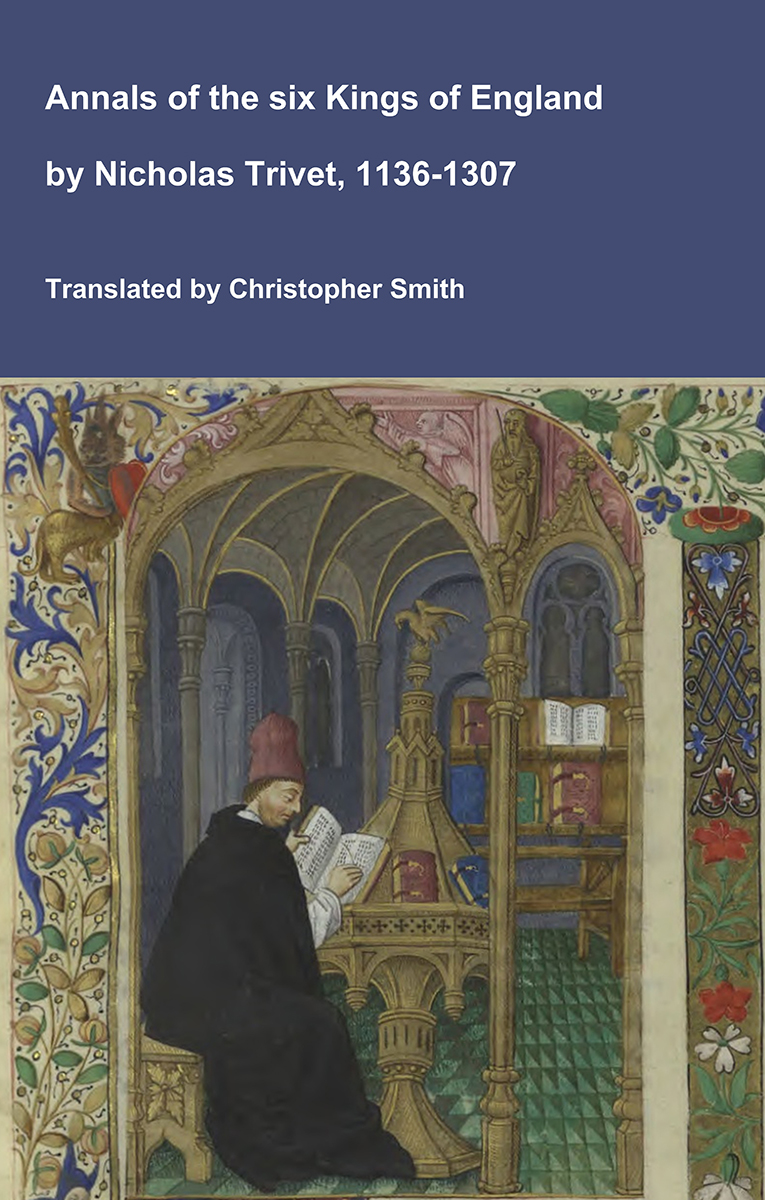 Annals of Six Kings of England by Nicholas Trivet. Henry, the young king of England, died [on 11th June 1183]. He had bequeathed his body to the church of Rouen. His death was mourned by the princes and knights who were accustomed to accompany him with such grief that nothing like it had been heard since ancient times. The citizens of Le Mans, through whose city the funeral procession was being carried, forced the body to be buried there the next day, after it had rested during the night in their principal church. But the church of Rouen, to which he had devoted himself, did not neglect its right. Through the efforts of the noble man Robert, dean of Rouen, the people of Le Mans were compelled after ten weeks to return the body. From Le Mans to Rouen, a journey of four days, it was carried only upon the shoulders of princes and noblemen. There it was honourably buried in the metropolitan church, to the right of the high altar, accompanied, as some writers report, by the glory of miracles. His father the king is said to have lamented his death with inconsolable grief.
Henricus rex Angliæ junior moritur, qui corpus suum legavit ecclesiæ Rothomagensi. Mortem ejus planxerunt principes et milites, qui eam comitari solebant, tanto dolore, ut nullus ab antiquis temporibus ei similis audiretur. Cives Cenomannenses, per quorum urbem erat funus deportandum, cum nocte in ecclesia eorum majori quievisset, coegerunt illud ibidem in crastino sepeliri. Sed ecclesia Rothomagensis, cui se devoverat, jus suum non negligens, agente viro nobili Roberto Rothomagensi decano, Cenomanenses post decem septimanas compulit reddere sibi funus. Quod a Cenomannis usque Rothomagum, quatuor videlicet dietis, non nisi principum et nobilium virorum cervicibus est delatum; ubi in metropolitana basilica juxta majus altare a dextris, non sine miraculorum gloria, ut nonnulli scribunt, honorifice est sepultum. Mortem vero ejus rex pater inconsolabiliter dicitur deplorasse.
Annals of Six Kings of England by Nicholas Trivet. 1184. Gerard, bishop of Coventry, died after holding the office for eighteen weeks. Richard, archbishop of Canterbury, died after having held the see for nine years, forty-five weeks, and five days, at Hallings, a manor belonging to the bishop of Rochester. Walter, bishop of Lincoln, was nominated to become archbishop of Rouen. The king of England, passing through Flanders, came into England on 11th June (the third day before the Ides of June). The duke of Saxony likewise came to England, and at Winchester, within a few days, the duchess gave birth to a son named William.
1184. GERARDUS Coventrensis, cum sedisset octodecim septimanis, in fata concessit. Ricardus Cantuariensis archiepiscopus, cum sedisset annis novem, hebdomadis quadraginta quinque, diebus quinque, mortem subiit apud Halinges, quæ est villa episcopi Roffensis. Walterus, Lincolniensis episcopus, in Rothomagensem archiepiscopum postulatur. Rex Anglorum, per Flandriam transiens, venit in Angliam tertio idus Junii. Dux Saxoniæ similiter in Angliam venit, cui apud Wyntoniam infra paucos dies ducissa peperit filium, nomine Willelmum.
Annals of Six Kings of England by Nicholas Trivet. 1189. After the truce between the kings of France and England and Richard, count of Poitou, had expired, a conference was held twice near La Ferté-Bernard. At length, after long negotiations, they parted from one another in disagreement. The king of France and the count of Poitou, having gathered forces from all sides, within a few days seized La Ferté-Bernard, Montfort, Baugé, and Beaumont by assault; and the inhabitants of the surrounding districts also surrendered their castles to Count Richard. Geoffrey of Mayenne, Guy of Laval, and Ralph, lord of Fougères, enemies of the king of England, went over to Count Richard. While the king of England was staying at Le Mans, the king of France and the count of Poitou approached with a large multitude of armed men. The king of England, although he had a very great number of soldiers ready to resist the enemy, nevertheless, fearing to be shut in by a siege, left Le Mans well supplied with provisions. On the day after the feast of St Barnabas [11th June 1189], a fierce fire set by the king of England's men quickly consumed the suburbs. The king of France and the count of Poitou entered the city and were received with a solemn procession in the principal church. After the tenth day, the tower near the gate that faces the north was, by order of the king of England, surrendered to the king of France. At last peace between these great princes was restored by the counsel of the magnates in the following manner: everything that had been taken from the king of England after the taking of the cross, both the castle of Ralph and the other places within the province of Bourges, was restored to him. To the king of France twenty thousand marks were paid as compensation for the expenses he had incurred concerning the castle of Ralph. Afterwards the king of England did homage to the king of France and renounced to him whatever he or his predecessors had possessed in Auvergne. These things were done on the vigil of the apostles Peter and Paul [28th June 1189].
1189. Post lapsas treugas inter reges Francorum et Anglorum, et Ricardum comitem Pictavorum, bis habitum est colloquium prope Feritatem Bernardi. Ad ultimum, post longos tractatus, discordes ab invicem discesserunt. Rex Francorum et comes Pictavensis, copiis undique congregatis, intra paucos dies Feritatem Bernardi, Montem-fortem, Baahim, Bellum-montem, factis irruptionibus, occuparunt; a municipalibus quoque circumquaque comiti Ricardo fit deditio castellorum. Galfridus de Meduana, Guido de Valle, Radulphus dominus Fulgeriarum, hostes regis Anglorum, ad Ricardum comitem transfugerunt. Rege Anglorum Cenomannis residente, appropinquabant rex Francorum et comes Pictaviæ, cum armatorum multitudine copiosa. Rex vero Anglorum, quamvis militum multitudinem maximam haberet, paratam ad hostibus resistendum, præcavens tamen obsidione vallari, Cenomannis sufficienter victulibus refertam reliquit. In crastino sancti Barnabæ, vehemens ignis a parte regis Anglorum injectus, intra modicum temporis, suburbana consumpsit. Rex Franciæ et comes Pictavensis, urbem ingressi, cum processione solemni in majori ecclesia sunt recepti. Post decimum diem, turris prope portam quæ respicit ad aquilonem, de mandato regis Anglorum, regi Francorum reddita est. Tandem pax inter tantos principes, magnatum consilio, reformata est in hunc modum: Anglorum regi restituebantur omnia, tam Castrum Radulphi, quam alia post crucem susceptam ablata, scilicet intra Bituricam provinciam. Regi Francorum numerata sunt viginti millia marcarum, expensarum nomine, quos fecerat circa Castrum Radulphi. Postmodum rex Anglorum homagium fecit regi Francorum; et eidem quietum clamavit quicquid in Alvernia ipse vel prædecessores sui possederant. Facta sunt hæc in vigilia apostolorum Petri et Pauli.
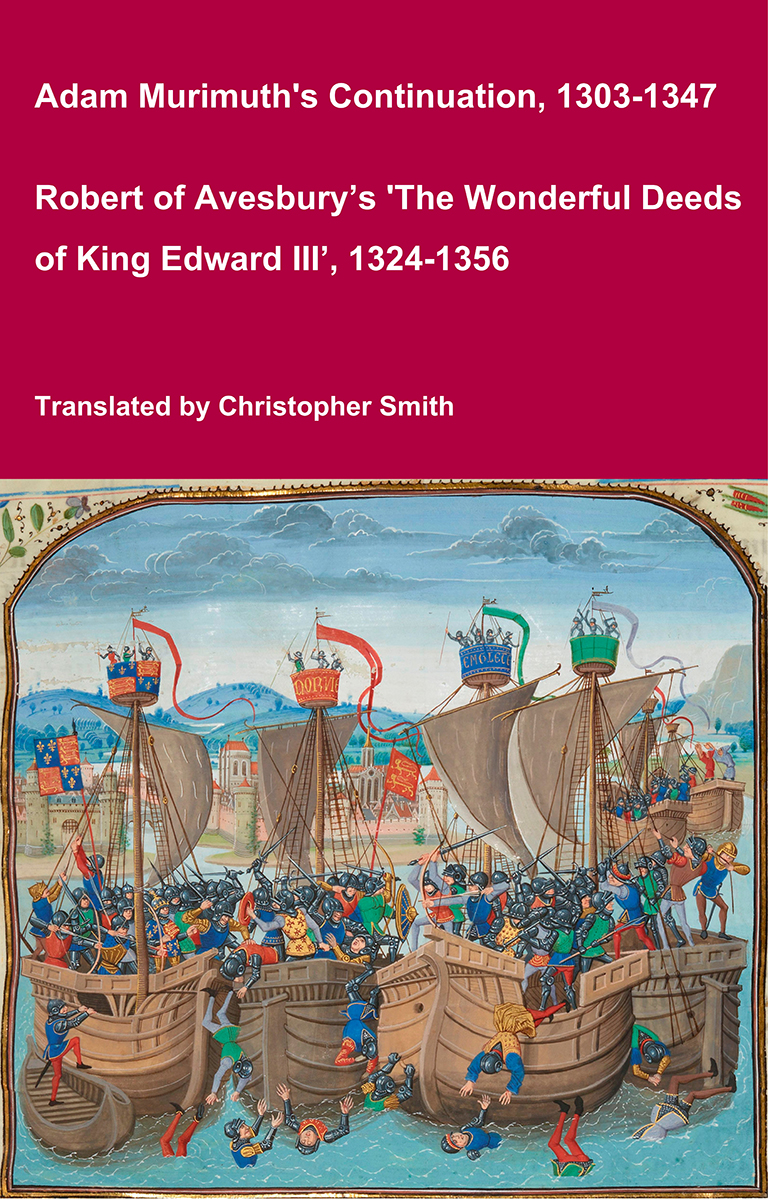 Adam Murimuth Continuation. In this year, before Pentecost, Archbishop Robert excommunicated Walter, bishop of Coventry, because he refused to answer in a provincial council concerning the fact that he had sworn to observe the aforesaid ordinances but afterwards, and contrary to them, had adhered to the king's council and had caused the said Piers de Gaveston to be reconciled and the ordinances to be invalidated. This, however, occurred before the death of the said Piers. Whereupon the same bishop appealed to the Apostolic See and went there in person; and Adam Murimuth, clerk of the said archbishop, was sent against him by the archbishop around the feast of Saint Barnabas [11th June 1312].
Hoc anno, ante Pentecosten archiepiscopus Robertus excommunicavit Walterum episcopum Coventriensem, quia noluit in provinciali concilio respondere super eo quod ipse fuit juratus servare dictas ordinationes, sed post et contra eas adhæsit concilio regis et fecit dictum Petrum de Gaverstone reconciliari et ordinationes infirmari; sed hoc fuit ante mortem dicti Petri. Unde episcopus idem ad sedem apostolicam appellavit, et personaliter ipsam adivit; et Adam Murimuth, clericus dicti archiepiscopi, contra eum per archiepiscopum destinatus, circa festum sancti Barnabæ.
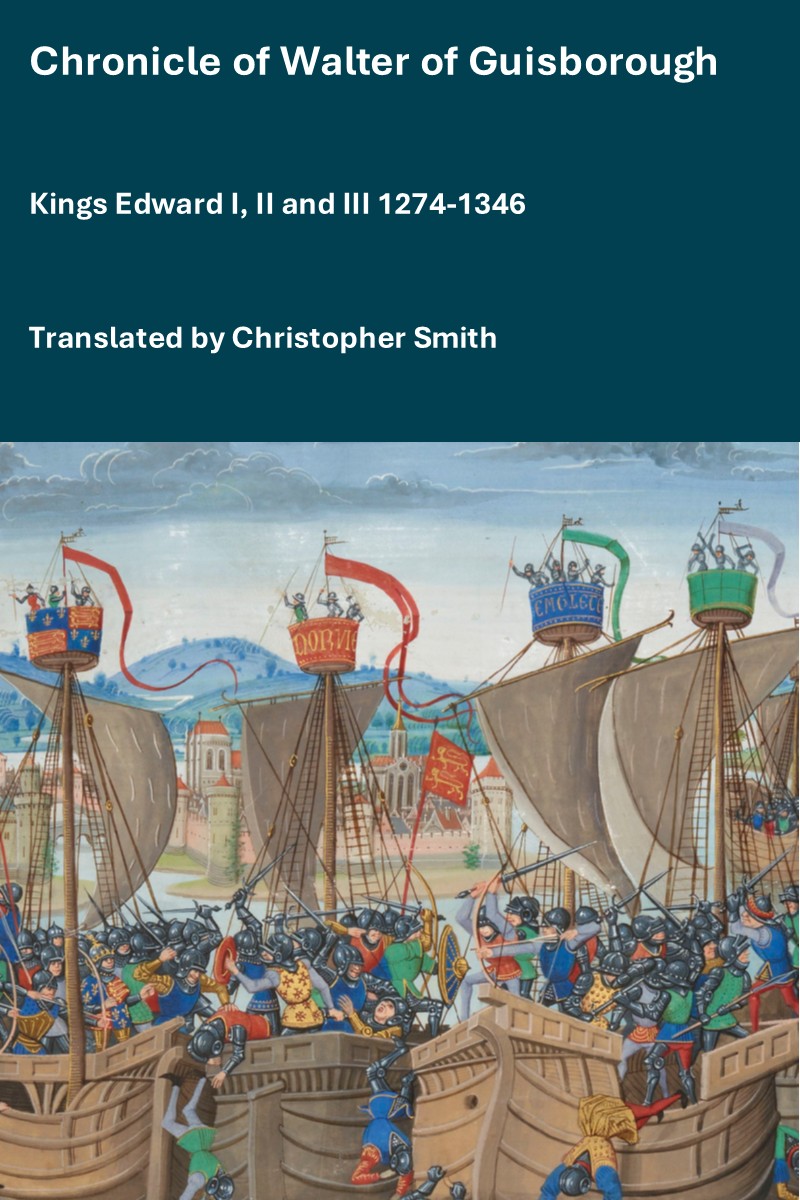 Chronicle of Walter of Guisborough. In the same year King Edward crossed over with a few companions to the king of France, and returned on the day of Pentecost1.
Note 1. King Edward accompanied by a large retinue of nobles, embarked at Dover on Friday, the 26th of May, 1329, to do homage to Philip of France for his duchy of Guienne. The ceremony was performed with great pomp at Amiens, in the choir of the cathedral, on the 6th of June, and the King returned to Dover on Whitsunday, June 11th [1329]. Rymer, Fœdera, 2.764 and Rymer, Fœdera, 2.765.
On 11th June 1349 William Montagu 1st Earl Salisbury [aged 48] died. His son William [aged 20] succeeded 2nd Earl Salisbury, 4th Baron Montagu. Joan "Fair Maid of Kent" Princess Wales [aged 20] by marriage Countess Salisbury.
On 11th June 1381 King Richard II of England [aged 14] held council with his mother Joan "Fair Maid of Kent" Princess Wales [aged 52], Thomas Beauchamp 12th Earl Warwick [aged 43], William Montagu 2nd Earl Salisbury [aged 52], Richard Fitzalan 9th Earl of Surrey 4th or 11th Earl of Arundel [aged 35], Archbishop Simon Sudbury [aged 65] and Robert Hales [aged 56] at the Tower of London [Map].


On 11th June 1403 John Valois IV Duke Brabant was born to Anthony Valois Duke Brabant [aged 18] and Jeanne Luxemburg Duchess Brabant. He a great x 3 grandson of King Edward I of England. He married (1) 1418 his first cousin Jacqueline Wittelsbach Duchess Brabant and Gloucester, daughter of William Wittelsbach IV Count Holland VI Count Hainaut V Count Zeeland and Margaret Valois Countess Holland.
On 11th June 1411 Frederick "Empty Pockets" Habsburg 4th Duke Austria [aged 29] and Anna of Brunswick-Wolfenbüttel Duchess Austria were married. She by marriage Duchess Austria. She the daughter of Frederick I Duke Brunswick-Wolfenbüttel. He the son of Leopold "The Just" Habsburg III Duke Austria and Viridis Visconti Duchess Austria [aged 59].
On 11th June 1429 Joan of Arc [aged 17] and Jean Poton Xaintrailles [aged 39] fought at Jargeau, Loiret during the Battle of Jargeau. Alexander Pole was killed. William "Jackanapes" de la Pole 1st Duke of Suffolk [aged 32] surrendered.


On 11th June 1430 Edmund Tudor 1st Earl Richmond was born to Owen Tudor [aged 30] and Catherine of Valois Queen Consort England [aged 28] at Much Hadham Palace, Hertfordshire (which belonged to the Bishops of London). There was speculation [Source Unknown?] that the biological father was Edmund Beaufort 1st or 2nd Duke of Somerset [aged 24] with whom Catherine of Valois Queen Consort England was rumoured to have had an affair. Interesting, perhaps, that he was named Edmund rather than Owen. Interesting that he took the Royal Arms of England differenced. Also interesting that his younger brother was named Jasper; a Persian name meaning 'Keeper of the Treasure' or 'bringer of treasure' that was unknown in England before his birth. He married 1st November 1455 his half fourth cousin once removed Margaret Beaufort Countess Richmond, daughter of John Beaufort 1st Duke of Somerset and Margaret Beauchamp Duchess Somerset, and had issue.
Chronicle of Walter of Guisborough
A canon regular of the Augustinian Guisborough Priory, Yorkshire, formerly known as The Chronicle of Walter of Hemingburgh, describes the period from 1066 to 1346. Before 1274 the Chronicle is based on other works. Thereafter, the Chronicle is original, and a remarkable source for the events of the time. This book provides a translation of the Chronicle from that date. The Latin source for our translation is the 1849 work edited by Hans Claude Hamilton. Hamilton, in his preface, says: 'In the present work we behold perhaps one of the finest samples of our early chronicles, both as regards the value of the events recorded, and the correctness with which they are detailed; Nor will the pleasing style of composition be lightly passed over by those capable of seeing reflected from it the tokens of a vigorous and cultivated mind, and a favourable specimen of the learning and taste of the age in which it was framed.'
Available at Amazon in eBook and Paperback format.
On 11th June 1446 Henry Beauchamp 1st Duke Warwick [aged 21] died at Hanley Castle, Worcestershire. Duke Warwick extinct. His daughter Anne [aged 2] succeeded 15th Countess Warwick, 7th Baroness Burghesh.
On 11th June 1456 Anne Neville Queen Consort England was born to Richard "Kingmaker" Neville Earl Warwick, 6th Earl Salisbury [aged 27] and Anne Beauchamp 16th Countess Warwick [aged 29]. She a great x 3 granddaughter of King Edward III of England. She married (1) 13th December 1470 her half third cousin Edward of Westminster Prince of Wales, son of King Henry VI of England and II of France and Margaret of Anjou Queen Consort England (2) 12th July 1472 her first cousin once removed King Richard III of England, son of Richard Plantagenet 3rd Duke of York and Cecily "Rose of Raby" Neville Duchess York, and had issue.
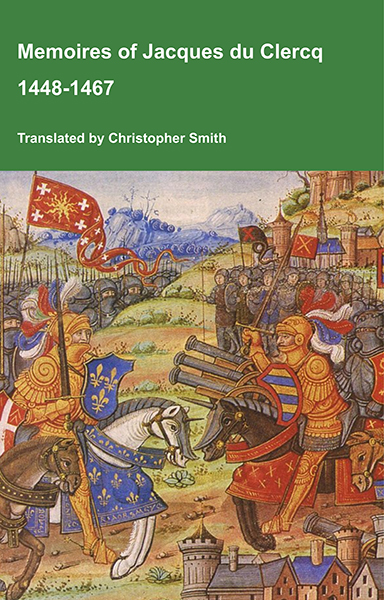 Memoires Jacques du Clercq. In that same year 1467, on the 11th day of June, by command of the Count of Charolais, Maillotin du Bacq, provost of the marshals, between five and six in the morning, entered the Cour-le-Comte in the town of Arras, and there took a prisoner named Guillaume Weré, a native of the city of Arras, and led him out of the town to the wood of Mofflaines, where he had him hanged and strangled from a tree. The reason was that this Guillaume Weré, about thirty years of age, married and having three or four children, had seized by force a woman of the town of Arras, who had gone into the fields to see the growing grain she had leased for the coming harvest, and dragged her into that field and violated her against her will. Guillaume was accompanied by another man named Jehan, also of Arras, who, after Guillaume had done as he wished with her, did the same, and against her will violated her and took her by force. After this, they took the money from her purse. This Guillaume was known to be of bad life, and had especially been reproved several times for theft and other offenses, and the same was true of his companion. They were both taken prisoner and claimed clerical privilege, and the said Jehan was handed over to his ordinary, but the people of Arras refused to release Guillaume and delayed matters until they had sent information about him to the Count of Charolais. After reviewing it, the count promptly sent his provost of the marshals to Arras, ordering him to make further inquiry into Guillaume, and if he found that the information sent to him was true, to have him hanged without delay, as he did. He found the charges to be true, and even more besides, and thus carried out the count's will by executing justice as described. And if he had been able to seize the other companion, whom he diligently sought but could not find, he would have done the same to him as to Guillaume.
Audit an lxvij, le xje jour de juing, par le commandement du comte de Charollois, Maillotin du Bacq, prevost des mareschaulx, entre cinq et six heures du matin, en la ville d'Arras, entra en la Cour-le-Comte, et illecq ung prisonnier nommé Guillaume Weré, natif de la cité d'Arras, emmena hors de la ville, au bois de Mofflaines, auquel lieu a ung arbre le feit pendre et estrangler; et la cause fust pour ce que icelluy Guillaume Weré, de l'age de trente ans ou environ, lui estant marrié et ayant trois ou quatre enfants, une femme de la ville d'Arras, laquelle alloit aulx champs veoir des bleds croissants qu'elle avoit prins a loyer a l'aoust prochain, prist par forche et la traisna audit bled, et la viola contre sa vollonté. Icelluy Guillaume estoit accompagnié d'ung campagnon nommé Jehan, de la ville d'Arras, lequel après que ledit Guillaume euist fait sa vollonté d'elle, en feit autant que ledit Guillaume, et contre son gré et vollonté la viola et prist sa compagnie; et après qu'ils eurent ce fait, tollit a ladite femme l'argent de sa bourse. Icelluy Guillaume estoit renommé d'estre de malle vie, et par especial avoit esté plusieurs fois reprins de larchin et d'aultres choses, et pareillement estoit son compagnon; ils feurent touts deux prins prisonniers et requis de leur courronne comme clercqs, et fust ledit Jehan rendu a son ordinaire; mais ceulx de la ville d'Arras ne vollurent rendre ledit Guillaume, mais differerent tant qu'ils eurent envoyé devers le comte de Charollois son information: laquelle veue, le comte de Charollois prestement envoya son prevost des mareschaux a Arras, qu'il feit aultre information d'icelluy Guillaume; et s'il trouvoit que l'information qu'on lui avoit envoyée fust vraye, que prestement le feit pendre, comme il feit; et trouva ladite information vraye et encore plus, par quoy il accomplist la vollonté du comte en faisant justice comme dit est, et s'il euist peu avoir l'aultre son compagnon, duquel il feit bonne diligence, mais il ne le peult ravoir, il en euist fait pareillement que dudit Guillaume.
On 11th June 1467 the fighting on horseback took place witnessed by King Edward IV of England [aged 25]. John "Butcher of England" Tiptoft 1st Earl of Worcester [aged 40] was Master of the Ceremonies accompanied by John Howard 1st Duke of Norfolk [aged 42]. The day ended with the Bastard's [aged 46] horse having being accidentally fatally injured by Lord Scales' [aged 27] saddle.
A Brief Latin Chronicle. In the year of our Lord 1467, during the week of Pentecost, the Bastard of Burgundy came to England to fight a single combat with Lord Anthony, Lord Scales. Barriers and pavilions having been set up in Smithfield, London, on the feast of Saint Barnabas (11th June 1467), they entered the designated place and engaged each other almost playfully, but quickly broke off. And certain others who fought afterward there also departed unharmed.
Anno Domini 1467, in ebdomada Pentecostes venit in Angliam bastardus Burgundie dimicaturus certamine singulari cum domino Antonio, domino de Scales; factisque in Smythfeld, London, barris et tentoriis, &c., in festo Sancti Barnabe, ingressi locum dictum quasi ludentes congressi cito cessaverunt. Et alii quidam post eos inibi congressi immunes a plaga recesserunt.
On 11th June 1469 an amnesty was declared excepting Humphrey Neville of Brancepeth [aged 30].
On 11th June 1488 King James III of Scotland [aged 36] was killed in action or attempting to escape, at the Battle of Sauchieburn. His son James [aged 15] succeeded IV King Scotland.
Alexander Stewart 3rd of Garlies [aged 45] fought.
Alexander Cunningham 1st Earl Glencairn [aged 62] was killed. His son Robert [aged 37] succeeded 2nd Earl Glencairn.
On 11th June 1509, one month after the death of his father, Henry VIII [aged 17] and Catherine of Aragon [aged 23] were married at the Church of the Observant Friars, Greenwich [Map]. She had, eight years before, married his older brother Prince Arthur Tudor - see Marriage of Arthur Tudor and Catherine of Aragon. She the daughter of Ferdinand II King Aragon [aged 57] and Isabella Queen Castile. He the son of King Henry VII of England and Ireland and Elizabeth York Queen Consort England. They were half third cousin once removed. She a great x 3 granddaughter of King Edward III of England.


Letters and Papers Foreign and Domestic Henry VIII 1509. 11th June 1509 and 23 Jun 1509. Tib. E. VIII. f. 100b. B.M. 81. Preparations For The Coronation.
A "device for the manner and order of the Coronation" of Henry VIII, "rightful and undoubted inheritor of the crowns of England and of France," by the whole consent of the realm chosen and required to be King, and also of the Princess Catharine daughter of Spain and Aragonne, his wife, Queen of England and of France, to be solemnised at Westminster, on Sunday, 24 June, 1509.
The King has proclaimed that all who claim to do services on Coronation day shall be in the White Hall at Westminster Palace, 20 June next, and has authorised the Earl of Surrey [aged 66], Treasurer of England, the Earl of Oxford [aged 9], Sir John Fyneux, Chief Judge, Sir Thomas Englefeld, and others to determine claims. He has ordered 26 honorable persons to repair to the Tower of London on 22 June, to serve him at dinner, where those who are to be made knights shall bear dishes "in token that that they shall never bear none after that day"; and on 23 June, at the Tower, they are to be made Knights of the Bath; "whose names follow in order as they were made," viz., Richard (sic) Radclyff Lord Fitzwater, the Lord Scroop of Bolton, the Lord Fitzhugh, the Lord Mountjoye, the Lord Dawbeney, the Lord Brooke, Sir Henry Clyfford, Sir Maurice Berkeley, Sir Thomas Knyvet, Sir Andrew Wyndesore, Sir Thomas Parr, Sir Thomas Boleyne, Sir Richard Wentworth, Sir Henry Owtrede, Sir Francis Cheyny, Sir Henry Wyotte, Sir George Hastynges, Sir Thomas Metham, Sir Thomas Bedyngfeld, Sir John Shelton [aged 32], Sir Giles Alyngton, Sir John Trevanyon, Sir William Crowmer, Sir John Heydon, Sir Godarde Oxenbrige and Sir Henry Sacheverell.
Details follow at great length of the ceremonies to be performed, the decorations, dresses, &c., for each of the two days, the eve and day of the Coronation.
Letters and Papers Foreign and Domestic Henry VIII 1509. 11th June 1509. 43. The Coronation. Commission to Thomas Earl of Surrey [aged 66], High Treasurer, George Earl of Shrewsbury [aged 41], Steward of the Household, Sir John Fyneux [aged 68], Chief Justice of the King's Bench, and Sir Th. Inglefield, to hear, in the White Hall within Westminster Palace, petitions of the King's tenants and others claiming to perform special services at the approaching coronation. Del. Westm., 11 June, 1 Henry VIII. S.B. (countersigned: Ri. Wynton, C. Somerset, Thomas Lovell.) [164.]
Letters and Papers Foreign and Domestic Henry VIII 1509. 11th June 1509. 41. Catharine of Aragon. Acknowledgment by Henry VIII [aged 17]. of receipt from Gutierre Gomez de Fuen Salida, comendator of La Membrilla, ambassador of Ferdinand King of Aragon, &c., of 50,000 crowns of gold, in part payment of 100,000 crowns for dowry of Catharine Queen of England [aged 23]. S.B. Undated (now filed with 11 June). [162.]
On 11th June 1510 John Melton 9th Baron Lucy [aged 55] died in Aston West Riding.

On 11th June 1527 Anna Sophia Hohenzollern was born to Albert "The Elder" Hohenzollern I Duke Prussia [aged 37] and Dorothea Oldenburg [aged 22]. Coefficient of inbreeding 2.82%. She married 24th February 1555 her second cousin Duke John Albert I of Mecklenburg-Schwerin, son of Albrecht VII Duke Mecklenburg and Anna Hohenzollern Duchess Mecklenburg, and had issue.
Letters and Papers Foreign and Domestic Henry VIII 1528. 11th June 1528. R. O. 4358. Brian Tuke to Thomas Derby [aged 19].
Perceived by his letters that my Lord's pleasure is that Lady Margaret's secretaries should be with him on Friday morning. Tuke will be there, but is forbidden to ride, and will therefore go by water. Is to assure Wolsey [aged 45] that Stephens' letters did not come in the packet, as the bishop of Bath stated; and therefore Tuke supposed they were either in Mr. Peter's (Vannes') packet, or the same as the letters in Latin to Wolsey. Doubts not that the Cardinal will find they were not sent in the packet Tuke had. Missed them as soon as he read the bishop of Bath's letters, expecting himself to have heard from Mr. Stephens. This is all he can say. Thinks they have been left out of the packet by inadvertence, or else that my Lord of Bath called Mr. Gregory's Mr. Stephens' letters. The bishop of Bath's packet came whole in a cover from the deputy of Calais, who said they had "flyen over the walls to him at 10 of the clock at night, and should fly over again to the post, to send them over incontinently; and with that packet was a truss in canvas, directed to my Lord's grace, which was not cast over the walls." The letters of sundry dates were put by Twichet into one packet. Sends various letters, and mentions others that came; some directed to the ambassador of Florence, others for Anthony Vivaldi, one to Nich. Carewe. Begs he may come on Friday, as, but for the King and Wolsey's commandment, he would not stir from his chamber for £100, "till a thing that is amiss in my body be better amended, for stirring is the most dangerous thing I can do, and besides potions and other medicines I am anointed morning and evening, and have other things administered to me not meet to be used in Court." London, Corpus Christ evening, late.


Letters and Papers Foreign and Domestic Henry VIII 1528. 11th June 1528. R. O. St. P. I. 289. 4356. Thomas Hennege to Wolsey [aged 55].
This day, as the King [aged 36] came "towards evensong," the marquis of Exeter [aged 32] brought two great bucks from Burllyng [Map], the best of which the King sends to your Grace. This day the King has received his Maker at the Friars', when my Lord of Lincoln [aged 55] administered. On Tuesday the King goes to Waltham [Map]. Greenwich [Map], Corpus Christi Day. Signed.
The History of William Marshal was commissioned by his son shortly after William’s death in 1219 to celebrate the Marshal’s remarkable life; it is an authentic, contemporary voice. The manuscript was discovered in 1861 by French historian Paul Meyer. Meyer published the manuscript in its original Anglo-French in 1891 in two books. This book is a line by line translation of the first of Meyer’s books; lines 1-10152. Book 1 of the History begins in 1139 and ends in 1194. It describes the events of the Anarchy, the role of William’s father John, John’s marriages, William’s childhood, his role as a hostage at the siege of Newbury, his injury and imprisonment in Poitou where he met Eleanor of Aquitaine and his life as a knight errant. It continues with the accusation against him of an improper relationship with Margaret, wife of Henry the Young King, his exile, and return, the death of Henry the Young King, the rebellion of Richard, the future King Richard I, war with France, the death of King Henry II, and the capture of King Richard, and the rebellion of John, the future King John. It ends with the release of King Richard and the death of John Marshal.
Available at Amazon in eBook and Paperback format.
Letters and Papers Foreign and Domestic Henry VIII 1528. 11th June 1528. R. O. Wood's Lett., vol. II. 39. 4357. Lady Elizabeth Tailbois [aged 57] to Wolsey [aged 55].
Has received his letters, dated Durham Place, 15 May, desiring her to deliver to Sir Gilbert Tailbois [aged 30], her son, lands to the yearly value of £100, the residue of those worth £200, appointed by Act of Parliament to him and his wife [aged 30] after her husband's decease, an annuity of £40, and the money received from the lands from Mayday last. Will give him the lands, but begs to be excused from giving the money for the following reasons:-1. Since her husband's [aged 61] visitation, when he was committed to Wolsey by the King, his rents have been employed for household expences and the marriages of his children, and not in wasteful expences. 2. There is now 150 marks owing of the marriage money of one of their children, for which her nearest friends are bound. 3. Her other son [aged 26], brother to Sir Gilbert, has no assignment for his living, and must be provided for. 4. William Bongham, an old servant of her husband's, who was accustomed to provide wheat and grain for the household, has gone away with money enough to provide for the whole year, and she is obliged to make fresh provision with the rents of the lordships for which her son Sir Gilbert asks, and of other lands also. 6. There are 10 score wild beasts in the lordship of Kyme, from which they used to provide beef for the household, but from which they can now get no profit. Has had little comfort since her husband's last visitation, "and for the pleasure of God I have yielded me thereunto," and now my husband is aged it would be hard to live in penury, and be unable to discharge our friends of the sums in which they are bound for us. If my son obtain his demands, we shall be obliged to break up house and "sparpull" our children and servants. He has now in his hands lands worth £342 17s. 11¾d.,-more than she and her husband have. Will do all she can for him when her children are provided for and her debts paid. Goltaght, 11 June. Signed.
Letters and Papers Foreign and Domestic Henry VIII 1528. 11th June 1528. R. O. St. P. VII. 77. 4355. Gardiner [aged 45] to Henry VIII [aged 36].
Has at last conduced to the setting forward of Campeggio [aged 53], as will appear by the Cardinal's letters sent to Fox. Thinks the King will be satisfied with their services. It is a great heaviness to them to be accused of want of diligence and sincerity. After many altercations and promises made to the Pope, he has consented at last to send the commission by Campeggio. We urged the Pope to express the matter in special terms, but could not prevail with him in consequence of the difficulty. He said you would understand his meaning by the words, "inventuri sumus aliquam formam." I may be deceived, but I think the Pope means well. If I thought otherwise I would certainly tell the truth, for your Majesty is templum fidei et veritatis unicum in orbe relictum. Your Majesty will now understand how much the words spoken by you to Tuke do prick me. Apologises for his rude writing. Viterbo [Map], 11 June.
Letters and Papers Foreign and Domestic Henry VIII 1528. 11th June 1528. Vit. B. XII. 4. B. M. Burnet, I. 103. 4360. Anne Boleyn [aged 27] to Wolsey [aged 55].
My Lord, in my most humble wise I desire you to pardon me that I am so bold to trouble you with my simple and rude writing, proceeding from one who is much desirous to know that your Grace does well, as I perceive by this bearer. The great pains you take for me, both day and night, are never likely to be recompensed, "but alonely in loving you, next unto the King's grace, above all creatures living," as my deeds shall manifest. I long to hear from you news of the Legate, and hope they will be very good.
Added by the King:-The writer of this would not cease till she had called me likewise to set to my hand. Both of us desire to see you, and are glad to hear you have escaped the plague so well, trusting the fury of it is abated, especially with those that keep good diet, as I trust you do. The not hearing of the Legate's arrival in France causeth us somewhat to muse; but we trust by your diligence shortly to be eased of that trouble.


Letters and Papers Foreign and Domestic Henry VIII 1534. 11th June 1534. R. O. 823. Sir Edward Ryngeley to Lord Lisle [aged 70].
The King and Queen are in good health. I came to the Court on Tuesday last about 3 o'clock. I was not there half an hour before his Grace sent for me into a garden which he has just made. He asked me heartily how you did, and whether the town was free from sickness and clean kept, of which I assured him. It would be well for you to speak to master Mayor for the mending of the two gutters from the market to Our Lady Church. If he lack paviours I can send them from London. The King is well conttented that his works go so well forward. I told him in the Treasurer's presence how much more is done in thickness than appears in the book, both in the two towers and the walls. The King is well contented with the pains you have taken about them and the sandhills, and is pleased with the conduct of his retinue, as I think they will see when he comes thither. I advise you to let the drags and ploughs go still upon the sandhills till you can shoot level over them from the mount at Becham Tower. I have not asked the King for wood or anything else, because the letters you promised to send have not come. I wish they were, for I trust to be shortly at Calais. As to my own business, the market was done before I came. We have a new lord Warden of "the Porche," Lord Rochford [aged 31]. Sir John Dudley is master of the armery, Sir Antony Browne standard-bearer, and master Harper has the "awnage," that is the sealing of the cloth in Kent. Today the King comes to York Place to supper and dines there tomorrow, and to Waltham to bed, and on Saturday to Hunsdon [Map], where he will remain all next week. He will not be at Hampton Court till Saturday week. I have given all your recommendations to your friends except to master Kingston and master Norrys. The former is at Wanstead, and the latter came to the Court late on Tuesday night. A great sum of money has been stolen from him, so that he is not pleasantly disposed to be spoken with. I have no other news, but I hope to know more before I come out of Essex. Recommendations to the Mayor, lord Edmund, master Wynkefeld, Mr. Porter, Mr. Treasurer [aged 44], Mr. Undermarshal and Mr. Ruckwode. Hampton Court, 11 June. Signed.
I pray you be contented with my meaning, for my inditing is but reasonable.
Pp. 2. Add.: Deputy of Calais. Endd.
Note 1. His patent was not passed till the 23 June. See Grants in June, No. 16.
Wriothesley's Chronicle [1508-1562]. 11th June 1535. This yeare, 11 June, were arreigned in the Kinges Benche at Westminster 3 munckes of the Charterhowsse of London, and there condempned of highe treason against the Kinge,b and judged to be drawne, hanged, bowelled, beheaded, and quartered; one of them was called Francis Nitigate,c another called Mr. Exmew,d prompter of the same place, and the third was called Mr. Middlemore, vicar of the same placee.
Note b. The treason against the King was for denying that Henry could be, in spiritual matters, the head of the Church.
Note c. Sebastian Nidigate. — Stow.
Note d. Thomas Exmew or de Exmouth.
Note e. Humphry Middlemore, Vicar of Exmonth.
Letters and Papers. 11th June 1536. Add. MS. 28,588 f. 289. B. M. 1122. Dr. Ortiz to the Empress.
On the first day of Whitsuntide the convocation of the Council at Mantua was promulgated.
Chapuys writes that "La Ana [deceased]" and her five lovers, one of them being her brother, were imprisoned in the Tower on May 2. They were beheaded on May 17, and she on the following Friday. The King has ordered Parliament to be summoned after Whitsuntide. It is hoped that many good things will be done. The Princess has been suffering in her head and molar teeth, but it is not of much consequence.
Letters of Thomas Cranmer. 11th June 1540. Archbishop Thomas Cranmer [aged 50] writes to King Henry VIII on behalf of Thomas Cromwell 1st Earl Essex [aged 55] who had recently been arrested. The letter is not extant but was printed originally in Edward Herbert, Baron of Cherbury's The Life and Raigne of King Henry VIII in 1649.
"I heard yesterday in your Grace's Council, that he (Crumwell) is a traitor, yet who cannot be sorrowful and amazed that he should be a traitor against your Majesty, he that was so advanced by your Majesty; he whose surety was only by your Majesty; he who loved your Majesty, as I ever thought, no less than God; he who studied always to set forwards whatsoever was your Majesty's will and pleasure; he that cared for no man's displeasure to serve your Majesty; he that was such a servant in my judgment, in wisdom, diligence, faithfulness, and experience, as no prince in this realm ever had; he that was so vigilant to preserve your Majesty from all treasons, that few could be so secretly conceived, but he detected the same in the beginning? If the noble princes of memory, King John, Henry the Second, and Richard II had had such a counsellor about them, I suppose that they should never have been so traitorously abandoned, and overthrown as those good princes were: I loved him as my friend, for so I took him to be; but I chiefly loved him for the love which I thought I saw him bear ever towards your Grace, singularly above all other. But now, if he be a traitor, I am sorry that ever I loved him or trusted him, and I am very glad that his treason is discovered in time; but yet again I am very sorrowful; for who shall your Grace trust hereafter, if you might not trust him? Alas! I bewail and lament your Grace's chance herein, I wot not whom your Grace may trust. But I pray God continually night and day, to send such a counsellor in his place whom your Grace may trust, and who for all his qualities can and will serve your Grace like to him, and that will have so much solicitude and care to preserve your Grace from all dangers as I ever thought he had…


Henry Machyn's Diary. 11th June 1552. The xj day of Juin cam rydyng to London my lade Mare [aged 36] grase through London unto Saynt Johns with a goodly compeny of gentyll men and gentyll women.


Wriothesley's Chronicle [1508-1562]. 11th June 1554. The xith of June Lord John Grey [aged 30]b, one of the bretheren Duke of Suffolke late putt to death, was arreigned at Westminster in the Kings Benche of treason, and there condemned to dye.
Note b. Lord Thomas Grey. See Chronicle of Qeen Jane and Queen Mary, p. 75.
Henry Machyn's Diary. 11th June 1555. The xj day of Juin be-gane they to sett up the frame for the hersse at Powlles for the quen of Spayn [Note. paternal grandmother of Philip "The Prudent" II King Spain [aged 28]], the wyche was the goodlest that ever was sene in England; the bare frame cost xv l, the carpynter('s) dute.


On 11th June 1557 John III King Portugal [aged 55] died. His grandson Sebastian [aged 3] succeeded King Portugal. Sebastian's paternal grandmother Catherine of Austria Queen Consort Portugal [aged 50] acted as Regent during his minority being replaced by Henrique Aviz Cardinal King Portugal [aged 45] when she resigned in 1562.
Henry Machyn's Diary. 11th June 1559. The sam nyght abowtt viij of the cloke at nyght the Quen('s) [aged 25] grace toke her barge at Whyt hall, and mony mo barges, and rod a-longe by the banke-syd by my lord of Wynchaster('s) place, and so to Peper alley, and so crost over to London syd with drumes and trumpetes playhyng ard be-syd, and so to Whyt hall agayne to her palles.


Henry Machyn's Diary. 11th June 1559. The xj day of June dyd pryche at Powlles [Map] master [Sandys] [aged 40], and ther was my lorde mayre [aged 50] and the althermen, and my lord of Bedford [aged 32], and with dyvers odur nobull men; and postulles [Apostles] masse mad an end that day, and masse a' Powlles was non that day, and the new dene toke possessyon that was afore, by my lord of Bedford, and thys was on sant Barnabe day; and the sam nyght thay had no evyng-song at Powlles.
On 11th June 1560 Mary of Guise Queen Consort Scotland [aged 44] died at Edinburgh Castle [Map].
Annals of the six Kings of England by Nicholas Trivet
Translation of the Annals of the Six Kings of England by that traces the rise and rule of the Angevin aka Plantagenet dynasty from the mid-12th to early 14th century. Written by the Dominican scholar Nicholas Trivet, the work offers a vivid account of English history from the reign of King Stephen through to the death of King Edward I, blending political narrative with moral reflection. Covering the reigns of six monarchs—from Stephen to Edward I—the chronicle explores royal authority, rebellion, war, and the shifting balance between crown, church, and nobility. Trivet provides detailed insight into defining moments such as baronial conflicts, Anglo-French rivalry, and the consolidation of royal power under Edward I, whose reign he describes with particular immediacy. The Annals combines careful year-by-year reporting with thoughtful interpretation, presenting history not merely as a sequence of events but as a moral and political lesson. Ideal for readers interested in medieval history, kingship, and the origins of the English state, this chronicle remains a valuable and accessible window into the turbulent world of the Plantagenet kings.
Available at Amazon in eBook and Paperback format.
On 7th August 1616 William Savage [aged 62] died. He was buried at St Mary the Virgin Church, Elmley [Map].
On 31st January 1631 Giles Savage [aged 46] died. He was buried at St Mary the Virgin Church, Elmley [Map].
On 11th June 1674 Katherine Dalston [aged 84] died (she the wife of Giles Savage) at Elmley Castle, Worcestershire. She was buried at St Mary the Virgin Church, Elmley [Map].
Alabaster table tomb with father, son and daughter-in-law. She holding a Chrisom Child probably representing stillborn, or died soon after birth. At their feet two lions and what is described as a stag with an arrow through its neck.
William Savage: Around 1554 he was born to Francis Savage.
Giles Savage: Around 1585 he was born to William Savage. In or before 1623 Giles Savage and Katherine Dalston were married.
Katherine Dalston: In 1590 she was born to Richard Dalston.


On 11th June 1634 Walter Scott 1st Earl Buccleuch was buried at Hawick.
Stemmata Shirleiana. The will of Sir Robert Shirley, proved at London, June 11, 1657, is as follows: "In the name of God, Amen, the nine and twentieth day of November, 1654, I, Sir Robert Shirley, of Staunton Haralt, in the county of Leicester, Baronett, humbly beseeching Almighty God, for the meritts of my Saviour Jesus Christ, to receive my soule into everlasting blisse, doe make this my last will and testament touching my temporall estate as followeth. I give and devise unto my deere sister, Mrs Leta Burke, wife of William Burke, esquire, to continew payable unto her untill shee or her husband come to the quiet possession and enjoyment of their estate in Ireland, the annual or yearly rent or somme of two hundred pounds.
Item, I give and devise to Mrs Catherine Sheldon, for her life, the annuall or yearly rent or summe of one hundred pounds; and to my servant Rowland Thomas for his life, the annuall or yearly summe of twentie pounds. And to my servant Nicholas Cocker for his life the annual or yearly rent or somme of tenne pounds: all wch sayd severall yearly rents my will is shall be paid half yearly, & c.
Item, I give to my sayd deer sister Mrs Leta Burke one ring of the value of one hundred pounds, wch I desire her to weare for my sake.
Item, I give to my brother in lawe Willm Bourke the best horse in my stable at the time of my decease, and to my loving friend Mr. John Morton the next best horse wch shall be in my stable at my decease, after my sayd brotherin lawe hath made his choyce.
Item, I give to my deere friend Coll. Vere Cromwell [aged 31], the somme of two hundred pounds to be disposed of according to his discretion, and also blacks for mourning for himselfe and one man. Also I do give unto every of those gentlemen whose names I have made knowen to my sayd deere freind Colonell Cromwell blacks for mourning for themselves and one man a peece.
Item, I give to my couzin Leicester Burdett the somme of one hundred pounds to be disposed of as hee shall thinke fit.
Item, I give the sume of one thousand pounds to be disposed of unto such distressed persons as have lost their estates in the service of the late King Charles, in manner as my executors hereafter named shall thinke fitt. And in case the church that I am now building at Staunton Haralt, aforesaid, shall not be finished and perfected before my decease, then I doe give and bequeath so much money as my executors shall thinke convenient to finish and perfect the same, according to my intention. I do give to all the rest of my servants not herein before named one whole yeares wages over and above what shall be due unto them at the tyme of my decease. And I do give and it is my will that all my kindred wthin three descents, either by father or mother, on mine owne or wife's side, and all my servants, shall have blacks for mourning, according to their severall rankes and qualities, and at the discretion of my executors. And it is likewise my will that restitution be made for whatsoever rents or profitts I have received of any impropriations, tithes, or lands belonging, or wch did at any time belong to any churches, chappells, colleges, or any ecclesiasticall promotions whatsoever, ever sithence I had the possession of my estate. And I will and appoint that whatsoever the same shall amount unto, the same be given, distributed, and disposed amongst orthodoxall and distressed clergie men, at the discretion of my executors. All the rest and residue of my goods, chattells, and personall estate not herein before bequeathed, after my debts, legacies, and funerall expences discharged, I doe give, devise, and bequeath unto Dame Katharine my wife, Gilbert Sheldon, Doctor in Divinity, Jeffery Palmer, esq., and Anthonie Atkinson, gent. fiftie pounds a peece, whom I make and appoint executors of this my will, & c."
In witness whereof I have to each sheet of this my will conteyned in two sheets of paper subscribed my name, and have affixed my seale at armes, the day and yeare first above written.
In June 1660 King Charles II of England Scotland and Ireland [aged 30] rewarded those who supported his Restoration...
6th William Wray 1st Baronet [aged 35] and John Talbot of Lacock [aged 29] were knighted.
7th Geoffrey Palmer 1st Baronet [aged 62] was created 1st Baronet Palmer of Carlton in Northampton
7th Orlando Bridgeman 1st Baronet [aged 54] was created 1st Baronet Bridgeman of Great Lever in Lancashire.
7th John Langham 1st Baronet [aged 76] was created 1st Baronet Langham of Cottesbrooke in Northamptonshire.
11th Henry Wright 1st Baronet [aged 23] was created 1st Baronet Wright of Dagenham. Ann Crew Lady Wright by marriage Lady Wright of Dagenham.
13th Nicholas Gould 1st Baronet was created 1st Baronet Gould of the City of London.
14th Thomas Allen 1st Baronet [aged 27] was created 1st Baronet Allen of Totteridge in Middlesex.
18th Thomas Cullum 1st Baronet [aged 73] was created 1st Baronet Cullum of Hastede in Suffolk.
19th Thomas Darcy 1st Baronet [aged 28] was created 1st Baronet Darcy of St Osith's.
22nd Robert Cordell 1st Baronet was created 1st Baronet Cordell of Long Melford.
22nd John Robinson 1st Baronet [aged 45] was created 1st Baronet Robinson of London. Anne Whitmore Lady Robinson [aged 48] by marriage Lady Robinson of London.
25th William Bowyer 1st Baronet [aged 47] was created 1st Baronet Bowyer of Denham Court. Margaret Weld Lady Bowyer [aged 43] by marriage Lady Bowyer of Denham Court.
25th Thomas Stanley 1st Baronet [aged 63] was created 1st Baronet Stanley of Alderley in Cheshire.
26th Jacob Astley 1st Baronet [aged 21] was created 1st Baronet Astley of Hill Morton.
27th William Wray 1st Baronet was created 1st Baronet Wray of Ashby in Lincolnshire. Olympia Tufton Lady Ashby [aged 36] by marriage Lady Wray of Ashby in Lincolnshire.
28th Oliver St John 1st Baronet [aged 36] was created 1st Baronet St John of Woodford in Northamptonshire.
29th Ralph Delaval 1st Baronet [aged 37] was created 1st Baronet Delaval of Seaton in Northumberland. Anne Leslie Lady Delaval by marriage Lady Delaval of Seaton in Northumberland.
30th Andrew Henley 1st Baronet [aged 38] was created 1st Baronet Henley of Henley in Somerset.


Minutes of the Royal Society. 11th June 1662. 82. Royal Society Meeting Minutes.
Sir Robert Moray [aged 54] President.
Dr Petty's [aged 51] brother [aged 42] showed the Society a draft of the pleasure boat he is to make for the King [aged 32].
Lord Berkeley of Berkely [aged 13] presented the Society with a Bird of Paradise having two feet.
Dr Goddard brought in a moth with feathered wings.
Mr Evelyn [aged 41] presentd the Society with a book called 'The History of Chalcogrphij'.
Mr Ball to be asked to produce his 'Magnetick Instruments',
Mr Boyle1 presented the Society with a book of the 'Weight and Spring of Air'; and also with a glass tube filled with Minium, wherewith the experiment of filtering was made.
The Amanuensis to enquire about the depth of the water under the arches of London Bridge.
Mr Croone [aged 28] to write to Dr Power about the trial of heat and cold in deep caves.
The Amanuensis to bespeak the long glass tube for the Torricellian Experiment.
Note 1. Not clear which Mr Boyle this is since Richard Boyle was elected 20th May 1663 and Robert Boyle [aged 36] on 22nd April 1663.


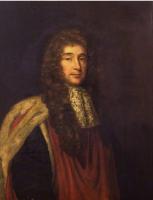

Samuel Pepys' Diary. 11th June 1668. Thence to the inne; and there not being able to hire coach-horses, and not willing to use our own, we got saddle-horses, very dear. Boy that went to look for them, 6d. So the three women behind W. Hewer [aged 26], Murford, and our guide, and I single to Stonage; over the Plain and some great hills, even to fright us. Come thither, and find them as prodigious as any tales I ever heard of them, and worth going this journey to see. God knows what their use was! they are hard to tell, but yet maybe told. Give the shepherd-woman, for leading our horses, 4d. So back by Wilton [Map], my Lord Pembroke's [aged 47] house, which we could not see, he being just coming to town; but the situation I do not like, nor the house promise much, it being in a low but rich valley. So back home; and there being 'light, we to the Church, and there find them at prayers again, so could not see the Quire; but I sent the women home, and I did go in, and saw very many fine tombs, and among the rest some very ancient, of the Montagus1.
Note 1. The Montacutes, from whom Lord Sandwich's [aged 42] family claimed descent: B.


Samuel Pepys' Diary. 11th June 1668. So to my lodging back, and took out my wife and people to shew them the town and Church; but they being at prayers, we could not be shown the Quire. A very good organ; and I looked in, and saw the Bishop, my friend Dr. Ward.
John Evelyn's Diary. 11th June 1683. The Lord Dartmouth [aged 10] was elected Master of the Trinity House; son to George Legge [aged 36], late Master of the Ordnance, and one of the grooms of the bedchamber; a great favorite of the Duke's [aged 49], an active and understanding gentleman in sea affairs.


A True Account of Thomas Armstrong. A True Account of the Apprehending of sr. Thomas Armstrong [aged 51] who was taken Leyden in Holland and brought over into England, and this day, conveyed to Newgate. Jun, the 11th, 1684.
sr. Thomas Armsirong, was one of those execrable Villains, who with others conspired against the life of his sacred Majesty, and by their private Plots & Designs the Eversion of the Government both in Church and state, When these their Treasonable Practices were brought to light, and Heaven wrought so wonderful a preservation of of his sacred Majesty and his Royal Highness: the Conspirators knowing their own guilt, and fearing that deserved punishment which attends such horrid Crimes fled from Justice, of which some have been apprehended, try'd, condemned, and executed; whilst others made their escapes into foreign parts as this person did; tho he was one of those in the Proclamation for whom was offered five hundred pound reward, yet not withstanding he got over undiscovered , whilst they who either conceal'd or assisted him. were as notorious Enemies and rank Traytors,as those who were more publick offenders.
He arrived safe at Holland, where he met with others of his own Principles and Designs, and having fled from Justice in Ergland thought to abscond there, but Mr. Chudley who is his Majesties Envoy at the Hague, being acquainted that several late Consspirators were come over to holland, and were lurking about leyden and other places, obtaind leave of the states to search those parts he had suspicion of, and so take into Custody all such offenders, who having been Rebels and Traytors to so good and gracious a Prince, could no ways deserve the least favour or protection from them. The Officers who were ordered to search, took sr. Thomas Armstrong, who was put on Board the Katharine Yatch, and this Morning guarded with several Files of Musqueteers; was brought from Greenwich, and put into Newgate, where he remains till further order. It is reported that they who apprehended sr. Thomas Armstrong, very narrowly missed on the Lord Gray, and Ferguson, who were gone from his Lodgings, but an hour before, and may in time be met with, and brought to answer for their Crimes according to law and justice.
John Evelyn's Diary. 11th June 1686. I went to see Middleton's [aged 36] receptacle of water at the New River, and the new Spa Wells neere.

Roger Whitley's Diary. 11th June 1690. Wednesday, a messenger came from Sir Thomas Delves [aged 37] to let us know his lady was not well, soe could not dine with us; but would call to morrow; Bidolph Offley & Roger dined with us; there came 2 men to speake with him about Boudlers money, stayd not, &c. after dinner came Kelsall; sayed Lord Warrington [aged 38] & Mainwaring would be here about 3; would eate a bitt of meate, &c. but he went away about 5; his Lordship staying late at Chester could not call; Mainwaring came past 8.
John Evelyn's Diary. 11th June 1693. I dined at Sir William Godolphin's [aged 53]; and, after evening prayer, visited the Duchess of Grafton [aged 25].


Henrici Quinti, Angliæ Regis, Gesta, is a first-hand account of the Agincourt Campaign, and subsequent events to his death in 1422. The author of the first part was a Chaplain in King Henry's retinue who was present from King Henry's departure at Southampton in 1415, at the siege of Harfleur, the battle of Agincourt, and the celebrations on King Henry's return to London. The second part, by another writer, relates the events that took place including the negotiations at Troye, Henry's marriage and his death in 1422.
Available at Amazon in eBook and Paperback format.
John Evelyn's Diary. 11th June 1696. Dined at Lord Pembroke's [aged 40], Lord Privy Seal, a very worthy gentleman. He showed me divers rare pictures of very many of the old and best masters, especially one of M. Angelo of a man gathering fruit to give to a woman, and a large book of the best drawings of the old masters. Sir John Fenwick [aged 51], one of the conspirators, was taken. Great subscriptions in Scotland to their East India Company. Want of current money to carry on the smallest concerns, even for daily provisions in the markets. Guineas lowered to twenty-two shillings, and great sums daily transported to Holland, where it yields more, with other treasure sent to pay the armies, and nothing considerable coined of the new and now only current stamp, cause such a scarcity that tumults are every day feared, nobody paying or receiving money; so imprudent was the late Parliament to condemn the old though clipped and corrupted, till they had provided supplies. To this add the fraud of the bankers and goldsmiths, who having gotten immense riches by extortion, keep up their treasure in expectation of enhancing its icon. Duncombe, not long since a mean goldsmith, having made a purchase of the late Duke of Buckingham's estate at nearly £90,000, and reputed to have nearly as much in cash. Banks and lotteries every day set up.


On 22nd February 1712 John Reade 3rd Baronet [aged 21] died of smallpox unmarried at Rome in exile having become a Jacobite. He was buried on 11th June 1712 in the Brocket Chapel at St Etheldreda's Church, Hatfield [Map]; see monument here [Map]. Baronet Reade of Brocket Hall in Hertfordshire extinct.
On 11th June 1726 Infanta Maria Teresa Rafaela of Spain was born to Philippe V King Spain [aged 42] and Elisabeth Farnese Queen Consort Spain [aged 33]. She married 23rd February 1745 her first cousin once removed Dauphin Louis Bourbon and had issue.


On 11th June 1727 King George I [aged 67] died. His son George [aged 43] succeeded II King Great Britain and Ireland. Caroline Hohenzollern Queen Consort England [aged 44] by marriage Queen Consort England.
On 11th June 1734 William Bentinck 2nd Duke Portland [aged 25] and Margaret Cavendish Harley 2nd Duchess Portland [aged 19] were married at St Peter aka Oxford Chapel Vere Street Marylebone [Map]. She by marriage Duchess Portland. She the daughter of Edward Harley 2nd Earl of Oxford and Earl Mortimer [aged 45] and Henrietta Cavendish Holles Countess of Oxford and Mortimer [aged 40]. He the son of Henry Bentinck 1st Duke Portland and Elizabeth Noel Duchess Portland [aged 46]. They were sixth cousins.
On 11th June 1776 John Constable was born to Golding Constable and Ann Constable nee Watts. He married October 1816 Maria Bicknell.

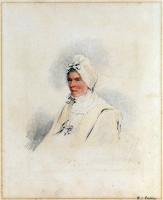
On 11th June 1802 Sussex Lennox was born to Charles Lennox 4th Duke Richmond [aged 37] and Charlotte Gordon Duchess Richmond [aged 33]. He a great x 3 grandson of King Charles II of England Scotland and Ireland.
On 11th June 1815 Julia Margaret Cameron nee Pattle was born to James Peter Pattle [aged 39] and Adeline Marie de l'Etang [aged 21] at Garden Reach, Calcutta. She married 1st February 1838 Charles Hay Cameron.


On 11th June 1820 Fitzroy George Charles Gordon-Lennox was born to Charles Gordon-Lennox 5th Duke Richmond [aged 28] and Caroline Paget Duchess Richmond [aged 24]. He a great x 4 grandson of King Charles II of England Scotland and Ireland.
Thomas Bateman 1845. On the 11th of June, 1845, a previously-removed barrow, upon Alsop Moor, was excavated. This step was caused by its deceptive appearance, the circular form being retained, owing to its having been raised upon a rocky knoll; consequently nothing of interest was discovered, but some pieces of human skull and the rats' bones, as usual, were found, which clearly proved the sepulchral intention of the mound.
Adam Murimuth's Continuation and Robert of Avesbury’s 'The Wonderful Deeds of King Edward III'
This volume brings together two of the most important contemporary chronicles for the reign of Edward III and the opening phases of the Hundred Years’ War. Written in Latin by English clerical observers, these texts provide a vivid and authoritative window into the political, diplomatic, and military history of fourteenth-century England and its continental ambitions. Adam Murimuth Continuatio's Chronicarum continues an earlier chronicle into the mid-fourteenth century, offering concise but valuable notices on royal policy, foreign relations, and ecclesiastical affairs. Its annalistic structure makes it especially useful for establishing chronology and tracing the development of events year by year. Complementing it, Robert of Avesbury’s De gestis mirabilibus regis Edwardi tertii is a rich documentary chronicle preserving letters, treaties, and official records alongside narrative passages. It is an indispensable source for understanding Edward III’s claim to the French crown, the conduct of war, and the mechanisms of medieval diplomacy. Together, these works offer scholars, students, and enthusiasts a reliable and unembellished account of a transformative period in English and European history. Essential for anyone interested in medieval chronicles, the Hundred Years’ War, or the reign of Edward III.
Available at Amazon in eBook and Paperback format.
Ten Years' Digging. On the evenings of the 11th and 12th of June we investigated a barrow [Probably Ecton Barrow 1 [Map]] on Ecton Hill, which was partially opened on the 18th of May, 1848. On the south side we found a deposit of burnt bones, which had been placed in a large urn, with a projecting border ornamented with diagonal lines, accompanied by two unburnt tines of the antler of the red deer. The urn was much broken when found. Towards the east side was a skeleton much broken and decayed, the head towards the outside; accompanied by a few burnt bones, fragments of earthenware, a few pieces of flint, and animal bones, including a boar's tusk. At the south-west side of the mound were more human bones, which had been disturbed by miners, who finding lead in the tumulus, had concluded it to be the site of an ancient bloomery or smelting-place, such being formerly established on hills for the sake of the draught; their locality is yet indicated by the word Bole, as Bole Hill, &c.
Ten Years' Digging. The large barrow at Castern [Map], near Wetton, first opened on the 14th of June, 1845, was again investigated on the evenings of the 5th, 6th, and 11th of June. On the former occasion, a trench was dug from the south-west side, towards the middle, and on the present a supplementary cutting was made parallel with each side of it. In the western one were no signs of any interment; some human bones, evidently removed from another situation, and some chippings of flint, alone being observed. In the other trench we found the disturbed skeletons of two persons, the skull of one exhibiting the frontal suture, and the usual fragments of flint, pottery, charcoal, and rats' bones. The advancing shades of evening now compelled us to relinquish our labour, and the want of success induced us to fill up the cutting; but on after consideration we determined to make another attempt in the same direction as where we left off, as that part of the mound was stony to the summit, and mingled with charcoal and detached human bones, whilst elsewhere the superstructure was of earth, resting on a foundation of stone. Hence the inference that a later interment had taken place, the stone dug up in making the grave being thrown in again above it. Accordingly, on the 11th June, we resumed our labours, and were soon rewarded by the discovery of a skeleton upon the floor of the barrow, accompanied by several instruments of flint, three of which lay under the head and shoulders. A more uncommon article, a bronze armilla, was found beneath the edge of a stone that lay upon the skeleton, and in contact with the pelvis, into which it was slightly forced by the pressure, which had likewise broken it into two pieces. It is made of a flat ribbon of bronze, half an inch broad, with over-lapping ends to preserve elasticity, ornamented outside with a neatly engraved lozengy pattern, and has a span of 2⅜ inches diameter. The body appeared to have been laid on its back, with the head to the west, but the bones were so imperfect as to render this not quite certain. Wherever we dug in the barrow there were broken human bones and numerous remains of rats.
On 11th June 1864 Adolphus Frederick Charles William Vane-Tempest [aged 38] died during a struggle with four of his keepers having been previosly been diagnosed with madness. Memorial at St Mary's Church, Long Newton [Map].
Adolphus Frederick Charles William Vane-Tempest: On 2nd July 1825 he was born to Charles William Vane 3rd Marquess Londonderry and Frances Vane Tempest Marchioness Londonderry. In December 1852 Adolphus Frederick Charles William Vane-Tempest was elected MP Durham but the election was overturned on petition the following year. On 23rd April 1860 Adolphus Frederick Charles William Vane-Tempest and Susan Charlotte Catherine Pelham-Clinton were married. She the daughter of Henry Pelham-Clinton 5th Duke Newcastle-under-Lyne and Susan Harriet Catherine Hamilton Duchess Newcastle under Lyne. He the son of Charles William Vane 3rd Marquess Londonderry and Frances Vane Tempest Marchioness Londonderry.


On 11th June 1874 James Henry Robert Innes-Kerr 7th Duke Roxburghe [aged 34] and Anne Emily Spencer-Churchill Duchess Roxburghe [aged 19] were married. She by marriage Duchess Roxburghe. She the daughter of John Winston Spencer-Churchill 7th Duke of Marlborough [aged 52] and Frances Anne Emily Vane Duchess of Marlborough [aged 52]. He the son of James Innes-Kerr 6th Duke Roxburghe [aged 57].
On 11th June 1877 Lieutenant-General William Francis Butler [aged 38] and Elizabeth Thompson Lady Butler [aged 30] were married.
On 11th June 1889 William Cavendish-Bentinck 6th Duke Portland [aged 31] and Winifred Anna Dallas-Yorke Duchess Portland [aged 25] were married. She by marriage Duchess Portland.


After 11th June 1892. Hasting's Chapel, St Helen's Church, Ashby-de-la-Zouch [Map]. Monument to Warner Hastings 15th Earl Huntingdon [aged 23] and Maud Margaret Wilson Countess Huntingdon [aged 24].
Warner Hastings 15th Earl Huntingdon: On 8th July 1868 he was born to Francis Power Plantagenet Hastings 14th Earl Huntingdon and Mary Anne Westenra Countess Huntingdon at St Stephen's Green, Dublin. On 20th May 1885 Francis Power Plantagenet Hastings 14th Earl Huntingdon died. His son Warner succeeded 15th Earl Huntingdon. On 11th June 1892 Warner Hastings 15th Earl Huntingdon and Maud Margaret Wilson Countess Huntingdon were married at St George's Church, Hanover Square. She by marriage Countess Huntingdon. He the son of Francis Power Plantagenet Hastings 14th Earl Huntingdon and Mary Anne Westenra Countess Huntingdon. On 5th April 1939 Warner Hastings 15th Earl Huntingdon died. He was buried at Hasting's Chapel, St Helen's Church, Ashby-de-la-Zouch [Map]. His son Francis succeeded 16th Earl Huntingdon. Cristina Casati Stampa di Soncino Countess Huntingdon by marriage Countess Huntingdon.
Maud Margaret Wilson Countess Huntingdon: In 1868 she was born to Samuel Wilson in Melbourne, Victoria, Australia. On 26th December 1952 she died.

On 11th June 1904 Henry Cyril "Toppy" Paget 5th Marquess Anglesey [aged 28] was declared bankrupt with debts of around £544,000 depsite his estates being were worth £110,000 each year. His wardrobe and personal jewels, sold when he became insolvent, disclosed a preposterous accumulation, the latter realising £88,000. He seems only to have existed for the purpose of giving a melancholy and unneeded illustration of the truth that a man with the finest prospects, may, by the wildest folly and extravagance, as Sir Thomas Browne says, "foully miscarry in the advantage of humanity, play away an uniterable life, and have lived in vain." V.G. Cracroft


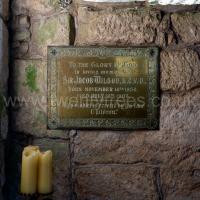
After 11th June 1905. St Peter's Church, Chillingham [Map]. Memorial to Jacob Wilson.
Jacob Wilson: On 16th November 1836 he was born at Crackenthorpe Hall. In 1866 he was appointed land agent to Charles Bennet 6th Earl Tankerville for his estates at Chillingham, Northumberland [Map]. In 1874 he and Margaret Hedley were married. On 11th July 1905 he died. He was buried at St Peter's Church, Chillingham [Map]. A memorial service was held at St George's Church, Hanover Square.
On 11th June 1913 John Leslie-Melville 12th Earl of Leven 11th Earl of Melville [aged 27] died in a hunting accident unmarried.

On 11th June 1917 Constantine I King Greece [aged 48] abdicated King Greece. Alexander I King Greece [aged 23] succeeded I King Greece. Aspasia Manos Queen Consort Greece by marriage Queen Consort Greece.
On 11th June 1996 Edward William Dawnay [aged 46] and Jane Meriel Grosvenor Duchess Roxburghe [aged 43] were married. She the daughter of Robert George Grosvenor 5th Duke Westminster and Viola Maud Lyttelton Duchess Westminster. They were second cousins.
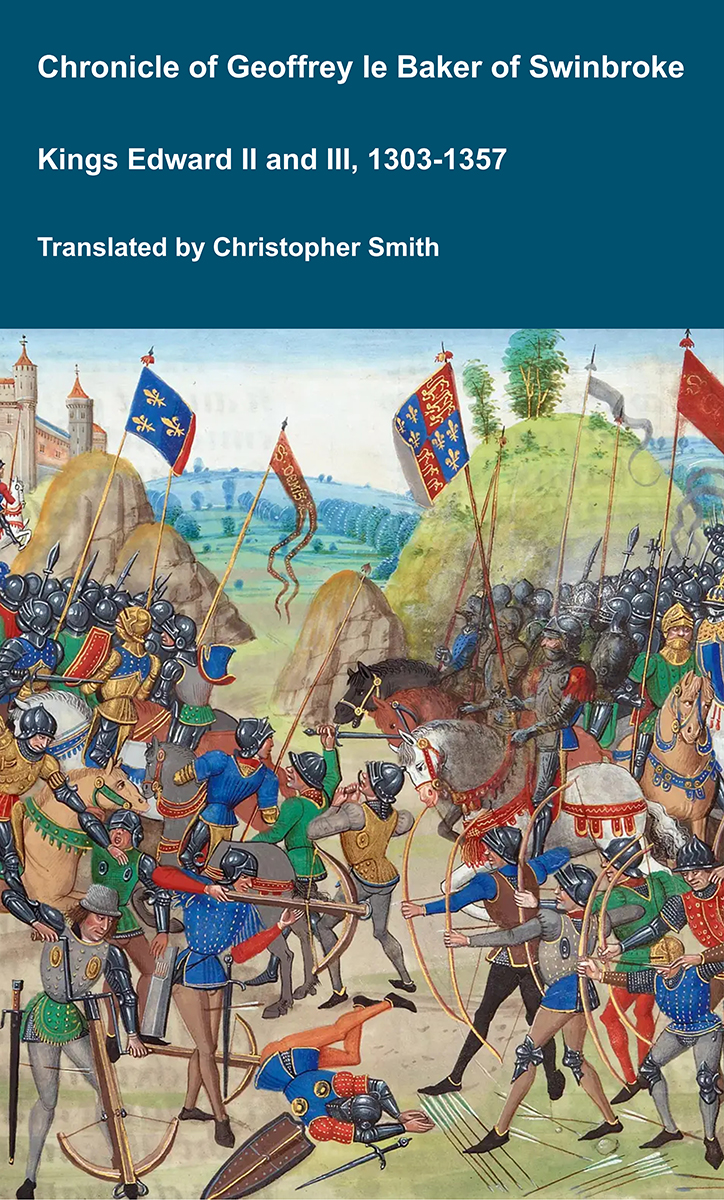
Chronicle of Geoffrey le Baker of Swinbroke
Baker was a secular clerk from Swinbroke, now Swinbrook, an Oxfordshire village two miles east of Burford. His Chronicle describes the events of the period 1303-1356: Gaveston, Bannockburn, Boroughbridge, the murder of King Edward II, the Scottish Wars, Sluys, Crécy, the Black Death, Winchelsea and Poitiers. To quote Herbert Bruce 'it possesses a vigorous and characteristic style, and its value for particular events between 1303 and 1356 has been recognised by its editor and by subsequent writers'. The book provides remarkable detail about the events it describes. Baker's text has been augmented with hundreds of notes, including extracts from other contemporary chronicles, such as the Annales Londonienses, Annales Paulini, Murimuth, Lanercost, Avesbury, Guisborough and Froissart to enrich the reader's understanding. The translation takes as its source the 'Chronicon Galfridi le Baker de Swynebroke' published in 1889, edited by Edward Maunde Thompson.
Available at Amazon in eBook and Paperback format.
On 11th June 1274 William Boteler 1st Baron Wem and Oversley was born to William Boteler [aged 29] and Angharad Mathrafal at Oversley, Warwickshire. He married (1) in or before 1289 Beatrice Unknown and had issue (2) in or before 1290 Ela Herdeburgh Baroness Wem and Oversley, daughter of Roger Herdeburgh and Ida Odingsells Baroness Clinton, and had issue.
On 11th June 1279 Robert Ufford 1st Baron Ufford was born.
On 11th June 1403 John Valois IV Duke Brabant was born to Anthony Valois Duke Brabant [aged 18] and Jeanne Luxemburg Duchess Brabant. He a great x 3 grandson of King Edward I of England. He married (1) 1418 his first cousin Jacqueline Wittelsbach Duchess Brabant and Gloucester, daughter of William Wittelsbach IV Count Holland VI Count Hainaut V Count Zeeland and Margaret Valois Countess Holland.
On 11th June 1426 Eleanor Moleyns Baroness Hungerford was born to William Moleyns [aged 20] at Stoke Poges, Buckinghamshire. She married (1) 1441 her third cousin Robert Hungerford 3rd Baron Hungerford 1st Baron Moleyns, son of Robert Hungerford 2nd Baron Hungerford and Margaret Botreaux 4th Baroness Botreaux Baroness Hungerford, and had issue (2) in or before 1476 Oliver Manningham.
On 11th June 1430 Edmund Tudor 1st Earl Richmond was born to Owen Tudor [aged 30] and Catherine of Valois Queen Consort England [aged 28] at Much Hadham Palace, Hertfordshire (which belonged to the Bishops of London). There was speculation [Source Unknown?] that the biological father was Edmund Beaufort 1st or 2nd Duke of Somerset [aged 24] with whom Catherine of Valois Queen Consort England was rumoured to have had an affair. Interesting, perhaps, that he was named Edmund rather than Owen. Interesting that he took the Royal Arms of England differenced. Also interesting that his younger brother was named Jasper; a Persian name meaning 'Keeper of the Treasure' or 'bringer of treasure' that was unknown in England before his birth. He married 1st November 1455 his half fourth cousin once removed Margaret Beaufort Countess Richmond, daughter of John Beaufort 1st Duke of Somerset and Margaret Beauchamp Duchess Somerset, and had issue.
On 11th June 1456 Anne Neville Queen Consort England was born to Richard "Kingmaker" Neville Earl Warwick, 6th Earl Salisbury [aged 27] and Anne Beauchamp 16th Countess Warwick [aged 29]. She a great x 3 granddaughter of King Edward III of England. She married (1) 13th December 1470 her half third cousin Edward of Westminster Prince of Wales, son of King Henry VI of England and II of France and Margaret of Anjou Queen Consort England (2) 12th July 1472 her first cousin once removed King Richard III of England, son of Richard Plantagenet 3rd Duke of York and Cecily "Rose of Raby" Neville Duchess York, and had issue.
On 11th June 1527 Anna Sophia Hohenzollern was born to Albert "The Elder" Hohenzollern I Duke Prussia [aged 37] and Dorothea Oldenburg [aged 22]. Coefficient of inbreeding 2.82%. She married 24th February 1555 her second cousin Duke John Albert I of Mecklenburg-Schwerin, son of Albrecht VII Duke Mecklenburg and Anna Hohenzollern Duchess Mecklenburg, and had issue.
On 11th June 1570 Mary Percy was born to Thomas Percy 7th Earl of Northumberland [aged 42] and Anne Somerset Countess Northumberland [aged 32].
On 11th June 1594 Thomas Cromwell 1st Earl Ardglass was born to Edward Cromwell 3rd Baron Cromwell Oakham [aged 34] and Francis Rugge Baroness Cromwell Oakham. He married before 12th September 1624 Elizabeth Meverell Countess Ardglass and had issue.
On 11th June 1645 Anthony Grey 11th Earl Kent was born to Henry Grey 10th Earl Kent [aged 50] and Amabel Benn Countess Kent [aged 37]. He married 2nd March 1662 Mary Lucas Countess Kent, daughter of John Lucas 1st Baron Lucas Shenfield and Mary Neville, and had issue.
On 24th May 1678 Elizabeth Herne Lady Blackwell was born to Joseph Herne of London and Elizabeth Frederick. She was baptised on 11th June 1678 at St Olave's Church, Old Jewry. She married before February 1698 Lambert Blackwell 1st Baronet and had issue.
On 11th June 1694 Thomas Willoughby was born to Thomas Willoughby 1st Baron Middleton [aged 22] and Elizabeth Rothwell Baroness Willoughby and Middleton. He married Elizabeth Southby and had issue.
On 11th June 1696 James Francis Edward Keith was born to William Keith 9th Earl Marischal [aged 32] and Mary Drummond Countess Marischal [aged 21].
On 11th June 1721 Thomas Howard 14th Earl Suffolk 7th Earl Berkshire was born to Henry Bowes Howard 4th Earl Berkshire 11th Earl Suffolk [aged 35] and Catherine Graham Countess Berkshire and Suffolk. Coefficient of inbreeding 6.26%.
Abbot John Whethamstede’s Chronicle of the Abbey of St Albans
Abbot John Whethamstede's Register aka Chronicle of his second term at the Abbey of St Albans, 1451-1461, is a remarkable text that describes his first-hand experience of the beginning of the Wars of the Roses including the First and Second Battles of St Albans, 1455 and 1461, respectively, their cause, and their consequences, not least on the Abbey itself. His text also includes Loveday, Blore Heath, Northampton, the Act of Accord, Wakefield, and Towton, and ends with the Coronation of King Edward IV. In addition to the events of the Wars of the Roses, Abbot John, or his scribes who wrote the Chronicle, include details in the life of the Abbey such as charters, letters, land exchanges, visits by legates, and disputes, which provide a rich insight into the day-to-day life of the Abbey, and the challenges faced by its Abbot.
Available at Amazon in eBook and Paperback format.
On 11th June 1726 Infanta Maria Teresa Rafaela of Spain was born to Philippe V King Spain [aged 42] and Elisabeth Farnese Queen Consort Spain [aged 33]. She married 23rd February 1745 her first cousin once removed Dauphin Louis Bourbon and had issue.
On 11th June 1734 George Wombwell 1st Baronet was born to Roger Wombwell of Glasgow. He married before 14th March 1769 Susannah Rawlinson and had issue.
On 11th June 1756 John Denis Browne 1st Marquess of Sligo was born.
On 11th June 1758 Seymour Finch was born to Heneage Finch 3rd Earl Aylesford [aged 42] and Charlotte Seymour Countess Aylesford [aged 27].
On 11th June 1762 Frances Lascelles was born to Edward Lascelles 1st Earl Harewood [aged 22] and Anne Chaloner Baroness Harewood [aged 19] at Northallerton. She married 4th October 1784 John Douglas, son of James Douglas 14th Earl Morton and Bridget Heathcote Countess Morton, and had issue.
On 11th June 1774 Mary Cassandra Twisleton was born to Major-General Thomas Twisleton 7th or 13th Baron Saye and Sele [aged 39] and Elizabeth Turner Baroness Saye and Sele. She married (1) 29th January 1790 Edward Jervis Ricketts aka Jervis 2nd Viscount St Vincent and had issue.
On 11th June 1776 George Grey 3rd Baron Walsingham was born to Thomas Grey 2nd Baron Walsingham.
On 11th June 1776 John Constable was born to Golding Constable and Ann Constable nee Watts. He married October 1816 Maria Bicknell.
On 11th June 1782 Maria à Court was born to William Pierce Ashe à Court 1st Baronet [aged 35] and Laetitia Wyndham Lady à Court. She married 1811 Philip Pleydell-Bouverie, son of Jacob Pleydell-Bouverie 2nd Earl Radnor and Anne Duncombe Countess Radnor, and had issue.
On 11th June 1794 John Cavendish Browne 3rd Baron Kilmaine was born to James Browne 2nd Baron Kilmaine [aged 29] and Anne Cavendish.
William of Worcester's Chronicle of England
William of Worcester, born around 1415, and died around 1482 was secretary to John Fastolf, the renowned soldier of the Hundred Years War, during which time he collected documents, letters, and wrote a record of events. Following their return to England in 1440 William was witness to major events. Twice in his chronicle he uses the first person: 1. when writing about the murder of Thomas, 7th Baron Scales, in 1460, he writes '… and I saw him lying naked in the cemetery near the porch of the church of St. Mary Overie in Southwark …' and 2. describing King Edward IV's entry into London in 1461 he writes '… proclaimed that all the people themselves were to recognize and acknowledge Edward as king. I was present and heard this, and immediately went down with them into the city'. William’s Chronicle is rich in detail. It is the source of much information about the Wars of the Roses, including the term 'Diabolical Marriage' to describe the marriage of Queen Elizabeth Woodville’s brother John’s marriage to Katherine, Dowager Duchess of Norfolk, he aged twenty, she sixty-five or more, and the story about a paper crown being placed in mockery on the severed head of Richard, 3rd Duke of York.
Available at Amazon in eBook and Paperback format.

On 11th June 1795 Lieutenant-Colonel Edward Stopford was born to James Stopford 3rd Earl of Courtown [aged 29] and Mary Scott Countess of Courtown [aged 26].
On 11th June 1797 Henry Lascelles 3rd Earl Harewood was born to Henry Lascelles 2nd Earl Harewood [aged 29] and Henrietta Sebright Countess Harewood. He married 5th July 1823 Louisa Thynne Countess Harewood, daughter of Thomas Thynne 2nd Marquess of Bath and Isabella Elizabeth Byng Marchioness Bath, and had issue.
On 11th June 1797 Francis Nathaniel Conyngham 2nd Marquess Conyngham was born to Henry Conyngham 1st Marquess Conyngham [aged 30] and Elizabeth Denison Marchioness Conyngham [aged 28]. He married 23rd April 1824 Jane Paget Marchioness Conyngham, daughter of Henry William Paget 1st Marquess Anglesey and Caroline Elizabeth Villiers Duchess Argyll, and had issue.


On 11th June 1799 Edward Chichester 4th Marquess Donegal was born to George Chichester 2nd Marquess Donegal [aged 29] at Great Cumberland Place. He married 21st September 1821 Amelia Ogrady Marchioness County Donegal and had issue.
On 11th June 1801 Henry Blackwood 2nd Baronet was born to Henry Blackwood 1st Baronet [aged 30].
On 11th June 1802 Sussex Lennox was born to Charles Lennox 4th Duke Richmond [aged 37] and Charlotte Gordon Duchess Richmond [aged 33]. He a great x 3 grandson of King Charles II of England Scotland and Ireland.
On 11th June 1815 Julia Margaret Cameron nee Pattle was born to James Peter Pattle [aged 39] and Adeline Marie de l'Etang [aged 21] at Garden Reach, Calcutta. She married 1st February 1838 Charles Hay Cameron.
On 11th June 1817 John Frederick Vaughan Campbell 2nd Earl Cawdor was born to John Campbell 1st Earl Cawdor [aged 26] and Elizabeth Thynne Countess Cawdor [aged 22]. He married 28th June 1842 his fifth cousin Sarah Mary Compton Cavendish Countess Cawdor and had issue.
On 11th June 1820 Fitzroy George Charles Gordon-Lennox was born to Charles Gordon-Lennox 5th Duke Richmond [aged 28] and Caroline Paget Duchess Richmond [aged 24]. He a great x 4 grandson of King Charles II of England Scotland and Ireland.
On 11th June 1828 Major-General Edmund Manningham Manningham-Buller was born to Edward Manningham-Buller 1st Baronet [aged 27]. He married before 16th January 1876 Anne Coke, daughter of Thomas Coke 2nd Earl of Leicester and Juliana Whitbread Countess Leicester, and had issue.

The True Chronicles of Jean le Bel Volume 1 Chapters 1-60 1307-1342
The True Chronicles of Jean le Bel offer one of the most vivid and immediate accounts of 14th-century Europe, written by a knight who lived through the events he describes, and experienced some of them first hand. Covering the early decades of the Hundred Years’ War, this remarkable chronicle follows the campaigns of Edward III of England, the politics of France and the Low Countries, and the shifting alliances that shaped medieval warfare. Unlike later historians, Jean le Bel writes with a strong sense of eyewitness authenticity, drawing on personal experience and the testimony of fellow soldiers. His narrative captures not only battles and sieges, but also the realities of military life, diplomacy, and the ideals of chivalry that governed noble society. A key source for Jean Froissart, Le Bel’s chronicle stands on its own as a compelling and insightful work, at once historical record and literary achievement. This translation builds on the 1905 edition published in French by Jules Viard, adding extensive translations from other sources Rymer's Fœdera, the Chronicles of Adam Murimuth, William Nangis, Walter of Guisborough, a Bourgeois of Valenciennes, Geoffrey le Baker of Swinbroke and Richard Lescot to enrich the original text and Viard's notes.
Available at Amazon in eBook and Paperback format.
On 11th June 1834 Francis Thomas Cowper 7th Earl Cowper was born to George Augustus Frederick Cowper 6th Earl Cowper [aged 27] and Ann Florence Robinson Countess Cowper [aged 28]. He married 1870 Katrine Cecilia Compton Countess Cowper, daughter of William Compton 4th Marquess Northampton.
On 11th June 1843 Albert Parker 3rd Earl Morley was born to Edmund Parker 2nd Earl Morley [aged 33] and Harriet Sophia Parker Countess Morley [aged 34]. Coefficient of inbreeding 1.56%. He married 1876 Margaret Holford Countess Morley and had issue.


On 11th June 1854 Algernon Sidney 4th Baron De Lisle and Dudley was born to Philip Sidney 2nd Baron De Lisle and Dudley [aged 26] and Mary Foulis [aged 28]. He a great grandson of King William IV of the United Kingdom.
On 11th June 1855 Wyndham Harry Payne-Gallwey was born to William Payne-Gallwey 2nd Baronet [aged 47] and Emily Anne Frankland-Russell Lady Frankland [aged 33].
On 11th June 1859 Charles Alfred Worsley Anderson 4th Earl Yarborough was born to Charles Anderson-Pelham 3rd Earl Yarborough [aged 24] and Victoria Alexandrina Hare. He married 5th August 1886 Marcia Amelia Mary Lane-Fox Countess Yarborough, daughter of Sackville George Lane-Fox 15th Baron Darcy of Knayth 12th Baron Conyers and Mary Curteis, and had issue.
On 11th June 1871 Captain Herbert John Anthony Throckmorton was born to Richard Acton Throckmorton 10th Baronet [aged 32].
On 11th June 1872 Katherine Louisa Gretton Lady Burgoyne was born.
On 11th June 1876 Lawrence John Lumley Dundas 2nd Marquess Zetland was born to Lawrence Dundas 1st Marquess Zetland [aged 31] and Lilian Selina Elizabeth Lumley Marchioness Zetland [aged 24].
On 11th June 1880 Francis Ernest Waller 4th Baronet was born to George Henry Waller 3rd Baronet [aged 42] and Beatrice Katherine Frances Tower Lady Waller [aged 34].
On 11th June 1885 Frances Henrietta Lyttelton was born to Charles Lyttelton 8th Viscount Cobham [aged 42] and Mary Susan Cavendish Viscountess Cobham [aged 32] She married 12th July 1911 her fifth cousin Christian Henry Charles Guest, son of Ivor Bertie Guest and Cornelia Henrietta Maria Spencer-Churchill Baroness Wimborne.
On 11th June 1890 John Granville Cornwallis Eliot 6th Earl St Germans was born to Henry Cornwallis Eliot 5th Earl St Germans [aged 55] and Emily Harriet Labouchere Countess St Germans [aged 45] at 13 Grosvenor Gardens, Belgravia. He married 11th June 1918 his third cousin once removed Blanche Linnie Fitzroy Countess St Germans, daughter of Henry Adelbert Wellington Fitzroy 9th Duke Beaufort and Louise Emily Harford 9th Duchess Beaufort, and had issue.
On 11th June 1890 Bryan Bellew 6th Baron Bellew was born to Richard Eustace Bellew of Mount Firoda, Castlecomer in Kilkenny [aged 31].
On 11th June 1891 Lillian Winifred Grey was born to Albert Henry George Grey 4th Earl Grey [aged 39] and Alice Holford Countess Grey. She died aged three in 1895.
On 11th June 1895 John James Kenward Shaw aka Best-Shaw 9th Baronet was born to Charles John Monson Shaw 8th Baronet [aged 34]. He married 28th March 1921 Elizabeth Mary Theodora Hughes Lady Shaw and had issue.
On 11th June 1899 John Richard Duckworth-King 7th Baronet was born to Dudley Gordon Alan Duckworth-King 5th Baronet [aged 47]. He married 18th January 1921 Norah Sybil Charlotte Levy, daughter of Maurice Levy 1st Baronet.
Chronicle of Walter of Guisborough
A canon regular of the Augustinian Guisborough Priory, Yorkshire, formerly known as The Chronicle of Walter of Hemingburgh, describes the period from 1066 to 1346. Before 1274 the Chronicle is based on other works. Thereafter, the Chronicle is original, and a remarkable source for the events of the time. This book provides a translation of the Chronicle from that date. The Latin source for our translation is the 1849 work edited by Hans Claude Hamilton. Hamilton, in his preface, says: 'In the present work we behold perhaps one of the finest samples of our early chronicles, both as regards the value of the events recorded, and the correctness with which they are detailed; Nor will the pleasing style of composition be lightly passed over by those capable of seeing reflected from it the tokens of a vigorous and cultivated mind, and a favourable specimen of the learning and taste of the age in which it was framed.'
Available at Amazon in eBook and Paperback format.

On 11th June 1913 William Onslow 6th Earl of Onslow was born to Richard William Alan Onslow 5th Earl Onslow [aged 36] and Violet Marcia Bampfylde Countess Onslow [aged 28]. He married 4th August 1936 Pamela Louisa Dillon Baroness Onslow, daughter of Brigadier Eric FitzGerald Dillon 19th Viscount Dillon and Nora Juanita Muriel Beckett Viscountess Dillon, and had issue.
On 11th June 1914 Heneage Charles Bagot 9th Baron Bagot was born to Charles Frederick Heneage Bagot [aged 56] and Alice Lorina Farr.
On 11th June 1932 Jennifer Lowther Countess Lonsdale was born to Christopher William Lowther [aged 45]. She married (1) 9th September 1954 her third cousin James Lowther 7th Earl Londsdale and had issue.
On 11th June 1934 Annabel Vane-Tempest-Stewart was born to Edward Vane-Tempest-Stewart 8th Marquess of Londonderry [aged 31] and Romaine Combe Marchioness of Londonderry [aged 29]. She married (1) 10th March 1954 Mark Birley, son of Oswald Birley and Rhoda Vava Pike (2) 1978 James Goldsmith and had issue.
On 11th June 1955 Patrick Johnson 8th Baronet was born to Robin Eliot Johnson 7th Baronet [aged 26].
On 11th June 1411 Frederick "Empty Pockets" Habsburg 4th Duke Austria [aged 29] and Anna of Brunswick-Wolfenbüttel Duchess Austria were married. She by marriage Duchess Austria. She the daughter of Frederick I Duke Brunswick-Wolfenbüttel. He the son of Leopold "The Just" Habsburg III Duke Austria and Viridis Visconti Duchess Austria [aged 59].
On 11th June 1456 Charles Valois I Count Nevers [aged 42] and Marie Albret Countess Nevers were married. He the son of Philip Valois II Count Nevers and Bonne Artois Duchess Burgundy. They were second cousins. He a great x 4 grandson of King Edward I of England.
On 11th June 1509, one month after the death of his father, Henry VIII [aged 17] and Catherine of Aragon [aged 23] were married at the Church of the Observant Friars, Greenwich [Map]. She had, eight years before, married his older brother Prince Arthur Tudor - see Marriage of Arthur Tudor and Catherine of Aragon. She the daughter of Ferdinand II King Aragon [aged 57] and Isabella Queen Castile. He the son of King Henry VII of England and Ireland and Elizabeth York Queen Consort England. They were half third cousin once removed. She a great x 3 granddaughter of King Edward III of England.
On 11th June 1699 Richard Beaumont of Whitley Hall [aged 21] and Catherine Stringer [aged 19] were married.
On 11th June 1719 Ralph Conyers 5th Baronet [aged 21] and Jane Blakiston Lady Conyers were married at Durham Cathedral [Map].
On 11th June 1724 Pattee Byng 2nd Viscount Torrington [aged 25] and Charlotte Montagu Viscountess Torrington [aged 19] were married. She the daughter of Charles Montagu 1st Duke Manchester and Doddington Greville Duchess Manchester.
On 11th June 1734 William Bentinck 2nd Duke Portland [aged 25] and Margaret Cavendish Harley 2nd Duchess Portland [aged 19] were married at St Peter aka Oxford Chapel Vere Street Marylebone [Map]. She by marriage Duchess Portland. She the daughter of Edward Harley 2nd Earl of Oxford and Earl Mortimer [aged 45] and Henrietta Cavendish Holles Countess of Oxford and Mortimer [aged 40]. He the son of Henry Bentinck 1st Duke Portland and Elizabeth Noel Duchess Portland [aged 46]. They were sixth cousins.
William of Worcester's Chronicle of England
William of Worcester, born around 1415, and died around 1482 was secretary to John Fastolf, the renowned soldier of the Hundred Years War, during which time he collected documents, letters, and wrote a record of events. Following their return to England in 1440 William was witness to major events. Twice in his chronicle he uses the first person: 1. when writing about the murder of Thomas, 7th Baron Scales, in 1460, he writes '… and I saw him lying naked in the cemetery near the porch of the church of St. Mary Overie in Southwark …' and 2. describing King Edward IV's entry into London in 1461 he writes '… proclaimed that all the people themselves were to recognize and acknowledge Edward as king. I was present and heard this, and immediately went down with them into the city'. William’s Chronicle is rich in detail. It is the source of much information about the Wars of the Roses, including the term 'Diabolical Marriage' to describe the marriage of Queen Elizabeth Woodville’s brother John’s marriage to Katherine, Dowager Duchess of Norfolk, he aged twenty, she sixty-five or more, and the story about a paper crown being placed in mockery on the severed head of Richard, 3rd Duke of York.
Available at Amazon in eBook and Paperback format.
On 11th June 1739 Thomas Gresley 4th Baronet [aged 40] and Gertrude Grammer Lady Gresley were married at Haddon Chapel - unknown where this chapel is located. She by marriage Lady Gresley of Drakelow in Derbyshire.
On 11th June 1762 James Hammett aka Hamlyn 1st Baronet [aged 27] and Arabella Williams were married. She being the heiress of her father Thomas Williams of Edwinsford in Llandeilo [aged 80] and uncle Nicholas Williams 1st Baronet brought considerable wealth to the marriage.
On 11th June 1765 Brook Bridges 3rd Baronet [aged 31] and Fanny Fowler [aged 18] were married at St George's Church, Hanover Square. She an heiress to Baron Fitzwalter through her maternal grandmother Frances Mildmay who was a daughter of Mary Mildmay who was sister of Henry Mildmay 16th Baron Fitzwalter and Benjamin Mildmay 17th Baron Fitzwalter, and aunt of Benjamin Mildmay 1st Earl Fitzwalter who was the 19th and last Baron Fitzwalter on whose death the Barony became abeyant.
On 11th June 1788 George Dallas 1st Baronet [aged 30] and Margaret Catherine Blackwood Lady Dallas were married.
On 11th June 1863 Archbishop William Plunket 4th Baron Plunket [aged 34] and Anne Guiness [aged 24] were married.
On 11th June 1874 James Henry Robert Innes-Kerr 7th Duke Roxburghe [aged 34] and Anne Emily Spencer-Churchill Duchess Roxburghe [aged 19] were married. She by marriage Duchess Roxburghe. She the daughter of John Winston Spencer-Churchill 7th Duke of Marlborough [aged 52] and Frances Anne Emily Vane Duchess of Marlborough [aged 52]. He the son of James Innes-Kerr 6th Duke Roxburghe [aged 57].
On 11th June 1877 Lieutenant-General William Francis Butler [aged 38] and Elizabeth Thompson Lady Butler [aged 30] were married.
On 11th June 1889 William Cavendish-Bentinck 6th Duke Portland [aged 31] and Winifred Anna Dallas-Yorke Duchess Portland [aged 25] were married. She by marriage Duchess Portland.
On 11th June 1892 Warner Hastings 15th Earl Huntingdon [aged 23] and Maud Margaret Wilson Countess Huntingdon [aged 24] were married at St George's Church, Hanover Square. She by marriage Countess Huntingdon. He the son of Francis Power Plantagenet Hastings 14th Earl Huntingdon and Mary Anne Westenra Countess Huntingdon [aged 44].
On 11th June 1898 Hugh Campbell 4th Earl Cawdor [aged 28] and Joan Emily Thynne Countess Cawdor [aged 25] were married at Westminster Abbey [Map]. He the son of Frederick Archibald Vaughan Campbell 3rd Earl Cawdor [aged 51] and Edith Georgiana Turnor Countess Cawdor [aged 54]. They were second cousin once removed.
This is a translation of the 'Memoires of Jacques du Clercq', published in 1823 in two volumes, edited by Frederic, Baron de Reissenberg. In his introduction Reissenberg writes: 'Jacques du Clercq tells us that he was born in 1424, and that he was a licentiate in law and a counsellor to Philip the Good, Duke of Burgundy, in the castellany of Douai, Lille, and Orchies. It appears that he established his residence at Arras. In 1446, he married the daughter of Baldwin de la Lacherie, a gentleman who lived in Lille. We read in the fifth book of his Memoirs that his father, also named Jacques du Clercq, had married a lady of the Le Camelin family, from Compiègne. His ancestors, always attached to the counts of Flanders, had constantly served them, whether in their councils or in their armies.' The Memoires cover a period of nineteen years beginning in in 1448, ending in in 1467. It appears that the author had intended to extend the Memoirs beyond that date; no doubt illness or death prevented him from carrying out this plan. As Reissenberg writes the 'merit of this work lies in the simplicity of its narrative, in its tone of good faith, and in a certain air of frankness which naturally wins the reader’s confidence.' Du Clercq ranges from events of national and international importance, including events of the Wars of the Roses in England, to simple, everyday local events such as marriages, robberies, murders, trials and deaths, including that of his own father in Book 5; one of his last entries.
Available at Amazon in eBook and Paperback format.
On 11th June 1918 John Granville Cornwallis Eliot 6th Earl St Germans [aged 28] and Blanche Linnie Fitzroy Countess St Germans [aged 21] were married. She by marriage Countess St Germans. She the daughter of Henry Adelbert Wellington Fitzroy 9th Duke Beaufort [aged 71] and Louise Emily Harford 9th Duchess Beaufort [aged 53]. He the son of Henry Cornwallis Eliot 5th Earl St Germans and Emily Harriet Labouchere Countess St Germans [aged 73]. They were third cousin once removed.
On 11th June 1928 Nigel Amyas Orde-Powlett 6th Baron Bolton [aged 28] and Victoria Mary Villiers [aged 24] were married.
On 11th June 1936 William Gerald Charles Cadogan 7th Earl Cadogan [aged 22] and Primrose Lilian Yarde-Buller Countess Cadogan [aged 18] were married. She the daughter of John Yarde-Buller 3rd Baron Churston and Jessie Smither aka Denise Orme Duchess Leinster [aged 50]. He the son of Gerald Oakley Cadogan 6th Earl Cadogan.
On 11th June 1936 Kenneth Weir Hogg 6th Baronet [aged 41] and Aline Emily Partington [aged 29] were married.
On 11th June 1966 Thomas Stonor 7th Baron Camoys [aged 26] and Elizabeth Mary Hyde-Parker [aged 26] were married.
On 11th June 1996 Edward William Dawnay [aged 46] and Jane Meriel Grosvenor Duchess Roxburghe [aged 43] were married. She the daughter of Robert George Grosvenor 5th Duke Westminster and Viola Maud Lyttelton Duchess Westminster. They were second cousins.
On 11th June 2004 Luke Montagu 12th Earl of Sandwich [aged 34] and Julie Fisher Countess of Sandwich [aged 32] were married at Mapperton House, Dorset. He the son of John Montagu 11th Earl of Sandwich [aged 61] and Caroline Montagu Countess of Sandwich [aged 61].
On 11th June 1345 Agnes St John Countess Devon [aged 70] died at Exeter, Devon [Map].
On 11th June 1349 William Montagu 1st Earl Salisbury [aged 48] died. His son William [aged 20] succeeded 2nd Earl Salisbury, 4th Baron Montagu. Joan "Fair Maid of Kent" Princess Wales [aged 20] by marriage Countess Salisbury.
On 11th June 1393 Jean Bourbon I Count La Marche [aged 49] died. His son James [aged 23] succeeded Coun La Marche. His son Louis [aged 17] succeeded 1st Count Vendôme.
Henrici Quinti, Angliæ Regis, Gesta, is a first-hand account of the Agincourt Campaign, and subsequent events to his death in 1422. The author of the first part was a Chaplain in King Henry's retinue who was present from King Henry's departure at Southampton in 1415, at the siege of Harfleur, the battle of Agincourt, and the celebrations on King Henry's return to London. The second part, by another writer, relates the events that took place including the negotiations at Troye, Henry's marriage and his death in 1422.
Available at Amazon in eBook and Paperback format.
On 11th June 1420 John Hohenzollern Burgrave Nuremburg [aged 51] died.
On 11th June 1429 Joan of Arc [aged 17] and Jean Poton Xaintrailles [aged 39] fought at Jargeau, Loiret during the Battle of Jargeau. Alexander Pole was killed. William "Jackanapes" de la Pole 1st Duke of Suffolk [aged 32] surrendered.
On 11th June 1446 Henry Beauchamp 1st Duke Warwick [aged 21] died at Hanley Castle, Worcestershire. Duke Warwick extinct. His daughter Anne [aged 2] succeeded 15th Countess Warwick, 7th Baroness Burghesh.
On 11th June 1488 King James III of Scotland [aged 36] was killed in action or attempting to escape, at the Battle of Sauchieburn. His son James [aged 15] succeeded IV King Scotland.
Alexander Stewart 3rd of Garlies [aged 45] fought.
Alexander Cunningham 1st Earl Glencairn [aged 62] was killed. His son Robert [aged 37] succeeded 2nd Earl Glencairn.
On 11th June 1557 John III King Portugal [aged 55] died. His grandson Sebastian [aged 3] succeeded King Portugal. Sebastian's paternal grandmother Catherine of Austria Queen Consort Portugal [aged 50] acted as Regent during his minority being replaced by Henrique Aviz Cardinal King Portugal [aged 45] when she resigned in 1562.
On 11th June 1560 Mary of Guise Queen Consort Scotland [aged 44] died at Edinburgh Castle [Map].
On 11th June 1595 Bishop William Wickham [aged 56] died at Winchester Palace [Map]. He was buried at Southwark Cathedral [Map].
On 11th June 1638 Paul Bayning 2nd Viscount Bayning [aged 22] died without male issue. Viscount Bayning, Baron Bayning of Horkesley in Essex extinct.
On 11th June 1660 John Culpepper 1st Baron Culpeper [aged 60] died. His son Thomas [aged 25] succeeded 2nd Baron Culpeper of Thoresway in Lincolnshire.
On 11th June 1662 John Drummond 2nd Earl Perth [aged 74] died. His son James [aged 47] succeeded 3rd Earl Perth.
On 11th June 1675 Anthony Cope 4th Baronet [aged 42] died. His brother John [aged 41] succeeded 5th Baronet Cope of Hanwell in Oxfordshire.
On 22nd February 1712 John Reade 3rd Baronet [aged 21] died of smallpox unmarried at Rome in exile having become a Jacobite. He was buried on 11th June 1712 in the Brocket Chapel at St Etheldreda's Church, Hatfield [Map]; see monument here [Map]. Baronet Reade of Brocket Hall in Hertfordshire extinct.
On 11th June 1727 King George I [aged 67] died. His son George [aged 43] succeeded II King Great Britain and Ireland. Caroline Hohenzollern Queen Consort England [aged 44] by marriage Queen Consort England.
William of Worcester's Chronicle of England
William of Worcester, born around 1415, and died around 1482 was secretary to John Fastolf, the renowned soldier of the Hundred Years War, during which time he collected documents, letters, and wrote a record of events. Following their return to England in 1440 William was witness to major events. Twice in his chronicle he uses the first person: 1. when writing about the murder of Thomas, 7th Baron Scales, in 1460, he writes '… and I saw him lying naked in the cemetery near the porch of the church of St. Mary Overie in Southwark …' and 2. describing King Edward IV's entry into London in 1461 he writes '… proclaimed that all the people themselves were to recognize and acknowledge Edward as king. I was present and heard this, and immediately went down with them into the city'. William’s Chronicle is rich in detail. It is the source of much information about the Wars of the Roses, including the term 'Diabolical Marriage' to describe the marriage of Queen Elizabeth Woodville’s brother John’s marriage to Katherine, Dowager Duchess of Norfolk, he aged twenty, she sixty-five or more, and the story about a paper crown being placed in mockery on the severed head of Richard, 3rd Duke of York.
Available at Amazon in eBook and Paperback format.
On 11th June 1733 Anthony Thomas Abdy 3rd Baronet [aged 44] died. His brother William [aged 43] succeeded 4th Baronet Abdy of Felix Hall in Kelveden in Essex.
On 11th June 1767 John Evelyn 2nd Baronet [aged 60] died. He was buried at St John's Church, Wotton on 19th June 1767. His son Frederick [aged 33] succeeded 3rd Baronet Evelyn of Wotton in Surrey.
On 11th June 1778 Vice-Admiral Peter Denis 1st Baronet [aged 65] died. Baronet Denis of St Mary's in Kent extinct.

On 11th June 1784 Catherine Compton Countess Egmont [aged 53] died at Langley, Buckinghamshire. Her son Charles [aged 27] succeeded 2nd Baron Arden of Lohort Castle in County Cork.
On 11th June 1794 Charlotte Lee Viscountess Dillon [aged 70] died.
On 11th June 1858 Edward North Buxton 2nd Baronet [aged 45] died. His son Thomas [aged 21] succeeded 3rd Baronet Buxton of Belfield in Dorset.
On 11th June 1862 James Doughty-Tichborne 10th Baronet [aged 78] died. His son Alfred [aged 22] succeeded 11th Baronet Doughty-Tichborne of Tichborne in Hampshire.
On 11th June 1870 Rebecca Du Pre Lady Egerton [aged 90] died.
On 11th June 1900 David Ogilvy 11th Earl of Airlie [aged 44] died. His son David [aged 6] succeeded 12th Earl Airlie.


On 11th June 1907 Everard Aloysius Gonzaga Arundell 13th Baron Arundel [aged 72] died. His second cousin once removed Edgar [aged 47] succeeded 14th Baron Arundel of Wardour in Wiltshire. Ellen Elizabeth Thatcher Baroness Arundel Wardour by marriage Baroness Arundel of Wardour in Wiltshire.
On 11th June 1914 Charlotte Hobhouse Baroness Dorchester1831-1914 [aged 83] died.
On 11th June 1927 Louis Montagu 2nd Baron Swaythling [aged 57] died. His son Stuart [aged 29] succeeded 3rd Baron Swaythling of Swaythling in Hampshire, 3rd Baronet Montagu of South Stoneham House in Hampshire and of Kensington Palace Gardens in London.
Annals of the six Kings of England by Nicholas Trivet
Translation of the Annals of the Six Kings of England by that traces the rise and rule of the Angevin aka Plantagenet dynasty from the mid-12th to early 14th century. Written by the Dominican scholar Nicholas Trivet, the work offers a vivid account of English history from the reign of King Stephen through to the death of King Edward I, blending political narrative with moral reflection. Covering the reigns of six monarchs—from Stephen to Edward I—the chronicle explores royal authority, rebellion, war, and the shifting balance between crown, church, and nobility. Trivet provides detailed insight into defining moments such as baronial conflicts, Anglo-French rivalry, and the consolidation of royal power under Edward I, whose reign he describes with particular immediacy. The Annals combines careful year-by-year reporting with thoughtful interpretation, presenting history not merely as a sequence of events but as a moral and political lesson. Ideal for readers interested in medieval history, kingship, and the origins of the English state, this chronicle remains a valuable and accessible window into the turbulent world of the Plantagenet kings.
Available at Amazon in eBook and Paperback format.
On 11th June 1964 William Henry Charles Wemyss Cooke 10th Baronet [aged 91] died. His son Charles [aged 58] succeeded 11th Baronet Cooke of Wheatley Hall in Yorkshire