

10 Feb is in February.
1163 Baldwin III King Jerusalem Dies Almaric I King Jerusalem Succeeds
1306 Murder of John "Red" Comyn
1397 Legitimation of the Beauforts
1536 Funeral of Catherine of Aragon
1536 Anne Boleyn's Miscarriage
1542 Execution of Catherine Howard and Jane Parker
1807 Abolition of the Slave Trade
On 10th February 917 Frederuna von Ringelheim Queen Consort West Francia [aged 32] died.
On 10th February 1127 William "Troubadour" Poitiers IX Duke Aquitaine [aged 55] died. His son William [aged 28] succeeded X Duke Aquitaine.
 History of the Dukes of Normandy by William of Jumieges. As for Robert, Duke of Normandy, father of the said William, he died in England in the castle of Bristol, held by Robert, Earl of Gloucester, his nephew, to whom King Henry had entrusted him to be kept. He died on the fourth day before the Ides of February [10th February 1134] and was buried in the church of Saint Peter at Gloucester, in the year of the Lord 1134. With these matters, which we have told in advance, now completed, let us return to the course of our history.
Robertus autem dux Northmanniæ, pater prædicti Willelmi mortuus est in Anglia apud Bristoldum castellum Roberti comitis Glocestriæ nepotis sui, cui Henricus rex eum ad custodiendum tradiderat. Decessit autem IV Idus Februarii, sepultusque est in ecclesia Sancti Petri Glocestriæ, anno ab incarnatione Domini 1134. His per anticipationem intimatis, nunc ad ordinem historiæ revertamur.
On 10th February 1163 Baldwin III King Jerusalem [aged 33] died at Beirut. His brother Almaric [aged 27] succeeded I King Jerusalem.
Chronicle of Roger de Hoveden. 10th February 1194. On the same day, Hubert [aged 34], Archbishop of Canterbury, along with Hugh, Bishop of Lincoln, Richard [aged 64], Bishop of London, Gilbert, Bishop of Rochester, Godfrey, Bishop of Winchester, as well as the Bishops of Worcester and Hereford, Henry [aged 46], Bishop-elect of Exeter, and many abbots and clergy of the diocese of Canterbury, gathered in the chapel of the infirm monks at Westminster. There, they pronounced a sentence of excommunication upon Count John and upon all his supporters and advisors, who had disturbed or sought to disturb the peace and kingdom of the King of England, unless they abandoned their hostility and sought reconciliation. Furthermore, they appealed to the presence of the Lord Pope against William, Bishop of Ely, so that he might no longer exercise the office of legate in England. They confirmed their appeal with their seals and sent it first to the king, and then to the Supreme Pontiff for ratification. This appeal was made on the fourth Ides of February (February 10), on a Thursday.
Eodem die Hubertus Cantuariensis archiepiscopus, et Hugo Lincolniensis, et Ricardus Lundoniensis, et Gilbertus Rofensis, et Godefridus Wintoniensis, et Wigornensis et Herefordensis episcopi, et Henricus Exoniensis electus, et abbates et clerici multi Cantuariensis diocesis, convenerunt in capella monachorum infirmornm apud Westmonasterium, et sententiam anathematis tulerunt in comitem Johannem, et in omnes fautores ejus et consiliarios, qui pacem et regnum regis Anglize turbaverunt vel turbarent, nisi relicta hostilitate ad satisfactionem venirent. Deinde appellaverunt ad præsentiam domini papæ contra Willelmum Eliensem episcopum, ne ipse de cwtero fungeretur in Anglia legationis officio; et appellationem suam sigillis suis confirmaverunt, et miserunt illam domino regi, deinde summo pontifici confirmandam. Facta est autem hæc appellatio quarto idus Februarii, feria quinta.
Chronica Majora by Matthew Paris. 10th February 1236. About the same time, for two months and more, namely, in January, February, and part of March, such deluges of rain fell as had never been seen before in the memory of any one. About the feast of St. Scholastica, when the moon was new, the sea became so swollen by the river torrents which fell into it, that all the rivers, especially those which fell into the sea, rendered the fords impassable, overflowing their banks, hiding the bridges from sight, carrying away mills and dams, and overwhelming the cultivated lands, crops, meadows, and marshes. Amongst other unusual occurrences, the River Thames overflowed its usual bounds, and entered the grand palace at Westminster [Map], where it spread and covered the whole area, so that small boats could float there, and people went to their apartments on horseback. The water also forcing its way into the cellars could with difficulty be drained off. The signs of this storm which preceded it, then gave proofs of their threats; for on the day of St. Damasus, thunder was heard, and on the Friday next after the conception of St. Mary, a spurious sun was seen by the side of the true sun.
On 10th February 1286 Archbishop John le Romeyn [aged 56] was consecrated Archbishop of York by Latino Malabranca Orsini Cardinal in Rome, Italy [Map].
On 10th February 1306 John Comyn 3rd Lord Baddenoch [aged 37] was murdered by Robert the Bruce [aged 31], future King of Scotland, before the High Altar of the Greyfriars Monastery [Map]. Robert Comyn, John's uncle, was killed by Christopher Seton [aged 28]. Christopher's brother John Seton [aged 28] was also present.
Murder, in a church, in front of the altar, regarded as a terrible crime. The act gave King Edward I of England [aged 66] cause to invade Scotland. Robert the Bruce was ex-communicated by the Pope for his actions.
King Edward I of England charged Bishop David de Moravia as being complicit in the murder.
John of Fordun's Chronicle. 117. John Comyn's Death
1305. The same year, after the aforesaid Robert [aged 30] had left the king of England [aged 65] and returned home, no less miraculously than by God's grace, a day is appointed for him and the aforesaid John [aged 36] to meet together at Dumfries [Map]; and both sides repair to the above-named place. John Comyn is twitted with his treachery and belied troth. The lie is at once given. The evil-speaker is stabbed, and wounded unto death, in the church of the Friars [Map]; and the wounded man is, by the friars, laid behind the altar. On being asked by those around whether he could live, straightway his answer is: - "I can." His foes, hearing this, give him another wound; - and thus was he taken away from this world on the 10th of February.
Scalaronica. 10th February 1305. He took the said John Comyn, and they approached the altar.
'Sir,' then spoke the said Robert de Brus to the said John Comyn, 'this land of Scotland is entirely laid in bondage to the English, through the indolence of that chieftain who suffered his right and the franchise of the realm to be lost. Choose one of two ways, either take my estates and help me to be king, or give me yours and I will help you to be the same, because you are of his blood who lost it, for I have the hope of succession through my ancestors who claimed the right and were supplanted by yours; for now is the old age of this English King.
'Certes,' then quoth the said John Comyn, 'I shall never be false to my English seigneur, forasmuch as I am bound to him by oath and homage, in a matter which might be charged against me as treason/
'No?' exclaimed the said Robert de Brus; 'I had different hopes of you, by the promise of yourself and your friends. You have betrayed me to the King in your letters, wherefore living thou canst not escape my will — thou shalt have thy guerdon!'
So saying, he struck him with his dagger, and the others cut him down in the middle of the church before the altar. A knight, his [Comyn's] uncle1,who was present, struck the said Robert de Brus with a sword in the breast2, but he [Bruce] being in armour, was not wounded, which uncle was slain straightway.
Note 1. Sir Robert Comyn, whom Barbour calls 'Schir Edmund.'
Note 2. Hu pice: apparently the same word as pix, which de Roquefort gives as poitrine, estomac, pectus.
Annals of the six Kings of England by Nicholas Trivet
Translation of the Annals of the Six Kings of England by that traces the rise and rule of the Angevin aka Plantagenet dynasty from the mid-12th to early 14th century. Written by the Dominican scholar Nicholas Trivet, the work offers a vivid account of English history from the reign of King Stephen through to the death of King Edward I, blending political narrative with moral reflection. Covering the reigns of six monarchs—from Stephen to Edward I—the chronicle explores royal authority, rebellion, war, and the shifting balance between crown, church, and nobility. Trivet provides detailed insight into defining moments such as baronial conflicts, Anglo-French rivalry, and the consolidation of royal power under Edward I, whose reign he describes with particular immediacy. The Annals combines careful year-by-year reporting with thoughtful interpretation, presenting history not merely as a sequence of events but as a moral and political lesson. Ideal for readers interested in medieval history, kingship, and the origins of the English state, this chronicle remains a valuable and accessible window into the turbulent world of the Plantagenet kings.
Available at Amazon in eBook and Paperback format.
 Adam Murimuth Continuation. In this year, around the feast of the Purification of the Blessed Mary [2nd February 1306], Robert le Bruce, wishing to reign in Scotland, summoned an assembly of the leading men of Scotland in the church of the Friars Minor at Dumfries. There, in that same church, he killed Sir John Comyn [10th February 1306] because he would not agree with him, thus beginning an evil undertaking with a shameful beginning, which the outcome of the affair afterwards proved.
Hoc anno, circa festum Purificationis beate Mariæ, Robertus le Bruys, volens regnare in Scocia, fecit unam convocationem majorum Scociæ in ecclesia Fratrum Minorum apud Dounfres; ubi in eadem ecclesia interfecit dominum Johannem Comyn, quia sibi noluit consentire, malum processum turpi principio inchoando, quod rei exitus postea comprobavit.
 Chronicle of Geoffrey le Baker of Swinbroke. Around the Feast of the Purification [10th February 1306], Robert the Bruce, an English-born noble,1 seeking to usurp the Kingdom of Scotland by right of his wife, without the knowledge or consent of his liege lord, the King of England, gathered the Scottish magnates. Among them, in the church of the Friars Minor at Dumfries, he murdered Lord John Comyn, a faithful friend of the king, who had opposed his conspiracy.
Circa festum Purificacionis, Robertus le Bruys, nacione Anglicus, volens iure uxoris sue sine scitu et assensu ligii domini sui regis Anglie regnum Scocie usurpare, fecit convocacionem magnatum Scocie, inter quos in ecclesia fratrum Minorum apud Dunfres dominum Iohannem de Komyn, fidelem amicum regis, conspiracioni sue dissencientem trucidavit.
Note 1. English-born. Later in this Chronicle, when describing the death of Robert the Bruce, the chronicler describes Bruce as being "born in Essex". Other sources describe Bruce as being born at Turnberry Castle, Ayrshire, and Lochmaben, Dumfriesshire.
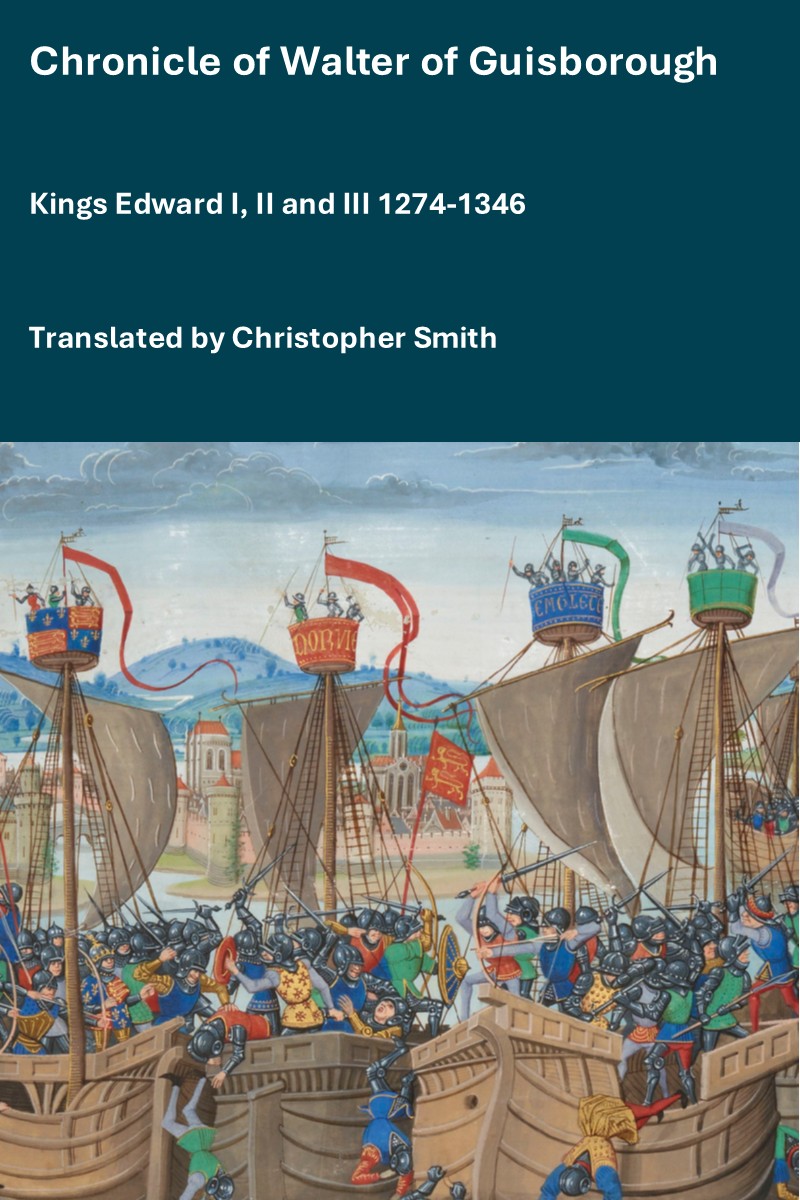 Chronicle of Walter of Guisborough. In the year of our Lord 1306, Robert de Brus [aged 31], the fifth son of the son of that Robert de Brus who, as mentioned above, disputed with John de Balliol before the King of England over the kingdom of Scotland, and was, as has been shown, judicially dismissed from his claim, relying on wicked counsel, aspired to the kingdom of Scotland. Fearing Lord John Comyn [aged 37], Earl of Badenoch, who was a powerful man in that land and loyal to the lord King of England, to whom he had done homage, and knowing that he could be hindered by him, sent to him deceitfully two of his brothers, namely Thomas de Brus [aged 22] and Nigel [aged 21], asking that he would deign to come to him at Dumfries to discuss certain matters which concerned them both. Now the justices of the lord King of England were sitting that same day in the castle, namely, on the fourth day before the Ides of February [10th February 1306] Comyn, suspecting no evil, came to him with a few companions, and they exchanged the kiss [of greeting], but not of peace, in the cloister of the Friars Minor [Franciscans] [Map]. When they were speaking together, in words that appeared peaceable, [Bruce] suddenly turned his face, twisted his words, and began to reproach him for his treachery, that he had accused him before the King of England and worsened his position to his harm. Comyn, speaking calmly and making excuses for himself, was not listened to; but Bruce, as he had conspired, struck him with his foot and sword, and stepped back. Then his men, following him, threw Comyn down on the floor of the altar, leaving him for dead. But a certain knight of Comyn's, Lord Robert Comyn, his uncle, ran to bring him aid; yet Christopher Seton [aged 28], who had married the sister [aged 33] of Lord Robert de Brus, met him and struck his head with a sword, and he died. Lord Robert de Brus then went out, and seeing Comyn's fine warhorse, mounted it; his men mounted likewise and they went on to the castle and seized it. When what had happened became known, the Scots flocked to him. The justices, fearing for themselves, shut the doors of the hall in which they sat with the few English who were with them. Hearing this, Bruce ordered fire to be set to it unless they at once surrendered; and they gave themselves up, asking for their lives and safe departure from the land, which he granted. When these things had been done, certain ill-wishers told him that Lord John Comyn was still alive; for the friars had carried him into the vestibule of the altar to tend to him and hear his confession. When he had confessed and was truly penitent, by order of the tyrant he was dragged from the vestibule and killed on the steps of the high altar, so that his blood touched the altar slab and the altar itself. After this Bruce went around the greater part of Scotland, occupying and fortifying castles and plundering the lands of the dead man; and the relatives of the deceased fled from his face, and all the English returned to their own land.
Anno Domini MCCCV Robertus de Brus, quintus filius filii illius Roberti de Brus qui, ut supradictum est, disceptavit cum Johanne de Balliolo coram rege Angliæ circa regnum Scotia, et judicialiter, ut supra patet, a sua petitione absolutus est, perverso fretus consilio ad regnum Scotia aspiravit; timensque dominum Johannem Cumyn, comitem de Badenach, qui erat homo potens in terra illa, et fidelis domino regi Angliæ, cui homagium fecerat; et sciens se impediri posse per eum, misit ad eum in dolo duos ex fratribus suis, Thomam videlicet de Brus et Nigellum, rogans ut dignaretur venire ad se apud Dunfres, super quibusdam negotiis tractaturus cum eo quæ tangebant utrosque. Sedebant enim justitiarii domini regis Angliæ eodem die in castro, IV scilicet idus Februarii. Qui, nihil mali suspicans, venit ad eum cum paucis, et mutuo se receperunt in osculum, sed non pacis, in claustro fratrum Minorum. Cumque mutuo loquerentur ad invicem, verbis, ut videbatur, pacificis, statim convertens faciem, et verba pervertens, cœpit improperare ei de seditione sua, quod eum accusaverat apud regem Angliæ, et suam conditionem deterioraverat in damnum ipsius. Qui cum pacifice loqueretur et excusaret se, noluit exaudire sermonem ejus, sed, ut conspiraverat, percussit eum pede et gladio, et retrorsum abiit. At sui extunc insequentes eum, prostraverunt eum in pavimento altaris, pro mortuo dimittentes. Cucurrit autem quidam miles ex suis, dominus Robertus Comyn avunculus ejus, ut auxilium ferret ei; sed occurrit ei Christoforus de Sethon, qui sororem domini Roberti de Brus duxerat in uxorem, et percussit caput ejus in gladio, et mortuus est. Egressusque est dominus Robertus de Brus, et videns dextrarium domini Johannis elegantem, ascendit in eum; ascenderuntque sui cum eo, et profecti sunt usque in castrum, et ceperunt illud. Cumque divulgaretur quod factum fuerat, cucurrerunt ad eum Scoti. Et justitiarii timentes sibi, clauserunt ostia aulæ in qua sedebant cum paucis Anglicis qui erant cum eis: quod audiens ipse, jussit ignem apponi, nisi confestim redderent eos; at illi dederunt se, vitam postulantes et salvum egressum a terra, quod et ipse concessit eis. Quibus ita gestis, nunciaverunt ei quidam malevoli quod dominus Johannes Comyn adhuc viveret; fratres enim asportaverant eum infra vestibulum altaris, ut medicarentur ei et confiteretur peccata sua. Qui cum confessus esset et vere pœnitens, jussu tyranni extractus est a vestibulo, et in gradibus majoris altaris interfectus, ita quod sanguis ipsius tabulam altaris tetigit, et etiam ipsum altare. Circuivit extunc the principal terram Scotia, occupando et muniendo castra, et deprædando terras mortui, fugeruntque a facie ipsius parentes defuncti, et omnes Anglici reversi sunt in terram suam.
Flowers of History. [10th February 1306] After all these events had taken place, fresh disturbances and wars broke out in Scotland. For Robert Bruce, earl of Carrick, conferred at first secretly, and afterwards openly, with some of the great nobles of Scotland, saying to them, "Ye know that by the right of hereditary relationship this kingdom belongs to me, and how this nation intended to have crowned my father king, but the cunning of the king of England disappointed him of his desire. If, therefore, you will crown me king, I will fight your battles, and deliver this kingdom and this people from its slavery to the English." This he said, and presently he received the consent of many perjured men. And when he asked of John Comyn, a very noble and powerful knight, whether he also agreed to this, he steadily replied, that he did not. And he said, "All the nations know that the king of England has four times subdued our nation and country, and that we all, both knights and clergy, have sworn fealty and homage to him for the present and all future generations. Far be it from me to do this; I will never consent to this measure, that I may be free from perjury." Bruce persuades, Comyn dissuades; the one threatens, the other is perplexed; at last, Bruce, drawing his sword, strikes the unarmed Comyn on the head. And when he had thrown him down, as he was striving to wrest the sword from the hands of his assassin (for he was a man of great personal strength), the servants of the traitor ran up, and stabbed him with their swords, and released their master. But the lord John escaped as well as he could to the altar; and Robert pursued him, and, as he would not agree to his proposals, the wicked and inhuman man there sacrificed the pious victim. These things were done in the church of the Minor Brothers, at Dumfries, on the twenty-ninth of January, in the year subsequent to this one. Behold the beginning of the homicide, aspiring to the kingdom by the shedding of the blood of Abel.
Annales Paulini. On the feast of Saint Scholastica the Virgin, that is, on Friday [10th February 1329], all assembled again in the same church, both bishops and other prelates, along with the entire clergy. A Mass for peace was celebrated by the Bishop of Norwich; and after the Gospel, the archbishop, all the bishops, and the other prelates stood before the altar, vested in their pontificals and holding lit candles, and excommunicated all those who had killed the Bishop of Exeter or laid violent hands upon him. They also excommunicated all who had plundered the Abbey of Saint Edmund, set fire to the church and monastery of Saint Edmund, or similarly attacked the Abbey of Abingdon, and all who had stolen church goods or committed any sacrilege at that time. In this council, among other things, it was decreed that the feast of the Conception of the Blessed Virgin Mary should be solemnly celebrated in all churches of England, both cathedral and parish, and likewise that Good Friday (Dies Parasceves) should henceforth be observed as a solemn day, free from all manual labor.
Die vero Sancte Scholastica virginis, videlicet die Veneris, iterum convenerunt omnes ad ecclesiam predictam, tam episcopi quam ceteri prelati cum universo clero, et Missa de pace ab episcopo Norwicensi celebratur; post evangelium archiepiscopus et omnes episcopi ac ceteri prælati stantes ante altare, pontificalibus induti et tenentes candelas accensas, excommunicaverunt omnes illos qui episcopum Exoniensem interfecerunt vel manus violentas in eum injecerunt; et similiter omnes qui abbatem Sancti Edmundi deprædarunt, ecclesiam et cœnobium Sancti Edmundi igni incenderunt, et similiter abbatiam de Abindone, et omnes qui bona ecclesiastica asportarunt vel eo tempore aliquod sacrilegium perpetrarunt. In hoc concilio inter cetera statutum fuit, quod festum Conceptionis beatæ Mariæ sollempniter celebretur in omnibus ecclesiis Angliæ, tam cathedralibus quam parochialibus, et similiter quod dies Parasceues solempnis de cetero teneatur ab omni opere manuali.
Deeds of King Edward III by Robert of Avesbury. "Wherefore we, wishing, as we are bound, to provide for the integrity of our reputation and to oppose the malice of the aforesaid archbishop, and to avoid the snares which he has prepared for us and ours, have determined, besides the matters already mentioned, and for the present passing over many of his perverse deeds, to bring certain things to public notice. For indeed, through his imprudent counsel and persuasion while we were still of youthful age, we made so many prodigal grants and unlawful alienations in excessive favour that our treasury has thereby been entirely exhausted and the revenues of the crown have been greatly diminished. We have also found that he, corrupted by the acceptance of gifts, has remitted large sums of money owed to us to certain persons without reasonable cause, when neither necessity nor advantage required it, and that he has applied many profits and revenues, which ought to have been preserved for our needs and advantage, to the uses of himself and his followers, and has bestowed them upon others who had not deserved them. Moreover, being not only a receiver of gifts but also a respecter of persons, contrary to our will and to the oath of fidelity he had given to us, he admitted unworthy men to public offices within the lands subject to our rule, setting aside and rejecting those who were worthy and deserving. He also presumed rashly to undertake many other things with unrestrained spirit, to the detriment of our estate, the injury of royal dignity, and the no small damage and burden of the people subject to us, abusing the authority entrusted to him and the office committed to him. If he persists in such obstinate pride, stubborn rebellion, and continued defiance, we intend to declare these matters more openly at a proper place and time. Therefore, we strictly command you that you publish all these things individually and clearly, in the places where you shall judge it expedient, and cause them to be published by others, commending effectively, according to the wisdom given to you by God, the pious intention which we have to remove the harms and promote the welfare of our subjects. Conduct yourselves in these matters in such a way that we may rightly commend your prudent diligence. Witness myself at Westminster, on the tenth day of February [1341], in the fifteenth year of our reign of England and the second of our reign of France."
"Quamo brein nos, volentes, ut tenemur, integritati fama nostræ pros picere et prefati archiepiscopi malitiæ obviare, paratosque nobis et nostris ab ipso laqueos declinare, providimus, præter ea quas superius sunt expressa, ut ad præsens de multis ejus perversis actibus taceamus, aliqua ducere in publicam notitionem. Nempe ejus improvido consilió et suasu in minori setate constituti tot donationes prodigas ac alienationes prohibitas ad gratias fecimus excessivas, quod per eas ærarium nostrum totaliter est exhaustum et fiscales redditus enormiter sunt diminuti; ipsumque munerum acceptione corruptum magnas pecuniarum summas nobis debitas quibusdam, sine rationabili causa, cum id nulla necessitas vel utilitas exposcebat, comperimus remisisse et plurimos proventus et redditus, qui de nostris utilitatibus et necessitatibus conservari debuerant, suis suorumque usibus applicasse, et aliis personis male meritis erogasse. Qui etiam, nedum munerum sed etiam personarum acceptor, contra votum nostrum et præstitum nobis fidelitatis solitum juramentum, ad officia publica in terris nostre ditioni subjectis, dignis et bene meritis postpositis et repulsis, indignos admisit, multaque alia animo infrenato temere attemptare presumpsit, in status nostri detrimentum et dignitatis regiæ lesionem ac populi nobis subditi dampnum non modicum et gravamen, potestate sibi tradita et officio sibi commisso abutendo. Qui si in elata obstinatione et obstinata rebellione et continuata perstiterit, congruis loco et tem pore intendimus apertius declarare, vobis firmiter injungendo mandantes quod hsc omnia et singula singillatim et clare, in locis quibus expedire videritis, publicetis et faciatis per alios publicari piam intentionem quam habemus ad subducendum incommoda et promovendum commoda subditorum, ipsam, juxta datam vobis a Deo sapientiam, efficaciter commendantes, et in his taliter vos habentes quod vestram debemus solicitudinem providam merito commendare. Teste me ipso apud Westmonasterium, X die Februarii, anno regni nostri Anglie XV, regni vero nostri Francise secundo."
On 10th February 1355, St Scholatica's Day, the St Scholastica Day Riots began at Oxford, Oxfordshire [Map]. What started as a disagreement between students and the landlord over the quality of the wine at the Swindlestock Tavern Carfax Oxford, Oxfordshire grew into a three day riot in which around thirty townspeople and sixty students were killed.
Archaeologia Volume 35 1853 XXXIII. On the 10th of February [1358], messengers arrived from the King of Navarre [aged 25], to announce, as it appears elsewhere, his escape from captivity; an indication that Isabella was still busy in the stirring events in her native country.
On 10th February 1383 John Mowbray 1st Earl Nottingham [aged 17] died. He was buried at Whitefriars. Earl Nottingham extinct. His brother Thomas [aged 14] succeeded 6th Baron Mowbray, 7th Baron Segrave.
Parliament Rolls Richard II. 30. Also, on the Saturday [10 February 1397], the chancellor [aged 53] announced by the king's [aged 30] command that reason willed that one should honour and enhance the estate of worthy and virtuous persons. Wherefore the king considering the nobility and virtue of his cousin Sir John Beaufort [aged 24], son of his uncle of Guyenne and Lancaster [aged 56], and the great honour he had done his person on various expeditions and labours in many kingdoms and lands overseas, to the great honour of the king and kingdom; and also to encourage him and others to do such honour; and also to strengthen the royal sceptre which could best be supported in honour by worthy and valiant persons had, of his royal dignity and special grace, made and created the said John an earl, and given him the name and honour of the Earl of Somerset, to have to him and his male heirs lawfully engendered of his body, with twenty pounds a year to be taken from the issues and profits of the county of Somerset for his title and the name of earl.
Note. On 10th February 1397 John Beaufort 1st Marquess Somerset and Dorset was created 1st Earl Somerset


Parliament Rolls Richard II. 32. The king [aged 30] to his archbishops, bishops, abbots, priors, dukes, earls, barons, justices, sheriffs, reeves, ministers, and other his bailiffs and faithful men, greeting. Know that we, considering the strenuous probity and prudent mind, distinguished conduct and nobility of birth of our beloved and faithful kinsman John Beaufort [aged 24], knight, son of our beloved uncle John duke of Aquitaine and Lancaster [aged 56], and willing therefore deservedly to exalt the same John Beaufort with the prerogative of honour, we do appoint and create John Beaufort earl of Somerset in our present parliament, and invest him with the style and name and honour of the aforesaid earl by girding him with the sword, to have to him and his male heirs issuing from his body in perpetuity. And that the same earl and his aforesaid heirs, given such name and honour, may the better and more honourably support the burdens incumbent upon the same, of our special grace in our present parliament we have given and granted, and by this our charter confirmed, to the same earl and his aforesaid heirs twenty pounds to be received each year from the issues of the aforesaid county by the hand of the sheriff of that county for the time being, at the terms of Easter and Michaelmas [29 September] in equal portions, in perpetuity. Witnessed by these, the venerable father Thomas archbishop of Canterbury [aged 44] primate of all England, John of Aquitaine and Lancaster, and Edmund of York [aged 55], dukes; Robert of London, William of Winchester [aged 77], John of Ely, Edmund of Exeter, our chancellor [aged 53], bishops; Henry of Derby [aged 29], Edward of Rutland [aged 24], Thomas of Nottingham and marshal of England [aged 28], earls; Reginald Grey [aged 35], Ralph Neville [aged 33], John Lovell, knights; Roger Walden dean of York, our treasurer, Thomas Percy [aged 54], steward of our household, Guy Mone, keeper of our privy seal, and others. Given by our hand at Westminster on 10 February in the twentieth year of our reign [10th February 1397].
Excerpta Historica Page 152. The patent of legitimation of King Richard was exemplified and confirmed by Henry the Fourth [aged 39], on the 10th February 1407, at the request of the Earl of Somerset [aged 34], whom his Majesty styles in the instrument "our dear brother."1
Note 1. Sandford's Genealogical History, p. 323.
The Reign of Henry VII Part 1B. [10th February 1407]. Henry IV's confirmation of the legitimation of the Beauforts by letters patent, 8 Henry IV, pars. 1, membrane 14.
The famous limitation "excepta dignitate regali" was inserted by means of interlineation and in a later hand on the enrolment of Richard II's grant in the Patent Rolls, and was incorporated in the text of Henry IV s exemplification of the grant for the Earl of Somerset in 1407. But the record of Richard II's grant embodied in the Rolls of Parliament stood unaltered; and Henry IV's limitation was therefore of doubtful legality. Its motive is said (Bentley's "Excerpta Historica" p. 153) to have been to prevent Somerset from claiming the throne as the eldest son of John of Gaunt; but Henry IV was born in 1367 and Somerset not till about 1373. The exception, moreover, while not stated, is clearly implied in the language of Richard's grant.
The King to all to whom these presents shall come, greetings —
It is known to us through the inspection of the rolls of the Chancery of Lord Richard, lately King of England, the second after the Conquest, that the same former King caused his letters patent to be made in these words:
Richard, by the grace of God, King of England and France, and Lord of Ireland, to our dearest cousins, the noble men John, knight, Henry, clerk, Thomas, esquire, and to our beloved noble lady Joan Beaufort, gentlewoman, children of our dearest uncle, the noble man John, Duke of Lancaster, our lieges, greeting and goodwill from our royal majesty. When we consider internally how continually and in what great honor we are graced on all sides by the paternal and sincere love of our aforesaid uncle, and by his wise counsel, we deem it appropriate and fitting, in view of his merits and in consideration of your persons, who shine with great talent, honesty of life, and moral integrity, and are descended from the royal line and endowed with many virtues and divine gifts, that we should enrich you with the special prerogative of favour and grace.
Therefore, inclined by the prayers of our said uncle, your father, we, considering that you are said to suffer from the defect of birth, so that this defect and any qualities it may imply, which we deem sufficiently expressed here, notwithstanding any such defect, shall not prevent you from being appointed, promoted, elected, assumed, and admitted to any honors, dignities (except royal dignity), pre-eminences, ranks, statuses, and public or private offices, whether perpetual or temporary, and feudal or noble, by whatever names they may be called, even if they are duchies, principalities, counties, baronies, or other fiefs, even if they depend mediately or immediately upon us or are held of us. You may freely and lawfully receive, hold, exercise, and retain these as if you were born of legitimate wedlock, notwithstanding any statutes or customs of our realm of England to the contrary, which we here deem fully expressed and nullified. From the plenitude of our royal power and with the assent of our Parliament, we hereby dispense with them. And we restore and legitimize you and each of you to your birthrights.
In witness whereof, we have caused these our letters to be made patent. Witness myself at Westminster on the ninth day of February, in the twentieth year of our reign.'
We, therefore, at the request of our dearest brother John, Earl of Somerset, have deemed it proper to exemplify the tenor of the enrollment of the aforesaid letters by these presents.
In witness whereof, etc. Witness the King at Westminster on the 10th day of February.
Rex omnibus ad quos etc. salutem —
Constat nobis per inspectionem Kottulorum Cancellarum Domini Ricardi nuper regis Anglie secundi post Conquestum quod idem nuper rex literas suas patentes fieri fecit in hec verba:
Ricardus Dei gratia rex Anglie et Francie et dominus Hiberniæ carissimis consanguineis nostris, nobilibus viris Johanni militi, Henrico clerico Thome domicello, ac dilecte nobis nobili mulieri Johanne Beauford domicelle, germanis precarissimi avunculi nostri nobilis viri Johannis Ducis Lancastrian, natis ligeis nostris, salutem et benevolentiam nostre regie Majestatis. Dum interna consideratione pensamus quot incessanter et quantis hononbus, perutili1 et sincera dilectione prsefati avunculi nostri et sui maturitate consilii, undique decoramur, congruum arbitramur et dignum ut meritorum suorum intuitu, vestrarum ac contemplatione personarum, vos qui magne probitatis ingenio, vite ac morum honestate fulgetis, et ex regali estis prosapia propagati, pluribusque virtutibus munire2 insigniti divino, specialis prerogative munimine favoris et gracie fecundemus3;
hinc est quod dicti avunculi nostri, genitoris vestri, precibus inclinati, vobiscum, qui ut asseritur defectum natalium patrium4, ut hujus modi defectu, quern ejusque qualitates quascunque presentibus haberi volumus pro sumcienter expressis, non obstante, ad quecunque honores dignitates (excepta dignitate regali) preeminentias status gradus et officia publica et privata tarn perpetua quam temporalia atque feudalia et nobilia, quibuscunque nominibus nuncupentur, etiam si ducatus prineipatus comitatus baronie vel alia feuda fuerint, etiam si mediate vel immediate a nobis dependeant seu teneantur, prefici promoveri eligi assumi et admitti, illaque recipere retinere gerere et exercere perinde libere et licite valeatis ac si legitimo thoro nati existeretis, quibuscunque statutis consuetudinibus regni nostri Anglie in contrarium editis seu observatis, que hie habemus pro totaliter expressis, nequaquam obstantibus, de plenitudine nostre regalis potestatis et de assensu Parliamenti nostri tenore presentium dispensamus, vosque et vestrum quemlibet natalibus restituimus et legitimamus.
In cujus rei testimonium has literas nostras fieri fecimus patentes. Teste meipso apud Westmonasterium nono die Febr. anno regni nostro vicesimo.
Nos autem tenorem irrotulamenti literarum predictarum ad requisitionem carissimi fratis nostri Johannis comitis Somerset, duximus exemplificandum per presentes.
In cujus etc. Teste Kege apud Westmonasterium 10 die Febr.
Note 1. Parentili in No. 4.
Note 1.? virtutibus, munereque, as in No. 4.
Note 2.? Secundemus
Note 3.? Patimini, as on p. 7.
Henrici Quinti, Angliæ Regis, Gesta, is a first-hand account of the Agincourt Campaign, and subsequent events to his death in 1422. The author of the first part was a Chaplain in King Henry's retinue who was present from King Henry's departure at Southampton in 1415, at the siege of Harfleur, the battle of Agincourt, and the celebrations on King Henry's return to London. The second part, by another writer, relates the events that took place including the negotiations at Troye, Henry's marriage and his death in 1422.
Available at Amazon in eBook and Paperback format.
On 10th February 1441 Henry of York was born to Richard Plantagenet 3rd Duke of York [aged 29] and Cecily "Rose of Raby" Neville Duchess York [aged 25]. He died the same day. He a great x 2 grandson of King Edward III of England. Coefficient of inbreeding 2.42%.
A Brief Latin Chronicle. Also in this year, around the feast of Saint Scholastica the Virgin (10th February 1466), Queen Elizabeth gave birth to a daughter for King Edward, named Elizabeth.
Isto quoque anno, circiter festum Sancte Scolastice Virginis peperit regina Elizabeth Regi Edwardo filiam, vocatam Elizabeth.


On 10th February 1525 Catherine of Austria Queen Consort Portugal [aged 18] was crowned Queen Consort Portugal.
On 10th February 1525 John III King Portugal [aged 22] and Catherine of Austria Queen Consort Portugal [aged 18] were married. She by marriage Queen Consort Portugal. She the daughter of Philip "Handsome Fair" King Castile and Joanna "The Mad" Trastámara Queen Castile [aged 46]. He the son of Manuel "Fortunate" I King Portugal and Maria Trastámara Queen Consort Portugal. They were first cousins. He a great x 4 grandson of King Edward III of England. She a great x 4 granddaughter of King Edward III of England.
On 10th February 1526 Theodor Wittelsbach was born to William Wittelsbach IV Duke Bavaria [aged 32] and Marie Jakobaea Baden Duchess Bavaria [aged 18]. Coefficient of inbreeding 1.65%. He died aged eight in 1534.
Archives of Venice. Feb. 10. [1528] Sanuto Diaries, v. xlvii. p. 5. 236. Advices from France, transmitted to the Signory by Coresara.
It is understood that the Emperor has separated the ambassadors one from the other, in several places near Burgos. On hearing this news, the most Christian King immediately sent Mons. de Lavigni to arrest the Emperor's ambassador in Paris, who was taken to the Chateau of the Louvre; and his Majesty caused notice of this to be given to the English King, urging him to resent what the Emperor had done. Subsequently he sent orders throughout France, for all the men-at-arms to go to their garrisons, that they may be ready to march in such direction as requisite.
The English King intends to repudiate the Queen his consort, saying that the dispensation given by the Pope, on account of her first having had for husband his Majesty's brother, is defective and invalid, and also because the Queen is of such an age that he can no longer hope for offspring from her; so that for the maintenance and welfare of his realm, he purposes marrying Sir Thomas Boleyn's [aged 51] daughter [aged 27], who is very beautiful. It is reported that the Pope is willing to give his consent; so the enmity between the King of England and the Emperor will not only continue but increase.
Paris, 10th February. Registered by Sanuto, 2nd March.
[Italian.]


Letters and Papers. 10th February 1536. Vienna Archives. 282. Chapuys [aged 46] to Charles V.
The Princess [aged 19] is well. She changed her lodging on Saturday last, and was better accompanied on her removal and provided with what was necessary to her than she had been before. She had an opportunity of distributing alms on the way, because her father had placed about 100,000 crowns at her disposal. It is rumoured that the King, as Cromwell [aged 51] sent to inform me immediately after the Queen's death, means to increase her train and exalt her position. I hope it may be so, and that no scorpion lurks under the honey. I think the King only waited to summon the said Princess to swear to the statutes in expectation that the concubine would have had a male child, of which they both felt assured. I know not what he will do now. I have suggested to the Princess to consider if it be not expedient, when she is pressed to take the oath, if she be reduced to extremity, to offer that if the King her father have a son she will condescend to his will, and that she might at once begin throwing out some such hint to her gouvernante [aged 60]. I will inform you of her reply.


Letters and Papers. 10th February 1536. Vienna Archives. 283. Chapuys [aged 46] to Granvelle.
This notable and good Catholic Archbishop of Canterbury, in his preaching on Sunday last, among other blasphemies against the Pope, proposed to prove that all the passages in Scripture about Antichrist referred to his Holiness, and, to injure at a blow the Holy See and the Imperial authority, cited one author who said that Antichrist should come when the empire was ruined. This, he said, it was now, because of all the monarchy only a small portion of Germany obeyed the empire; and he decried the Imperial authority as much as he could, ending by saying that the Pope was the true Antichrist, and no other need be looked for. Thus you may see the virtue and honesty of this apostate, and what has come of the good treatment shown him when he was with his Majesty, and what good cause I had to send my man to Bologna when his Majesty was there to prevent the Pope from allowing his promotion. I must not forget to say there are innumerable persons who consider that the concubine [aged 35] is unable to conceive, and say that the daughter said to be hers and the abortion the other day are supposititious. Eight days ago the goods of the Dantzic merchants, which the King had sequestrated, were released. London, 10 Feb. 1535.
The King has lately given a Bishopric to one who some time ago abandoned the Augustinian habit1, and like a Lutheran fled to Germany, where it is said he has a wife. Fr., from a modern copy, p. 1.
Note 1. Barlow, who was about this time promoted to the Bishopric of St. Asaph, was certainly an Augustinian originally, but there seems here to be some confusion between him and Barnes [aged 41].
Letters and Papers. 10th February 1536. Vienna Archives. 282. Chapuys [aged 46] to Charles V.
Wrote on the 29th ult. The same day the Queen [deceased] was buried, and besides the ladies whom I mentioned, there were present four bishops and as many abbots, but no other man of mark except the comptroller of the King's Household. The place where she is buried in the church is far removed from the high altar, and much less honorable than that of certain bishops buried there; and even if they had not taken her for princess dowager as they have done in death and life, but only as simple baroness, they could not have given her a less honorable place, as I am told by men acquainted with those matters. Such are the great miracles and incredible magnificence which they gave me to understand they would put forth in honour of her memory as due alike to her great virtues and to her kindred. Possibly they will repair the fault by making a becoming monument in some suitable place.


Letters and Papers. Vienna Archives. 284. Death and Burial of Katharine of Arragon.
The good Queen [deceased] died in a few days, of God knows what illness, on Friday, 7 Jan. 1536. Next day her body was taken into the Privy Chamber and placed under the canopy of State (sous le dhoussier et drapt destat), where it rested seven days, without any other solemnity than four flambeaux continually burning. During this time a leaden coffin was prepared, in which the body was enclosed on Saturday, the 15th, and borne to the chapel. The vigils of the dead were said the same day, and next day one mass and no more, without any other light than six torches of rosin. On Sunday, the 16th, the body was removed again into the Privy Chamber, where it remained till Saturday following. Meanwhile an "estalage," which we call a chapelle ardente, was arranged, with 56 wax candles in all, and the house hung with two breadths of the lesser frieze of the country. On Saturday, the 22nd, it was again brought to the chapel, and remained until the masses of Thursday following, during which time solemn masses were said in the manner of the country, at which there assisted by turns as principals the Duchess of Suffolk [aged 16], the Countess of Worcester [aged 34], the young Countess of Oxford [aged 39], the Countess of Surrey [aged 19], and Baronesses Howard [aged 21], Willoughby [aged 24], Bray, and Gascon (sic).
25th January 1536. On Tuesday1 following, as they were beginning mass, four banners of crimson taffeta were brought, two of which bore the arms of the Queen, one those of England, with three "lambeaulx blancs," which they say are of Prince Arthur; the fourth had the two, viz., of Spain and England, together. There were also four great golden [standards]. On one was painted the Trinity, on the second Our Lady, on the third St. Katharine, and on the fourth St. George; and by the side of these representations the said arms were depicted in the above order; and in like manner the said arms were simply, and without gilding (? dourance), painted and set over all the house, and above them a simple crown, distinguished from that of the kingdom which is closed. On Wednesday after the robes of the Queen's 10 ladies were completed, who had not till then made any mourning, except with kerchiefs on their heads and old robes. This day, at dinner, the countess of Surrey held state, who at the vigils after dinner was chief mourner. On Thursday, after mass, which was no less solemn than the vigils of the day before, the body was carried from the chapel and put on a waggon, to be conveyed not to one of the convents of the Observant Friars, as the Queen had desired before her death, but at the pleasure of the King, her husband, to the Benedictine Abbey of Peterborough, and they departed in the following order:—First, 16 priests or clergymen in surplices went on horseback, without saying a word, having a gilded laten cross borne before them; after them several gentlemen, of whom there were only two of the house, "et le demeurant estoient tous emprouvez," and after them followed the maître d'hotel and chamberlain, with their rods of office in their hands; and, to keep them in order, went by their sides 9 or 10 heralds, with mourning hoods and wearing their coats of arms; after them followed 50 servants of the aforesaid gentlemen, bearing torches and "bâtons allumés," which lasted but a short time, and in the middle of them was drawn a waggon, upon which the body was drawn by six horses all covered with black cloth to the ground. The said waggon was covered with black velvet, in the midst of which was a great silver cross; and within, as one looked upon the corpse, was stretched a cloth of gold frieze with a cross of crimson velvet, and before and behind the said waggon stood two gentlemen ushers with mourning hoods looking into the waggon, round which the said four banners were carried by four heralds and the standards with the representations by four gentlemen. Then followed seven ladies, as chief mourners, upon hackneys, that of the first being harnessed with black velvet and the others with black cloth. After which ladies followed the waggon of the Queen's gentlemen; and after them, on hackneys, came nine ladies, wives of knights. Then followed the waggon of the Queen's chambermaids; then her maids to the number of 36, and in their wake followed certain servants on horseback.
In this order the royal corpse was conducted for nine miles of the country, i.e., three French leagues, as far as the abbey of Sautry [Map], where the abbot and his monks received it and placed it under a canopy in the choir of the church, under an "estalage" prepared for it, which contained 408 candles, which burned during the vigils that day and next day at mass. Next day a solemn mass was chanted in the said abbey of Sautry [Map], by the Bishop of Ely, during which in the middle of the church 48 torches of rosin were carried by as many poor men, with mourning hoods and garments. After mass the body was borne in the same order to the abbey of Peterborough, where at the door of the church it was honourably received by the bishops of Lincoln, Ely, and Rochester, the Abbot of the place, and the abbots of Ramsey, Crolain (Crowland), Tournan (Thorney), Walden and Thaem (Tame), who, wearing their mitres and hoods, accompanied it in procession till it was placed under the chapelle ardente which was prepared for it there, upon eight pillars of beautiful fashion and roundness, upon which were placed about 1,000 candles, both little and middle-sized, and round about the said chapel 18 banners waved, of which one bore the arms of the Emperor, a second those of England, with those of the King's mother, prince Arthur, the Queen of Portugal, sister of the deceased, Spain, Arragon, and Sicily, and those of Spain and England with three "lambeaulx," those of John of Gaunt, duke of Lancaster, who married the daughter of Peter the Cruel, viz., "le joux des beufz," the bundle of Abbot of arrows, the pomegranate (granade), the lion and the greyhound. Likewise there were a great number of little pennons, in which were portrayed the devices of king Ferdinand, father of the deceased, and of herself; and round about the said chapel, in great gold letters was written, as the device of the said good lady, "Humble et loyale." Solemn vigils were said that day, and on the morrow the three masses by three bishops: the first by the Bishop of Rochester, with the Abbot of Thame as deacon, and the Abbot of Walden as sub-deacon; the second by the Bishop of Ely, with the Abbot of Tournay (Thorney) as deacon, and the Abbot of Peterborough as sub-deacon; the third by the Bishop of Lincoln [aged 63], with the Bishop of Llandaff as deacon, and that of Ely as sub-deacon; the other bishops and abbots aforesaid assisting at the said masses in their pontificals, so the ceremony was very sumptuous. The chief mourner was lady Eleanor [aged 17], daughter of the Duke of Suffolk [aged 52] and the French Queen, and niece of King Henry, widower now of the said good Queen. She was conducted to the offering by the Comptroller and Mr. Gust (Gostwick), new receiver of the moneys the King takes from the Church. Immediately after the offering was completed the Bishop of Rochester preached the same as all the preachers of England for two years have not ceased to preach, viz., against the power of the Pope, whom they call Bishop of Rome, and against the marriage of the said good Queen and the King, alleging against all truth that in the hour of death she acknowledged she had not been Queen of England. I say against all truth, because at that hour she ordered a writing to be made in her name addressed to the King as her husband, and to the ambassador of the Emperor, her nephew, which she signed with these words—Katharine, Queen of England—commending her ladies and servants to the favour of the said ambassador. At the end of the mass all the mourning ladies offered in the hands of the heralds each three ells in three pieces of cloth of gold which were upon the body, and of this "accoutrements" will be made for the chapel where the annual service will be performed for her. After the mass the body was buried in a grave at the lowest step of the high altar, over which they put a simple black cloth. In this manner was celebrated the funeral of her who for 27 years has been true Queen of England, whose holy soul, as every one must believe, is in eternal rest, after worldly misery borne by her with such patience that there is little need to pray God for her; to whom, nevertheless, we ought incessantly to address prayers for the weal (salut) of her living image whom she has left to us, the most virtuous Princess her daughter, that He may comfort her in her great and infinite adversities, and give her a husband to his pleasure, &c. Fr., from a modern copy, pp. 6.
Note 1. This would be Tuesday, 1 Feb., if the chronology were strict; but the latest Tuesday that can be intended is 25 Jan.


Letters and Papers Foreign and Domestic Henry VIII 1542. [10th February 1542]. Forgot, when writing on the 10th, of the Queen's [Queen Catherine Howard of England [aged 19]] trial and condemnation, to mention that after the condemnation passed against her in Parliament, the King, wishing to proceed with moderation, had sent to her certain Councillors and others of the said Parliament, to offer her to come and defend her own case in the Parliament. This she declined, submitting entirely to the King's mercy and owning that she deserved death. Some days later, on the afternoon of the 10th [Feb 1542], she was, with some resistance, conveyed by river to the Tower. The lord Privy Seal, with a number of Privy Councillors and servants went first in a great barge; then came the Queen with three or four men and as many ladies, in a small covered barge; then the Duke of Suffolk, in a great barge, with a company of his men. On their arrival at the Tower, the lords landed first; then the Queen, in black velvet, and they paid her as much honour as when she was reigning.
Wriothesley's Chronicle [1508-1562]. 10th February 1542. The 10th of February the Quene [aged 19] was had by water from Sion to the Tower of London, the Duke of Suffolke [aged 58], the Lord Privie Seale, and the Lord Great Chamberlaine [aged 59] havinge the conveyannce of her.


Holinshed's Chronicle [1525-1582]. 10th February 1542. On the tenth of Februarie, the quéene [Queen Catherine Howard of England [aged 19]] was conueied from Sion to the towre by water, the duke of Suffolke, the lord priuie seale, and the lord great chamberleine, hauing the conduction of hir.
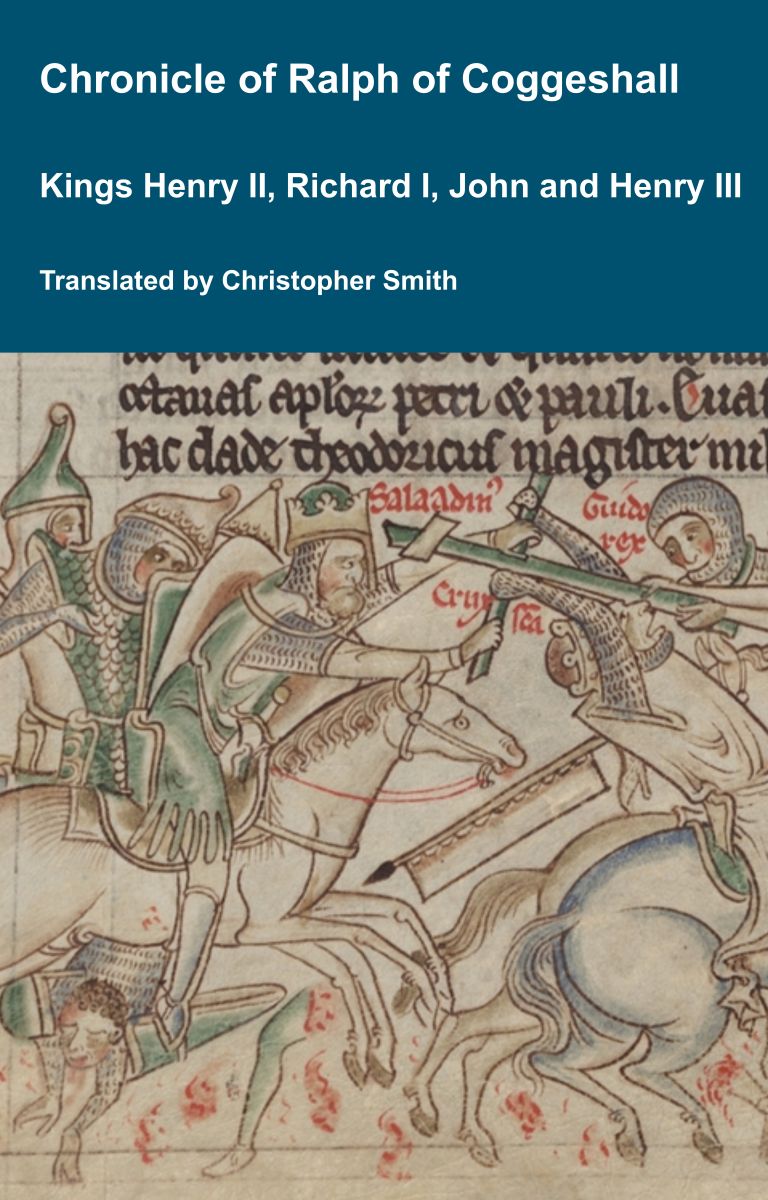
Chronicle of Abbot Ralph of Coggeshall
The Chronicle of Abbot Ralph of Coggeshall (Chronicon Anglicanum) is an indispensable medieval history that brings to life centuries of English and European affairs through the eyes of a learned Cistercian monk. Ralph of Coggeshall, abbot of the Abbey of Coggeshall in Essex in the early 13th century, continued and expanded his community’s chronicle, documenting events from the Norman Conquest of 1066 into the tumultuous reign of King Henry III. Blending eyewitness testimony, careful compilation, and the monastic commitment to record-keeping, this chronicle offers a rare narrative of political intrigue, royal power struggles, and social upheaval in England and beyond. Ralph’s work captures the reigns of pivotal figures such as Richard I and King John, providing invaluable insights into their characters, decisions, and the forces that shaped medieval rule. More than a simple annal, Chronicon Anglicanum conveys the texture of medieval life and governance, making it a rich source for scholars and readers fascinated by English history, monastic authorship, and the shaping of the medieval world.
Available at Amazon in eBook and Paperback format.
Henry Machyn's Diary. 10th February 1553. The x day of January [Note. Probably February] rod my lade Mare('s) [aged 36] grasse from Saynt [John's] and thrugh Flettstrett unto the kyng at Westmynster, with a grett nombur of lords and knyghtes, and alle the [great] women lades, the duches of Suffoke [aged 35] and Northumberland [aged 44], my lade marqwes of Northamptun [aged 26], and lade marqwes of Wynchester, and the contes of Bedfford [aged 74], and the contes of Shrowsbere [aged 53], and the contes of Arundelle, my lade Clynton [aged 26], my lade Browne [aged 24] and Browne [sic in manuscript], and many mo lades and gentyllwomen; and at the oter gatt ther mett her my lord of Suffoke [aged 36] and my lord of Northumberland [aged 49], my lord of Wynchester [aged 70], my lord of Bedfford [aged 68], and therle of Shrusbery [aged 53], the therle of Arundell [aged 40], my lord Chamburlayn, my lord Admerolle, and a gret nomber of knyghtes and gentyllmen, and so up unto the chambur of pressens, and ther the Kynges [aged 15] grace mett her and salutyd her.... owyn a-pon payne of presunmentt and a grett [penalty, as ye] shalle fynd in the actes in secund yere of kyng ... the perlementt tyme of the sayd yere, and nott to be ... plasse as taverns, alle-howses, ines, or wher ... for cummers and gestes, and has commandyd unto alle shreyffes and baylles, constabulls, justes of pesse, or any .. thay shall se truthe (and) justys as thay shalle [inform the] kyng and ys consell, and bryng them to pressun of ... sun or poyssuns as be the offenders ther off for ... her of odur.


Henry Machyn's Diary. 10th February 1557. The x day of Feybruary was slayne in Nugatt market, on Robartt Lentall, odur-wyse callyd Robart (blank), servant unto my lord tresorer the marques of Wynchester [aged 74], by a servand unto the duke of Norffoke, and ys fottman, the wyche was ys on sekyng [seeking].... and iij women.
On 29th July 1558 Henry Sacheverell [aged 32] died at Ratcliffe on Soar, Nottinghamshire [Map]. He was buried at Holy Trinity Church Ratcliffe on Soar [Map].
On 10th February 1554 Lucie Pole [aged 26] died.
She wearing a puffed sleeve gown with triple chain with French Hood. His head on a great helm with Goat Crest. Possibly Richard Parker of Burton on Trent with Dogs chewing at her dress.
Henry Sacheverell: In 1526 he was born to Ralph Sacheverell and Cecilia Durance at Ratcliffe on Soar, Nottinghamshire [Map]. Before 1547 Henry Sacheverell and Lucie Pole were married.
Lucie Pole: In 1528 she was born to John Pole of Hartington.


Henry Machyn's Diary. 10th February 1562. The x day of February, was Shrowse tuwsday, [was a just] at Westmynster agaynst the qwyne('s) [aged 28] grase plase; the chalengers the duke of Northfoke [aged 25] and the yerle of Westmoreland [aged 37].


Henry Machyn's Diary. 10th February 1563. The x day of Feybruary was browth a-bed within [the] Towre with a sune my lade Katheryn Harfford [aged 22], wyff to the yerle of Harfford [aged 23], and the god-fathers wher ij warders of the Towre, and ys name was callyd Thomas.


On 10th February 1567 Henry "Lord Darnley" Stewart [aged 21] was murdered at Kirk O Field. Around two in the morning two barrels of gunpowder exploded beneath his room. His body and that of his valet William Taylor were found outside, surrounded by a cloak, a dagger, a chair, and a coat. Darnley was dressed only in his nightshirt. There were no visible marks on the body. He was buried at Holyrood Abbey, Holyrood.
On 10th February 1606 Christine Marie Bourbon Duchess Savoy was born to Henry IV King France [aged 52] and Marie de Medici Queen Consort France [aged 30]. She married 1619 her third cousin Victor Amadeus I Duke of Savoy, son of Charles Emmanuel Savoy I Duke Savoy and Catherine Habsburg Spain Duchess Savoy, and had issue.


On 10th February 1611 Unamed Lorraine was born to Henry Lorraine II Duke Lorraine [aged 48] and Margherita Gonzaga Duchess Lorraine [aged 19]. She died aged less than one years old.
On 10th February 1619 James Howard 3rd Earl Suffolk was born to Theophilus Howard 2nd Earl Suffolk [aged 36] and Elizabeth Home Countess Suffolk [aged 20]. His godfathers were King James I of England and Ireland and VI of Scotland [aged 52] and George Villiers 1st Duke of Buckingham [aged 26]. He married (1) 1st December 1640 his fifth cousin Susannah Rich Countess Suffolk, daughter of Henry Rich 1st Earl Holland and Isabel Cope Countess Holland, and had issue (2) February 1650 Barbara Villiers Countess Suffolk and had issue (3) before 8th May 1682 Anne Montagu Countess Suffolk, daughter of Robert Montagu 3rd Earl Manchester and Anne Yelverton Countess Manchester.

On 10th February 1639 Susan Doyly [aged 5] died aged five. Grave slab at St Withburga's Church, Holkham [Map].
Susan Doyly: Around 1634 he was born to Edmund Doyly and Bridget Coke.

John Evelyn's Diary. 10th February 1656. I heard Dr. Wilkins [aged 41] preach before the Lord Mayor in St. Paul's [Map], showing how obedience was preferable to sacrifice. He was a most obliging person, who had married the Protector's [aged 56] sister, and took great pains to preserve the Universities from the ignorant, sacrilegious commanders and soldiers, who would fain have demolished all places and persons that pretended to learning.
John Evelyn's Diary. 10th February 1657. I went to visit the governor of Havannah, a brave, sober, valiant Spanish gentleman, taken by Captain Young, of Deptford, when, after twenty years being in the Indies, and amassing great wealth, his lady and whole family, except two sons, were burned, destroyed, and taken within sight of Spain, his eldest son, daughter, and wife, perishing with immense treasure. One son, of about seventeen years old, with his brother of one year old, were the only ones saved. The young gentleman, about seventeen, was a well-complexioned youth, not olive-colored; he spoke Latin handsomely, was extremely well-bred, and born in the Caraccas, 1,000 miles south of the equinoctial, near the mountains of Potosi; he had never been in Europe before. The Governor was an ancient gentleman of great courage, of the order of St. Jago, sorely wounded in his arm, and his ribs broken; he lost for his own share £100,000 sterling, which he seemed to bear with exceeding indifference, and nothing dejected. After some discourse, I went with them to Arundel House [Map], where they dined. They were now going back into Spain, having obtained their liberty from Cromwell [aged 57]. An example of human vicissitude!
The Deeds of the Dukes of Normandy
The Gesta Normannorum Ducum [The Deeds of the Dukes of Normandy] is a landmark medieval chronicle tracing the rise and fall of the Norman dynasty from its early roots through the pivotal events surrounding the Norman Conquest of England. Originally penned in Latin by the monk William of Jumièges shortly before 1060 and later expanded at the behest of William the Conqueror, the work chronicles the deeds, politics, battles, and leadership of the Norman dukes, especially William’s own claim to the English throne. The narrative combines earlier historical sources with firsthand information and oral testimony to present an authoritative account of Normandy’s transformation from a Viking settlement into one of medieval Europe’s most powerful realms. William’s history emphasizes the legitimacy, military prowess, and governance of the Norman line, framing their expansion, including the conquest of England, as both divinely sanctioned and noble in purpose. Later chroniclers such as Orderic Vitalis and Robert of Torigni continued the history, extending the coverage into the 12th century, providing broader context on ducal rule and its impact. Today this classic work remains a foundational source for understanding Norman identity, medieval statesmanship, and the historical forces that reshaped England and Western Europe between 800AD and 1100AD.
Available at Amazon in eBook and Paperback format.
Samuel Pepys' Diary. 10th February 1660. Thence I went home, vexed about this business, and there I found Mr. Moore, and with him went into London to Mr. Fage about the cancer in my mouth, which begins to grow dangerous, who gave me something for it, and also told me what Monk [aged 51] had done in the City, how he had pulled down the most part of the gates and chains that they could break down, and that he was now gone back to White Hall. The City look mighty blank, and cannot tell what in the world to do; the Parliament having this day ordered that the Common-council sit no more; but that new ones be chosen according to what qualifications they shall give them.


John Evelyn's Diary. 10th February 1660. Now were the gates of the city broken down by General Monk [aged 51]; which exceedingly exasperated the city, the soldiers marching up and down as triumphing over it, and all the old army of the fanatics put out of their posts and sent out of town.
John Evelyn's Diary. 10th February 1661. Dr. Baldero preached at Ely-house, on Matthew vi. 33, of seeking early the Kingdom of God; after sermon, the Bishop [aged 75] (Dr. Wren) gave us the blessing, very pontifically.
Samuel Pepys' Diary. 10th February 1662. Musique practice a good while, then to Paul's Churchyard, and there I met with Dr. Fuller's [aged 54] "England's Worthys", the first time that I ever saw it; and so I sat down reading in it, till it was two o'clock before I, thought of the time going, and so I rose and went home to dinner, being much troubled that (though he had some discourse with me about my family and arms) he says nothing at all, nor mentions us either in Cambridgeshire or Norfolk. But I believe, indeed, our family were never considerable. At home all the afternoon, and at night to bed.
Samuel Pepys' Diary. 10th February 1664. Up, and by coach to my Lord Sandwich [aged 38], to his new house, a fine house, but deadly dear, in Lincoln's Inne Fields, where I found and spoke a little to him. He is high and strange still, but did ask me how my wife did, and at parting remembered him to his cozen, which I thought was pretty well, being willing to flatter myself that in time he will be well again.


Samuel Pepys' Diary. 10th February 1665. Thence (in Mr. Grey's coach, who took me up), to Westminster, where I heard that yesterday the King [aged 34] met the Houses to pass the great bill for the £2,500,000. After doing a little business I home, where Mr. Moore dined with me, and evened our reckonings on my Lord Sandwich's [aged 39] bond to me for principal and interest. So that now on both there is remaining due to me £257. 7s., and I bless God it is no more. So all the afternoon at my office, and late home to supper, prayers, and to bed.

Samuel Pepys' Diary. 10th February 1666. After dinner, being full of care and multitude of business, I took coach and my wife with me. I set her down at her mother's (having first called at my Lord Treasurer's [aged 58] and there spoke with Sir Ph. Warwicke [aged 56]), and I to the Exchequer about Tangier orders, and so to the Swan [Map] and there staid a little, and so by coach took up my wife, and at the Old Exchange [Map] bought a muffe, and so home and late at my letters, and so to supper and to bed, being now-a-days, for these four or five months, mightily troubled with my snoring in my sleep, and know not how to remedy it.
On 10th February 1667 Juan Bautista Martínez del Mazo [aged 55] died.
Samuel Pepys' Diary. 10th February 1667. Home, where Michell and his wife, and also there come Mr. Carter, my old acquaintance of Magdalene College, who hath not been here of many years. He hath spent his time in the North with the Bishop of Carlisle [aged 58] much. He is grown a very comely person, and of good discourse, and one that I like very much. We had much talk of our old acquaintance of the College, concerning their various fortunes; wherein, to my joy, I met not with any that have sped better than myself.
Samuel Pepys' Diary. 10th February 1668. Thence with Cocke [aged 51] home to his house and there left him, and I home, and there got my wife to read a book I bought to-day, and come out to-day licensed by Joseph Williamson [aged 34] for Lord Arlington [aged 50], shewing the state of England's affairs relating to France at this time, and the whole body of the book very good and solid, after a very foolish introduction as ever I read, and do give a very good account of the advantage of our league with Holland at this time. So, vexed in my mind with the variety of cares I have upon me, and so to bed.


Chronicle of Abbot Ralph of Coggeshall
The Chronicle of Abbot Ralph of Coggeshall (Chronicon Anglicanum) is an indispensable medieval history that brings to life centuries of English and European affairs through the eyes of a learned Cistercian monk. Ralph of Coggeshall, abbot of the Abbey of Coggeshall in Essex in the early 13th century, continued and expanded his community’s chronicle, documenting events from the Norman Conquest of 1066 into the tumultuous reign of King Henry III. Blending eyewitness testimony, careful compilation, and the monastic commitment to record-keeping, this chronicle offers a rare narrative of political intrigue, royal power struggles, and social upheaval in England and beyond. Ralph’s work captures the reigns of pivotal figures such as Richard I and King John, providing invaluable insights into their characters, decisions, and the forces that shaped medieval rule. More than a simple annal, Chronicon Anglicanum conveys the texture of medieval life and governance, making it a rich source for scholars and readers fascinated by English history, monastic authorship, and the shaping of the medieval world.
Available at Amazon in eBook and Paperback format.
Samuel Pepys' Diary. 10th February 1668. Up, and by coach to Westminster, and there made a visit to Mr. Godolphin [aged 33], at his chamber; and I do find him a very pretty and able person, a man of very fine parts, and of infinite zeal to my Lord Sandwich [aged 42]; and one that says he is, he believes, as wise and able a person as any Prince in the world hath. He tells me that he meets with unmannerly usage by Sir Robert Southwell [aged 32], in Portugall, who would sign with him in his negociations there, being a forward young man: but that my Lord mastered him in that point, it being ruled for my Lord here, at a hearing of a Committee of the Council. He says that if my Lord can compass a peace between Spain and Portugall, and hath the doing of it and the honour himself, it will be a thing of more honour than ever any man had, and of as much advantage.


John Evelyn's Diary. 10th February 1681. I was at the wedding of my nephew, John Evelyn of Wotton [aged 28], married by the Bishop of Rochester [aged 56] at Westminster, in Henry VII's chapel [Map], to the daughter and heir of Mr. Eversfield, of Sussex, her portion £8,000. The solemnity was kept with a few friends only at Lady Beckford's, the lady's mother.
Note. John Evelyn of Wotton and Catherine Eversfield were married.
John Evelyn's Diary. 10th February 1685. Being sent to by the Sheriff of the County to appeare and assist in proclayming the King [aged 51], I went the next day to Bromely, where I met the Sheriff of and the Commander of the Kentish Troop, with an appearance, I suppose, of above 500 horse, and innumerable people, two of his Ma*'s trumpets and a Serjeant with other officers, who having drawn up the horse in a large field neere the towne, march'd thence, wifh swords drawne, to the market-place, where making a ring, after sound of trumpets and silence made, the High Sheriff of read the pro claiming titles to his Bailiffe, who repeated them aloud, and then after many shouts of the people, his Ma*'s health being drunk in a flint glasse of a yard long, by the Sheriff, Commander, Officers and cheife Gentlemen, they all dispers'd, and I return'd.


On 10th February 1750 Frances Scudamore Duchess Norfolk was born to Charles Fitzroy-Scudamore [aged 37] and Frances Scudamore 3rd Duchess Beaufort [aged 39]. Her mother died from childbirth six dys later when she inherited Holme Lacy House, Herefordshire [Map]. She a great x 2 granddaughter of King Charles II of England Scotland and Ireland. She married 6th April 1771 Charles Howard 11th Duke of Norfolk, son of Charles Howard 10th Duke of Norfolk and Catherine Brockholes Duchess Norfolk.
On 10th February 1755 Caroline Stolberg Gedern Duchess Veragua Duchess Berwick was born to Gustav Adolh Stolberg Gedern. She married 9th October 1771 Carlos Fitz James Stuart 10th Duke Veragua 4th Duke Berwick, son of James Fitz James 3rd Duke Berwick 10th Duke Veragua and Maria Teresa Silva Duchess Berwick and Veragua, and had issue.
On 10th February 1775 Archbishop John Moore [aged 44] was appointed Bishop of Bangor.

On 10th February 1780 Samuel Egerton [aged 68] died. On 19th February 1780 he was buried at St Mary's Church, Rostherne, Tatton [Map]. Monument sculpted by John "The Elder" Bacon [aged 39]. Figures representing Hope and Patience.
The monument inscription describes those also buried in the vault: John Egerton, his wife Elizabeth Barbour buried 10th February 1743, her mother Elizabeth Hill [aged 85] buried 17th April 1713 and John and Elizabeth's daughter-in-law Beatrix Copley [aged 22] buried 1st May 1755.

On 10th February 1787 George Beauclerk 4th Duke St Albans [aged 28] died unmarried and without issue. His first cousin once removed Aubrey [aged 46] succeeded 5th Duke St Albans, 5th Earl Burford, 5th Baron Heddington. Catherine Ponsonby Duchess St Albans [aged 44] by marriage Duchess St Albans.

On 10th February 1790 Henry Fitzroy 5th Duke Grafton was born to George Henry Fitzroy 4th Duke Grafton [aged 30] and Charlotte Maria Waldegrave [aged 28]. He was educated at Harrow School and Trinity College, Cambridge University [Map]. He a great x 3 grandson of King James II of England Scotland and Ireland. He married 20th June 1812 his half fourth cousin once removed Mary Caroline Berkeley Duchess Grafton and had issue.

On 10th February 1807 Charles James Fox Russell was born to John Russell 6th Duke Bedford [aged 40] and Georgiana Gordon Duchess Bedford [aged 25]. He a great x 3 grandson of King Charles II of England Scotland and Ireland.
On 25th March 1807 the Slave Trade Act received Royal Assent. The Act prohibited the slave trade in the British Empire. The Bill was first introduced to Parliament in January 1807. It went to the House of Commons on 10th February 1807. After a debate lasting ten hours, the House agreed to the second reading of the bill to abolish the Atlantic slave trade by an overwhelming 283 votes for to 16. The Act took effect on 1st May 1807.
The last legal slave voyage was that of Kitty's Amelia which sailed on 27th July 1807 having received permission to sail on 27th April 1807 before the Act came into force. Kitty's Amelia arrived with 233 slaves at Jamaica 25th January 1808.
On 10th February 1808 Hugh Douglas Hamilton [aged 68] died.
On 10th February 1821 Roberto Bompiani was born in Rome, Italy [Map].
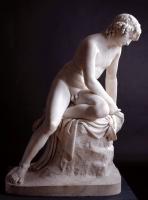
On 10th February 1836 John Gibson [aged 45] was elected Fellow of the Royal Academy. He submitted a statue of Narcissus as his Diploma Work. The subject is one from classical mythology but the figure was initially inspired by a scene Gibson observed in Rome. While out walking on the Pincian Hill, the artist caught sight of a boy looking at his reflection in water, reminding him of the story of Narcissus.
On 10th February 1840 Prince Albert Saxe Coburg Gotha [aged 20] and Queen Victoria of the United Kingdom [aged 20] were married by Archbishop Charles Longley [aged 45] at Chapel Royal, St James's Palace. She the daughter of Edward Augustus Hanover 1st Duke Kent and Strathearn and Marie Luise Victoria Saxe Coburg Gotha Duchess Kent and Strathearn [aged 53]. He the son of Ernest Saxe Coburg Gotha I Duke Saxe Coburg Gotha [aged 56] and Duchess Louise Dorothea of Saxe Coburg Altenburg. They were first cousins. She a granddaughter of King George III of Great Britain and Ireland.
11th February 1840. Tuesday. Supplement to the London Gazette.
St James's Palace [Map]. February 10, 1840.
THIS day the Marriage of the QUEEN'S MOST EXCELLENT MAJESTY [aged 20] with Field Marshal His ROYAL HIGHNESS FRANCIS ALBERT AUGUSTUS CHARLES EMANUEL, DUKE OF SAXE, PRINCE OF SAXE COBOURG AND GOTHA, Knight of the Most Noble Order of the Garter [aged 20], was solemnized at the Chapel Royal, St James's Palace.
Field Marshal His Royal Highness the Prince Albert, attended by his Suite, proceeded from Buckingham-Palace [Map] this day, about half past eleven o'clock, to St. James's-Palace [Map], in the following order:
The first Carriage,.
Conveying General Sir George Anson, G.C.B. [aged 43]; George Edward Anson, Esq [aged 27]; and Francis Seymour, Esq [aged 26]; the Bridegroom's Gentlemen of Honour.
The second Carriage,.
Conveying the Lord Chamberlain of the Household, the Earl of Uxbridge [aged 42] (who afterwards returned to Buckingham-Palace [Map], to attend in Her Majesty's Procession), and the Officers of the Suite of His Serene Highness the Reigning Duke of Saxe Cobourg and Gotha, and the Hereditary Prince of Saxe Cobourg and Gotha, viz. Count Kolowrath [aged 62], Baron Alvensleben, and Baron De Lowenfels.
The third Carriage,.
Conveying His Royal Highness the Prince Albert, His Serene Highness the Reigning Duke of Saxe Colourg and Gotha [aged 56] (father), and the Hereditary Prince of Saxe Cobourg and Gotha [aged 21] (elder brother).
Her Majesty, attended by Her Royal Household, accompanied by Her Royal Highness the Duchess of Kent [aged 53], proceeded, at twelve o'clock, from Buckingham-Palace [Map] to St James's Palace [Map], in the following order:
The first Carriage,
Conveying two Gentlemen Ushers, Charles Heneage, Esq [aged 33] and the Honourable Heneage Legge [aged 51]; Yeoman of the Yeomen of the Guard, Charles Hancock, Esq,; and the Groom of the Robes, Captain Francis Seymour [aged 51].
The second Carriage,.
Conveying the Equerry in Waiting, Lord Alfred Paget [aged 23]; two Pages of Honour, Charles T. Wemyss, Esq and Henry William John Byng [aged 8], Esq j and the Groom in Waiting, the Honourable George Keppel.
The third Carriage,.
Conveying the Clerk Marshal, Colonel the Honourable H. E. G. Cavendish [aged 50]; the Vice-Chamberlain, the Earl of Belfast, G. C. H. [aged 43]; and the Comptroller of the Household, the Right Honourable George Stevens Byng [aged 33].
The fourth Carriage,.
Conveying the Woman of the Bedchamber in Waiting, Mrs. Brand [aged 60]; the Captain of the Yeomen of the Guard, the Earl of Ilchester [aged 52]; the Master of the Buck Hounds, Lord Kinaird; and the Treasurer of the Household, the Earl of Surrey [aged 48].
The fifth Carriage,.
Conyeying the Maid of Honour in Waiting, the Honourable Caroline Cocks [aged 45]; the Duchess of Kent's Lady in Waiting, Lady K Howard; the Gold Stick, General Lord Hill, G. C.B., G. C. H.; and the Lord in Waiting, Viscount Torrington [aged 27].
The sixth Carriage,.
Conveying the Lady of the Bedchamber in Waiting, the Countess of Sandwich [aged 27]; the Master of the Horse, the Earl of Albemarle, G. C.H. [aged 67]; the Lord Steward, the Earl of Erroll, K.T. G.C.H. [aged 38]; and the Lord Chamberlain, the Earl of Uxbridge.
The seventh Carriage,.
Conveying Her Most Excellent Majesty the QUEEN; Her Royal Highness the Duchess of Kent; and the Duchess of Sutherland, the Mistress of the Robes to Her Majesty [aged 33].
The illustrious Personages, and others composing the Procession, then assembled in the Throneroom, and, having been called over by Garter Principal King of Arms, the Processions, moyed in the following order, to the Chapel Royal:
THE PROCESSION OF THE BRIDEGROOM.
Drums and Trumpets.
Serjeant Trumpeter.
Master of the Ceremonies, Sir Robert Chester, Knt.
Lancaster Herald, George Frederick Beltz, Esq K.H [aged 65], York Herald, Charles George Young, Esq [aged 44].
The Bridegroom's Gentlemen of Honour, viz. Francis Seymour, Esq Gen. Sir George Anson, G.C B. George Edward Anson, Esq.
Vice-Chamberlain of Her Majesty's Household, The Earl of Belfast, G.C.H., Lord Chamberlain of Her Majesty's Household, The Earl of Uxbridge.
Continues...
THE QUEEN. Wearing the Collar of the Order of the Garter.
Her Majesty's Train borne by the following twelve unmarried Ladies, viz.
Lady Adelaide Paget [aged 20], Lady Caroline Amelia Gordon-Lennox [aged 20], Lady Sarah Frederica Caroline Villiers [aged 18], Lady Elizabeth Anne Georgiana Dorothea Howard [aged 23], Lady Frances Elizabeth Cowper [aged 20], Lady Ida Harriet Augusta Hay [aged 18], Lady Elizabeth West [aged 21], Lady Catherine Lucy Wilhelmina Stanhope, Lady Mary Augusta Frederica Grimston [aged 20], Lady Jane Harriet Bouverie [aged 20], Lady Eleanora Caroline Paget [aged 12], Lady Mary Charlotte Howard [aged 18].
Assisted by the Groom of the Robes, Captain Francis Seymour.
Master of the Horse, The Earl of Albemarle, G.C.H., Mistress of the Robes, The Duchess of Sutherland.
Ladies of the Bedchamber, The Marchioness of Normanby [aged 41], The Duchess of Bedford [aged 56], The Countess of Burlington [aged 28], The Countess of Sandwich, The Baroness Portman [aged 30], The Dowager Lady Lyttleton [aged 52], The Lady Barham [aged 25].
Maids of Honour, The Hon. Amelia Murray, The Hon. Harriet Pitt, The Hon. Caroline Cocks, The Hon. Henrietta Anson, The Hon. Matilda Paget, The Hon. Harriet Lister, The Hon. Sarah Mary Cavendish.


10th February 1840. George Hayter [aged 47]. Wedding of Queen Victoria and Prince Albert. Hayter included portraits of fifty-six of those present at the occasion and sittings took place over the next year. The Queen [aged 20] sat for him in March in her 'Bridal dress, veil, wreath & all', and Prince Albert [aged 20] also posed for his portrait several times during the following months. Hayter's family too helped out with his son, Henry, modelling the Prince's costume, while his daughter Mary posed for the Queen's arm and wearing the veil. Victoria's aunt Queen Adelaide [aged 47], however, was unwilling to co-operate and the artist had to refer to a miniature for her likeness. Hayter included himself in the painting, on the lower right, with his sketchbook and pencil.
Chronicle of Abbot Ralph of Coggeshall
The Chronicle of Abbot Ralph of Coggeshall (Chronicon Anglicanum) is an indispensable medieval history that brings to life centuries of English and European affairs through the eyes of a learned Cistercian monk. Ralph of Coggeshall, abbot of the Abbey of Coggeshall in Essex in the early 13th century, continued and expanded his community’s chronicle, documenting events from the Norman Conquest of 1066 into the tumultuous reign of King Henry III. Blending eyewitness testimony, careful compilation, and the monastic commitment to record-keeping, this chronicle offers a rare narrative of political intrigue, royal power struggles, and social upheaval in England and beyond. Ralph’s work captures the reigns of pivotal figures such as Richard I and King John, providing invaluable insights into their characters, decisions, and the forces that shaped medieval rule. More than a simple annal, Chronicon Anglicanum conveys the texture of medieval life and governance, making it a rich source for scholars and readers fascinated by English history, monastic authorship, and the shaping of the medieval world.
Available at Amazon in eBook and Paperback format.

On 10th February 1843 Thomas Hesketh 4th Baronet [aged 43] died the day before his 44th birthday. His son Thomas [aged 18] succeeded 5th Baronet Fermor-Hesketh of Rufford in Lancashire. Memorial at St Mary The Virgin Church, Rufford [Map].
Thomas Hesketh 4th Baronet: On 11th February 1799 he was born to Thomas Dalrymple Hesketh 3rd Baronet and Sophia Hinde Lady Hesketh. On 3rd April 1824 Thomas Hesketh 4th Baronet and Annette Maria Bomford Lady Hesketh were married. On 27th July 1842 Thomas Dalrymple Hesketh 3rd Baronet died. He was buried at St Mary The Virgin Church, Rufford [Map]. His son Thomas succeeded 4th Baronet Hesketh of Rufford in Lancashire. Annette Maria Bomford Lady Hesketh by marriage Lady Hesketh of Rufford in Lancashire.
On 10th February 1846 the Battle of Sabraon was a decisive victory by the forces of the East India Company and over the army of the Sikh Empire of the Punjab.
Ten Years' Digging. February 10th [1848]. A small barrow in the Cross Flatts' plantation was re-opened. Its sepulchral character was first ascertained in 1827, by a labourer engaged in making holes for planting, who found the skeleton of a young person, accompanied by an iron knife. On the present occasion no more interments were found, but in turning over the earth, the following articles were met with: part of a large stag's horn, a celt of basaltic stone, some pieces of hand-mills, flints, and fragments of red pottery. On looking over the bones of the skeleton before disinterred, it was found that two of the lumbar vertebrae were attached together by an abnormal growth of osseous substance.
Ten Years' Digging. On the 10th of February [1849], we investigated a tumulus [Possibly Cart Low [Map]] midway between Throwley and Calton, 17 yards across and 3 feet high, wholly composed of earth of a burnt appearance throughout The principal interment was found about a yard from the centre, and consisted of a deposit of large pieces of calcined human bone, which lay within a circular hole in the natural soil, about a foot deep, of well defined shape, resulting from contact with a wooden or wicker work vessel, in which the bones were placed when buried, the vestiges of which, in the form of impalpable black powder, intervened between the bones and the earth. Upon the bones lay part of a small bronze pin, and a very beautiful miniature vase, of the "Incense Cup" type, 8⅛ inches high, 3½ diameter, ornamented with chevrons and lozenges, and perforated in two places at one side. Among the bones were two small pointed pieces of flint, and a common quartz pebble; and below the deposit was the shoulder-blade of a large animal, which has been designedly reduced to an irregular shape by the use of flint saws, or otlier instruments equally inefficient. At one side of this interment, were four other deposits of calcined bone, placed on the floor of the mound, here of rock, intersected by veins of clay, without any protection from cist or urn, but evidently deposited at one and the same time, as the heaps were quite distinct and imdisturbed, though very near to each other. They had been so thoroughly calcined as to be comminuted, and had almost reached the inevitable catastrophe of "dust to dust,"
On 10th February 1850 Elizabeth Martineau [aged 55] died of tuberculosis.
On 10th February 1852 Samuel Prout [aged 68] died.
On 10th February 1858 William Henry Fitzroy 6th Duke Grafton [aged 38] and Marie Anne Louise Baring Duchess Grafton [aged 25] were married. He the son of Henry Fitzroy 5th Duke Grafton [aged 68] and Mary Caroline Berkeley Duchess Grafton [aged 62].
On 10th February 1868 Waldemar Hohenzollern was born to Frederick III King Prussia [aged 36] and Victoria Empress Germany Queen Consort Prussia [aged 27]. He a grandson of Queen Victoria of the United Kingdom. He died aged eleven in 1879.


On 10th February 1874 Augustus Fitzgerald 3rd Duke Leinster [aged 82] died. His son Charles [aged 54] succeeded 4th Duke Leinster. Caroline Leveson-Gower Duchess Leinster [aged 46] by marriage Duchess Leinster.

The London Gazette 25558. St. James's Palace, February 10, 1886. THE Queen has been pleased to make the following appointments in Her Majesty's Household:— .
Valentine Augustus [aged 60], Earl of Kenmare, K.P., to be Lord Chamberlain of Her Majesty's Household, in the room of Edward [aged 48], Earl of Lathom, resigned.
Charles Douglas Richard [aged 45], Lord Sudeley to be Captain of the Corps of Gentlemen at Arms, in the room of George William [aged 47], Earl of Coventry, resigned.
William John, Lord Monson to be Captain of Her Majesty's Guard of Yeomen of the Guard, in the room of George William [aged 61], Viscount Barrington, resigned.
The Honourable Charles Robert Spencer [aged 28], M.P., to be one of the Grooms in Waiting in Ordinary to Her Majesty, in the room of Sir Henry Fletcher [aged 50], Bart., M.P., resigned.

On 10th February 1887, coincidentally the same day his father died, 10 February, Charles William Fitzgerald Fitzgerald 4th Duke Leinster [aged 67] died at Carton House, Carton, Kildare, County Kildare. His son Gerald [aged 35] succeeded 5th Duke Leinster. Hermione Wilhelmina Duncombe Duchess Leinster [aged 22] by marriage Duchess Leinster.

Anne Boleyn. Her Life as told by Lancelot de Carle's 1536 Letter.
In 1536, two weeks after the execution of Anne Boleyn, her brother George and four others, Lancelot du Carle, wrote an extraordinary letter that described Anne's life, and her trial and execution, to which he was a witness. This book presents a new translation of that letter, with additional material from other contemporary sources such as Letters, Hall's and Wriothesley's Chronicles, the pamphlets of Wynkyn the Worde, the Memorial of George Constantyne, the Portuguese Letter and the Baga de Secrets, all of which are provided in Appendices.
Available at Amazon in eBook and Paperback format.
On or before 10th February 1901, the date he was baptised at St Mary's Church, Iffley, Lionel St George Gray was born to Harold St George Gray [aged 29] and Florence Harriet Young [aged 25].
On 10th February 1904 Alexander Teck 1st Earl Athlone [aged 30] and Princess Alice Countess Athlone [aged 20] were married at St George's Chapel, Windsor Castle [Map]. She the daughter of Leopold Saxe Coburg Gotha 1st Duke Albany and Helena Waldeck Duchess Albany. They were second cousin once removed. He a great grandson of King George III of Great Britain and Ireland. She a granddaughter of Queen Victoria of the United Kingdom.
On 10th February 1917 John William Waterhouse [aged 67] died. He was buried at Kensal Green Cemetery [Map].
On 10th February 1931 Eugene de Blaas [aged 87] died.
On 10th February 1934 Mary Louisa Elizabeth Montagu Duchess Hamilton Duchess Brandon [aged 79] died.
On 10th February 1942 Bishop Nugent Hicks [aged 70] died. He was buried at Lincoln Cathedral [Map].
Bishop Nugent Hicks: In 1872 he was born. In 1933 he was appointed Bishop of Lincoln.

St Vincent's Church, Caythorpe [Map]. Memorial to those who lost their lives in an air accident whilst on a training mission on 10th February 1945. Avro Lancaster PB812 crashed into the old Caythorpe Railway Station with the loss of all lives.
On 10th February 1950 John William Aubrey Beauclerk was born to Charles Beauclerk 13th Duke St Albans [aged 34] and Suzanne Marie Fesq Duchess St Albans [aged 28].

On 10th February 1956 Hugh Trenchard 1st Viscount Trenchard [aged 83] died at his London home in Sloane Avenue. His funeral was held at Westminster Abbey on 21st February 1956. His body was cremated and the ashes entombed at the Battle of Britain Chapel in the Abbey. His son Thomas [aged 32] succeeded 2nd Viscount Trenchard of Wolfeton in Dorset, 2nd Baron Trenchard of Wolfeton in Dorset and 2nd Baronet Trenchard of Wolfeton in Dorset.
Thomas Trenchard 2nd Viscount Trenchard: On 15th December 1923 he was born to Hugh Trenchard and Katherine Salvin Lady Trenchard. On 29th April 1987 he died. His son Hugh succeeded 3rd Viscount Trenchard of Wolfeton in Dorset, 3rd Baron Trenchard of Wolfeton in Dorset and 3rd Baronet Trenchard of Wolfeton in Dorset. Fiona Morrison Viscountess Trenchard by marriage Viscountess Trenchard of Wolfeton in Dorset.
On 10th February 1965 Wilhelm Friedrich Christian Glücksburg Duke Schleswig Holstein Sonderburg Glücksburg [aged 73] died. His son Friedrich [aged 42] succeeded Duke Schleswig Holstein Sonderburg Glücksburg.
On 10th February 1970 Louise Clews Duchess of Argyll [aged 65] died.
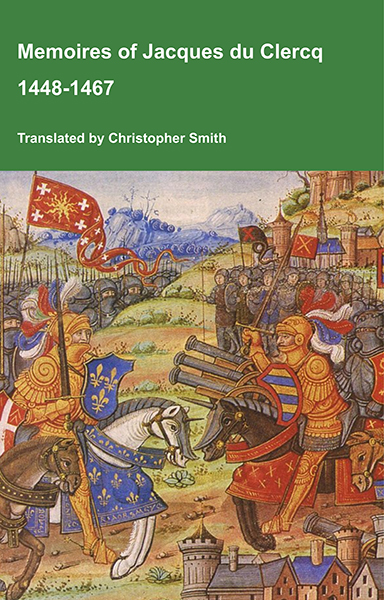
This is a translation of the 'Memoires of Jacques du Clercq', published in 1823 in two volumes, edited by Frederic, Baron de Reissenberg. In his introduction Reissenberg writes: 'Jacques du Clercq tells us that he was born in 1424, and that he was a licentiate in law and a counsellor to Philip the Good, Duke of Burgundy, in the castellany of Douai, Lille, and Orchies. It appears that he established his residence at Arras. In 1446, he married the daughter of Baldwin de la Lacherie, a gentleman who lived in Lille. We read in the fifth book of his Memoirs that his father, also named Jacques du Clercq, had married a lady of the Le Camelin family, from Compiègne. His ancestors, always attached to the counts of Flanders, had constantly served them, whether in their councils or in their armies.' The Memoires cover a period of nineteen years beginning in in 1448, ending in in 1467. It appears that the author had intended to extend the Memoirs beyond that date; no doubt illness or death prevented him from carrying out this plan. As Reissenberg writes the 'merit of this work lies in the simplicity of its narrative, in its tone of good faith, and in a certain air of frankness which naturally wins the reader’s confidence.' Du Clercq ranges from events of national and international importance, including events of the Wars of the Roses in England, to simple, everyday local events such as marriages, robberies, murders, trials and deaths, including that of his own father in Book 5; one of his last entries.
Available at Amazon in eBook and Paperback format.
On 10th February 1441 Henry of York was born to Richard Plantagenet 3rd Duke of York [aged 29] and Cecily "Rose of Raby" Neville Duchess York [aged 25]. He died the same day. He a great x 2 grandson of King Edward III of England. Coefficient of inbreeding 2.42%.
On 10th February 1526 Theodor Wittelsbach was born to William Wittelsbach IV Duke Bavaria [aged 32] and Marie Jakobaea Baden Duchess Bavaria [aged 18]. Coefficient of inbreeding 1.65%. He died aged eight in 1534.
On 10th February 1563 Thomas Seymour was born to Edward Seymour 1st Earl Hertford [aged 23] and Catherine Grey Countess Hertford [aged 22] at Tower of London [Map]. He a great x 2 grandson of King Henry VII of England and Ireland. He married before 8th August 1600 Isabella Olney.
On 10th February 1606 Christine Marie Bourbon Duchess Savoy was born to Henry IV King France [aged 52] and Marie de Medici Queen Consort France [aged 30]. She married 1619 her third cousin Victor Amadeus I Duke of Savoy, son of Charles Emmanuel Savoy I Duke Savoy and Catherine Habsburg Spain Duchess Savoy, and had issue.
On 10th February 1611 Unamed Lorraine was born to Henry Lorraine II Duke Lorraine [aged 48] and Margherita Gonzaga Duchess Lorraine [aged 19]. She died aged less than one years old.
On 10th February 1619 James Howard 3rd Earl Suffolk was born to Theophilus Howard 2nd Earl Suffolk [aged 36] and Elizabeth Home Countess Suffolk [aged 20]. His godfathers were King James I of England and Ireland and VI of Scotland [aged 52] and George Villiers 1st Duke of Buckingham [aged 26]. He married (1) 1st December 1640 his fifth cousin Susannah Rich Countess Suffolk, daughter of Henry Rich 1st Earl Holland and Isabel Cope Countess Holland, and had issue (2) February 1650 Barbara Villiers Countess Suffolk and had issue (3) before 8th May 1682 Anne Montagu Countess Suffolk, daughter of Robert Montagu 3rd Earl Manchester and Anne Yelverton Countess Manchester.
On 10th February 1637 William Paget 6th Baron Paget Beaudasert was born to William Paget 5th Baron Paget Beaudasert [aged 27] and Frances Rich Baroness Geneville Beaudasert [aged 20]. He married before January 1663 Frances Pierrepont Baroness Geneville Beaudasert and had issue.
On 10th February 1657 George Carpenter 1st Baron Carpenter was born to Warncombe Carpenter. He married 23rd January 1693 Alice Caulfeild Baroness Carpenter, daughter of William Caulfeild 1st Viscount Charlemont and Sarah Moore Viscountess Charlemont, and had issue.
On 10th February 1678 George Savile 7th Baronet was born to John Savile. He married before 18th July 1726 Mary Pratt and had issue.

On 10th February 1689 Bishop Henry Egerton was born to John Egerton 3rd Earl Bridgewater [aged 42] and Jane Paulet Countess Bridgewater [aged 33]. He married 18th December 1720 Elizabeth Adriana Bentinck, daughter of William Bentinck 1st Earl of Portland and Jane Martha Temple Countess Portland, and had issue.
Henrici Quinti, Angliæ Regis, Gesta, is a first-hand account of the Agincourt Campaign, and subsequent events to his death in 1422. The author of the first part was a Chaplain in King Henry's retinue who was present from King Henry's departure at Southampton in 1415, at the siege of Harfleur, the battle of Agincourt, and the celebrations on King Henry's return to London. The second part, by another writer, relates the events that took place including the negotiations at Troye, Henry's marriage and his death in 1422.
Available at Amazon in eBook and Paperback format.

On 10th February 1723 Alexander Montgomerie 10th Earl Eglinton was born to Alexander Montgomerie 9th Earl Eglinton [aged 63] and Susanna Kennedy Countess Winton [aged 33].
On 10th February 1750 Frances Scudamore Duchess Norfolk was born to Charles Fitzroy-Scudamore [aged 37] and Frances Scudamore 3rd Duchess Beaufort [aged 39]. Her mother died from childbirth six dys later when she inherited Holme Lacy House, Herefordshire [Map]. She a great x 2 granddaughter of King Charles II of England Scotland and Ireland. She married 6th April 1771 Charles Howard 11th Duke of Norfolk, son of Charles Howard 10th Duke of Norfolk and Catherine Brockholes Duchess Norfolk.
On 10th February 1755 Caroline Stolberg Gedern Duchess Veragua Duchess Berwick was born to Gustav Adolh Stolberg Gedern. She married 9th October 1771 Carlos Fitz James Stuart 10th Duke Veragua 4th Duke Berwick, son of James Fitz James 3rd Duke Berwick 10th Duke Veragua and Maria Teresa Silva Duchess Berwick and Veragua, and had issue.
On 10th February 1761 William Rowley 2nd Baronet was born to Admiral Joshua Rowley 1st Baronet [aged 27]. He married 1785 Susanna Edith Harland, daughter of Admiral Robert Harland 1st Baronet and Susanna Reynold, and had issue.
On 10th February 1771 William Langham 8th Baronet was born to James Langham 7th Baronet [aged 35] and Juliana Musgrave Lady Langham. He married (1) 20th August 1795 Henrietta Elizabeth Frederica Vane Lady Langham and had issue (2) 19th May 1810 Augusta Priscilla Irby Lady Langham.
On 10th February 1790 Henry Fitzroy 5th Duke Grafton was born to George Henry Fitzroy 4th Duke Grafton [aged 30] and Charlotte Maria Waldegrave [aged 28]. He was educated at Harrow School and Trinity College, Cambridge University [Map]. He a great x 3 grandson of King James II of England Scotland and Ireland. He married 20th June 1812 his half fourth cousin once removed Mary Caroline Berkeley Duchess Grafton and had issue.
On 10th February 1797 George Chichester 3rd Marquess Donegal was born to George Chichester 2nd Marquess Donegal [aged 27] at Great Cumberland Place. He married (1) 1822 Harriet Anne Butler Marchioness Donegal, daughter of Richard Butler 1st Earl Glengall, and had issue (2) 26th February 1862 Harriet Graham Marchioness Donegal, daughter of Bellingham Reginald Graham 7th Baronet and Harriet Clark Lady Graham.
On 10th February 1800 George Charles Grantley FitzHardinge Berkeley was born to Frederick Augustus Berkeley 5th Earl Berkeley [aged 55] and Mary Cole. He was He a great x 3 grandson of King Charles II of England Scotland and Ireland.
On 10th February 1807 Charles James Fox Russell was born to John Russell 6th Duke Bedford [aged 40] and Georgiana Gordon Duchess Bedford [aged 25]. He a great x 3 grandson of King Charles II of England Scotland and Ireland.
On 10th February 1812 Percy Burrell 4th Baronet was born to Charles Merrik Burrell 3rd Baronet [aged 37] and Frances Wyndham Lady Burrell [aged 23]. He married 26th August 1856 Henrietta Katherine Brooke-Pechell, daughter of George Brooke-Pechell 4th Baronet and Katharine Anabella Bisshop Lady Brooke-Pechell.


The True Chronicles of Jean le Bel Volume 1 Chapters 1-60 1307-1342
The True Chronicles of Jean le Bel offer one of the most vivid and immediate accounts of 14th-century Europe, written by a knight who lived through the events he describes, and experienced some of them first hand. Covering the early decades of the Hundred Years’ War, this remarkable chronicle follows the campaigns of Edward III of England, the politics of France and the Low Countries, and the shifting alliances that shaped medieval warfare. Unlike later historians, Jean le Bel writes with a strong sense of eyewitness authenticity, drawing on personal experience and the testimony of fellow soldiers. His narrative captures not only battles and sieges, but also the realities of military life, diplomacy, and the ideals of chivalry that governed noble society. A key source for Jean Froissart, Le Bel’s chronicle stands on its own as a compelling and insightful work, at once historical record and literary achievement. This translation builds on the 1905 edition published in French by Jules Viard, adding extensive translations from other sources Rymer's Fœdera, the Chronicles of Adam Murimuth, William Nangis, Walter of Guisborough, a Bourgeois of Valenciennes, Geoffrey le Baker of Swinbroke and Richard Lescot to enrich the original text and Viard's notes.
Available at Amazon in eBook and Paperback format.
On 10th February 1818 William John Butler was born to John La Forey Butler [aged 32] and Henrietta Patrick. He married 29th July 1843 Emma Barnett.
On 10th February 1821 Roberto Bompiani was born in Rome, Italy [Map].
On 10th February 1824 George Glyn 2nd Baron Wolverton was born to George Glyn Banker 1st Baron Wolverton [aged 26] and Marianne Grenfell Baroness Wolverton [aged 22]. He married 22nd June 1848 Georgiana "Giana" Maria Tufnell Baroness Wolverton.
On 10th February 1829 Alexander Jardine 8th Baronet was born to William Jardine 7th Baronet [aged 28] and Hyacinth Symonds Lady Jardine.

On 10th February 1844 Thomas Hugh Bell 2nd Baronet was born to Isaac Lowthian Bell 1st Baronet [aged 39] and Margaret Pattinson. He married (1) 23rd April 1867 Maria Shield and had issue (2) after 19th April 1871 Florence Eveleen Eleanore Olliffe Lady Bell and had issue.

On 10th February 1846 Charles de la Poer Beresford 1st Baron Beresford was born to John Beresford 4th Marquess Waterford [aged 31] and Christiana Leslie Marchioness of Waterford [aged 26].
On 10th February 1856 Seymour John Fortescue was born to Hugh Fortescue 3rd Earl Fortescue [aged 37] and Georgina Augusta Dawson-Damer Countess Fortescue [aged 29].
On 10th February 1861 Walter Annesley 7th Earl Annesley was born to William Octavius Annesley [aged 22].
On 10th February 1868 Waldemar Hohenzollern was born to Frederick III King Prussia [aged 36] and Victoria Empress Germany Queen Consort Prussia [aged 27]. He a grandson of Queen Victoria of the United Kingdom. He died aged eleven in 1879.
On 10th February 1874 John Holdsworth Dimsdale 2nd Baronet was born to Joseph Cockfield Dimsdale 1st Baronet [aged 25].
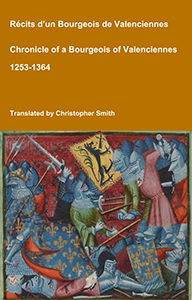
Chronicle of a Bourgeois of Valenciennes
Récits d’un bourgeois de Valenciennes aka The Chronicle of a Bourgeois of Valenciennes is a vivid 14th-century vernacular chronicle written by an anonymous urban chronicler from Valenciennes in the County of Hainaut. It survives in a manuscript that describes local and regional history from about 1253 to 1366, blending chronology, narrative episodes, and eyewitness-style accounts of political, military, and social events in medieval France, Flanders, and the Low Countries. The work begins with a chronological framework of events affecting Valenciennes and its region under rulers such as King Philip VI of France and the shifting allegiances of local nobility. It includes accounts of conflicts, sieges, diplomatic manoeuvres, and the impact of broader struggles like the Hundred Years’ War on urban life in Hainaut. Written from the perspective of a burgher (bourgeois) rather than a monastery or royal court, the chronicle offers a rare lay viewpoint on high politics and warfare, reflecting how merchants, townspeople, and civic institutions experienced the turbulence of the 13th and 14th centuries. Its narrative style combines straightforward reporting of events with moral and civic observations, making it a valuable source for readers interested in medieval urban society, regional politics, and the lived experience of war and governance in pre-modern Europe.
Available at Amazon in eBook and Paperback format.
On 10th February 1891 Alexandra Bridget Coke Countess Airlie was born to Thomas William Coke 3rd Earl of Leicester [aged 42] and Alice Emily White Countess Leicester [aged 35]. She married 17th July 1917 David Ogilvy 12th Earl of Airlie, son of David Ogilvy 11th Earl of Airlie and Mabell Gore Countess Airlie, and had issue.
On 10th February 1894 Harold Macmillan 1st Earl Stockton was born.
On 10th February 1903 Charles Cornwall-Legh 5th or 8th Baron Grey of Codnor was born to Charles Cornwall Legh [aged 26].
On 10th February 1950 John William Aubrey Beauclerk was born to Charles Beauclerk 13th Duke St Albans [aged 34] and Suzanne Marie Fesq Duchess St Albans [aged 28].
On 10th February 1963 Edmund Pery 7th Earl of Limerick was born to Patrick Pery 6th Earl of Limerick [aged 32].
On 10th February 1525 John III King Portugal [aged 22] and Catherine of Austria Queen Consort Portugal [aged 18] were married. She by marriage Queen Consort Portugal. She the daughter of Philip "Handsome Fair" King Castile and Joanna "The Mad" Trastámara Queen Castile [aged 46]. He the son of Manuel "Fortunate" I King Portugal and Maria Trastámara Queen Consort Portugal. They were first cousins. He a great x 4 grandson of King Edward III of England. She a great x 4 granddaughter of King Edward III of England.
On 10th February 1581 Lionel Tollemache 1st Baronet [aged 18] and Katherine Cromwell [aged 19] were married at North Elmham, Norfolk [Map].
On 10th February 1676 Charles Gerard 3rd Baronet [aged 23] and Honora Seymour [aged 17] were married. They were fifth cousin once removed. She a great x 5 granddaughter of King Henry VII of England and Ireland.
On 10th February 1707 John Stapylton 3rd Baronet [aged 24] and Mary Sandys Lady Stapylton [aged 20] were married at Gainsborough, Lincolnshire. They had eight sons and five daughters.
On 10th February 1710 Brian Broughton 3rd Baronet [aged 32] and Elizabeth Delves [aged 31] were married. She her father's heiress.
Chronicle of Walter of Guisborough
A canon regular of the Augustinian Guisborough Priory, Yorkshire, formerly known as The Chronicle of Walter of Hemingburgh, describes the period from 1066 to 1346. Before 1274 the Chronicle is based on other works. Thereafter, the Chronicle is original, and a remarkable source for the events of the time. This book provides a translation of the Chronicle from that date. The Latin source for our translation is the 1849 work edited by Hans Claude Hamilton. Hamilton, in his preface, says: 'In the present work we behold perhaps one of the finest samples of our early chronicles, both as regards the value of the events recorded, and the correctness with which they are detailed; Nor will the pleasing style of composition be lightly passed over by those capable of seeing reflected from it the tokens of a vigorous and cultivated mind, and a favourable specimen of the learning and taste of the age in which it was framed.'
Available at Amazon in eBook and Paperback format.
On 10th February 1728 John Hobart 1st Earl Buckinghamshire [aged 34] and Elizabeth Bristow Countess Buckinghamshire were married. She by marriage Lady Hobart of Intwood in Norfolk.
On 10th February 1768 Alexander Home 9th Earl of Home and Abigail Browne Ramey Countess Home were married. He the son of Alexander Home 7th Earl of Home and Anne Kerr Countess Home.
On 10th February 1772 George Mason aka Villiers 2nd Earl Grandison [aged 20] and Gertrude Seymour-Conway [aged 21] were married. She the daughter of Francis Seymour-Conway 1st Marquess Hertford [aged 53] and Isabella Fitzroy Countess Hertford [aged 45]. He the son of Alan Mason Viscount Grandison and Elizabeth Fitzgerald Villiers 1st Countess Grandison. They were fourth cousin once removed. She a great x 2 granddaughter of King Charles II of England Scotland and Ireland.
On 10th February 1794 George William Gunning 2nd Baronet [aged 31] and Elizabeth Diana Bridgeman were married.
On 10th February 1829 Montague Cholmeley 2nd Baronet [aged 26] and Georgiana Beauclerk Lady Cholmeley [aged 20] were married. She the daughter of William Beauclerk 8th Duke St Albans and Maria Janetta Nelthorpe Duchess St Albans.
On 10th February 1840 Prince Albert Saxe Coburg Gotha [aged 20] and Queen Victoria of the United Kingdom [aged 20] were married by Archbishop Charles Longley [aged 45] at Chapel Royal, St James's Palace. She the daughter of Edward Augustus Hanover 1st Duke Kent and Strathearn and Marie Luise Victoria Saxe Coburg Gotha Duchess Kent and Strathearn [aged 53]. He the son of Ernest Saxe Coburg Gotha I Duke Saxe Coburg Gotha [aged 56] and Duchess Louise Dorothea of Saxe Coburg Altenburg. They were first cousins. She a granddaughter of King George III of Great Britain and Ireland.


On 10th February 1858 William Henry Fitzroy 6th Duke Grafton [aged 38] and Marie Anne Louise Baring Duchess Grafton [aged 25] were married. He the son of Henry Fitzroy 5th Duke Grafton [aged 68] and Mary Caroline Berkeley Duchess Grafton [aged 62].
On 10th February 1880 Henry Bruce 2nd Baron Aberdare [aged 28] and Constance Mary Beckett Baroness Aberdare were married. She by marriage Baroness Aberdare of Duffryn in Glamorganshire.

On 10th February 1892 Henry Gerard Sturt 1st Baron Alington [aged 66] and Evelyn Henrietta Leigh Baroness Alington were married. She by marriage Baroness Alington.
On 10th February 1902 Ivor Churchill Guest 1st Viscount Wimborne [aged 29] and Alice Katherine Sibell Grosvenor [aged 21] were married.
On 10th February 1904 Alexander Teck 1st Earl Athlone [aged 30] and Princess Alice Countess Athlone [aged 20] were married at St George's Chapel, Windsor Castle [Map]. She the daughter of Leopold Saxe Coburg Gotha 1st Duke Albany and Helena Waldeck Duchess Albany. They were second cousin once removed. He a great grandson of King George III of Great Britain and Ireland. She a granddaughter of Queen Victoria of the United Kingdom.
On 10th February 1915 Iain Colquhoun 7th Baronet [aged 27] and Geraldine Bryde Dinah Tennant Lady Colquhoun [aged 25] were married. She by marriage Lady Colquhoun of Luss in Dumbartsonshire.
On 10th February 1926 Algernon George de Vere Capell 8th Earl of Essex [aged 41] and Alys Montgomery Falkiner Countess of Essex were married at the Saint Albans registry office. She by marriage Countess Essex. He the son of George Capell 7th Earl of Essex and Ellenor Harriet Maria Harford.


Jean de Waurin's Chronicle of England Volume 6 Books 3-6: The Wars of the Roses
Jean de Waurin was a French Chronicler, from the Artois region, who was born around 1400, and died around 1474. Waurin’s Chronicle of England, Volume 6, covering the period 1450 to 1471, from which we have selected and translated Chapters relating to the Wars of the Roses, provides a vivid, original, contemporary description of key events some of which he witnessed first-hand, some of which he was told by the key people involved with whom Waurin had a personal relationship.
Available at Amazon in eBook and Paperback format.
On 10th February 1930 Robert Abdy 5th Baronet [aged 33] and Helen Diana Bridgeman [aged 22] were married. She the daughter of Orlando Bridgeman 5th Earl Bradford [aged 56] and Margaret Cecilia Bruce Countess Bradford [aged 47].


On 10th February 1947 David William Anthony Blyth Macpherson 2nd Baron Strathcarron [aged 23] and Valerie Cole Baroness Strathcarron were married. She by marriage Baroness Strathcarron of Banchor in Invernessshire. The marriage was annulled by the end of the year. Note the National Portrait Gallery has a photo with Valerie Cole Baroness Strathcarron taken on 16th March 1939 so the date of this marriage may be incorrect.
On 10th February 1951 Oswald Phipps 4th Marquess Normanby [aged 38] and Grania Guinness Marchioness of Normanby [aged 30] were married. She by marriage Marchioness Normanby. He the son of Constantine Phipps 3rd Marquess Normanby and Gertrude Stansfeld Foster Marchioness Normanby.
On 10th February 1990 James Chichester 12th Baronet [aged 38] and Margaret Anne Chandos-Pole were married.
On 10th February 917 Frederuna von Ringelheim Queen Consort West Francia [aged 32] died.
On 10th February 1056 Bishop Athelstan died. He had been blind for thirteen years.
On 10th February 1127 William "Troubadour" Poitiers IX Duke Aquitaine [aged 55] died. His son William [aged 28] succeeded X Duke Aquitaine.
On 10th February 1163 Baldwin III King Jerusalem [aged 33] died at Beirut. His brother Almaric [aged 27] succeeded I King Jerusalem.
On 10th February 1280 Margaret II Countess Flanders [aged 77] died.
On 10th February 1306 John Comyn 3rd Lord Baddenoch [aged 37] was murdered by Robert the Bruce [aged 31], future King of Scotland, before the High Altar of the Greyfriars Monastery [Map]. Robert Comyn, John's uncle, was killed by Christopher Seton [aged 28]. Christopher's brother John Seton [aged 28] was also present.
Murder, in a church, in front of the altar, regarded as a terrible crime. The act gave King Edward I of England [aged 66] cause to invade Scotland. Robert the Bruce was ex-communicated by the Pope for his actions.
King Edward I of England charged Bishop David de Moravia as being complicit in the murder.
On 10th February 1383 John Mowbray 1st Earl Nottingham [aged 17] died. He was buried at Whitefriars. Earl Nottingham extinct. His brother Thomas [aged 14] succeeded 6th Baron Mowbray, 7th Baron Segrave.
On 10th February 1474 Alice Deincourt 6th Baroness Deincourt and Grey, Baroness Lovel and Sudeley [aged 69] died at Titchmarsh, Northamptonshire. Her grandson Francis [aged 18] succeeded 8th Baron Deincourt, 8th Baron Grey of Rotherfield, and the feudal barony of Bedale.
On 10th February 1514 John Hastings 13th Baron Hastings [aged 18] died. His brother Hugh [aged 9] de jure 14th Baron Hastings.
Annals of the six Kings of England by Nicholas Trivet
Translation of the Annals of the Six Kings of England by that traces the rise and rule of the Angevin aka Plantagenet dynasty from the mid-12th to early 14th century. Written by the Dominican scholar Nicholas Trivet, the work offers a vivid account of English history from the reign of King Stephen through to the death of King Edward I, blending political narrative with moral reflection. Covering the reigns of six monarchs—from Stephen to Edward I—the chronicle explores royal authority, rebellion, war, and the shifting balance between crown, church, and nobility. Trivet provides detailed insight into defining moments such as baronial conflicts, Anglo-French rivalry, and the consolidation of royal power under Edward I, whose reign he describes with particular immediacy. The Annals combines careful year-by-year reporting with thoughtful interpretation, presenting history not merely as a sequence of events but as a moral and political lesson. Ideal for readers interested in medieval history, kingship, and the origins of the English state, this chronicle remains a valuable and accessible window into the turbulent world of the Plantagenet kings.
Available at Amazon in eBook and Paperback format.
On 10th February 1561 John Bourchier 2nd Earl Bath [aged 62] died. He was buried on 10th March 1561 at the Church of St John Lateran, Hengrave. His grandson William [aged 3] succeeded 3rd Earl Bath, 13th Baron Fitzwarin, 4th Baron Daubeney
On 10th February 1567 Henry "Lord Darnley" Stewart [aged 21] was murdered at Kirk O Field. Around two in the morning two barrels of gunpowder exploded beneath his room. His body and that of his valet William Taylor were found outside, surrounded by a cloak, a dagger, a chair, and a coat. Darnley was dressed only in his nightshirt. There were no visible marks on the body. He was buried at Holyrood Abbey, Holyrood.
On 10th February 1587 Henry Neville 6th and 4th Baron Abergavenny [aged 57] died. His daughter Mary [aged 33] succeeded 7th Baroness Abergavenny, 5th Baroness Abergavenny. The title was, however, was claimed by Edward Neville [aged 61] who was summoned to Parliament in 1604; this is now considered to be a new creation - see Baron Abergavenny. On the same day that Mary Neville 7th and 5th Baroness Abergavenny 3rd Baroness Despencer was restored to the Baron Despencer as compensaton for her loss if the Abergaveen Barony.
On 10th February 1667 Juan Bautista Martínez del Mazo [aged 55] died.
On 10th February 1682 William Hickman 2nd Baronet [aged 53] died. His son Willoughby [aged 23] succeeded 3rd Baronet Hickman of Gainsborough in Lincolnshire.
On 10th February 1711 Thomas Arundell 4th Baron Arundel [aged 78] died. His son Henry [aged 50] succeeded 5th Baron Arundel of Wardour in Wiltshire.
On 10th February 1732 George Carpenter 1st Baron Carpenter [aged 75] died. He was buried at St Andrew's Church, Owlesbury [Map]. His son George [aged 37] succeeded 2nd Baron Carpenter of Killaghy in County Tipperary. Elizabeth Petty Baroness Carpenter by marriage Baroness Carpenter of Killaghy in County Tipperary.
On 10th February 1736 Francis Vincent 5th Baronet [aged 89] died. His son Henry [aged 50] succeeded 6th Baronet Vincent of Stoke d'Abernon.
On 10th February 1742 Arthur Gore 2nd Baronet [aged 57] died. His son Arthur Gore [aged 39] succeeded 3rd Baronet Gore of Newtown in County Mayo.
On 10th February 1744 John Fleming 6th Earl Wigtown [aged 71] died. His brother Charles [aged 69] succeeded 7th Earl Wigtown, 12th Lord Fleming.
On 10th February 1747 Charles Bruce 4th Earl Elgin 3rd Earl Ailesbury [aged 64] died. Earl Ailesbury, Viscount Bruce of Ampthill in Bedfordshire, Baron Bruce of Skelton in Yorkshire, Baron Bruce of Whorlton in Yorkshire extinct.
Thomas Brudenell 1st Earl Ailesbury [aged 17] succeeded 2nd Baron Bruce of Tottenham in Wiltshire.
Charles Bruce 9th Earl Kincardine 5th Earl Elgin [aged 14] succeeded 5th Earl Elgin.
On 10th February 1767 Robert Long 6th Baronet [aged 62] died. His son James [aged 31] succeeded 7th Baronet Long of Westminster in London.
Jean de Waurin's Chronicle of England Volume 6 Books 3-6: The Wars of the Roses
Jean de Waurin was a French Chronicler, from the Artois region, who was born around 1400, and died around 1474. Waurin’s Chronicle of England, Volume 6, covering the period 1450 to 1471, from which we have selected and translated Chapters relating to the Wars of the Roses, provides a vivid, original, contemporary description of key events some of which he witnessed first-hand, some of which he was told by the key people involved with whom Waurin had a personal relationship.
Available at Amazon in eBook and Paperback format.
On 10th February 1780 Samuel Egerton [aged 68] died. On 19th February 1780 he was buried at St Mary's Church, Rostherne, Tatton [Map]. Monument sculpted by John "The Elder" Bacon [aged 39]. Figures representing Hope and Patience.
The monument inscription describes those also buried in the vault: John Egerton, his wife Elizabeth Barbour buried 10th February 1743, her mother Elizabeth Hill [aged 85] buried 17th April 1713 and John and Elizabeth's daughter-in-law Beatrix Copley [aged 22] buried 1st May 1755.
On 10th February 1787 George Beauclerk 4th Duke St Albans [aged 28] died unmarried and without issue. His first cousin once removed Aubrey [aged 46] succeeded 5th Duke St Albans, 5th Earl Burford, 5th Baron Heddington. Catherine Ponsonby Duchess St Albans [aged 44] by marriage Duchess St Albans.

On 10th February 1789 Henry Harpur 6th Baronet [aged 50] died. His son Henry [aged 26] succeeded 7th Baronet Harpur of Calke Abbey in Derbyshire.
On 10th February 1808 Hugh Douglas Hamilton [aged 68] died.
On 10th February 1808 Murrough O'Brien 1st Marquess Thomond [aged 82] died. His nephew William [aged 43] succeeded 2nd Marquess Thomond, 6th Earl Inchiquin. Rebecca Trotter Marchioness Thomond [aged 33] by marriage Marchioness Thomond.
On 10th February 1810 John Papillion Twisden 7th Baronet [aged 67] died. His son John [aged 26] succeeded 8th Baronet Twisden of Bradbourne in Kent.
On 10th February 1821 Henry Fletcher 2nd Baronet [aged 49] died. His son Henry [aged 13] succeeded 3rd Baronet Fletcher of Clea Hall in Cumberland.

On 10th February 1826 Elizabeth Alicia Maria Wyndham Countess Carnarvon [aged 73] died.
On 10th February 1843 Thomas Hesketh 4th Baronet [aged 43] died the day before his 44th birthday. His son Thomas [aged 18] succeeded 5th Baronet Fermor-Hesketh of Rufford in Lancashire. Memorial at St Mary The Virgin Church, Rufford [Map].
Thomas Hesketh 4th Baronet: On 11th February 1799 he was born to Thomas Dalrymple Hesketh 3rd Baronet and Sophia Hinde Lady Hesketh. On 3rd April 1824 Thomas Hesketh 4th Baronet and Annette Maria Bomford Lady Hesketh were married. On 27th July 1842 Thomas Dalrymple Hesketh 3rd Baronet died. He was buried at St Mary The Virgin Church, Rufford [Map]. His son Thomas succeeded 4th Baronet Hesketh of Rufford in Lancashire. Annette Maria Bomford Lady Hesketh by marriage Lady Hesketh of Rufford in Lancashire.
On 10th February 1852 Samuel Prout [aged 68] died.
On 10th February 1858 Charles Hanbury-Tracy 1st Baron Sudeley [aged 79] died. His son Thomas [aged 57] succeeded 2nd Baron Sudeley of Toddington in Gloucestershire. Emma Elizabeth Alicia Dawkins-Pennant Baroness Sudeley by marriage Baroness Sudeley of Toddington in Gloucestershire.
On 10th February 1874 Augustus Fitzgerald 3rd Duke Leinster [aged 82] died. His son Charles [aged 54] succeeded 4th Duke Leinster. Caroline Leveson-Gower Duchess Leinster [aged 46] by marriage Duchess Leinster.
Anne Boleyn. Her Life as told by Lancelot de Carle's 1536 Letter.
In 1536, two weeks after the execution of Anne Boleyn, her brother George and four others, Lancelot du Carle, wrote an extraordinary letter that described Anne's life, and her trial and execution, to which he was a witness. This book presents a new translation of that letter, with additional material from other contemporary sources such as Letters, Hall's and Wriothesley's Chronicles, the pamphlets of Wynkyn the Worde, the Memorial of George Constantyne, the Portuguese Letter and the Baga de Secrets, all of which are provided in Appendices.
Available at Amazon in eBook and Paperback format.
On 10th February 1887, coincidentally the same day his father died, 10 February, Charles William Fitzgerald Fitzgerald 4th Duke Leinster [aged 67] died at Carton House, Carton, Kildare, County Kildare. His son Gerald [aged 35] succeeded 5th Duke Leinster. Hermione Wilhelmina Duncombe Duchess Leinster [aged 22] by marriage Duchess Leinster.
On 10th February 1917 John William Waterhouse [aged 67] died. He was buried at Kensal Green Cemetery [Map].
On 10th February 1931 Eugene de Blaas [aged 87] died.

On 10th February 1931 Wilma Pleydell-Bouverie Countess Lathom [aged 61] died.
On 10th February 1934 Mary Louisa Elizabeth Montagu Duchess Hamilton Duchess Brandon [aged 79] died.
On 10th February 1939 Guy Montagu George Finch-Hatton 9th Earl Nottingham 14th Earl Winchilsea [aged 53] died. His son Christopher [aged 27] succeeded 10th Earl Nottingham, 15th Earl Winchilsea, 15th Viscount Maidstone, 16th Baronet Finch of Eastwell in Kent. Gladys Széchényi Countess Winchilsea and Nottingham [aged 26] by marriage Countess Nottingham, Countess Winchilsea.
On 10th February 1942 Bishop Nugent Hicks [aged 70] died. He was buried at Lincoln Cathedral [Map].
Bishop Nugent Hicks: In 1872 he was born. In 1933 he was appointed Bishop of Lincoln.
On 10th February 1943 Oliver Wallop 8th Earl of Portsmouth [aged 82] died. His son Gerard [aged 44] succeeded 9th Earl Portsmouth, 9th Viscount Lymington, 9th Baron Wallop of Farley Wallop Hampshire.
On 10th February 1956 Hugh Trenchard 1st Viscount Trenchard [aged 83] died at his London home in Sloane Avenue. His funeral was held at Westminster Abbey on 21st February 1956. His body was cremated and the ashes entombed at the Battle of Britain Chapel in the Abbey. His son Thomas [aged 32] succeeded 2nd Viscount Trenchard of Wolfeton in Dorset, 2nd Baron Trenchard of Wolfeton in Dorset and 2nd Baronet Trenchard of Wolfeton in Dorset.
Thomas Trenchard 2nd Viscount Trenchard: On 15th December 1923 he was born to Hugh Trenchard and Katherine Salvin Lady Trenchard. On 29th April 1987 he died. His son Hugh succeeded 3rd Viscount Trenchard of Wolfeton in Dorset, 3rd Baron Trenchard of Wolfeton in Dorset and 3rd Baronet Trenchard of Wolfeton in Dorset. Fiona Morrison Viscountess Trenchard by marriage Viscountess Trenchard of Wolfeton in Dorset.
On 10th February 1965 Wilhelm Friedrich Christian Glücksburg Duke Schleswig Holstein Sonderburg Glücksburg [aged 73] died. His son Friedrich [aged 42] succeeded Duke Schleswig Holstein Sonderburg Glücksburg.
On 10th February 1965 Kenelm Edgcumbe 6th Earl of Mount Edgcumbe [aged 91] died. His nephew Edward [aged 62] succeeded 7th Earl of Mount Edgcumbe, 8th Baron Edgcumbe.
Chronicle of Abbot Ralph of Coggeshall
The Chronicle of Abbot Ralph of Coggeshall (Chronicon Anglicanum) is an indispensable medieval history that brings to life centuries of English and European affairs through the eyes of a learned Cistercian monk. Ralph of Coggeshall, abbot of the Abbey of Coggeshall in Essex in the early 13th century, continued and expanded his community’s chronicle, documenting events from the Norman Conquest of 1066 into the tumultuous reign of King Henry III. Blending eyewitness testimony, careful compilation, and the monastic commitment to record-keeping, this chronicle offers a rare narrative of political intrigue, royal power struggles, and social upheaval in England and beyond. Ralph’s work captures the reigns of pivotal figures such as Richard I and King John, providing invaluable insights into their characters, decisions, and the forces that shaped medieval rule. More than a simple annal, Chronicon Anglicanum conveys the texture of medieval life and governance, making it a rich source for scholars and readers fascinated by English history, monastic authorship, and the shaping of the medieval world.
Available at Amazon in eBook and Paperback format.
On 10th February 1970 Louise Clews Duchess of Argyll [aged 65] died.