

20 Mar is in March.
1413 Death of King Henry IV Accession of Henry V
1549 Trial and Execution of Thomas Seymour
1661 Charles II Continues to Reward those who Supported His Restoration
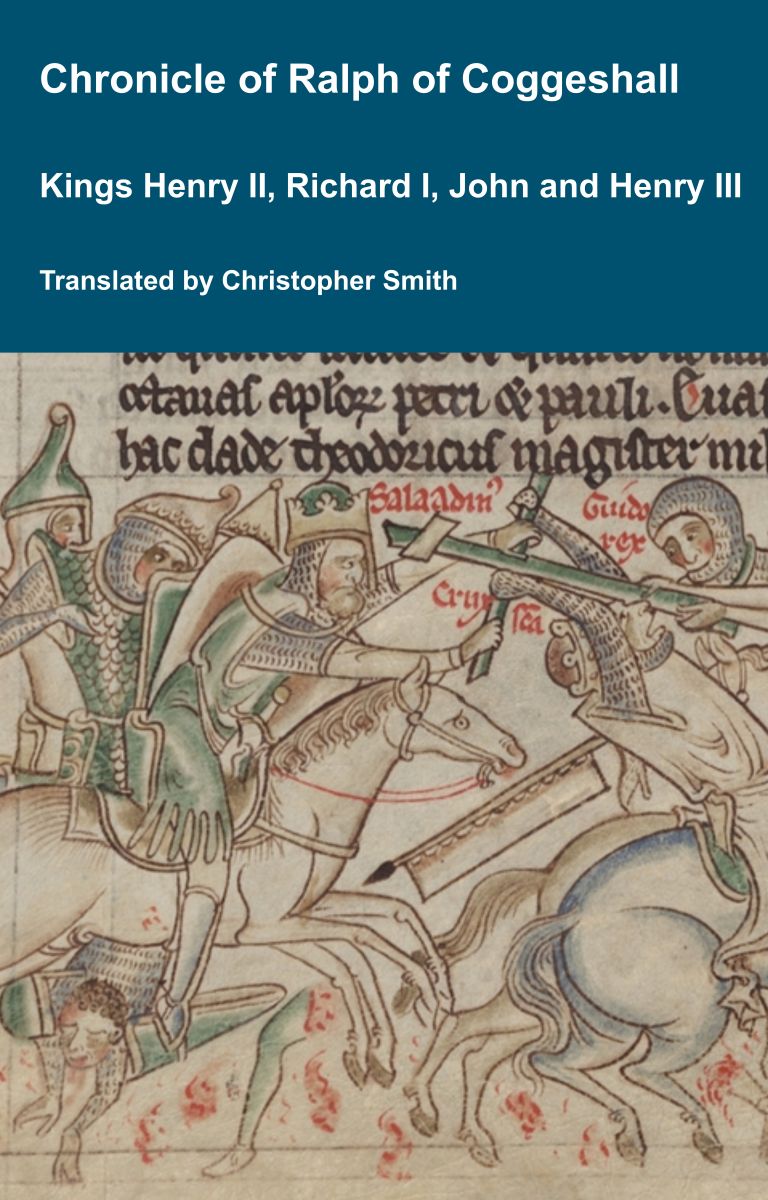 Chronicum Anglicanum by Ralph Coggeshall. A solar eclipse took place on the 13th day before the Kalends of April [20th March 1141], when the moon was in its twenty-eighth phase. Count Aubrey de Vere1 was killed by the citizens of London. At this time, the famous scholars Master Peter Abelard, Master Gilbert de la Porrée, Bishop of Poitiers, and Hugh of Saint Victor flourished.
Facta est eclipsis solis tertio decimo calendas Aprilis, luna vicesima octava. Comes Albericus de Ver a civibus Londonise peremtus est. Hac tempestate magister Petrus Abaelardus extitit, et magister Gilebertus Porreie, episcopus Pictavis, et Hugo de Sancto Victore.
Note 1. Aubrey de Vere, Sheriff of London and Essex, among others, and Chamberlain to Kings Henry I and Stephen, was killed by a mob in May 1141. He was not a Count. His son, also Aubrey, was created Earl of Oxford in July 1141.
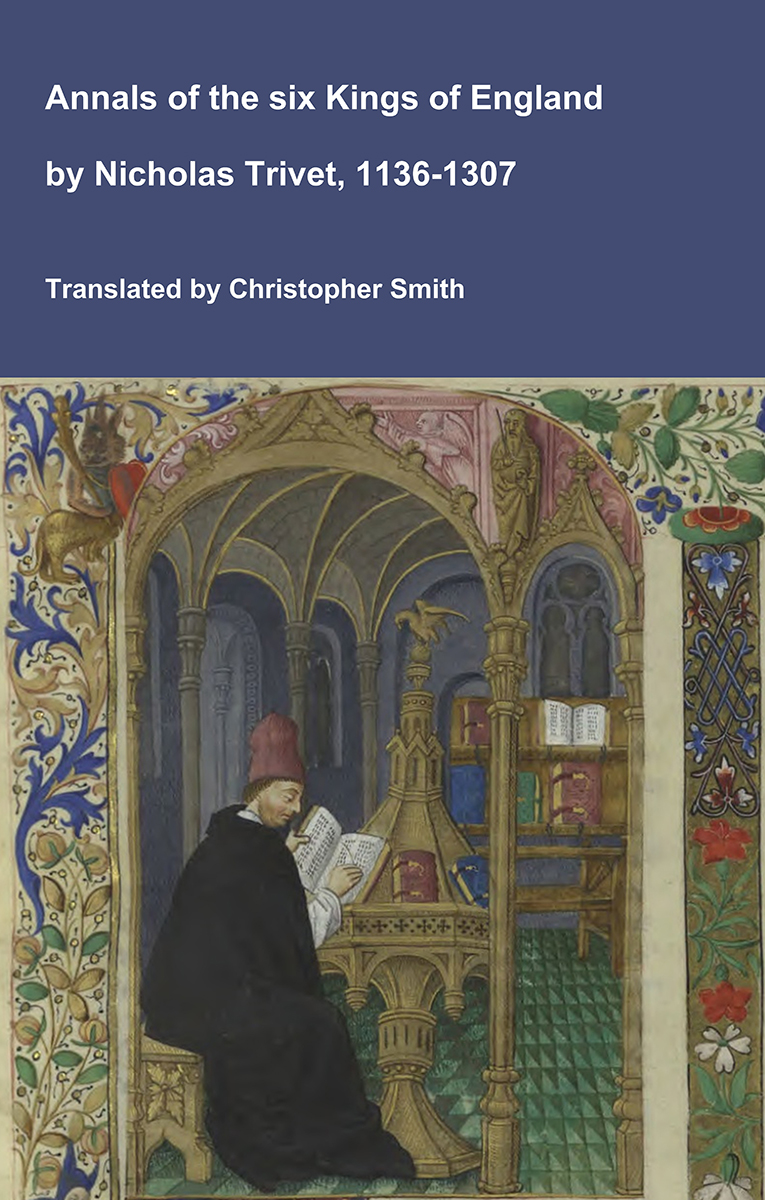 Annals of Six Kings of England by Nicholas Trivet. Pope Clement died [on 20th March 1191] after he had sat three years and sixteen days. He established a cloister at St Lawrence Outside the Walls, raised the Lateran palace higher, and caused a well to be made before the bronze horse. Celestine III, a Roman by birth, succeeded him and was consecrated on the day of the Lord's Resurrection. On the day after his consecration, that is on Easter Monday, he crowned Henry VI as emperor. In the same month, namely April, Henry entered Apulia with a very great army. In that same month the city of Tusculum was handed over to the Romans and destroyed by them. In the same year the sun was darkened on the ninth day before the Kalends of June [24th May 1191], from about the third hour until the ninth. The emperor seized the land of Apulia as far as Naples and besieged that city for three months. There such a sickness seized his army that almost all died, and the emperor himself returned ill with only a few men. He had married Constance, the daughter of the king of Sicily.
Clemens papa mortuus est, cum sedisset annis tribus, diebus sexdecim. Hic claustrum apud S. Laurentium foris muros ordinavit, et Lateranense palatium fecit altius, et puteum fecit ante equum æreum fieri. Successit huic Cælestinus tertius, natione Romanus, consecratus in die Dominicæ Resurrectionis. In crastino vero consecrationis suæ, id est feria secunda Paschæ, Henricum sextum ad imperium coronavit, qui eodem mense, scilicet Aprili, cum maximo exercitu intravit Apuliam. Eodem etiam mense regnum Tusculanum traditum est Romanis, et ab eis destructum. Eodem anno sol obscuratus est nono cal. Junii, a tertia hora fere usque ad nonam. Imperator terram Apuliæ cepit usque Neapolim, ipsamque urbem obsedit per menses tres; ibique tanta infirmitas invasit ejus exercitum, quod omnes fere mortui sunt, reversusque est languens imperator cum paucis. Accepit hic uxorem Constantiam, regis Siciliæ filiam.
On 20th March 1263 Yolande of Dreux Queen of Scotland was born to Robert Capet IV Count Dreux and Beatrice Montfort Countess Dreux [aged 14]. She married (1) 15th October 1285 her half second cousin twice removed King Alexander III of Scotland, son of King Alexander II of Scotland and Marie Coucy (2) in or before 1295 her third cousin Arthur II Duke Brittany, son of John II Duke Brittany and Beatrice Plantagenet, and had issue.
On 20th March 1272 David Dunkeld was born to King Alexander III of Scotland [aged 30] and Margaret Queen of Scotland [aged 31]. He a grandson of King Henry III of England. He died aged nine in 1281.
Archaeologia Volume 35 1853 XXXIII. On the 20th of March [1358], the King [aged 45] comes to supper.

On 20th March 1413 King Henry IV of England [aged 45] died in the Jerusalem Chamber, Cheyneygates, Westminster Abbey [Map] in Westminster Abbey confirming a prophesy that he would die in Jerusalem. His son Henry [aged 26] succeeded V King of England. His sons King Henry V of England and Humphrey Lancaster 1st Duke Gloucester [aged 22] were present. He was buried in the Chancel of Canterbury Cathedral [Map].
Chronicle of Gregory. 20th March 1413. Ande that same year the kyng [aged 45] dyde at Westemyster, the XX day of Marche, the year of our lord Ml CCCC and xij; and he is byryde at Cauntyrbury [Map] be-syde the schryne.
Chronicle of Robert Fabyan [-1512]. 20th March 1413. At length, whan he was comynto himselfe, natknowynge where he was, freyned of suche as then were aboute hym, what place that was; the which shewyd to hym, that it belongyd unto ye abbot of Westmynster; and for he felte hymself so syke, he comaunded to aske if that chambre had any specyall name; whereunto it was answeryd, that it was named Iherusalem. Than sayd the kynge, "louynge be to the Fader of heuen, for nowe I knowe I shall dye in this chambre, accordyng to ye prophecye of me beforesayd, that I shulde dye in Jerusalem: and so after he made hymself redy, & dyed shortly after, upon ye day of seynt Cuthbert, or ye. xx. day of Marche, when he had reygned. xiii. yeres. v. monthes, &. xxi. dayes, leuynge after hym. iiii. sones, that is to meane Henry that was kyng, Thomas that was duke of Orleaunce [Clarence], lohn duke of Bedforde, and Humfrey duke of Glouceter, [and the v. was named Henry, ryche cardynall of Wynchester,] and ii. doughters, that one beynge quene of Demnarke, and that other duchesse of Barre, as before is shewyd.
Whanne kynge Henry was deed, he was conveyed by water unto Feversham, and from thens by lande unto Caunterbury, and there enteryd by the shryne of seynt Thomas. [To the foresayd Henry, the riche cardynall, kynge Henry had or begat, ii. other sonnes upon dame Katheryne Swynford, as before is shewyd in the viii. yere of Richarde ye seconde, whiche were named as there is expressyd.]
Annales of England by John Stow. 20th March 1413. The King his father drawing to his ende, after due thankes given, and supplications made to God, gave his benedicton to the Prince his sonne, and so yelded to God his spirit, the xx of March, which was then midlent Sunday. Anno 1412 [1413] after the account of the Church of England, the yéere of his age 46, when he had raigned 13 years, five moneths lacking 10 Dayes. His body was conveyed by water to Feversham, and from thence by land to Canterburp, and there buried by the Lady Mary his first wife, in the monastery of Christs Church, under a pillar in the North Ile. This King Henry, with Thomas Arundell Archbishop of Canterbury had béen great benefactor to this Church, in building a good part of the body thereof anewe. he had issues by Mary daughter to Humfrey Bohune Earle of Hereford and Nortbampton, Henry that succéeded him, Thomas Duke of Clarence, John duke of Bedtord, Humfrey Duke of Glocester, Blanch Dutchess of Bauere, and Philip Queene of Denmarke; for by Joan his second wife be had no issue.
Chronicle of a Bourgeois of Valenciennes
Récits d’un bourgeois de Valenciennes aka The Chronicle of a Bourgeois of Valenciennes is a vivid 14th-century vernacular chronicle written by an anonymous urban chronicler from Valenciennes in the County of Hainaut. It survives in a manuscript that describes local and regional history from about 1253 to 1366, blending chronology, narrative episodes, and eyewitness-style accounts of political, military, and social events in medieval France, Flanders, and the Low Countries. The work begins with a chronological framework of events affecting Valenciennes and its region under rulers such as King Philip VI of France and the shifting allegiances of local nobility. It includes accounts of conflicts, sieges, diplomatic manoeuvres, and the impact of broader struggles like the Hundred Years’ War on urban life in Hainaut. Written from the perspective of a burgher (bourgeois) rather than a monastery or royal court, the chronicle offers a rare lay viewpoint on high politics and warfare, reflecting how merchants, townspeople, and civic institutions experienced the turbulence of the 13th and 14th centuries. Its narrative style combines straightforward reporting of events with moral and civic observations, making it a valuable source for readers interested in medieval urban society, regional politics, and the lived experience of war and governance in pre-modern Europe.
Available at Amazon in eBook and Paperback format.
Holinshed's Chronicle [1525-1582]. 20th March 1413. With that he [King Henry IV] turned himselfe in his bed, and shortlie after departed to God in a chamber of the abbats of Westminster called Ierusalem, the twentith daie of March, in the yeare 1413, and in the yeare of his age 46, when he had reigned thirteene yeares, fiue moneths and od daies, in great perplexitie and little pleasure [or fourtéene yeares, as some haue noted, who name not the disease whereof he died, but refer it to sicknesse absolutelie, whereby his time of departure did approach and fetch him out of the world: as Ch. Okl. saith, whose words may serue as a funerall epigramme in memoriall of the said king Henrie:
Henricus quartus his septem rexerat annos
Anglorum gentem summa cum laude & amore,
Iàmq; senescenti fatalis terminus æui
Ingruerat, morbus fatalem accerserat horam1.
We find, that he was taken with his last sickenesse, while he was making his praiers at saint Edwards shrine, there as it were to take his leaue, and so to procéed foorth on his iournie: he was so suddenlie and greeuouslie taken, that such as were about him, feared least he would haue died presentlie, wherfore to reléeue him (if it were possible) they bare him into a chamber that was next at hand, belonging to the abbat of Westminster, where they laid him on a pallet before the fire, and vsed all remedies to reuiue him. At length, he recouered his spéech, and vnderstanding and perceiving himselfe in a strange place which he knew not, he willed to know if the chamber had anie particular name, whereunto answer was made, that it was called Ierusalem. Then said the king; "Lauds be giuen to the father of heauen, for now I know that I shall die heere in this chamber, according to the prophesie of me declared, that I should depart this life in Jerusalem."
Note 1. Henry IV had ruled the English nation for seven years
With great praise and love from his people.
But now, as he grew old, the fated end of his life approached,
And illness had summoned his final hour.
On 20th March 1469 Cecily York Viscountess Welles was born to King Edward IV of England [aged 26] and Elizabeth Woodville Queen Consort England [aged 32] at Westminster Palace [Map]. Named after her father's mother Cecily "Rose of Raby" Neville Duchess York [aged 53]. She married (1) before 7th August 1485 her half second cousin once removed Ralph Scrope 9th Baron Scrope of Masham, son of Thomas Scrope 5th Baron Scrope of Masham and Elizabeth Greystoke Baroness Scrope Masham (2) December 1487 her half fourth cousin John Welles 1st Viscount Welles, son of Lionel Welles 6th Baron Welles and Margaret Beauchamp Duchess Somerset, and had issue (3) 1503 Thomas Kymbe.
On 20th March 1470 the army of William Berkeley 1st Marquess Berkeley [aged 44] including Maurice Berkeley 3rd Baron Berkeley [aged 35] defeated the army of Thomas Talbot 2nd Viscount Lisle [aged 21] at Nibley Green, Berkeley.
Thomas Talbot 2nd Viscount Lisle was killed. Viscount Lisle extinct. Baron Lisle abeyant.
Ostensibly a battle of the Wars of the Roses it may also be considered a settling of the dispute over the ownership of Berkeley Castle [Map] which has passed with the Baron Berkeley Feudal to William Berkeley 1st Marquess Berkeley rather than with Baron Berkeley which was abeyant, and of which Thomas Talbot 2nd Viscount Lisle was a potential heir. Thomas Talbot 2nd Viscount Lisle was born to John Talbot 1st Viscount Lisle whose mother was Margaret Beauchamp Countess Shrewsbury and Waterford whose mother was Elizabeth Berkeley Countess Warwick who was a daughter of Thomas Berkeley 10th and 5th Baron Berkeley, Baron Lisle.
On 20th March 1498 Anne Valois was born to Charles VIII King France [aged 27] and Anne of Brittany Queen Consort France [aged 21]. Coefficient of inbreeding 2.27%. She died aged less than one years old.


On 20th March 1549 Thomas Seymour 1st Baron Seymour [aged 41] was beheaded at Tower Hill [Map]. He was buried at St Peter ad Vincula Church, Tower of London [Map]. Baron Seymour of Sudeley forfeit.
Catherine Willoughby Duchess Suffolk [aged 29] became guardian to his daughter Mary Seymour.


Chronicle of Greyfriars. 20th March 1549. Item the xx. day of Marche was sir Thomas [Seym]er that was lorde amrelle was be-hedyd at the Towre hylle for hye [treason].
Grafton's Chronicle [1507-1573]. 20th March 1549. And in this Parliament also was attainted sir Thomas Seymer, called Baron Seymer of Sudley, brother to the Lorde Protector, high Admirall of England. The causes and articles obiected against him, are expressed in the booke of statutes. And the xx day of March next folowyng, which was in the thirde yere of the king, he was behedded at the Tower hill, and then it was commonly talked, that the fall of the one brother, would be the overthrow of the other, as soone after it came to passe.
Wriothesley's Chronicle [1508-1562]. 20th March 1549. Memorandum: the xxth daie of March, 1549, Sir Thomas Seymor. Lord of Sidley1 and High Admirall of England, and brother to my Lord Protector, was beheaded at the Towrehill, which said Lord Admirall was condemned of high treason by the hole Perliament2, as by an Act made by the same more plainelie appeareth3.
Note 1. Baron of Sudley.
Note 2. On the 4th of March a message came from the King to the Commons stating that "he thought it was not necessary to send for the Admiral, but that the Lords should come down and renew before them the evidence they had given in their own House;" and thereupon the Bill of Attainder was agreed to in a House of about four hundred members, not more than ten or twelve voting in the negative.-See Burnet, ii. p. 99.
Note 3. Strype, in his notes to Hayward, pp. 301-3, has given a full account of these proceedings from the Journals of the two Houses, to prove "how fairly the admiral was judged and dealt with in the Parliament." The journals notice that the Lord Protector was present at each reading of the Bill.

Diary of Edward VI. 20th March 1551. The bis(hops) of Canterbury [aged 61], London [aged 51], Rochester [either Bishop John Ponet [aged 37] or Bishop John Scory [aged 41]], did conclude, to give licence to sinne was sinne; to suffre and winke at it2 for a time might be borne, so al hast possible might bee used.
Note 2. i. e. the mass, not sin in general. Sir John Hayward chose to read the passage in the latter sense, for which Strype calls him to account in his note, Kennett, ii. 315.

Henry Machyn's Diary. 20th March 1555. [The xx day of March the earl of Bedford [deceased], lord privy-seal, who died at his house beside the Savoy, was carried to his buryingplace in the country, called Chenies, with three hundred horse all in black. He was carried with three crosses,] with mony clerkes and prestes, [till they came to the hill] a-boyffe sant James, and ther returnyd [certain of them] home; and thay had torchys and almes and money gyven them. And after evere man sett in aray on horssebake. First on red in blake bayryng a crosse of sylver, and serten prestes on horsebake wayryng ther surples; then cam the standard, and then all the gentyllmen and hed officers; and then cam haroldes, on beyryng ys elmet, and the mantylls, and the crest, and anodur ys baner of armes, and anodur ys target with the garter, and anodur ys cott armur; and anodur ys sword: and then master Garter in ys ryche cott armur and then cam the charett with vj banars rolles of armes, and a-bowt the charett iiij banars of ymages, and after the charet a gret horsse trapyd in cloth of gold with the sadyll of the sam; and then cam mornars, the cheyffe (of whom) my lord Russell [aged 28] ys sune, and after my lord trayssorer [aged 72], and the master of the horse [aged 34], and dyver odur nobull men all in blake; and evere towne that he whent thrughe the clarkes and prestes mett ym with crosses; and they had in evere parryche iiij nobuls to gyffe to the pore, and the prest and clarke of evere parryche xs., tyll he cam to ys plasse at Cheynes; and the morowe after was he bered, and a grett doll of money; and ther the deyn of Powlles mad a godly sermon; and after a grett dener, and great plenty to all the contrey a-bowt that wold com thether.
Note. P. 83. Funeral of the earl of Bedford. John first earl of Bedford, K.G. created lord Russell 1539, and an earl in 1550. See a portrait with memoirs of him in Wiffen's House of Russell, vol. i.; another in Lodge's Illustrious Portraits; and his portrait is also in the collection by Houbraken, and in Chamberlain's Holbein Heads. The chapel at Chenies, which has ever since been the cemetery of the Russells, was built by his widow in 1556, in pursuance of his last will. His effigy at Chenies is described in Lipscomb's Buckinghamshire: but in the inscription, "Lord President of the Western Portes" is an error for Partes.
Henry Machyn's Diary. 20th March 1557. The xx day of Marche the Kyng [aged 29] cam from be-yond the see, and cam at v to Grenwyche [Map]; at the sam tyme ther cam a shype up by the tyde, [and as] he cam agaynst the courte gatt, he shott a xvj [pieces] of twys [off twice], the wyche wher vere grett pesses, and [cried,] God save the Kyng and the Quen.


Henry Machyn's Diary. 20th March 1560. The xx day of Marche was the nuw byshope of Lychfeld and Coventre ys wyff was a broght to bed, ys nam master Bentun [aged 46], on London bryges at the sygne of (blank)
Henry Machyn's Diary. 20th March 1562. The xx day of Marche dyd pryche at the cowrt, that was Palmsonday, master Juell [aged 39], the byshope of (Salisbury.)
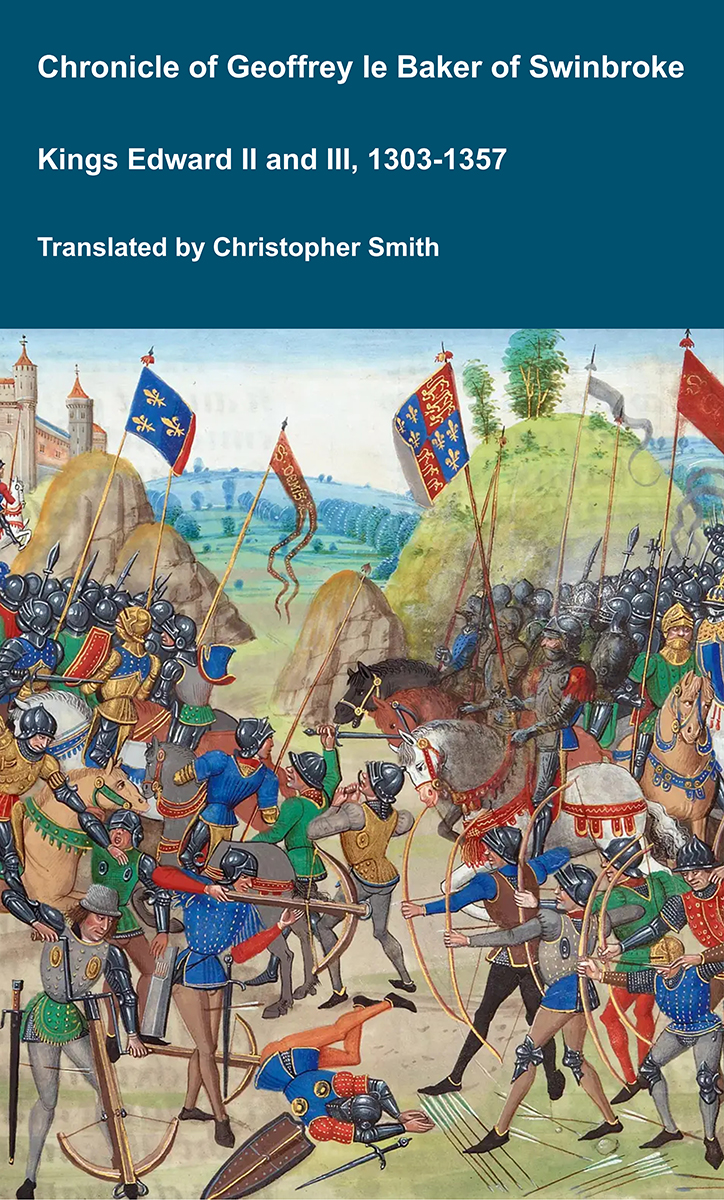
Chronicle of Geoffrey le Baker of Swinbroke
Baker was a secular clerk from Swinbroke, now Swinbrook, an Oxfordshire village two miles east of Burford. His Chronicle describes the events of the period 1303-1356: Gaveston, Bannockburn, Boroughbridge, the murder of King Edward II, the Scottish Wars, Sluys, Crécy, the Black Death, Winchelsea and Poitiers. To quote Herbert Bruce 'it possesses a vigorous and characteristic style, and its value for particular events between 1303 and 1356 has been recognised by its editor and by subsequent writers'. The book provides remarkable detail about the events it describes. Baker's text has been augmented with hundreds of notes, including extracts from other contemporary chronicles, such as the Annales Londonienses, Annales Paulini, Murimuth, Lanercost, Avesbury, Guisborough and Froissart to enrich the reader's understanding. The translation takes as its source the 'Chronicon Galfridi le Baker de Swynebroke' published in 1889, edited by Edward Maunde Thompson.
Available at Amazon in eBook and Paperback format.
On 20th March 1568 Anna Maria Guelph Duchess Prussia [aged 35] died.

On 20th March 1568 Albert "The Elder" Hohenzollern I Duke Prussia [aged 77] died. His son Albert [aged 14] succeeded Duke Prussia.

Diary of Anne Clifford. 20th March 1617. The 20th I spent most of my time in walking and playing at cards with the Steward and Basket, and had such ill luck that I resolved not to play in 3 months.
After supper I wrote a letter to my Lord [aged 28] to entreat him that he would come and see me and the Child as soon as he could. The 21st Ned the footman came from Buckhurst and told me that my Lord was reasonable well and had missed his fit which did much comfort me.
On 20th March 1619 Matthias I Holy Roman Emperor [aged 62] died.


Diary of Anne Clifford. 20th March 1619. The 20th my Lord of Warwick [aged 59] died at Arlington House leaving a great estate to Lord Rich [aged 31]1 and my good friend his Lady [aged 29], and leaving his wife which was my Lady Lampwell a widow the second time. This day Wat. Coniston made an end of reading Mr Saragol's Book of the Supplication of the Saints which my Lord [aged 30] gave me.
Note 1. 2nd Earl of Warwick, the Parliament's Admiral.


On 20th March 1619 Robert Rich 1st Earl Warwick [aged 59] died. His son Robert [aged 31] succeeded 2nd Earl Warwick, 4th Baron Rich of Leez. Frances Hatton Countess Warwick [aged 29] by marriage Countess Warwick.
He was buried at St Lawrence's Church, Snarford [Map]. Unusual head and shoulder portrait sculpture of deceased full face, with a profile of his wife Frances Wray Countess Warwick behind, set in a circular medallion. To either side are pelleted Pilasters supporting an entablature with scrolled Cartouche of arms and flanked by heraldic supporters. The whole is painted and gilded and beneath is a panel containing an inscribed poem. Above his Arms implaled with hers. His are quartered 1&4  Rich Arms 2&3 Baldry Arms (his mother), hers quartered 1&4 Wray 2&3 Unknown. the monument is perhaps the work of Epiphanius Evesham. Sculpted by Epiphanius Evesham.


On 20th March 1627 Anne Chichester [aged 22] died in childbirth. She was buried in the Church of St Peter and St Paul, Exton, Rutlandshire [Map]. In north aisle, a very classical monument for its date, black and white marble table tomb with shrouded effigy.
The inscription: "Anne, Wife to Lord Bruce, Baron of Kinloss [aged 28], Daughter of Sir Robert Chichester [aged 49], Knight of the Bath, of an antient Family in the County of Devon, and of Frances one of the two Daughters and Coheirs of John Lord Harrington, Baron of Exton, sole heir to her Mother. A Lady endowed with a natural disposition to Vertue, a true understanding of honour, most noble behaviour, perpetual cheerfulness, most elegant Conversation, and a more than ordinary conjugal affection. She was married iv. years and ix. months, and one only child named Robert Bruce. Weakened by that birth she died in Childbirth, the xx. day of March, in the xxii. year of her age, Anno Domini M. DC. XXVII. Erected and inscribed to the memory Of his most beloved, and most deserving Wife, by The Lord Bruce."
Anne Chichester: Around 1605 she was born to Robert Chichester and Frances Harrington. On 4th July 1622 Thomas Bruce 1st Earl Elgin and she were married at Holy Trinity Church, Minories [Map].


The Chichester Family Crest being a Heron with an Eel in its mouth.


On 20th March 1637 Thomas Puckering 1st Baronet [aged 45] died. He was buried at St Mary's Church, Warwick [Map] where there is a monument by Nicholas Stone [aged 50]. Baronet Puckering of Weston in Hertfordshire extinct.
In early 1661 King Charles II of England Scotland and Ireland [aged 30] rewarded of further tranche of those who supported his Restoration...
On 2nd January 1661 Henry Bedingfield 1st Baronet [aged 46] was created 1st Baronet Bedingfield of Oxburgh in Norfolk.
On 10th January 1661 Andrew Rutherford 1st Earl Teviot was created 1st Baron Rutherford with special remainder to his heirs and assignees whatsoever, and that under what provisions, restrictions, and conditions the said Lord Rutherford should think fit.
On 23rd January 1661 John Cole 1st Baronet [aged 41] was created Baronet Cole of Newland.
On 23rd February 1661 Edward Smythe 1st Baronet [aged 41] was created 1st Baronet Smythe.
On 4th March 1661 Compton Reade 1st Baronet [aged 36] was created 1st Baronet Reade of Barton in Berkshire. Mary Cornwall Lady Reade [aged 31] by marriage Lady Reade of Barton in Berkshire.
On 10th March 1661 Brian Broughton 1st Baronet [aged 42] was created 1st Baronet Broughton of Broughton in Staffordshire.
On 20th March 1661 Thomas Rich 1st Baronet [aged 60] was created 1st Baronet Rich of Sonning in Berkshire.
On 29th March 1661 Robert Cholmondeley 1st Viscount Cholmondeley [aged 21] was created 1st Viscount Cholmondeley of Kells in County Meath.
On 30th March 1661 James Butler 1st Duke Ormonde [aged 50] was created 1st Duke Ormonde by King Charles II of England Scotland and Ireland. Elizabeth Preston Duchess Ormonde [aged 45] by marriage Duchess Ormonde.
On 30th March 1661 John Fettiplace 1st Baronet [aged 35] was created 1st Baronet Fettiplace of Childrey in Berkshire. Anne Wenman Lady Fettiplace [aged 31] by marriage Lady Fettiplace of Childrey in Berkshire.


Samuel Pepys' Diary. 20th March 1665. So to White Hall to the Committee of Tangier, where there were present, my Lord of Albemarle [aged 56], my Lord Peterborough [aged 43], Sandwich, Barkeley [aged 63], FitzHarding [aged 35], Secretary Bennet [aged 47], Sir Thomas Ingram [aged 50], Sir John Lawson [aged 50], Povy [aged 51] and I Where, after other business, Povy did declare his business very handsomely; that he was sorry he had been so unhappy in his accounts, as not to give their Lordships the satisfaction he intended, and that he was sure his accounts are right, and continues to submit them to examination, and is ready to lay down in ready money the fault of his account; and that for the future, that the work might be better done and with more quiet to him, he desired, by approbation of the Duke [aged 31], he might resign his place to Mr. Pepys. Whereupon, Secretary Bennet did deliver the Duke's command, which was received with great content and allowance beyond expectation; the Secretary repeating also the Duke's character of me. And I could discern my Lord FitzHarding was well pleased with me, and signified full satisfaction, and whispered something seriously of me to the Secretary. And there I received their constitution under all their hands presently; so that I am already confirmed their Treasurer, and put into a condition of striking of tallys1 and all without one harsh word or word of dislike, but quite the contrary; which is a good fortune beyond all imagination. Here we rose, and Povy and Creed and I, all full of joy, thence to dinner, they setting me down at Sir J. Winter's, by promise, and dined with him; and a worthy fine man he seems to be, and of good discourse, our business was to discourse of supplying the King [aged 34] with iron for anchors, if it can be judged good enough, and a fine thing it is to see myself come to the condition of being received by persons of this rank, he being, and having long been, Secretary to the Queene-Mother [aged 26].
Note 1. The practice of striking tallies at the Exchequer was a curious survival of an ancient method of keeping accounts. The method adopted is described in Hubert Hall's "Antiquities and Curiosities of the Exchequer", 1891. The following account of the use of tallies, so frequently alluded to in the Diary, was supplied by Lord Braybrooke. Formerly accounts were kept, and large sums of money paid and received, by the King's Exchequer, with little other form than the exchange or delivery of tallies, pieces of wood notched or scored, corresponding blocks being kept by the parties to the account; and from this usage one of the head officers of the Exchequer was called the tallier, or teller. These tallies were often negotiable; Adam Smith, in his "Wealth of Nations", book ii., ch. xi., says that "in 1696 tallies had been at forty, and fifty, and sixty per cent. discount, and bank-notes at twenty per cent". The system of tallies was discontinued in 1824; and the destruction of the old Houses of Parliament, in the night of October 16th, 1834, is thought to have been occasioned by the overheating of the flues, when the furnaces were employed to consume the tallies rendered useless by the alteration in the mode of keeping the Exchequer accounts.


Samuel Pepys' Diary. 20th March 1665. Up, Creed and I, and had Mr. Povy's [aged 51] coach sent for us, and we to his house; where we did some business in order to the work of this day. Povy and I to my Lord Sandwich [aged 39], who tells me that the Duke [aged 31] is not only a friend to the business, but to me, in terms of the greatest love and respect and value of me that can be thought, which overjoys me.


Samuel Pepys' Diary. 20th March 1665. Thence to St. James's, and there was in great doubt of Brunkerd [aged 38], but at last I hear that Brunkerd desists. The Duke [aged 31] did direct Secretary Bennet [aged 47], who was there, to declare his mind to the Tangier Committee, that he approves of me for Treasurer; and with a character of me to be a man whose industry and discretion he would trust soon as any man's in England: and did the like to my Lord Sandwich [aged 39].
Chronicle of a Bourgeois of Valenciennes
Récits d’un bourgeois de Valenciennes aka The Chronicle of a Bourgeois of Valenciennes is a vivid 14th-century vernacular chronicle written by an anonymous urban chronicler from Valenciennes in the County of Hainaut. It survives in a manuscript that describes local and regional history from about 1253 to 1366, blending chronology, narrative episodes, and eyewitness-style accounts of political, military, and social events in medieval France, Flanders, and the Low Countries. The work begins with a chronological framework of events affecting Valenciennes and its region under rulers such as King Philip VI of France and the shifting allegiances of local nobility. It includes accounts of conflicts, sieges, diplomatic manoeuvres, and the impact of broader struggles like the Hundred Years’ War on urban life in Hainaut. Written from the perspective of a burgher (bourgeois) rather than a monastery or royal court, the chronicle offers a rare lay viewpoint on high politics and warfare, reflecting how merchants, townspeople, and civic institutions experienced the turbulence of the 13th and 14th centuries. Its narrative style combines straightforward reporting of events with moral and civic observations, making it a valuable source for readers interested in medieval urban society, regional politics, and the lived experience of war and governance in pre-modern Europe.
Available at Amazon in eBook and Paperback format.
Samuel Pepys' Diary. 20th March 1666. At noon dined in haste, and so my wife, Mrs. Barbary, Mercer, and I by coach to Hales's [aged 66], where I find my wife's picture now perfectly finished in all respects, and a beautiful picture it is, as almost I ever saw. I sat again, and had a great deale done, but, whatever the matter is, I do not fancy that it has the ayre of my face, though it will be a very fine picture.

Samuel Pepys' Diary. 20th March 1667. Thence to Westminster Hall [Map] and drank at the Swan [Map], and 'baiserais the petite misse'; and so to Mrs. Martin's... I sent for some burnt wine, and drank and then away, not pleased with my folly, and so to the Hall again, and there staid a little, and so home by water again, where, after speaking with my wife, I with Sir W. Batten [aged 66] and Sir J. Minnes [aged 68] to our church to the vestry, to be assessed by the late Poll Bill, where I am rated as an Esquire, and for my office, all will come to about £50. But not more than I expected, nor so much by a great deal as I ought to be, for all my offices. So shall be glad to escape so.
Samuel Pepys' Diary. 20th March 1667. Thence by water again to White Hall, and there up into the house, and do hear that newes is come now that the enemy do incline again to a peace, but could hear no particulars, so do not believe it. I had a great mind to have spoke with the King [aged 36], about a business proper enough for me, about the French prize man-of-war, how he would have her altered, only out of a desire to show myself mindful of business, but my linen was so dirty and my clothes mean, that I neither thought it fit to do that, nor go to other persons at the Court, with whom I had business, which did vex me, and I must remedy [it]. Here I hear that the Duke of Richmond [aged 28] and Mrs. Stewart [aged 19] were betrothed last night.


Samuel Pepys' Diary. 20th March 1669. Thence to the office, where sat all the forenoon, and then home to dinner, and so to the office, where late busy, and so home, mightily pleased with the news brought me to-night, that the King [aged 38] and Duke of York [aged 35] are come back this afternoon, and no sooner come, but a warrant was sent to the Tower for the releasing Sir W. Coventry [aged 41]; which do put me in some hopes that there may be, in this absence, some accommodation made between the Duke of York and the Duke of Buckingham [aged 41] and Arlington [aged 51].


Samuel Pepys' Diary. 20th March 1669. Up, and to the Tower, to W. Coventry [aged 41], and there walked with him alone, on the Stone Walk, till company come to him; and there about the business of the Navy discoursed with him, and about my Chancellor [aged 60] and Treasurer; that they were against the war [with the Dutch] at first, declaring, as wise men and statesmen, at first to the King [aged 38], that they thought it fit to have a war with them at some time or other, but that it ought not to be till we found the Crowns of Spain and France together by the Bares, the want of which did ruin our war. But then he told me that, a great deal before the war, my Chancellor did speak of a war with some heat, as a thing to be desired, and did it upon a belief that he could with his speeches make the Parliament give what money he pleased, and do what he would, or would make the King desire; but he found himself soon deceived of the Parliament, they having a long time before his removal been cloyed with his speeches and good words, and were come to hate him. Sir W. Coventry did tell me it, as the wisest thing that ever was said to the King by any statesman of his time, and it was by my Lord Treasurer that is dead, whom, I find, he takes for a very great statesman-that when the King did shew himself forward for passing the Act of Indemnity, he did advise the King that he would hold his hand in doing it, till he had got his power restored, that had been diminished by the late times, and his revenue settled in such a manner as he might depend on himself, without resting upon Parliaments,-and then pass it. But my Chancellor, who thought he could have the command of Parliaments for ever, because for the King's sake they were awhile willing to grant all the King desired, did press for its being done; and so it was, and the King from that time able to do nothing with the Parliament almost.


John Evelyn's Diary. 20th March 1683. Dined at Dr. Whistler's, at the Physicians' College, with Sir Thomas Millington [aged 55], both learned men; Dr. W. the most facetious man in nature, and now Censor of the college. I was here consulted where they should build their library; it is a pity this college is built so near Newgate Prison [Map], and in so obscure a hole, a fault in placing most of our public buildings and churches in the city, through the avarice of some few men, and his Majesty [aged 52] not overruling it, when it was in his power after the dreadful conflagration.

John Evelyn's Diary. 20th March 1687. The Bishop of Bath and Wells [aged 49] (Dr. Ken) preached at St. Martin's [Map] to a crowd of people not to be expressed, nor the wonderful eloquence of this admirable preacher; the text was Matt. xxvi. 36 to verse 40, describing the bitterness of our Blessed Savior's agony, the ardor of his love, the infinite obligations we have to imitate his patience and resignation; the means by watching against temptations, and over ourselves with fervent prayer to attain it, and the exceeding reward in the end. Upon all which he made most pathetical discourses. The Communion followed, at which I was participant. I afterward dined at Dr. Tenison's [aged 50] with the Bishop and that young, most learned, pious, and excellent preacher, Mr. Wake [aged 30]. In the afternoon, I went to hear Mr. Wake at the newly built church of St. Anne, on Mark viii. 34, upon the subject of taking up the cross, and strenuously behaving ourselves in time of persecution, as this now threatened to be.
On 20th March 1688 George Killigrew [aged 24] was killed in a duel or a tavern brawl.

John Evelyn's Diary. 2nd February 1690. The Parliament was dissolved by proclamation, and another called to meet the 20th of March. This was a second surprise to the former members; and now the Court party, or, as they call themselves, Church of England, are making their interests in the country. The Marquis of Halifax [aged 56] lays down his office of Privy Seal, and pretends to retire.
On 20th March 1690 William Bowes of Streatlam [aged 33] was elected MP Durham during the Parliament 1690.
John Evelyn's Diary. 20th March 1692. My son was made one of the Commissioners of the Revenue and Treasury of Ireland, to which employment he had a mind, far from my wishes. I visited the Earl of Peterborough [aged 70], who showed me the picture of the Prince of Wales [aged 3], newly brought out of France, seeming in my opinion very much to resemble the Queen [aged 33] his mother, and of a most vivacious countenance.


On 20th March 1711 Cloberley Bromley [aged 25] died of smallpox. The House of Commons, on behalf of his father, the Speaker, William Bromley [aged 47] adjourbed until the 26th of March.

On 20th March 1727 Isaac Newton [aged 84] died in his sleep; he was unmarried.
Chronicle of Abbot Ralph of Coggeshall
The Chronicle of Abbot Ralph of Coggeshall (Chronicon Anglicanum) is an indispensable medieval history that brings to life centuries of English and European affairs through the eyes of a learned Cistercian monk. Ralph of Coggeshall, abbot of the Abbey of Coggeshall in Essex in the early 13th century, continued and expanded his community’s chronicle, documenting events from the Norman Conquest of 1066 into the tumultuous reign of King Henry III. Blending eyewitness testimony, careful compilation, and the monastic commitment to record-keeping, this chronicle offers a rare narrative of political intrigue, royal power struggles, and social upheaval in England and beyond. Ralph’s work captures the reigns of pivotal figures such as Richard I and King John, providing invaluable insights into their characters, decisions, and the forces that shaped medieval rule. More than a simple annal, Chronicon Anglicanum conveys the texture of medieval life and governance, making it a rich source for scholars and readers fascinated by English history, monastic authorship, and the shaping of the medieval world.
Available at Amazon in eBook and Paperback format.
On 20th March 1771 Louis Michael van Loo [aged 64] died.

On 20th March 1776 Richard Temple-Nugent-Brydges-Chandos-Grenville 1st Duke of Buckingham and Chandos was born to George Nugent Temple Grenville 1st Marquess Buckingham [aged 22] and Mary Elizabeth Nugent Marchioness Buckingham [aged 18]. He married April 1796 his sixth cousin Anne Elizabeth Brydges Duchess Buckingham and Chandos, daughter of James Brydges 3rd Duke Chandos and Anne Eliza Gamon Duchess Chandos, and had issue.
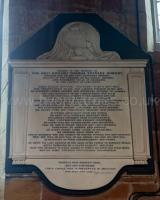
After 20th March 1825. Monument to Reverend Edward Thomas Stanley.
On 20th March 1836 Edward Poynter 1st Baronet was born.


On 20th March 1842 George Fitz-Clarence 1st Earl Munster [aged 48] committed suicide. His son William [aged 17] succeeded 2nd Earl Munster, 2nd Viscount Fitzclarence, 2nd Baron Tewkesbury.
On 20th March 1856 John Lavery was born. He was baptised at St Patrick's Church Belfast.

On 20th March 1885 Bishop Christopher Wordsworth [aged 77] died. He was buried at St Mary's Church, Riseholme. Monument at Lincoln Cathedral [Map] where he has a monument by Bodley and Garner. The design by Thomas Garner is supposed to have been influenced by the nearby Burghersh tombs.
Bishop Christopher Wordsworth: On 30th October 1807 he was born to Christopher Wordsworth and Priscilla Lloyd. On 22nd February 1869 he was appointed Bishop of Lincoln. On 24th February 1869 Bishop Christopher Wordsworth was ordained and consecrated Bishop of Lincoln by Archbishop Archibald Campbell Tait.
On 20th March 1916 Sydney James Drever Joicey [aged 31] was killed in action at Calonne whilst serving as Captain Adjutant of the 10th Northumberland Fusiliers.
After 20th March 1925. All Saints Church, Kedleston [Map]. Monument to George Nathaniel Curzon 1st Marquess Kedleston [deceased] and his first wife Mary Victoria Leiter Baroness Curzon Kedleston. Table Tomb in white marble; two angels holding the crown of life lean over the effigies designed by Bertram Mackennal [aged 61].


On 20th March 1926 Louise of Sweden Queen Consort Denmark [aged 74] died.
Chronicle of Geoffrey le Baker of Swinbroke
Baker was a secular clerk from Swinbroke, now Swinbrook, an Oxfordshire village two miles east of Burford. His Chronicle describes the events of the period 1303-1356: Gaveston, Bannockburn, Boroughbridge, the murder of King Edward II, the Scottish Wars, Sluys, Crécy, the Black Death, Winchelsea and Poitiers. To quote Herbert Bruce 'it possesses a vigorous and characteristic style, and its value for particular events between 1303 and 1356 has been recognised by its editor and by subsequent writers'. The book provides remarkable detail about the events it describes. Baker's text has been augmented with hundreds of notes, including extracts from other contemporary chronicles, such as the Annales Londonienses, Annales Paulini, Murimuth, Lanercost, Avesbury, Guisborough and Froissart to enrich the reader's understanding. The translation takes as its source the 'Chronicon Galfridi le Baker de Swynebroke' published in 1889, edited by Edward Maunde Thompson.
Available at Amazon in eBook and Paperback format.
On 20th March 1957 Harold Speed [aged 85] died.
On 20th March 1964 Francis D'Arcy Godolphin Osborne 12th Duke of Leeds [aged 79] died unmarried without male issue. Duke Leeds, Earl of Danby, Viscount Osborne, Viscount Latimer, Baron Osborne of Kinderton, Baronet Osborne of Kiveton, Baron Godolphin of Farnham Royal in Buckinghamshire extinct.
On 20th March 1263 Yolande of Dreux Queen of Scotland was born to Robert Capet IV Count Dreux and Beatrice Montfort Countess Dreux [aged 14]. She married (1) 15th October 1285 her half second cousin twice removed King Alexander III of Scotland, son of King Alexander II of Scotland and Marie Coucy (2) in or before 1295 her third cousin Arthur II Duke Brittany, son of John II Duke Brittany and Beatrice Plantagenet, and had issue.
On 20th March 1272 David Dunkeld was born to King Alexander III of Scotland [aged 30] and Margaret Queen of Scotland [aged 31]. He a grandson of King Henry III of England. He died aged nine in 1281.
On 20th March 1297 Margaret Wake Countess Kent was born to John Wake 1st Baron Wake of Liddell [aged 29] and Joan Fiennes Baroness Wake Liddell. She a great x 3 granddaughter of King John of England. She married (1) 1312 her half sixth cousin John Comyn 4th Lord Baddenoch (2) 1325 her half second cousin twice removed Edmund of Woodstock 1st Earl Kent, son of King Edward I of England and Margaret of France Queen Consort England, and had issue.
On 20th March 1319 Laurence Hastings 1st Earl Pembroke was born to John Hastings 2nd Baron Hastings 14th Baron Abergavenny [aged 32] and Juliana Leybourne Countess Huntingdon [aged 16] at Allesbury, Warwickshire. He married his third cousin once removed Agnes Mortimer Countess of Pembroke, daughter of Roger Mortimer 1st Earl March and Joan Geneville Baroness Mortimer 2nd Baroness Geneville, and had issue.
On 20th March 1448 Maria Savoy was born to Louis Savoy I Count Savoy [aged 35] and Anne Cyprus Countess Savoy [aged 29]. She married after 14th May 1462 Louis Luxemburg I Count Saint Pol, son of Peter Luxemburg I Count Saint Pol and Margherita Baux.
On 20th March 1469 Cecily York Viscountess Welles was born to King Edward IV of England [aged 26] and Elizabeth Woodville Queen Consort England [aged 32] at Westminster Palace [Map]. Named after her father's mother Cecily "Rose of Raby" Neville Duchess York [aged 53]. She married (1) before 7th August 1485 her half second cousin once removed Ralph Scrope 9th Baron Scrope of Masham, son of Thomas Scrope 5th Baron Scrope of Masham and Elizabeth Greystoke Baroness Scrope Masham (2) December 1487 her half fourth cousin John Welles 1st Viscount Welles, son of Lionel Welles 6th Baron Welles and Margaret Beauchamp Duchess Somerset, and had issue (3) 1503 Thomas Kymbe.
On 20th March 1498 Anne Valois was born to Charles VIII King France [aged 27] and Anne of Brittany Queen Consort France [aged 21]. Coefficient of inbreeding 2.27%. She died aged less than one years old.
On 20th March 1626 Robert Bruce 2nd Earl Elgin 1st Earl Ailesbury was born to Thomas Bruce 1st Earl Elgin [aged 27] and Anne Chichester [aged 21]. He married before March 1645 his fifth cousin Diana Grey Countess Elgin and Ailesbury, daughter of Henry Grey 1st Earl Stamford and Anne Cecil Countess Stamford, and had issue.


On 20th March 1628 John Hobart 3rd Baronet was born to Miles Hobart [aged 32] and Frances Peyton [aged 32] in DitchIngham, Norfolk. He married (1) 1647 his first cousin Philippa Hobart, daughter of John Hobart 2nd Baronet and Frances Egerton Lady Hobart (2) June 1656 Mary Hampden.
On 20th March 1630 Edward Barkham 1st Baronet was born to Robert Barkham [aged 31]. He married Anne Lee and had issue.
The Deeds of the Dukes of Normandy
The Gesta Normannorum Ducum [The Deeds of the Dukes of Normandy] is a landmark medieval chronicle tracing the rise and fall of the Norman dynasty from its early roots through the pivotal events surrounding the Norman Conquest of England. Originally penned in Latin by the monk William of Jumièges shortly before 1060 and later expanded at the behest of William the Conqueror, the work chronicles the deeds, politics, battles, and leadership of the Norman dukes, especially William’s own claim to the English throne. The narrative combines earlier historical sources with firsthand information and oral testimony to present an authoritative account of Normandy’s transformation from a Viking settlement into one of medieval Europe’s most powerful realms. William’s history emphasizes the legitimacy, military prowess, and governance of the Norman line, framing their expansion, including the conquest of England, as both divinely sanctioned and noble in purpose. Later chroniclers such as Orderic Vitalis and Robert of Torigni continued the history, extending the coverage into the 12th century, providing broader context on ducal rule and its impact. Today this classic work remains a foundational source for understanding Norman identity, medieval statesmanship, and the historical forces that reshaped England and Western Europe between 800AD and 1100AD.
Available at Amazon in eBook and Paperback format.
On 20th March 1704 Hugh Boscawen 2nd Viscount Falmouth was born to Hugh Boscawen 1st Viscount Falmouth [aged 24] and Charlotte Godfrey Viscountess Falmouth.
On 20th March 1724 George Booth 6th Baronet was born to John Booth [aged 57].

On 20th March 1737 Mary Douglas was born to James Douglas 14th Earl Morton [aged 35] and Agatha Halyburton.
On 20th March 1743 William Harcourt 3rd Earl Harcourt was born to Simon Harcourt 1st Earl Harcourt [aged 29] and Rebecca Samborne Le Bass.
On 20th March 1766 Eleanor Mary Arundell Baroness Clifford Chudleigh was born to Henry Arundell 8th Baron Arundel [aged 26] and Mary Conquest Baroness Arundel Wardour [aged 23] at Wardour Castle [Map]. She married 29th November 1786 her half first cousin once removed Charles Clifford Clifford 6th Baron Clifford Chudleigh, son of Hugh Clifford 4th Baron Clifford Chudleigh and Anne Lee Baroness Clifford Chudleigh, and had issue.


On 20th March 1767 Hugh Williams was born to Hugh Williams 8th Baronet [aged 49] and Emma Bridget Rowlands Viscountess Bulkeley.
On 20th March 1770 Susan Coutts Countess Guildford was born to Thomas Coutts [aged 34] and Susannah Starkey. She married 28th February 1796 George Augustus North 3rd Earl Guildford, son of Frederick North 2nd Earl Guildford and Anne Speke Countess Guilford, and had issue.
On 20th March 1772 Montague Cholmeley 1st Baronet was born to Montague Cholmeley of Easton. He married (1) 14th September 1801 Elizabeth Harrison Lady Cholmeley and had issue (2) 26th March 1826 Catherine Way Lady Cholmeley.
On 20th March 1776 Richard Temple-Nugent-Brydges-Chandos-Grenville 1st Duke of Buckingham and Chandos was born to George Nugent Temple Grenville 1st Marquess Buckingham [aged 22] and Mary Elizabeth Nugent Marchioness Buckingham [aged 18]. He married April 1796 his sixth cousin Anne Elizabeth Brydges Duchess Buckingham and Chandos, daughter of James Brydges 3rd Duke Chandos and Anne Eliza Gamon Duchess Chandos, and had issue.
On 20th March 1789 Henry Roper-Curzon 15th Baron Teynham was born to Henry Francis Roper-Curzon 14th Baronet [aged 21] and Bridget Hawkins Baroness Teynham. He married (1) 30th December 1815 Susan Harriet Bedingfield (2) 12th December 1839 Sarah Rudd Baroness Teynham.
On 20th March 1812 Edward Rokewood-Gage 9th Baronet was born to Thomas Gage 7th Baronet [aged 31] and Mary Anne Browne.
On 20th March 1814 Caroline Eliza Farquhar was born to Thomas Harvie Farquhar 2nd Baronet [aged 38]. She married 26th July 1836 Charles Grey, son of Charles Grey 2nd Earl Grey and Mary Elizabeth Ponsonby Countess Grey, and had issue.
On 20th March 1834 George Pitt-Rivers was born to George Pitt-Rivers 4th Baron Rivers [aged 23] and Susan Georgiana Leveson-Gower Baroness Rivers [aged 24].
On 20th March 1836 Edward Poynter 1st Baronet was born.
On 20th March 1845 Victor Albert George Child-Villiers 7th Earl Jersey was born to George Child-Villiers 6th Earl Jersey [aged 36] and Julia Peel Countess Jersey. He married 19th September 1872 his half fourth cousin Margaret Elizabeth Leigh Countess Jersey, daughter of William Henry Leigh 2nd Baron Leigh and Caroline Amelia Grosvenor Baroness Leigh, and had issue.
Chronicle of Walter of Guisborough
A canon regular of the Augustinian Guisborough Priory, Yorkshire, formerly known as The Chronicle of Walter of Hemingburgh, describes the period from 1066 to 1346. Before 1274 the Chronicle is based on other works. Thereafter, the Chronicle is original, and a remarkable source for the events of the time. This book provides a translation of the Chronicle from that date. The Latin source for our translation is the 1849 work edited by Hans Claude Hamilton. Hamilton, in his preface, says: 'In the present work we behold perhaps one of the finest samples of our early chronicles, both as regards the value of the events recorded, and the correctness with which they are detailed; Nor will the pleasing style of composition be lightly passed over by those capable of seeing reflected from it the tokens of a vigorous and cultivated mind, and a favourable specimen of the learning and taste of the age in which it was framed.'
Available at Amazon in eBook and Paperback format.
On 20th March 1854 Charles Noel Carnegie 10th Earl of Southesk was born to James Carnegie 9th Earl Southesk [aged 26] and Catherine Hamilton Noel [aged 24]. He married 1st August 1891 his sixth cousin Ethel Mary Elizabeth Bannerman Countess Southesk, daughter of Alexander Bannerman 9th Baronet and Arabella Diana Sackville-West, and had issue.
On 20th March 1856 John Lavery was born. He was baptised at St Patrick's Church Belfast.
On 20th March 1869 Edward Walter Joseph Patrick Herbert Smythe 9th Baronet was born to John Smythe 8th Baronet [aged 41].
On 20th March 1870 John Hubert Ward was born to William Ward 1st Earl of Dudley [aged 52] and Georgina Moncrieffe Countess Dudley [aged 23]. He married 23rd June 1908 Jean Templeton Reid.


On 20th March 1879 Edward Hilton Young 1st Baron Kennet was born to George Young 3rd Baronet [aged 41].
On 20th March 1884 Lilah Constance Cavendish was born to Charles Compton Cavendish 3rd Baron Chesham [aged 33] and Beatrice Constance Grosvenor [aged 25]. Coefficient of inbreeding 2.22%. She married 8th July 1903 her half sixth cousin Mervyn Manningham-Buller 3rd Baronet and had issue.

On 20th March 1886 Doreen Maud Milner Marchioness of Linlithgow was born to Frederick George Milner 7th Baronet [aged 36] and Adeline Gertrude Denison Beckett-Denison [aged 26]. She married 19th April 1911 Victor Alexander John Hope 2nd Marquess Linlithgow, son of John Hope 1st Marquess Linlithgow.
On 20th March 1887 Arthur Cocks 6th Baron Somers was born to Captain Herbert Haldane Somers Cocks [aged 25].
On 20th March 1891 Harriet Margaret Hepburn-Stuart-Forbes-Trefusis was born to Charles Hepburn-Stuart-Forbes-Trefusis 20th Baron Clinton [aged 57] and Margaret Walrond Baroness Clinton [aged 41].
On 20th March 1904 Alexandra Naldera Curzon was born to George Nathaniel Curzon 1st Marquess Kedleston [aged 45] and Mary Victoria Leiter Baroness Curzon Kedleston [aged 34]. Naldera baing the place in India where she was conceived. She married (1) 1925 Major Edward Dudley Metcalfe.
Adam Murimuth's Continuation and Robert of Avesbury’s 'The Wonderful Deeds of King Edward III'
This volume brings together two of the most important contemporary chronicles for the reign of Edward III and the opening phases of the Hundred Years’ War. Written in Latin by English clerical observers, these texts provide a vivid and authoritative window into the political, diplomatic, and military history of fourteenth-century England and its continental ambitions. Adam Murimuth Continuatio's Chronicarum continues an earlier chronicle into the mid-fourteenth century, offering concise but valuable notices on royal policy, foreign relations, and ecclesiastical affairs. Its annalistic structure makes it especially useful for establishing chronology and tracing the development of events year by year. Complementing it, Robert of Avesbury’s De gestis mirabilibus regis Edwardi tertii is a rich documentary chronicle preserving letters, treaties, and official records alongside narrative passages. It is an indispensable source for understanding Edward III’s claim to the French crown, the conduct of war, and the mechanisms of medieval diplomacy. Together, these works offer scholars, students, and enthusiasts a reliable and unembellished account of a transformative period in English and European history. Essential for anyone interested in medieval chronicles, the Hundred Years’ War, or the reign of Edward III.
Available at Amazon in eBook and Paperback format.
On 20th March 1916 William Parker 4th Baronet was born to William Lorenzo Parker 3rd Baronet [aged 27] and Ruth Hanbury-Sparrow Lady Parker.
On 20th March 1920 Pamela Digby was born to Edward Digby 11th and 5th Baron Digby [aged 25] and Constance Pamela Alice Bruce.
On 20th March 1923 Diana Hawtrey Deane Baroness Strathcarron was born to Commander Ralph Hawtrey Deane [aged 38]. She married 18th May 1948 David William Anthony Blyth Macpherson 2nd Baron Strathcarron, son of James Ian Macpherson 1st Baron Strathcarron.
On 20th March 1932 Christine Helene Weld-Forester Baroness Bolton was born to Cecil George Weld-Forester 7th Baron Forester [aged 32]. She married (1) 31st July 1951 her fifth cousin once removed Richard William Orde-Powlett 7th Baron Bolton, son of Nigel Amyas Orde-Powlett 6th Baron Bolton and Victoria Mary Villiers, and had issue.
On 20th March 1932 Theodore George Roderick Brinckman 6th Baronet was born to Roderick Napoleon Brinckman 5th Baronet [aged 29].
On 20th March 1933 Jane Faith de Yarburgh-Bateson Baroness-Stourton, Segrave and Mowbray was born to Stephen de Yarburgh-Bateson 5th Baron Deramore [aged 29]. She married 28th June 1952 Charles Stourton 23rd Baron Stourton 25th Baron Segrave 24th Baron Mowbray, son of William Stourton 22nd Baron Stourton 24th Baron Segrave 23rd Baron Mowbray, and had issue.
On 20th March 1671 Charles Theodore Salm Prince Salm [aged 26] and Luise Marie Palatinate Simmern Countess Salm [aged 23] were married. She by marriage Countess Salm Salm.
On 20th March 1776 Thomas Foley 2nd Baron Foley [aged 33] and Henrietta Stanhope Baroness Foley [aged 20] were married. She the daughter of William Stanhope 2nd Earl of Harrington [aged 56] and Caroline Fitzroy Countess Harrington [aged 53]. They were fourth cousin once removed. She a great x 2 granddaughter of King Charles II of England Scotland and Ireland.
On 20th March 1792 Trevor Wheler 8th Baronet [aged 28] and Harriet Beresford [aged 21] were married at Ashbourne, Derbyshire [Map].
On 20th March 1878 Archibald Philip Primrose 5th Earl Rosebery 1st Earl Midlothian [aged 30] and Hannah Rothschild Countess of Rosebery [aged 26] were married at Board of Guardians Mount Street Grosvenor Square. She by marriage Countess Camden. He the son of Archibald John Primrose and Catherine Lucy Wilhelmina Stanhope Duchess of Cleveland [aged 58].


On 20th March 1886 Henry Johnson 4th Baronet [aged 30] and Ella Dyson Lady Orde-Powlett were married. She by marriage Lady Johnson of Bath in Somerset.
Chronicle of Walter of Guisborough
A canon regular of the Augustinian Guisborough Priory, Yorkshire, formerly known as The Chronicle of Walter of Hemingburgh, describes the period from 1066 to 1346. Before 1274 the Chronicle is based on other works. Thereafter, the Chronicle is original, and a remarkable source for the events of the time. This book provides a translation of the Chronicle from that date. The Latin source for our translation is the 1849 work edited by Hans Claude Hamilton. Hamilton, in his preface, says: 'In the present work we behold perhaps one of the finest samples of our early chronicles, both as regards the value of the events recorded, and the correctness with which they are detailed; Nor will the pleasing style of composition be lightly passed over by those capable of seeing reflected from it the tokens of a vigorous and cultivated mind, and a favourable specimen of the learning and taste of the age in which it was framed.'
Available at Amazon in eBook and Paperback format.
On 20th March 687 Saint Cuthbert [aged 53] died.
On 20th March 1325 William Ferrers 1st Baron Ferrers of Groby [aged 53] died in Groby, Leicestershire. His son Henry [aged 22] succeeded 2nd Baron Ferrers of Groby.
On 20th March 1378 Avice Marmion Baroness Grey Rotherfield [aged 69] died.
On 20th March 1391 Margaret Lisle Baroness Berkeley 3rd Baroness Lisle [aged 29] died at Wotton under Edge, Gloucestershire. Thomas Berkeley 10th and 5th Baron Berkeley, Baron Lisle [aged 39] continued to hold Baron Lisle of Kingston Lisle in Oxfordshire by courtesy.
On 20th March 1413 King Henry IV of England [aged 45] died in the Jerusalem Chamber, Cheyneygates, Westminster Abbey [Map] in Westminster Abbey confirming a prophesy that he would die in Jerusalem. His son Henry [aged 26] succeeded V King of England. His sons King Henry V of England and Humphrey Lancaster 1st Duke Gloucester [aged 22] were present. He was buried in the Chancel of Canterbury Cathedral [Map].
On 20th March 1457 Mary Stewart Countess Angus died.
On 20th March 1461 Bertrand Auvergne V Count Auvergne [aged 71] died. His son Bertrand [aged 44] succeeded VI Count Auvergne.
On 20th March 1470 the army of William Berkeley 1st Marquess Berkeley [aged 44] including Maurice Berkeley 3rd Baron Berkeley [aged 35] defeated the army of Thomas Talbot 2nd Viscount Lisle [aged 21] at Nibley Green, Berkeley.
Thomas Talbot 2nd Viscount Lisle was killed. Viscount Lisle extinct. Baron Lisle abeyant.
Ostensibly a battle of the Wars of the Roses it may also be considered a settling of the dispute over the ownership of Berkeley Castle [Map] which has passed with the Baron Berkeley Feudal to William Berkeley 1st Marquess Berkeley rather than with Baron Berkeley which was abeyant, and of which Thomas Talbot 2nd Viscount Lisle was a potential heir. Thomas Talbot 2nd Viscount Lisle was born to John Talbot 1st Viscount Lisle whose mother was Margaret Beauchamp Countess Shrewsbury and Waterford whose mother was Elizabeth Berkeley Countess Warwick who was a daughter of Thomas Berkeley 10th and 5th Baron Berkeley, Baron Lisle.
On 20th March 1506 Nicholas de Lisle 8th Baron Lisle died. His son John [aged 34] succeeded 9th Baron Lisle.
On 20th March 1549 Thomas Seymour 1st Baron Seymour [aged 41] was beheaded at Tower Hill [Map]. He was buried at St Peter ad Vincula Church, Tower of London [Map]. Baron Seymour of Sudeley forfeit.
Catherine Willoughby Duchess Suffolk [aged 29] became guardian to his daughter Mary Seymour.
On 20th March 1568 Albert "The Elder" Hohenzollern I Duke Prussia [aged 77] died. His son Albert [aged 14] succeeded Duke Prussia.
On 20th March 1568 Anna Maria Guelph Duchess Prussia [aged 35] died.
On 20th March 1619 Matthias I Holy Roman Emperor [aged 62] died.
On 20th March 1619 Robert Rich 1st Earl Warwick [aged 59] died. His son Robert [aged 31] succeeded 2nd Earl Warwick, 4th Baron Rich of Leez. Frances Hatton Countess Warwick [aged 29] by marriage Countess Warwick.
He was buried at St Lawrence's Church, Snarford [Map]. Unusual head and shoulder portrait sculpture of deceased full face, with a profile of his wife Frances Wray Countess Warwick behind, set in a circular medallion. To either side are pelleted Pilasters supporting an entablature with scrolled Cartouche of arms and flanked by heraldic supporters. The whole is painted and gilded and beneath is a panel containing an inscribed poem. Above his Arms implaled with hers. His are quartered 1&4 Rich Arms 2&3 Baldry Arms (his mother), hers quartered 1&4 Wray 2&3 Unknown. the monument is perhaps the work of Epiphanius Evesham. Sculpted by Epiphanius Evesham.
On 20th March 1637 Thomas Puckering 1st Baronet [aged 45] died. He was buried at St Mary's Church, Warwick [Map] where there is a monument by Nicholas Stone [aged 50]. Baronet Puckering of Weston in Hertfordshire extinct.
On 20th March 1649 John Paulett 1st Baron Paulett [aged 64] died. His son John [aged 34] succeeded 2nd Baron Poulett.
On 20th March 1677 George Digby 2nd Earl Bristol [aged 64] died. His son John [aged 43] succeeded 3rd Earl Bristol. Rachel Wyndham Countess of Bristol [aged 32] by marriage Countess Bristol.


On 20th March 1721 John Vaughan 1st Viscount Lisburne [aged 53] died. His son John [aged 26] succeeded 2nd Viscount Lisburne and 2nd Baron Fethard of Feathered in Tipperary.
On 20th March 1727 Isaac Newton [aged 84] died in his sleep; he was unmarried.
On 20th March 1734 William Maxwell 5th Earl Nithsale died. Unclear as to whether he was attainted or His son William succeeded 6th Earl Nithsdale, 15th Lord Maxwell, 9th Lord Herries of Terregles.
Chronicle of Abbot Ralph of Coggeshall
The Chronicle of Abbot Ralph of Coggeshall (Chronicon Anglicanum) is an indispensable medieval history that brings to life centuries of English and European affairs through the eyes of a learned Cistercian monk. Ralph of Coggeshall, abbot of the Abbey of Coggeshall in Essex in the early 13th century, continued and expanded his community’s chronicle, documenting events from the Norman Conquest of 1066 into the tumultuous reign of King Henry III. Blending eyewitness testimony, careful compilation, and the monastic commitment to record-keeping, this chronicle offers a rare narrative of political intrigue, royal power struggles, and social upheaval in England and beyond. Ralph’s work captures the reigns of pivotal figures such as Richard I and King John, providing invaluable insights into their characters, decisions, and the forces that shaped medieval rule. More than a simple annal, Chronicon Anglicanum conveys the texture of medieval life and governance, making it a rich source for scholars and readers fascinated by English history, monastic authorship, and the shaping of the medieval world.
Available at Amazon in eBook and Paperback format.
On 20th March 1762 Selina Finch Countess Ferrers [aged 80] died.

On 20th March 1766 Ann Scarborough Viscountess Irvine [aged 74] died.
On 20th March 1771 Louis Michael van Loo [aged 64] died.

On 20th March 1793 William Murray 1st Earl Mansfield [aged 88] died. Baron Mansfield in Nottinghamshire extinct. His nephew David [aged 65] succeeded 2nd Earl Mansfield in Middlesex. Louisa Cathcart 2nd Countess Mansfield [aged 35] by marriage Countess Mansfield in Middlesex. His niece-in-law Louisa Cathcart 2nd Countess Mansfield succeeded 2nd Countess Mansfield in Nottinghamshire.
On 20th March 1814 William Dolben 3rd Baronet [aged 87] died. His son John [aged 64] succeeded 4th Baronet Dolben of Finedon in Northamptonshire.
On 20th March 1819 Sarah Anne Duckworth Lady King [aged 34] died.
On 20th March 1834 William Knollys 8th Earl Banbury [aged 71] died. The House of Lords passed a resolution rejecting his claim to the Earldom and as a consequence Earl Banbury, Viscount Wallingford and Baron Knollys extinct.
On 20th March 1842 George Fitz-Clarence 1st Earl Munster [aged 48] committed suicide. His son William [aged 17] succeeded 2nd Earl Munster, 2nd Viscount Fitzclarence, 2nd Baron Tewkesbury.

On 20th March 1842 George Parker 4th Earl Macclesfield [aged 87] died. His brother Thomas [aged 79] succeeded 5th Earl Macclesfield. Eliza Wolstenholme Countess Macclesfield [aged 61] by marriage Countess Macclesfield.

On 20th March 1845 Bishop Joseph Allen [aged 75] died.
Henrici Quinti, Angliæ Regis, Gesta, is a first-hand account of the Agincourt Campaign, and subsequent events to his death in 1422. The author of the first part was a Chaplain in King Henry's retinue who was present from King Henry's departure at Southampton in 1415, at the siege of Harfleur, the battle of Agincourt, and the celebrations on King Henry's return to London. The second part, by another writer, relates the events that took place including the negotiations at Troye, Henry's marriage and his death in 1422.
Available at Amazon in eBook and Paperback format.
On 20th March 1870 Archibald Kennedy 2nd Marquess of Ailsa [aged 53] died. His son Archibald [aged 22] succeeded 3rd Marquess Ailsa.
On 20th March 1870 Robert Jocelyn 3rd Earl Roden [aged 81] died at Edinburgh. His grandson Robert [aged 23] succeeded 4th Earl Roden, 2nd Baron Clanbrassill of Hyde Hall in Hertfordshire.
On 20th March 1870 William Thomas Graves 3rd Baron Graves [aged 65] died. His son Clarence [aged 22] succeeded 4th Baron Graves of Gravesend in Londonderry.
On 20th March 1871 John Alexander Campbell 6th Earl Breadalbaine and Holland [aged 46] died. His son Gavin [aged 19] succeeded 7th Earl Breadalbaine and Holland.
On 20th March 1872 Hannah Gurney Lady Buxton [aged 89] died.
On 20th March 1889 Thomas Gladstone 2nd Baronet [aged 84] died. His son John [aged 36] succeeded 3rd Baronet Gladstone of Fasque and Balfour in Kincardineshire.
On 20th March 1894 Blanche Leveson-Gower aka Egerton Countess Sandwich [aged 62] died.
On 20th March 1920 Eliza Molyneux Lady Goring [aged 84] died.

On 20th March 1925 George Nathaniel Curzon 1st Marquess Kedleston [aged 66] died. Marquess Curzon of Kedleston, Earl Curzon of Kedleston extinct. His nephew Richard [aged 26] succeeded 2nd Viscount Scarsdale of Scarsdale in Derbyshire, 6th Baron Scarsdale, 10th Baronet Curzon of Kedleston in Derbyshire, 10th Baronet Curzon of Nova Scotia. His daughter Mary [aged 29] succeeded 2nd Baroness Ravensdale of Ravensdale in Derbyshire.
On 20th March 1925 Alice Brand Lady Farquhar [aged 85] died.
Adam Murimuth's Continuation and Robert of Avesbury’s 'The Wonderful Deeds of King Edward III'
This volume brings together two of the most important contemporary chronicles for the reign of Edward III and the opening phases of the Hundred Years’ War. Written in Latin by English clerical observers, these texts provide a vivid and authoritative window into the political, diplomatic, and military history of fourteenth-century England and its continental ambitions. Adam Murimuth Continuatio's Chronicarum continues an earlier chronicle into the mid-fourteenth century, offering concise but valuable notices on royal policy, foreign relations, and ecclesiastical affairs. Its annalistic structure makes it especially useful for establishing chronology and tracing the development of events year by year. Complementing it, Robert of Avesbury’s De gestis mirabilibus regis Edwardi tertii is a rich documentary chronicle preserving letters, treaties, and official records alongside narrative passages. It is an indispensable source for understanding Edward III’s claim to the French crown, the conduct of war, and the mechanisms of medieval diplomacy. Together, these works offer scholars, students, and enthusiasts a reliable and unembellished account of a transformative period in English and European history. Essential for anyone interested in medieval chronicles, the Hundred Years’ War, or the reign of Edward III.
Available at Amazon in eBook and Paperback format.
On 20th March 1926 Louise of Sweden Queen Consort Denmark [aged 74] died.
On 20th March 1932 Charles Valentine Knightley 5th Baronet [aged 78] died without issue. His brother Henry [aged 77] succeeded 6th Baronet Knightley of Fawsley.
On 20th March 1948 Hastings Hadley D'Oyly 11th Baronet [aged 84] died. His son Charles [aged 49] succeeded 12th Baronet D'Oyly of Shottisham in Suffolk.
On 20th March 1954 Archibald Charles Montagu Acheson 5th Earl Gosford [aged 76] died.
On 20th March 1957 Harold Speed [aged 85] died.
On 20th March 1958 Charles Daniel Finch-Knightley 10th Earl of Aylesford [aged 71] died. His son Charles [aged 39] succeeded 11th Earl Aylesford.
On 20th March 1964 Francis D'Arcy Godolphin Osborne 12th Duke of Leeds [aged 79] died unmarried without male issue. Duke Leeds, Earl of Danby, Viscount Osborne, Viscount Latimer, Baron Osborne of Kinderton, Baronet Osborne of Kiveton, Baron Godolphin of Farnham Royal in Buckinghamshire extinct.
On 20th March 1977 Charles Lyttelton 10th Viscount Cobham [aged 67] died. His son John [aged 33] succeeded 11th Viscount Cobham, 8th Baron Lyttelton of Frankley in Worcestershire, 8th Baron Westcote, 14th Baronet Lyttelton of Frankley.
On 20th March 1990 Nathaniel Mayer Victor Rothschild 3rd Baron Rothschild [aged 79] died. His son Nathaniel [aged 53] succeeded 4th Baron Rothschild of Tring in Hertfordshire, 5th Baronet Rothschild of Tring Park in Hertfordshire.
On 20th March 1996 John Vincent Corbet 7th Baronet [aged 85] died. Baronet Corbet of Moreton Corbet in Shropshire extinct.