

25 Oct is in October.
1360 Release of King John II of France
1529 Oct Wolsey surrenders the Great Seal
On 25th October 625 Boniface V Pope was buried in St Peter's Basilica.
On 25th October 912 Rudolph I King Burgundy [aged 53] died. His son Rudolph [aged 32] succeeded II King Burgundy.
 History of the Dukes of Normandy by William of Jumieges. The king of the Franks therefore assembled his forces and came in great haste to fortify the upper town, and ordered his army to encamp at Saint-Aubin. The duke's soldiers, learning of his arrival, sent out some of their own to see whether they might draw away any of the enemy from the royal host, whom they could capture unawares in hiding places. When they came, they drew off no small part of the army, and, feigning flight, led them into ambushes. Then immediately those who seemed to flee turned about and began fiercely to cut them down, so that in this conflict many were slain, among whom was Enguerrand1, count of Abbeville, was run through and slain; and Hugh, named Bardulf, was captured with many others. When the king learned this, he sent supplies into the castle for which he had come, and, grieved at the loss of his soldiers, withdrew in disgrace. William, too, not long afterward, being pressed by famine, unwillingly surrendered the castle and went into exile from his native land. At length, with his wife, who was the sister of Guy2, count of Ponthieu, he sought out Eustace3, count of Boulogne, and, receiving food and clothing in his household, remained an exile until his death.
Rex ergo Francorum copias sumpsit et superioris oppidi causa muniendi properantissime advenit, et exercitum castra metari apud sanctum Albinum jussit. Cujus adventum milites ducis comperientes, de suis miserunt, si quos forte hostium a regio cœtu abstraherent, quos illi in latibulis degentes incautos exciperent. Quo dum venissent, non minimam exercitus partem inde protraxerunt, et fugientes in insidias induxerunt. Statim vero qui videbantur fugere, versa facie coeperunt eos acriter cædere; adeo ut in hoc conflictu cum pluribus Ingelrannus Abbatisville comes confossus perimeretur, ac Hugo cognomento Bardulfus cum multis aliis caperetur. Quod ut rex agnovit, alimoniam castello pro quo venerat, intromisit, et moestus propter milites amissos cum dedecore recessit. Willelmus quoque non longo post inedia affectus cum suis invitus castellum reddidit et ipse a nativo solo in exsilium discessit. Denique cum uxore sua, sorore scilicet Widonis comitis Pontivi, Eustachium Boloniæ comitem expetiit, et in ejus familia victum et vestitum percipiens, usque ad mortem suam extorris remansit.
Note 1. Enguerrand II, Count of Ponthieu, was killed in battle on 25th October 1053 supporting William of Talou aka Arques [aged 27]. He was the eldest son and heir of Hugh II, Count of Ponthieu and his wife Bertha of Aumale. Sometime before 1049 he married Adelaide, daughter of Duke Robert I of Normandy, and was, therefore, brother-in-law of Duke William I of Normandy, the Conqueror. The marriage was annulled by the Council of Reims in 1049. Orderic Vitalis, Book 1, Chapter 24: "In those days, a violent animosity, which became the origin of a long war, broke out between the king of the French and the duke of the Normans. William D’Arques, uncle of the duke, had rebelled against him, and by the advice of Mauger, his brother, archbishop of Rouen, had requested the aid of King Henry. The brave duke immediately invested the town of Arques, and, marching against Engelran, count of Ponthieu, who attempted to throw relief into the place, killed the earl, and, after taking Arques, disinherited his uncle, and ordered Mauger, the author of these dissensions, to be degraded."
Note 2. Guy aka Wido Count of Ponthieu [aged 33], around 1020-1100, was a younger brother of Enguerrand, Count of Ponthieu who succeeded to his brother's title 1053. Guy was succeeded by his daughter Agnes who married Robert II of Bellême aka Montgomery and whose son William succeeded to the title Count of Ponthieu when Agnes died sometime after 1105.
Note 3. Eustace, II Count of Boulogne [aged 38], around 1015-around 1087. He fought on the Norman side at the Battle of Hastings. In 1047 he married Goda aka Godgifu, daughter of the King Æthelred the Unready of England, sister of King Edward the Confessor [aged 50]. Eustace and Goda's marriage was annulled when Eustace was excommunicated by Pope Leo IX for marrying within the prohibited degree of kinship; they were half third cousin twice removed, possibly closer. He subsequently married Ida of Lorraine [aged 13], daughter of Godfrey III, Duke of Lower Lorraine, with whom he had four children.
On 25th October 1053 Enguerrand II Count Ponthieu was killed in battle. His brother Guy [aged 33] succeeded I Count Ponthieu.
On 25th October 1102 William Clito Count Flanders was born to Robert Curthose III Duke Normandy [aged 51] and Sybilla Conversano Duchess Normandy. He a grandson of King William "Conqueror" I of England. He married (1) 1123 his fourth cousin once removed Sibylla Anjou Countess Essex, daughter of Fulk "Young" King Jerusalem and Ermengarde of Maine Countess of Anjou (2) 1127 his third cousin Joanna Monferrat Countess Essex and Flanders, daughter of Rainier Aleramici Marquis of Monferrat and Gisela Ivrea Countess Savoy.
On 25th October 1154 King Stephen I England [aged 60] died at Priory of St Martin, Dover [Map]. His first cousin once removed Henry [aged 21] succeeded II King of England.
 Annals of Six Kings of England by Nicholas Trivet. 1154. Stephen forced a certain Philip of Coleville, who refused to destroy a fortification he had built in the province of York, to obey by capturing it through force. Roger, archdeacon of Canterbury, elected archbishop of York, received the rite of consecration from the archbishop of Canterbury, but in order to obtain the pallium he set out in person on a journey to the Roman court. Roger, king of Sicily, died, leaving his son William as his successor. Pope Anastasius IV also died. King Stephen likewise died in Kent, laid low by illness, on the eighth day before the Kalends of November [25th October 1144]. He was buried in the church of the monks of Faversham1, whose monastery his wife Queen Matilda had founded and endowed with many great estates. Here end the deeds of Stephen, king of the English.
1154. STEPHANUS Philippum quendam de Coleville, nolentem munitionem quandam, quam fecerat in provincia Eboracensi, destruere, expugnando coegit finaliter obedire. Rogerus, Cantuariensis archidiaconus, in Eboracensem archiepiscopum electus, ab archipræsule Cantuariensi munus consecrationis accepit, sed pro pallio obtinendo ad Romanam curiam in propria persona iter arripuit. Obiit Rogerus, rex Siciliæ, filium suum Willelmum successorem relinquens. Defunctus est et papa Anastasius quartus. Rex etiam Stephanus in Cantia infirmitate decumbens oct. cal. Novembris decessit. Sepultus est in ecclesia monachorum de Faversham, quorum monasterium uxor ejusdem Stephani regina Matildis fundaverat, et prædiis magnis plurimisque dotarat. Expliciunt gesta Stephani regis Anglorum.
Note 1. The abbey of Faversham, in Kent, was founded 1148, for the Cluniacs; a charter of lands given to it by Matilda, 1150; confirmed, 1153. Chronologia August. Cant. X. Script. col. 2254. At the dissolution the body of King Stephen was thrown into the Swale, for the sake of the leaden coffin.
On 25th October 1251 Ottokar "Iron King" II King Bohemia [aged 18] and Kunigunda Rostislavna Přemyslovna [aged 6] were married.
On 25th October 1338 Elizabeth Segrave 5th Baroness Segrave Baroness Mowbray was born to John Segrave 4th Baron Segrave [aged 23] and Margaret Plantagenet 1st Duchess of Norfolk at Croxton Abbey [Map]. She a great granddaughter of King Edward I of England. She married 25th March 1349 her third cousin John Mowbray 4th Baron Mowbray Baron Segrave, son of John Mowbray 3rd Baron Mowbray and Joan Plantagenet Baroness Mowbray, and had issue.
On 25th October 1349 James III King of Majorca [aged 34] was killed at the Battle of Llucmajor.
Abbot John Whethamstede’s Chronicle of the Abbey of St Albans
Abbot John Whethamstede's Register aka Chronicle of his second term at the Abbey of St Albans, 1451-1461, is a remarkable text that describes his first-hand experience of the beginning of the Wars of the Roses including the First and Second Battles of St Albans, 1455 and 1461, respectively, their cause, and their consequences, not least on the Abbey itself. His text also includes Loveday, Blore Heath, Northampton, the Act of Accord, Wakefield, and Towton, and ends with the Coronation of King Edward IV. In addition to the events of the Wars of the Roses, Abbot John, or his scribes who wrote the Chronicle, include details in the life of the Abbey such as charters, letters, land exchanges, visits by legates, and disputes, which provide a rich insight into the day-to-day life of the Abbey, and the challenges faced by its Abbot.
Available at Amazon in eBook and Paperback format.
 Chronicle of Geoffrey le Baker of Swinbroke. On Saturday, they came to the town of Saint-Maur, where, in a large monastery of black monks, the rearguard was lodged. The main body was lodged at Villefranche, and the vanguard at Turmain, all of them wealthy towns, well-stocked with provisions, but deserted by their fleeing inhabitants. On the fourth Sunday, the Feast of Saints Crispin and Crispinian [25th October 1355], they crossed a ford into the lands of the Count of Comminges, which extended as far as Toulouse; but these lands were laid waste by fire and sword.
Die sabbati venerunt ad villam de Seint Morre, ubi in grandi monasterio nigrorum monacorum fugatorum retro-custodia, et apud Villefraunke media, et apud Turmayn prima custodia, fuerunt ospitate, villas quidem opulentas et victualibus refertas, set incolis fugitivis desolatas. Dominica quarta, die sanctorum Crispini et Crispiniani, transierunt quoddam vadum in terras comitis de Comenge, que extendebantur usque Tolosam; set fuerunt ignibus et gladio depaste.
 Chronicle of Jean le Bel Volume 2. Then King Jean departed from Calais1, and the Prince of Wales and the Duke of Lancaster conducted him as far as Saint-Omer. The said king held a great court there at the feast of All Saints, and for all three days the said Prince of Wales, the Duke of Lancaster and those of his company were splendidly feasted there. Then the lords of England departed and returned to England in great joy2. King Jean went towards Arras3, and proceeded from good town to good town until, quite near Christmas, he arrived in Paris, where he remained throughout the winter, with all the princes around him. Everywhere he was presented with many noble and beautiful jewels, but never did he speak great thanks for them with his own mouth.
Adoncques se departi le roy Jehan de Kalaist, et le conduisirent le prince de Galles et le duc de Lencaste jusques à Saint Omer, et tint ledit roy là une grande court à la feste de Toussains, et là y furent durement festiez tous les nr jours ledit prince de Galles, et le duc de Lencaste, et ceulx de sa compaignie, puis se partirent les seigneurs d'Angleterre, et à grand joye retournerent en Angleterre. Et le roy Jehan s'en vint vers Arras et ala de bonne ville en bonne ville jusques bien prez de Noël, qu'il arriva à Parys, où il demoura tout l'yver, et tous les princes avecques luy. Partout on luy presenta assez de nobles et beaulx joyaulx, mais oncques n'en dit grand mercys de sa bouche.
Note 1. Jean le Bon left Calais for Boulogne on the morning of Sunday, 25th October 1360. He was accompanied by the Prince of Wales and his brothers only as far as that town, and not as far as Saint-Omer; Grandes Chroniques. On Thursday, 29th October 1360, Jean went from Boulogne to Saint-Omer, where great festivities were held in his honour; Grandes Chroniques.
1. Jean le Bon partit de Calais pour aller à Boulogne le dimanche 25 octobre, au matin. Il fut accompagné par Le prince de Galles et ses frères, seulement jusqu'à cette ville et non jusqu'à Saint-Omer, (Grandes chroniques, t. VI, p. 217 et 218; Froïssart, éd. Luce, 1. VI, p. 54.) Le jeudi 29 octobre, Jean se rendit de Boulogne à Saint-Omer, où de grandes fêtes furent données en son honneur. (Grandes chroniques, t. VI, p. 218 à221)
Note 2. Edward III embarked at Calais with the hostages to return to England on Saturday, 14th October 1360, before daybreak; Grandes Chroniques.
2. Édouard III s'embarqua à Calais avec les otages pour retourner en Angleterre le samedi 14 octobre, avant le jour. (Grandes chroniques, t. VI, p. 219.)
Note 3. Jean le Bon did not pass through Arras, but, according to the Grandes Chroniques, from Saint-Omer he passed through Hesdin, Amiens, Noyon, Compiègne, Senlis and Saint-Denis, and made his entry into Paris on 13th December 1360.
3. Jean le Bon ne passa pas par Arras, mais, d'après les Grandes chroniques, t. VI, p. 220 à 223, de Saint-Omer il passa par Hesdin, Amiens, Noyon, Compiègne, Senlis, SaintDenis et fit son entrée le 13 décembre 1360 à Paris. (Cf. Froissant, éd. Luce, t. VI, p. xv et xvi.)
On 25th October 1415 King Henry V of England [aged 29] defeated a French army at the Battle of Agincourt.
The battle is described by three Chroniclers who were present:
Jean de Waurin: "1, the author of this work, know the truth of the matter, for in that assembly I was among the French".
Jean le Fevre de St Remy: "I who write this, seated on a horse among the baggage at the rear of the battle, along with the other priests who were present".
The anonymous author of the  Deeds of King Henry V i.e. Deeds of Henry V: "while I was on the other side with the English".
Thomas Camoys 1st Baron Camoys [aged 64] commanded the Rearguard. Richard de Vere 11th Earl of Oxford [aged 30] commanded. Humphrey Lancaster 1st Duke Gloucester [aged 25] was wounded, and was protected by his brother King Henry V of England.
Edward 2nd Duke of York 1st Duke Albemarle [aged 42], commander of the Vanguard, was killed; the most senior English casualty. Duke Albemarle, Earl of Rutland and Earl Cork extinct. His nephew Richard [aged 4] succeeded 3rd Duke York and inherited his estates including Conisbrough Castle [Map].
John Fortescue [aged 35], Dafydd Gam Brecon [aged 35] and Edward Burnell [aged 44] and Roger Vaughan of Bredwardine [aged 38] were killed.
Michael de la Pole 3rd Earl Suffolk [aged 21] was killed. His brother William [aged 19] succeeded 4th Earl Suffolk, 4th Baron Pole.
On 25th October 1439 Beatrice Aviz Duchess Exeter [aged 57] died.
Chronicle of Gregory. 25th October 1440. Ande in that same year the Duke of Orlyaunce [aged 45] made his othe at Westemyster and there uppon ressayvyde the blessyd sacrament on Cryspyn and Cryspynyan is day. And the Fryday aftyr Allehalowyn day he went towarde Fraunce, and whythe him he hadde Syr John Corneuale [aged 34], knyght, and many othyr knyghtys and squyers.
On 25th October 1441 Francesco Sforza I Duke Milan [aged 40] and Bianca Maria Visconti [aged 16] were married. The difference in their ages was 23 years.
 Memoires Jacques du Clercq. On the 25th day of October in the year 1452, on a Friday, Anthony, the Bastard of Burgundy, together with Sir François the Aragonese, a knight and his commander, since the bastard was young and Sir François was renowned as a valiant man of war, summoned the garrison of Aalst. When they had assembled, they numbered about one thousand fighting men. All of them set out toward the city of Ghent to see whether the people of Ghent would come out of the city. When they were about half a league from Ghent, the people of Ghent, who already knew of their coming, prepared to sally out in great numbers. They also had with them certain English companions who had secretly entered Ghent for profit, and these Englishmen led them. The people of Ghent came out on foot, while the English were mounted. As soon as the scouts saw them emerge, some of the Burgundian men seized their lances and bravely broke them against the mounted English. Among those who distinguished themselves were the lord of Guienneville (a Fleming), Brunois de Ollehain (a Picard), and Pierre de Lannoy of Lille, all of whom fought valiantly without being killed or wounded. They then returned to the Bastard and reported the great number of enemies coming from Ghent, who were already close behind them. Hardly had they spoken when the Bastard himself saw the enemy before him. At once he ordered and commanded that all his men should dismount and fight on foot. But despite all his orders and cries, only five obeyed: Sir François the Aragonese, the man carrying his banner, and three archers. For reasons unclear, whether through fear, lack of discipline, or because the Bastard was young and not fully respected, his entire force suddenly fled. No matter how much he shouted or threatened them, he could not make them turn back, and he was nearly beside himself with rage. With great difficulty, he managed to remount his horse, just as the English and the men of Ghent were closing in. The three archers who had dismounted were killed there. Seeing that the day was lost and that defeat and dishonour had fallen upon him, the Bastard remained behind with about twenty men-at-arms. By doing so, he prevented the enemy from pursuing too closely, so that none of the people of Ghent dared chase the fleeing troops. Meanwhile, his men fled as fast as they could, abandoning along the roads their bows, quivers, lances, and other equipment. Even the mounted English did not dare charge directly at him, and those on foot could not catch him. Thus, by continually withdrawing and holding the enemy at bay, he managed to ensure that all his men escaped safely and returned to their lodgings. And yet, this misfortune and dishonour that befell the Bastard and the flight of his men may, in fact, have saved them, though they did not know it. For, as said above, the people of Ghent were well aware of their coming and had made a second sortie from another gate of the city, sending out four thousand men or more. These hurried to break bridges and block the roads by which the Bastard had advanced, intending to attack him from the rear. But because of the rapid flight of the Bastard's troops, these men arrived too late to carry out their plan.
LE XXV jour d'octobre, l'an mil iiije et lij, par ung venderdy, Anthoine, bastard de Bourgogne, avecq lui François l'Arragonois, chevallier et conduiseur d'icelluy bastard, pourtant que ledit bastard estoit josne, et ledit messire François estoit renommé d'estre valliant homme de guerre, manderent la garnison d'Aloste, lesquels venus ils se trouverent environ mille combattants, touts lesquels s'acheminerent vers la ville de Gand, pour veoir sy les Gantois sortiroient hors de ladite ville; et comme ils feurent a demy lieue de Gand, sitots que les Gantois les appercheurent, lesquels sçavoient bien leur venue, et estoient près a wider a grande multitude de peuple, et avoient avecq eulx aulcuns compagnons anglois, lesquels pour gagner s'estoient a la sourde dedans Gand mis, et iceulx Anglois conduisoient les Gantois, lesquels prestement issirent tout a pied et les Anglois a cheval; sitost que les courreurs choisirent lesdits Gantois issus, sy en y olt aul cuns qui saisirent leurs lanches, et les rompirent valliamment sur les Anglois qui estoient a cheval; desquels seigneurs qui rompirent leurs lanches, l'ung fust le seigneur de Guienneville, flameng, Brunois de Ollehain, picard, et Pierre de Lannoy de Lille, et valliamment sy porterent, sans estre morts ny navrez; puis s'en retournerent lesdits courreurs devers le bastard et lui dirent le grand peuple qui est oit issu de Gand, lequel peuple les suivoit fort et estoit ja prest de lui; et a peine olrent ce dit, quant le bastard veit les Gantois devant lui; lors feit ledit bastard cryer et commander a ses gens què chacun descendist a pied, mais pour chose qu'il feit dire, ny mesme disant, oncques ne descendit ses gens a pied que cinq, l'ung fust messire François P'Arragonois, l'aultre fust celluy qui portoit l'estandart dudit bastard et trois archiers; ains ne sçais par quelle mal advanture, ne pourquoy ce fust, ou s'ils s'espauterent, ou sy c'estoit pourtant que le bastard estoit josne et ne le creinoient point; mais touts les gens dudit bastard se meirent en fuite, ne oncques pour choses que ledit bastard sceut cryer ny menacer, il ne les sceut ny poeult faire retourner dont a peu qu'il enrageoit, et a grande peine poeult estre remonté sur son cheval, ledit Franchois l'Arragonois et celluy que portoit l'estandart, que les Anglois et Gantois ne vindrent sur eulx, et feurent les trois archiers qui estoient descendus a pied illecq tués desdits Gantois. Quant le bastard veit ce, et qu'il failloit que pour le jour la perte et deshonneur cheit sur lui, lui vingtiesme d'hommes d'armes demoura derriere, tellement que nuls des Gantois n'oserent suivir les fuyants, et tellement aussy sy porta que nuls de ses gens ne feurent ratains, jasoit ce qu'ils s'enffuirent qui mieulx mieulx, et laissoient sur les chemins arcqs, trousses, lanches et toutes aultres arnas; ny mesme les Anglois qui estoient a cheval ne s'oserent ferir en lui, et d'aultre part ceulx de pied ne le pooient rattaindre, et ainsy toujours en recullant, feit tant que touts ses gens feurent saulvés et s'en ralla chacun en son logis. La dessusdite maladvanture et deshonneur dudit bastard, et la fuitte que olrent ses gens ce jour, leur fust par advanture, et sans doubte et salvation de leurs biens, jasoit ce qu'ils n'en sceussent rien, car comme dessusdits les Gantois sçavoient bien leur venue, parquoy ils widerent ainsy prestement, que dit vous ay, et avecq ce avoient fait wider par une aultre porte de la ville, que celle par ou ils widerent, bien quatre mille Gantois ou plus, lesquels moult fort se hasterent pour aller rompre les ponds, et empeschier les passaiges par ou le bastard estoit passé et pour lui courre sus par derriere; mais pour ladite fuitte ceulx qui widerent par ladite porte, vindrent trop tard a faire ce qu'ils avoient empensé.
On 25th October 1460 Parliament enacted the Act of Accord by which Richard Plantagenet 3rd Duke of York [aged 49] was declared heir to King Henry VI of England and II of France [aged 38] disinheriting Edward of Westminster [aged 7]. At the same Parliament on 31st October 1460 Richard Plantagenet 3rd Duke of York was created Prince of Wales, 1st Duke of Cornwall. He was also appointed Lord Protector.
On 25th October 1495 John II King Portugal [aged 40] died. His first cousin Manuel [aged 26] succeeded I King Portugal.
On 25th October 1510 Renée of France Duchess of Ferrara was born to Louis XII King France [aged 48] and Anne of Brittany Queen Consort France [aged 33]. Coefficient of inbreeding 5.00%. She married April 1528 Ercole Este II Duke Ferrara, son of Alfonso Este I Duke Ferrara, Modena and Reggio and Lucrezia Borgia, and had issue.


Letters and Papers Foreign and Domestic Henry VIII 1529. 25th October 1529. Bradford, 256. 6026. Chapuys [aged 39] to Charles V [aged 29].
On the receipt of your letter on Thursday the 21st, dated Piacenza, I sent to Windsor to ask for an audience. As the administration has fallen principally into the hands of the Duke of Norfolk [aged 56], and the communication is more agreeable to him than that of the marriage, I hastened to visit him. The Cardinal [aged 56], who was dis-evangelised on the day of St. Luke the Evangelist (18 Oct.), has been deprived of his offices. I was received by the Duke with great distinction, and expressed to him the regard in which you had always held him for his goodwill. He seemed highly pleased, and said that he and his family had always been attached to the house of Burgundy; that no one more lamented the late disagreements than himself, but that all the evil and misunderstanding ought to be attributed to those who formerly directed the King's councils, acting by their own will and authority, with which the King himself was often dissatisfied.
In reply to his remark that he should like to serve your Majesty against the Turk, I praised his virtuous feelings, and told him that was the main object of my communication; but for the better security of peace, which the King had done so much to establish, one unhappy difference between himself and the Queen remained to be settled. I told him that, however strongly he might feel from family considerations, he could not but feel as a true knight, nor act otherwise than if it had been his own daughter, and as conscience directed; and that your Majesty was convinced that he had not been the promoter of this step. He replied that he would sooner have lost one of his hands than that such a question should have arisen; but it was entirely a matter of law and conscience, and he had never been appealed to; that it had been submitted to ecclesiastics and doctors, who had pronounced against the validity of the marriage; that if the dispensation you held was illegal, the King would consider himself the most abused prince in Christendom; and that if you had not declared yourself in it so openly, it might have sooner been brought to a satisfactory issue. I explained to him the constraint under which you acted; and that, as to the king of England not having declared himself a party in the matter, it was clear that he had done so from the proceedings of the English ambassadors at Rome. Finding he remained thoughtful, I changed the subject. Shortly after he turned to me with a laugh, and said, "How glad the Emperor will be to hear of this fall of the Cardinal, and his loss of office?" I answered, I thought you would, but not from any hatred you had to the Cardinal; and that he could have done neither good nor ill to you, and was not of such importance as that you would care to be avenged, or trouble yourself about his disgrace; but what you rejoiced at was, that the king of England would now learn who had been his evil counsellors, and leave the management of affairs to men who from birth and circumstances were more competent. I told him that I was the first who had broken through the chain of paying court to the Cardinal, and addressed myself to him. He thanked me for my good intentions, and said that the government was managed not by an individual but by the Council, where he usually assisted, and would promote Your Majesty's interests.
In order to please the Duke I asked him what I should do, although I had already sent one of my secretaries to the King. He told me that the King had ordered that application should be made direct to himself, before any other person was acquainted with the communication. He followed me to the hall, using very courteous language.
On the 22nd my secretary returned from Windsor, stating that the King would be at Greenwich on Saturday, and I was to go the day after. On my reaching Greenwich [Map] I found a civil gentleman, named Poller (Bollen?), sent by the King to conduct me to the palace. There I found the bishop of London [aged 55], who led me to the King's antechamber, where the Court was assembled, and was received by two dukes and the archbishop of Canterbury [aged 79]. I conversed with these lords, waiting for the King to go to mass; and we talked of the conference at Bologna. The King, on going to mass, came directly to me, and taking me by the sleeve said, with the utmost graciousness, "You have news from my brother the Emperor." On answering Yes, he asked the date, and then said your Majesty was very careful to give him information. I assured him that you were anxious to make him partaker of all affairs, and thus show your brotherly affection. I then presented your letters, and, as to the particulars of my credentials, he said that the ambassadors in your court were authorised to treat about them. Speaking of your going into Italy I bespoke his good offices.
On his return from mass, he came up to me again, and resumed the subject. When we talked of the necessity of resisting the Turk, and of the Pope's arrival at Bologna on the 5th, I said I thought it advisable that he should commission his ambassadors with the Pope to treat; and I combated his remark that he could do but little against the Turk, seeing he was wealthy, and as absolute in his dominions as the Pope. He urged that this affair was chiefly yours, and if you wished to accomplish it you must make peace with the princes of Italy. I assured him you had never ceased from efforts in this direction. The conversation then turned on the duke Francesco Sforza; and I urged, in opposition to his remark, that your proceedings were as favorable to the Duke as could be. He objected to the cession of Pavia and Alexandria, alleging the cruelties which had taken place at Sienna. I told him Pavia was out of dispute, as it was already given up. "Between ourselves," said he, "I think it is a great shame that whilst the Turk is in Austria, the patrimony of the Emperor, he should not rescue it, but make war upon Christians." On my urging the danger that might be expected from Sforza and the Venetians if your troops were withdrawn, he urged that neither could do anything. Shortly after, changing his tone, he said, with some emphasis, "My brother the king of France has made your Emperor a marvellous offer." This he repeated three times. I said, if it were so, he had now done a virtuous part, and kept his professions. After various other topics it grew late. Not a word was said of the Queen. After dinner he asked me if I had anything more to say.
All here are satisfied with the treaty of Cambray. As for the observance of it, the Queen, as I have already written, has expressed her doubt of its duration. It is supposed to have cost this King 800,000 ducats. He is not therefore likely to break it. People here are not very anxious to repeat the dose, as it is not to their taste. At present they seem on good terms with the French. The ambassador has been only once at court with his brother since my arrival. He has been commanded to deliver his message to the Council, and abstain from communication with the Cardinal; at which he was greatly vexed. Various ambassadors are here. The most in favour is the Milanese, on whom the King has spent money. Those who are now in most credit are the dukes of Norfolk and Suffolk [aged 45]. There is not a single person about the King who is not saturated with French money; and though they profess great affection to you, their affection for money is much stronger. I have submitted the proposition to the King respecting the sea being kept free from pirates. He has ordered a good reception for Mons. Rosymbez.
The downfall of the Cardinal is complete. He is dismissed from the Council, deprived of the Chancellorship, and constrained to make an inventory of his goods in his own hand, that nothing may be forgotten. It is said that he has acknowledged his faults, and presented all his effects to the King. Yesterday the King returned to Greenwich by water secretly, in order to see them, and found them much greater than he expected. He took with him "sa mye" (his darling-Ann Boleyn [aged 28]), her mother [aged 49], and a gentleman of his chamber (Norris?) The Cardinal, notwithstanding his troubles, has always shown a good face, especially towards the town, but since St. Luke's Day all has been changed to sighs and tears night and day. The King, either moved by pity, or for fear if he should die the whole extent of his effects would not be found, sent him a ring for his comfort. He has withdrawn with a small attendance to a place ten miles off. They have sent for his son from Paris. People say execrable things of him, all which will be known at this Parliament. But those who have raised the storm will not let it abate, not knowing, if he returned to power, what would become of them. The ambassador of France commiserates him most. It was feared the Cardinal would get his goods out of the country, and therefore a strict watch was kept at the ports, and the watch insisted on opening the coffers of cardinal Campeggio [aged 54], notwithstanding his passport, and, on his refusal, broke open the locks. He said they had done him great wrong to suppose that he could be corrupted by the Cardinal, since he had been proof against the innumerable presents offered him by the King.
The Chancellor's seal has remained in the hands of the Duke of Norfolk till this morning, when it was transferred to Sir Thomas More [aged 51]. Every one is delighted at his promotion, because he is an upright and learned man, and a good servant of the Queen. He was Chancellor of Lancaster, an office now conferred on the Sieur Villeury (Fitzwilliam). Richard Pace, a faithful servant of your Majesty, whom the Cardinal had kept in prison for two years, as well in the Tower of London as in a monastery (Syon House), is set at liberty. Unless his mind should again become unsettled, it is thought he will rise in higher favour at Court than ever.
There is a young man here, sent by the duke of Saxony, who has much business with the King and the bishop of London.
Of the King's affair there is nothing new to communicate, except what the bishop of London has told me, that Dr. Stokesley [aged 54] had been sent to France to consult the doctors of Paris. The Queen begs your Majesty will send some respectable person there to do the same, for without some definitive sentence the King will remain obstinate in his opinions. She thinks that delay will be more dangerous than profitable, and therefore we have thought it desirable not to consent to the postponement demanded. To avoid creating suspicion in the mind of the King, she thinks I had better cease to visit her, but she will provide means for my speaking with her in private. London, 25 Oct. 1529.
P.S.-Two days after I had written the above, the Cardinal was definitively condemned by the Council, declared a rebel, and guilty of high treason for having obtained a legatine bull, whereby he had conferred many benefices in the King's patronage. He has been deprived of his dignities, his goods confiscated, and himself sentenced to prison until the King shall decide. This sentence was not given in his presence, but to his two proctors. This he will not find easy of digestion, but worse remains behind (mais encoures ne serat il quicte pour le prix).
Letters and Papers Foreign and Domestic Henry VIII 1529. 25th October 1529. Rym. XIV. 349. 6025. Cardinal Wolsey [aged 56].
Memorandum of the surrender of the Great Seal by Cardinal Wolsey, on 17 Oct., to the dukes of Norfolk [aged 56] and Suffolk [aged 45], in his gallery at his house at Westminster, at 6 o'clock p.m., in the presence of Sir William Fitzwilliam [aged 39], John Tayler, and Stephen Gardiner [aged 46]. The same was delivered by Tayler to the King [aged 38] at Windsor [Map], on the 20 Oct., by whom it was taken out and attached to certain documents, in the presence of Tayler and Gardiner, Henry Norris [aged 47], Thomas Heneage [aged 49], Ralph Pexsall, clerk of the Crown, John Croke, John Judd, and Thomas Hall, of the Hanaper.
On the 25th Oct. the seal was delivered by the King at East Greenwich to Sir Thomas More [aged 51], in the presence of Henry Norres and Chr. Hales, Attorney General, in the King's privy chamber; and on the next day, Tuesday, 26 Oct., More took his oath as Chancellor in the Great Hall [Map] at Westminster, in presence of the dukes of Norfolk and Suffolk, Th. marquis of Dorset [aged 52], Henry marquis of Exeter [aged 33], John Earl of Oxford [aged 58], Henry Earl of Northumberland [aged 27], George Earl of Shrewsbury [aged 61], Ralph Earl of Westmoreland [aged 31], John Bishop of Lincoln [aged 56], Cuthbert Bishop of London [aged 55], John Bishop of Bath and Wells, Sir Rob. Radclyf, Viscount Fitzwater [aged 46], Sir Tho. Boleyn, Viscount Rocheforde [aged 52], Sir WilliamSandys, Lord and others.
Close Roll, 21 Henry VIII. m. 19d.


Chronicle of Edward Hall [1496-1548]. [25th October 1532]. While the King of England, lay thus at Boulogne, the Frenche King to show himself loving to the noble men of England, the twenty-fifth day of October, called a Chapter of the companions of his Order, called Saint Michael, of whom the King of England was one, and so there elected Thomas Duke of Norfolk, and Charles Duke of Suffolk, to be companions of the said Order, which were brought into the Chapter, and had their Collars delivered to them, and were sworn to the Statutes of the Order, their obeisance to their sovereign Lord, always reserved: which Dukes thanked the French King, and gave to the Officers of Arms two hundred Crowns apiece. All this season the French King and his court were fresh, and his guard were apparelled, in frocks of blue crimson, and yellow velvet. With the French King, was the King of Navarre, the Dauphin of Vien, the Dukes of Orleans, Angouleme, Vendome, Guise, Longueville, the Earles of Saint Panic, Nevers, Etampes, Laval, and many other Earles and Barons and the Prince of Melsse, four Cardinals, and eleven bishops with their trains and escort, which surely was a great company: so continued these two Kings at Boulogne, Monday, Tuesday, Wednesday, and Thursday, and on Friday the twenty-fifth day of October, they departed out of Boulogne to Calais: the French King's train was twelve hundred persons, and so many horse or more, and without Calais two mile, met with them the Duke of Richmond, the Kings bastard son of England, a goodly young Prince, and full of favour and beauty, with a great company of noble men, which were not at Boulogne, so the Duke with his company, embraced the Frenche King, and so did other noble men, then the Lords of England set forward, as the Dukes of Richmond, Norfolk and Suffolk, the Marques of Exeter, the Earls of Arundel, Oxford, Surrey, Derby, Worcester; Rutland, Sussex, and Huntingdon, the Viscounts of Lisle, and Rochford [aged 55], the Bishops of London, Winchester, Lincoln, and Bath, the Lorde William Howard, the Lord Maltravers, the Lord Montacute, the Lord Cobham, the Lord Sandys, the Lord Bray, the Lorde Mordant, the Lord Leonard Grey [aged 53], the Lord Clinton, and Sir William Fitzwilliam knight, treasurer of the King's house, and Sir William Paulet, Comptroller of the same with a great number of knights, beside the lusty Esquires and young gentlemen. These noble, personages and gentlemen of England, accompanied the French Lords to Newnam Bridge, where as Thomas Palmer, captain of the fortress, with a fair company of soldiers saluted the Kings and so they passed towards Calais: where at their coming, that what out of the Town and the Castle, and what out of Rysbank [Map], and the Ships in the Haven, the French men said they never heard such a shot: And when they were entered the Mill Gate, all the Soldiers of the Town, stood on the one side, apparelled in Red and Blue, and on the other side of the streets, stood all the serving men of England, in coats of Frenche tawney, with their Lords and Masters devises embroidered, and every man a scarlet cap and a white feather, which made a goodly show: there were lodged in Calais that night, beside the town dwellers, eight thousand persons at the least. The King of England brought the French King to his lodging, to the Staple Inn, where his chamber was hanged with so rich verdure, as hath not been seen, the ground of it was gold and damask, and all over the tufts and flowers, were of satin silk and silver, so curiously wrought that they seemed to grow, every chamber was richer, and other: the second chamber all of tissue, with a cloth of estate of needle work, set with great roses of large pearl. The third was hanged with velvet, upon velvet pearled green and crimson, and embroidered over with branches, of flowers of gold bullion, and garnished with arms and beasts of the same gold, set with pearl and stone. If the Frenche King made good cheer to the King of England, and his train at Boulogne, I assure you he and his train, were requited at Calais, for the plenty of wild fowl, venison, fish, and all other things which were there, it was marvel to see, for the Kings Officers of England, had made preparation in every place, so that the Frenchmen were served, with such multitude of diverse fishes, this Friday and Saturday, that the masters of the French King's household, much wondered at the provision. In likewise on the Sunday, they had all manner of flesh, foul, spice, venison, both of fallow deer and red deer, and as for wine they lacked none, so that well was the English man that might well entertain the Frenchman: the Lords of France never fetched their viandes, but they were sent to them, and often time their proportion of victual was so abundant, that they refused a great part thereof.
On the night of the 24th and 25th October 1537 Queen Jane Seymour [aged 28] died around two in the morning at Hampton Court Palace [Map] as a result of complications arising from childbirth.

Henry Machyn's Diary. 25th October 1561. The xxv day of October cam rydyng from Skotland serten Frenche-men thrugh London, my lord of Bedford [aged 34] and my lord Monge and my lord Strange was ther gyd [guide] with a M [1000] horse thrugh Fletstreet [Map], and so to my lord of Bedford('s.)
On 25th October 1586 Mary Queen of Scots [aged 43] was convicted and sentenced to death. Only Edward Zouche 11th Baron Zouche Harringworth [aged 30] offered any dissent against the judgement.


On 25th October 1604 Claude de La Tremoille 2nd Duke Thouars [aged 38] died.

The True Chronicles of Jean le Bel Volume 1 Chapters 1-60 1307-1342
The True Chronicles of Jean le Bel offer one of the most vivid and immediate accounts of 14th-century Europe, written by a knight who lived through the events he describes, and experienced some of them first hand. Covering the early decades of the Hundred Years’ War, this remarkable chronicle follows the campaigns of Edward III of England, the politics of France and the Low Countries, and the shifting alliances that shaped medieval warfare. Unlike later historians, Jean le Bel writes with a strong sense of eyewitness authenticity, drawing on personal experience and the testimony of fellow soldiers. His narrative captures not only battles and sieges, but also the realities of military life, diplomacy, and the ideals of chivalry that governed noble society. A key source for Jean Froissart, Le Bel’s chronicle stands on its own as a compelling and insightful work, at once historical record and literary achievement. This translation builds on the 1905 edition published in French by Jules Viard, adding extensive translations from other sources Rymer's Fœdera, the Chronicles of Adam Murimuth, William Nangis, Walter of Guisborough, a Bourgeois of Valenciennes, Geoffrey le Baker of Swinbroke and Richard Lescot to enrich the original text and Viard's notes.
Available at Amazon in eBook and Paperback format.
On 25th October 1618 Johann Philipp Wettin Duke Saxe Altenburg [aged 21] and Elisabeth of Brunswick-Wolfenbüttel Duchess of Saxe-Altenburg [aged 25] were married. He the son of Friedrich Wilhelm Wettin I Duke Saxe Weimar and Anna Maria Countess Palatine of Neuburg [aged 43]. They were half fourth cousins.

Diary of Anne Clifford. 25th October 1619. The 25th came down hither to see me my Lord Russell [aged 26]1 and my Coz. Sir Edward George. My Lord [aged 30] made very much of them — and shewed them the house and the chambers and my closet but I did not stir forth of my chamber.
Note 1. Had succeeded his father as Lord Russell of Thornhaugh in 1613, and became 4th Earl of Bedford in 1627.
John Evelyn's Diary. 25th October 1660. Dr. Rainbow [aged 52] preached before the King [aged 30], on Luke II 14, of the glory to be given God for all his mercies, especially for restoring the Church and government; now the service was performed with music, voices, etc., as formerly.
Samuel Pepys' Diary. 25th October 1665. That my Chancellor [aged 56] do from hence begin to be cold to him, because of his seeing him and Arlington [aged 47] so great: that nothing at Court is minded but faction and pleasure, and nothing intended of general good to the Kingdom by anybody heartily; so that he believes with me, in a little time confusion will certainly come over all the nation. He told me how a design was carried on a while ago, for the Duke of Yorke [aged 32] to raise an army in the North, and to be the Generall of it, and all this without the knowledge or advice of the Duke of Albemarle [aged 56], which when he come to know, he was so vexed, they were fain to let it fall to content him: that his matching with the family of Sir G. Carteret [aged 55] do make the difference greater between Coventry [aged 37] and him, they being enemies; that the Chancellor did, as every body else, speak well of me the other day, but yet was, at the Committee for Tangier, angry that I should offer to suffer a bill of exchange to be protested.


Samuel Pepys' Diary. 25th October 1665. Up and to my Lord Sandwich's [aged 40], where several Commanders, of whom I took the state of all their ships, and of all could find not above four capable of going out. The truth is, the want of victuals being the whole overthrow of this yeare both at sea, and now at the Nore here and Portsmouth, Hampshire [Map], where all the fleete lies.


Samuel Pepys' Diary. 25th October 1665. My Lord being gone I to the office, and there find Captain Ferrers, who tells me his wife is come to town to see him, having not seen him since 15 weeks ago at his first going to sea last. She is now at a Taverne and stays all night, so I was obliged to give him my house and chamber to lie in, which he with great modesty and after much force took, and so I got Mr. Evelyn's [aged 44] coach to carry her thither, and the coach coming back, I with Mr. Evelyn to Deptford, Kent [Map], where a little while with him doing a little business, and so in his coach back again to my lodgings, and there sat with Mrs. Ferrers two hours, and with my little girle, Mistress Frances Tooker, and very pleasant. Anon the Captain comes, and then to supper very merry, and so I led them to bed. And so to bed myself, having seen my pretty little girle home first at the next door.


Samuel Pepys' Diary. 25th October 1665. By and by comes down my Lord, and then he and I an houre together alone upon private discourse. He tells me that Mr. Coventry [aged 37] and he are not reconciled, but declared enemies: the only occasion of it being, he tells me, his ill usage from him about the first fight, wherein he had no right done him, which, methinks, is a poor occasion, for, in my conscience, that was no design of Coventry's. But, however, when I asked my Lord whether it were not best, though with some condescension, to be friends with him, he told me it was not possible, and so I stopped. He tells me, as very private, that there are great factions at the Court between the King's party and the Duke of Yorke's [aged 32], and that the King [aged 35], which is a strange difficulty, do favour my Lord in opposition to the Duke's party; that my Chancellor [aged 56], being, to be sure, the patron of the Duke's, it is a mystery whence it should be that Mr. Coventry is looked upon by him [Clarendon] as an enemy to him; that if he had a mind himself to be out of this employment, as Mr. Coventry, he believes, wishes, and himself and I do incline to wish it also, in many respects, yet he believes he shall not be able, because of the King, who will keepe him in on purpose, in opposition to the other party; that Prince Rupert [aged 45] and he are all possible friends in the world; that Coventry hath aggravated this business of the prizes, though never so great plundering in the world as while the Duke and he were at sea; and in Sir John Lawson's time he could take and pillage, and then sink a whole ship in the Streights, and Coventry say nothing to it; that my Lord Arlington [aged 47] is his fast friend; that the Chancellor is cold to him, and though I told him that I and the world do take my Chancellor, in his speech the other day, to have said as much as could be wished, yet he thinks he did not.

Samuel Pepys' Diary. 25th October 1666. After dinner I out with my wife to Mrs. Pierce's, where she hath not been a great while, from some little unkindness of my wife's to her when she was last here, but she received us with mighty respect and discretion, and was making herself mighty fine to go to a great ball to-night at Court, being the Queene's [aged 56] birthday; so the ladies for this one day do wear laces, but to put them off again to-morrow.


Samuel Pepys' Diary. 25th October 1667. Another by Crispin, the waterman, who said he was upon "The Charles"; and spoke to Lord Bruncker [aged 47] coming by in his boat, to know whether they should carry up "The Charles", they being a great many naked men without armes, and he told them she was well as she was. Both these have little in them indeed, but yet both did stick close against him; and he is the weakest man in the world to make his defence, and so is like to have much fault laid on him therefrom. Spragg [aged 47] was in with them all the afternoon, and hath much fault laid on him for a man that minded his pleasure, and little else of his whole charge. I walked in the lobby, and there do hear from Mr. Chichly [aged 53] that they were (the Commissioners of the Ordnance) shrewdly put to it yesterday, being examined with all severity and were hardly used by them, much otherwise than we, and did go away with mighty blame; and I am told by every body that it is likely to stick mighty hard upon them: at which every body is glad, because of Duncomb's pride, and their expecting to have the thanks of the House whereas they have deserved, as the Parliament apprehends, as bad as bad can be. Here is great talk of an impeachment brought in against my Lord Mordaunt [aged 41], and that another will be brought in against my Chancellor [aged 58] in a few days. Here I understand for certain that they have ordered that my Lord Arlington's [aged 49] letters, and Secretary Morrice's [aged 64] letters of intelligence, be consulted, about the business of the Dutch fleete's coming abroad, which is a very high point, but this they have done, but in what particular manner I cannot justly say, whether it was not with the King's leave first asked. Here late, as I have said, and at last they broke up, and we had our commissions again, and I do hear how Birch [aged 52] is the high man that do examine and trouble every body with his questions, and they say that he do labour all he can to clear Pett, but it seems a witness has come in tonight, C. Millett, who do declare that he did deliver a message from the Duke of Albemarle [aged 58] time enough for him to carry up "The Charles", and he neglected it, which will stick very hard, it seems, on him. So Sir W. Pen [aged 46] and I in his coach home, and there to supper, a good supper, and so weary, and my eyes spent, to bed.

John Evelyn's Diary. 25th October 1667. The Vice-Chancellor's letter to the same effect was too vainglorious to insert, with divers copies of verses that were also sent me. Their mentioning me in the inscription I totally declined, when I directed the titles of Mr. Howard [aged 39], now made Lord, upon his Ambassage to Morocco.


Chronicle of Geoffrey le Baker of Swinbroke
Baker was a secular clerk from Swinbroke, now Swinbrook, an Oxfordshire village two miles east of Burford. His Chronicle describes the events of the period 1303-1356: Gaveston, Bannockburn, Boroughbridge, the murder of King Edward II, the Scottish Wars, Sluys, Crécy, the Black Death, Winchelsea and Poitiers. To quote Herbert Bruce 'it possesses a vigorous and characteristic style, and its value for particular events between 1303 and 1356 has been recognised by its editor and by subsequent writers'. The book provides remarkable detail about the events it describes. Baker's text has been augmented with hundreds of notes, including extracts from other contemporary chronicles, such as the Annales Londonienses, Annales Paulini, Murimuth, Lanercost, Avesbury, Guisborough and Froissart to enrich the reader's understanding. The translation takes as its source the 'Chronicon Galfridi le Baker de Swynebroke' published in 1889, edited by Edward Maunde Thompson.
Available at Amazon in eBook and Paperback format.
John Evelyn's Diary. 25th October 1667. There were delivered to me two letters from the Vice-Chancellor of Oxford, with the Decree of the Convocation, attested by the Public Notary, ordering four Doctors of Divinity and Law to acknowledge the obligation the University had to me for procuring the Marmora Arundeliana, which was solemnly done by Dr. Barlow [aged 59], Dr. Jenkins, Judge of the Admiralty, Dr. Lloyd [aged 40], and Obadiah Walker [aged 51], of University College, who having made a large compliment from the University, delivered me the decree fairly written;.
John Evelyn's Diary. 25th October 1667. These four doctors, having made me this compliment, desired me to carry and introduce them to Mr. Howard [aged 39], at Arundel House [Map]; which I did, Dr. Barlow [aged 59] (Provost of Queen's) after a short speech, delivering a larger letter of the University's thanks, which was written in Latin, expressing the great sense they had of the honor done them. After this compliment handsomely performed and as nobly received, Mr. Howard accompanied the doctors to their coach. That evening I supped with them.
On 25th October 1671 Iapetus was discovered by Giovanni Domenico Cassini, an Italian-born French astronomer. the first moon that Cassini discovered and the second of Saturn's moons to be discovered.
On 25th October 1683 Charles Fitzroy 2nd Duke Grafton was born to Henry Fitzroy 1st Duke Grafton [aged 20] and Isabella Bennet Duchess Grafton [aged 15]. He a grandson of King Charles II of England Scotland and Ireland. He married 30th April 1713 his half fifth cousin once removed Henrietta Somerset Duchess Grafton and had issue.


On 25th October 1684 Elizabeth Maddison [aged 66] died. She was buried at St Mary's Church, Long Newton [Map].
Elizabeth Maddison: In October 1618 she was born to Lyonell Maddison. On 27th March 1640 George Vane of Long Newton and she were married. They had thirteen children.

John Evelyn's Diary. 25th October 1695. The Archbishop [aged 59] and myself went to Hammersmith, Middlesex [Map], to visit Sir Samuel Morland [aged 70], who was entirely blind; a very mortifying sight. He showed us his invention of writing, which was very ingenious; also his wooden calendar, which instructed him all by feeling; and other pretty and useful inventions of mills, pumps, etc., and the pump he had erected that serves water to his garden, and to passengers, with an inscription, and brings from a filthy part of the Thames near it a most perfect and pure water. He had newly buried £200 worth of music books six feet under ground, being, as he said, love songs and vanity. He plays himself psalms and religious hymns on the theorbo. Very mild weather the whole of October.
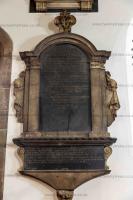
On 25th October 1715 John Bland 4th Baronet [aged 51] died. Monument at St James' Church, Didsbury [Map]. His son John [aged 24] succeeded 5th Baronet Bland of Kippax Park in Yorkshire.
John Bland 4th Baronet: On 2nd November 1663 he was born to Francis Bland 2nd Baronet and Jane Lowther. On 14th December 1668 Thomas Bland 3rd Baronet died. His brother John succeeded 4th Baronet Bland of Kippax Park in Yorkshire. On 31st March 1685 he and Ann Mosley were married at St James' Church, Didsbury [Map].
John Bland 5th Baronet: On or before 10th September 1691, the date he was baptised, he was born to John Bland 4th Baronet and Ann Mosley. On 9th April 1743 he died. His son John succeeded 6th Baronet Bland of Kippax Park in Yorkshire.
On 25th October 1735 Louis Saxe Coburg Altenburg was born to Duke Frederick III of Saxe Coburg Altenburg III [aged 36] and Luise Dorothea Saxe Meiningen Duchess Saxe Gotha Altenburg [aged 25] at Gotha. He died aged less than one years old.
On 25th October 1735 Stillborn Saxe Coburg Altenburg was born to Duke Frederick III of Saxe Coburg Altenburg III [aged 36] and Luise Dorothea Saxe Meiningen Duchess Saxe Gotha Altenburg [aged 25] at Gotha.

On 4th April 1751 John Repps of Mattishall [aged 46] died. On 25th October 1733 Virtue Boardman died. Memorials in Church of St Peter and St Paul, Salle [Map].
John Repps of Mattishall: Around 1705 he was born to John Repps and Dorothy Fountaine. Before 4th April 1705 he and Virtue Boardman were married.
Virtue Boardman: In 1695 she was born.
On 25th October 1760 King George II of Great Britain and Ireland [aged 76] died at Kensington Palace. His grandson George [aged 22] succeeded III King Great Britain and Ireland. Duke Cambridge merged with the Crown.
Chronicle of a Bourgeois of Valenciennes
Récits d’un bourgeois de Valenciennes aka The Chronicle of a Bourgeois of Valenciennes is a vivid 14th-century vernacular chronicle written by an anonymous urban chronicler from Valenciennes in the County of Hainaut. It survives in a manuscript that describes local and regional history from about 1253 to 1366, blending chronology, narrative episodes, and eyewitness-style accounts of political, military, and social events in medieval France, Flanders, and the Low Countries. The work begins with a chronological framework of events affecting Valenciennes and its region under rulers such as King Philip VI of France and the shifting allegiances of local nobility. It includes accounts of conflicts, sieges, diplomatic manoeuvres, and the impact of broader struggles like the Hundred Years’ War on urban life in Hainaut. Written from the perspective of a burgher (bourgeois) rather than a monastery or royal court, the chronicle offers a rare lay viewpoint on high politics and warfare, reflecting how merchants, townspeople, and civic institutions experienced the turbulence of the 13th and 14th centuries. Its narrative style combines straightforward reporting of events with moral and civic observations, making it a valuable source for readers interested in medieval urban society, regional politics, and the lived experience of war and governance in pre-modern Europe.
Available at Amazon in eBook and Paperback format.
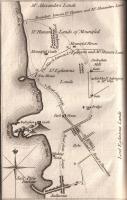
On 24th October 1769 Alexander Montgomerie 10th Earl Eglinton [aged 46] was shot and killed by an excise officer or Gaudger (Scots) named Mungo Campbell following a dispute about the latter's right to bear arms on the Earl's grounds. The Earl died from his abdominal wounds late that evening at one o'clock on the morning of the 25th October 1769 at Eglinton Castle. His brother Archibald [aged 43] succeeded 11th Earl Eglinton.
John Brown, tide-officer or tide-waiter (a customs officer who boarded and inspected incoming ships) at Saltcoats, gave evidence that on the day of the earl's death, Tuesday 24 October 1769, he was on duty and walking with Mungo Campbell "They passed through the grounds of Montfodd, and thereafter crossed a burn, which is the march between Montfodd and the earl of Eglintoun's property, and went through lord Eglintoun's ground towards the sea."
The trial of Mungo Campbell, before the High Court of Justiciary in Scotland, for the murder of Alexander Earl of Eglintoun. Extracted from the records of the court:
That the earl faid to him, That he might have a right to carry a gun, but not upon his lands, without his liberty. That the pannel upon this faid to the earl, I beg your lordfhip's pardon: or, I beg your pardon. That at this time lord Eglintoun was difmounted from his horfe, and advancing nearer the pannel, who again was retiring fometimes backwards, at other times tideways, having his mufket dill pointed at the earl. But the deponent did not obferve whether he had his hand upon the cock or not; neither drd the deponent hear any threatnings uled by the pannel againft the earl. Depones, whein the pannel was retreating, he fell clofe by where the deponent was fitting on his horfe, and by his fall frightened the deponent's horfe, fo that the horfe reeled a little; during which time the deponent did not obferve the pannel, but immediately thereafter, having got -his horfe fettled, he faw the pannel half fitting half lying, and faw him point his gun towards Lord Eglintoun, and immediately fire it. — That at this time lord Eglintoun was within two or three yards of the pannel. That upon this lord Eglintoun gave three or four loud cries, that he was gone. Depones, that the pannel fired his gun without putting it to his fhoulder, but raifed the butt above his haunch, and pointed it at the earl.
Campbell was convicted of murder but hanged himself with a silk scarf provided by his friends before the sentence could be carried out.
A map of the lands of Montfode and Ardrossan in 1769 showing the details of the incident.
Alexander Montgomerie 10th Earl Eglinton: On 10th February 1723 he was born to Alexander Montgomerie 9th Earl Eglinton and Susanna Kennedy Countess Winton. On 18th February 1729 Alexander Montgomerie 9th Earl Eglinton died. His son Alexander succeeded 10th Earl Eglinton.

On 25th October 1780 Archbishop John Bird Sumner was born to Robert Sumner in Kenilworth, Warwickshire.
On 25th October 1812 Richard Buckner was born.

On 25th October 1814 Prince Louis Duke Nemours was born to King Louis Philippe I of France [aged 41] at Chateau Neuilly. He married 26th April 1840 Princess Victoria Saxe Coburg Gotha.
On 25th October 1854 during the Battle of Balaclava George Charles Bingham 3rd Earl Lucan [aged 54] gave the order for the Charge of the Light Brigade which was then led by his brother-in-law James Brudenell 7th Earl Cardigan [aged 57].
Hedworth Jolliffe 2nd Baron Hylton [aged 25] took part.
Godfrey Morgan 1st Viscount Tredegar [aged 23] was in command of a section of the Light Brigade. His horse "Sir Briggs" survived, died aged twenty-eight and was buried in the Cedar Garden at Tredegar House, Monmouthshire where there is a monument to him.
Thomas Hutton took part. He was shot through the right thigh during the advance, and on returning from the guns he was again severely wounded through the left thigh.
George Orby Wombwell 4th Baronet [aged 21] took part and survived. His horse was killed under him and he was shortly after pulled off and taken prisoner, his sword and pistols being taken from him by some Russian Lancers. He managed to escape, catch another loose horse and ride back to the British lines, pursued by Russians.
Fiennes Wykeham-Martin Cornwallis [aged 22] took part.
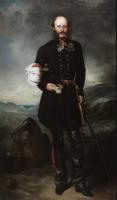


On 25th October 1854 Poulett George Henry Somerset [aged 32] and William Archer Amherst 3rd Earl Amherst [aged 18] fought.
Major-General John Douglas [aged 37] commanded the 79th Regiment of Foot.
General George Augustus Frederick Paget [aged 36] and Henry Hugh Manvers Percy [aged 37] fought.
On 25th October 1865 Henry Stevenson Blackwood [aged 46] died from a fall from a horse after riding into a rope which had been stretched across the road.
On 25th October 1878 Claud Francis Hamilton was born to James Hamilton 2nd Duke of Abercorn [aged 40] and Mary Anna Curzon Howe Duchess Abercorn [aged 30]. He died aged less than one years old.
The London Gazette 26338. Whitehall, October 25, 1892. THE Queen has been pleased to direct Letters Patent to be passed under the Great Seal of the United Kingdom of Great Britain and Ireland, granting the dignity of a Baronet of the said United Kingdom unto Horace Brand Townsend-Farquhar [aged 48], of Cavendish-square, in the parish of Saint Marylebone, in the county of London, Esq., and the heirs male of his body lawfully begotten.
On 25th October 1914 Francis Ernest Waller 4th Baronet [aged 34] was killed in action. The Evening Despatch 25 November 1914 reported that Sir Francis had been ordered to take some lost trenches and guns, which he did successfully. However, when he was rising to urge his men to the final charge, he was severely wounded and died a few hours later. He was buried at the Royal Irish Rifles Graveyard, Laventie, Departement du Pas-de-Calais. His brother Wathen [aged 33] succeeded 5th Baronet Waller of Braywick Lodge in Berkshire. Viola le Sueur Lady Waller by marriage Lady Waller of Braywick Lodge in Berkshire.
On 25th October 1920 Alexander I King Greece [aged 27] died. His brother Paul [aged 18] succeeded I King Greece.

On 25th October 1931 Ludwig Hesse Darmstadt was born to Georg Donatus Hesse Darmstadt Grand Duke [aged 24] and Cecilie Glücksburg Grand Duchess [aged 20]. He a great x 2 grandson of Queen Victoria of the United Kingdom. Coefficient of inbreeding 3.83%. He died aged six in 1937.
On 25th October 1943 Lieutenant David Hugh Joicey [aged 21] was killed in action at Salerno. He was buried at the Salerno War Cemetery Plot III. A. 33.
On 25th October 1970 Margaret Clitherow née Middleton was canonised.
Henrici Quinti, Angliæ Regis, Gesta, is a first-hand account of the Agincourt Campaign, and subsequent events to his death in 1422. The author of the first part was a Chaplain in King Henry's retinue who was present from King Henry's departure at Southampton in 1415, at the siege of Harfleur, the battle of Agincourt, and the celebrations on King Henry's return to London. The second part, by another writer, relates the events that took place including the negotiations at Troye, Henry's marriage and his death in 1422.
Available at Amazon in eBook and Paperback format.
On 25th October 1979 Honor Wellesley was born to Arthur Charles Valerian Wellesley 9th Duke of Wellington [aged 34] and Princess Antonia Duchess of Wellington [aged 24]. She a great x 4 granddaughter of Queen Victoria of the United Kingdom. She married 3rd July 2004 Orlando Montagu, son of John Montagu 11th Earl of Sandwich and Caroline Montagu Countess of Sandwich.
Montreal Gazette 1983 Oct. 25th October 1983. Earl of Craven fears old curse and kills himself
EASTBOURNE, England (AP) - The seventh Earl of Craven [deceased] — who lived in fear of a curse that all the males of his family would die young — has killed himself at age 26, police said.
Thomas Robert Douglas Craven fatally shot himself at the home of his mother, Countess Elizabeth Craven, police reported. His body was found Saturday.
None of Craven's direct ancestors going back to the 17th century reached the age of 60.
His father, the sixth earl, drowned at age 47 when he fell off a yacht during a party in 1965. Leukemia killed his grandfather, the fifth earl, at age 35.
The reputed curse says that all Craven boys will die before their mothers. Residents in the earl's village of Hampstead Marshall, Berkshire, said it was uttered by a village mother whose daughter was made pregnant by a Craven ancestor.
"They were a family that over the years never mixed closely in village affairs and I think the curse developed because of the antagomsm between them and the local folk," said one elderly man.
The young earl was unmarried. Anne Nicholson. his former girlfriend and mother of their seven-year-old son, Thomas, was quoted last year as saying:
"The curse of the Cravens does worry him (the earl) a lot. He rarely discusses it. but it's at the back of his mind most of the time. It's an awful thing because it seems to have come true in the past. It makes me worry about our little Tommy."
The earl's only son will not inherit the earldom because he is illegitimate. The title passes to the earl's 22-year-old brother, Simon George Craven [aged 22].
The Cravens can trace their line back to William the Conqueror, who invaded England and won its crown in 1066. The Craven estates were once among the largest in Britain, embracing 8,000 hectares in Berkshire alone, but they have dwindled to a few properties.
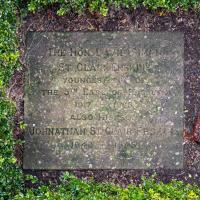
On 25th October 1985 David Simon St Clair-Erskine [aged 67] died. He was buried at the Rosslyn Chapel [Map].
David Simon St Clair-Erskine: On 18th November 1917 he was born to James St Clair-Erskine 5th Earl of Rosslyn and Vera Mary Bayley Countess of Rosslyn.
On 25th October 2002 John Ian Robert Russell 13th Duke Bedford [aged 85] died at Santa Fe. His son Henry [aged 62] succeeded 14th Duke Bedford, 14th Marquess Tavistock, 13th Marquess Tavistock, 18th Earl Bedford, 18th Baron Russell of Cheneys, 16th Baron Russell of Thornhaugh, 14th Baron Howland of Streatham. Henrietta Joan Tiarks Duchess Bedford [aged 62] by marriage Duchess Bedford.
Leicester Mercury 25 Oct 2012. When historian Catherine Bailey was invited to chronicle the history of the Duke of Rutland's family during the First World War, she uncovered a secret which had remained hidden for more than 60 years. Reporter Peter Warzynski talks to the author about her discoveries... When John Henry Montagu Manners, the 9th Duke of Rutland, died of pneumonia on April 22, 1940, he was remembered as a soldier who fought with comrades on the Western Front. His name and rank formed the centrepiece at the chapel at Belvoir Castle as a tribute to his virtuous war record. But the Duke had spent his final days locked in a dank room at the castle, frantically trying to erase any record of his involvement in the Great War. In all, 249 men from the Belvoir estate were killed fighting on the frontline in France between 1914 and 1918. The Duke was never among them. Despite leading the Remembrance Day parade through Rutland year after year and presiding over the ceremony, his supposed military service was a sham – but not one of his own making. His mother, Violet Manners, the 8th Duchess of Rutland, used her considerable persuasive powers and position to approach Lord Kitchener and Sir John French, the Commander in Chief of the Western Front, to keep her son from the fighting. Eventually, she rigged a series of medical examinations and dashed any hopes John had of battling in the trenches in Ypres with his regiment – the 4th Battalion Leicestershire (the Tigers). In the years before he died, ashamed of his sham military service, the Duke became reclusive as he obsessed over the family's meticulous records. His aim was to erase any reference to his military past and rewrite the family's history – and he succeeded. However, the truth did not come to light until historian Catherine Bailey began combing through the records in 2008. "The archive was prist-ine," she said. "It went all the way back to the 12th century and included tens of-thousands of documents. "But when I began studying them, I noticed gaps." On April 22, 1940, the Leicester Mercury reported "with great regret that the Duke of Rutland, head of the ancient family of Manners, died at his seat". The article paid tribute to the 53-year-old, stating: "He went to the front in February 1915, serving with the rank of Captain." Catherine said: "The family had no idea John had altered documents and letters and rewritten history. It was only when I unearthed a small trunk containing more letters I was able piece together the clues and unravel what had happened." Catherine first entered the Muniment Room at Belvoir Castle – where the family archives are kept – in 2008, after the Duke and Duchess of Rutland agreed to let her research the family for a book about the First World War. "My original idea was to write about a great family during the Great War and the Duke and Duchess agreed to take part. But after just a few months, I noticed things were missing from the records," she said Catherine found three gaps – 1894, 1909 and 1915 – in the otherwise perfect chronological archive. "It soon became a detective story," she said. The first gap related to the death of John's brother, Haddon. "When John was eight his brother died, but the reason for the death was not what the family believed had happened to him." Catherine stops there. "I don't want to give too much of the book away," she explains. "John was banished from Belvoir Castle on the day of Haddon's funeral and spent most of his childhood years estranged from his parents. "That event is the key to his character and shaped the rest of his life." Haddon's death shook Violet, his mother, who made no secret of the fact he was her favourite. But the tragic event had further implications. Were anything to happen to John, she would lose her money and privileges when her husband – the 8th Duke – died. His title and estate would be handed over to his half-brother, leaving Violet penniless. Catherine believes the Duchess's efforts to keep her only son from the frontline were motivated by neurosis rather than love. "She did everything she could to prevent him from fighting on the frontline, because the most likely outcome of being on the Western Front was being killed," she said. It was true John was a Captain in the 4th Battalion, Leicestershire Regiment before it was absorbed into the 46th North Midland Division. He was appointed aide-de-camp to General Edward Montagu-Stuart-Wortley, a role which included instructing soldiers in Britain. However, when he was sent to Ypres, France, in 1915, much to his frustration, he only witnessed the Great War from the safety of Goldfish Chateaux, the Army's regional headquarters. John's exclusion from the carnage of the frontline was due to his mother's relentless interference. Violet wrote letters to GHQ (General Headquarters) and General Wortley and even pressured her daughter into seducing a man whom she thought would be able to influence senior officers. She finally turned to family physician Dr Donald Hood to give false evidence about John's health, claiming he had recurring dysentery. "The more I got to know him, the more his story became a tragic one," said Catherine. "For the first year of the war he did all he could to fight with the men of the 4th Leicesters. "But it was his mother's meddling and constant undermining that finally got him returned home. "He spent the rest of life ashamed and his final years locked away trying to erase his past." The Secret Rooms, published by Penguin, is out on November 1.
On 25th October 1102 William Clito Count Flanders was born to Robert Curthose III Duke Normandy [aged 51] and Sybilla Conversano Duchess Normandy. He a grandson of King William "Conqueror" I of England. He married (1) 1123 his fourth cousin once removed Sibylla Anjou Countess Essex, daughter of Fulk "Young" King Jerusalem and Ermengarde of Maine Countess of Anjou (2) 1127 his third cousin Joanna Monferrat Countess Essex and Flanders, daughter of Rainier Aleramici Marquis of Monferrat and Gisela Ivrea Countess Savoy.
On 25th October 1330 Louis of Male III Count Nevers II Count Flanders was born to Louis Dampierre II Count Nevers I Count Flanders [aged 26] and Margaret Capet Countess Nevers amd Flanders [aged 21]. He married 1st July 1347 his half second cousin once removed Margaret of Brabant Countess Nevers and Flanders, daughter of John Brabant III Duke Brabant and Marie Évreux Duchess of Brabant, and had issue.
On 25th October 1338 Elizabeth Segrave 5th Baroness Segrave Baroness Mowbray was born to John Segrave 4th Baron Segrave [aged 23] and Margaret Plantagenet 1st Duchess of Norfolk at Croxton Abbey [Map]. She a great granddaughter of King Edward I of England. She married 25th March 1349 her third cousin John Mowbray 4th Baron Mowbray Baron Segrave, son of John Mowbray 3rd Baron Mowbray and Joan Plantagenet Baroness Mowbray, and had issue.
On 25th October 1415 William Bourchier Baron Fitzwarin was born to William Bourchier 1st Count of Eu [aged 41] and Anne of Gloucester Plantagenet Countess Eu and Stafford [aged 32]. He a great grandson of King Edward III of England. He married (1) before 25th October 1445 Thomasine Hankford 9th Baroness Fitzwarin, daughter of Richard Hankford and Elizabeth Fitzwarin 8th Baroness Fitzwarin, and had issue (2) in or before 1474 Catherine Affeton.
On 25th October 1445 Fulk Bourchier 10th Baron Fitzwarin was born to William Bourchier Baron Fitzwarin [aged 30] and Thomasine Hankford 9th Baroness Fitzwarin [aged 22]. He a great x 2 grandson of King Edward III of England. He married before 20th July 1470 Elizabeth Dynham Baroness Fitzwarin and had issue.
Jean de Waurin's Chronicle of England Volume 6 Books 3-6: The Wars of the Roses
Jean de Waurin was a French Chronicler, from the Artois region, who was born around 1400, and died around 1474. Waurin’s Chronicle of England, Volume 6, covering the period 1450 to 1471, from which we have selected and translated Chapters relating to the Wars of the Roses, provides a vivid, original, contemporary description of key events some of which he witnessed first-hand, some of which he was told by the key people involved with whom Waurin had a personal relationship.
Available at Amazon in eBook and Paperback format.
On 25th October 1510 Renée of France Duchess of Ferrara was born to Louis XII King France [aged 48] and Anne of Brittany Queen Consort France [aged 33]. Coefficient of inbreeding 5.00%. She married April 1528 Ercole Este II Duke Ferrara, son of Alfonso Este I Duke Ferrara, Modena and Reggio and Lucrezia Borgia, and had issue.
On 25th October 1573 Gregory "George" Lennard was born to Samson Lennard Baron Dacre Gilsland [aged 29] and Margaret Fiennes 11th Baroness Dacre of Gilsland [aged 32].

On 25th October 1632 Charles Dormer 2nd Earl Carnarvon was born to Robert Dormer 1st Earl Carnarvon [aged 22] and Anne Sophia Herbert Countess Carnarvon. He was baptised at St Benet's Church, Paul's Wharf [Map]. He married (1) before 25th June 1652 his fourth cousin Elizabeth Capell Countess Carnarvon, daughter of Arthur Capell 1st Baron Capell Hadham and Elizabeth Morrison Baroness Capell Hadham, and had issue (2) after 1678 his second cousin once removed Mary Bertie Countess Carnarvon, daughter of Montagu Bertie 2nd Earl Lindsey and Bridget Wray Countess Lindsey.

On 25th October 1649 Edward Blackett 2nd Baronet was born to William Blackett 1st Baronet [aged 28] and Elizabeth Kirkley. He married (1) 1674 Mary Norton (2) 1676 Mary Yorke Lady Blackett and had issue (3) 1699 Diana Booth Lady Delaval and Blackett, daughter of George Booth 1st Baron Delamer and Elizabeth Grey Baroness Delamer.
On 25th October 1683 Charles Fitzroy 2nd Duke Grafton was born to Henry Fitzroy 1st Duke Grafton [aged 20] and Isabella Bennet Duchess Grafton [aged 15]. He a grandson of King Charles II of England Scotland and Ireland. He married 30th April 1713 his half fifth cousin once removed Henrietta Somerset Duchess Grafton and had issue.
On 25th October 1716 Mary Thorpe 14th Baroness Cobham was born to William Thorpe [aged 33] and Frances Boothby [aged 19]. She married 20th May 1736 Gervase Disney and had issue.
On 25th October 1719 Dean Edward Townshend was born to Charles Townshend 2nd Viscount Townsend [aged 45] and Dorothy Walpole Viscountess Townsend [aged 33].


On 25th October 1727 Thomas Walpole was born to Horatio Walpole 1st Baron Walpole [aged 48] and Mary Magdalen Lombard [aged 32]. He married 14th November 1753 Elizabeth Vanneck, daughter of Joshua Vanneck 1st Baronet and Mary Anne Daubuz Lady Vanneck, and had issue.


On 25th October 1735 Louis Saxe Coburg Altenburg was born to Duke Frederick III of Saxe Coburg Altenburg III [aged 36] and Luise Dorothea Saxe Meiningen Duchess Saxe Gotha Altenburg [aged 25] at Gotha. He died aged less than one years old.
On 25th October 1735 Stillborn Saxe Coburg Altenburg was born to Duke Frederick III of Saxe Coburg Altenburg III [aged 36] and Luise Dorothea Saxe Meiningen Duchess Saxe Gotha Altenburg [aged 25] at Gotha.
The History of William Marshal was commissioned by his son shortly after William’s death in 1219 to celebrate the Marshal’s remarkable life; it is an authentic, contemporary voice. The manuscript was discovered in 1861 by French historian Paul Meyer. Meyer published the manuscript in its original Anglo-French in 1891 in two books. This book is a line by line translation of the first of Meyer’s books; lines 1-10152. Book 1 of the History begins in 1139 and ends in 1194. It describes the events of the Anarchy, the role of William’s father John, John’s marriages, William’s childhood, his role as a hostage at the siege of Newbury, his injury and imprisonment in Poitou where he met Eleanor of Aquitaine and his life as a knight errant. It continues with the accusation against him of an improper relationship with Margaret, wife of Henry the Young King, his exile, and return, the death of Henry the Young King, the rebellion of Richard, the future King Richard I, war with France, the death of King Henry II, and the capture of King Richard, and the rebellion of John, the future King John. It ends with the release of King Richard and the death of John Marshal.
Available at Amazon in eBook and Paperback format.
On 25th October 1766 Arthur Kaye Legge was born to William Legge 2nd Earl Dartmouth [aged 35] and Frances Catherine Gounter Nicoll Countess Dartmouth [aged 33].


On 25th October 1772 Watkin Williams-Wynn 5th Baronet was born to Watkin Williams-Wynn 4th Baronet [aged 23] and Charlotte Granville Lady Williams-Wynn [aged 18]. He married 4th February 1817 Henrietta Antonia Clive Lady Williams-Wynn, daughter of Edward Clive 1st Earl Powis and Henrietta Antonia Herbert 3rd Countess Powis, and had issue.


On 25th October 1774 Robert Johnson Eden 5th Baronet was born to John Eden 4th Baronet [aged 34].
On 25th October 1777 Arthur George Onslow 3rd Earl Onslow was born to Thomas Onslow 2nd Earl Onslow [aged 23] and Arabella Mainwaring Ellerker [aged 22]. He married 21st July 1818 Charlotte Hanmer Countess Onslow and had issue.
On 25th October 1778 Frances Marsham was born to Charles Marsham 1st Earl Romney [aged 34] and Frances Wyndham [aged 23]. She married 17th August 1805 John Buchanan Riddell.
On 25th October 1780 Archbishop John Bird Sumner was born to Robert Sumner in Kenilworth, Warwickshire.
On 25th October 1782 William Verner 1st Baronet was born.
On 25th October 1803 William Brabazon 11th Earl of Meath was born to John Brabazon 10th Earl Meath [aged 31]. He married 24th November 1837 Harriot Brooke Countess Meath, daughter of Richard Brooke 6th Baronet and Harriet Cunliffe Lady Brooke, and had issue.
On 25th October 1809 Michael Hicks-Beach 8th Baronet was born to Michael Hicks-Beach [aged 29].
On 25th October 1811 Guy Carleton 3rd Baron Dorchester was born to George Carleton [aged 30]. He married 12th June 1837 Anne Wauchope Baroness Dorchester and had issue.
Henrici Quinti, Angliæ Regis, Gesta, is a first-hand account of the Agincourt Campaign, and subsequent events to his death in 1422. The author of the first part was a Chaplain in King Henry's retinue who was present from King Henry's departure at Southampton in 1415, at the siege of Harfleur, the battle of Agincourt, and the celebrations on King Henry's return to London. The second part, by another writer, relates the events that took place including the negotiations at Troye, Henry's marriage and his death in 1422.
Available at Amazon in eBook and Paperback format.
On 25th October 1812 Richard Buckner was born.
On 25th October 1814 Prince Louis Duke Nemours was born to King Louis Philippe I of France [aged 41] at Chateau Neuilly. He married 26th April 1840 Princess Victoria Saxe Coburg Gotha.
On 25th October 1822 Edward Fitzgerald Campbell 2nd Baronet was born to Guy Campbell 1st Baronet [aged 36] and Pamela Fitzgerald Lady Campbell [aged 26]. He a great x 4 grandson of King Charles II of England Scotland and Ireland.
On 25th October 1853 Sydney Charles Buxton 1st Earl Buxton was born to Charles Buxton [aged 30] and Emily Mary Holland [aged 29] at 7 Grosvenor Crescent, Belgravia.
On 25th October 1864 Charles Marsham 5th Earl Romney was born to Charles Marsham 4th Earl Romney [aged 23] and Frances Augusta Constance Muir Rawdon-Hastings Countess Romney [aged 20]. He married 12th June 1890 Anne Louisa Scott Countess of Romney, daughter of Edward Scott 5th Baronet and Emilie Packe Lady Scott.
On 25th October 1864 Edward George Bootle Wibraham 2nd Earl Lathom was born to Edward Bootle Wibraham 1st Earl Lathom [aged 26] and Alice Villiers Countess Lathom [aged 23]. He married 15th August 1889 his second cousin Wilma Pleydell-Bouverie Countess Lathom, daughter of William Pleydell-Bouverie 5th Earl Radnor and Helen Matilda Chaplin Countess Radnor, and had issue.
On 25th October 1864 Cecilia Clementia Wombwell was born to George Orby Wombwell 4th Baronet [aged 31] and Julia Sarah Alice Child-Villiers Lady Wombwell [aged 22]. She married 28th July 1890 William Dudgeon Graham Menzies and had issue.
On 25th October 1872 George Young 4th Baronet was born to George Young 3rd Baronet [aged 35].
On 25th October 1873 Samuel Scott 6th Baronet was born to Edward Scott 5th Baronet [aged 31]. He married 29th June 1896 Sophie Beatrix Mary Cadogan, daughter of George Cadogan 5th Earl Cadogan and Beatrix Jane Craven Countess Cadogan, and had issue.
On 25th October 1876 Stuart Holland 2nd Baron Rotherham was born to William Henry Holland 1st Baron Rotherham [aged 26].
Henrici Quinti, Angliæ Regis, Gesta, is a first-hand account of the Agincourt Campaign, and subsequent events to his death in 1422. The author of the first part was a Chaplain in King Henry's retinue who was present from King Henry's departure at Southampton in 1415, at the siege of Harfleur, the battle of Agincourt, and the celebrations on King Henry's return to London. The second part, by another writer, relates the events that took place including the negotiations at Troye, Henry's marriage and his death in 1422.
Available at Amazon in eBook and Paperback format.
On 25th October 1878 Claud Francis Hamilton was born to James Hamilton 2nd Duke of Abercorn [aged 40] and Mary Anna Curzon Howe Duchess Abercorn [aged 30]. He died aged less than one years old.
On 25th October 1883 John Lancelot Butler-Bowdon 25th Baron Grey of Ruthin was born to Captain Lancelot George Butler-Bowdon of Barlborough House in Chesterfield [aged 32] and Ella Cicely Mary Clifton [aged 26].
On 25th October 1884 Marjorie Blanche Eva Greville Countess Feversham was born to Francis Greville 5th Earl Warwick 5th Earl Brooke [aged 31] and Frances Evelyn "Daisy" Maynard Countess Warwick [aged 22]. Some sources suggest her father was Charles de la Poer Beresford 1st Baron Beresford [aged 38]. She married (1) before 2nd November 1906 her fifth cousin once removed Charles William Reginald Duncombe 2nd Earl Feversham and had issue (2) 1st November 1917 her sixth cousin William Gervase Beckett 1st Baronet and had issue.


On 25th October 1894 Mary Margaret Desiree Meynell Viscountess Falmouth was born.
On 25th October 1895 Francis Rodd 2nd Baron Rennell was born to Rennell Rodd 1st Baron Rodd [aged 36] and Lilias Georgina Guthrie Baroness Rennell [aged 31]. He married 3rd August 1928 Mary Smith Baroness Rennell, daughter of Vivian Hugh Smith 1st Baron Bicester and Sybil Mary McDonnell Baroness Bicester.
On 25th October 1931 Ludwig Hesse Darmstadt was born to Georg Donatus Hesse Darmstadt Grand Duke [aged 24] and Cecilie Glücksburg Grand Duchess [aged 20]. He a great x 2 grandson of Queen Victoria of the United Kingdom. Coefficient of inbreeding 3.83%. He died aged six in 1937.
On 25th October 1953 Iona Charlotte Grimston was born to John Grimston 6th Earl of Verulam [aged 41]. She married 1985 Henry Vivien Conyngham 8th Marquess Conyngham, son of Frederick William Conyngham 7th Marquess Conyngham, and had issue.
On 25th October 1979 Honor Wellesley was born to Arthur Charles Valerian Wellesley 9th Duke of Wellington [aged 34] and Princess Antonia Duchess of Wellington [aged 24]. She a great x 4 granddaughter of Queen Victoria of the United Kingdom. She married 3rd July 2004 Orlando Montagu, son of John Montagu 11th Earl of Sandwich and Caroline Montagu Countess of Sandwich.
On 25th October 1251 Ottokar "Iron King" II King Bohemia [aged 18] and Kunigunda Rostislavna Přemyslovna [aged 6] were married.
On 25th October 1441 Francesco Sforza I Duke Milan [aged 40] and Bianca Maria Visconti [aged 16] were married. The difference in their ages was 23 years.
On 25th October 1519 Henry Courtenay 1st Marquess Exeter [aged 23] and Gertrude Blount Marchioness of Exeter [aged 16] were married. She by marriage Countess Devon. He the son of William Courtenay 1st Earl Devon and Catherine York Countess Devon [aged 40].
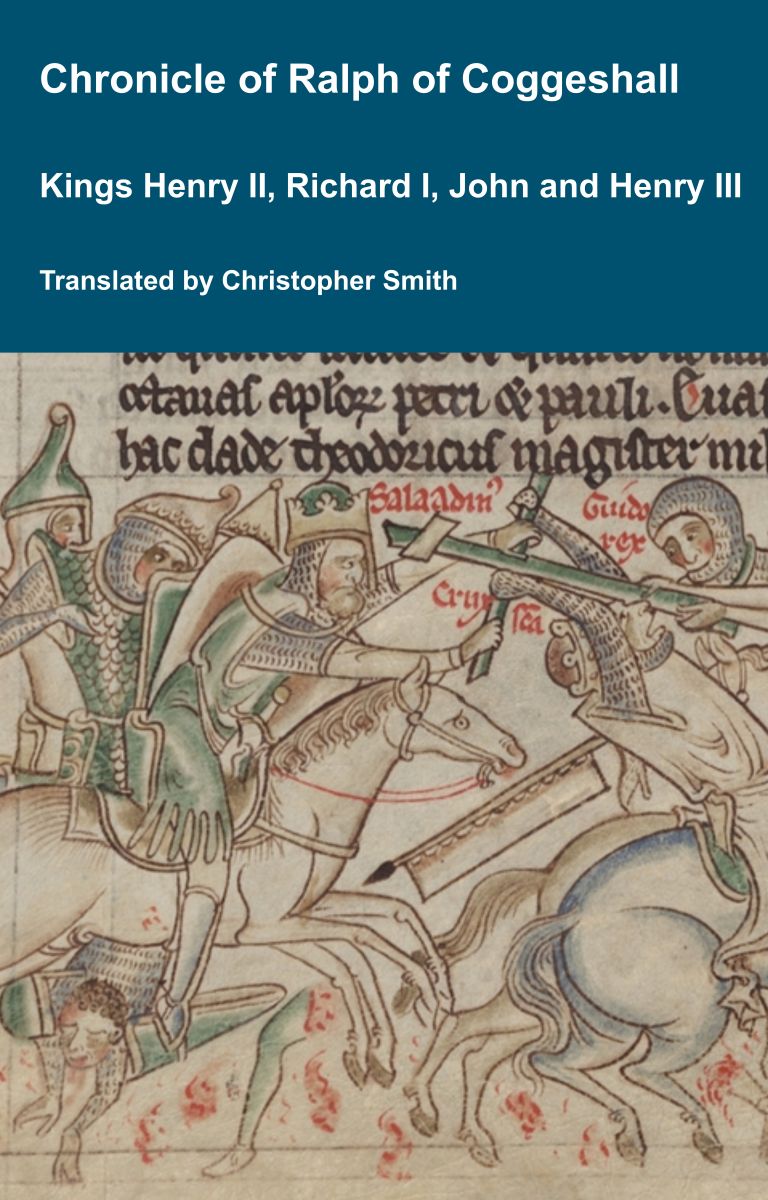
Chronicle of Abbot Ralph of Coggeshall
The Chronicle of Abbot Ralph of Coggeshall (Chronicon Anglicanum) is an indispensable medieval history that brings to life centuries of English and European affairs through the eyes of a learned Cistercian monk. Ralph of Coggeshall, abbot of the Abbey of Coggeshall in Essex in the early 13th century, continued and expanded his community’s chronicle, documenting events from the Norman Conquest of 1066 into the tumultuous reign of King Henry III. Blending eyewitness testimony, careful compilation, and the monastic commitment to record-keeping, this chronicle offers a rare narrative of political intrigue, royal power struggles, and social upheaval in England and beyond. Ralph’s work captures the reigns of pivotal figures such as Richard I and King John, providing invaluable insights into their characters, decisions, and the forces that shaped medieval rule. More than a simple annal, Chronicon Anglicanum conveys the texture of medieval life and governance, making it a rich source for scholars and readers fascinated by English history, monastic authorship, and the shaping of the medieval world.
Available at Amazon in eBook and Paperback format.
On 25th October 1618 Johann Philipp Wettin Duke Saxe Altenburg [aged 21] and Elisabeth of Brunswick-Wolfenbüttel Duchess of Saxe-Altenburg [aged 25] were married. He the son of Friedrich Wilhelm Wettin I Duke Saxe Weimar and Anna Maria Countess Palatine of Neuburg [aged 43]. They were half fourth cousins.
On 25th October 1720 John Hervey 2nd Baron Hervey [aged 24] and Mary Lepell Baroness Hervey [aged 20] were married. He the son of John Hervey 1st Earl Bristol [aged 55] and Elizabeth Felton Countess Bristol [aged 43].


On 25th October 1775 Thomas Coke 1st Earl of Leicester [aged 21] and Jane Dutton [aged 21] were married at Sherborne, Gloucestershire.


On 25th October 1780 John Ingilby 1st Baronet [aged 22] and Elizabeth Amcotts Lady Ingilby [aged 17] were married.
On 25th October 1828 William Legge 4th Earl Dartmouth [aged 43] and Frances Barrington Countess Dartmouth were married. She by marriage Countess Dartmouth. He the son of George Legge 3rd Earl Dartmouth and Frances Finch Countess Dartmouth [aged 67].
On 25th October 1842 Robert John Verney 25th Baron Latimer 17th Baron Willoughby de Broke [aged 33] and Georgiana Jane Taylor were married.
On 25th October 1847 Thomas Grey 5th Baron Walsingham [aged 43] and Emily Julia Thellusson Baroness Walsingham [aged 30] were married. She by marriage Baroness Walsingham of Walsingham in Norfolk.
On 25th October 1853 William Brodrick 8th Viscount Midleton [aged 23] and Augusta Mary Fremantle were married.
On 25th October 1881 Lionel Dawson-Damer 5th Earl of Portarlington [aged 23] and Emma Kennedy Countess Portarlington [aged 20] were married. He the son of Lionel Dawson-Damer 4th Earl of Portarlington [aged 49] and Harriet Lydia Robinson Montagu Countess Portarlington.
On 25th October 912 Rudolph I King Burgundy [aged 53] died. His son Rudolph [aged 32] succeeded II King Burgundy.
Abbot John Whethamstede’s Chronicle of the Abbey of St Albans
Abbot John Whethamstede's Register aka Chronicle of his second term at the Abbey of St Albans, 1451-1461, is a remarkable text that describes his first-hand experience of the beginning of the Wars of the Roses including the First and Second Battles of St Albans, 1455 and 1461, respectively, their cause, and their consequences, not least on the Abbey itself. His text also includes Loveday, Blore Heath, Northampton, the Act of Accord, Wakefield, and Towton, and ends with the Coronation of King Edward IV. In addition to the events of the Wars of the Roses, Abbot John, or his scribes who wrote the Chronicle, include details in the life of the Abbey such as charters, letters, land exchanges, visits by legates, and disputes, which provide a rich insight into the day-to-day life of the Abbey, and the challenges faced by its Abbot.
Available at Amazon in eBook and Paperback format.
On 25th October 1053 Enguerrand II Count Ponthieu was killed in battle. His brother Guy [aged 33] succeeded I Count Ponthieu.
On 25th October 1154 King Stephen I England [aged 60] died at Priory of St Martin, Dover [Map]. His first cousin once removed Henry [aged 21] succeeded II King of England.
On 25th October 1180 Bishop John of Salisbury [aged 62] died.
On 25th October 1221 Robert de Vere 3rd Earl of Oxford [aged 56] died at Hatfield Regis aka Broad Oak Priory [Map]. His son Hugh [aged 13] succeeded 4th Earl of Oxford.
On 25th October 1230 Gilbert Clare 5th Earl Gloucester 4th Earl Hertford [aged 50] died. His son Richard [aged 8] succeeded 6th Earl Gloucester, 5th Earl Hertford, 8th Lord Clare, 2nd Lord Glamorgan.
On 25th October 1292 Bishop Robert Burnell [aged 53] died at Berwick-upon-Tweed, Northumberland [Map].
On 25th October 1324 John Botetort 1st Baron Botetort [aged 59] died. His grandson John [aged 6] succeeded 2nd Baron Botetort.
On 25th October 1415 King Henry V of England [aged 29] defeated a French army at the Battle of Agincourt.
The battle is described by three Chroniclers who were present:
Jean de Waurin: "1, the author of this work, know the truth of the matter, for in that assembly I was among the French".
Jean le Fevre de St Remy: "I who write this, seated on a horse among the baggage at the rear of the battle, along with the other priests who were present".
The anonymous author of the Deeds of King Henry V i.e. Deeds of Henry V: "while I was on the other side with the English".
Thomas Camoys 1st Baron Camoys [aged 64] commanded the Rearguard. Richard de Vere 11th Earl of Oxford [aged 30] commanded. Humphrey Lancaster 1st Duke Gloucester [aged 25] was wounded, and was protected by his brother King Henry V of England.
Edward 2nd Duke of York 1st Duke Albemarle [aged 42], commander of the Vanguard, was killed; the most senior English casualty. Duke Albemarle, Earl of Rutland and Earl Cork extinct. His nephew Richard [aged 4] succeeded 3rd Duke York and inherited his estates including Conisbrough Castle [Map].
John Fortescue [aged 35], Dafydd Gam Brecon [aged 35] and Edward Burnell [aged 44] and Roger Vaughan of Bredwardine [aged 38] were killed.
Michael de la Pole 3rd Earl Suffolk [aged 21] was killed. His brother William [aged 19] succeeded 4th Earl Suffolk, 4th Baron Pole.
On 25th October 1439 Beatrice Aviz Duchess Exeter [aged 57] died.
On 25th October 1482 Peter Luxemburg II Count Saint Pol and Soissons [aged 42] died. His daughter Marie succeeded Countess Soissons.
On 25th October 1495 John II King Portugal [aged 40] died. His first cousin Manuel [aged 26] succeeded I King Portugal.
On 25th October 1524 Thomas Fitzalan 10th or 17th Earl of Arundel [aged 74] died. His son William [aged 48] succeeded 11th or 18th Earl Arundel, 8th Baron Maltravers, 8th Baron Arundel. Anne Percy Countess Arundel [aged 39] by marriage Countess Arundel.
Henrici Quinti, Angliæ Regis, Gesta, is a first-hand account of the Agincourt Campaign, and subsequent events to his death in 1422. The author of the first part was a Chaplain in King Henry's retinue who was present from King Henry's departure at Southampton in 1415, at the siege of Harfleur, the battle of Agincourt, and the celebrations on King Henry's return to London. The second part, by another writer, relates the events that took place including the negotiations at Troye, Henry's marriage and his death in 1422.
Available at Amazon in eBook and Paperback format.
On 25th October 1556 Elizabeth Bledlow Baroness Williams [aged 52] died.
On 25th October 1604 Claude de La Tremoille 2nd Duke Thouars [aged 38] died.
On 25th October 1627 Robert Spencer 1st Baron Spencer [aged 57] died. His son William [aged 36] succeeded 2nd Baron Spencer Wormleighton.
On 25th October 1691 George Legge 1st Baron Dartmouth [aged 44] died at Tower of London [Map]. He was buried at Holy Trinity Church, Minories [Map]. His son William Legge [aged 19] succeeded 2nd Baron Dartmouth.
On 25th October 1696 Francis Lawley 2nd Baronet [aged 66] died. His son Thomas [aged 46] succeeded 3rd Baronet Lawley of Spoonhill in Shropshire.
On 25th October 1713 Henry Parker 2nd Baronet [aged 73] died. His grandson Henry succeeded 3rd Baronet Parker of Melford Hall in Suffolk.
On 25th October 1715 John Bland 4th Baronet [aged 51] died. Monument at St James' Church, Didsbury [Map]. His son John [aged 24] succeeded 5th Baronet Bland of Kippax Park in Yorkshire.
John Bland 4th Baronet: On 2nd November 1663 he was born to Francis Bland 2nd Baronet and Jane Lowther. On 14th December 1668 Thomas Bland 3rd Baronet died. His brother John succeeded 4th Baronet Bland of Kippax Park in Yorkshire. On 31st March 1685 he and Ann Mosley were married at St James' Church, Didsbury [Map].
John Bland 5th Baronet: On or before 10th September 1691, the date he was baptised, he was born to John Bland 4th Baronet and Ann Mosley. On 9th April 1743 he died. His son John succeeded 6th Baronet Bland of Kippax Park in Yorkshire.
On 25th October 1718 Frances Winchcombe Viscountess Bolingbroke [aged 37] died. Her estate Bucklebury Manor, Berkshire were inherited by her sister Mary Winccombe.


On 25th October 1725 Cecil Bishopp 5th Baronet died. His son Cecil [aged 24] succeeded 6th Baronet Bishopp of Parham in Sussex.
On 25th October 1734 Hugh Boscawen 1st Viscount Falmouth [aged 54] died suddenly in Trefusis, Cornwall. He was buried in St Michael Pentivel, Penkevile. His son Hugh [aged 30] succeeded 2nd Viscount Falmouth.
On 25th October 1734 Bryan Cooke 4th Baronet [aged 49] died. His son George succeeded 5th Baronet Cooke of Wheatley Hall in Yorkshire.

On 25th October 1735 Charles Mordaunt 3rd Earl Peterborough 1st Earl Monmouth [aged 77] died. His grandson Charles [aged 27] succeeded 4th Earl Peterborough, 2nd Earl Monmouth, 9th Baron Mordaunt, 3rd Viscount Mordaunt of Avalon, 3rd Baron Mordaunt of Reigate.
On 25th October 1759 Gerard Napier 5th Baronet [aged 58] died. His son Gerard [aged 20] succeeded 6th Baronet Napier of Middle Marsh in Dorset.
Jean de Waurin's Chronicle of England Volume 6 Books 3-6: The Wars of the Roses
Jean de Waurin was a French Chronicler, from the Artois region, who was born around 1400, and died around 1474. Waurin’s Chronicle of England, Volume 6, covering the period 1450 to 1471, from which we have selected and translated Chapters relating to the Wars of the Roses, provides a vivid, original, contemporary description of key events some of which he witnessed first-hand, some of which he was told by the key people involved with whom Waurin had a personal relationship.
Available at Amazon in eBook and Paperback format.
On 25th October 1760 King George II of Great Britain and Ireland [aged 76] died at Kensington Palace. His grandson George [aged 22] succeeded III King Great Britain and Ireland. Duke Cambridge merged with the Crown.
On 24th October 1769 Alexander Montgomerie 10th Earl Eglinton [aged 46] was shot and killed by an excise officer or Gaudger (Scots) named Mungo Campbell following a dispute about the latter's right to bear arms on the Earl's grounds. The Earl died from his abdominal wounds late that evening at one o'clock on the morning of the 25th October 1769 at Eglinton Castle. His brother Archibald [aged 43] succeeded 11th Earl Eglinton.
John Brown, tide-officer or tide-waiter (a customs officer who boarded and inspected incoming ships) at Saltcoats, gave evidence that on the day of the earl's death, Tuesday 24 October 1769, he was on duty and walking with Mungo Campbell "They passed through the grounds of Montfodd, and thereafter crossed a burn, which is the march between Montfodd and the earl of Eglintoun's property, and went through lord Eglintoun's ground towards the sea."
The trial of Mungo Campbell, before the High Court of Justiciary in Scotland, for the murder of Alexander Earl of Eglintoun. Extracted from the records of the court:
That the earl faid to him, That he might have a right to carry a gun, but not upon his lands, without his liberty. That the pannel upon this faid to the earl, I beg your lordfhip's pardon: or, I beg your pardon. That at this time lord Eglintoun was difmounted from his horfe, and advancing nearer the pannel, who again was retiring fometimes backwards, at other times tideways, having his mufket dill pointed at the earl. But the deponent did not obferve whether he had his hand upon the cock or not; neither drd the deponent hear any threatnings uled by the pannel againft the earl. Depones, whein the pannel was retreating, he fell clofe by where the deponent was fitting on his horfe, and by his fall frightened the deponent's horfe, fo that the horfe reeled a little; during which time the deponent did not obferve the pannel, but immediately thereafter, having got -his horfe fettled, he faw the pannel half fitting half lying, and faw him point his gun towards Lord Eglintoun, and immediately fire it. — That at this time lord Eglintoun was within two or three yards of the pannel. That upon this lord Eglintoun gave three or four loud cries, that he was gone. Depones, that the pannel fired his gun without putting it to his fhoulder, but raifed the butt above his haunch, and pointed it at the earl.
Campbell was convicted of murder but hanged himself with a silk scarf provided by his friends before the sentence could be carried out.
A map of the lands of Montfode and Ardrossan in 1769 showing the details of the incident.
Alexander Montgomerie 10th Earl Eglinton: On 10th February 1723 he was born to Alexander Montgomerie 9th Earl Eglinton and Susanna Kennedy Countess Winton. On 18th February 1729 Alexander Montgomerie 9th Earl Eglinton died. His son Alexander succeeded 10th Earl Eglinton.
On 25th October 1861 James Graham 2nd Baronet [aged 69] died at Netherby, Cumberland. His son Frederick [aged 41] succeeded 3rd Baronet Graham of Netherby in Cumberland. Jane Hermione Seymour Lady Graham [aged 29] by marriage Lady Graham of Netherby in Cumberland.
On 25th October 1868 Henrietta Anne Bourne Lady Haselrigge [aged 84] died.
On 25th October 1871 Peregrine Palmer Fuller-Palmer-Acland 2nd Baronet [aged 81] died. Baronet Palmer-Acland of Fairfield of Somerset and Newhouse in Devon extinct.
On 25th October 1914 Francis Ernest Waller 4th Baronet [aged 34] was killed in action. The Evening Despatch 25 November 1914 reported that Sir Francis had been ordered to take some lost trenches and guns, which he did successfully. However, when he was rising to urge his men to the final charge, he was severely wounded and died a few hours later. He was buried at the Royal Irish Rifles Graveyard, Laventie, Departement du Pas-de-Calais. His brother Wathen [aged 33] succeeded 5th Baronet Waller of Braywick Lodge in Berkshire. Viola le Sueur Lady Waller by marriage Lady Waller of Braywick Lodge in Berkshire.
On 25th October 1920 Alexander I King Greece [aged 27] died. His brother Paul [aged 18] succeeded I King Greece.
On 25th October 1925 Richard Nelson Rycroft 5th Baronet [aged 65] died. His son Nelson [aged 38] succeeded 6th Baronet Rycroft of Calton in Yorkshire.
On 25th October 1947 Victor Bulwer-Lytton 2nd Earl of Lytton [aged 71] died. His brother Neville [aged 68] succeeded 3rd Earl of Lytton in Derbyshire, 4th Baron Lytton of Knebworth in Hertfordshire, 4th Baronet Bulwer of Knebworth in Hertfordshire.
On 25th October 1957 Edward John Moreton Drax Plunkett 18th Baron Dunsany [aged 79] died.
On 25th October 1963 John Lancelot Butler-Bowdon 25th Baron Grey of Ruthin [aged 80] died. Baron Grey of Ruthyn abeyant between the issue of his three great aunts: Edith Maud Rawdon-Hastings 10th Countess Loudon, Victoria Maria Louisa Rawdon-Hastings and Frances Augusta Constance Muir Rawdon-Hastings Countess Romney.
Annals of the six Kings of England by Nicholas Trivet
Translation of the Annals of the Six Kings of England by that traces the rise and rule of the Angevin aka Plantagenet dynasty from the mid-12th to early 14th century. Written by the Dominican scholar Nicholas Trivet, the work offers a vivid account of English history from the reign of King Stephen through to the death of King Edward I, blending political narrative with moral reflection. Covering the reigns of six monarchs—from Stephen to Edward I—the chronicle explores royal authority, rebellion, war, and the shifting balance between crown, church, and nobility. Trivet provides detailed insight into defining moments such as baronial conflicts, Anglo-French rivalry, and the consolidation of royal power under Edward I, whose reign he describes with particular immediacy. The Annals combines careful year-by-year reporting with thoughtful interpretation, presenting history not merely as a sequence of events but as a moral and political lesson. Ideal for readers interested in medieval history, kingship, and the origins of the English state, this chronicle remains a valuable and accessible window into the turbulent world of the Plantagenet kings.
Available at Amazon in eBook and Paperback format.
On 25th October 1997 James Hubert Theobald Charles Butler 7th Marquess Ormonde [aged 98] died. Marquess Ormonde, Baron Ormonde of Llanthony in Monmouthshire extinct. Earl Ormonde, Earl Ossory dormant.
On 25th October 2002 John Ian Robert Russell 13th Duke Bedford [aged 85] died at Santa Fe. His son Henry [aged 62] succeeded 14th Duke Bedford, 14th Marquess Tavistock, 13th Marquess Tavistock, 18th Earl Bedford, 18th Baron Russell of Cheneys, 16th Baron Russell of Thornhaugh, 14th Baron Howland of Streatham. Henrietta Joan Tiarks Duchess Bedford [aged 62] by marriage Duchess Bedford.
On 25th October 2003 Peter Giles Vivian Sebright 15th Baronet [aged 50] died. His son Rufus [aged 25] succeeded 16th Baronet Sebright of Besford in Worcestershire.